Smart Forvision concept is an interesting project accomplished with the help of BASF. The joint concept vehicle presented at the 2011 International Motor Show in Frankfurt combines a futuristic design with technologies relating to energy efficiency, lightweight design and temperature management.
The extremely lightweight design features sophisticated plastics used on the wheel of a volume car. The use of such materials enables a weight saving of more than 50% to be achieved compared with steel, or 30% compared with aluminium. Thanks to short hardening times the resin systems from BASF are also suitable for producing larger volumes.
The total of all technologies integrated in the concept vehicle make a perceptible contribution to increasing the range.
This is always at the centre of discussions relating to battery-electric driven vehicles. With maximum energy efficiency, intelligent temperature management and consistent lightweight construction it is possible to increase the range by up to 20 percent. An additional bonus for electric mobility of the future.
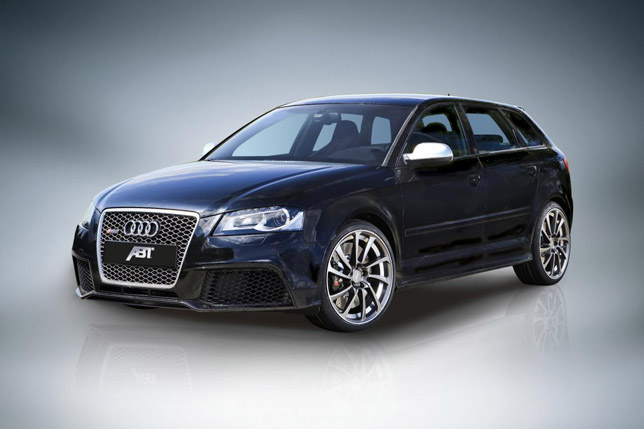
ABT Sportsline has announced a special tuning program for the hot hatch – Audi RS3.
The tuned vehicle is powered by a 2.5 liter five-cylinder turbocharged petrol engine with 470PS (346 kW) and 630Nm, instead of 340PS (250 kW) and 450Nm. The results are thanks to a new ABT turbocharger and a modified motor management.
However, the tuning company offers slightly less powerful version – 420PS (309 kW) for a lot less money.
Furthermore, you can order the 2-pipe stainless steel ABT exhaust system, ABT light alloy wheels – 19” fitted with 255/30 R19 on the front axle, 225/35 R19 on the rear one.
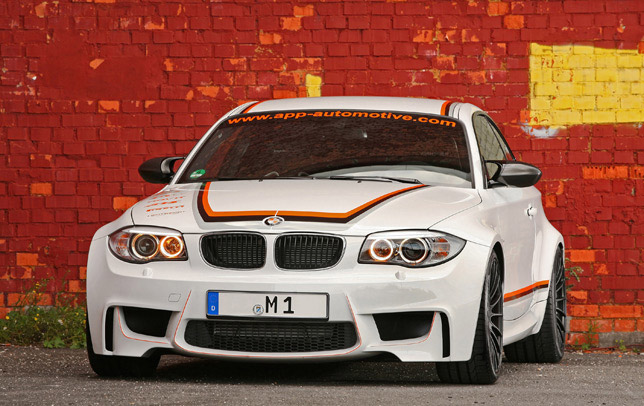
New BMW 1 M Coupe should logically be named M 1, but of course it can’t have such a name because M 1 usually refers to super sport cars made by BMW in 1980-s and expected new variants are excluded.
APP Europe adopted the 1 M Coupe in Igling, Bavaria which was called the most “uncompromisingly intensive” BMW and designed a car for everyday use with a unique combination of performance characteristics and light construction; this car is suitable for both track events and personal use and pleasure.
Basic parameters were aimed at lightweight construction and suitability for everyday use, better performance characteristics and good handling. In cooperation with System and Technology APP was able to create a new hit.
MR. Car Design from Erfstadt is responsible for “received” power increase from 340 hp (production cars) to 410 hp. Larger intercooler, silicon tires as well as appropriate software make it possible. Undoubtedly, a crucial role in the power increase is played by the lightweight titanium exhaust system with a new muffler inlet pipe, Metallkats with larger diameter. 50% weight saving compared to mass production is a good example of effectiveness of the abovementioned system.
APP Europe BMW 1 M
The steam hammer is equipped with 6 piston cramps of disk wheel braking system on the front axle and 4 piston cramps on the rear axle due to the optimization of the weight of the braking system Movit Cer Ceramic and therefore it is able for the forced braking power which is evident.
ATS super light wheel rims with a set of P Zero tires by Pirelli perfectly fit into the whole picture and contribute to the weight savings and better maneuverability.
A new car Variante 3 + suspension system with the direct digital control from iPhone/iPod touch App – muffler creates a link between daily comfort and absolute suitability for fast driving. An interesting processing of the tires with foil which repeats the interior color (orange, black and gray) is made by ZFZ Weilheim.
The interior design offers lightweight seats covered with BMW-Performance artificial leather and BMW-Performance steering wheel with a display. Thanks to APP Company the car was manufactured without any hustle or time economy. It is inevitable that this car is faster than similar production models but it can comfortably be used for everyday driving. An outstanding maneuverability has been reached due to the savings made by reducing chassis especially of bare masses.
Conversion costs without brakes: 14.000 Euro
Brake: 20.000 Euro
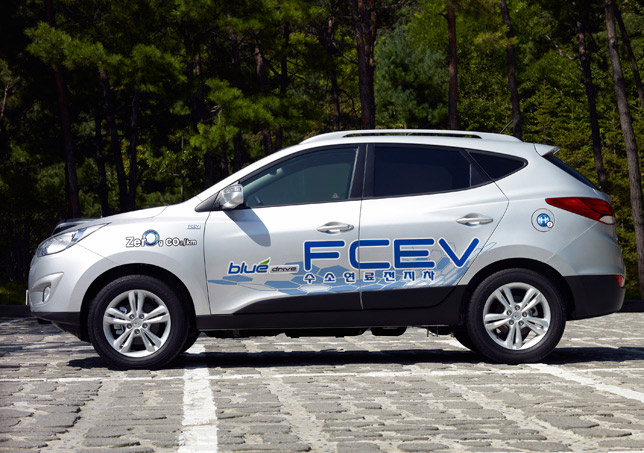
EcoVelocity visitors can be among the first in the world to experience future travel in a hydrogen-powered car, with passenger rides available in the ix35 FCEV. The vehicle is Hyundai’s third-generation FCEV and it demonstrates the company’s work on cutting-edge alternative fuels.
Boasting the same convenience as today’s vehicles powered by traditional internal combustion engines, the ix35 FCEV has a driving range of 360miles (580 Km), a maximum speed of 100 mph and zero-to-62mph time of 12.8 seconds. The fuel cell stack can operate at sub-zero temperatures as low as -25 degrees Celsius, and unlike a combustion-engined car, the ix35’s only emissions are water vapour.
This vehicle moves Hyundai closer to the commercialisation of fuel cell electric vehicles, and the aim is to bring an FCEV to market in the next few years.
Earlier this year, the Hyundai Motor Group signed a memorandum of understanding with four Northern European countries to operate test fleets of FCEVs. Test drives have already been carried out in Korea and Copenhagen.
Hyundai ix35 FCEV
Hyundai UK’s managing director, Tony Whitehorn, commented: “We are extremely excited to be showcasing the ix35 FCEV in the UK for the first time at EcoVelocity. Hyundai is a world leader in the development of hydrogen-powered technology and is constantly researching and developing modes of transportation that use alternative fuels at the Eco-technology research institute in Mabuk, Korea.
“The ultimate goal would be to see zero-emission vehicles on UK roads within the next few years; however, the market and local infrastructure will be the real determinant of this. In the interim, Hyundai is working hard to make internal combustion engines as efficient as possible.”
Also featuring on the Hyundai stand will be the sub-100g/km CO2 i10 Blue and the recently launched i20 Blue. The i10 Blue is powered by a 1.0-litre Kappa three-cylinder petrol engine returning an impressive 67.3mpg combined. The i20 Blue is powered by a 1.4-litre CRDi four-cylinder engine with76.4mpg on a combined cycle. Due to their low emissions, both vehicles offer exemption from VED and the London Congestion Charge.
Visitors will also be able to see Hyundai’s two newest models on the stand – the all-new i40 Tourer, due to go on-sale on September 8 and the Veloster coupe due to launch later this year.
EcoVelocity will run from September 8 -11th at Battersea Power Station and will feature the latest green models, including electric, hybrid and low CO2-emitting cars, as well as providing test drives on a specially-constructed circuit in the shadow of the famous power station.
Honda has officially revealed the eight-passenger SUV – 2012 Pilot, which come with a sleeker front-end design, enhanced interior features and an EPA highway fuel economy rating of 25 mpg.
The exterior modifications include a three-bar grille and restyled headlights. There are also a new windshield and big 18” alloy wheels fitted with all-terrain tires.
The interior boasts revised instrument cluster, new dashboard, power windows and locks, a 7-speaker premium audio system and 4-way air conditioning.
The SUV comes in four different trim levels – LX, EX, EX-L and Touring.
Standard comfort and convenience features on the Pilot LX include a front and rear air conditioning system with air-filtration system, keyless entry with simplified operation, tilt and telescope steering column, cruise control, power windows with auto-up/down driver’s and passenger’s window, power door and tailgate locks, AM/FM/CD stereo system with seven speakers including a subwoofer and Radio Data System (RDS), trip computer, heat-rejecting tinted glass, integrated Class III towing receiver, and more. For 2012, the Pilot LX adds AAC audio file playback capability from data discs to the CD player.
2012 Honda Pilot Interior
Pilot EX
The Pilot EX adds a tri-zone automatic climate control system with humidity control and air filtration, a power driver’s seat with 10-way power adjustment with lumbar support, security system, XM Radio®5, body-colored side mirrors and door handles, alloy wheels, roof rails, fog lights, exterior temperature indicator, HomeLink® Remote System, and more. For 2012, the Pilot EX now also features Bluetooth HandsFreeLink (previously exclusive to EX-L with Navi and above models), Bluetooth audio streaming and a new 2 GB CD Library (CD-L) replaces the previous 6-disc CD changer.
Pilot EX-L
Additional Pilot EX-L features include leather-trimmed seating surfaces, heated front seats, 4-way power front passenger’s seat, one-touch power moonroof, an automatic-dimming rearview mirror and the availability of either the Honda Satellite-Linked Navigation SystemTM2 or the Honda DVD Rear Entertainment System with a 9-inch screen. The addition of either the navigation or the entertainment system also adds a 115-volt power outlet. New for 2012 is the addition of a power tailgate to the Pilot EX-L, a USB Audio Interface, and an intelligent Multi-Information Display (i-MID) with QVGA resolution. The i-MID includes a rearview camera display, iPod album artwork display and a user-loadable wallpaper function.
Pilot EX-L with Navigation
The Pilot EX-L with Navigation adds an upgraded navigation system with higher VGA resolution replacing the previous QVGA display and an internal hard drive that replaces the previous model’s DVD-based system. New features include FM Traffic, Song by VoiceTM, rearview camera with a 3-mode display and a Multi-Information Display in the center of the gauge cluster.
Pilot Touring
The top-of-the-line Pilot Touring includes the Honda Satellite-Linked Navigation SystemTM2 with rearview camera, a Premium Audio System with 10 speakers, Bluetooth HandsFreeLink4 and Audio Streaming (with selected phones), the Honda DVD Rear Entertainment System, two-position memory seats, roof rails, corner and backup sensors, side-mirror integrated turn indicators and more.Colors available for 2012 include Alabaster Silver Metallic, Bali Blue Pearl, Crystal Black Pearl, Dark Cherry Pearl, Polished Metal Metallic, Taffeta White, White Diamond Pearl, new Dark Amber Metallic (replaces Mocha Metallic) and new Glacier White (Pilot Touring). Fabric and leather interior color choices, which are matched to selected exterior colors, include beige, black or gray.
2012 Pilot comes with 3.5 liter V6 petrol engine delivering 253PS (186 kW) and 343Nm (253 lb-ft) of torque. The engine manages to return up to 18 mpg in the city and 25 mpg on the highway on two-wheel drive. If you have 4WD – 17 mpg in the city and 24 mpg on the highway.
Land Rover will exhibit the DC100 Concept at the 2011 Frankfurt Motor Show. The manufacturer also confirmed, that production of a new Defender is intended for 2015.
The Land Rover DC100 concept builds upon the essential elements of the car’s character and allows Land Rover to open the debate and inspire people to dream about the Defenders of the future.
“Replacing the iconic Defender is one of the biggest challenges in the automotive design world; it is a car that inspires people worldwide. This isn’t a production-ready concept but the beginning of a four-year journey to design a relevant Defender for the 21st century.”, commented Gerry McGovern, Director of Design, Land Rover.
“Loved the world over for its simple, honest and distinctive design, we are determined that the new Defender will be true to its heritage, while meeting the requirements of a changing global market.”, added John Edwards, Global Brand Director, Land Rover.
We plan to engage with existing and potential customers to help us finalise the details of the new vehicle. One thing’s for sure, it’s going to be an exciting journey, and we can’t wait to get going.”, Mr. Edwards finished.
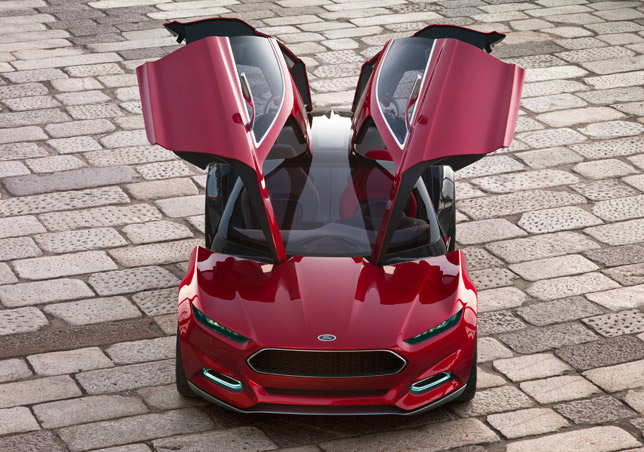
Making its global debut at the 2011 Frankfurt Motor Show in September, the Ford Evos Concept represents the ultimate expression of Ford’s new global design language, and explores key future powertrain and vehicle technologies.
Created as a bespoke concept vehicle, the fastback introduces Ford’s first truly global design language as the momentum of the company’s One Ford product plan continues to build.
“The Ford Evos Concept unites three key elements which are at the core of our One Ford global product strategy: outstanding design, smart technologies and fuel economy leadership,” said Derrick Kuzak, group vice president of Global Product Development.
“With its compelling design and innovative technology experience, this is a clear demonstration of the exciting vision we have for the Ford brand. While you will never see this car on the road, the next generation of Ford products around the world will display many of the distinctive design ideas and advanced technologies it showcases.”
Technology vision for enriched customer experience
Ford Evos Concept is not just a design-led exercise. It also embodies the global Ford product development team’s move to design and develop vehicles as more than just an interior and exterior, or a collection of attributes.
“Our goal is to focus on enriching a customer’s every experience with their vehicle – by personalising it, adapting it, and creating unique, unexpected features that surprise and delight them,” said Kuzak. “In the Ford Evos Concept, this objective is explored and extended to the area of connectivity, where the intent is not to convert the vehicle into a smartphone, but rather to provide personalised and safe connection to the outside world in an enriching manner designed totally for the vehicle context.”
Ford’s global Research and Innovation team, led by Paul Mascarenas, was tasked with building Evos Concept around a technology experience as visionary as the design. The result signals how Ford intends to build on the momentum of innovations like the SYNC in-car connectivity system.
Ford Evo Concept
“At Ford, the future of technology in the car will be defined by the experience that it delivers to the driver and passengers,” said Paul Mascarenas, chief technical officer and vice president of Ford Research and Innovation. “We see technology as more than just an impressive list of microprocessors, sensors and software; it’s about the application of that technology to create an experience that enhances the driver’s time behind the wheel.”
The concept’s technology experience embraces a new generation of driver interaction and awareness currently under development in the Ford Research and Innovation laboratories. Seamless connectivity between the vehicle and the driver’s ‘personal cloud’ of information is at the heart of the vision for its capabilities.
“The possibilities are fascinating when we explore how to enable a seamless lifestyle between home, office and car linked by access to the driver’s personal information,” Mascarenas said.
With information from the cloud, the vehicle can provide the same connected lifestyle the driver experiences at home or office. The car knows the driver, and automatically adapts handling, steering and engine controls to deliver an exceptionally dynamic driving experience.
Ford researchers are focusing their efforts in this area to deliver on four key customer benefits: personalisation, seamless enhancement of the driving experience, looking after the driver’s well-being and delivering smart electrified powertrain optimisation.
The personalised, cloud-connected lifestyle
While today’s Ford products provide drivers with many personalisation options, cloud connectivity will enable future Ford vehicles to take the experience to the next level.
Drawing from a detailed understanding of the driver’s preferences and driving habits, the Ford Evos Concept combines this personal information with additional data from the cloud, such as the driver’s work schedule and local traffic or weather conditions. This information provides a personalised and seamless experience as the driver transitions in and out of the car.
“We’re researching how we can use patterns or preferences set by the driver to make life simpler,” said Mascarenas. “The car gets to know you and can act as a personal assistant to handle some of the usual routines of a daily commute.”
It could automatically play the same music or news program that was just streaming at home, or heat or cool the interior to an ideal temperature before the driver gets in without having to be requested by predicting departure time based on his calendar. Wirelessly communicating with devices in the home, it could close the garage door and switch off the lights automatically as it pulls away.
“This cloud-connected vision shows the enormous potential of tailoring the driving experience to suit the exact personal tastes and moods of the driver,” said Mascarenas. “From recommending a great driving road from friends on your social networks or resetting your alarm clock to let you sleep in when a morning meeting gets cancelled!”
Enhanced driving experience
Ford Evos Concept explores adaptive vehicle technologies to redefine the driving experience.
Current technology requires vehicle chassis settings to be defined based upon the abilities and tastes of a cross-section of drivers and the topography of typical roads. The concept foresees tuning handling and performance to the road ahead and the specific individual behind the wheel.
Learning driver habits and capabilities, the technology can overlay map and weather data sourced from the cloud to adjust powertrain, steering, suspension and braking systems for optimum enjoyment, comfort and safety. Because the vehicle is adaptive and honed to maximum performance based on the situation, it takes driving engagement to a new level.
Driver wellness
Ford researchers have already developed technologies focused on driver wellness, such as the heart-rate monitoring seat and certified allergy-free interiors. With a seamless connection to the cloud, the Ford Evos Concept monitors the physical state and workload of the driver and adjusts the driving experience accordingly.
“Our wellness research and technologies are focused on relieving driver stress and enhancing their situational awareness,” said Mascarenas. “Drivers around the world are spending more time behind the wheel, and the car should not be another stress point in their lives.”
The Ford Evos Concept is also equipped with advanced air quality sensors and filtration systems to help allergy sufferers. Location aware, it can access air quality data from the cloud and proactively suggest a healthier route to the destination.
In dynamic driving situations, the vehicle may simplify the appearance of the instrument panel to display only necessary gauge information and switch the driver’s connected smartphone to “Do Not Disturb” mode to help keep the focus of attention on the road.
Cloud-optimised hybrid powertrain
Completing the vision for the Ford Evos Concept is a state-of-the-art lithium-ion plug-in hybrid (PHEV)powertrain providing the same next-generation performance and fuel economy as the Ford C-MAX Energi scheduled for introduction in North America in 2012 and Europe in 2013.
Ford ‘powersplit’ hybrid architecture allows the electric motor and petrol engine to work together or separately to maximise efficiency. The advanced powertrain typically runs in all-electric mode before switching to charge-sustaining hybrid mode for continued optimal fuel efficiency.
Cloud connectivity would provide further opportunities to enhance performance and efficiency by selecting the optimum combination of powertrain modes for any given journey.
“Access to historical driver behaviour and travel patterns allows us to calculate the optimal fuel and energy efficiency by predicting the destination,” said Mascarenas. “Our researchers are working to increase understanding of driver behaviour, develop accurate protocols to predict it and enhance the trip by providing the smartest use of fuel or battery for the situation.”
The cloud-optimised powertrain would automatically ‘know’ when to save energy and switch modes, using information about the vehicle’s predicted travel route, any emission zone restrictions during the journey and current weather conditions.
In the future, communities may place firm restrictions on the types of vehicles allowed to use certain roads or highway lanes, and some city centres may choose to be open only to full electric vehicles. Helping drivers comply with such regulations could therefore be among the benefits of this technology. For example, the French government is considering creating zones mandating lower emissions, while cities such as London, Berlin, and Stockholm already have them in place.
This capability would further enhance the performance of Ford’s advanced PHEV technology, which offers an overall driving range of more than 500 miles (800 kilometres) using the battery and engine – more than any other plug-in or extended-range electric vehicle.
“With its leading-edge ‘cloud-optimised’ PHEV powertrain offering outstanding efficiency and range with supreme driving enjoyment, the Ford Evos Concept highlights our vision for greener, smarter vehicles with outstanding customer appeal,” said Kuzak.
Ford’s new design direction
The Ford Evos Concept was specifically developed to introduce the new Ford design direction. Key design elements will be applied to forthcoming Ford vehicles.
The new global design DNA provides the company’s worldwide design teams with a common framework to guide the creation of new products, enabling them to shape a coherent family of distinctive vehicles sharing the same fundamental design character.
“We wanted the Ford Evos Concept to give a clear message about where Ford design is heading – shaping vehicles that are fun to drive, have a strong premium visual appeal, and above all, are stunningly beautiful,” said J Mays, group vice president, Design and chief creative officer.
“Our exciting new design DNA has been developed and refined by an intensive effort by all of our talented global design team,” said Mays. “As a team, we wanted to create a more technical design vocabulary to help communicate the smart technology that is now core to the Ford brand. In addition, we worked particularly hard on meeting the high-expectations of a new generation of buyers – a group of consumers who have grown up surrounded by beautiful, premium design work on even the most affordable products.”
Dramatic fastback design with unique proportions
To provide a fitting vehicle to introduce the new design language, the Ford Evos Concept was conceived as a dramatic fastback concept, combining a striking new profile with innovative proportions. Attention-grabbing lines conceal a unique new format, with a four-door, four-seat layout which combines dynamic appearance with surprising practicality.
“This is an exciting new interpretation of the fastback bodystyle, with a really innovative silhouette as well as dramatic and very modern proportions,” Mays said.
With the length of a typical C-car, but with width of a CD-car, the Ford Evos Concept has a powerful, sporting stance. The forward position of the cowl, the strongly rounded front screen and the A-pillars set further to the rear enabled the designers to create the impression of a classic GT car, but with a very contemporary feel.
The concept’s spectacular hinged gullwing-style doors, both front and rear, provide outstanding access to the spacious four-seat cabin.
The concept car measures 4.50m (177in) long, 1.97m (77in) wide and 1.36m (53in) high, with a wheelbase of 2.74m (108in).
Distinctive evolution
Shaped as the ultimate expression of the new design DNA, the Ford Evos Concept highlights key elements of Ford’s distinctive new global design language.
“The new design DNA marks a bold evolution of the kinetic design language featured on existing global Ford products and is characterised by a number of important elements that will contribute to an unmistakable future Ford look,” said Mays.
From the front, the Ford Evos Concept immediately signals the arrival of something new – a new face for Ford featuring the signature trapezoidal grille mounted higher on the car and creating a confident, more premium look.
Bold, technical shapes, such as the extremely slim ‘laser cut’ front lamps or the dramatic graphic created by the front and rear screens connected by the thin glazed section of the roof, add a distinctive character to the design. Sculptured flanks highlight attention to detail on the surfacing, which lends a refined quality and a tauter, more muscular character.
“The Ford Evos Concept embodies the core elements of the new global design language, while capturing the dynamic, fun-to-drive spirit which is central to the Ford DNA,” said executive design director Martin Smith. “Most notable is the brand new ‘face of Ford’, with its higher mounted trapezoidal grille, and the design is characterised by the use of very bold, technical graphics. We have also created much more refined and precise surfacing, and these elements together give a strong visual sense of premium quality.
The vehicle was sculpted with the same purity of surface sculpture and attention to detail which characterise premium vehicles. Around the world, a new generation of buyers have come to expect premium design in all products, regardless of the purchase price.
Built around the driver
Reflecting the fun-to-drive spirit of its exterior design, the interior of the Ford Evos Concept is built around the driver. A stylish and innovative cockpit promises new levels of driving pleasure and driver interaction.
The interior architecture features clean and simple surfaces, with a muscular, athletic character to the slim upper instrument panel, enhanced by bold trapezoidal cut-outs. Contrasting these muscular forms, curvaceous cockpit display surfaces sweep down either side of the driver, providing secondary information about vehicle and infotainment systems.
The concept features a bold red driver’s seat and the vision of unprecedented driver interaction via an advanced driver interface. The two rear seat passengers get an equally special experience, with dedicated touch-screen displays to interact with the vehicle and individually adjustable sports seats.
“Both the exterior and interior of the Ford Evos Concept clearly communicate that this is a driver’s car, so that as soon as people see the vehicle, they will immediately want to get in and drive,” said executive design director Moray Callum.
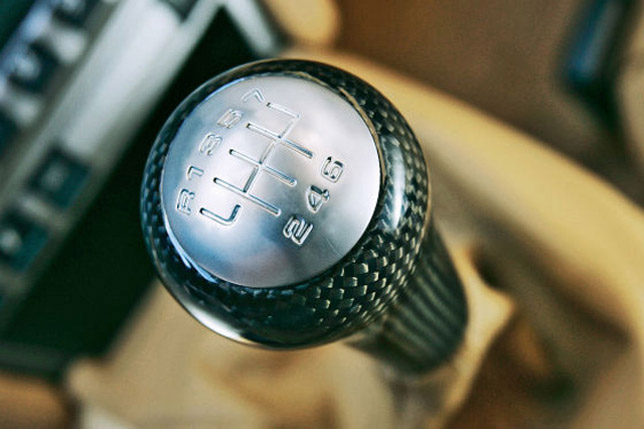
When Porsche released the information about their new 7-speed manual gearbox, which they are introducing with the long-awaited 911 replacement, reactions were pretty much split between disbelief and annoyance. After all, in many cases even 6 speeds could be a handful and, in a car of the 911’s breed, it is kind of important to be able to work the shifter with the same ease you slice through mom’s freshly-baked pie.
Therefore, initially there was disbelief, which grew into concern about the usability of a seven-speed manual in a car traditionally touted for its German practicality, utilitarianism, and efficiency. Still, Porsche have moved ahead with their production plans and we are about to see the official presentation of the newest 911 at the Frankfurt Auto Show (September 15-30, 2011). Shortly before, however, we are finally able to see the shifting layout of the transmission, which the guys at CarEnvy.ca have posted on their Facebook page.
Judging by the picture, using the shifter would not be an issue, at least for those who managed just fine with its 6-speed predecessor in the current model generation. Seventh gear is ‘squeezed in’ just beside sixth, which does not change anything about the layout of the other gears – no surprises for Porsche drivers. In addition, Porsche’s claim has been that the top gear is added with the sole purpose of reducing engine noise and fuel consumption and is to be used only on occasions, such as leisurely cruising, so this should happen rarely enough.
All of this is supposed to do away with the practicality/efficiency doubts. In fact, Porsche estimates that the 991 (as is the factory designation of this 911 generation) should be around 15% more fuel efficient than the current car, which is already extremely frugal by supercar standards. Of course, we will have to wait and see the official unveiling of the new 911, in order to be sure, but so far it appears that more is still better.
Infiniti will exhibit FX50 Performance Concept at the Frankfurt Motor Show on September 13. The vehicle is designed with contributions from Formula One World Champion Sebastian Vettel.
The vehicle is based on the FX50 facelift, which is powered by a 5.0 liter V8 with 390PS (287 kW) and 500Nm (369 lb-ft) of torque.
FX50 Performance Concept boasts revised front bumper with integrated LED daytime running lights, carbon fiber side skirts, a roof spoiler and different rear bumper.
The crossover stands on enormous wheels in new design fitted with low profile tires.
There are no roof rails, which is a part of enhanced aerodynamics.
Alfa Romeo 4C Concept will be also presented at the 64th International Motor Show in Frankfurt next month. It now boasts fluid metal exterior colour that dynamically enhances the smooth lines of the car.
4C Concept has a total weight of 850 kilos and a power unit with more than 200BHP, which means less than 4kg per HP, not bad at all.
The Alfa 4C Concept uses technology and materials derived from the 8C Competizione – carbon, aluminium, rear-wheel drive – and technology from Alfa Romeo models currently on sale: the 1750 turbo petrol engine with direct injection, the ALFA TCT twin dry clutch transmission; and all the best of Alfa’s DNA technology, obviously including the Alfa DNA dynamic control selector.
Other cars on display will be – Giulietta and MiTo.
The Giulietta is equipped with the next generation ALFA TCT twin dual dry clutch semi-automatic transmission. This innovative transmission ensures greater driving comfort and a sportier feel than conventional automatic gearboxes, combined with improved efficiency and lower fuel consumption levels. The ALFA TCT transmission will be available with a choice of two engines : the 1.4 TB MultiAir 170BHP engine and the 2.0 JTDM-2 170BHP diesel engine.
The MiTo will showcase two new engines – a revolutionary 0.9 TwinAir TB 85bhp and a new 1.3 JTDM 85bhp . The award winning TwinAir engine developed by Fiat Powertrain, develops 85 bhp at 5,500 rpm and torque of 145Nm at 2,000 rpm. By using the Start&Stop device and the smart alternator, the MiTo Twin Air engine has the lowest value of CO2 emissions with petrol engines in its class : 98g/km.
Peugeot RCZ Asphalt Limited Edition will be also available with diesel powered engine. The petrol version with 1.6 liter turbocharged power unit was introduced an year ago and now it is turn to the more economical variant.
Peugeot RCZ Asphalt HDi is powered by a 2.0 liter diesel engine with 200PS (147 kw) and a lot of torque. The engine is well-known with its qualities and low fuel consumption.
The limited edition RCZ boasts matt black exterior, sleek 10-spoke 19-inch lightweight alloys wrapped in high-performance Continental tires, as well as special ‘Asphalt’ badging.
No further information is released, but the car will be introduced at the Frankfurt IAA in September.
2012 Acura TSX Special edition will be exhibited at the Orange County International Auto Show. The model is created to celebrate the 25th anniversary of the popular sports sedan. It will add even more sportiness to the TSX lineup thanks to numerous exterior and interior upgrades for Acura’s entry-level sedan.
The aerodynamics package includes a new front bumper, revised rear bumper, a pair of new side skirts and nice 17 alloy wheels fitted with low profile performance tires.
The interior boasts exclusive seating surfaces with perforated black Lux Suede® inserts with red backing. There is also red lighting for the instrument cluster gauges, overhead lighting and footwell lighting.
The saloon is powered by a 2.4 liter four-cylinder petrol with 204PS (150 kW) and 230Nm (170 lb-ft) of torque. It is mated to a 6-speed manual or a 5-speed automatic gearbox.
“The Acura TSX has long been known for its high-revving 4-cylinder engines and sporty driving nature,” said Jeff Conrad, vice president of Acura sales.
“With the new Special Edition, the TSX becomes even more youthful and sporty in character, furthering its appeal to performance-minded buyers.”, he finished.
 Smart Forvision concept is an interesting project accomplished with the help of BASF. The joint concept vehicle presented at the 2011 International Motor Show in Frankfurt combines a futuristic design with technologies relating to energy efficiency, lightweight design and temperature management.


 ABT Sportsline has announced a special tuning program for the hot hatch – Audi RS3.


 New BMW 1 M Coupe should logically be named M 1, but of course it can’t have such a name because M 1 usually refers to super sport cars made by BMW in 1980-s and expected new variants are excluded.


 EcoVelocity visitors can be among the first in the world to experience future travel in a hydrogen-powered car, with passenger rides available in the ix35 FCEV. The vehicle is Hyundai’s third-generation FCEV and it demonstrates the company’s work on cutting-edge alternative fuels.
 Honda has officially revealed the eight-passenger SUV – 2012 Pilot, which come with a sleeker front-end design, enhanced interior features and an EPA highway fuel economy rating of 25 mpg.


 Making its global debut at the 2011 Frankfurt Motor Show in September, the Ford Evos Concept represents the ultimate expression of Ford’s new global design language, and explores key future powertrain and vehicle technologies.


 Infiniti will exhibit FX50 Performance Concept at the Frankfurt Motor Show on September 13. The vehicle is designed with contributions from Formula One World Champion Sebastian Vettel.

 Alfa Romeo 4C Concept will be also presented at the 64th International Motor Show in Frankfurt next month. It now boasts fluid metal exterior colour that dynamically enhances the smooth lines of the car.


 Peugeot RCZ Asphalt Limited Edition will be also available with diesel powered engine. The petrol version with 1.6 liter turbocharged power unit was introduced an year ago and now it is turn to the more economical variant.


 2012 Acura TSX Special edition will be exhibited at the Orange County International Auto Show. The model is created to celebrate the 25th anniversary of the popular sports sedan. It will add even more sportiness to the TSX lineup thanks to numerous exterior and interior upgrades for Acura’s entry-level sedan.


