BMW M3, designed at the Bavarian engine works, a sports car of high power, in the road traffic or on the race circuit, currently convinces in its fourth generation. The high level of perfection and attention to the parts from the supplier plant make the M3 a Brocken powerful mountain in relation to the modification topic.
CLP Automotive, the company specializing in the body kits, from the city of Georgensgmünd, Germany, responds to this challenge and is proud to provide BMW M3 GT, the top-class car.The long set of CLP, called, the “Interceptor”, which transmits its name to the BMW M3 GT, and which should be paid 8880 euro for, is responsible for the optics.
In a set you will receive:
the forebody section carbon facing
the motor hood
the front wing
the side channel bar
the sidewall jet
the rear apron
the rear spoiler
The solid 9 and 12×19 inch sports disks shine not only because of its white color, adapted to the rest of the car, but also due to the optical adapter plugs of the delayed firing, which gives the wheel a central attachment optics.
The power increase, based on the compressor, the responsibility for which lies on the 600 hp, can be found under the bonnet along with the optimized Bilstein-thread of the running gear, which monitors the binding driving pleasure. The Akrapovic titanium exhaust system – naturally with the suitable modified exhaust pipe – completes the set and contributes to the acoustic link.
There are the Recaro bucket seats and the modified fixture in the CLP-M3 GT saloon for the overtaking from Wiechers for the binding security. Naturally, the weight optimization is taken into consideration and is persistently carried out.
The total cost of the reconstruction is 69.000 euro.
Jaguar has released details of the C-X16 concept ahead of its world debut at the 2011 Frankfurt Motor Show.
Looking firmly to the future, the C-X16 marks a new chapter for Jaguar. The two-seater concept has inspired new advances in design, in engineering and in vehicle technology to create the most compact and responsive Jaguar in a generation. A hybrid, the C-X16 combines searing performance with beautifully realised styling.
Adrian Hallmark, Global Brand Director, Jaguar Cars: “The C-X16 embodies the established Jaguar strengths of sensual design, animal-like agility and inspirational performance and combines these with attributes that set us on a course to create sustainable sports cars of the future.”
Ian Callum, Director of Design, Jaguar Cars: “Jaguars have always been dramatically different. With the C-X16 we have moved the current award-winning design language on to the next generation, creating a car that is the very essence of future Jaguar performance.”
Under the muscular clamshell bonnet is a next-generation supercharged V6 petrol engine producing 380 PS (280kW) and 332 lb ft (450 Nm) of torque. Already boasting a high specific power output of 126 PS-per-litre, the performance of the C-X16 is further supplemented by a Formula 1-inspired hybrid boost system with a steering-wheel mounted button for on-demand acceleration.
Integrated into the eight-speed gearbox is a motor generator which draws power from a 1.6kWh battery pack mounted behind the seats for ideal 50:50 weight distribution. Charged through a brake energy regeneration system, the batteries allow the motor to provide an additional 95 PS (70 kW) and173 lb ft (235 Nm).
Mounted in an aluminium chassis structure, the result is 0-62 mph acceleration in 4.4 seconds, a top speed of 186 mph and acceleration from 50-75 mph of 2.1 seconds. The C-X16 is also able to travel at speeds of up to 50 mph under electric power alone and has CO2 emissions of 165 g/km.
The C-X16 measures 4,445 mm in length, 2,048 mm in width and 1,297 mm in height and has a wheelbase measuring 2,622 mm. In terms of overall length, the C-X16 is the smallest Jaguar created since 1954 and the XK120.
SKODA will present a world-premier design concept called MissionL at this year’s Frankfurt International Motor Show. Close to the final production-ready design, this concept car reveals the look of SKODA’s upcoming model line that is to become symbolic of the Czech carmaker’s planned model offensive.
The new compact five-door vehicle will be launched in Europe, Russia and China. In line with the brand’s internationalisation principles, this compact ‘liftback’ will feature specific modifications in each of these regions. In addition, the Indian market will have its own version, a compact sedan. These steps are in line with the goals of SKODA’s 2018 growth strategy that was set last year in which the brand intends to increase its sales to 1.5 million vehicles by 2018.
“Revealing the look of our new compact model, the MissionL shows exactly the direction our brand is going to take,” says SKODA Board Chairman Prof. Dr. h.c. Winfried Vahland. “The world premiere in Frankfurt gives a clear signal that SKODA is going full steam ahead now. We are going to present a new vehicle every six months over the next two or three years.”
Skoda MissionL Concept
In line with its 2018 growth strategy, the brand is gearing up, investing heavily in new models, markets and production capacities. Starting in mid 2013, the Yeti will be launched in the Chinese market and will be produced locally. Furthermore, SKODA, in cooperation with Shanghai Volkswagen, will produce a new compact model for this market from 2013, increasing the number of models produced in China to five.
The brand will also expand production in Russia through the Volkswagen Group’s partnership with the Russian-based car manufacturer GAZ Group. The GAZ plant in Nizhny Novgorod will start producing the Yeti in the fourth quarter of 2012. In India, SKODA will start production of a brand new compact sedan this year. The brand also remains focused on its traditional markets – Europe and the Czech Republic, its home market. Beside the Fabia and Octavia, SKODA’s main plant in Mladá Boleslav will produce a third model; the brand is already increasing the capacity of its production lines. Starting in late 2012, SKODA will also manufacture the automatic twin-clutch gearbox DQ200 in its plant in Vrchlabí.
Ford Mustang appeared in 1964 and became the ancestor of the Pony-Car-Class (Pony-Car-Klasse). Until now, the varieties of such bodies as Coupé, Fastback and Cabriolet is still a sensation due to their appearance.
Design-World Company in Sundern which is, incidentally, for more than six years is responsible for modeling station of CarFilmComponents (CFC-Styling Station), gave the originally equipped, a free-living prairie no weak engine with 412 hp an additional power impetus. Now the engine hasas 435 hp with 5-liter capacity. V8 with 6 speed manual transmission of 2011 model year is fully equipped, including Shaker 1000 CD/MP3 sound system. The above mentioned increase in the capacity is achieved byopen air filter with air box (Airbox), as well as software optimization.
At the same time, the car speed has been limited, but not as in previous versions. This condition is mandatory for such a wild horse.
Ford Mustang by Design World
The alloy wheels of 8,5×20 inches with 255/35ZR20 tires on the front axle, and of 10×20 inches with 285/30ZR20 tires on the back axle are actively supported by the thread undercarriage from H&R.
But let’s move on to the main accomplishment of the Design-World in Sundern: for example, the fact that this company can make your car look different, so no one will confuse it with other models. . For the beginning – the varnishing, including grinding of the plastic parts that were not varnished, such as channel bar, diffuser, radiator and bumper. The black painting of the Mustang GT remained unchanged. The foil finish with contrasting color nuances in metallic black, metallic orange, white, and the carbon foil (CFC-Black-metallic, CFC-Orange-metallic, CFC-White, as well as CFC-Carbon-Strukturfolie-Black).: Who can imagine this free animal in a fast gallop? Without the use of fantasy.
The total cost of the reconstruction of the “CFC-Sundern Mustang Project” is 12.150,00 euro.
Eterniti is an independent, boutique British luxury carmaker, uniquely based in London. The company aims to satisfy a growing demand for additional luxury, personalised specifications and exclusivity among car buyers, particularly in major cities and global wealth centres.
The company’s first car will reflect this. The Hemera will be the world’s first Super-SUV, providing new levels of luxury, space and performance in an SUV to create a new niche. It will feature a limousine-like rear cabin, including twin reclining seats, iPads and a drinks chiller, giving customers the option of being chauffeured as well as driving. But with compact dimensions, 4×4 ruggedness and dynamic performance, it is also both practical and retains driver appeal.
The Hemera will be shown in Frankfurt as a prototype, with production and deliveries to start in 2012. It is based on the latest generation of the best large SUV platform available, which will undergo a chassis-up rebuild, with a new, repackaged interior, carbon-composite body panels and additional performance.
Eterniti Hemera
Eterniti is backed by a group of international investors and has been established by people who have a passion for cars. The team has extensive experience in retailing some of the most prestigious British and European luxury and high-performance car brands, in markets from the UK to Asia-Pacific. It has further experience in the development and manufacture of high-end components and motor sport.
The engineering team is led by Alastair Macqueen, who was responsible for the development of the Jaguar XJ220 supercar to production and has won the Le Mans 24-Hour race with both Jaguar and Bentley. Eterniti also has its very own F1 driver, Johnny Herbert, like Macqueen victorious at Le Mans but in addition a winner of three Grands Prix during a 10-year Formula 1 career. Johnny will have an active involvement in developing Eterniti vehicles as well as serving as an ambassador for the brand.
Eterniti is establishing a London hub featuring a showroom, car build and service centre, and a separate atelier where customers can discuss their requirements and create a bespoke specification for their cars, which will be hand-built on site by British craftsmen and technicians. The London facilities will open later this year, with further showrooms in key international cities to follow from 2012.
The Subaru XV was developed under the concept of “Urban Adventure” as a new type of crossover vehicle featuring a sporty and casual design. The XV projects the unique value Subaru aims to bring to the C-segment crossover market. With overall proportions conveying a sense of stylishness and lightness, the XV design also displays the confident presence of a crossover vehicle. Its superior drive performance and fuel efficiency are warranted by the Subaru’s next generation power unit and Subaru core technologies – the symmetrical All-Wheel-Drive and advanced Subaru Dynamic Chassis Control Concept – making the XV incredibly safe and secure to drive. Subaru has made it possible to truly provide “Enjoyment and Peace of Mind” as defined in its new brand statement, “Confidence in Motion,” in this new Subaru XV.
Subaru XV
Specifications
Body size (Overall: Length x Width x Height): 4,450 x 1,780 x 1,570mm,
Wheelbase: 2,635 mm
Power Unit: New generation Subaru Boxer engine (2.0-litre 4-cylinder Horizontally-Opposed engine) plus Lineartronic (CVT)
Brabus was founded back in 1977 and specializes in tuning for prestigious vehicles from Mercedes-Benz, Smart and Maybach. The tuning company is famous with the performance upgrades offered for the most powerful Mercedes’ engines. Furthermore, Brabus offers entire aerodynamics packages for almost every available model as well as a number of interior modifications.
G-Power was founded 6 years later than Brabus. The specialists from G-Power specializes in tuning BMW cars. The tuning company became very famous recently with their several world records like that one for fastest saloon car in production – M5 Hurricane RR.
It is difficult to say, which tuning company is better, but one thing is for sure – both are just brutal. They fit extremely powerful engines to production cars, enormous rims with ultra-performance tires, huge brakes and proper suspensions. The exterior and interior customization is also at decent level.
To make things more interesting, we can check G-Power BMW M5 Hurricane RR and Brabus Rocket Mercedes-Benz CLS.
Firstly, Brabus Rocket is powered by a 6.2 liter twin-turbo V12 with staggering 730PS (540kW) at 5100RPM and 1320Nm (970 lb-ft) at 2100RPM. Because of safety reasons for the gearbox, the torque is limited to “just” 1100Nm (810 lb-ft). The engine was modified from a 5.5L V12 engine block -M275.
The performance is superb – 0 to 100 km/h in 4.0 seconds flat, to 200 km/h in 10.5 seconds and to 300 km/h in 29.5 seconds. The top speed is 365.7 km/h as this is a world record for fastest street-legal saloon.
The price for this pleasure is 348 000 EURO.
The opponent is G-Power BMW M5 Hurricane RR having twin-supercharged 5.0 liter V10 with 800PS (588 kW) at 7500RPM and 800Nm (593 lb-ft) at 5000RPM.
The hurricane is slightly slower to 100 km/h – 4.35 seconds, but a lot faster to 200 and 300 km/h – 9.5 seconds and 25.8 seconds, respectively. The top speed is 372 km/h, which is 6.3 km/h faster than the rocket.
G-POWER Hurricane RR stands on 255/35 ZR 19 at the front and 305/30 ZR 19 at the rear high-performance Michelin Pilot Sport tires.
Hurricane RR is priced at 251 100 EURO.
So, Hurricane RR is the fastest street legal saloon on the planet … for now!
2012 Jeep Wrangler Call of Duty: MW3 Special Edition is dedicated to one of the most interesting 1st person shooting games. The vehicle will actually take a part in the video game Call of Duty: Modern Warfare 3, which will hit the market in November.
“The Jeep brand’s partnership with Activision allows us to combine our new, more powerful, more exciting and more fuel-efficient Jeep Wrangler with the latest version of one of the most popular gaming experiences in the world,” said Mike Manley, President and CEO – Jeep Brand, Chrysler Group LLC.
“This opportunity enables us to demonstrate Jeep Wrangler’s unique combination of fun, capability and performance to a broad and growing group of consumers.”, he added.
2012 Wrangler Unlimited Call of Duty: MW3 Special Edition is based on the Rubicon model and features the special wheels finished in semi-gloss black. There are also a power-dome hood, a new front bumper, rock rails, taillamp guards, 2-inch lift kit and “Call of Duty: MW3 Special Edition” graphics on the front fenders and spare tire cover.
2012 Jeep Wrangler Call of Duty MW3 Special Edition
Laser light is the successor of the successful LED headlights. BMW is developing a new laser headlights, which will be more efficient and effective.
In the field of exterior vehicle lights, BMW also leads the way for example with full LED headlamps for the BMW 6 Series and with new developments such as the “Anti-dazzle High- Beam Assistant”, as well as with “Dynamic Light Spot”.
A further advantage of laser lighting technology, and one which the BMW engineers intend to use to full effect, is its high inherent efficiency. A single statistic will make this clear: whereas LED lighting generates only around 100 lumens per watt, laser lighting generates approximately 170 lumens.
Safety is a key consideration in the development of laser lighting for use in passenger cars. For BMW, the complete eye safety of this technology for all road users and its complete reliability in day-to-day use have top priority.
The launch of the 2012 Honda Insight at Frankfurt Motor Show (IAA) 2011 in September reaffirms Honda’s commitment to reducing CO2 emissions.
The 2012 Insight is now even more environmentally friendly producing just 96 g/km* of CO2. Fuel economy and emissions have been improved by means of enhanced aerodynamics and powertrain efficiency. Reduced engine friction , Continuous Variable Transmission (CVT) and better air conditioning, benefiting from a new cold storage system, all contribute to lower fuel consumption.
The Insight also receives a fresh exterior design including a new front grille. The slimmed tail spolier allows for a wider rear glass area, and combining this with a modified tail gate garnish and a reduction in the size of the wiper motor unit results in overall increased rear visibility.
Adjustments have been made to the engine and suspension for an overall improvement to ride comfort and stability. The features within the interior have also been enhanced for a superior quality.
With the electric-only powertrain of the A2 concept, Audi is offering another peek into the future of electric mobility at the 64th International Motor Show (IAA) in Frankfurt. The technical study features a classic, premium-standard space concept that offers plenty of room for four people.
The Audi A2 concept is just 3.80 meters (12.47 ft) long, 1.69 meters (5.54 ft) wide and 1.49 meters (4.89 ft) high; even so, it makes an elegant, powerful and sporty impression on the street. Its clean appearance concentrates on the essentials; all details are subtle but shaped for visual impact. The dark glass roof of the white-painted show car switches to transparency with the push of a button.
With its headlights, Audi is presenting the next phase in LED technology, known as matrix beam. A package of LEDs and microreflectors generate a high-resolution and non-glaring high-beam light. Delicate daytime running light fibers frame the highly efficient LED low-beam light module. Intelligent tail lights adapt their illumination to the visibility conditions. The rear fog light, produced by laser diodes, is seen as a beam of light in fog and projects a red triangle onto the road as a warning.
The dynamic light runs below the edge of the window from the front to the rear of the A2 concept – a band of light that contains a multitude of innovative, dynamic light functions. Integrated approach sensors detect the owner and unlock the doors via gesture control. While driving, the dynamic light functions as a continuous side marker light. If the car’s indicator is activated, light impulses run throughout the entire band of light.
Audi A2 Concept
In addition, a red bar of light flows forward from the tail lights when braking and demonstrates the strength of the brakes intuitively for other road users.
The dynamic light is also located in the cockpit area of the show car, structured in two separate arches. Like the entire interior, the dash panel has a light and clean look and intuitive controls. The driver manages many important features via touch-control areas on the inside of the steering wheel. Two additional control surfaces fold up at the driver’s right when starting the vehicle. An open profile serves as the steering column; a seven-inch display and two secondary displays are located at its end.
The Audi A2 concept has a flat interior floorboard. The center console is attached to the driver’s seat; the rear console extends forward between the two rear seats. The four individual seats add lightness, and there is storage space under the fold-up seat cushions. There is room between the rear seats for a city bicycle with its front wheel removed. The load area has two levels; a frame with functional nets creates the upper level.
The colors and materials in the interior support the impression of lightness and functionality. The large areas from the door top shoulders to the floor bear a new and innovative covering material made of polyurethane with a neoprene surface feel; a ribbed material made from recycled polyester covers the central floor area. The seat shells are made with a plastic blow molding technique. Aluminum elements create highlights the cockpit.
NILS, a single-seat electric concept vehicle that offers a glimpse of a new form of minimalist mobility, has been unveiled ahead of its public debut at the Frankfurt Motor Show later this month. This concept car – which features an aluminium space frame, wing doors and free-standing wheels – has the dynamic performance of a sports car, yet travels silently, and with zero emissions.
The NILS project is supported by the German Federal Ministry of Transport, Building and Urban Development, and is designed to be both technically realistic and economically supportable.
‘NILS anticipates the future. The goal of the NILS project is to research a technically concrete and economically feasible vehicle concept for micromobility which restructures individual transportation to make it more efficient and environmentally compatible based on electric drive technology,’ said Dr Ulrich Hackenberg, member of the Board of Management and Head of Development for the Volkswagen Brand.
With a range of 65 kilometres (40 miles) and a top speed of 130 km/h (80 mph) NILS would be the ideal vehicle for the majority of commuters in Germany. According to the German Bureau of Statistics, 73.9 per cent of all commuters residing between Berlin and Munich cover less than 25 kilometres (15.5 miles) on their way to work.
Volkswagen NILS Concept
Cars have always been mirrors of their times – their design styles and technological standards reflecting a particular era – and NILS is no different. It uses emissions-reducing electric drive technology to fulfil the specific requirements of commuters. In Germany, for example, about 60 per cent of all commuters travel by car, according to the Federal Bureau of Statistics; of these over 90 per cent travel alone. Zero-emissions vehicles like NILS will offer these frequent drivers a new eco-friendly mobility solution.
NILS is a very compact car that requires extremely little space in traffic. It is only 3.04 metres long – making it about 50 cm shorter than the new Volkswagen up! – just 0.39 metres wide from wheel to wheel, and a mere 1.2 metres tall.
NILS has the same basic layout as a Formula 1 race car, with the driver in the middle, the engine in back, and free-standing outboard wheels. The 17-inch alloy wheels are equipped with 115/80 (front) and 125/80 (rear) tyres optimised for low rolling resistance.
Though its inspiration may come from Formula 1, the styling has its origins at the Volkswagen Design Centre in Potsdam, Berlin. Designer Thomas Ingenlath, the centre’s director, said: ‘NILS was designed to make a visual statement and transport a vision of the automotive future to the present. I am especially pleased that we managed to implement the concept of the two glass wing doors. This allowed us to create large transparent surfaces and simultaneously to make entering and exiting the vehicle very comfortable, even in the most cramped of parking spaces.’
Because NILS is so compact and lightweight (460 kg), it is a lot of fun to drive. It has a top speed of 130 km/h, and can accelerate to 100 km/h in less than 11 seconds. This is achieved using an electric motor with a reasonably small 15 kW nominal power and short-term peak power of 25 kW. A lithium-ion battery supplies the electric motor with energy. The battery capacity (5.3 kWh) enables driving ranges of up to 65 km, depending on the style of driving. A battery of this size is relatively inexpensive, and can be charged either via a conventional 230-volt electrical outlet (maximum charging time two hours) or at an electric vehicle charging station. The socket is located at the back underneath the rear lighting module.
The centrepiece of the electric drive system is the lightweight 19 kg electric motor together with its transmission and battery. Energy management is via a high-voltage pulse inverter, which – together with the 12-Volt DC/DC converter for the vehicle electrical system and the charger – forms an integral drive unit. All drive unit components are located compactly in an aluminium housing at the rear of NILS; drive is to the rear wheels.
The motor, battery and all other components are so compact that there is still space for a small but practical bootspace. The body-coloured area above the rear lighting module swings upward, revealing space suitable for items such as a case of drinks and a bag.
Optimal weight distribution helps to ensure that NILS allows drivers not only to commute with zero emissions, but also to have fun while doing so. The lightweight NILS drives like a go-kart. The steering is purely mechanical (the low weight means power assistance is unnecessary), while the electric motor produces its maximum torque of 130 Nm from standstill, via a one-speed transmission. Suspension is by double wishbones front and rear; while ESP (Electronic Stabilisation Programme) helps to tame any over-exuberance on the part of the driver.
Safety is of course even more important than fun, and NILS is fitted with an automatic distance control system. This uses radar sensors to scan the space in front of the vehicle over a distance of about 200 metres and uses brake interventions to ensure that the distance to vehicles in traffic in front of the car does not drop below a specified minimum value. The system can even automatically brake the car to a stop, depending on the situation. Not only are the four disc brakes used to brake; electric traction by electric motor and battery regeneration can be used to brake as well. Last but not least, Front Assist is integrated in the automatic distance control system. This continually active system warns the driver of a potential collision; at speeds below 30 km/h (18 mph), automatic braking can avoid a collision under some circumstances.
The instrument cluster is a seven-inch TFT display. The vehicle’s speed is shown digitally in the middle, while energy flow is represented by bars. Another graphic display offers information on the driving range. The second central instrument is a mobile multifunctional device like the one used in the new up!: the Portable Infotainment Device (PID). It is snapped into theA-pillar to the right of the instrument cluster. Via touchscreen, the driver controls functions related to Navigation, Radio, Media, Telephone, Trip computer and – to preconfigure the driving range – ‘Eco. The PID computes the expected driving range, then it not only displays the route on the map display, but also the radius and thereby the destinations that can be reached using the current battery charge.
To save on weight and costs, certain functional elements and controls do without electrical assistance. The side mirrors, for example, are adjusted manually. The heating and ventilation system has full electronic control, and there is seat heating. Located to the right of the steering column is the motor start-stop switch; this round switch is also used to select D, N or R.
The aluminium space frame body was designed to be a highly effective safety cell. The body in white is produced from extruded aluminium, cast aluminium and sheet aluminium. The roof frame together with the door mounts, a roll bar, the bootspace and the front bulkhead consist of high-strength sheet aluminium. Extruded aluminium is used in the side sills, the transverse profiles and the front and rear car sections. The front and rear side body are aluminium. Parts made of high-strength plastic include the bumpers and the trim panels on the side sills.
The frames of the wing doors consist of three main elements: an inner section, a crash reinforcement section and an exterior part. When closed, they offer optimal crash safety. The door windows are made of lightweight, scratch-resistant, layered polycarbonate, while the front window is made of laminated safety glass.
The headlights are striking bi-xenon modules, while the indicator lights and daytime running lights are white and yellow LEDs. In the acrylic glass of the rear lights – integrated in the rear section like small wings – the light generated by LEDs is routed via transparent semiconductors which (appropriately for an electric vehicle) consume minimal amounts of power.


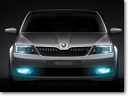 SKODA will present a world-premier design concept called MissionL at this year’s Frankfurt International Motor Show. Close to the final production-ready design, this concept car reveals the look of SKODA’s upcoming model line that is to become symbolic of the Czech carmaker’s planned model offensive.


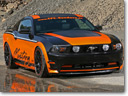 Ford Mustang appeared in 1964 and became the ancestor of the Pony-Car-Class (Pony-Car-Klasse). Until now, the varieties of such bodies as Coupé, Fastback and Cabriolet is still a sensation due to their appearance.


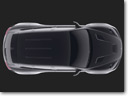 Eterniti is an independent, boutique British luxury carmaker, uniquely based in London. The company aims to satisfy a growing demand for additional luxury, personalised specifications and exclusivity among car buyers, particularly in major cities and global wealth centres.


 The Subaru XV was developed under the concept of “Urban Adventure” as a new type of crossover vehicle featuring a sporty and casual design. The XV projects the unique value Subaru aims to bring to the C-segment crossover market. With overall proportions conveying a sense of stylishness and lightness, the XV design also displays the confident presence of a crossover vehicle. Its superior drive performance and fuel efficiency are warranted by the Subaru’s next generation power unit and Subaru core technologies – the symmetrical All-Wheel-Drive and advanced Subaru Dynamic Chassis Control Concept – making the XV incredibly safe and secure to drive. Subaru has made it possible to truly provide “Enjoyment and Peace of Mind” as defined in its new brand statement, “Confidence in Motion,” in this new Subaru XV.

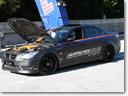 Brabus was founded back in 1977 and specializes in tuning for prestigious vehicles from Mercedes-Benz, Smart and Maybach. The tuning company is famous with the performance upgrades offered for the most powerful Mercedes’ engines. Furthermore, Brabus offers entire aerodynamics packages for almost every available model as well as a number of interior modifications.


 2012 Jeep Wrangler Call of Duty: MW3 Special Edition is dedicated to one of the most interesting 1st person shooting games. The vehicle will actually take a part in the video game Call of Duty: Modern Warfare 3, which will hit the market in November.


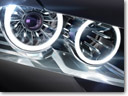 Laser light is the successor of the successful LED headlights. BMW is developing a new laser headlights, which will be more efficient and effective.

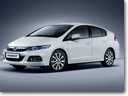 The launch of the 2012 Honda Insight at Frankfurt Motor Show (IAA) 2011 in September reaffirms Honda’s commitment to reducing CO2 emissions.

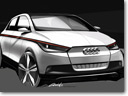 With the electric-only powertrain of the A2 concept, Audi is offering another peek into the future of electric mobility at the 64th International Motor Show (IAA) in Frankfurt. The technical study features a classic, premium-standard space concept that offers plenty of room for four people.


 NILS, a single-seat electric concept vehicle that offers a glimpse of a new form of minimalist mobility, has been unveiled ahead of its public debut at the Frankfurt Motor Show later this month. This concept car – which features an aluminium space frame, wing doors and free-standing wheels – has the dynamic performance of a sports car, yet travels silently, and with zero emissions.


