2012 Lotus Exige S is exhibited at the 2011 Frankfurt Motor Show. The manufacturer has also introduced Exige R-GT.
Lotus Exige is probably the best handling car in the world and now comes with superbly powered 3.5 liter supercharged V6 from Evora S. The output is no less than 350PS (257 kW) at 7000RPM and 400Nm (295 lb-ft) of torque at 4500RPM. Evora S accelerates from 0 to 100 km/h in 4.6 seconds and has a top speed of 276 km/h (172 mph). The staggering figures are based on total weight of 1437kg. So, you can make the maths, when this engine is fitted to the ultra-low weight Exige S – 1080kg. This means a power-to-weight ratio of 3.08 kilos per horsepower.
There are two new interior package options available: Premium and Premium Sport. The Premium Pack provides added comfort and style where as the Premium Sport option focuses on creating an internal space optimised for ultimate driver involvement.
“Anyone who has ever driven an Exige will tell you that it’s not for the faint-hearted. The new Exige S skips a few rungs on the ladder to give the driver the ultimate Lotus experience. Quite simply you can’t get more Lotus than the Exige S.”, said Lotus Chief Executive Officer Dany Bahar.
Audi has introduced A8 L W12 Exclusive Concept at the current Frankfurt Motor Show. The luxury sedan presents an exclusively finished interior – with leather of the prestigious Poltrona Frau brand and olive ash natural inlays.
It is powered by the famous W12 6.3 liter petrol engine with whopping 500PS (368 kW) and 625Nm (461 lb-ft) of torque. 0 to 100 km/h in just 4.9 seconds and a top speed of of 250 km/h (155 mph), electronically limited of course.
The seats are upholstered in Cognac-colored leather by the exclusive Italian manufacturer Poltrona Frau – a grade with an exceptionally soft, even, natural finish. There are highlights of granite gray piping on the center sections of the seat and seat backs. Leather elements on numerous parts of the interior – such as the dashboard, the center console, the tunnel, the door trims and seat consoles – round out the equipment; even the car key is trimmed in leather.
Audi A8 L W12 Exclusive Concept will be available in limited series of just 50 units as each will receive a number plate.
XIV-1 Concept showcases dynamic, strong yet smooth lines, typifying the true creative qualities of SsangYong Motor design. The vehicle features the perfect proportions of the compact SUV. It has continuous glass area, a wide C-pillar and slim roof combined with fast and strong stance.
At the frontyou’ll see modern LED headlamps with an integral design. The rear is quite nice, too. It boasts integrated third light in the huge rear diffuser and small sporty rear lights.
The interior boastsfreely rotating seats with ability of moving forwards and backwards. This enables the passengers to adjust the seats to their specific needs.
The user interface embraces the concept of an extended living space rather than providing just a means of transport. Control of many of XIV-1 functions is via the interaction of Smart mobile devices and the vehicle itself. Using the kind of devices that the driver and passengers are likely to be carrying at all times, they can control everything from the audio system, the display of information on the dashboard and online communications.
Volkswagen Caddy Edition 30 boasts a roof painted in brilliant gloss black, roof railing also in high-gloss black and high-end machine-polished 17” alloy wheels.
The vehicle has signatures on the sliding doors, the back of the vehicle and the door sills. There are five bodywork colours available, all going well with the black roof – Candy White, Reflex Silver, Salsa Red, Primavera Green or Sunny Yellow.
The interior features either 5-seat or 7-seat configuration. Caddy Edition 30 boasts Alcantara upholstery, multi-function steering wheel, leather-trimmed gear stick and handbrake lever, semi-automatic (Climatic) climate control and tinted windows combining to create a pleasant ambience.
It is available with four different engine specifications: three diesels from 75 to 125 kW and as a petrol (TSI) version with 77 kW.
At the 2011 IAA in Frankfurt you can see Caddy Edition 30 with the most powerful engine ever installed in a production Caddy: the 170 PS (125 kW) and 350Nm 2.0 TDI with DSG.
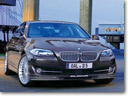
Alpina has introduced one more vehicle – D5 Bi-Turbo based on 535d. It comes with one of the most powerful diesel engines in the world.
In other words – 350PS (257 kW) coming from a 3.0 liter twin-turbo straight-six diesel, which has the same fuel-economy rating as the 530d with 245PS (180 kW) – 6.2 liters per 100 km on combined cycle. Not bad for such amount of power, not bad at all! 0 to 100 km/h in just 5.2 seconds and a top speed of 270 km/h (168 mph). That is the reason why 535d is called ///M diesel.
The mighty engine is mated to the new ZF SWITCH-TRONIC 8-speed Sport Automatic gearbox. It is further improved to handle all new torque.
The stance is improved by adding a set of lowering springs. There are also a set of 20” Alpina alloy wheels fitted with Michelin Pilot Super Sport tires in dimensions – 255/35 ZR20 at the front and 285/30 ZR20 at the rear.
Maybach has created a special Edition 125 limited edition model based on 57 S to celebrate the manufacturer’s 125th anniversary. For sure, 125 years is a lot of time and the company managed to keep up creating high-end saloons.
Edition 125 comes in either Tahiti Black or Patagonia Silver and matte-black 20” wheels. There are modified bonnet and given it sharply defined contours. It has a contoured edge and appears distinctly arrow-shaped. A restyled, horizontally structured bumper trim gives the Maybach saloons an even broader look. Daytime driving lights featuring LED technology and bordered with a chrome insert have been integrated into the outer air intakes.
The interior boasts SWAROVSKI® ELEMENTS, “MAYBACH MANUFAKTUR” lettering, , high-resolution cinema screen with a 19” diagonal, 9.5” monitors in the rear, an overview camera and many more.
The power is also increased with 18PS (13 kW) to 630PS (463 kW). The fuel consumption is decent for such heavyweight car – 15.0 liters per 100 km and 350 g/km of CO2. All the Maybach twelve-cylinder engines meet the EU5 standard/LEV2.
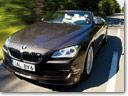
One of the most interesting and eagerly awaited cars was revealed at the 2011 Frankfurt Motor Show. BMW Alpina B6 Bi-Turbo Convertible is based on the well known 650i model.
The all-aluminium bi-turbo V8 power plant boasts 507PS (373 kW) and staggering 700Nm (516 lb-ft) of torque, which is an increase of 100PS (74 kW) and 100Nm (74 lb-ft). So, there is no coincidence. 0 to 100 km/h in 4.8 seconds and a Vmax of 311 km/h (193 mph). Still, the vehicle manages to achieve an average 10.9 litres per 100 km and 255 g/km of CO2.
Alpina B6 Bi-Turbo Convertible also comes with complete aerodynamic package including front and rear bumpers and side skirts. There are also a four-tailpipe Akrapovic sports exhaust system and huge 20” alloy wheels in the well-known design fitted with Michelin Pilot Super Sport tires.
The B6 Bi-Turbo Convertible features an extensive range of standard equipment, including leather upholstery, fully adjustable comfort seats with heating system, navigation system with preparation for Bluetooth mobile phone, USB audio interface, Xenon lights and LED fog lights.
Offering all the robust, high value, high quality attributes of SsangYong vehicles in a new pick-up opens up the brand’s strengths to a whole new area of the global new vehicle market.
Making its world debut at the IAA International Motor Show, Frankfurt 2011, SsangYong’s SUT-1 is ready to enter mass production. Having debuted in concept form at the Geneva Motor Show in March 2011, the truck has now evolved into a showroom ready model.
Applying modern design techniques to the traditional pick-up body has resulted in a stylish Sports Utility Truck that perfectly presents the dynamism and strength of SsangYong Motor. Balancing the needs of load volume with attractive lines, SUT-1 is the ideal vehicle for a wide variety of drivers, whether they enjoy leisure activities such as camping, skiing and cycling or they just need a hard working truck.
Far from being a stripped out commercial model, SUT-1 offers the cabin comfort and luxury of a premium SUV. Equipment includes a sunroof, RDS & Bluetooth audio, rear view camera, hinge sprung tailgate and a trip computer. Safety equipment hasn’t been forgotten either, with functions such as ESP and dual airbags fitted to make SUT-1 a genuine alternative to a conventional 4×4.
Efficiency has also been at the forefront of SUT-1’s engineering, with the 2.0 Active Diesel Engine complying with Euro 5 emissions standards and offering highly competitive economy. CO2 emissions have been reduced to 186g/km, representing a nine per cent improvement over the engine’s previous performance.
SsangYong SUT-1
This impressive efficiency is achieved without any compromise in performance. Peak torque of 360Nm is maintained across a wide range of 1,500 to 2,800rpm, while 190Nm is delivered at a near-idle 1,000rpm.
Styling
When penning the SUT-1’s distinctive lines, designers had in mind SsangYong’s corporate product development philosophy, ‘Robust, Specialist, Premium’. Expressing the company’s latest design language, SUT-1 takes on a dynamic appearance displayed through the bird-wing shaped radiator grille and headlamp silhouette.
The SsangYong’s stylish body houses a spacious five-seat cabin, enabling both the driver and passengers to travel in comfort en route to their chosen activity. A large 2m2 deck provides ample space for all types of extreme sports equipment, making SUT-1 the ideal companion for anyone with a growing sense of adventure.
New eco-friendly powertrain
Drivers have the option of either rear wheel drive or on demand four wheel drive in their SUT-1, coupled to six speed manual or automatic transmissions. The 2.0 Active Diesel Engine fitted to all variants is impressively efficient despite its 155ps power output. Buyers of the automatic model also benefit from a sixth cruising gear for maximum comfort and economy at motorway speeds.
Strong safety specifications
The ultra-rigid frame body is equipped with front seat dual airbags and seatbelt pretensioners with load limiters. Passenger safety is further prioritised through the installation of ISOFIX attachments for a child seat and ESP (Electronic Stability Program), including various functions such as Active Rollover Protection and Brake Assist System (ABS).
Comfort and handling
SsangYong has engineered SUT-1 to offer all the dynamic appeal of a premium SUV. The truck’s combination of double wishbone and five-link suspension is more commonly found on full-sized SUV models, while the optimal tuning of engine mounts has minimised vibration in all driving conditions.
EQUIPMENT
Mechanical
155ps 2.0-litre diesel engine with particulate filter
Part-time 4WD
6 speed manual transmission
6 speed automatic transmission
Double wishbone front suspension
5 link rear suspension
Seats
Electric driver’s seat
Electric passenger seat
Leather upholstery
Heated front seats
Climate control
Manual air conditioning
Fully automatic air conditioning
Appearance
16” alloy wheel
18” alloy wheel
Leather steering wheel
Sunroof
Convenience
Cruise control
Power folding rear view mirrors
Electro chromatic inside rear view mirror
Steering wheel audio systems controls
2DIN MP3 CDP with RDS function
Bluetooth system
Trip computer
Safety
Ultra-rigid frame
Dual airbags
Immobiliser
Reversing warning system
Disc brakes on all 4 wheels
Front and rear fog lamps
Daytime running lights
ISOFIX child seat attachments
Electric windows
Electronic stability program (ESP)
TECHNICAL DATA
Engine
FR 2.0 Active Diesel Engine
Driven Wheels
RWD
Part Time 4WD
Transmission
6MT
6AT
6MT
6AT
Dimensions
Overall length
mm
4,990
Overall width
mm
1,910
Overall height
mm
1,790
Wheelbase
mm
3,060
Min. turning radius
m
6.2
Weight
Gross vehicle weight
Kg
2,640 ~ 2,740
Kerb weight
Kg
1,873 ~ 1,995
Engine
Fuel
–
Diesel
Capacity
cc
1,998
Bore X Stroke
mm
86.2 X 85.6
Compression ratio
–
16.5 : 1
Number of cylinder
–
In-line 4
Performance
Max. power
kW/rpm
114 / 3,400 ~ 4,000
ps/rpm
155 / 3,400 ~ 4,000
Max. torque
Nm/rpm
360 / 1,500 ~ 2,800
Low end torque
Nm/rpm
190 / 1,000
Max. speed
Km/h
171*
170*
171*
170*
Fuel Consumption
CO2 (combined)
g/km
186*
201*
195*
211*
Combined
L/100km
7.1*
7.6*
7.4*
8.0*
* Target data (Actual Certification data can vary depending on conditions)
Stephan Winkelmann, President and CEO of Automobili Lamborghini S.p.A., is presenting at the Volkswagen Group Night in Frankfurt the most extreme Gallardo ever: the Gallardo LP 570-4 Super Trofeo Stradale. Automobili Lamborghini is bringing motor racing excitement directly to the road. This new and most extreme top model in the Gallardo lineup is based on the successful race car from the Lamborghini Blancpain Super Trofeo, the world’s fastest singlemake series.
The car will be produced in a limited run of 150 numbered units.
The Lamborghini Blancpain Super Trofeo championship brings professional racers and gentlemen drivers face-to-face in fiercely fought battles on Europe’s most challenging racetracks such as Monza, Silverstone and Hockenheim. There are many similarities between the racing and road versions of this super sports car. For example, they both share the same V10 powerplant, which is used in the racing version with no modifications.
An enormous and manually variable rear spoiler for increased dynamic load
Right from first glance, these similarities are even more evident in the new Gallardo LP 570-4 Super Trofeo Stradale. In fact, it is equipped with the same rear spoiler that offers greater aerodynamic load – reaching in the best aerodynamic condition 3 times the load of the Gallardo LP 560-4 – for increased dynamic stability during tight, high-speed driving. As in the race cars, the rear spoiler can be varied manually in order to let the driver optimize the car’s performance according to the track or road characteristics.
2012 Lamborghini Gallardo LP 570-4 Super Trofeo Stradale
Another element taken directly from the racing version is the removable engine hood with quick-release system. Both the spoiler and the hood are of course made of carbon composite material, as are a host of other components on the SuperTrofeo Stradale. Together with aluminum, carbon fiber is the basis behind the extremely lightweight construction of Gallardo’s new top model.
Lightweight construction through consistent use of carbon fiber
The Gallardo LP 570-4 Super Trofeo Stradale boasts a maximum dry weight of 1340 kilograms. It beats the already lean Gallardo LP 560-4 by 70 kilograms, which gives the Gallardo LP 570-4 Super Trofeo Stradale a stunning power-toweight ratio of 2.35 kilograms per HP for breathtaking performance. It sprints from 0 to 100 km/h in a mere 3.4 seconds and reaches 200 km/h just 10.4 seconds later. Its forward thrust finally tops out at 320 Km/h.
“Rosso Mars” stands for Italy’s racing tradition
The Gallardo Super Trofeo Stradale sports a brand new “Rosso Mars” finish that underscores the special connection between ultimate race track performance and Lamborghini’s “Italianness”. The “Rosso Mars” color symbolizes Italy’s traditional racing red, as established at the beginning of last century in motor racing, when the home nations of the competitors were indicated by the color of the paint on the vehicles. Dark green stood for Great Britain, blue was for France, white (and silver later on) represented Germany, white and blu stripes for USA, and red was the color of all race cars from Italy.
Red, black and carbon fiber characterize the exterior
The exterior appearance of the Gallardo LP 570-4 Super Trofeo Stradale is perfectly accentuated by a matte black finish on the large rear spoiler, the engine hood and the front air intakes, which contrasts with the “Rosso Mars” paint. The forged wheels are painted in high-gloss black, a color that is also available on the roof as an option. The rocker panel covers, impressive rear diffuser and outside mirror housings are made of carbon fiber polished to a high gloss, while the brake calipers are accented in red for the first time on a Lamborghini. It’s a perfect match with the exterior color and racing concept of this new super sports car. And besides the historically suggestive “Rosso Mars”, the new Gallardo Super Trofeo Stradale is also available upon request in “Grigio Telesto” or “Bianco Monocerus” with the roof available in gloss black as an option, as mentioned above.
Minimalist sporty interior
Black and red, the perfect combination of sporty minimalism, are the dominant shades inside the Super Trofeo Stradale. The most broadly used materials are Alcantara – in “Rosso Mars” on the underside of the dashboard, the central part of the seat cushion and the backrest – and extremely lightweight carbon fiber. Black Alcantara with contrasting red top-stitching is used to finish the other parts of the interior. The steering wheel is upholstered in black suede and also features red top-stitching. The door panels, the monocoque racing seats and the center console cover are made of carbon fiber, the construction of which
Lamborghini has achieved a world-leading expertise. Discreet sporty accents are provided by dark chrome visible metal parts.
Upon request, an interior layout including elements made of carbon fiber, such as the handbrake frame, the middle of the center console, the lower rim of the steering wheel, the decorative frames around the main and secondary instrument panels, the door handles, and the handle for opening the glove box (also available upon request), can be ordered.
Phenomenal powerplant
Like the Super Trofeo competition version, the new Super Trofeo Stradale is based on the Gallardo Superleggera technical approach. The V10 powerplant generates 570 HP, equivalent to 419 kW, which is fully available at 8000 RPM. The maximum torque is equally impressive, with the torque curve peaking at 540 Nm at 6500 RPM. The V10’s unique firing order delivers the striking sound you hear in motor racing.
Transmission “race tested” in the Lamborghini Blancpain Super Trofeo championship series
Like the race car, the Gallardo Super Trofeo Stradale offers the robotized egear six-speed transmission controlled by steering wheel paddles as standard equipment. This electronically controlled system shifts through its six gears smoothly and much faster than any human being could. And for maximum acceleration from a standing start, the transmission can be set to the “Thrust Mode” – a program that allows to reach the best performance possible executing a racing start with minimal tire slippage at an initial engine speed of approximately 5000 rpm.
Permanent all-wheel drive for maximum traction in any situation
Every kilometer in the Gallardo LP 570-4 Super Trofeo Stradale is packed with sheer excitement, in part due to its unrelenting grip in virtually all situations thanks to all-wheel drive. At the end of the day, the Lamborghini Super Trofeo is the only single-brand racing series in the world that features all-wheel drive race cars. The Gallardo Super Trofeo Stradale is a highly concentrated driving machine offering a truly stunning driving experience with breathtaking cornering speeds and fast, immediate response. Its road manners are always precise, stable and completely safe.
Suspension with unmatched precision
The layout of the suspension is directly derived from motor racing, with a double aluminum wishbone guiding the wheels. Precise rack-and-pinion
steering gives the driver a very close connection to the road. As is true for the Gallardo Superleggera, the vehicle is specially set up to take full advantage of its dynamic potential. No other model in the Gallardo line is as close to being a true race car. Another great feature is the ultra-lightweight 19-inch wheels, which alone save some 13 kilograms. The lightweight and sturdy wheel bearings and bolts are made from titanium and high performance Pirelli P Zero Corsa tires are fitted.
Brakes with unmatched stopping power
Behind the massive wheels are brakes designed for unmatched stopping power, as controlled by the ESP stability control system, which is standard equipment. The front axle is equipped with aluminum calipers with eight pistons each, and the calipers on the rear axle have four pistons each. The ventilated discs on the front and rear measure 365 and 356 millimeters, respectively. Upon request, Lamborghini will install a carbon-ceramic brake system. The carbon-ceramic discs measure 380 mm for the front wheels and 356 mm for the rear wheels.
Racing-type options
The optional equipment designed with racing in mind includes not only the carbon-fiber ceramic brake discs, but also a tubular interior roll cage, 4-point safety belts and fire extinguisher. On the other hand, those who want comfort can equip their Super Trofeo Stradale with a satellite navigation, with Bluetooth connection for mobile phones, an anti-theft system, and a lifting system that raises the front axle.
Lamborghini Gallardo LP 570-4 Super Trofeo Stradale
Technical Data
CHASSIS AND BODY
Frame
Structural aluminium space frame, based on aluminium extruded parts welded to cast aluminium joint elements
Body
Aluminium with thermoplastic “hang-on” parts and diffuse use of Carbon Fiber
Suspension
Double-wishbone front and rear suspension system, anti-roll bar, anti-dive and anti-squat
ESP
Full ESP system with ABS, ASR and ABD
Steel brakes
Power vacuum, aluminium alloy callipers: 8 cylinder front callipers and 4 cylinder rear callipers
Ventilated discs (front – rear)
EU: Ø 365 x 34 mm front – Ø 356 x 32 mm rear
US : Ø 14.37 x 1.34 front – Ø 14 x 1.26 rear
Steering
Power-assisted rack and pinion
Tires (front – rear)
Pirelli P ZERO CORSA 235/35 ZR 19 – 295/30 ZR 19
Wheels (front – rear)
Aluminium alloy: 8.5″ x Ø 19″ – 11″ x Ø 19″
Kerb-to-kerb turning circle
11.5 m (37,7 ft)
Mirrors
External mirror manually foldable
Rear spoiler
Manually variable wing set up
Airbags
Front “dual-stage” driver and passenger airbags. Nur bei OPTKopf- Thorax-Seitenairbags
ENGINE
Type
10 cylinders V 90°, DOHC 4 valves, common-pin crankshaft
Displacement
5204 cc (317,6 cu in)
Bore and stroke
Ø 84.5 mm x 92.8 mm (Ø 3,33 in x 3,65 in)
Valve gear
Chain-driven, intake and exhaust continuously variable valve
timing, electronically controlled
Compression ratio
12,5:1
Maximum power
419 kW (570 CV) at 8000 rpm
Maximum torque
540 Nm at 6500 rpm (398,3 ft lbs at 6500 rpm)
Emission class
EURO 5 – LEV 2
Emission control system
Catalytic converters with lambda sensors
Cooling system
Two water radiators + oil-to-water cooler, engine and gearbox radiator
Engine management system
Bosch MED 9
Lubrication system
Dry sump
DRIVETRAIN
Type of transmission
Permanent 4-wheel drive with viscous traction system
Gearbox
6-speed + reverse
Standard robotised sequential e gear system with actuation by paddles on the steering column
BRABUS has been building the world’s fastest street-legal sedans for many years. This tradition started in 1996 with the BRABUS E V12 that had a top speed of 330 km/h (205 mph), and continued in 2003 with the E V12 Biturbo that reached 350.2 km/h (217.6 mph). In 2006 the BRABUS ROCKET, built in small-series production based on the first edition of the Mercedes CLS, improved the world record to 365.7 km/h (222.7 mph). The BRABUS E V12 “one of ten” based on the latest E-Class, pushed the record to 370 km/h (230 mph).
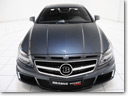
The world debut of the new BRABUS ROCKET 800 from BRABUS at the 2011 IAA in Frankfurt/Main now continues this unique success story. The high-performance automobile based on the new Mercedes CLS generation is powered by a BRABUS 800 V12 Biturbo engine that produces 800 hp (788 bhp) / 588 kW of power and a peak torque of 1,420 Nm (1,047 lb-ft), which in the car is limited to 1,100 Nm (811 lb-ft). The exclusively appointed BRABUS ROCKET 800, built to order starting at EUR 429,000, reaches a top speed in excess of 370 km/h (230 mph) and accelerates from 0 to 300 km/h (186 mph) in just 23.8 seconds.
Like its predecessors the new BRABUS ROCKET 800 is also powered by a 12-cylinder high-capacity engine that was converted to 800 V12 Biturbo specifications in the BRABUS engine-building shop. Using state-of-the-art machining processes and with utmost precision in every last detail the engine, based on the latest Mercedes 600 engines, underwent a displacement increase from 5.5 to 6.3 liters (336 to 384 cu. in.).
The displacement increase comprises a special crankshaft with longer stroke, larger, forged pistons and an increase in cylinder bore across the board. Intake and outlet ports of both cylinder heads are optimized for mixture flow, and fitted with sports camshafts.
BRABUS ROCKET 800
The intake side was also completely reworked: the hood of the ROCKET 800 features a carbon-fiber ram-air intake system that gets its combustion air through slits in the BRABUS front element.
Another custom development is the BRABUS 800 Biturbo system. It comprises two special exhaust manifolds with integrated high-performance turbochargers, and four water-to-air intercoolers. The stainless-steel high-performance exhaust system with free-flow metal catalysts and butterfly valve was also created specifically for the CLS floorpan.
Just as elaborate was the implantation of the V12 engine and all its peripherals into the modified engine bay of the sedan. Numerous components such as the engine mounts had to be custom designed.
Another engineering masterpiece of the BRABUS engineers is the newly configured on-board electronics system. It includes newly programmed engine mapping that contributes equally to achieving maximum power yield and to meeting the current EURO V emission standards. Just as important is the adaption to the driving dynamics systems such as traction control, ESP, ABS and Brake Assist.
The BRABUS 800 V12 Biturbo engine is lubricated with high-tech motor oil from technology partner ARAL and produces 800 hp (788 bhp) / 588 kW at 5,500 rpm. The even more enormous peak torque of 1,420 Nm (1,047 lb-ft), available from a low 2,100 rpm, is limited electronically in the car to 1,100 Nm (811 lb-ft).
For the first time the BRABUS engine specialists combine this high-end engine with a seven-speed quick-shift gearbox. Gears are shifted by means of shift paddles on the steering wheel or automatically. The BRABUS limited-slip differential, available with various final drive ratios, optimizes traction of the rear-wheel-drive car.
The BRABUS 800 V12 Biturbo engine and the entire powertrain are operated with high-performance lubricants from technology partner ARAL.
With the longest available final-drive ratio the BRABUS ROCKET 800 reaches a top speed of more than 370 km/h (230 mph), making it the world’s fastest street-legal sedan. But this exclusive high-performance automobile is tops in other areas as well: 0 – 100 km/h (62 mph) in 3.7 seconds, 0 – 200 km/h (124 mph) in 9.8 seconds and 0 – 300 km/h (186 mph) in 23.8 seconds are figures that are as unique as this BRABUS automobile itself.
To keep the enormous performance of the world’s fastest sedan safely in check at all times, the vehicle’s aerodynamic properties, suspension and brakes were modified extensively.
Like all other BRABUS body components for the new CLS, the ROCKET 800 front element that includes the front spoiler and the radiator frame was developed in the wind tunnel. The aerodynamic-enhancement components for the ROCKET 800 are manufactured form ultra-light yet high-strength carbon fiber.
The front spoiler features large air inlets and side air vents to ensure optimal air supply of radiators, oil coolers and front brakes. Just as important is that it also minimizes lift on the front axle while improving drag. The air inlets above the radiator cutout provide the ram-air intake system of the 12-cylinder engine with ample combustion air.
The air vents in the front fenders are part of the sporty-elegant yet understated appearance of the four-door car. BRABUS side skirts with integrated LED entrance lights calm the airstream along the vehicle’s sides. They also form a transition to the carbon-fiber fender flares on the rear axle, which add 40 millimeters (1.6 in.) to the width of the ROCKET 800 compared to a stock CLS.
To achieve an optimal aerodynamic balance, the BRABUS design studio has developed a rear wing and a rear diffuser for the CLS body. Side air vents in the rear bumper round out the sporty appearance.
A high-performance vehicle such as the BRABUS ROCKET 800 naturally also has a precisely calibrated high-end suspension. A height-adjustable coilover suspension was developed in cooperation with technology partner BILSTEIN. In addition to an adjustable ride height the gas-pressure shocks on front and rear axle feature ten selectable settings each for bound and rebound. Sport sway bars give the car even more agile turn-in and reduce body roll during fast cornering.
Maximum stopping power and absolutely fade-resistant brakes are further active safety features of the ROCKET 800. The BRABUS high-performance brake system was adapted to work with the Brake Assist system of the CLS. On the front axle it consists of vented and grooved steel brake discs that measure 380 x 37 millimeters (15.0 x 1.45 in.) and 12-piston aluminum fixed calipers. Vented and grooved steel discs measuring 360 x 28 millimeters (14.2 x 1.1 in.) and six-piston fixed aluminum calipers on the rear axle complete the extremely efficient and durable brake system.
The immense top speed of the BRABUS ROCKET 800, for street operations limited electronically to 350 km/h (217 mph), necessitates special high-performance tires. Technology partners Continental, Pirelli and YOKOHAMA mount the 19-inch one-piece BRABUS Monoblock F wheels with high-speed-capable tires. The front axle features size 9.5Jx19 wheels and tires in size 255/35 ZR 19. Tires in size 285/30 ZR 19 mounted on identically sized wheels on the rear axle provide excellent traction.
The ergonomically shaped BRABUS sport steering wheel with aluminum shift paddles always guarantees perfect, close contact with the suspension. Aluminum pedals, footrest and shifter add further sporty highlights. The BRABUS speedometer with 400-km/h (250-mph) dial is also part of the custom-tailored interior as are stainless-steel scuff plates with backlit ROCKET 800 logo.
They welcome driver and passengers to the exclusive atmosphere of a BRABUS fine leather interior. The company upholstery shop has created an all-leather gray interior crafted with utmost precision from the finest supple leather. The leather is combined with high-gloss-polished black piano wood and a headliner made from black Alcantara. The headrests are embroidered with a BRABUS and a ROCKET 800 logo. BRABUS ROCKET 800 – Technical Data
Body
Four-door sedan based on C 218-series Mercedes-Benz CLS-Class.
Steel unibody welded to floorpan, widened by 40 millimeters with BRABUS carbon-fiber fender flares.
BRABUS ROCKET 800 aerodynamic-enhancement kit for reduced lift on front and rear axle and reduced drag. Consists of front element with integrated front spoiler and air inlets for the ram-air intake, air vents in the front fenders, side skirts with integrated entrance lights, rear wing and rear diffuser, rear fascia with side air vents.
BRABUS hood with integrated ram-air intake system.
Dimensions:
Length 4.996 mm (196.7 in.)
Width 1.881 mm (74.1 in.)
Height 1.371 mm (54.0 in.)
Curb weight 1.980 kg (4,365 lbs.)
Gross vehicle weight 2.415 kg (5,324 lbs.)
Tank capacity/reserve 66 l / 14.0 l (17.4 / 3.7 gal.)
Engine
BRABUS 800 V12 Biturbo high-capacity engine based on Mercedes 600.
BRABUS 800 V12 Biturbo engine conversion consisting of:
Displacement increase to 6.3 liters (384 cu. in.) by means of a special crankshaft with longer stroke, larger cylinder bore and corresponding larger pistons. Mixture-flow-optimized intake and outlet ports of both cylinder heads, including installation of high-performance camshafts.
BRABUS 800 V12 Biturbo system with two high-performance turbochargers with optimized exhaust manifolds and integrated turbine housings, more efficient intercooling system with four water-to-air intercoolers and ram-air intake integrated into hood.
BRABUS stainless-steel twin exhaust system with free-flow metal catalysts and butterfly valve. Newly programmed mapping for engine and on-board diagnostics.
V12-cylinder three-valve alloy engine with two turbochargers
Displacement 6.233 cc (380.4 cu. in)
Compression ratio 9.0 : 1
Rated power output 800 hp (788 bhp) / 588 kW at 5,500 rpm
Peak torque 1,420 Nm (1,047 lb-ft) from 2,100 rpm (electronically limited to 1,100 Nm / 811 lb-ft)
max. CO2 emissions 372 g/km (595 g/mile)
Fuel type: Super plus (98 ROZ)
Motor oil: ARAL
Power Transfer
Rear-wheel drive with limited-slip differential and ESP
BRABUS limited-slip differential with a locking rate of 40 percent
Final drive ratio 2.65 : 1
Suspension
Independent front and rear suspension with height-adjustable BRABUS coilover sport suspension developed in cooperation with BILSTEIN.
Front axle:
Three-link suspension, anti-dive geometry, Height-adjustable BRABUS struts with gas-pressure shocks with 10-way adjustable bound and rebound, coil springs, BRABUS sport sway bar.
Rear axle:
Multi-link suspension, anti-dive and anti-squat geometry. Height-adjustable BRABUS struts with gas-pressure shocks with 10-way adjustable bound and rebound, coil springs, BRABUS sport sway bar.
Wheels:
One-piece BRABUS Monoblock F alloy wheels with YOKOHAMA ADVAN Sport high-performance tires.
Front: 9.5J x 19 H2 with size 255/35 ZR 19 tires
Rear: 9.5J x 19 H2 with size 285/30 ZR 19 tires
Brake System
Dual circuit brake system with Brake Assist and BRABUS high-performance brake system.
Front: BRABUS 12-piston fixed aluminum calipers with vented and grooved steel discs measuring 380 x 37 mm (15.0 x 1.45 in.)
Rear: BRABUS six-piston fixed aluminum calipers with vented and grooved steel discs measuring 360 x 28 mm (14.2 x 1.1 in.)
Performance
0 – 100 km/h (62 mph): 3.7 sec.
0 – 200 km/h (124 mph): 9.8 sec.
0 – 300 km/h (186 mph): 23.8 sec.
Top speed: more than 370 km/h / 230 mph (for on-road operations electronically limited to 350 km/h / 217 mph due to tires)
Fuel Economy
Max. city 23.8 l / 100 km (9.9 mpg)
Max. highway 11.1 l / 100 km (21.2 mpg)
Max. combined 15.7 l / 100 km (15 mpg)
Subaru has announced its XV model at the 64th Frankfurt Motor Show. The vehicle will hit the market in just 2 months with pre selling, and first deliveries mid January 2012. The price list is not announced, yet.
The fundamental product concept that Subaru adopted for the XV is “Urban Adventure.” In specific terms, a vehicle that would be perfectly suited to exciting, lively, yet stress-free use in the city. Thus, Subaru balanced optimal performance factors such as fuel efficiency and enjoyable driving (Fun to Drive) with a stylish, highly distinctive exterior design.
The exterior boasts a stylish, flowing form with a high body and side cladding that enhances the sense of functionality of SUV. There are a hexagon grille and hawk eye headlights at the front.
The corners of the front and rear bumpers were designed with special edges that enhance the aerodynamic performance of the vehicle and also contribute to better fuel efficiency
Inside, you will find horizontally styled instrument panel, luxury materials – leather, metal, and cloth. There is a large 4.3” full-colour LCD equipped with advanced infotainment such as eco-driving display and vehicle information display which supports the driver in a great many ways.
The engine range includes 1.6-litre and 2.0-litre petrol models. Together with the adoption of the new Lineartronic (CVT), a newly developed “Auto Start Stop System”, the fuel efficiency was further improved. Also the Subaru Boxer Diesel, which was specially developed for the European market and received very favourable reviews, is featured in the XV line-up and is the most likely model to arrive in Ireland.
2012 Subaru XV
Safety:
By integrating the partition windows into the front doors and putting the door mirrors on the door panels, top-level forward visibility in this class was achieved, and blind angles were reduced. A stylish profile with a more streamlined rear roof edge was designed without impairing the rear field of view.
In addition to SRS driver’s/passenger’s airbags, SRS side airbags and SRS curtain airbags, SRS driver’s knee airbag are installed as standard in all models.
VDC (Vehicle Dynamics Control) is installed in all models as standard. Its intervention timing was optimised and incorporates control logic that demonstrates effectiveness in danger avoidance situations. A brake assist function is also incorporated into the VDC system. This provides the XV with world leading danger avoidance performance and increases driving confidence.
Major Specifications:
Overall Length x Width x Height (mm): 4,450 x 1,780 x 1,570
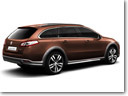
Peugeot 508 RXH will be available as Limited Edition model, which will hit the market in 2012. The Peugeot 508 RXH is a distinctive vehicle characterised by its HYbrid4 powertrain and high specification, as Peugeot continues its upmarket trend.
The Diesel-electric hybrid powertrain combines highly effective 2.0-litre HDi FAP diesel engine with 163BHP and 37BHP electric motor driving at the rear axle.
The 508 RXH Limited Edition comes with Copper metallic paintwork, Lama leather and Alcantara upholstery, Peugeot Open & Go system, Xenon headlamps, motorised tailgate and electric powered, heated and memory position seats. It also features front parking aid, automatic quad-zone air conditioning, JBL Hi-Fi and distinctive Attila 18” alloy wheels with every car carrying an individually numbered plaque.
The 508 RXH Limited Edition is priced at £36 000 OTR.
2012 Peugeot 508 RXH Limited Edition:
A total combined output of 200bhp
ZEV – Zero Emissions Vehicle mode for silent running
Four-wheel drive – with grip to all four wheels
CO2 emissions of just 109 g/km with economy at 67MPG
 2012 Lotus Exige S is exhibited at the 2011 Frankfurt Motor Show. The manufacturer has also introduced Exige R-GT.


 Audi has introduced A8 L W12 Exclusive Concept at the current Frankfurt Motor Show. The luxury sedan presents an exclusively finished interior – with leather of the prestigious Poltrona Frau brand and olive ash natural inlays.


 XIV-1 Concept showcases dynamic, strong yet smooth lines, typifying the true creative qualities of SsangYong Motor design. The vehicle features the perfect proportions of the compact SUV. It has continuous glass area, a wide C-pillar and slim roof combined with fast and strong stance.


 Volkswagen Caddy Edition 30 boasts a roof painted in brilliant gloss black, roof railing also in high-gloss black and high-end machine-polished 17” alloy wheels.


 Alpina has introduced one more vehicle – D5 Bi-Turbo based on 535d. It comes with one of the most powerful diesel engines in the world.


 Maybach has created a special Edition 125 limited edition model based on 57 S to celebrate the manufacturer’s 125th anniversary. For sure, 125 years is a lot of time and the company managed to keep up creating high-end saloons.


 One of the most interesting and eagerly awaited cars was revealed at the 2011 Frankfurt Motor Show. BMW Alpina B6 Bi-Turbo Convertible is based on the well known 650i model.


 Offering all the robust, high value, high quality attributes of SsangYong vehicles in a new pick-up opens up the brand’s strengths to a whole new area of the global new vehicle market.


 Stephan Winkelmann, President and CEO of Automobili Lamborghini S.p.A., is presenting at the Volkswagen Group Night in Frankfurt the most extreme Gallardo ever: the Gallardo LP 570-4 Super Trofeo Stradale. Automobili Lamborghini is bringing motor racing excitement directly to the road. This new and most extreme top model in the Gallardo lineup is based on the successful race car from the Lamborghini Blancpain Super Trofeo, the world’s fastest singlemake series.


 BRABUS has been building the world’s fastest street-legal sedans for many years. This tradition started in 1996 with the BRABUS E V12 that had a top speed of 330 km/h (205 mph), and continued in 2003 with the E V12 Biturbo that reached 350.2 km/h (217.6 mph). In 2006 the BRABUS ROCKET, built in small-series production based on the first edition of the Mercedes CLS, improved the world record to 365.7 km/h (222.7 mph). The BRABUS E V12 “one of ten” based on the latest E-Class, pushed the record to 370 km/h (230 mph).


 Subaru has announced its XV model at the 64th Frankfurt Motor Show. The vehicle will hit the market in just 2 months with pre selling, and first deliveries mid January 2012. The price list is not announced, yet.


 Peugeot 508 RXH will be available as Limited Edition model, which will hit the market in 2012. The Peugeot 508 RXH is a distinctive vehicle characterised by its HYbrid4 powertrain and high specification, as Peugeot continues its upmarket trend.


