Category: Car Makes

Car Makes

  • 2013 Hyundai GENESIS COUPE

    2013 Hyundai Genesis Coupe THUMB2013 Hyundai Genesis Coupe has just made its North American debut at the North American International Auto Show. The highlights about the refreshed and significantly redesigned model are the impressive performance upgrades, the more aggressive coupe styling, the improved interior materials and design. It also includes both 4-cylinder and V6 engines, which benefit from significant technology enhancements. On the other hand with the 3.8-liter V6 engine it receives sophisticated direct-injection technology and with the the 2.0-liter turbocharged engine it upgrades to a more precise twin-scroll turbocharger and larger intercooler. These two vehicles are of course with automatic transmissions and 8-speeds, with paddle-shift SHIFTRONIC® manual-shifting capability.

    The refreshed 2013 Hyundai Genesis Coupe captures the attention with aggressively redesigned front fascia, grille, headlights, LED daytime running lights, fog lights and hood with heat extractor cues. The side view reveals new, aggressive 18- and 19-inch alloy wheel designs with deeper dimensional sculpting. Eventually, the rear taillights provide a visual spark via premium LED illumination and new contours. Nevertheless the traditional rear-drive sport coupe proportions remain the same. Moreover Genesis Coupe’s arching roofline and tapering greenhouse highlight the exterior. And to make everything perfect the depth between the fenders and the greenhouse has been maximized. In addition enlarged openings in the front fascia allow for better engine breathing along with a more aggressive look. At last, dual asymmetrical exhaust tips integrated with the blackout rear diffuser treatment complete the performance.

    2013 Hyundai Genesis Coupe
    2013 Hyundai Genesis Coupe

    The two Genesis Coupe engines have been significantly upgraded. In particular the 3.8-liter Lambda DOHC V6 engine adds sophisticated direct-injection technology, adding 42 horsepower (a generous 14 percent increase) and 29 lb.-ft of torque (an 11 percent increase). Peak horsepower rises to 348 (255 kW) at 6,400 RPM, with peak torque increasing to 295 lb.-ft. (218 Nm) at 5,300 RPM on premium fuel. Additionally the unique lambda-engine anti-knock technology allows the V6 engine to run on regular fuel. The result is a possible acceleration from 0 to 60 mph in less than 5 seconds. The top speed is electronically limited to an impressive 149 mph. Additionally the 3.8-liter engine uses Dual Continuously Variable Valve Timing (Dual CVVT) and a Variable Intake System (VIS) that helps cylinders breathe most efficiently at both low and high RPM. The result is an outstanding throttle response and off-the-line acceleration combined with remarkable fuel efficiency. All these new technologies are included in order to give Genesis Coupe 3.8 an impressive power-to-weight ratio of only 10.0:1. On the other hand the turbocharged, intercooled 2.0-liter DOHC inline four-cylinder substitutes a new twin-scroll design for its turbocharger in addition to a larger intercooler with enhanced thermal efficiency. This twin-scroll design is more efficient at recovering exhaust energy and produces cooler cylinder temperatures than. Furthermore it is also more precise, with improved combustion efficiency, reduced turbo lag, leaner air/fuel ratios and more evenly distributed pressure in the exhaust ports. All of this results in improvements in power, efficiency and emissions. The 53 percent larger intercooler further reduces the intake temperatures, providing denser, cooler air from which to develop even more power. This turbocharged engine also benefits from Dual CVVT on both intake and exhaust camshafts. The 2.0-liter turbo now generates 274 horsepower (201 kW) and 275 lb.-ft. (203 Nm) of torque on premium fuel. The highlight here is that the turbo’s anti-knock sensors automatically adjust ignition timing and engine mapping to run perfectly on regular fuel, yielding 260 horsepower (191 kW) at 6,000 RPM and 260 lb.-ft. (191 Nm) of torque at 2,000 RPM. The turbo engine also features a cast-aluminum cylinder block and cylinder head. All these improvements give the Genesis Coupe 2.0T a great power-to-weight ratio of 12.3. Both V6 and 4-cylinder engines also feature deeper, baritone-sounding dual cat-back exhausts to complement more efficient breathing on the intake side. To ensure that all this new power is evenly distributed to the pavement, Genesis Coupe also offers an available Torsen® limited-slip differential on R-Spec and Track models. Genesis Coupe’s body shell makes generous use of ultra-high-tensile steel. The rear-wheel drive powertrain configuration provides a well-balanced 55:45 front-to-rear weight distribution for the 2.0T, and 56:44 for the 3.8 model.

    The new 2013 Hyundai Genesis Coupe has newly tuned sport suspension: spring, damper, and bushing ratings all have been precisely recalibrated to match these new powertrains. Of course they are not on the account of the road feel, precise body motion control and ride comfort, which are now all improved. Moreover Genesis Coupe employs a MacPherson strut dual-link front suspension and a five-link rear suspension setup. In more details, the front suspension is mounted to the body via a solid subframe that is lighter and stronger than a comparable multi-piece component would be. And in order to help reduce body roll and tune the cars at-the-limit handling for maximum predictability, there are fitted 23-mm diameter front and 19-mm diameter rear stabilizer bars. Another important fact that has to be mentioned is that the high-performance Genesis Coupe R-Spec and Track models raise the bar even higher with differentiated, track-tuned suspension calibrations. To be more precise, the R-Spec/Track suspension features both firmer front spring rates and rear spring rates with matched damper rates. The Genesis Coupe R-Spec/Track models also deliver a significant increase in roll control over other versions of the Genesis Coupe via thicker stabilizer bars (24mm front/20mm rear). Of course all models receive improved low-velocity-control dampers for refined ride comfort combined with improved body control. What about the suspension of the car: it uses hydraulic, RPM-sensing rack-and-pinion steering which now has been recalibrated with a quicker 13.8:1 ratio. The new models are also with further optimized driver ergonomics, and telescopic adjustment. The transitions mated with the both engines are the standard six-speed manual transmissions. However they have been significantly to provide more driver-friendly shift gating and balanced weighting precision. Additionally the clutch take-up, feel, and engagement characteristics also have been refined for optimum shifting ease and feel. Both engines now offer an in-house-developed eight-speed automatic with paddle-shift SHIFTRONIC® manual-shifting capability. In addition to the steering wheel-mounted paddle shifters, each automatic offers shift capability via the shift lever. Of course Hyundai can not go without high performance braking systems used in the design of the new 2013 Genesis Coupe. And as usual there are Brembo® four-piston calipers clamp down on fade-resistant 13.4-inch ventilated front brake rotors and 13-inch ventilated rear rotors on both R-Spec and Track models. However, all other models get substantial 12.6-inch front ventilated rotors and 12.4-inch rotors in the rear with floating single-piston calipers.

    The 2013 Genesis Coupe interior has been significantly improved. It now has more distinctive, upscale features and design cues. Firstly the instrument panel crash pad features a stitched-seam appearance. Secondly, the parking brake lever is leather-wrapped on leather-equipped models. Next, the instrument cluster now features an electroluminescent gauge cluster for premium ambience and superior readability. In addition a new driver-side rear seat walk-in assist function has been added for more convenient rear seat access from the driver’s side. Further options are: driver seat power lumbar support; front seatback; a center stack multi-gauge cluster with instantaneous mpg, torque level (3.8 models) or turbocharger which boost pressure (2.0T models) and oil temperature; a center fascia tray with cover; interior surfaces with softer touch and lower sheen; sport front seats with deep side bolsters; Infinity® premium audio system; two-stage front seat heaters. Genesis Coupe also offers the convenience of a Proximity Key and push-button start. Furthermore the model also features innovative technologies such as Xenon high-intensity discharge (HID) headlights, which deliver brighter illumination intensity, more daylight-like lighting character and reduced power consumption. And for the audiophiles the new Genesis Coupe has a standard auxiliary input jacks (3.5 mm mini-jack and USB input) to accommodate and charge personal audio devices such as an iPod®. Of course the new Hyundai Blue Link telematics is available on 2013 Genesis Coupe, however with a 90-day complimentary trial period. The Blue Link platform is available on 3.8 Grand Touring/Track and 2.0T Premium trim levels. Blue Link can be accessed from the buttons on the rearview mirror inside the Genesis Coupe, the web and via smart phone. In addition the Blue Link System is offered in three telematics service packages: Assurance, Essentials and Guidance.

    2013 Hyundai Genesis Coupe
    2013 Hyundai Genesis Coupe

    Other important features are the included safety technologies. The 2013 Genesis Coupe has a wide range of both active and passive safety features. For example a standard safety technology includes driver and front passenger advanced frontal airbags, front seat-mounted side airbags, side air curtains and active front head restraints. The vehicle is also built with strong body construction; front and rear crumple zones; bodyside reinforcements and five-mph energy-absorbing bumpers. The hood also includes buckling creases and safety stops. In addition the front seatbelts have pretensioners and force limiters, and the rear seats feature LATCH (Lower Anchors and Tethers for Children), which make affixing child safety seats easier. Furthermore all Genesis Coupe models feature standard four-channel ABS with Electronic Brake-force Distribution (EBD). Hence this optimizes the brake performance under various dynamic loading conditions. The system also includes Brake Assist, which provides maximum ABS-level braking force in accidental and unexpected stops. Of course there is featured Electronic Stability Control (ESC), which is one of the industry’s most effective life-saving technologies. The highlight here however is that the 2013 Genesis Coupe now offers a specially-tuned three-stage driver-selectable ESC modes: Full-on ESC function (default mode on start-up); Intermediate ESC function with driver powertrain override control and retained ESC/TCS braking function; Full-off ESC function for uninhibited driver vehicle control in all conditions. The driver-selectable full-off ESC mode has been calibrated to provide drivers with a larger performance envelope should they choose to participate in competitive events such as autocrosses or track days. The Genesis Coupe anti-lock braking system function (ABS) remains fully functional in all ESC modes to help drivers maintain steering control under adverse braking conditions.

    Finally all Genesis Coupe models have more aggressive exterior which is emphasized with secen new color offerings: Parabolica Blue, Catalunya Copper, Monaco White, Becketts Black, Circuit Silver, Gran Premio Gray, and Shoreline Drive Blue. To further improve and refresh Genesis Coupe’s interior design there is new tan leather interior, a new red leather bolster/red cloth insert interior, and a new gray leather bolster/gray cloth insert interior have been added to the interior color environment selections.

    Source: Hyundai

  • 2012 Audi A6 Allroad Quattro – Price €54 600

    2012 Audi A6 allroad quattro  ThumbWe are all familiar how successful were the first two generations of the Allroad Quattro from the years 2000 and 2006. Now Audi has revealed the third generation of the famous model. The new A6 Allroad Quattro extends the range of uses for the A6 Avant. Moreover there is also a significant improvement in performance, as well as in fuel consumption, which was reduced by as much as 20 percent compared with the previous model.

    What are the dimentions of the new A6 Allroad Quattro: 4.94 meters (16.21 ft) long, 1.90 meters (6.23 ft) wide and 1.47 (4.82 ft) meters tall. This makes it making it a few millimeters bigger than the Avant. Thank to the aluminum components included in the body of the vehicle, its total weight has been reduced by as much as 70 kilograms (154 lb) compared with the previous model. Furthermore the exterior of the Audi is designed in order to give a sportily distinctive road stance. It includes balanced proportions; sharp lines, which delineate taut surfaces; and the roof line which flows into flat D-pillars. In addition Audi offers progressive LED technology as an option for the headlights and tail lights. The xenon plus headlights can be also combined with adaptive light. Another important highlight about the body pf the new A6 Allroad Quattro is that it sits six centimeters (2.36 in) higher than that of the A6 Avant. Further improvements are made by the stainless steel covers, which protect the underbody at the front and rear of the car, and the exhaust system ending in two large, flattened tailpipes. The wheel well edges, the bumpers and the sills are painted in a contrasting color. In combination with the optional aluminum exterior package, Audi also offers a full paint finish. For example, the color called Java Braun is available exclusively for the new Audi model.

    2012 Audi A6 Allroad Quattro
    2012 Audi A6 Allroad Quattro

    Is there anything different in the interior? Yes; but let’s see it in particular. The interior of the Audi A6 Allroad Quattro now offers plenty of space. This is due to the long wheelbase of 2.91 meters (9.55 ft). It also features a lean, elegant design, clear ergonomics and superior workmanship. Moreover a function that depicts the car’s pitch has been added to the MMI operating system, the soft keys of which are gleaming aluminum. The good news is that the MMI comes as standard, as well as the onboard computer with efficiency program. More about the interior design of the A6 are several visual cues: black carpeting and instrument panel; the interior color Santos Brown; the optional aluminum inlays; the door sill trims, which are also made of aluminum and emblazoned with “allroad.”

    Another important highlight in the new Audi A6 Allroad Quatro is the luggage compartment which has a capacity of 565 liters (19.95 cu ft). Furthermore, latches in the luggage compartment make it easy to fold down the rear seats, and thus increasing luggage capacity to 1,680 liters (59.33 cu ft). Other standard equipment features underline the practical character of the new model. For instance there is a rail system with an included load-securing kit for dividing the luggage compartment as needed, tensioning straps on the left wall and a double loading floor.

    Next in the new model is that it includes a broad choice of options. Firstly, the head-up display projects important information onto the windshield. Secondly, ambient lighting bathes the interior with subtle LED light, and the widely adjustable deluxe front seats are optionally available with ventilation and massage function. In addition there are also four-zone automatic air conditioning, a panoramic glass roof and the convenience key, which can stay in the driver’s jacket pocket. Topping the modular range of infotainment options is the hard drive-based navigation system MMI Navigation plus with touchpad operation (MMI touch) and whole-word voice control. Furtheremore The Bang & Olufsen Advanced Sound System boasts 15 speakers. There is also an optional Bluetooth car phone which makes a connection to the Internet via UMTS, and a WLAN hotspot. Tailored services for the driver, such as the all-new Audi traffic information online or Audi music stream web radio, are also included. Attractive services from Google, including Google Earth, Google Street View and voice-activated POI search, are also available.

    2012 Audi A6 Allroad Quattro
    2012 Audi A6 Allroad Quattro

    Driving with even more confidence – this was the aim of the Audi assistance and safety systems. The radar-based adaptive cruise control with stop & go function always keeps the new A6 at a reasonable distance from the car ahead. Moreover at speeds below 30 km/h (18.64 mph), the system initiates maximum braking in the event of a collision. ACC stop & go works closely together with the Audi pre sense safety system (available in various configurations). Furthermore Audi active lane assist helps the driver to maintain the lane; next Audi side assist helps the driver when changing lanes; the night vision assistant with marking of detected persons reduces the stress of driving in the dark. In addition there is the impressive driver information system with rest recommendation function which detects when the driver is getting tired and recommends taking a rest. Moreover a variety of high-end systems help in the process of parking: the park assist system with 360° display takes over the steering; the parking system plus with 360° camera provides good vision in all directions; and four small wide-angle cameras record images of the vehicle’s immediate surroundings.

    More importantly the new A6 Allroad Quattro is available with a choice of four powerful V6 engines: a TFSI gasoline engine and three TDI units. All are 3-liter engines with turbocharging and direct injection. They make use of important technologies from the Audi modular efficiency platform such as the start-stop system and innovative thermal management. The highlight here is that their fuel consumption has been reduced by as much as 20 percent compared with the previous model! In details the 3.0 TFSI, which is boosted by a mechanically driven compressor, produces 228 kW (310 hp) and 440 Nm (324.53 lb-ft) of torque. It accelerates the A6 Allroad Quattro from zero to 100 km/h (62.14 mph) in 5.9 seconds on the way to electronically limited top speed of 250 km/h (155.34 mph). It consumes 8.9 liters of fuel per 100 km (26.43 US mpg).

    On the other hand the three variants of the 3.0 TDI produce 150 kW (204 hp), 180 kW (245 hp) and 230 kW (313 hp); torque values are 450, 580 and 650 Nm (331.90, 427.79 and 479.42 lb-ft). The entry-level version consumes on average just 6.1 liters of fuel per 100 km (38.56 US mpg), corresponding to 159 g CO2/km (255.89 g/mile). Audi also consider soon to offer a particularly low-emissions clean diesel version of the 180 kW (245 hp) engine. The twin-turbo 3.0 TDI develops a 230 kW (313 hp) and it is a powerful, great sounding engine. It accelerates the A6 Allroad Quattro from zero to 100 km/h (62.14 mph) in only 5.6 seconds; the top speed is an electronically regulated 250 km/h (155.34 mph). The most powerful TDI delivers its power to a smooth and fast-shifting eight-speed tiptronic transmission. The three other engines are paired with the seven-speed S tronic, a sporty dual-clutch transmission. With their wide ratio spreads, the automatic transmissions are major contributors to the fuel efficiency of vehicle. They can be operated manually, including through optional paddles on the steering wheel. Moreover the Quattro permanent four-wheel drive system is paired with torque vectoring. For example during dynamic driving this system brakes the wheels on the inside of the curve, which are under a reduced load, before they can slip. Hence this further enhances traction and handling. The optional sport differential distributes the power in continuously variable proportions between the rear wheels.

    2012 Audi A6 Allroad Quattro
    2012 Audi A6 Allroad Quattro

    How about the chassis of the A6 Allroad Quattro: it combines sportiness with comfort. This is due to the new electromechanical power steering which is highly sensitive and efficient. The optional dynamic steering adjusts the steering ratio to the speed driven. Moreover with the Audi drive select system, the driver can vary the function of the steering, the air suspension, the gas pedal, the automatic transmission, the sport differential, the automatic air conditioning, the lighting and the adaptive cruise control. In Efficiency mode, these systems work as economically as possible; their function can be very freely configured in Individual mode. Furthermore there is an adaptive air suspension, which combines air suspension with controlled damping. It comes as standard. It lowers the body by 15 millimeters (0.59 in) at high speed and raises it by 35 millimeters (1.38 in) at the push of a button. For example this Allroad mode is suitable for rough terrain. In addition, the driver can select a lift mode at low speeds. Then there are an extra ten millimeters (0.39 in) which enable the new Audi A6 to handle major irregularities in the road surface. Additional information that has to be mentioned here is that the Audi A6 Allroad Quattro rolls on 18-inch, five-arm alloy wheels and 235/55-size tires. Of course, Audi and Quattro GmbH offer optional wheels measuring 18, 19 and 20 inches in diameter. The large brakes provide powerful deceleration. The driver can activate a hill descent assist function for steep downhill passages and this results in speed limitation between 10 and 20 km/h (6.21 and 12.43 mph), depending on the surface.

    The new Audi A6 Allroad Quattro will be available in Germany from spring 2012.

    The 3.0 TDI developing 150 kW (204 hp) has a list price of €54,600.

    Source: AUDI

  • 2013 Honda Accord Coupe Concept – NAIAS

    Honda has revealed the Accord Coupe Concept today at the North American International Auto Show. The new ninth-generation 2013 model is set to go on-sale this fall. It boasts cutting edge technologies combined with bold design and nice powerful engines.

    “Marking the 30th anniversary of U.S. production, this new ninth-generation Accord will raise the bar again through a tour de force of new Honda powertrain and safety technologies, geared to ensure that Honda and the Accord continue to lead in fuel economy, safety and fun-to-drive performance,” commented John Mendel, executive vice president of sales for American Honda.

    The engine range includes a new 2.4 liter Earth Dreams with 184PS (135 kW) and 240Nm (177 lb-ft). It is coupled with a 6-speed manual or a new Continuously Variable Transmission (CVT). There is also a hybrid model with a 163PS (120 kW) electric motor and a 2.0-liter four-cylinder Atkinson-cycle engine. Last, but not least, Accord can be power by a mighty 3.5-liter V6 with 314PS (231 kW) and 359Nm (265 lb-ft). It can be connected to a 6-speed manual or a new 6-speed automatic.

    The new Accord will be available with Honda’s first application of Lane Departure Warning (LDW) and Forward Collision Warning (FCW) technology. Both systems use a camera mounted behind the windshield to alert drivers if the car is moving out of its lane or to warn drivers of a potential collision in front of them.

    The standard equipment is amazing, but the most interesting features are the Bluetooth 3 HandsFreeLink phone interface, a full-color intelligent Multi-Information Display (i-MID) and an SMS text messaging function. Another standard feature and first for the Accord is the introduction of a Pandora Internet Radio interface4, compatible with the Apple iPhone, which works with the vehicle’s audio controls and i-MID.

    2013 Honda Accord Coupe Concept
    2013 Honda Accord Coupe Concept

    Source: Honda

  • Smart For-us Concept Grants Mobility For-us

    It is rare to hear from Smart (the Daimler AG microcar subsidiary) but today we have big news. Well, small actually but either way – A Smart For-us concept will premiere at the NAIAS at it is a pickup… sort of.

    With 3547mm in overall length and 1506mm in width it wont fit much farming equipment, will it? Yes, it does have a cargo bay but even that is crammed with two clever or rather “Smart ebikes” which sit docked at the back and keep their charges up by using the batteries from the For-us.

    Did we mention that the For-us is all-electric? Because it is. It has a 55 kW ‘magneto-electric’ motor which delivers a torquey punch of 130 Newton metres. Top speed, Smart say, will be more than 120 km/h which is understandable because as we said it’s not very big really.

    Smart For-us Concept (2012)
    Smart For-us Concept (2012)

    But one cannot be cross at Smart for this is what they do. The “mobility-concept” is Smart’s answer to congested city districts, impassable trails and general urban havoc. In terms of aesthetics, the For-us is in a category of its own – the two seats, wrapped in their yellow fabric, keep it stylish and simple, the cabin design has aerodynamics in mind and there’s a familiar face smiling at us from the grille.

    Source: Smart

  • Aston Martin Vantage V8 GT4 to Appear at CTSCC

    Aston Martin Racing, jointly with Multimatic Motorsports, intend to continue their winning streak with this year’s Grand-Am Continental Tire Sports Car Challenge (CTSCC). The Toronto-based Multimatic company is no stranger to  CTSCC previous titles and so, racing one of the two team Aston Martin V8 Vantage GT4s will be Multimatic’s acclaimed drivers Scott Maxwell and Joe Foster. The other one will be driven by Hollywood film star Patrick Dempsey, a talented racer in his own right, partnered in the opening round of the series by Aston Martin Chief Engineer and greatly experienced Vantage GT4 racer Chris Porritt.

    This is not the first time Aston Martin and Multimatic seen in cooperation on a common project. The Canadian firm helped develop the Aston One-77’s carbon fibre chassis and various carbon fibre components for the Aston Martin Zagato. They also have a four-post testing rig based in the UK that has been used on many occasions by road going and racing Astons.

    The Vantage GT4 was first seen back in 2006 when, almost in stock condition, forged its name at the Nurburgring 24h race. Up to this day the car has not changed a lot – it still has the standard 4.7l V8, the same road car aluminium chassis with its suspension and a manual transmission. It all sounds very crude but with a reputation of reliability and numerous wins on endurance races, the Aston V8 Vantage is not to be taken lightly. It has been tuned specially to deviate from the FIA standard to meet the regulations of the Grand-Am challenge and with service provided by Multimatic it is ready to go.

    Aston Martin Vantage V8 GT4
    Aston Martin Vantage V8 GT4

    The CTSCC is run by the Grand American Road Racing Organization. Some of North America’s most iconic circuits will see action this year with over ten races which last for two and a half hours each. The challenge starts on the 27th of January at the Daytona International Speedway where the Aston will be competing in the Grand Sport category that consists of six- and eight-cylinder, production-based cars. Other notable circuits include Watkins Glen International, the Indianapolis Motor Speedway and Laguna Seca, and the Lime Rock Park in Connecticut which will be the conclusive race at the end of September.

    Source: Aston Martin

  • Peugeot 208: Thiner and Less Thirstier

    The new Peugeot 208 is set to hit the UK markets somewhere in June this year and it will be very green. The range of engines included have the sole purpose of saving the planet. Weight and dimensions have shrunken and “up to 25%” of the polymers used are from recycled products. A variety of 208 choices will meet the needs of picky – the vehicle comes as a 3 or 5-door hatchback, petrol or diesel with automatic transmissions, 5 or 6 speed manuals, stop and start systems for diesels and for an extra 500 quid, one gets a touch screen navigation.

    First thing we notice are the looks – it’s a recognizable figure that has taken on modernity and sharpness. The boomerang-style tail lights are bulkier and more amorphous, the grille incorporates a funkier pattern while curves on the side dauntingly suggest – “I am French and don’t let them tell you otherwise”

    Top of the range 1.6l THP petrol engine will be available this summer, developing 156 bhp and 240 Nm of torque while returning perfectly respectable 48.7 mpg. For ultimate economy though, the new 3-cylinder 1.0 or 1.2 VTi petrol bees are up for the job with 65.7 and 62.8 mpg respectively. Yet, the 1.4l e-HDI diesel trumps all the others with its economy of 83.1 mpg and 87g/km of carbon dioxide emissions. These minuscule figures are courtesy to Peugeot’s clever micro-hybrid Stop & Start System that comes with almost all diesels and the Electronic Gearbox Control (EGC).

    Peugeot 208 (2012)
    Peugeot 208 (2012)

    Weight is down by around 110kg compared to the previous 207 and it is also a bit shorter with 7cm. Obviously the 208 has gone on a diet so that its occupants can let loose a bit as there is more back seat legroom and a significantly larger boot space – “optimized architecture”, say Peugeot. Moving on to the driver’s seat we are overjoyed with pure simplicity – we have a strangely elevated dashboard which houses a rev. counter, a speedometer, a temperature gauge and a fuel gage – classic Peugeot. The central console is tidy enough and the small steering wheel looks like a steering wheel and not like a Playstation controller. It is really as simple as today’s standards allow it to be, which is good for there’s nothing to distract the driver from the act of driving a perfect, nimble and sleek super-mini. The only traces of sophistication can be found on the 7-inch touch screen which controls all the USB/Bluetooth, multimedia bits and pieces.

    All there is left to verify now is the handling performance which has the tough job to honour the 208’s predecessors. This Spring someone in mainland Europe will be lucky enough to test it out while in the UK, people will have to wait until June.

    Source: Peugeot

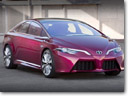
  • Toyota NS4 Advanced Plug-in Hybrid Concept

    Toyota has revealed the NS4 advanced plug-in hybrid concept at the 2012 North American International Auto Show (NAIAS) in Detroit. The new vehicle exemplifies Toyota’s vision for future mobility, with a focus on next generation connectivity and safety.

    “In this digital age, cars are becoming another spoke in the wheel of our electronic connectivity. NS4 demonstrates Toyota’s take on the human connection to the car with technology that considers both emotional and rational relationships, person-to-car and car-to-society.”, commented Jim Lentz, president and chief executive officer of Toyota Motor Sales US (Inc.).

    The NS4 boasts advanced in-car connectivity, next evolution of Toyota safety systems and Glass Technology.

    The NS4 concept’s human-machine interface (HMI) is centred around a multi-touch screen with the look and feel of a smartphone. The simple, intuitive operation conveys information quickly while minimizing distractions and maximizing driver awareness. The multimedia and vehicle-controls enhancement will also direct air conditioning, audio, battery-charge and navigation functions. The HMI system is even capable of “learning” driver preferences to anticipate driver responses in specific environments and situations.

    Toyota NS4 Advanced Plug-in Hybrid Concept
    Toyota NS4 Advanced Plug-in Hybrid Concept

    The NS4 features Toyota’s latest safety system developments, including next generation pre-collision system (PCS), adaptive driving beam (ADB) headlights, and blind spot monitor (BSM). PCS features lane departure and pedestrian collision avoidance technologies designed to predict collisions under certain circumstances and help avoid them. Adaptive Driving Beam (ADB) headlights help to prevent vision-impairing glare to oncoming drivers and pedestrians. Using sub-millimeter wave radar, the Blind Spot Monitor (BSM) detects a vehicle in the adjacent lane and visually alerts the driver using visual indicators placed in the upper dash.

    Four new glass technologies are integrated into the windscreen, front and rear windows to improve driver visibility, fuel economy and electric driving mode mileage efficiency:

    •    Rain-resistant ‘hydrophobic’ coating – Fluorine coated glass causes rain drops to form intosemispherical shapes for improved visibility and rain drop elimination.
    •    ‘Anti-fog’ coating – High performance resin material with anti-fogging characteristics and increased durability.
    •    High ultraviolet (UV) absorbing inner-layer – Removes 99 percent of harmful UVA and UVB rays
    •    Anti-solar film with radio-wave transparency – Reduces the internal vehicle temperature and improves electronic device functionality

    Source: Toyota

  • Nissan Juke-R – 0 to 100 kmh in 3.7 seconds

    Nissan has officially confirmed the performance figures for Juke-R. The ultimate crossover has been developed by Nissan and built by leading motorsports outfit RML with advice from Nissan Technical Centre Europe (NTC-E).

    Juke-R is powered by a 3.8-litre V6 twin turbo engine with 480BHP (353 kW) and 588Nm (434 lb-ft). From 0 to 100 km/h in 3.7 seconds and a top speed of 257 km/h (160 mph). Not bad performance for a compact crossover.

    The vehicle also features big 20-inch RAYS forged alloy wheels fitted with low-profile performance tires. Suspension from Nissan GT-R as well as an FIA-specification roll cage and unique split rear wing.

    The interior boasts OMP race seats, all the controls and instruments from GT-R and a 7” touch-screen display is in the centre of the dashboar.

    During the 22 week project, Nissan ‘opened the doors’ on the creation of Juke-R, documenting the development story from day 1 and releasing a series of 10 videos on You Tube and via the Nissan Juke Facebook page – a series which has achieved over 2.2 million views in just 10 weeks.

    Today marks the release of the wrap-up video bringing together the full development story, showing the car in all its dynamic glory. The next installments are scheduled for January when the Nissan Juke-R hits the road.

    httpv://www.youtube.com/watch?v=Y_BIAuT7bN4

    Nissan Juke-R
    Nissan Juke-R
    Nissan Juke-R
    Nissan Juke-R

    Source: Nissan

  • 2012 Vauxhall Mokka

    Vauxhall has announced their new small SUV, which is expected to hit the market in the end of this year. The new Mokka will make its official debut at the Geneva Motor Show in March. The vehicle will enter the growing sub-compact SUV B-segment.

    “The Mokka takes its design cues from larger SUVs and integrates them into a compact, yet modern form,” commented Duncan Aldred, Vauxhall’s Chairman and Managing Director.

    “We are growing a compelling and diverse range of products that appeal both to retail and fleet customers, and the Mokka will complement this perfectly.”, he added.

    The engine range includes a 1.6 liter naturally aspirated petrol with 115PS (85 kW) and a 1.4 liter turbo petrol with 140PS (103 kW) and 200Nm (148 lb-ft). The diesel variant is a 1.7 CDTI with 130PS (96 kW) and 300Nm (221 lb-ft). Both the 1.4 Turbo and the 1.7 CDTI can be combined either with 6-speed manual or 6-speed automatic transmissions.

    The new Vauxhall Mokka will be available in Front-Wheel and All-Wheel Drive . The All-Wheel Drive System ensures a high level of stability and safety, extending Mokka’s capabilities to more rugged environments. When handling and traction are put to the test, the system automatically and seamlessly transfers power to the rear wheels.

    2012 Vauxhall Mokka
    2012 Vauxhall Mokka

    Standard features that enhance the driving experience across all models include Electronic Stability Control (ESC), Traction Control (TC) as well as Hill Start Assist (HAS) and Hill Descent Control (HDC ) systems – which improve driving comfort and safety in uphill or downhill terrain.

    The Vauxhall Mokka brings cutting-edge upmarket technologies to the SUV B-segment. The Advanced Adaptive Forward Lighting (AFL+) which increases driving safety is based on the 3rd generation Bi-Xenon lighting system that includes High Beam Assist (HBA). The new generation Vauxhall front camera system is also available, giving the driver access to a number of functions including Lane Departure Warning (LDW), Forward Collision Alert (FCA) and second generation Traffic Sign Recognition.

    The Mokka will be available at Vauxhall dealerships in the end of 2012.

    Source: Vauxhall

  • 2012 Hyundai Veloster Turbo

    Hyundai Veloster Turbo Thumb Hyundai unveiled today the all-new 2013 Veloster Turbo at the North American International Auto Show (NAIAS). Veloster Turbo is armed with 201 horsepower (248 kW). The vehicle is powerful, high-tech and fuel-efficient and all this makes it the ultimate innovation in the sport coupe segment. The 2013 Veloster Turbo will be in dealerships in the summer of 2012 packed with unique sport-tuned steering and suspension hardware set.

    The new Veloster Turbo is equipped with 1.6-liter turbocharged GDI four-cylinder engine in which produces 201 horsepower at 6000 rpm and 195 lb-ft (264 Nm) of torque from 1750 – 4500 rpm with regular fuel. More importantly the vehicle is estimated to deliver 27 mpg city and best-in-class 38 mpg highway for manual transmission models! The 1.6-liter Gamma turbocharged engine includes a twin-scroll turbocharger that when combined with the GDI system, results in instantaneous power delivery. Although twin-scroll turbochargers have traditionally been used on more expensive high performance engines, Hyundai has brought this technology down its line-up from the Sonata 2.0T. In particular, twin-scroll turbocharger designs have two exhaust gas inlets divided by split walls inside the turbine housing, with both gas passages controlled by a waste-gate. A twin-scroll turbo recovers even more energy from the exhaust than a single-scroll turbocharger, thanks to a divided manifold. The twin-scroll design separates the cylinders whose exhaust gas pulses interfere with each other, and thus resulting in improved pressure distribution in the exhaust ports and a more efficient delivery of exhaust gas energy to the turbocharger’s turbine. Another important result is the improved pressure distribution in the exhaust ports and a more efficient delivery of exhaust gas energy to the turbocharger’s turbine. This in turn allows greater valve overlap, resulting in an enhanced quality and quantity of the air charge entering each cylinder. Additionally the twin-scroll turbocharger design includes other benefits over traditional, single-scroll turbocharging systems, such as improved combustion efficiency, low engine-speed efficiency, kinetic exhaust gas energy is not wasted or trapped, cooler cylinder temperatures, lower exhaust temperatures, leaner air/fuel ratio, better pressure distribution in the exhaust ports and more efficient delivery of exhaust gas energy to the turbocharger’s turbine. Furthermore Veloster’s twin-scroll turbo has great handling of exhaust gas separation at the turbine leading to improved low-end torque and faster transient torque response. Thanks to the integrated stainless-steel turbine housing with the exhaust manifold, not only is the weight and cost of the casting reduced, but also is the durability of the turbine housing also improved. Moreover heat energy recovery and thus turbo efficiency is significantly improved based on the fact that a traditional two-piece design effectively insulates some of the heat energy at the joint/gasket area.

    2012 Hyundai Veloster Turbo
    2012 Hyundai Veloster Turbo

    Furthermore the specific GDI fuel delivery system contributes to improved fuel efficiency and lower emissions. The fuel is injected by a camshaft-driven, high pressure pump that operates at pressures up to 2175 psi. Direct injection also utilizes a higher-than-normal 9.5 compression ratios, while achieving a best-in-class 125.6 horsepower-per-liter. The piston heads are “dished” to increase combustion efficiency in the cylinder.

    Veloster Turbo’s is uniquely designed. The inspiration was a custom high-performance sport bike. Moreover Hyundai designers have removed the Veloster’s trapezoidal center exhaust and replaced it with two larger free flowing circular pipes. These new pipes and the new intake manifold also allowed engineers to give the engine a more robust sound. Drivers will also appreciate that the Veloster Turbo will be available in a Hyundai first Matte Gray paint. In addition a set of 18-inch gray wheels with chrome inserts completes the Veloster Turbo’s classy style. Another important feature is that Veloster Turbo includes a quicker ratio steering rack and a revised steering calibration to match, which both give drivers precise cornering, feedback and control. All Veloster Turbo’s ride on Kumho Solus KH25 215/40R18 85V tires designed to extract the best performance out of the car without compromising the ride. Good news is that all Velosters are fitted with a McPherson strut front suspension, coil springs, gas shock absorbers and a 24 mm diameter front stabilizer. Additionally, the rear suspension is a light-weight V-torsion beam, a Hyundai-first with an integrated 23 mm stabilizer bar to allow bracing of the arms for greater stiffness and to further control body roll. In order to bring more comfort, the rear suspension also uses monotube shock absorbers. All Velosters feature electric power steering that adjusts assistance instantly to changing driving conditions while improving fuel economy over a conventional steering system. Veloster’s turning diameter of 34.1 feet is better than Mini’s 35.1 feet and Mini Clubman’s 36.1 feet.

    And if you wonder about the interior, it features full leather seats with the word “Turbo” stitched into the seatbacks. An exclusive Supervision Cluster offers the driver information in a larger, clearer and more interactive format. This is due to the Supervision Cluster’s two TFT screens located between the tachometer and the speedometer. As a standard there are two heated front seats.

    In order to handle the power enhancements Veloster Turbo is paired with a standard six-speed manual transmission or a six-speed automatic transmission. The manual features a wider gear ratio spread (5.71 vs. 5.25) to handle the additional torque output. The high-revving turbo helps during acceleration, especially at highway speeds. The Veloster Turbo is mated to a six-speed automatic transmission with steering wheel-mounted paddle-shifter and and Shiftronic® controls rather than the base Vesloster’s EcoShift DCT. This is due to the increased torque output from the 1.6-liter Turbocharged-GDI engine. The gear ratio spread on the automatic transmission is slightly narrower than the DCT (6.0 vs. 6.38). A narrower spread maintains the engine in the power band when going from one gear to the other. The base Veloster’s EcoShift DCT is tuned for fuel efficiency and not for the performance feel needed for the Veloster Turbo.

    At just 2,800 pounds, Veloster sets priority on weight efficiency, whcih allows the car Turbo to deliver a great combination of agility, performance, and fuel efficiency. The overall dimensions of the vehicle are 104.3-inch wheelbase, 167.3 inches long and 71.1 inches wide.

    Of course, all Velosters have an exceptional level of standard safety features for the sporty car segment highlighted by a Vehicle Stability Management (VSM) system, which optimally manages ESC (Electronic Stability Control) and the Motor-Driven electric Power Steering (MDPS). First of all, VSM works to control two effects. The first is when a driver accelerates or brakes on a split-mu surface (slippery on one side, dry pavement on the other) and the vehicle wants to pull in one direction. In addition VSM detects this condition and sends a signal to the MDPS to apply steering assist. It counters the pull and automatically provides up to eight Newton meters of counter steering and reacts the same way during sudden lane changes or fast cornering. Further advantages concerning the safety are the six airbags—including dual front, front seat-mounted side-impact, and front and rear side curtain airbags; a state-of-the-art braking package – the package includes four-wheel disc brakes and an Anti-Lock Braking System (ABS) including Brake Assist, which provides maximum braking force when a panic stop is detected; and Electronic Brake-force Distribution (EBD), to automatically adjust the braking force to front and rear axles based on vehicle loading conditions.

    The vehicle also comes standard with a multifunction seven-inch touch-screen display, which now makes it more interactive and entertaining. In addition there is included Pandora internet radio , Gracenote MediaVOCS® technology, a standard 450-watt Dimension Premium Audio system with eight speakers including an eight-inch subwoofer, external amplifier and iPod®/USB/auxiliary input jacks; XM Satellite Radio interface; a Bluetooth hands-free phone system with voice recognition, address book download and audio streaming; onboard navigation. And at last but not least it also features the unique Hyundai Blue Link Technology. As part of the Blue Link launch, Hyundai also will provide Blue Link Assurance on Blue Link-equipped vehicles, which include core safety services for an introductory period. These key safety services include: Automatic Crash Notification (ACN) and Assistance, SOS Emergency Assistance, and Enhanced Roadside Assistance.

    Eventually Veloster Turbo’s is painted in an exclusive Matte Gray. Later all 2013 Velosters will be available in colors that fit the cars “own-it” attitude and characteristics of a long-distance runner, including Elite White. There will also be interior color choices such as Graphite Black Graphite Black with Blue accents and headliner graphics for non-panoramic sunroof models.

    VELOSTER TURBO VERSUS ITS RIVALS

    Base Engine

    2013
    Veloster Turbo

    2012
    Civic Coupe Si

    2012
    GTI

    2012
    Cooper S

    2012
    Clubman S

    Displacement

    1.6-liter Turbo

    2.4-liter

    2.0-liter Turbo

    1.6-liter Turbo

    1.6-liter Turbo

    Horsepower (est.)

    201 @ 6000

    201@ 7000

    200@ 5100

    181@ 5500

    181@ 5500

    Torque (lb.-ft.) (est.)

    195 lb–ft @ 1750 – 4500

    170@4400

    207@1800

    177@1600–5000

    177@1600–5000

    Specific Output

    125.6

    83.8

    100.0

    113.1

    113.1

    Transmission

    6 M/T or A/T

    6 M/T or A/T

    6 M/T or DCT

    6 M/T or A/T

    6 M/T or A/T

    Fuel Economy

    M/T
    A/T

    27/38 (est.)
    TBD/TBD

    22/31
    N/A

    21/31
    24/33

    26/34
    27/35

    26/34
    27/35

    Curb Weights
    M/T
    A/T

    2,800
    2,888

    2,877
    N/A

    3,034 (2D)
    3,080 (2D)

    2,668
    2,712

    2,833
    2,877

    Weight-to-Power Ratio
    M/T
    A/T

    14.0
    14.4

    14.3
    N/A

    15.2
    15.4

    14.7
    15.0

    15.7
    15.9

    Source: Hyundai

  • Acura Unveils Three New Vehicles: Acura ILX Concept, 2013 Acura RDX and Acura NSX Concept

    NSX_1 THUMBThe brand Acura has just unveiled today their three new vehicles at the North American International Auto Show in Detroit: a concept version of the all-new ILX luxury compact sedan, a prototype of the 2013 RDX crossover sport utility vehicle, and the NSX Concept. The company has also announced that the next-generation NSX will feature Acura’s innovative new Sport Hybrid SH-AWD® technology and that the vehicle will be developed by Honda R&D Americas and manufactured in Ohio.

    The Acura ILX Concept is the precursor to the Acura luxury compact sedan which is going to be launched in the spring of 2012. The new ILX will feature three different powertrains, including Acura’s first-ever gas-electric hybrid! The focus is on exterior styling, affordability and environmental issues. Moreover the new concept vehicle is sleek, sporty and aerodynamically efficient. As seen in the exterior of the all-new Acura ILX, the model combines luxury, performance and efficiency. Another advantage is that it has a compact, yet formal proportion, delivering a very professional image. Furthermore the lineup of ILX models will include an entry-level model powered by a 2.0-liter inline 4-cylinder engine; a high-performance model with a 2.4-liter inline 4-cylinder engine paired with a six-speed manual transmission; and a 1.5-liter gasoline-electric hybrid powertrain (Acura’s first-ever hybrid offering). The ILX will include a high–quality interior which is spacious and sporty.  It will also offer a number of new valuable features such as a smart entry keyless access system and pushbutton start, Pandora internet radio interface and SMS text message function for smart connectivity with the world. In addition the ILX will have a long list of standard options, different trim levels (that will include a Technology Package), multiple transmission choices, and excellent standard safety features— including Acura’s acclaimed Advanced Compatibility Engineering™ body structure, front, side and side-curtain airbags, 4-channel anti-lock brakes and Vehicle Stability Assist™ (VSA™).

    Acura ILX Concept
    Acura ILX Concept

    The second vehicle that has been just unveiled is the 2013 Acura RDX. It is a prototype variant of the 2013 RDX – the second generation five-passenger crossover SUV. The goal in its design was the approach to advanced performance and fuel efficiency via a new engine; transmission and all-wheel drive system. The 2013 RDX is scheduled for launch in the spring of 2012. It will have as standard equipment a 3.5-liter V-6 engine which produces 273 horsepower (200 kW). In order to improve the performance and fuel economy, the RDX makes use of a 6-speed automatic transmission with a new lock-up torque converter. In addition the RDX also gets a new, lighter all-wheel-drive system which provides the required performance and safety with increased efficiency. The fuel economy ratings range is 20 mpg in the city and 28 mpg on the highway, which makes the front-wheel-drive models of the 2013 RDX the best fuel economy of any gasoline-powered luxury SUV in its class. Furthermore the RDX exterior incorporates a sleek, more aerodynamic body, with a longer, sculpted hood and styling that is more classy and sophisticated. Furthermore the chassis updates feature a longer wheelbase and wider track, all-new Amplitude Reactive Dampers, and a new motion adaptive electronic power steering system. Inside the 2013 RDX, new sweeping shapes, matte surface trim, and generous use of leather combine to give the RDX interior an upscale look and luxury feel. In the interior is also used sound deadening materials and Active Sound Control team. They all provide an exceptionally quiet cabin.  The larger door openings, widened passenger room, increased cargo volume and a power rear tailgate make the RDX interior more accommodating and flexible. The new 2013 RDX will also receive a host of new technologies including Pandora internet radio interface, SMS text message feature, a smart entry keyless access system, pushbutton start, and a three view rear camera. There’s an optional Technology Package which features AcuraLink® Satellite Communication System, Acura Navigation System with Voice Recognition™, AcuraLink Real-Time Traffic with Traffic Rerouting™, and AcuraLink Real-Time Weather™ with radar image maps. New for 2013, the even more advanced navigation system utilizes a hard disk drive (HDD) with 60 gigabytes of storage capacity – including 15 gigabytes that can be allocated for music storage.

    2013 Acura RDX Prototype
    2013 Acura RDX Prototype

    The third vehicle is Acura NSX Concept which is dynamically-styled and gives an indication of the next great performance vehicle from the Acura brand. The designers used lightweight materials and a mid-mounted V-6 engine to build the NSX Concept. The car also employs several new technologies for Acura, including application of Acura’s innovative new Sport Hybrid SH-AWD® (Super Handling All Wheel Drive™) hybrid system. In addition it makes use of the unique 2 Electric Motor Drive Unit with a bilateral torque adjustable control system. It also has the all-new hybrid all-wheel-drive system which can instantly generate negative or positive torque to the front wheels during cornering. Moreover the new Sport Hybrid SH-AWD® will offer unmatched handling performance. In addition to the handling advantages of the Sport Hybrid SH-AWD® system, a powerful next-generation VTEC® V-6 engine with direct-injection works in concert with a dual clutch transmission with built-in electric motor. This results in supercar acceleration while at the same time it also offers outstanding efficiency. While most supercars opt for huge force delivered from a large engine, the NSX Concept champions the true racing strategy of a favorable power-to-weight ratio. The new Acura supercar, expected to debut in the next three years.

    Acura NSX Concept
    Acura NSX Concept

    DIMENSIONS

    RDX Prototype

    ILX Concept

    NSX Concept

    Length, mm

    4,660

    4,555

    4,330

    Width, mm

    1,872

    1,890

    1,895

    Height, mm

    1,630

    1,425

    1,160

    Wheelbase, mm

    2,685

    2,670

    2,575

    Wheel size, in

    19×7.5

    19×8

    19×9 (front)

    20×10 (rear)

    Tire size

    235/55R19

    235/35R19

    255/35R19 (front)

    275/30R20 (rear)

    Source: Acura

  • 2012 Volkswagen E-BUGSTER Concept – Volkswagen Beetle in E-lectrifying Disguise!

    VW E-BUGSTER Concept thumbThe new 2012 Volkswagen E-Bugster Concept is actually the latest Beetle which is powered purely by electricity! It is the environmentally conscientious version of the famous model, now even more appealing in shape and design! The new concept vehicle was just revealed at the North American International Auto Show in Detroit. As we can see the new two-seat E-Bugster continues Beetle’s sporty theme. However this version is powered by an electric motor which provides 85 kWh of power. This means that it can accelerate the car from 0 to 100 km/h in 10.9 seconds! Yet, it offers a range of at least 110 miles from the 28.3 kWh lithium-ion batteries!

    Another important feature here is that it can be completely recharged for only 35 minutes when it is in the function fast-charging. This quick charging is possible due to a new Combined Charging System. The latter was developed in co-operation with Audi, BMW, Daimler, Porsche, Ford and General Motors/Opel, and more importantly allows charging via single-phase AC sources (for example a 120-Volt US or 230-Volt European domestic outlet) or via ultra-fast DC sources at specific charging stations.

    Volkswagen E-Bugster Concept
    Volkswagen E-Bugster Concept

    Furthermore the E-Bugster doesn’t only charge when plugged in. Here’s the deal: as soon as the driver’s foot leaves the accelerator pedal kinetic energy is transformed into electricity and stored in the battery. Isn’t that brilliant! In addition, applying the brakes increases the intensity of regeneration – a function which informs the driver through the instrument panel. Other instruments feature driving range and battery state indicators, and a measuring tool which shows how much energy the driver is requesting via the accelerator pedal.

    The size of the 2012 Volkswagen E-Bugster Concept is 4,278 mm long and 1,838 mm wide, which makes it the same length as the Beetle, however 30 mm wider. On the other hand the new roof lowers the height by around 90 mm to 1,400 mm.  This was done in order to give the E-Bugster more dynamic and sporty look.  And it definitely does! The low, swept-back windscreen ensures maximum visibility, as does the wide rear screen, which shows that speedster-style vehicles need not be impractical.

    Volkswagen E-Bugster Concept at 2012 NAIAS in Detroit
    Volkswagen E-Bugster Concept at 2012 NAIAS in Detroit

    Other differences from the production Beetle are the front and rear bumpers, which have been substantially modified. In details, at the front, LED daytime running lights at the outer edges of the central air intake form a C-shape on the left that is mirrored on the right. This is a signature which is featured on all Volkswagen’s electric vehicle concepts.  This is also happens at the back, where reflectors take the place of LEDs.  Additionally there are 20-inch alloy wheels which were adapted from the 18-inch ‘Twister’ alloys of the production car. They come along with 235/35 tyres.  Around the bottom edge of the side windows is a chrome strip that loops around the vehicle from A-pillar to A-pillar.  From this chrome strip to the top of the E-Bugster’s hard top the height is a low 400mm.

    The interior of the car is also as impressive as the exterior – it reflects the E-Bugster’s blend of high-tech and spottiness. In particular it includes sports seats nestling either side of a continuous centre console, plus aluminium door handles and seatbelt guides. Starting the E-Bugster is pure enjoyment and fun. Only with pressing the Start button the interior is bathed in white light, then blue light.  It starts with a light pulse in the instrument cluster, from where the light emanates in a millimetre-wide strip, coursing into the doors and around the air nozzles.

    However the E-Bugster is only in a concept stage.

    Source: Volkswagen