Category: Car Makes

Car Makes

  • Volkswagen Amarok Canyon Concept

    Volkswagen Amarok has proven itself as very reliable and well appreciated utility vehicle. However, the manufacturer introduced a new special version of the pick-up truck at the Geneva International Motor Show. The name of the project is Amarok Canyon Concept, which will show how versatile pick-up configurations can be created.

    “We are using this extreme concept to illustrate one of the many diverse uses of the Amarok. By tuning its design to an extreme sport, we are bringing the original DNA of the Amarok into focus,” said Dr Wolfgang Schreiber, spokesperson for the Board of Management for the Volkswagen Brand and Head of Development at Volkswagen Commercial Vehicles.

    The concept vehicle is very different than the regular Amarok. It was raised by 40 mm with a body lift kit; and when the tyres are included, the concept is a full 85 mm taller than the production model.

    The freestyle pick-up also has auxiliary headlights mounted on its roof, and additional visual accents are provided by the smoked rear lights and the colour-contrasting underbody protection. Two electrically deployed tread plates make it easy for all occupants to step into and out of the vehicle, despite the raised ride height.

    Volkswagen Amarok Canyon Concept
    Volkswagen Amarok Canyon Concept

    The wheel housings were widened by 35 mm on each side to make room for the big AT tyres, size 275/65 R 18, mounted on ‘Durban’ type wheels painted in ‘High Gloss Adamantium Dark’.

    The two carbon fibre kayaks are securely mounted to the cargo floor: at the rear, the floor is designed with two formed cut-outs with soft padding, while the kayak bows are mounted on a styling bar in ‘High Gloss Adamantium Dark’ with straps for firmly securing the boats. The paddles are firmly latched in place on the inside surface of the easy-to-operate tailgate, ready to grab. All other gear – white-water helmets, flotation devices and rafting shoes – are also stowed securely: the helmets in nets on the front wall of the cargo bed, and the rest of the gear in smaller boxes that can be locked with watertight lids.

    The interior features a special colour scheme was used with many details and new accents. The leather seats have two-tone styling: the seating surfaces are in ‘sterling’ colour, while the head restraints and side supports are elegantly offset in ‘adamant’ colour. The decorative seams on the seats take on the orange-red colour of the body. This colour is also reflected in numerous other details such as in the seams of the three-spoke steering wheel and gear shift lever trim, the safety belts and the air outlets. Housed in a cowl in the cockpit are three auxiliary instruments. They show the climbing and tilt angles of the Amarok, which gives the driver key information for extra safety on extreme off-road drives.

    Amarok Concept is powered by the new 2.0 TDI bi-turbo with 180 PS and 400Nm at 1500RPM. The switchable 4MOTION all-wheel drive system – together with a reduction gearbox and differential lock at the rear axle – ensures effective power transfer to the wheels even in the toughest off-road conditions.

    Source: Volkswagen

  • 2012 Nissan Hi-Cross Concept finally revealed [VIDEO]

    2012-Nissan-Hi-Cross-Concept-THUMB2012 Nissan Hi-Cross Concept is the new dramatic concept car from Nissan and its world premiere is at 2012 Geneva Motor Show. Hi-Cross is a concept crossover which looks like a possible expansion of the current Juke-Qashqai-Murano portfolio. The vehicle is compact yet roomy, elegant yet purposeful. Hi-Cross Concept has a highly space efficient interior with three rows of seats for seven passengers. Its hybrid drive train includes an electric motor – powered by a Nissan-developed compact lithium-ion battery – in combination with a 2.0-litre direct injection petrol engine. Both provide the performance potential of a 2.5-litre with the economy and emissions expected from a much smaller unit. The HEV drivetrain is based on new technology developed by Nissan for front-wheel drive models. However, it was modified to provide four-wheel drive. Nissan’s new generation XTRONIC system is also included and it delivers continuously variable transmission which by itself achieves a 10 per cent improvement in fuel economy over comparable previous generation CVTs. The battery technology has high output, fast-charging compact lithium-ion battery, linked to high-level motor control technology. It provides acceleration assist when needed and permits downsizing of the petrol engine for optimum economy and emissions. In city driving, for instance, the presence of the electric motor and lithium-ion battery allow the engine to be turned off frequently. It can also be disengaged completely with the clutch, and energy can be recovered effectively when braking.

    2012 Nissan Hi-Cross Concept
    2012 Nissan Hi-Cross Concept


    Furthermore, 2012 Nissan Hi-Cross Concept sits on a 2780mm wheelbase. It is 4660mm long, 1850mm wide and 1670mm tall, with 21-inch alloy wheels. The front has a characteristic V-shaped grille set off by distinctive lighting signatures provided by stylish new headlamps. At the rear it has distinctive lighting signatures provided by stylish rear combination lamps echoing with headlamp lighting signature. Inside, the seven-seat cockpit is dominated by a new T-wing shaped dashboard. This is a pure concept car, which explores the potential ideas for the future. It is a high-riding crossover, therefore no wonder where the name came from.

    2012 Nissan Hi-Cross Concept Interior
    2012 Nissan Hi-Cross Concept Interior

    httpv://youtu.be/dkEwVVNBuqM

    Video Source: YouTube

    Source: Nissan

  • VW Polo BlueGT

    Volkswagen-Polo-BlueGT-thumbWhat happens when you cross mad lunacy with refinement and sensibility? Obviously and epic lovechild that has the best of both worlds. In our case that’s the VW Polo BlueGT (no, it’s not a sad GTI). It’s a super fun 140 PS Polo that has the looks and feel of a GTI and the metabolism of a BlueMotion. Today, on a stand at the Geneva Motor Show and within months, on to the European roads.

    A system described as “ACT cylinder deactivation” is at the core of the BlueGT ideology. The second and third cylinders are automatically shut down within the 1,250 and 4,000 rpm. range and when torque output is between 25 and 100 Nm. If the driver decides to give it the beans, reactivation of the cylinders happens seamlessly in a matter of milliseconds but the dashboard will tell you nevertheless. That gives the 1.4 turbocharged, 140 PS engine the upper edge in fuel economy. Its combined cycle of fuel consumption amounts to 4.7 litres per 100 km (around 60 mpg). CO2 emissions equal to 108 g/km. Opt for the DSG transmission and you’ll get even more frugality. At the same time the top speed is at 210 kmh (130 mph) and zero to 62 mph takes 7.9 seconds.

    For the styling of the BlueGT, Volkswagen have gone the “Frankinstain’s monster” way – GTI strains account for the front and rear bumpers, the rear spoiler, the instruments inside, the sports seasts and the leather steering wheel. The BlueGT is also 15 mm closer to the ground and sits on 17-inch multi-spoked alloys. The side sills and front windscreen rain channels, on the other hand, are from a Polo BlueMotion. This particular model is also the typical BlueMotion shade and the badges are all blue. Unlike the Frankinstain story however, the BlueGT might turn out to be a success rather than a tragedy. In fact, the BlueGT carries the first of Volkswagen‘s EA211 series of engines – a line that will underpin most of the models in the company’s production future.

    Hopefully, shipments are going to start in July within mainland Europe. Whether there’s going to be a production for the UK, is still not announced.

    Volkswagen Polo BlueGT
    Volkswagen Polo BlueGT

    Source: Volkswagen

  • 2013 Ford Fiesta ST at Geneva

    2013-Ford-Fiesta-ST-thumbHere’s a preview of Ford’s new Fiesta ST. It’s at Geneva at the moment with plans to go on sale in the UK early next year. It has been four years since the last Fiesta ST and recently the fan base has started feeling uneasy. Now everyone can calm down as this little fellow here is meet their needs.
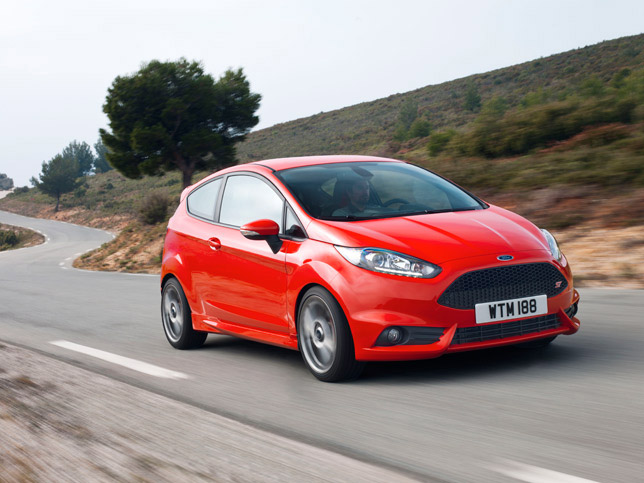
    A four year gap between the two models can only mean one thing: massive improvements in terms of performance. The numbers speak for themselves – 180PS 1.6-litre EcoBoost, 240Nm of torque, 0-62mph in under seven seconds, and top speed of more than 136mph. All the while, CO2 emissions are down by 20 percent in comparison to the old ST.

    Hopefully the new Fiesta will have the handling to match the performance. The guys at Team RS have put a lot of their WRC know how in use while working on the chassis which leaves the ST 15 mm lower than a standard Fiesta. The car’s Torque Vectoring Control system and three Electronic Stability Control modes have all been rigorously developed and tested at the Nurburgring.

    Inside, Recaro sports seats will provide support for the enthusiastic drive for the first time in a Ford Fiesta. There’s something for the novice drivers as well – the car will be fitted with Ford’s MyKey solution which can limit the car’s power and speed to a certain degree thus effectively preventing your kids to end up in a ditch.

    The Fiesta ST is sure to come to Europe, but Ford are considering other markets as well:

    “We’re delighted to be bringing a new generation Fiesta ST to our European enthusiasts in 2013 and we’ll have more to say about our plans for other markets in the near future,” said Jost Capito, Ford’s director of Global Performance Vehicles.

    Fingers crossed.

    Ford Fiesta ST (2013)
    Ford Fiesta ST (2013)

    Source: Ford

  • 2012 Toyota FT-Bh Concept – Hybrid of the Future

    2012 Toyota FT-Bh Concept is making its debut at the 2012 Geneva Motor Show and will showcase its ultra-light body, weighing less than 800kg. This demonstrates what can be achieved in terms of fuel consumption and CO2 emissions in an affordable family supermini. Due to the exclusive low weight, the aerodynamic design and the highly efficient powertrain, the FT-Bh Concept can achieve average 134.5mpg fuel consumption and 49g/km CO2 emissions. Toyota’s aim was to achieve the best possible fuel economy and emissions. This was made through five key areas: reducing weight; driving resistance (including aerodynamic and tyre performance); powertrain efficiency; thermal energy management; and electricity savings.

    Under the slogan “Ecomotion” went the work of the styling of the new FT-Bh, with its shape demonstrating a new approach to bodywork design. Key panels, such as the roof, are formed to represent the way fabric can be stretched taut between fastening points, to reflect their ultra-light weight. The front end of the car broadcasts Toyota’s current design philosophy. The ultra-slim A and C-pillars maximize the visibility and the sense of space in the cabin. The best possible aerodynamic performance and the drag coefficient of just 0.235, is possible thank to the uplifted rear bumper and chevron-shaped corner elements. The stretched fabric-look carries through to the minimalist interior, with a concave centre console creating a driver-focused cockpit.

    The aim for the concept vehicle was to achieve 25 per cent saving on the 1.0-litre Yaris’s 1,030kg weight. Thank to the combination of high-tensile steel, aluminium and magnesium in the construction this lead to the weight of just 786kg. Although the hybrid powertrain is heavier than the three-cylinder 1.0-litre engine (weighing about 60kg), the combined mass of the bodyshell was further reduced. For instance the interior trim, chassis and electronics had to be reduced by around 340kg. These large saving in the weight of cabin parts has had a ripple effect in weight reduction in the rest of the vehicle, which allows the components to be downsized. And less weight means a smaller displacement engine can be used, further saving weight and thermal energy losses.

    2012 Toyota FT-Bh Concept
    2012 Toyota FT-Bh Concept

    FT-Bh’s full hybrid drive system is a masterpiece in terms of powertrain downsizing. With substantial weight savings in every driveline component, it is almost 90kg lighter than theHybrid Synergy Drivesystem used in today’s Prius for example. The engine is lightweight, namely: two-cylinder 1.0-litre Atkinson cycle petrol engine. It allows the combination of high efficiency with low thermal capacity and benefits with detailed measures to increase combustion efficiency and reduce friction. The result is fuel consumption of 134.5mpg and CO2 emissions of just 49g/km.

    Further benefits from the car’s light weight is that it makes the vehicle agile and responsive to throttle and brakes, and thanks to its electric motor delivering maximum torque from standstill, it is nimble, too. In addition, the Toyota’s Hybrid Synergy Drivetechnology serves as a study for how even greater fuel efficiency might be achieved in the medium term by using two alternative powertrains: a compressed natural gas hybrid (CNG-HV), with 38g/km CO2 emissions; and a Plug-in hybrid (PHEV), emitting just 19g/km.

    2012 Toyota FT-Bh Concept Interior
    2012 Toyota FT-Bh Concept Interior

    What is interesting here is that the concept represents a comprehensive study in next-generation aerodynamic techniques. For instance it features air curtain intakes on the frontal extremities of the bodywork; air-stream alloy wheels; the replacement of airflow-disrupting door mirrors with cameras; latches in place of handles to open the doors; a pagoda-style roof with a dropped rear section; and a sharply cut rear end that incorporates an air outlet slit and an underfloor spoiler to smooth the flow of air away from the vehicle. Together these measures bring the Cd down from a B-segment/supermini average of about 0.29 to just 0.235. Toyota FT-Bh has large diameter 145/55R18 low rolling resistance tyres, which make a significant contribution to bringing down the road load and driving resistance, with no loss of grip or traction.

    More highlights about the FT-Bh are concerning the improvements in the recovery of thermal energy and a 50 per cent reduction in electricity consumption. This was achieved through thermally efficient components in the cabin. In addition, the air conditioning focuses only on parts of the car where people are sitting. The amount of electricity used by the LED headlamps, interior lighting and other electrical components has been significantly reduced, to the extent that power consumption is half that of conventional cars. The glazing has been designed for maximum thermal efficiency and even the matte paint has been chosen for its excellent heat insulation characteristics.

    Source: Toyota

  • 2012 Italdesign Giugiaro up! azzurra sailing team

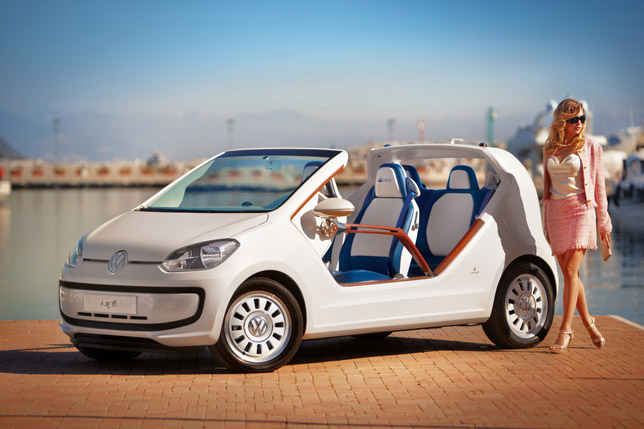
    2012-Italdesign-Giugiaro-up!-azzurra-sailing-team-THUMB2012 Italdesign Giugiaro up! azzurra sailing team is a newborn vehicle at Volkswagen, conceived and designed by two exceptionl names in the international car design world: Giorgetto Giugiaro  and Walter de Silva. 2012 Italdesign Giugiaro up! azzurra sailing team carries a Mediterranean soul, because both designers grew up in this environment. And as you can see the design is all about the feeling, which leaves one with the “sunshine in the hair”.

    The prototype is an open, small, eco-friendly vehicle, which is perfectly suitable for who live near the coast where the sea breezes blow. The concept’s name comes from yacht club on the Costa Smeralda.

    Furthermore, the vehicle retains the original character of the up! with its precise and appealing lines. However, what is specifically developed for this concept is that is completely open and even more: there are no doors or roof. Of course, this lets the driver and passengers enjoy the summer breezes, and leave the feeling as if they were aboard a boat.

    2012 Italdesign Giugiaro up! azzurra sailing team
    2012 Italdesign Giugiaro up! azzurra sailing team

    A wide range of high-tech and quality materials were used inside the vehicle, all of which are completely waterproof, and they intentionally resemble the fittings of a luxury yacht. In details, these features include the four seats in white-blue leather, numerous chrome components and a dashboard in mahogany with maple wood inlays. In addition, its surfaces are coated in a synthetic resin. 2012 Italdesign Giugiaro up! azzurra sailing team is a  prototype, which makes the perfect link between the heritages of Italian  yachts  and  German automobiles.

    2012 Italdesign Giugiaro up! azzurra sailing team
    2012 Italdesign Giugiaro up! azzurra sailing team

    Source: Italdesign Giugiaro

  • 2012 Italdesign Giugiaro Brivido

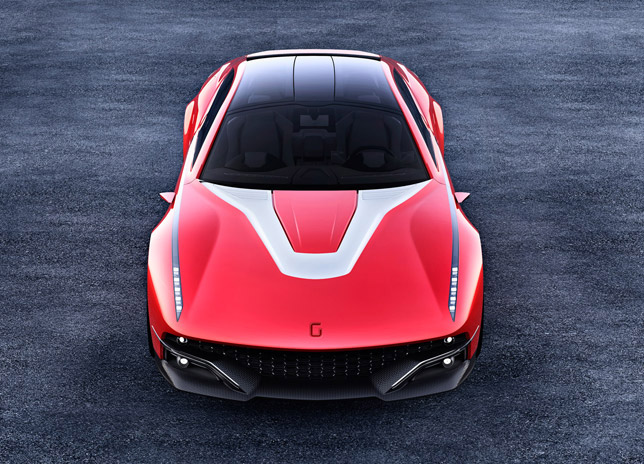
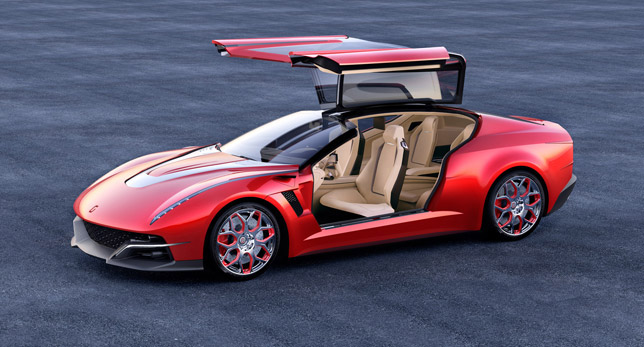
    2012-Italdesign-Giugiaro-Brivido-THUMB2012 Italdesign Giugiaro Brivido is designed to offer supercar performance, as well as respect for the environment. In it has been used the most advanced technologies and innovations. Of course the four-seat hybrid prototype has just made its world debut at the 2012 Geneva Motor Show. More importantly it develops a maximum speed of 275 km/h and accelerates from 0 to 100 km/h for just 5.8 seconds. The super vehicle was designed and engineered in the Italdesign Giugiaro plant at Moncalieri (Turin).

    It seem as the exterior has been designed in such way, which leaves the impression of flow and lightness. Aluminium, carbon fibre, and glass are the materials that define the Brivido’s exterior. The body wears Xirallic pearl luster red color. The windscreen, roof, rear window, and large door windows form a glass dome that lets natural light pour into the passenger compartment. In this way the occupants are surrounded by an exclusive level of finish and high technology. Observed from the side, the supercar has a specific single door, which uses glass as a specific structural element. The waistline hugs the curve of the wheel arch and is interrupted by the door’s side window, which in turn continues below the waistline to significantly increase the transparent surface. All this results in better visibility for the driver, when maneuvering as they can easily see the pavement to the side car. In addition, this also allows the passengers to enjoy better the outside visibility. Another exceptional part of the exterior are the new LED lights. The headlight clusters are not only functional, but also bring more style to the vehicle. They also act as sidelights and direction indicators. Further innovations that can be seen on the Brivido are the side mirrors or actually their absence. They have been replaced with two cameras, which literally emerge from the body. When the control is activated, the wings concealing the two micro cameras, positioned at the height of the side air intakes, open up 90 degrees and activate the cameras. The camera images are then displayed on monitors built into the steering wheel column. Next, viewed from the front, the car has an aggressive front end. In addition to this the vehicle is equipped with a single carbon fiber panel which is placed on the width of the vehicle. This actually allows the ample air flow to cool the engine and in addition acts as a rear spoiler. On the top of all this, there are the DRL system, the driving lights and the fog lights. The back of the car: the tail end is also made from carbon fiber. There also can be seen the rear lights as well as the rear windscreen which offers access to the titanium fiber covered luggage compartment. Furthermore, the supercar is equipped with a superengine: 3000cc, which offers the whole 360 hp (265 kW).

    2012 Italdesign Giugiaro Brivido
    2012 Italdesign Giugiaro Brivido

    Volkswagen Group Electronics Research Lab (ERL) based in California worked in collaboration with IDG, in order to develop and utilize the interactive electronics and displays for the Brivido. This includes one of a kind docking system, climate and comfort controls accessible through a touchscreen.

    And what about the interior of the vehicle: it s technologically equipped, roomy and with ergonomic design and of course offers great level of comfort and luxury. The cockpit The offers a genuine open space where a unique environment encases the front and rear seats and the luggage compartment in a continuous solution, thanks in part to the use of extremely durable and lightweight Titan-Tex® titanium fibre. What is unique here is that the dashboard is symmetrically structured for both driver and passenger. Any key information in addition is displayed on the two LCD monitors mounted inside two binnacles behind the steering wheel and above the dock. In this way the passenger can access the same information as the driver.

    For the interior furnishings, the Color&Trim department at Italdesign Giugiaro invested in research and development on methodologies and materials, opting for a sewing method never used before in the automotive sector: raw cut seams. The hides, specially produced for this prototype, are dyed in two contrasting colors- light on the “upside” and dark on the “backside.” In this way, the light-dark chromatic contrast creates a graphic line that outlines and emphasizes shapes. Furthermore, the front seats are asymmetrical with a cushion overhanging the door sill on the outer sides. This enables the passengers to get in an out of the vehicle with greater ease. The sides of the rear seats has inbuilt LED system which make the entry in the car easier in low visibility by following the design of the seats.

    2012 Italdesign Giugiaro Brivido
    2012 Italdesign Giugiaro Brivido

    The tunnel accommodates the fourteen buttons that activate the entire main and the 8-speed automatic transmission, as well as contains the classic storage compartments and cup holders. The display in the middle of the dashboard replicates key information on the climate control system, fuel consumption, and the hybrid system configuration. Depending on the graphical configuration of the display, the buttons required to activate and deactivate the corresponding functions emerge from the dashboard alongside the monitor. New touchscreen technology and the experience of high-quality rocker switches come together to create a new control system.

    httpv://youtu.be/kxBDRUGcr4w

    VideoSource: YouTube

    Source: Italdesign Giugiaro

  • Infiniti Emerg-E Concept

    Infiniti has revealed at the 82nd Geneva Motor Show its first ever mid-engined sports car concept called the Emerg-E. In addition, Infiniti confirmed the limited production of 200 units of the 420PS FX Sebastian Vettel version for Europe and Middle East markets.

    The sports car concept makes its debut at the Geneva Motor Show 2012. It is highly advanced automobile that provides an exciting glimpse into Infiniti’s future. It features exciting new technologies that the brand will adopt in its quest to build dramatic and sustainable high performance cars. Infiniti Emerg-E also provides a fresh expression of Infiniti’s design language applied to a high performance, mid-ship sports car for the first time.

    This is also a model that has been developed in Europe. More than that, its advanced technology deliberately draws on the knowledge of suppliers beyond Infiniti’s usual base in the quest to uncover the most innovative hardware and the deepest knowledge base.

    Emerg-E is powered by two electric motors with overall power of 408PS (300 kW). 0-100 km/h in 4 seconds and a top speed of 209 km/h (130 mph). It also can provide zero emission urban transport with over a 48-km (30-mile) range. And when the range-extender petrol engine functions powers the twin electric motors, it produces a CO2 output of only 55g/km (NEDC cycle).

    All this is efficiency is wrapped within highly aerodynamic, light bodywork characterised by a design fluency that could only come from Infiniti.

    Infiniti Emerg-E Concept
    Infiniti Emerg-E Concept

    Source: Infiniti

  • 2012 Ferrari F12berlineta – full specs

    The new 2012 Ferrari F12berlinetta is exhibited at the 82nd Geneva International Motor Show. The sports car is presented alongside the Ferrari California Handling Speciale.

    The F12berlinetta is displayed on the stand in two new colours, Rosso Berlinetta and Aluminium. It is the most powerful and high-performance road-going Ferrari ever.

    It is powered by a 6.3 liter 65° V12 engine with 740PS (544 kW) and 690Nm (509 lb-ft). 0-100 km/h – 3.1 seconds and 0-200 km/h in 8.5 seconds. The top speed is over 340 km/h. You can check the full specs below.

    The car is pretty small and its engine, dashboard and seats are lower in the chassis to achieve low center of gravity. A new suspension and gearbox layout helps reduce the car’s rear volume. The result is fantastic with a weight distribution 46:54 (front-rear axle).

    The whole car weighs just 1525 kg and has maximised its performance efficiency with torsional rigidity boosted by 20%.

    The aerodynamics is specialty of Ferrari. It is been discreetly integrated in the F12berlinetta’s styling – the Aero Bridge which, as a first, uses the bonnet to generate downforce, and Active Brake Cooling, a system that opens guide vanes to the brake cooling ducts only at high operating temperatures.

    The result of these interventions is that the F12berlinetta has the highest overall aerodynamic efficiency of any Ferrari ever built (a value of 1.2, double that of the 599 GTB Fiorano) with downforce of 123 kg at 200 km/h and a Cd of just 0.299.

    2012 Ferrari F12berlineta
    2012 Ferrari F12berlineta

    At the rear, the car is also very pretty – a modern, functional reinterpretation of the Kamm tail which seamlessly integrates the two vertical fences of the rear diffuser. It has original T-shape  and also incorporates two full-LED circular tail-lights and the clearly F1-inspired rear fog light.

    The interior is also completely new. It features the balance of advanced technology – in the form of the Human-Machine Interface which places all controls within easy reach of the driver – and sophisticated, handcrafted detailing, both of which are intrinsic to Ferrari’s DNA.

    On the dashboard you’ll see new carbon-fibre and light alloy air-vents inspired by the aeronautical sector. There is also an optional passenger display for the passenger-side dash.

    The two other recent additions to the Prancing Horse stable will also be present on the stand: the FF in Bianco Italia livery and the 458 Spider in Giallo Tristrato. The display is completed by a 458 Italia in a sporty two-tone Rosso Corsa and Nero Daytona livery.

    F12berlinetta technical specifications

    Engine

    Type 65° V12
    Bore/stroke 94 x 75.2 mm
    Total capacity 6262 cc
    Compression ratio 13.5:1
    Maximum power 545 kW (740 CV) at 8250 rpm
    Specific power output 118 CV/l
    Maximum torque 690 Nm at 6000 rpm
    Maximum revs 8700 rpm


    Dimensions and weight

    Length 4618 mm
    Width 1942 mm
    Height 1273 mm
    Wheelbase 2720 mm
    Front track 1665 mm
    Rear track 1618 mm
    Dry weight* 1525 kg
    Kerb weight* 1630 kg
    Weight distribution 46% front, 54% rear
    Weight/power ratio 2.1 kg/CV
    Fuel tank 92 l


    Wheels and tyres

    Front 255/35 ZR 20 9.5J
    Rear 315/35 ZR 20 11.5J
    Front (winter tyres) 255/35 ZR 20 9.5J
    Rear (winter tyres) 305/35 ZR 20 11.5J


    Carbon-ceramic brakes (CCM3)

    Front 398 x 223 x 38 mm
    Rear 360 x 233 x 32 mm


    Electronic controls

    ESC Stability control
    High-performance ABS/EBD High-performance anti-lock braking system with electronic brake balance
    F1-Trac F1 traction control
    E-Diff 3 Third generation electronic differential
    SCM-E Magnetorheological damping control with twin solenoids


    Gearbox

    F1 dual-clutch 7-speed


    Performance

    Top speed over 340 km/h
    0-100 km/h 3.1 sec
    0-200 km/h 8.5 sec


    Consumption and Emissions (ECE + EUDC combined cycle)

    Consumption** 15l/100 km
    CO2 emissions** 350 g/km

    *With lightweight options

    **ECE+EUDC with HELE system

  • Lamborghini Aventador J Revealed

    Lamborghini-Aventador-J-thumbThere it is! The Lamborghini Aventador J – J as in FIA’s ‘Appendix J’ regarding the tech spec of race cars. Hope you like wildlife in your hair as this Geneva participant doesn’t really make any use of a roof. Or a windshield for that matter. Why would it? It’s a 700 bhp open top. Isn’t that enough?

    Unsurprisingly, the J is based on the Aventador LP 700-4 – An AWD layout with a 6.5-litre 700bhp V12 engine. Imagine the wind resistance one is going to experience on their face whilst closing in on the 300 km/h barrier. They should have called it the Aventador D for Drama.

    Obviously, the disposal of otherwise vital components calls for some structural changes. An innovative monocoque construction made from carbon fiber reinforced polymers combines lightness with optimum stiffness and strength. There are two safety bars behind the seats that are made made from a forged composite and reinforced with carbon fiber inserts. The thing about open tops and convertibles is that most people cringe at the sight of them knowing that speed and agility have been compromised. However, that’s not the case with the Aventador J. Because we don’t have a roof or a windshield, we also don’t have air conditioning. There are no distractions inside (if we can call it an inside) – Things like the satellite navigation and audio system have been deemed redundant. The J’s cockpit and parts of the seats are clad in a material called “Carbonskin” – woven carbon fibers that have been soaked in a special epoxy resin that stabilizes the fiber structure and keeps things soft and flexible. All that hi-tech, light weight material and the feature diet make the bull extremely light – 1575 kg of dry weight.

    Lamborghini Aventador J
    Lamborghini Aventador J

    Lamborghini have put to use these materials in the maddest of ways. See that horizontal stabilizer pinned between the two inferior looking wind guards? That is not a horizontal stabilizer but a rear view mirror. The front nose is narrower than the standard one and is dominated by a highly distinctive carbon fiber air scoop. Upward fins on the side complete the look. The wheels are 20 and 21-inch front and back respectively and carry a five-spoke design and an additional carbon fiber fan-like feature that vents air toward the massive brakes. All you need to know for the back end is that it has a carbon-fiber rear diffuser, four huge tail pipes and an enormous fixed spoiler mounted on the bodyshell by two arms.

    So far, only one Aventador J has been made (Unica) and at the end of the Geneva Motor Show it will be sold to someone who would be brave enough and strong enough to handle it. This car is not a concept, not a prototype but a fully functional, road legal roadster.

    Soruce: Lamborghini

  • 2012 Bentley EXP 9 F SUV Concept to be revealed in Geneva

    2012-Bentley-EXP-9-F-SUV-Concept-THUMBBentley brand is offering a vision of the future with its all new concept SUV: 2012 Bentley EXP 9 F SUV Concept. The vehicle will be showcased at the Geneva International Salon. It is a representation of company’s new take on the Grand Touring Bentley. The new all-wheel drive SUV combines a spacious, versatile cabin and commanding driving position. All this comes in combination with Bentley’s power, performance, advanced technology and hand crafted luxury.

    The exterior of the new 2012 Bentley EXP 9 F SUV Concept features innovative detailing: flowing surfaces which emphasize power, muscularity and robustness. The exterior is a bold and dynamic. Key Bentley cues were also used in the design philosophy – for example the matrix grille, round lamps and the strong power-line. In addition, the luxury look is complemented by the 23-inch alloy wheels with multiple. At the rear, the swooping lines of the tailgate contributes for a distinctly sporting profile, while the ultra-wide, two-part split tailgate offers a high level of versatility. The bold design language of EXP 9 F is complemented by twin exhaust tailpipes with ‘rifled’ inner surfaces, their elliptical shapes echoing those of the rear light clusters.

    2012 Bentley EXP 9 F SUV Concept
    2012 Bentley EXP 9 F SUV Concept

    The interior of the vehicle is all about luxury. Of course, this is the only option, since the brand is Bentley. It is light, airy and contemporary. The cockpit is made by ‘sporting’ luxury craft detailing and includes touchscreen and tailored interface technologies. Al the materials used are of course of high quality and best craftsmanship. In addition there are also included, the traditional handcrafted elements such as wood, leather and polished metals such as aluminum, bronze and gunmetal. The soft-touch leather contrasts with highly durable surfaces with the concept car design experimenting with the use of saddle leather for the seat backs, top roll and loadspace – while analogue bezels and dials are paired with TFT ‘virtual’ instrumentation. The EXP 9 F seating is 4+1, with a rear armrest lifting. In addition, the seats feature a diamond-quilted “shoulder line” in soft-touch leather.

    2012 Bentley EXP 9 F SUV Concept Interior
    2012 Bentley EXP 9 F SUV Concept Interior

    Of course, the vehicle includes the latest innovations in terms of technologies featured: 3D navigation in a central TFT panel for example, shows directly in the driver’s line of sight, where it is flanked by two analogue reverse-read dials. In addition, controls that are shared between driver and front seat passenger, such as cabin temperature, air vents and entertainment are presented in the central touchscreen and console. In the SUV are featured three different driving modes – Comfort, Sport and Off-Road, which are selectable according to the road environment and type of journey.

    More importantly, the EXP 9 F Concept is based around the Bentley 6.0 litre, twin-turbocharged W12 engine with an 8-speed transmission. The W12 6.0 litre powertrain, for instance, could develop 600 hp (441 kW) and 800 Nm (590 lb-ft) of torque. Wonder what the top speed and the acceleration time from 0 to 100 km/h would be.

    2012 Bentley EXP 9 F SUV Concept represents all Bentley values in terms of design, craftsmanship and engineering excellence. The concept vehicle will be revealed at 2012 Geneva Motor Show, with the aim of refining the concept further, according t the customers’ reaction.

    Source: Bentley

  • Hamann Hawk AMG SLS Roadster

    Hamann-SLS-AMG-Roadster-thumbHamann, have a few treats for us awaiting at the Geneva Auto Show. There, we’ll see their idea of a BMW M5 and also this – the Hamann Hawk AMG SLS Roadster. It’s a hardcore matte-red lacquered open top SLS. Their recipe for it rather common – add some aerodynamic bits, squeeze the engine for more power, make it sound better, big wheels and an interior, more luxurious than a honeymoon suite. The end result is brilliant.

    Straight to the point, power is now 636 BHP with maximum torque being 680 Nm at 4,850 rpm. A new, sports exhaust system, an air filter and some fiddling with the electronics are all to blame for that. Set the launch control right and you’ll the 100 km/h threshold in no more than 3.6 seconds. Keep your foot on the throttle and eventually the needle will reach 320 km/h.

    The outside additives have been designed in a wind tunnel to get the maximum down force potential from them. The front bumper is new and supposed to reduce lift while the aggressive air inlets and new LED modules on it, give the SLS‘s face some spunk. And while we are at the front, it’s worth mentioning the carbon fiber checkered hood that has equally menacing air outlets. The wheel arches are so flared up, that they’ll even make a hippopotamus green with envy. Side skirts sort of connect the both ends and complement the wheels while the back bumper has a diffuser and housing for four 90mm wide exhaust pipes.

    Hamann Hawk AMG SLS Roadster
    Hamann Hawk AMG SLS Roadster

    For some exceptional handling, the Hawk has been fitted with four height-adjustable dampers which can lower the whole thing by 30 mm in total. Also, four sticky tires – 245/30 ZR 21 at the front and 345/25 ZR 21 at the rear – are wrapped around single piece, super light “Unique Forged Anodized” 21 inch wheels.

    Inside, attention to detail is what it counts. Leather and suede patterns are seen all around while red carbon patches adorn the center console, instruments, door sill protectors and air vents. As an overall product, the Hamann Hawk SLS Roadster does really do honor to its potential owner.

    Hamann Hawk AMG SLS Roadster
    Hamann Hawk AMG SLS Roadster

    Source: Hamann