The Porsche Boxster hits the showrooms in the UK. Prices will start at £37,589 which means that it still will be the cheapest Porsche around and, because of it’s new profile, it will be more accessible as well. By accessible, I mean more appealing to men as well. Let’s be frank. Up until now, women have been the most common sight behind the wheel of a Boxster roadster.
Some highlights: two flat-six engines with direct injection and a recalibrated chassis. It’s 35 kg lighter than the old one and has a 60 mm longer wheelbase (shorter overhangs nevertheless). The front and rear axles are wider and the tires on them are larger. Reports come in that the new Boxster S can lap the Nürburgring-Nordschleife in 7:58 minutes – that’s a 12 second improvement over the old one. Take that and the fact that the interior is partly inspired by the Carrera GT and you’ll get why I think it will be now more appealing to men – it’s more aggressive, sleek and quite frankly bad (in the good sense).
Aggressive and bad are also the drive trains. Fort the Boxster – a downsized (used to be 2.9) 2.7-liter horizontally opposed engine develops 265 hp. That’s 10 more from the old one. The Boxster S (from £45,384) gets 315 hp from it’s 3.4-liter engine. By default, both of these cars will come with a manual six-speed gear box. Optionally, you can get the seven-speed dual-clutch Porsche Doppelkupplungsgetriebe (if you can say this out loud, you get it complementary … not). If you opt for that however, plus the Sport Chrono package, the Porsche Boxster can go from 0 to 100 km/h in 5.5 seconds while the Boxster S does that in 4.8 seconds. In return, with that setup, you get 36.7mpg, and CO2 emissions of 180g/km from the Boxster and 35.3mpg and 188g/km of CO2 from the S.
Standard equipment for the base Porsche includes in Alcantara interior, 18” alloy wheels, Auto stop/start and Sports mode, remote control hood operation, audio CD with 7-inch colour touch-screen control, a universal audio interface offering MP3 connectivity and a three year warranty.
The Boxster S has 19-inch instead of 18-inch wheels, “partial” leather interior and Bi-Xenon headlights.
Chevrolet Camaro ZL1 has joined the exclusive “11-second” club for stock vehicles. This means that the car is capable of doing less than 12 seconds at a ¼ mile drag race.
Only a few other production vehicles can run the quarter-mile as quickly as the ZL1. Fewer yet can also run 0-60 in 4 seconds, reach a top speed of 184 mph and lap the famous Nürburgring in 7:41.27 – all with the street-legal, factory-issued components and no time-consuming equipment adjustments at the racetrack.
“The ZL1 is great at everything and we’re very proud of that,” commented Tony Roma, Camaro ZL1 program engineering manager.
“You can take it to the drag strip and run 11-second quarter-miles all day long. You can also take it to a road course, where it’s balanced, handles well, and does exactly what you want – including lapping Virginia International Raceway’s Grand Course in under three minutes – and yet the ZL1 is sophisticated enough to use as a daily driver. It’s a supercar you can drive every day.”, he added.
httpv://www.youtube.com/watch?v=rB0mEjmlm8g
The new 2012 Camaro ZL1 is powered by a 6.2 liter supercharged V8 with 588HP (432 kW) and 754Nm (556 lb-ft) of torque. 0 to 100 km/h in 3.9 seconds and a top speed of 296 km/h (184 mph) with the optional TapShift automatic gearbox.
“We know many of customers will take their ZL1 to the drag strip,” said Gordon Rojewski, driveline development engineer – and who is also an experienced drag racer and owner of a turbocharged, 920-horsepower street car.
“Some may just go once, to experience the full potential of the 580-horsepower LSA engine. Others may be more serious, going every other weekend with a set of slicks in the trunk. As such, we set out to make sure the ZL1 would perform for them – on the first pass and on the 100th.”, he finished.
O.CT-Tuning do not like to beat around the bush. That’s what evident by this example – it’s a Chevrolet Camaro (The Yellow Steam Hummer, they’ve called it) that has no obvious signs of modifications. That doesn’t come as a big surprise, since O.CT-Tuning are apparently renown for their expertise on compressor modifications. Many of their subjects have in fact been Chrysler SRT-8 models. Now it’s time to move on a bigger scale. Why not a genuine Transformer. Bring in more power!
By “modifying” the forced induction system (supercharger), the power of the Camaro can go up from 602 hp and 682 Nm of torque to 630 hp and 730 Nm of rotque. Easy stuff for the compressor wizzards at O.CT-Tuning but we can’t help but thinking – won’t those tires shred themselves as soon as you put your foot down. 100 Nm of torque is like having an additional Smart car under the hood…that’s been infected with rabies
The one thing that complements the enhancement, is the exhaust system. Still very subtle but there nevertheless. Not trying to burst your year drums at low revs, evoking the gods of thunder when you approach the read line – that’s what this is all about. Apart from that, nothing else has been changed. That’s the point when it comes to the Transformers – they need to blend… despite that this is an yellow Chevrolet Camaro we are talking about but hey, that’s Hollywood.
It’s worth noting, that the power tweaking is staged – you can have a little bit more or a whole lot more. To avoid any legal issues or personal worries, genuine documentation is also provided – a certificate of technical inspection and a DTC certificate. Thus, even the scrutinizing law of Switzerland cannot deem this vehicle unfit for road use.
BMW announced new M Performance Parts specially designed for the new 2012 BWW 3-Series Sedan and 2011-2012 5-Series Sedan. The manufacturer is continuing the tradition, which already offers such kind of parts for the high-performance M3, 1 Series M Coupe, X5 M and X6 M.
All components are specifically designed for 3-Series and 5-Series models. These include a gloss black grille, carbon fiber mirror caps, body stripes for the 3-Series and a carbon fiber rear spoiler for the 5-Series. Other exterior goodies are a set of 20” alloy wheels and a stainless steel sports exhaust system with two chrome-plated 80mm exhaust tips for the mighty 335i and the 535i.
To accent the 20″ wheels and to improve braking performance, a Brembo big-brake kit with painted calipers is now available. It consists of 4-piston aluminum fixed calipers on the front axle and 2-piston aluminum fixed calipers on the rear axle. The discs are cross-drilled, internally-vented in diameter 370 mm front and 345 mm rear.
The interior boasts a new Motorsport-derived steering wheel for the 3 Series Sedan. There is also a 7-piece carbon fiber and Alcantara interior trim set inspired by the world of Motorsport.
Lastly, the cabin can be equipped with a carbon fiber gear knob and a seven-piece carbon fiber and Alcantara trim package.
A BMW M Performance carbon fiber gear shift knob and selector lever is available for vehicles with manual or automatic transmissions. The same open-pore technology used in the interior trim kit can be found on these products as well. The gear shift knob also has an integrated shift boot made of Alcantara.
All products installed on or in the vehicle carry a BMW 4 year/ 50,000 mile warranty on the items if installed prior to delivery of the new vehicle.
Peugeot has announced the new 208 R2 rally car, which will make its official debut at the Tour de Corse on May 10th.
“With the 208, Peugeot has given itself the means to create a new motoring icon,” commented Peugeot’s Range Director Laurent Blanchet at the model’s launch.
“The 208 carries over the successful spirit of the 205 and the 206, plus the functionality of the 207 in a thoroughly modern package,” added Xavier Peugeot, the Brand’s Product Director.
The racing car comes with a lot of upgrades including a new sport suspension with adjustable Ohlins dampers and a rally-specific hydraulic steering system. The brake system has been also revised by installing Alcon big brake kit. The interior received a roll cage and a pair of Sparco bucket seats.
208 R2 is powered by a naturally-aspirated 1.6-liter engine with 188HP (138 kW) and 190Nm (140 lb-ft) of torque. It is mated to a 5-speed sequential transmission which sends power to the ground via a limited slip differential on the front wheels.
The price for this toy is starts at €37 500 and the fully-built models will be €57 500.
Chevrolet Bel Air was firstly introduced in 1950 and it was produced until 1975. In the middle of the 20th century, the manufacturer offered a revolutionary style that would set a pattern for decades.
The Bel Air Hardtop was styled as a convertible with a non-detachable solid roof. There were a lot of early models like this, but they weren’t appreciated. However, the customers liked the new style a lot and Bel Air had quite huge success.
1950 Chevrolet Bel Air came out with independent front suspension. The car cost “just” $1 741 and weighed 1463 kg (3225 lb), which was very light compared to other vehicles from the same era.
The Bel Air has a wide chrome strip of molding from the rear fender bulge, to the rear bumper. The interior also featured a lot of chrome for example on the lower part of the dashboard, and a de luxe Bel Air steering wheel with full chrome horn ring.
There were two engine choices, depending on the transmission ordered.
More than sixty years passed since, the first Bel Air came from the production line, so finding parts or upgrades for such cars is a bit tricky. There are companies, which offer some parts for early Chevys, but you can find almost anything for your car at Ecklers Early Chevy.
However, if you cannot find specific part, you can always contact Ecklers.
This is something new. Kahn Design releasing a teaser? Must be something big. In all honesty, it is big. A Range-Rover Evoque kind of big. It’s will be called the RS250 and all we have for now is this sketch. The release date is set for sometime in July this year.
As we have established, the base product is an Evoque. And that’s a hard piece of motoring to ruin. The sketch looks good but those LEDs on the side of the bumper simply seem too much. But hey, it’s a fashion statement so why not.
Rather surprisingly however, the overhaul will go beyond that. Yes, there will be an engine upgrade which is still kept in secret. Also, the whole program will be divided into two stages – 1 and 2.
Stage 1 will include a front bumper complete with fog lights and 3d mesh inserts (the upper grille will also be new with 3d mesh). Count the LED in as well. For the back a bumper is intended, that has diffuser which houses the tips of the stainless steel twin central crosshair exhaust system. A bootlid spoiler complements the whole look. The Evoque’s stance should be lower as well. And meaner with the 22” RS-XF alloy wheels. As a finishing touch there’s going to be a hood/roof stripe painted on.
Stage 2 will further add wide wheel arches (as if the Evoque lacks that), side skirts and a roof spoiler.
This being Khan Design, one can imagine that the whole program can be rather flexible – additional components for the exterior and the interior as well, will be available.
You remember the Juke-R, don’t you? The one that puts to shame some of the most established brands out there on a track. Well, now you can have one…presumably. Nissan are putting it on a very limited run. In fact, they will set their production policies for it, on an on-demand manner.
The first time we saw the Nissan Juke-R was on a track in Dubai, trashing Lmaborghinis, Ferarris and alike. Nissan say, that the ensued interest was “enormous”. So enormous in fact that they now have…ahem…three orders for it. In the coming four weeks, the company is ready to tackle more requests and make it’s customers happy.
The one that debuted in Dubai, used various bits and pieces from the MY10 Nissan GT-R. These new ones however, are going to help themselves to the MY12 GT-R range. To put that in numbers: 3.8-liters of displacement, at least 530 hp, and 612 Nm of torque. A top speed of 315 km/h while 0 to 100 kph shouldn’t take more than 3.5 seconds. Smashing.
Gareth Dunsmore, Marketing Product Manager for the Juke, said: “The Juke-R was originally intended as a one-off concept to marry two of Nissan’s most innovative models. But the reaction we had to the car in Dubai was amazing – people were making offers for the original on the street!”
“With such a strong reaction, and with three genuine offers on the table, we decided we had to make the car a reality. We can’t let down enthusiasts who are this keen to add to their collection of cars. The Juke-R has become something of a phenomenon and I’m enormously proud of the impact it has had. There will be more news to come on Juke later in the year.”
Coincidentally, The Juke-R is also getting a sort of a promotional film. Titled Desert Nemesis, the motion picture depicts the Juke-R in all of its glory (that includes the sound). The director is the award-winning Rob Kaplan who has managed to capture all of that which makes a car enthusiast tingle (that includes the cars). Here it is:
Eight automakers from Europe and United States are going to display one-of-a-kind fast-charging technology. It is unique because it will enable recharging of most electrified vehicles for just 15 to 20 minutes.
The brands which are taking part in this project are: Audi, BMW, Chrysler, Daimler, Ford, General Motors, Porsche and Volkswagen. They have agreed to work in collaboration in order to provide a harmonized single-port fast charging approach.
The name of this project is DC-fast charging with a Combined Charging System. It will be utilized for vehicles in the U.S. and Europe.
More importantly, the first live charging demonstrations will take place during the Electric Vehicle Symposium 26 (EVS26) (6th-9th of May).
What the combined charging system does is to integrate one-phase AC-charging, fast three-phase AC-charging, DC-charging at home and ultra-fast DC-charging at public stations into one vehicle inlet. The purpose of this is that any driver will be able to recharge its vehicle almost anywhere, regardless of power source.
Another benefit of this project concerns a more affordable adoption of a standardized infrastructure.
Combined Charging System Connector
Furthermore, the European association of vehicle manufacturers has chosen the Combined Charging System as its AC/DC-charging interface to become integral part in the all new vehicles in Europe, with a starting date in 2017.
It is also important to mention that this charging system was designed having in mind existing charging strategies, the ergonomics of the connector and preferences of U.S. and European customers.
Moreover, an additional advantage of the Combined Charging System will create a uniform standard with identical electrical systems, charge controllers, package dimensions and safety mechanisms.
Next, the system will be also responsible for maximizing the capability for integration with future smart grid developments through common broadband communication methods. This will happen of course, regardless the global location of the charging system.
Last, but not least, this approach will also minimize the development and infrastructure complexity, and enhance the charging reliability, reduce the total cost-of-ownership for end customers and offer low maintenance costs.
Commercially available combined charging stations are projected to be on disposal later this year and vehicles using the technology will be available starting 2013.
2012 Senner Nissan Juke 20 Tzunamee Candy Red is the latest conversion by the exceptional tuners from the German-based company Senner Tuning is on the impressive Nissan Juke 1.6 DIG Turbo. What is so specifically attractive here is its special red and spicy exterior color, which I must admit – immediately captured my heart!
The original power of this brilliant machine comes form a 1.6-liter DOHC 16-valve turbocharged 4-cylinder engine. The latter is able to produce the 190 hp (160 kW) at 240 Nm (177 lb-ft) of torque. After the tuning however, this redish beast will deliver its customer the joy of experiencing the 225 hp (165 kW) at 275 Nm (203 kW) of torque.
In addition to that in terms of engine has been used a power converter thanks to which the electronic throttle was tuned. Moreover, performance air filters has been added as well. The exhaust system on the other hand comprises of four-pipe stainless steel sports exhaust tailpipes.
2012 Senner Nissan Juke 20 Tzunamee Candy Red
The special and attention-grabbing exterior colour finish is called Red Force and it undoubtedly gives the Nissan more confidant stance and unique appearance. In alignment with this one-of-a-kind external finish are the rims, which are finished in Barracuda Tzunamee flash color red polish. The mirrors have been additionally enhanced with carbon fiber.
The tires used for this tuning are the 255/30 R20 92Y Ultrac Sessanta for both front and rear. They carry a speed Index of Y – 300 km/h.
Some additional changes have been made to the chassis, which has been lowered for more aerodynamism. This was achieved through 35mm lowering springs i.V. with serial shock absorbers.
The interior of this outstanding Juke was also tuned. It wouldn’t be that perfect if it wasn’t!
The modifications here have been done on the center console and door handles, which are painted in the exceptional body color. The additional tunings in the interior include: WY21W Philips Silver Vision Chrome flash bulbs and LED indicator lights.
Project Visio.M Concept is an interesting project which will offer a solution for electric mass mobility in urban environments. The electric cars which are powered by electricity from renewable energy are one of the most attractive options for mobility in the future.
This not only concern long distance travel, but in fact the focus of this project is put mainly on mobility within the urban area.
In the history of the development of such technologies, the different approaches have lead only to vehicles which are either too expensive or too heavy. In addition to that they might not meet the mass-market safety requirements.
And here is where Project Visio.M steps in. It is a joint research project between scientists at the Technische Universitaet Muenchen (TUM) and engineers from the automotive industry (mainly from BMW).
Their aim is to develop electric concepts cars which are efficient, safe, and inexpensive. In addition to this the electric vehicles are very silent and more importantly have no emissions. This makes them one of the most important options for future individual mobility in the city areas.
Projcet Visio.M Concept
However, there are a lot of technical developments to be undertaken before this happens. For instance, small electric vehicles offer minimum level of safety. In addition, the models which are derived from gasoline-powered cars are usually too heavy and require large and expensive batteries.
Rroject Visio.M envisions to be a small electric vehicle, affordable and safe, and achieving the goal to share significant part of the mass market.
The information about this vision that we have is that this mobility concept will be powered by 15 kilowatts and will have a maximum curb weight of 400 kg (without battery). This will meet the requirements of the European regulatory category L7e.
The project is going to be built on the MUTE concept, developed by the TU Muenchen as their test carrier to explore innovations and new technologies for vehicle safety, propulsion, energy storage, and operational concepts for implementation under the framework requirements of large-scale production.
Most of the attention here had gone to the safety. Although this concept has a minimal weight, it is expected to have a level of protection equal to that offered by conventional cars with combustion engines.
It’s the latest BMW X1 – moderately facelifted, with a revised interior, mind boggling trim choices and a whole new range of super-efficient diesel engines. The lowest sum of money you need to get one is £24,660 but that won’t be until July 2012 when the sales kick off.
All of the models share the same 1,995cc, all-aluminum BMW four-cylinder power plant that comes with a common rail direct injection and the company’s TwinPower Turbo tech. The one for £24,660 is an sDrive18d. The ‘s’ prefix means rear-wheel drive. Power output amounts to 143 hp and 320 Nm of torque. 0 to 60 is done in 9.6 seconds and the top speed stands at 125 mph. In return, you get 57.6 mpg of combined fuel economy and 128 g/km of CO2 emissions. Keep in mind, we are talking about a flare arched, highish SUV. A compact SUV but an SUV nevertheless. The xDrive18d has the same engine but performs less impressive in all the other areas.
The mid-range engine is marked by 20d. It too can send it’s power trough an ‘s’ or an xDrive system. Amazingly, the sDrive20d manages 57.6 mpg on the combined cycle – almost a mile more per gallon when compared to the sDrive18d. All the while we get 184hp with 380 Nm of torque. That translates into 0-62mph in 7.8 seconds and a top speed of 136 mph. The xDrive20d, compared to the 18d counterpart, fares better in every respect, yet it still is inferior to the sDrive20d. There’s also an EfficientDynamics version of the 20d that is designed for the extra conscious. It’s strictly a rear-wheel drive with a manual setup and with 62.8 mpg it’s the most frugal one of the bunch.
To balance things out, there’s an xDrive25d. It harbors 218 hp under the hood and peals its tires with 450 Nm of torque. It gets from 0 to 60 in no more than 6.8 seconds while still retains a perfectly sensible economy of 51.4 mpg and spews out only 145 g/kg.
Model
Power? Hp
Torque Nm
0 – 62mph Seconds
Top Speed mph
Combined mpg
CO2 emissions g/km
Price from
OTR
BMW X1 xDrive25d
218
450
6.8
142 (141)
47.9 (51.4)
154 (145)
£31,860
BMW X1 xDrive20d
184
380
8.1
133 (132)
51.4 (52.3)
145 (143)
£27,580
BMW X1 sDrive20d
184
380
7.8 (7.9)
136 (135)
57.6 (56.5)
129 (132)
£26,090
BMW X1 sDrive20d EfficientDynamics
163
380
8.3
133
62.8
119
£26,090
BMW X1 xDrive18d
143
320
9.9 (10.1)
121
51.4 ( 52.3)
144 (143)
£26,150
BMW X1 sDrive18d
143
320
9.6 (9.9)
125
57.6 (56.5)
128 (132)
£24,660
As we mentioned above, the EfficientDynamics comes with an inseparable six-speed manual, but all the other models can be optionally fitted with BMW’s latest eight-speed Steptronic transmission.
BMW X1 (2013)
The fact that an electronic power steering replaces the hydraulic one in the ‘s’ models may explain why they are so much better at sipping fuel. However, in general all models do well at the gas station. That’s because Brake Energy Regeneration and Auto Start Stop systems come as default no matter the choice. The EfficientDynamics builds on top of that with low-resistance tires an on-demand operation of ancillary units and a climate control compressor that can be disengaged. There is of course a software present which tells you how you drive and how should you drive, change down, change up – a bit of harassment, no doubt.
The xModels on the other hand, get the full package of BMW X-series experience – a smart, adaptive AWD system fully integrated within the car’s Dynamic Stability Control. With the DSC come many other acronyms as standard – Advanced Braking System (ABS), Dynamic Traction Control (DTC), Cornering Brake Control (CBC) and Dynamic Brake Control (DBC).
BMW say that the X1’s body is stiff, lightweight and rigid but don’t expect magic on the corners. That’s the 1-series’s turf. The facelift mainly manifests itself on the headlights – if one goest with the optional Xenon light technology, a ton of LEDs come as a compliment. Inside, the center console is now shallower and covered in a higher quality material. Minor changes on the trim of the gearstick surround, cup holders and headlamp switch complete the look.
BMW X1 (2013)
In terms of equipment, even with the entry version (SE), one gets 17-inch alloy wheels, two-zoned climate control and a leather steering wheel. Stuff that didn’t come previously on the SE can also be seen – Bluetooth, USB radio and black roof rails.
The “Sport” line is the new one here. Its a level above SE and adds a dark chrome finish on the exhaust pipes, The kidney grille slats, bumper trims and side sills, along with the roof rails
are finished in a high gloss black. Inside, the Median upholstery in Anthracite with Coral Red highlights covers the set of sports seats. Pretty much, a hefty dose of cosmetic treats.
The other new package comes next: xLine. This time we get 18-inch alloy wheels, chromed exhaust tips and kidney grille slats. Some aluminum is used for the side sills and roof rails while the door sills now read xLine. Nevada leather wraps around the seats inside and an X is clearly visible on the headrests. Ambient lighting and floor mats with matching piping completes the package.
As usual, the M Sport trim line is the top of the top – super light 18-inch wheels, an aerodynamic kit, Nevada leather sports seats inside as well as a multifunction leather steering wheel.
 The Porsche Boxster hits the showrooms in the UK. Prices will start at £37,589 which means that it still will be the cheapest Porsche around and, because of it’s new profile, it will be more accessible as well. By accessible, I mean more appealing to men as well. Let’s be frank. Up until now, women have been the most common sight behind the wheel of a Boxster roadster.


 Chevrolet Camaro ZL1 has joined the exclusive “11-second” club for stock vehicles. This means that the car is capable of doing less than 12 seconds at a ¼ mile drag race.


 BMW announced new M Performance Parts specially designed for the new 2012 BWW 3-Series Sedan and 2011-2012 5-Series Sedan. The manufacturer is continuing the tradition, which already offers such kind of parts for the high-performance


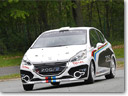 Peugeot has announced the new


 Chevrolet Bel Air was firstly introduced in 1950 and it was produced until 1975. In the middle of the 20th century, the manufacturer offered a revolutionary style that would set a pattern for decades.
 This is something new.

 You remember the


 Eight automakers from Europe and United States are going to display one-of-a-kind fast-charging technology. It is unique because it will enable recharging of most electrified vehicles for just 15 to 20 minutes.

 2012 Senner Nissan Juke 20 Tzunamee Candy Red is the latest conversion by the exceptional tuners from the German-based company


 It’s the latest


