Category: Car Makes

Car Makes

  • Toyota bZ Compact SUV Concept

    The new Toyota bZ Compact SUV Concept is making its global debut at the 2022 Los Angeles Auto Show. Toyota is giving a glimpse of what the future could be with the bZ Compact SUV Concept, extending the company’s vision under the “bZ” (Beyond Zero) brand umbrella.

    The Toyota bZ Compact SUV Concept is designed as a full battery-electric vehicle (BEV), using a clean-vital design approach. This approach celebrates the duality of the vehicle that achieves both the minimalistic design one would expect from a BEV with the vitality of the future. The concept represents a vehicle with zero emissions, utilising low-impact, sustainable materials, that also brings dynamic performance, leading tech, and a stylish appearance.

    The aerodynamic form of the concept enhances its futuristic look which includes the wheels pushed to the corners for an aggressive stance – making it appear as if it’s moving even when standing still. The short overhangs and sweepback angles make it stand out as an advanced technology vehicle, while a narrowed-down cabin design gives it an agile appearance for low drag.

    The edgy styling extends to the interior with premium finishes resulting in a distinctive look. Notably, the design team included several eco-friendly touches, like seating made from plant-based and recycled materials to follow the Beyond Zero theme. An in-car personal assistant connects the driver and passengers with the vehicle through audio and visual lighting cues that move around the cabin, responding to requests or commands from front or rear passengers.

    Through its Beyond Zero message, Toyota envisions a future in which carbon neutrality is achieved through the practical introduction of a portfolio of products with advanced, alternative fuel and zero-emissions powertrain technologies. A diverse portfolio of electrified products will help propel Toyota towards its global goal of carbon neutrality by 2050.

  • Honda Accord

    America’s best-selling car over the last five decades1, the all-new 2023 Honda Accord will re-energize the midsize sedan segment with an elegant and sophisticated design, and an available advanced hybrid-electric system that’s more responsive for a sporty, exhilarating driving experience. Accord hybrid models are positioned at the top of the 11th generation Accord lineup and will represent about 50 percent of sales.

    “The all-new 11th-generation Accord is essential to our lineup as a critical driver of brand loyalty, and with hybrid models representing 50% of sales, a key part of Honda’s electrification strategy.” said Mamadou Diallo, vice president of Auto Sales, American Honda Motor Co., Inc. “This is our best Accord ever, a true benchmark in its class, offering an unbeatable combination of style, efficiency, performance and connectivity.”

    The new 2023 Accord is longer and sleeker with premium proportions and a broad stance, further advancing the new Honda design direction with a low horizontal beltline and a long, powerful front end. America’s most popular sedan backs up its sleek new looks with more confident and refined dynamics, improved responsiveness, and a more fun-to-drive personality.

    Accord will be available in six trim levels, starting with the turbocharged LX and EX and topped by the hybrid-powered Sport, EX-L, Sport-L and Touring. With 247 lb.-ft of torque from Honda’s new 4th-generation two-motor hybrid system, the 2023 Accord hybrids are the most powerful ever.

    Inside, a new sporty and modern interior offers fine craftsmanship, high-quality materials and must-have available tech features including Honda’s largest touchscreen ever and Honda’s first integration of Google built-in for seamless on-the-go connectivity. Accord is also more comfortable, with new front Body Stabilizing Seats that reduce fatigue on long drives.

    Standard class-leading safety features include a new Honda Sensing® safety and driver-assistive technology, next-gen front airbags, as well as new front knee airbags and rear side-impact airbags.

    Key 2023 Accord Features:

    • Sleek and sophisticated all-new exterior design
    • 4th-generation two-motor hybrid system (Sport, EX-L, Sport-L, Touring) is more powerful, makes Accord more fun to drive
    • Sporty, modern, spacious, and comfortable interior
    • Standard 10.2-inch digital driver instrumentation display
    • 12.3-inch color touchscreen for top trims with wireless Apple CarPlay® & Android Auto™ compatibility (Sport, EX-L, Sport-L, Touring)
    • Standard 7-inch touchscreen with Apple CarPlay® & Android Auto™ compatibility (LX, EX)
    • Honda’s first integration of Google built-in (Touring), including Google Assistant, Google Maps and Google Play capability with the latest apps and services
      New Over the Air (OTA) software updates to nearly all vehicle computer modules, enhancing functionality and capability
    • Enhanced global Honda Architecture supports improvements in ride, handling and overall refinement
    • Updated 1.5-liter Turbo engine (LX, EX) adds refinement and responsiveness while remaining fuel efficient
    • Standard Honda Sensing® system, plus Low-Speed Braking Control, Traffic Sign Recognition system (TSR), and new Traffic Jam Assist (TJA)
    • Next-gen front airbags designed to reduce traumatic brain and neck injuries
    • New standard knee and rear passenger side-impact airbags

    Sleek New Styling

    The 2023 Accord features all-new elegant and sophisticated styling that further advances the new Honda design direction, with long, clean body lines and a strong, powerful front end with an upright grille and blacked out LED headlights. A sharp upper character line running the length of the body creates a sense of motion and highlights its increased overall length, which has grown 2.8 inches.

    A longer hood and a flowing fastback roofline create a premium silhouette. Along the roof line, Accord uses laser brazing technology, eliminating the need for roof molding for a smooth and clean roof line. Distinctive horizontal LED straight-line taillights accentuate Accord’s wide stance.

    LX, EX and EX-L trims feature a black grille mesh, body-color side mirrors and standard 17-inch alloy wheels. Sport, Sport-L get even sportier styling with black side mirrors, a black rear spoiler and black 19-inch alloy wheels, while Sport-L models add a unique black rear diffuser. The top-level Touring features unique gloss-black 19-inch alloy wheels along with silver and black exterior trim for a sharp, high-contrast look. All 2023 Accords feature a 0.4-inch wider rear track for a broader stance and improved stability.

    Accord will be available in eight exterior colors, three of which are new: Meteorite Gray Metallic, Urban Gray Pearl and Canyon River Blue Metallic.

    Sporty and Modern Interior

    With clean surfaces, high-quality materials and upscale touches, Accord’s all-new sporty and modern interior builds on the new Honda design direction while offering class-leading passenger volume (105.7 cubic feet, without moonroof) and rear seat legroom (40.8-inches).

    Premium materials are used throughout the cabin, especially on touchpoints, with close attention paid to the operation of all switchgear and controls for a premium feel. The shift knob has been angled toward the driver by 5 degrees, allowing the cup holders to be positioned to the right of the shift knob and still hold large-size cups.

    Materials were chosen with an eye toward style, such as the new elegant Piano Black trim. A striking metal mesh spanning the dash serves both form and function, concealing the air vents that would otherwise mar the uncluttered and harmonious design.

    Accord is also more comfortable with all-new front Body Stabilizing Seats. The new-generation seat frame firmly holds the body, reducing fatigue on long drives. An open and airy greenhouse and thin A-pillars provide excellent outward visibility.

    The 2023 Accord has the most cargo room in its class, with all models providing 16.7 cubic feet of trunk space and standard fold-down rear seats.

    Accord LX and EX feature gray or black cloth upholstery with EX sporting an 8-way power driver’s seat. EX also adds a moonroof, heated front seats and dual zone climate control. Sport features unique black cloth upholstery, aluminum pedals, a leather-wrapped steering wheel and a leather shift knob. EX-L and Sport-L come standard with leather seating surfaces and a 4-way power-adjustable passenger seat. Touring adds ventilated front seats and heated rear seats.

    Smart Technology

    Intuitive technology has been smartly integrated into Accord with a focus on the driver, including a standard 10.2-inch digital instrument panel with unique display functions depending on powertrain. A digital power flow meter replaces the tachometer in the hybrid-electric powered Sport, EX-L, Sport-L and Touring. The multi-information display features user-selectable functions such as Honda Sensing® settings, vehicle information and more.

    Accord hybrid models (Sport, EX-L, Sport-L, Touring) come standard with Honda’s largest ever touchscreen, a 12.3-inch unit with a physical volume knob, wireless Apple CarPlay® and Android Auto™ compatibility and a simplified navigation structure with fewer menus. A 1-inch finger rest at the bottom of the touchscreen makes it easier to use by providing a stable surface to rest your hand, and Qi-compatible 15W wireless smartphone charging is available (Touring).

    The top-line Touring features Honda’s first integration of Google built-in. This includes apps like Google Assistant, Google Maps and more on Google Play for a helpful, personalized and connected driving experience. Control select vehicle functions by voice with Google Assistant, get directions and live traffic updates with Google Maps, and download music, podcasts, audiobooks and more with Google Play.

    Accord Touring also comes with a standard 6-inch head-up display and a 12-speaker Bose premium audio system. Featuring Bose Centerpoint technology and Bose SurroundStage digital signal processing, the new system was custom-engineered precisely for the Accord’s new interior so drivers and passengers – regardless of their seating position – are placed in the middle of the music, with a clear and spacious listening experience

    A new 7-inch touchscreen audio system is standard on LX and EX with physical knobs for volume and tuning, Apple CarPlay® and Android Auto™ usage and a simplified menu structure. Two illuminated 3.0A USB-C ports are standard on LX, EX, and Sport models. On EX-L and Touring rear seat passengers get two illuminated 3.0A USB-C charging ports as well.

    All Accords can now receive quick and easy Over the Air (OTA) software updates to nearly all vehicle computer modules, enhancing functionality and capability. OTA wireless updates improve the ownership experience.

    More Powerful Hybrid Models

    The more fun-to-drive 2023 Accord sets a new benchmark for sporty, yet comfortable and refined driving dynamics. Based on Honda’s enhanced global architecture, Accord’s increased chassis rigidity with stiffer body supports and new front brace bars further supports improvements in ride, handling and overall refinement.

    Suspension and steering updates make Accord more fun to drive, while simultaneously improving ride quality. A retuned four-wheel independent suspension provides a more engaging driving experience. New front suspension damper mount bearings and ball joints reduce friction to improve steering smoothness.

    Accord hybrid models (Sport, EX-L, Sport-L, Touring) feature an all-new, more powerful 4th-generation two-motor hybrid-electric system with a pair of electric motors that are now mounted side-by-side and an all-new 2.0-liter Atkinson cycle 4-cylinder engine that adds direct fuel injection. This new configuration allows for the use of a larger propulsion motor with increased torque output. Combined system output is 204 hp2, while traction-motor peak torque is 247 lb.-ft. of torque (up 15 lb.-ft.).

    The hybrid-electric system also is more responsive and significantly more refined at highway speeds. Linear Shift Control elevates the driving experience by mimicking the vehicle speed-linked rev feel associated with a conventional drivetrain shifting gears under acceleration. Changes to the hybrid control system also improve the management of engine and electric power in different conditions for a better driving experience.

    Under the hood of the LX and EX, Accord’s 1.5-liter turbocharged 4-cylinder engine with VTEC® variable valve lift technology has been updated with additional refinement and improved emissions performance. Enhancements include an upgraded direct-injection system and new cold-active catalyst, plus a high-rigidity crankshaft and oil pan to reduce engine noise.

    The continuously variable automatic transmission (CVT) for the 1.5-liter turbo has been updated to reduce noise. Significant drivability and performance improvements were also made and include Step-Shift programming that simulates gear changes at full throttle.

    Drivers can seamlessly switch between four selectable drive modes to optimize the Accord’s driving experience for various conditions. Econ, Normal, and Sport (hybrid only) modes feature pre-set performance settings for powertrain response, steering assist level, gauge cluster layout and adaptive cruise-control settings. Hybrid models (Sport, EX-L, Sport-L, Touring) also feature a new Individual mode that enables customization of the driving experience.

    Safety Performance Leadership

    The 11th-generation Accord is a leader in midsize sedan safety features thanks to advanced active and passive safety technology that comes standard on every Accord. This includes the latest version of Advanced Compatibility Engineering™ (ACE™) body structure that has been enhanced for even better compatibility with larger vehicles. This includes improved occupant protection in angled frontal collisions. Targeting today’s Top Safety Pick+ and NHTSA 5-star ratings, Accord is designed to meet the new Insurance Institute for Highway Safety’s (IIHS) Side Impact Crashworthiness Evaluation (SICE) 2.0 as well as anticipated future standards.

    Introduced on the 2022 Civic, new driver and passenger front airbags were designed to minimize the potential for severe brain trauma associated with angled frontal collisions. The new front driver’s airbag uses an innovative tuck sewing structure to increase the rigidity of both sides of the airbag. The passenger-side front airbag uses a three-chamber design with the two outer chambers designed to cradle the head and minimize rotation. For the first time, Accord features standard knee and rear-passenger side impact airbags.

    Accord also features an updated Honda Sensing® suite of safety and driver assistive technologies enabled by a new camera with a wider 90-degree field of view and wide-angle radar with a 120-degree field of view. This wide angle improves collision prevention performance via improved ability to recognize attributes of objects, such as a vehicles or pedestrians, as well as white lines, road boundaries like curbs, other vehicles, pedestrians, bicyclists, motorcycles, and road signs. The wide angle also enables expanded control range for Accord at intersections.

    Blind spot information (BSI) has been expanded, now with 82 feet of radar range. Also new is Traffic Jam Assist (TJA), which is a first for Accord. Adaptive Cruise Control (ACC) with Low-Speed Follow, and Lane Keeping Assist (LKAS) have been updated to feature more natural responses. Traffic Sign Recognition (TSR) is also standard, and Low-Speed Braking Control is available on Touring.

    Accord features standard Rear Seatbelt Reminder and Rear Seat Reminder, the latter notifying drivers to check the rear seating area for children, pets or other precious cargo when exiting the vehicle. Expanded available standard security features now include a stolen vehicle locator, remote immobilizer, and a Find-My-Vehicle function.

    40 Years of Accord Manufacturing

    Honda will mark 40 years of Accord production in Ohio on November 1, 2022.  The new 11th-generation Accord will continue to be built* in the Marysville Auto Plant in Ohio, continuing Honda’s commitment to build products close to the customer. Honda has produced more than 12.5 million Accords in Ohio since U.S. production began in 1982.

    * using domestic and globally sourced parts

    2023 Accord Key Specifications and Features

    ENGINEERING

    1.5-liter Turbo (LX, EX)

    Hybrid (Sport, EX-L, Sport-L, Touring)

    Engine Type 1.5-liter turbocharged inline 4-cylinder 2.0-liter inline 4-cylinder Atkinson and two-motor hybrid system
    Displacement 1498 cc 1993 cc
    Horsepower 192 hp (SAE net @ 6000 rpm) 204 hp1 (combined system, ISO net)
    Torque 192 lb.-ft. (SAE net @ 1,700-5,000 rpm 247 lb.-ft. (@ 5,000-8,000 rpm)
    Drive Modes ECON / Normal ECON / Normal / Sport / Individual
    Transmission CVT Two-motor hybrid system
    Ratio Range 2.645-0.405 N/A
    Final Drive 5.36340 3.895
    Suspension – Front / Rear MacPherson Strut / Multi-Link
    WHEELS AND TIRES

    LX

    EX

    Sport

    EX-L

    Sport-L

    Touring

    Wheel Size 17-inch 17-inch 19-inch 17-inch 19-inch 19-inch
    Wheel Color Blade Silver Pewter Gray Gloss Black Pewter Gray Matte Black Gloss Black
    Tire Size 225/50R17 << 235/40R19 225/50R17 235/40R19 <<
    EXTERIOR MEASUREMENTS
    Wheelbase (in.) 111.4
    Length (in.) 195.7
    Height (in.) 57.1
    Width (in.) 73.3
    Track (in., front/rear) 63.6 / 62.6
    KEY FEATURES

    LX

    EX

    Sport

    EX-L

    Sport-L

    Touring

    Honda Sensing® •
    Advanced Compatibility Engineering™ (ACE™) Body Structure •
    10 Airbags, Including Next-Generation Driver and Front Passenger Front Airbags •
    10.2-inch Driver Information Interface Screen •
    12.3-inch HD Color Touchscreen with Volume Knob • • • •
    7-Inch Touchscreen with Volume and Tuning Knobs • •
    Google built-in •
    Apple CarPlay® and Android Auto™ Compatibility • • Wireless Wireless Wireless Wireless
    Wireless Charging •
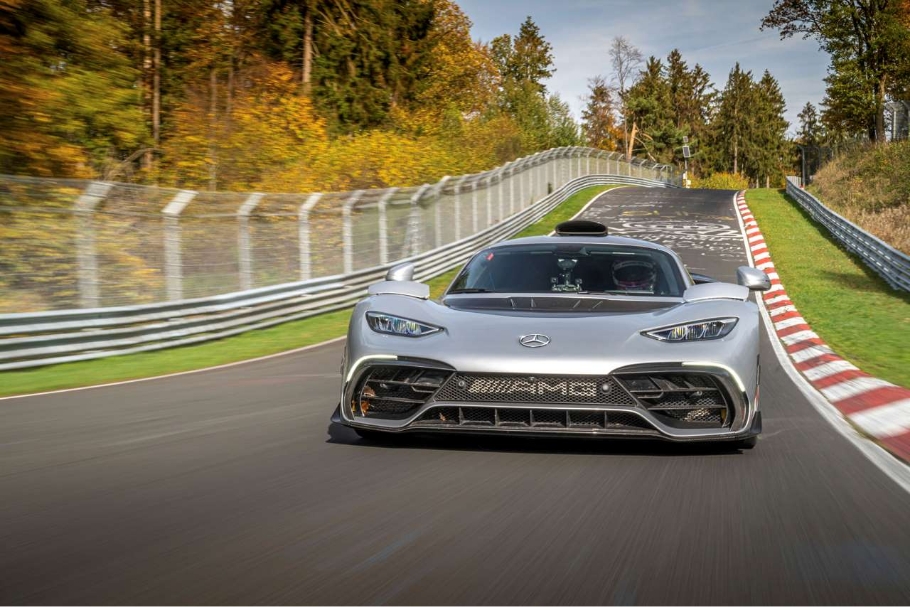
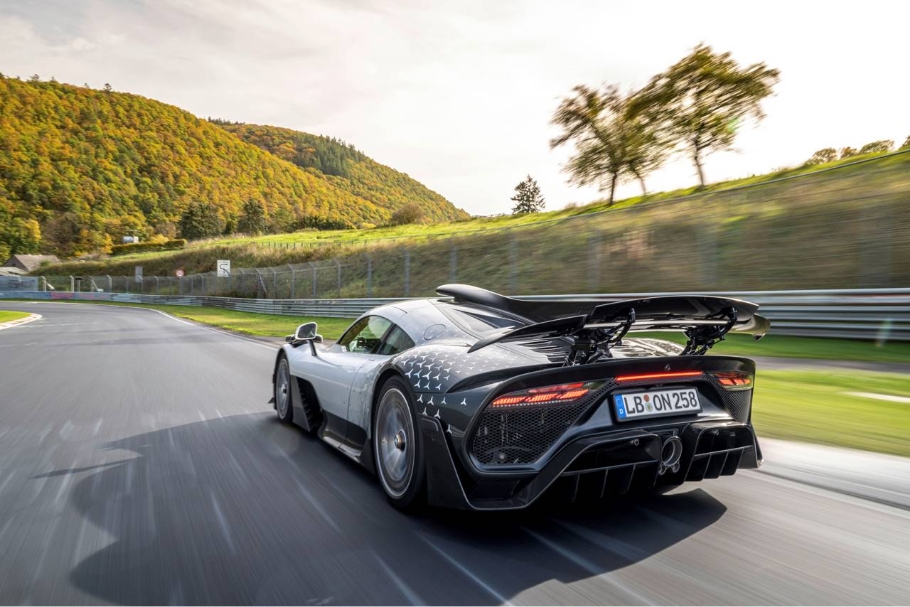
  • 6:35.183 min: Mercedes-AMG ONE is Number 1 on the Nürburgring-Nordschleife

    Mercedes-AMG ONE - Front

    Mercedes-AMG ONE has once again made history by setting a new record for road-legal production vehicles on the Nürburgring-Nordschleife. The hypercar with Formula-1™ technology, officially measured and notarised, completed the 20.832-kilometer track in 6:35.183 minutes. The record-breaking run happened on October 28, 2022, when racing driver and AMG brand ambassador Maro Engel took to the track for the last attempt of the day and burned the new, fabulous time into the legendary and demanding Eifel asphalt.

    New Record and Thrilling Drive

    Maro Engel’s last lap was a truly unforgettable experience. Even though he had already set a new best time, Engel wasn’t yet satisfied. Towards the end of his track slot, the conditions were getting better by the minute, and he took advantage of the very last opportunity to improve the lap time to the new official record of 6:35.183 minutes. According to Engel, the track conditions were tricky as the track hadn’t dried completely yet, especially in some crucial areas. Engel had to find the optimal deployment strategy for the hybrid drive, just like Lewis Hamilton and George Russell on their race weekends. The lap time of 6:30.705 minutes was based on the track variant known from the sport auto Super Test.

    The AMG Team’s Success

    Philipp Schiemer, Chairman of the Board of Management of Mercedes-AMG GmbH, was proud of the whole AMG team that was involved in this project. The various departments in Affalterbach as well as their colleagues at HPP in Brixworth never gave up and continued to push the dream of this vehicle. Even though the AMG ONE is more at home on a Grand Prix circuit than on the Nordschleife, the team went one step further and took on the challenges of the Nürburgring with a super sports car. This success is the well-deserved reward for their hard work.

    httpv://www.youtube.com/watch?v=RGkBJajuo4U

    Challenging Conditions

    The weather on the day of the record-breaking run was sunny with a light wind, but the track was still damp and partly dirty in some areas, typical of the Nürburgring in autumn. In some sections, the ideal line had not yet completely dried, especially in the fast “Kesselchen” section. These were not ideal conditions, especially for a vehicle in this extreme performance class. By the time the track was passable for a first fast lap, the remaining time had whittled down to less than an hour, which only allowed for a maximum of four fast laps.

    Series-Production Condition

    Technically, the record-breaking vehicle was in series-production condition and had everything that the Mercedes-AMG ONE offers as standard. The hypercar brings Formula 1™ hybrid-drive technology from the racetrack to the road for the first time. With one combustion engine and four electric motors, the E PERFORMANCE hybrid delivers a total of 782 kW (1,063 hp), with the top speed capped at 352 km/h. The other motorsport technology ranges from the carbon monocoque and carbon body to the engine/transmission unit as a stressed member and active aerodynamics to the push-rod chassis. With its complex technology, the two-seater Mercedes-AMG ONE offers even more than a Formula 1™ racing car in some cases.

    Conclusion

    The Mercedes-AMG ONE has once again set the bar high for hypercars with its new Nürburgring-Nordschleife record. The AMG team’s hard work and dedication have paid off with a well-deserved

    Mercedes-AMG ONE - Rear Angle

  • Salvaggio Design Buick Grand National

    Kevin Hart the car guy (and international superstar) visited the SEMA Show in Las Vegas to see his brand new project for the first time; an ’87 Buick Grand National T-Top. It featured in the Magnaflow booth and was stationed across the aisle from Hart’s 1969 Plymouth Roadrunner, which starred in the Meguiar’s booth. Both cars were built by Salvaggio Design and designed by Sean Smith, ensuring the highest quality and a ridiculous attention to detail.

    Wisconsin-based Dave Salvaggio has worked on numerous projects with Kevin, so they sat down with Smith to devise his beautiful Buick. And straight away, the direction was set by its name; Dark Knight.

    All Hart’s cars have a name. The Roadrunner was Mike Myers, for example. It inspired Smith to devise a black and orange Halloween paint scheme with a blood-splatter effect on the leather seats, a knife handle shifter, and hockey mask-wearing Roadrunner badges.

    Avoiding any Batmobile styling cues for the Grand National, the theme for Dark Knight is subtle. It’s recognizable by its sinister appearance, featuring a black exterior with a blue and grey interior that echoes the superhero’s suit and cape. Bronze details were inspired by the famous utility belt.

    Aside from its theme, Hart wanted to create a Grand National resto-mod that would redefine its key elements with modern technology. However, he insisted Salvaggio and Smith retain the car’s character, including its stock fenders, to create a wolf in sheep’s clothing; something nobody would suspect.

    Already the proud owner of a Grand National GNX with its factory flares, Hart didn’t want the new car to overwhelm it. He also stipulated it must have the famous T-Top roof, which triggered the search for a very specific car.

    GRAND NATIONAL

    Once a suitable donor was found, Smith worked with the Salvaggio Design team to execute the vision with restraint. It wouldn’t be extroverted or widebody; instead they focused on details such as restyling the front bumper. Using 3D CAD technology, the front bumper was scanned and a new design was 3D-printed, incorporating functional air ducts to improve the cooling and aerodynamic properties; something they deemed necessary given the chosen powerplant. The printed bumper was then used to mold the final piece in carbon fiber.

    Carbon fiber from Brothers Composites was used sparingly, limited to the hood, chin spoiler, rear spoiler and mirrors. It can also be found inside the car and under the hood, as we’ll explore later.

    The next task was to “tighten” the body lines, giving them a crisper profile with a premium fit and finish. This involved reprofiling the shut lines on the doors to allow everything to flow better with the primary surfaces.

    The metalwork was fabricated by Randy Russell, Telly Violetto and Craig Ness who expertly created the engine bay, floors, rear seat delete and trunk interior.

    Smith designed new door handles that subtly update the original parts. Machined from billet, they have carbon fiber inlays to echo the carbon mirrors, which were molded from the stock parts.

    With all the custom parts, the Buick’s lighting and front grille are stock, but Smith couldn’t resist reimagining the Grand National badge, creating a modern interpretation.

    With the bodywork complete, the car was painted in straight BASF black – no tints or effects. It’s offset by the nickel-plate finish on the 19” HRE 501 wheels, which were chosen for their resemblance to the original equipment but with a modern twist.

    CHASSIS

    Sitting on a laser-cut and TIG-welded custom Salvaggio chassis frame, the team added a Detroit Speed & Engineering X-Gen 595 front suspension package. The bolt-in subframe increased rigidity for superior handling from the Ultimate Performance coilovers. The rear-end has a DSE four-link set up with Panhard bar.

    With its powerful engine, Salvaggio returned to Brembo for the ultimate stopping power. Brembo GT six-piston front and four-piston rear calipers provided supercar braking. They also ensured massive mechanical grip thanks to the 265/30 R19  front and chunky 325/30 R19 rear Toyo Proxes R888R tires mounted on the 19×9” front and 19×11” rear HRE 501 wheels.

    650HP

    When it came to the heart of Dark Knight, the team sat down with Mario Abascal from Gearhead Fabrications to discuss the options. Inevitably, the Chevrolet LS V8 was a topic of heated conversation but Mario suggested the LF4 3.6L V6 Twin-turbo engine from the Cadillac ATS-V. “It was the obvious choice for what Buick might have installed if the Grand National GNX were around today!” he told us.

    Having made the suggestion, it was Mario’s mission to see it through; no easy task given the complexity of the direct injection engine and eight-speed automatic transmission.

    Undeterred, Gearhead sourced a running ATS-V drivetrain assembly. Strapped to a pallet, it included the V6 engine, trans, full wiring harness, control modules, dashboard and steering system. The team then invested 45 hours to isolate each individual wire and module to learn what could be disposed without affecting the functionality. As it turns out, they were able to discard about 60% of its bulk, filling numerous trash bags.

    Installing the drivetrain required not only new mounts but the oil coolers, oil filters, turbo coolant system and more had to be relocated to clear the Salvaggio frame rails. The team also had to painstakingly extend 300 wiring connections to relocate the power control module (PCM) under the newly created carbon fiber engine covers.

    As a homage to the factory GNX, Mario removed the twin-turbo setup, building a single-turbo kit around a 67mm Boost Labs BL67R ball-bearing turbo with billet wheel. It was mounted to a custom header once Salvaggio Design fabricated flanges to fit to the Cadillac’s integral manifold.

    Abascal built a custom exhaust from Magnaflow sections for the unique engine swap. He also fabricated the plumbing, including pipes for the factory air-to-water intercooler, which mounted in its stock position on top of the engine.

    The Cadillac engine’s fuel supply is governed by a lobe on the factory cam. And by fitting a Comp Cams “fuel cam,”  Abascal increased the fuel flow to feed the turbo. He then controlled engine boost, fuel, ignition and even the transmission shift points via an HP Tuners module.

    Running at about 20psi boost pressure, the single-turbo Cadillac V6 was dyno-tested at 650hp on 103-octance fuel. The intention is to fit performance camshafts and reach a projected 700hp on race gas. This is a considerable increase over both the Grand National GNX at 276hp and even the ATS-V at 464hp.

    “We’re so happy that everything functions as it should,” Mario told us. “The transmission shifts perfectly and even the proximity sensor in the car can detect the key fob, only allowing the engine to start if the key is nearby. It has full factory functionality and could even operate remote locking if required. We’re delighted with the engine choice,” he concluded.

    To accommodate the new drivetrain and tidy the engine bay, the Salvaggio team fabricated a core support and radiator cover before creating a new firewall and installing carbon fiber inner fender wells. Carbon fiber engine covers completed the transformation once the plumbing was finished in Cerakote bronze to match the accents throughout the car.

    LEATHER

    The Dark Knight theme takes center stage inside thanks to the extraordinary work of Salvaggio Design, Sean Smith, and the talented family at Gabe’s Custom Interiors.

    Picking up on the Caped Crusader’s costume, the seats and door panels were wrapped in a combination of dark blue and grey leather. The utility belt bronze tones are introduced through contrast stitching and pinstripe details. There are also bronze accents on the cooling vents and custom billet steering wheel. The one-off wheel was heavily influenced by the original part but has been beautifully updated.

    The same can be said of the door trims, which were originally plastic but have been replaced by bronze billet pieces with carbon fiber inlays. A billet shift knob and shift boot bezel were also machined from solid, while the instrument panel was 3D printed and fitted with Holley gauges. Like everything else, it feels comfortably familiar with a modern twist.

    TECH SPEC

    Kevin Hart’s “Dark Knight” 1987 Buick Grand National T-Top by Salvaggio Design

    Engine:

    LF4 3.6L V6 Twin-turbo from Cadillac ATS-V built and installed by Gearhead Fabrications, custom single-turbo kit with 67mm Boost Labs BL67R ball-bearing turbo with billet wheel mounted on custom manifold, custom Magnaflow exhaust and engine mounts, Cadillac air-to-water intercooler with custom plumbing, Comp Cams fuel camshaft, programmed HP Tuners software calibration, remote-mounted oil coolers, oil filters and turbo coolant system, relocated PCM, full Cadillac electronic integration to transmission, ignition system, etc. Custom engine bay with fabricated core support and radiator cover, smoothed and reshaped firewall, carbon fiber inner fender wells, carbon fiber engine covers and bronze Cerakote plumbing

    Power:

    650hp on 103-octance fuel

    Transmission:

    Cadillac eight-speed automatic, custom mount, 9” Tru Track 3.7:1 rear-end

    Chassis:

    Laser-cut and TIG-welded custom Salvaggio chassis frame, Detroit Speed & Engineering X-Gen 595 front suspension package, four-link rear suspension with Panhard bar, Ultimate Performance coilovers

    Brakes:

    Brembo GT six-piston calipers and 14” cross-drilled rotors front, four-piston and 13” rear

    Wheels / Tires:

    19×9” front, 19×11” rear HRE 501 wheels finished in nickel-plate, 265/30 R19 front and 325/30 R19 rear Toyo Proxes R888R tires

    Exterior:

    Salvaggio Design carbon fiber front bumper with functional air ducts, carbon fiber hood, chin spoiler, rear spoiler and mirrors by Brothers Composites, reprofiled body lines and door shut lines, custom engine bay, floors, rear seat delete and trunk, billet door handles with carbon fiber inlays, Sean Smith Grand National badges, car painted in BASF black

    Interior:

    blue and grey leather upholstery by Gabe’s Custom Interiors with bronze stitching and pinstripes, bronze accents on cooling vents and Salvaggio billet steering wheel, 3D-printed dash with Holley gauge pack, Vintage Air system, bronze billet door trim with carbon fiber inlays, billet shift knob and shift boot bezel

  • Volvo EX90

    A true seven-seater, all-electric SUV that further raises our standards in safety and a more sustainable lifestyle: the new Volvo EX90 represents the start of a new era for our company in which we set a decisive course for a fully electric future.

    Starting with the Volvo EX90, we’ll reveal one new fully electric car each year. By 2030, we aim to sell only fully electric cars, one of the most ambitious electrification blueprints in the automotive industry and crucial to our ambition to be a climate-neutral company by 2040.

    We revealed our new fully electric flagship SUV to the world in downtown Stockholm today, reflecting our Swedish roots. At the same time, reflecting our global footprint as a company, the Volvo EX90 will be built in the USA starting next year and later also in China. By then, we aim for those two production facilities to be climate-neutral.

    A new instant classic in Scandinavian design, the Volvo EX90 defines the principle of form following function. It’s a versatile, stylish family car with modern proportions, combined with cutting-edge technology in core computing, connectivity and electrification to optimise safety, efficiency and aesthetics.

    “The Volvo EX90 is a statement for where we are, and where we are going,” said Jim Rowan, our Chief Executive. “It’s fully electric with a range of up to 600 kilometres on a single charge, designed to further raise our safety standards, the first Volvo car to be truly defined by its software and part of a wider ecosystem, connecting to your home and your other devices. The Volvo EX90 is the start of something new for Volvo Cars in many ways.”

    Keeping you and your loved ones safe

    The standard of safety in the Volvo EX90 is also higher than any Volvo car before it. It’s designed to understand you and its surroundings to help keep you, your loved ones and others in traffic safe. It can also get smarter and safer over time, as it learns from new data and receives updates.

    The Volvo EX90 has an invisible shield of safety enabled by our latest sensing technology, inside and outside. State-of-the art sensors such as cameras, radars and lidar are connected to the car’s high-performance core computers, where NVIDIA DRIVE runs Volvo Cars’ in-house software to create a real-time, 360-degree view of the world.

    Our sensors don’t get tired or distracted. They are designed to respond and react when you’re just a fraction too late. Our lidar can sense the road in front of you, whether it’s day or night, also at highway speeds. It can see small objects hundreds of metres ahead, creating more time to inform, act and avoid. The sensors also contribute to improve the reliability and overall performance of our assisted driving function, Pilot Assist, with a new steering support function while changing lanes.

    Inside, our invisible shield of safety also looks out for you. Special sensors and cameras, powered by our own in-house-developed algorithms, gauge eye gaze concentration. The technology allows the Volvo EX90 to understand when you’re distracted, drowsy or otherwise inattentive, beyond what has been possible in a Volvo car to date.

    It’ll alert you, first softly nudging, then more insistent. And if the unthinkable happens and you fall asleep or are taken ill while driving, the Volvo EX90 is designed to safely stop and call for help.

    Finally, thanks to the state-of-the-art sensor set including lidar, the Volvo EX90 is the first Volvo that’s hardware-ready for unsupervised driving in the future.

    Technology with a purpose

    A core system – powered by NVIDIA DRIVE AI platforms Xavier and Orin, Snapdragon® Cockpit Platforms from Qualcomm Technologies and in-house-developed software by Volvo engineers – runs most of the core functions inside the car, from safety and infotainment to battery management. The result is a more responsive and enjoyable experience inside the car.

    In other words, your Volvo EX90 won’t be just a new car, it will be a highly advanced computer on wheels. Even better, just like your smartphone or your laptop, the Volvo EX90 is designed to get better over time, thanks to regular over-the-air software updates.

    By combining the state-of-the-art computing power from Snapdragon’s Cockpit Platforms with the visualisation capabilities of Unreal Engine, the 3D tool developed by Epic Games and used to power some of the world’s largest games, you get lightning-fast computing power and high-quality graphics on the in-car screens and head-up display.

    A 14.5-inch centre screen is your gateway to one of the best infotainment systems on offer, with Google built in. Google apps and services, including hands-free help from Google Assistant, Google Maps navigation and more of your favourite apps on Google Play, all come built in. The displays in the Volvo EX90 help you keep your eyes on the road by offering you the right information at the right time. The Volvo EX90 will also be compatible with wireless Apple CarPlay.

    Thanks to the standard 5G connection, where available, it’s never been easier to install the apps you need on your home screen and enjoy highly intuitive navigation. You can also stream your favourite music through the new, reference-quality Bowers & Wilkins audio system featuring Dolby Atmos as a Volvo-first, plus headrest-integrated speakers for immersive sound.

    The Volvo EX90 will also come with phone key technology as standard. Your smartphone serves as your car key and automatically unlocks the car and starts a personal welcoming sequence as you approach. Your personal profile will also be loaded automatically as you enter the car.

    All of this technology comes together in one of the most pleasant and elegant car interiors on the market, full of natural and responsibly sourced materials. That interior composition also reflects our sustainability ambitions, such as being a fully circular and climate-neutral company by 2040.

    Supporting a more sustainable lifestyle

    With its brand-new, in-house-developed fully electric technology base, the Volvo EX90 is your perfect companion for a more sustainable family lifestyle. Delivering up to 373 miles (600 kilometres) of tailpipe-emission-free driving range on a single charge, according to the WLTP test cycle, it charges from 10 to 80 per cent battery capacity in under 30 minutes.

    The initially available twin-motor all-wheel-drive version is powered by a 111kWh battery and two permanent magnet electric motors together delivering in its performance version 380kW (517hp) and 910Nm of torque. In combination with the brand-new chassis, this creates a great and smooth driving experience.

    The Volvo EX90 contains approximately 15 per cent of recycled steel, 25 per cent of recycled aluminium as well as 48 kilogrammes of recycled plastics and bio-based materials, which corresponds to around 15 per cent of the total plastic used in the car – the highest level of any Volvo car to date.

    Finally, the Volvo EX90 is our first car with all the necessary hardware to enable bi-directional charging. It’s a technology whereby you can use your car battery as an extra energy supply, for example to power your home, other electric devices or another electric Volvo car. We plan to make bi-directional charging available in the future, starting with selected markets.

    The small print

    • Described features might be optional and the availability of the features and services mentioned above may differ between markets.
    • Charging and range figures are preliminary and derive from estimates and calculations performed by Volvo Cars for the Volvo EX90 and these outcomes are not guaranteed. Preliminary range figure is for the initially available twin-motor all-wheel-drive version (300kW/408hp). Preliminary range varies for other trim levels. The driving range and energy consumption under real conditions vary depending on driving behaviour and other external factors. Charging times can vary and are dependent on factors such as outdoor temperature, battery temperature, charging equipment, battery condition and car condition. Car certification pending.
    • Google, Google Play and Google Maps are trademarks of Google LLC.
    • Snapdragon is a product of Qualcomm Technologies, Inc. and/or its subsidiaries. Snapdragon is a trademark or registered trademark of Qualcomm Incorporated.
  • Morgan Plus

    In line with its philosophy of continual evolution, Morgan Motor Company is reimagining its Plus Four and Plus Six models. The enhancements, which are being introduced as part of a formal recognition of a new ‘Plus’ line, will feature on all Plus Four and Plus Six models from January 2023.

    The name ‘Plus’ signifies a mainstay of Morgan production, and sits alongside the newly introduced ‘Super’ pillar. The nameplate was first witnessed on the Plus 4, introduced in 1950. Plus represents more than 70 years of heritage, yet looks firmly to the future, embracing relevant new technology and reimagining the experience of a modern, handcrafted sports car for the 21st Century.

    Coach-built on the company’s lightweight CX-Generation bonded aluminium platform, the design of Plus models is timeless and enduring. Plus Four, with its slightly narrower body and wire wheels, is more akin to the original vehicles in its aesthetic. Plus Six, which is wider with a more assertive appearance, presents a more contemporary aesthetic. Both vehicles will benefit from the new features, and their list of options and configurations will be closely aligned, ensuring a cohesive tailoring experience for customers.

    “The new Morgan Plus line celebrates the essence of unconventional driving and ethical engineering. It unites timeless design and craftsmanship with the most exhilarating driving engagement. With Plus we want to honour those individuals who believe that motoring is not about status, but more about character, authenticity, and pleasure.”

    Massimo Fumarola, Chief Executive Officer, Morgan Motor Company

    Interior aesthetic

    The enhancements to the company’s latest Plus models are headlined by significant changes to the interior, offering greater levels of refinement, further personalisation opportunities, and increased usability over earlier generations.

    The introduction of a new range of marquetry veneers, which extend through the vehicle via its centre console, reinforce the company’s commitment to craftsmanship and bespoke tailoring, celebrating the natural materials, design, and form, synonymous with the Morgan marque.

    ‘Spokes In Flight’ and ‘Kinetic Diamond’ are abstract motifs for moving spokes, inspired by the spoked wheels that have featured on Morgan cars for decades. ‘Engineered’ – the third veneer option – features aluminium strips between wood, signifying the company’s use of the two core materials.

    A new superformed aluminium dashboard and instrument panel can be specified in matte silver, matte black or matched to body colour, and a model designation can now be specified on the passenger side of the dashboard. The dashboard is home to new instruments which feature new face artwork. The instrument artwork is simplified and draws inspiration from premium timepieces, exuding a minimal and clutter-free aesthetic. In addition to the new instrument artwork, a new LCD information display screen has been incorporated into the dashboard design. Situated directly in front of the driver, the screen is larger than the previous screen, and has increased resolution. Updated screen graphics with enhanced animation, and the introduction of driving mode dependant backdrops, help to improve usability for drivers. The screen is subtle and displays strictly necessary information, continuing the company’s philosophy of appropriately introducing technology into its vehicles.

    A solid wooden lower rail coordinates with the centre column and is situated beneath the aluminium dashboard. Configurable in a range of finishes and colours, each wooden section is meticulously hand crafted by Morgan’s skilled craftspeople. Beneath the wooden lower rail is a new glovebox, a feature introduced for the first time on a Plus model. The glovebox is trimmed in matching leather, and houses USB power sockets inside.

    The steering wheel is now available with a satin polished centre section. When specified, this finish coordinates with other internal embellishers including the speaker grille, door handle, handbrake, and gear shift surrounds.

    Two-tone fabric, which contrasts on the seats and door cards, offers a mix of textures and has been designed specifically for the latest Plus models. Black pebble grain leather and black fabric is specified as standard, with a further six colourways and leather grains optional.

    Woven from worsted wool using fine marl yarns, the natural textile embraces a purity of composition. Each fabric is paired with a complimentary leather colourway, ensuring leather is used sparingly, celebrating it as a fine material.

    Redefined door cards provide the base for a curated range of two-tone fabric options – introduced for the first time on a Morgan four-wheeled model – and Sennheiser branded speaker grilles (when specified with Sennheiser audio system).

    A new ‘bolt-action’ door handle, situated on the lower section of the door, is the most notable change to the door interior. Created from lacquered stainless steel and high-quality saddle leather, it provides a material and aesthetic uplift, whilst introducing a lasting mechanical sensation for occupants exiting the vehicle.

    Both the standard and Comfort Plus seat options benefit from myriad enhancements. The headrest on both seat variants has undergone a full redesign, and now displays a slimmer aesthetic featuring intricate stitch detailing. The Comfort Plus seat now features an adjustable thigh bolster and knurled metal recline adjustment lever. In another first for Morgan’s four-wheeled models, new Plus models now feature an optional integrated cup holder, which is detachable and fits into the base of the passenger seat.

    “The Plus line in 2023 presents a marked evolution of the four-wheeled Morgan. As with any enduring design, it is crucial to strike a balance between moving forward whilst complementing established product qualities.  

    “The design team is fortunate to work in proximity with mechanical and quality engineers, as well as the craftsmen at Pickersleigh road. Designers can deliver solutions that envelope a clear understanding of constraints and opportunities. Through this understanding, we have been able to introduce sizeable new technologies and features, whilst also enhancing the perceived quality of Morgan Plus cars.

    “A holistic whole vehicle study has considered the more significant changes, through to multiple more nuanced design updates – the increased impression of quality will be evident.” 

    Jonathan Wells, Chief Design Officer, Morgan Motor Company

    Engaging vehicle dynamics

    Above all else, a Morgan sports car should be lightweight, exciting to drive, and offer a unique connection between driver and machine. Morgan’s in-house engineering teams have worked with industry leading external partners to ensure the continual dynamic evolution of Plus models. Throughout this process, the key principles of the Morgan driving experience have remained paramount, alongside requirements for future technology, safety, and legislative requirements.

    Dynamic enhancements to Plus models are headlined by the introduction of Electronic Stability Control (ESC) and all-new braking system, developed alongside Continental and AP Racing. ESC will be introduced on all Plus Four and Plus Six models. Mode-dependent, the ESC has been tuned for each model and gearbox variant, and can be switched between levels of assistance depending on driving mode.

    The AP Racing braking system is all-new and has been developed alongside the ESC programme to deliver high-performance braking.

    Bespoke gearbox calibrations have been developed, in partnership with BMW, for the automatic variant of Plus Four and Plus Six models respectively. Gearbox calibrations receive further intelligence and are integrated deeper into the vehicle, adapting to feedback from control systems throughout.

    In ‘normal’ driving mode, four calibrations will adapt gear shifting based on brake pressure and steering angle. In ‘Sport’ and ‘Sport+’ modes, a further four calibrations, programmed to be more dynamic, will adapt gear shifting, also based on brake pressure and steering angle.

    New hill detection uses an accelerometer and driver torque demand to automatically select a lower gear for steep inclines. In addition to aiding drivability and increasing performance, the new calibrations also deliver an increase in efficiency.

    The addition of new suspension dampers and bushes completes the dynamic enhancements to Plus models. The new bush rating will deliver further refinement over low-frequency road undulations, whilst the new dampers improve ride compliance, progressive rate, and high-speed performance.

    The addition of airbags, fitted as part of the standard specification, reinforce the company’s commitment to continually developing and evolving its products. Situated behind the new aluminium dashboard and within the steering wheel, the new addition represents a significant engineering project and exceeds the homologation requirements for the vehicle.

    “The introduction of new dynamic features to our latest Plus models reflects Morgan’s philosophy of continual evolution. Above all, Morgan sports cars should be fun to drive, providing occupants with a unique and memorable experience. Our latest introductions celebrate these qualities, whilst also increasing the level of safety, and future-proofing our models against everchanging legislative requirements.”

    Matt Hole, Chief Technical Officer, Morgan Motor Company

    Audio by Sennheiser

    Continuing its philosophy of combining traditional coachbuilding methods with the latest technology, Morgan is partnering with Sennheiser to offer a revolutionary audio system in its new Plus models. With more than 75 years of experience in audio and music, Sennheiser’s expertise is unparalleled.

    Whilst previous iterations of Morgan sports car have offered an audio system, the audio experience of the Sennheiser solution is true to its premium reputation, surpassing any offering that has come before it. The sound system delivers an enveloping sound with a unique soundstage that takes audio fidelity to its highest level.

    Sennheiser’s tuning creates the magical illusion of a sound stage in front of the passengers, providing a high-quality soundtrack to those unforgettable drives. Thanks to the AMBEO Contrabass algorithm, the audio system delivers a unique bass response optimised for definition, punch, and depth while keeping the system as efficient and compact as possible.

    The system includes eight transducers: four conventional speakers in the door and rear panel, and four invisible speakers, of which three are behind the dashboard and one in the lower compartment panel for bass reproduction. The transducers are controlled by a new amplifier with a dedicated DSP, powered by Sennheiser’s audio processing software.

    The integration has been carried out in line with Morgan’s key philosophy of appropriately introducing modern technology into its vehicles. The cabin design is unaltered, and the use of invisible speakers ensures that additional weight is kept to a minimum, a must for any sports car. Even under the demanding conditions of an open-top sports vehicle, this system maintains premium sound quality.

    Visual cues arrive in the form of subtle Sennheiser branding, visible on the speaker grille situated on each door. The design of the speaker grilles takes inspiration from the iconic Morgan louvres that are stamped into each bonnet of Plus models. Each speaker grille is finished in polished satin, coordinating with other embellishers visible within the cockpit of the vehicle.

    Veronique Larcher, Head of Sennheiser Mobility, said: “Both companies collaborated closely to create a one-of-a-kind product with no compromise in sound reproduction, performance, design, and quality. We couldn’t have celebrated our road debut better than with a brand whose pursuit of quality and excellence in craftsmanship is so fully aligned with Sennheiser’s values.”

    Individuality celebrated

    Morgan cars celebrate individuality and entice owners to commission their own bespoke Plus model, selecting from an almost endless list of possibilities. Each customer is presented with the opportunity to bring their dream to reality and create a true one-off, reflecting their own individual style and taste.

    To help prospective clients on their commissioning journey, Morgan’s design team has created a series of specification themes that help bring each model to life. These specifications reflect the environs that Morgan cars frequent, and celebrate the versatile nature of Morgan design.

    Specification themes include Nordic, Riviera, Britannia, Stateside, Alpine and Urban, with each one being selectable on Morgan’s online configurator in 2023.

    Paying homage to the company’s rooting in motorsport and trialling success, 12 new graphic packs – including roundels, bonnet stripes and strikethrough numbers – will be available for 2023 models. Adding a further method of personalisation, all graphics are available in white, black and clear vinyl. Owners will also have the option to select from a ‘pilot’ and ‘co-pilot’ call sign to be situated on the exterior of the vehicle.

    Morgan’s latest introductions will be produced from January 2023, with prospective customers being invited to begin their own bespoke Plus commission from today.
  • Audi SQ8 Sportback e-tron quattro

    With the Audi e-tron, the premium manufacturer entered the age of electromobility in 2018, marking the start of the electric future for the four rings. Since then, the model has been setting standards in the electric luxury-class SUV segment. The new Audi Q8 e-tron is now building on the success story of this electric pioneer. The top-of-the-line electric SUV and crossover impress with their optimized drive concept, improved aerodynamics, higher charging performance, and battery capacity and increased range of up to 582 kilometers in the SUV version (in accordance with the WLTP) and up to 600 kilometers in the Sportback version (in accordance with the WLTP). Significant changes, especially at the front of the vehicle, lend the new flagship SUV a fresher appearance.

    Since the introduction of the Audi e-tron around four years ago and sales of 150,000 units, Audi has been following a systematic electric roadmap. Its electric portfolio now comprises eight models. By 2026, it will have more than 20. At that point, Audi will only be releasing fully electric models on the global market. “With our corporate strategy ‘Vorsprung 2030’, we’ve set a fixed date for our withdrawal from combustion engines and clearly decided that Audi will be a fully electric brand within 11 years,” said Markus Duesmann, Chairman of the Board of Management of AUDI AG. “The new Audi Q8 e-tron, with its improved efficiency and range and refined design, is another important component in our electric portfolio to get people excited about electromobility with emotional models that are suitable for everyday use.” Audi Board Member for Technical Development Oliver Hoffmann also focused on the customer benefits enhanced by these refinements. “In the new Q8 e-tron, we were able to significantly increase both battery capacity and charging performance. This allowed us to achieve an optimal balance between energy density and charging capacity, as well as to increase efficiency,” Hoffmann said. “On top of that, we improved the motors, progressive steering, and chassis control systems – and thus the dynamic driving characteristics that are typical of Audi in all versions of the Q8 e-tron.”

    New face, new name, new corporate identity

    By calling this model the Q8, Audi is making a clear statement that the Audi Q8 e-tron is the top model among its electric SUVs and crossovers. The Audi Q8 e-tron and Q8 Sportback e-tron are immediately identifiable as fully electric models at first glance. This is thanks to the new front and rear designs with the characteristic Singleframe mask, the inverted grille, and blade above the redesigned rear diffuser, which systematically carry Audi’s electric design language forward. An exclusive highlight on the edition S line package is the Singleframe grille, which is finished in body color.

    As a prestigious electric SUV model from Audi, the Q8 e-tron ushers in the new corporate identity with a two-dimensional design of the four rings on the exterior. In order to elevate the family logo as a central element, Audi highlights the vehicle’s face with the projection light Singleframe. Additionally, the Q8 e-tron is the first model to feature the new model badge with Audi lettering on the B-pillar.

    Maximum amount of space and comfort

    With a vehicle length of 4.915 meters, a width of 1.937 meters, and a height of 1.619 meters for the Sportback and 1.633 meters for the SUV, the Q8 e-tron offers a maximum amount of space and comfort. The SQ8 e-tron and SQ8 Sportback e-tron are each two millimeters lower and 39 millimeters wider. Its wheelbase of 2.928 meters allows for a lot of legroom in the back seats too. It has a generous storage volume of 569 liters for the SUV and 528 liters for the Sportback. There are also 62 liters available in the front storage area, the so called “frunk”.

    Three drivetrain variants

    For both body shapes, three drivetrain variants with electric all-wheel drive can be selected. With their two motors, the base models of the Audi Q8 50 e-tron and the Audi Q8 Sportback 50 e-tron generate 250 kW in boost mode and 664 Nm of torque, and they get a range of up to 491 km (SUV) and up to 505 km (Sportback), in accordance with the WLTP.

    With their two motors, the Audi Q8 55 e-tron and Audi Q8 Sportback 55 e-tron generate 300 kW in boost mode and 664 Nm of torque. Their ranges are up to 582 km for the SUV and up to 600 km for the Sportback, in accordance with the WLTP. Their top speed, and that of the Q8 50 e-tron, is limited to 200 km/h.

    The top-end Audi SQ8 e-tron and Audi SQ8 Sportback e-tron are powered by three motors. Their boost performance amounts to 370 kW and 973 Nm of torque.

    The range of the S models is up to 494 km for the SUV and up to 513 km for the Sportback. Their top speed is limited to 210 km/h.

    More battery capacity and higher charging performance

    Two battery sizes can be selected. The battery of the Q8 50 e-tron has a storage capacity of 89 net kilowatt-hours (95 gross kWh), while the more powerful versions of the Q8 55 e-tron and SQ8 e-tron have 106 net kWh (114 gross kWh). Thanks to an adjustment to the battery management system, the battery capacity usable for customers has increased as well. At a high-powered charging station, the Audi Q8 50 e-tron reaches a maximum charging performance of 150 kW. With the Q8 55 e-tron and SQ8 e-tron, the maximum charging performance increases to up to 170 kW. The big battery can be charged from ten to 80 percent during a roughly 31-minute charging stop – under ideal conditions, this corresponds to a range of up to 420 kilometers (according to WLTP). At an AC charging station or wallbox, the Audi Q8 e-tron charges at up to 11 kW. Audi offers an optional AC charging performance of up to 22 kW.

    Under ideal conditions, the Audi Q8 50 e-tron can completely charge in around nine hours and 15 minutes (22kW: around four hours and 45 minutes) using alternating current. The big battery’s numbers are around 11 hours and 30 minutes at 11 kW and six hours at 22 kW. The Audi Q8 e-tron comes standard with the Plug & Charge function. At compatible charging stations, the vehicle authorizes itself when inserting the charging cable and activates the charging point. Billing happens automatically. The new charging service Audi charging, which is set to launch in 2023 and will in the future replace the existing e-tron Charging Service, will allow for convenient access to around 400,000 public charging points across Europe. The e-tron route planner provides reliable support when searching for charging points along your route.

    Revised rear-axle motor and electric torque vectoring for better dynamics

    For the new Audi Q8 e-tron, the asynchronous motor concept on the rear axle was modified. Instead of 12 coils generating the electromagnetic field, there are now 14. The motor consequently generates a stronger magnetic field with similar electricity input, which in turn allows for more torque. If this isn’t needed, the electric motor requires less energy to generate torque. This lowers consumption and increases range. With the e-tron range’s S model, Audi used a three-motor concept for the first time in large-scale production.

    This was refined for the new SQ8 e-tron. A 124-kW electric motor is at work on the front axle. On the rear axle, there are two electric motors each with 98 kW of output that each separately power a rear wheel. This allows for a boost performance of up to 370 kW. The drive torque can be distributed across both rear electric motors between both wheels within a split second.

    Balancing act between comfort and sportiness

    The new Audi Q8 e-tron comes standard with an air-spring suspension with controlled shock absorption. The height of the car body can be varied by a total of 76 millimeters, depending on the driving situation. To optimize the lateral dynamics of the vehicle, its air-spring tuning was adjusted. Moreover, its electronic stability control (ESC) will allow for even more maneuverability in the future – especially in tight corners. The Audi Q8 e-tron handles these with noticeably more agility thanks to its revised progressive steering. The gear ratio of the steering system was changed so that the steering responds much more quickly, even when making delicate steering movements. The effect of the direct steering ratio is supported by more rigid suspension bearings on the front axle. Steering movements are thus transmitted to the wheels more directly, and feedback from steering reactions is improved as well. All the chassis control systems were adjusted, but they remain balanced and perfectly attuned – true to the Audi DNA.

    Further improved aerodynamics

    With the Audi Q8 e-tron, the topic of aerodynamics was a top priority. This resulted in a reduction of the drag coefficient from 0.26 to 0.24 cw for the Q8 Sportback e-tron and from 0.28 to 0.27 cw for the Q8 e-tron. The wheel spoilers mounted on the underbody help divert airflow around the wheels. The spoilers on the front axle were enlarged, and the Audi Q8 Sportback e-tron now has spoilers on the rear wheels as well. With the SQ8 Sportback e-tron, spoilers are only mounted on the rear axle. In the area around the grille, this is the first time an Audi model has had a self-sealing system in addition to the electric shutters that automatically close the radiator. This system further optimizes the airflow at the front of the car and prevents undesired losses.

    Convenient parking with remote park assist plus

    There are around 40 driver assistance systems available in the Audi Q8 e-tron. Up to five radar sensors, five cameras and 12 ultrasonic sensors provide environmental information that’s then analyzed by the central driver assistance control unit. Something new is remote park assist plus, which will be available to order starting in 2023. With its help, the Audi Q8 e-tron can maneuver into even the tightest parking spaces. Customers can control the parking procedure through the myAudi app on their smartphones. When the car reaches its final position in the parking space, it automatically switches off, puts on the parking brake, and locks the doors. To leave the parking space, the motor is powered on through the myAudi app, then the vehicle maneuvers out enough for comfortable entry.

    Digital Matrix LED headlights

    The Q8 e-tron optionally comes with digital Matrix LED headlights. While driving on the highway, the orientation light marks the car’s position in the lane and helps the driver remain securely in the center in narrow spaces. Three other new features are available as well: enhanced traffic information, the lane light with a direction indicator and the orientation light on country roads.

    Luxury-class interior

    The glass panorama roof makes the interior appear lighter and reinforces the sense of airiness and expansiveness. The glass elements open and close electronically. The blackout sunshades are controlled just as conveniently. When it’s open, the two-part glass roof improves the climate in the interior thanks to efficient ventilation. An integrated wind deflector reduces wind noise as well. As an alternative to the standard two-zone automatic climate control, Audi is also offering four-zone automatic climate control and an air quality package. The three-stage ventilation provides for comfortable seating, even at high outdoor temperatures. This is available for the standard seats, whose leather is intricately perforated. The highly adjustable individual contour seats are the highlight among the interior options. In addition to pneumatic seat and backrest adjustments, they can also be ordered with a massage function. All furnishings come with optional decorative inlays of porous wood veneers such as grainy ash and sycamore, aluminum or, for the S line and edition S line versions, a carbon fiber structure. New additions include light brown walnut wood and a sustainable technical material made partially from recycled PET bottles.

    High-resolution touch displays and voice control

    Like all luxury-class Audi models, the Q8 e-tron uses the MMI touch response operating system. Its two large high-resolution displays – the top one with a 10.1-inch diagonal and the bottom one with an 8.6-inch diagonal – replace nearly all conventional switches and knobs. Beyond operation with the two touch displays, a lot of features can be activated through natural voice control. The digital display and operating concept in the Audi Q8 e-tron is rounded out by the standard Audi virtual cockpit with full HD resolution. Specific graphics depict all the important aspects of electric driving, from charging performance to range. On request, a heads-up display can be added. On the German market, the Audi Q8 e-tron will come standard with MMI Navigation plus. Its media center supports the high-speed data transmission standard LTE Advanced, and it has an integrated WiFi hotspot for the passengers’ mobile devices. The navigation system intelligently recommends destinations based on previously traveled routes. On top of that, the Audi connect Navigation and Infotainment package includes car-to-X services.

    Materials from recycling processes

    The Audi Q8 e-tron will be certified as net-carbon-neutral for customers in Europe and the USA. Audi also uses recycled materials for some components in the Audi Q8 e-tron. These materials, treated through a recycling process, reduce the amount of resources used and ensure a closed, efficient and sustainable material loop.

    In the interior of the Audi Q8 e-tron, Audi uses recycled materials for insulation and damping, as well as for carpeting. The decorative inlay above the display, called the Tech Layer, is available with a new anthracite-colored technical material that’s partially composed of recycled PET bottles. With the S line equipment package, the sport seats are upholstered in synthetic leather and the microfiber material Dinamica. Dinamica is made from up to 45 percent polyester fibers that are manufactured from recycled PET bottles, used textiles and fiber residue. In contrast to previous microfiber quality, the production of Dinamica is also solvent-free – another contribution to environmental protection.

    Furthermore, some safety-related components that partially comprise mixed automotive plastic waste treated through a chemical recycling process are used for the first time – specifically, the plastic covers for the seatbelt buckles. As part of the PlasticLoop project, Audi worked with the plastics manufacturer LyondellBasell to establish a process in which chemical recycling will be used for the first time to reuse mixed automotive plastic waste in the series production of the Audi Q8 e-tron. In this process, jointly implemented with LyondellBasell, plastic components from customer vehicles that can no longer be repaired are dismantled and separated from foreign materials such as metal clips before being shredded and processed into pyrolysis oil through chemical recycling. This pyrolysis oil is then used as a raw material in the production of new plastics in a mass-balance approach.

    Market launch in spring 2023

    The market launch of the new Audi Q8 e-tron and Audi Q8 Sportback e-tron, which will be available to order starting in mid-November, is planned to happen at the end of February 2023 in Germany and the most important European markets. In the USA, the model is expected to come to the market at the end of April. The base price for the Audi Q8 e-tron in Germany will be 74,400 euros.

  • Audi SQ8 e-tron quattro

    With the Audi e-tron, the premium manufacturer entered the age of electromobility in 2018, marking the start of the electric future for the four rings. Since then, the model has been setting standards in the electric luxury-class SUV segment. The new Audi Q8 e-tron is now building on the success story of this electric pioneer. The top-of-the-line electric SUV and crossover impress with their optimized drive concept, improved aerodynamics, higher charging performance, and battery capacity and increased range of up to 582 kilometers in the SUV version (in accordance with the WLTP) and up to 600 kilometers in the Sportback version (in accordance with the WLTP). Significant changes, especially at the front of the vehicle, lend the new flagship SUV a fresher appearance.

    Since the introduction of the Audi e-tron around four years ago and sales of 150,000 units, Audi has been following a systematic electric roadmap. Its electric portfolio now comprises eight models. By 2026, it will have more than 20. At that point, Audi will only be releasing fully electric models on the global market. “With our corporate strategy ‘Vorsprung 2030’, we’ve set a fixed date for our withdrawal from combustion engines and clearly decided that Audi will be a fully electric brand within 11 years,” said Markus Duesmann, Chairman of the Board of Management of AUDI AG. “The new Audi Q8 e-tron, with its improved efficiency and range and refined design, is another important component in our electric portfolio to get people excited about electromobility with emotional models that are suitable for everyday use.” Audi Board Member for Technical Development Oliver Hoffmann also focused on the customer benefits enhanced by these refinements. “In the new Q8 e-tron, we were able to significantly increase both battery capacity and charging performance. This allowed us to achieve an optimal balance between energy density and charging capacity, as well as to increase efficiency,” Hoffmann said. “On top of that, we improved the motors, progressive steering, and chassis control systems – and thus the dynamic driving characteristics that are typical of Audi in all versions of the Q8 e-tron.”

    New face, new name, new corporate identity

    By calling this model the Q8, Audi is making a clear statement that the Audi Q8 e-tron is the top model among its electric SUVs and crossovers. The Audi Q8 e-tron and Q8 Sportback e-tron are immediately identifiable as fully electric models at first glance. This is thanks to the new front and rear designs with the characteristic Singleframe mask, the inverted grille, and blade above the redesigned rear diffuser, which systematically carry Audi’s electric design language forward. An exclusive highlight on the edition S line package is the Singleframe grille, which is finished in body color.

    As a prestigious electric SUV model from Audi, the Q8 e-tron ushers in the new corporate identity with a two-dimensional design of the four rings on the exterior. In order to elevate the family logo as a central element, Audi highlights the vehicle’s face with the projection light Singleframe. Additionally, the Q8 e-tron is the first model to feature the new model badge with Audi lettering on the B-pillar.

    Maximum amount of space and comfort

    With a vehicle length of 4.915 meters, a width of 1.937 meters, and a height of 1.619 meters for the Sportback and 1.633 meters for the SUV, the Q8 e-tron offers a maximum amount of space and comfort. The SQ8 e-tron and SQ8 Sportback e-tron are each two millimeters lower and 39 millimeters wider. Its wheelbase of 2.928 meters allows for a lot of legroom in the back seats too. It has a generous storage volume of 569 liters for the SUV and 528 liters for the Sportback. There are also 62 liters available in the front storage area, the so called “frunk”.

    Three drivetrain variants

    For both body shapes, three drivetrain variants with electric all-wheel drive can be selected. With their two motors, the base models of the Audi Q8 50 e-tron and the Audi Q8 Sportback 50 e-tron generate 250 kW in boost mode and 664 Nm of torque, and they get a range of up to 491 km (SUV) and up to 505 km (Sportback), in accordance with the WLTP.

    With their two motors, the Audi Q8 55 e-tron and Audi Q8 Sportback 55 e-tron generate 300 kW in boost mode and 664 Nm of torque. Their ranges are up to 582 km for the SUV and up to 600 km for the Sportback, in accordance with the WLTP. Their top speed, and that of the Q8 50 e-tron, is limited to 200 km/h.

    The top-end Audi SQ8 e-tron and Audi SQ8 Sportback e-tron are powered by three motors. Their boost performance amounts to 370 kW and 973 Nm of torque.

    The range of the S models is up to 494 km for the SUV and up to 513 km for the Sportback. Their top speed is limited to 210 km/h.

    More battery capacity and higher charging performance

    Two battery sizes can be selected. The battery of the Q8 50 e-tron has a storage capacity of 89 net kilowatt-hours (95 gross kWh), while the more powerful versions of the Q8 55 e-tron and SQ8 e-tron have 106 net kWh (114 gross kWh). Thanks to an adjustment to the battery management system, the battery capacity usable for customers has increased as well. At a high-powered charging station, the Audi Q8 50 e-tron reaches a maximum charging performance of 150 kW. With the Q8 55 e-tron and SQ8 e-tron, the maximum charging performance increases to up to 170 kW. The big battery can be charged from ten to 80 percent during a roughly 31-minute charging stop – under ideal conditions, this corresponds to a range of up to 420 kilometers (according to WLTP). At an AC charging station or wallbox, the Audi Q8 e-tron charges at up to 11 kW. Audi offers an optional AC charging performance of up to 22 kW.

    Under ideal conditions, the Audi Q8 50 e-tron can completely charge in around nine hours and 15 minutes (22kW: around four hours and 45 minutes) using alternating current. The big battery’s numbers are around 11 hours and 30 minutes at 11 kW and six hours at 22 kW. The Audi Q8 e-tron comes standard with the Plug & Charge function. At compatible charging stations, the vehicle authorizes itself when inserting the charging cable and activates the charging point. Billing happens automatically. The new charging service Audi charging, which is set to launch in 2023 and will in the future replace the existing e-tron Charging Service, will allow for convenient access to around 400,000 public charging points across Europe. The e-tron route planner provides reliable support when searching for charging points along your route.

    Revised rear-axle motor and electric torque vectoring for better dynamics

    For the new Audi Q8 e-tron, the asynchronous motor concept on the rear axle was modified. Instead of 12 coils generating the electromagnetic field, there are now 14. The motor consequently generates a stronger magnetic field with similar electricity input, which in turn allows for more torque. If this isn’t needed, the electric motor requires less energy to generate torque. This lowers consumption and increases range. With the e-tron range’s S model, Audi used a three-motor concept for the first time in large-scale production.

    This was refined for the new SQ8 e-tron. A 124-kW electric motor is at work on the front axle. On the rear axle, there are two electric motors each with 98 kW of output that each separately power a rear wheel. This allows for a boost performance of up to 370 kW. The drive torque can be distributed across both rear electric motors between both wheels within a split second.

    Balancing act between comfort and sportiness

    The new Audi Q8 e-tron comes standard with an air-spring suspension with controlled shock absorption. The height of the car body can be varied by a total of 76 millimeters, depending on the driving situation. To optimize the lateral dynamics of the vehicle, its air-spring tuning was adjusted. Moreover, its electronic stability control (ESC) will allow for even more maneuverability in the future – especially in tight corners. The Audi Q8 e-tron handles these with noticeably more agility thanks to its revised progressive steering. The gear ratio of the steering system was changed so that the steering responds much more quickly, even when making delicate steering movements. The effect of the direct steering ratio is supported by more rigid suspension bearings on the front axle. Steering movements are thus transmitted to the wheels more directly, and feedback from steering reactions is improved as well. All the chassis control systems were adjusted, but they remain balanced and perfectly attuned – true to the Audi DNA.

    Further improved aerodynamics

    With the Audi Q8 e-tron, the topic of aerodynamics was a top priority. This resulted in a reduction of the drag coefficient from 0.26 to 0.24 cw for the Q8 Sportback e-tron and from 0.28 to 0.27 cw for the Q8 e-tron. The wheel spoilers mounted on the underbody help divert airflow around the wheels. The spoilers on the front axle were enlarged, and the Audi Q8 Sportback e-tron now has spoilers on the rear wheels as well. With the SQ8 Sportback e-tron, spoilers are only mounted on the rear axle. In the area around the grille, this is the first time an Audi model has had a self-sealing system in addition to the electric shutters that automatically close the radiator. This system further optimizes the airflow at the front of the car and prevents undesired losses.

    Convenient parking with remote park assist plus

    There are around 40 driver assistance systems available in the Audi Q8 e-tron. Up to five radar sensors, five cameras and 12 ultrasonic sensors provide environmental information that’s then analyzed by the central driver assistance control unit. Something new is remote park assist plus, which will be available to order starting in 2023. With its help, the Audi Q8 e-tron can maneuver into even the tightest parking spaces. Customers can control the parking procedure through the myAudi app on their smartphones. When the car reaches its final position in the parking space, it automatically switches off, puts on the parking brake, and locks the doors. To leave the parking space, the motor is powered on through the myAudi app, then the vehicle maneuvers out enough for comfortable entry.

    Digital Matrix LED headlights

    The Q8 e-tron optionally comes with digital Matrix LED headlights. While driving on the highway, the orientation light marks the car’s position in the lane and helps the driver remain securely in the center in narrow spaces. Three other new features are available as well: enhanced traffic information, the lane light with a direction indicator and the orientation light on country roads.

    Luxury-class interior

    The glass panorama roof makes the interior appear lighter and reinforces the sense of airiness and expansiveness. The glass elements open and close electronically. The blackout sunshades are controlled just as conveniently. When it’s open, the two-part glass roof improves the climate in the interior thanks to efficient ventilation. An integrated wind deflector reduces wind noise as well. As an alternative to the standard two-zone automatic climate control, Audi is also offering four-zone automatic climate control and an air quality package. The three-stage ventilation provides for comfortable seating, even at high outdoor temperatures. This is available for the standard seats, whose leather is intricately perforated. The highly adjustable individual contour seats are the highlight among the interior options. In addition to pneumatic seat and backrest adjustments, they can also be ordered with a massage function. All furnishings come with optional decorative inlays of porous wood veneers such as grainy ash and sycamore, aluminum or, for the S line and edition S line versions, a carbon fiber structure. New additions include light brown walnut wood and a sustainable technical material made partially from recycled PET bottles.

    High-resolution touch displays and voice control

    Like all luxury-class Audi models, the Q8 e-tron uses the MMI touch response operating system. Its two large high-resolution displays – the top one with a 10.1-inch diagonal and the bottom one with an 8.6-inch diagonal – replace nearly all conventional switches and knobs. Beyond operation with the two touch displays, a lot of features can be activated through natural voice control. The digital display and operating concept in the Audi Q8 e-tron is rounded out by the standard Audi virtual cockpit with full HD resolution. Specific graphics depict all the important aspects of electric driving, from charging performance to range. On request, a heads-up display can be added. On the German market, the Audi Q8 e-tron will come standard with MMI Navigation plus. Its media center supports the high-speed data transmission standard LTE Advanced, and it has an integrated WiFi hotspot for the passengers’ mobile devices. The navigation system intelligently recommends destinations based on previously traveled routes. On top of that, the Audi connect Navigation and Infotainment package includes car-to-X services.

    Materials from recycling processes

    The Audi Q8 e-tron will be certified as net-carbon-neutral for customers in Europe and the USA. Audi also uses recycled materials for some components in the Audi Q8 e-tron. These materials, treated through a recycling process, reduce the amount of resources used and ensure a closed, efficient and sustainable material loop.

    In the interior of the Audi Q8 e-tron, Audi uses recycled materials for insulation and damping, as well as for carpeting. The decorative inlay above the display, called the Tech Layer, is available with a new anthracite-colored technical material that’s partially composed of recycled PET bottles. With the S line equipment package, the sport seats are upholstered in synthetic leather and the microfiber material Dinamica. Dinamica is made from up to 45 percent polyester fibers that are manufactured from recycled PET bottles, used textiles and fiber residue. In contrast to previous microfiber quality, the production of Dinamica is also solvent-free – another contribution to environmental protection.

    Furthermore, some safety-related components that partially comprise mixed automotive plastic waste treated through a chemical recycling process are used for the first time – specifically, the plastic covers for the seatbelt buckles. As part of the PlasticLoop project, Audi worked with the plastics manufacturer LyondellBasell to establish a process in which chemical recycling will be used for the first time to reuse mixed automotive plastic waste in the series production of the Audi Q8 e-tron. In this process, jointly implemented with LyondellBasell, plastic components from customer vehicles that can no longer be repaired are dismantled and separated from foreign materials such as metal clips before being shredded and processed into pyrolysis oil through chemical recycling. This pyrolysis oil is then used as a raw material in the production of new plastics in a mass-balance approach.

    Market launch in spring 2023

    The market launch of the new Audi Q8 e-tron and Audi Q8 Sportback e-tron, which will be available to order starting in mid-November, is planned to happen at the end of February 2023 in Germany and the most important European markets. In the USA, the model is expected to come to the market at the end of April. The base price for the Audi Q8 e-tron in Germany will be 74,400 euros.

  • Audi Q8 e-tron quattro

    With the Audi e-tron, the premium manufacturer entered the age of electromobility in 2018, marking the start of the electric future for the four rings. Since then, the model has been setting standards in the electric luxury-class SUV segment. The new Audi Q8 e-tron is now building on the success story of this electric pioneer. The top-of-the-line electric SUV and crossover impress with their optimized drive concept, improved aerodynamics, higher charging performance, and battery capacity and increased range of up to 582 kilometers in the SUV version (in accordance with the WLTP) and up to 600 kilometers in the Sportback version (in accordance with the WLTP). Significant changes, especially at the front of the vehicle, lend the new flagship SUV a fresher appearance.

    Since the introduction of the Audi e-tron around four years ago and sales of 150,000 units, Audi has been following a systematic electric roadmap. Its electric portfolio now comprises eight models. By 2026, it will have more than 20. At that point, Audi will only be releasing fully electric models on the global market. “With our corporate strategy ‘Vorsprung 2030’, we’ve set a fixed date for our withdrawal from combustion engines and clearly decided that Audi will be a fully electric brand within 11 years,” said Markus Duesmann, Chairman of the Board of Management of AUDI AG. “The new Audi Q8 e-tron, with its improved efficiency and range and refined design, is another important component in our electric portfolio to get people excited about electromobility with emotional models that are suitable for everyday use.” Audi Board Member for Technical Development Oliver Hoffmann also focused on the customer benefits enhanced by these refinements. “In the new Q8 e-tron, we were able to significantly increase both battery capacity and charging performance. This allowed us to achieve an optimal balance between energy density and charging capacity, as well as to increase efficiency,” Hoffmann said. “On top of that, we improved the motors, progressive steering, and chassis control systems – and thus the dynamic driving characteristics that are typical of Audi in all versions of the Q8 e-tron.”

    New face, new name, new corporate identity

    By calling this model the Q8, Audi is making a clear statement that the Audi Q8 e-tron is the top model among its electric SUVs and crossovers. The Audi Q8 e-tron and Q8 Sportback e-tron are immediately identifiable as fully electric models at first glance. This is thanks to the new front and rear designs with the characteristic Singleframe mask, the inverted grille, and blade above the redesigned rear diffuser, which systematically carry Audi’s electric design language forward. An exclusive highlight on the edition S line package is the Singleframe grille, which is finished in body color.

    As a prestigious electric SUV model from Audi, the Q8 e-tron ushers in the new corporate identity with a two-dimensional design of the four rings on the exterior. In order to elevate the family logo as a central element, Audi highlights the vehicle’s face with the projection light Singleframe. Additionally, the Q8 e-tron is the first model to feature the new model badge with Audi lettering on the B-pillar.

    Maximum amount of space and comfort

    With a vehicle length of 4.915 meters, a width of 1.937 meters, and a height of 1.619 meters for the Sportback and 1.633 meters for the SUV, the Q8 e-tron offers a maximum amount of space and comfort. The SQ8 e-tron and SQ8 Sportback e-tron are each two millimeters lower and 39 millimeters wider. Its wheelbase of 2.928 meters allows for a lot of legroom in the back seats too. It has a generous storage volume of 569 liters for the SUV and 528 liters for the Sportback. There are also 62 liters available in the front storage area, the so called “frunk”.

    Three drivetrain variants

    For both body shapes, three drivetrain variants with electric all-wheel drive can be selected. With their two motors, the base models of the Audi Q8 50 e-tron and the Audi Q8 Sportback 50 e-tron generate 250 kW in boost mode and 664 Nm of torque, and they get a range of up to 491 km (SUV) and up to 505 km (Sportback), in accordance with the WLTP.

    With their two motors, the Audi Q8 55 e-tron and Audi Q8 Sportback 55 e-tron generate 300 kW in boost mode and 664 Nm of torque. Their ranges are up to 582 km for the SUV and up to 600 km for the Sportback, in accordance with the WLTP. Their top speed, and that of the Q8 50 e-tron, is limited to 200 km/h.

    The top-end Audi SQ8 e-tron and Audi SQ8 Sportback e-tron are powered by three motors. Their boost performance amounts to 370 kW and 973 Nm of torque.

    The range of the S models is up to 494 km for the SUV and up to 513 km for the Sportback. Their top speed is limited to 210 km/h.

    More battery capacity and higher charging performance

    Two battery sizes can be selected. The battery of the Q8 50 e-tron has a storage capacity of 89 net kilowatt-hours (95 gross kWh), while the more powerful versions of the Q8 55 e-tron and SQ8 e-tron have 106 net kWh (114 gross kWh). Thanks to an adjustment to the battery management system, the battery capacity usable for customers has increased as well. At a high-powered charging station, the Audi Q8 50 e-tron reaches a maximum charging performance of 150 kW. With the Q8 55 e-tron and SQ8 e-tron, the maximum charging performance increases to up to 170 kW. The big battery can be charged from ten to 80 percent during a roughly 31-minute charging stop – under ideal conditions, this corresponds to a range of up to 420 kilometers (according to WLTP). At an AC charging station or wallbox, the Audi Q8 e-tron charges at up to 11 kW. Audi offers an optional AC charging performance of up to 22 kW.

    Under ideal conditions, the Audi Q8 50 e-tron can completely charge in around nine hours and 15 minutes (22kW: around four hours and 45 minutes) using alternating current. The big battery’s numbers are around 11 hours and 30 minutes at 11 kW and six hours at 22 kW. The Audi Q8 e-tron comes standard with the Plug & Charge function. At compatible charging stations, the vehicle authorizes itself when inserting the charging cable and activates the charging point. Billing happens automatically. The new charging service Audi charging, which is set to launch in 2023 and will in the future replace the existing e-tron Charging Service, will allow for convenient access to around 400,000 public charging points across Europe. The e-tron route planner provides reliable support when searching for charging points along your route.

    Revised rear-axle motor and electric torque vectoring for better dynamics

    For the new Audi Q8 e-tron, the asynchronous motor concept on the rear axle was modified. Instead of 12 coils generating the electromagnetic field, there are now 14. The motor consequently generates a stronger magnetic field with similar electricity input, which in turn allows for more torque. If this isn’t needed, the electric motor requires less energy to generate torque. This lowers consumption and increases range. With the e-tron range’s S model, Audi used a three-motor concept for the first time in large-scale production.

    This was refined for the new SQ8 e-tron. A 124-kW electric motor is at work on the front axle. On the rear axle, there are two electric motors each with 98 kW of output that each separately power a rear wheel. This allows for a boost performance of up to 370 kW. The drive torque can be distributed across both rear electric motors between both wheels within a split second.

    Balancing act between comfort and sportiness

    The new Audi Q8 e-tron comes standard with an air-spring suspension with controlled shock absorption. The height of the car body can be varied by a total of 76 millimeters, depending on the driving situation. To optimize the lateral dynamics of the vehicle, its air-spring tuning was adjusted. Moreover, its electronic stability control (ESC) will allow for even more maneuverability in the future – especially in tight corners. The Audi Q8 e-tron handles these with noticeably more agility thanks to its revised progressive steering. The gear ratio of the steering system was changed so that the steering responds much more quickly, even when making delicate steering movements. The effect of the direct steering ratio is supported by more rigid suspension bearings on the front axle. Steering movements are thus transmitted to the wheels more directly, and feedback from steering reactions is improved as well. All the chassis control systems were adjusted, but they remain balanced and perfectly attuned – true to the Audi DNA.

    Further improved aerodynamics

    With the Audi Q8 e-tron, the topic of aerodynamics was a top priority. This resulted in a reduction of the drag coefficient from 0.26 to 0.24 cw for the Q8 Sportback e-tron and from 0.28 to 0.27 cw for the Q8 e-tron. The wheel spoilers mounted on the underbody help divert airflow around the wheels. The spoilers on the front axle were enlarged, and the Audi Q8 Sportback e-tron now has spoilers on the rear wheels as well. With the SQ8 Sportback e-tron, spoilers are only mounted on the rear axle. In the area around the grille, this is the first time an Audi model has had a self-sealing system in addition to the electric shutters that automatically close the radiator. This system further optimizes the airflow at the front of the car and prevents undesired losses.

    Convenient parking with remote park assist plus

    There are around 40 driver assistance systems available in the Audi Q8 e-tron. Up to five radar sensors, five cameras and 12 ultrasonic sensors provide environmental information that’s then analyzed by the central driver assistance control unit. Something new is remote park assist plus, which will be available to order starting in 2023. With its help, the Audi Q8 e-tron can maneuver into even the tightest parking spaces. Customers can control the parking procedure through the myAudi app on their smartphones. When the car reaches its final position in the parking space, it automatically switches off, puts on the parking brake, and locks the doors. To leave the parking space, the motor is powered on through the myAudi app, then the vehicle maneuvers out enough for comfortable entry.

    Digital Matrix LED headlights

    The Q8 e-tron optionally comes with digital Matrix LED headlights. While driving on the highway, the orientation light marks the car’s position in the lane and helps the driver remain securely in the center in narrow spaces. Three other new features are available as well: enhanced traffic information, the lane light with a direction indicator and the orientation light on country roads.

    Luxury-class interior

    The glass panorama roof makes the interior appear lighter and reinforces the sense of airiness and expansiveness. The glass elements open and close electronically. The blackout sunshades are controlled just as conveniently. When it’s open, the two-part glass roof improves the climate in the interior thanks to efficient ventilation. An integrated wind deflector reduces wind noise as well. As an alternative to the standard two-zone automatic climate control, Audi is also offering four-zone automatic climate control and an air quality package. The three-stage ventilation provides for comfortable seating, even at high outdoor temperatures. This is available for the standard seats, whose leather is intricately perforated. The highly adjustable individual contour seats are the highlight among the interior options. In addition to pneumatic seat and backrest adjustments, they can also be ordered with a massage function. All furnishings come with optional decorative inlays of porous wood veneers such as grainy ash and sycamore, aluminum or, for the S line and edition S line versions, a carbon fiber structure. New additions include light brown walnut wood and a sustainable technical material made partially from recycled PET bottles.

    High-resolution touch displays and voice control

    Like all luxury-class Audi models, the Q8 e-tron uses the MMI touch response operating system. Its two large high-resolution displays – the top one with a 10.1-inch diagonal and the bottom one with an 8.6-inch diagonal – replace nearly all conventional switches and knobs. Beyond operation with the two touch displays, a lot of features can be activated through natural voice control. The digital display and operating concept in the Audi Q8 e-tron is rounded out by the standard Audi virtual cockpit with full HD resolution. Specific graphics depict all the important aspects of electric driving, from charging performance to range. On request, a heads-up display can be added. On the German market, the Audi Q8 e-tron will come standard with MMI Navigation plus. Its media center supports the high-speed data transmission standard LTE Advanced, and it has an integrated WiFi hotspot for the passengers’ mobile devices. The navigation system intelligently recommends destinations based on previously traveled routes. On top of that, the Audi connect Navigation and Infotainment package includes car-to-X services.

    Materials from recycling processes

    The Audi Q8 e-tron will be certified as net-carbon-neutral for customers in Europe and the USA. Audi also uses recycled materials for some components in the Audi Q8 e-tron. These materials, treated through a recycling process, reduce the amount of resources used and ensure a closed, efficient and sustainable material loop.

    In the interior of the Audi Q8 e-tron, Audi uses recycled materials for insulation and damping, as well as for carpeting. The decorative inlay above the display, called the Tech Layer, is available with a new anthracite-colored technical material that’s partially composed of recycled PET bottles. With the S line equipment package, the sport seats are upholstered in synthetic leather and the microfiber material Dinamica. Dinamica is made from up to 45 percent polyester fibers that are manufactured from recycled PET bottles, used textiles and fiber residue. In contrast to previous microfiber quality, the production of Dinamica is also solvent-free – another contribution to environmental protection.

    Furthermore, some safety-related components that partially comprise mixed automotive plastic waste treated through a chemical recycling process are used for the first time – specifically, the plastic covers for the seatbelt buckles. As part of the PlasticLoop project, Audi worked with the plastics manufacturer LyondellBasell to establish a process in which chemical recycling will be used for the first time to reuse mixed automotive plastic waste in the series production of the Audi Q8 e-tron. In this process, jointly implemented with LyondellBasell, plastic components from customer vehicles that can no longer be repaired are dismantled and separated from foreign materials such as metal clips before being shredded and processed into pyrolysis oil through chemical recycling. This pyrolysis oil is then used as a raw material in the production of new plastics in a mass-balance approach.

    Market launch in spring 2023

    The market launch of the new Audi Q8 e-tron and Audi Q8 Sportback e-tron, which will be available to order starting in mid-November, is planned to happen at the end of February 2023 in Germany and the most important European markets. In the USA, the model is expected to come to the market at the end of April. The base price for the Audi Q8 e-tron in Germany will be 74,400 euros.

  • Mercedes-Benz Project SMNR Concept

    Mercedes-Benz combines two things in Project SMNR: a passion for League of Legends Esports and extraordinary design expertise. The result is a unique virtual showcar – created in a joint co-creation process with Riot Games, the game developer of the global game title League of Legends. Inspired by the dynamic world of League of Legends, the Mercedes designers have created a vehicle that redefines the boundary between reality and fiction in an unprecedented process. ‘For the first time, we were able to set aside the boundaries of materiality and physics and give free rein to our creativity. Because of the virtual space, there are no limits to what we can create’, says Gorden Wagener, Chief Design Officer Mercedes-Benz Group AG. ‘This endeavor to continuously develop our design and to constantly challenge ourselves in a new way manifests itself in Project SMNR. We give our creativity the space for the unexpected.’

    Shape language and exterior: exceptional aesthetics meet dynamism and power

    Project SMNR embodies the Mercedes-Benz’s design philosophy of Sensual Purity. The showcar combines beauty with the extraordinary in a unique way. Due to the purely virtual environment, the design is free from production constraints and the laws of physics. The resulting use of completely new materials, known as ‘metamaterials’, pushes the limits of what is possible. For example, the two-seater vehicle has a dynamic silhouette with a centrally located driver’s cockpit and increased ground clearance. The wheels in the conventional sense have been replaced by energy fields and are fluidly integrated into the overall design of the vehicle. The flexible energy fields make it possible to completely dissolve the axles and bring their absence into focus. In addition, the spokes run inwards and accentuate the sculptural axle tunnel. In combination with the noticeably short rear section, this enhances the showcar’s powerful and energetic appearance. In places where one would expect supporting structures or solid materiality, the design surprises with bioluminescent energy particles and flowing structures. The vehicle design was inspired by the world of gaming in general and LoL Esports in particular. It is based on two unique elements: the ‘Energetic Core’ and the ‘Zoning Molecules’.

    ‘Energetic Core’: the supporting element of the overall design

    As a solid core, the ‘Energetic Core’ defines the vehicle’s character and dominates the dynamic design language of Project SMNR. It is the central design element and supports not only the wheels, which consist of energy fields, but also the centrally located passenger cell.

    ‘Zoning Molecules’: free-flowing particles as the vehicle’s energy source

    The ‘Zoning Molecules’ are a semi-transparent layer of molecules that permanently adapt to the environment. The ‘Zoning Molecules’ in the vehicle can thus give Project SMNR any conceivable shape and adapt to the solid Energetic Core, as the central design element, at any time. The semi-transparent layer not only allow a view of the interior of the showcar, but also creates a completely new impression of design language and exterior appearance. The designation ‘Zoning Molecules’ indirectly comes from the game ‘League of Legends’. The ‘zone’ is the area controlled by a team – zoning is the corresponding verb and describes the mastery of a certain area. The bioluminescent elements are what bring Project SMNR to life by allowing fluid changes in form and movement. This is because each energy particle represents a player and their avatar, which in League of Legends is called a ‘Summoner’. Consequently, the individual particles are not only part of the design, but also a source of energy for the vehicle. It is the players, fans and their Summoners that drive the rhythmically pulsating heart of Project SMNR and thus illuminate the different areas of the vehicle. During this year’s Worlds all fans can experience this extraordinary approach at the Mercedes-EQ House within the Riot Games Fan Village in San Francisco. The Project SMNR is showcased in an immersive and interactive way via a multi-screen installation that displays the car from different perspectives in sharp detail. Finally, Project SMNR features the first fully three-dimensional user interface in virtual space, representing the environment in a realtime hologram.

  • Mini Countryman Cooper SE ALL4 Untamed Edition

    Exclusive design and equipment features make the largest and most versatile model of the British premium brand the perfect companion for spontaneous excursions beyond the bounds of urban mobility. From November 2022 the MINI Untamed Edition will emphasise the robust charisma of the MINI Cooper SE Countryman ALL4 with the new Nanuq White paint finish.

    Two drives with a total of 162 kW/220 hp system output deliver sporty driving fun on and off the road. The front wheels are driven by a three-cylinder engine with 92 kW/125 hp, and the rear wheels are powered by an electric motor generating 70 kW/95 hp. The MINI Cooper SE Countryman ALL4 (combined fuel consumption: 2.1 – 1.7 l/100 km according to WLTP, 2.1 – 1.9 l/100 km according to NEDC; combined power consumption: 15.5 – 14.8 kWh/100 km according to WLTP, 14.8 – 14.1 kWh/100 km according to NEDC, CO2 combined emissions: 47 – 39 g/km according to WLTP, 48 – 44 g/km according to NEDC) excels with maximum traction and driving stability even off paved roads. With an electric range of 51 kilometres, the MINI Cooper SE Countryman ALL4 can also be driven in sporty style in urban environments without producing any local emissions.

    Untamed design features

    The special edition highlights the robust design of the MINI ALL4 exterior look with the new Nanuq White paint finish and underlines the sporty character of the MINI Cooper SE Countryman ALL4. The body finish appears on the lower air intake surround including the suggested underride guard, the air curtain inserts in the front apron and the side sills, as well as on the reflector inserts and the lower insert in the rear apron.

    The contrasting Frozen Blue Stone paint finish adds to the characteristic look of the edition model with graphic details. Four diagonal stripes in the lower area of each door as well as the inlays and carrier plates of the side scuttles are painted in this colour. A graphic pattern inspired by a mountain landscape in the same colour also features on the side scuttles and door sill trims where the MINI Cooper SE Countryman ALL4 in the Untamed Edition is drawn to. The “UNTAMED” lettering can be found on the rear side windows.

    In the interior, the characteristic mountain landscape graphic also adorns the discreet pins on the outer section of the seat backrests. The illuminated decorative trim in Frozen Bluestone bears the striking landscape pattern, too. On longer excursions, an additional effect on the instrument panel appears when darkness sets in: The “UNTAMED” lettering then also lights up here in night design. What is more, from November 2022, two new equipment details will enhance the interior: The optional panoramic glass roof and the additional choice of HIFI speakers from Harman Kardon.

    In addition to the Nappa sports leather steering wheel with edition-specific lettering in the lower spoke, the edition vehicle also stands out thanks to its extensive range of equipment. In addition to the LED headlights with extended features, the extra MINI Driving Modes as well as the Connected Media function, the standard equipment range is now extended by the MINI Driving Assistant, which includes further functions that improve comfort and safety.

  • Bentley Bentayga Odyssean Edition

    Bentley is unveiling the Bentayga Odyssean Edition, continuing the story of extraordinary sustainable design, without compromise to the renowned Bentley character or craftsmanship. This new limited edition is focused in sustainability, and will be strictly limited to just 70 examples.

    The first Odyssean Edition was launched in 2021 to the Flying Spur family, and took design influences from the EXP 100 GT concept car that defined Bentley’s view of luxury mobility in 2035 as part of its Beyond100 strategy. Similar to the Flying Spur Odyssean, the new Bentayga limited edition takes advantage of the benefits provided by a Hybrid powertrain.

    Together, the Bentayga Hybrid’s V6 petrol engine, electric motor and new and improved 18.0 kWh battery deliver a remarkable spectrum of performance, from the calm of near-silent, zero emission EV mode to thrilling full-throttle acceleration, with an electric-only range improved to at least 28 miles (45 km) on the WLTP cycle.

    With a combined output of 462 PS (456 bhp), the 3.0-litre TFSI V6 petrol engine and 100 kW electric motor-generator can power the Bentayga Hybrid from zero to 62 miles an hour (100 km/h) in just 5.3 seconds, with a top speed of 158 mph (254 km/h). The sensation of effortless power is, if anything, accentuated by the hybrid powertrain due to the capability of the electric motor to deliver its full torque output from zero revolutions per minute.

    Bentley’s hybrid portfolio now consists of seven models out of 14 in total, meaning 50 per cent of the complete Bentley model range is now electrified.

    Sustainability is not only focused on the powertrain, but with materials inside the cabin too. The open pore Koa veneer of the centre console uses 90% less lacquer than high-gloss veneers, and allows the natural surface texture and aesthetic of the wood to be enjoyed. Selected from only the very best, most figured stock available, open-pore veneer is painted with just three ultra-thin layers of lacquer, together totalling only 0.1 mm in thickness.

    The fascias and waistrails are finished in a sleek, minimalist Piano Linen veneer, while a dedicated three-colour leather scheme lends the whole interior new depth. Together with new materials, sustainable natural leather is used widely across the cabin, thanks to its long-term durability.

    The cabin also features panels of beautifully crafted tweed made from 100% British wool, twisting a blend of tonal colours into a bespoke yarn to create a unique natural luxury textile especially for Bentley.

    Accents to the interior are in a soft, warm hide called Autumn, with customers able to choose from five specifications that utilise Beluga, Porpoise, Cricketball, Brunel or Burnt Oak leather in tandem with light, modern Linen hide. The resulting combination brings a unique three-colour palette – a first for the second-generation Bentayga. A unique Odyssean Edition treadplate becomes apparent when entering or exiting the car, and is matched with exterior D-pillar badging.

    In common with the ombré finishes seen in the Flying Spur Odyssean, an exclusive embroidery style sees thread colours blend calmly into one another across the width of each seat.

    To the exterior, painted Pale Brodgar accents on the 22” ten spoke wheels and lower brightware (front and rear bumpers, headlight and tail light surrounds and lower body side chrome) result in a uniquely serene character. A curated exterior palette of six colours have been recommended to harmonise with the Pale Brodgar accents, however the full Bentley palette of over 60 colours can be chosen from.

    Wellness And Comfort As Standard

    As with Bentley’s Azure models, the Odyssean Edition prioritises the wellbeing and comfort of the vehicle’s occupants and make every journey a relaxing experience regardless of distance. Once outside the urban environment the powerful combination of 3.0-litre V6 petrol engine and electric motor continue to deliver a quiet, refined driving experience.

    The Bentayga Odyssean Edition promotes the wellbeing of its occupants through a combination of design, technology and craftsmanship. Its specification includes the Front Seat Comfort Specification, offering up to 22-way adjustability and a heating and ventilation function to maintain the body’s optimum temperature for comfort and alertness.

    The sense of safe, serene progress and relaxed control is further enhanced by the Touring Specification of driver assistance systems. Adaptive Cruise Control maintains a set distance from the vehicle in front, slowing down (to a halt if necessary) when the vehicle in front does so and resuming the set speed once the lane is clear. Together with Lane Assist, Traffic Assist and Bentley Safeguard, Bentley’s suite of onboard radar and camera systems constantly monitor the surrounding traffic and roads.

    Technologically Efficent

    The Bentayga Hybrid has a dedicated button that allows control over the three E Modes – EV Drive, Hybrid Mode and Hold Mode. These will enable the driver to manually manage battery usage during a journey – though this can also be managed automatically by the car.

    EV Drive mode is engaged as soon as the car is switched on, and maximises the electric driving experience. This is ideal for city driving and for shorter journeys. The Bentley Hybrid Efficiency Accelerator Pedal provides feedback to the driver using a pressure point to denote the boundary between pure electric and hybrid power. Using predictive data from the Bentley Hybrid Efficiency Navigation database, the pedal will vibrate when approaching a junction or speed limit decrease, advising the driver to lift off the throttle, saving energy whilst also giving the maximum opportunity for regeneration. Haptic feedback through the throttle pedal of the transition between the E Motor disengaging and the internal combustion engine starting encourages the driver to stay in EV Drive for as long as possible, maximising efficiency. In pure electric drive, the E Motor continues to function up to speeds of up to 84mph.

    Hybrid Mode maximises vehicle efficiency and range using data from the intelligent navigation system. This mode is suited for longer journeys and uses predictive E-Mode and engine coasting whilst following directions from the navigation system. Inputting a destination, the car will automatically engage the correct Drive Mode for each part of the journey, constantly calculating the most efficient use of battery charge and storing electrical energy for sections of the journey where it is most useful – such as when arriving in the city. The system will reduce on-board charge to zero just as the vehicle reaches its destination, maximising overall efficiency.

    Hold Mode balances engine and electric power to hold high voltage battery charge for later use. This is the default mode when in Sport is to provide consistent boost and recuperation.

    Bentley Hybrid Efficiency Braking blends seamless integration of braking between the E Motor and conventional hydraulic braking, to provide a conventional feel to the brake pedal for comfort and the driving experience while maximising recuperation of energy.

    An Electrified Future

    The Bentayga Odyssean Edition offers the ultimate in electrified luxury, with smooth and silent progress through urban environments, whilst having the grand touring capability to escape the city and explore further.

    By 2025, the full Bentley line-up will be offered with hybrid powertrains, coinciding with the launch of the first ever Bentley Battery Electric Vehicle (BEV).

    Bentayga Odyssean Edition goes on sale in November, ahead of a start of production in Q1 2023.