Category: Car Makes

Car Makes

  • Jaguar XKR Portfolio

    Jaguar Cars is adding even more appeal to the ‘must have’ XKR with the unveiling of the all-new special edition Portfolio model. The 4.2-litre supercharged sports car will be sold worldwide and each one will feature notable additions to the already strong specification of the XKR, which is capable of hitting an electronically controlled top speed of 155mph and can accelerate to 60mph in just 4.9 seconds (5.0 seconds for the convertible).

    The XKR’s already powerful sporting styling cues – an enhanced front bumper, bonnet louvres and aluminium-finish grilles and side power vents – will remain and exclusive Celestial Black exterior paint and 20-inch polished Cremona five-spoke alloy wheels add to the overall presence.

    The XKR’s interior represents a truly sophisticated yet driver-focussed environment thanks to class-leading ergonomics, user-friendly in-car technology and simple, clear information displays in the instrument panel and main dashboard area.

    Jaguar XKR Portfolio
    Jaguar XKR Portfolio

    The XKR Portfolio will combine this acclaimed design and performance with Jaguar’s engineering and craftsmanship skills to take the XKR to an even higher level. Every XKR benefits from its class-leading, advanced aluminium construction, which ensures that its power is matched by a dynamic, lightweight chassis that handles supremely, rides exceptionally well and stops with surefooted reassurance time after time.

    Now, to offer even greater braking ability, Jaguar’s Special Vehicles team has worked alongside leading brake manufacturer Alcon to create the largest, most powerful brakes a production Jaguar has ever carried. After extensive testing by experts at Jaguar’s specialist engineering centre (which is based next to the legendary Nürburgring race circuit in Germany), the new XKR Portfolio braking system was conceived.

    400mm front brake discs – an increase of 45mm over the standard XKR – are retarded by powerful six-piston callipers, while at the rear four-piston calipers operate on 350mm discs. Innovative race-developed crescent-shaped grooves cut into the surface of the discs prevent a build-up of deposits on the brake pads and improve braking performance under extreme use.

    By allowing the heat created within the system to dissipate quickly and efficiently the XKR Portfolio’s brakes produce fade-free performance whilst maintaining Jaguar renowned blend of refinement and stopping power. Unique ‘R’ branding on the front brake calipers reveals the six-piston set-up beneath.

    Surrounding the XKR Portfolio’s brakes are polished 20-inch five-spoke Cremona wheels, while behind the front wheels sit all-new Power Vents which are hewn from polished aluminium and incorporate the indicator side repeater and Jaguar signature ‘ingot’. An exclusive Celestial Black exterior paint will also serve to differentiate the XKR Portfolio edition. (UK and Switzerland have a Liquid Silver paint option as well.)

    A host of new additions to the interior further the luxurious look and feel of the XKR Portfolio. A unique, and quite beautiful, Engine-Spun aluminium veneer is standard on the Portfolio, while customers will also have the option of an elegant Satin American Walnut veneer. A new alloy and leather gearshift selector, soft-grab door handles, contrast stitching throughout the cabin, leather-edged mats with a Jaguar logo and distinctive Portfolio treadplates on the doorsills complete the effect.

    The XKR Portfolio also marks another first for Jaguar: the first production example of its new partnership with renowned audio entertainment specialists Bowers & Wilkins. This world-leading loudspeaker manufacturer worked alongside Jaguar to create a stunning speaker system for the recent C-XF concept car, but the XKR Portfolio is the first production Jaguar to benefit from the relationship.

    Taking Jaguar’s 525W Premium Audio system with Dolby Pro Logic II surround sound as a starting point, Bowers & Wilkins have crafted a signature speaker system specifically for the XKR’s cabin. High-output, low-distortion Kevlar mid-range speakers and specially designed aluminium-dome tweeters deliver superb mid-range and extended high-frequency responses.

    The new Jaguar XKR Portfolio special edition is available to order from the end of March 2007.

  • Citroen Cruise Crosser

    Andre Citroen organised the first motor crossing of the Sahara in 1922. Five half -track vehicles, tough enough to cross rocky and inhospitable terrain, were the first to journey from Algeria to French West Africa. Galvanised by this exploit, André Citroën followed it up with the Croisière Noire in 1924 and the Croisière Jaune in 1931. The public was thoroughly captivated by these truly adventurous Asian and African expeditions, which were recognised at the time as important economic, humanitarian, scientific and cultural missions.

    Citroen is alluding to this past with Cruise Crosser, a rough and ready all-terrain concept car produced by the Espera Sbarro School in partnership with Citroen Styling. This off-road concept, based on Citroen’s first luxury SUV, the C-Crosser, is fitted with three axles and six wheels that, just like those first half -track vehicles, give it traction in the harshest possible conditions, come snow, sand or mud.

    Citroen Cruise Crosser
    Citroen Cruise Crosser

    Off-road adventure and recreation

    The orange-coloured Citroen Cruise Crosser is easily spotted wherever it roams. The large red compasses on each side of the vehicle underline its mission to travel everywhere and anywhere, north, south, east or west.

    2007 Citroen Cruise Crosser has a big open space at the back to provide seating for extra passengers (removable row 3) or a vast loading area for trouble -free transport of luggage, shovels, tents and other accessories. The opening mechanism of the tailgate makes loading easier, while step plates on both sides of the vehicle facilitate access to the rear compartment.

    The Cruise Crosser is equally impressive inside. The leather seats in rows 1 and 2 boast a particularly high-tech design, with mesh-style hide confirming both the vehicle’s sporting vocation and the care that went into providing passengers with total travelling comfort. The orange body colour is stylishly echoed in the seat contours, on the dashboard and on the door panels. These and other details bring a generous dose of visual and tactile pleasure to Cruise Crosser’s efficient and functional cabin.

    Technology with minimal environmental impact Citroen Cruise Crosser is fitted with high-performance technology for serious off-road adventure.

    Passengers can rest assured that Cruise Crosser will never let them down. On poorly surfaced mountain roads and other uncivilised terrains, drivers can activate the third electric axle for outstanding traction. The vehicle also has sand boards at the rear for extrication. Finding your way around is a cinch with the navigation system, and Cruise Crosser also features a DVD player that makes for more pleasurable journeys.

    These escapades do not come at the expense of the environment. Faithful to its commitment to cutting fuel consumption and CO2 emissions, Cruise Crosser has a hybrid diesel drivetrain combining a combustion diesel engine with an electric motor located under the tipper bed.

    Traction is boosted by the third axle, used along with the other drive wheels on harsh terrainfeaturing rocks, sand or snow. Used alone, this third axle makes it possible to drive in “Zero Emission Vehicle” mode. In this mode, the silent and non-aggressive Cruise Crosser is in perfect harmony with its environment and enables occupants to wholeheartedly enjoy the journey.

    Cruise Crosser can journey in the farthest flung regions and get from A to B in the roughest possible conditions. It embodies a new kind of adventure. An adventure made possible by efficient, cutting-edge technology. An adventure that is sporting and daring, full of vitality and energy – but one that is intelligent, too, made in the greatest respect for the environment.

  • Lotus Exige GT3 Concept Road Vehicle

    The Most Extreme Exige Variant To-date – Geneva, Switzerland (6th March 2007), Lotus Sport, the race car performance arm of Lotus Cars Ltd, today unveiled the Lotus Exige GT3 concept road vehicle. With its debut at the 77th annual Geneva International Motor Show, the 275 PS (271 bhp / 203 kW) Exige GT3 is a bold, no-holds-barred, lap record-breaking, breathtaking performance machine that embraces all that is expected of a race-bred Lotus.

    Building on the Lotus racing pedigree, this concept car can deliver more grin-factor than ever before; there are no intended compromises and no limits except those that are self imposed by the driver.

    This is one concept that commands your full attention.
    Said Mike Kimberley, Chief Executive Officer for Group Lotus plc: ” The Exige GT3 concept road car is a fantastic showcase product from our race car performance division, Lotus Sport. The car’s racing background becomes immediately obvious from its aggressive stance, extreme width of rear track and innovative three-dimensional rear wing. The foundation of all Lotus products is phenomenal handling and ride characteristics, but the Exige GT3 takes these into another dimension altogether where supreme road holding and outrageous acceleration come evenly matched with sensational stopping ability.”

    Lotus Exige GT3 Concept
    Lotus Exige GT3 Concept

    The Exige GT3’s pure bred racing brother will be again competing in the GT race arena in 2007, taking over the mantle from the hugely successful 2006 British GT3 Championship-winning car. On road or track the Lotus Exige GT3 winning pedigree will continue in time honoured Lotus racing tradition.

    A new one-piece front clam-shell with fully masked front wheels and wheel arch venting leads the aerodynamically cleaned silhouette of this car.

    A menacing stance is enhanced by the aggressively flared rear wheel arches and aero-efficient three-dimensional rear wing and blended end-plates. The visual message is clear; this vehicle means business and the squat wide hindquarters symbolise the latent power harnessed within.

    That power is provided by the same charge-cooled supercharged engine that the GT3 race car employs, producing 275PS (271bhp / 203kw) driven through ten inch rear wheels with 255 width tyres making the final connection to the road. Max speed (257kph / 160mph) and peak torque have been electronically limited but acceleration is left untouched and unimpaired. The up-rated front brakes and brake pads all round ensure that on road or track this car’s stopping ability is more than capable of harnessing its acceleration performance.

    The end-plate mounted three-dimensional rear wing is highly efficient and fully complements the widened and flattened rear deck shape in reducing the overall drag as well as maintaining front to rear downforce balance. The performance of this car will amaze and reward all drivers with incredible road holding (developed with the help of its 2-way Ohlins adjustable dampers together with Lotus Sport adjustable front stabiliser bar and rear suspension double-shear track control arms) and stunning acceleration.

    Simply put, the Lotus Exige GT3 will redefine your concept of a road car by re-affirming that unique proposition that is, above all else, a Lotus.

    It is intended that the Lotus Exige GT3 concept road vehicle will be further developed into a full production car for limited markets, to go on sale in late 2007 with an estimated price tag of between £50,000 and £60,000.

    Engine

    The supercharged and intercooled 1796 cc engine in the Lotus GT3 has a maximum power output of 275 PS (271 bhp / 203 kw) at 8000 rpm and a torque figure of approximately 258 Nm (190 lb/ft) at 7000 rpm. This significant amount of extra power and torque now available together with the VVTL-i variable cam system ensures that there is a smooth and linear surge of power from low engine speeds all the way to the maximum 8000 rpm. The Roots-type Eaton M62 supercharger (with a sealed-for-life internal mechanism meaning that it does not require the use of the engine’s oil) is run from the crankshaft and has an integral bypass valve for part load operation. Four high capacity injectors and an up rated fuel pump add additional fuel under hard acceleration or high speed driving.

    An Accusump (engine oil accumulator unit) is included in the whole package as an oil reservoir back-up for extreme track use ensuring that, under those conditions, the engine oil pressure remains constant. Twin oil coolers complete the powertrain package.

    Transmission

    A sports-type clutch plate and heavy duty clutch cover transfer the engine power and torque to the lightweight aluminium C64 six-speed gearbox – with the same perfectly spaced ratios as the Exige S. An open type limited slip differential is fitted as standard. The Lotus switchable traction control system (LTCS) works through the engine, reducing power to maintain traction; it is active above 8 kph (5 mph) and reacts much more quickly than many brake-based systems.

    Chassis Structure

    Lotus designed lightweight structure of epoxy bonded aluminium alloy extrusions with crash structure, extruded aluminium door beams, integral steel seat-belt support structure and lightweight galvanized steel rear sub frame incorporating a structural shear panel.

    Body

    GT3 derived one-piece front clamshell and wide track rear clamshell with full length roof scoop design taken from the Cup Exige 255. New full width rear wing with integral end plates mounting to rear clam. Race style full width front splitter; standard Exige door and body sides retained. Multi element rear diffuser with carbon option.

    Wheels & Tyres

    5-spoke lightweight forged alloy wheels (front 7Jx16 and rear 10Jx17) are shod with Lotus Sport specific Yokohama A048 R LTS tyres (front 195/50 R16 and rear 255/40 R17), designed to maximise grip and achieve the ride and handling targets set by Lotus.

    Brakes

    The brake system includes 308 mm diameter 2 piece aluminium belled cross drilled and ventilated front discs and 288 mm diameter cross-drilled and ventilated rear discs. AP Racing two-piece radially mounted 4 piston calipers at the front and Brembo single sliding piston at the rear. Pagid

    RS14 sports brake pads all round. High grade silicone brake fluid; stainless steel braided brake hoses. In addition, the proven Lotus track tuned servo-assisted four-channel ABS system enhances braking performance and minimises stopping distance without taking over from the skill of the driver.

    Suspension

    Fully independent suspension utilising unequal length wishbones; Öhlins 2-way adjustable dampers with coil over springs and Lotus Sport adjustable front anti-roll bar. A rear double shear track control arm brace is provided to cope with the expected kerb abuse during heavy track day driving.

  • Volvo XC70

    The all-new Volvo XC70 has admittedly dressed up for a luxurious night out in town, but its appetite for exciting adventure is as large as ever.”The dark-coloured plastic panels at the bottom are less obvious than on the current model. But as with exclusive outdoor clothing, the protection is placed exactly where it needs to be to withstand the rough stuff,” says Volvo Cars Design Director Steve Mattin.

    The large dark-coloured plastic panels on the current XC70 model have now been mostly replaced with painted surfaces. This in combination with refined lines and contours and a more dynamic rear section give the all-new XC70 a more elegant, more luxurious appearance.

    But don’t be fooled into thinking the XC70 is ready to abdicate its position as the sportiest, most capable XC model. Quite the contrary.

    Volvo XC70
    Volvo XC70

    “Imagine you are driving comfortably on an open motorway. When you look out the side window across the bleak landscape, you are surprised to be overtaken by a car driving in the rough desert with a trail a cloud of dust behind it. That was the vision and that was the car we had in our minds when we started designing the all-new XC70,” explains Stefan Jansson, who is in charge of the exterior design.

    Larger painted area at the front

    At the front the characteristic dark nose of the current XC70 has been abandoned and replaced with a new, unique soft nose. The headlamps and grille have grown and now have the same trapezoidal shape that was first seen on the XC60 Concept in Detroit in early 2007.

    In order to retain the rugged stance, the plastic panels at the corners have been emphasized around the bumper air intakes, which are more clearly pronounced.

    “They look like “boxing-gloves”, while the shape of the air intakes is inspired by a jet engine’s frontal profile. These lines are echoed around the red reflectors at the rear, which accordingly trace the shape of the extractors on a jet engine,” explains Stefan Jansson.

    The silver-coloured protective skid-plate at the front has been widened and integrated to take on a spoiler-like shape.

    Tall and spacious with rippling muscles

    Along the sides the contrasting, protective sections have been supplemented with a chrome moulding at the bottom of the doors to emphasise the required stance of a tall, spacious car with elegant lines and rippling muscles. The roof-rail is integrated into the A-pillar moulding.

    “The framed side windows, the distinct shoulders and the clean lines create harmony between the rounded, sporty front and the spacious rear of a genuine estate car. The raised rear section is also an important element in creating the well-balanced impression,” says Stefan Jansson.

    The pronounced wheel housings are another important feature of the XC70 model’s confident statement that this is a highly capable car. The all-new XC70 can be specified with a variety of wheels all the way up to sporty six-spoke 18-inch alloys.

    Intelligent overlapping tailgate

    The rear of the all-new XC70 gives a more dynamic, more sculpted impression with the hexagonal design language taken from the remarkable glass tailgate of the new Volvo C30. The rear glass window also extends further down than the side windows to give the driver better rearward visibility.

    “The shape of the outside is now more dynamic without compromising the car’s practical properties. With the help of the intelligent overlapping tailgate, which takes the tail lamps up with it when it is opened, the space inside the car is larger than before and easy to load,” says Steve Mattin.

    At the rear, the Volvo name on the tailgate features more pronounced lettering with wider spacing than before. A new feature that was first shown on the XC60 Concept in Detroit this year.

    Luxurious and adventurous

    The all-new XC70 model represents Scandinavian design at its best – that is to say every little detail has been designed with one hundred percent focus on clean lines and intelligent functionality.

    Comfort in the front seat includes superb seats and ergonomically designed instruments – naturally including an elegant, super-slim centre stack and an audio system of absolute world class.

    “One could say that the XC70 has a dual personality. On weekdays it’s a sophisticated and elegant car for an active urban life. Come the weekend and it transforms into a rugged partner for all kinds of exciting adventures,” says Jonathan Disley, who has designed the interior of the all-new XC70.

    Espresso Brown interior and royal inspiration

    In addition to Sandstone Beige and Anthracite Black there is an Espresso Brown option where the warm dark colour of the seats, door panels and instrument panel contrasts with the sand-coloured detailing of the rest of the interior trim.

    The special XC70 feeling inside the car has been inspired by one of the best-known patterns of Swedish design history – “Virrvarr” (Chaos or Confusion) by Swedish prince and later internationally renowned designer Sigvard Bernadotte.

    “The ‘tangled’ theme in “Virrvarr” served as the inspiration for a number of details: the stitching of the leather, the cross-brushed aluminium panels and the mesh pockets at the rear. The idea is that the criss-crossing lines should be echoed throughout the interior to make the car even more exciting,” says Boel Hermansson, head of colour and material design for the all-new XC70.

  • Koenigsegg CCGT

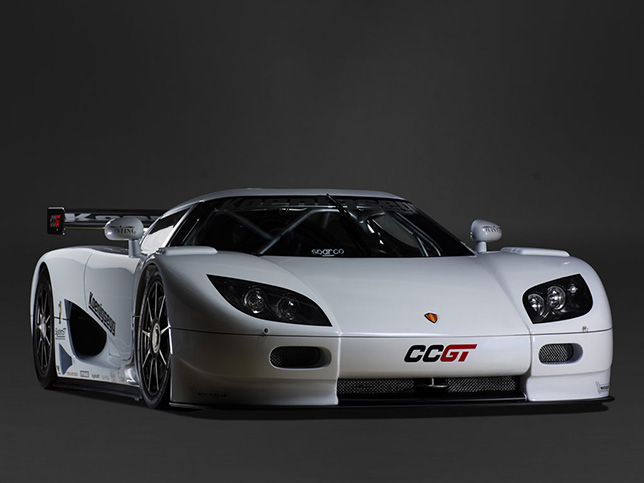
    DOWN TUNED TO 600+ HP in order to comply with race regulations. Koenigsegg has created a new race car – the CCGT, based on the production CC-model range. The CCGT complies with the ACO and FIA GT1 regulations.

    The CCGT engine is based on the Koenigsegg CCX production engine with the superchargers removed but enlarged to 5.0 litre.

    The reliability of the race engine is expected be exceptional as it is based on the proven strength and durability of the signifi cantly more powerful road car engine.

    The minimum weight allowed for a GTI race car is 1,100 kg and most manufacturers struggle to meet this target, having to undergo massive weight saving programs.

    Due to the fact the Koenigsegg CC cars are very light and stiff in road confi guration, the racing CCGT weighs in at just under an astounding 1,000 kg. This gives the possibility to place 100 kg of ballast freely within the car structure, still following the set rules. This should give Koenigsegg an interesting advantage over the competition.

    Koenigsegg CCGT
    Koenigsegg CCGT

    The CCGT has very short overhangs, which could be seen as an issue when it comes to generating enough downforce. However, by further developing the clever and “slippery” design concept of the CC range, Koenigsegg believes they have created a unique package incorporating a surprising amount of down-force combined with a very compact package and optimal weight distribution. Since the CCGT has a short overall length and low overall height, whilst still maintaining adequate track width and length, it is thereby gifted with superior agility compared to most of the competition, which should be evident in future heated racing combats.

    The Koenigsegg CCGT development team, headed by Dag Bölenius, has done a superb job by refi ning the CC into the CCGT.

    The race engine is being developed in-house in parallel with the production units by Koenigsegg engineers, supported by Anders Hoglund from Cargine engineering and JP Motorsport.

  • Fiat Linea

    The Fiat Linea, which was present in Istanbul last October, now makes its market debut. This three-box Segment C saloon gives a new interpretation of styling, practicality and enjoyable driving, all for an extremely competitive price/contents ratio.

    The car was developed by Tofas A.S., the 50-50 joint venture between Fiat Auto and Koç Holding which is listed on the Istanbul Stock Exchange. It will be manufactured in the plant in Bursa, Turkey (fully operative, output will reach 60,000 units per year) and will be marketed in a number of European and non-European countries: Spain, Germany, Morocco and Finland. At a later date, the Fiat Linea will also be manufactured in Brazil, India, China and Russia.

    The new model clearly has an international vocation; it was designed by the Fiat Style Centre, and its exterior styling is elegant, dynamic and typically ‘Italian’. The aim was to appeal to the public with uncluttered, smooth lines which confirm the new Fiat family feeeling (from the Grande Punto to the new Bravo), while they offer a new reading of the stylistic elements of the great Italian motoring tradition in the saloon segment. This extraordinary stylistic heritage has now produced the Fiat Linea, a 4-door saloon that is sleek and elegant, but with generous dimensions that put it at the top of its class: it is 4.56 metres long, 1.73 metres wide, 1.5 metres tall and has a wheelbase of 2.6 metres, as well as a 500 litre luggage compartment.

    Fiat Linea
    Fiat Linea

    The same attention went into the styling of the interior, where the lines are harmonious and balance well with the exterior, creating a friendly, light-filled environment that provides an amazing amount of room and superior comfort, where ergonomics and space for the driver and passengers are concerned. And it is in terms of the quality, comfort, practicality and enjoyment of the interior that the Fiat Linea aims to make the difference, backed up by the refinement of the materials and by the colour combinations, as well as the attention paid to every detail and to the assembly.

    Designed for an elegant, refined clientele with plenty of personality, the new model is agile and enjoyable to drive in all situations. It has a sparkle that is due primarily to its engines, which combine excellent performance, low consumption and absolute respect for the environment (they are all Euro 4). At the launch the model will be offered with a choice between a petrol engine (1.4 8v, 77 bhp) and a turbodiesel (1.3 Multijet 16v, 90 bhp with a variable geometry turbo), both combined with five-speed mechanical transmissions; the 120 bhp 1.4 16v Turbo from the new T-Jet family will be available at a later date.

    The Fiat Linea range is very comprehensive to cater for a clientele that considers cars of this class as a real investment, because it represents the family’s main car, and it will adapt to the various markets where it is sold. In most of these, at its launch, the range will offer two engines (90 bhp 1.3 Multijet and 77 bhp 1.4 16v), three specifications (Active, Dynamic and Emotion), and 11 body colours. The range also proposes equipment worthy of a higher segment, such as certain sophisticated climate and infotainment devices that improve the comfort and quality of the time spent on board: from automatic climate control, the Blue&Me® system with USB port, a radio with CD-player (including MP3 files) and Cruise Control, down to rain, dusk and parking sensors. In other words, there are endless possible combinations, all offering excellent value for money and the best price-content ratio.

    Finally, the Fiat Linea is equipped with a reliable suspension layout which guarantees very easy, precise steering, excellent roadholding and the best possible comfort for passengers: an independent MacPherson system at the front, and semi-independent wheels connected by a torsion axle at the rear.

    But the Fiat Linea is not only styling, plenty of personality, modern reliable engineering, a wealth of equipment and outstanding comfort. It is also a very safe car. Rather than the individual devices, it is the combination of the many solutions adopted that make it one of the safest cars in its segment. Stable, effective braking, good acceleration guaranteed by the engines and predictable handling, get the Fiat Linea out of even the most critical situations. The new model is also very well equipped where passive safety is concerned, a fact borne out by the presence of 6 airbags (Multistage at the front, curtain-bags and sidebags) which are standard depending on the version and the market. What is more, it also adopts a number of innovative technical elements that ensure the driver always has total control of the car (active safety). These include latest generation ABS, complete with EBD (Electronic Brake Distribution) and, optionally, the sophisticated ESP (Electronic Stability Program).

    These briefly are the winning features of the Fiat Linea which aims to play a leading role in this category, where all the world’s major carmakers compete. Segment C accounts for 20% of the Western European car market, in other words the core of the market, with about 3,000,000 registrations per year. However, the majority of the cars in segment C are two-box hatchbacks, while 3-box models (saloons) only account for 5% of that market, with 150,000 registrations per year (this is expected to reach 160,000 units by 2013).

    The share in other non-European countries is more significant. In Turkey, for example, segment C represents 52% of the whole market, and saloons account for 75% of this, with 170,000 registrations per year (approximately 50% of these are premium cars, and the sales mix is 50% petrol and 50% diesel models).

    The Fiat Linea is destined to become a strategic car for the Fiat range in China: the entire Chinese market totalled 4,000,000 vehicles in 2006, and is expected to reach 7,500,000 units by 2013.

    And finally, in Brazil, the market absorbed 1,835,000 cars in 2006, and is expected to reach 2,250,000 units by 2013 (because the Brazilian market is structured differently, the Fiat Linea is in category D, and its goal is to achieve a 13% share of the segment). A special version will be marketed in Brazil, powered by the new 130 bhp 1.9 Flexfuel engine (running on gasohol, which already contains about 22% ethanol, and pure bio-ethanol). Bio-ethanol and gasohol are poured into the same tank, a feature that makes it easier for motorists to fill up. The engine software recognises the composition of the mix and automatically adapts the injection and ignition parameters. Flexfuel engines are able to function in the same way and with the same performance with both conventional fuels and with alcohol-based fuels. In environmental terms, the advantage of ethanol lies in the fact that it is a renewable source of energy and helps to limit emissions of greenhouse gases, because it captures carbon dioxide in the production process.

  • Fiat Panda Aria

    The Concept car Panda Aria represents the most advanced frontier achievable, in terms of emissions and consumption, associating in synergy existing sustainable technologies or those in future production. In a nutshell, we’re dealing with a “demonstration” which synthesizes Fiat‘s commitment to the environment.

    The Concept car, combines an innovative powertrain architecture – represented by the new SGE 900 cc Turbo twin-cylinder engine, equipped with the Multiair® system for dual petrol/methane-hydrogen fuel management, MTA gearbox and Stop&Start device – with the adoption of eco-compatibile materials (recycled, recyclable or from natural sources) both for the interiors and exteriors.

    The interior is upholstered with natural fibres (cotton and linen), woven coconut fibre and biodegradable elements, whilst the exterior panelling is made of semi-transparent eco-resin and the structure is treated in opaque “totouch” paint.

    Even better, the energy absorbed by the auxiliary units is minimised on the vehicle and the engine (for example, the low consumption climate control unit) by a reduction in the vehicle’s weight (by a downsizing of the engine, and the use of new generation high tensile steel, methane storage cylinders made of high-performance steel and carbon fibres) and the adoption of experimental Pirelli ‘ultra-green’ tyres with new compounds and new AOF (Aromatic Oil Free) textile weaves guaranteeing limited drag but without detracting from dynamic safety performance (stopping distances and good handling on wet and dry roads).

    Fiat Panda Aria
    Fiat Panda Aria

    Lastly, the Panda Aria is fitted with a data transmission, based on the use of Blue&Me technology, ready for the implementation of new info-mobility services. Furthermore it is equipped with a unique application that, via the USB port of the Blue&Me system, allows to record on a key the consumption and emmissions of every journey. Subsequently, this can be looked at on a computer to receive advice on how to drive more “ecologically”.

    In detail, Panda Aria is fitted with the new 900 cc turbo 80 CV engine, belonging to the family of SGE twin-cylinder engines (Small Gasoline Engine), in this version it is equipped with the Multiair® system for dual petrol/methane fuel management. The sophisticated fuel management system is already primed for the use of a methane (70%) and hydrogen (30%) mixture. The engine is matched to a Stop&Start device and the innovative MTA (Manual Transmission Automated) gearshift.

    In particular, the innovative 900 turbo engine, developed by Fiat Powertrain Technologies, is fruit of a philosophy focused on the reduction of costs (and consequently CO2 emissions), and the respecting of future Euro 5 and Euro 6 emission limits yet with comparable performance to higher horse-power engines.

    The concept underlining this new engine, is the downsizing of a traditional engine with 4 cylinders to a twin-cylinder one, which has been fitted with the innovative electronic valve control Multiair® system. In addition to the reduction in consumption costs, the twin-cylinder engine allows a 20% reduction of the weight and a 25% reduction in the engine compartment, in comparison to a 4 cylinder with similar power. Furthermore, the SGE family of motors adopts a system of balancing the engine spindle , which guarantees reduced vibrations and noises in comparison to petrol engines with three cylinders.

    The innovative Multiair® system allows to control the air in the motor with electronic ignition (petrol engines) without having to use the traditional throttle-valve, therefore with higher flexibility in comparison to mechanical distribution systems.

    The implemented electro-hydraulic technology is based on the inter positioning, between the cams and the suction-valve engine of a volume of oil (high pressure chamber) which can be varied across the use of a valve which is controlled in turn by an apposite electronic junction box.

    In this manner, the valve opening can be varied in different modes according to the the engine’s need for air and the vehicle use. Different strategies (Early Valve Shut-Off – EIVC – Deferred Valve Opening – LIVO or Multi-Lift) can be used for optimising the efficiency of the combustion with remarkable benefits in terms of power, torque, consumption and emissions. Another advantage of this system is that the air pressure around the valves is always constant. This characteristic, combined with a raised dynamic system of implementation (from partial load to full load in one engine cycle) allows raising the engine’s torque response without any delay, either when the engine is overloaded or not, heightening the so-called Fun-to-Drive.

    In the Panda Aria the new 900 turbo engine is combined to the dual petrol/methane fuel management methane (70%) hydrogen (30%); this solution brings a further contribution to the reduction of polluting emissions, assuring a more efficient and complete combustion. Furthermore, it allows the incrementation of the thermodynamic performance of the engine, allowing it to reach, in particular conditions, combustion stability values superior even to those obtainable by only using methane. Therefore, the vehicles running on methane-hydrogen mixtures are a gradual evolution of an already existing system and open to further refining and applications. The methane-hydrogen mixtures, in fact, represent a bridge, which would allow in the short term development of infrastructures for the future supply of hydrogen.

    Panda Aria is fitted with the “Stop&Start” system, a device which operates the temporary shut-off of the engine and it’s subsequent ignition, when the vehicle is stationary. In these situations, typical of urban traffic and during waits at the traffic-lights, the system automatically shuts-off the engine allowing a marked saving of fuel. Afterwards, as soon as the car is put in gear or the brake is released, the system sees to promptly igniting the engine, assuring the user an immediate response to their commands.

    Furthermore, the “Stop & Start” system, is mated to the MTA gearshift which allows optimal use of the gears, and is characterized by a high mechanical efficiency. In detail, the automatic transmission lays the foundation for an “intelligent” management of the on/off state of the engine. More so, via the use of the clutch, the system allows the uncoupling of the three-phase motor from the transmission whenever traction is not required and the engine can be turned off.

    The combining of the “Stop & Start” system and the MTA gearshift allows the concept car Panda Aria to reduce consumption by over 10% in urban journeys.

    Lastly, the combination of these solutions, which have been developed by the Fiat Group(Fiat Group Automobiles, Fiat Powertrain Technologies and Centro Ricerche Fiat), are already in existence or will soon be available on regular and future production models, guaranteeing a drastic reduction in CO2 emissions. The Panda Aria emissions have been cut to a record low of 69 g/km.

  • Cobra Suzuki SX4

    Exclusive accessories for the Suzuki SX4 are the latest additions to the extensive product line-up from Cobra Technology & Lifestyle. To make the front of the Japanese Cross-Over from compact car and SUV even more striking Cobra Technology & Lifestyle offers a high-gloss stainless-steel front guard with a tube diameter of 60 millimeters. This accessory part successfully passed the crash test which is necessary to meet all current EG guidelines for pedestrian protection. The part, which has flexible mounts and is designed to absorb energy, comes with an EG operation certificate, eliminating the need for a technical inspection and for amending the vehicle papers.

    Additionally the Suzuki can be refined with a bumper grate made from high-gloss stainless steel. The exactly fitting and easy-to-mount accessory can be alternatively mounted with or without the Cobra Technology & Lifestyle front guard.

    The Cobra Technology & Lifestyle 60 millimeter stainless-steel tubular sill guards with integrated step are attractive and practical since they also facilitate entering and exiting the vehicle. They also round out the Off Road look.

    Cobra Suzuki SX4
    Cobra Suzuki SX4

    The tire/wheel combinations from Cobra Technology & Lifestyle are custom-tailored for all versions of the Suzuki SX4: Altogether there are three different wheel designs in sizes ranging from 7.5Jx16 to 8Jx17. The most exclusive wheel is the multi-piece Cobra Grenada five-spoke wheel in size 8Jx17 with 225/45 R 17 tires.

  • Opel Grand Turismo Coupe Concept

    On the eve of the 77th Geneva Motor Show, Opel illuminated the night. Supported by a dramatic light show, the Opel GTC Concept (Gran Turismo Coupé) made its spectacular debut at the “GM Premiere Night.”

    Heralding a new design era for the brand, the GTC Concept gives an insight into how Opel’s design language will look in the future. Adding to progressive shapes and surfaces, the four-seat coupé features unique LED lighting concepts in the front and rear, providing a new signature lighting style for the brand. (more…)

  • Tramontana a.d.

    Tramontana a.d.It has never been seen in the automotive history a street sports car which resembles so much a Formula 1 like the Tramontana does. It is the first time in the sports car market that it has been incorporated a 100 % carbon fibre monocoque chassis inspired in the design of a Formula 1 and manufactured with the same criteria, guaranteeing a high protection for its passengers. Moreover, it introduces a new structural system that combines an indeformable central zone (cockpit) with a weight of 128kg with other 8 deformable zones calculated for the absorption of the impact energy. In fact, the results extracted of the Crash Test (according to the FIA regulation) confirm that the structural calculation guarantees the integrity of its passengers displacing the lateral components toward the outside. This shows the high impact resistance of the carbon fibre used in the vehicle.

    On the other hand, this monocoque, especially developed for the Tramontana, contributes a lightness and maximum rigidity to the whole, factor that together with its suspension system, unique on its market of double wishbones with pushrod and a great length of arms, improves the dynamical aptitudes of the vehicle. All this elaborated with materials of last generation of aerospace technology like the steel to the cromolibdenium, magnesium and duraluminium. Without doubt in the Tramontana the efficiency of the geometry and the weight has been tested, obtaining as result an unequalled performance.

    The structure of the monocoque carried out in carbon fibre offers a high torsion resistance, which makes the driver feel like going on a rail.

    In the assembly process have been adopted handcraft techniques like the obsession by pre-impregnate and cured in autoclave to 120 ºC, that provides an exceptional finish level and makes the construction of light and strong pieces easier.

    Engine, from the competition to the asphalt

    Lubrication system Dry sump Fuel Unleaded 98 Octane

    Among the final solutions of the Tramontana, we find a new electronic system and a central gasoline engine V12 Biturbo capable to offer a power from 550 Hp to 720 Hp, selectable through a switch situated in the dashboard.

    Associated to a 6-speed gearbox, specially developed for the Tramontana, this 12 cylinders propeller in V reaches the 720 Hp to 5.750rpm with a maximum pair torque of 920nm at 4.000rpm. The result, 345 km/h of top speed and 3,7 seconds to reach the 100 km/h from stopped departure.

    The weight-power relation is elevated to the 1,7 Kg/Hp, significant data that allow us to discover the kind of sensations that this fantastic assembly of chassis and engine can offer us.

    The development of the electronic switchboard is made to measure, in a craft process of more than 2000 hours, that includes full silver wiring and a power map capable to obtain the maximum performance of the engine. Moreover, for the first time in a street car, lifelong relays, fuses and protections have been replaced by a module with just one connector that has only one terminal that brings together all the functions of a conventional device. This innovative system has reduced the wiring, the complexities of the consoles of relays and the fuses, avoiding any electromechanical deterioration.

    Car body, beauty and functionality

    Without doubt, the design of the Tramontana combines the curves of a fighter with a narrow front and a wider rear of big dimensions and finished in first quality leather and wood imported of the classics of the Spanish automotive industry. This aesthetics remains totally clear thanks to the design of the hardtop, which covers and protects the passengers, and to the rear and front spoilers, in the form of an airplane wing, that assures a great beauty and an excellent support at the same time. In short, a perfect harmony between sensuality, fine materials and elegant lines, an authentic jewel for the collectors.
    All the pieces of the Tramontana car body are also elaborated in carbon fibre, assuring the maximum lightness of the vehicle with a total weight of 1.250 kg.

    Thanks to the dynamic study carried out by a.d. Tramontana, the pieces that form part of the car body have been created by considering its functionality and the important vehicle performance.

    The result is some compacted forms, an expressive front and a suggestive aerodynamic outline with a marked silhouette. Everything in the Tramontana transmits force, character, personality and, above all, sportsmanship, nevertheless the new model is a worthy heir of the sports tradition of the Formula 1.

    Suspensions, balance between sportsmanship and comfort

    One of the key items of the Tramontana is its system of suspensions of double wishbones with push-rod and its great length of arms, elaborated with a sort of steel of aeronautical and competition specifications of the latest generation.

    Two special programs have been used for the development, which have permitted the static and dynamic simulation of the whole vehicle. Different defined adjustments in theoretical calculations have been projected and experienced on it in order to analyze the performance before proceeding to the validation and arriving this way to the definition of the suspensions rates. Finally, a.d. Tramontana has bet on a suspension system that provides a better control, driving comfort, smaller oscillation and better speed cornering, due to the distance between axes, identical to that of a Formula 1.

    In the same way, the Tramontana has a system of double electronic height regulation especially developed for the Tramontana, which allows the driver to raise or to lower the height of the vehicle according to the driving needs. It has been looked for a balance between the performance of a street car (at 130mm) and a sports car (at 85mm) considering the different driving styles.

    Tyres

    To put “shoes” to the Tramontana it has been determined an intermediate solution of standard tyres with asymmetric design with wide longitudinal channels and very hard radial silent block. Together with a low tread pattern, allows the Tramontana to avoid the drift of the tyre and facilitates a perfect performance in the cornering. The running band is side divided in three distinctive elements to satisfy the most demanding performance that the Tramontana requires.

    Steering, very sport sensations

    The steering column with double cardan system is adjustable in reach and lift, permitting the drivers to adapt the driving position according to their preferences. Also the a.d. Tramontana engineers have modified the parameters of steering assistance to increase the sport feeling, fact that added to the easy access to the cams on the gear change, situated behind the steering wheel, facilitates the driver the execution of layout you need in any situation. All this contributes to a better driving precision and permits to enjoy all the sports qualities of the model.

    Brakes

    a.d. Tramontana has developed an ABS system that allows, by means of braking distributor, to distribute between the front and the rear train the power of braking obtained by the discs of carbon-ceramic.

    Likewise, the rear and front brake discs are elaborated with carbon-ceramic that do not need of high temperatures for their maximum efficacy of braking. It is referred to a material that combines the most innovative aerospace technology with the know-how of the Formula 1, providing thus a purely sports performance and a high durability of the brakes. To the advantages of the carbon-ceramic it is important to add other benefits of great benefit for the performance of the Tramontana, like the weight reduction up to a 70%, the improvement of the friction coefficient or the high energy absorption capacity and the scarce possibility to suffer fatigue in the braking system.

    The effectiveness is spectacular. Combining the lightness of the monocoque with the power of the six pistons per disc on the 4 wheels it permits to minimize the braking distance to beyond incredible limits.

    Ensured safety

    To get the best mark in the subject of security, the Tramontana has been submitted to a Crash Test whose demands have followed the dictations of the official regulation of the FIA. The car, built with a carbon fibre monocoque, has needed a software developed especially to be adapted to the characteristics of the Tramontana. In this study all the pieces passed through a side, front and rear crash test.

    The Tramontana emphasizes for offering a double security. First, all the exterior pieces are designed and distributed so that in case of impact they never get inside. On the other hand, the chassis has been strength with a security arch that protects the passengers. Moreover, the security of the Tramontana is guaranteed thanks to its private structure that combines an undeformable central zone (cockpit) with other eight collision absorption zones.

    Aerodynamics, the exigency of the geometry

    The engineers team from a.d.Tramontana has worked very hard to find the maximal exigency and perfection regarding the aerodynamic performance of the Tramontana, an aesthetical reasoning as similar as possible to a Formula 1.

    The aerodynamic performance is though to great speed cornering and, at the same time, get a minimum air penetration coefficient Cx=0,4.

    The air intakes and cooling of the motor they have been designed with the objective to minimize the friction of the air and to optimize the performance of the motor. Moreover, the vehicle has a laminated sheet situated under the vehicle, that eliminates turbulences and improves the drag.

    In the same way, the wishbones, designed in the form of drop of water, they help to minimize this coefficient. In fact, all the external elements that stand out from the vehicle are thought to obtain the minimum air resistance. This is the reason of the airplane wing profile of the wishbones.

    The front spoilers offer a higher lift compared with the rear ones to avoid loss direction sensations. In this sense, there is an important work to obtain a ground effect thanks to the air flow that penetrates in the lower part of the vehicle. This generates a negative lift toward the ground, making driving to high speeds easier.

    Finally, another remarkable factor, has been the study to situate the centre of gravity of the Tramontana as low as possible to increase the cornering speed.

    Seats

    The Tramontana also surprises for its interior, where the sportsmanship and the comfort breathe in all the details.

    The first thing that we notice when we get in a Tramontana is, without doubt, the seating position in tandem, the same as in a fighter. In fact, in its development has collaborated, among others, Manuel Brown, an engineer in the field of aeronautics, member of Euro Fighter design team in Germany.

    As opposed to the normal position of the passengers, side by side, the tandem position of the seats of the Tramontana has permitted to centre the weight in an excellent way. Technically, a 42-58 weight distribution has been designed, obtaining thus an entrance in curve with a stable relation of 50-50.

    On the other hand, the visibility of the Tramontana is superior to that of a conventional vehicle, due to the privileged position of the driver. The position of the seats can be personalized for each client.

    Source: Tramontana

  • Audi Q7 4.2 TDI

    240 kW/326 bhp and 760 Nm of torque – Audi proudly presents the most powerful diesel SUV on the world market. A state-of-the-art eight-cylinder engine with common rail fuel injection and Piezo injectors not only stands out on account of its sheer output but also demonstrates outstanding efficiency: the 4.2 TDI has an average fuel consumption of just 11.1 litres of diesel per 100 kilometres. (more…)

  • Bentley BIG BANG

    The design study BIG BANG by LEW DESIGN which was presented first at the Motorshow in Essen in December 2006 will be developed further because of the ongoing particular national and international inquiry.

    The Leonhardt Group is an authorized contract dealer for Bentley and Lamborghini brands and is going to proceed on the manufacturing of the design study on basis of the Bentley Continental GT with a BODYKIT BY LEW DESIGN to a limited edition of only 50 items in an one plan period of 2 years.

    (more…)