Category: Car Makes

Car Makes

  • Hamann Lamborghini Murciеlago LP640

    Hamann Lamborghini Murcielago LP640It looks like a Stealth-Bomber on four wheels. It is one of the most masculine looking sports car and it is fast. The Lamborghini LP640 through its appearance gives a clear impression it’s not just for show. HAMANN decisively set its goal to send a clear message and sharpened the Italian steer’s horns. HAMANNs modifications through look, driving dynamics and sound create a distinct difference.

    Maintenance of road contact is most essential when one is pushing a super sports car to the limit. To achieve greater downforce on the front and rear axle HAMANN offers a front spoiler as well as a rear wing. Whoever prefers to show their affiliation to motor sports can order the parts in Carbon-Kevlar instead of the fiberglass version. Where’s the starting grid?

    HAMANN applies further aerodynamic components in form of a two-part rear diffuser with additional air hoses for the extendable side air intakes, side sills as well as a two-part front wing and Carbon-pendants for the original side intakes in the sills in front of the rear wheels. Furthermore, a central running air box on the roof brings back memories of past Lamborghini Diablo GT-R days. Naturally, these parts are also available in Carbon-Kevlar or fiberglass.

    Impressive sound and stunning rims

    The HAMANN double-pipe stainless sports rear silencer (2x120mm end pipes) emits a sound similar to that generated from race tracks announcing the arrival of the blood-curdling steer. Positive side effect; an even sportier rear look. Export customers can extend their exhaust system with a HAMANN sport metallic catalytic converter.

    Also for individualization of vehicles within this high performance calibre, a choice of new wheel design is inherent. HAMANN suggests its own creation „Edition Race“. This multi-pieced, forged light alloy metal wheel with black wheel spider, “Y” spoke design, Titan bolts and high polished rim flange utilized for Lamborghini Murcielago LP640 comes in the combination 8,5Jx20“ front and 13,0Jx20“ rear. As expected, HAMANN also offers here a complete wheel set with typical tires sizes 235/30 ZR 20 (FA) und 325/25 ZR20 (RA).

    HAMANN prepares the cockpit of the Super-Lambo providing even more sports racing atmosphere. For this, the tuners from Laupheim, Germany offer an 8-part carbon-look interior set. The race car look is established through instrument cockpit bordure, the air bleed jet, the gear shifting panel as well as the cigarette ashtray console. Naturally, HAMANN offers each Lamborghini customer preferred alterations on an individual basis. For instance, extravagant leather furnishing in a variety of colours is possible or additional of multi-media articles.

  • Hamann Ferrari 612 Scaglietti

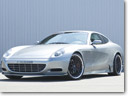
    Hamann Ferrari 612 ScagliettiFerrari 612 Scaglietti is the perfect vehicle in the Maranello sports car stable for the gentleman driver. The Gran Turismo is already a very noble means of travel as standard equipment, however particularly optically it can still stand some flashier details. Therefore a modification of the body stood at the top of the HAMANN engineers’ to-do list. But the refiners from Laupheim didn’t neglect sound and handling either.

    Form and function assume a strong symbiosis through the HAMANN aerodynamic components. The sports car designed by Pininfarina acquired a front spoiler from the noble tuner from Laupheim to provide optimal downforce on the front axle, which also improved the optics of the largest Ferrari even further. The pair of side sills for the flank of the 612 impart an impression of lowered suspension. The rear spoiler helps to ensure optimal downforce on the rear axle, while clearly bringing a more sporting look to the rear view without disturbing the basic design. HAMANN achieves an even bigger modification to the rear view through a new rear end component with integrated diffuser, which also ensures more downforce.

    As customary with HAMANN, the aerodynamic components are available in fiberglass and carbon-Kevlar.

    HAMANN addresses the subject of wheels with its self-developed design “Edition Race”. The appearance of the three-part, ultra-light, forged rim with cross-spoke design and black rim-star is characterized by the nine main spokes, which each branch out to form two more. Besides the exciting design, the titanium screwing is particularly pleasing to the eye. The cherry on the cake of the noble optics is the highly polished rim flange. Naturally HAMANN also offers the wheel as a complete wheel set.

    With the aid of a chassis spring assembly, HAMANN lowers the center of gravity even further which even in a vehicle of this caliber still brings noticeable improvement to the handling.

    Incontestably the sound of a Ferrari 12-cylinder is something completely special. The sport mufflers are made from in V2A stainless steel and are offered by HAMANN for left and right, each of which has double exhaust pipes (Ø 90mm). When ordering the sport mufflers, the 540 HP symphony sounds twice as potent as before. This also means that the twelve cylinders can breathe out more easily.

    Naturally HAMANN also dedicates itself to the interior. Traveling should be made as pleasant as possible for the passengers. For example, an exclusive foot mat set in black in the Ferrari’s cockpit makes it appear more homey. Of course HAMANN can also modify any 612 Scaglietti to the individual tastes of the customer, e.g. with lavish leather fittings in different colors or extensive multimedia configurations involving a DVD player, TV or PlayStation.

  • Hamann Ferrari 599 GTB Fiorano

    Hamann Ferrari 599 GTB FioranoFerrari and HAMANN –” a combination to set the pulse racing of all fans of Italian sports cars. The vehicle tuning specialist from Laupheim, Germany, has various new details and a power boost up its sleeve for the latest model from the Maranello stable.

    The power is produced by fitting an HAMANN high-performance sports header (export only), including racing catalytic converters, to generate an extra 39 kW/53 bhp. This takes the peak power output of this 6 l V12 engine, already familiar to us from the Ferrari Enzo, up to a majestic 673 bhp. You will rarely encounter more power than this on the open road. As a result, HAMANN has reduced the power-to-weight ratio from 2.5 to 2.3 kg per bhp.

    To ensure that everyone knows that the King of the Road is about to arrive, HAMANN fits a sports rear muffler (export only) with 90 mm tailpipes both right and left. Needless to say, the rear silencer is made from corrosion-resistant stainless steel and generates an even more awe-inspiring sound than its series production counterpart.

    In the series production version, the twelve-cylinder Berlinetta already sports a captivatingly and delicately swung body. HAMANN adds a few new touches of its own to this body designed by star designer Pininfarina. For instance, HAMANN styles the “face” of this front mid-engined sports car with a spoiler, which generates greater downforce on the front axle. To match this perfectly fitting component, which blends harmoniously into the vehicle styling, HAMANN also offers side sill panels, lending the 599 GTB a significantly more muscular appearance.

    The roof is adorned with a further spoiler, which in turn guides the air to an extravagantly designed rear wing. The latter generates downforce on the rear axle and stabilizes the Ferrari at high speeds. Since the 599 GTB is conceptually a race car for the road, HAMANN decided to equip the rear end of this Italian muscle car with a three-piece diffuser that matches the rest of the technology. In conjunction with the rear wing, and true to the principle of “a beautiful rear can also endear”, the HAMANN aerodynamics tuning suite shows its best side. In fact, the 599 GTB tuned and styled the HAMANN way is truly a sight to behold from all sides.

    HAMANN lands a perfect hit with the aerodynamics, which do nothing to disrupt the original design, but lend added impact to a number of details in striking style. Batman would certainly choose the HAMANN Ferrari 599 GTB as the car he drives to work in. All aerodynamic components are available in fiber glass or Carbon-Kevlar.

    HAMANN has opted for its own creation for the rims, called “Edition Race”. This three-piece, ultra-light, forged rim in a cross-spoke design and a black spider is notable for its nine main branching spokes each of which splits into two further spokes. In addition to the exciting design, the titanium wheel bolts are a particularly eye-catching feature. The stylish appearance is topped off by the mirror-finished rim flange. Needless to say, HAMANN also offers the wheels as complete sets.

    Typical wheel/tire combination: front 9.0 J x 21 / rear 12.0 J x 21 – 245/30 ZR 21 / 345/25 ZR21

    On the inside, an exclusive set of floor mats in black lend the cockpit of this Ferrari a cozier touch. And of course HAMANN will gladly customize any 599 GTB to suit a customer’s own individual needs. Extravagant leather upholsteries in various colors are available, as are extensive multimedia conversions featuring a DVD player, TV reception and a PlayStation.

  • Chevrolet Corvette

    2008 Chevrolet CorvetteGet comfortable. There’s so much new and exciting with the 2008 Corvette that you’ll want to grab a hot drink, sidle up to your computer screen and absorb all the details.

    The changes involve everything from an all-new, larger and more powerful V-8 engine to refinements in driving characteristics that solidify the Corvette’s position as the preeminent American sports car – and further the argument that it is one of the world’s best. There are also a host of exterior and interior refinements that raise the Corvette’s luxury status and enhance the feeling of craftsmanship.

    “Corvette is an uncompromising sports car that rewards its owners with impeccable performance and great comfort,” said Ed Peper, Chevrolet general manager. “The changes and enhancements to the 2008 Chevrolet Corvette reflect continual improvements that speak to Chevrolet’s unflagging commitment to building the best sports car – and with nearly 55 years of experience, the Corvette just keeps getting better and better.”

    Also back again for ’08 is the 505-horsepower Corvette Z06, an American super car that has won over enthusiasts, journalists and racers around the world for its balance of racetrack-bred performance, daily-driving civility and value.

    Engine

    A new, 6.2L LS3 small-block V-8 is the standard engine in Coupe and Convertible models. It is rated at 430 horsepower (321 kW)* and 424 lb.-ft. of torque (586 Nm)* with the standard exhaust system; with the new, optional two-mode exhaust system, power ratings increase to 436 horses / 325 kW and 428 lb.-ft. / 592 Nm. As a result, the standard Corvette is true supercar, capable of 190 mph. The LS3 with the six-speed paddle-shift automatic is the fastest automatic-equipped Corvette ever, with 0-60 mph capability of 4.3 seconds.

    This new iteration of the storied small-block family features a revised, larger-bore cylinder block – 4.06-inch / 103.25 mm vs. the previous 6.0L’s 4.00-inch / 101.62 mm bores – high-flow, LS7/L92-style cylinder heads; larger-diameter pistons; revised camshaft and camshaft timing; revised valvetrain with offset intake rocker arms; high-flow intake manifold; high-flow fuel injectors from the Z06’s LS7 engine; and a new engine beauty cover.

    The LS3 features an aluminum cylinder block with cast iron cylinder liners. In addition to its larger bores, which help create a 376-cubic-inch displacement, the block casting also features revisions and machining in the bulkheads that enhance its strength and improved bay to bay breathing. But while the bore of the 6.2L engine is increased when compared with the previous 6.0L engine, the engine’s stroke remains at 3.62 inches (92 mm). The pistons for the larger 6.2L engine also are new and are designed for its high-rpm performance capability.

    Breathing for the new 6.2L engine is accomplished via new, high-flow cylinder heads. They’re based on the large port/large valve design found on the LS7 engine and other GM L92 engines, with larger-capacity, straighter intake ports. The design optimizes intake flow to the combustion chamber and the exhaust ports are also designed for better flow.

    Complementing the larger-port design of the heads are commensurately sized valves. The intake valve size alone increases from 2.00 inches (50.8 mm) to 2.16 inches (55 mm) – an increase of nearly 9 percent. The intake valves feature lightweight hollow stems, which enable the engine’s 6,600-rpm capability. The exhaust valves also are large, measuring 1.60 inches (40.4 mm) in diameter.

    To accommodate the engine’s large valves and enable more direct intake port flow, the intake-side rocker arms are offset 6 mm between the valve tip and the push rod. Actuating the valves is a new camshaft, with intake-side lobes providing more than a 5-percent percent in increase in lift, from 0.521-inch to 0.551-inch (13.25 mm to 14 mm). Exhaust-valve lift remains unchanged from the LS2. The camshaft timing was revised to optimize performance with the higher-lift intake cam profile.

    Ensuring the cylinder heads receive all the air they can handles falls to a new, acoustically tuned intake manifold. The composite design is manufactured with a “lost core” process that improves runner to runner variation and reduces airflow losses. An acoustic foam material is used to reduce radiated engine noise; it is sandwiched between the outer top of the manifold and an additional “skull cap” acoustic shell. Also new beauty covers atop the engine shield the rocker covers and also feature a noise-reducing, acoustically tuned insert to provide a more refined engine sound.

    Exhaust system

    Optional on ’08 Coupe and Convertible models is a new, two-mode performance exhaust system. Similar in design and function to the system used on the Z06, the dual-mode exhaust uses vacuum-actuated outlet valves, which control engine noise during low-load operation, but open for maximum performance during high-load operation. It is not identical to the Z06 system; the Coupe/Convertible uses a 2.5-inch-diameter exhaust, while the Z06 uses a three-inch system.

    With the new, dual-mode performance exhaust, power output for Coupe/Convertible rises from 430 horsepower (321 kW) and 424 lb.-ft. of torque (575 Nm) to 436 horses (325 kW) and 428 lb.-ft. (580 Nm). This system gives the Corvette a more aggressive exhaust sound character that will appeal to performance enthusiasts.

    Transmissions and axle ratios

    The shifting efforts for both the six-speed manual transmission and paddle-shift six-speed automatic transmissions have been improved in ’08 Corvette models. The manual transmission shifting improvements include a more positive and direct feel during gear changes, with better gate-to-gate location.

    The six-speed paddle-shift automatic transmission on Coupe and Convertible is improved with new hardware and a new controller calibration that deliver quicker shifts. This change bolsters the feeling of performance and driver control when using the shifting paddles.

    Also new for ’08 models is the availability of the 2.73 performance axle ratio with the automatic transmission. It is included with the Z51 package.

    Steering system – The Corvette’s precise rack-and-pinion steering system is revised to provide improved feel at all speeds. The revisions are due to a new, premium machining process of the system’s internal components, a new, stiffer intermediate shaft and controller calibration changes.

    Wheels – Corvette Coupe and Convertible models come with a new split-spoke wheel design for ’08. The design was introduced on the limited-edition ’07 Indianapolis 500 Pace Car replicas with a Sterling Silver finish. The standard 18-inch front wheels and 19-inch rear wheels feature a Sparkle Silver finish, with a Competition Gray version optional.

    Also new is a distinctive, performance-oriented forged aluminum wheel for Coupe and Convertible. It comes in a polished finish.

    Exterior colors – There are two new premium exterior colors available with 2008 Corvette models: Jetstream Blue Metallic Tintcoat and Crystal Red Metallic Tintcoat; they replace Le Mans Blue Metallic and Monterey Red Metallic Tintcoat.

    Custom Leather-Wrapped Interior Package – Available on Coupe, Convertible and Z06 models, the new Custom Leather-Wrapped Interior Package offers a stylish, two-tone leather-appointed cabin with details that enhance the feeling of Corvette’s craftsmanship.

    Feature changes and enhancements – All Corvette models now come standard with features that were previously optional or part of equipment packages.

    Dramatic fender forms and exposed headlamps combine with the grille to create a strong visual identity for the Corvette, while the tapered rear deck and fascia improve high-speed performance. The lean rear design sports round taillamps and center-exit exhaust. The fixed Xenon high-intensity discharge headlamps provide superior lighting performance. With a 0.286 coefficient of drag, the Coupe models are the most aerodynamic Corvettes ever.

    The 2008 Corvette Convertible features a power-operated soft top with the 3LT package; an easy-to-operate manual top is standard. Both configurations use a five-layer fabric that conceals the underlying structure for a good top-up appearance, plus it helps preserve the car’s excellent aerodynamics and reduces road noise.

    Corvette’s interior is inspired by the car’s dual-cockpit heritage. High-quality materials, craftsmanship and functionality help deliver premium quality meant to enhance performance driving. The instrument panel and doors are covered with cast-skin foam-in-place trim that looks like a leather-wrapped, padded panel. It is warm and inviting and has double the life of conventional trim materials.

    An AM/FM/XM radio with CD player and audio input jack is standard. An optional Bose audio system with an in-dash six-disc changer adds to the choices available to the audiophile owner. Steering-wheel mounted audio controls – introduced in ’07 – are included with the Bose premium system.

    A full-function OnStar system is standard and an onboard navigation system with voice recognition is available. Using a 6.5-inch (165 mm) color touch-screen display, the DVD-based system contains all the map data for the 48 contiguous states and most of Canada on one disc.

    Driving dynamics

    Corvette Coupe and Convertible have a hydroformed steel rail backbone structure, which features cored composite floors, an enclosed center tunnel, rear-mounted transmission and aluminum cockpit structure. Suspension cradles, control arms, knuckles, springs, dampers, bushings, stabilizer bars and steering gear have all been redesigned. New Goodyear Extended Mobility Tires (EMT) take advantage of the latest sidewall design and compound technology for run-flat capabilities.

    Three suspension choices allow drivers to choose the setup that best suits their driving style. The standard suspension is tuned for a balance of ride comfort and precise handling. Corvette is now more poised at even higher handling levels, yet easier to drive.

    The optional Magnetic Selective Ride Control suspension features magneto-rheological dampers able to detect road surfaces and adjust the damping rates to those surfaces almost instantly for optimal ride control. Cross-dilled brake rotors are included when this feature is selected, allowing customers to combine the larger brakes from the Z51 performance package with the comfort of Magnetic Selective Ride Control.

    The Z51 Performance Package brings Coupe and Convertible performance very close to the widely admired previous generation Z06. The Z51 offers more aggressive dampers and springs, larger stabilizer bars, Goodyear Eagle F1 Supercar EMT tires, enhanced cooling and larger cross-drilled brake rotors (13.4 inches / 340 mm in front and 13 inches / 330 mm in rear) for optimum track performance while still providing a comfortable ride.

    With each suspension, three standard dynamic chassis control systems – anti-lock braking, traction control and Active Handling – operate in concert. In all, the dynamic chassis control systems are smarter, less intrusive and more adept at making the total driving experience precisely what drivers have come to expect from their Corvette.

    As the fastest, most powerful and most technologically advanced production model in Corvette’s history, t he Corvette Z06 offers an unprecedented level of capability and technology, making it one of the best performance values on the market.

    Design

    The Z06 has an unmistakable and aggressive appearance, with design cues that include. A wide front fascia with a large, forward-facing grille opening, a splitter along the bottom and wheel opening extensions along the sides to provide aerodynamic downforce. The trailing edge of the front wheel opening is radiused to achieve improved drag, but protects the body finish with a tough molding, and a large air extractor is located behind the wheel.

    The aerodynamics of the Z06’s exterior were shaped by the experiences of the Corvette racing program, where high-speed stability and cornering capability are paramount. And while the race cars use large rear wings, the Z06’s elevated spoiler provides sufficient downforce to balance the road-worthy front splitter without adversely affecting aerodynamic drag. The Z06’s Cd is 0.34.

    For all its race-inspired functionality, the Z06 is designed to be a daily-driveable high-performance vehicle. To that end, comfort and convenience are held to a very high standard. High-Intensity Discharge lighting, fog lamps, leather seating, dual-zone air conditioning, cabin air filtration and head-up display (HUD) with track mode and g-meter are standard.

    The Z06 gauge cluster displays the Z06 logo on the 7000-redline tachometer and has a readout on the oil pressure gauge to reflect the higher standard pressure of the dry-sump oiling system. The seats feature two-tone leather surfaces, with Z06-logo embroidery and contrasting stitching.

    Z06 options include a Bose audio system with an in-dash six-CD changer, polished, Competition Gray or chrome wheels, a telescoping steering wheel, heated seats, side-impact air bags, a navigation system with GPS and universal home remote.

    LS7 engine

    The Z06’s LS7 7.0L engine delivers 505 horsepower (377 kW) in a 3,132-pound (1,421 kg) package – a combination that delivers 0-60 performance of 3.7 seconds in first gear, quarter-mile times of 11.7 seconds at 125 mph and a top speed of 198 mph (as recorded on Germany’s Autobahn). It also provides maximum lateral acceleration of 1.04 g and 60-0 braking in 111.3 feet; it also circuited Germany ’s famed N ü rburgring in a time of 7:43 .

    The LS7 reintroduced the 427-cubic-inch engine to the Corvette lineup. It is easily identified under the hood by red engine covers with black lettering. The LS7 shares the same basic Gen IV V-8 architecture as the Corvette’s 6.0-liter LS2, but it uses a different cylinder block casting with pressed-in steel cylinder liners to accommodate the engine’s larger diameter, 4.125-inch (104.8 mm) cylinder bores.

    Internally, the LS7’s reciprocating components make use of racing-derived lightweight technology, including titanium connecting rods and intake valves, to help boost horsepower and rpm capability. The rpm fuel shut-off limit is 7,100 rpm.

    One of the clearest examples of the LS7’s race-bred technology is its use of titanium connecting rods. They weigh just 464 grams apiece and besides being lightweight, which enhances high-rpm performance and rpm range, titanium makes the rods extremely durable.

    The LS7’s CNC-ported aluminum cylinder heads are designed to meet the high airflow demands of the engine’s 7.0-liter displacement. A hydraulic roller camshaft with 0.588/0.593-inch valve lift is used to allow plenty of air to circulate in and out of the engine. To ensure optimal, uninterrupted airflow, the LS7’s heads have straight, tunnel-like intake runners. Very large by production-vehicle standards – even racing standards – they are designed to maintain fast airflow velocity, providing excellent torque at low rpm and exhilarating horsepower at high rpm. The heads feature 70-cc combustion chambers that are fed by huge, 56-mm-diameter titanium intake valves. They are complemented by 41-mm sodium-filled exhaust valves.

    To accommodate the large valve face diameters, the heads’ valve seats are siamesed; and, taken from experience with the engines of C6.R racecars, the LS7’s valve angles are held at 12 degrees – vs. 15 degrees for the LS2 – to enhance airflow through the ports.

    The LS7 has a dry-sump oiling system designed to keep the engine fully lubricated during the high cornering loads the Corvette Z06 is capable of producing. An engine compartment-mounted 8-quart reservoir delivers oil at a constant pressure to a conventional-style oil pump pick-up at the bottom of the engine. The pressurized oil feed keeps the oil pick-up continually immersed in oil at cornering loads exceeding 1 g.

    Oil circulates through the engine and down to the oil pan, where it is sent back to the reservoir via a scavenge pump. The large-capacity reservoir, combined with a high efficiency air-to-oil cooler, provides necessary engine oil cooling under the demands of the engine’s power output. With the dry-sump system, oil is added to the engine via the reservoir tank – which includes the oil level dipstick.

    Drivetrain

    The Corvette Z06’s powertrain and drivetrain systems are matched to the LS7’s performance capability. The light, four-into-one headers discharge into close-coupled catalytic converters and through two-mode mufflers. The mufflers each feature a vacuum-actuated outlet valve, which controls exhaust noise during low-load operation but opens for maximum power.

    At the rear of the LS7 engine, a single-mass flywheel and lightweight, high-capacity clutch channel torque to the rear transaxle. The six-speed manual transmission has been strengthened to handle the LS7’s increased torque load. The transmission includes a pump that sends transmission fluid to the front radiator for cooling. Upon its return, the fluid removes additional heat from the differential lube before returning to the transmission. The six-speed transmission connects to a limited-slip differential, with enlarged ring and pinion gears. Stronger axle half-shafts with tougher universal joints transmit power to the rear wheels.

    Structure

    The Z06 has a unique aluminum body structure for optimum stiffness and light weight for the fixed-roof bodystyle. Perimeter rails are one-piece hydroformed aluminum members featuring cast suspension nodes, which replace many welded steel components on other Corvette models. Other castings, stampings and extrusions are combined into the innovative structure with state-of-the-art manufacturing technologies.

    Advanced structural composites featuring carbon fiber are bonded to the aluminum structure. The wider front wheelhouses, for example, are carbon composites and the passenger compartment floors combine carbon-fiber skins with an ultra-lightweight balsa wood core.

    The Z06 has a new magnesium cradle that serves as the attachment point for the engine and some front suspension components. Magnesium is lighter than aluminum yet incredibly strong. The magnesium cradle helps improve the front-to-rear weight distribution, as do carbon-fiber front fenders and wheelhouses. Engineers also moved the battery from underhood to a position in the rear cargo area, behind one of the rear wheels.

    The mass reductions are offset by some added performance enablers, including dry-sump lubrication, exhaust system with outlet valves, larger wheels and tires, larger brakes and larger roll stabilizers.

    Suspension and brakes – The Z06 retains the 105.7-inch (2686-mm) wheelbase of other Corvette models, as well as the short-long arm suspension and transverse leaf spring design, but it rides on all-new wheels, tires, brakes, as well as its own rear spring and roll stabilizer.

    The firmer suspension works harmoniously with large 18 x 9.5-inch cast-spun aluminum wheels and 275/35ZR18 tires in the front, and 19 x 12-inch cast-spun aluminum wheels with 325/30ZR19 tires in the rear – the largest wheel-and-tire combination ever offered on a Corvette. The tires use the latest extended-mobility technology from Goodyear to provide a satisfactory ride, but still allow the vehicle to achieve lateral acceleration of more than 1 g. The extended-mobility tires eliminate the need – and weight – for a spare tire and jack or inflator kit, while also reducing the chance of a sudden loss of handling capability.

    Complementing the suspension system and large rolling stock is an equally capable four-wheel disc brake system, consisting of 14-inch (355 mm) vented and cross-drilled front rotors and 13.4-inch (340 mm) vented and cross-drilled rear rotors.

    The front rotors are acted upon by large, red-painted six-piston calipers that use six individual brake pads. Individual brake pads are used because they deliver more equalized wear compared to what would otherwise be a pair of very long single-piece pads. For the rear brakes, four-piston calipers with four individual brake pads are used. A Delphi four-channel ABS system is standard, as is a very competent active handling system – complete with a Competitive Driving mode.

  • Ruf CTR3

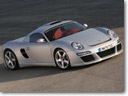
    RUF Porsche CTR3Exactly 20 years after the legendary CTR “Yellow Bird” and 10 years after the second CTR, RUF announces the all new CTR3. The RUF Porsche CTR3 was presented at the grand opening of the new RUF facility in Bahrain. While the first two CTR generations still had their engines in the rear, the new CTR3 has a mid engine design. However, one thing that the CTR3 has in common with its two predecessors is that it is a pure driving machine. The CTR3 is made to involve the driver in the driving experience.

    The mid engine design provides exceptional balance and agile handling, while the longer wheel base provides better driving stability at high speed. The body of the Porsche CTR3 is a completely new development which is not based on any existing mid engine concept. It is aerodynamically designed for high speed. The body is constructed in steel, aluminium and kevlar-carbon. Zinc dipped steel is used for the front structure and the passenger compartment. The engine and transmission are fixed in a space frame and birdcage. The passenger compartment is protected the latest version of the famous RUF Integrated Roll Cage which is integrated into the A pillar and birdcage. The doors, with integrated side impact protection beams, and the front hood are made of aluminum. The body shell is made of kevlar-carbon composite.

    Ben Soderberg’s design team created a classic sports car line. They realised an idea, that Alois Ruf had for a long time in mind.
    RUF has 30 years of experience with turbo charged boxer engines. The CTR3’s twin turbo charged 3.8 liter flat six cylinder engine has an output of 700hp at 7,000 rpm. The maximum torque is 657 ft/lbs at 4,000 rpm. This engine design combines a compact construction with high performance. Each turbo charger is provided an intercooler which is placed in front of each rear wheel.

    The sequential shift six speed transmission in the CTR3 is a new design and is transversally mounted. It can manage torque of up to 885 ft/lbs. A shift indicator on the dashboard shows the gear in use. A limited slip differential is provided to maximize performance.

    The sport suspension is designed for high level driving dynamics and safety. The front axles use McPherson struts and an anti-roll bar. The rear axles utilize motor sport technology with horizontal coil over shock absorbers fixed over push rods connected to the wheel carriers.

    The brake system is designed to match the high performance of the engine and suspension. Both front and rear axles utilize 6 piston fixed light alloy calipers and ventilated, cross drilled ceramic composite discs. Each brake disc is 380mm in diameter. A specially designed Bosch anti-lock braking system is standard.
    The CTR3 rolls on forged aluminum wheels with central locking. At the front 255/35 ZR 19” tires are mounted on 8.5” X 19” wheels, while at the rear 335/30 ZR 20” tires are mounted on 12.5” X 20” wheels.

    The interior can be designed to the customer’s taste, from a functional light weight finish to sporty luxury finish with a leather and alcantera. The aluminum gear shift lever for the sequential shift transmission is a central unit to the interior. In addition, the 260 mph speedometer shows the driver that the CTR3 is made for high performance.

    The lightweight construction allows for an empty weight (according to DIN) of 3,086 lbs. The result is a power to weight ratio of only 4.4lbs per hp.

    The performance of the CTR3 is incredible. The acceleration from 0-100 kilometers per hour (62 mph) takes only 3.2 seconds. The maximum speed is 375 kph (235mph). The sale price will be Euro 380,000.00 (plus VAT).

  • Mitsubishi Galant

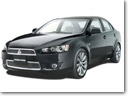
    2007 Mitsubishi Galant FortisMitsubishi Motors Corporation has announced the names of a new model. The U.S.-market Lancer will be renamed “GALANT FORTIS” for the Japan domestic market.

    The development concept for the new Galant Fortis1 calls for a “new-generation global sedan with world-class levels of safety, environmental performance and comfort”.

    Distinguishing features include: a high-rigidity platform that delivers excellent crashworthiness; a new 2-liter engine with aluminum cylinder block that delivers high power output and returns excellent fuel efficiency; exterior styling that imparts a broad stance and sporty lines; and a spacious, well-appointed cabin.

  • Mitsubishi Lancer Evolution X

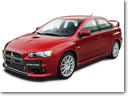
    2008 Mitsubishi Lancer Evolution XThe development concept for the all-new Lancer Evolution X2 specifies a “new-generation high-performance 4WD global sedan that allows all levels of driver to enjoy the car’s speed and handling with ease and in safety”.

    The new model features Mitsubishi‘s S-AWC3 traction and handling system, that integrates the control of drive torque and braking management with the four-wheel drive system to help realize highly responsive and intuitive handling in addition to outstanding vehicle attitude stability.

    Other examples of Mitsubishi Motors’ latest automotive technology to be featured in the new model include a new lightweight and high-performance 2.0-liter turbocharged MIVEC4 engine with aluminum cylinder block and a 6-speed automated manual transmission that contributes to exceptional performance with improved fuel economy.

    The performance-driven design makes the car’s extreme potential clear, while cockpit design focuses the driver’s attention on operating his machine.

  • Hyundai S3

    Hyundai S3Hyundai Coupe SIII, so called because it is the third incarnation of the Coupe, has been completely re-designed outside together with significant changes and enhancements inside.

    The entirely new front end features elongated headlights and a more aggressive letterbox like grille and new fog lights. New side air vents now incorporate the indicator repeater lights, while the re-shaped rear features a more sculpted look with fully integrated twin tailpipes (2.0 and V6) and restyled rear light clusters.

    New Colours

    A range of new colours is designed to show off the Coupe’s lines to best effect. Fresh exterior paintwork colours include solid Shine Red (standard colour) and metallic choices of Sky Blue, Steel Grey, Continental Silver and Mica Stone Black (all £350 optional extra cost).

    These vibrant new exterior finishes are accompanied by a choice of sumptuous red or black interior trim, with leather a standard feature on all models. Even the entry-level
    1.6 litre model comes with half leather trim.

    Both the Steel Grey and Stone Black variants come with red interior finish, while all other colours feature black interior trim.

    Blue Instrumentation Illumination

    New to the Hyundai Coupe SIII is blue instrumentation illumination, first introduced on Hyundai’s latest generation and award-winning Santa Fe.

    New Centre Console Layout and Look

    The centre console layout has been redesigned for a cleaner look and easier usage. It also has a sleeker, sportier look and feel with a new metal-look finish, which has been tied in with metal-look finishes on the steering wheel and air vents helping bring the interior together with added sense of quality.

    Hyundai S3 Interior

    iPod Audio

    For music lovers, the new Hyundai Coupe SIII comes with an iPod compatible CD/Radio stereo. The iPod port, found in the centre armrest, is standard on all models in the range.

    High Specification as Standard

    Hyundai’s Coupe has always featured a high level of specification and the new Hyundai Coupe SIII model builds on this tradition.

    The entry-level 1.6 comes with; half leather trim, air-conditioning, a CD/Radio stereo with iPod port, driver, front passenger and side airbags, engine immobiliser, height adjustable seatbelts, remote central locking, leather steering wheel, electric front windows and door mirrors and new 16 inch alloy wheels.

    The 2.0 adds; full leather trim, climate control, metal trimmed pedals and footrest, 17 inch alloy wheels, twin exhausts, cruise control and heated front seats.

    Aside from the small point of a smooth and sporty V6 petrol engine, meanwhile, the range-topping V6 adds; Thatcham category 1 alarm, automatic headlights, traction control, 6-speed manual gearbox and an automatic dimming rear view mirror.

  • Porsche Cayenne S Transsyberia

    Porsche Cayenne S TranssyberiaPorsche is adding yet another highlight to the Company’s wide range of customer sports activities: the Porsche Cayenne S Transsyberia based on the new Porsche Cayenne S and serving as the perfect vehicle especially for long-distance rallies. This ultra-sporting offroader is making its debut in the Transsyberia Rally taking contestants from Moscow all the way though Siberia to Ulaanbaatar in Mongolia from 2-17 August.

    The Porsche Cayenne is well-known and admired for its outstanding onroad qualities in the SUV segment. Now the second generation, which is making its debut at Porsche Centers the world over at this very moment, moves up this benchmark to an even higher standard.

    The new power units with direct gasoline injection, for example, provide even more power and performance on less fuel, cutting fuel consumption by up to 15 per cent versus the former models. Another highlight is Porsche’s new PDDC Dynamic Chassis Control featuring two active anti-roll bars to almost completely eliminate body sway in bends. Off the beaten track, the new Cayennes are naturally also on home ground, maximum axle articulation ensured by PDDC when driving offroad serving to further improve the already superior traction offered by the electronically controlled all-wheel drive.

    Last year two private teams participated in the Transsyberia Rally for the first time with the Porsche Cayenne S, finishing first and second in their very first attempt. Attracted by the successful participation of these two cars, Porsche has obviously become aware of the event and, in response, now offers the dyed-in-the-wool Cayenne driver the option to enter motorsport successfully with this outstanding model.

    To ensure such superiority in motorsport, Porsche has enhanced the already very good offroad qualities of the Cayenne to an even higher standard, developing a special model suited particularly for successful participation in long-distance rallies. Precisely this is why the new Cayenne S Transsyberia being built from the beginning in a small series of just 26 units comes, inter alia, with extra-rough special offroad tyres, a safety cage, a shorter final drive ratio, a transverse lock, a reinforced, even larger underfloor cover, as well as beefed-up track control arms on the front axle. At 385 bhp (283 kW), engine output of the eight-cylinder remains unchanged.

    Now sporting, ambitious Porsche customers will be participating at the wheel of a Cayenne S Transsyberia in one of the last adventures in the world on four wheels – the Transsyberia Rally. From 2-17 August, they will be following the route of this very demanding orientation rally from Moscow all the way through Siberia to the finish line in Ulaanbaatar in Mongolia.

    In all, they will be covering almost 6,200 kilometres or 3,850 miles on public roads, gravel tracks and the toughest trial paths, even crossing rivers and taking special tests in the Gobi Desert. And while navigation is perhaps the biggest challenge on the long stages of the Rally, it is particularly the driver’s personal skill and, of course, the qualities of the car that count in the special trials on tracks closed to the public.

    Twenty-Six Porsche Cayenne S Transsyberias for a Start

    With its intelligent all-wheel drive, high-performance and efficient V8 direct injection power unit, as well as height-adjustable air suspension including Porsche Active Suspension Management (PASM), the Porsche Cayenne S is perfectly prepared for even the toughest roads and tracks.

    Proceeding from the Cayenne S, Porsche’s specialists have built a small series of special models at the Company’s Development Center in Weissach near Stuttgart optimised especially for the demands of even the toughest long-distance rally: the Cayenne S Transsyberia. So following the outstanding success of the two Cayenne Teams last year, no less than 26 customer teams from all over the world are now entering the Rally with this special rallying version of the Cayenne S. Clearly, this will give the Porsche Cayenne the opportunity under extreme conditions to prove its supreme potential in driving dynamics versus the keenest competition.

    The Transsyberia Rally is split up into six categories of vehicles, with the Cayenne S Transsyberia featuring a 4.8-litre V8 entering the race in Class 1C for gasoline-powered passenger cars with engine capacity of more than four litres.

    Porsche Customer Sport

    This long-distance rally racing activity with the Porsche Cayenne S Transsyberia forms an additional highlight in the wide range of customer sport. The broad foundation in this area is provided by Porsche’s Sports Driving Schools, Porsche Clubsport, as well as popular brand racing series such as the Porsche Sports Cup in Germany where various versions of the 911 Carrera, mainly top sports performers such as the 911 GT3 and 911 GT3 RS, prove their sporting qualities.

    Moving up a level, Porsche offers ambitious amateurs entering the GT3 Cup Challenges in the USA, Brazil and New Zealand the opportunity to enjoy the thrill of motorsport in a racing car closely related to its production counterpart, the 911 GT3 Cup. The next step is the Carrera Cups in Asia, Australia, Germany, France, Great Britain, Italy, Japan and Scandinavia, where semi-professional and professional teams and drivers show their skills, again driving the 400-bhp Porsche 911 GT3 Cup.

    The top series and, at the same time, the fastest brand trophy in the world is the Porsche Mobil1 Supercup, the only Gran Turismo racing series to be held exclusively on the occasion of various races for the FIA Formula 1 World Championship. Again, the exclusive model raced at these events is the Porsche 911 GT3 Cup.

    For years, many customers have placed their confidence in the both fast and reliable Porsche 911 GT3 Cup and 911 GT3 RSR when participating in internationally renowned long-distance races such as the 24 Hours of Le Mans or the 24 Hours of the Nürburgring, the various races in the American Le Mans Series, as well as the Le Mans Series or the FIA GT Series.

    The RS Spyder sports prototype comes right at the top of Porsche’s customer sports programme, with three teams scheduled to enter the current season in the middle of the year, racing a total of six of these 1.25 million-Euro expensive high-tech prototypes in the LM P2 class of the American Le Mans Series.

    The Sporting All-Round Performer

    The Porsche Cayenne S Transsyberia is a typical Porsche through and through, tailored precisely to the needs and requirements of the sporting, ambitious customer – which in this case means a car tailored specifically to the requirements of long-distance rally racing. Compared with the “regular” version of the Cayenne S, the Porsche Cayenne S Transsyberia as a special rally version has been modified on a number of points serving first and foremost to enhance safety and the car’s racing performance.

    Production Engine, Shorter Transmission Ratio

    The power unit of the Porsche Cayenne S Transsyberia has been carried over from the regular road version of the Cayenne S with hardly any changes: Output of this 4.8-litre naturalaspiration V8 with direct gasoline injection remains 385 bhp (283 kW) at 6200 rpm. Maximum torque of 500 Newton-metres or 369 lb-ft, in turn, comes at just 3500 rpm.

    VarioCam Plus valve management ensures a smooth and consistent surge of power throughout the entire speed range, with engine management varying valve lift on the intake side between 3.6 and 10 millimetres as a function of engine speed. And with the intake manifold also being variable in length, the engine provides muscular torque right from the start even at low engine speeds. Despite the increase in power over the previous engine, the new 4.8- litre reduces fuel consumption by approximately 15 per cent, giving the Cayenne S a significantly longer cruising range than before – obviously a big advantage particularly in a long-distance rally. Automatically detecting the quality of the fuel it is running on, the engine is also able to run on regular fuel with an octane rating of 91 or more, even though this will reduce both engine output and torque. In fact, the engine is also able to run on a mixture of gasoline and ethanol, with up to 25 per cent of the latter. A sports exhaust system reduced for minimum weight gives the Cayenne S Transsyberia a particularly powerful and muscular sound, while Tiptronic S transmission with a shorter final drive ratio helps to ensure even better acceleration both from the start and in gears. And last but not least, the transmission management has been optimised for offroad use of the vehicle.

    Even Better off the Beaten Track

    Like all other models in the Cayenne range, the Cayenne S Transsyberia also comes with Porsche Traction Management (PTM) permanent all-wheel drive. In its basic mode, PTM feeds 62 per cent of the engine’s torque to the rear wheels and 38 per cent to the front.

    Then a multiple-plate clutch operated by an electric motor and controlled electronically is able to vary the distribution of power as a function of driving conditions, if necessary feeding as much as 100 per cent of the engine’s power completely to the front or rear. The map-controlled longitudinal lock and the differential lock on the rear axle respond not only to lack of traction on the front or rear wheels, but also benefit from sensors measuring the speed of the vehicle, its lateral acceleration, the steering angle and the position of the accelerator pedal. Using this information, PTM is able to consistently calculate the degree of lock required on the two axles and feed precisely the power required to the axle at the front and rear.

    A transverse lock fitted additionally in the Cayenne S Transsyberia serves to enhance offroad driving qualities to an even higher standard (and is also available in the regular production model as part of the optional Offroad Technology Package). Particularly in heavy terrain, PDDC Porsche Dynamic Chassis Control, interacting with air suspension and PASM Porsche Active Suspension Management, enhances traction to an even higher standard.

    And should the driver activate the low-range mode on the six-speed automatic transmission by means of the control paddle, PDCC will automatically switch over to the offroad mode, the system thus allowing maximum articulation of the axles. In the Special Offroad Mode provided by the air suspension, the maximum depth when crossing rivers and streams, etc, is approximately 75 centimetres or almost 30″. To make such an extreme depth possible, both the body and the doors are sealed off against the penetration of water all the way up to the side windows. And using a flexible air filter snorkel, the air intake has been moved up even further to the roof of the vehicle, ensuring that the front wave typical when crossing water is not able to reach, let alone enter, the intake manifold.

    The wheels and suspension of the Cayenne have naturally also been modified for the most extreme, long-term demands of rough tracks and rocky surfaces. As an example, the doublearm front axle comes with reinforced track control arms, with track itself being increased by 34 millimetres or 1.34″ for extra stability.

    The usual high-speed tyres fitted on the regular model are replaced by special offroad tyres measuring 255/55 R 18 T and homologated for speeds of up to 190 km/h or 118 mph. The tyres themselves are fitted on 18-inch, 15-spoke Cayenne S II light-alloy wheels and the rim hubs are finished in orange, like on the Porsche GT3RS.

    Massive Safety Cell within the Interior

    It is already well known that the Porsche Cayenne ranks right at the top in the offroader market also in terms of body stiffness and passive safety – which is no surprise, considering that more than 60 per cent of the body-in-white is made of high-strength steel. Forces generated in an accident are absorbed by three load levels above one another and fed into the stiff longitudinal floor support, the side-sills and tunnel areas. The reinforcements in the A- and B-pillars, in turn, are made of ultra-high-strength steel to improve safety in a rollover.

    Porsche Cayenne S Transsyberia Interior

    And to offer both the driver and passenger even better protection from the consequences of a collision or rollover under racing conditions, the Cayenne S Transsyberia comes with a safety cage bolted on to the passenger cell. Indeed, this cage even follows the rules and requirements of the FIA Motorsport Authority, with the driver also being protected by an airbag for extra safety.

    Optimised for Minimum Weight All Round

    To set off the extra weight of the safety cage and rally equipment, and to further lower the vehicle’s centre of gravity, the rear seat bench, interior body panels and sound-proofing material have all been removed from the car. Central locking, in turn, is replaced by a manual door opening mechanism on the front doors with orange-coloured opening and closing loops.

    Both the rear window and the side windows at the rear are made of light polycarbonate, while the side windows at the front, as on all Cayenne models, feature special hydrophobic treatment at the outside to make water run off more quickly and smoothly and ensuring that the glass remains far cleaner for far longer than with conventional windows. As another important advantage, both the driver and front passenger enjoy the benefits of lightweight sports seats with a leatherette/Alcantara cover.

    Sporting Exterior

    The new models in the Cayenne range are even more sporting and dynamic also in their looks than their predecessors. And so it is no surprise that the Cayenne S Transsyberia comes with the same brand-new front end as well as the dynamic rear-end design of the new model enhanced to an even higher standard, extra-large air intake scoops bearing clear testimony to the car’s superior power and performance. On the tailgate the Cayenne S Transsyberia boasts a roof spoiler with a double-wing profile fitted in position to provide even greater stability at high speeds.

    The front and rear air dams, in turn, are finished in stainless steel, and orange-coloured wheels give the Cayenne S Transsyberia a sporting look, making the vehicle easily recognisable at very first sight. At the side this special rally model proudly boasts orange-coloured stripes bearing the name “Cayenne S Transsyberia 2007″ in a look similar to that of the Porsche Carrera GT3 RS.

    The Cayenne S Transsyberia is available exclusively in two special colour schemes – either Basalt Black Metallic or Crystal Silver Metallic. And matching the model designation at the sides as well as the wheel rims, contrasting elements such as the exterior mirrors, the rear wing, the additional headlights and crossbars on the cooling air intakes are all finished in orange.

    Wide Range of Rally Equipment

    All 26 units of the Cayenne S Transsyberia come as standard with a navigation unit enabling the team to plan their routes also off the beaten track, with the navigation system naturally being masterminded by the passenger for optimum efficiency. The glove compartment is replaced on this special model by a Tripmaster computer enabling the co-pilot to exactly scrutinize the route between individual navigation points on the way. Most of the control units are fitted within the interior, and all electric lines and wires have been installed at new points and in new positions. Using a central switch at the right beneath the driver’s seat, the man at the wheel or the co-driver are able to switch the on-board electrics on and off in one quick and convenient operation, thus re-setting the electronic system if necessary even while driving.

    Air for the engine is drawn in through a special opening above the engine compartment lid, a snorkel serving to move the air intake up even higher all the way to roof level, thus ensuring that the front wave generated when crossing rivers or streams, etc, is not able to enter the intake manifold. Reinforced and extra-large underfloor protection panels made of aluminium and an additional cover made of stainless steel for the exhaust tailpipes protect the Cayenne S Transsyberia from the particular damage and exposure easily encountered on a rally with its extremely tough conditions.

    The regular foot-operated parking brake is replaced by a handbrake enabling the driver to oversteer the vehicle intentionally in a tight bend. Four additional headlights are fitted on the roof, and to successfully master particularly difficult and demanding terrain, as well as to salvage other vehicles, the Cayenne S Transsyberia comes with a winch easy to fit when necessary and stored for convenient use in the luggage compartment.

    The luggage compartment also comes with two 20-litre reserve cans, a hydraulic offroad car jack, two fire extinguishers, two sand boards, two full-size spare wheels, and two transport boxes for tools. Further features included as standard are two two-man tents, two heat-insulated mats, four lashing belts, a nine-metre-long salvage belt complete with tackle, a folding spade, a folding saw, an axe, a manually operated and adjustable headlight, four towing bar openings and a complete Hazet toolkit.

  • Edo Ford GT

    Edo Ford GTIncreased performance up to 60 HP with: Sport catalyst 200 cell, electronic tuning. All work controlled by dyno running. Sport back box stainless with flap system. Loudness of the exhaust adjustable.

    • New taile pipes stainless
    • Carbon fibre engine bay panelling, 3-pieces
    • Special rear wing
    • Wheels in different colours and designs available
    • tyre-air-pressure control system shows pressure and temperature per wheel
    • Design modification outside for example complete different colour.
    • Independently adjustable dumping technology – rebound and compression dumping
    • Racing wheels in different designs and available.

    Technical data

    engine type DOHC, 4 valves per cylinder,
    supercharged V-8
    horsepower @ rpm approx. 610 HP @ 6.500/min
    torque @ rpm approx. 800 Nm @ 4.500/min

    Power train

    top speed > 340 km/hp
    0 – 100 km/h approx. 3,7s (3,9 s serial)

  • Je Design Seat Altea XL

    Je Design Seat Altea XLWhoever admires minivan look would do well deciding on a Seat Altea XL. JE DESIGN provides a clearly sportier version for its mid-size family car through its Spanish alterations. A car body kit completes the aesthetically pleasing form. In addition, JE DESIGN offers amongst other options a lowering, a sports exhaust and new rims.

    Facelift by JE DESIGN

    A complete facelift procedure is performed by JE DESIGN on the front of the SEAT Altea. A new grill with grid inset – in contrast to the original version minus brand labelling – is available in Matt Black or by request in matching vehicle finish and is just the first step offered. Next are headlight eye brows providing the Altea series-produced headlights with a much more serious look. The third step is a new front spoiler available to optimise aerodynamics. Naturally, JE DESIGN dedicates its attention as well to the other side of the Seat Altea. Side skirts set provide this and thanks to the new rear apron fitting, an optical lowering of this vehicle ensures a rear sporty look. The single parts for the Seat Altea XL are also available as a complete kit.

    Further optical measures pertain to the doors as JE DESIGN provides an 8-component highly polished door handle set in chrome. Matching to this the Leingarten, Germany, based tuner offers the B-pillar in “3D Chrome”.

    More power

    Even a mid-sized family van can have the liberty of a power boost. JE DESIGN increases the 2.0 TDI engine from series-produced 103 kW/166 PS to 130 kW/176 PS with 4000 U/min. Improved elasticity values follow this procedure maximizing the torque to 405 Nm compared to the series-produced 320 Nm. The power surge effects high-speed as well. With 210 km/h the Altea runs a quick 9km/h faster than the series-produced version. The sprint from 0-100 km/h is performed in just 8,9 seconds versus 9,9 seconds. As required for any serious tuner, JE DESIGN supplies the power enhancement with TÜV parts approval.

    Better vehicle handling, improved brakes

    More agility is promised through a lowering set lowering the „Altea XL“ by approximately 35 mm. Optionally offered by JE DESIGN is an adjustable coilover suspension with preset damper setting.

    For those who prefer sustained deceleration, JE DESIGN installs a 330x28mm 4-piston sports brake system on the front axle providing more safety.

    19-inch und more sound

    Absolute mandatory are new rims. For example, offered within the complete wheel sets is the design „Multispoke“in 8.0 x 19 ET 45 with tires 225/35 R19 This wheel also comes in Chrome-look in sizes 17 und 18-inch. Alternatively JE DESIGN offers the design „Masterline“ in 17-inch.

    Tuning of sound is modified by JE DESIGN for the Seat Altea in way of powerful sound equipped through a rear silencer. It is composed of four anti-corrosion stainless steel 90mm tailpipes two on the left and two on the right providing an even more sporty look.

  • Nissan Pino

    Nissan PinoNissan today announced the launch of the new Pino minicar at dealers across Japan. Nissan Pino, true to its marketing tagline of “Shift_lovely days,” is an economical, easy-to-drive minicar, aimed at consumers looking for a personal vehicle that is ideal for everyday driving. As Nissan’s fourth minicar model, along with Moco, Clipper and Otti, Pino expands Nissan‘s minicar lineup, giving customers more choices in this growing market segment.

    Along with its low price and low fuel consumption – essential requirements of a minicar, – Pino is distinguished by its simple design that projects user-friendliness. Ease of ingress/egress is outstanding, and a class-leading minimum turning radius helps make the Pino practical and easy to drive. The car also comes with a variety of convenient features for everyday use, including a nearly flat floor luggage area.

    Pino is supplied to Nissan by Suzuki Motor Corporation on an OEM basis. In conjunction with the Pino’s release, Nissan is promoting a collaborative marketing program with Sony Plaza. The program is aimed at enhancing users’ everyday enjoyment of their Pino. A core element of this program is an online “Web shop,” Pinoshop.jp, which offers various goods and accessories for the car. Sony Plaza, operated by PLAZASTYLE Corporation, specializes in unique imported products.

    Economical to Buy and Drive

    A low price and low fuel consumption combine to provide low cost of ownership. The 2WD model fitted with a 3-speed automatic transmission achieves a fuel economy figure of 21.0 km/l.
    All 2WD and 4WD models fitted with a 5-speed manual transmission qualify for tax reductions under the 2006 Green Tax*1 program in Japan. The 2WD model with a 5-speed manual transmission is eligible for a tax reduction of 9,000 yen, while the 2WD models with either a 3-speed or a 4-speed automatic transmission and the 4WD model with a 5-speed manual transmission receive a tax break of 4,500 yen.

    A Simple Design Projecting User-friendliness

    The front-end has an engaging look with the distinctive Nissan signature grille design. This same design cue also distinguishes the Moco and Otti. The headlamps are a sharp, clean-cut form, while the stylish turn signal lamps combine square and round shapes.

    The rear view continues the clean design form with character lines running from the roof to the bumper. The rear combination lamps and deep rear bumper complete the overall look of stability and clean style.

    Pino’s 13-inch full wheel covers feature an exclusive Nissan design combining square and round relief elements inspired by snowflake crystals. The car is fitted with 155/65R13 73S tires.
    The Pino comes in a choice of nine body colors, including Lime Green Metallic.

    Comfortable to Drive and Use

    Inside, Pino’s seats are covered in an exclusive Nissan fabric, featuring a soft tactile feel and a milky caramel color. The dice pattern on the fabric has star-shaped dots, with the numbers lined up in the order of 3-6-5-2-4. This expresses the designer’s wish for both the car and driver to stand out 24 hours a day, 365 days a year. E and E FOUR models are accented with a stylish door trim cloth made of the same material as the seat covers.

    With its simple design and big numbers, the large-size speedometer can easily be read at a glance. The switch layout puts the climate and audio system controls within easy fingertip reach. A variety of storage spaces and compartments complete the strong interior package. On the E and E FOUR models, the side ventilators, shift knob button and inside door handles are embellished with a silver finish, accentuating the fine quality of the interior.

    Outstanding ease of ingress/egress is provided by the large door openings, an instrument panel shape that allows extra knee room, and the low sill height. The driver’s seat slides fore and aft 240 mm and is 16-way adjustable to ensure the optimum driving position. The large front and rear outward views combine with the large side mirrors to provide excellent visibility for enhanced driving ease.

    The luggage area has a large, wide opening and the rear seat folds down to create a nearly flat floor, making it easy to load and carry large items. E and E FOUR models come with a 50/50 split folding rear seat that can be easily rearranged to accommodate the amount or size of luggage to be carried. A class-leading minimum turning radius of 4.1 meters contributes to the Pino’s nimble maneuverability.

    The Pino features Nissan’s “Inner Green” interior concept that includes an antibacterial surface treatment and an interior air filter to maintain a clean, comfortable cabin ambience. The remote control entry system incorporates a back door release and a function for confirming the locked status of the doors. The audio system includes an electronically tuned AM/FM radio with an integrated CD player (one DIN size), two speakers and a digital clock. A navigation system is available as a dealer-installed option.

    Smooth Performance, Superior Economy

    Powering the Pino is inline 3-cylinder DOHC 12-valve K6A engine, which provides superior economy and quick acceleration from low speeds for easy, everyday driving.

    The full-range electronically controlled 4-speed automatic transmission fitted on the E and E FOUR models has optimized gear ratios, enabling the 2WD E model to attain excellent fuel economy of 21.5 km/L. The transmission also incorporates a hill ascent/descent shift control function that prevents unnecessary shifting on uphill inclines, based on the vehicle speed and amount of accelerator pedal depression, and on downhill inclines in tandem with the driver’s operation of the brake pedal.

    S and S FOUR models come with a 5-speed manual transmission with a short shift stroke for a smooth shift feel. The front strut suspension and the isolated trailing link (ITL) rear suspension provide a smooth, comfortable ride combined with sure-footed handling and stability.

    The 4WD models are fitted with a full-time 4WD system that automatically distributes the necessary driving force to the front and rear wheels according to the road surface condition and vehicle’s dynamic state.

    Safety and Environmental Performance

    Standard safety equipment on all models includes SRS air bag systems for the driver and front passenger, a driver’s seatbelt incorporating double pretensioners with a two-stage load limiter, a lightweight, impact-energy-absorbing body, and a brake system comprising Electronic Braking Force Distribution (EBD), Anti-lock Braking System (ABS) and Brake Assist (BA).

    All 2WD and 4WD models fitted with either the 4-speed automatic transmission or the 5-speed manual transmission are certified as super ultra-low emission vehicles (SU-LEVs)*2. They reduce emissions by an additional 75% from Japan’s 2005 exhaust emission regulations.

    The 4WD model equipped with the 3-speed automatic transmission is certified as a U-LEV*2, emitting 50% fewer emissions than the 2005 emission standards.
    All 2WD and 4WD models fitted with the 5-speed manual transmission also qualify for tax reductions under the 2006 Green Tax*1 program in Japan.