Author: Victor Ivanov

  • 2012 Ferrari F12berlineta – full specs

    The new 2012 Ferrari F12berlinetta is exhibited at the 82nd Geneva International Motor Show. The sports car is presented alongside the Ferrari California Handling Speciale.

    The F12berlinetta is displayed on the stand in two new colours, Rosso Berlinetta and Aluminium. It is the most powerful and high-performance road-going Ferrari ever.

    It is powered by a 6.3 liter 65° V12 engine with 740PS (544 kW) and 690Nm (509 lb-ft). 0-100 km/h – 3.1 seconds and 0-200 km/h in 8.5 seconds. The top speed is over 340 km/h. You can check the full specs below.

    The car is pretty small and its engine, dashboard and seats are lower in the chassis to achieve low center of gravity. A new suspension and gearbox layout helps reduce the car’s rear volume. The result is fantastic with a weight distribution 46:54 (front-rear axle).

    The whole car weighs just 1525 kg and has maximised its performance efficiency with torsional rigidity boosted by 20%.

    The aerodynamics is specialty of Ferrari. It is been discreetly integrated in the F12berlinetta’s styling – the Aero Bridge which, as a first, uses the bonnet to generate downforce, and Active Brake Cooling, a system that opens guide vanes to the brake cooling ducts only at high operating temperatures.

    The result of these interventions is that the F12berlinetta has the highest overall aerodynamic efficiency of any Ferrari ever built (a value of 1.2, double that of the 599 GTB Fiorano) with downforce of 123 kg at 200 km/h and a Cd of just 0.299.

    2012 Ferrari F12berlineta
    2012 Ferrari F12berlineta

    At the rear, the car is also very pretty – a modern, functional reinterpretation of the Kamm tail which seamlessly integrates the two vertical fences of the rear diffuser. It has original T-shape  and also incorporates two full-LED circular tail-lights and the clearly F1-inspired rear fog light.

    The interior is also completely new. It features the balance of advanced technology – in the form of the Human-Machine Interface which places all controls within easy reach of the driver – and sophisticated, handcrafted detailing, both of which are intrinsic to Ferrari’s DNA.

    On the dashboard you’ll see new carbon-fibre and light alloy air-vents inspired by the aeronautical sector. There is also an optional passenger display for the passenger-side dash.

    The two other recent additions to the Prancing Horse stable will also be present on the stand: the FF in Bianco Italia livery and the 458 Spider in Giallo Tristrato. The display is completed by a 458 Italia in a sporty two-tone Rosso Corsa and Nero Daytona livery.

    F12berlinetta technical specifications

    Engine

    Type 65° V12
    Bore/stroke 94 x 75.2 mm
    Total capacity 6262 cc
    Compression ratio 13.5:1
    Maximum power 545 kW (740 CV) at 8250 rpm
    Specific power output 118 CV/l
    Maximum torque 690 Nm at 6000 rpm
    Maximum revs 8700 rpm


    Dimensions and weight

    Length 4618 mm
    Width 1942 mm
    Height 1273 mm
    Wheelbase 2720 mm
    Front track 1665 mm
    Rear track 1618 mm
    Dry weight* 1525 kg
    Kerb weight* 1630 kg
    Weight distribution 46% front, 54% rear
    Weight/power ratio 2.1 kg/CV
    Fuel tank 92 l


    Wheels and tyres

    Front 255/35 ZR 20 9.5J
    Rear 315/35 ZR 20 11.5J
    Front (winter tyres) 255/35 ZR 20 9.5J
    Rear (winter tyres) 305/35 ZR 20 11.5J


    Carbon-ceramic brakes (CCM3)

    Front 398 x 223 x 38 mm
    Rear 360 x 233 x 32 mm


    Electronic controls

    ESC Stability control
    High-performance ABS/EBD High-performance anti-lock braking system with electronic brake balance
    F1-Trac F1 traction control
    E-Diff 3 Third generation electronic differential
    SCM-E Magnetorheological damping control with twin solenoids


    Gearbox

    F1 dual-clutch 7-speed


    Performance

    Top speed over 340 km/h
    0-100 km/h 3.1 sec
    0-200 km/h 8.5 sec


    Consumption and Emissions (ECE + EUDC combined cycle)

    Consumption** 15l/100 km
    CO2 emissions** 350 g/km

    *With lightweight options

    **ECE+EUDC with HELE system
  • Drag Racing – Times and Power [part 2]

    Let’s continue with the reaction time. With several words, it is the time between the green light signal and when the car passes the starting line. Normal reaction time is between 0.5 to 1 second and if it is under that, the driver is either lucky or trying to “cheat”.

    All this characteristics are connected and can explain everything that happens on the race track, even how the driver controls the car.

    The time and the terminal speed are the most important characteristics and normally the proportions are these: 15 to 14 seconds on ¼ mile – 150 to 160 km/h, 14 to 13 seconds – 160 km/h to 175 km/h, 13 to 12 seconds 175 km/h to 190 km/h, 12 to 11 seconds from 190 km/h to 210 km/h and all cars in the 10 second mark and below that have terminal speeds of more than 210 km/h.

    So, what happens, when the car have high terminal speed and bad ¼ mile. Usually, there are two reasons – bad start and low traction after that. The cars, which are not 4×4 and have a lot power like turbocharged BMWs, Porsches or Mercedeses. The conclusion is more wheel spin leads to bad ¼ mile time and high terminal speed.

    So, it turns that drag racing is not only a chase between two cars on a straight line and changing gears or waiting for the automatic transmission to do that. There are a lot for very important factors, which can work in your benefit, if you know them and try to improve not only your car, but yourself, too.

    More power, less weight and good, prepared driver – the formula of the success at ¼ mile races.

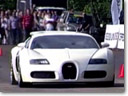
    Bugatti vs Porsche Drag
    Bugatti vs Porsche Drag


    [Part 1]

  • Porsche at the 2012 Geneva Motor Show

    Porsche will exhibit the new 2012 Boxster alongside the Panamera GTS and 911 Carrera Cabriolet at the Geneva Motor Show at 09:30 on March 6 in Hall 1.

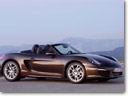
    As we previously wrote, the 2012 Boxster features all-new lightweight body, new flat-six engines with direct petrol injection, a completely revised chassis and evolutionary styling.

    It is powered by a 2.7 litre boxer engine with 265PS (195 kW) and a 3.4 litre flat-six with 315PS (323 kW). Both models feature a manual 6-speed gearbox as standard, with the 7-speed dual-clutch Porsche Doppelkupplungsgetriebe (PDK) available as an option.

    Built in Zuffenhausen, Stuttgart, the new Porsche Boxster will hit the UK market from May 5.

    The Boxster is priced from £37 589, and the Boxster S starts at £45 384.

    2012 Porsche Boxster S
    2012 Porsche Boxster S

    The manufacturer is unveiling the 911 Cabriolet to a European audience right on cue for the open air season. The new model offers sporting drivers the option to enjoy the renowned dynamic qualities and iconic design of the 911 Coupe combined with the added versatility and driving pleasure offered by its folding convertible roof.

    The roadster shares its new, high tech aluminium-steel body with the Coupe and extends this innovation to its all-new, unique hood. When raised, the design of the hood ensures the iconic 911 roof line is retained in its entirety. Intelligent lightweight design, including the use of magnesium in the hood frame, ensures reduced weight for increased responsiveness, lower fuel consumption and greater comfort. As is the case with the Coupe model, the new 911 Cabriolet is significantly lighter overall than its predecessor.

    The new 911 models are on sale now starting from from £79 947 and the Carrera S Cabriolet is £89 740.

    2012 Porsche 911 Carrera S Cabriolet
    2012 Porsche 911 Carrera S Cabriolet

    Panamera GTS is based on the regular model, but comes with updated 4.8 liter naturally-aspirated V8 engine with 430PS (316 kW) at 6700RPM and 520Nm (384 lb-ft) at 3500RPM. It is coupled with a 7-speed Porsche Doppelkupplungsgetriebe (PDK) transmission.

    Despite to kerbweight of 1 920kg, the 4-door coupe accelerates to 100 km/h in 4.5 seconds and has a top speed of 288 km/h (179 mph).

    A tuned chassis boasting performance-oriented options is standard; with the air suspension at its normal level the Panamera GTS sits 10 mm lower than the other models in the Panamera range and its damping is designed to be tauter, reinforcing the sporting personality. Dynamic performance is further enhanced by the combination of 19-inch diameter Panamera Turbo wheels, 5 mm rear wheel spacers and larger brake discs from the Turbo – recognisable by their red brake callipers.

    The appearance of the Panamera GTS is characterised by numerous black exterior styling details. The high-gloss black exterior package comprises the side window trim, the decorative trim on the rear lid, the headlight washer unit cover, the rear diffuser and the side air outlet panels which lend a particular sporting touch. In combination with the black side skirts, the tail end and the matt black tailpipes of the sports exhaust system the result is clear-cut and striking.

    The Porsche Panamera GTS is priced at £90 409.

    2012 Porsche Panamera GTS
    2012 Porsche Panamera GTS


    Source: Porsche

  • Lamborghini Aventador J Speedster [rendering]

    Here is a picture of a special convertible version of the hyper car – Lamborghini Aventador. It is set to be revealed at the Geneva Motor Show, next week. The name of the project is Aventador J Speedster.The J Speedster will share the same brutal engine – a 6.5 liter V12 with 700PS (515 kW) at 8250 RPM and 690Nm (509 lb-ft) at 5500RPM. It is coupled with a 7-speed ISR gearbox specially supplied by Graziano Trasmissioni Group. The performance will also probably the same – 0-100 km/h in 2.9 seconds and a top speed of 350 km/h (217 mph).However, at the Geneva Motor Show will be displayed the roadster version of Aventador, which is a different model.Stay tuned for more information!

    Lamborghini Aventador J Speedster
    Lamborghini Aventador J Speedster
    Lamborghini Aventador J Speedster
    Lamborghini Aventador J Speedster
    Source: Autoforum.cz

  • 2012 Aston Martin Vantage GT4

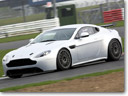
    Aston Martin will reveal the new 2012 Vantage GT4 at the Geneva Motor Show, next week. The revised sports car features an all-new aerodynamic package plus further improvements to the rollcage and fuel tank.

    The aerodynamic package includes a carbon fibre rear wing, which generates a lot of downforce, especially combined with a new larger front splitter.

    The re-designed rollcage conforms to the latest FIA regulations and improves access and legroom.

    Last improvement is the mid-mounted, 115-litre fuel tank, which lowers the centre of gravity and helps for better weight distribution. The fuel tank has twin quick-fill entries in the rear quarter.

    The Vantage GT4 is powered by a 4.7 litre V8 with 436PS (321 kW) at 7300RPM and 490Nm (361 lb-ft) at 5000RPM.

    The price is £119 500.

    “We have taken the opportunity to make some quite dramatic aerodynamic enhancements to the Vantage GT4, which will close the performance gap between this entry level GT car and the GT3.  We have also fitted the car with the same roll cage and fuel tank configuration that’s found in the Vantage GT3 and GTE. We are about to sell our 100th Vantage GT4 and since its launch it has been one of the most successful cars in its class; the Vantage GT4 and its predecessor, the Vantage N24, scored many 24 Hour race class victories, the 2010 European GT4 Cup title and also back-to-back championship victories in the Nürburgring VLN series in 2010 and 2011.”, said John Gaw, Managing Director of Aston Martin Racing.

    “The revised version has very large boots to fill, but given the effort we’ve put into developing the upgrades and following a successful first outing, we’re very confident that the 2012 Vantage GT4 will pick up where its predecessor left off.”, he added.

    2012 Aston Martin Vantage GT4
    2012 Aston Martin Vantage GT4

    Source: Aston Martin

  • 2012 Hyundai Veloster Turbo EU

    Hyundai will reveal another interesting model at the 2012 Geneva Motor Show. The turbocharged 1+2 door Veloster Sports Coupe will showcase the latest ideas of engineers at the Hyundai Motor Europe Technical Centre in Rüsselsheim, Germany.

    The main updates are the boosted power output and increased low-end torque to best suit European driving tastes and enhance driver enjoyment.

    The Veloster Turbo is powered by a 1.6 liter T-GDI with twin-scroll turbocharger – 186PS (137 kW) and 270Nm (199 lb-ft).

    “UK drivers tend to prefer more torque from a lower engine speed, so our European engineers have specified a set-up that still provides a substantial increase in power – up from 140 ps to 186 ps – while also delivering the desired low-end torque.  The resulting package is very competitive against the performance of competitors such as VW Scirocco and Vauxhall Astra.”, said Tony Whitehorn, President and CEO of Hyundai Motor UK.

    “Veloster has quickly established itself as a fun car and a unique proposition. The enhanced performance will increase the Veloster’s appeal for drivers who want the perfect combination of stand-out design, a fun drive and the practicality of a hatchback.” Mr. Whitehorn added.

    2012 Hyundai Veloster Turbo EU
    2012 Hyundai Veloster Turbo EU

    In terms of performance, Veloster Turbo is very good – 8.4 seconds 0-100 km/h with manual gearbox – 6-speed. CO2 emissions and fuel economy figures for the car will be announced nearer to launch in the UK.

    The new Veloster Turbo has the same practical appeal as the original model, thanks to the innovative 1+2 door design.  It also now features unique front and rear bumpers and foglights, new rear spoiler and grille, new 18” alloy wheels with chrome inserts, projection headlights with unique LED headlight accents, and unique LED taillights.  These elements further accentuate the car’s eye-catching styling and add a greater emphasis on its performance.

    The Veloster Turbo will come with Hyundai’s industry-best Five Year Triple Care assurance – a combination of a five-year unlimited warranty, five years of roadside assistance and five years of vehicle health checks.

    Pricing for the UK will be announced soon.

    Source: Hyundai

  • 2012 Hyundai i20

    Hyundai has released pictures of the all-new i20, which will make its official debut at the 2012 Geneva Motor Show.

    The new model comes with refreshed styling, enhanced equipment and the lowest CO2 emissions of any conventional powertrain car on sale today.

    The engine range includes the new 1.1 litre, 3-cylinder ‘U-II’ diesel engine with 75PS (55 kW). If, you opt for Blue Drive, this engine will emit just 84 g/km of CO2.

    The engine was developed at Hyundai’s Diesel Centre of Excellence – part of the European R&D set-up in Rüsselsheim, Germany – and showcases Hyundai’s expertise in clean diesel technology.

    There is another power unit with sub-100 g/km emissions – 1.4-litre ‘U-II’ diesel with 90PS (66 kw). When combined with Blue Drive technologies, it emits 96 g/km of CO2.

    Dimensions: width – 1710 mm, height – 1490 mm, increased length – 3995 (by 55 mm) and wheelbase – 2525 mm.

    “The i20 has been very popular with European buyers since it came to market in 2009, thanks to its combination of efficiency, quality, practicality and value.  With an enhanced engine line-up that includes the lowest CO2 emissions for a conventional powertrain, and sharper styling influenced by fluidic sculpture, the All New i20 will appeal to a broader range of buyers, including younger consumers.  The assurance of our industry-best, comprehensive Five Year Triple Care package makes the All New i20 an even more attractive proposition.”, said Allan Rushforth, Senior Vice President and Chief Operating Officer of Hyundai Motor Europe.

    2012 Hyundai i20
    2012 Hyundai i20

    Source: Hyundai

  • Volkswagen Cross Coupe Concept II – 1.8 l per 100 km (157 mpg)

    Volkswagen has announced the Cross Coupe concept at the Tokyo Motor Show last year, which is powered by a plug-in petrol-electric hybrid system. Now, it is turn to a new model – Cross Coupe Concept II. The vehicle will make its official debut at the 2012 Geneva Motor Show in few days.

    The new Cross Coupe Concept II will have even more frugal plug-in hybrid drivetrain boasting a superb 157 mpg fuel economy. The drivetrain includes a turbodiesel direct injection engine (TDI) and two electric motors with overall power of 306PS (225 kW). As we mentioned, the fuel consumption is as low as 1.8 l/ 100km and 46 g/km of CO2. The performance is also at decent level, because the SUV can reach speeds of 220 km/h (137 mph). Really, these will be amazing achievements considering the weight of 1 858 kg.

    Further information about the Cross Coupé will be available when it makes its debut at the Geneva Motor Show on Tuesday 6 March.

    Check out the previous Cross Coupe Concept here.

    Volkswagen Cross Coupe II
    Volkswagen Cross Coupe II


    Source: Volkswagen

  • Drag Racing – Times and Power [part 1]

    Drag racing is one of the most interesting events in the automobile world, especially for the spectators. Essentially, it is a race between two vehicles on a special dragstrip, which is a long straight facility for conducting acceleration events. When we say vehicles, we mean everything that can run… fast! – motorcycles, cars, sports cars, “funny” cars and top fuellers.  This time we will talk about ¼ mile races – 402.33 meters.

    There are two main types of events – start-and-fast beat, which is very “easy” to do. Just step on the gas pedal, when the lights are green and change gears (if you drive manual). The second type is bracket racing, which is very popular, too. The contestants choose their fastest time that they think is possible and who finishes first is a winner, but if you beat your announced time of 14.20 with for example 14.05, you will lose. These rules give opportunity to slow cars to catch up with very fast ones.

    Now to say something about times just to have some idea for what’s really going on at the dragstrip. Usually, the normal cars around and under 200HP are in the range of 18 to 15 seconds. Those, which have sports nature, are from 14.9 to 13 seconds and the best of them are under 13 to 12 seconds. The cars with times under 15 seconds has at least 200HP and they are not very heavy like 1500kg (3306 lbs) or more. The cars around 13 seconds have 300 to 400HP and those under 13 seconds are extremely powerful – 500HP and more. Of course, there are a lot of exceptions, but normally this is the situation.

    Other very important thing is the terminal speed, which again can show you how powerful the car is and how it uses that power and puts in on the tarmac. Again, usually the normal cars have terminal speeds of 120-140 km/h. The sports ones – 140 to 160 km/h and the best 160 to 190 km/h. If you see a car with over 200 km/h, it is either very tuned or very powerful with poor driver.

    The start is extremely difficult, because the driver needs to know his car very well. Of course, a start with powerful car is more tricky and, but if you have launch control – congrats.

    The first 60 feet (20 m) usually take from 1.6 to 2.4 seconds or more, if the driver can’t drive his car very well. Once again, the normal cars (if driven perfectly) are between 2.8-2.4 seconds, the sports ones from 2.4 to 1.8 seconds and if the time is around 1.4-1.5 seconds, this is either very powerful 4×4 vehicles or a RWD with slick tires.

    To be continued…

    [Part 2]

  • Audi R18 e-Tron Hybrid Quattro

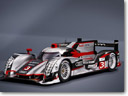
    Audi R18 e-Tron Quattro is the world’s first LMP1 car to combine a highly-efficient TDI with a hybrid system. The race car will make its official debut on May 5 in the six-hour race at Spa-Francorchamps in Belgium and will compete for overall victory at the famous 24 Hours of Le Mans in France on June 16/17.

    “Audi has always consciously selected championships and categories in racing that have a close relationship to production and therefore have technical relevance for the Audi customers,” said Head of Audi Motorsport Dr. Wolfgang Ullrich, who personally drove the new Audi R18 e-tron quattro onto the stage on Wednesday evening during its world premiere in the Audi Training Center at Munich airport – electrically and almost silent.

    “Quattro, TFSI and TDI are three excellent examples of how motorsport has stimulated production development. A similar tendency is apparent with the e-tron quattro: we test a completely new technology on the race track before it’s introduced to the Audi production line.”, he added.

    The R18 e-tron quattro uses recovered kinetic energy, which is fed as electric into a flywheel accumulator before being retrieved under acceleration again above a speed of 120 km/h. The extremely efficient V6 TDI diesel produces 510PS (375 kW) powering the rear wheels. Both systems complement each other to create the new drive principle e-tron quattro.

    “The TDI engine invented by Audi is still the most efficient drive in the world,” said Dr. Wolfgang Ullrich.

    “We are convinced that the TDI has even more potential. This is why Audi not only supports the hybrid in motorsport as it does in production, but in parallel also the further development of the conventional drive.”, he added.

    Audi Sport Team Joest will field two R18 e-tron quattro and two R18 ultra prototypes in the Le Mans 24 Hours on June 16/17. The two hybrid cars are driven by last year’s winning trio Marcel Fässler (CH), André Lotterer (D) and Benoît Tréluyer (F) as well as Dindo Capello (I), Tom Kristensen (DK) and Allan McNish (GB) who boast a total of 13 Le Mans wins between them. New signing

    Audi R18 e-Tron Hybrid Quattro
    Audi R18 e-Tron Hybrid Quattro

    Source: Audi

  • Vorsteiner V-GT Porsche 991 Coupe

    Vorsteiner has released several pictures of one of their latest tuning projects – the new V-GT program for the Porsche 991. The tuning elements will fit both Carrera and Carrera S models and are made of carbon fiber.

    The exterior upgrades include: a new add-on spoiler with integrated brake duct collectors, a front GT replaceable center splitter for more downforce, a pair of side skirts with integrated carbon fiber blade extension, a new lightweight carbon-fiber bonnet, a rear add-on diffuser with integrated aero fins, a rear add-on ducktail wing spoiler, a lightweight replacement carbon fiber roof panel and sets of different forged alloy wheels in dimensions 20” or 21”.

    Last, but not least, Vorsteiner offers Stainless & Titanium sport exhaust systems with valve control for better sound and some more power.

    Vorsteiner V-GT Porsche 991 Coupe
    Vorsteiner V-GT Porsche 991 Coupe

    Source: Vorsteiner

  • MR Car Design Volkswagen Golf VI R32

    MR Car Design has introduced their pimped Golf VI R32. The athlete is co-developed with BTS-Racing and the result is impressive. The engine conversion includes reinforced DSG gearbox and R 32 HPG Turbo-Kit. The result is whopping 465PS (342 kW) and 550Nm (406 lb-ft).

    MR R32 also has a KW Clubsport suspension, a Stoptech 4-piston braking system with 355×32 mm discs. There are also H&R stabilizers – front and back as well as reinforced engine, transmission and suspension components. The chassis received polyurethane Superpro bushes.

    The mighty tuned Golf R32 stads on OZ Ultraleggera HLT matt and powder-coated in two colours – 9J x 19“ ET45 with 225/35 ZR19 high-performance tires.

    Last, but not least, a valve controlled 3“ sports exhaust system has been mounted, which delivers very good sound characteristics.

    Car Design offers a wide range of the storage possibilities for interested customers, both in summer and in winter. When it comes to the maintenance of the sport cars it is extremely convenient service.

    MR Car Design Volkswagen Golf VI R32
    MR Car Design Volkswagen Golf VI R32

    Source: MR Car Design