Author: Tsvetan Varbanov

  • BMW Treats at Geneva Motor Show

    BMW-Geneva-lineup-shadowBMW is generating some hype before the 82nd Geneva Motor Show by listing all of its entries for this year. The lineup is a complex combination of European and World premiers that radiate innovation, quality, emotion and excitement. The i3 and i8 concepts will also participate in the form of BMW’s future vision of design and mobility. BMW‘s presentations won’t be on wheels only. With an array of original accessories and performance packages such as the “M performance”, the company will try to meet the needs of even the keenest BMW enthusiast. Three new engines for the 3-series sedan will also make an appearance with the prospect of even more to come this year. We do have more detailed articles on most of the vehicles in this list so feel free to browse around and find that which interests you.

    World Premiere: the BMW 6 Series Gran Coupe

    BMW 6 Gran Coupe (2013)
    BMW 6 Gran Coupe (2013)

    The BMW 6 Series Gran Coupe is a response to the current rivals, the Audi A7 and the Mercedes-Benz CLS. It is a 4+1 Coupe that is supposed to combine the incomparable sporty spirit of the 6-series with the practicality of a sedan. When compared to a standard 6 series Coupe, the Gran Coupe is wider by 4.5 inches and longer by 4.4 – that makes it a big, big car. At the start of this Summer, the Gran Coupe will only be branded 640i because of its TwinPower Turbo, 6-cylinder engine. However, later this summer a V8 650i will also be offered as well as an xDrive 650i. The price of the 640i is the only one given yet – $76,895. Whether this blend of practicality and lunacy has the best of both worlds or the worst, only time will show.

    World Premiere: The New 2013 BMW M6 Coupe

    BMW M6 Coupe (2013)
    BMW M6 Coupe (2013)

    Now entering a 3rd generation, the M6 Coupe is here to dominate the world of grand touring with more power, efficiency and dynamics. Thanks to its marvelous V8 M TwinPower Turbo engine and BMW‘s EfficientDynamics, burning rubber has never been that cheap. Torque is conveyed trough a 7-speed M-Double Clutch Transmission (M-DCT) while an Active M Differential optimizes power transfer between the rear wheels. Needless to say that behind all that power and frugality, there is also the backbone of every car – the chassis. It has been tuned by M engineers and employs a Variable Damper Control (VDC) system, DSC, ABS, CBC and DBC. The M6 itself can come as a Convertible if you need wind in your hair and tan on your face.

    World Premiere: BMW M Performance Automobiles

    BMW M550d xDrive Sedan (2013)
    BMW M550d xDrive Sedan (2012)

    The “M Performance” niche is a string of xDriven diesels that aims to set new standards. The BMW M550d xDrive, M550d xDrive Touring, X5 M50d and X6 M50d do not have the blistering performance of the more powerful M petrol line but they are out there – Under the hood in each and every one, hides a state-of-the-art TwinPower tri-turbo, common rail injected engine that feeds 280 kW/381 hp and 740 Newton meters (546 lb-ft) of power trough an 8-speed sports automatic transmission. And despite the lack of M wheel arches and numerous tail pipes, the M Performance BMWs have M tuned suspensions – subtle, discreet and serious. With that configuration, a BMW M550d accelerates in 4.7 seconds from zero to 100 km/h, while its average fuel consumption in the EU test cycle is 6.3 liters per 100 kilometers

    Premiere: BMW 116d EfficientDynamics Edition

    BMW 116d EfficienDynamics Edition (2013)
    BMW 116d EfficienDynamics Edition (2013)

    Porbably the most frugal car in the BMW lineup, the 116d EfficientDynamics Edition is powered by a 85 kW/116 hp TwinPower Turbo diesel engine that goes easy on the fuel (EU test cycle is 3.8 liters per 100 kilometers) thanks to the EfficientDynamics system which incorporates a Stop/Start system and braking energy storage.

    World Premiere: The New Updated 2013 BMW X6.

    BMW X6 (2013)
    BMW X6 (2013)

    It’s an updated version of the most premium SUV out on the markets. It has poise, it has agility and it has comfort. This ultimate X model comes with xDrive (naturally), still makes use of the company’s Dynamic Performance Control and it utilizes TwinPower Turbo Tech in the form of two engine choices. Visually the 2013 X6 now has bigger kidney nostrils and a better place for its fog lights. At the back, the taillights are also restyled and if that’s not enough light for you, it can be ordered with optional LED Adaptive headlights.

    BMW i3 Concept and BMW i8 Concept

    BMW i3 & i8 Concepts
    BMW i3 & i8 Concepts

    Closer than ever to production, the i3 and i8 Concepts are after all still be at the Geneva Show just to amaze the people there. They serve as an example of BMW‘s plan for a sustainable, electric future. Production of the “first electrically powered premium vehicle”, the i3, is expected to start early in 2013 while the plug-in performance hybrid, the i8 might be coming down in 2014.

    Other highlights of the BMW booth include the arsenal of originally made accessories for that extra look and feel of the new 3-Series Sedan – anything from unique 20 inch wheels to a fitted indoor/outdoor car cover. There will also be M Performance packages – Parts designed by the M division for the enhancement of standard BMW’s. We are talking about powertrain, suspension, aerodynamics and cockpit components that provide a tangible increase in driving dynamics by enhancing engine power, reducing weight and optimizing aerodynamic properties. Whether we have a 5-series or a-3 series or even the 1s, all parts are designed to belong.

    Source: BMW

  • LUMMA Design BMW 650i

    Lumma-BMW-650i-thumbDesign House Lumma will take part in the 82nd Geneva Motor Show by showcasing a CLR 600 GT. You would be forgiven to think that such a name can only come after crossbreeding a Mercedes with a Ford  but the thing is, that underneath the branding and aerodynamic fitments we have a BMW 650i

    The Lumma people seem to be attracted to cabriolets as the 650i is the sixth open-top to come out from their works. The company has left its mark on the body with a subtle aerodynamic kit that consists of a front spiler with LED daytime running lights on it, some side skirts and a diffuser at the back. These additions are said to “give the BMW Cabriolet a sporty appearance…” but giving a sporty appearance to a BMW 6-series is like importing ice cubes to Antarctica. From underneath, four, stainless steel pipes (90 mm in diameter each) give away the custom flow muffler. But even if you do not catch a glimpse of the posterior, you will most certainly hear it roar. Four are also the Black Lumma GTB Monoblock alloy rims wrapped with Vredestein Ultra-High-Performance 255/35-20 tires at the front and 285/30-20 ones at the back. The dark finished racing spokes present, reveal contrasting yellow brake calipers for that extra daring feel.

    Lumma BMW 650i (CLR 600 GT)
    Lumma BMW 650i (CLR 600 GT)

    Speaking of daring, we cannot omit mentioning the Lumma tweaks on the BMW‘s power plant. The TwinPower V8 which usually produces 408 bhp has underwent some engine electronics overriding and now we have a 490 restless horses ready to go out. Torque has also been revamped and now it peaks at 720 Nm. This performance upgrade will benefit acceleration but in terms of top speed the limiter stays at 160 mph (5 mph more than standard).

    Inside there is enough leather and Alcantra to shock even a fashion designer. The pedals flash from down under with their aluminum shine while the floor and trunk mats are from velour. A “Lumma” inscription on the glove box lets you know that there are people out there who think for you and your dream to be an exclusive individual in an exceptional car.

    Source: Lumma Design

  • Peugeot 308 in Brazil

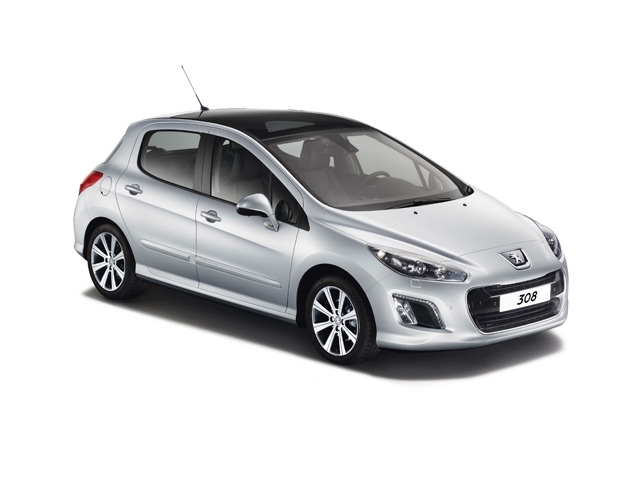
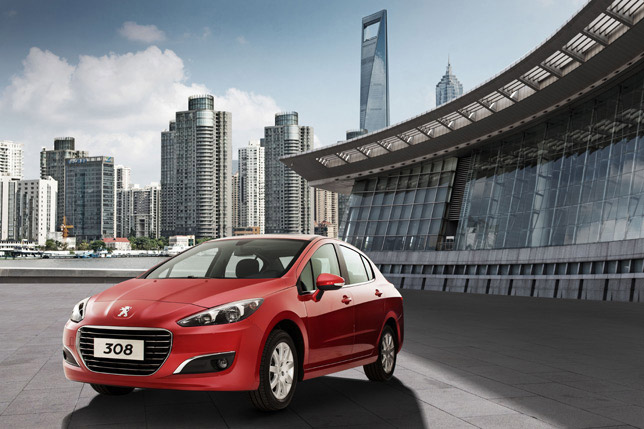
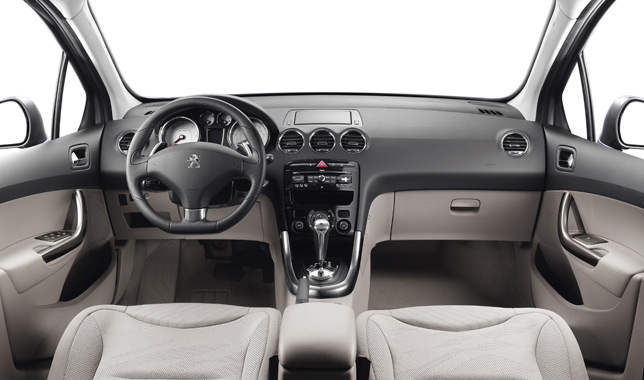
    Peugeot-308-thumbPeugeot is moving forwards in the world’s economy and the latest sign of that is the introduction of the 308 to Brazil which will happen March this year. Brazil will be the second South American country (after Argentina) to acquire the 308 two-box design as a mid-size option. The Brazilian version of the 308 distinguishes itself from the flock of Peugeots with three main characteristics – bald outer lines, abundant equipment trims and a an option of a Flex Fuel 1.6 engine, with the Flex Start® system.

    The car itself, destined for Brazil, is made in Argentina and that’s a good thing as there is an internal free trade agreement between the Mercosur countries among which are Brazil and Argentina. There is something  made in Brazil however –  the clever EC5 Flex Fuel 1.6 engine  develops 122 hp which ranks it as the most powerful one in the segment. Flex Start is a piece of technology, developed by BOSCH, that has never been seen in a Peugeot before. It is an alternative to the existing small additional petrol tank located under the bonnet, used for cold starting at low temperatures. Instead the Flex Start uses an electronic system to heat up the Ethanol for maximum efficiency even at the severest of temperatures. That innovation, brought the EC5 driven Brazilian 308 much praise from IBAMA, Brazil’s Federal Ministry of the Environment. They have now stuck a ‘green label’ on the model which indicates their contempt.

    Peugeot 308 (two-box design)
    Peugeot 308 (two-box design)
    Peugeot 308 (three-box design)
    Peugeot 308 (three-box design)
    Peugeot 308
    Peugeot 308

    Source: Peugeot

  • Toyota Predominant on Dependability Study

    2011-Toyota-Yaris-thumbThe J.D. Power Vehicle Dependability Study is an annual research based on x amount of problems per 100 vehicles, reported by real life car owners. The lower the x, the higher the rank. It is common knowledge that if today one wants a car that can survive an apocalypse, Toyota is the brand for you. But this year, not only the Toyotas dominate the survey, but the whole Toyota group.

    Toyota cars alone have four models ranked as the most dependable non-premium vehicles. The Corolla is ranked second behind The Prius in the compact-car segment while Corolla, Camry and Highlander (Kluger) are in the top three of their segments.

    Lexus and Scion (Toyota subsidiaries) also preformed exceptionally well by each scoring two top rankings. Last year it was Lexus that led the J.D. Power Vehicle Dependability Study by winning the most awards than any other premium brand.

    Other highlights coming from awards include the 11 awards that got swept by both Toyota and Lexus at the ‘IntelliChoice’ Best Overall Values of the Year ranking. Fifteen Toyota, Lexus and Scion vehicles were named 2012 “Top Safety Picks” by the Insurance Institute for Highway Safety – Camry, Corolla, Highlander (Kluger), Prius, Prius v, Yaris and Scion xB. Also the 2012 Camry, Camry Hybrid and Prius earned the maximum five stars for overall safety from the National Highway Traffic Safety Administration. All that portfolio of awards is just a drop in the sea of Toyota‘s achievements. We just hope they have a big enough trophy cabinet at the factory.

    Source: Toyota

  • New Audi RS 4 Avant

    Audi-RS4-Avant-thumbIt has been 3 years since the RS4 got off Audi’s production line but today we can indulge ourselves once again in the roar of a V8, shelled by a familiar body – It’s the new Audi RS4. The resurrection kicks off with an Avant version which is here to show it’s rivalries what’s what.

    The RS4 is back with a bang as it gets the powertrain usually found in the RS5 Coupe – a hand-built 4.1 liter plant, producing 450 PS at 8,250 rpm and 430 Nm of torque from 4,000 to 6,000 rpm. In true RS tradition, that power goes trough a permanent Quattro AWD system. The ‘permanent’ term however, should not scare you off as the Quattro in the latest RS4 is exceptionally flexible – it incoroprates a self-locking crown-gear centre differential that allows up to 85 percent of the power to go to the rear axle or up to 70 towards the front wheels. By default, one would find that the power bias ratio is 40:60 in favor of the back wheels. So for the people who like to travel sideways everywhere that is a relief.

    The whole power thing translates into a time of 4.7 seconds for the 0 to 60 mph sprint and a top speed of 174 mph (limited to 155 mph). Stunning performance, keeping in mind that this estate returns 25.7mpg on the combined cycle.

    Compared to the standard A4, the RS4 is 20 mm lower thanks to the truly complex suspension – a five-link set-up at the front and a self-tracking trapezoidal-link rear assembly. We don’t know what all that means but chances are its beneficial. The power steering is clever too. It has a conscious mind that takes into account the current speed of the car to determine the steering firmness.

    Audi RS4 Avant (2013)
    Audi RS4 Avant (2013)

    The car sits on 19-inch (20-inch optional) wheels wrapped in four 265/35-series tires. The 10-spoke design of the wheels are rather revealing and it’s not like the Audi hasn’t got anything to hide. We are talking about internally vented wave disc brakes – an innovation in stopping power as the brakes are around 3 kg lighter (in total weight) and more heat-efficient due to their “wave” outer, perforated contour.

    Inside, black is the predominant finish with occasional carbon inlays and chrome clasps lining the switches and buttons. One would also find that the front sports seats are heated and that the driver information system has an RS menu with a lap timer.

    There are tons of other optional extras that might be worthwhile ticking – the Dynamic Ride Control ensures even more stability at high speeds and sharp bends and a sports exhaust system for that kid in everyone of us.

    Prices for the Audi RS4 are yet to be released and hopefully we’ll see the arrival of a sedan version so that everyone is happy. In the mean time do not hesitate to look around in the RS4 gallery.

    Source: Audi

  • Jaguar XK, XKR Special editions

    Jaguar-XK-Special-Edition-thumbTo say that a Jaguar lacks the successful formula of blending luxury with engineering perfection, would be a mistake. However one could say that the XK and XKR can do even better. That is why now we have the XK and XKR Special Edition models (coming in Coupe or Convertible setups). The focus here is mainly the interior with added a hand-crafted ‘Artisan‘ design.

    Let’s talk leather – ‘scraffito‘ finished front seats, instrument binnacle, door and rear quarter casings. All the while two new veneer finishes – Shadow Walnut and Dark Figured Aluminum can complement the Poltrona Frau® leather headlinings. As standard, you get a 525W Bowers & Wilkins sound system, 16 by 16 way adjustable heated Performance seats, a heated steering wheel and keyless entry/start. Unique treadplates and stainless steel pedals also give away the editions as special.

    While being improved upon from the inside, the XK and XKR remain exceptional engineering achievements. Jaguar has been familiar with the use of aluminium technology and today that know how is seamlessly transferred onto the riveted and bonded aluminium monocoque construction of the two cars. That means they are light, rigid and stable. Every model from the lineup gets as standard a continuously variable adaptive damping for that extra ride comfort.

    Jaguar XK Special Edition (2013)
    Jaguar XK Special Edition (2013)

    The XK harbours a naturally aspirated 5.0-litre direct-injection V8 that churns out 385PS while the XKR gets a 510PS power plant thanks to supercharging. With the MY 2013 XKR, a performance package is available for the coupe and convertible editions (previously only the coupe could get it). It’s called the “Dynamic Pack” and it basically raises the top speed to 174mph, includes the addition of side sill extensions, adds a rear diffuser. Also with it the car stance is 10mm lower and the adaptive dynamics, spring and damper rates are revised.

    Jaguar XK Special Edition (2013)
    Jaguar XK Special Edition (2013)

    Source: Jaguar

  • Prindiville Design Land Rover Defender

    Prindiville-Land-Rover-Defender-thumbIf you want something really exclusive, Prindiville Design might have the solution – the Limited Edition Land Rover Defender. There are only 25 units available worldwide and all have been assembled by hand. Performance has been tweaked by Defender specialists, Alive Tuning.

    Prindiville began with a standard Defender 90 Hard Top and, being proficient coachbuilders, completely overhauled the exterior and interior. Enhancements to the suspension, braking system, cooling, and engine on the other hand, have been made by the Lincolnshire-based Alive Tuning company.

    Customers decide upon choosing a body color that will best match the Prindiville designed exterior complete with a titanium high performance sports exhaust, chrome side protection runners, LED front and rear headlamps and a ribbed undershield. Also provided are the front and rear parking sensors and cameras. Four 18-inch five-spoke alloy wheels harbor Prindiville six-pot callipers and sport discs. For the ultimate road stance and balance some performance springs have been thrown in as well.

    Prindiville Defender (2012)
    Prindiville Defender Limited Edition (2012)

    Inside the Cobra sport seats are wrapped in Italy’s finest hide which can also be found on the steering wheel. The Alcantra driver and passenger carpets, the unique center console storage unit are all coordinated with the overall color of choice. Every single Prindiville Defender has a unique number (naturally up to 25) aluminum plate on the dashboard, commemorating the series in the coachbuilder’s prestigious collection.

    Soundproofing the cabin is not only beneficial in reducing engine noise but it also creates an adequate environment to indulge ourselves in the Prindiville provided multimedia systems – a five-inch built-in LCD television interface providing access to wireless Internet, a DVD player, satellite navigation, 360-degree external vision, surround sound from four loudspeakers.

    The Limited Edition offers a choice of four different power upgrades, which gradually increase the output of the 2.4-litre TDi powerplant from 122 to 190 bhp. Add to that a dual-range six speed transmission, which can be further upgraded to an automatic or tiptronic gearbox you get an off-roader like no other. Street performance on the other hand is further enhanced with the addition of a high flow intercooler, silicone hoses and a turbocharger. You’ll be going from 0 to 60 mph in just 10 seconds with that package. Yikes!

    Source: Prindiville Design

  • SR Scion IQ Project

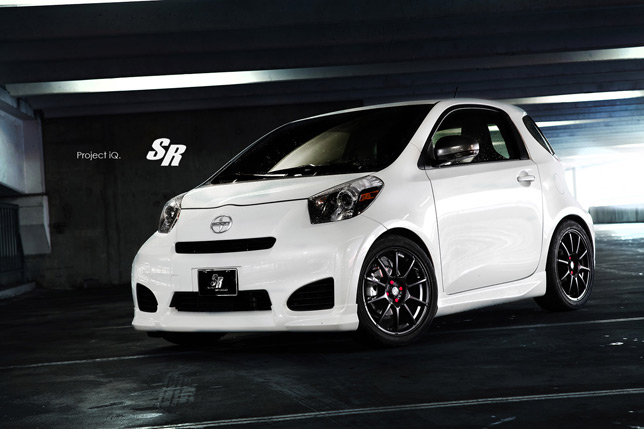
    SRauto-Scion-IQ-thumbInterestingly enough, another custom company has undertaken a Toyota IQ project. Well, when we say Toyota we actually mean a Scion. And, yes, last week was an Aston Martin but this is all just badge talk. So today we have the SR autogroup made IQ – sporty, aggressive and with big wheels.

    For a body kit, SR have chosen Fiveaxis components. They account for the front lip, side skirts, rear lip, and the roof spoiler. But a body kit does not look complete if it isn’t almost grinding on the ground. So that is why we also have a set of Tein lowering springs which, according to SR, do not in any way compromise performance and ride comfort.

    An overall custom look is achieved only when we add four matte black 17-inch Sparco wheels held by titanium red lug bolts. We are not sure why they have to be titanium but they look great as a contrasting agent. Does it work for you?

    SR Scion IQ (2012)
    SR Scion IQ (2012)

    Source: SR autogroup

  • Arden Range Rover Evoque

    Arden-Range-Rover-Evoque-thumb“Auto Motor und Sport” is one of the well known automotive magazines in Germany and recently its readers voted the Range Rover Evoque as the most popular import SUV in the country. That is good news for Arden, a tuning house based in Germany that has more than 40 years of experience with British carmakes. Naturally, now they have introduced some enhancements for the Evoque which will give that extra character a good SUV deserves.

    In a frontal view, the Arden Evoque makes an impression with its new, handmade, stainless steel mesh grill that has the company’s typical patterns. A party piece further back is the addition of illuminated side stainless steel pipes. They have been specially designed for the Evoque and subsequently they fit perfectly. You can use a remote control to turn them on for that instant glamor and functionality as well – light can come in handy when getting in or out.

    Sadly the Arden Evoque won’t be too fit for off-roading for the springs are also of a special kind – the 30mm lower kind – while that might be viewed as a slight disadvantage, it does give the SUV an attractive road stance.

    It’s not all shell decorations with the Arden people. The Evoque’s 2.2 Diesel engine has underwent an ECU tweak with an end result of 30 hp more power and 50 Nm additional torque. That may not sound a lot but it will certainly be felt at low and medium engine speeds.

    Arden Range Rover Evoque
    Arden Range Rover Evoque
    Arden Range Rover Evoque
    Arden Range Rover Evoque
    Arden Range Rover Evoque
    Arden Range Rover Evoque

    Source: Arden

  • Vorsteiner Rolls-Royce Ghost [Teaser]

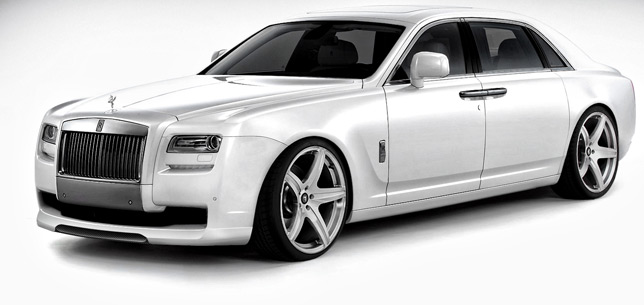
    Vorsteiner-Rolls-Ghost-thumbVorsteiner have undertaken an ambitious project and have released a bit of a teaser. It will be the Rolls Royce Ghost that’s going under the knife. But , in true spirit of the ultra-executive, the company intends to keep it simple and clean. In fact nothing is to be replaced but rather clipped on.

    The end goal for Vorsteinier is to add a great deal of functionality and a little bit of character. That’s why the Ghost here gets some additional downforce by a front spoiler with a replaceable splitter chin. Supposedly further back there will be side skirts blade attachments with integrated wing elements. (although they don’t seem to be present in this picture, but it is, after all, a teaser). Then at the back end, one would find that there is going to be a carbon fiber rear decklid spoiler and a diffuser at the bottom (not a replacement part but an add-on). All of the body kit components are made trough an Autoclave pre-preg carbon fiber technology that guarantees durability and strength.

    It all looks and sound very subtle indeed. The one thing sticking out in the Vorsteiner Ghost however, will be the massive 24-inch 3-Piece forged aluminum wheels that barely leave room for tires under the arches. Plans are to release the program this Summer.

    Vorsteiner Rolls Royce Ghost
    Vorsteiner Rolls Royce Ghost

    Source: Vorsteiner

  • BMW M6 Coupe and Convertible

    2013-BMW-M6-thumbThe latest from the M division comes in the form of an M6 – Coupe and Convertible. It has retained its characteristic body line and still is the ultimate in gran touring thanks to its V8 M TwinPower Turbo engine and clever design. BMW‘s EfficientDynamics on the other hand keep it frugal and refined.

    The profile is familiar but there are bodily innovations – a new front apron has been introduced with massive, honeycombed air-intake patches. No matter how massive however, they are unable to steal away the headlamp department which features the characteristic BMW Corona rings that make use of the latest Adaptive LED headlight technology. A 30 mm increase of the front track has resulted in a noticeable swelling of the wheel arches which are as ever complemented by the indicator and M badge housing gills behind them. At the back we have quad tail pipes separated into two pairs, flanking the clever diffuser. The M6 sits on 19-inch alloy wheels in a star-spoke (seven double spokes) design that come in two finishes. Alternatively, as an option one can go with the 20-inch ones that have five double spokes for the sake of lighness. As always, lightness for the Coupe is also guaranteed by the carbon-fibre reinforced plastic roof panel which lowers the center of gravity significantly with improved agility and handling as an end result. In the mean time, the Convertible M6 gets the standard 6 Series Convertible retractable roof with its independent retractable rear window. The party piece is the fact that you can operate it while in motion of up to 25 mph.

    BMW M6 Coupe (2013)
    BMW M6 Coupe (2013)

    Inside, the M6 is a blend of luxury and sportiness – Merino leather everywhere while an instrument fascia featuring a Black Panel technology, dials with red needles and white backgrounds adorn the dashboard. The windscreen is also affected as a HUD display provides speed readout and speed limit identification, gear and rev counter and shift lights to the driver. It’s not all flash and glam though. The new M6 has more space inside and a luggage capacity of 460 litres (300-350 litres for the M6 Convertible). The M Sport seats are more complicated than a smartphone with their electric pneumatic adjustments and the manually adjustable under thigh support.

    The power plant for the new M’s is the same one found in the M5 – a mighty 560 hp V8 M TwinPower Turbo 4.4 petrol unit. That’s 53 more hp than the V10 predecessor. Put your foot down behind one of these V8‘s and you’ll be greeted by a maximum torque of 680Nm as early as 1500 rpm and will be escorted by it up until 5,750rpm. That is a lot of power at your disposal ready to thrust you back into your seat when pressed. Deep down in the confounds of the engine one would find the reason for all of that grunt – twin turbochargers built in to the twin scroll principle and direct fuel injection plus a Valvetronic variable valve timing and Double VANOS continuously variable camshaft control – that translates into 0-62mph sprint of just 4.2 seconds for the M6 Coupé, with the M6 Convertible following at 4.3 seconds. The top speed limiter starts screaming at the 155 mph mark. It’s not all muscle and grease though. Thanks to BMW’s EfficientDynamics technology, the M6 has a Stop/Start function, Brake Energy Regeneration and Active Aerodynamics – all of which help reduce consumption up to 30% in comparison to previous models: The M6 Coupé has a combined fuel consumption of 28.5mpg (Convertible 27.4mpg) with CO2 emissions of 232g/km (Convertible 239g/km).

    As standard, all that power coming from the engine is digested trough a seven-speed Double Clutch Transmission (M DCT) with DRIVELOGIC. It is a uniquely complex and high-tech gearbox that has three modes of shifting (thanks to the logic thing) so that the driver has the freedom to chose a style from sportiness to comfort. It also allows manual shifting trough the paddles behind the wheel or the gearstick.

    BMW M6 Convertible (2013)
    BMW M6 Convertible (2013)

    Surely, with that kind of power, one needs some stability feedback from the chassis. That is why M engineers have fiddled in that area as well – The rear axle subframe has been bolted directly to the body while the front axle kinematics have been redesigned with M-specific settings, and a number of 6 Series suspension components replaced with forged aluminum items. The shock absorbers are electro-hydraulically operated trough the car’s Variable Damper Control (VDC) again with three settings. Driver aids come in many abbreviations such as DSC, ABS, CBC and DBC but thankfully all can be overridden with the very important M Dynamic Mode (MDM) which allows you to do what one must do with an M car – wheel spinning, oversteer and other tire-destructive activities. For the braking power, the M6 comes as standard with 400mm front discs and 396mm rear discs clamped by six-piston calipers (at the front at least). Novice or trackday drivers can opt for the Ceramic Brakes which are more heat resistant and counter fading after much abuse.

    It all sounds really wonderful but will it be a better value from the M5? There is no answer to that question as both cars have target groups: The M6 is for the hardcore performance bachelors while the M5 is for the hardcore performance family men.

    Source: BMW

  • Smart City Brake Support for Mazda CX-5

    Mazda-CX-5-thumbMazda have e vision of a world where road accidents are a thing of the past. That is why exactly they are intensifying their safety program. Today, the company announced that a Smart City Brake Support (SCBS) system will be available in all 2013 CX-5 crossovers. This will be the first phase of a plan to widespread Mazda’s safety features to eventually all models within its lineup.

    Basically what SCBS does is help oblivious drivers prevent frontal collision with whatever objects in an urban environment. At speeds of up to 30 km/h a laser sensor on the windscreen is in constant vigilance for obstacles ahead. Should something appear in its range, the sensor sends signals trough the SCBS system to the brakes. They are not immediately applied. Instead they get “prepared” for braking by reducing brake rotor travel and await the driver to interfere. That way a more efficient stopping power takes place upon braking. However, if for some reason, the driver does apply the brakes, the SCBS system has another trick up its sleeve – When the speed difference between the driver’s car and the vehicle in front is less than 30km/h the system squeezes the disk brakes fully and reduces the engine output automatically in an effort to avoid a collision.

    SCBS working principle
    SCBS working principle

    Another feature of the SCBS sensor is the inhibition of acceleration when an object is in front of the vehicle. That system is called the ‘Acceleration Control for Automatic Transmission‘ – if, again for some reason, the driver stomps on the accelerator pedal while in a halt in the presence something in front of the car, light and sound alerts start beeping and the car isn’t allowed to output the applied acceleration. Sadly this latter feature will only be available for Japan but the whole safety technology trend lets us know Mazda cares about us as customers and is determined to confidently excel in that field.

    Mazda CX-5 (2013)
    Mazda CX-5 (2013)

    Source: Mazda