Toyota have released some teasers about their latest concept – the FT-Bh which actually means Future Toyota B-segment hybrid. It will be an ultralight supermini, built with clever materials and run by clever technology for the greater good of society.
It is said to weigh no more than 800 kg yet it will be a 5-door. So that leaves around 50 kg for all the other parts (Im not much good at maths). Anyway. One would expect it to be green considering the lightness and the hybrid genes inside and one would be right – 50% less CO2 emissions than a modern 5-door counterpart.
The FT-Bh will also make use of some industry friendly materials for its made. In other words, no animal lives will be sacrificed for the interior, no mahogany will be lacquered for the panels and no liquid gold paint will be wasted on the brake calipers. In fact even the drivetrain will be optimized, or more accurately – downsized.
The FT-Bh is scheduled for a reveal at the 82nd Geneva Motor Show on the 6th of March, early in the morning.
The latest Honda Civic has been rated 5 stars in safety by Euro NCAP. The NCAP tests are the comparable to the Oscars when it comes to automotive safety. Not only has the Civic achieved the highest possible score but, people at NCAP also want to highlight the car’s Collision Mitigation Braking System (CMBS) by extending Honda‘s Euro NCAPAdvanced reward because of it.
The NCAP tests take into account large amounts of data for overall pedestrian and occupant safety and announce the results in the form of easy to digest figures for the public. The Honda boasted some great qualities that won the hearts of the NCAP engineers. The “Advanced Compatibility Engineering (ACE) Body Structure” might have something to do with the Civic’s safety charm. The idea with this is to cope better with eventual car-to-car frontal accidents. The car’s structure allows better distribution of the forces experienced upon impact, which means less stress for the cabin and its occupants. A car participating in an accident with an ACE Civic may also benefit from these properties.
Pedestrian safety has also been addressed by the Honda engineers. The windscreen wiper pivots, for example, are designed to breakaway easily upon impact. Also the front wing mounds and the hood hinges have greater absorbing properties while there is enough space between the hood and the oily bits underneath which means more deformation and felxiblity.
Then there’s the standard stuff – some seriously advanced restraining for the occupants and a multitude of airbags all around to keep you safe from harm. Seriously, it has so many airbags that should they deploy all at once, there will be little to no space for you inside.
Honda Civic (2012)
The thing is, it is hard to have a crash in a Honda Civic in the first place. Thanks to an integrated CMBS, the car can detect moving or stationary objects from around a 100m distance up ahead. After detection it quickly decides if there is going to be a collision and if so it sets your hair on fire. Well, what it actually does is send signals to you that .. hey… you might have an accident. If you fail to response, the car will then tighten the seat belts and start applying the brakes (around 2 seconds before estimated impact). If a collision is assessed as inevitable, the system stomps even harder on the brakes and straps you to the seat as harshly as possible. The really impressive thing is that this system is capable of acting upon even at speeds of up to 100km/h on a motorway for example.
So there you go – the Civic joins a family of NCAP veterans, 5 star Honda vehicles. So far, the brand might be one of the safest ever in Europe.
Honda Civic (2012)
If you love Honda’s, check out Lemonfree.com for their inventory of Honda Civic for sale
Afzal Kahn has always maintained that combining technical perfection with aesthetic brilliance is his true calling. Recently, in the arsenal of his arguments, he has added yet another example – the Kahn Q7 wide track.
A voluminous amount of exterior parts have been added to form the vision of Afzal Kahn – the front fenders are now with huge vents complemented by flaring wheel arches on both ends. The front bumper is also new with, again, more vents on it and gunmetal gray detailing. Sill plates in stainless steel complete the sides while a distinctive rear wing juts out from the top, back end. Things that feel a little bit excessive are the daytime running LED lights which sort of flood the headlights and also the liquid gold calipers. It’s a good thing that the provided Kahn RSX22” wheels, with their complex spoke patterns, are not too reveling. As a rounding feature, Kahn design have also thrown in a stainless steel exhaust system with neat tailpipes hidden discreetly behind the new rear bumper.
The interior has also been restyled with strong contrasting accents – The dials the seats are wrapped in black quilted perforated nappa leather red stitched and with a red line across them. The rev counter and the speedo are both respectively colored in red and cream as if the dashboard is suffering from heterochromia. However, this is the place where usually the Kahn people offer unlimited versatility. A customer is free to choose from the widest spectrum of colors imaginable for both the exterior and interior.
Power will come from the standard Audi 3.0-liter TDI which sends 233 bhp trough an 8-speed Tiptronic automatic transmission. The price for this model here is $96 995
Maserati plan to make a premiere of their new GranTurismo Sport at the 82nd Geneva Motor Show this year. It will be a replacement for the current GranTurismo S. The thing is, the company wants us to think it’s new but what we actually have here is a restyled interior, a new bumper and a revisited engine.
Supposedly the new front bumper “optimizes” airflow even further by scooping larger amounts of air to cool the brakes and engine. The front lights employ a new style and house DRL LED lights to keep up with the competition while the taillights are a but faded. Interior changes have also been made – redesigned seats and a sporty steering wheel. We just hope that by sporty they mean less buttons and controls and more.. well.. steering wheel.
Most probably the most meaningful update is that of the 4.7l V8 which now develops 10 more (460 bhp) horsepower. It’s not groundbreaking but one can never have enough, right?
Maserati GranTurismo SportMaserati GranTurismo Sport
The Spanish company GTA Motor hasn’t got much street cars to offer. Yet, it will again take part in the 82nd edition of the Geneva Motor Show with the GTA Spano. This time, they say that the car is production ready and will be availble to customers late this year.
Only 99 models will be produced so expect highest levels of exclusivity. It will have its own V10 8.3 liter engine which develops the claimed 820 hp and 980 Nm of torque. A time for 0 to 100 km/h sprints – 2.9, Top speed – 350 km/h or so they say. The chassis is a carbon fiber/titanium/Kevlar mix which sounds really light … and expensive as well.
And if the engine is not a party piece enough, there’s also an innovative panoramic roof with integrated lighting and an opaqueness system. All very interesting stuff. Excited about the show now?
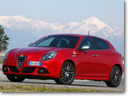
Alfa Romeo might not have much cars to show on the 2012 Geneva Auto Show (they have only two production vehicles at the moment) but they are betting on technology and choice. There will be four Giulietta models and three Mitto cars taking the stand. Some of them will feature the Fiat group 0.9 TwinAir Turbo “International engine of the year 2011”, many will be coupled with the Alfa TCT (double clutched transmission) and will also feature Distinctive and Quadrifoglio Verde trim levels.
Alfa Giulietta
Thanks to the TCT feature, a 1.4 TB MultiAir 170 HP Giulietta has the best efficiency-performance ratio in its category. It is basically a twin clutch automatic gearbox setup which allows downshifting or upshifting with either a gear lever or paddles behind the wheel. On top of that, one can further optimize the Giulietta’s road manners with Alfa’s DNA dynamic selector – a master switch of all the systems in the car. Have it on Dynamic and get ready to cut some apexes with vigor. Normal mode on the other hand provides you with an everyday driving set up and All-weather mode is for rainy or snowy surfaces with poor grip. Despite being capable of reaching 100km/h in 7.7 seconds, the Giulietta TCT MultiAir returns 5.2 l/100km in the combined cycle and emits 121 g/km of CO2
Props also go to another Giulietta TCT which harbors a 170 HP 2.0 JTDM diesel engine. It does the 100km/h sprint in 7.9 seconds but offers even more economy – 4.5 l/100 km and 119 g/km of carbon dioxide emissions. To prove highlight the role of the TCT in these figures, Alfa say that the same car with a manual does 4.7 l/100 km and 125 g/km.
A somewhat less powerful 120 HP Giulietta Distinctive 1.4 Turbo will also be present to restore equilibrium after the fury that will be the fourth Giulietta – 235 HP 1750 TBi Quadrifoglio Verde. That flagship trooper can shred its own tires with 340 Nm of torque as early as 1,900 rpm.
Alfa Romeo Giulietta (QV)
Alfa Mitto
The Mitto niche will be represented by three member – the 0.9 TwinAir Turbo that has only two cylinders yet delivers a maximum of 85 HP at 5,500 rpm and a torque of 145 Nm at 2,000 rpm. Basically this drivetrain, thanks to its cleverness, is capable of producing more torque and be cleaner and less thirstier than any other engine rated with that same power. This little bumble bee also comes with the Alfa DNA system and a Stop & Start function which helps with the urban frugality.
The not-so-conscious about fuel economy can find paradise somewhere else. Why not start with the Mitto Quadrifoglio Verde with Alfa Active Suspension? It is all very complicated underneath – The suspension interacts with the braking system and steering to obtain more effective control of the dynamics of the vehicle or in other words it is a damn good fun this car. Only Alfas capable putting a smile on one’s face go under the Quadrifoglio Verde name. Noticeable differences from a stock model hide in and out. For example the rear-view mirror covers, the headlight and light cluster frames and the handles come with an exclusive satinised chrome material; a new sporty seat with a central part made of Alcantara. Things on the options list include 18” alloy wheels and sporty Sabelt seats with carbon fiber woven backrests.
Under the hood, a 170 HP 1.4 MultiAir Turbo works its magic while we need to remember that this is the light and nimble Mitto we are talking about – 6.7 kg per a single horsepower, 0 to 100 km/h is done in just over 7 seconds.
Last but not least, there will be a Mitto fitted with the same TCT equipment that comes with the Giulietta models. The engine is still 1.4 but with reduced power output and a Stop & Start system – a well rounded mid-range car with some extraordinary technology inside.
Lancia will be bringing a touch of luxury and elegance to the 82nd Geneva Motor Show with six vehicles at their booth. It is a sort of a reincarnation for the company as it has had a glorious history, then a bit of a decline and now it’s back. Highlights deserve the B segment Ypsilon, the flagship Thema, the Voyager MPV and the not yet released Flavia Cabrio.
Lancia Flavia Cabrio
Yes, the Geneva Show will be a debut for the production version of the Flavia Cabrio – For now the setup destined for this convertible is a 175 HP 2.4 l unit mated to a 6-speed automatic transmission. It will be generously equipped with an electronic stability control system, traction control, ABS (naturally), climate control and much much more in the sole trim package offered, baring the name “all inclusive”. At the show, the Flavia Cabrio segment will be represented by two models: one distinguished by a sophisticated Bright White body with interiors in two-tone black/white fine leather and the other characterized by an exterior Mineral Grey paint with black leather interiors.
Lancia Flavia Cabrio (2012)
Lancia Thema AWD
The Thema AWD is basically a Chrysler 300C underneath but is that a bat thing? It has a clever four-wheel drive system and is driven by an aluminum, 286 HP Pentastar V6 3.6 engine. Throw in an 8-speed automatic transmission developed by ZF and you have yourself a perfectly good executive saloon. What image does the Thema radiate? That is pretty much up to the buyer – the car can be customized with several exclusive products, among which are the 18” and 20” rims and three grilles having different colors and treatments.
Lancia Thema AWD (2012)
Lancia Ypsilon
A refreshed 2012 Ypsilon will also be present there – we are talking about new equipment and styling enhancements. The now 5th Ypsilon meets the “Blue&Me–TomTomLIVE” and “Smart fuel” system”. Furthermore it has Magic Parking, a 500 W 360° Hi-Fi Music system, Xenon headlights and LED taillights.
As a car and not a Playstation, the Ypsilon will also feature a range of drivetrains which come with TwinAir technology or MultiJet II and Start & Stop. All very green stuff really.
The Ypsilon presentation will also foresee the arriving of the Black&Red trim level in all European markets. Again, we have a wide range of drivetrains – a 69 HP 1.2 Fire EVO II, a 85 HP 0.9 TwinAir and a 95 HP 1.3 Multijet II turbodiesel engine. The Black&Red is targeted to the younger generation which will be enchanted by the 360° Hi-Fi Music system, 15″ alloy rims and the tinted windows. Body colors are said to be four but they are frankly shades of black and red while inside we have one choice…. black and red.
Lancia Ypsilon
Lancia Voyager
At the show, the Lancia Voyager will get two new trim levels – Silver and Platinum. Two new colors (Cashmere Pearl and True Blue) will also be made available. The Premium one displayed at the boot will boas some Alcantra from the inside and it will harbor a 163 HP 2.8L turbo diesel.
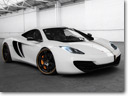
A brave project involving two cars – one iconic and the other a technological masterpiece – has been completed and the results are now exposed to our judgment – Welcome to the WheelsandmoreAMG SLS and the “Toxique Evil” McLaren MP4-12C. Deviations from standardness manifest themselves in engine and exhaust tweaks, custom suspensions, wheels and the lot.
Wheelsandmore McLaren MP4-12C “Toxique Evil”
The McLaren already has a potential nuclear bomb for an engine so why not squeeze it for more juice. So now, the 3.8 liter V8 biturbo has 66 hp more power which makes a total of 666 hp – “diabolical”. That extra boost is achieved trough modifications of the intercooler and the introduction of a Wheelsandmore exhaust system. Despite being handcrafted, that system is complicated and modern with its own remote controlled valves whether for efficiency or just for the fun of it.
A PCC complex electronic hydraulic suspension has the heavy duty to tame that power and lowers the whole car by 25mm. The idea is to minimize body-roll and shed precious seconds off lap times.
Another functioning/styling feature is the complementing set of customized forged wheels with sizes 9.0×20“ and 12,0×21” front and rear respectively. Continental Sport Contact 5P tires are seen as ideal to wrap around the ultralight wheels. Overall a vicious machine worthy of its name.
Wheelsandmore McLaren MP4-12C (2012)
Wheelsandmore Mercedes SLS AMG “Silverstar”
Probably a pun from the legendary Silver Arrow from the 50s. Power in the SLS, already a masterpiece of a car, is amplified by some engine management tweaking and a stainless steel exhaustsystem with remote-able valve flaps. We are talking about a power surge from (420kw) 571 hp / 650 nm up to (467kw) 635 hp / 710 nm.
Custom suspension is paired with a 6Sporz² wheelset consisting of handcrafted, 3-piece forged rims sizing 9,5×20 and 11,0×21 inches and ultra high performance 265/30/20 and 295/25/21 Continental Sport Contact tires.
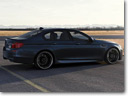
The latest M5 (F10) may be a downsized successor of its previous generation but it still packs a punch, and that is an understatement. It is actually more powerful with less cylinders and less drama. The people from G-Power respect that but, because tuning is what they do, they have added more power to the M performance monster.
What they have done to the “standard” 4.4l V8 engine is to replace the turbo with an ASA supercharging turbine and tune the engine management system in a way so that the power is now up to 640 hp instead of 560 hp and torque has gone from 680Nm to 777. That setup is not malignant in any way to the engine, say G-Power. That translates into a time of 3.9 seconds for the 100 km/h sprint. For 11,9 the BMW will get to 200 km/h.
Further improvements focus on the acoustics – a G-Power sports rear muffler with 4 x 100 mm tailpipes gives the BMW M5 a deep, throaty sound partly due to the “DEEPTONE” technology patented by the company.
G-Power BMW M5 (2012)
The whole car sits on four 21 inch G-Power Silverstone RS forged wheels, wrapped in Michelin tires. The rear tires are wide enough land a plane on them – 305/25 ZR 21. The front pair is equally impressive with a sizes of 265/30 ZR 21. A big plus for the wheels is the light alloy from which they are made that does not compromise stability. Add that to a highly adjustable G-Power coil-over suspension GM5-RS with numerous settings and you get the perfect street/road car. The thing is, even as a standard car, the M is bound to fade its own brakes overtime. That is why, as a roundup, we have a G-Power Braking System complete with 396 mm brake discs, six-piston calipers. Heat is dissipated more efficiently and the stopping force is stronger than usual because of the larger pads and metal-coated brake lines. And because the system is mainly ceramic, it also saves weight. (up to 50% percent lighter than the standard braking kit)
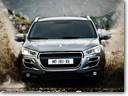
Responding to customer interest, Peugeot have came up with this – The 4008 4×4 SUV. A world debut is set for the 2012 Geneva Motor Show and then in April, it will be launched outside of Europe as a C segment all-terrain vehicle to meed the needs of many who are looking for just that (for the last four years, C and D segment SUV demand has doubled in Russia and tripled in Europe).
The 4008 has been designed by Peugeot in collaboration with Mitsubishi and looking at that distinctive front face and specifically the headlights, one can tell. Other eye-catching features include the LED daytime running lights that sit just under the hood and the three red claw sculptured lamps. The platform of the 4008 is partly a derivative of the 4007 one but the former stands 30 cm shorter in length because of compromised overhangs. Otherwise the wheelbase is exactly the same length, preserving the 4008 accommodating and practical – 4.34 m long, 1.80 m wide with a height of 1.63 m Off-roadishness is emphasized by the body sill protectors and the flaring wheel arch protective trimmings. There’s a stylish slash on the sides that goes across both doors and reaches out for the rear wing. It would not be of much use in a marsh pit but it does look stunning as a styling feature.
Peugeot 4008 (2012)
Whiled chromed body parts here and there account for that extra touch of luxury, inside things get even more premium – a fine choice of materials can be seen at the soft texture fascia, the instrument panel visor and the lacquered black decoration of the centre console. There’s a panoramic roof providing adequate sunlight for the occupants and an overall roomy feel. The steering wheel is padded with leather and is festooned with multimedia controls for the sake of accessibility. That said, there is an instrument panel, back-lit day and night. The knobs are round and chunky so that they can be operated even with a glove on. A 7-inch touchscreen satellite navigation is available as an option which has 30gigabytes of memory and can be used as an overall infotainment system rendering graphs of average speed, fuel consumption and vehicle condition.
Peugeot 4008 (2012)
Engine choice is relatively wide with two petrol and two diesels in stock
Petrol:
– 1.6 l 86 kW (115 hp) 152 Nm, 5-speed manual;
– 2.0 l 113 kW (150 hp) 198 Nm, 5-speed manual or CVT.
HDi Diesel:
– 1.6 l HDi PEF 84 kW (115 hp) 270/280 Nm with Overboost, 6-speed manual;
The two HDi drive trains, as well as the 1.6 petrol will be available with Stop & Start systems in the name of frugality. With the manual gearbox we also get a shift indicator so that we know when is the best time to change gear. In return, the 4008 1.6 HDi for example spews out only 119 g/km of CO2 in 4×2 mode and ten more grams in 4×4. Fuel economy figures start from 4.6 l/100 km on the Euro cycle.
Power goes trough a clever yet simple 4×4 system that has 3 modes – 2WD, 4WD and Lock. When in 2WD, the drivetrain sets in motion the front wheels, while in 4WD a computer decides where you need most toque and runs all four wheels. Lock sends power to all four wheels with the back wheels being significantly prioritized, to get out of muddy situations.
To sum up, it’s good looking, its practical, it’s functional and efficient – quite a rival for the rest of the C segment competitors. Check out the gallery. It is a real treat.
At MINI, a plan for an ultimate automotive integration is under development. We already have the MINIRoadster, Convertible, MINI E, Coupe, Countryman, Clubman and now a new concept: The MINI Clubvan – Moving out with style. Set to debut on the 2012 Geneva Motor Show, this fun yet professional MINI is targeted at an audience which, up until now, never had any use of the brand.
Simply put, the Clubvan is a Clubman with some more loading space and fewer seats. The cargo area starts at the hind split doors and goes all the way to the sole pair of seats at the front but not before being properly separated with a partition grille. As a whole it is well adopted for a variety of goods because of the completely flat floor and the elasticized straps of the six attachment loops recessed into the load compartment floor. That with the solid aluminum base partition and the mesh above make sure things on board do not move about and cause mayham.
Mini Clubvan Concept
From the outside, one notices that the Clubvan still has the mad 5-door set up – one for the driver, two scissor doors for the passenger (despite being rather redundant here) and two rear hinged doors at the back. The Clubvan Concept leaves an impression the way only a MINI can – it lets people know that it is what it is. However, people do not need to know what hides at the back, hence the rear side windows which are mere body panels, Polycarbonate sections coordinated with the body color. At the same time, the backdoor windows are heavily tinted to keep prying eyes away from the precious cargo. That way, more opportunities for customization open as seen in this instance where on the side panels there is the logo of a local company which does signwriting and can write pretty much anything on the car. That makes the Clubvan ideal for small and medium-sized businesses. Imagine a fleet of zippy, frugal and stylish Clubvans going around doing catering or mail deliveries. Electricians and photographers can also use it as a type of personal transport with enough space for personal equipment. This is the new target audience, MINI has been talking about. It is a vision of streets swarming with MINI cars.
We all know the Mazda MX-5, right? It’s that front-engined, RWD, simple, fun handling roadster that has been around for years. The latest attempt of the Mazda company to refresh it comes in the form of the MX-5 “Venture Edition” with new interior trims and exterior finishes and more technology and luxury equipment.
The new Venture picks up where the SE and Sport Tech MX-5 end. You can either go for the 1.8 MZR Soft-top (SE) or the 2.0MZR Roadster Coupe (Sport Tech). Exclusive highlights from the outside include light gun metal 17-inch alloy wheels, front fog lights and a chrome front grille. But we don’t really have to notice these things to know it is a Venture edition. There are badges for that. Three body colors will be – the popular Metropolitan Grey Mica and two exclusive Radiant Ebony Mica and Crystal White finishes.
Mazda CX-5 Venture Edition (2012)
Inside a leather feast unfolds itself as you enter. The steering wheel, seats and the leather lever are all wrapped in Havana Brown leather. A matching door trim on the side and piano black dashboard accents at the front appease you. Technology includes climate control air-conditioning, cruise control, Dynamic Stability Control, TCS and airbags, lots of them. Also, for the first time ever on an MX-5, a Satellite navigation. And it is not an antique one as well. It has a 5.8-inch touch screen monitor, 4GB SD card based map (45 countries), live services, iPod and Bluetooth® connectivity.
Most importantly it still remains a proper roadster with a perfectly balanced handling and a 1.8 MZR, 126 ps (SE) engine or a 2.0 MZR, 160 ps (Sport Tech) one. Manual transmissions come with either five or six speeds respectively. Going up to 60 mph will take you 9.9 seconds in the 1.8 soft-top, while for that same speed the time mark of the 2.0 Roadster Coupe is 7.9. Fun however, doesn’t come only in a straight line. The Mazda is fitted with a Limited Slip Differential for that extra sideways lunatism.
 Toyota have released some teasers about their latest concept – the FT-Bh which actually means Future Toyota B-segment hybrid. It will be an ultralight supermini, built with clever materials and run by clever technology for the greater good of society.


 The latest Honda Civic has been rated 5 stars in safety by Euro NCAP. The NCAP tests are the comparable to the Oscars when it comes to automotive safety. Not only has the Civic achieved the highest possible score but, people at NCAP also want to highlight the car’s C


 Afzal Kahn has always maintained that combining technical perfection with aesthetic brilliance is his true calling. Recently, in the arsenal of his arguments, he has added yet another example – the Kahn Q7 wide track.


 Maserati plan to make a premiere of their new GranTurismo Sport at the 82nd Geneva Motor Show this year. It will be a replacement for the current GranTurismo S. The thing is, the company wants us to think it’s new but what we actually have here is a restyled interior, a new bumper and a revisited engine.


 The Spanish company GTA Motor hasn’t got much street cars to offer. Yet, it will again take part in the 82nd edition of the Geneva Motor Show with the GTA Spano. This time, they say that the car is production ready and will be availble to customers late this year.

 Alfa Romeo might not have much cars to show on the 2012 Geneva Auto Show (they have only two production vehicles at the moment) but they are betting on technology and choice. There will be four Giulietta models and three Mitto cars taking the stand. Some of them will feature the Fiat group 0.9 TwinAir Turbo “International engine of the year 2011”, many will be coupled with the Alfa TCT (double clutched transmission) and will also feature Distinctive and Quadrifoglio Verde trim levels.


 Lancia will be bringing a touch of luxury and elegance to the 82nd Geneva Motor Show with six vehicles at their booth. It is a sort of a reincarnation for the company as it has had a glorious history, then a bit of a decline and now it’s back. Highlights deserve the B segment Ypsilon, the flagship Thema, the Voyager MPV and the not yet released Flavia Cabrio.


 A brave project involving two cars – one iconic and the other a technological masterpiece – has been completed and the results are now exposed to our judgment – Welcome to the Wheelsandmore AMG SLS and the “Toxique Evil” McLaren MP4-12C. Deviations from standardness manifest themselves in engine and exhaust tweaks, custom suspensions, wheels and the lot.


 The latest M5 (F10) may be a downsized successor of its previous generation but it still packs a punch, and that is an understatement. It is actually more powerful with less cylinders and less drama. The people from G-Power respect that but, because tuning is what they do, they have added more power to the M performance monster.

 Responding to custome


 At MINI, a plan for an ultimate automotive integration is under development. We already have the MINI Roadster, Convertible, MINI E, Coupe, Countryman, Clubman and now a new concept: The MINI Clubvan – Moving out with style. Set to debut on the 2012 Geneva Motor Show, this fun yet professional MINI is targeted at an audience which, up until now, never had any use of the brand.


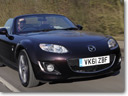 We all know the Mazda MX-5, right? It’s that front-engined, RWD, simple, fun handling roadster that has been around for years. The latest attempt of the Mazda company to refresh it comes in the form of the MX-5 “Venture Edition” with new interior trims and exterior finishes and more technology and luxury equipment.


