Morgan company is a frequent participant at the Geneva Motor Show. They see it as an important venue for debuts of production cars or flamboyant concepts. For this year, the 2012 Geneva Show is the company’s first major event. They have a wide arrangement of classic looking, boldly designed modern machines on display. Some of the newcomers include the Aero Coupe, Plus 8, the new 3.7l Roadster and the fully electric Plus E.
Two, well known, production Morgan 3 Wheelers and a 75th anniversary 4/4 edition are also present. As a whole Morgan have three main platforms on which they can work on: There’s the Classic Morgan, the 3 Wheeler and the Aero range. All of them encapsulate a radiance of pure motoring history.
Which car on the colorful stand causes most stir is debatable. Some feel overly excited about the 3 Wheelers being on display while others find the aluminum-chassied, V8 Plus 8, most awe inspiring. The dramatic Aero Coupe is also a looker while the all-electric Plus E concept seems to be getting much media attention.
The show continues until the 18th march with a team of Morgan designers, directors, engineers and salespeople present at all times to answer any questions visitors may have.
Avoiding minor city incidents and bumps one Ford B-Max at a time. It’s a collision prevention system first in a compact Ford vehicle. Whether you are trailing behind someone in traffic while being rather absent minded or you are about to have an unavoidable crash, the company’s Active City Stop will be there for you to help out.
Each year more than half-a-million people are injured in car crashes in cities in the UK, France, Germany, Italy and Spain alone. Supposedly, the Active City Stop can be useful in one out of eight of these incidents thus reducing the number significantly.
“Low speed front to rear end collisions are one of the most common accidents in urban traffic,” said Roland Schaefer, safety analyst, Ford of Europe. “They can happen at traffic lights, intersections, roundabouts and other stop-start driving situations. You don’t have to be travelling fast to get injured. Even at speeds of just 15 km/h you can suffer soft tissue neck injury.”
We saw the system first last year in the Ford Focus. It constantly scans the road ahead for obstacles and decides whether or not to apply the breaks when needed. The B-Max can go from 15 km/h to a full stop on its own. At the same time, collisions happening within the 30 km/h range will be greatly relieved.
The subcompact MPV is also equipped with Ford’s Hill Launch Assist that prevents you from rolling back upon departure up a slope. A rear view camera and an overall compact structure with a great turning circle make it easy for parking as well. So, car for novice drivers or is that the future? According to Joerg Beyer, Ford Vehicle Line Director, this is the 21 century way.
“Features such as Active City Stop are new to this sector. These technologies, coupled with “B-Max‘s compact chassis, and tight turning circle supported by carefully tuned electronic power-assisted steering, enable B-Max to be far greater prepared for the demands of even the most congested city.” he comments.
Here’s a Pagani Huayra. Beautiful isn’t it? However, when it goes on sale in 2013, prices will start from $1,150,000. I think “Huayra” is the sound one makes upon signing a deal. This is roughly the price of four Lamborghini Aventadors. What are Pagani‘s arguments on that? Yes, it has an AMG V12, 6.0-liter engine that develops above 700 hp and 1000Nm of torque, it’s clever enough to operate, by itself, a set of flaps that can either reduce drag or increase downforce and it will most probably do 230 mph when pressed. But, because it is such an engineering perfection, it will be horrible to live with – Imagine this: You get in it, start the ignition and an oil well in Sahara evaporates. Whenever you see a speed hump, you’ll have to spend precious time in looking for an alternative route and how are you going to take the children to school in it? A BMW M5 suddenly seems much more “sensible” and fit for the job.
So in an attempt to justify the Huayra‘s cosmic price, Pagani have released a documentary about the process of building one. It’s rather good and it accents on the fact that the people making it are painfully striving towards attention to detail perfection. The rear emblem starts as a block of aluminum which is due to undergo a 24h carving procedure. The design process of the whole car took 5 years of research and inspiration (partly drawn from Leonardo da Vinci, obviously).
Set aside 15 minutes to watch the clip and afterward, you’ll close the browser with a sense of awe. You still might not get convinced to sell your house, sell your other house and the yacht in order to order one, but you’ll leave home knowing something about a great car, from a great car manufacturer. And that is always useful in the pub.
Here is a Porsche Cayenne II. It has been around for 2 years now and has proven to be a very decent SUV. It’s 180 kg lighter than the first one, the front of it goes easy on the grilles and the headlights plus the interior design have some Panamera in them. So why are we even talking about it? Well, if you have an eye for that kind of things, the wheels are kind of custom and the ride is lowered.
Bad Segeberg based Schmidt Revolution house have fitted on this Cayenne four 10×22-inch one-piece five spoke summer rims. Its a set from their CC-Line. At the front, the tires size up to 295/30R22 while at the back they measure 335/25R22. They can be finished in silver, black (glossy or matte) and in exquisite black chrome. The last variant has a cover, made from a stainless steel, which doesn’t allow any dirt sticking on it. Also, because of an H&R-suspension lowering module, the Cayenne now sits lower than usual. As a result, the center of gravity is lower and drag is now a bit lower.
Otherwise, things remain pretty standard – with a base model, under the hood you should find a 3.6 L V6 engine that produces 300 PS. The power goes trough a 6-speed manual to all four wheels. Just think of it as a second generationVW Touareg and you”ll get the picture.
The Mercedes SL. “Open top” immediately springs to mind. We tend to think of cabriolets as slow, wobbly and impracticable – a direct contradiction to what SL stands for. “Super Leicht“ or “Super Light” is the exact way where Mercedes are going with the new SL in town. Its more powerful, more economical, lighter and smarter.
The body is almost entirely made up of aluminum. The A pillars have some heavy duty steel in them but that’s understandable. The cover behind the fuel tank is from magnesium which is even lighter than aluminum. Compared to it’s predecessor, the new, longer and wider SL 350 weighs 140 kg less. That means more agility, better handling, better delivery of power and better economy. Most importantly, that diet does not compromise on rigidity, safety and comfort.
The all-new suspension set, which also has some bits and pieces in aluminum, is supposed to be comfortable yet up for occasional thrashing around the bends. Semi-adjusting damping control comes as standard but those who want even more flexibility can opt for the active suspension system ABC (Active Body Control). Either way, you are going to get some great feedback from the steering wheel as it uses an electromechanical Direct-Steer system which adjusts the firmness of the power steer in accordance with the current speed.
Mercedes-Benz SL (2013)
For power, the SL 500 uses a 4663 cc V8 that is 0.8 liters smaller than the one in the fifth generation SL. Despite that, it develops 435 hp – 12 percent more power. It’s more economical as well. 22 percent more economical to be exact. In the mean time torque now, is not 530Nm but the staggering 700Nm. The engine in the SL 350 is still a 3499 cc V6 but it too is more powerful than before. 306 hp and 370Nm of torque drink up only 6.8 litres of fuel per 100km – 30 percent less than before. All those percentages seem overblown but when we inspect the tech under the bonnet, all seems plausible. The engines are from a line called BlueDIRECT and as we all know, blue is the new green. ECO start/stop systems come strictly with both engines. The 7G-TRONIC PLUS automatic transmission that crunches all that power is fully optimized with comfort and frugality in mind. That however, does not mean, in any way, power compromising: The SL 350 accelerates from 0 to 100 km/h in 5.9 seconds, making it three tenths of a second faster than its predecessor. The SL 500 takes just 4.6 seconds – eight tenths less than the previous SL 500.
The options list is admirably lengthy. Among the many extras, there’s this Magic Vision Control and Magic Sky Control. One makes your wipers sprinkle water and the other is basically a panoramic vario-roof that can go from opaque to transparent with the push of a button. Pretty neat stuff but people wont be piling up to see you in the car. They’ll want to see the car itself because its too damn pretty.
M cars are not the only prime candidates for first-class tuning. Take the BMW 328i for example. It’s pretty neat, powerful, compact and nimble. It only takes a company like AC Schnitzer to turn it into a desirable performance machine.
The engine receives an extra control unit that amps the power from 245hp to 295hp. The maximum torque is now 410Nm. Top speed is still limited to 250 km/h but zero to one hundred happens in 5.7 seconds – .2 of a second less.
The suspension has been lowered thanks to a spring kit provided by Schnitzer and the choice of wheels is mind boggling: AC Schnitzer wheels Type IV BiColor and silver, Type VI and Type VIII in 18 , 19 and 20-inch sizes. The Type VIII are also available in BiColor – lacquered silver with bright turned aluminium accents.
Additional aerodynamic features include the AC Schnitzer front spoiler, rear roof spoiler, rear spoiler and rear skirt extension. From the latter, 2 pairs of chromy twin tailpipes stick out, giving away the AC Schnitzer sports rear silencer.
The interior of the car serves as a showcase of AC Schnitzer‘s“Black Line” aluminum themes – that includes the “i-Drive” system controller and the handbrake handle. Pedal set is aluminum as well and so is the foot rest. The floor mats are in velours.
You can go and see it right now at the Geneva Motor Show but if you want to get one, that’s going to have to happen latter this year. In the summer perhaps.
Full specs bellow.
AC Schnitzer BMW 328i
Basic car:
BMW 328i (F30)
Engine:
AC Schnitzer performance upgrade –
Performance: 217kW/295hp (standard: 180kW/245hp)
at 5800rpm (standard: 5000-6500rpm)
Maximum torque: 410Nm (standard: 350Nm)
at 2000-3000rpm (standard: 1250-4800)
Maximum speed (km/h) 250 – electronically limited
0 – 100 km/h: 5,7 seconds (standard: 5,9 seconds)
AC Schnitzer engine optics
Exhaust:
AC Schnitzer sports rear silencer with
2 chromed “Racing” tailtrims in
right / left combination
Suspension:
AC Schnitzer spring kit, lowering approx. 25 mm
Aerodynamics:
AC Schnitzer front spoiler
AC Schnitzer front grille, chromed
AC Schnitzer rear roof spoiler
AC Schnitzer rear spoiler
AC Schnitzer rear skirt
AC Schnitzer decals
Interior:
AC Schnitzer aluminium cover, “Black Line”
for BMW “i-Drive“ system controller
AC Schnitzer aluminium handbrake handle, “Black Line”
AC Schnitzer gear knob with digital shift display
AC Schnitzer leather gear knob, illuminated
AC Schnitzer aluminium gear knob “Black Line”
AC Schnitzer aluminium pedals
AC Schnitzer foot rest
AC Schnitzer floor mats, velours
Wheel/Tyre sets:
AC Schnitzer Wheel/Tyre Set with Type VIII Wheels BiColor Silver
front: 8,5 x 18″ with tyres 225/45 R 18
rear: 8,5 x 18″ with tyres 225/45 R 18
front: 8,5 x 19″ with tyres 225/40 R 19
rear: 8,5 x 19″ with tyres 255/35 R 19
front: 8,5 x 20″ with tyres 225/35 R 20
rear: 8,5 x 20″ with tyres 255/30 R 20
AC Schnitzer Wheel/Tyre Set with Type IV Wheels BiColor
front: 8,5 x 18″ with tyres 225/45 R 18
rear: 8,5 x 18″ with tyres 225/45 R 18
front: 8,5 x 19″ with tyres 225/40 R 19
rear: 8,5 x 19″ with tyres 255/35 R 19
AC Schnitzer Wheel/Tyre Set with Type IV Wheels Silver
front: 8,5 x 18″ with tyres 225/45 R 18
rear: 8,5 x 18″ with tyres 225/45 R 18
front: 8,5 x 19″ with tyres 225/40 R 19
rear: 8,5 x 19″ with tyres 255/35 R 19
AC Schnitzer Wheel/Tyre Set with Type VIII Wheels BiColor
front: 8,5 x 19″ with tyres 225/40 R 19
rear: 8,5 x 19″ with tyres 255/35 R 19
AC Schnitzer Wheel/Tyre Set with Type VI Wheels BiColor
When the latest BMW M5 came out, it was the definition of balance between mad performance and everyday sedan practicality. Now the Aachen-based AC Schnitzer want to tip the scales in faveor of more power, more sportiness and more flamboyancy. It’s the ACS5 Sport Saloon.
To start off, they added an additional control unit on the engine that boosts the power to620hp. The engine’s torque output is also increased to 790Nm. Zero to sixty now takes 4.1 seconds. An AC Schnitzer twin sports silencer with valve control provides the sound to match the grunt. Chromed “Sports Trim“ tailpipes enclose the Schnitzer carbon rear diffuser.
That brings us to aerodynamics. The diffuser plus the carbon front spoiler, rear roof spoiler and rear spoiler provide necessary down force which is there to tame the fresh power. In the mean time, a chromed front grille, “Magic Blue“ and silver livery, AC Schnitzer badges for the side and anAC Schnitzer logo “ACS5 Sport“ visually complete the aerodynamic power pack.
The suspension has been slightly tweaked as a new AC spring kit replaces the standard one. There is also a generous choice of wheels. 20-inch Type V forged alloy wheels orType IV BiColor rims in the same size. The third option involves a set of bigger, 21-inchType VIII racing and forged alloy rims.
“Magic Blue“ is the prevailing theme inside. A “Black Line“ aluminum cover for the “i-Drive” system controller and aluminum pedals add some contrast. The footrest also matches the pedals while the floor mats are in velours.
So if you ever want more from your BMW M5, AC Schnitzer is the company for you.
Full specs bellow
AC Schnitzer BMW M5
Basic car:
BMW M5 (F10)
Engine:
AC Schnitzer performance upgrade –
Performance: 456kW/620hp(standard: 412kW/560hp)
at 6300rpm(standard: 6000-7000rpm)
Maximum torque: 790Nm (standard: 680Nm)
at 3000 rpm (standard: 1500-5750rpm)
Maximum speed: 305 – electronically limited
0 – 100 km/h: 4,1 seconds (standard: 4,3 seconds)
AC Schnitzer engine optics
AC Schnitzer engine compartment optics
Exhaust:
AC Schnitzer twin sports rear silencer with
valve control and chromed “Sports Trim” tailtrims
Suspension:
AC Schnitzer spring kit, lowering approx. 25 mm
Aerodynamics:
AC Schnitzer carbon front spoiler
AC Schnitzer front grille, chromed
AC Schnitzer vitro emblems for side walls
AC Schnitzer rear roof spoiler
AC Schnitzer rear spoiler
AC Schnitzer carbon rear diffuser
AC Schnitzer emblem “ACS5 Sport”, side right/ left
Vehicle wrap BiColor “Magic Blue” – Silver
Interior:
AC Schnitzer aluminium cover, “Black Line”
for BMW “i-Drive“ system controller
AC Schnitzer aluminium pedals
AC Schnitzer foot rest
AC Schnitzer floor mats, velours
Interieur panels and steering wheel insert wrapped in “Magic Blue”
Gemballa do not think that the latest Porsche 991 Carrera needs a performance boost. After all, it has a 340hp 3.4 liter flat six power plant that provides an electric enough feel. And if there is anything that can get close to the mighty GT3, it’s the Carrera S version that has a 3.8 liter, 400hp engine. What I’m trying to say is that the latest “designpackage” from Gemballa for the Carrera is strictly visual. At this point we have a few aerodynamic features, new wheels and a sonorous arrangement (exhaust pipes).
Gemballa CEO, Andreas Schwarz, explains: “Creating an even more individual appearance for this iconic sports car is a natural step for Gemballa, and we are proud to present our GT package for the new Carrera.”
The body kit consists of “made in Germany” type carbon fitments – a front bumper, a rear one and some side skirts. Everything is designed to fit perfectly to the standard mounting points of the car. Installing them requires no cutting or grinding so the return to stock components is quite feasible.
Gemballa have also provided four 21-inch wheels that are just a little bit lighter than the standard 19-inch ones on the Carrera and quite a lot lighter than the 20-inch set on the Carrera S.
“Lowering the unsprung weight despite going up a wheel size was a priority,” said Schwarz.
Eventually, we reach a point where we have to talk about pipes. About all six of them. The Gemballa exhaust system helps the engine with the breathing and the singing.
Unlike recent teasers, here we can actually see a car. An SUV to be more precise. It’s the all-new Hyundai Santa Fe, codenamed DM in Korea. Expect a debut at this year’s New York International Auto Show early in April.
This will be the third Santa Fe from Hyundai‘s. Ever since production began in the year 2000, the company has shipped around 2.56 million units (Korea: 680,000 / overseas: 1.95 million). Hopes are high that the latest model will keep the trend going.
The design path taken for the Santa Fe has its own name – “Storm Edge”. It’s still incorporates typical Hyundai fluidic patterns but now with more sophisticated and refined lines that accent the otherwise bold and voluminous surfaces. The end result amounts to a more aggressive stance common for many SUVs.
Some highlights for now: a hexagonal grille, a two-tone bulky body bottom and wider front and rear bumpers.
This should be taken as a sample of the future plans of Hyundai when it comes to designing SUVs. The core values here are said to be “Refinement,” ”Smartness” and “Practicality”.
Hyundai Santa Fe (3rd generation)Hyundai Satna Fe (3rd generation)
Apparently, upon the release of the McLaren MP4-12C back in 2011, there had been an outcry of discontent about its looks from the public. Visually, it hadn’t been able to live up to its power and performance they say. Deemed too bland and “evoraesque”? Well to those who feel under the weather when looking at a standard MP4-12C, there is a solution – It’s the memoR by Hamann which is currently making its debut within the halls of the 82nd Geneva Motor Show.
Roughly speaking, the memoR is a stylistically buffed MP4-12C. No performance upgrades, no chassis fiddling and no 20 or something inch tv’s inside. It’s simply with added “uniqueness” now, according to Hamann.
The main inspiration for the restyle was drawn from the 1995 LeMans winner, the McLaren F1 GTR. Obviously, they didn’t manage to put the driver’s seat back at the center of the cabin but were nevertheless on to something. Four ideas were tossed around when the people at Hamann got to work.
1 Reduce the concave surfaces.
2 Integrate the defining F1 bits and pieces.
3 Add some GT3 elements as well.
4 Create an exciting contrast shade.
By “concave surfaces”, Hamann mean the border of the front air intakes, the cross section of the hood, the rear side panel and the sill area. All of them have been removed. Now we have a large front splitter, an air scoop at the roof, deep drawn door sills a rear wing and a diffuser. Three centered tailpipes finish the look… and the massive wheel arches with the wheels underneath. They too finish it off. Hopefully now nobody will complain about it. All points have been covered.
Vorsteiner is a company that spends a great deal of time focusing on designing wheels. And they are not looking bad at all. From time to time however, they tend to issue full-blown tuning programs complete with aerodynamic sets, wheels naturally and exhaust systems. Their latest one is called the V-MS Program and in order to eligible for it, you must posses a BMW 5 (F10) series that has the factory M Tech aero package.
The Vorsteiner provided aero bits are all from the company’s pre-peg carbon fiber line. That includes a specially designed front spoiler, a subtle trunk lid spoiler and a high-temperature resistant diffuser between the VorsteinerF10 Sports Exhaust pipes. They on the other hand, offer a tiny power boost (+12hp and 2lb/ft of torque according to their dyno test) and also, they can sing pretty well, Formula 1 style. Rounding up the look, are the four 20 and 21-inch custom made forged wheels on which the car sits. They have been specifically made for the F10 with their 5-spoke star design matte black feel. Another thing finished (or not-finished) in matte black is the bodywork itself. I have to admit that, combined with the visible carbon aerodynamic elements, all looks astonishingly well. The only problem I have with this car are the taillights. They look like those “Shutter Shade” glasses people wear to look like Kanye West. If you are going to go subtle, go subtle – tint them or leave them as they are.
That gorgeous looking thing, adorning the halls of the Geneva Motor Show hides an Alfa Romeo 8C Competizione engine inside. It even has an 8C chassis. And despite that it has all the necessary looks to be an Alfa, it isn’t. Say hello to the Carrozzeria Touring Disco Volante 2012 – a tribute to the 1900 C52 Alfa Romeo concept from the fifties. It too was made with the help of the same company and now it’s back in a different form. Carrozzeria Touring was (and still is) all about lightness and agility – “supperleggera”. The C52 had a spectacular tubular chassis, an aluminum crankcase and bits and pieces from the Alfa 1900 C. It was a car that set a new benchmark in aerodynamics. It was a pretty car, a flying saucer.
The 2012 Disco Volante bares all that DNA. A whole-piece hood veils the wheel wells. It still has the overall slippery teardrop shape and a silver waistline that would make any maxi model green with envy. You get the sense that it has been thoroughly contemplated and discussed on paper before being commissioned. Creating one of these 2012 saucers requires 4000 hours of labor. The aluminum panels on it are hand-beaten as a part of a company tradition. Many details and components are also hand-built making the car extremely exclusive. Just a few will be made and given to those who need it most – collectors, sporting drivers and design aficionados.
Touring Disco Volante 2012
Of course, underneath it is essentially an Alfa 8C which means that the double wishbone suspension keeps the Disco Volante (the flying saucer) fairly planted on the road. It also means that when you peal away that monoblock hood you’ll see a 4.7 V8 that sends 450 PS and 470 Nm of torque through a 6-speed paddle shift gearbox and a limited slip differential. Luckily the brakes are also from the current century and do a pretty good job stopping the perfectly weight distributed Disco Volante 2012.
Let’s just hope you are ready to empty your pockets superleggera style if you want it. The Alfa 8C is expensive enough. Adding a fur coat on the bill, won’t come lightly. But what a car it is!
 Morgan company is a frequent participant at the Geneva Motor Show. They see it as an important venue for debuts of production cars or flamboyant concepts. For this year, the 2012 Geneva Show is the company’s first major event. They have a wide arrangement of classic looking, boldly designed modern machines on display. Some of the newcomers include the Aero Coupe, Plus 8, the new 3.7l Roadster and the fully electric Plus E.


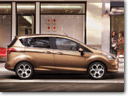 Avoiding minor city incidents and bumps one Ford B-Max at a time. It’s a collision prevention system first in a


 Here’s a Pagani


 Here is a Porsche Cayenne II. It has been around for 2 years now and has proven to be a very decent SUV. It’s 180 kg lighter than the first one, the front of it goes easy on the grilles and the headlights plus the interior design have some Panamera in them. So why are we even talking about it? Well, if you have an eye for that kind of things, the wheels are kind of custom and the ride is lowered.


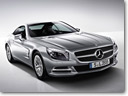 The Mercedes SL. “Open top” immediately springs to mind. We tend to think of cabriolets as slow, wobbly and impracticable – a direct contradiction to what SL stands for. “


 M cars are not the only prime candidates for first-class tuning. Take the BMW 328i for example. It’s pretty neat, powerful, compact and nimble. It only takes a company like AC Schnitzer to turn it into a desirable performance machine.


 Gemballa do not think that the latest Porsche 991 Carrera needs a performance boost. After all, it has a 340hp 3.4 liter flat six power plant that provides an electric enough feel. And if there is anything that can get close to the mighty GT3, it’s the Carrera S version that has a 3.8 liter, 400hp engine. What I’m trying to say is that the latest “designpackage” from Gemballa for the Carrera is strictly visual. At this point we have a few aerodynamic features, new wheels and a sonorous arrangement (exhaust pipes).


 Unlike recent teasers, here we can actually see a car. An SUV to be more precise. It’s the all-new Hyundai Santa Fe, codenamed DM in Korea. Expect a debut at this year’s New York International Auto Show early in April.


 Apparently, upon the release of the McLaren MP4-12C back in 2011, there had been an outcry of discontent about its looks from the public. Visually, it hadn’t been able to live up to its power and performance they say. Deemed too bland and “evoraesque”? Well to those who feel under the weather when looking at a standard MP4-12C, there is a solution – It’s the memoR by Hamann which is currently making its debut within the halls of the 82nd Geneva Motor Show.


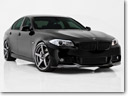 Vorsteiner is a company that spends a great deal of time focusing on designing wheels. And they are not looking bad at all. From time to time however, they tend to issue full-blown tuning programs complete with aerodynamic sets, wheels naturally and exhaust systems. Their latest one is called the V-MS Program and in order to eligible for it, you must posses a BMW 5 (F10) series that has the factory M Tech aero package.


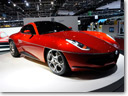 That gorgeous looking thing, adorning the halls of the Geneva Motor Show hides an Alfa Romeo 8C Competizione engine inside. It even has an 8C chassis. And despite that it has all the necessary looks to be an Alfa, it isn’t. Say hello to the Carrozzeria Touring Disco Volante 2012 – a tribute to the 1900 C52 Alfa Romeo concept from the fifties. It too was made with the help of the same company and now it’s back in a different form. Carrozzeria Touring was (and still is) all about lightness and agility – “supperleggera”. The C52 had a spectacular tubular chassis, an aluminum crankcase and bits and pieces from the Alfa 1900 C. It was a car that set a new benchmark in aerodynamics. It was a pretty car, a flying saucer.


