Author: Tsvetan Varbanov

  • Jaguar F-TYPE Coupe Revealed

    Jaguar-F-TYPE-R-shadowJaguar-F-TYPE-R-medium

    The Jaguar F-TYPE Coupé is officially here. Styled after the magnificent C-X16 concept, this Porsche destroyer comes in three forms – the F-TYPE, F-TYPE S and the F-TYPE R. It is supposedly now Jaguar’s “most dynamically capable, performance focus production car ever”. So it should be good, right?

    Let’s gloss over the two that will be using the company’s 3.0-liter ssupercharged V6 engine – the F-TYPE Coupé and the F-TYPE S Coupé. The former sports 335 hp while the latter enjoys 40 hp more. Both have pretty decent 0 to 60 mph times with 5.1 and 4.8 seconds respectively. Top speeds: 161 and 171 mph. While the Basic F-TYPE does get the Dynamic Mode feature, sports exhaust, sports suspension and Jaguar’s Performance Braking system (354/325mm discs front/rear); the S Coupé adds to that a Dynamic Launch feature, an Adaptive Dynamics system and even bigger braaks with red calipers so that you know they are bigger just in case you didn’t bring a tape measure. The S Coupé is also available with the optional Super Performance pack and CCM braking system but about that later.

    Right!. The Jaguar F-TYPE R Coupé then. It has the same 5.0-litre supercharged V8 as its soft-top brother, but this one shows to the party with 542 hp – that’s 54 hp more in comparison. As a result the F-TYPE R is able to dart from 0 to 60 in just 4.0 seconds. The top speed is electronically limited to 186 mph.

    Just like in the S Coupé, the Adaptive Dynamics system actively controls the body’s vertical movement roll and pitch rates. Should it need to, this software can make up to 500 adjustments per second all in the name of keeping you firmly planted on the road. The spring rate values for the R Coupé have also been increased by 4.3% at the front and 3.7% at the rear as compared to F-TYPE V8 S Convertible. The Dynamic mode (present in all three models) firms up the suspension, hardens the steering wheel for better feedback, increases the throttle response, and sharpens the gear changes.

    The rear wheels are governed by Jaguar’s Electronic Active Differential (EAD) which carefully distributes variable amounts of torque to each of the two wheels. Main point being – more traction even in the most dangerous of stunts one can pull off. Then there’s the Torque Vectoring by braking system. Imagine a tank blocking one of its treads and thus performing a turn. Well, the Jaguar does exactly that with its Torque Vectoring by breaking but much, much more subtly. There is a multitude of sensors all-around the chassis which detect where and how much braking force you need in order to prevent understeering and from then on it’s the ABS’s job to execute the procedure without you even noticing it. Clever stuff! Oh, on the less delicate side, the F-TYPE R gets the biggest brakes of all – 380mm front and 376mm rear discs with either red or black calipers. Over them you can relish at the sight of the 20-inch “Gyrodyne” wheels in silver finish as standard.

    Inside, The F-TYPE R is mostly driver-oriented. The seats have inflatable side-bolstering and prominent wings for support during high-speed cornering. But don’t worry as they also add a touch of chic with a leathery surface. A new, full leather and Suedecloth Jet interior (with Cirrus contrast stitch) is also optional on all derivatives. Suedecloth is used on the seat facings, door casings, instrument binnacle pods and headlining – and can also be combined with a Suedecloth steering wheel.

    The CCM (Carbon Ceramic Matrix) Brakes.

    For a little something extra, one can mount a special braking package on the Jaguar F-TYPE S and F-TYPE R. Those come in yellow monoblock callipers so there’s no mistaking them – 398mm in diameter at the front and 380mm at the back. The key thing here, however, is the blend of carbon fiber and ceramic from which the disks are made – almost no fading, very low wear-and-tear and reduced overall weigh (21 kilograms less in fact). It is essentially a package for the track. If you plan on burning some rubber (which, with a car like the F-TYPE, is almost a certainty), this makes for a sensible option.

    Source: Jaguar

  • 12 Months to Toyota FCV Production

    Toyota-FCV-concept-medium

    News from the future. The Toyota FCV (Fuel Cell Vehicle) is almost ready. The production model reveal is only 12 months away. Is this the beginning of the end of the hybrid car? Fingers crossed.

    What’s wrong with hybrids you ask? Well, they are slow, unimaginative, their range never meets the expectations, their batteries are dependent on the weather, they take days to recharge, and, believe it or not, they are still sort of bad for the environment.

    Hydrogen, on the other hand, is the most abundant chemical element in the universe and using it as fuel produces zero emissions. In order to make electricity, fuel-cells acquire oxygen from the environment and add hydrogen to make a chemical reaction which releases energy and a waste product known as water. Toyota engineers are adamant that you could go for about 500 miles on a single tank of hydrogen. Technically, on two tanks – the Toyota FCV actually has two 70 MegaPascal each. We don’t know why that’s relevant. There are no other certain figures, however, except an estimated system output of at least 100kW. Oh, and there’s the price – $108,00. Too much for a Camry you think? Would you consider plugging it in your electrical grid at home then? Because you can and a single charge can satisfy your needs for about a week. Also, it looks pretty amazing. We are especially fond of these LED indicators hidden within the fenders. It’s supposed to gave a “flowing liquid” door profile and a wave-motif fuel cap while the back end draws inspiration from the stem of a catamaran. Right.

    Toyota are anticipating the widespread use of hydrogen fuels for cars to be common sometime in the 2020s. Because of the FCV, Toyota see themselves as pioneers, and while no one can take that away from them, we can’t neglect Honda’s audacious attempts to mull in the Honda Clarity. In any case, Toyota seems to be pretty serious about the technology. They are already developing fuel-cell buses, forklifts and other industrial vehicles. Greener days are to come if this trend keeps up.

    Source: Toyota

  • 2015 Nissan GT-R Recieves Minor Updates

    2015-Nissan-GT-R-shadow2015-Nissan-GT-R-medium

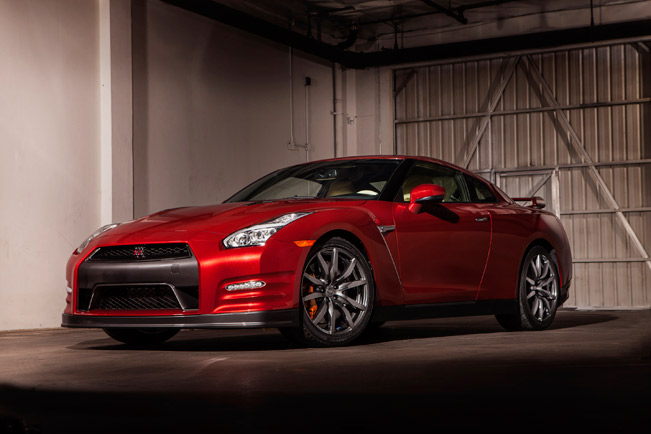
    We are having a Nissan GT-R hat trick today (1 and 2) with this latest release from the Japanese company: the MY 2015 Nissan GT-R – now with an updated “ride comfort, more refinement and benchmark fit and finish.”

    The suspension has been fine-tuned to reduce load fluctuation between the four wheels, thus increasing grip and stability. The electronic control of the shock-absorber valves has also been optimized to keep the wheels more consistently on the ground. The front stabilizer spring rates and bush links have also been modified. It’s not all in the name of performance though – the ride, Nissan say, is also relaxing and comfortable. The standard tires that will go along with the model are now Dunlop SP Sport Maxx GT 600 DSST CTT, measuring at 255/40ZRF20 at the front and 285/35ZRF20 at the back.

    Visual touches on the outside are also present. Take the color for example. This is called Gold Flake Red Pearl and it has tiny specks of gold…tinted glass inside it. Much light has been shed on, well, the lights – efficient, high-intensity, multi-LED headlights. The clever bit about them is that they incorporate Nissan’s AFS (Adaptive Front lightning System) – the angle of the light beam automatically adjusts in accordance to the speed of the vehicle. The rear lights also, erm, form coherent circles of illumination. What was the illumination beforehand?

    Inside, one has the option to go with three color schemes which include a completely new one with pale ivory shades. The steering wheel sports some leather, while the seats are part-aniline leather and are embellished with stitched accents in tradition with the whole of the GT family.

    Here’s a tasteful clip of the GT history so far:

    httpv://www.youtube.com/watch?v=JpBH7zeUwQw

    Source: Nissan

  • 2013 Nissan GT-R Nismo GT3 Series for Sale

    Nissan-GT-R-Nismo-GT3-shadowNissan-GT-R-Nismo-GT3-medium

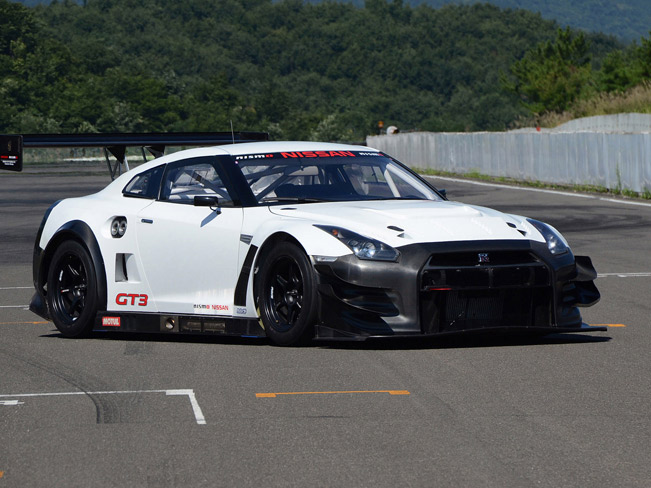
    If you saw  today’s news about the Nissan Nismo GT-R and thought: “Yes, but does it conform to FIA GT3 regulations?” Well, sorry but it doesn’t. Funny you should ask, however, because here’s one that does exactly that. It’s the 2013 Nissan GT-R Nismo GT3. The best thing is, you can now own it. That is if you have $397,204 laying around. And that’s without tax.

    Relying on data gathered from the 2012 model, Nissan’s engineers have managed to squeeze every drop of performance from this GT-R without really breaking any rules. The timing of the camshaft has been improved, the moving components of the engine have been made even more durable and the aerodynamics have been tweaked: canards were added to the front and the front fender louvers were enlarged. The positioning of the rear wing was optimized. The bottom line is – 3.8 V6 engine with over 543 hp and 637 Nm of torque. Yes, it’s not as much as the road going Nismo GT-R, but this one weights just 1,300 kilograms (despite having a metal, 5,5-inch 4-plate clutch disk). And the tyres? 330/710-18 on all four wheels.

    Nissan will only make you one once you’ve ordered it. If the orders exceed their capacity you might end up empty-handed. Time to check your bank account?

    Source: Nissan

  • Nissan Nismo GT-R Revealed

    2014-Nissan-GT-R-Nismo-shadow2014-Nissan-GT-R-Nismo-medium

    Hot news from Nismo, Nissan’s in-house performance division. Tingle with excitement as today was the official reveal of the latest Nissan GT-R Nismo – the fastest one to date:

    “With a 7:08.679 lap time, we can authoritatively say that the Nissan GT-R Nismo* holds the volume production car lap record at the Nürburgring Nordschliefe, which is the gold standard of high performance achievement.” – says Nissan CEO Carlos Ghosn.

    Under the hood, the 3.8-liter V6 VR38DETT engine has been buffed to 600 hp thanks to GT3-grade, large diameter turbochargers, a new fuel pump, and some optimization of the ignition timing in each cylinder. The suspension also finds its roots in Nismo’s GT3 racing series. Think custom-developed Bilstein DampTronic dampers with three settings of stiffness – Comfort, Normal and R. Surely, that lap time would not have been possible without some clever tinkering with the aerodynamics. That’s why we have a front bumper, engine undercover, and a carbon rear spoiler that add 100 kg more downforce (at 300 km/h) when compared to the stock 2014 Nissan GT-R. At the same time, the drag coefficient has remained low at Cd 0.26.

    The suspension also finds its roots in Nismo’s GT3 racing series. Think custom-developed Bilstein DampTronic dampers with three settings of stiffness – Comfort, Normal and R. At the back, a hollow anti-roll bar with a radius of 17.3 mm ensures rigidity at all times. In fact, the whole bodyshell has been stiffened up through adhesive bonding and spot welding. To round off the outside, the Nismo people have fitted four sticky Dunlop tires (front: 255/40 ZRF20; rear 285/35 ZRF20) on GT500-inspired, 6-spoked wheels. Available colors will include: Brilliant White Pearl, Meteor Flake Pearl Black, Ultimate Metallic Silver, Vibrant Red, and an exclusive for this model Dark Matte Grey. 2014-Nissan-GT-R-Nismo-medium-2

    Yes, inside you find a sense of luxury thanks to the Alcantra-dressed wheel and red stitches here and there, but the carbon-fiber-backed RECARO front seats suggest that the Nismo GT-R is no joy ride. No, this car was made to beat down stopwatches to a pulp and then leave the track unapologetically on its own.

    *set with track settings

    Source: Nissan

  • Acura RLX Sport Hybrid SH-AWD Debut at 2013 LA Auto Show

    2014-Acura-RLX-Sport-Hybrid-SH-AWD-thumb2014-Acura-RLX-Sport-Hybrid-SH-AWD-medium-1

    It would seem that the LA Auto Show will be a bit saturated with hybrid debuts this year. It was only yesterday when we discussed the Volkswagen CrossBlue Coupe and now this – Acura all-wheel drive hybrid. Unlike the former, however, the it is a proper production car ready to hit the markets.

    It’s called the Acura RLX Sport Hybrid SH-AWD, and the company sees it as a landmark model since it is going to be the first vessel to incorporate their “new three-motor hybrid system” (and that’s not counting the engine). Sounds rather ground braking, yet, the economy figures are not what one might call inspiring (for a hybrid): 30 mpg on the combined cycle. Yes, the 3.5-liter, 310 hp i-VTEC V6 sounds thirsty but it has an idle-stop feature which surely has been taken into account when measuring the consumption. Anyway. Other technological highlights include a 7-speed dual clutch transmission with a buit-in electric motor. It’s supposed to be extra-smooth and responsive. There are even “SportShift” paddles behind the wheel for manual shifting. As for the electric components we have two electric motors replacing the conventional drive shaft and rear differential. Then there’s one at the front which supplements the V6. All three of them can also act as generators when braking. As a final estimate, Acura say that the power output comes to around 377 hp. No performance figures, just a cryptic 0-60 mph time “comparable with competitor’s V8 machines.”

    One should feel fairly secure behind the wheel. The front suspension, they say, consists of a double-wishbone, lower double-joint modules alongside Amplitude Reactive Dampers. The back enjoys a multi-link setup that’s supposed to keep the car flat during cornering. Then there is the plethora of systems safety systems like: Collision Mitigation Braking System (CMBS), Forward Collision Warning (FCW) and Lane Departure Warning (LDW), along with Lane Keeping Assist System (LKAS), Adaptive Cruise Control with Low-Speed Follow and Blind Spot Information (BSI) system.2014-Acura-RLX-Sport-Hybrid-SH-AWD-medium-2

    Inside, we hear that the RLX has loads of space – 38.8 inches of legroom at the back, 59.6 inches at the front, and 57.0 inches of shoulder room. The center console holds two big screens one over the other. (8- and 7- inches respectively) and there are 14 speakers all-around. What this RLX brings in terms of innovation is the lack of shift lever. Instead you get a panel of buttons for park, drive and neutral. A highly customizable HUD display will also be a first.

    That is pretty much all we know for now. That and this gallery:

    Source: Acura

  • KTM X-Bow GT By Wimmer Rennsporttechnik

    Wimmer-Rennsporttechnik-KTM-X-Bow-GT-thumbWimmer-Rennsporttechnik-KTM-X-Bow-GT-medium

    It takes a special kind of person to have a look at a KTM X-Bow GT and go: “You know what? I want this to be madder. And I’m not talking madder by a degree. I want this to be able to blow your mind.” Here’s a testament, however, that there are such people. What you are looking at is Wimmer Rennsporttechnik showing off their latest abomination: a stock GT converted it into a machine that is, as they say, beyond recognition.

    Okay, the profile of an X-Bow is very recognizable. Still, the figures sure do go beyond what we expected to hear. The original KTM GT boasts 285 hp and 420 Nm of torque, but the Wimmer people have managed to up the scale to 436 hp and 500 Nm of torque. Zero to sixty miles an hour now stands at 3.3 seconds they say. Although they specialize mainly in chip-tuning and engine modifications, with the KTM X-Bow GT, they have gone the extra mile. Apart from fiddling with the engine, they have added a custom-made turbocharger, a 100-cell sports cat converter with a Y-pipe, an all-new exhaust system , a high-pressure fuel pump, a pre-feed fuel pump, and even a new water pump.

    In addition, Wimmer have thrown away the seats and bolted a set of their own with “orange colored seams”, replaced the gear knob and brake lever, added a sports muffler and finished off with four center lock racing wheels.

    Mad enough? We think yes.

    Source: Wimmer Rennsporttechnik

    Wimmer Rennsporttechnik
    Wimmer Rennsporttechnik
  • Seat Altea And Altea XL I TECH Editions

    Seat-Altea-I-Tech-thumbSeat-Altea-I-Tech-medium

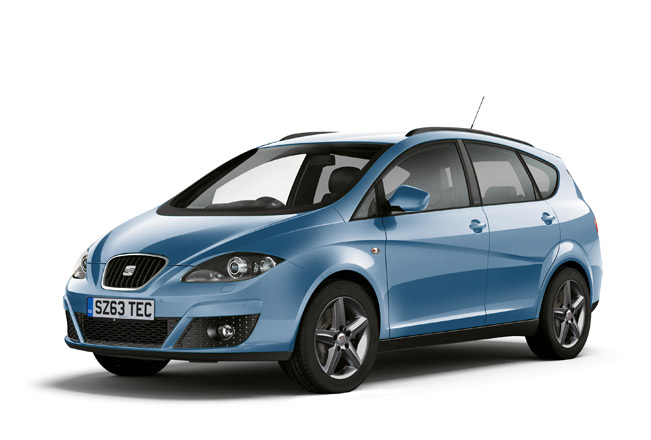
    Bad news? Your friendly “family hatchback with the size of an MPV” Seat Altea Copa is no more. Well, actually the Capo edition edition itself is gone. Instead, you now get the universal I TECH edition. Both, the Altea and the Altea XL (like the Altea but bigger) will be sold now exclusively as I TECH editions with bundles of equipment and, as the name suggest, technology.

    The newly added set of goodies consists of 16-inch titanium finish alloy wheels, front parking sensors, a color TFT screen for rear passengers, and forward sliding rear seats for added versatility.

    While the choice of editions will now limited only to the aforementioned, one can still contemplate on the range of engines. That is, a Volkswagen Group 1.6 TDI Ecomotive diesel with 105 PS, the same engine coupled with a DSG automatic transmission, and a 2.0 TDI with 140 PS. By far the most economical option would be the manual 1.6 as it is quoted to be delivering 62.8 mpg combined (relevant to the XL as well). The other two share the same value of 57.6 mpg. Oh… and there are two new colors available as well: “Bahama Blue” and “Technic Grey”. So many decisions!

    Additional equipment for the I TECH includes dark tinted rear windows, roof rails, dual zone climate control, automatic wipers and headlights, rear parking sensors, Seat Media System 2.2, a double floor boot, and overhead interior storage.

    Best part? No changes in the outgoing price. That’s neat, Seat.

    Source: Seat


  • Volkswagen CrossBlue Coupe Concept Debuts in US

    Volkswagen-CrossBlue-Coupe-concept-thumbVolkswagen-CrossBlue-Coupe-concept-medium

    Remember Volkswagen’s hunky CrossBlue SUV concept that looked thoroughly American? Well, it will now decorate the German stand at the 2013 Los Angeles Auto Show, but because this one is a “coupé” it is technically a “U.S. Debut”. Welcome to the Volkswagen CrossBlue Coupé concept – a sleeker, less roomy version of the original. Could this five-seater bring something fresh and exciting to the table?

    Here are the basics: 192.5 inches long and 79.3 inches wide and 66.1 inches high, the Coupé features sporty design motives: 22-inch wheels with five V-shaped double spokes, a massive hood, short A-pillars, a long and sloping roof-line, and a swept-back C-pillar. There’s also a fascination with horizontal lines (Volkswagen DNA they say):

    “The designers have combined a dominant line—one that starts in the upper area of the rear lights and runs at the height of the door handles—with a second line that begins beneath the rear lights and ends in the front fender.”

    Let’s get to the real straight talk though. Because of the MQB platform on which the Coupé is based, pretty much any four- and six-cylinder Volkswagen engine will fit inside. This current concept, however, is a plug-in hybrid with two electric motors and a turbocharged direct-injection (TSI) 295 hp V6 petrol engine. The bottom line is 415 hp of combined power. By default, one also gets Volkswagen’s MQB front suspension and four-link rear suspension; electro-mechanical steering, and a six-speed DSG dual-clutch automatic transmission. Electrically speaking, there’s a 54 hp motor at the front and a 114 hp one at the back, while the li-ion battery pack that powers them can be found in the center tunnel.

    Despite its still prominent size, the CrossBlue Coupé manages a 0 to 60 time of just below six seconds and a top speed of 147 mph. Yet, because of all the clever bits underneath, it has a manufacturer estimated combined fuel consumption of 70 MPGe and a “theoretical” range of 570 miles in hybrid mode. The default mode of driving is quoted as “Eco”. It is supposed to cleverly manage the power output from all sources in a bid to achieve an ideal balance of power and efficiency. Want to give it the full beans? Go for the “Sport” button which utilizes everything this SUV holds. Other modes include an all-electric one (the rear electric motor only) that holds for about 13 miles with speed of no more than 75 mph. If you run out of juice, you can switch on the “Charging” mode which sees the V6 TSI engine giving propulsion and charging the battery. Offroad mode is where it get’s complicated. Obviously, it’s an AWD mode but the back wheels are powered by the rear-electric motor, which in turn is being fed with energy from the front motor, which in turn acts as a generator powered by the engine, which in turn also provides power to the front wheels.

    Inside, Volkswagen are especially proud of their (horizontal) dasboard that “extends into the side door trims”. For materials, do not expect anything less than soft Nappa leather in outlandish-sounding colors like Authracite Pearl and Asphalto. There are also chrome surfaces, wood accents and Graphite colored Alcantra for the roof pillars and headliner.

    Don’t be fooled by all that trendy glamor as this is not your average H&M store. There are also enough gadgets inside to make even the most hardcore techie tingle with excitement. Take the “programmable” instrument cluster for example. Whilst driving in Eco mode the left side of the gauge shows the “Powermeter” and battery status. On the right you get your current speed and fuel level. The center panel can be used to display widgets such as gear selection, driving range, date and time, the weather and navigation data. In “Sport” mode, the left-hand instrument displays torque and battery status within a circling tachometer. The backseat audience also has access to the infotainment/multimedia system through two iPad minis mounted on the back of the two front-seat headrests.

    The 10.1-inch touchscreen navigation also tends to adapt in accordance with the current driving mode. In Sport mode all the surrounding buildings represented on the screen are “suppressed” so that the image becomes less busy and thus the focus being on the actual road. Switch to “Eco” mode and the buildings will rise on the horizon Inception-style. (not our simile, VW’s).

    There we are then. Expect more excitement starting on the 22th of November within the LA Auto Show, within the Los Angeles Convention center, within Los Angeles.

    Source: Volkswagen

  • The Seventh Volkswagen Golf is Out

    Volkswagen-Golf-VII-thumbVolkswagen-Golf-VII-mediumTime to get excited since the seventh chapter of a 38-year-old legend is at our doorstep. The Volkswagen Golf VII made its debut in Berlin. More spunk and less fat for this one. Back to the primitive then!

    Well, not really. The latest incarnation of the best seller will be still as complicated as a car can be – a new Modular Transverse Matrix body (which is supposedly roomier), a new information and entertainment system and even more interfering assistance software. Nevertheless, the Wolfsburg boffins have managed to trim off 100 kg of weight.

    The 140 PS petrol engine is also now 23 percent more fuel efficient thanks to an already developed and tested cylinder deactivation system (remember the Polo Blue GT?). Additionaly, throughout the engine range, a stop/start system comes and standard and battery regeneration as well. Subsequently, we get figures that feel more at home with today’s diesel engines – 4.8 l / 100 km. Speaking of diesels, the 105 PS TDI in the Golf VII happens to sip just 3.8 l per 100 km. Add to that a BlueMotion trim and you get 3.2 l and less than 86 g/km of CO2 emissions.

    Do not for a minute think however, that the seventh Golf will slip through without newly installed plants. There are two entirely new generations of engines, designed to offer power from 85 PS to 150 PS.

    Be on the lookout for a full specification list.

    Source: Volkswagen
  • Lexus Teasing Hybrid Concept

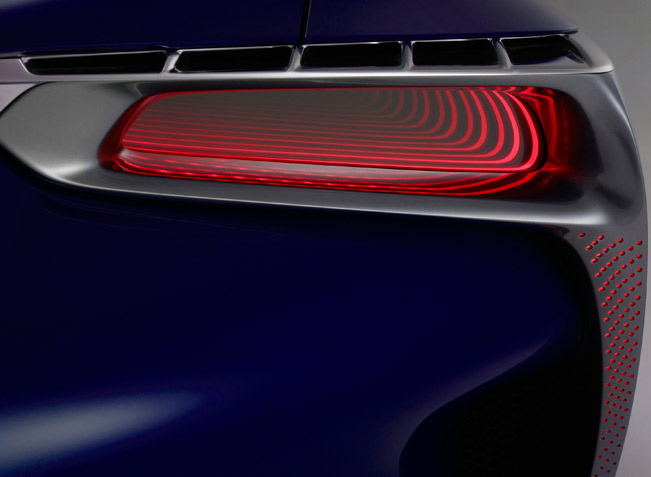
    Lexus-Coupe-Concept-Australia-thumbLexus-Coupe-Concept-Australia-mediumThe Australian International Motor Show will witness the reveal of a Lexus hybrid concept. Not your eveeyday boring hybrid that is. More like a 370+ kilowatt, all-wheel drive coupe. Just when you think we’ve seen the Lexus supercar Future, they slap us in the face with something new.

    Actually, this one (whatever it will be called) is a followup project that stems from the Lexus LF-LC Hybrid Concept that we saw back in Detroit, and we have nothing but praise for that one.

    “We’ve pulled out all stops this year to secure a world first for Australia,” said Mr Cramb. “The Lexus concept is an absolutely stunning vehicle and is set to be one of the drawcards of the show.”

    “The concept will highlight Lexus’ design and engineering expertise – marrying design with function to deliver a glimpse into the future of supercars,” he added.

    The 2012 Australian International Motor Show will be held this October and is expected to gain significant media attention thanks to surprise appearances such as this one.

    Source: Lexus

  • Prior Design Stun with a Lamborghini Gallardo

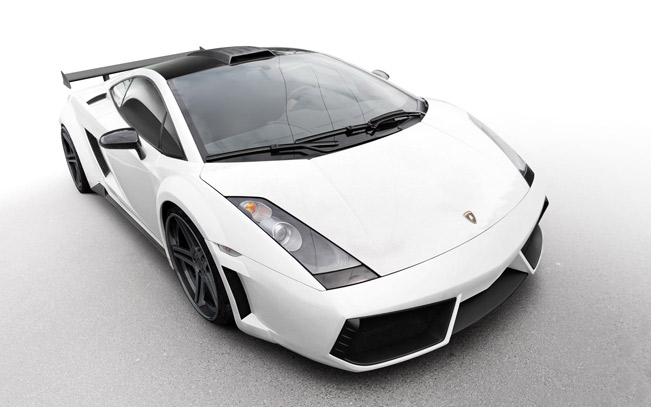
    Prior-Design-Lamborghini-Gallardo-L800-thumbPrior-Design-Lamborghini-Gallardo-L800-mediumThis time Prior Design have gone big. Actually no. They have gone for the baby Lamborghini. The Gallardo. Still, quite the kit they have provided. Most of the Italian skin is now covered in German quality Dura-Flex Fiber Reinforced Plastic bits.

    The kit consists of a front bumper, a rear bumper, front fenders with air intakes, rear wheel arches that are wider than normal, a roof scoop and a rear trunk spoiler. Some of the aforementioned are functional, others are merely decorative. Most importantly, Prior will charge you for the whole thing (kit) 12,900 Euros ($15,921) which is a ridiculous sum of money. Have they dismembered a Suzuki Swift to get the parts?

    Nevertheless, we like looking at the thing. A Prior Design Lamborghini Gallardo. Everything that’s not stock looks kind of at home.

    Source: Prior Design