Author: autoview

  • Three of the latest Yamaha adventure bikes

    Adventure biking is huge right now. From a scene that didn’t really exist a few years ago – by name, at least – to one of the fastest growing segments of the new motorcycle market, adventure biking is bringing the fun, and err, adventure back into motorcycling. Yamaha make some great adventure bikes, and here are three of them.

    Yamaha XT660R
    At the more affordable end of the Yamaha range of adventure motorcycles is the XT660R; a rough, tough trail bike that’ll chew up the dirt trails on Sunday, as well as the traffic-packed commute on Monday.

    Yamaha have long been making their XT range of bikes, and to a very simple and effective recipe – tall, tough and torquey – perfect for flinging the mud and filing through the city streets.

    The XT660R features long travel suspension that’ll make mincemeat of potholes and dirt trails, and a 660cc single cylinder, fuel injected engine that’s all about hard-hitting torque from right at the bottom of the rev range. This big-single-piston torque means instant throttle response; perfect for pulling through a deep mud bog, or for firing off the traffic lights leaving the rest of the world far behind.

    If you’re looking for a hard-working, fun-loving motorcycle that’s a little bit scary to small children, the XT660R is one of the best around, especially if most of your time is spent threading through packed city traffic. However, if you do hanker after some filthy fun on the muddy trail, the 660R is well up for that too. Start your adventure journey at P&H Motorcycles.

    Yamaha XT660Z Ténéré

    The Yamaha XT range became fully involved with the recent launch of the XT660Z Ténéré; a stunning looking dirt bike with a difference. From the same stable as the XT660R, the Ténéré takes the tough and utilitarian 660R and adds top quality, high performance components for a truly go anywhere motorbike with attitude.

    Whilst the Yamaha XT660Z Ténéré is a motorcycle built for function over form, only a rider with too much mud in their eyes would complain that this is not a ruggedly handsome motorcycle. And while adventure is all about discovering new places and enjoying new experiences, there’s nothing wrong with looking good while you do it, right?

    Again we see a thumping 660cc single cylinder engine, this time wrapped up in more adventure-focused bodywork and accessories, including a well-padded duel seat, long-travel suspension, crash protectors and large, 23-litre fuel tank for big distances between fuel stops. Useful if you’re in the middle of nowhere!

    Yamaha XT1200Z Super Ténéré
    Time for the big daddy for Yamaha adventure bikes now; the magnificent XT1200Z Super Ténéré, and as the name suggests, this bike has got the real deal skills to cross continents, rocky rivers and roaming ravines.

    The Super Ténéré begins with a mighty 1200cc, parallel twin-cylinder engine, that’s built for bottomless torque and terrific throttle response. Should you come across a house on your travels, simply crack the throttle, hoist the front end and ride over it!

    Massive adjustable front forks and a long-travel high performance rear shock take care of the suspension business, while the latest in rider aiding electronics helps with keeping fatigue from huge daily distances to a minimum. So does a deep and comfy saddle. The rest of the Yamaha XT1200Z Super Ténéré is made of the tough stuff to keep it running in the most extreme of conditions, even if you are up to your knees in icy cold river water, somewhere in Africa.
  • A guide to the Nissan Qashqai

    The Nissan Qashqai crossover has been a great sales success for the Japanese manufacturer, with frugal families and company car drivers alike searching out the quirkily-styled mini SUV in large numbers. So, what’s the Qashqai’s trick behind its sales success? Here’s a guide to the Qashqai’s highlights.

    Family friendly
    The Nissan Qashqai is a crossover-style car – one that’s based on a regular-size hatchback chassis, but with a taller body for greater interior space – and with the Qashqai, Nissan pretty much cornered this part of the car market.

    Families were looking for something with a bit more size and a touch more road presence, but without trading up to a full-size SUV with all the extra price and fuel costs that these much larger, usually four-wheel drive vehicles can attract. So, with the Qashqai, you get near to the size of an SUV, but with front-wheel drive fuel consumption that is as good, or nearly as good, as your average family hatchback. But with that welcome extra space for a travelling family’s luggage.

    Fuel friendly
    Nissan quickly saw that they were onto a winner with the Qashqai, so they have been focusing every revision of the car’s specification to suit the core buyers. So, with every new Qashqai model, we see an improvement on the already impressive fuel economy, as well as options like two extra occasional seats in the boot area, for when there are extra kids to pick up from school, for example. These occasional seats can be quickly and easily stowed into the boot floor when not in use, to return the Qashqai’s good-size boot to its original volume.

    Road friendly
    The Nissan Qashqai is one of those cars that’s just so easy to drive, and that appeals to families and company car drivers who cover a lot of road miles every year. It’s relatively small – about as big as hatchback – but thanks to its taller roof and slightly raised suspension, Qashqai drivers get a better view of the road ahead, thanks to this raised driving position. This extra view of what’s going on ahead can take some of the stress and hard work out of longer journeys, especially if there are traffic jams and incidents to deal with.

    Pocket friendly
    Not only does the Qashqai come with Nissan’s latest range of fuel efficient petrol and diesel engines – including stop and start functions to cut the engine when it’s not needed; at traffic lights, for example, it’s also holding its value quite well on the used car market. However, buying a nearly new used Qashqai is a great idea for families on a budget as they won’t suffer the depreciation of a brand new car, and the general servicing costs are at the more affordable end of the pricing scale too. Why not take a look at used Nissan Qashqai prices to see if they fit your buying budget?

    Environmentally friendly
    Good fuel consumption not only has a positive effect on the pocket, it also helps the environment by polluting less, and the Qashqai’s more fuel efficiency focused engines are in there with the very best in terms of carbon dioxide output. Why not measure up the Qashqai’s emissions with those of a similar-sized hatchback? You could be surprised to see that the Nissan does very well for a bigger car.

  • A Brand New BMW Car vs Used BMW Car

    People do buy cars for they need them. They use their cars in several ways such as for fun, for example, when going to places to relax and chill down. They also use cars when going to work and use them for sending out children. The interesting thing here is that there are people who prefer to buy new cars and there are those who are contented with used cars. Let us see the difference of buying both cars using a BMW car.

    Buying a Brand New BMW Car

    There are reasons why people buy brand new cars instead of buying a used car. The very first reason is that they do not want to get an unreliable car because they only choose to buy a used car when they can buy a new one. They can also be the people who were fond of buying a used car before and for them buying the same car will be a nightmare for them. They are thinking that if they are to buy a used car, they will have to spend more on their used car’s maintenance and so on.

    If you are to buy a brand new BMW car, there are lots of good things that you will be interested in. First, the car brand has various models (as seen on bmwrockville.com) that you can choose from. If you want to look elegant on the road, you can try the brand’s latest 1 Series. It is a very good looking car with everything that you need. There will be a greater level of comfort when you are to buy this car compared to other cars as it is made to make its drivers feel comfortable while driving compared to other cars.

    You can think that your risk of buying a new car is indeed worth it. You will surely feel proud about your decision of buying it and you are sure that you will be to avoid that frequent maintenance over a used car. It will be able to give a good ride. Also, a new car comes with a 1 year warranty so nothing to be bothered of compared to buying a used car in which every repair will be money spent. When buying a car, be among those people who do not mind spending a bigger amount of money as long as they get that comfort and safety while riding in it.

    Buying a Used BMW Car

    On the other hand, there are people who go for used cars compared to new cars just like a used BMW car. A used BMW car for them still performs well just like a new BMW car and may be better. Also, they will be able to save money if they will do it. BMW cars along with Lexus and Mercedes Benz become the choice of many people out there who are looking for used cars. This may be for the reason that the cars remain reliable even if the second hand buyers are just the second owners of them. They may not get the same pleasure when buying new cars, but still rewarding

    Those were just some of the differences of buying new and used cars.

  • The 2013 Nissan Juke NISMO

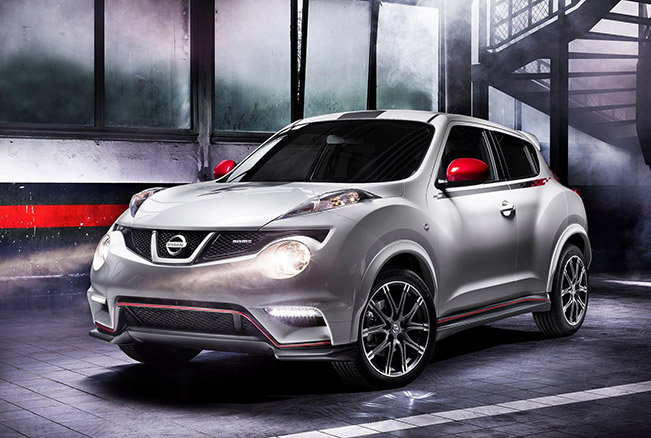
    NISMO (Nissan Motorsport International Limited) represents one of the most beloved types of sport cars nowadays that is widely popular worldwide. NISMO in particular has managed to deliver for customers some of the very best, diverse and well-performing at the market cars in the history of the Nissan series. The NISMO type has successfully mingled in the past with some already established famous models and this tendency of Nissan-the redesigning of an existing model through the NISMO type has been going on ever since NISMO was created. The newest NISMO-Nissan vehicle was released in 2013 and it represents a mix of NISMO and the highly acclaimed Nissan Juke. This new creation is an example of sheer style, vivid imagination in detail and technology in all the good and familiar Nissan ways.
    We spoke to Sheridan Nissan in DE, our local Nissan store, to get the details of this model. Specific features to the NISMO model include a turbo engine which is 4-cylinder and has 1.6-liter capacity. The torque is specific with the fact that it can reach 184 lb-ft and its maximum availability ranges up to 5200 revolutions per minute. When it comes down to the output the car has 197 horsepower at 6000 revolutions per minute. Other technical specifications include the improved steering wheel and the tires which are probably the most updated assets in comparison to the original car. Other changes are for example the shock absorbers which were altered in order to adapt more of a sport style. Additionally, you will need to make a slightly harder steering effort which will provide the driver with an even greater sports feeling.

    The components and features acquired from the original Juke are respectively the manual which is as usual six-speed or the other option in the car is a drive of an all-wheel type alongside a soft CVT which in all likelihood you should find quite comfortable.

    The features in the interior of the car are many. There are little toys including various effects and comforts. The kit includes bumper stripes, side sills, LED accent lights, NISMO badges, spoilers with fascinating outlook, a brand new looking front fascia and mirror caps of screaming scarlet. The new NISMO Juke model has been described by the company to be much more comfortable in a state of downforce. The company offers official colors that vary between white, gray, silver and black and these are more or less, the perfect colors for a serious car bearing an aggressive and sports-like charisma. The original Juke has really nothing on the 2013 NISMO Juke model in terms of its sports outlook and its wild dynamic aura. In short, if you are looking for the family-feel vehicle, you need to go for the original. If you are looking for an “I want to be a champion” car, you need to go for the NISMO Juke.

  • The New Dodge Durango

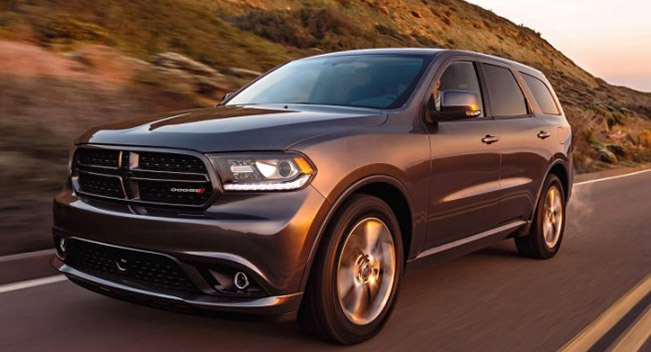
    Dodge DurangoThe next generation Dodge Durango has debuted in New York. The American SUV has a classical facelift change and LED lights built into the headlights. The company reported that the reworked model both offers unprecedented-for-this-class characteristics and represents a work of art in technology.

    During the Auto Show in New York, the American manufacturer Dodge officially disclosed in front of the large audience the Durango SUV from the 2014 model year. Completely in the typical style of the brand, facelift of the version Durango could be recognize by the refreshed front part, including a new grille and front lights with different shapes, as an option will be diode lights for daytime driving. Moving to the rear, where we see a new bumper and a redesigned rear lights.

    The size of the aluminum rims do varies from 18 – to 20-inches. However, the major differences made could be found in the interior of the redesigned Durango. For example, SUV model comes with a new dashboard and center console along with a 5 – or 8.4-inch display and the ability for USB / AUX / SD cards. We can easily notice the new steering wheel, digital instrumental panel and optional Blu-ray entertainment system with two 9-inch displays.

    We got some details from the staff over at Deery Brothers dealership of IA. According to them the facelift version of Dodge Durango is offered with two powertrain options. The base model comes with a 3.6-liter V6 (290 hp), while the 5.7-liter V8 generates 360 hp. The company reported that thanks to the optimized 8-degree automatic transmission, the new Durango will lower your average fuel consumption. The model is equipped with an economical mode called Eco Mode, which concerns the transmission, as well as the cylinders deactivation in V8 specification to “maximum fuel economy.”

  • CHRYSLER in a Nutshell

    Chrysler is owned by the Italian automaker, Fiat, but it wasn’t always so. Chrysler has a rich history, like so many other carmakers that began in the early twentieth century. Today it is still considered one of the Big Three automakers in the U.S., next to Ford and General Motors and it’s going strong.

    Before it became the Chrysler Corporation it was the Maxwell Motor Company. That company existed from 1904 until 1925. They made affordable cars and began having financial difficulties when they couldn’t sell very many cars during the 1920 recession. Walter Chrysler, who was a troubleshooter and apparently knew a lot about the car business, decided to help the Maxwell Company out. He came in and tinkered with it and then took a controlling interest in the company and ultimately, absorbed all of Maxwell’s assets and stamped his name on the product. From 1925 on, the company was known as the Chrysler Corporation.

    In 1928, Chrysler created the Plymouth and DeSoto brands of cars and also bought the Dodge brand. 1928 was a pretty good year for Chrysler. Walter Chrysler was not only a troubleshooter, but he was an innovator, also. His cars were the first to use an air filter and an oil filter. The Chrysler brand also had full pressure lubrication and had high compression engines. In order to decrease engine vibration, Chrysler implemented the use of rubber motor mounts. Another specialty feature that Chrysler thought of and put into use was the rigid rimmed wheel. This kept flat tires from flying off the wheel. Safety and efficiency seemed to be their underlying drive and the Chrysler Corporation was willing to spend time and money on research and development of these and many other standard features.

    These things are all taken for granted today, but in Walter Chrysler’s time, no other carmaker was doing it. No one bothered to be innovative or to make their cars safer for the driver and passengers and nearby pedestrians.

    Chrysler is generally known for their luxury cars and their reputation is well deserved. Their luxury brands are indeed, luxurious. In the 1940s they were big and opulent. In the 1950s and 60s you could see a Chrysler coming from blocks away. And in the 1970s, the early seventies, they seemed to get even bigger and more opulent. The oil crisis in the early seventies changed all that. Chrysler developed smaller, more fuel-efficient cars but still kept their luxury brands available. They are still available today and they are beautiful and good sized. They’re powerful and comfortable. They are efficient and luxurious. Yes, Chrysler has maintained a wonderful line of cars; and they’re still thinking of safety and efficiency and they still have a lot of style. There are now thousands of Chrysler dealerships like Arrigo Palm Beach that can offer you the luxury of a Chrysler.

  • Keep Your Car Good As New

    There’s nothing quite like getting a new car. When you first bring it home – whether you plan on driving it everyday, or you are more of an automobile collector – it’s absolutely flawless. The paint job is shining, the car works beautifully, and each and every feature is completely perfect. And, if you’re like most people when they get new cars, you make up your mind then and there to keep your car in the closest thing to perfect shape as you possibly can! Unfortunately, somewhere along the way many of us start slacking off, and in one way or another upkeep and maintenance efforts are forgotten. So, here’s a brief guide to the steps most important to take if you’re truly interested in keeping your car good as new.

    Scheduled Basic Maintenance

    Keeping to a regular maintenance schedule is perhaps the single most important step in keeping your car operating good as new. Things like tire tread, brake pad wear, oil, and brake fluid, among others, require regular attention, and it’s easy to get too relaxed about your schedule. Strict maintenance will often keep your car from experiencing more serious issues.

    Defensive Driving (And Parking)

    Defensive driving techniques are all about allowing for the mistakes of others and compensating in advance, and the same principals can be applied to parking. Keep your car out of harm’s way by not driving too close, or parking too close, to other vehicles or potential hazards. This minimizes the chances for damage.

    Proper Insurance Coverage

    While protective measures can certainly help, there is no way to entirely guarantee that your car will never be damaged. For this reason, it’s still a good idea to speak to an insurance provider like Aviva to make sure that you have adequate insurance coverage. In the event of damage, or even theft, you will then be in better financial position to restore your car.

    Occasional Customization

    It’s impossible to totally prevent wear and tear from occurring to your car, and that’s why occasional customization and upgrade can be a good step to take. Whether it’s installing new leather seats after frays or tears, or even a new paint job, this sort of upkeep can certainly keep your vehicle looking and feeling fresh.

    Sun Protection

    Sunlight can wear down not only a car’s paint job, but even its interior over time. You can delay these issues by using a windshield sun reflector, as well as parking your car indoors and using a cover when appropriate. These steps can help your car to age far more slowly.

    Gentle Handling

    Finally, handling your car gently on the road is another very important step to take. When you drive harshly (high speeds, sudden braking, etc.) your car is put under more physical pressure, and will wear down more quickly. For that reason, in addition to driving defensively, it’s important to drive gently.

  • The Nissan Resonance Concept Car

    Nissan showed off their exciting new Resonance concept car at the 2013 Detroit Auto Show,  Featuring what the company calls “V-Motion” styling, it features a grill that sweeps upwards and a windshield and A-pillars that are steeply raked rearward.  The impression is a car in motion.  Nissan says its designers were inspired “hypersonic space travel.”  Team Nissan in New Hampshire  explained to us that the Resonance is similar to the current Nissan Murano with proportions that imitate the mid-size crossover’s, with an oblong profile and short hood.  High concept details of the Resonance concept include a panoramic glass roof, a tinted translucent acrylic grille, giant 22-inch wheels and boomerang-shaped lights.

    Under the Resonance’s hood is a 2.5-liter four-cylinder engine driving a hybrid-electric drive system.  It employs a single motor and dual clutches driving an all-wheel drivetrain. The transmission is Nissan’s next-generation Xtronic continuously variable automatic transmission (CVT). The electric motor is powered by a large lithium-ion battery pack which is recharged not only by the engine and but by the vehicle braking kinetic energy.

    Inside the Resonance the “V-Motion” styling ethic continues.  Even though this is a concept car, the futuristic interior aesthetic seems to appear production-feasible, not just for the show. The cockpit displays feature neat “layered” display panel graphics that reproduce a holographic setup without actual holographic technology.  The gauges directly in front of the steering wheel are similar in color and look to the information and control center so the combination has an all-encompassing panoramic feel to it.  Light-colored leather covers the seats and nearly every surface that isn’t already covered in metal or polished wood.

    The Resonance may be a proxy for the styling of the 2015 Murano. Why not a separate Model? Well, the Murano has been one of Nissan’s more popular SUVs but not really one of its more practical cars. With the new seven-passenger Pathfinder now filling the role of people and gear hauler, it could very well be that the Resonance hints at Nissan’s planning for the future Murano, not a separate model. That may not a bad thing because in either a Resonance or Murano model, it should be a big hit in the showroom.

    Pictures Courtesy: www.autoevolution.com, www.caranddriver.com

  • The History of Kia Motors

    Kia was founded in 1944 as a producer of steel tubing and bicycle parts. The name Kia has roots in the Chinese language and means to “to rise and come out of Asia”. According to native Koreans, the name evokes a parable that may be roughly equivalent to the Greek mythological tale involving the Phoenix bird arising from the ashes of its predecessor.

    By the early 1950s the company had expanded into the production of completed bicycles, the first Korean manufacturer to do so. By the late 1950s the company began to produce motorized scooters with the rollout of the model C100 (1958).

    The 1960s saw a rapid expansion in Kia with a lineup that included motorcycles and three-wheeled cargo vehicles.  The Kia brand was a frequent site on the streets of Korea and in many other parts of Asia.  The next logical step after this was to enter the automotive market and the company started moving in this direction in the early 1970s.  A key factor in this process was the construction of Kia’s Sohari manufacturing plant in 1973.  According to Team Kia in New Hampshire  this plant was Korea’s first fully integrated automotive production facility and it was where Korea’s first internal-combustion motor was tooled and built.  A year later, Kia unveiled its first car – the Brisa.

    After several years of manufacturing automobiles for other brands, Kia began manufacturing its own brand for US consumption in the early 1990s.  The first US-destined car was the compact Sephia. It was rolled out to only to several Western states in order to test demand.  It wasn’t until KIA started shipping its very popular Sportage SUV that Kia became a nationwide brand.

    The next phase in Kia’s history was due to financial difficulties.  After considerable discussion, Hyundai, South Korea’s other major automaker, acquired the company. Kia has been on a major upswing since its purchase by Hyundai, with improvements in build-quality, performance and overall refinement. Reliability, previously a weak point, has also improved greatly and consumer confidence followed along.

    Today Kia is offers a broad lineup of well-built coupes, sedans and crossovers that stand out for their value, performance and sporty styling.

    Images courtesy of www.automaistv.com.br , www.engineact.com

  • Yes, There were Turbine Cars!

    There used to be a time when the coolest things were built in America and one of these things was the turbine-powered automobile. Unfortunately the turbine car never went into actual production but it was close.  The company that tried was Chrysler.

    We learned that the Chrysler turbine was the brainchild of chief engineer George Huebner from Sheboygan Chrysler.  Huebner began studying the feasibility of turbine-powered vehicles at Chrysler in the mid-1940s. The turbine engine’s smoothness and durability seemed to be a viable, perhaps superior, alternative to the standard piston engine because it had few moving parts compared to a piston engine -just fan blades on a spinning shaft.

    Huebner built a few ordinary-­looking prototypes in the ’50s, but the pilot-program cars would be driven, and seen, by the public so Elwood P. Engel, a former Ford designer, crafted an all-new,futuristic body. The bodies were hand-built by Carrozzeria Ghia in Turin, Italy, and shipped to Detroit for final assembly.

    The Chrysler Turbine was not a one-off concept car. Between 1963 and 1964, Chrysler built 55 turbine cars and 50 of these were made available for testing by 203 families nationwide. Each family kept the car for three months and, as part of the deal, the drivers recorded impressions and mileage in logbooks.

    However, the turbine automobile never went into production.  The high cost was one reason. Back then you could buy a fully optioned V8-powered car for some $5000 or this “turbine car” that would have cost around $16,000. The two had about the same performance; the turbine car was rated at 130 hp and 425 lb-ft of torque, about the same as the standard V8 Model.

    Despite no actual production models being made, between 1949 and 1981 Chrysler built seven different generations of turbine test vehicles. Unfortunately, the company’s shaky finances, the challenge of reducing the engine’s Nitrous Oxide emissions, the oil embargo of 1974 and the need to downsize cars for front-wheel drive, all hurt the Turbine’s chances.

    Today, the Chrysler turbine is just a footnote in automotive history and just 3 cars survive.  Needless to say they are very valuable collector cars.

    Photos Courtesy of:  www.dudeudeworld.com.au, www.popularmechanics.com and www.hemmings.com

  • Ford Sustainability Plan Making a Difference

    In recent years, many companies have begun to show concern for the environment and sustainability by rolling out green initiatives.  The Ford Motor Company has sponsored several such initiatives over the years.  In 1999, Ford released its first annual Sustainability Report.  Since then, the company has worked diligently in an attempt to be more sustainable and environmentally friendly.

    In 2008, the company released a list of its strategies for sustainability, including such diverse approaches as using 100% recycled fabric for seating in the Ford Escape, adding 6-speed transmissions that are fuel-efficient, and introducing the 2008 Super Duty, which is the first clean diesel heavy-duty pickup truck.  These initiatives also displayed concern for the environment, adding almost 200 acres of sustainable landscaping to its properties in Michigan.  Ford also became the first two-time winner of the EPA’s Energy Star award, winning for 2006 and 2007 consecutively.

    Ford’s Sustainability Reports have included projections and goals for reducing energy expenditures and carbon dioxide emissions.  In its 10th annual Sustainability Report, Ford anticipates reaching its goal of reducing carbon dioxide emissions by 30%, compared to 2006, by the year 2020.  In its 13th annual Sustainability Report, Ford relayed its intentions to reduce energy used for manufacturing its vehicles by another 25%, per vehicle, by 2016.

    Ford has already seen some success from these policies.  From 2006-2011, electricity usage for per-vehicle production went down by around 800 kilowatt-hours—the upper end of electricity usage by average households in California and New York.  The company also added a 500-kilowatt solar panel system to its Michigan Assembly Plant.

    Additionally, Ford also has the goal of continuing to reduce landfill waste.  From 2010 to 2011, Ford reduced this waste by 11.3%, with intentions to continue to reduce waste by 10% per vehicle.  If Ford continues on its path to green innovation, everyone benefits:  Ford, its loyal customers, and the environment. If you are looking to drive a vehicle from a company that believes in the importance in being ‘Green’, then just contact your local Ford showroom, such as the Ken Garff Ford Dealership of UT. They will be happy to set up a test drive, go over financing, and answer any questions you may have.

  • Calling George Jetson!

    There used to be a time when the coolest things were built in America and one of these things was the Chrysler turbine-powered automobile. Built in 1963, it is probably not entirely coincidental that Hanna-Barbera’s animated TV show The Jetsons aired from 1962 to 1963.

    From the viewpoint of engineers, however, the turbine engine’s smoothness and durability seemed to be a viable, perhaps better, alternative to the standard piston engine. It had few moving parts compared to a piston engine, just a bunch of fan blades on a spinning shaft with one spark plug and no cooling system.

    Chrysler built a few ordinary-­looking prototype turbine cars in the ’50s, but the pilot-program cars for the 1960s would be driven and seen, by the public so an all-new, futuristic body was developed. The bodies were hand-built by Carrozzeria Ghia in Turin, Italy, and shipped to Detroit for installation of the turbine engine.

    Chrysler built 55 turbine cars between 1963 and 1964 and 50 of these were made available for testing by 203 families nationwide. Each family kept the car for three months and, as part of the deal, the drivers recorded impressions and mileage in logbooks. The folks in the service department at (serving DC) told us that Chrysler actually had a special team of mechanics on call who would fly out and fix the cars right away if anything went wrong.

    Unfortunately, the turbine never went into production.  The high cost was one reason. Back then you could buy a V8-powered Chrysler for some $5000 or this “jet-engine” car that would have cost around $16,000. Big difference in price. They also had about the same performance; the turbine car was rated at 130 hp about the same as a Chrysler’s 318-cubic-inch V8. Gas mileage was the same on the highway too, both would get some 19mpg.