Author: Alev Kochoolu

  • McLaren’s all-new high-performance hybrid supercar enters final stages of testing

    McLaren1

    The first series-production High-Performance Hybrid (HPH) supercar from McLaren Automotive has entered the final stages of its development and test programmes, which includes running on public roads.  Due to launch in the first half of 2021, the all-new supercar will open a new era of electrification for McLaren following the end of production of its Sports Series range.

    The all-new, supercar will be the first McLaren built on a new carbon fibre structure, christened McLaren Carbon Lightweight Architecture (MCLA). Optimised for High-Performance Hybrid powertrains and latest-generation driver technologies, the architecture elevates McLaren’s pioneering lightweight chassis technologies to new heights, exploiting the company’s advantage in super-lightweight engineering – a benefit that has its roots in the brand’s motorsport origins.

    Designed, developed and produced in the UK at the £50m state-of-the-art McLaren Composites Technology Centre (MCTC) in Sheffield region, the all-new flexible structure will underpin the next generation of McLaren hybrid supercars coming to market over the coming years.


    The High-Performance Hybrid powertrain, which features an all-new V6 internal combustion engine, delivers astonishing levels of performance and a uniquely intense driver experience, as well as providing medium-range EV-only drive capability.

    “This all-new McLaren supercar is the distillation of everything we have done to date; all that we have learned and achieved,” commented Mike Flewitt, CEO, McLaren Automotive. “This is a new kind of McLaren for a new era, an extraordinary drivers’ car that offers blistering performance as well as an all-electric range capable of covering most urban journeys. We see this new McLaren as a true ‘next generation’ supercar and cannot wait to show it to customers.”

    McLaren’s all-new, ‘next-generation’ supercar draws on all of the technological expertise in designing, developing and building the world’s most innovative and desirable, super-lightweight hypercars and supercars.

    “For us, light-weighting and high-performance hybrid technology go hand-in-hand to achieve better performance as well as more efficient vehicles,” explained Flewitt. “Our expertise in lightweight composites and carbon fibre manufacturing, combined with our experience in cutting-edge battery technologies and high-performance hybrid propulsion systems, makes us ideally placed to deliver uncompromised levels of electrified high-performance driving that until now have simply been unattainable.”

    The all-new hybrid supercar will sit between the GT and the 720S in the McLaren range and its introduction will further strengthen the company’s presence in the supercar sector. The Sports Series designation – introduced in 2015 with the launch of the 570S – ceases from the end of this year with the limited-run, GT4-inspired 620R the last model produced.

  • MG Z cars – last chance saloons commemorated in new book

    MG Z1

    They were a marketing masterstroke that revived a brand and put Britain’s biggest independent car manufacturer in front of a whole new audience, but the MG Z Cars were ultimately not enough to save MG Rover.

    In this new book, launched just ahead of the Z Cars’ 20th anniversary in 2021, former Auto Express journalist and noted motoring author and historian, Craig Cheetham, tells the story of the Z Cars through the eyes of someone who was heavily invested in the car industry at the time.

    From the demise of Rover Group, the establishment of the Phoenix Consortium and through an interview with an unlikely hero, the book tells the tale of how the Z Cars came into being, with other exclusive stories from the cars’ designers and PR and marketing teams at the time.

    It also tells the development story of the new MGs, which came to fruition in record-quick time, charts the impressive media reaction to the new cars and provides insight into the MG Monogram programme, which included unique paint and trim finishes.

    The book also looks at the resurgent MG’s motorsport campaigns, its presence in popular culture and the evolution of the three cars on an extremely limited budget, as well as looking at low-volume specials such as the ZT 260 V8 and ZR Express delivery van.

    “The last days of MG Rover were torrid, but the Z Cars kept the company on life support and captured the hearts of younger enthusiasts,” said author Craig Cheetham. “Today that still rings true, and as the cars turn 20 years old a whole new generation of classic car enthusiasts are starting to enjoy them.

    “MG Rover may have gone, but the enthusiasm for these cars and the story they tell lives on. The aim of this book is to tell the tale of how they came about and of the sheer enthusiasm and determination of the engineers and designers within MG Rover to survive against the odds.”

  • Mazda strengthens its customer convenience commitment with the introduction of ‘Mazda your way’

    2020 Mazda CX-51

    With the UK adjusting to the changing retail landscape, Mazda has strengthened its commitment for customer convenience with the national introduction of Mazda Your Way, an evolution of the successful London Mazda MyWay pilot and dealer based programme. Designed to put the customer in full control of their purchasing experience, the new Mazda Your Way service offers customers even more convenient ways to try, buy and service Mazda vehicles with a number of remote solutions to connect to a dealer.

    Designed around a series of convenience services, Mazda Your Way aims to support customers throughout the car buying process – from initial contact to ownership and servicing – and provides customers with the flexibility and confidence they can engage with a Mazda dealer in their way of choice. With 98 dealers committed to the Mazda Your Way service across the UK, customers can remotely engage with their local Mazda dealer to bring the first-class dealership experience straight to their home, making the car buying process even easier.

    The Mazda Your Way journey starts with the customer choosing how they would like to engage and connect with Mazda. Remote consultations are provided through a variety of channels including email and phone, and have now expanded to include Live Chat and Live video appointments for a highly personal experience. With the option to partake in a virtual video product presentation, customers are then able to view and discuss their chosen Mazda model, key features, premium interior trims and finance options without stepping into a physical dealership.

    Keeping in line with the latest government guidelines, the new Mazda Your Way service offers flexible and no obligation test drives from dealerships, or customers can confidently choose to bring the in-dealer test drive experience directly to their home. For those wishing to engage away from the dealership environment, customers are able to remotely reserve their chosen Mazda with a contactless reservation fee and opt to have the vehicle personally delivered to their home for added reassurance; all of which means customers can go through the entire car buying process from the comfort of their home if they wish.

    With customer and staff safety at the highest priority, all dealerships will meet all government advice and guidelines on social distancing, with some additional measures in place that go above and beyond for customer and staff safety. On arrival to dealerships there will be hand sanitisers, social distancing markers and, where appropriate, a touch free environment to ensure a safe visit. All surfaces, keys and cars will be cleaned regularly to ensure customers are in a safe and sanitised environment during unaccompanied test drives and home deliveries.

    Customer convenience continues into the aftersales environment, with a range of options to contact and book servicing appointments with Mazda Your Way dealers. Available to book online, by email or live chat, customers can engage with a dealership to discuss their Mazda vehicle, MOT, warranty and servicing in greater detail, plus have the option to remotely book a video consultation with a dedicated Service Advisor.

    Commenting on the new Mazda Your Way experience, Jeremy Thomson, Managing Director at Mazda Motors UK, said: “Over the last few months, we have seen unprecedented change to our businesses, and recognise that lockdown has created anxiety for some customers who now wish to engage outside of a physical dealership. While we appreciate the importance of the traditional physical showroom and service centres, and will continue to invest in our network, we have also designed a programme to build comfort and reassurance for our customers who now wish to engage away from dealer premises.”

    Adding, “the new Mazda Your Way offers customers the flexibility of still being able to visit a dealer – where they’ll receive a great customer experience – or the option to connect with the dealer in a way that suits them best throughout the ownership of their Mazda. With 80 per cent of our UK dealer network already committed to deliver the new Mazda Your Way service, we are able to offer even more customers with a wider, more flexible scope of convenient services that are there to reassure customers today and over the long term. We will be adding services to enhance Mazda Your Way over time with the inclusion of a full end-to-end on-line sales platform which we’ll be launching over the coming months.”

  • Jaguar XE: updated with new connected technologies and mild-hybrid power

    2021 Jaguar XE1

    The Jaguar XE now features a new electrified powertrain option and latest connected technologies.

    For the first time on the Jaguar XE, the next-generation 2.0-litre four-cylinder Ingenium diesel is available with the latest Mild Hybrid Electric Vehicle (MHEV) technology for enhanced efficiency.

    Inside, Jaguar’s state-of-the-art Pivi Pro dual-sim infotainment system ensures the XE is always connected. The intuitive new interface makes it easier for drivers to view information and perform frequently used functions on the move.

    Focused detailed changes to the interior add further luxurious touches, including an updated seat design, while the new split-rim steering wheel design with metal gear shift paddles deliver a more engaging look and feel.

    Advanced, efficient engines
    The new XE is available with the next generation Ingenium 2.0-litre, four-cylinder, turbocharged 204PS diesel engine, along with the latest 250PS and 300PS petrol engines.

    All XE models are available with Jaguar’s eight-speed automatic transmission, the full powertrain range is:

    Diesel

    • 204PS MHEV 2.0-litre four-cylinder turbo, eight-speed automatic, RWD

    Petrol

    • 250PS 2.0-litre four-cylinder turbo, eight-speed automatic, RWD
    • 300PS 2.0-litre four-cylinder turbo, eight-speed automatic, AWD

    The next generation 2.0-litre four-cylinder 204PS Ingenium diesel engine features Mild Hybrid Electric Vehicle (MHEV) technology for the first time. The advanced new MHEV system uses a Belt-integrated Starter Generator (BiSG) situated in the engine bay to harvest energy usually lost when slowing and braking, which is then stored in a 48V lithium-ion battery located beneath the rear loadspace. It is able to redeploy the stored energy to assist the engine when accelerating away while also delivering a more refined and responsive stop/start system.

    The new engine powers the XE from 0-60mph in 6.9 seconds and is capable of up to 58.5mpg* with CO2 emissions as low as 127g/km* on the WLTP test cycle.

    A selection of advanced engine strategies provides added refinement and performance, including variable vane geometry turbocharger technology. At low engine speeds the turbocharger vanes rotate to narrow the opening between them, increasing exhaust gas velocity and boosting pressure, which provides rapid torque response and enhanced acceleration. At high engine speeds, the vanes open, ensuring maximum exhaust gas flow to deliver peak power while maintaining optimum efficiency.

    The engine now features steel pistons, with the higher strength material allowing for a more compact, lower friction design as well as increased capability to withstand higher peak pressures. Their stronger construction enables more intricate and thorough integration of cooling channels for improved thermal management. At the same time, the thermal expansion rate is closer to that of the iron cylinder liners for improved clearance control, both enhancing cooling and reducing friction for better efficiency.

    The new 2,500 bar piezo common-rail injection system delivers even finer control of fuel delivered into the cylinders. This reduces emissions and improves efficiency. Together with the latest variable geometry turbochargers, this ensures that the Ingenium diesel delivers the ideal balance of performance, refinement and fuel economy.

    Colin Kirkpatrick, Chief Product Engineer, Jaguar, said:“The updated Jaguar XE features a selection of enhancements which make it an even better choice for buyers. The new MHEV diesel powertrain brings an electrified engine option to XE for the first time and delivers improved efficiency combined with refined performance. Meanwhile, cutting-edge technologies, such as our new Pivi Pro infotainment system and latest Cabin Air Ionisation technologies, provide greater connectivity, convenience and wellbeing for all for occupants.”

    Petrol customers can choose between the 250PS or a 300PS version of the Ingenium
    2.0-litre four-cylinder petrol engine, available at 2020 model year, which produce 365Nm and 400Nm of torque respectively. Both feature the latest engine technologies including a twin scroll turbocharger and Continuous Variable Valve Lift (CVVL), for a strong combination of refined performance and efficiency.

    The 250PS petrol engine delivers fuel economy of up to 35.6mpg*, from CO2 emissions of 179g/km* and 0-60mph in 6.4 seconds. The powerful 300PS engine – exclusively mated to Jaguar’s intelligent all-wheel drive system – is able to propel the XE from 0-60mph in 5.6 seconds.

    Latest connected technologies
    The XE features Jaguar’s latest Pivi Pro infotainment system, accessed through the seamlessly integrated 10-inch central touchscreen, while the optional 5.5-inch lower touchscreen (standard with R-Dynamic HSE specification pack), also powered by the new Pivi technology, combines two multi-functional LED rotary controllers for intuitive operation of key vehicle functions.

    To help drivers access vital information quickly, the 12.3-inch HD Interactive Driver Display gets enhanced graphics and a configurable layout which can show full screen navigation mapping with turn-by-turn instructions, digital dials, media, contact list or infotainment details. Working in conjunction with the latest Head-up Display technology, XE gives drivers all the information they need without distraction.

    The intuitive new infotainment system features Apple CarPlay® and Android Auto™ as standard and allows customers to connect two phones simultaneously via Bluetooth.

    To enable instantaneous start-up, Pivi Pro has a dedicated power source, so is ready to use as soon as customers get behind the wheel.

    This is all underpinned by Jaguar’s next-generation Electronic Vehicle Architecture, dubbed EVA 2.0, which supports further new technologies to ensure the future-ready vehicle is always connected and up to date.

    A collection of new convenience technologies includes Software-Over-The-Air (SOTA) capability, which ensures the XE is always using the latest software. Keeping the vehicle updated in this way means that owners don’t have to visit retailers in order to receive the latest software.

    Pivi Pro connectivity is provided by embedded dual-sim capability, with two LTE modems enabling the system to carry out multiple functions at the same time, such as streaming media and downloading SOTA updates, without compromising performance. This level of connectivity also ensures minimal interruptions caused by coverage blackspots as it roams across network providers for the strongest signal.

    For enhanced convenience, the second-generation wearable Activity Key can be used to lock, unlock and start the vehicle without the need for the conventional key fob. The rechargeable device incorporates a watch and has a battery life of seven days between charges.

    The optional integrated 15W wireless device charger now features signal booster technology. The system uses an external antenna to improve the smartphone’s signal when being used inside the car.

    The new Guardian Mode also uses a remotely programmable timer to provide added security and peace of mind when using the Secure app. It allows customers to identify times when the vehicle will be inactive, for example through the night, and receive alerts to their smartphone if it is used during this window – giving immediate warning of any unauthorised movements.

    World-class design
    XE’s luxurious interior retains soft-touch and authentic materials throughout. Everything from the instrument panel topper and console sides to the door armrest and lower cabin are wrapped in tactile materials for improved comfort.

    A new split-rim steering wheel design further emphasises the attention to detail within the cabin. Elsewhere throughout the cabin, details include an embossed Jaguar Leaper on the headrests and a new quilt design is available for the seating.

    Enhanced Cabin Air Ionisation improves interior air quality through Nanoe™ technology, which removes allergens and unpleasant odours. The system now also features PM2.5 filtration, which captures ultra-fine particles – including PM2.5 particulates – to improve occupant health and wellbeing. The customer activates the system simply by pressing the ‘Purify’ button.

    The exterior, extensively updated when the new XE was introduced last year, features the same wide grille and bumper design, delivering a planted appearance. The grille features a lattice mesh design with a full, curved profile – a visual cue shared with the all-electric
    I-PACE – which highlights the muscularity of the design. Wide and sharp lower apertures create a technical and purposeful impression, with crisply defined profiles and muscular flowing forms.

    The rear of the car delivers a strong graphic and gives the impression of greater visual width for a planted impression while also aiding aerodynamic performance.

    All XE models are available with the enhanced Black Exterior Pack which delivers a stealthier appearance with bespoke elements finished in Gloss Black. These include the grille mesh, grille surround, lower air intake surrounds, side vents, window surround and new for 21MY, black exterior badging.

    Jaguar’s commitment to creating strong and lightweight vehicles, continues with the
    XE. The aluminium-intensive architecture features recycled aluminium from closed-loop manufacturing for greater sustainability and is an important contribution towards Jaguar’s journey to Destination Zero, a world of zero emissions, zero accidents and zero congestion.

    Not only does the new XE range benefit from upgraded technology and styling inside and out, the derivative offering has also been refined. The new range has been streamlined from 24 to 13 derivatives a move that both reduces manufacturing complexity and retains the most popular features selected by customers.

    Keeping desirability at heart, the new ‘R-Dynamic Black’ enhances the XEs visual appeal even further. Available with the D200 RWD and P250 RWD powertrains and building on the R-Dynamic S specification pack, the XE R-Dynamic Black offers the following features as standard:

    • 19” Gloss Black Style 5031 ‘Venom’ or 20” Satin Grey Style 1014 ‘Propeller’
    • Red brake calipers
    • 355mm front and 325mm rear discs
    • Eiger Grey, Santorini Black, Yulong White, Firenze Red and Bluefire Blue
    • Black exterior pack
    • Privacy glass
    • Bright metal pedals
    • Gloss Black veneer

    The R-Dynamic Black also features black mirror caps and side sills, content you won’t find on any other XE.

    R-Dynamic specification is available across S, SE and HSE specification packs which are new for XE at 21MY. The core bodystyle is only available as an S specification.

    Simplification of the buying process has also been addressed, with a new ‘browse, buy, drive away’ approach that will be trialled with the launch of the new XE and harmonises online and offline pricing so that customers know they’ll get the equivalent price, however they choose to purchase.

  • Peugeot confirms new 3008 SUV and new 5008 SUV prices and specifications as order books open

    PEUGEOT 30081

    STRIKING NEW 3008 SUV
    The new 3008 SUV is now available to order with enhanced specification, a refreshed trim structure, a choice of advanced powertrains and with a new Black Pack.

    On the outside, the new 3008 SUV features a new frameless front grille and gloss black air intakes, while the headlights, daytime running lights and indicators all use advanced LED technology across the range. At the rear, PEUGEOT’s trademark three-claw taillights and new sequential indicators provide a contemporary look.

    Inside, the new 3008 SUV features PEUGEOT’s next generation digital i-Cockpit® technology with a 12.3-inch digital head-up instrument panel, a compact steering wheel for improved driving dynamics and, from Allure upwards, a 10-inch high definition capacitive colour touchscreen.

    CLASS LEADING TECHNOLOGY
    From Active Premium level upwards, all new 3008 SUV models come standard with Apple CarPlay™, Android Auto and Mirror Screen. There are also two new USB sockets installed for rear passengers to use. The new 3008 SUV can also be equipped with a 515 Watt FOCAL® premium HiFi system.

    The new PEUGEOT 3008 SUV comes with the latest driving aids and safety features to protect both its occupants and other road users. The following technologies are available:

    • Night Vision: Unique for the compact SUV segment, the 3008 SUV features PEUGEOT’s innovative Night Vision technology that allows drivers to view pedestrians and animals on the 12.3-inch digital instrument panel up to 200m beyond the scope of the headlights
    • Adaptive Cruise Control with Stop and Go: Available on models with eight-speed automatic transmission
    • Lane Positioning Assist: As part of the Adaptive Cruise Control, the Lane Positioning Assist technology ensures the vehicle stays within its lane
    • Latest-Generation Automatic Emergency Braking: Capable of detecting both pedestrians and cyclists at night at speeds from 3mph to 86mph

    ADVANCED POWERTRAINS
    As part of PEUGEOT’s new philosophy of ‘choose your PEUGEOT, choose your powertrain,’ the new 3008 SUV is available with a choice of efficient diesel and petrol engines, as well as two advanced plug-in hybrid electric (PHEV) options capable of driving up to 40 miles WLTP in zero emissions EV mode.

    Petrol:

    • 1.2-litre PureTech 130 S&S 6-speed manual
    • 1.2-litre PureTech 130 S&S 8-speed automatic
    • 1.6-litre PureTech 180 S&S 8-speed automatic

    Diesel:

    • 1.5-litre BlueHDi 130 S&S 6-speed automatic
    • 1.5-litre BlueHDi 130 S&S 8-speed automatic

    Hybrid:

    • HYBRID 225 e-EAT8
    • HYBRID4 300 e-EAT8

    Petrol and diesel models fitted with the eight-speed Efficient Automatic Transmission (EAT8) now come fitted as standard with a drive mode selector that allows the driver to choose between Normal, Sport and Eco modes.

    In HYBRID models, the drive mode selector allows owners to switch between Electric, HYBRID, Sport and 4WD modes, with the latter reserved for the four wheel drive HYBRID4 300 models only.

    Built on PEUGEOT’s Efficient Modular Platform 2 (EMP2), the HYBRID4 300 e-EAT8 features a 200hp (147kW) PureTech petrol engine and two electric motors for a combined power output of 300hp (223kW) and up to 40 miles WLTP of zero-emissions EV driving. With ultra-low emissions as low as 29g/km CO2 and fuel consumption of up to 235mpg WLTP, it is the only variant available with 4WD and is capable of accelerating from 0-62mph in 6.1 seconds.

    The HYBRID 225 e-EAT8 features a 180hp (132kW) PureTech petrol unit combined with a single 110hp (80kW) electric motor for a combined 225hp (165kW) power output. Under WLTP testing, the HYBRID 225 e-EAT8 achieves CO2 emissions as low as 31g/km and fuel consumption of up to 222mpg, and in fully electric mode provides a zero-emissions EV range of 39 miles.

    Both HYBRID models feature a 13.2kWh lithium-ion battery and come with two types of on-board chargers. A 3.7kW single-phase on board charger is included as standard, with a full charge taking three hours and 45 minutes, while an optional 7.4kW  on board charger is also available. A full charge using a 7.4kW Wall Box will take just one hour and 45 minutes.

    NEW TRIM LEVELS
    The new PEUGEOT 3008 SUV features a new trim structure including Active, Allure and GT. Each are complemented by an intermediate level called ’Premium’, and in the UK the range starts from Active Premium.

    • Active Premium – 17-inch ‘Chicago’ alloy wheels, Safety Pack, Visibility Pack, keyless start, dual zone air-conditioning, front and rear parking aid, Mirror Screen, electrically folding mirrors
    • Allure –  18-inch ‘Detroit’ storm grey alloy wheels, tinted windows, Safety Plus Pack, PEUGEOT connected 3D Navigation with 10-inch display, new ‘Colyn’ fabric upholstery
    • Allure Premium – PEUGEOT Open & Go keyless entry, aluminium roof rails, folding  passenger seat, Ambient lighting Pack and textile door decorations
    • GT – 18-inch ‘Detroit’ gloss black alloy wheels, Black Diamond roof, Adaptive Cruise Control, full LED headlights, Mistral Alcantara® and leather effect seat trim
    • GT Premium – 19-inch ‘San Francisco’ alloy wheels, hands-free tailgate, Visio Park 2: 360º colour camera system, Focal® HiFi, heated front seats with massaging and electric driver’s seat

    NEW 3008 SUV PRICES:

    Fuel CO2
    g/km
    Basic
    MRRP
    £
    VAT
    £
    Total
    MRRP
    £
    OTR costs
    £
    ON THE
    ROAD MRRP
    £
    Active Premium
    1.2L Pure Tech 130 S&S 6 speed manual Petrol 141 21,812.50 4,362.50 26,175.00 985.00 27,160.00
    1.5L BlueHDi 130 S&S 6 speed manual Diesel 129 23,470.83 4,694.17 28,165.00 945.00 29,110.00
    Allure
    1.2L Pure Tech 130 S&S 6-speed manual Petrol 141 23,145.83 4,629.17 27,775.00 985.00 28,760.00
    1.2L Pure Tech 130 EAT8 S&S 8-speed Efficient Automatic Transmission Petrol 146 24,479.17 4,895.83 29,375.00 985.00 30,360.00
    1.5L BlueHDi 130 S&S 6-speed manual Diesel 129 24,804.17 4,960.83 29,765.00 945.00 30,710.00
    1.5L BlueHDi 130 EAT8 S&S 8-speed Efficient Automatic Transmission Diesel 135 26,104.17 5,220.83 31,325.00 985.00 32,310.00
    HYBRID 225 e-EAT8 Hybrid 31 30,450.00 6,090.00 36,540.00 770.00 37,310.00
    HYBRID4 300 e-EAT8 Hybrid 29 34,616.67 6,923.33 41,540.00 770.00 42,310.00
    Allure Premium
    1.2L Pure Tech 130 S&S 6-speed manual Petrol 141 23,729.17 4,745.83 28,475.00 985.00 29,460.00
    1.2L Pure Tech 130 EAT8 S&S 8-speed Efficient Automatic Transmission Petrol 146 25,062.50 5,012.50 30,075.00 985.00 31,060.00
    1.5L BlueHDi 130 S&S 6-speed manual Diesel 129 25,387.50 5,077.50 30,465.00 945.00 31,410.00
    1.5L BlueHDi 130 EAT8 S&S 8-speed Efficient Automatic Transmission Diesel 135 26,687.50 5,337.50 32,025.00 985.00 33,010.00
    HYBRID 225 e-EAT8 Hybrid 31 31,033.33 6,206.67 37,240.00 770.00 38,010.00
    HYBRID4 300 e-EAT8 Hybrid 29 35,200.00 7,040.00 42,240.00 770.00 43,010.00
    GT
    1.2L Pure Tech 130 S&S 6-speed manual Petrol 142 25,229.17 5,045.83 30,275.00 985.00 31,260.00
    1.2L Pure Tech 130 EAT8 S&S 8-speed Efficient Automatic Transmission Petrol 147 26,562.50 5,312.50 31,875.00 985.00 32,860.00
    1.6L PureTech 180 EAT8 S&S 8-speed Efficient Automatic Transmission Petrol 156 27,708.33 5,541.67 33,250.00 1,310.00 34,560.00
    1.5L BlueHDi 130 S&S 6-speed manual Diesel 130 26,887.50 5,377.50 32,265.00 945.00 33,210.00
    1.5L BlueHDi 130 EAT8 S&S 8-speed Efficient Automatic Transmission Diesel 136 28,187.50 5,637.50 33,825.00 985.00 34,810.00
    HYBRID 225 e-EAT8 Hybrid 31 32,533.33 6,506.67 39,040.00 770.00 39,810.00
    HYBRID4 300 e-EAT8 Hybrid 29 36,700.00 7,340.00 44,040.00 770.00 44,810.00
    GT Premium
    1.2L Pure Tech 130 EAT8 S&S 8-speed Efficient Automatic Transmission Petrol 147 28,562.50 5,712.50 34,275.00 985.00 35,260.00
    1.6L PureTech 180 EAT8 S&S 8-speed Efficient Automatic Transmission Petrol 156 29,708.33 5,941.67 35,650.00 1,310.00 36,960.00
    1.5L BlueHDi 130 EAT8 S&S 8-speed Efficient Automatic Transmission Diesel 136 30,187.50 6,037.50 36,225.00 985.00 37,210.00
    HYBRID 225 e-EAT8 Hybrid 31 34,533.33 6,906.67 41,440.00 770.00 42,210.00
    HYBRID4 300 e-EAT8 Hybrid 30 38,700.00 7,740.00 46,440.00 770.00 47,210.00


    NEW BLACK PACK
    Buyers will be able to option a new ‘Black Pack’, available on the top-of-the-range GT and GT Premium models, which offers features like Satin Black 3008 / GT / PEUGEOT badging, ‘Dark Chrome’ front grille / Lion, 19” Washington Black Onyx and Black Mist varnish alloy wheels and Satin Black roof rails.

    NEW PEUGEOT 5008 SUV
    With the new 5008 SUV, PEUGEOT continues its commitment to instinctive design. The front end of the new 5008 SUV receives the new frameless grille, while gloss black side scoops and a painted tread plate are integrated into the new bumper design. Top of the range GT and GT Premium models feature their own unique grilles and full LED headlights with a new ‘Fog Mode’ function.  At the rear, new upgraded LED taillights with sequential indicators feature a clear, smoked glass finish. As with new 3008 SUV, new 5008 SUV features PEUGEOT’s next generation digital i-Cockpit®.

    With three rows of seats accommodating up to seven people, the interior of the new 5008 SUV is both practical and versatile. Boot space ranges from 780-litres to 1,940-litres. The middle row features three individual and fully adjustable seats, featuring reclining backrests, which can be folded flat. The two seats in the third row can be fully folded and removed, while the front passenger seat can be tipped forward so objects as long as 3.20m can be loaded into the new 5008 SUV.

    EFFICIENT LINE-UP OF PETROL AND DIESEL ENGINES
    The new 5008 SUV is available with PEUGEOT’s latest and most efficient petrol and diesel engines, with CO2 emissions from as low as 132g/km for the most efficient models.

    The following petrol and diesel engines are available:

    Petrol

    • 1.2L PureTech 130 S&S 6-speed manual
    • 1.2L PureTech 130 S&S 8-speed automatic
    • 1.6L PureTech 180 S&S 8-speed automatic

    Diesel

    • 1.5L BlueHDi 130 S&S 6-speed manual
    • 1.5L BlueHDi 130 S&S 8-speed automatic
    • 2.0L BlueHDi 180 S&S 8-speed automatic

    NEW TRIM LEVELS
    The new PEUGEOT 5008 SUV symbolises a move upmarket both in terms of style and equipment levels. To make it easier for buyers to choose between the new models, PEUGEOT has introduced a new trim range consisting of three trim levels, each complemented by a ‘Premium’ version containing additional equipment. In the UK the 5008 SUV range is available from Active Premium

    The new 5008 SUV is available in the following trim levels:

    • Active Premium – 17-inch ‘Chicago’ alloy wheels, Safety Pack, visibility pack, push button start, dual zone air-conditioning, front and rear parking aid, a third row of seats (two seats), Mirror Screen, electrically folding door mirrors
    • Allure –  18-inch storm grey ‘Detroit’ alloy wheels, tinted windows, aluminium roof rails, Safety Plus Pack, PEUGEOT connected 3D navigation with 10-inch display
    • Allure Premium – PEUGEOT open & go, ambient lighting,  ‘Children’s Pack’ including row 2 tray tables and retractable window blinds
    • GT – 18-inch onyx black ‘Detroit’ alloy wheels, Black Diamond roof, Adaptive Cruise Control, full LED headlamps, Alcantara® / leather effect upholstery
    • GT Premium – 19-inch ‘San Francisco’ alloy wheels, hands-free tailgate, Viso Park 2 – 360° colour camera system and automated parking assistance, Focal® HiFi, heated front seats with a massaging and electric driver’s seat

    NEW 5008 SUV PRICES:

    Fuel CO2
    g/km
    Basic
    MRRP
    £
    VAT
    £
    Total
    MRRP
    £
    OTR
    costs
    £
    ON THE
    ROAD MRRP
    £
    Active Premium
    1.2L Pure Tech 130 S&S 6 speed manual Petrol 144 23,833.33 4,766.67 28,600.00 985.00 29,585.00
    1.5L BlueHDi 130 S&S 6 speed manual Diesel 132 25,475.00 5,095.00 30,570.00 985.00 31,555.00
    Allure
    1.2L PureTech 130 S&S 6-speed manual Petrol 145 25,375.00 5,075.00 30,450.00 985.00 31,435.00
    1.2L PureTech 130 EAT8 S&S 8-speed Efficient Automatic Transmission Petrol 151 26,437.50 5,287.50 31,725.00 1,310.00 33,035.00
    1.5L BlueHDi 130 S&S 6-speed manual Diesel 133 27,016.67 5,403.33 32,420.00 985.00 33,405.00
    1.5L BlueHDi 130 EAT8 S&S 8-speed Efficient Automatic Transmission Diesel 140 28,350.00 5,670.00 34,020.00 985.00 35,005.00
    2.0L BlueHDi 180 S&S 8-speed Efficient Automatic Transmission Diesel 153 29,287.50 5,857.50 35,145.00 1,310.00 36,455.00
    Allure Premium
    1.2L PureTech 130 S&S 6-speed manual Petrol 145 25,833.33 5,166.67 31,000.00 985.00 31,985.00
    1.2L PureTech 130 EAT8 S&S 8-speed Efficient Automatic Transmission Petrol 151 26,895.83 5,379.17 32,275.00 1,310.00 33,585.00
    1.5L BlueHDi 130 S&S 6-speed manual Diesel 133 27,475.00 5,495.00 32,970.00 985.00 33,955.00
    1.5L BlueHDi 130 EAT8 S&S 8-speed Efficient Automatic Transmission Diesel 141 28,808.33 5,761.67 34,570.00 985.00 35,555.00
    2.0L BlueHDi 180 S&S 8-speed Efficient Automatic Transmission Diesel 153 29,745.83 5,949.17 35,695.00 1,310.00 37,005.00
    GT
    1.2L Pure Tech 130 S&S 6-speed manual Petrol 146 27,083.33 5,416.67 32,500.00 985.00 33,485.00
    1.2L Pure Tech 130 EAT8 S&S 8-speed Efficient Automatic Transmission Petrol 152 28,145.83 5,629.17 33,775.00 1,310.00 35,085.00
    1.6L PureTech 180 EAT8 S&S 8-speed Efficient Automatic Transmission Petrol 160 29,562.50 5,912.50 35,475.00 1,310.00 36,785.00
    1.5L BlueHDi 130 S&S 6-speed manual Diesel 134 28,725.00 5,745.00 34,470.00 985.00 35,455.00
    1.5L BlueHDi 130 EAT8 S&S 8-speed Efficient Automatic Transmission Diesel 141 30,058.33 6,011.67 36,070.00 985.00 37,055.00
    2.0L BlueHDi 180 S&S 8-speed Efficient Automatic Transmission Diesel 154 30,995.83 6,199.17 37,195.00 1,310.00 38,505.00
    GT Premium
    1.2L Pure Tech 130 EAT8 S&S 8-speed Efficient Automatic Transmission Petrol 152 30,145.83 6,029.17 36,175.00 1,310.00 37,485.00
    1.6L PureTech 180 S&S 8-speed Efficient Automatic Transmission Petrol 160 31,562.50 6,312.50 37,875.00 1,310.00 39,185.00
    1.5L BlueHDi 130 EAT8 S&S 8-speed Efficient Automatic Transmission Diesel 142 32,058.33 6,411.67 38,470.00 985.00 39,455.00
    2.0L BlueHDi 180 S&S 8-speed Efficient Automatic Transmission Diesel 154 32,995.83 6,599.17 39,595.00 1,310.00 40,905.00
  • Six new models from EQ: Mercedes-Benz confirms expansion of the electric car range

    Mercedes-Benz1

    The new generation of electric vehicles in the luxury and executive segment is based on a custom-developed architecture, which is scalable in every aspect and can be used across model series. The wheelbase and track as well as all other system components, especially the batteries, are variable thanks to the modular design. The vehicle concept is thus optimised to meet every requirement of a future-oriented, battery-electric model family. This vehicle architecture makes it possible to build Mercedes-Benz electric cars from saloons to large SUVs.

    The EQS will allow customers in the luxury segment to fully benefit from all the advantages of an all-electric architecture with respect to space and design. With ranges of up to 700 km (according to WLTP), the EQS meets the requirements on a progressive saloon in the S-Class segment in this respect as well. At the same time, Mercedes-Benz remains faithful to its recipe for success in production, and designs its vehicles and factories to be able to build different models flexibly on the same production lines. The electric vehicles also use pioneering cross-sectoral technologies from Mercedes-Benz such as, for example, the MBUX (Mercedes-Benz User Experience) control and display system or the driving assistance systems.

    The Mercedes-Benz Vision EQS concept car provided pointers to the progressive design of the coming EQS in September 2019. The camouflaged prototypes undergoing testing are also foretelling key design features that are revolutionary for the luxury segment such as the cab forward design or the coupé-like ‘one-bow’ styling. However, further details of the progressive design of the models EQS SUV, EQE and EQE SUV crucial for the success of the electric initiative remain a secret to the public for the time being.

    Mercedes-Benz will introduce the all-electric architecture in 2021. At the same time, the company will continue to electrify the most successful platforms. In addition to the EQC mid-size SUV (EQC 400 4MATIC, combined power consumption: 21.3-20.2 kWh/100 km; weighted CO2 emissions: 0 g/km)[1] and the all-electric EQV people carrier (EQV 300, combined power consumption: 26.4-26.3 kWh/100 km; combined CO2 emissions: 0 g/km)1, customers in the compact car segment can look forward to two all-electric SUVs, the EQA and EQB. Their progressive design identifies them as members of the all-electric product range. Production of the EQA will commence before the end of this year.

    Final spurt toward series production: the EQS on the last stages of testing

    The EQS is currently undergoing the last tests on the way to production maturity, including at the Test and Technology Centre in Immendingen. The systematic validation of the overall vehicle serves to guarantee the high quality standards and is one of the extensive measures in the development process of every Mercedes-Benz model series. Stations include tough winter testing in Scandinavia, chassis and drivetrain tests on proving grounds, public roads and on the high-speed test track in Nardo as well as the integrated testing of the overall vehicle in the heat of Southern Europe and South Africa. Test drives are currently also being conducted in China and the USA. In the case of the EQS, special attention is paid to the electric powertrain and the battery, of course. They too are tested and approved in accordance with the strictest Mercedes-Benz standards.

    “The EQS has already piled up far more than two million test kilometres from the heat of South Africa to the cold of Northern Sweden”, says Christoph Starzynski, Vice-President Electric Vehicle Architecture at Mercedes-Benz and responsible for the EQ vehicles. “The EQS will be the S-Class of electric vehicles. That is why it is undergoing the same demanding development program as any other vehicle that has the privilege of proudly bearing the three-pointed star. In addition, there were quite a few tests specifically for electric cars that cover important development priorities such as range, charging and efficiency”.

    The EQS is produced together with the S-Class in “Factory 56” in Sindelfingen, one of the world’s most modern car factories. For quite some time, flexibility in the plants has been an investment priority of Mercedes-Benz Operations (MO), which is responsible for passenger car production worldwide. The technical equipment featuring trailblazing Industry 4.0 solutions is a key factor in the flexibility. Thanks to the highly flexible structures, all plants are able to produce vehicles with different types of powertrains and thus also to respond quickly to changes in demand in the markets. Electric-mobility opportunities can be seized with a limited investment need.

    As part of its “Ambition 2039” initiative, Mercedes-Benz is working on offering a CO2-neutral new car fleet less than 20 years from now. The company wants electrically powered cars  including all-electric and plug-in hybrid vehicles  to account for more than half of its sales already by 2030.

  • Audi RS 3 limousine on Barracuda Ultralight Project 3.0

    2020 Audi RS 3 limousine

    Julian Hanses is used to dealing with fast cars – even with very fast cars: The 23-year-old from Hilden has been active in motorsport since he was ten years old and started in the Formula 3 and 4 series after starting karting. This year Julian Hanses even drives Porsche 911 cars in the Porsche Carrera Cup Germany and in the Porsche GT3 Cup Challenge Middle East. Of course, such a petrolhead would also like to be motorized appropriately in everyday life: As Daily, Julian Hanses drives an Audi RS 3 in a stylish limousine version, which was equipped with chic Barracuda Ultralight Project 3.0 light-alloy wheels by JM Cardesign from Bergheim.

    As a motorsport enthusiast, Julian Hanses knows about the driving dynamics advantages of low unsprung and rotating masses, so that he undoubtedly appreciates the weight advantage of the Ultralight Series one-piece rim from Barracuda Racing Wheels, which is achieved by means of the flow-forming production process: In the size built into his five-cylinder limo 8.5×19 inches, each wheel weighs only 10.9 kg. The milled spoke contours of the wheels in Flash Red contrast beautifully with the otherwise matt black rims and the glossy black Audi body. The weight-optimized 19-inches were soled with tires of the standard size 235/35R19.

    Speaking of driving dynamics: The RS 3 is made even curvier by the KW coil springs installed by JM Cardesign, which reduces the ground clearance and the vehicle’s center of gravity by around 30 millimeters.

  • Renegade 4xe: the Jeep take on the plug-in hybrid

    2021 Jeep Renegade 4xe Limited1

    With its most recent step into the world of electrification, the Jeep plug-in hybrid propulsion solution is capable of enhancing the legendary off-road capability of its line-up of SUVs, starting with the Renegade 4xe plug-in hybrid. This latest evolution of Jeep® fully reflects its core values of freedom, adventure, authenticity and passion.

    Jeep has always pioneered new segments and new technologies. Its legend started in 1941 with the Willys-Overland, the first ever mass-produced 4×4 vehicle and continued in 1949 with the launch of the four-wheel-drive Willys Wagon, which created the Sport Utility Vehicle. Its renowned off-road capability has endured ever since and it is now being electrified the Jeep way.

    4xe
    The Jeep Renegade 4xe is centred on the pillars of efficiency, performance and responsibility. It will be the most fuel-efficient Jeep SUV ever, with the new 4xe technology offering zero tailpipe-emission in full electric mode.

    Efficiency is not achieved at the expense of performance. The Jeep Renegade 4xe remains true to its all-terrain vocation while offering an enhanced driving experience on the road, with smooth responses and acceleration. The increased torque generated by the electric motor and the ability to adjust it with extreme precision ensures even greater four-wheel-drive capability on any terrain, for extreme off-road adventures.

    Thanks to the plug-in hybrid electric technology, CO2 emissions are lower than 50g/km in hybrid mode* and the cost of ownership is reduced. However, the Jeep brand’s focus on sustainability runs deeper than this and starts even before these vehicles hit the road, thanks to a manufacturing cycle designed to have the lowest environmental impact.

    The all-terrain evolution
    The Jeep Renegade 4xe is built at the FCA Melfi Plant in Basilicata (Italy), where the Jeep Renegade has been in production since 2014. The Plant Academy is a breeding ground for ideas and experiments and spawned a ‘talent factory’, for developing personnel potential, in the Melfi factory which has since made a significant contribution to FCA’s electrification strategy.

    Although production of the Jeep Renegade 4xe is in Melfi, the first full-cycle Jeep factory outside North America, the development process culminated at the Arjeplog Proving Grounds in Swedish Lapland. Up to 3,800km of road tests were clocked up to put the Jeep Renegade plug-in hybrid through its paces in all conditions that customers might need to tackle. An array of activities were carried out to ensure quality, safety, reliability, and comfort in all conditions.

    The new plug-in hybrid electric technology elevates the capability of the Jeep Renegade by increasing off-road prowess, while also enhancing its on-road performance in everyday driving. It is not only at home on sand, mud, rocks, snow, or ice, but its capability and driving pleasure also shines through in the city.

    Leader in off and on-road driving
    Courtesy of the plug-in hybrid technology, the new Renegade 4xe offers the best performance and driving dynamics of any Jeep SUV ever. It is literally capable of ’going anywhere and doing anything’ and features legendary 4×4 capability, developed over almost 80 years of history.

    At the same time, it is ideal for everyday driving in the city, thanks to the plug-in hybrid system that allows it to travel with zero tailpipe emissions for a range of up to 26 miles in full-electric mode*. On longer jaunts, combined with the internal combustion engine, CO2 emissions are less than 50g/km in hybrid mode*. In case of extended off-road driving, two electric motors featuring Powerloop ensure that eAWD traction is always available.

    ‘Blue’ design cues distinguish the new Renegade 4xe
    The new Jeep Renegade 4xe stands out from its internal combustion engine (ICE) counterparts thanks to the striking blue Jeep, Renegade and 4xe badges. An additional push cover on the vehicle’s left side, towards the rear, covers the charging port and is unique to the 4xe model.

    Inside the cabin, a 7-inch TFT colour display and Uconnect NAV with 8.4-inch touchscreen, Apple CarPlay, Android Auto and DAB radio are offered as standard. Black accents adorn the air vents, speakers, and center console bezels on the Longitude and Limited trims, while the Trailhawk trim sports Ruby red accents.

    The Renegade 4xe also feature a new six-speed automatic transmission selector, updated Selec-Terrain rotary control with eAWD modes (4WD Lock, 4WD Low, Hill Descent Control) to engage the different driving modes – Auto, Snow, Mud & Sand, and Rock – including the new Sport mode for enhanced throttle response and steering.

    Jeep Renegade 4xe, power and performance
    The Jeep Renegade 4xe pairs a 1.3-litre turbo petrol engine with an electric motor, located between the rear axle, which is powered by an 11.4 kWh battery that can be recharged while driving or through an external power outlet or charge point. On its own, the efficient 1.3-litre turbo engine delivers a power output of 130hp or 180hp, plus the 60hp produced by the electric motor, giving a total of 190hp in the Longitude and Limited version or 240hp in the Trailhawk model. In terms of torque, the electric motor produces 250Nm, while the combustion engine delivers 270Nm. The combination of an internal combustion engine and the electric units guarantees performance and maximum driving pleasure, with acceleration from zero to 62mph in around 7.5 seconds and a top speed of 81mph in full electric and up to 124mph in hybrid mode.

    A full line-up
    The new Jeep Renegade 4xe line-up includes three trim levels – Longitude, Limited and Trailhawk – all featuring four-wheel-drive (eAWD) and a six-speed automatic transmission.

    A wide range of customisation options are available, with up to 18 different exterior colors including Alpine White, Glacier, Granite Crystal, Jetset Blue, Blue Shade, Sting Grey, Colorado Red, Carbon Black and Solid Black. Bikini and Omaha Orange and exclusive to Limited and Trailhawk trims and Matt Green can only be found on the Trailhawk. In addition, up to four specific wheel designs are available for the Renegade 4xe.

    Safety
    The new Jeep Renegade 4xe comes with a suite of the most advanced ADAS systems available including high-visibility full LED headlights, Forward Collision Warning and Lane Departure Warning Plus, Intelligent Speed Assist and Traffic Sign Recognition and front and rear parking sensors. Jeep Renegade 4xe also features the new Drowsy Driver Detection system, offered for the first time in a Jeep model.

    Additional safety features include Blind Spot Detection, ParkView rear backup camera with dynamic grid lines, automatic Park Assist and Keyless Go can also be specified.

  • Volvo cars starts production of fully electric XC40 recharge P8

    ?????????????????????????????????????????????????

    The XC40 Recharge Pure Electric P8 is the first of several fully electric Volvos to come, and today’s production start represents a significant step towards Volvo Cars’ ambition to reduce its CO2 footprint per car by 40 percent by 2025. That same year, it expects 50 percent of its global sales to consist of fully electric cars, with the rest hybrids.

    Customer demand for the XC40 Recharge P8 has been strong and, while order books remain open, every car scheduled to be built this calendar year has already been sold. The first cars are scheduled to be delivered to customers in Europe later this month.

    The start of customer car production follows a period of preparation in which the Ghent plant has built a limited number of pre-production cars. This process, standard procedure for every new model, aims to optimize the production flow and ensure top-notch quality of every car built. All relevant production staff has also received extensive training on safely building electric cars.

    “Today is a momentous occasion for Volvo Cars and for all employees here in Ghent,” said Javier Varela, Head of Global Industrial Operations and Quality. “As we continue to electrify our line-up, the Ghent plant is a real trailblazer for our global manufacturing network.”

    As a fully electric version of the best-selling XC40 SUV, the first Volvo to win the prestigious European Car of the Year award, the XC40 Recharge P8 is based on the Compact Modular Architecture (CMA), an advanced vehicle platform co-developed within the Geely Group.

    The all-wheel-drive XC40 Recharge P8 offers a projected range of more than 249 miles (400km) (WLTP, Worldwide Harmonised Light Vehicles Test Procedure) on a single charge and output of 408hp. The battery can charge to 80 percent of its capacity in approximately 40 minutes on a fast-charger system.

    The new, Android-powered infotainment system offers customers unprecedented personalization, improved levels of intuitiveness, and embedded Google technology and services, such as the Google Assistant, Google Maps, and the Google Play Store. The XC40 Recharge P8 also receives larger software and operating system updates over the air.

    While building on the excellent safety standards of the original XC40, Volvo Cars’ safety engineers have completely redesigned and reinforced the frontal structure to address the absence of an engine, meet Volvo’s high safety requirements and help keep people as safe as in any other Volvo.

    The battery pack is protected by a safety cage embedded in the middle of the car’s body structure. Its placement on the floor of the car also lowers the car’s center of gravity, for better protection against roll-overs.

    Inside, an innovative approach to all-round functionality gives drivers plenty of storage space, for example in the doors, under the seats, and in the luggage compartment. Because it has no internal combustion engine, the car gives drivers even more storage space via a so-called ‘frunk’ under the bonnet.

  • Seat adds range-topping 1.5-litre TSI engine with DSG transmission to the Arona line-up

    Seat Arona1

    SEAT is adding to the Arona range with the introduction of a 1.5-liter TSI engine available exclusively with a seven-speed DSG dual-clutch transmission.

    The new engine option will be the most powerful in the Arona line-up, boasting a 0-62mph time of just 8.2seconds and a top speed of 130mph**.

    Even with the extra performance, the 1.5 TSI DSG delivers up to 45.6mpg of fuel efficiency and CO2 emissions as low as 140g/km based on the combined WLTP cycle.

    The new powertrain is RDE2 compliant, meaning it meets the Euro-6d Final emissions standards and emits less than 60mg/km of NOx.

    Available on the FR and FR Sport trim, this latest addition to the range will be the sportiest Arona on offer and comes with outstanding levels of equipment as standard.

    FR trim includes full LED headlights and taillights, SEAT Drive Profile with four different modes, FR sports seats, electric folding side mirrors, rear parking sensors, Full Link smartphone integration, and wireless phone charging.

    FR Sport adds 18” ‘Performance’ alloy wheels, microsuede upholstery, a digital cockpit, and heated front seats.

    Richard Harrison, Managing Director, SEAT UK, commented: “SEAT is constantly looking to evolve its model line-up based on innovation and consumer demand; with the market continuing to shift towards automatic transmissions, it was time to add a new engine option available with the DSG dual-clutch transmission.”

    The SEAT Arona is the brand’s small SUV and is designed, developed, and produced in Barcelona, at the brand’s Martorell facilities.

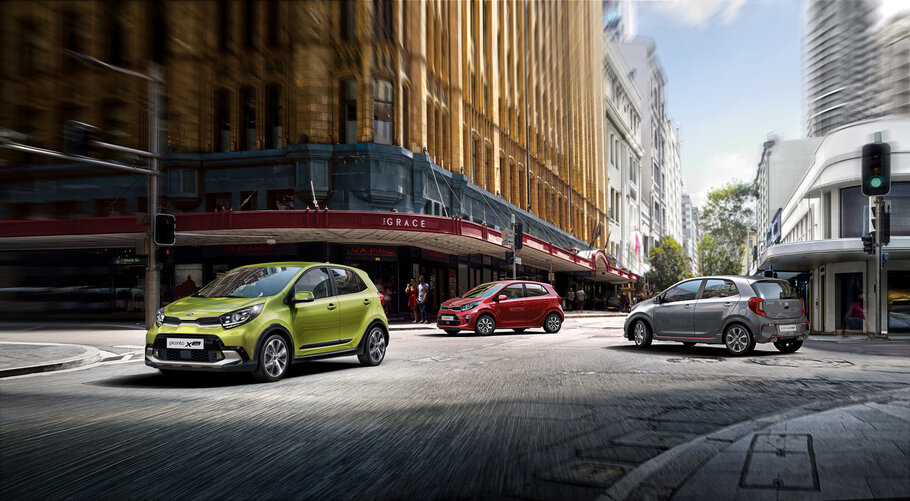
  • UK line up confirmed for revised KIA Picanto and Rio

    2021 Kia Picanto and Rio1

    Kia is cutting a dash this autumn, with updates to its small car collection. On sale from today, the Picanto and Rio both adopt a series of changes to the interior and exterior. Key highlights include the introduction of a new Automated Manual Transmission and ‘Smartstream’ powertrains on the Picanto and a 48-volt mild hybrid ‘Eco-Dynamics+’ drivetrain for the Rio. That’s alongside engine enhancements, revisions to the model line-up, upgrades to technology, the addition of extra equipment, and the latest safety systems.

    Picanto: More distinctive with ‘class-above’ technology
    The smallest model in Kia’s line-up has been substantially upgraded with a new range of safety systems and telematics technologies that you’ll normally see on more expensive models. The revised Picanto features lower CO2 emissions from its new ‘Smartstream’ powerplants and adopts bold styling updates, both inside and out.

    The upgraded Picanto brings with it a suite of advanced safety technology from Kia’s larger cars, making it among the safest cars in its class. It also offers Kia’s new ‘Phase II’ UVO Connect telematics technologies, enhancing vehicle connectivity, with a new 8-inch touchscreen display now offered on grade ‘3’ models and above.

    The ‘face’ of both the ‘GT-Line’ and ‘X-Line’ Picanto models has been revised to give each car a more purposeful design. This starts with the ‘tiger-nose’ grille, which features a new textured surround and open-link appearance. The chrome-effect surround forms a sweeping shape that extends into the lower part of the headlights and gives the car a wider, more planted appearance. Each side of the ‘tiger-nose’ features a red highlight on ‘GT-Line’ models or more technical black trim on ‘X-Line’ models to resemble air intakes.

    Both versions of the car now feature redesigned headlights and four-bulb LED daytime running lights. At the rear, the car also features a new LED rear combination lamp design and a slimmer fog light design, creating a more recognizable rear light signature at the same time.

    Each of the ‘GT-Line’ and ‘X-Line’ models features refreshed front and rear bumper designs with sharper creases in the bodywork for a more contemporary appearance. The changes create a more rugged, robust-looking design for ‘X-Line’ models and, for ‘GT-Line’ models, an appearance which visually links the car to higher-performance ‘GT’ models in Kia’s model range. The larger, wider air intake in the lower bumper is accented by the ‘GT-Line’ body-colored bumpers with gloss black highlights and jewel-like fog lamps. ‘X-Line’ models echo the appearance of SUV protective skid plates, with metal-effect trim bearing the ‘X-Line’ logo, and a gloss black surround which extends from the front grille into the wheel arch surrounds at the side of the car.

    The upgraded Picanto offers a choice of eight vibrant paint finishes, designed to make the car stand out. A new alloy wheel design for grade ‘2’ strengthens the Picanto’s sporty character and is a 16-spoke, 14-inch design.

    UVO Connect ‘Phase II’ telematics with new 8-inch touchscreen
    The Picanto features a larger 8-inch ‘floating’ touchscreen navigation system, replacing the earlier 7-inch system. It also features Bluetooth multi-connection, enabling users to pair up to two mobile devices at the same time – one for hands-free phone and media use, the other for media use only. The system features Apple CarPlayTM and Android AutoTM as standard.

    Offering Kia’s UVO system, the Picanto gives drivers access to live traffic information, weather forecasts, points of interest, fuel prices, and details of potential on- and off-street parking – including price, location, and availability. The UVO App, compatible with Android and Apple smartphones, enables owners to activate a range of functions and features remotely. Users can remotely send route directions to their car before a journey; check the location of their vehicle, and access vehicle reports and diagnostic notifications.

    New ‘Smartstream’ petrol engines
    The latest Picanto is available with two new ‘Smartstream’ petrol engines, each maximizing efficiency and lowering CO2 emissions compared to their predecessors. The engine line-up features a 1.0-liter T-GDi (Turbocharged Gasoline Direct injection) engine producing 99bhp, or a 1.0-liter DPi (Dual-Port fuel injection) engine producing 66bhp.

    A five-speed manual gearbox is standard on all of the engine choices, with a five-speed automated manual transmission (AMT) available on all grades, except ‘1’.

    Automated Manual Transmission (AMT)
    The updated Picanto is the first model equipped with Kia’s new Automated Manual Transmission (AMT). The AMT is based around a five-speed manual transmission with clutch and gear shift actuators to automate clutch operation and gear shifts. Using a single dry clutch, the AMT is a cost-effective option for customers who favor the convenience and ease-of-use of an automatic transmission, without sacrificing the fuel efficiency of a conventional manual transmission.

    New Advanced Driver Assistance (ADAS) Systems
    Several of Kia’s latest Advanced Driver Assistance Systems (ADAS) and a range of new active safety systems to enhance occupant safety, make the Picanto one of the safest cars in its class.

    Standard from specification ‘2’ and upwards, the Picanto’s Advanced Driver Assistance Systems includes Forward Collision-Avoidance Assist (FCA) with a vehicle and pedestrian detection. The updated Picanto is also equipped with Kia’s Vehicle Stability Management (VSM), Torque Vectoring by Braking, Cornering Brake Control (CBC), and Straight-line Stability (SLS) systems as standard, helping drivers maintain control under braking and cornering. The updated Picanto is now fitted with seven airbags as standard throughout the cabin, including a driver’s knee airbag. It also features an ISOFIX child-seat tether and anchor points.

    Rio:  Updated design, mild-hybrid technology, and new connectivity
    A range of enhancements has been revealed for the Rio this autumn, with mild hybrid technology the headline act, alongside new ‘Smartstream’ engines and a ‘clutch-by-wire’ intelligent manual transmission designed to enhance efficiency.

    The revised Rio introduces updated exterior and interior styling, alongside new safety equipment, Kia’s brand new ‘Phase II’ UVO Connect infotainment system, and a new larger 8-inch touchscreen.

    Changes to the exterior styling include a narrower ‘tiger-nose’ grille, with a lower, wider front bumper and bolder fog light surround. A new 16-inch eight-spoke alloy wheel design is introduced for grade ‘3’ models and two new colors are introduced – Storm Grey and Azure Blue – bringing the color palette choices to seven.

    Inside, the Rio brings together a range of visual, material, and technological updates to create a more upscale and enhanced quality ambiance. The biggest change is the introduction of a new larger 8-inch touchscreen on grade ‘2’ models and above and a higher-resolution color 4.2-inch supervision cluster display.

    ‘EcoDynamics+’ petrol mild hybrid with new intelligent Manual Transmission
    The Rio is the first Kia powered by a petrol mild-hybrid electric vehicle (MHEV) powertrain. The new ‘EcoDynamics+’ powertrain pairs Kia’s new ‘Smartstream’ 1.0-litre T-GDi (Turbocharged Gasoline Direct injection) engine with Kia’s 48-volt MHEV system, maximizing fuel efficiency with electric torque assistance and regenerative braking.

    ‘EcoDynamics+’ has been engineered to deliver greater efficiency from internal combustion engines on the road, seamlessly deploying and recuperating electric power. The system supplements the engine’s torque output with power from a compact 48-volt lithium-ion polymer battery and extends the engine ‘off time’ with a new Mild-Hybrid Starter-Generator (MHSG) unit.

    The MHSG is connected by a belt to the engine’s crankshaft and switches seamlessly between ‘motor’ and ‘generator’ modes. In ‘motor’ mode, under acceleration, the MHSG provides electric power assistance to reduce engine load and emissions. As the car decelerates, the MHSG has the ability under certain conditions to switch to ‘generator’ mode, recuperating energy from the crankshaft to recharge the battery.

    The new ‘EcoDynamics+’ powertrain reduces Rio’s CO2 emissions and is offered on the 118bhp versions of the new engine. 48-volt powertrains with seven-speed dual-clutch automatic transmission (7DCT) will be equipped with a Drive Mode Select system, giving drivers the choice to customize their drive with ‘Eco’, ‘Sport’ and ‘Normal’ modes.

    The Rio ‘EcoDynamics+’ is also one of the first models from Kia to be equipped with the brand’s new intelligent Manual Transmission (iMT). The ‘clutch-by-wire’ system contributes to the MHEV system’s greater fuel efficiency and lower CO2 emissions while retaining the driver engagement of a conventional manual transmission. Instead of a mechanical linkage, the iMT’s clutch is controlled purely electronically. It integrates seamlessly with the MHSG to switch off the engine earlier than Kia’s Idle Stop & Go start-stop system when coasting to a halt, improving overall fuel efficiency.

    The 1.25-litre ‘Smartstream’ engine
    There is a further petrol engine in the Rio line-up, a four-cylinder 16-valve unit featuring Dual-Port injection technology. The 1.25-liter unit is from the ‘Smartstream’ family of engines and has been redesigned compared to the engine in the previous Rio.

    Cutting-edge ‘Phase II’ UVO Connect infotainment
    Offering Kia’s UVO system, the Rio is among the first Kia vehicles to offer new ‘Phase II’ UVO Connect telematics features. Rio gives drivers access to a range of ‘Phase II’ On-Board Services, in addition, to live traffic information, weather forecasts, points of interest (POIs), fuel prices, and details of potential on- and off-street parking – including price, location, and availability. The system also features Online Voice Recognition, supported by server technologies, which lets users give voice commands, hands-free, to search for nearby POIs, addresses, weather updates, or send text messages.

    The UVO App, compatible with Android and Apple smartphones, also offers a range of new ‘Phase II’ features, enabling owners to activate a range of functions and features remotely. Users can remotely send route directions to their car before a journey, check the location of their vehicle, and access vehicle reports and diagnostic notifications.

  • New Ford Kuga SUV steers ahead of the pack in first-ever assisted driving ranking from euro NCAP

    Ford Kuga SUV1

    Ford Co-Pilot360 driver assistance technologies designed to deliver an intuitive and stress-reducing driving experience have earned the new Ford Kuga SUV a leading position in Euro NCAP’s first Assisted Driving grading.

    Kuga finished ahead of vehicles including the Tesla Model 3, Volvo V60, and Volkswagen Passat in the overall ranking, following independent testing of technologies that automatically help the SUV maintain a comfortable driving distance from vehicles ahead, stay centered in its lane, and adjust the speed to within legal limits.

    Euro NCAP’s new Assisted Driving program evaluates features that share control of the vehicle with a driver who retains full responsibility; helping to detect and respond to objects and events for effortless, confidence-inspiring journeys.

    Kuga scored more than twice as many points as the Tesla Model 3 in the Driver Engagement category and significantly outscored both the Volvo V60 and Volkswagen Passat for Safety Backup during two weeks of tests, which also assessed the effectiveness of Vehicle Assistance from the technologies.

    “For all the freedom and independence it gives us, driving on today’s busy roads can be a demanding and stressful experience. That’s why we designed technologies to take some of the strain from drivers and help them focus more clearly on the road,” said Stuart Southgate, director, Safety Engineering, Ford of Europe. “We worked hard to make Kuga’s assisted driving experience as intuitive, natural, and engaging as possible so that drivers would enjoy taking full advantage of the technologies available.”

    Kuga’s available Adaptive Cruise Control (ACC) with Stop & Go, Speed Sign Recognition, and Lane Centring uses a combination of radar and camera to monitor the road and traffic ahead, and can automatically keep pace with traffic and road flow as well as speed restrictions in many driving scenarios.

    Stop & Go – available with Kuga’s eight-speed automatic transmission – enables the ACC system to bring the vehicle to a complete halt in stop-start traffic using up to 50 percent of total braking force, and automatically pull away if the stopping duration is less than 3 seconds. For stopping durations greater than 3 seconds, the driver can push a steering wheel button or gently apply the accelerator to pull away.

    Speed Sign Recognition can adjust the vehicle speed to within legal limits by monitoring the roadside and overhead gantries for speed signs, in addition to using information from the on-board navigation system.

    Lane Centring technology monitors road markings and can apply gentle but discernible torque to the steering system to help drivers stay centered in their lane whenever the ACC system is activated. Designed to support drivers at speeds up to 125 mph, the technology will deliver visual and audible warnings if it detects a lack of steering wheel input from the driver.

    “The Ford Kuga demonstrates across a wide variety of cars tested that a Good grading is achievable on a high-volume family SUV,” said Richard Schram, technical director, Euro NCAP. “Ford impressed in our first ever Assisted Driving technology grading, showing high performance in all areas and a good balance between Driver Engagement and Vehicle Assistance with a robust Safety Backup.”

    Kuga also features advanced technologies designed to help prevent or mitigate the effects of accidents, including Blind Spot Assist and Intersection Assist – both making their global debuts – and Pre-Collision Assist with Active Braking.