Author: Alev Kochoolu

  • Supercharge – new road-car based global electric motorsport series unveiled

    Supercharge1

    SuperCharge, an all-new global motorsport series based on electric crossover road cars, today broke cover on its plans to help shape the new future for motorsport.

    With a planned 2022 start, the inaugural series is targeting eight events taking place right across the globe, in cities from Asia-Pacific, China, Europe, Middle East and USA aiming to provide spectacular racing entertainment and ultimately promote the uptake of electric cars.

    Designed to appeal to audiences of all ages, SuperCharge has been created, in consultation with some of the world’s leading car manufacturers, as a new racing concept to showcase next-generation electric road cars in the volume and growth part of the market – compact SUVs and crossovers, as well as leading-edge battery technologies. Resetting the relevance, appeal and value of motorsport, the world’s newest racing series aims to be located in bustling urban environments based around an access all areas, fun, informative, festival-style atmosphere.

    “Motorsport is at a crossroads,” says SuperCharge Managing Director and co-founder Rob Armstrong. “Alejandro Agag and Jean Todt have done a great job pioneering electric motorsport. With many countries and cities already announcing plans to ban internal combustion-engine cars in the coming years, the need for road car-based electric motorsport is becoming more and more compelling. We believe it is only a matter of time before there are more electric motorsport series. Given this rapidly increasing EV momentum, we believe the timing and appeal of SuperCharge is ideal and see a clear space for it as the road car-relevant motorsport series.”

    “We have carefully conceived SuperCharge to take account into these societal changes and to consider the needs of car companies, fans, commercial parties and venues in order to make a truly sustainable and commercially viable new series. SuperCharge takes motorsport into a new and hugely relevant arena and we can’t wait to spark the series into life across the globe.”

    Informing, educating and promoting electric vehicles (EVs) for all
    The planning and development of SuperCharge over the past 18 months has been carefully undertaken to ensure it is fully relevant, cost-effective and incubates technological advancements. At the same time, the new series offers clear technical and commercial benefits for car manufacturers. The concept will attract new audiences for electric vehicles, as well as give manufacturers the scope to develop, test and hone electric car battery technology innovations (including smart energy management systems) and relevant software in real-world racing.

    As a manufacturer-focused series, SuperCharge is based on cars recognisable on the outside as electric road cars which the public can, or will be able to, buy. Nevertheless, the SuperCharge race cars, codenamed SC01, will offer awe-inspiring performance. With similar acceleration to a Formula 1 car, they will adopt an electric motor drivetrain on the front axle and one on the rear axle, generating peak power from the battery of up to 500kW (equivalent to around 670bhp) and rocket to 0-100 km/h in a staggering 2.5 seconds.

    Teams will be able to adapt the standard specification car in two ways. The first is the car’s bodywork, so the public have a clear visual link between the striking race car on the track and the one they can, or will, enjoy on the road. The second is battery technology system development, that can in turn enhance the underlying battery performance of road-going EVs. To reflect the full electric ecosystem on public roads, the SuperCharge race car will also be designed to use roadside fast charging systems and connectors.

    To ensure racing is extremely competitive and entertaining, the technical regulations of the series mean the only ways of gaining improved on-track performance come from a combination of driver skill (driver aids including launch control, traction control, brake-by-wire are explicitly outlawed), mechanical set-up (including suspension and differential adjustment) and team development of battery technology systems – spanning power draw-down, battery geometry, cooling and battery management systems.

    Power to the people
    Set in the crucible of relatively short 1km (depending on location) SuperTrack circuits, the high-quality, action-packed entertainment experience has been carefully crafted to captivate spectators – and viewers across the globe – for existing motorsport fans and newcomers to the sport.

    An ‘amphitheatre’ concept, which can be adapted to suit a variety of urban venue settings from parks, street circuits or existing race tracks, ensures live audiences will always be right in the heart of the action. Extensive views of the fast-paced-action will be assured through a myriad of viewing platforms.

    Every SuperCharge race track will feature four unique characteristics. The first is the 2.5m ramp that could project the cars up to 10 metres on every lap. Able to accommodate two or more cars abreast, it will be an integral racing element and core circuit feature, enabling drivers to utilise different jump entry and exit tactics.

    The second feature of the circuit is the low friction zones that will allow the cars to slide, drift and touch, increasing the drama and proximity of the close-quarter racing. Every SuperTrack will also feature a water gantry, adding yet another dimension to the circuit to test driver skill by creating a dry/wet/dry surface transition.

    The final feature is the SuperLoop, a once-per-race lap extension that can be deployed tactically to gain an advantage over competing drivers, and which injects an extra dose of jeopardy into every race.

    Supreme quality racing
    Given the multitude of track conditions, SuperCharge naturally lends itself to being a playground for some of the most talented motorsport drivers. Whether the racers emanate from circuit racing, rally, cross country or off-road, the rulebook for racing’s latest series will reward driver skill, providing a gladiatorial stage to display the capabilities of high-performance electric crossover race cars.

    A simple, easy to understand format
    Each SuperCharge event is based on a knockout format which pits 16 cars and drivers drawn from eight teams against each other. Based on a series of 15 quick-fire races, with a maximum of six laps each depending on competition stage, the adrenalin-fuelled entertainment will come thick and fast, generating unabating excitement as contenders progressively fall by the wayside en route to a climactic finale.

    The rewards for both teams and drivers in SuperCharge come by virtue of a clear points system. Every car competing over the course of the eight-race series will earn points towards the three separate titles: a teams’ championship, one for manufacturers and another for competing drivers, with points rewarding progress through the knockout process.

    Enabling cleaner, smarter cities
    With a purpose to “supercharge” the race to a more sustainable future, the series intends to create spectacular experiences in urban environments that enable the pioneers of electric mobility to inform, educate and inspire future generations. SuperCharge aims to transform the appeal and uptake of EVs for cities actively targeting improved air quality and climate change mitigation through e-mobility, particularly through its ambition to use 100% renewable energy.

    Centre-stage in the SuperCharge paddock concept is a charging zone that adopts regular road car connectors and roadside fast charging to inform the public around the whole EV ownership experience.

    Consistent with the ethos of the series, the footprint and costs of SuperCharge race events have also been structured to be environmentally and financially sustainable. Among the measures being incorporated are the use of existing city racing infrastructure wherever possible, as well as sea and road freight.

    Informed by the Past, Expertly Designed for the Future
    SuperCharge’s Managing Director and co-founder is Rob Armstrong, who brings his extensive experience from Formula 1 as well as WME IMG as its Global Head of Motorsport, responsible for the FIA World Rallycross Championship and the FIM Speedway World Championships. His co-founder is Max Welti, a former professional racing driver and seasoned expert who has directed global motorsport programmes for car manufacturers including Audi, BMW, Ford, Lamborghini, Mercedes, Porsche and Volkswagen.

    Commenting on his involvement with SuperCharge, Max Welti adds, “I’ve been involved with many ground breaking race series as both a driver and promoter and realised that motorsport as we know it has to change. SuperCharge has been developed to be an intrinsic part of that change, and we are working closely with leading manufacturers and key suppliers, like German car constructor Holzer, in turning this exciting concept into reality. Undoubtedly, it is an exciting time to be involved in revolutionising the next generation of motorsport.”

    Günther Holzer, Managing Director, Holzer said: “We are delighted to be involved in this exciting project. Electric motorsport will be a major part of our future business and we look forward to working with SuperCharge on this next-generation of race cars.”

    SuperCharge has also benefitted from the behind-the-wheel perspective of professional racing drivers including the globally recognised, versatile and multi-talented driver and media personality, Tanner Foust.

    Tanner Foust commented:

    “The SuperCharge series has amazing allure for a race driver like me. In my career I’ve found that for a new motorsport to grow successfully it has to appeal to a young demographic, as well as the major car manufacturers. The excitement of electric acceleration, high-performance and cutting-edge technology, combined with the tempo of the race day, will tick both boxes and in turn ensure a very successful series. At a time when the automotive enthusiast world is so strong, and yet the manufacturer involvement in traditional motorsport is weakening, we really need an environmentally and financially sustainable, technologically relevant racing series like SuperCharge to reinvigorate motorsport at its core. I can’t wait!”

    Re-defining the paddock, revolutionising media delivery
    SuperCharge wants to re-define the paddock experience as a fully immersive experience for race spectators that extends beyond motorsport to present a vision of future technology and sustainability that will engage young, urban and environmentally conscious fans. Sport viewing habits have altered significantly in recent years and as one of the first motorsport series to be born in the digital age, SuperCharge intends to take maximum advantage through a digital-first media strategy, more details of which will be released in the coming months.

    SuperCharge is working closely with both the British Automobile Racing Club (BARC) and Motorsport UK as it seeks to apply to become an FIA International Series.

  • Mazda expands official mx-5 restoration parts programme for mk1 owners in Europe

    1989 Mazda MX-51

    Revealed at the 1989 Chicago Motor Show, the Mazda MX-5 has become a landmark car in the 100-year history of Mazda – a car that is the very essence of the Jinba Ittai driver-and-car-as-one philosophy that goes into every Mazda. With more than one million cars sold across four generations, the Mazda MX-5 is the world’s best-selling two-seater roadster and continues to win new fans across the world.

    However, for many MX-5 fans it’s the timeless first-generation that’s closest to their hearts. Now into its third decade, the original Mazda MX-5 is as popular as ever with sports car enthusiasts and in recent years has begun to be even more accepted as a true classic to be preserved, enjoyed, and restored. With the popularity, rarity, and values of Mk1 MX-5s rising, especially original UK cars, the first-generation MX-5 is fast attaining the revered classic status it deserves.

    With this in mind, Mazda Corporation is introducing an expanded range of official reproduction parts that will allow owners to enjoy and enhance their Mk1s for many years to come with factory approved parts and components. In total there are now 117 left-hand drive and 156 right-hand drive vehicle parts available to support first-generation MX-5 restoration projects.

    To ensure Mazda introduced the most needed parts, the company consulted specialist retailers and MX-5 fan clubs across Europe. All the parts will be manufactured in Japan using modern methods and the highest quality materials while maintaining the look and feel of the original components. The new range includes parts that enthusiasts have been frequently searching for, including a newly-developed fabric hood that uses the same rear screen material as the original version. Continuing the authentic approach, Enkei Wheels will be manufacturing aluminum wheels that perfectly match the original design, but will be using modern technologies to make them lighter and more hard-wearing.

    There will also be a large list of replacement interior trim parts, mechanical components, and smaller bolts and washers. Commenting on the increased list of official first-generation MX-5 parts that will be available to order from UK Mazda dealers, Mazda Motors UK Parts and Accessories Marketing Manager, Steve Rose said: “right from its launch here in 1990, the MX-5 has always been hugely popular in the UK, so we are delighted to be able to offer Mazda Genuine Parts through our Authorised Repairer Network allowing our customers to keep their MX-5 100 percent Mazda”.

    Adding, “with the early cars becoming modern classics it’s great to see so many still being driven and enjoyed. Whether it’s a full restoration or general maintenance, having a ready supply of genuine parts means these cars can continue to be enjoyed for years to come”.

    A total of 20,132 first-generation MX-5s were officially imported to the UK and now there’s an even bigger range of official parts for the original MX-5 owners in the UK, while the current Mazda MX-5 range has recently been updated with the 2.0-liter 100th Anniversary Special Edition and the 1.5-liter R-Sport. Both cars continue a long tradition of offering distinctive, stylish, and exclusive limited-edition models.

  • Fiat Tipo cross unveiled as Tipo line-up receives refresh

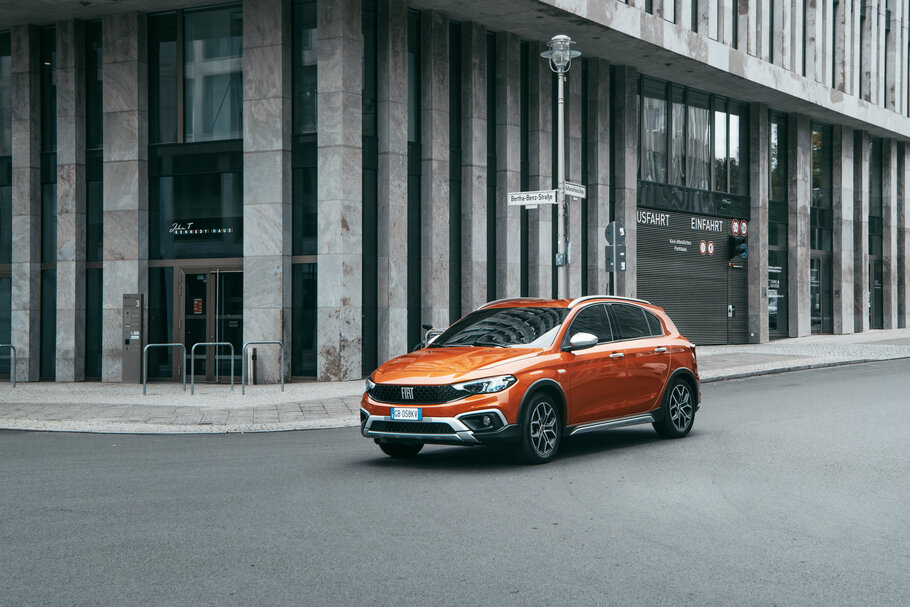
    2021 Fiat Tipo Cross1

    The Fiat Tipo range line-up has been updated with a refreshed design, new technology, and an updated engine offering.  The line-up is also being expanded with the addition of the new Tipo Cross.

    New Tipo Cross
    The new Tipo Cross brings a new variant to the Tipo family with a more powerful stance on the road, a new grille design that extends below the headlights, and a higher ride height. The new Tipo Cross is almost 7cm taller than the Tipo.

    Giving a more solid and muscular appearance, with an exclusive skid plate, bumper featuring a prominent bull bar, side skirts, and roof bars available exclusively on the Station Wagon version. Larger tires as standard create an even more robust look.

    New Tipo
    The Tipo range has been completely refreshed with a more modern, dynamic, and elegant look, featuring updated headlights, now with full-LEDs, refreshed bumpers and a redesigned grille, with the new Fiat badge. The Tipo is also the first Fiat to take on this wordmark logo, following the recently unveiled New 500.

    Inside, the passenger compartment is brand-new, too with a fully configurable 7-inch TFT digital cluster to replace the previous analog instrument panel. A more ergonomic steering wheel also provides better visibility of the 7-inch TFT cluster while the air conditioning controls have been updated with new chrome and black inserts.

    Tipo, a success story
    The Fiat Tipo was launched in 2016 with a saloon version, 5-door, and Station Wagon, and now the family is set to grow with the addition of the new Tipo Cross. From launch, it has contributed to the performance of the Fiat brand, with more than 70% of its sales volumes in markets beyond Italy and a total of 670,000 units sold.

    Further UK information on the New Fiat Tipo and Tipo Cross will be provided in November.

  • Vauxhall introduces 48-hour test drive programme on Corsa-e

    www.matthowell.co.uk 07740 583906

    Vauxhall is offering potential buyers a 48-hour test drive in the all-electric Corsa-e for a limited time only.

    The ‘Switch it up’ test drive offer runs from now until 1st November and gives potential buyers two full days to experience the all-electric Corsa-e. The offer will particularly help potential first-time electric buyers to find out how easy it is to live with a fully electric vehicle like the Corsa-e.

    Powered by a 50kWh battery, the Corsa-e comes with a zero-emissions range of up to 209 miles from a single charge and supports up to 100kW rapid charging technology – allowing for an 80 percent charge in as little as 30 minutes.

    Vauxhall offers with the Corsa-e a free six-month subscription to the Polar public charging network, the UK’s largest public charging network with more than 7,000 charging points nationwide. Vauxhall is also offering buyers a PCH rental at £275 with an advance of £2,200.

  • Size matters: Hyundai motor’s smallest EV revealed

    Hyundai small EV1

    Hyundai Motor Company today revealed the first glimpse of its smallest EV yet, with a video sketching its unique and innovative construction.

    This petite EV’s exterior style is based on the ‘45’ EV concept that Hyundai presented in 2019 at the International Motor Show (IAA) in Frankfurt. Hyundai’s designers adapted the signature ‘kinetic cube lamp’ design of ‘45’ along with its angular yet smooth profile to create this yet-to-be-named EV that sports a Performance Blue exterior color with orange accents.

    This ‘little engine that could’ packs two DC motors that push it to the blistering top speed of 7 km/h. Only the bravest souls will take the wheel of this speedster. To boost driver confidence, Hyundai designers took inspiration from motorsports by placing just one seat in the middle of the car.

    In keeping with the 45’s design heritage theme, Hyundai has built this unique passenger vehicle out of a traditional eco material – wood. This new EV does not have an officially rated driving range yet, but driver’s laughter is believed to fuel the vehicle to travel further based on its Emotion Adaptive Vehicle Control (EAVC) technology.

    Further details will be revealed soon on how this one-of-a-kind EV will offer a unique mobility experience for young customers.

  • Skoda continues its electric evolution as Octavia adds iv plug-in hybrid

    skoda1

    ŠKODA is continuing its ambitious electrification programme with the addition of a new iV plug-in hybrid model to its award-winning Octavia range. Using the same petrol/electric drivetrain technology seen in the Superb iV and the Octavia vRS iV, the new Octavia iV is priced from £30,795 OTR and is available in hatch and estate forms.

    Thanks to its plug-in hybrid drivetrain, the Octavia iV is the most fuel-efficient Octavia ever built with a WLTP fuel consumption as low as 282.5 -188.3mpg. CO2 outputs are equally impressive at just 22-33g/km on the combined cycle.

    Plug-in hybrid system
    Key to the Octavia iV’s low fuel consumption is its advanced petrol/electric plug-in hybrid system that combines the strength and cruising ability of a four-cylinder 1.4 TSI petrol engine with a high-torque, zero emissions 85kW electric motor. The total power output of the hybrid system is 204PS while torque is a remarkable 350Nm.

    Power for the electric motor comes from a 13kWh battery back located in the floor just ahead of the rear axle. The Octavia iV has an all-electric WLTP driving range of up to 43 miles and features a host of driving modes that owners can fine-tune to their needs. For example, selecting E-mode will keep the Octavia in electric drive only and is perfect for driving in urban areas or on short commutes.

    In Hybrid mode, the car’s electronic control unit continuously assesses the current driving situation. As soon as the vehicle is in motion, interaction between the petrol engine and electric motor is automatically regulated. Either they complement one another when used simultaneously, or the electronics activate only one of them. Hybrid mode also offers the option of charging the battery via recuperation or the engine while the car is moving. This allows the driver to set their own desired battery level. If the current charge is below the specified amount, the vehicle tops up the battery using the petrol engine and brake energy recovery until the desired mark is reached. If the current charge is higher than specified, the energy is used until the desired level is met, and this is then maintained.

    The system can also operate completely autonomously in Hybrid Auto mode. This means the control unit decides based on the current driving situation when to draw power from the battery and when to recharge it using recovered energy. In Hybrid mode, an output of 150PS is available at all times. This can be boosted to 204PS in kickdown by pressing the accelerator pedal down fully or selecting Sport mode.

    Charging
    The Octavia iV’s plug-in hybrid system can be charged easily via an industry standard Type 2 connection (cables included as standard). The charging port is located on the passenger side front wing and is equipped with an LED light that shows the status of the charging system. The Octavia iV on-board charger is rated at 3.6kW, which means that a full charge on a standard domestic or workplace 16A supply will take 3.5 hours from empty to full.

    In addition to being supplied with a 16amp AC charge cable for wallbox/chargepoints, the Octavia iV also comes with a 10amp mains UK 3 -pin charge cable as standard.

    Body styles and specifications
    The Octavia’s plug-in hybrid drivetrain is available in two familiar trim levels at launch; SE Technology and SE L. Both can be specified with hatch or estate body styles and come with a host of equipment enhancements over their petrol or diesel-powered siblings. For example, both iV models add 18-inch Vega Aero alloy wheels, decorative door sills and a storage compartment in the boot for the supplied charging cables. Both iV models also feature unique instrumentation and displays that show the vehicle state of charge along with the various driving modes.

  • New my20 Nissan leaf – new technology, new specifications and lower pricing for Nissan’s best-selling EV

    Nissan LEAF1

    Nissan is delighted to announce the start of production for the MY20 LEAF range, which includes a new entry-grade 62kWh model and lower ‘On the Road’ pricing for the range-topping Tekna e+.

    With production starting from 16th November, specification enhancements to both 40kWh and 62kWh versions include the introduction of an Intelligent Rearview Mirror on Tekna models, shark fin antenna as standard from N-Connecta, Blindspot Intervention on all grades, and the addition of telescopic adjustment on the steering wheel.

    The introduction of the e+ N-Connecta to the LEAF range also creates a new entry-grade for 62kWh battery capacity models. LEAF e+ N-Connecta versions start from £32,695 OTR, including £3,000 Government Grant.

    This new 62kWh grade matches the specification offered on N-Connecta 40kWh while benefiting from a higher capacity battery, delivering 239 miles of range (WLTP), up to 217PS power, 340Nm of torque and a 0-62mph time of 6.9 seconds.

    Meanwhile the price of the range-topping e+ Tekna 62kWh has been reduced by £1,685 to £34,710. The limited edition 62kWh N-TEC has already redefined segment value for long-range EV driving and today’s pricing adjustment on e+ Tekna means that for only £1,415 more, a customer can access this incremental specification. This repositioning places the LEAF range extremely competitively against the competition.

    LEAF Acenta and N-Connecta 40kWh and LEAF N-TEC 62kWh see no price changes, with only Tekna 40kWh versions receiving a price adjustment of £315 to include Nissan’s Intelligent Rearview Mirror as standard.

    ProPILOT, Nissan’s advanced Driver Assistance technology, and ProPILOT Parking Assist option packs also benefit from a price reduction. ProPILOT is now £145 cheaper on N-Connecta versions at £450, whilst ProPILOT Parking Assist is £295 less, available for £795 on Tekna grades. More than half of LEAFs sold have been equipped with ProPILOT.

    James Bird, EV Product Manager, Nissan Motor (GB) Ltd.; “The Nissan LEAF continues to set the standard for advancing the affordability and desirability of zero-emission driving. The latest updates for the introduction of the MY20 LEAF range ensure the model is very competitive against other EVs in the segment, and even more accessible for customers.”

    The second-generation LEAF has been a continued success since its introduction in 2018, with UK sales up 56% year-on-year in 2020 (Jan-Sept vs. Jan-Sept 2019). This has enabled Nissan to consistently improve the model’s competitiveness, reducing the OTR price on certain grades and lowering the cost of options including ProPILOT.

    MY20 LEAF SPECIFICATION ENHANCEMENTS
    The new Intelligent Rearview Mirror – standard from Tekna or a £395 option on N-Connecta versions – features a built-in LCD monitor displaying images from a high-resolution camera mounted on the rear of the vehicle. Drivers can switch between the LCD monitor and the standard rearview mirror, depending on the driver’s preference.

    The driver is able to see unobstructed views behind the car through the clear video imagery, as well as use the rearview mirror to check on passengers and pets in the rear. This helps make for a safer and more comfortable driving experience.

    The high-quality camera and image processing system achieves rearview image clarity in the LCD monitor with minimal glare, even during sunrise or sunset conditions, or when being followed by a vehicle with strong headlights.

    Blind Spot Intervention is now standard across all grades adding another safety feature to the already comprehensive suite of driver assistance technologies.

    A shark fin antenna is now standard from N-Connecta, helping reduce the overall height of the vehicle for better access to garages, and enhances the exterior design.

    A new telescopic steering wheel is standard across the range with the steering column now fully adjustable for both reach and rake, allowing customers to find their ideal driving position.

    The MY20 LEAF also sees the introduction of stylish Ceramic Grey as a body colour option, also available as a two-tone design with Pearl Black Metallic, priced at £745 and £1,095 respectively. Arctic White, Spring Cloud Green and the two-tone Spring Cloud/Pearl Black options have been discontinued for this model year.

  • Bespoke ‘wraith – inspired by earth’ touches down in Abu Dhabi

    2021 Rolls-Royce Earth Car Wraith1

    “We’re used to clients bringing us grand visions for their Bespoke Commissions, but this provided a new perspective altogether. In our response to the brief, we’ve worked at both the ‘macro’ level, referencing the Sun and planets of the whole Solar System, and the much more personal ‘micro’ level, centring our view of the world on the place the customer calls home.”
    Michael Bryden, Lead Bespoke Designer, Rolls-Royce Motor Cars

    Inspiration for a Bespoke Rolls-Royce can come from just about anywhere – and in the case of the marque’s latest creation, literally everywhere. Commissioned through Rolls-Royce Abu Dhabi, ‘Wraith – Inspired By Earth’ takes its design cues from the entire Solar System, and our own planet as seen from space.

    The exterior is finished in Royal Blue, representing the 75% of the Earth’s surface that is covered by water. The most striking feature, however, is the bonnet artwork, which depicts a satellite’s-eye view of the Middle Eastern region. Centred on the United Arab Emirates, the panorama extends across the Red Sea, the Arabian Sea and the Gulf of Oman, all meticulously air-brushed by hand in a process that took over 100 hours to complete. The exterior is finished with a hand-painted Emerald Green coachline incorporating the Sun and the eight planets of the Solar System – Mercury, Venus, Earth, Mars, Jupiter, Saturn, Uranus and Neptune.

    By contrast, the interior aesthetic focuses on the Earth’s surface and the human and natural life that inhabits it. The seats are made from Moccasin leather to mimic the sands of the Emirates’ deserts; Navy and Cobalto Blue accents are suggestive of rivers and lakes and Emerald Green piping symbolises nature in all its forms. Arctic White ‘RR’ monograms and stitching hint at clouds and translucent running water.

    The rear waterfall features a spectacular scene of atmospheric clouds rendered in minutely detailed embroidery using Photoflash technology. On the fascia, the Piano Milori veneer is embellished with a satellite image of the Middle East, so realistic that it appears to be a photograph but in fact is skilfully air-brushed. The Bespoke Starlight Headliner is embroidered to illustrate all the planets of Solar System, centred on the Sun. Other Bespoke details include treadplates, a clock with metal radial background, and inlays showing the planets in silver, with planet Earth accentuated in gold.

  • Giulia GTA put through paces by Alfa Romeo racing Orlen f1 drivers

    2020 Alfa Romeo Giulia GTA1

    The Alfa Romeo Racing – ORLEN Formula 1 drivers, Kimi Räikkönen and Antonio Giovinazzi, participated in a day of real-world tests on the new Alfa Romeo Giulia GTA and GTAm at the famous Balocco Proving Ground, fine tuning parts developed in collaboration with Sauber engineering.

    The priceless technical know-how of Sauber Engineering
    The Giulia GTA project benefits from the long-standing partnership with Sauber Group AG and leverages the know-how of its engineering and aerodynamics divisions. Alfa Romeo entrusted Sauber Engineering with the production of most of the carbon fibre components in the GTA and GTAm, especially those with an aerodynamic impact. These include the new front bumper, the side skirts, the diffuser, the GTA spoiler and the GTAm aerowing.

    Sauber boasts 50 years of experience in motorsport, including 27 in Formula One, and is one of the few F1 teams with its very own wind tunnel. The facility, located in Hinwil, Switzerland, is one of the most advanced in Europe, equipped with state-of-the-art technology.

    Aerodynamic research from the wind tunnel has been used to hone components for the Giulia GTAm, including the wing appendages and fully faired underbody. The manually adjustable front and rear wings on the GTAm have been developed to adapt the car’s aerodynamic performance to any kind of track or road, at the request and preference of the driver.

    The GTA and GTAm also benefit from a new diffuser capable of increasing the car’s downforce, guaranteeing excellent grip at high speeds. On the Giulia GTAm, the high-downforce aerodynamic configuration is able to deliver an impressive lift coefficient, twice as much as the GTA and an astonishing three times that of the Giulia Quadrifoglio, which already sets the benchmark in its class.

    The benefits of this collaboration have ranged from engineering, rapid prototyping and finally to the production of these specialised components.

    F1 know-how working on the GTA project
    The F1 drivers utilised the “Autodelta” workshop, the historical Alfa Romeo racing department, before testing the cars to their limits and providing feedback to the engineering team. All Alfa Romeo sports cars have undergone development and testing at Balocco since the 1960s.

    As shown in the exclusive video shot at Balocco, on the historic circuit known as the “Alfa Romeo Track”, world champion Räikkönen and young Italian Giovinazzi worked closely with the engineers, focusing on technical suggestions to optimise aerodynamics and handling. To complete the fine-tuning of the GTA and GTAm, the F1 drivers analysed the changes made to the car and gave an account of their impressions on the track, resulting in a joint assessment of the effects on vehicle dynamics.

    Giovinazzi offered tips on the car’s setup, paying special attention to the new carbon fibre components and the new technical solution adopted for the wheels with a single locking nut. “It is great to see the improvements we made to the cars today”, Antonio Giovinazzi said at the end of the test session.

    Räikkönen worked with the aerodynamics department on the new appendages added to the new adjustable front splitter and to the new manually adjustable rear wing. He also examined the overall balance delivered by these new components, along with the diffuser and the underbody fairing, concluding; “I find them a perfect mix of everyday use and track use”.

    The inspiration: 1965 Giulia GTA
    The revived Giulia GTA is technically and conceptually inspired by the 1965 Giulia GTA, the “Gran Turismo Alleggerita” developed by Autodelta, based on the Giulia Sprint GT which had triumphed in races all over the world. The new Alfa Romeo Giulia GTA limited edition is derived from the Giulia Quadrifoglio, equipped with an upgraded version of the 2.9-litre V6 Bi-Turbo engine, now with 540hp. In GTAm guise it benefits from a weight reduction of 100kg, giving it an astonishing power-to-weight ratio of 2.82kg/hp.

  • Suzuki introduces the new Across

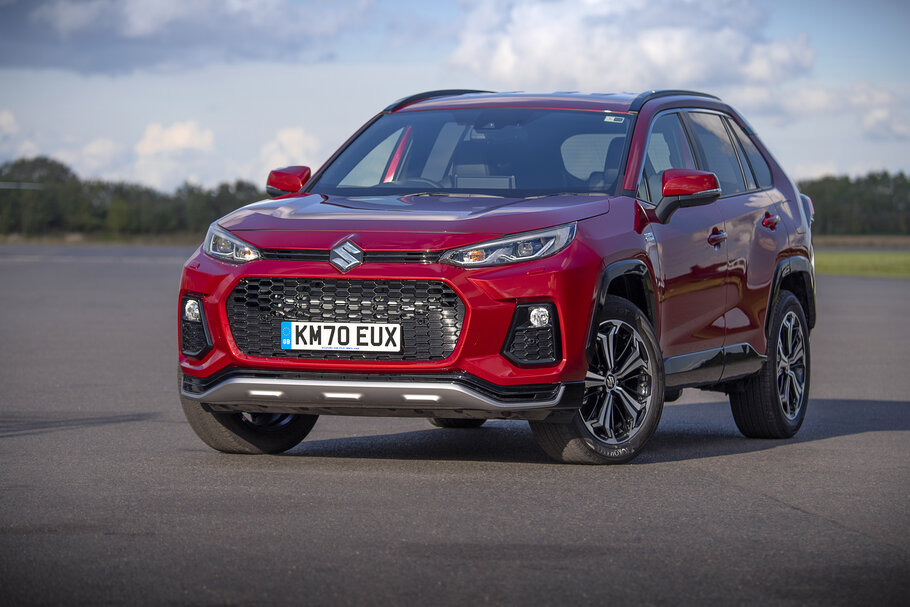
    2021 Suzuki Across Hybrid1

    Suzuki is launching the new Across in Autumn 2020, a robust and sporty SUV equipped with a sophisticated Plug-in Hybrid system and E-Four electronic 4×4, delivering uncompromising performance and efficiency with the capability and styling of a full-fledged modern SUV.

    The Across is the first model supplied from Toyota Motor Corporation under the collaborative business agreement between Toyota and Suzuki. UK sales are set to start in November 2020 and followed soon after by the second new collaborative model, Swace, which is based on the Corolla Estate Hybrid and manufactured in the UK.

    STRIKING SUV DESIGN
    The bold and sporty design of the Across conveys confidence from every angle. Robust polygonal motifs across the body form a bold physique that is further highlighted by characteristic SUV wheel arch mouldings, a sporty large open grille and a front bumper with a prominent silver under garnish that helps to express the car’s all-round capabilities.

    Further key features include sophisticated LED headlamps with a bi-beam projector (combining low and high beams) and an LED DRL. Premium quality 19-inch alloy wheels are fitted as standard with black gloss coating and distinctive polished face.

    Storage space
    While cabin space is designed for ample comfort in both the first and second rows, there has been no compromise in luggage space. The large 490-litre* luggage compartment provides plenty of space to store luggage for a wide range of lifestyles and purposes. For added versatility, the right-hand side of the luggage compartment is equipped with a mains voltage (220V) electrical outlet and 12V accessory socket.

    Body colours
    The Across is available in six different colours – White Pearl Crystal Shine, Silver Metallic,  Attitude Black Mica, Sensual Red Mica, Grey Metallic and Dark Blue Mica.

    CUTTING-EDGE PLUG-IN HYBRID PERFORMANCE
    The Plug-in Hybrid system in the Across provides unparalleled fuel economy and smooth acceleration, with CO₂ emissions of just 22g/km**.

    At the core of the Plug-in Hybrid system is a powerful front electric motor that delivers vigorous torque at low speeds and combines with a powerful 2.5-litre petrol engine for rapid acceleration at higher speeds.

    With maximum output of 134kW and 270Nm of torque, the front electric motor draws its energy from an 18.1kWh (50.9 Ah) high capacity lithium-ion battery mounted beneath the floor. This provides a class leading EV range of 75km (46.6 miles).

    Engine
    Paired to the electric motor is the A25A-FXS Dynamic Force engine, which functions as a charger for the battery and provides power assistance to the electric motor during high-speed driving if required. Designed to deliver both high output and excellent fuel efficiency, the engine features a long stroke and high compression ratio, and both direct cylinder fuel injection (DI) and port fuel injection (PFI) that vary depending on driving conditions to raise output and fuel efficiency while lowering emissions.

    The Plug-in Hybrid system is equipped with four modes which are: Default EV mode, Auto EV/HV mode, HV mode, and battery charger mode which the driver can select depending on driving conditions and battery status. In EV Mode the vehicle is driven entirely by the power of the electric motor even under full acceleration. When in Auto EV/HV mode and HV mode, the engine contributes to power delivery when required, such as when the accelerator is pressed strongly. To store electricity for EV mode when the charge is low, the battery charger mode runs the engine to fully re-charge the battery. The powerful lithium-ion battery has 96 cells, voltage of 355V and a capacity of 50.9 Ah.

    ADVANCED 4X4 CAPABILITY
    The state-of-the-art E-Four electronic 4×4 system in the Across provides drivers with genuine 4×4 performance as well as maintaining superior fuel efficiency.

    The system features an independent 40kW rear motor that works in conjunction with the front motor to provide front : rear torque variation ranging from 100:00 to 20:80. Benefits of this system include enhanced stability during take-off on slippery surfaces such as snow covered roads, and confident handling when cornering on varying road surfaces.

    AWD Integrated Management (AIM)
    Central to the E-Four system is the highly sophisticated AWD Integrated Management (AIM), which controls not only drive force distribution, but also engine throttle control, transmission shift scheduling, Electric Power Steering (EPS) assistance and braking, according to the driving conditions.

    Trail Mode
    Trail Mode is an automatic limited slip differential control feature that ensures the best possible grip and control on slippery surfaces. The system works by applying the brakes to the wheels that begin to lose grip and redirects torque to wheels that maintain grip. The feature also adjusts the throttle and transmission shift pattern to keep the vehicle moving.

    ADVANCED SAFETY AND TECHNOLOGY FEATURES
    Fully equipped with the latest smart safety features, the Across offers confidence and peace of mind for both driver and passengers on every journey. Some of the key safety features include driving assist functions such as Pre-Collision System (PCS), Lane Tracing Assist (LTA) and Dynamic Radar Cruise Control (DRCC), which use a millimeter-wave radar and monocular camera.

  • Uniting two icons of speed in one spectacular car: global debut for MclLaren Elva gulf theme by MSO at Goodwood Speedweek

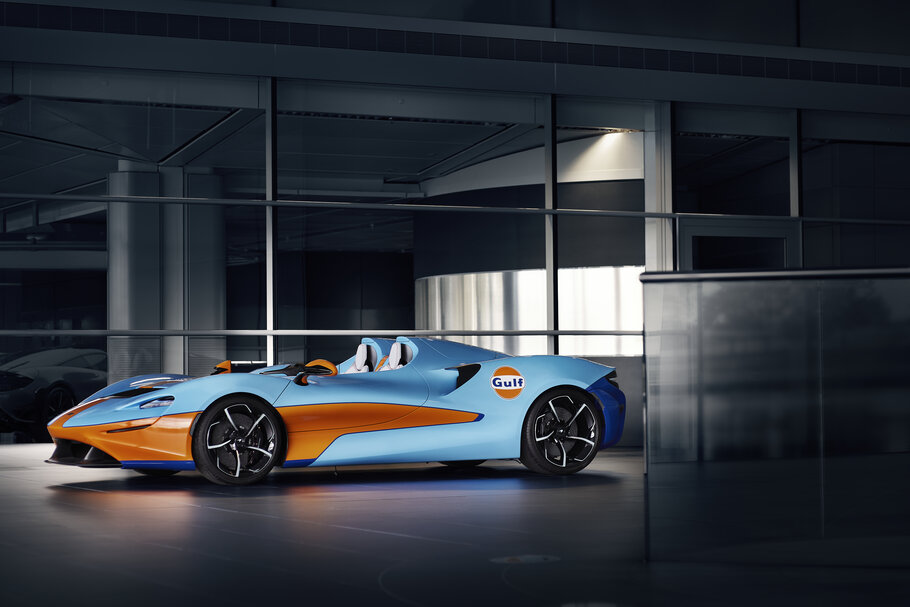
    2020 McLaren Elva Gulf1

    Luxury supercar maker McLaren Automotive today premieres the McLaren Elva Gulf Theme by MSO, a celebration of the renewed relationship between McLaren and the Gulf Oil brand and another example of how designs from McLaren’s racing history are inspiring the brand’s modern-day customers.

    The unique McLaren roadster in blue and orange Gulf colours makes its world debut at Goodwood SpeedWeek, a ‘closed-doors’ live broadcast event bringing together the past, present and future of motoring and motorsport at the Goodwood Motor Circuit in the UK.

    McLaren and Gulf recently confirmed a new partnership that renews a historic union between the two brands that originated in the 1960s, a decade when both companies made their first forays into motorsport. Gulf branding appeared on McLaren’s Can-Am, Formula 1 and Indy cars from 1968 to 1973. Two decades later McLaren F1 GTRs run by customer team GTC carried the famous Gulf livery in global GT racing, including at Le Mans.

    Under the new partnership, McLaren Automotive customers will have the opportunity to commission Gulf-liveried cars directly from MSO. These follow cars inspired by the famous facing livery designed and produced by MSO prior to the renewed relationship being agreed. Most recently, a McLaren Senna GTR LM paying homage to the #24 McLaren F1 GTR that finished fourth in the 1995 24 Hours of Le Mans race was completed as one of five MSO-designed customer cars celebrating the McLaren F1’s domination of that race.

    “The McLaren Elva Gulf Theme by MSO is a striking celebration of both McLaren’s history in sports car racing and our new partnership with Gulf Oil.  McLaren Special Operations is committed to pushing the boundaries of the ‘art of the possible’ and projects like this showcase the increasingly extensive range of personalisation options we can offer customers – in this case, enhancing the authenticity of the livery by incorporating Gulf brand logos into the design.”
    Ansar Ali, Managing Director, McLaren Special Operations

    The Elva, which follows the McLaren P1TM, McLaren Senna and Speedtail in McLaren’s Ultimate Series, links McLaren’s heritage to its present and future with a name and style that recalls the McLaren-Elva sports racers of the 1960s. These were among the first sportscars designed and raced by Bruce McLaren and the company he founded, and the new Elva evokes the true spirit of driving enjoyment symbolised by this era.

    In line with McLaren’s on-going commitment to super-lightweight engineering, the new Ultimate Series roadster retains the lightweight construction philosophy of its forebear and is at the cutting-edge of automotive technology. The body design of the screenless, roofless Elva, for example, incorporates an innovative Active Air Management System (AAMS) that creates a virtual canopy over the seamlessly-integrated cockpit. The 815PS and 800Nm developed by the 4.0-litre, twin-turbocharged V8 engine ensure that the Elva delivers astonishing performance and incredible levels of driving enjoyment.

    With deliveries of the Elva commencing this year, MSO has already completed the specification of the first cars and is well-advanced in discussions with customers to create further dramatic paintwork and liveries. Just 149 examples of the Ultimate Series roadster will be available to customer order, making it one of the rarest McLarens ever produced and, with an almost-limitless degree of personalisation available from MSO, each car will have its own unique identity.

  • Lotus stuns Goodwood Speedweek with Evija dynamic public debut

    2020 Lotus Evija1

    The all-electric Lotus Evija hypercar makes its dynamic public debut at Goodwood SpeedWeek this weekend.  The Evija will be in action on the historic race track and will be taking part in a variety of high-octane activities, including the Supercar Run.

    Three pre-production examples of the Evija are supporting SpeedWeek, one complete in a vibrant Lotus ‘Solaris Yellow’ finish and two prototypes wrapped in stunning black and gold, recalling iconic Lotus liveries of the past.  The prototypes also feature a stylised image of the famous West Sussex circuit, accompanied by the words ‘Lotus x Goodwood: Creating History since 1948’ – acknowledging the year of the very first Lotus car and the first motorsport event at Goodwood.

    Among the first outside of the engineering team to experience Evija is Lord March (Charlie, 25, son of the event host, the Duke of Richmond), who commented: “The Evija is unbelievable – the power, the speed, I’ve never experienced anything like it – it was exceptional. This new dawn of electric hypercars brings ultimate motoring to life for a new generation and a younger audience. The advancement in electric cars over the last 10 years is astonishing.  There is a huge amount of growth potential for these machines to continue allowing us to keep enjoying and driving high performance cars.  Lotus continues to appeal to both the inner driver and the inner child in all of us – so much fun, and ultimately for the driver to control and enjoy.”

    Gavan Kershaw, Director of Vehicle Attributes, Lotus, added: “We’re having a great time demonstrating the Evija here at Goodwood.  Bringing the cars to an event like this is a welcome break from the hundreds of hours spent on proving grounds, where there’s a huge amount of open space and long straights to test the car’s performance limits. Goodwood is a fast and flowing circuit with numerous undulations in the surface, and so is a fantastic test and demonstration for the Evija as it’s the type of environment where many owners will use the car.”

    He added: “We hope the TV coverage of the event will show people what an amazing vehicle it is, and we can’t wait to be back next year.”

    Car fans can see the Lotus Evija on the ITV network, with multiple programmes on different channels across the weekend. See local TV listings for full details.

    Lotus has also published a new US LOT Blog on the Evija, hosted on the Lotus media website here. It details how elements of the Evija have been consciously designed to meet the exacting standards of company founder Colin Chapman, and how that helps make the car a true Lotus.

    More than 50 historic Lotus cars are scheduled to take part in Goodwood SpeedWeek. They include:

    • Lotus 25 – the car driven by Jim Clark car during the 1963 F1 season when he won the Drivers’ Championship
    • Lotus 18 – the car in which Sir Stirling Moss won the 1961 Monaco Grand Prix
    • Lotus 49 – the car in which Graham Hill won the Monaco Grands Prix in 1968 and 1969
    • Lotus 72-5 – Emerson Fittipaldi’s car from the 1970 season
    • Lotus 72-7 – Emerson Fittipaldi’s main car from the 1972-73 seasons, and the car in which he won the most F1 races – five in total
    • Lotus 79 – Mario Andretti’s main car from the 1978 season