2012 Kahn BMW X5 5S 3.OD is the latest transformation this time of BMW, made by the exceptional tuners from A. Kahn Design. This is a true design challenge and certainly – very well completed.
In particular, it includes a interior and exterior enhancement, featuring large number of new parts, such as , Kahn Enamel wing shields, new front and rear bumpers, wider wheel arches, a Kahn Enamel tailgate logo and brake calipers finished in Liquid Red.
The tuned BMW runs on 22 inch Kahn RSL Alloy wheels in Silver Palladium finish. Combined with the lowered suspension, the SUV is able to provide even sportier ride as well as to look more aggressively and powerfully.
2012 Kahn BMW X5 5S 3.OD
This BMW also has the special feature of a tinted glass. Moreover, its interior speaks of luxury and exclusiveness. It was completed with a very special interior package, which comprises of quilted perforated leather interior seats and a Kahn glove box complete with carbon effect inserts.
Additionally this outstanding interior is further complemented by a steering wheel and dials. This multifunctional steering wheel is wrapped with Black Alcantara. Furthermore, in the cabin can be also seen floor mats with toughened rubber, and Kahn Silver rev counter and a Kahn speedo in red.
2012 Kahn BMW X5 5S 3.OD Interior
2012 Kahn BMW X5 5S 3.OD Tuning Specifications:
• Brake Calipers Finished in Liquid Red
• Exterior – Kahn Enamel Tailgate Logo
• Exterior – Kahn Enamel Wing Shields
• Front And Rear Bumpers and Wide Wheel Arches
• Privacy Tinted Glass
• Sports Lowered Suspension
• 22″ Kahn RSL Alloy wheels in Silver Palladium Finish
MINI John Cooper Works models will now be equipped with innovations that are designed to provide driving fun combined with fuel economy. The latter will be achieved thank to a new-generation engine and other far-reaching powertrain innovations.
In particular, although the twin-scroll turbo engine develops the same levels of output and torque as its predecessor, it will now deliver quicker responses and lower fuel consumption and emissions. This and other technologies will help to enhance the efficiency of the John Cooper Works models.
In addition to that all of the models can be optionally mated to a six-speed automatic gearbox. Furthermore, the MINI John Cooper Works Countryman will now be equipped with the MINI ALL4 all-wheel-drive system as standard.
John Cooper MINI-s all carry the inherent perfection and the refinement it name. They deliver sporty driving fun due to the powerful engine, advanced chassis technology, and bespoke exterior and interior design elements that they have.
Now, all John Cooper Works models are becoming even stronger than ever and with fresh power under the bonnet. Moreover, to John Cooper Works family will joined the MINI John Cooper Works Countryman.
The latter is a five-door model which comes equipped with new-generation engine. Thank to it the MINI vehicle is able to produce 160 kW (218 hp), channeled through an all-wheel-drive system to deliver a new take on outstanding performance. The peak torque here is 280 Newton metres (207 lb-ft) and is available between 1,900 and 5,600 rpm.
MINI John Cooper Works Family
MINI John Cooper Works Countryman has the ability to accelerate from 0 to 100 km/h (62 mph) in just 7.0 seconds. It comes as a standard with six-speed manual gearbox, but can be ordered as well with the optional six-speed automatic.
Top speed it can achieve is 225 km/h / 140 mph (automatic: 223 km/h / 139 mph). Speaking about the improved fuel economy, the Countryman has one of 7.4 litres per 100 kilometers / 38.2 mpg (automatic: 7.9 l/100 km / 35.8 mpg) and CO2emissions of 172 grams (184 g) per kilometer.
The aforementioned new-generation engine can also be seen in the MINI John Cooper Works, MINI John Cooper Works Clubman, MINI John Cooper Works Convertible, MINI John Cooper Works Coupe and MINI John Cooper Works Roadster.
In details, this new-generation engine is based on the one of the MINI Cooper S. As the latter it also utilizes a twin-scroll turbocharger, petrol direct injection and variable valve control based on the BMW Group’s VALVETRONIC system. What this throttle-free load control technology does is simply to optimize the responsiveness of the engine and its efficiency.
Furthermore, this unit is a 1.6-litre four-cylinder engine, which has cylinder block and bearing mounts made from aluminium joined with reinforced pistons, a particularly high-strength cylinder head and low-weight crankshafts. The exhaust valves are sodium-filled. This will help to extra cool the turbocharged engine
This unique engine delivers a maximum output of 155 kW/211 hp at 6,000 rpm, while peak torque of 260 Newton metres (192 lb-ft) is on tap between 1,850 and 5,600 rpm. There is an overboost function, which allows these numbers to be raised to 280 Newton metres (207 lb-ft) for a short time between 2,000 and 5,200 rpm.
The new engine comes as standard with a six-speed manual gearbox. However, it can be ordered with the optional six-speed automatic gearbox with Steptronic function.
Other important highlights next to the improved engine are the enhancements made to the engine’s efficiency, the more extensive use of fuel consumption and emissions-reducing technology.
For instance, technologies such as Brake Energy Regeneration, which concentrates power generation for the in-vehicle network during periods under braking and on the overrun, the fuel efficiency is significantly improved.
Next, there is also included the Auto Start/Stop function, which switches the engine off automatically when the car stops at junctions and in traffic tailbacks. On the other hand the Shift Point Display advises the driver of the most efficiency-enhancing moment to change gear.
Believe it or not, the electric power steering also contributes for the improved fuel efficiency. This is due to its electric motor which utilizes energy when power assistance is actually needed.
MINI John Cooper Works Family
MINI John Cooper Works accelerates from 0 to 100 km/h (62 mph) in 6.5 seconds (automatic: 6.7 sec) on the way to a top speed of 238 km/h / 148 mph (236 km/h / 147 mph). Its average fuel consumption is 6.6 liters per 100 kilometers / 42.8 mpg (automatic: 7.1 l/100 km / 39.8 mpg) and CO2 emissions are circa 153 grams (165 g) per kilometer.
MINI John Cooper Works Clubman accelerates from 0 to 100 km/h (62 mph) in 6.8 seconds (automatic: 7.0 sec); has a top speed of 238 km/h / 148 mph (236 km/h / 147 mph) with fuel economy of 6.7 liters per 100 kilometers / 42.2 mpg (automatic: 7.2 l/100 km / 39.2 mpg) and CO2 emissions of 155 grams (167 g) per kilometer.
MINI John Cooper Works Convertible accelerates from 0 to 100 km/h (62 mph) in 6.9 seconds (automatic: 7.1 sec) and reaches a top speed of 235 km/h / 146 mph (233 km/h / 145 mph). Its fuel consumption is just 6.8 liters per 100 kilometers / 41.5 mpg (automatic: 7.3 l/100 km / 38.7 mpg) and CO2 emissions are limited to 157 grams (169 g) per kilometer.
MINI John Cooper Works Coupe accelerates from 0 to 100 km/h (62 mph) in 6.4 seconds (automatic: 6.6 sec) and has a top speed of 240 km/h / 149 mph (238 km/h / 148 mph). Its average fuel consumption is 6.6 liters per 100 kilometers / 42.8 mpg (automatic: 7.1 l/100 km / 39.8 mpg) and CO2 emissions are 153 grams (165 g) per kilometer.
MINI John Cooper Works Roadster accelerates from 0 to 100 km/h (62 mph) in 6.5 seconds (automatic: 6.7 sec) and continues on to a top speed of 237 km/h / 147 mph (235 km/h / 146 mph). Its average fuel consumption is 6.8 liters per 100 kilometers / 41.5 mpg (automatic: 7.3 l/100 km / 38.7 mpg), with CO2 emissions recorded as 157 grams (169 g) per kilometer.
All John Cooper Works models will come equipped with a wide array of special equipment. Standard specification feature the Sport Button, powerful brakes, DSC (Dynamic Stability Control) system including DTC (Dynamic Traction Control) and EDLC (Electronic Differential Lock Control) for the driven axle, plus bespoke 17-inch light-alloy wheels (MINI John Cooper Works Countryman: 18-inch) and runflat tyres.
John Cooper Works aerodynamic kit is also featured as a standard. What it does is to optimize both the airflow over and around the cars, and their visual impact.
Emblematic of course for all of the models are their paint finishes and roof colours. What is even more here is that all of the MINI-s will come with an ultra-sporty interior with special seat upholstery variants and interior trim elements.
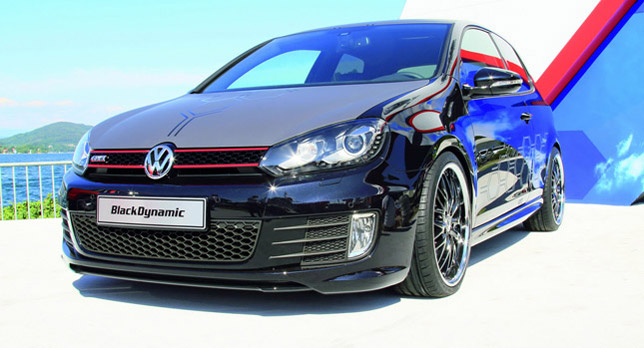
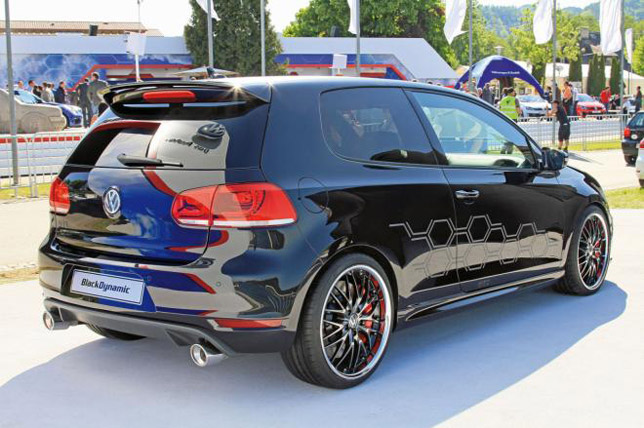
2012 Volkswagen Golf GTI Black Dynamic Concept has just made its debut at the 31st GTI Festival in Reifnitz on the Wörthersee in Austria. It comes to show unique black exterior, black-and-red interior, and more importantly – to give us a sense of 360 hp (265 kW).
This astounding power of the Volkswagen comes from its TSI engine and a lowered sport suspension. What is particularly interesting here is that nine Volkswagen apprentices from four professions have designed and produced this customization of the Golf model. It took them only seven months.
2012 Volkswagen Golf GTI Black Dynamic Concept
A very special feature here is the GTI lettering in the doors and hatch with handmade characters. Next to be mentioned is the 1,800 watt sound system installed in the boot and visible beneath a specially manufactured plexiglas sheet, with nine loudspeakers.
All of the custom features of the Black Dynamic were produced by the apprentices. Take for example the sport seats upholstered in black-and-red Alcantara and leather, or the interior door trim with decorative red seams.
Additional custom features made by them are the Deep Black Metallic exterior finish combined with flat anthracite film trim, the engine and gearbox management tuned to produce and transmit an extra 150 hp (110 kW), the oversized exhaust system and the eight-piston brake system.
2012 Mercedes-Benz GLK has made its world debut in April and now is going officially on sale with a starting price of € 36 235.50.
The GLK comes with a newly designed exterior, which gives it more dynamic outlook and powerful stance. In the body one can easily see the combination of the classic elements of all-terrain vehicles with the design philosophy of the current Mercedes-Benz models.
The front and the rear of this unique Mercedes-Benz vehicle are now further emphasized by its stringent lines and expansive surfaces. And in addition to this the designers have thought about the comfort of the driver as well. They have included high seat position as a pivotal point in the interior, for it provides a commanding view of the traffic situation, with the body lines also designed for excellent visibility.
2012 Mercedes-Benz GLK
Looking further in the interior upgrades, there can be seen that the dashboard is completely transformed. For instance, a wide trim in aluminium or optionally in wood spans the entire width of the dashboard.
Moreover, the new round vents and additional trim elements in silver shadow also catch the attention. There is also included a three-spoke sports steering wheel, new upholstery colours and seat designs plus indirect ambient lighting featuring LED fibre-optic technology. The latter is offered for the first time on the GLK for the first time.
More importantly, the range of engines included is conjunction with low emissions and fuel consumption. The customers can choose up to six diesel models and one petrol engine.
The GLK 250 BlueTEC 4MATIC one for example, features a four-cylinder diesel engine which is able to generate 150 kW (204 hp) of power and 500 Newton metres (370 lb-ft) of torque from a displacement of 2143 cc. The consumption of this model is absolutely amazing: on average, the compression-ignition engine consumes 6.1 to 6.5 litres of diesel per 100 kilometres. The CO2 emissions here are 159 – 169 g CO2/km in NEDC combined mode.
Furthermore, the two rear-wheel-drive models GLK 200 CDI BlueEFFICIENCY and GLK 220 CDI BlueEFFICIENCY come equipped with six-speed manual transmission. They also might amaze you, because they are even more fuel efficient.
What I mean is that both versions has a fuel consumption of 5.5 – 5.6 litres of diesel per hundred kilometers. Their Co2 emissions range between 143 – 147 g CO2/km in NEDC combined mode.
The top performer among the diesel versions however, is the GLK 350 CDI 4MATIC BlueEFFICIENCY. It comes upgraded with additional 25 kW (35 hp) power increase. Despite this fact, it is still able to perform with 17 percent less fuel, and has a fuel consumption of 6.9 – 7.0 litres per 100 kilometres. The CO2 emissions here are 179 – 183 g CO2/km in NEDC combined mode.
The only petrol model offered is the GLK 350 4MATIC BlueEFFICIENCY petrol-engine. It includes the trailblazing engineering of the leading generation of V-engines which deploy BlueDIRECT technology to make its mark in performance and fuel efficiency.
2012 Mercedes-Benz GLK Interior
In terms of safety and security a brand such Mercedes-Benz is probably unsurpassed. The GLK comes equipped with innovative technologies. For the first time featured here for instance is the electric steering with STEER CONTROL, which supports the driver in unstable driving conditions by triggering an impulse which can be felt on the steering wheel, prompting countersteering by the driver in the correct direction.
Moreover, there are also included the Brake Assist (BAS), which offers additional brake power when emergency braking is detected, and ADAPTIVE BRAKE featuring Hill-Start Assist, and HOLD function, the AGILITY CONTROL suspension with selective damping system, the ESP® Electronic Stability Program with integrated trailer stabilisation and tyre pressure loss warning, permanent all-wheel drive and the 4ETS electronic traction system. All these are featured as a standard in the 2012 GLK.
What about the optional equipment? Here the customers can choose among many innovations, some of which include: ATTENTION ASSIST drowsiness detection system, PRE-SAFE® anticipatory safety system, Active Parking Assist, Active Lane Keeping Assist and Active Blind Spot Assist, Intelligent Light System (ILS).
2012 Mercedes-Benz GLK pricing begins at € 36 235.50
Seat Leon TwinDrive Hybrid and Seat e-Altea XL will be proudly used by the officials at Barcelona City Hall. The latter will be testing these vehicles in its municipal car fleet for an initial six-month trial period.
The aim of this is to gather information and assess performance prior to mass production of electric vehicles. In fact, Seat e-Altea XL is the first electric car produced by the Spanish brand; hence the data is much needed.
Seat is developing two different technologies through the hybrid and electric vehicles and by this action is trying to stay in accordance with the demands of the market.
In addition to this event, Seat has also loaned one e-Altea XL to Endesa, and another to the Catalan Energy Institute (ICAEN). Further two TwinDrive Hybrids will also go to these organisations mentioned.
It is obvious that the company is immersed in the first stage of the introduction of an electric car. Their vision will include a further loan of vehicles to different governmental departments, institutions, and private companies interested in eco-friendly fleets over the forthcoming months.
Seat Leon TwinDrive Hybrid and Seat e-Altea XL
To go further into details, Seat Altea XL Electric Ecomotive and Seat Leon TwinDrive Ecomotive are two vehicles with different but complementary technologies.
The Altea XL has a range of 135 kilometres, a power output of 115 hp (85kW) and engine torque of 270 Nm (200 lb-ft). Its top speed is 135 kph. Furthermore, there are several innovative features that can be found on it. For instance, the battery location is under the rear seats and the boot. This had basically lead to no reduction in passenger compartment space.
Another interesting technology is the photovoltaic panels on the roof. They serve as means to cut energy requirements for the vehicle’s air-conditioning.
On the other hand the Seat Leon TwinDrive Ecomotive features the benefits of emission-free driving to the range of a conventional petrol-engine car. Being a true hybrid, this vehicle allows all-electric or hybrid driving. The conclusion is that no change in driving habits or life style is required.
In particular, it has a range of 52 kilometres in electric mode, with a top speed of 120 kmh. In mixed mode, which is called electric and combustion, the consumption of fuel is 1.7 litres, while the emissions are under 39 g/km. The top speed of the hybrid is 170 kph.
2013 Ford C-MAX Hybrid features innovative and fun-to-drive character shared with well-handling can be now ordered in the United States. The C-Max is in fact the first Ford hybrid vehicle and will be available with a starting price of $25 995.
What is unique about this car is that it combines fuel economy with performance, and of course delivers no less than best-in-class horsepower and torque.
In addition to that in this Ford vehicle are featured innovative technologies from which the customers could only benefit. One of them is the famou SYNC® with MyFord Touch®. Thank to it the drivers get features like hands-free liftgate, SmartGauge® with EcoGuide, regenerative braking and an advanced lithium-ion (li-ion) battery pack.
Another benefit of the C-MAX Hybrid is the roominess and spaciousness it offers. In particular, the vehicle has a high roofline (63.9 inches) delivering interior space and flexibility. Moreover, there are 99.7 cubic feet of passenger space and greater headroom in both front and rear seats (41/39.4 inches).
Of course, C-Max is perfect for loading as well thank to its 60/40 split-fold rear seats that can easily fold flat with 54.3 cubic feet of space behind the first row and 24.5 cubic feet behind the second row.
Important highlight here are the innovations featured. The newest one is the Ford’s hands-free liftgate. What it does basically is to allow quick and easy access to the cargo area without messing with keys.
How it works? A gentle kicking motion under the rear bumper opens the liftgate when used in combination with a key fob the user keeps in their pocket or purse that tells the car it’s correct to operate. The same motion can close the liftgate.
2013 Ford C-Max Hybrid
2013 Ford C-Max also includes the latest version of MyFord Touch. This one helps the driver stay informed. In addition it also shows multiple ways for customers to operate with their phone, navigation, entertainment and climate functions through voice commands.
Furthermore, C-MAX Hybrid also comes equipped with the next generation of SmartGauge with EcoGuide. This one is specifically designed in order to help drivers get the most from the C-MAX Hybrid. This EcoGuide for instans shows important information about fuel economy.
What is more important here is the technology that makes this car move. C-MAX Hybrid is powered through the combination of a gasoline engine and a battery-driven electric motor.
When the power comes from the gasoline engine, the hybrid car uses the all-new 2.0-liter Atkinson-cycle four-cylinder engine. On the other hand the electric motor of the C-MAX Hybrid is powered by an advanced li-ion battery system which optimizes the use of common, high-quality components.
Furthermore, C-MAX Hybrid also has powersplit architecture. This means that it allows the electric motor and gasoline-powered engine to work in collaboration or separately. The aim is to maximize efficiency.
Of course, the powerful engine unit also can work alone and charge the batteries or deliver power to the wheels as needed. At the same time the motor alone can offer enough power to the wheels in low-speed, low-load conditions and work with the engine at higher speeds.
2013 Ford C-MAX Hybrid has a li-ion battery pack which is recharged when the gasoline engine is in operation. Additionally, the regenerative braking system can recapture more than 95 percent of the braking energy that would be used to help charge the battery. This means that C-MAX Hybrid requires no plug-in charging.
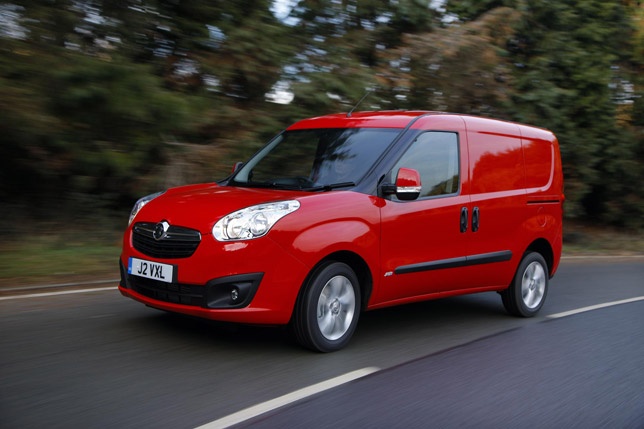
Vauxhall Combo will soon have an expanded range and will include models powered by a fuel-efficient 1.4 petrol engine. In detail, the latter is a brand-new Vauxall 95 hp (70 kW) Euro 5-compliant Combo unit that will be offered in L1H1 and L2H1 body types.
What is more, this engine also includes Start/Stop technology, thank to which the Vauxhall vehicle is able to achieve CO2 emissions of 163g/km and 40.3mpg combined cycle.
Vauxhall Combo
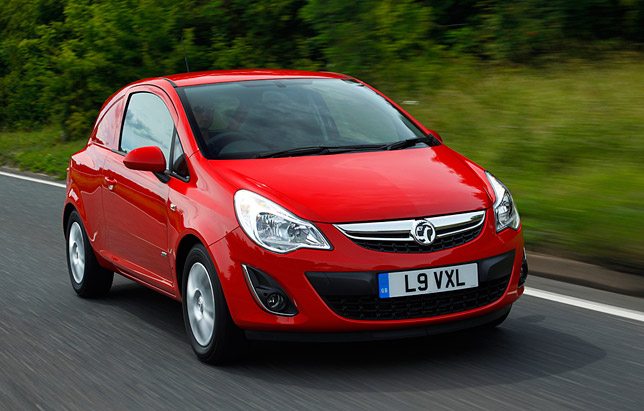
Furthermore, the famous Vauxhall Corsavan range will also get an additional engine option – a 1.2 petrol unit also with Start/Stop function. Thank to the latter, the Corsavan engine boasts CO2 of 119g/km, which in fact is a saving of 5g/km over the standard 1.2 engine. It has a 55.4mpg combined cycle.
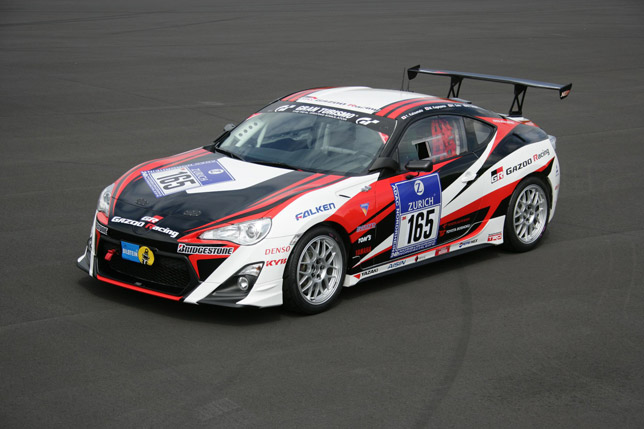
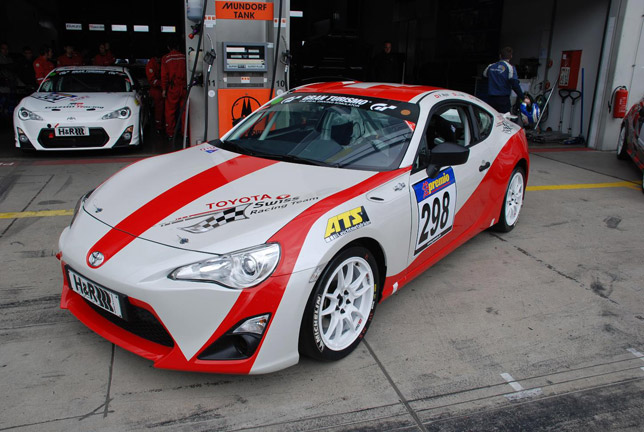
Toyota GT86, in fact four units of it and one of the Lexus LFA are going to compete in the Nuerburgring 24 Hours from 17th till 20th of May. It is a well known fact that the Nürburgring has played an important role in the development of Toyota’s latest generation of high-performance cars.
Hence, it is the perfect time for the demonstration of the powers of those two exceptional models the Lexus LFA and the GT86. At the disposal of the brand for the racing will be Gazoo Racing team. It will field the LFA (in the SP8 class) and two new race-prepared GT86 (SP3 class).
In the team of course are included technicians and drivers, which will take care for the unique racing vehicles and apply their skills and craftsmanship where needed. Furthermore, they will also gain information and experience which will serve as a means of feedback directly into the work developing future vehicles.
Lexus LFA
Gazoo Racing has already achieved much success by winning the two shorter-distance races at the Nuerburgring. There the Lexus LFA won two times in its class and the GT86 showed promising progress.
In addition to this, the Toyota Swiss Racing Team will also be taking part, fielding two GT86 race-prepared by Toyota Motorsport. Those tow sport cars will take part in the competition class (V3) for production models.
Seat will participate with a wide range of vehicle models in the legendary GTI Meet in the Austrian state of Kärnten from 16th to 19th May. There the company will show six particularly fiery variants of the Leon, Ibiza and, for the first time, the Seat Mii FR.
First, Ibiza SC Trophy and the Leon Super Copa will mark the sporty headline Seat’s display, while the Seat Mii FR will make its world debut.
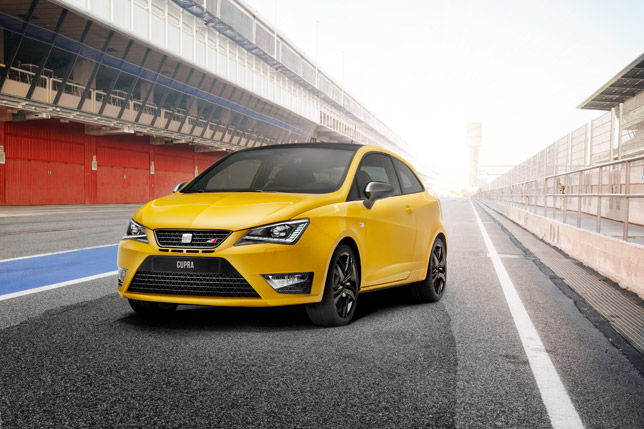
Seat Ibiza CUPRA Concept will be the star of the event. The model was designed in accordance with the brand’s new Visual Identity – is the Ibiza CUPRA Concept. It represents a new-generation super-sporty SEAT and its debut was just recent –at the Auto China in Beijing.
The vehicle is propelled with 1.4 TSI power unit which delivers 180 hp (132 kW). In addition, what distinguishes the car is its Spice yellow paintwork that contrasts with gloss-black exterior mirrors and 17-inch wheels with red brake callipers shimmering through the spokes.
Seat Ibiza CUPRA Concept
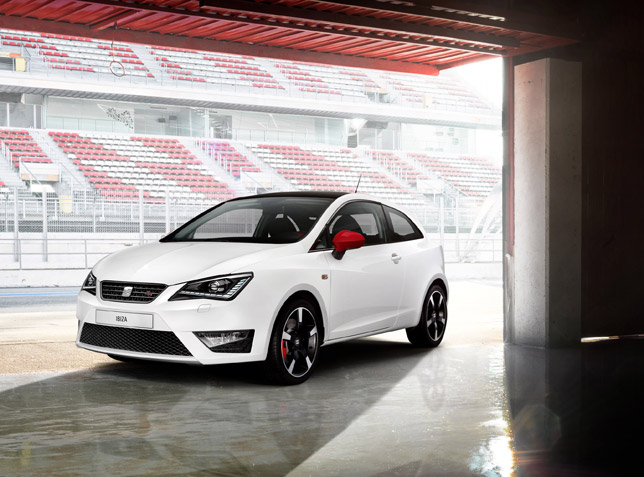
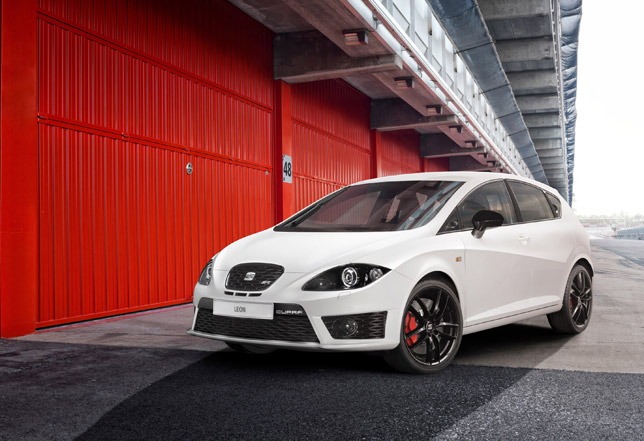
Next come the Seat Ibiza FR and Seat Leon CUPRA R which are two exceptional vehicles made in individual design. Both are painted in Nevada white color and include a host of extras from the SEAT accessory range.
Ibiza FR rides on 17-inch wheels in black finish and polished silver. It also comes equipped with exterior mirrors and brake callipers painted in red, and an enlarged rear spoiler. The interior is all dominated by red accents.
Seat Ibiza FR
On the other hand, the Leon CUPRA R has glossy black rims that contrast perfectly with the white paintwork. Additionally, it includes red brake calliper nestling behind the wheel. The interior here is dominated by trim pieces in black piano lacquer.
Seat Leon CUPRA R
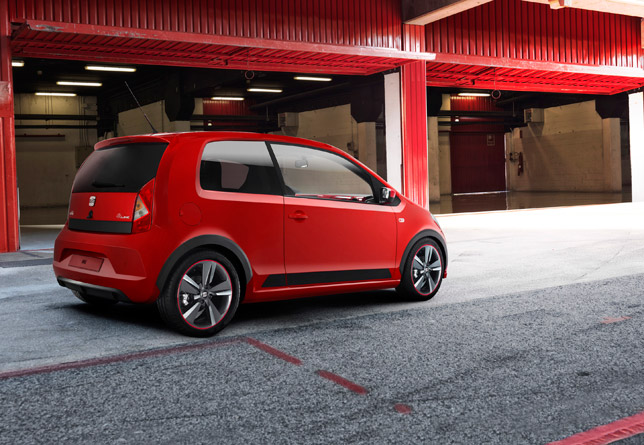
Seat Mii FR is the model which will make a debut at the event. Its exterior is painted in Tornado red, which gives the car more powerful stance. The great color is complemented by the black applications on the wheel arches, additional spoiler accent and black 16-inch aluminium wheels.
Moreover, red and black elements can also be found on the cockpit. The sports seat with fully integrated head restraint comes with distinctive red FR lettering.
Seat Mii FR
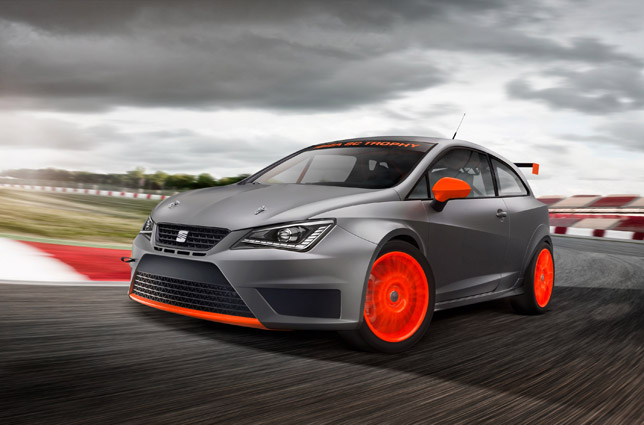
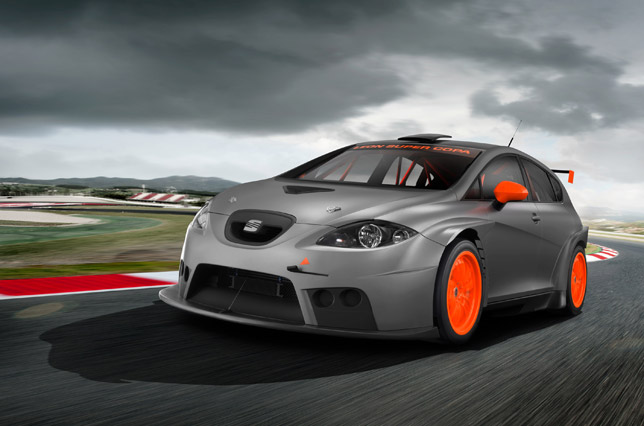
At last but not least, Seat Ibiza SC Trophy and Seat Leon Super Copa are the cars which will compete in the race track. They will be shown at the Wörthersee festival, where the people can enjoy their special grey paint finish and wheels, mirrors and roll cage in fluorescent orange.
First, the Ibiza SC Trophy comes with 180 hp (132 kW) from its 1.4 TSI power unit under the bonnet. It is mounted to a 7-speed DSG transmission. The latter is shifted from the steering wheel, as on the series-production model, while a locking differential guarantees amazing traction.
What is more here is that the engine comes with a modified oil sump, a mighty brake system and racing suspension. The model runs on 18-inch wheels housed under flared wheel arches.
Seat Ibiza SC Trophy
The second racing car is Seat Leon Super Copa which is a representation of the more senior league of SEAT Motorsport. In fact, this vehicle is based on its sibling racer from the WTCC, and more than 250 units of this model have already been built.
More importantly, the cup car is powered by an optimized version of the 2.0-litre TSI engine from the Leon CUPRA R. The modification of the engine results in the production of the outstanding 300 hp (221 kW) at a maximum torque of 340 Nm. The engine is mated to a a six-speed DSG transmission and has mechanically locking differential to the front wheels.
2013 Ford Shelby GT500 is the most powerful Mustang ever created with its 662 horsepower top track speeds of more than 200 mph. It will undoubtedly bring the muscle car philosophy into new heights.
This performance is possible due to its 5.8-liter V8 aluminum-block engine produces. And we must say it again – it achieves the outstanding 662 horsepower (487 kW) at 631 lb.-ft. (855 nM) of torque. In fact, this is the highest-horsepower engine ever produced in the U.S.
The additional horsepower was achieved through thorough optimization of the powertrain. In details this Ford includes a new supercharger, new cross-drilled block and heads, an all-forged engine rotating assembly, updated camshaft profiles, upgraded head gaskets, a new carbon fiber driveshaft and upgraded clutch, transmission and axle.
However, the key to the 662 hp is the larger and more efficient supercharger. What it basically does is to help flow more air through the engine.
In addition to that the cooling system has been upgraded as well. It now features a high-capacity cooling fan, fan shroud with high-speed pressure-relief doors, a more efficient charge air cooler, a higher-flow intercooler pump and an intercooler heat exchanger.
Cooling fan capacity was also modified – now it has an increased and a higher-efficiency intercooler added to keep the air entering the engine as cool as possible. Combined with the efficient, high-capacity flow pump, these two measures control temperatures under extreme conditions.
2013 Ford Shelby GT500
Furthermore, the clutch has been transformed as well. With its increased torque and rpm capacity, it utilizes a dual-disc design. The diameter and clamp load have been increased and the clutch-facing material has been revised for additional resistance to burst and enhanced transfer of power.
Design improvements for this Ford vehicle feature all-new signature lighting with two LED bars in the front and rear, rocker panels in body-color, high-gloss black panel between the taillamps at the rear and a diffuser that surrounds a new quad-tip exhaust.
2013 Shelby GT500 rides on two new sets of forged-aluminum wheels: the 19-inch front and 20-inch rear wheels coupled with Goodyear Eagle® F1 SuperCar G: 2 tires on all configurations. These wheels are freshened with the dark finish and updated spoke designs and in addition to that are extremely lightweight.
Significant work has been also done in aerodynamics of the Shelby GT500. They include a new front splitter and black-painted upper and lower grille inserts. They expose the radiator drive which helps funnel air and cools the internals of the vehicle systems. The larger splitter helps create downforce when the car hits top speeds.
No driver will be less than satisfied when being behind the steering wheel of the new Shelby GT500. Its driving dynamics have been overhauled, it has new Brembo™ brakes with six-piston calipers in front and its wheels were also tuned.
Ford has thought about customers who want even more exceptional drive. The new Shelby is now being offered with the optional Performance Package. This feature is accessed on the dash with a simple push of a button and has several modes for selection. The Normal mode gives the driver a comfortable ride over road irregularities, while the Sport mode delivers improved response time on the track, and less body roll while cornering and pitch under braking.
Additionally, the Torsen® limited-slip differential also comes with the Performance Package. What it basically does is that it helps the rear suspension deliver torque and traction under the most demanding conditions on the track.
Of course, all who are willing can upgrade their Performance Package with an additional Track Package for all-out racetrack performance. The latter includes an external engine oil cooler, rear differential cooler and transmission cooler for further durability.
A lot of innovations have been also included in this GT500 model. One of the key ones is the productivity screen. It offers menu options, giving the customer important information related to muscle car’s performance. The LCD can be found between the tachometer and speedometer.
The 2013 Ford Shelby GT500 also can be found now in dealerships.
The legendary 1952 Jaguar C-Type won the Grand Prix de Monaco Historique, Serie C for Pre-1953 Sports Prototypes. Behind the steering wheel was the driver Alex Buncombe, thank to him the prestigious FIA sanctioned race was won.
In particular, the Grand Prix de Monaco Historique is one of the most popular and broadly appreciated “historic” racings around the world. This is the 8th running of the FIA sanctioned event, and generally it occurs two weeks before the F1 Grand Prix.
However, more importantly, the actual race winning 1952 C-type has an interesting history. The first owner of the legend was Juan Manuel Fangio, who bought it directly from the Jaguar factory. The car then was carefully prepared by the team and mechanics of Jaguar, In order to be in perfect condition and to take part in the race.
The driver Alex Buncombe himself has even commented how super quick the C-Type was and in fact that in his opinion this was the best C-type in the world.
Another highlight is that this is also a debut for the Jaguar brand in this race. And the result as we see is a superb achievement.
The next event for Jaguar Heritage Racing is the legendary Mille Miglia in Italy. It will start on 16th of May (Thursday), so stay tuned!
Legendary Jaguar C-Type at Monaco HistoriqueLegendary Jaguar C-Type at Monaco Historique
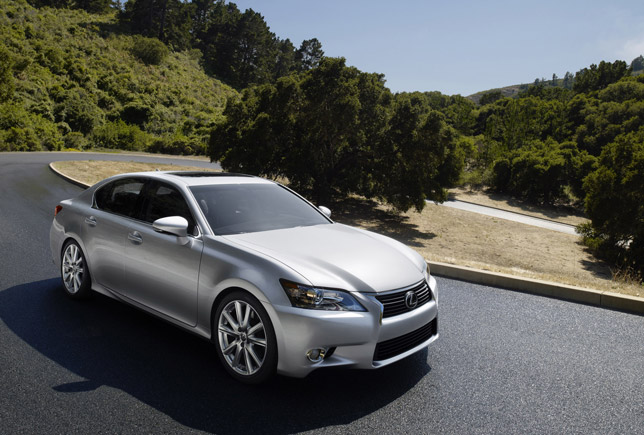
2012 Lexus GS 450h is the most efficient GS ever created by the brand. It includes an advanced petrol-electric hybrid drivetrain which will contribute the model to become of the most efficient vehicles in its class.
Thank to its unique hybrid system, the Lexus’ efficient hybrid powerplant consumes just 6.3 litres of fuel per 100km. This means in fact that the new customers will save circa twenty percent from fuel in comparison to the outgoing model. At the same the CO2 emissions have been also reduced significantly to the number of 147g/km.
The performance of this Lexus hybrid vehicle is reassured by a combined power output of 254kW. Thank to it, the 450h can accelerate from 0-100km/h in just 5.9 seconds.
What is more here, compared to its predecessor, the GS 450h also offers greater space and onboard technology. This is mainly due to the redesigned chassis. There is also forty-five percent more boot space which now is increase from 320 to 465 litres.
2012 Lexus GS 450h
Another interesting fact here is that the GS 450h is actually the first hybrid vehicle, which comes equipped with all-wheel steering. And in particular, it is the first one to include an Atkinson cycle engine driving the rear wheels, and the first Atkinson cycle engine to feature direct and port injection.
In terms of security and safety features, there are some innovations included, such as: an advanced Pre-Collision safety System (PCS), a Driver Fatigue Monitor camera, and a complementary Adaptive Cruise Control system (ACC). The latter now operates at all speeds down to 0km/h.
Additionally, the safety suite is enhanced by a Blind Spot Monitor, which now comes as a standard to detect vehicles in adjacent lanes, and an expanded Head Up Display (HUD) unit. This unit shows the road speed, cruise control, gear position, turn-by turn navigation and tachometer.
GS 450h models will be offered in three trim levels: Luxury, F Sport and Sports Luxury, which are expected to be launched in June this year.
2012 Lexus GS 450h Technical Specifications:
Engine
Engine type
2GR-FXE 3.5L V6
Capacity (cm3)
3.456
Cylinders/valves
V6/24
Engine configuration
Atkinson cycle, six cylinders, V-formation, 24-valve, DOHC, four valves per cylinderand alloy cylinder block. Featuring direct and port injection
Bore x stroke (mm)
94.0 x 83.0
Compression ratio
13.0
Max. combined output
254kW
Max. engine output
215kW @ 6,000rpm
Max. engine torque
352Nm @ 4,500rpm
Hybrid battery
type
Nickel-Metal Hydride (Ni-MH)
voltage
650V
Max. motor output
147kW
Max. motor torque
275Nm
Transmission
Type
Six-step E-CVT (Electronic Controlled Continuously Variable Transmission) with paddleshift
Steering
Turning diameter (m@body)
11.2, or 10.8 with rear steer
Luxury
Rack and pinion, Electric Power Steering (EPS)
F Sport
Rack and pinion EPS with Variable Gear Ratio Steering and Dynamic Rear Steering
Sports Luxury
Rack and pinion EPS
Seating capacity
No of seats
5
Exterior dimensions (mm)
Overall length
4,850
Width
1,840
Height
1,455
Wheelbase
2,850
Interior dimensions (mm)
Front to rear couple distance
945
Front legroom
1,075
Rear legroom
935
Driven wheels
Type of drive
Rear-wheel drive
Wheels and tyres
Luxury
18 x 8J alloy (F/R) Dunlop 235/45 R18 94Y (F/R)
F Sport
19 x 8J (F), 19 x 9J (R) alloy Bridgestone 235/40 R19 96Y (F) 265/35 R19 94Y (R)
Sports Luxury
18 x 8J (F/R) alloy Dunlop 235/45 R18 94Y (F/R)
Brake type
Ventilated front and rear disc with Anti-lock Braking System (ABS), Electronic Brake-forceDistribution (EBD), Brake Assist (BA) and Vehicle Dynamics Integrated Managementsystem (VDIM)
Luxury
334 x 30mm front 310 x 18mm rear
F Sport
356 x 30mm front 310 x 18mm rear (Two-piece rotors front with four piston calipers)
Sports Luxury
334 x 30mm front 310 x 18mm rear
Performance
0 – 100km/h (s)
5.9
Max. speed (km/h)
250 (limited)
Fuel consumption (L/100 km)*
Combined
6.3
Urban
6.9
Highway
5.8
*Fuel consumption will vary depending on driving conditions/style,vehicle conditions and options/accessories. Source of fuel consumption data: ADR81/02 combined cycle.
 2012 Kahn BMW X5 5S 3.OD is the latest transformation this time of BMW, made by the exceptional tuners from A. Kahn Design. This is a true design challenge and certainly – very well completed.


 MINI John Cooper Works models will now be equipped with innovations that are designed to provide driving fun combined with fuel economy. The latter will be achieved thank to a new-generation engine and other far-reaching powertrain innovations.


 2012 Volkswagen Golf GTI Black Dynamic Concept has just made its debut at the 31st GTI Festival in Reifnitz on the Wörthersee in Austria. It comes to show unique black exterior, black-and-red interior, and more importantly – to give us a sense of 360 hp (265 kW).
 2012 Mercedes-Benz GLK has made its world debut in April and now is going officially on sale with a starting price of € 36 235.50.


 2013 Ford C-MAX Hybrid features innovative and fun-to-drive character shared with well-handling can be now ordered in the United States. The C-Max is in fact the first


 Toyota GT86, in fact four units of it and one of the Lexus LFA are going to compete in the Nuerburgring 24 Hours from 17th till 20th of May. It is a well known fact that the Nürburgring has played an important role in the development of Toyota’s latest generation of high-performance cars.












 The legendary 1952 Jaguar C-Type won the Grand Prix de Monaco Historique, Serie C for Pre-1953 Sports Prototypes. Behind the steering wheel was the driver Alex Buncombe, thank to him the prestigious FIA sanctioned race was won.


 2012 Lexus GS 450h is the most efficient GS ever created by the brand. It includes an advanced petrol-electric hybrid drivetrain which will contribute the model to become of the most efficient vehicles in its class.