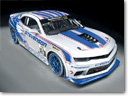
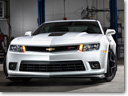
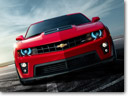
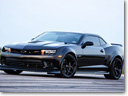
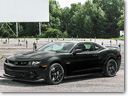
Chevrolet Camaro Z/28 is one of the best cars to drive nowadays. But what happens when it is equipped with Hennessey Performance HPE650 Upgrade? Unexpectedly OnStar calls you. Or at least this has happened to tuning company’s owner John Hennessey, while he was testing the uprated Z/28 Camaro.
The people at OnStar gave him a call to make sure that everything was alright and he was safe. And he describes the experience: “No, I didn’t crash while testing the car but I was pulling around 1.1 g’s going around the sweeper turn at the end of our test track at Lonestar Motorsports Park. I guess they just wanted to check on me and make sure I was alright”.
By the way, this doesn’t happen for the first time, but he has already experience the same thing a few years ago. The difference was that he was test-driving the 700 HP Cadillac.
Now that’s a very persuasive method to consider the HPE650 upgrade for the 2014/2015 Chevrolet Camaro Z/28, isn’t it? If you have already decided that you want it then you should know that it will give your Camaro an output of 667 bhp (490 lb-ft) at 7,000 rpm!
HPE650 Upgrade
To go into details, the upgrade includes the following: ported cylinder heads, upgraded valvetrain parts, HPE650 camshaft, stainless steel longtube headers, premium floor mats, serial-numbered dash and engine plaques, and Hennessey exterior badging.
Chevrolet Camaro is obviously a very hot topic today. We have received an interesting video from Hennessey Performance along with information about an extreme upgrade, called HPE1000. Yes, the number behind the abbreviation shows the horses this upgrade can give to your 2014/2015 Chevy Camaro! Mind-blowing, aren’t they!
Although it does not have anything to do with the latest 2016 Camaro, since it has just gone on sale, the HPE1000 is here to make you feel that you and your car are the strongest among all. Even the latest Gen Six! And here is why.
1000 Horsepower and Exhilarating Acceleration
To make a comparison, we first have to remind you that the 2014 Chevrolet Camaro Z28 is powered by a 7.0 liter LS7 V8 engine producing 500 hp (368 kW) and 637 Nm (470 lb-ft) of torque. The 2015 model’s V8 can pump out even more: 505 hp (371 kW) and 652 Nm (481 lb-ft) of optimum torque. Despite the year, the unit is connected to a six-speed Tremec gearbox that drives the rear wheel. There is also LSD which enables responsive corner entry, maximizes traction through the turn and provides quick acceleration on corner exit.
After the installation of the Supercharged HPE1000 Upgrade, the Chevy goes crazy with its 1000 hp (735 kW) delivered at 6,300 rpm. The acceleration sprint from 0 to 60 mph is 3.1 seconds. Then why should one dream about owning a Bugatti? The quarter mile is covered in 10.4 seconds at 136 mph.
HPE1000 is As Good As it Gets
To make the Camaro Z28 that powerful, the experts at Hennessey Performance have included in the supercharged upgrade the following 2.9 liter supercharger system, forged pistons and steel rods, custom HPE camshaft and ported cylinder heads. In addition, the specialists have upgraded the fuel injectors and the fuel system in order to handle the additional power.
High flow intercooling system, an upgrade for the intercooler heat exchanger, long-tube stainless steel headers, stainless steel midpipes and high flow catalytic converters are also at hand.
1650 HP Drag Race: Hennessey Z/28 Camaro vs Hennessey ZL1 Camaro
In the video below you will witness a very special drag race between two Hennessey Performance enhanced Camaros. Both the Z/28 and Zl1 generate up to 1650 HP combined output. Watch to find out what have happened! We will be also very happy if you leave us a comment.
Hennessey Performancehas presented their latest tuning package for the new Chevrolet Camaro Z28. The HPE600 performance upgrade boosts the mighty engine to 636HP (468 kW) at 7,000RPM – an increase of 136HP.
2014 Chevrolet Camaro Z28 is powered by a 7.0 liter LS7 V8 engine originally producing 500HP (373 kW) and 637Nm (470 lb-ft) of torque. It is connected to a 6-speed Tremec gearbox powering the rear wheels, where an LSD takes care about the traction.
The additional power is thanks to a number of upgrades: ported cylinder heads, upgraded valvetrain parts, custom HPE camshaft, stainless steel longtube headers, redline water weter, professional installation, HPE engine management calibration, dyno tuning & road testing.
Furthermore, the car is fitted with Hennessey premium floormats, Hennessey carbon fiber door sills, serial-numbered dash & engine plaques and Hennessey exterior badging.
The HPE600 performance package comes with 3 year / 36,000 mile limited warranty and pricing is available upon request.
Geigercars.dehas unveiled their latest project based on the extreme Chevrolet Camaro Z28. The sports car is able to complete a lap on the northern loop of the Nurburgring in just 7 minutes and 37 seconds. The tuning specialists offer an engine conversion giving additional boost of 120HP and 88Nm of torque.
The performance kit boosts the 7.0 liter LS7 V8 engine to 620HP (456 kW) at 6,500RPM and 725Nm (537 lb-ft) of torque. The price is €13,000 including VAT at 19 %.
Geigercars have the new Chevrolet Camaro Z/28 in stock and it can be delivered immediately. The conversion time for a newly ordered “Geiger Camaro Z/28” is approximately two days.
Besides the engine upgrade, the new Camaro Z28 is simply astonishing sports car. It comes with complete aerodynamics body kit, a quad sports exhaust system and a set of enormous 19” alloy wheels fitted with Pirelli PZero Trofeo R ultra-performance tires.
The interior features a pair of Recaro sport seats, a flat-bottom sports steering wheel, Octane matte trim and a new rear seat from high-density foam for more rigid structure.
Other nice feature is the Brembo carbon ceramic brake system. There’s also a track-tuned suspension with stiffer springs and adjustable spool-valve dampers.
Callaway has released full details about their upgrade package for the 2014 Chevrolet Camaro Z28. The package includes mainly performance upgrades and some styling modifications.
The 7.0 liter supercharged V8 is boosted to 660HP (486 kW) and 840Nm (620 lb-ft) of torque, which is an increase of 150HP and 190Nm. The engine is connected to 6-speed manual gearbox. 0-100 km/h in 3.7 seconds and ¼ mile in 11.5 seconds with terminal speed of 199 km/h (124 mph).
Callaway also improved the aerodynamics package, which is carefully tested in a wind tunnel.
Other highlights include Brembo carbon ceramic brake system and Pirelli performance tires. There are also race-spec dampers and a high-flow intake and a low-restriction exhaust. Last, but not least are the dash plaque, key fob, underhood build plaque, exterior badging and embroidered floor mats along with an optional car cover.
Production will be limited to 10 units with pricing starting from $94,955. Each of them comes with a three-year / 36,000-mile limited warranty.
A very strange problem occurred with the all-new 2014 Chevrolet Camaro Z28. As we well know, the performance car is extremely fast, so fast even that it provides more traction than the wheels can handle.
The engineers noticed that the wheels rotate inside the tire, which kind of unexpected challenge that requires fast thinking. Obviously the main reason are brakes, which provide excessive stopping power.
“We were told to build a fast car – period,” commented Mark Stielow, Camaro Z/28 program manager and pro-touring expert.
“We knew on Day One we’d need to bring some of the best suppliers onboard to make it happen.”, he added.
Some of the suppliers included Pirelli and its P Zero™ Trofeo R tires and Brembo for carbon-ceramic brake rotors. The Trofeo R tires have a track-oriented tread design and compound that, together with the carbon-ceramic rotors, help the Z28 achieve up to 1.5 g in deceleration force.
It was a perfect combination, but engineers quickly found that when the Z28’s capability was tested, the wheels were rotating – slipping – inside the tires. They sought the root of the problem by marking one of the Pirelli P Zero™ Trofeo R tires at the beginning of a lap with a chalk line relative to the valve stem on the wheel. At the end of the lap, they recorded where the chalk line ended up and noticed the tire had rotated at least a full 360 degrees from where they started.
The solution was media blasting, which involves shooting a gritty material through an air gun at the wheel’s surface, adding texture to the paint for the tire to grip.
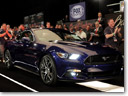
Last week we talked about the Barret-Jackson sale where the rights to buy the first production Camaro COPO for 2014 and the first Z/28 were auctioned off. However, there were even more production firsts that went under the hammer. Car collector and North Texas Ford dealer, Sam Pack signed a $300,000 check after placing a winning bid for the first retail production 2015 Ford Mustang GT. Yikes.
It’s not just money spent for bragging rights though. A part of the sum goes to the JDRF charity, a leading diabetes research organisation that has been endorsed from Ford since 1983. Mr Pack will also have the benefit to peruse the options list and customize the GT to his liking. He can choose any colour scheme he fancies for the inside and outside, and he can go with either a manual or an automatic. (fingers crossed for stick). Oh, and the design team will sign the car as an act of appreciation of the donation to JDRF.
The 2015 Ford Mustang brandishes a throaty V8 that turns out “more than” 420 hp and 390 lb-ft of torque. It also doesn’t fall behind in terms of connectivity and ease of use. And by that we mean launch control – for that exquisite off-the-line start. A pony that actually doesn’t want to destroy it’s tires. Who would have thought?
Chevrolet has unveiled the Camaro Z 28 R Race Car. It will make its official debut in a 2.5-hour endurance race ahead of the 52nd Rolex 24 At Daytona. It will be one of the most production-based competitors on the track, sharing aero, engine and even axle components with the new 2014 Camaro Z 28.
The Daytona race begins at 1:45 p.m. EST, on Friday, Jan. 24, kicking off the 12-race 2014 season.
“The original Camaro Z/28 was designed for racing and became an iconic performance car through its hard-fought victories”, commented Mark Kent, director of racing for Chevrolet.
“A new chapter in racing begins this week, as the new Camaro Z/28 makes its competition debut in one of the most hotly contested series in motorsports.”, he added.
The Camaro Z28 R comes with an aero package including front splitter, rear spoiler with wickerbill, hood extractor vent, wheel-house extensions and front tire deflectors as well as a belly pan.
The Z28 R is powered by the same 7.0 liter LS7 V8 with 500HP (373 kW) and 637Nm (470 lb-ft) of torque. It is connected to a 6-speed Tremec gearbox powering the rear wheels, where an LSD takes care about the traction.
Other highlights include Brembo carbon ceramic brake system and a track-tuned suspension with stiffer springs and adjustable spool-valve dampers.
2014 Chevrolet Camaro Z28 lapped the “Green Hell” (Nurburgring) in just 7 minutes and 37.49 seconds.
The 2014 Camaro models comes with revised exterior featuring a full aerodynamics package that creates down-force at high speeds making the Z28 the most track-capable Camaro in history.
The aerodynamics body kit includes a new front splitter, flared fenders and extended side skirts. There is also a prominent spoiler, a new rear diffuser and underbody paneling. The exterior also features a quad sports exhaust system and a set of enormous 19” alloy wheels fitted with Pirelli PZero Trofeo R ultra-performance tires.
The interior boasts a pair of Recaro sport seats, a flat-bottom sports steering wheel, Octane matte trim and a new rear seat from high-density foam for more rigid structure.
The engine is a 7.0 liter LS7 V8 with 500HP (373 kW) and 637Nm (470 lb-ft) of torque. It is connected to a 6-speed Tremec gearbox powering the rear wheels, where an LSD takes care about the traction.
It is interesting that Z28 weighs whopping 136 kg (300 lbs) less than the powerful ZL1 model. That’s why, it is considered to be faster at the race track.
Other nice feature is the Brembo carbon ceramic brake system. There’s also a track-tuned suspension with stiffer springs and adjustable spool-valve dampers.
Still, there is no official pricing for the 2014 Chevrolet Camaro Z28, but it will be around $56,000.
Chevrolet has announced the new 2014 Camaro Z28. The car made its official debut at the 2013 New York Auto Show.
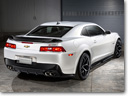
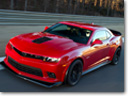
The 2014 Camaro models feature a revised exterior design that integrates high-performance aerodynamics for more efficient cooling and stability at high speeds. The new Camaro Z/28 also features a full aerodynamics package that creates downforce at speed, which helps make it the most track-capable offering in Camaro’s history.
The aerodynamics body kit includes a new front splitter, flared fenders and extended side skirts. There is also a prominent spoiler, a new rear diffuser and underbody paneling. The exterior also features a quad sports exhaust system and a set of enormous 19” alloy wheels fitted with Pirelli PZero Trofeo R ultra-performance tires.
The interior boasts a pair of Recaro sport seats, a flat-bottom sports steering wheel, Octane matte trim and a new rear seat from high-density foam for more rigid structure.
The power is coming from a 7.0 liter LS7 V8 with 500HP (373 kW) and 637Nm (470 lb-ft) of torque. It is connected to a 6-speed Tremec gearbox powering the rear wheels, where an LSD takes care about the traction… or losing it.
It is interesting that Z28 weighs whopping 136 kg (300 lbs) less than the powerful ZL1 model. That’s why, it is considered to be faster at the race track.
Other nice feature is the Brembo carbon ceramic brake system. There’s also a track-tuned suspension with stiffer springs and adjustable spool-valve dampers.
The 2014 Camaro is expected to hit the market in the begging of the next year.
Since its production in 1967 Chevrolet Camaro became an emblematic muscle car model which had captured and still enchants many hearts (including mine). With its distinctive exterior and strong stance, combined with an outstanding performance throughout its 45 year s of history, it is no surprise that it has become one of the iconic cars of our society.
Through the years from its first appearance in the automotive world, till 1992, the model underwent three transformational stages, through which it’s exterior, interior and performance were improved and eventually made the car famous.
In 1993 began the production of fourth generation Camaros. Until the year of 2002 they had a strong presence on the market, although after 2002 there was a eight year break in the production of the model.
In this period the car was even lighter in weight. It was made from plastic body panels over a steel space frame. In addition it had several optimizations in terms of suspension, for instance. What was new here was the LT1 V8 engine mated to a six-speed manual transmission. However, the V8 engine didn’t come as a standard but was optional instead and only went standard on Z28 models. As a standard came the 160 hp (118 kW) 3.4 L V6 engine working with a five-speed manual or four-speed automatic transmission.
No matter how much it had change through the years, Chevy Camaro manged to retain its main characteristics, which made its so popular. It still got the same coupe body style with 2+2 seating and was offered in a cabriolet version. There wasn’t any change regarding the rear-wheel drive as well.
An innovation to be highlighted is that now the anti-lock brakes were standard equipment for all models of the vehicle. And in time there were slight transformations of the interior and the exterior as well.
And the year of 2002 was the 35th anniversary of the model: its production in fact didn’t suffer any pauses but remained in continuous manufacture.
Nonetheless, due to sales drop, the Camaro was taken out of production.
The year of 2006 is that one when the model regained power and “got back to life”. This was the time when two concept models were developed – coupe and convertible, thank to which started the beginning of the fifth generation of Camaros. The new models however went on production three years later – in the spring of 2009, and been sold as 2010 model year vehicles.
no images were found
The coupe has been manufactured in LS, LT, and SS trim levels. The first two models are powered by a powerful 3.6 L V6 engine, which produces the exciting 304 hp (227 kW). Here the customers have a choice in terms of gear-shift: it can be either six-speed manual or a six-speed automatic with manual shift. On the other hand the more exuberant SS version is empowered by the 6.2 L LS3 V8 engine. The latter develops the outstanding 426 hp (318 kW) and is mated to a six-speed manual transmission. And if the driver is more keen of automatic gear-shift, than he or she has to be satisfied with the L99 V8 engine, which produces 400 hp (300 kW).
And as I already mentioned in the previous article, 2012 is they year when General Motors marks the 45th anniversary of the Camaro. As a natural consequence, the Chevrolet brand will release a special limited edition model finished in striking Carbon Flash Black with bespoke red and silver anniversary stripes, dark silver 20-inch alloys, a unique 45th anniversary leather interior with red, white and blue stitching and a one-off white-backed instrument panel.
Furthermore, the 2012 Camaro models include all of the characteristics that made the original muscle cars famous. That automatically means that they got great performance and stunning looks. All models come with six-speed manual or a six-speed automatic transmission. The power of the Chevy comes from its 6.2-litre V8 engine, which delivers the 432 hp (317 kW). This makes it possible for the new model to accelerate from 0 to 100 km/h in only 5.2 seconds.
Few, days ago Chevrolet brought Camaro further with the introduction of the 2013 Chevrolet Camaro 1LE. It includes and upgraded package and will be offered as usual in both coupe and convertible versions. The model carries V8 under its bonnet which is mated to a manual transmission as standard. The latter is able to produce the impressive 426 hp (318 kW) at 420 lb-ft of torque (569 Nm).
What is distinct for this model is that it has some new exterior features such as a matte-black hood, a front splitter and a rear spoiler. Regarding the interior, it includes suede micro fiber material, which covers the flat-bottomed steering wheel and the gear shift.
And by going through all the history around this emblematic muscle car, I can only say that it will undoubtedly stay in the automotive world for a long time in the future, due to its strong presence and successful history.
Chevrolet Camaro is a legend among the cars and it has been famous and gathered greater popularity since its launch in 1967. One of the main reasons for its initial popularity was probably that it had a unique characteristic: it combined a sports car driving feeling with an everyday drive. This iconic muscle car was in fact General Motor’s reply to the Mustang developed by Ford.
Till present there are five generations of the Camaro model, with the latest one being developed and released on the market just recently. As a matter of fact, 2012 is the year of 45th anniversary of the model and given that Chevrolet has decided to launch a special limited edition mode, to mark those 45 years of success.
First generation began, when the iconic Chevy was released for the first time in September 1966, preparing it for the model year of 1967. In particular the production of the first generation Camaros lasted for only two years – from 1967 until 1969.
Even back in the 1967, the first model of Camaro was offered in two variants: coupe and convertible. They were equipped with a standard 3.8l I6 engine which delivered 140 hp (104 kW) and was mated to a three-speed or to a four-speed manual transmission, or to their automatic equivalents. Later the same year, the powerful 290 hp (216 kW) 5.7 L (350 in³) V8 engine was introduced to the Chevrolet.
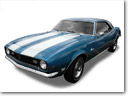
Going further to 1968, there wasn’t much of a change in the model. It got a similar look, although it had undergone slight cosmetic changes such as cloth trims, side marker lights, etc. What made it different was the modified grille and tail lights.
1968 Chevrolet Camaro Z28
Traveling even ahead in time, in 1969 the Camaro was again transformed and carried the name 1969 Chevrolet Camaro Hugger. Now it got a new sheet metal which made it lower and closer to the ground, and attributed to its wider stance. In addition, the model got a vinyl roof which made it distinct. And orange color version of the car eventually became emblematic.
1969 Chevrolet Camaro Hugger Orange
The production of the second generation Camaros lasted longer – from 1970 until the late 1981. The 1970–1/2 Camaro debuted as a 2+2 coupe and included new body style, looked sleeker, as well as optimized suspension. Nevertheless, no cabriolet version was offered, and in fact there wouldn’t be any convertible production of the Camaro until the third generation.
In terms of engines and drivetrain components there was nothing significantly changed. The major differences were made on the exterior and interior, which contributed to the growth in popularity of the car. What was new here in terms of technology was the 4.1 L six cylinder bas engine, which was actually the enhanced version of the previous 3.8 l one. The 4.1 L engive performed far better and produced 155 hp (116 kW). In the second generation the best performance was carried through the 6.5 L V8 engine, which delivered the astonishing 375 hp (280 kW).
It is apparent that the car was thoroughly restyled and now was even larger and with wider stance. However, the unique markers of the previous generation Camaro stayed untouched. For instance, in the second generation Camaros could be still seen the unibody structure, front subframe, theA-arm front suspension and leaf springs.
1972 Chevrolet Camaro Turbo 350
A highlight here is the introduction of the Z28 Special Performance Package in 1977. With it the customers enjoyed not only the amazing driving performance of the vehicle, but had the opportunity to ride on a car which produced 360 horsepower due to its 5.7 L V8 engine. Later in 1980 and 1981 to afore mentioned package was added an air induction hood scoop, with an intake door that opened under full throttle.
1977 Chevrolet Camaro Z28
Through the next ten years – from 1982 till the 1992, Chevrolet brand undertook the introduction campaign of the first Camaro models which were equipped with factory fuel injection and gave the customers the choice between Turbo-Hydramatic 700R4 four-speed automatic transmission and five-speed manual transmission. Furthermore, a new hatchback body style could be recognized in the third generation. Now, 16 inch wheels were standard, and the overall weight of the car was significantly reduced.
The iconic Chevrolet Camaro IROC-Z came for the first time on the world scene in 1985 and its production continued till the end of 1990. A lot of innovations and transformations were added during that period. For instance there was a new brake light added.
Worth mentioning is the new engine added two years later. Namely, it was the 5.7L 350 V8 engine, which eventually turned out to be the standard one for the IROC-Z models. What was specific about those particular Camaro models is that they only came with an automatic transmission.
 Chevrolet Camaro Z/28 is one of the best cars to drive nowadays. But what happens when it is equipped with Hennessey Performance HPE650 Upgrade? Unexpectedly OnStar calls you. Or at least this has happened to tuning company’s owner John Hennessey, while he was testing the uprated Z/28 Camaro.
 Chevrolet Camaro is obviously a very hot topic today. We have received an interesting video from Hennessey Performance along with information about an extreme upgrade, called HPE1000. Yes, the number behind the abbreviation shows the horses this upgrade can give to your 2014/2015 Chevy Camaro! Mind-blowing, aren’t they!









 Last week we talked about the