 With more than 15 million cars built, the Passat and Passat Variant rank among the really big successes in automotive history. Now Volkswagen is extending the model range of this car line by adding a third dimension: the Passat CC. Its fully independent body design, an interior that has sporty individual bucket seats in the rear too, impressive powertrain systems and technological highlights worthy of the luxury class, meld together to create a unique vehicle in the Passat’s market segment. The Passat CC is an elegant sedan and a dynamic coupé simultaneously. The concept and design of this Volkswagen are defining fresh, new directions beyond the mainstream. (more…)
Tag: VW
-
VW Passat CC
-
VW Scirocco
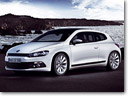 Volkswagen is putting on a spectacular parade of new models in Geneva with a host of international product debuts. Taking centre stage will be the highlight of the show, the new Scirocco – a completely re-engineered all-round sports car. Another vehicle being showcased at Lake Geneva is the Golf TDI Hybrid. This concept car runs on just 3.4 litres of diesel per 100 kilometres. The 150-PS Passat Estate TSI EcoFuel, also debuting in Geneva, represents a technology leap for automobiles run on natural gas. Other Volkswagen world premieres will be the extremely fuel-efficient Sharan BlueMotion (6.0 litres per 100 km) and the four-wheel-drive Golf Estate 4Motion. The Passat CC will also be on display for the first time ever in Europe. (more…)
-
Volkswagen Up
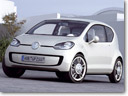 There are cars that endure for all times. They are icons of their type, masterpieces of craftsmanship and technology; they put ideas into motion, make progress tangible and sometimes quite simply make everyday life better, more practical and enjoyable. Many of these cars carry the VW logo. “Bug, Beetle, New Beetle”, “T1, Bulli, Samba bus, California”, “Golf, GTI”.
-
Volkswagen Golf Variant
 Volkswagen is introducing a new Golf to the worldwide market: The “Variant” that is as spacious as it is variable. On June 1, dealers will be presenting the model in Germany; all other countries and continents will follow successively. The new Variant – like the classic Golf and the Golf Plus (including CrossGolf) – is already in its third single remake of the successful “Golf” album. Earlier editions of the station wagon were also sales hits: More than 1.2 million cars have found buyers since 1993, and 660,000 units have been registered in Germany alone. Now the third generation is arriving.
-
VW Jetta Sportwagon
 The Jetta SportWagen, a sporty and dynamic wagon version of Volkswagen’s top-selling model, made its U.S. debut today at the New York Auto Show. The Jetta SportWagen mixes practicality with European style and balances both elegance and sportiness. Its exceptional ride and handling and segment-leading safety features, along with its design are perfect for those with an active lifestyle.
Delivering performance and value, the Jetta SportWagen will be offered with three engine variations. The Jetta SportWagen will launch with an upgraded 2.5-liter, five cylinder engine that now produces 170 horsepower. The 2.5L Jetta SportWagen arrives in dealers this August, and will be followed with the 2.0T, four cylinder engine that produces 200 hp. In early 2008 the Jetta SportWagen will be available with a 2.0L clean diesel engine.
Aside from offering the sporty feel and fun to drive performance of a Jetta, the SportWagen opens up a new world of possibilities in the way of usable cargo room— 32.8 cubic feet to be exact, or an even more impressive 66.9 cubic feet with the rear seat folded down. For those whose active lifestyle requires even more room, there is an optional fold-flat front passenger seat that provides additional cargo space. Fold-flat front passenger seat is available with “V-Tex” leatherette seating.
Like the Jetta, the SportWagen continues the Volkswagen tradition of offering a long list of standard equipment. Some of the many standard features include: air conditioning, anti-theft vehicle alarm, cruise control, CD player, traction control, four-wheel anti-lock disc brakes, eight-way adjustable front seats with height, angle and lumbar support adjustments, and a height-and-telescoping steering wheel. Available as an option on the Jetta SportWagen is a panoramic sunroof. The panoramic sunroof offers its passengers an impressive 12.7 square feet of either daylight or starlight, providing them an open air connection with the outdoors.
The Jetta SportWagen also enjoys a long list of standard safety features such as, driver and front passenger front airbags, driver and front passenger side thorax airbags, Side Curtain Protection®, and rear-impact optimized head restraints on driver and front passenger seat.


-
VW Touareg R Line
The new Touareg generation will be offered with three R line packages in the future. They can be ordered for all engine versions starting from 165 kW (V6 TDI).
In the first upgrade stage here the R line program offers extras including 20-inch alloy wheels (of type “Omanyt”), sport chassis, a four-spoke leather steering wheel, selector lever with R line logo, interior door trim in front with R line logo and pedal caps in R line design. Volkswagen offers “Casablanca” 20-inch alloy wheels as an alternative.
The “Plus” R line package provides an even higher degree of customization. It additionally includes a sport seating system in leather (“Nappa”) with R line logos in the front headrests as well as very high-quality R line “Engine Spin dark” interior applications.


The “Exterior” R line package is also available for the Touareg. Included in this program of refinement are a matte chrome finish radiator grill with dual fins, custom bumpers also with front transverse web and rear diffusor in chrome (matte) design, special side
-
VW Passat R36
A 220 kW / 300 hp 3.6 liter six cylinder direct injection gasoline engine will power the Volkswagen Passat R36 – the most powerful Passat of all time. As part of standard equipment power transmission is handled by a direct shift gearbox (DSG) and permanent four-wheel drive (4MOTION). The top speed of the sedan is an electronically regulated 250 km/h. In terms of speed, the Volkswagen Passat R36 outstrips every other Volkswagen in accelerating from 0 to 100 km/h: the sedan reaches the 100 km/h mark in 5.6 seconds (5.8 seconds for the Variant).
The VW Passat R36 was conceived by Volkswagen Individual, the specialist team for very fast and/or special models. Following the Golf R32, the Volkswagen Passat R36 is the second series version under the “R” sports label. The “R32” label already represents a top-selling model; the first Golf R32 (177 kW / 241 hp) based on the VW Golf Mk IV and introduced in midsummer 2002, took off better than expected in every way; 14,000 cars were sold. On the foundation of this success the idea arose to develop a whole series of R models in the future. In Autumn 2005 the second Golf R32, 184 kW / 250 hp, equipped with 4MOTION four-wheel drive as standard equipment, was introduced. It was also a terrific seller. And it continues to sell well today. The “R36” shows how sporty a Passat Sedan and a Passat Variant can be.


Visually, with a whole range of specific features the Volkswagen Passat R36 shows that it is the most dynamic model of the globally successful series. Special features of the front section: an R-specific bumper and a crest radiator grill in matte chrome finish. Other R exclusives are the dual fins of the upper radiator grill designed in aluminum look and the radiator air inlets in slatted look.
The rear of the Volkswagen Passat R36 sedan features a newly designed spoiler on the luggage compartment lid; in the case of the Volkswagen Passat R36 Variant a new roof edge spoiler provides additional downward force to the rear axle. Identical for both body versions: the chrome dual exhaust pipes. On the sides it is, among other things, the newly designed 18-inch “Omanyt” alloy wheels and wheel arch extensions in the car color that were specially developed for the Volkswagen Passat R36.
An overview (partial) of R36 exterior details:
- Chrome exhaust pipe ends
- Bi-xenon headlights
- Disk brake calipers painted black
- Roof edge spoiler (Variant)
- Trunk lid spoiler (Sedan)
- Radiator grill in matte chrome, fins in aluminum look and “R36” lettering
- Air grille in slatted look
- R-specific bumpers front and back
- Rear LED tinted lights
- Wheel arch extensions in car color
- Chrome protective trim on sides and back
- Door sill extensions in car color
- Door closing trim in car color
- 18 inch “Omanyt” alloy wheels (tires: 235/40)
Similar to the Golf R32, Volkswagen Individual designed interior equipment especially for the sportiest Passat. The instruments and middle console are finished in “Engine Spin” décor. The leather steering wheel in R design is especially slip-proof; it features an R36 logo in the lower spokes. The pedals have a stainless steel finish. In addition, as standard equipment the Passat R36 will be delivered with a sport seating system together with electric 12-way adjustment, R36 door sill trims, new instrument lights (white illumination) and an automatic transmission selector lever in aluminum look. A special highlight is the optionally available 14-way leather seating system with seats that are electrically adjustable on the sides, affording optimal side support for drivers and passengers of different sizes.
An overview (partial) of R36 interior details:
- Automatic transmission selector lever in aluminum look
- Engine Spin décor inlays, light-colored
- Door sill trims with R36 lettering in front
- Instrument cluster with R logo and white illumination
- R design pedal caps
- R-specific multifunctional steering wheel
- Seat covers and door coverings in flat woven fabric “Monte Carlo” design
- Sport seats in front, 12-way electric, R logo on backrest
- Sport seating system in back, separately folding backrests with middle armrest
- Heatable front and outer rear seats
-
Volkswagen Rabbit Thunder Bunny
The story began back in the early ‘80s, with a man named Bill Neumann. Bill founded the California based tuning firm Automotive Performance Systems (APS). He was frustrated with the fact that Volkswagen’s hot hatchback GTI had been sold in Germany since 1976, but hadn’t yet come to America. Bill had driven the GTI in Europe on several of his parts-searching trips, and he was convinced it would be a big hit in America. So he sent letters to the factory. He wrote to enthusiast magazines and lobbied Volkswagen dealers for support. Then, he put together the proof that a Rabbit-based performance car was capable of generating both stunning performance numbers and lots of attention from the American automotive press corp.
Thus was born the original Thunder Bunny.
The APS-modified Rabbit was delivered to Motor Trend magazine late in 1981. Even though its staff was use to driving the best cars in the world, they were blown away by the little Volkswagen hatchback. As it was written in the March 1982 issue: “The little white wonder packs its own kind of lightning-quick rabbit punch — one that’s guaranteed to kayo unsuspecting boulevard bullies.” And when Road & Track magazine got its hands on the car, it reported a zero to 60-mph run in the low seven-second range and slalom times that at the time had been bettered only by the Ferrari 512 Boxer, Lamborghini Countach and Renault R5 Turbo. Exalted company, indeed.


Bill’s frustration ceased in the fall of 1982 when the GTI finally came to America, but by then Thunder Bunny had done its job. It put Neuspeed, the APS-trademarked line of parts and accessories, on the map. It also helped launch a vital North American community of specialists in watercooled Volkswagen performance. Modifying Volkswagens, of course, was not new in America — the Beetle had spawned a huge following of enthusiasts — but the new generation of Volkswagen cars hadn’t sparked much interest in the go-fast crowd before the early ‘80s.
Neuspeed continues to be a leading force among the world’s Volkswagen tuners, and it has never stopped building special projects. The latest is also called Thunder Bunny, and it was built in commemoration of Neuspeed’s quantum leap forward all those years ago with the original rabid Rabbit. Designed in collaboration with Derek Jenkins, Chief Designer at the Volkswagen Design Center California located in Santa Monica, the new Thunder Bunny is an updated, thoroughly modern version of the original, and it debuts alongside the Concept R GTI on the Volkswagen stand at the 2006 SEMA Show.
Today’s Thunder Bunny is a blend of subtle design massaging and tuning technology, built to show how a comfortable daily driver can also provide an exciting motoring experience. Creating the thunderous noise from under the hood is a newly developed turbocharger system, designed by Neuspeed especially for Volkswagen’s 2.5-liter five-cylinder engine. The high quality installation includes a modified intake manifold, Garrett ball-bearing turbocharger and air-to-air intercooler. A stainless exhaust and specially baffled aluminum oil pan were also sourced from APS for optimum flow and cooling. Boost is restricted to a maximum of seven lbs. in this Stage 1 kit, but it still produces 225 horsepower, 75 more than the stock 2.5 L, and a hefty dose of low-end torque. A performance clutch and Quaife differential were added to the powertrain for durability and a more efficient delivery of power to the front wheels.
Thunder Bunny’s gleaming candy white exterior is made distinctive by several design studio touches. The concept’s body kit includes a larger central grille and a more muscular rear valance framing a twin R32-style exhaust from Neuspeed. Like the R GTI, Thunder Bunny’s paint was overlaid with graphics Jenkins calls “topographical” in pearl silver. They were meant to evoke the contours of the car’s geography or waves of air that flow over the surfaces. However they are interpreted, the pearl silver graphics make a unique visual statement as they appear to blink on and off in the changing angles of the sun.
Like the original Thunder Bunny, the forged alloy “street” wheels are painted gold. In 19×8-inch sizing, they’re wrapped with Michelin Pilot Sport Cup 235/35-19 tires. Similar sized multi-spoked forged alloys were sourced from Neuspeed’s RS line of wheels for track use. Both sets are lightweight, in keeping with the core GTI quality of nimble handling. The front brakes are 328mm two-piece floating cross-drilled discs from Brembo, gripped by bunny-bedecked Brembo four-piston brake calipers. That’s right, bunnies. A veritable warren of Thunder Bunny logos dash to and fro across the surface of the white-painted caliper. At the rear, 310mm disc brakes are fitted.
Handling prowess comes from a suspension fitted with a Bilstein coil-over shock system and APS/Neuspeed sways bars, measuring 25mm front and rear. The suspension system is adjustable for both ride height and for shock stiffness, giving the new Thunder Bunny a dual character, suitable for the street or the track. A Neuspeed short-shift kit and custom spherical aluminum shift knob, created in the design studio, put the driver in closer touch with the manual transmission. A stock GTI steering wheel was recovered in alcantara to go along with the upgraded upholstery and trim.
Stock GTI seats were recovered in black and white checkered tweed that echoes styling trends from the early ‘80s, and the striking fabric is elegantly framed by surrounding black leather with white stitching. The color scheme is perfectly complemented by the white carbon-fiber interior trim provided by OSIR, experts in hand-laid composites and also major contributors to the design studio’s Concept R GTI.
All those years ago, Bill Neumann asked a simple question. Volkswagen responded with the GTI, while Neuspeed became a leader in Volkswagen tuner circles…why a new Thunder Bunny? Think of it as a beautifully crafted response to another question, “What happens when you give a modern Rabbit to one of the original water-cooled Volkswagen tuners?”
-
VW Touareg
Volkswagen is presenting in Paris the world premiere of a new generation of the Touareg luxury class SUV. The market launch of the new version of the top-seller will take place at the end of November 2006. The Touareg, equipped with over 2,300 redesigned parts, looks different from its predecessor with a completely modified front section with crest radiator grill, distinctive headlights and much more. In addition, a substantial amount of new and sometimes unique technical developments are being employed. The Touareg will also be available as the first Volkswagen with an eight cylinder direct injection gasoline-powered engine (V8 FSI, 257 kW / 350 hp).
ABSplus
ABSplus, developed and patented by Volkswagen, is a world first: The standard equipment system shortens the braking distance of the Touareg by up to 20% on loose driving surfaces. Before now SUVs became unstable when braking hard on surfaces such as gravel or sand and steerability and stopping distance were significantly impaired. This is where ABSplus comes in: Thanks to an innovative traction control system the Touareg pushes parts of the surface material in front of the temporarily locked-up wheels. This creates a type of braking wedge. The result: Braking action is greatly increased without impacting steerability and the stopping distance is correspondingly reduced.


Front Scan
No less innovative than ABSplus is Adaptive Cruise Control (ACC) with a new follow-to-stop feature: in this combination the system is referred to as Front Scan. The radar-based distance control automatically slows down and accelerates the vehicle within a previously defined range of speed depending on traffic conditions. The system now employed in the Touareg slows the car down to a complete stop in emergency situations. Also new: the stopping distance control integrated into the ACC system. Ahead of certain situations it “arms” the brakes as a preventative measure.
Side Scan
Another assistant system in the new Touareg generation, being introduced for the first time in a Volkswagen, is the lane changing assistant (Side Scan). This system monitors the area next to and behind the Touareg and a control lamp in the exterior mirrors warns of a possible risk of collision when changing lanes.
ESP innovations
New features have been added to the ESP electronic stabilization program. In detail these include a now hydraulic instead of pneumatic brake assistant (optimal operational reliability), preventative brake pressure build-up when the gas pedal is released suddenly, Active Rollover Protection (ARP) to increase stability, rain brake support (windshield wiper effect for wet road surfaces), fading brake support (additional pressure build-up optimizes constant braking) and understeer control logic (improves turning behavior when understeering).
Driving dynamics package with dynamic response
The Touareg masters tough off-road use and extreme tours and yet offers the comfort of a sedan and remarkable sportiness. Previously, this dynamic could be increased in terms of the chassis via an optional sport chassis for Touareg models with steel suspension. A sport chassis – with dynamic response in this case – is now also being added to the models with pneumatic shock suspension. “Driving dynamics package with dynamic response” adds a hard spring rate to the already existing “Sport” mode of the manually and automatically controllable pneumatic shock absorption system. This increase in dynamics and safety is achieved, among other things, via reinforced stabilizers, absorbers regulated by steering wheel movement, a modified pneumatic shock absorption system and new software. Driving comfort remains just as good in normal suspension mode as with models without sport chassis.
Rollover Sensor
In the area of passive safety a new rollover sensor for sensing vehicle yaw angle and yaw speeds is also being employed. It detects whether the vehicle is getting into a rollover situation. The data from the sensor flows together with the parameters detected by the acceleration sensors built into every Volkswagen into the airbag control unit. If in a comparison of the data the risk of a rollover is determined, the side and head/thorax airbags are automatically activated to lower the risk of injury.
Dynaudio sound system
High-end in the entertainment area, too: The Touareg is the first SUV in the world that can be equipped with a sound system from Danish hi-fi specialist Dynaudio. Main features: Distortion free hi-fidelity sound, ten high-end speakers, ten-channel amplifier and 620 Watt total output.
Instruments
A new multimeter for the multifunctional display enables a detailed and now multicolor presentation of information. The display has a clear layout and now shows navigation pictograms in 3D. In addition, new features such as Front Scan can be perfectly presented on the multifunctional display.
V8 FSI
The new Touareg offers another innovation in terms of drive technology: the first eight cylinder direct injection gasoline-powered engine from Volkswagen. The Touareg’s new V8 FSI achieves 257 kW / 350 hp and generates maximum torque of 440 Nm. The other two gasoline engines generate 206 kW / 280 hp (V6 FSI) and 331 kW / 450 hp (W12). In addition, there are three direct injection diesel-powered engines for the Touareg, all combined with a particle filter (DPF) as standard equipment. The TDIs have output of 128 kW / 174 hp (TDI), 165 kW / 225 hp (V6 TDI) and 230 kW / 313 hp (V10 TDI).
Front section design
The front section of the Touareg was completely redesigned. Except for the engine hood no part remained untouched. The new Touareg is immediately recognizable as the latest generation by the typical Volkswagen crest radiator grill in chrome design. Although always individually designed for each model, it has become an unmistakable stylistic feature of the brand. The second distinctive feature of the new generation Touareg are the organically shaped headlight casings (optionally bi-xenon with cornering and turning light). Similar to the latest Volkswagens such as the Eos, the lower area features a round curvature. A single glance at the headlights and the crest radiator grill makes it evident that the front bumper has also been completely redesigned. Elegant: a chrome-plated transverse web in the outer air intakes of the bumper. Illuminating during inclement weather: the round, protectively integrated fog lights. Aerodynamic: The exterior mirrors were also redesigned and now offer and even braver face to the wind.
Rear section design
Modifications to the rear section, too: There’s a new hatchback spoiler that improves aerodynamics. The rear and brake lights were technically modified and the optional tinted glass of the rear lights was improved. The designers also redesigned the lower area of the bumper and exhaust pipes for a more dynamic look.
Side section design.
In silhouette it’s the new light alloy wheels and the aerodynamic mirrors that identify the latest generation of the Touareg. New colors are also available: “Atacama Grey Metallic”, “Mountain Grey Metallic”, “Artic Blue-Silver Metallic”, “Silver Leaf Metallic”, “Sierra Red Pearl Effect” and “Galapagos Anthracite Metallic”.
Seating system
A basic and a “comfort” seating system is available for the Touareg. The “comfort” seating system was redesigned for the latest Touareg. The partially leather (“Cricket”) and fully leather (“Nappa”) seats are now not just distinguishable by leather, but also by design. Both are also distinguished from the unchanged basic seating system. In general, the back seat of all versions were redesigned. It weighs eight kilos less and when folded down now offers a level surface between backrest and cargo floor.
-
VW Touran
The Touran is coming with a new look, new technologies and a new top TSI engine. The next generation of the bestseller will be presented in a world premiere at the Paris Auto Show on September 28. The market launch will be taking place in the middle of November. The van will be the first Volkswagen available with “Park Assist”, unique in its technical design; the parking system that makes parking a snap, even in tight quarters.
At first glance the new Touran is recognizable from the front by its Volkswagen crest radiator grill in chrome design, a new bumper and precisely cut headlights; the optional lights available as bi-xenon adaptive headlights follow the stylistic design of the Eos. At the back the new rear lights and the bumper modified along the lines of the front section allude to the second Touran generation. Numerous interior modifications and expanded standard equipment top off the extensive package of measures. Starting in spring 2007, the highest performance gasoline direct injection engine, a Twincharger with 125 kW / 170 hp, will be employed in the Touran for the first time. The gears of this sporty as well as thrifty 1.4 TSI are changed via the standard DSG direct shift gearbox. The 103 kW / 140 hp strong Touran 1.4 TSI, whose Twincharger is also optionally available with DSG, will get started right at market launch.


Park Assist guides the Touran into that space under 15 seconds
Another technology highlight of the Touran is the optional parking guidance assistant (including Park Pilot / distance warning front and back). Developed by Volkswagen, “Park Assist” enables automatic parking. “Park Assist” is activated at the push of a button. While driving by at speeds of up to 30 kph an ultrasonic sensor system detects all parking spaces on the right and left that are parallel to the driving lane; a control unit calculates the ideal path for parking. “Park Assist” notifies the driver about the starting position via display in the instruments. After engaging reverse gear the van maneuvers into the parking space in under 15 seconds. During the entire parking process the driver only has to accelerate and brake – the Touran does the steering.
The latest generation of the van bestseller starts at 20.460 euros
The Touran is regarded as the all-round talent for private and/or business use due, among other things, to its unrivaled range of innovative engines and gearboxes as well as its great interior versatility and capacity. From a standing start the first generation introduced in 2003 advanced to the most successful van series in Germany (approx. 8,000 new registrations per month); in Europe the Touran is also one of the most sold models of its class (11% market share in the segment). The new Touran should strengthen this position. At a purchase price of 20.460 euros (Touran Conceptline, 75 kW / 102 hp) it can be recommended in terms of economy.
Stainless steel, new materials and uncompromising safety features
New upholstery fabrics and appointments breath new life into the interior of the next generation Touran, lending it a more refined feel. The middle plate of the instrument panel, for example: It is now crafted in a stainless steel design. The same is true for the area around the standard storage compartment above the middle console. In addition, the basic “Conceptline” version is refined by the new “Media” interior trim. The “RCD 300” radio-CD system with integrated MP3 mode is standard on-board equipment. Also true in terms of safety: no compromises. Front, side and head airbags are included as standard features, as well as the ESP Electronic Stabilization Program including counter-steering feature and trailer stabilization.
New features also refine “Trendline” and “Highline”
The stainless steel theme is even more enhanced in the next highest equipment version: The décor strips here also exhibit this design. It has a sporty character matching the new “Energy” interior trim. The Touran Trendline now comes with the semi-automatic “Climatic” air-conditioning system as standard equipment (previously a Highline equipment feature). Taken from its predecessor are practical details such as the folding front passenger backrest with table and load-through facility.
At Volkswagen “Highline” traditionally refers to the most exclusive equipment version. In the case of the updated Touran this includes, among other features, newly designed 16″ light-alloy wheels (“Magny Cours” design), the refined “Mando” interior trim, an air-conditioning system (Climatronic instead of Climatic), the most powerful version of the “RCD 300” audio system with eight speakers and ParkPilot for the back.
Innovative extras for an all-round automotive talent
In addition to “Park Assist”, “Hill-Starting Assistant”, daytime running lights and bi-xenon headlights with cornering light, the new optional equipment for the second generation Touran includes a variable luggage compartment floor with two integrated storage compartments and a DVD-based radio navigation system (“RNS MFD DVD”).
140 hp Twincharger with DSG direct shift gearbox
The new top gasoline engine is, as described earlier, the Twincharger 1.4 TSI with 103 kW / 140 hp, first used in the Golf GT. In combination with the new Touran the dual charged high-tech engine (charged via compressor and turbocharger) enables a top speed of 198 kph while running on an average of only 7.5 liters of fuel per 100 kilometers. The basic version engine Volkswagen offers for the Touran is a 1.6 liter gasoline engine with 75 kW / 102 hp.
A 125 kW / 170 hp TDI engine is at the top of the diesel engine range. The entry level here is a TDI with 66 kW / 90 hp. In the next TDI performance levels Volkswagen offers the new Touran with 77 kW / 105 hp and 103 kW / 140 hp. Another innovative way of saving without forgoing driving pleasure is the 80 kW / 109 hp natural gas version of the Touran, the “EcoFuel”, that will also be available at market launch. A world-wide novelty in the van segment: All TDI and TSI engines (at least 77 kW / 105 hp) can be combined with the DSG direct shift gearbox – in the eyes of many experts and customers the sportiest and most economical automatic transmission in the world.
Interior concept with up to seven seats and 1,989 liters of storage volume
The innovative seating system of the Touran shows the way in terms of versatility. Article originally posted on Babez.de! The three light-weight seats arranged next to one another in the second row can be quickly and easily moved – lengthwise and offset diagonally, folded down or removed. The Touran can be optionally equipped with a third row of seats; when not in use the two full-fledged individual seats can each be easily lowered separately into the luggage compartment floor. The luggage compartment of up to 1,989 liters (depending on seat configuration) is also a hallmark of versatile and efficient usability.
-
VW Passat V-Line Package
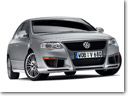 The Passat, one of Volkswagen’s most successful models, has a very distinguished reputation. Since the beginning of 2006, VW’s versatile model has won some 20 international prizes, including such renowned awards as the “iF design award”, and the “Gelber Engel” from the ADAC automobile club. With the new V-Line aerodynamic package, Volkswagen Accessories clearly demonstrates that the Passat has the makings of a true sports car. The sporty premium kit includes, front skirt, side sills, rear skirt, tailgate lip and double tail pipe trim. It upgrades the appearance and reduces the aerodynamic drag of standard vehicles. (more…)
-
VW Golf GTI Edition 30
 Volkswagen today introduced the Golf GTI Edition 30, a new study to mark the 30th anniversary of the GTI at the Golf Record Day in the Veltins Arena in Schalke, Gelsenkirchen in front of an audience of thousands of Golf drivers from throughout Europe.With a powerful 230 PS (169 kW) 2.0 litre turbo FSI engine, the Edition 30 study is closely related to the production model and responds to the wishes of GTI enthusiasts. The options package, a profile of desired equipment, is a reaction to the numerous wishes from customers. (more…)


