Tag: V12

  • Aston Martin V12 Vantage Roadster

    Aston Martin is proud to introduce the new V12 Vantage Roadster – a uniquely exciting and ultra-exclusive limited production model which combines the thrilling performance of the most powerful Aston Martin Vantage ever made with the freedom and sensory stimulation of roof-down driving.

    With production strictly limited to just 249 customer examples globally, with all examples sold ahead of release, the V12 Vantage Roadster boasts a compelling combination of dramatic widebody design, ground-hugging wide-track suspension and – for the first time in a Vantage Roadster – the mighty 5.2-litre Twin-Turbo V12 engine. With searing straight-line speed and the unfiltered howl of Aston Martin’s sonorous 700PS 12-cylinder engine, the V12 Vantage Roadster elevates the open-top driving experience to a scintillating new level.

    Roberto Fedeli, Aston Martin Chief Technical Officer, said: “We have worked extremely hard to ensure the V12 Vantage Roadster possesses the same potency and dynamism that characterises the V12 Vantage, while surpassing it in terms of raw sensory excitement that you only achieve with roof down driving. With more power and torque than any Vantage Roadster before it, a wide-track chassis with precisely tuned suspension calibration, and up to ten times the downforce of the series production Vantage Roadster, this is a breathtaking machine created for our most enthusiastic customers”.

    Key to this exhilarating driving experience is the powerhouse of the engine. Developing 700PS at 6500 rpm and 753Nm of torque at 5,500 rpm, the quad-cam 60-deg 5.2-litre V12 is a true force of nature. With a power-to-weight ratio of 372PS-per-ton and an endlessly impressive delivery which combines effortless in-gear response with epic acceleration, every squeeze of the V12 Vantage Roadster’s throttle leads to an unforgettable adrenaline rush.

    Accelerating from rest to 60mph in just 3.5sec and with a top speed of 200mph the V12 Vantage Roadster occupies the very highest echelon of open-top sportscar performance. With a ZF 8-speed automatic transmission and mechanical Limited-Slip Differential (LSD) mounted at the rear, the car possesses the purity and balance of a front-mid-engined rear-wheel drive layout. An optimised transmission calibration minimises shift speeds and maximises driver interaction, while adaptive software in the transmission’s control system monitors operating conditions and driver demands to enhance the driver’s feeling of response and control.

    Sharing the same suspension hardware as the V12 Vantage, but featuring a bespoke tune for its adaptive dampers, the V12 Vantage Roadster’s dynamics have been honed to the keenest possible edge. The steering calibration mirrors that found in the V12 Vantage, to offer maximum steering feel and quick response, improvements which bring the car alive through corners and can be felt with every steering input.

    Like the V12 Vantage, the V12 Vantage Roadster features powerful Carbon Ceramic Brakes (CCB) as standard. Measuring 410mm x 38mm the front discs are gripped by 6-piston calipers, while the 360mm x 32mm rear discs are paired with 4-piston calipers. With much increased stopping power and tremendous resistance to brake fade at high temperatures, the CCB technology also makes a considerable 23kg of unsprung weight saving compared to steel brakes, benefitting steering response and ride quality.

    In order to further reduce overall mass the V12 Vantage Roadster’s front bumper, clamshell bonnet, front fenders and side sills are made from carbon fibre, with the rear bumper and deck lid made from weight-saving composite material. Additional savings have been made with the adoption of a lightweight battery and a special centre-mounted twin-exit exhaust system fabricated from lightweight 1mm stainless steel. Tuned to ensure the V12 Vantage Roadster has a rousing voice to match its looks, this new system weighs 7.2kg less than the Vantage Roadster’s exhaust.

    It’s an indication of the V12 Vantage Roadster’s monstrous performance that its dramatic form is driven by function. For example, the formidable physique of the widebody design is necessary to accommodate the widetrack suspension, which is 40mm wider than Vantage. The new front bumper design, complete with full width front splitter generates additional downforce and aerodynamic balance, while increased cooling is achieved by the reshaped front grille, which is 25% larger, and the ‘horse shoe’ engine vent in the bonnet.

    Aerodynamic performance also informs the new sculpted single-piece sills and rear bumper, which comes complete with integrated diffuser – the effectiveness of which has been improved by the routing of the centre mounted, twin tailpipe, exhaust system. In contrast to the V12 Vantage, the V12 Vantage Roadster comes without the dramatic rear wing as standard, though it can be specified as an option. Those who choose the more understated look can do so in the knowledge that aerodynamic balance is maintained thanks to detailed management of underbody airflow.

    Final visual touches come in the form of impressive 21in alloy wheels, which are offered in two finishes, satin black or satin black diamond turned. An optional lightweight forged wheel option is also available in both satin black and satin black diamond turned, which saves a further 8kg of unsprung mass. Michelin Pilot 4S high performance tyres – 275/35 R21 front and 315/30 R21 at the rear – are standard fitment on all rims.

    As flagship of the Vantage range, the V12 Roadster is fitted with Sports Plus Seats trimmed in full semi-aniline leather and featuring ‘Wings’ quilt and perforation pattern as standard. A carbon fibre performance seat with exposed twill carbon fibre shell and manual 6-way adjustment can be had as an option for those looking for the ultimate in dynamic design and maximum support for high performance driving, also saving 7.3kg without skimping on occupant comfort.

    V12 Vantage Roadster customers can further boost the exclusivity of their car by engaging the services of the marque’s bespoke personalisation service, Q by Aston Martin, for everything from striking exterior graphics and liveries to woven leather. With extensive use of exposed carbon fibre in its design, the V12 Vantage Roadster also lends itself perfectly to Q by Aston Martin: Commission’s range of tinted lacquers, which change appearance under different lighting conditions to make a spectacular feature of the hand-laid carbon fibre panels.

    Marek Reichman, Aston Martin Chief Creative Officer, adds: “From a design perspective, V12 Vantage Roadster is a combination of living sculpture and physiology, such as the functions of an elite runner or thoroughbred racehorse. On one hand, much like the way their systems are developed to handle the stresses of peak performance and trained to work together to increase efficiency and power using oxygen, V12 Vantage Roadster was designed to maximize the benefits of airflow into, throughout and around the car. And on the other, for our Drivers, we created this explicit open-top sports car for those craving excitement and drama. The platform presented us with a design opportunity to make a contemporary visual statement of intent. The result is a living, breathing, driving sculpture with a level of control that sits at the fingertips”.

    Production of the V12 Vantage Roadster is due to commence in Q3 of 2022, with first deliveries scheduled to begin during Q4 2022.
  • Lamborghini Espada

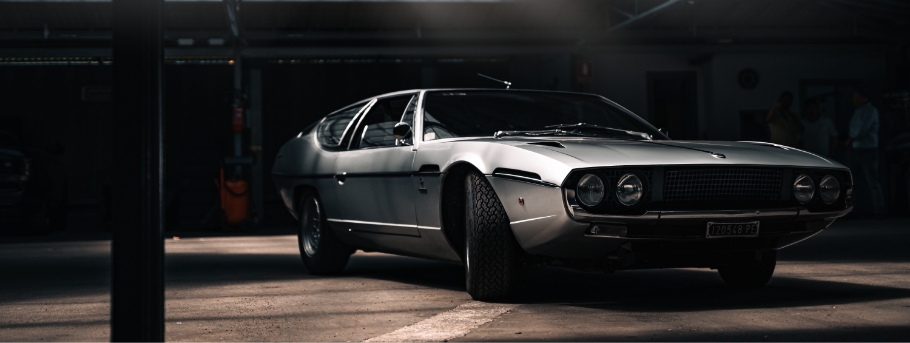
    1968 Lamborghini Espada

    In 2022 Lamborghini is celebrating the V12: the legendary 12-cylinder engine that has powered its most iconic cars for almost 60 years. They include the Espada 400 GT, which was the first four-seat vehicle by Lamborghini and was its biggest selling model for years. Encapsulating an exceptional approach to technical innovation, thanks to the front-mounted 4-liter Lamborghini V12 engine it was always an extremely fast grand tourer despite the step up in size.

    The “pure” V12 combustion engine in its final form will go out of production before the end of 2022, when the last Aventador Ultimae is made. From next year, the heir to the Aventador will be fitted with a new plug-in hybrid version of the V12 engine.

    Ferruccio Lamborghini aimed to produce the fastest, most luxurious and comfortable grand tourer

    Ever since the start of his venture into automobile manufacturing, company founder Ferruccio Lamborghini stated his objective very clearly. He wanted to make the best grand tourer around: a sports car that was not only fast but also comfortable and luxuriously finished. Presented at the Geneva Motor Show in March 1968, the Espada 400 GT perfectly embodied this idea for over a decade. The Espada could comfortably seat four adults and had more space for both luggage and passengers than the 400 GT 2+2 (its predecessor) and the Islero 400 GT 2+2. In addition, the Espada featured truly outstanding finishing, with generous amounts of leather and other refined materials, as well as the option of fitting air conditioning. Power steering was introduced as an option in 1969 and it was included as standard from 1972 onwards. A version with automatic transmission was available from 1974.

    Taking the V12 engine to 4 liters

    The technical cornerstone of the Espada was the 60° V12 engine that was first produced in 1963 with a displacement of 3.5 liters, which had already been increased to 4 liters (3929 cc) in 1964. It is a remarkable example of engine development technologies, and it was capable of delivering 325 hp at 7200 rpm when it was first fitted in the Espada. This increased to 350 hp at 7500 rpm in the Espada Series II, which was presented in 1970.

    Fed by six Weber 40 DCOE side-draft carburetors, the V12 had a compression ratio of 9.5:1 (which increased to 10.7:1 from the Series II onwards) and two chain-driven overhead camshafts per bank. It weighed just 232 kg thanks to substantial use of aluminum to make not only the cylinder head but also the crankcase and the pistons. It was front-mounted in a position that was slightly further forward compared to the previous Lamborghini 350/400 GT engines, in order to make the interior roomier. Thanks to the large opening below the aluminum hood, it was easily accessible.

    The chassis was based on that of the 400 GT but it was lengthened so that the wheelbase reached 2650 mm and it was also widened, with the wheel track increasing to 149 cm. It had four-wheel independent suspension, with double wishbones and coil springs. In November 1968, an Espada “Lancomat” with hydropneumatic suspension went on display at the Turin Motor Show. The system was made available on demand, but in the end it was chosen by very few owners.

    The Espada was an extremely fast grand tourer that was capable of reaching a top speed of between 245 and 260 km/h and keeping up with the sportier Miura in most conditions.

    The Espada’s commercial success

    When it was first unveiled, the Espada was the fastest four-seat car in the world.  Featuring boxy shapes as part of a highly innovative design by Carrozzeria Bertone, it proved to be a long-lasting commercial success. Its versatility and roomy interiors – despite a height of just 119 cm – meant that it was suitable for much more frequent use, thus significantly expanding the customer base. A total of 1226 cars were produced across the three series: 176 of the Espada 400 GT Series 1 between 1968 and 1969, 578 of the Espada 400 GTE Series II between 1970 and 1972, and 472 of the Espada 400 GTS Series III between 1972 and 1978.

    The Espada VIP with a mini-bar and a Brionvega television

    The Espada VIP was presented in 1971. It was based on the Espada 400 GTE Series II and just 12 of the vehicles were made. The first models in this special series of cars came in a special orange hue and had orange and black leather upholstery. Later vehicles were made in other color combinations. Inside, the Espada VIP had a mini-bar and a refrigerator in the rear side panels and a Brionvega Algol 11 television on top of the transmission tunnel to keep the passengers in the rear seats entertained. The VIP is one of the most sought-after models among Espada collectors today.          

    Paul McCartney’s Espada made a splash

    One of the most famous Lamborghini Espada owners is Sir Paul McCartney. The former Beatle was a Lamborghini enthusiast and he bought a right-hand-drive 1972 Espada Series III with manual transmission, red paintwork and a red leather interior. His wife Linda often drove the car, but one time it rolled into a nearby pond after she left it in neutral and forgot to put on the handbrake. It was hauled out of the water after three days and later sold to new owners, who went on to use it for a number of years. Subsequently, it ended up being part of the “decor” in an English pub. It was sold to an unknown enthusiast in 2005 and it is thought that it may now be in Austria.

    From VIP owners to the silver screen

    Many celebrities have expressed their fondness for the Espada over the years. For example, since 1986 the famous American television host Jay Leno – who has always been a car enthusiast – has owned one of the very first Espada Series 2 models, which was made in 1969. EVO magazine founder Harry Metcalfe has also owned an Espada for many years. It is a right-hand-drive 1970 Series II and he took part with it in the Espada and Islero 50th Anniversary initiative organized by Automobili Lamborghini Polo Storico in 2018.

    There have been numerous films featuring an Espada, including around 50 significant titles. The most famous among fans of the model is the 1973 Italian movie “Flatfoot” starring Carlo Pedersoli, who was better known as Bud Spencer. Largely filmed in Naples and the surrounding area, it sees the protagonist pursuing an Espada uphill around a series of hairpin bends in a long chase sequence that ends outside the Church of Sant’Antonio a Posillipo.

  • Miura: the world’s first production car equipped with a transverse central – rear mounted V12 engine

    1969 Lamborghini Miura P400 S

    In 1966, the Lamborghini V12 engine firmly established itself as an all-time legend when it was mounted transversally in a rear-mid position on the P400 Miura: the vehicle for which the term “supercar” was coined.

    Everything revolves around the Miura in the latest chapter of the V12 engine’s story, which has powered iconic cars for almost 60 years and come to epitomize the cornerstones of Lamborghini’s DNA: technological innovation, vision and engineering expertise. 2022 is the year of the last pure Lamborghini V12 combustion engine. Mounted in the Aventador Ultimae[1], it brings the curtain down on a glorious era ahead of the first hybrid production model in 2023, which will mark the start of the hybridization process at Lamborghini.

    Ferruccio Lamborghini: “I like this one: it’ll earn us legendary status”

    Less than two years after Lamborghini was founded in 1963, the Sant’Agata Bolognese company was still small but had managed to establish itself solidly at the top end of the tricky grand tourer market, and the 350 GT was being manufactured on a steady basis. Ferruccio Lamborghini was satisfied because he had triumphed in his own personal technical challenge despite rather widespread initial skepticism. Nonetheless, he was dreaming of making an even more stunning car that would take everyone’s breath away. And that is just what happened.

    Taking care of the technical side of things were the young engineers Giampaolo Dallara and Paolo Stanzani, who were responsible for development and production at Automobili Lamborghini at the time. A big part in the Miura’s success was – and continues to be – down to its exceptional engine: a 4 liter 60° V12 with 4 Weber 40 IDL 3L carburetors that generated maximum power of 350 CV, 370 CV and 385 CV in the P400, P400S and P400SV models respectively. That was enough to make it the fastest production road car in the world at the time. The outstanding design by Carrozzeria Bertone did the rest and the Miura enjoyed unprecedented sales for a Lamborghini vehicle. The original forecast was for 50 cars to be sold in three years, but in the end the total number reached 763 in seven years, between 1966 and 1973.

    Engineer Paolo Stanzani: a linchpin of the Lamborghini V12 engine

    The engineer Paolo Stanzani (1936-2017) was one of the first people to be hired by Ferruccio Lamborghini. Appointed straight after he graduated from the University of Modena, he went on to become one of the most important players in the story of the V12 engine and the Miura. Stanzani was the one who took the V12 engine designed by the engineer Giotto Bizzarrini and made it suitable for serial production and use on the road. In addition, Stanzani was part of the small group of young talents who developed and created the Miura and its cutting-edge technical features. He held various roles at Lamborghini, ranging from Technical Director to Production Manager and General Manager. As well as the Miura, he made crucial contributions to the production of the Countach, Espada and Urraco, the latter of which was his personal favorite.

    The Miura was a real star whose iconic appeal lay not only in its looks but also in its “voice”

    As soon as it was presented, the Miura became the most sought-after car among film directors. It has appeared in no fewer than 43 movies, often in a starring role. One of the most famous is unquestionably “The Italian Job” in 1969. Lasting more than three minutes, the entire opening sequence is dedicated to Rossano Brazzi driving a P400 Miura as Matt Monro sings “On Days Like These”. The accelerating V12 engine can be heard in the background of the sequence, which has gained cult status in the world of car movies.

    The Miura has starred on the covers of dozens of car magazines and other publications. Its first appearance in an international article came in November 1966. The piece in question was in the weekly magazine Autocar and it was by Paul Frère, the Belgian racing driver turned journalist. There is no doubt that the most renowned article was the one written by the English journalist Leonard “LJK” Setright for the British monthly magazine CAR. Divided into two parts, it described the delights of a journey from Sant’Agata Bolognese to London in a P400 Miura.

    Putting together a comprehensive list of personalities who have owned a Miura over the years is a tough task. For instance, Little Tony and Rod Stewart both owned more than one; Eddie Van Halen kept his for more than 30 years; and Jay Kay of Jamiroquai still has his today. Other examples of notable Miura owners are the actor Peter Sellers; the model Twiggy; the singers Johnny Hallyday (who made headlines when he crashed his P400 into a tree) and Elton John; the opera singer Grace Bumbry; the jazz musician Miles Davis; the racing driver Jean-Pierre Beltoise; and finally the Shah of Iran, who owned a number of Miuras including one of only four SVJs that were ever made.

    [1] Aventador LP780 Ultimae Coupé and Ultimae Roadster Fuel consumption combined: 18.0 l/100km ; CO2-emissions combined: 442 g/km (WLTP)

  • 350 GT: the V12 that laid the foundations for Lamborghini’s DNA

    1964 Lamborghini 350 GT

    For Lamborghini, 2022 is the year of the V12, its legendary 12-cylinder engine that has powered iconic models for almost 60 years of history and became a symbol of technological innovation, vision, and engineering expertise: the foundations of Lamborghini’s DNA.

    Before entering the hybridization phase in 2023 with the advent of the first series-production model, Lamborghini is paying tribute to its most memorable engine in a retrospective account of the cars that have featured it. The first ever Lamborghini to leave the Sant’Agata Bolognese factory in 1964 was the 350 GT, more recently taken to the historic center of Bologna for an epic encounter with the latest V12 in the brand’s history, the Aventador Ultimae.

    The genius Giotto Bizzarrini and the story of a contract ‘with a bonus for every 10 extra horsepower’

    To design the engine, Ferruccio Lamborghini chose an exceptional external consultant, the engineer Giotto Bizzarrini, born in Quercianella (province of Livorno) in 1926, still today considered one of the best engine designers who ever lived. Bizzarrini was a huge fan of racing and dreamed of building an engine for Formula One.

    The agreement with Lamborghini was simple and created the basis for something absolutely extraordinary: 12 V-cylinders, displacement of 3.5 liters, and lots and lots of horsepower: at least 350.

    As an incentive for Bizzarrini, Lamborghini included in the contract a bonus for every additional 10 horsepower. When the engine ran on the test bench for the first time in July 1963, the readings were spectacular, with 360 HP at 9000 rpm. Ferruccio Lamborghini paid what he owed, including the bonus for the extra horsepower, but he realized he was in trouble. In fact, Bizzarrini had designed a Formula One engine that was unsuitable for road use and mass production.

    The arrival of Paolo Stanzani: the engine was rationalized and reached over 250 km/h

    It was then Paolo Stanzani, one of the most highly regarded engineers in the history of Lamborghini, who was entrusted with the job of “civilizing” this engine. His work, though capable of maintaining the engine’s exceptional performance and making it pleasantly drivable even at medium and low revs, did not alter the basic technical specs, which in many points would become a first for a series-produced car.

    Its maximum power output of 280 HP at 6500 rpm was enough to propel the 350 GT, the first production Lamborghini model debuting in 1964, to a top speed of over 250 km/h.

    The first customer launches the brand’s popularity in the entertainment world

    The first 350 GT was delivered to Livorno-native drummer Giampiero Giusti, who was at the height of his success with the band “I 5 di Lucca”, which later became the “Quartetto di Lucca”, considered one of the most important jazz ensembles in Italy. Formed in the late 1950s, the group stood out not only for its jazz credentials but also for its pop music spirit, which led to its participation in the Sanremo Music Festival; to record covers of songs by the Beach Boys and Bruno Martino; and to collaborate with Enzo Jannacci.

    This marked the beginning of a close relationship between Lamborghini and the entertainment world in which many actors and musical performers became passionate customers of the company.

    The same car, now the oldest production Lamborghini in existence, perfectly restored and certified by Polo Storico, won Best in Show at the Lamborghini & Design competition held in Trieste and organized in 2019 by Lamborghini Polo Storico.

    Paul McCartney and his red 400 GT

    Paul McCartney, a true living legend both as bass player and vocalist for the Beatles and as a solo artist, has been a loyal Lamborghini customer for many years, with several cars of different models in his collection. His red 1968 400 GT, chassis #1141 was the car that appeared in the video filmed on 30 January 1969 on the occasion of the band’s famous last concert on the roof of their building at 3 Savile Row in London, as well as in numerous Beatles documentaries. McCartney kept the 400 GT for ten years.

    From music to movies

    The starring cinematic role for a 350 GT was in the 1967 Columbia Pictures film Kill Me Quick, I’m Cold directed by Francesco Maselli, where it was used as a means of transport for the leading couple, the celebrated Monica Vitti and Jean Sorel.

    A benchmark up to the 1990s

    From its debut in 1964, the Lamborghini V12 became a benchmark for its torque, elasticity, reliability and durability. The same unit, with only minimal modifications, would remain in production until the 1990s, growing to 7 liters of displacement with power over 500 HP before subsequently receiving more substantial structural modifications.

  • Aston Martin V12 Vantage: a spectacular finale for an iconic bloodline

    Aston Martin V12 Vantage - front view

    For fifteen years the V12 Vantage has boldly represented Aston Martin’s passion for performance. Fast and fierce in equal measure, successive iterations of these great cars have formed an iconic bloodline. One built around the premise of fitting the most compact and driver-focussed model with the largest and most potent series production engine. With this unique lineage nearing its end, Aston Martin is proud to introduce the fastest, fiercest and most dynamically accomplished of them all; the new V12 Vantage.

    With production of the V12 Vantage strictly limited to 333 examples globally, this final edition celebrates the end of an epic era in fitting style. The ultimate expression of extreme performance and driver-focussed thrills, this remarkable machine mixes blistering straight-line speed and scintillating handling with spectacular looks and enviable exclusivity: An extremely enticing proposition.

    So enticing, that since V12 Vantage was confirmed in December last year, Aston Martin have seen unprecedented demand for this future icon with all examples sold ahead of release and an oversubscribed register of interest eagerly waiting in the wings.

    Aston Martin Chief Executive Officer, Tobias Moers, said of the V12 Vantage: “Every great sportscar brand has a hero car. For Aston Martin in more recent years that car has been the V12 Vantage. Right from the moment the first V12 Vantage RS Concept was shown back in 2007 our customers and fans around the world fell in love with the idea of fitting our biggest engine into our smallest and most sporting model. The recipe has been refined over the years with great success, but the essence has remained the same. Now it is time to bring this bloodline to a close, fittingly with the most spectacular example yet – the fastest, most powerful and most dynamically capable V12 Vantage ever. A celebration of its forebears and an embodiment of Aston Martin’s intensifying focus on driving dynamics, it ensures the V12 Vantage goes out on the highest of highs”.

    https://www.youtube.com/watch?v=nBD7GElTOOw

    The engine is the heart of every Aston Martin, but never more so than in this, the fastest and most powerful Vantage ever built. Developing 700PS at 6500 rpm and 753Nm of torque from just 1800rpm to 6000rpm, the quad-cam 60-deg 5.2-litre V12 offers an intoxicating combination of magnificent low and mid-range muscularity with searing top-end power. With a top speed of 200mph, V12 Vantage reaches to 0-60 in just 3.4 seconds. Thanks to the propulsive efforts of this magnificent powerplant – and extensive use of weight-saving materials throughout the car – the V12 Vantage has a power-to-weight ratio of 390PS-per-ton; an increase of more than 20% compared to the V8 powered Vantage.

    These weight saving measures include carbon fibre front bumper, clamshell bonnet, front fenders and side sills, composite rear bumper and deck lid, lightweight battery and a special centre-mounted twin-exit exhaust system. Tuned to ensure the V12 Vantage has a voice to match its looks and performance, this new exhaust system is made from lightweight 1mm stainless-steel, saving some 7.2kg compared with the system fitted to the Vantage.

    The power is fed through a ZF 8-speed automatic transmission and mechanical Limited-Slip Differential (LSD) mounted at the rear of the car. The V12 Vantage receives a unique transmission calibration to enhance shift speeds and driver interaction, with learnings taken from the V12 Speedster and Vantage F1® Edition models. This specially calibrated software delivers a level of shift refinement and usability which is beyond that seen on dual clutch gearboxes. The transmission’s adaptive software is designed to gauge the conditions the car is operating in, along with the demands the driver is making, to ensure the car is in exactly the right gear at the right time providing a truly connected driving experience.

    Like its celebrated forebears the new V12 Vantage is focused on delivering a dynamic driving experience that compliments its unmistakable engine performance and character, while ensuring the driver truly remains at the centre of the driving experience. To achieve this, the car is equipped with a new adaptive damping suspension system including new anti-roll bars, bushes, and spring and damper assemblies.

    Suspension spring rates have been increased by 50% at the front and 40% at the rear, combined with top mount stiffness increasing by 13% and new anti-roll bars are 5% stiffer at the front and 41% softer at the rear.  To maintain comfort for the driver, a secondary tender spring has been introduced to the rear. The tender spring provides a lower spring rate than the main spring providing enhanced ride comfort without affecting dynamic performance.

    Body stiffness is increased with additional front and rear sheer panels, a rear suspension tower strut brace and fuel tank bracing, increasing body stiffness (kNm/Deg) by 8% and lateral stiffness (kNm/mm) by 6.7%, giving the optimum platform stiffness for driving dynamics.

    These changes are also supported by a new steering calibration, improving steering feel and delivering a sharper response – and in turn, an enhanced driver experience.

    For stopping power that’s more than a match for its performance, the V12 Vantage features a Carbon Ceramic Braking (CCB) system as standard – At the front 410mm x 38mm discs with 6-piston calipers, while at the rear 360mm x 32mm discs are paired with 4-piston calipers.

    Offering increased braking performance and significant reduction in un-sprung mass, these CCB discs maintain consistent braking performance at high temperatures and have been engineered to resist brake fade at temperatures up to 800 degrees, helping the V12 Vantage unleash its full performance potential while giving the driver maximum confidence and precise control.

    This CCB technology also saves 23kg of weight when compared to steel brakes. Moreover, as this mass is unsprung, the weight savings further contribute to the V12 Vantage’s ride quality and dynamic handling character.

    Completing the V12 Vantage dynamic package are a choice of two new designs of 21in alloy wheels offered in satin black or satin black diamond turned, plus an optional lightweight option available in Satin Black, which saves a further 8kg.  Further scope to complement or match the colour of the diamond turned highlights to that of the body or graphics package is available via the Q by Aston Martin bespoke service. Michelin Pilot 4S high performance tyres – 275/35 R21 front and 315/30 R21 at the rear – are standard fitment on all rims.

    Such an uncompromising pursuit of performance and driving pleasure demands an equally uncompromising aesthetic. To this end the V12 Vantage boasts a jaw-dropping physique thanks to a bodywork widened by some 40mm new to accommodate a wide track chassis optimised for cornering performance and stability. Employing extensive use of carbon fibre, this new widebody design also features a dramatic aerodynamic package.

    While spectacular from any angle, it is when viewed from the front that the V12 Vantage is at its most dramatic. Perfectly complimenting a new front bumper design, a full width front splitter generates additional downforce and aerodynamic balance as well as perfecting the ground-skimming stance.

    To provide increased air flow through the engine cooling radiators the front grille is 25% larger. In addition, a distinct ‘horse shoe’ design engine vent has been integrated into the bonnet, enhancing cooling and echoing the design character of the magnificent Vantage GT12, Aston Martin’s road-going tribute to the legendary V12 Vantage GT3 racer. The assertive design continues along the side profile with a new sculpted single-piece sill also inspired by motorsport and reminiscent of previous V12 Vantage models.

    At the rear a new and unique bumper with integrated diffuser maintains aerodynamic balance from front to rear. The centre piece of this new design is the lightweight centre mounted, twin tailpipe, exhaust system. Completing this nose-to-tail transformation is a dramatic rear wing which contributes to a maximum downforce of 204kg at top speed and further enhances the V12 Vantage’s unmistakable visual impact. For a more subtle styling with a sleeker silhouette, the option to delete the rear wing is available.  Yet in either configuration, extensive work to the underbody ensures aerodynamic balance is maintained, delivering high speed stability and ultimate performance.

    Maximising the driving experience with the iconic V12 soundtrack, V12 Vantage comes with an open rear load space also placing the new rear suspension strut brace on display.

    Moving to the interior, the V12 Vantage retains the instantly recognisable layout of the current Vantage, whilst signifying its halo positioning with a Sports Plus Seat trimmed in full semi-aniline leather featuring ‘Wings’ quilt and perforation pattern as standard.

    There is also a new carbon fibre performance seat with exposed twill carbon fibre shell and manual 6-way adjustment available as an option, offering a supportive seat design for those enhanced driving dynamics and a distinct design character. This is an Aston Martin patented design inspired by motorsport, optimised to save 7.3kg without compromising comfort.

    Further enhancing the dramatic styling both outside and inside, every V12 Vantage can be individually tailored through the marque’s bespoke personalisation service, Q by Aston Martin. Offering a variety of unique options, customers can create a true one-of-a-kind specification.

    Striking exterior graphics and liveries are available to select in a range of colourways, as well as a selection of coloured brake callipers and painted wheel finishes. In a way to make the exposed Carbon Fibre elements even more unique, the Q by Aston Martin: Commission service also offers a range of tinted lacquers, helping accentuate the craftsmanship behind the hand-laid carbon fibre panels. The tints change appearance under different lighting conditions; parked in a dark street or under faded light, they appear subtle and understated, but placed under a brighter light, the tint transforms the car with a jewel-like glisten.

    Options are equally distinctive inside the car. Woven leather or Alcantara seat inserts, trim inlays and the anodised rotary dials found in the centre console can coloured in a way to match or contrast with the exterior body or graphic colour, providing a more subtle injection of colour inside the cabin. With so many design combinations available, it would not be a surprise to see no two cars the same.

    Marco Mattiacci, Aston Martin Global Chief Brand and Commercial Officer, adds: “At Aston Martin we build cars, but we sell dreams. That is the magic of this brand. Only a select number of customers around the world can buy the V12 Vantage, yet like all our iconic models, its significance extends far beyond its exclusivity. What’s more, such is the level of bespoke personalisation available via Q by Aston Martin even a car as rare as the V12 Vantage can be made to a specification completely unique to its owner”.

    Production of the V12 Vantage – the order book for which is already closed due to unprecedented demand – is due to commence in Q1 of 2022, with first deliveries scheduled to begin during Q2 2022.

  • The Final V12

    BMW V12 Logo

    In June 2022, BMW will produce the very last V12 engine ever to be fitted to a BMW series production road vehicle. To mark the occasion, BMW will offer The Final V12; a limited series of 12 vehicles for customers in the US.  Based on the BMW M760i xDrive, these will be 12 of the last V12 BMW vehicles crafted for the US market and will be distinguished by unique badging, wheels, and a choice from the vast collection of exterior colors and upholstery offered by BMW Individual.

    BMW introduced their first roadgoing V12 in 1987. The naturally-aspirated, five-liter M70 V12 engine featured single overhead camshafts, two valves per cylinder, and an innovative drive-by-wire electronic throttle.  The effortless thrust produced by the 295 hp V12 was key to the original BMW 750iL becoming the standard by which all other luxury sedans of the time were measured.

    Today, the V12 engine in The Final V12 displaces 6.6 liters and features BMW M TwinPower Turbo technology.  Two mono-scroll turbochargers combine with infinitely variable valve control (Double VANOS and Valvetronic) and high-precision direct injection to produce 601 bhp between 5,500-6,500 rpm.  This engine together with an 8-speed Sport Automatic transmission moves The Final V12 from 0-60 mph in a shattering 3.6 seconds.

    Externally, The Final V12 will be discernable from other 7 Series models by a simple, bold “V12” icon at the rear.  Special 20-inch Style 760M double-spoke light alloy wheels are uniquely painted the customer’s choice of either Window Grey or Jet Black, then burnished to reveal a dark silver surface highlight.  The wheels surround formidable M Sport brakes with a choice of blue or black calipers.

    Moving inside, threshold plates at each door sill are inscribed with “THE FINAL V12” as is a plate on the cover atop the almighty 12-cylinder engine.  BMW Individual Piano Black Finish trim surrounds the interior and features a console-mounted plaque commemorating the vehicle as “1 OF 12”.

    The Final V12 will be offered only in a fully-equipped configuration, including BMW’s Driving Assistance Professional Package, Luxury Rear Seating Package, Panoramic Sky Lounge LED Roof, Icon Adaptive LED Headlights with Laserlight, and Bowers & Wilkins Diamond Surround Sound Audio System.  To make their vehicle a uniquely personal statement, customers may select from over eighty exterior colors and several tones of opulent Full Merino leather from BMW Individual.

    Soon after the customer has taken delivery, they will receive a custom-built desk trophy to commemorate their specific vehicle, recognizing the special order paint, leather, and vehicle identification number as one of The Final V12 vehicles.

    With The Final V12, BMW has a unique opportunity to recognize and appreciate a group of enthusiasts who over the years have shown their enduring passion for the ultimate luxury sports sedan.  In the coming days, clients with a long history of V12 7 Series ownership will be approached through their preferred BMW centers with an invitation to purchase the vehicle.  Production will commence in June 2022, with deliveries expected in July.

    Equipment and Specifications

    The Final V12 includes the following exclusive content:

    • 20-inch M Double-Spoke wheels, Style 760M in Window Grey or Jet Black with burnished accent on performance run-flat tires
    • Center console-mounted plaque “THE FINAL V12” and “1 OF 12”
    • Threshold plates “THE FINAL V12”
    • Engine cover plaque “THE FINAL V12”
    • “V12” badge replacing “M760i” badge on decklid
    • Commemorative gift customized specifically for the customer’s vehicle

    The Final V12 also includes the following notable equipment:

    • Choice of any available BMW Individual paint color
    • Choice of any available BMW Individual Full Merino leather tone
    • BMW Individual Piano Black Finish interior trim
    • M Sport brakes with black or blue calipers
    • Driving Assistance Professional Package
    • Luxury Rear Seating Package
    • Panoramic Sky Lounge LED Roof
    • Remote Control Parking
    • Extended Shadowline Trim
    • Bowers & Wilkins Diamond Surround Sound System
    • Icon Adaptive LED Lights with Laserlight
  • Revealed: Aston Martin Vantage V12 Zagato Heritage TWINS by R-Reforged

    2021 Aston Martin Vantage V121

    R-Reforged has revealed the first brace of cars created to celebrate Zagato’s centenary, the Aston Martin V12 Zagato Heritage TWINS by R-Reforged. Making their debut are the first pair of TWINS, which are prototypes specified by Andrea and Marella Zagato and reserved for the private Zagato collection. Exclusively available as a pair, in Coupé and Speedster form, just 19 customer sets of the desirable Aston Martin V12 Zagato Heritage TWINS by R-Reforged will be sold. Each pair will be hand assembled in R-Reforged’s new 2,800 square metre premises in Warwick, UK.

    Styled at Zagato’s Milan headquarters, the iconic Italian design house has evolved the 2011 Aston Martin Vantage V12 Zagato Coupé form and created a new, pure Speedster twin. Sharper, cleaner and highly collectible – thanks to their limited run and significance in Zagato’s history – both are now fully clothed in carbon fibre. The design changes run from the nose, which incorporates a new splitter and front wings, through to the sleeker tail, now with active aero that transforms the cars’ balance but retains the defined Zagato lines whilst at rest. The TWINS can be specified as matching or individual designs, with owners already benefitting from one-to-one time with the car’s designers and engineers to personalise virtually every element.

    “The essence of this project was to create a perfect ‘garage’, comprising two desirable and collectable cars; Coupé and Roadster,” says Andrea Zagato. “Limited to just 19 pairs, a significant number, recalling the year Zagato was formed, the Aston Martin V12 Zagato Heritage TWINS by R-Reforged mark a remarkable milestone for the Milanese atelier. Despite having created over 450 models since our formation, we chose Aston Martin, which has surely been our most prestigious partner over the last 50 years, to mark this celebration. The cooperation with R-Reforged ensured that we could create an instant classic.”

    The 19 owners of this rare and special series, licenced by Aston Martin, will also experience the significant transformation to vehicle performance delivered through a series of meaningful engine and dynamic improvements. Pure and aggressive, the potent 5.9-litre V12 now packs close to 600bhp, up 80bhp over standard, thanks to R-Reforged’s engineers opting for the performance aluminium air intake and Titanium exhaust, accentuating arguably one of the world’s greatest engine soundtracks. The lean stance of the Aston Martin V12 Zagato Heritage TWINS by R-Reforged is enhanced by the 10 mm ride height reduction and 20 mm stretched track. At each corner sit 19” centre lock wheels forged by Formula One supplier APP Tech, with an increased offset, wrapped in Michelin’s revered Pilot Sport 4S rubber.

    A comprehensive CFD programme led engineers to develop a new front splitter and active aero wing that will significantly improve balance and poise.

    The superior quality of materials and attention to detail are evident in every facet of the car’s build with
    R-Reforged’s team leaving no stone unturned in its ambition to create cars truly worthy of marking Zagato’s centenary. R-Reforged is now able to offer a full body ‘visual carbon’ finish as a further option. The 400-hour process requires extensive and careful preparation so as not to disturb the carbon weave, before the subsequent application of a bespoke lacquer providing UV stability prior to tuning both the colour and density of the tint to any shade requested. Alternatively, the body paint colour can be matched to any sample, whether matt, satin or gloss. Ultimately, each TWIN is truly individual and bespoke for each owner.

    Inside are sensory rich materials, including Bridge of Weir’s finest Grade A leather with an almost infinite range of colours, bespoke patterns and textures. Choices to-date include a mottled surface texture, just like that of a pebble, and gloss leather to complement the exterior body finish.

    A closer look inside reveals further touches that underline R-Reforged’s forensic approach to the build. These include colour matching the horn push button on the steering wheel, the first time in the Vantage’s history that has been done. Other examples include a sleeker, longer windscreen for the Speedster and retooling the entire carpet boot moulding, which required a significant investment, purely because the original material and form did not meet R-Reforged’s stringent standards.

    Assembled with pride in Warwick, UK, at R-Reforged’s newly expanded 2,800 square metre facility, each car takes a team of 12 craftspeople 16 weeks to assemble. All cars are extensively stripped, analysed and thoroughly refreshed before receiving over 500 new components to ensure the finished car is both aesthetically and performance wise pin sharp.

    “Revealing these cars marks an incredibly special moment in both Zagato’s long history and in our own, very short journey of just three years,” says R-Universe’s CEO Thomas Mayer. “We have brought together an incredible team of engineers and craftspeople to develop and produce these beautiful, exquisitely detailed cars that amplify the design, craftsmanship, performance and ownership experience of the original.”

    Underlining that ownership is about more than just buying the cars: owners will also receive a series of incredibly special tailored gifts that starts with a TWINS carbon fibre presentation case, cataloguing specification details using scale models and samples. Customers will continue to receive a stream of themed gifts, invitations and experiences throughout their ownership.

    Ensuring the cars’ performance matches the build quality and finish, the prototype cars will be used to determine final geometry, damper settings and spring settings at Spain’s IDIADA test facility early in 2021. Before then, these TWINS, which are ultimately destined to reside in Zagato’s private collection, will be on display at flagship dealership Aston Martin St. Gallen in Switzerland until early in the New Year before embarking on a global tour including the US and Europe.

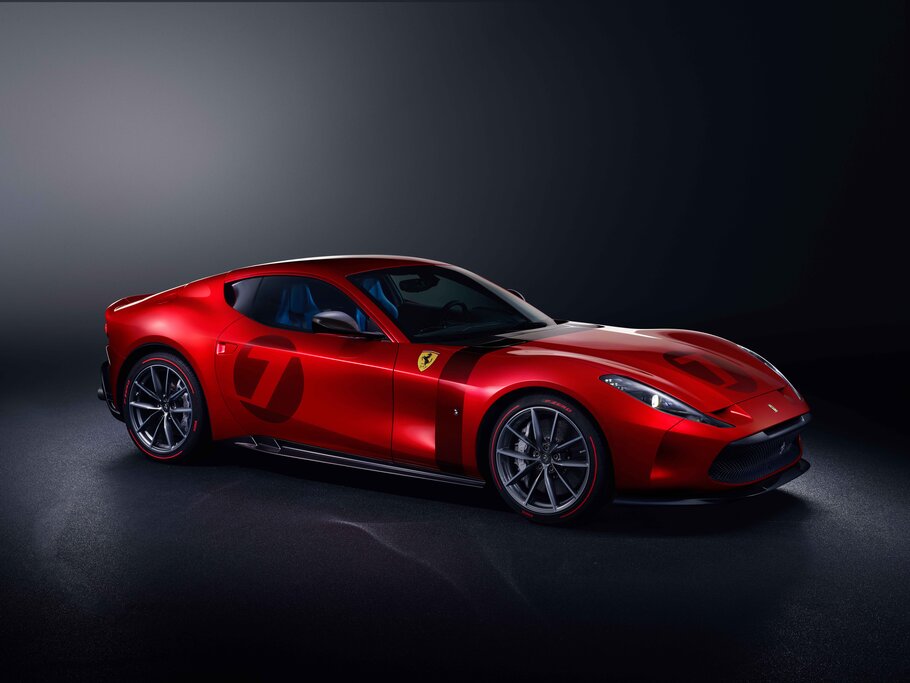
  • Ferrari Omologata

    2021 Ferrari Omologata1

    A unique Ferrari has been seen lapping Fiorano today during a brief yet intense shakedown. While the V12 engine note reverberating around the track may have sounded familiar, the car’s arresting looks are unique although guaranteed to strike a chord with the marque’s aficionados. With its Rosso Magma finish and sophisticated racing livery, the new Ferrari Omologata is a clear descendent of Ferrari’s great GT tradition spanning seven decades of history.

    Commissioned by a discerning European client, the latest offering in Ferrari’s line of unique coachbuilt one-off models is a vibrant evocation of the values that define Ferrari in relation to GT racing: a car that is equally at ease on the road as it is hitting the apex on the track in the hands of a true gentleman driver.

    The Ferrari Omologata project took a little over two years to complete from the initial presentation of sketches, starting with images that covered a variety of inspirations, from racing heritage to sci-fi and references to modern architecture. The idea from the onset was to create a futuristic design with distinctive elements reinterpreted in a fresh manner to provide the potential for a timeless shape that is certain to leave a lasting impression.

    To achieve this, the designers unlocked every possible area of freedom from the underlying package of the 812 Superfast, keeping only the windscreen and headlights as existing bodywork elements. The objective was to exploit the proportions of the potent, mid-front layout to deliver a very sleek design defined by smooth volumes and undulating reflections, uplifted by sharp graphics with sparingly distilled surface breaks wherever dictated by aerodynamic functions. The trickiest aspect was striking the ideal balance between expressiveness and restraint: the Omologata had to ooze street presence whilst maintaining a very pure formal language.

    The designers carefully studied the stance and attitude of the car from all angles, defining a tapering front volume from the flattened oval grille. The rounded section over the front wheel arches, emphasized by a contrasting stripe wrapping across the bonnet, seems to naturally extrude from the grille. The rear of the door, the flank develops into a very potent rear muscle that neatly blends upwards into the three-quarter panel. The entire volume is rendered deliberately imposing through the elimination of the rear quarter light, while three horizontal transversal cuts in the fastback volume visually lower the rear mass. The tail is surmounted by a prominent spoiler which adds not only downforce but a more aggressive, sporty stance. Overall, the car appears to be poised to attack the tarmac even at a standstill, and, seen from the rear, the deeply set single taillights underline the tension.

    Uniqueness in more than name
    Satisfying every safety constraint for road homologation without interfering with any of the usability and tractability of a Ferrari is always a huge challenge for the design team led by Flavio Manzoni, the more so when starting from an existing platform. Omologata was indeed a keyword that resonated throughout the development of this, the 10th front-engined V12 one-off Ferrari has delivered since the 2009 P540 Superfast Aperta. Beyond the clear instructions coming from the client and down to every detail on the car, the designers effectively took into account countless variables to make this a bespoke model through and through, one which could easily find its place in any Ferrari showroom. The quest for the ultimate touch went as far as developing a new shade of red just for the livery, to match the fiery triple-layer Rosso Magma over darkened carbon-fibre finish.

    Inside the car, a plethora of trim details suggests a strong link to Ferrari’s rich racing heritage. The electric blue seats, finished in a tasteful combination of leather and Jeans Aunde® fabric with 4-point racing harnesses, stand out against a full black interior. In the absence of rear quarter lights and screen, the atmosphere in the cabin is purposeful, reminiscent of a bygone era. Metal parts on the dashboard and steering wheel are finished with the crackled paint effect associated with the great GT racers of the 1950s and 1960s as well as with Ferrari’s engine cam covers. A hammered paint effect so often used in cars such as the 250 LM and 250 GTO finds its way on details such as the inner door handles and on the Ferrari F1 bridge.

    A fitting one-off exercise, the Omologata manages to encompass a range of subtle Ferrari signature design cues without falling into nostalgia. Its hand-crafted aluminium bodywork is sprinkled with almost subliminal details, in a way that challenges the enthusiast to identify the various sources of inspiration that played a part into its inception.

  • 2013 BMW 7-Series V12 Bi-Turbo Special Edition for Japan

    BMW has announced a limited edition 7-Series V12 Bi-Turbo for Japan priced at 22,600,000 ( $223,000).The super luxurious saloon is powered by a 6.0 liter V12 twin-torbocharged petrol with whopping 554HP (407 kW). 0-100 km/h in 4.5 seconds and a top speed of 250 km/h (155 mph) – electronically limited.The exterior features a complete ///M aerodynamics package including modified front and rear bumpers and a pair of side skirts. There is also a set of 21” V-spoke alloy wheels fitted with low-profile performance tires. There are also a dark chrome finish for exhaust tailpipes and kidney grille.The interior boasts Nappa leather upholstery, a ceramic finish for vents and iDrive controller, and a 16-speaker Bang & Olufsen sound system with a total power of 1,200 WATTS.Only 52 units will be produced and available on order until August, with deliveries starting in October.

  • BMW Z3 V12 Prototype – 326 HP and 490 Nm

    BMW Z3 Roadster is one of the most appreciated vehicles in the 90’s. So, to make it even more exclusive, BMW M division has fitted an enormous 5.4 liter V12 from 750i/850i in a one-off BMW Z3 prototype. Just imagine a small roadster with rear-wheel drive and V12 engine under the hood. It will be sensational.

    This is just one of the many specially created vehicles by the M division. The list includes M8, based on BMW E31 850CSi, M5 Convertible based on BMW E34 M5 saloon, 7-Series with six-teen cylinder engine (V16) based on E32 and M3 Pickup based on BMW E92 M3.

    The Z3 V12 has a 5.4 liter M73B54 engine delivering 326HP (243 kW) at 5000RPM and 490Nm (361 lb-ft) of torque at 3900RPM. Suggested 0-100 km/h time is under 5 seconds and a top speed of around 300 km/h (186 mph).

    Check out the pictures below.

    BMW Z3 V12 Prototype
    BMW Z3 V12 Prototype
    BMW Z3 V12 Prototype

    Source: worldcarfans

  • Aston Martin Project AM310 [VIDEO]

    Aston-Martin-Project-AM310-Concept-thumbIn it for some high-octane, gut-churning acoustics? Good. Here’s an Internet circulating clip of the supposed DBS successor – the Aston Martin Project AM310 Concept. It was filmed this weekend at the Concorso d’Eleganza Villa d’Este in Italy. An official debut is set for August while sales will most probably start in early 2013. Aston are going to be celebrating one hundred years of engineering very soon and if that’s the party piece, count us in.

    As stated, in terms of styling, the AM310 is rather reminiscent of the Aston Martin One-77 (Fun fact: the One-77 was also revealed at the Concorso back in 2009). The details are still a bit wishy-washy but the word out there is that a 6.0-liter V12, 570 and above horsepower engine will be at work. The interior was supposed to be a secret but sneaky photographers and even the operator here manage to “get the picture” – the rev-counter needle moves the wrong way but we don’t care. Oh, and then there’s the sound which, to us, doesn’t sound “insane” but pretty darn close.

    Enough silly talk. Please, indulge yourselves:

    httpv://youtu.be/mO3VwMkzDEs

    Source: marchettino via YouTube

  • Aston Martin Ultimate DBS

    Aston-Martin-DBS-Ultimate-thumbKeep your eyes peeled as a new Aston Martin might be coming out. Well, we say new, but it actually a special edition of the DBS – the ultimate Aston get’s an “Ultimate” trim. Not much has been disclosed so far so we’ll have to play the guessing game.

    There will two versions of it – Coupe and Volante (open top). The exterior shades will range from Silver Fox to Quantum Silver and Carbon Black II. The wheels will be strictly Black Diamond only contrasted by the yellow brake calipers (one would be able to have them also in red or black). The wing mirror caps and lamp in-falls will be garnished with carbon fiber and the rear lights will be smoked. A unique “DBS Ultimate” will finish off the exterior look.

    As for the inside, we can clearly see those Obsidian Black, diamond patterned seats with contrasting red stitching – delicious. The inside of the door bares the same design while the headlining is made from Alcantra. On the headrests, we find yet again, a unique DBS Ultimate badge with red in-fill. The flappy paddles behind the well also get a leather treatment in red.

    If this really is going to be the “ultimate” Aston Martin DBS then it better develop, at the very least 510 hp and 570 Nm. This is the absolute minimum. Pretty certain that they won’t change the plant – 5.9-liter V12 but squeezing out more juice from it does not sound that impossible.

    Aston Martin DBS Ultimate
    Aston Martin DBS Ultimate

    Source: Aston Martin