Tag: Car Tuning

  • 2011 TOP 5 Tunings of Small Cars

    We have seen this year some incredible tunings which have left a big impression in our mind. However, some of the greatest tunings were made on … the tiniest car segment. In this top 5 are presented some of the most remarkable tunings made on small cars such as Smart for two and Volkswagen Beetle. The selection is based on the overall outlook of the car, i.e. the tuned exterior, the improvements made to enhance its performance, and of course – on the interior.

    SMART FORTWO DISCO BALL

    Number five in our chart is for this incredible tuning of the Smart ForTwo electric vehicle. The car was transformed into a disco ball and it draws the immediate attention and admiration of the viewer. The show car is completely covered in reflective glass tiles from the roof to the tires. Of course the tuning wasn’t made purposeless, but the Smart was used in the art film Pixel City. The whole idea came from the experimental band Apparatjik. We should admit that it sounds and looks more than interesting. However, there was no tuning concerning the interior or the power of the car. For this reason we award this cute little fellow with the last place.

    Smart ForTwo Disco Ball

    Exterior: [rating:6/6]
    Interior: [rating:1/6]
    Performance: [rating:1/6]

    ABT VOLKSWAGEN BEETLE

    This place goes for ABT’s Beetle. The power of this car is boosted up to 240PS (176 kW). And the styling package consists of a new front bumper, a rear diffuser with oval exhaust pipes and a pair of side skirts. In addition there are also headlight brows and some nice graphics.

    There’s nothing done in the interior and for this reason the tuning gets the number 4 in the chart.

    ABT Volkswagen Beetle

    Exterior: [rating:4/6]
    Interior: [rating:2/6]
    Performance: [rating:4/6]


    VILNER SMART FOTTWO SQUARE STYLE

    Here we have another Smart ForTwo. However this version of the car was completely transformed both inside and outside by the Vilner Tuning Company. Vilner used orange foil with patterns of stitching for the exterior with full chrome panles and orange soft for the alloy wheels, mirrors and other details. The interior boasts new two-tone leather upholstery, new trim for the dashboard, roof and door panels. In addition ForTwo also received special floor mats. Having all this in mind, undeniably the Vilner Smart ForTwo is a real eye-catcher!

    Vilner Smart FotTwo Square Style

    Exterior: [rating:5/6]
    Interior: [rating:6/6]
    Performance: [rating:1/6]


    ROMEO FERRARIS CINQUONE STRADALE

    The second place goes to the version of Romeo Ferraris Abarth 500 Cinquone Stradale race car.  The small vehicle has the same exterior as the race car, which includes an aerodynamics package consisting of new bonnet with two air scoops for engine cooling, new front bumper with a big central air intake, integrated wide body fenders and skirts and finally a new rear bumper with central exhaust tips. The power is enhanced up to 300PS (220 kW), which is just 60PS (44 kW) less than the race car. The interior boosts are a complete roll bar, and a lot of carbon fiber as well as carbon race seats with OMP 4-point seatbelts.

    Romeo Ferraris Cinquone Stradale

    Exterior: [rating:3/6]
    Interior: [rating:4/6]
    Performance: [rating:6/6]


    COVEREFX MINI COOPER WORKS

    This astonishing and at the same time extremely different conversion of Mini Cooper Works was made by CoverEFX, the well known Germany-based tuner.  The upgrades here are in both performance and styling. At first sight this adorable Mini Cooper Works immediately draws the attention. The exterior here consists of fully foil-finished body in black leather style. Moreover, as you can see, there are added thousands of hand glued small gold elements. The “Mini” is backed by sleek 17-inch OZ LM Wave lightweight alloys in the same black/gold style fitted with Toyo R888 84W tires in the dimensions 205/40 R17. The tuners have also modified the performance of the car which boosts the power to to 252 horsepower and 382 Nm

    In the terms of power, CoverEFX is offering two stages of performance boosting for the MINI Cooper Works: Stage 1 features an ECU remap to 252 horsepower (185 kW) and 350 Nm (258 lb-ft.). In addition there is mounted a 2.5-inch exhaust unit with Milltek downpipe, sports catalyst and extra large sports air filter.

    Unfortunately there is nothing done to improve the interior. Nonetheless the CoverEFX MINI stands out as a true masterpiece, with own individuality and impact, and this is the reason it wins the first place in our chart.

    Stay tuned for next weeks 2011 TOP 10 Tunings!

    CoverEFX MINI Cooper Works

    Exterior: [rating:6/6]
    Interior: [rating:3/6]
    Performance: [rating:5/6]
  • 2011 JE DESIGN Audi Q7 S-Line

    2011 JE DESIGN Audi Q7 S-Line thumbThe car-tuning manufacturer JE DESIGN is offering all Audi Q7 S-Line models of the Facelift generation an astonishing enhancement in exclusivity with a multipart bodywork kit and 22-inch alloy wheels. Thus the result is that is being provided more individuality and more prestige!

    The JE DESIGN bodywork kit includes door trims and aligns harmoniously with the Audi Q7’s contours and more importantly – enhances the SUV’s design. The high-class wheel arches were glued to the bodywork. Therefore the vehicle is now widened by 30 millimeters per side at the front and 40 millimeters per side at the rear. The sporty look of the Audi Q7 S-Line comes as a result of the fender extensions on the rear axle with their vent holes. Additionally there are included front-spoiler corners, a PDC-suitable (Park Distance Control) rear-apron extension, and two JE DESIGN double-tailpipe covers, all of which are fashioned from highly polished stainless steel in an attractive diamond-shape design. Moreover there is a dynamic roof wing with side covers above the C pillars. It adds more emphasis to the sporty look of the JE DESIGN “Widebody”. And if you are interested of purchasing the complete styling package, including tailpipe covers, it is available directly from the tuning manufacturer with a starting price of 7,438 euros.

    2011 JE DESIGN Audi Q7 S-Line
    2011 JE DESIGN Audi Q7 S-Line

    To make it more appealing, the designers made the wheel arches beneath the broad fenders filled out by single-part 10 x 22 inch SUV Select alloy wheel rims. To make it even more individual, the five-spoke design wheels are available in three different color schemes: matte-black, front silver matte / shadow silver, front polished / graphite matte, polished lip, and are fitted 295/30R22 tires. On the other hand there is also another option: the new JE DESIGN complete wheel set SCORPIO which is available in 10 x 22 inches. The set offers a completely new interpretation of the popular double-spoke design and is also available in the size 9 x 20 inches in matte-black with polished-silver rim flange. For both 22-inch complete wheel sets (which are available from 5,190 euros) JE DESIGN installs 30-millimeter-thick (front) and 40-millimeter-thick (rear) wheel spacers (409 euros) under the expansive wheel-arch extensions of the widebody kit. Furthermore the wheels can be made with a lowered suspension which will cost the additional 1,428 euros. To be more precise, an electronic adjustment of the Audi “adaptive air suspension” lowers the chassis by around 35 millimeters. It is of course still present the functionality of the smooth-adjustment damping system with its five different damping modes (“automatic, “comfort”, “dynamic”, “lift”, and “offroad”).

    Additional enhancements are made in terms of performance. For example, the Q7 4.2 TDI tiptronic’s 250 kW (340 PS) standard series power is increased to up to 302 kW (410 PS). This is possible thanks to optimized programming of the control electronics, which this also increase the maximum torque to 895 NM (660 lb-ft). Hence, with its new power, the SUV accelerates from zero to 100 km/h in only 6.1 seconds! In addition for only 1,499 euros you can get the JE DESIGN new control-system software. For this price you will get one-year guarantee for the engine, turbocharger, transmission, and drive train, which can be extended by a further year for just 199 euros. However this is possible only if the Audi Q7 is not older than two years and has less than 100,000 kilometers on the clock.

    The high-quality JE DESIGN accessories have received many awards in international specialist publications, are supplied with TÜV certificates, and can be entered easily into the vehicle documents. Following the performance enhancement, the Audi Q7 4.2 TDI meets statutory emissions requirements, ruling out any difficulties in the emissions test.

    Source: Je DESIGN

  • 2012 PRIOR-DESIGN BMW 1er PDM1-WB Aerodynamic-Kit [E82]

    Bmw 1er PDM1 Widebody Aerodynamic-Kit PRIOR-DESIGN thumbThe 2012 1er PDM1 Widebody Aerodynamic-Kit PRIOR-DESIGN (E82) will offer a huge range of options. The mentioned selection will include a front and rear bumper, side skirts, front fenders, a wider rear side panel and a front bonnet. The tuning company Prior Design has just released this new tuning package for the popular 1 Series Coupe models. The package is named PDM1-WB and below you can read in details the full list of the parts which are included:

    Package includes:

    – Prior-Design PDM1-WB front bumper (fits all bmw 1-Series E82 models except 1M)

    – Prior-Design PDM1-WB side skirts (2X) (fits all bmw 1-Series E82 models except 1M)

    – Prior-Design PDM1-WB rear bumper (fits all bmw 1-Series E82 models except 1M)

    – Prior-Design PDM1-WB front fenders (fits all bmw 1-Series E82 models except 1M)

    – Prior-Design PDM1-WB rear widenings (fits all bmw 1-Series E82 models except 1M)

    – Prior-Design PDM1-WB front bonnet (fits all bmw 1-Series E82 models except 1M)

    – Mounting material

    2012 PRIOR-DESIGN BMW 1er PDM1-WB Aerodynamic-Kit
    2012 PRIOR-DESIGN BMW 1er PDM1-WB Aerodynamic-Kit

    Source: Prior Design

  • MISS TUNING Calendar 2011 – Kristin Zippel

    Fast cars and beautiful women – the heaven for every man. This is the time of the year, when the next Miss Tuning calendar has arrived.

    2010 Miss Tuning is the gorgeous 27 year-old Kristin Zippel from Mering in the German state of Bavaria. She will be on the pictures that will go into the 2011 Miss Tuning calendar. Kristin won the Miss Tuning contest last May at the World Bodensee Tuning event in Friedrichshafen, Germany. (more…)

  • MUGEN tuning parts now available at the Honda Dealerships across UK

    Honda Civic Type R MUGEN 200Totally eight Honda dealers in the UK have launched the MUGEN Original Parts Programme, which supplies customers with a wide range of tuning upgrades and accessories.

    The programme is launched with for the current FN2 Civic Type R, including forged aluminium wheels, performance brake pads, quick shift kits and sports suspension. The range also includes body styling kits for the Civic. (more…)

  • Renntech Mercedes-Benz SL65 V12 Bi-Turbo Black Series

    RENNTECH SL65 V12 Bi-Turbo Black Series is a car from the future. It has almost unlimited amount of power.

    The original SL65 Black Series delivers 670hp and 1000N/m of torque. After installing Performance Package 1 from Renntech, which includes ECU/TCU tuning, Dual Intercooler Pump Upgrade, and Sport Mufflers the power is rised to 805 HP and 1355 N/m of torque at the crank. (more…)

  • Vectra C OPC by JMS Racelook

    Already in the series condition the optics of the Vectra C OPC is extremely sporty, optical revaluation is vey difficult with this vehicle. However the JMS distributor  Hipo autotechnology gave out now a last fine modification to the Vectra C.
    First the vehicle with special H&R springs became the front axle 45 and Rear axle 35mm axle lower (price 198.90 euros) and provides for an optimal Road-hugging property in combination with the original absorbers of the OPC `S. (more…)

  • BRABUS ECO PowerXtra Tuning Mercedes-Benz

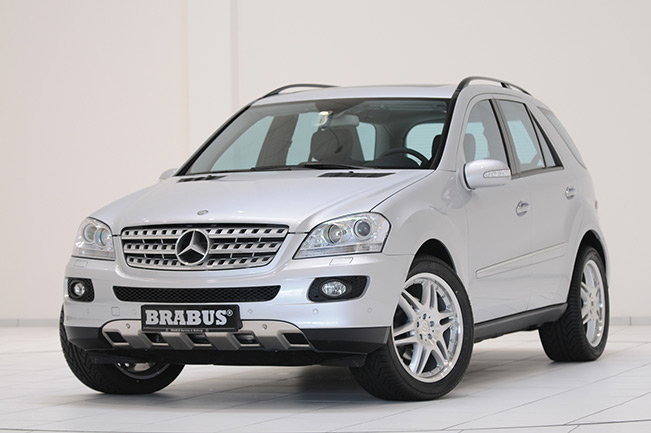
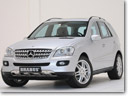
    BRABUS ECO PowerXtra Tuning Mercedes-BenzBetter diesel fuel economy through professional tuning: A Mercedes ML 320 CDI equipped with BRABUS ECO PowerXtra D6 (III) consumed more than one liter less diesel fuel (+2 mpg) than the production car in a test conducted by ntv Motor in Germany.

    n-tv, Germany’s leading news channel, wanted to know for sure: Does BRABUS ECO PowerXtra diesel tuning really improve fuel economy despite producing more power? The editors of n-tv Motor, the weekly car magazine on n-tv, hired Klaus Niedzwiedz to conduct the test. Niedzwiedz is not only a renowned car expert; he is also an experienced race driver who among other titles finished second in the touring car world championship in 1987.

    Niedzwiedz first drove a stock Mercedes ML 320 CDI (stock except for BRABUS Monoblock VI light-alloy wheels) on a specific test route that covered 94 kilometers (59 miles). The route included city streets, country roads and an Autobahn passage to simulate all the elements of a typical daily commute. The journalist’s goal was to drive as economical as possible.

    To ensure a comparison under identical conditions, upon Niedzwiedz’s return the very same car was equipped with a BRABUS ECO PowerXtra D6 (III) tuning module in less than 30 minutes. It bumped power output of the V6 common-rail turbodiesel engine by 48 hp (47 hp SAE net) / 35.3 kW above the standard output of 224 hp (221 hp SAE net) / 165 kW. Simultaneously peak torque grows from 510 to 590 Nm (376 to 435 lb-ft).

    Already the first few kilometers on the same route impressed the tester with the improved performance characteristics of the SUV: “Immediately apparent is the fact that the increase in torque by some 80 Nm (59 lb-ft) results in much better engine response and I have to use less throttle. Highly positive: The vehicle accelerates at low engine speeds, the foot operating the gas pedal remains entirely relaxed.”

    After the second 94 kilometers Niedzwiedz was even more impressed by the improved fuel economy. For the stock ML 320 CDI the test resulted in a fuel economy of 11.1 liters per 100 km (21.2 mpg), the more powerful BRABUS version on the same route turned in a fuel economy figure of just 9.4 liters per 100 km (25 mpg) –a difference of 1.7 liters per 100 km (3.8 mpg)! And all that while recording an average speed of 75 km/h (47 mph), nine km/h (six mph) faster and ten minutes less than during the first round. “During the first lap I was stopped at red lights more often but I never turned off the engine. Taking this into account the fuel economy improved by at least one liter per 100 km (2 mpg) compared to the production car.”

    This verdict confirms the philosophy of BRABUS (Brabus-Allee, D-46240 Bottrop, phone + 49 / (0) 2041 / 777-0, fax + 49 / (0) 2041 / 777 111, Internet www.brabus.com) of creating more driving fun through modern tuning while at the same time also improving fuel economy under identical driving conditions. BRABUS-CEO Prof. h.c. Bodo Buschmann was very pleased by the outcome: “This test confirms that our concept works: We follow a simple principle: More torque means lower engine speeds mean better fuel economy. And better fuel economy also translates into a reduction of CO2 emissions.”

    BRABUS ECO PowerXtra® diesel tuning is available for almost all current Mercedes CDI models, starting at 1,290 Euros MSRP. The BRABUS-tuned engines all meet the same strict

    Euro IV emission limits as the production engines. And all BRABUS ECO PowerXtra® kits are backed by the one-of-a-kind BRABUS tuning warranty of three years, up to 100,000 kilometers or 62,000 miles (see BRABUS warranty conditions as of November 2006).

  • mtm Cantronic – Want more?

    What is Cantronic?
    mtm CantronicMTM Cantronic is the name of a new product family which allows a wide range of vehicle optimizations and modifications. What all these modules have in common is a connection with the vehicle´s so called CANbus.

    The CANbus (Controller Area Network) is a serial bus framework developed for the networking of control units. Modern vehicles have up to 50 such units of which the ECU (engine control unit) is the largest. Others are used for the transmission or the control of parts like inside-adjustable outside mirrors, air bags, cruise control and audio system. The communication among these control and sensor units is essential to get response from sensors and ensure the coordination of all parts. With a lot less effort of wiring than before it enables information exchange between systems and is being used by our Cantronic to get access to necessary information.

    httpv://www.youtube.com/watch?v=-lKLl8ni5wI

    What is the Cantronic capable of?

    The MTM Cantronic can be adapted to different fields of application. When having access to the relevant data the Cantronic can precisely modify the vehicle´s series production status to guarantee an optimized setup in every situation. By now the Cantronic is offered as M-Cantronic for the modification of engine electronics and as F-Cantronic for the optimization of the vehicle´s chassis. Further applications are currently being developed for example the suspension of the electronically limited top speed or the flue glas damper control.

    Advantages of all Cantronic modules are further:

    • Can easily and quickly be mounted/dismounted by the customer himself or by a car workshop of his choice
    • Can be removed without remnants
    • Includes TÜV certificate and EMC test (electromagnetic compatibility)
    • Can be taken along when car model is being changed and therefore saves money (see „What happens when I change my car?“)
    • Can without problems be used with particle filters
    • Less consumption at same manner of driving

    How does the Cantronic work?

    According to the field of application the Cantronic gets various data from the CANbus, recalculates the input variables and feeds them back into the network.

    M-Cantronic:

    At the moment we offer the M-Cantronic only for diesel engines. The adaption to petrol/gasoline engines is currently being in progress. Due to its operating principle this requires new hard- and software. We will of course keep you updated as soon as there are new findings.
    Operating principle for diesel engines:

    To achieve the required fine-tuning we tap the RPM signal (revolutions per minute) from the CANbus and use it for recalculating parameters of the engine´s characteristic diagram. Considering RPM and load it is possible to specify and apply new figures for fuel and boost pressure.

    In contrast most of the currently available devices simply add a certain percentage to every boost pressure figure. However, one figure for boost pressure can emerge at two different figures of RPM. Here an example:

    1,3 bar boost pressure emerges at 1700 and at 4500 RPM. At 1700 RPM it is perfectly possible to increase the boost pressure by 10%. At 4500 RPM such a high increase at already high speed is not recommendable as it unnecessarily strains the engine. In this case a rise of 5% would be the better choice. Same goes for the fuel pressure.

    Consequently tuning kits without regard to the RPM can either generally add 10% fuel/boost pressure which eventually harms the engine or only add 5% and give away potential output performance especially in the low and medium speed range.

    The M-Cantronic offers the ideal solution. The advantage of speed-sensitive tuning gets noticeable in a harmonic engine-power characteristic and a better performance at medium speed range. These complex modifications combined with its other advantages makes the M-Cantronic superior to conventional chip tuning.
    Leistungsvergleich A5 3.0 TDI – Serie und MTM

    The M-Cantronic is available for following cars:

    • Audi A5 3.0 TDI
    • VW Tiguan 2.0 TDI

    F-Cantronic:

    The basis for the recalculation of the chassis height is the speed signal. It determines how deep the car body can be lowered. The F-Cantronic taps the speed signal from the CANbus and modifies it. Our aim is a low suspension setting under the aspect of visual appeal and maintenance of the in-series travelling comfort at the same time. In the chart below you find exemplary results attainable for the Audi A6.

    Tieferlegungsdiagramm A6 Luftfahrwerk – Serie und MTM

    In comparison to the standard level the F-Cantronic achieves a lowering of 35 mm up to a speed of 120 km/h! Above this speed the Cantronic module lifts the chassis to the series level „Drive“ to avoid cutbacks in terms of comfort.

    The Cantronic module offers three switch positions. In the off-position the module is deactivated. The second position (OPT) standardly generates about half of the possible lowering but can optionally be programmed as wished. In the on-position the Cantronic unites lowest possible setting while maintaining suspension comfort and agreeable driving characteristics.

    At the same time we do not want to leave unmentioned that switching our module on and off can also conveniently be done even without leaving the driver seat. As a matter of principle the F-Cantronic gets only activated in connection with your car´s sport or dynamic setting. If you just temporarily want to lift your chassis (e.g. for passing over a kerbstone) you simply have to change your car´s suspension setting to the automatic or standard mode to deactivate the F-Cantronic. Accordingly switching back will make it work again.

    Due to the multiple possibilities of our software we are also able to consider individual convenience and customize the F-Cantronic to your personal needs. An example is a higher suspension setting for more ground clearance off or on bad roads, a better handling with trailers or for an easier boarding. Please do not hesitate to contact us concerning your requirements.

    The F-Cantronic is available for following cars:

    • Audi A6 C6
    • Audi A6 C6 allroad
    • Audi A8 D3
    • Audi Q7
    • Bentley Continental GT
    • Bentley Continental GTC
    • Bentley Flying Spur
    • Porsche Cayenne