Tag: Toyota FCV

  • Toyota Demonstrates A Vehicle From the Distant Future!

    Toyota FCV Plus ConceptScience says that compressed hydrogen has a higher energy density than electricity and can be generated from extended range of materials. Materials that are easy to store and easy to use. Clean generation of hydrogen from numerous primary energy sources will definitely make local and self-sufficient power generation reality and the fuel cell vehicles will eventually take the main role of rides with their inner sources of energy. And that’s why Toyota team decided to try out something different and something new. And it will incorporate this knowledge with its latest concept vehicle.

    How is electricity generated?

    Along with vehicle’s hydrogen tank, it will also generate electricity directly from hydrogen that is stored outside the concept. In fact, this sweetie can be further transformed into a versatile source of electric power for use at home or everywhere else. Cool, right?

    SEE ALSO: Toyota Crown Received a Well-Deserved Facelift!

    Furthermore, the car’s fuel cell stack can be even reused as an electricity generator that powers up the usual functions and systems of the concept. And it gets even better when you understand that automobiles like this particular sweetie can contribute to local communities. It gets cooler, right?

    Toyota FCV Plus Concept

    The fuel cell unit is mounted between the front tires and the hydrogen tank just behind the rear seat. And together with the adoption of independent in-wheel motors in all the four wheels the whole elaborate system allows the driver to relish his smooth drive in spacious cabin. Yes, despite the overall compact size of the vehicle. And of course, this next-gen machine will offer incredible weight balance and flexibility.

    Toyota FCV Plus Concept

    On the other hand, the exterior adopts the idea of modern accents, blended with distinctive and sleek shape. Furthermore, all the frame structures ensure rigidity and safe ride. Definitely the design demonstrates how a vehicle can be technologically advanced, comfort and have incredible environmental performance at the same time.

    Source: Toyota 
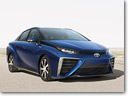
  • Toyota Fuel Cell Vehicle Shortlisted for New Car Honour

    As it seems, Toyota has established the everyday use of hybrid cars thanks to its Prius models and has started integrating such principles to cars like the Auris and Yaris. Now the automotive manufacturer is climbing up the steps of development and is progressing with their FCV or, in other words, Fuel Cell Vehicle.

    There is a slight difference when you compare the FCV to Toyota’s regular hybrids. Unlike the latter, the fuel cell vehicle does not have a combustion engine. Instead, it is packed with a fuel cell ‘stack’ which represents a chemical reaction where hydrogen is mixed with oxygen to produce electricity and water.

    The hydrogen-powered car is has been shortlisted for the WhatCar? magazine and it is nominated for Reader Award for the most eagerly anticipated new model of 2015. What Car’s Reader Award is quite different from the other honours in terms of its annual presentation. The winner is determined by the vote of its readers and website visitors. Respectively, the result will be announced at the magazine’s car of the year
    awards presentation which is going to be held on the 7th of January next year.
    Earlier this month Toyota’s fuel cell vehicle was shown with its production-ready design at the Paris motor show. During the next year, the car will be introduced in Europe, North America and Japan.

    UK sales will start in summer 2015. Even though it is hard to say if this really could be the car of the future, one thing is known for sure. Toyota’s fuel cell vehicle will be a fascinating contribution to the market!

    Source: Toyota

  • Toyota Aygo Teased Ahead Of Official Geneva Reveal

    A brand new Toyota Aygo will be born at this year’s Geneva Motor Show of 4th of March. The Japanese company has just released a teaser image and video of the upcoming new model, and has promised that it will deliver fun-to-drive character and individuality.

    In fact, in the video below, the chief engineer of the new Aygo tells that his aims when designing the car were to make it expressive, different and to catch the European spirit. See and hear for yourself what he adds next to this.

    The major European car-exhibit will also mark the European premiere of Toyota’s hydrogen-powered FCV Concept, as well as the FV2. The latter is a future mobility concept that explores new interactions between driver, car and environment.

    FV2 concept shows brand’s vision for the future of vehicles. What is interesting about it is that it does not use a steering wheel. How it operates? The driver shifts their body to intuitively move the vehicle.

    Source: Toyota

  • 12 Months to Toyota FCV Production

    Toyota-FCV-concept-medium

    News from the future. The Toyota FCV (Fuel Cell Vehicle) is almost ready. The production model reveal is only 12 months away. Is this the beginning of the end of the hybrid car? Fingers crossed.

    What’s wrong with hybrids you ask? Well, they are slow, unimaginative, their range never meets the expectations, their batteries are dependent on the weather, they take days to recharge, and, believe it or not, they are still sort of bad for the environment.

    Hydrogen, on the other hand, is the most abundant chemical element in the universe and using it as fuel produces zero emissions. In order to make electricity, fuel-cells acquire oxygen from the environment and add hydrogen to make a chemical reaction which releases energy and a waste product known as water. Toyota engineers are adamant that you could go for about 500 miles on a single tank of hydrogen. Technically, on two tanks – the Toyota FCV actually has two 70 MegaPascal each. We don’t know why that’s relevant. There are no other certain figures, however, except an estimated system output of at least 100kW. Oh, and there’s the price – $108,00. Too much for a Camry you think? Would you consider plugging it in your electrical grid at home then? Because you can and a single charge can satisfy your needs for about a week. Also, it looks pretty amazing. We are especially fond of these LED indicators hidden within the fenders. It’s supposed to gave a “flowing liquid” door profile and a wave-motif fuel cap while the back end draws inspiration from the stem of a catamaran. Right.

    Toyota are anticipating the widespread use of hydrogen fuels for cars to be common sometime in the 2020s. Because of the FCV, Toyota see themselves as pioneers, and while no one can take that away from them, we can’t neglect Honda’s audacious attempts to mull in the Honda Clarity. In any case, Toyota seems to be pretty serious about the technology. They are already developing fuel-cell buses, forklifts and other industrial vehicles. Greener days are to come if this trend keeps up.

    Source: Toyota