Tag: Spider

  • Ferrari Roma Spider Tailor Made

    Ferrari presents a unique version of the Roma Spider created by the Tailor Made department: the car will be on display at the Enzo Ferrari Museum in Modena as of today as part of the ‘Ferrari One of a Kind’ exhibition, dedicated to the exclusive world of personalisation for the Maranello-based manufacturer.

    The aim of this Roma Spider in particular is to highlight innovative component production techniques, enabled through the use of special, refined supplies. Standing out among these is work on the fabric in the central panel of the seats with manual stitching that adopts leather from the interior and applies thread obtained from recycled tyres.

    On this car, Ferrari has launched work with lasers on aluminium body components for the shield on the front wing, as well as the option of personalising the bonnet design with a compass rose and the geographical coordinates of Maranello. Aluminium recycled during the production phase in the Ferrari foundry is also used to create some components of the twin-turbo V8 engine, reducing the volume of waste to a minimum.

    Other noteworthy features include the use of chrome-free nappa leather and wood of controlled origin on the tonneau cover and rear floor, as well as components made from sand, on the centre console, recycling the sand removed from casts in the Maranello foundry.

    Collaboration with Montblanc was also of considerable importance, with Ferrari’s partner creating a special edition of the celebrated Meisterstück for the occasion. This iconic writing instrument now sports the same Oro Mida colour specifically chosen by the Maranello Styling Centre to characterise the Ferrari Roma Spider Tailor Made. This unique item is also enhanced with a nib made of hand-worked Au750 solid gold and platinum-coated with a special compass motif, and cap and sections also coated in platinum.

    In keeping with the concept of journeying as a thread running through the whole project, the writing instrument is accompanied by a logbook with a cover featuring reused leather in the same colour found in the interior of the Ferrari Roma Spider: Rosso Bologna and Pelle Metalizzata Oro Mida. Impressed on the cover are the coordinates of Maranello, the same as the ones on the body of the logbook and which recall the compass rose engraved on the bonnet, an indissoluble connection between the writing instrument and the car.

    This Ferrari Roma Spider represented an unparalleled opportunity for research and development on materials and processing to further extend the wealth of personalisation options offered by the Tailor Made department. So it is that the car becomes part of the special ‘One of a Kind’ exhibition installed at the Enzo Ferrari Museum in Modena, which offers visitors a specific immersive experience of the personalisation programmes to which Ferrari clients have access: together with the interactive wall enabling a physical experience of materials, fabrics, colours and the vast range of options that the Ferrari Styling Centre provides for clients, the installation is now enhanced with the particular materials chosen for the Ferrari Roma Spider Tailor Made to make it unique. The car will stay on display at the Enzo Ferrari Museum in Modena until February 2025.

    FERRARI ROMA SPIDER – TECHNICAL SPECIFICATIONS

    ENGINE
    Type  V8 – 90° – twin turbo
    Total displacement    3855 cc
    Bore and stroke   86.5 mm x 82 mm
    Max. power output*  456 kW (620 cv) at 5750–7500 rpm
    Max. torque   760 Nm at 3000-5750 rpm
    Max. revs   7500 rpm
    Compression ratio  9.45:1
    Specific power output  161 cv/l

    DIMENSIONS AND WEIGHT
    Length     4656 mm
    Width      1974 mm
    Height    1306 mm
    Wheelbase   2670 mm
    Front track    1652 mm
    Rear track      1679 mm
    Dry weight**   1556 kg
    Dry/power ratio    2.5 kg/cv
    Weight distribution    48% front / 52% rear
    Fuel tank capacity    80 litres
    Boot capacity     255 litres

    TYRES AND WHEELS
    Front       245/35 ZR 20 J8.0
    Rear      285/35 ZR 20 J10.0

    BRAKES
    Front     390 x 34 mm
    Rear     360 x 32 mm

    TRANSMISSION AND GEARBOX
    8-speed F1 DCT

    ELECTRONIC CONTROLS
    EPS, VDC, ABS with EBD, F1-TCS, E-Diff3, SSC 6.0, FDE, SCM-E Frs

    PERFORMANCE
    Max. speed      > 320 km/h
    0–100 km/h     3.4 s
    0–200 km/h     9.7 s
    100-0 km/h     32.0 m
    200-0 km/h    130.0 m

    FUEL CONSUMPTION
    11.4 l/100 km – Combined WLTC cycle

    CO2 EMISSIONS
    258 g/km2 – Combined WLTC cycle

    * With 98 RON fuel
    ** With optional lightweight content


  • McLaren Artura Spider

    McLaren has unveiled the Artura Spider, its first-ever convertible with a high-performance hybrid powertrain. This exciting new model joins the Artura coupe, offering the same exhilarating performance with the added exhilaration of open-air driving.

    Enhanced Power and Performance:

    Both the Spider and the coupe benefit from significant upgrades to power, performance, and driver engagement. The hybrid powertrain has been recalibrated, delivering a combined 700 horsepower, a 20-horsepower increase from the previous version. This translates to thrilling acceleration, with the Spider hitting 0-62 mph in just 3.0 seconds.

    Lightweight Champion:

    Despite the addition of the retractable hardtop, the Artura Spider remains incredibly lightweight. At just 1,457 kg (dry weight), it’s the lightest car in its class by a significant margin. This exceptional weight-to-power ratio translates to razor-sharp handling and exhilarating performance.

    Open-Air Bliss:

    The electrically operated retractable hardtop opens and closes in just 11 seconds, transforming the Artura from a sleek coupe to a thrilling open-air roadster. Whether cruising down the highway or attacking a winding road, the Spider offers an unforgettable driving experience.

    Refined Driving Dynamics:

    The Artura Spider benefits from a series of enhancements designed to deliver exceptional handling and driver engagement. New engine mounts and revised dampers improve stability and responsiveness, while the latest Pirelli Cyber Tyre technology provides real-time tire pressure data for optimal performance.

    Choice and Customization:

    The Artura Spider is available in a wide range of exterior and interior options, allowing you to personalize your car to your individual style. From a vibrant palette of exterior paint colors to luxurious interior materials, you can create an Artura Spider that reflects your personality.

    The Artura Spider and the new Artura coupe are now available to order, with deliveries starting in mid-2024 depending on your region.

    McLaren Artura Spider technical specification

    Engine configuration M630 V6 engine, 2,993cc twin-turbocharged, hybrid drivetrain with axial flux electric motor
    Drivetrain layout Longitudinal mid-engined, RWD
    Power PS (bhp/kW) @ rpm 700 (690/515)*: 605PS (596/445) @7,500rpm from petrol engine, 95PS (94/70) from electric motor1
    Torque Nm (lb ft) @ rpm 720 (531): 585 (431) @2,250-7,000rpm from petrol engine, 225 (166) from electric motor1
    Transmission 8-Speed SSG (reverse using E-motor) with Electronic Differential (E-Diff).Electric, Comfort, Sport and Track modes
    Steering Electro-hydraulic; power-assisted
    Chassis MCLA carbon fibre monocoque with aluminium front and rear frames and chassis structures
    Suspension Independent adaptive dampers, front: dual aluminium wishbones, rear: upper wishbone and lower multi-link setup.Proactive Damping Control (PDC). Comfort, Sport and Track modes
    Brakes Carbon Ceramic Discs (390mm front; 380mm rear) with forged aluminium brake calipers (6-piston front monobloc; 4-piston rear)
    Wheels (inches) Front: 19 x 9J; Rear: 20 x 11J
    Tyres Pirelli P-ZERO™, Pirelli P-ZERO™ Corsa and  Pirelli P-ZERO™ Winter tyres with Pirelli CyberTyre® technologyFront: 235/35/ZR19 91YRear: 295/35/ZR20 105Y
    Length, mm (inches) 4,539 (179)
    Wheelbase, mm (inches) 2,640 (104)
    Height, mm (inches) 1,193 (47)
    Width, with mirrors, mm (inches) 2,080 (82)
    Width, mirrors folded, mm (inches) 1,976 (78)
    Width, without mirrors, mm (inches) 1,913 (75)
    Track (to contact patch centre), mm (inches) Front: 1650 (65); Rear: 1613 (64)
    Lightest dry weight, kg (lbs) 1,457 (3,212)
    DIN Kerb weight [fluids + 90% fuel], kg(lbs) 1,560 (3,439)
    Fuel tank capacity, litres (UK/USA gallons) 65 (14.3/17.2)
    Usable battery capacity (kW/h) 7.4
    Battery charge time 2.5 hours (via EVSE cable) to 80%
    Luggage capacity, litres (Wet/DIN) 160/124

    Performance data

    0-97km/h (0-60mph) 3.0 seconds
    0-100km/h (0-62mph) 3.0 seconds
    0-200km/h (0-124mph) 8.4 seconds
    0-300km/h (0-186mph) 21.6 seconds
    0-400m / ¼ mile 10.8 seconds
    Maximum speed (km/h/mph) 330/205 – electronically limited
    Electric-only range (km/miles) 33/21
    200-0km/h (124mph-0) braking, metres (ft) 124 (407)
    100-0km/h (62mph-0) braking, metres (ft) 31 (102)

    Efficiency

    CO2 emissions, g/km WLTP EU (combined) 108
    Fuel consumption, WTLP EU I/100km/UK MPG
    Weighted combined 4.8/58.9
    Fuel Economy, US
    Electricity (MPGe) 45
    Gasoline only MPG 19
    All-electric range (miles) 11
    Total range (miles) 340

    Warranty

    Vehicle (years/miles) 5/unlimited
    Battery (years/miles) 6/45,000
    Roadside assistance (years/miles) 5/unlimited
    Corrosion (years/miles) 10/unlimited
    Service plan 3 years
  • Ferrari Roma Spider

    The Ferrari Roma Spider, the latest model from the Maranello marque, was presented to clients today at an exclusive event at the El Badi Palace in Marrakesh. This timelessly elegant, high-performance car is a contemporary take on the chic, pleasure-seeking Italian lifestyle of the 1950s and 60s. This spider carries over the proportions, volumes and specifications of the Ferrari Roma’s hugely successful V8 2+ concept, but what makes it so striking is the adoption of a soft top, a solution making a welcome return to the Prancing Horse range on a front-engined car 54 years after the 1969 365 GTS4.

    There’s a novel and modern take on the soft-top design that underlines the Ferrari Roma Spider’s exuberant character, with extensive personalisation options that include sophisticated, bespoke fabrics and contrasting stitching. On a functional level, the soft top deploys in just 13.5 seconds and can be actioned at up to 60 km/h. The fact that it is so compact also yields a larger boot and boosts the car’s versatility. A new, patented wind deflector integrated into the backrest of the rear bench can be deployed by a button on the central tunnel, guaranteeing exceptional in-car occupant comfort without taking up any space in the car.

    The Ferrari Roma Spider retains the Ferrari Roma’s excellent dynamic characteristics: it boasts a best-in-class weight/power ratio thanks not only to its soft top, but also to its all-aluminium chassis and 620 cv V8 from the engine family that was heralded as the International Engine of the Year on four consecutive occasions. The engine is coupled with Ferrari’s universally-acclaimed 8-speed DCT known for its incredibly fast shift times as well as excellent standards of comfort and mechanical efficiency.

    The Ferrari Roma Spider is not just rewardingly easy to drive, it is also extremely dynamic and responsive: this makes it the perfect companion on out-of-town weekends and longer journeys alike. Always, of course, with the exhilarating Ferrari V8 soundtrack playing in the background. A number of features are designed to make this car superbly versatile, including a category-topping boot size which includes a hatch via the rear seat backrests to allow larger items to be carried, and standard wireless connectivity by Android Auto® and Apple CarPlay® Wi-Fi. Not forgetting, of course, 18-way-adjustable heated ergonomic seats that are also available with an optional neck warmer for colder days.

    STYLE

    Designed by the Ferrari Styling Centre headed by Flavio Manzoni, the Ferrari Roma Spider aims to move the “La Nuova Dolce Vita” concept beyond city limits for elegant, carefree driving ‘en plein air’. This 2+ spider boasts a sophisticated fabric soft top, which is designed not just to maintain, but to enhance the flawless proportions of the coupé on which it is based without modifying that car’s elegantly flowing silhouette.

    Redesigning the coupé’s tapering, fastback roofline meant modifying the rear screen to incorporate it into the soft top so that it can fold below the tonneau cover when open. On the Ferrari Roma Spider, the original styling theme has become a body-colour band running across the base of the roof that divides the carbon-fibre active spoiler from the roof and rear screen, creating a seamlessly integrated tonneau cover. When the soft top is lowered, the active spoiler visually connects with the rear bench and head rests.

    Unlike the more usual basic fabrics seen on most convertibles, a new material has been used for the Ferrari Roma Spider’s soft-top, giving it a sophisticated air. Special fabric weaves were selected and developed in colour combinations that highlight the car’s twin souls, one more elegant and the other sportier. The bespoke finish with two-tone weave draws on a palette of four colours highlighting the refined, haute couture nature of the fabric. The optional technical fabric developed specifically for this car gives it a sporty yet very sophisticated allure with an innovative weave creating an extremely striking iridescent red finish that further enhances the roof’s 3D surface.

    EXTERIOR

    The stylistic approach taken for the Ferrari Roma Spider’s exterior centres around a clean design and absolute symbiosis between its various elements. Its harmonious proportions and pure, elegant volumes are very much in line with Ferrari’s front-engined GT tradition. That said, the designers have created a modern take on those classic proportions, giving the car a sophisticated, contemporary stylishness.

    The long front bonnet underscores the spare silhouette of the flanks, lending a sense of sleekness to the entire body and a dynamic look. The sober, spare front of the car looks as if it were sculpted from single block of metal, creating an overhanging, sharknose effect.

    The bonnet and sinuous wings flow into one another yet also effortlessly harmonise with Ferrari’s traditional styling cues. The designers sought to preserve the minimalist elegance of the car’s forms by removing any vents or superfluous decorative features. In fact, the launch configuration does not even include the Scuderia Ferrari side shields, reflecting the approach taken with the road cars of the 1950s.

    Engine cooling is guaranteed by the perforated surfaces, only where strictly necessary, creating a new interpretation of the grille concept: this distinctive solution is finished in the same colour as the bodywork, rendering it seamless with the styling. The edges of the front grille flow into two linear, full-LED headlights which lend the front of the car a distinctive character all of its own. They are traversed by a horizontal DRL strip that hints at the structure beneath the car’s skin, an element that brings a sense of tension to the entire circumference of the car.

    The fastback cabin volume is compact and set back, ending in a subtle nolder beneath which the designers have created a modern take on the signature Ferrari tail. The Ferrari Roma Spider’s long rear overhang, which is a characteristic of the Ferraris of the 1950s and 60s, has been re-proportioned here, resulting in a low, compact volume which hugs the rear axle. The wraparound tail of the car is characterised by the purity and modernity of the transom styling. Technological advances made it possible to reduce the dimensions of the tail light assembly, resulting in a minimalist and iconic design. The rear is completed by a compact aerodynamic diffuser that incorporates the fence and exhaust tailpipes.

    CABIN

    For the Ferrari Roma Spider’s cabin, the Ferrari Styling Centre designers took the same approach to volumes and forms introduced on the Ferrari Roma. Two separate spaces, one each for driver and passenger, were created in an evolution of the dual cockpit concept, which has its roots deep in the marque’s history with cars from the 1970s. The innovative look of this dual cockpit was achieved by extending the philosophy applied to the dash to the entire cabin. Hence, the vision of two modules that wrap around driver and passenger and that extend and integrate with the two rear seats.

    The Ferrari Roma Spider’s cabin has an almost symmetrical layout which produces a more organic distribution of both spaces and functional elements. The result is that the passenger will feel very involved in the driving experience – almost like a co-driver, in fact. The forms have been crafted to create a sculptural volume in which there is a sense of textural continuity between all the various cabin elements.

    Created by paring back the volumes and underscored by piping along their edges, the two cockpits are cocooned in a wraparound volume and extend from the dashboard all the way back to the rear seats, organically incorporating the dash, doors, rear bench and tunnel. Thus, the cabin is not designed as a collection of separate sub-assemblies, but defined by elements that develop organically.

    The technology adopted is derived from the Ferrari Roma: the digital instrument cluster is integrated with the volumes around it and protected by an anti-glare binnacle which extends out naturally from the dash. The passenger has an optional display that allows them to share the driving information. An 8.4” central display set between the two cockpits and partly floating between the dashboard and tunnel incorporates the other infotainment and climate control functions.

    The F1 gearbox controls have been set into a modern metal plate which references the iconic gear lever gate. In the Ferrari Roma Spider, this is in the centre of the tunnel and inclined to make it easier for the driver to reach and see.

    The steering wheel’s HMI is a further honed and refined version of that seen on the Ferrari Roma with touch controls on its spokes. The left-hand spoke has indents corresponding to the touch controls to ensure the driver can feel which one to use. The track pad on the right-hand spoke has been improved – there is now an indent that makes it easier to swipe. These solutions help the driver know where the controls are, in line with the “Eyes on the road, hands on the wheel” philosophy Ferrari has been adopting for quite some time. The Engine Start button is now also backlit in red to underscore the thrill of the moment the iconic Ferrari twin-turbo springs to life.

    POWERTRAIN

    The Ferrari Roma Spider is powered by an engine belonging to the V8 turbo family named “International Engine of the Year” for four consecutive years and also voted “Best Engine of the Last 20 Years” in 2018. The 3,855 cc power unit can punch out 620 cv at 7,500 rpm, the equivalent of 161 cv/l, which it combines with the flexibility of low-end pick-up, thanks to 80% of the torque being available at just 1900 rpm.

    The Ferrari Roma Spider also sees the introduction of an important evolution of the oil pump which reduces time-to-pressure in cold starts by 70%, as well as increasing the flow rate at medium revs. The same modification has also been introduced on the Ferrari Roma, demonstrating the company’s commitment to continual research and development.

    Like all Ferraris in the range, the Ferrari Roma Spider delivers instantaneous throttle response. This is the direct result of the adoption of specific solutions, such as a flat-plane crankshaft, which is more compact in size with lower rotating masses to improve fluid-dynamics; compact turbines which have a lower moment of inertia; twin-scroll technology that directs the exhaust gases from each cylinder through separate scrolls and increases the pressure of the exhaust pulses for maximum power; and a single-piece, cast exhaust manifold with equal length pipes to optimise pressure waves in the turbine and reduce losses.

    The Ferrari Roma Spider boasts Variable Boost Management, a control software developed by Ferrari that adjusts torque delivery to suit the gear selected, delivering increasingly powerful pick-up as revs rise, whilst optimising fuel consumption. As the car goes up through the gears, the amount of torque delivered by the engine increases, continuing all the way up to 760 Nm in 7th and 8th gear. This allowed the use of longer gear ratios in the higher gears, which helps keep fuel consumption and emissions down, while adopting a steeper torque curve through the rev range in the lower gears for a feeling of smooth, consistent pick-up.

    The gearbox is based on a dual-clutch oil bath architecture and is derived from the 8-speed gearbox first introduced on the SF90 Stradale. The main modifications made with respect to the latter are longer gear ratios and the introduction of a reverse gear. The new layout and component integration thus optimised the gearbox’s size and its installation in the car.

    With eight gears and optimum transmission efficiency, fuel consumption in urban and motorway contexts has been reduced without compromising on performance. In fact, there is a noticeable improvement even in sporty driving. The main technical features that have guaranteed this result are the use of low-viscosity oil and a dry sump configuration to minimise fluid-dynamic efficiency losses (oil splashing) in addition to the use of a specially-designed differential (with the input pinion axis not offset to reduce slip speed.

    The clutch module is 20% smaller than the previous 7-speed, but delivers 35% more torque, with up to a maximum 1,200 Nm of dynamic torque transmitted when gear shifting. The transmission software strategy has been evolved thanks to a more powerful ECU and better integration with the engine management software. Particular attention was also lavished on the strategies designed to reduce fuel consumption and emissions, particularly when the Start&Stop function is in use.

    Every single Ferrari engine has its own particular soundtrack that makes it unique and, of course, the Ferrari Roma Spider is no exception to that rule. In addition to the flat-plane crankshaft, which synchronises engine firing, and equal-length exhaust headers, which equalise the sound, the spider adopted the Ferrari Roma’s entire exhaust line that eliminated the two rear silencers in favour of new geometry for the by-pass valves. The continuous and progressive by-pass valve control underscores the engine sound and performance depending on the driving situation.

    AERODYNAMICS

    The adoption of a fabric soft top and its indirect impact on the car’s bodywork geometries provided the starting point for the aero development. To retain the Ferrari Roma’s low drag, combined with the possibility of generating efficient downforce, the line of the roof and its curvature over the frontal section were subjected to in-depth numerical analysis and guided by the work of the Aerodynamic Department to ensure the project target was reached.

    The modifications to the Ferrari Roma Spider’s bodywork also required new mobile spoiler geometry. In fact, the design of the latter has been meticulously honed to reflect the car’s styling and new roof line. Similar to the Ferrari Roma, this element is designed to extend and retract in a calibrated way specific to the spider as a function of the car’s speed, and the longitudinal and transverse acceleration acting on the body. This guarantees three different spoiler positions, specifically calibrated for top-down driving.

    The result is that the Ferrari Roma Spider has downforce in handling situations and at high speeds comparable with the Ferrari Roma, ensuring the car is always aerodynamically balanced and able to deliver the same driving exhilaration. Huge attention was lavished on aerodynamic comfort on board with the top down, with particular focus on minimising both turbulence and wind noise in the cabin.

    The solutions selected were driven by the need to simplify the transition from top-up to top-down driving, by introducing automatic movements for the surfaces tasked with creating an aerodynamic ‘bubble’ effect over the cockpit for comfort. The first was the addition of a 5mm nolder on the new windscreen header rail in the area of the flow separation. The second was the development of an automatic patented wind deflector that can be deployed by the driver without any need to stop the car. If the client wants to deploy the wind deflector, they simply press a button on the tunnel and the backrest of the rear seats (in the absence of rear passengers) will rotate into position behind the front occupants’ heads.

    In this configuration, the air flow that would normally be drawn into the cabin from the rear of the car is deflected, creating an area of relatively still air around the occupants and reducing still further the turbulence around the heads of taller drivers by around 30% compared to previous 2+ spider applications. The deployable wind stop’s permeability was optimised by a transverse aperture at its centre which, thanks to its calibrated angle, acts as a real aerodynamic duct, while its shape in the plan view is tapered at the sides. These two geometric characteristics combine to deflect the most highly energised flow entering the cabin well away from the occupants.

    The duct at the centre of the wind stop ensures that part of the flow entering the cabin is deflected downwards towards the rear seat, forcing it to mix with a slower flow. This means it loses most of its energy, effectively reducing turbulence in the cabin. The result is an extension of the bubble around the occupants and particularly their heads, guaranteeing unparalleled en plein air comfort. The shape, angle and permeability of the deployable wind stop are all crucial to achieving this objective, and were developed thanks to a combination of CFD simulation and many wind tunnel sessions.

    There is no doubt that the most visually striking downforce generation feature is the active spoiler at the rear of the car’s upper body. A mobile spoiler is cleverly concealed in the rear lid, not interfering in the least the car’s line. However, thanks to a special mechanism, it can deploy into three different positions (Low drag – LD, Medium Downforce – MD, High Downforce – HD).

    In low speed situations, when downforce has only a modest impact on the car’s performance, the spoiler goes into low drag position. This configuration is maintained until the car hits a speed of 100 km/h. At speeds of over 300 km/h, the spoiler is in MD mode. This choice was made because in these conditions, the preference is for a better balanced car, in part because of the minimal impact on drag. In speed ranges in which downforce plays a pivotal role in performance, the spoiler is in MD position and its movement to the HD position depends on the car’s longitudinal and lateral acceleration. The threshold value is variable and linked to the Manettino position.

    In medium downforce mode (MD), the mobile element is at a 150-degree angle to the rear screen. In this configuration, it can generate around 30% of maximum downforce with an increase in drag of under 1%. In high-performance handling or braking situations, the mobile element automatically moves to HD configuration, generating maximum downforce and readying the car to provide the driving thrills that all Ferraris deliver. When deployed to its maximum height (HD), the mobile element creates a 135 degree angle with the surface of the rear screen, thus generating around 95 kg of downforce at 250 km/h, yet increasing drag by a mere 4%.

    The increase in front downforce is due for the most part to a pair of vortex generators, which have been optimised for this particular model. They create a ground effect by introducing concentrated and coherent vortices into the area whilst simultaneously managing the wake from the front wheels with the ultimate aim of guaranteeing very efficient downforce generation.

    VEHICLE DYNAMICS

    The goal of the Ferrari Roma Spider’s vehicle dynamics development was to deliver superior driving thrills and handling precision on a par with the Ferrari Roma, thanks to the Side Slip Control concept which uses an algorithm developed by Ferrari that provides an instantaneous estimate of side slip to all the various on-board control systems. This data is then used to coordinate and implement interventions in a rapid, timely and accurate manner.

    The Side Slip Control System (SSC), version 6.0 of which is used here, integrates all the car’s vehicle dynamics systems, most notably the Ferrari Dynamic Enhancer, active solely in the Manettino’s ‘Race’ position. The FDE is a lateral dynamics control system that rapidly adjusts the hydraulic brake pressure at the callipers on all four wheels consistent with the dynamic situation requiring control. It is designed to make the evolution of the car’s lateral dynamics more predictable through and exiting corners, ensuring the driver’s control of the steering wheel and throttle are simpler and more intuitive. The system flanks the traditional Electronic Stability Control system.

    Like the Ferrari Roma, the Ferrari Roma Spider’s Manettino has five positions to make its handling and traction performance even more accessible with the introduction of the Race position. Supported by the introduction of the Ferrari Dynamic Enhancer, this position is designed to boost fun behind the wheel.

    CHASSIS AND BODYWORK

    The Ferrari Roma Spider’s chassis is derived from the Ferrari Roma, but features new components, with the rear section inspired by the solution used on the Ferrari Portofino M. The sill, a fundamentally important structural element, was developed specifically for the Ferrari Roma Spider, as were some elements required to install the soft top, and the A-pillar/windscreen surround.

    The bodyshell retains the fundamental elements of the Ferrari Roma’s design: the modifications made focused mainly on the rear and on harmonising the Ferrari Roma Spider’s lines so that they retain their elegance with the top down. Exceptional torsional rigidity and beam stiffness figures for the bodyshell and chassis have been achieved despite an increase in weight of just 84 kg for a weight/power ratio of 2.5 kg/cv, which remains at the very top of the high-performance 2+ spider category. This impressive result also ensures that the Ferrari Roma Spider benefits from the same excellent handling and performance as the Ferrari Roma.

    This increase was due in part to two factors. Firstly, the addition of the unique integrated wind deflector, which significantly improves occupant comfort. Secondly, the addition of headrests for the rear seats that visually integrate into the tonneau cover design.

    The automatic fabric soft top guarantees occupant comfort on a par with the retractable hard top system equipping the other spider models in the range. The large rear glass screen is fully integrated into the soft-top geometry. The five-layer fabric dampens wind and road noise, making it quiet even at high speeds. During development, special attention was also paid to reducing the ballooning effect typical of soft tops. The technical solutions adopted by Ferrari’s engineers have thus guaranteed class-leading performance in these areas.

    The soft-top mechanism was designed to be light yet resilient: it pushes technical performance limits to new heights thanks to a Z-shaped movement that folds the soft top away in a mere 13.5 seconds and up to a maximum speed of 60 km/h. When stowed, the roof occupies a height of just 220mm, which is the lowest in the category, and that, in turn, ensures a roomy boot (a class-leading 255 litres with the top up).

    The gas springs used to extend the wind deflector were meticulously designed and developed to deliver controlled, smooth action at all stages of movement and in all conditions. The wind deflector can be opened at up to 170 km/h. The chance of opening the mechanism is automatically speed-limited to ensure that it can be deployed in safety. Once in place, the wind deflector can be used at any speed in open configuration.

    The wind deflector retains all the features unique to a real backrest: the surface the rear occupants rest on is padded for comfort, while it is shaped to open even when the front seats are pushed back. The central duct compensates for the air pressure acting either side, improving the efficiency of its movement. The system’s kinematic points are the result of an in-depth study of the entire back seat and boot area, optimising their position in relation to movement and weight.

    7 YEARS MAINTENANCE

    Ferrari’s unparalleled quality standards and intense focus on client service underpin the extended seven-year maintenance programme offered with the Ferrari Roma Spider. Available across the entire range, it covers all regular maintenance for the first seven years of the car’s life. This scheduled maintenance programme for Ferraris is an exclusive service that gives clients the certainty that their car is being kept at peak performance and safety over the years. This very special service is also available to owners of pre-owned Ferraris.

    Regular maintenance (at intervals of either 20,000 km, or once a year with no mileage restrictions), original spares and meticulous checks by staff trained directly at the Ferrari Training Centre in Maranello using the most modern diagnostic tools are just some of the advantages of the Genuine Maintenance Programme. The service is available on all markets worldwide and from all Dealerships on the Official Dealership Network.

    The Genuine Maintenance programme further extends the vast range of after-sales services offered by Ferrari to meet the needs of clients wishing to preserve the performance and excellence that are the signatures of all cars built in Maranello.


    FERRARI ROMA SPIDER – TECHNICAL SPECIFICATIONS

    ENGINE

    Type V8 – 90° – twin turbo
    Total displacement 3855 cc
    Bore and stroke 86.5 mm x 82 mm
    Max. power output* 456 kW (620 cv) at 5750–7500 rpm
    Max. torque 760 Nm at 3000-5750 rpm
    Max. revs 7500 rpm
    Compression ratio 9.45:1
    Specific power output 161 cv/l


    DIMENSIONS AND WEIGHTS

    Length 4656 mm
    Width 1974 mm
    Height 1306 mm
    Wheelbase 2670 mm
    Front track 1652 mm
    Rear track 1679 mm
    Dry weight** 1556 kg
    Dry weight/power ratio 2.5 kg/cv
    Weight distribution 48% ant. / 52% post
    Fuel tank capacity 80 l
    Boot capacity 255 l


    TYRES AND WHEELS

    Front 245/35 ZR 20 J8.0
    Rear 285/35 ZR 20 J10.0


    BRAKES

    Front 390 x 34 mm
    Rear 360 x 32 mm


    TRANSMISSION AND GEARBOX
    8-speed F1 DCT

    ELECTRONIC CONTROLS
    EPS, VDC, ABS with EBD, F1-TCS, E-Diff3, SSC 6.0, FDE, SCM-E Frs

    PERFORMANCE

    Max. Speed  > 320 km/h
    0-100 km/h  3.4 s
    0-200 km/h  9.7 s
    100-0 km/h 32 m
    200-0 km/h  130 m


    FUEL CONSUMPTION
    Under homologation

    CO2 EMISSIONS
    Under homologation

    * With 98 RON fuel
    ** With optional lightweight content

  • NOVITEC Ferrari SF90 Spider

    A system output of 816 kW / 1,109 hp, zero to 100 km/h in just 2.4 seconds, efficient aerodynamics and spectacular looks: With its sophisticated refinement range for the Ferrari SF90 Spider, NOVITEC once more underpins its status as the world’s leading automotive refinement specialist for the great sports cars from Maranello.

    NOVITEC rose to the challenge of enabling a modern super sports car with plug-in hybrid drive to deliver even better performance on the road. The engine specialists developed special maps for the electronic management system of the four-liter, twin-turbo combustion engine. In addition, they created a high-performance exhaust system with metal catalysts. This combination realizes an output increase of 80 kW / 109 hp.

    In conjunction with the three electric motors, the result is a massive system output of 816 kW / 1,109 hp. Consequently, the drop-top two-seater accelerates from rest to 100 km/h in a mere 2.4 seconds and reaches a top speed of more than 340 km/h.

    In concert with the 21-inch alloys developed together with Vossen, the NOVITEC carbon upgrade for the bodywork gives the mid-engined sports car even more spectacular looks.

    A sports car famously can never have an excess of power and thus NOVITEC also developed a performance upgrade for the Ferrari SF90 Spider with plug-in hybrid drive. The work focused on the V8 with two turbochargers. New maps for injection, ignition and the electronic boost pressure control were developed in complex testing. They are introduced into the engine management system of the two-seater by a NOVITEC N-TRONIC module for each cylinder bank.

    The developers identified further potential in the exhaust system. The production catalysts can be replaced with custom-developed 100-cell metal components, which optimize emission control. They ensure enhanced performance, as does the meticulously tuned NOVITEC high-performance exhaust system. High-temperature insulation lowers the temperatures in the engine bay, which likewise contributes to improved engine performance. The versions with 999 fine gold plating dissipate the heat particularly efficiently and are of course also very attractive to look at.

    During the design and tuning of the system, the focus naturally also was on a thrilling exhaust note. Owners of an SF90 can choose between variants with and without electronic sound management by means of actively controlled butterfly valves. To give the rear appearance a further upgrade as well, NOVITEC also offers 112mm tailpipes with carbon embellishers.

    The combination of all NOVITEC high-performance components bumps peak output of the combustion engine by 80 kW / 109 hp and peak torque by 118 Nm. The three electric motors plus the tuned combustion engine’s 654 kW / 889 hp at 7,300 rpm add up to a system output of 816 kW / 1,109 hp.

    As a result, the NOVITEC-tuned hybrid sports car accelerates from zero to 100 km/h in a mere 2.4 seconds and reaches 200 km/h in just 6.5 seconds. The top speed increases to more than 340 km/h.

    At these speeds, the aerodynamics play a crucial role. That is why the NOVITEC designers went into the wind tunnel to develop spoilers that further optimize the handling stability. All parts are made from naked carbon, which lends the Ferrari full-blooded racing looks to boot.

    The central NOVITEC spoiler and the detachable side sections on the front fascia produce additional downforce at high speeds. The carbon flaps, which route the airflow past the front wheel arches, add the streamlining finishing touches. The ducktail spoiler and the diffuser at the rear ensure outstanding aerodynamic balance.

    Carbon fiber from the NOVITEC Manufaktur hand-finish production shop adds further spectacular highlights to the SF90 Spider. The front hood can be upgraded visually with two surrounds for the lower air outlet and a cover for the windshield. The NOVITEC Race fenders and their air outlets in the top give the sports car undiluted racing looks and vent the air heated by the front brakes faster from the wheel wells.

    NOVITEC also modifies the side view extensively. This includes carbon rocker panels, covers for the side mirrors and trim on the windows. The NOVITEC air deflection elements aft of the doors optimize the supply of fresh air to the engine.

    The NOVITEC designers’ love of detail is rounded off by tailor-made naked-carbon elements for the engine bay and its hood, and by the trim for the luggage compartment in the nose of the vehicle.

    NOVITEC also offers exclusive alloy wheels for the Ferrari SF90 Spider. The company secured the services of American high-end manufacturer Vossen as the supplier. Vossen produces these wheels using state-of-the-art forging and machining technology. The NOVITEC NF10 wheels compel on account of their five delicate twin-spokes and the hub cover in centerlock look. The wheels of sizes 9.5Jx21 with tires of size 255/30 ZR 21 on the front axle and 12Jx21 and 325/25 ZR 21 at the rear make perfect use of the available space under the wheel arches. Alternatively, the NOVITEC range for the SF90 Spider also features other exclusive wheels with diameters of 20 and 21 inches.

    NOVITEC sports springs can fine-tune the looks and driving dynamics further. They lower the ride height of the hybrid Ferrari by 30 millimeters at the front and by 25 millimeters at the rear axle. This not only benefits the looks, but also makes the handling even more agile due to the lowered center of gravity. A front lift system is also part of the NOVITEC range. It raises the front of the car by 40 millimeters at the touch of a button in the cockpit in order to be able to navigate obstacles or ramps in parking garages more easily.

    NOVITEC customizes the interior appointments of any Ferrari SF90 as the customer desires as well. To this end, NOVITEC offers leather and Alcantara in virtually any color, which it transforms into interiors in a multitude of designs.

  • SF90 Spider: lifting the roof on Ferrari’s most powerful series-production supercar

    2021 SF90 Spider1

    The spider version of the SF90 Stradale, the SF90 Spider, was unveiled today during a dedicated digital event. This special online event provided Ferraristi from all over the world with an exclusive introduction to the car’s innovative features and in-depth information on its development.

    As the Prancing Horse’s first production plug-in hybrid spider, the SF90 Spider sets new performance and innovation benchmarks not only for the marque’s range, but for the entire sports car sector. The new convertible has the same extreme supercar specification and record-breaking performance as the SF90 Stradale yet also adds further driving pleasure and versatility to the mix, thanks to latest iteration of Ferrari’s signature retractable hard top architecture. This makes the SF90 Spider the ideal car for owners that demand the very pinnacle of Ferrari technology, but still want the thrill of open-top driving.

    The retractable hard top (RHT) was again adopted because it guarantees optimal noise insulation and protection from the elements when raised, does not deform at high speeds and provides exceptional occupant space and comfort. The RHT is so compact, simple and light it can be actioned in just 14 seconds and can be deployed when the car is on the move. The key to the success of the Ferrari RHT, which premiered on the 458 Spider in 2011, and which has been constantly evolved in the intervening years, is that it takes up just 100 litres of space rather than the 150-200 litres required by a traditional system. The use of aluminium in its construction also means that it is around 40 kg lighter than a conventional retractable hard top. An adjustable electric rear window guarantees superb occupant comfort even at high speeds when the RHT is lowered.

    As is the case with the SF90 Stradale, the SF90 Spider is also available with an additional specification option for owners that want to push its track car vocation to the extreme. The Assetto Fiorano pack includes a list of exclusive upgrades that set it apart from the standard car, not least Multimatic shock absorbers derived from the Ferrari’s GT racing experience and optimised for track use. Others include the adoption of high performance materials (such as carbon-fibre and titanium) that have shaved 21 kg off the car’s weight, a carbon-fibre rear spoiler and road-homologated Michelin Pilot Sport Cup 2 tyres designed to improve track performance in the dry, thanks to a softer compound and fewer grooves. Lastly, the Assetto Fiorano offers an optional two-tone livery that further underscores the car’s racing vocation.

    POWERTRAIN
    In a first for a Ferrari production spider, the SF90 Spider has plug-in hybrid architecture in which the internal combustion engine is integrated with two electric motors at the front, which comprise the RAC-e (Cornering Angle Regulator, Electric) system, and one at the rear derived from and named after a Prancing Horse Formula 1 innovation, the MGUK (Motor Generator Unit, Kinetic). The synergy between the internal combustion engine and the electric motors allow the car to unleash a maximum of 1,000 cv and put the SF90 Spider not only at the very top of the Ferrari range of road cars, but also its category, .

    The SF90 Spider’s powertrain architecture features the V8 turbo ICE, an 8-speed DCT with E-diff, the RAC-e electric front axle with two independent electric motors that also provide all-electric propulsion, the MGUK electric motor located at the rear between the engine and the gearbox, the high voltage battery and electric motor control system ((inverter).

    In addition to a massive 780 cv (and 195 cv/l specific power output), the V8 also unleashes 60 cv more than any other V8 turbo ever built by Ferrari. To deliver this extraordinary result, Ferrari’s engineers completely redesigned the intake and exhaust systems. To improve internal fluid dynamics, the ducts are now all horizontally lined up at engine head height, the turbo charger assembly has been lowered, and the exhaust line is higher. This rationalisation also produced both a lower centre of gravity and a reduction in overall weight thanks to the use of Inconel instead of steel for the exhaust manifold.

    The SF90 Spider sports the completely redesigned 8-speed, oil-bath, dual-clutch gearbox launched on the SF90 Stradale. An optimised layout, achieved through the adoption of a dry sump and a significantly more compact clutch assembly with a 20% smaller exterior diameter than the one in the 7-speed gearbox, has shaved 15 mm off the installed height in the car. This, in turn, lowers the centre of gravity of the running gear by the same amount. Despite the addition of an eighth gear and the need to transmit a maximum torque of 900 Nm (an increase of more than 20% on the current 7-speed), the gearbox’s overall weight is actually 10 kg lower than its predecessor. The clutch’s performance is 35% higher than the 7-speed, transmitting up to 1,200 Nm in dynamic torque during gear shifts. Thanks to new-generation actuation hydraulics, clutch fill times are now 30% faster and total gear shift times have been slashed to 200 ms, an improvement of 30% on the previous 7-speed DTC.

    Meticulous attention was lavished on sound quality when redesigning the exhaust system as the soundtrack is one of the pivotal factors in the exhilarating pleasure of driving a Ferrari. The introduction of a “hot tube system”, which transfers sound more directly to the cockpit, has produced fuller, richer harmonics across the entire frequency range, improving both in-car sound quality and intensity as rev rise compared to previous Ferrari V8s.

    The power flow of the SF90 Spider’s hybrid system can be divided into two main areas:

    1. Power delivery, based on driver input via the accelerator pedal, processed by the engine control system and the hybrid control system, and constantly monitored by the electronic control systems. The power delivery modes can be divided up as follows:
    • Electric mode, entrusted to front axle (FWD mode)
    • Hybrid mode, entrusted to the ICE and the MGUK (RWD configuration)
    • 4WD hybrid mode, with electric front axle available on-demand for traction requirements exiting corners and energy recovery in lift-off/ braking
    1. Energy recovery (battery charging), managed entirely by the hybrid system’s control logic using three strategies:
    • Regenerative braking, available on both axles both under standard braking and when ABS is active
    • Overbraking, active on both axles when accelerator pedal is lifted, managed independently on right and left front wheels
    • ICE recharge: battery-charging function achieved by load point shifting between the ICE and the rear MGUK electric motor.

    Under normal braking conditions, energy recovery using the electric motors is the priority: the hydraulic braking system intervenes to support the electric one in all sharp deceleration conditions. At high speeds and in high gears, the combined contribution of the electric motors in high grip conditions helps lower the ICE’s response times, thus significantly improving longitudinal acceleration and thus performance.

    Because of the pivotal role hybrid system power management plays in the SF90 Spider driving experience, the traditional Manettino is now flanked by an additional steering wheel-mounted selector, dubbed the eManettino, which manages the power flows from and to the high voltage battery and the wheels (traction). It offers the driver a choice of four modes:

    • eDrive: the internal combustion engine remains off and traction is entrusted entirely to the electric front axle. Starting with a fully charged battery (with a capacity of 9 kWh), the car can cover up to 25 km in this mode which is ideal for city-centre driving or any other situation in which the driver wishes to eliminate the sound of the Ferrari V8. The 135 km/h speed limit means the car can also be used on out-of-town roads;
    • Hybrid: this setting optimises the system’s overall efficiency. The control logic autonomously decides whether to keep the internal combustion engine running or turn it off. Power flow from the electric motors is limited to conserve battery power;
    • Performance: this mode keeps the ICE running because the priority is more on charging the battery than on efficiency. This guarantees that power is instantly and fully available when required. This mode is best suited to situations in which driving pleasure and fun behind the wheel are the main focus.
    • Qualify: this mode allows the system to achieve maximum power output by letting the electric motors work at their maximum potential (162kW). The control logic prioritises maximum performance over battery charging.

    VEHICLE DYNAMICS
    To make full use of the powertrain unit’s power, the engineers developed vehicle dynamics systems that guarantee improvement not just in terms of pure performance and lap times, but also simultaneously ensure that drivers of all kinds can fully enjoy the car’s potential and have fun behind the wheel. The new hybrid architecture required extensive integration work on the car’s many different control logics, including the high-voltage system controls (battery, RAC-e, MGUK, inverter), the powertrain, and vehicle dynamics controls (traction, braking, Torque Vectoring).

    Integrating these areas with the existing vehicle control logics led to the development of the new eSSC (electronic Side Slip Control) vehicle dynamics control system. Its principle new features are three innovative dynamic regulation and distribution strategies for engine torque to all four wheels:

    – Electronic Traction Control (eTC): optimally manages the availability of the torque – both ICE and electric – distributing it to the individual wheels to suit driving conditions and grip requirements

    – Torque Vectoring: available on the front axle to manage electric traction on outside and inside wheel in cornering to maximise traction exiting the corner and help ensure easy, confident, high-performance driving

    – Brake-by-wire control with ABS/EBD: splits braking torque between the hydraulic system and the electric motors (brake torque blending), allowing regenerative recovery under braking which boosts performance and brake feel.

    The hybrid architecture proved a challenge in terms of weight management: while the extra 270 kg of the hybrid system was amply compensated for by the extra power delivered (220 cv, with a weight/power ratio of the system alone of 1.23 kg/cv), extensive optimisation and weight reduction work was also required on the rest of the car to keep overall weight down to 1,670 kg and thus guarantee a weight/power ratio of 1.67 kg/cv. The RAC-e electric axle also further mitigates the feeling of weight as, by significantly improving stability and traction in cornering, it helps drivers to drive confidently on the limit and delivers an “equivalent weight reduction” of around 200 kg.

    The chassis was completely redesigned to deal with the extra stresses associated with the new power unit and the introduction of AWD. A number of leading-edge technologies and innovations have been introduced, not least an all-carbon-fibre bulkhead between the cabin and the engine. The SF90 Spider chassis also boasts 30% higher torsional rigidity than previous platforms without any increase in weight, a fact that has significantly influences the car’s dynamic prowess.

    AERODYNAMICS
    Just as the SF90 Stradale redefined the aerodynamic performance levels of the Ferrari range, the SF90 Spider is pushing the limits of the results delivered still further. The goals that drove the aerodynamic development of the car from the very earliest stages of the platform design were threefold: maintaining the SF90 Stradale’s performance levels with the RHT deployed, minimising aerodynamic turbulence and noise with the RHT retracted, and optimising flows in the engine bay.

    The synergic relationship between the aerodynamics department and Ferrari Design produced downforce and efficiency figures unmatched by any other car in the category. Once again, they were achieved in typical Ferrari fashion: by sculpting the car’s forms into an effortless embodiment of sportiness. The main features in the SF90 Spider’s aero design include the shut-off Gurney at the rear, an active control system that varies downforce over the rear axle, the front underbody with vortex generator strakes, and forged wheels with wing profiles (blown geometry). The results in terms of performance are impressive indeed: a massive 390 kg of downforce generated in cornering at 250 km/h with the special Assetto Fiorano specification.

    To ensure that SF90 Spider drivers enjoy the massive 1,000 cv available to them, efficiently and uncompromisingly without any negative impacts on aerodynamic drag and downforce coefficients, it was essential to focus on the effective management of hot air flows coming from the engine, gearbox, turbochargers, battery pack, electric motors, inverter, charging system, and, of course, brakes.

    The engine bay, for example, houses both the usual internal combustion engine that generates temperatures of nearly 900°C, and highly temperature-sensitive electronic components. The RHT compartment radically changes the management of the heat flows in the engine bay: it is essential therefore that the hot air channelled upwards is correctly evacuated, and that the route it takes does not interfere with the temperature-sensitive electronic components.

    Given that the RHT compartment would have impeded the functioning of the vents located immediately behind the roof in the SF90 Stradale, transverse louvres have been inserted in the SF90 Spider’s rear screen. These have been very precisely dimensioned to act as an efficient ‘chimney’ without interfering with the car’s aerodynamics at speed.

    The internal combustion engine and the gearbox are cooled by two radiators located ahead of the front wheels. The hot air flow coming off those radiators is channelled into the side areas of the underbody rather than along the car’s flanks. This means that the air flow along the flanks is cooler when it enters the air intakes ahead of the rear wheels, thereby boosting the efficiency of the intercooler radiators. The electric motors and the inverters are cooled by a separate circuit with its own radiator at the front of the car with a central intake on the front bumper.

    Lastly, the cooling circuit for the brakes was completely redesigned to meet the demands of the SF90 Spider’s additional performance. A new brake calliper was developed for the front and has an integrated aerodynamic appendage that more efficiently distributes the highly charged airflow from the special air intake directly under the headlights on the front bumpers, to the brake pads and disc. The rear brakes are cooled by the flow from two air intakes on the underbody near the rear wheels.

    The downforce generated by the SF90 Spider is largely determined by the patented aero device on the car’s tail: the shut-off Gurney. In order to guarantee the same performance as the coupé, the Ferrari team had to work on the volumes and surfaces of the roof to manage the direction of the aerodynamic flow towards the car’s tail. The shut-off Gurney is a suspended element comprising two sections: one fixed and one mobile with a wedge-shaped front area. The system is controlled by a sophisticated logic that controls parameters such as speed, acceleration, steering wheel angle and pressure on the brake pedal, hundreds of times a second in order to identify dynamic conditions requiring more downforce and then promptly activates the system, which can adopt either of two configurations:

    • Low Drag: the two sections are aligned and suspended above the engine cover, with the mobile wedge acting as an efficient fairing to the fixed element, allowing the air to flow both above and beneath the shut-off Gurney which has almost no effect on the flow
    • High Downforce: the mobile element lowers and closes the lower blown area, which in low drag conditions allowed air to pass through. The mobile and fixed elements now create an aerodynamic profile capable of deflecting the flows striking it and generating a significant amount of extra downforce.

    Rear downforce is balanced at the front of the car by a complex and optimised system of vortex generator strakes. The system has been honed to new extremes on the SF90 Spider: the front section of the chassis is 15 mm higher than the central section of the chassis at the point where the vortex generator strakes are located, thus increasing the amount of air channelled towards them and boosting their effect. In fact, the SF90 Spider’s underbody generates more downforce than any other ever made by Ferrari. The two diffusers ahead of the front wheels and the bonnet shape also contribute to generating downforce over the front axle.

    Specific aerodynamic research went into the geometry of the forged wheels that are made using a construction technology that allows greater freedom when it comes to aerodynamic solutions. The wheels incorporate radial elements on the outer channel, which are equally spaced between the spokes and designed to act as wing profiles. The geometry of these profiles mean that the wheel works like a rotor blade, very efficiently boosting air evacuation from the wheelarch, creating suction that also benefits the flow that passes through the front diffusers. Furthermore, the flow exiting the wheel rim is lined up with the longitudinal flow running along the sides, thereby reducing deviations caused by the air mass exiting at an angle to the direction of movement, thus reducing the car’s Cd.

    Specific to the SF90 Spider are two aerodynamic elements in the cockpit to guarantee an excellent level of protection from air flows with the roof down. There is a central trim section between the driver and passenger seats that channels the air flow away from the head and shoulders and into a double layer of trim on the upper part of the tunnel. Both of these solutions are essentially drag neutral and guarantee the same level of comfort as Ferrari’s other mid-rear-engined spiders.

    DESIGN

    EXTERIOR
    The crafting of the SF90 Spider’s exterior forms was inspired by same principle as influenced the development of the SF90 Stradale: to create a futuristic, innovative design that communicates both the car’s racing vocation and the series production supercar concept.

    When the RHT is deployed, the sides, front and tail of the SF90 Spider have the same distinctive styling as the SF90Stradale. This is no small achievement given that the architecture incorporates stowage for the RHT, which is moved by a complex lever system, but also that it was vital to maintain the same chassis rigidity levels. This was achieved by re-sculpting the car’s surfaces so that the tonneau cover seamlessly integrates with the B-pillars of the coupé, preserving the original styling theme. Even the buttresses behind the passengers’ head rests, which are a signature of all Ferrari spiders, integrate harmoniously as if they were emerging from a structure beneath the car’s skin.

    The result is that the proportions of the SF90 Stradale transfer easily to the SF90 Spider even when the RHT is stowed and without any formal concessions. This is even more surprising given that the engine is just as visible through the rear window despite the bulk of the roof. As the jewel in the car’s crown, the V8 is clearly visible both when the RHT is deployed and retracted. Seen from above, it is clear that the buttresses also line up with the seats, which improves rear visibility when the RHT is stowed, in addition to further underscoring the car’s two-seater configuration.

    The greenhouse area and roof feature stylistic solutions from the coupé that reduce drag and underscore its fiery temperament without impacting on on-board comfort. The cockpit has been shifted forwards, the roof is 20 mm lower, the A-posts are more slender and the windscreen is more raked.

    Aside from having the same silhouette as the SF90 Stradale, the SF90 Spider has a unique dynamic allure when its top is down: the absence of the roof seems to visually lower the car’s centre of gravity, an impression further strengthened by the difference in colour of the trim on the roll-hoops that give rise to the buttresses.

    The front of the car is dominated by a very pronounced profile which underscores its extremely aggressive character. The three air intakes in this area cool the electric motors (front) and the internal combustion engine (sides). The SF90 Spider also uses matrix LED headlight technology to improve visibility in all driving conditions thanks to active beam control.

    The rear of the car is dominated by high exhaust pipes, which are the result of optimisation of the exhaust line layout. Their competition car vibe has been cleverly exploited to underscore the SF90 Spider’s track-inspired personality. This effect is further enhanced by the low tail area. More elongated luminous rings create a more horizontal perception of the tail lights, which are a radical break from the iconic round shape normally used on Ferrari’s mid-rear-engined berlinettas.

    INTERIOR
    The look and feel of the cabin was driven in large part by the complete redesign of the HMI, which marked such a major leap forward on the SF90 Stradale. The instrumentation is now predominantly digital with all the screens going completely black when the car is not running, lending the cabin a very minimalist look. However, once the Engine Start button on the steering wheel is pushed, a “ceremony” of sorts begins that sees all the digital components in the driver cockpit gradually springing to life until the whole cockpit is aglow.

    The central instrument cluster comprises a single 16” HD screen, which is curved towards the driver to make it easier to read and emphasise the wraparound cockpit effect. In the default screen, everything is dominated by a large circular rev counter, framed by the battery charge indicator. The navigation screen is on one side of the rev counter with the audio controls on the other. The screen’s large dimensions mean that there is huge flexibility in terms of personalising the displays, which are also very easy to navigate using the steering wheel controls. It is, for example, possible to select a full-screen version of the navigation map.

    Thanks to the introduction of the head-up display, the main information can be projected onto the section of windscreen within the driver’s field of vision. This means less distraction in line with the “Eyes on the road, hands on the wheel” philosophy that has always driven the development of the HMI used on every Ferrari Formula 1 car and that has gradually been transferred to our road-going sports cars.

    The SF90 Spider’s steering wheel completes that transfer process from the competition world and also ushers in a new era by introducing a series of touch commands that allow the driver to control virtually every aspect of the car without ever taking their hands off the wheel. The traditional controls include the now iconic Manettino, steering-wheel mounted headlight control, windscreen wipers, indicators. Of the new touch controls, the pad on the right-hand spoke allows the driver to navigate the central cluster screens, while voice and cruise controls are on the left-hand spoke. In the bottom left section of the central area, there are four buttons the driver uses to select the power unit mode.

    The F1 bridge, a signature on the previous models, has now disappeared from the central tunnel and been replaced by a modern take on the gearshift gate, an iconic feature of Ferrari’s manual gearboxes. In the new gate, however, the gearshift grille is digital as befits an automatic transmission. At the bottom of the tunnel is the compartment for stowing the new ignition key, which is an exact replica of the Ferrari Prancing Horse badge found on the bonnet, adding an authentic finishing touch to the cabin’s styling. The key works in full keyless mode so that the driver can not only start the ignition but also open the doors without taking it out of their pocket.

    7-YEARS MAINTENANCE
    Ferrari’s unparalleled quality standards and increasing focus on client service underpin the extended seven-year maintenance programme offered with the SF90 Spider. Available across the entire range, the programme covers all regular maintenance for the first seven years of the car’s life.

    This scheduled maintenance programme for Ferraris is an exclusive service that allows clients the certainty that their car is being kept at peak performance and safety over the years. This very special service is also available to owners of pre-owned Ferraris.

    Regular maintenance (at intervals of either 20,000 km or once a year with no mileage restrictions), original spares and meticulous checks by staff trained directly at the Ferrari Training Centre in Maranello using the most modern diagnostic tools are just some of the advantages of the Genuine Maintenance Programme. The service is available on all markets worldwide and from all Dealerships on the Official Dealership Network.

    The Genuine Maintenance Programme further extends the wide range of after-sales services offered by Ferrari to meet the needs of clients wishing to preserve the performance and excellence that are the signatures of all cars built in Maranello.

  • McLaren presents new 720 S Spider sports car! Check it out!

    2018 McLaren 720S SpiderMclaren Automotive, the British manufacturer of luxury high-end sports cars and super cars is expanding the Super Series lineup with a convertible model! Meet the new 720S Spider! Already revealed and available for order, new family member has a lot to showcase. So, let’s waste no more time and see what this bad boy is all about!

    Design

    The design foundations of the new McLaren Spider incorporate organic forms and elegant lines. In fact, this new guy is heavily influenced by 2017 720S Coupe model – it combines maximum downforce, minimizes drag, enhances drivetrain cooling and optimizes aerodynamic performance. All this is packed within a sexy and bold body that expresses masculinity and aggressiveness.

    And as all other McLaren machines, the new guy features numerous carbon-fiber components. Something more, all lightweight materials are further strengthened in order to ensure better body rigidity. Even the foldable roof and the windscreen A-pillars are reinforced in such a way that provide rollover protection for occupants. Neat! Overall, new 720S Spider is just 108lbs – this is less than 4 per cent heavier than the predecessor Coupe model. This slight increase in weight is due to the RHT and tonneau systems.

    Drivetrain system

    2018 McLaren 720S Spider

    New family guy comes with a 4.0-liter twin-turbocharged McLaren V8 power unit that provides the massive 710hp and 568lb-ft of torque. Such refined system aids to phenomenal performance rates – the vehicle sprints from 0 to 100km/h in mere 2.8 seconds and from 0 to 200km/h in just 7.9 seconds. Top speed is measured at 381km/h.

    SEE ALSO: Chevy team announces details about the upcoming 2020 Silverado HD lineup

    Specification and personalization options

    New 720S Spider is available in the same three specifications as the Coupe version, with Performance and Luxury trim levels extending above the standard equipment. There are two new colors – Belize Blue and Aztec Gold that have been introduced for new Spider along with other 23 color finishes, among which are the Supernova Silver – the heritage color, first available on Mclaren 12c. Enjoy!

    2018 McLaren 720S Spider

    Source: McLaren 

  • The “Triple Seven” by Wheelsandmore hits the road. Beware!

    2017 Wheelsandmore Ferrari 488 GTS Spider Triple SevenWheelsandmore strikes again! This time the lucky vehicle i a 488 GTS machine that has undergone some comprehensive changes and upgrades. Dealing with more power and enhanced road behaviour features, the Ferrari has a lot to demonstrate. Let’s check out!

    2017 Wheelsandmore Ferrari 488 GTS Spider Triple Seven

    Wheelsandmore team has done quite a lot for the elegant Italian machine. By adapting the software and revising the whole drivetrain system, the German team have managed to achie a total output of 777hp (579kW) and 895Nm of torque. Massive, isn’t it? This so-called Trilple Seven vehicle has also udergone some changes that affect the wheels. In fact, the stock wheels themselves are changed with something more appropriate: the ultra-concave design and the well-known Ferrari centrer-lock look-a-like caps are designed to meet the demands of a racetrack and therefore the team has installed exclusive and more appealing 21-inch wheels at the front axle with 255/30/21 ultra-high performance tires and 22-inch wheels for the rear axle.

    SEE ALSO: And yet here’s another one! Lotus is on the streak!

    Of course, the vehice meets all appearance requirements, as any other Italian beauty. The menacing beast showcases neat Graphite Grey body finish with neat black accents: black grille, wheels and other details. All Ferrari lovers out there should know that Wheelsandmore has kept the original design of the vehicle present and all they have done in terms of exterior work is just enhancing the sexiness of the original styling. In fact, we do like the contrasting yellow finish for the brake calipers. What about you?

    2017 Wheelsandmore Ferrari 488 GTS Spider Triple Seven

    2017 Wheelsandmore Ferrari 488 GTS Spider Triple Seven

    Source: Wheelsandmore

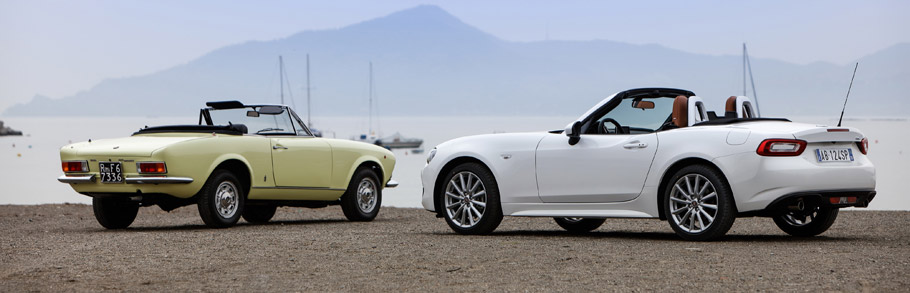
  • FIAT 124 Spider Anniversary Edition is sold out! We still try to find out what is so special about this one

    2016 FIAT 124 Spider Anniversary EditionRemember that sweet FIAT 124 Spider Anniversary Edition that first showed up at the 2016 Geneva Motor Show in March? The same one, created to honor the 50th anniversary of the original roadster back in 1966? It is sold out. This is it. The end.

    So, we did like the vehicle, but we were not convinced it would sell out that quickly. In fact, there is only one question that bothers us: what makes this vehicle so damn special?

    Exclusive and limited to 124 units, the model offers unique equipment specifications and features: buyers are granted with Passionate Red exterior paint, premium silver finish on the windscreen frame, rollover bars and door mirrors and of course tons of “Anniversary Edition” badges. In case owner forgot. Or, in case of random passengers did not realize what they are seeing.

    So, what else? There are LED adaptive headlights, seven-inch touch screen infotainment system, satellite navigation, DAB radio, USB ports, Wi-Fi hotspot and Bluetooth connectivity. All usual stuff that usual vehicles do offer as standard features. And you know what more there is? Keyless start, BOSE audio system, rear parking sensor and 17-inch alloys. Now it sounds mediocre.

    SEE ALSO: 2016 FIAT 124 Spider: is it that special as brand wants it to be?

    But maybe there are sweet additions within the drivetrain system? Owners can show off with FIAT’s proven 1.4-liter MultiAir turbo-charged four-cylinder power unit with maximum output of 140hp (104kW) and 240Nm of torque. What is actually special about the drivetrain system is that it comes with double-wishbone front and multilink rear suspension, lightweight roadster architecture and fine-tuned weight distribution and rear-wheel drive chassis.

    Well, it does not sound that bad, but we still can’t figure out how this one became so popular. What are your thoughts about the vehicle? Drive in the comment section below!

    Source: FIAT 

  • 2016 FIAT 124 Spider: is it that special as brand wants it to be?

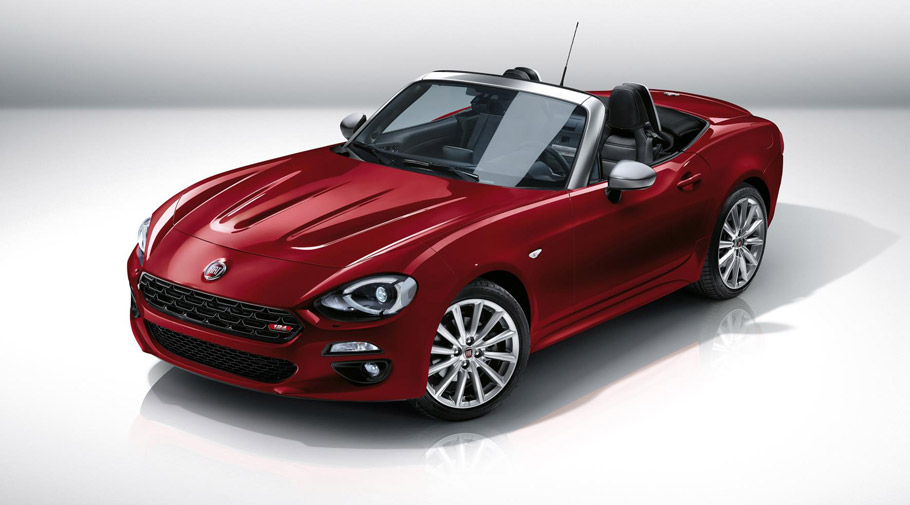
    2016 FIAT 124 Spider The new FIAT 124 Spider was revealed to the UK media at the International Media Event in Verona, Italy. Arriving with that impeccable classic Italian style, the vehicle remains true to its roots, but at the same time shows numerous additions and changes. So, let’s check out what the new beauty has to offer!

    Exterior styling

    Designed in the FIAT Style Centre, the vehicle comes with a well-known appearance, but at the same time adds and something new. The whole body is well-proportioned and muscular, resembling a pure classic roadster appearance.

    The front is also inspired by its 1960s predecessors and masterfully blends the romance of a past era with today’s vision for beauty. The position of the LED headlamps and the hexagonal grille are definitely ripped off the classic roadster appearance, just like the bonnet that emulates twin power domes of the second-gen FIAT 124 Spider.

    At the same time, the rear shows a swallow-tail rear wings with cascade inwards toward the decklid, sharp horizontal tail lamps with noticeable ring shape. And the rear spoiler not only enhances the aerodynamic features of the vehicle, but also contributes to that sporty and elegant stance.

    2016 FIAT 124 Spider

    In terms of personalization, the FIAT 124 Spider will be available in eight exterior colors: Passione Red and Ice White, which are pastel finishes, Volcano Black, Argento Grey, Fashion Grey, Magnetic Bronze and Italia Blue that are full metallic and a special tri-coat pearlescent finish: the Urban White.

    Interior styling

    The cabin is created in accordance to the highest standards of safety and convenience and welcomes everyone to a rather cozy and functional place, filled with premium materials , high quality components and cutting-edge technologies.

    For example, the steering wheel is not only more comfortable in terms of style, but is also wrapped in high-quality leather. At the same timethe light mesh structure seats and the exclusive shape of the trim and foam parts do guarantee the highest levels of comfort and pleasure of driving.

    Drivetrain system

    Under the bonnet FIAT enthusiasts will find a trustworthy 1,3368cc MultiAir turbocharged four-cylinder power unit that delivers a total of 140hp (104kW) and 240Nm of torque, delivered to the rear wheels, via a six-speed manual gearbox. In terms of performance capabilities, the vehicle accelerates from 0 to 100km/h (62mph) in 7,5 seconds and chases a top speed of 215km/h (134kW).

    SEE ALSO: The impeccable Italian style will shine once again: Fiat 500 Riva is about to be unveiled! 

    The suspension system comes with a double-wishbone layout that is fine-tuned in order to deliver more stability and flexibility while braking. Also, there are dual-pinion electric power steering system, also fine-tuned in order to give the Spider a better response.

    Safety and utility features

    Fiat 124 Spider comes with tons of active and passive safety technoogies. There is a voice-controlled infotainment system, LED rear light cluster, four airbags, TPMS, cruise control, a speed limiter, ESC, ABS and EBD, rear parking-assist, all part of the standard equipment.

    2016 FIAT 124 Spider

    In fact, the whole body is made from high-tensile materials and dedicated structures that enhance the comfort via absorbing vibrations and noise. Cool, right?

    So, what do you think about the latest FIAT beast? Write down in the comment section below!

    Source: FIAT 

  • Ferrari debuts 458 Speciale A spider

    Ferrari-458-Speciale_thumbFerrari-458-Speciale_651

    Ferrari has announced the upcoming debut of the 458 Speciale A spider at the upcoming Paris Motor Show (4-19 October 2014). The new car will be a celebration of the dazzling success of the various versions of the 458, a model that has collected an array of international motoring media awards and track victories, including category wins in classic endurance races such as the 24 Hours of Le Mans, the 24 Hours of Daytona and the 12 Hours of Sebring.

    Ferrari-458-Speciale-rear_651

    The Ferrari 458 Speciale A spider will be limited and only 499 cars will be built. The value of the vehicle is enhanced by the fact that the car includes the most powerful naturally-aspirated road-going V8 engine ever built by Ferrari with displacement of 4.5 liters. It delivers a massive 605 cv (135 cv/l specific power output) and 540 Nm (398 lb-ft) of torque at 6000 rpm at the cost of just 275g/km of carbon dioxide emissions. This allows the car to reach 0-100 km (0-62 mph) in just 3.0 seconds and cover a Fiorano lap in 1’23”5. These results are also achieved thanks to the front and rear active aerodynamics, the rigid chassis that incorporates 10 aluminum alloys and Side Slip Angle Control (SSC) which guarantees unparalleled sporty driving in all conditions.

    The new car will arrive in triple-layer yellow livery with a Blu Nart and Bianco Avus central stripe as well as five-spoke forged wheels in Grigio Corsa. As of now there’s no information on how much a single Ferrari 458 Speciale A will cost.

    Source: Ferrari

  • Hennessey Ferrari 458 Spider – 738HP and 720Nm [video]

    Hennessey Performance has revealed their latest project based on the best sports car in the world – Ferrari 458 Italia Spider. As you may suggest , the tuner added significant amount of power as well as some styling upgrades.

    The 4.5 liter V8 is boosted to 738HP (543 kW) at 8,400RPM and 720Nm (532 lb-ft) of torque at 5,600RPM. This is an increase of 168HP and 180Nm. 0-100 km/h in 2.8 seconds and a ¼ mile in 10.5 seconds with terminal speed of 220 km/h (137 mph). The top speed is over 350km/h (218 mph).

    The result is thanks to a number of upgrades including two twin ball bearing turbochargers and upgraded the fuel system. There is also an air-to-water intercooler system and stainless steel inlet piping, along with dual wastegates and engine management calibration. Other tweaks include custom oil and transmission lines, stainless steel exhaust system and turbo downpipes.

    Other highlights include a carbon fiber exterior body kit, a KW adjustable suspension, a set of monoblock wheels fitted with Michelin Pilot Super Sport tires and some carbon fiber elements for the interior.

    The performance package is $59,955 and other upgrades pricing is available upon request.

    httpv://www.youtube.com/watch?v=ADVyAyz31QA

    Power:

    • 738 Horsepower @ 8,400 rpm
    • 532 lb-ft Torque @ 5,600 rpm

    Performance:
    • 0-60 mph: 2.8 sec.
    • 1/4 mile: 10.5 sec. @ 137 mph

    HPE700 Twin Turbo Ferrari 458 Upgrade Includes:
    • Twin Ball Bearing Turbochargers
    • Fuel System Upgrade
    • Stainless Steel Inlet Piping
    • Dual Wastegates
    • Air-to-water Intercooler System
    • Dual Air Induction Filters
    • Stainless Steel Turbo Downpipes
    • Stainless Steel Exhaust System
    • Custom Oil & Transmission Lines
    • Professional Installation
    • HPE Engine Management Calibration
    • Dyno Tuning & Road Testing
    • Serial-Numbered Dash & Engine Plaques
    • Hennessey Exterior Badging
    • 1 Year / 12,000 Mile Limited Warranty

    Additional Upgrades Available:
    • CarbonAero® Carbon Fiber Exterior Body Upgrades
    • Hennessey Monoblock Wheel Upgrade
    • Michelin Pilot Super Sport Tires
    • KW Adjustable Suspension Upgrade
    • Custom Interior Leather Upgrades
    • Carbon Fiber Interior Upgrades

    Source: Hennessey

  • Tauro V8 Spider – A Spanish Supercar

    Here is an interesting video featuring the first Tauro V8 Spider – a Spanish super car. The production is limited to just 30 units.

    As you may suggest, the Spanish super car is based on the Pontiac Solstice. The Tauro V8 Spider comes with an Alfa-Romeo 8C Competizione inspired body kit. There are also some elements from Ferrari California and Nissan 350Z. The interior is coming from GM and boasts Alcantara trim, leather-wrapped dashboard and an aluminum shift knob.

    Tauro V8 Spider is powered by a 6.2 liter naturally aspirated V8 with 440HP (324 kW) and 586Nm (432 lb-ft). The engine is connected to a 6-speed manual. 0-100 km/h in 4.0 seconds and a top speed of 295 km/h (183 mph). There are also some performance packages boosting the engine up to 650HP (478 kW).

    The starting price is €100,000.

    httpv://www.youtube.com/watch?v=m-2-e1T50g0

    Source: Superlennyo via Youtube