Tag: RWD

  • Audi R8 GT RWD

    Audi of America pays tribute to the first generation Audi R8 GT from 2012 by announcing the arrival of the all-new R8 GT. The naturally aspirated 5.2-liter V10 engine now comes with 602 horsepower – making it the most powerful rear-wheel drive series production model in the brand’s history. A new Torque Rear drive mode was developed exclusively for the R8 GT to provide for more precise and controlled oversteering when driven on a track. The R8 GT demonstrates the consistent transfer of technology from motorsports to series production. The R8 GT will be limited to just 333 units worldwide, of which 150 units will come to the United States market.

    A motorsport legend: 5.2-liter V10 engine

    No other Audi is closer to motorsports than the R8. The R8 V10 engine is nearly identical to the R8 LMS racecar engine developed in parallel with only specific regulation adjustments made on the racecar. Compared to the R8 V10 performance RWD model with 562 horsepower, Audi Sport GmbH engineers heightened the performance of the R8 GT model to 602 horsepower – now matching the R8 performance quattro model.

    An unmistakable engine tone resonates from the high revving 5.2-liter 10-cylinder engine that produces 413 lb-ft. of torque and a max engine speed of up to 8,700 rpm. As a result, the new R8 GT accelerates to 60 mph in just 3.3 seconds and reaches a top track speed of up to 199 mph. One unique design element of the R8 GT is the valve covers of the engine that are painted in black.

    New Torque Rear Drive Mode

    For the first time, Audi Sport GmbH is offering a Torque Rear mode on the R8. Drivers can access seven characteristic curves stored in the traction control system (ASR) offering different levels of support – Level 1 provides maximum support with reduced engine torque, which leads to a low level of wheel spin, while Level 7 provides only minimum support with increased engine torque, which leads to a high level of wheel spin.

    The desired Torque Rear mode level can be set by turning the control satellite on the Alcantara® wrapped steering wheel. This function adapts to the progressive driving skills and road conditions presented on the road or on the track, while rapidly calculating data from the wheel speed sensors, steering angle, accelerator pedal position, and the selected gear. The incremental adjustment allows the drivers to gradually increase their own skills.

    Another distinctive addition to the R8 GT is a 7-speed dual-clutch transmission with even faster shift times – allowing drivers to choose their personalized level of ESC support, enabling controlled and simultaneously precise oversteering. The gearbox allows for an even more impressive acceleration in all gears thanks to an altered gear ratio compared to the R8 performance RWD models.

    Lightweight engineering

    The R8 GT remains largely produced by hand at Böllinger Höfe, and shares the same assembly line and similar engine as the R8 LMS racecar. Compared to the R8 V10 performance RWD Coupe, various weight saving measures have resulted in an overall weight reduction of around 55 pounds, producing a total curb weight of 3,516 pounds. The LMS racecar inspired lightweight 20-inch 10-spoke milled-cut forged wheels in high-gloss black, are combined with high-performance Michelin Pilot Sport Cup 2 tires designed for road and racetrack use. The forceful ceramic braking system with red calipers, which is standard equipment in the R8 GT also saves additional weight compared to steel brakes.

    Additionally, lightweight R8 GT bucket seats are finished in leather and Dinamica and feature integrated speakers as part of the Bang & Olufsen sound system. The standard sport suspension features a CFRP anti-roll bar, made from carbon fiber reinforced plastic, while the two coupling rod connections are made of red anodized aluminum to protect against corrosion. This dynamic suspension reduces weight, while increasing road-holding and cornering dynamics.

    A conspicuous presence

    In order to differentiate the new Audi R8 GT from its relatives, the special model is equipped with exclusive add-on parts. First, all of the exterior emblems are painted in black including the distinctive “R8 GT” lettering in the rear. The track inspired Carbon aero kit is finished in high gloss, and was initially developed in the wind tunnel to improve aerodynamics and increase down force at the front and rear axle – generating better stability and faster cornering speeds on the track. In total, the Carbon aero kit consists of the following attachments: front splitter, flics, side skirt covers, cW-elements on the sides of the rear bumper, a diffuser, and a rear wing with gooseneck suspension, which ensures optimum wing underflow improving aerodynamic efficiency.

    The new R8 GT is available in three colors, totaling 50 of each: Tango Red Metallic, Daytona Gray Metallic, and Mythos Black metallic. For the interior, Audi Sport GmbH continues to praise its homage to the first R8 GT from the 2012 model year. The interior is crafted with an Audi exclusive interior in a combination of black and red. This includes red seatbelts – only previously available in the R8 GT from 11 years ago. The floor mats and the R8 bucket seats feature the lettering of the special model in black and red. Customers can also find the sequential numbering of their R8 GT in the middle of the selector lever, partially matted in the carbon inlay.

    Compared to the global setting, the U.S. market adds several components that amplify the performance character and equipment level of the R8 GT. Carbon side blades, door side sill inlays, and exterior mirrors housings complete the motorsport touch to the exterior. Further added equipment includes a sport exhaust system, Audi laser lights, dynamic steering, Bang & Olufsen sound system, and an Audi exclusive diamond stitched headliner with red contrast stitching.

    The Price

    The new Audi R8 GT will start arriving at dealerships in early 2023. The MSRP starts at $249,900 plus destination, paint, and gas guzzler tax.
  • Audi R8 Coupe V10 GT RWD

    12 years after the premiere of the first Audi R8 GT, Audi Sport GmbH is launching the second edition of this exclusive super sports car: the new Audi R8 Coupé V10 GT RWD. The 5.2-litre, naturally-aspirated V10 engine’s output is boosted to 620PS (Combined fuel consumption in l/100 km**: 15.0 (18.8 UK mpg); combined CO2 emissions in g/km: 340), making it the most powerful rear-wheel drive unit in the history of the brand. A new seven-speed dual-clutch transmission for faster shifts and the new Torque Rear driving mode allows drivers to choose their own level of ESC support. This enables controlled and simultaneously precise oversteering. The seven-stage torque rear can be adjusted via the control satellite on the steering wheel. The new R8 GT is limited to 333 units worldwide with just 15 allocated for the UK market – pricing is to be confirmed. New and exclusive exterior and interior features pay homage to the first generation of the R8 GT such as sequential numbering, special light alloy wheels, and an interior in a combination of black and red.

    The R8 GT Says Goodbye to the V10 Engine

    Compared with the R8 V10 performance RWD with 570PS, which forms the basis for the second edition of the R8 GT, Audi Sport GmbH is increasing the performance of the special model to bring it up to the same level as the quattro model. Specifically, this means: 620PS from 10 cylinders, 5.2 litres of displacement, and 565Nm, available from 6,400 until 7,000rpm (max: 8,700 rpm). As a result, the new R8 GT accelerates from 0-62mph in 3.4 seconds, covers 0-124mph in 10.1 seconds, and reaches a top speed of up to 199mph.

    Another decisive difference: a new seven-speed dual-clutch transmission with even faster shift times. Thanks to an altered gear ratio and the associated higher speed, the new gearbox allows even more impressive acceleration in all gears. On top of that, there’s an exclusive design feature for the R8 GT: the intake manifold is painted in black.

    New Torque Rear Drive Mode

    For the first time, Audi Sport GmbH, which manufactures the new R8 GT largely by hand at Böllinger Höfe, is offering Torque Rear mode. Slippage is controlled on the rear axle by the traction control system (ASR). It is part of the ESC. Seven characteristic curves are stored in the ASR, offering different levels of support. Level one allows little slippage, while level seven allows a lot of slippage. The desired torque rear level can be set by turning the control satellite on the steering wheel. This function also enables a different adaptation as driving skills and road conditions develop. Depending on how that progresses and taking into account information from wheel speed sensors, steering angle, accelerator pedal position, and the selected gear, the engine control unit measures engine power on the rear axle.

    Less Is More

    Compared with the R8 Coupé V10 performance RWD, various measures resulted in a weight reduction of around 20kg to a total of 1,570kg (without driver). The exclusive 20-inch, 10-spoke wheels, which can be combined with high-performance Michelin Sport Cup 2 tires, designed for road and racetrack use, play a key role in reducing weight. The lightweight forged wheels are based on Audi’s motorsport vehicles. The extremely powerful ceramic braking system, which is standard equipment in the R8 GT, saves additional weight.

    In addition, there are R8 bucket seats and the performance sports suspension with the CFRP anti-roll bar. The front anti-roll bar is made from carbon fiber reinforced plastic. Together with the two coupling rod connections made of red anodized aluminium (which protects against corrosion), it reduces weight and increases road-holding and cornering dynamics. Even sportier R8 GT coilover suspension is available as an option. This allows you to individually adjust the trim position and the compression and rebound levels for your R8 GT. On delivery, R8 GT customers receive adjustment instructions and the corresponding tools.

    A Look to Fit Its Status

    To differentiate the new Audi R8 V10 GT RWD from its relatives, the special model is equipped with exclusive add-on parts. The first distinguishing feature is the black “R8 GT” lettering on the rear. All other emblems are in black. With the Carbon Aerokit in high gloss Black, which was developed in the wind tunnel, the package generates better stability on the road, and therefore also faster cornering speeds. In all, the Carbon Aerokit consists of the following attachments: front splitter, flics, side skirt covers, cW-elements on the sides of the rear bumper, a diffuser, and a rear wing with gooseneck suspension. This insert ensures optimum wing underflow and thus improves aerodynamic efficiency.

    A carbon fibre engine cover and side blade, and door mirror housings in carbon high gloss will be further standard features on UK R8 GTs. Additional spec also includes the B&O sound system, an Alcantara diamond headlining and dark tinted laser headlamps.

    In the style of its predecessor, the new R8 GT comes in matte Suzuka Gray. Alternatively, Tango Red Metallic, Mythos Black Metallic and Daytona Gray Metallic are available.

    In the interior, Audi Sport GmbH continues its homage to the first R8 GT from 2010. The interior is crafted in a combination of black and red. This includes red belts – only available in the R8 GT from 12 years ago. The floor mats and the R8 bucket seats feature the lettering of the special model in black and red. One highlight: Customers can find the sequential numbering of their R8 GT in the middle of the selector lever, partially matted in the carbon inlay

  • Drag Racing – Times and Power [part 2]

    Let’s continue with the reaction time. With several words, it is the time between the green light signal and when the car passes the starting line. Normal reaction time is between 0.5 to 1 second and if it is under that, the driver is either lucky or trying to “cheat”.


    All this characteristics are connected and can explain everything that happens on the race track, even how the driver controls the car.

    The time and the terminal speed are the most important characteristics and normally the proportions are these: 15 to 14 seconds on ¼ mile – 150 to 160 km/h, 14 to 13 seconds – 160 km/h to 175 km/h, 13 to 12 seconds 175 km/h to 190 km/h, 12 to 11 seconds from 190 km/h to 210 km/h and all cars in the 10 second mark and below that have terminal speeds of more than 210 km/h.

    So, what happens, when the car have high terminal speed and bad ¼ mile. Usually, there are two reasons – bad start and low traction after that. The cars, which are not 4×4 and have a lot power like turbocharged BMWs, Porsches or Mercedeses. The conclusion is more wheel spin leads to bad ¼ mile time and high terminal speed.

    So, it turns that drag racing is not only a chase between two cars on a straight line and changing gears or waiting for the automatic transmission to do that. There are a lot for very important factors, which can work in your benefit, if you know them and try to improve not only your car, but yourself, too.

    More power, less weight and good, prepared driver – the formula of the success at ¼ mile races.

    Bugatti vs Porsche Drag
    Bugatti vs Porsche Drag


    [Part 1]

  • Drag Racing – Times and Power [part 1]

    Drag racing is one of the most interesting events in the automobile world, especially for the spectators. Essentially, it is a race between two vehicles on a special dragstrip, which is a long straight facility for conducting acceleration events. When we say vehicles, we mean everything that can run… fast! – motorcycles, cars, sports cars, “funny” cars and top fuellers.  This time we will talk about ¼ mile races – 402.33 meters.

    There are two main types of events – start-and-fast beat, which is very “easy” to do. Just step on the gas pedal, when the lights are green and change gears (if you drive manual). The second type is bracket racing, which is very popular, too. The contestants choose their fastest time that they think is possible and who finishes first is a winner, but if you beat your announced time of 14.20 with for example 14.05, you will lose. These rules give opportunity to slow cars to catch up with very fast ones.

    Now to say something about times just to have some idea for what’s really going on at the dragstrip. Usually, the normal cars around and under 200HP are in the range of 18 to 15 seconds. Those, which have sports nature, are from 14.9 to 13 seconds and the best of them are under 13 to 12 seconds. The cars with times under 15 seconds has at least 200HP and they are not very heavy like 1500kg (3306 lbs) or more. The cars around 13 seconds have 300 to 400HP and those under 13 seconds are extremely powerful – 500HP and more. Of course, there are a lot of exceptions, but normally this is the situation.

    Other very important thing is the terminal speed, which again can show you how powerful the car is and how it uses that power and puts in on the tarmac. Again, usually the normal cars have terminal speeds of 120-140 km/h. The sports ones – 140 to 160 km/h and the best 160 to 190 km/h. If you see a car with over 200 km/h, it is either very tuned or very powerful with poor driver.

    The start is extremely difficult, because the driver needs to know his car very well. Of course, a start with powerful car is more tricky and, but if you have launch control – congrats.

    The first 60 feet (20 m) usually take from 1.6 to 2.4 seconds or more, if the driver can’t drive his car very well. Once again, the normal cars (if driven perfectly) are between 2.8-2.4 seconds, the sports ones from 2.4 to 1.8 seconds and if the time is around 1.4-1.5 seconds, this is either very powerful 4×4 vehicles or a RWD with slick tires.

    To be continued…

    [Part 2]

  • Kia with an All-new K9 Flagship Sedan in Korea

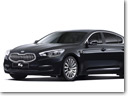
    Kia-K9-Korean-thumbKia promised a flagship sedan and they gave a flagship sedan… to Korea. These are the first images of the K9, which is set to go on sale some time this year. And yes, it will be actually called the K9 in Korea while the naming of the batch of cars that are going to go on sale overseas is yet to be done. Euorope won’t get any of that action though.

    The K9 will be the first ever RWD Kia sedan and is said to be the ultimate in 2012 design, performance and technology. At the domestic market, the “K” range consists of K5 (widely known as the Optima) and K7 (Cadenza – not seen in Europe again).

    One would be surprised for how many thing can the “K” in the range stand for – Kia, obviously, but also Korea and Kratos, apparently – it means dominion, rule and power (from Greek). Some also call it the “Kinetic” which is rather self explanatory.

    So then, many names to live up to. Hopefully, the K9 holds something more than a mere “high-tech luxury sedan image”. So far we know that it has a “tiger-nose-radiator grille” and LED headlights at the front, simple lines throughout the body and LED again formations at the back, complemented by some chrome and some mufflers embedded in the rear bumper.

    Kia K9 (2012)
    Kia K9 (2012)

    Source: Kia

  • Front Wheel Drive vs. Rear Wheel Drive

    It is very difficult to say which is better between a front wheel drive (FWD) and a rear wheel drive (RWD). The conception is quite different. Actually, both have nothing in common in road behavior. When you get at the limit of your car, the pros and cons appear the most.
    The FWD is famous with its understeer, while the RWD with its oversteer. Both understeer and oversteer are quite shocking in everyday or normal driving conditions and should be avoided. Often the electronic safety systems take care for this, but some old cars do not have them and even in a brand new one, there is always a possibility to get yourself in trouble.

    Simply put, understeer is when the car does not turn enough and leaves the road in straight line and the over steer is when the car turns sharper than intended and could get into a spin. For experienced drivers managing with oversteer is easier, because it is more predictable, especially when the car is equipped with limited slip differential (LSD). If the car goes understeering just release the throttle and apply some brakes, if needed. If the car goes oversteering you have two options. First is to powerslide the corner, if the car has enough power and the second option is the same like the understeering situation. Powersliding is extremely hard and should be done only at the racetrack and never on public roads. In a few words, it means to apply the throttle in a turn enough to make the rear wheels break traction and slide out. All this is made with a proper countersteering.

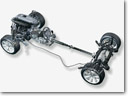
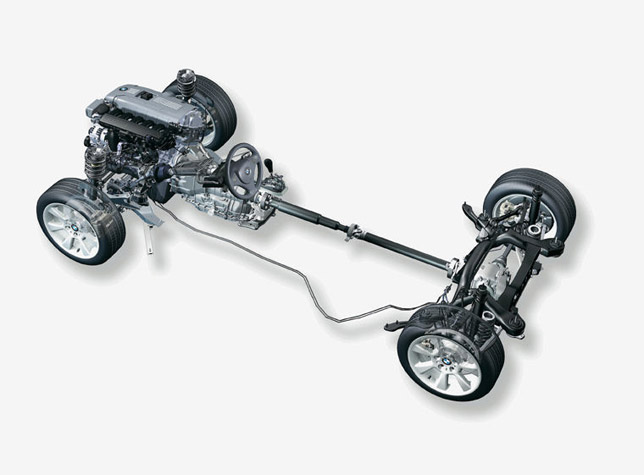
    Other very important thing is that the RWD has a lot more losses in power compared to the FWD mainly because of the more moving parts. The FWD layout is engine -> clutch -> gearbox -> differential -> axle shafts and the RWD layout is engine -> clutch -> gearbox -> joint -> driveshaft -> joint -> differential -> axle shafts. As you see, the torque should “go” more way to reach the rear tires, instead of reaching the front. Again, simply written is that you lose about 12% of your engine power, if you have FWD car and about 15%, if the car is RWD. That’s why you will see the notion – wheel horse power – WHP. For example often a 150HP FWD car is a lot faster than a 150HP RWD car because the second has a lot more losses in power through the drivetrain.

    Obviously the RWD cars are very fun to drive, because each axle has to do its own task – front to steer and rear to power. The FWD cars are safer for beginner drivers, especially in low traction conditions (rain or snow). They are also more economical, because they put more power on the road and often are lighter. Other important thing is that the manufacturers can’t make very small RWD cars or they shouldn’t because they are very unstable.

    So, next time you are seeking a new car be sure what you are searching for.

    Rear Wheel Drive
    Rear Wheel Drive
    Front Wheel Drive
    Front Wheel Drive
  • Mazda MX-5 Venture Edition

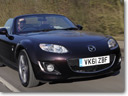
    Mazda-CX-5-Venture-thumbWe all know the Mazda MX-5, right? It’s that front-engined, RWD, simple, fun handling roadster that has been around for years. The latest attempt of the Mazda company to refresh it comes in the form of the MX-5 “Venture Edition” with new interior trims and exterior finishes and more technology and luxury equipment.

    The new Venture picks up where the SE and Sport Tech MX-5 end. You can either go for the 1.8 MZR Soft-top (SE) or the 2.0 MZR Roadster Coupe (Sport Tech). Exclusive highlights from the outside include light gun metal 17-inch alloy wheels, front fog lights and a chrome front grille. But we don’t really have to notice these things to know it is a Venture edition. There are badges for that. Three body colors will be – the popular Metropolitan Grey Mica and two exclusive Radiant Ebony Mica and Crystal White finishes.

    Mazda CX-5 Venture Edition (2012)
    Mazda CX-5 Venture Edition (2012)

    Inside a leather feast unfolds itself as you enter. The steering wheel, seats and the leather lever are all wrapped in Havana Brown leather. A matching door trim on the side and piano black dashboard accents at the front appease you. Technology includes climate control air-conditioning, cruise control, Dynamic Stability Control, TCS and airbags, lots of them. Also, for the first time ever on an MX-5, a Satellite navigation. And it is not an antique one as well. It has a 5.8-inch touch screen monitor, 4GB SD card based map (45 countries), live services, iPod and Bluetooth® connectivity.

    Most importantly it still remains a proper roadster with a perfectly balanced handling and a 1.8 MZR, 126 ps (SE) engine or a 2.0 MZR, 160 ps (Sport Tech) one. Manual transmissions come with either five or six speeds respectively. Going up to 60 mph will take you 9.9 seconds in the 1.8 soft-top, while for that same speed the time mark of the 2.0 Roadster Coupe is 7.9. Fun however, doesn’t come only in a straight line. The Mazda is fitted with a Limited Slip Differential for that extra sideways lunatism.

    Source: Mazda

  • Toyota lineup at Geneva – Hybrids and Fun

    Toyota-2012-Geneva-thumbThe 2012 Geneva Motor Show is as close as ever and to build up the hype, manufacturers are revealing and teasing what to expect during those few days of motoring nirvana (from 8 to 18 March). Toyota has offered a quick summary of what their booth will look like with some clever machines and European firsts – four concepts, a production hybrid and a grand tourer – the Toyota GT 86. It is an almost identical car to the Subaru BRZ which also will be making its own premiere in Europe. It would be interesting to see which one gets more favor. News news from one of the world’s largest vehicle conventions – the Geneva Motor Show which starts early in March and will last for more than 10 days.

    To start off we have a nice little Yaris Hybrid which will be a completely new addition to the European public. Here we go:

    Yaris Hybrid

    Toyota Yaris Hybrid (2013)

    The Yaris Hybrid will make an appearance as a production car ahead of its production schedule. Sales in Europe are expected to start in June and at that time the Yaris would be the first full hybrid supermini in Europe. That means that Toyota are aiming to create a whole new customer group that might be interested in absolute efficiency in small, practical and nimble packages.

    Toyota GT 86

    Toyota GT 86 (2012)
    Toyota GT 86 (2012)

    The critically acclaimed Toyota GT 86 sports coupe will be ready for sale this summer. With its RWD, flat-engined layout, this grand tourer is sure to induce much excitement, adrenaline and smiles upon its arrival. And it’s pretty cheap too.

    Toyota FT-Bh

    Toyota FT-Bh Concept
    Toyota FT-Bh Concept sketch

    The FT-Bh will be a concept of an ultralight full hybrid city car designed to be efficient in every way. Toyota has gone for the inexpensive way of making it by using commonplace methods of production instead of some grand new materials that are costly to research and develop.

    NS4 and FCV-R concepts

    Toyota NS4 Concept
    Toyota NS4 Concept
    Toyota FCV-R Concept
    Toyota FCV-R Concept

    Those two concepts will be also shown for the first time in Europe. The NS4 is a value-perfect, plug-in hybrid focused on driving experience without compromises. The FCV-R concept will be the big one though. It will pave the way for Toyota towards mass production hydrogen cell powered vehicles. A saloon-type car might be on the way for 2015.

    Toyota diji

    Toyota diji Concept
    Toyota diji Concept

    The diji concept is a weird looking thing. Imagine those digital frames on which you can upload photos from your computer and then it does slide shows for you. That’s what the diji is – an inside and outside environment made up of a screen. It can change it’s color and can be virtually infinitely personalized with all kinds of interfaces and applications. An interactive future of motoring or a visionary and ambitious idea?

    Source: Toyota

  • Tesla Model X reveal [VIDEO]

    Tesla-Model-X-thumbHere’s a longish video of Tesla co-founder and CEO Elon Musk unveiling the Model X – an electric SUV with the practicality of a minivan and the efficiency of a … well… electric SUV.

    It features a unique design that makes use of gullwing doors, although Tesla would prefer the term “Falcon Wing” but the principle remains the same. Third-row access is easy. Even with child seats installed, the second-row seats slide all the way forward. Open Falcon Wings will allow you to stand upright whether getting in or out. Kids will no longer leap and tumble over the second row, and adults will find the third-row seats as accessible as the passenger seat.

    In terms of performance, as expected from an EV, torque is instantly available and the center of gravity is very low. Drivetrain composition comes in three different types – Model X with RWD, Model X with AWD (a second motor is added to the front axle). Last but certainly not least is the AWD setup with a performance package. With it the X is good for a time of under 5 seconds in the 0 to 60mph sprint. Strikingly fast. Presumably one would be able to do many sprints from 0 to 60 thanks to the voluminous battery pack which comes with capacity of either 60 kWh or 85 kWh.

    Sales are expected to kick off in 2014, production 2013 while reservations are open now. Because the X is actually based on the S it will be around the same price as well.

    Tesla Model X (2014)
    Tesla Model X (2014)

    httpv://vimeo.com/36534892

    Source: Tesla Motors

  • Subaru BRZ, Impreza 5-door First Time in Europe

    Subaru-BRZ-thumbWith the 82nd Geneva Motor Show approaching, more and more information is let loose to the world about premiers and lineups and surprises. Today, Fuji Heavy Industries Ltd. (Subaru makers) confirmed that they will debut (for Europe) “Subaru BRZ” and the “Impreza 5-door”.

    The fourth incarnation of the Impreza is designed to be a symbol of reliability, handling and safety. As always it comes with Subaru’s symmetrical AWD and a flat engine. In Europe that engine would be a very green 1.6 petrol that is said prsereve the sporty legacy of the brand. On a side note, the company’s own symmetrical AWD system, which first appeared on the “Subaru Leone Estate Van” in 1972, is turning 40 years this year. So at the Geneva Subaru booth, tech enthusiasts will have the opportunity to visit a gallery illustrating the history of Subaru’s AWD and tryout a 3D virtual thematic game.

    Subaru Impreza (2012)
    Subaru Impreza (2012)

    The Subaru BRZ, which is almost identical to the Toyota GT 86 but is at the same time somehow better, will also make a European Premiere. This car will be the AWD exception as it is a front engined, RWD composition that throws us back in the days when tail-happy cars were appreciated. That said, it won’t be an uncontrollable lunatic car this, but rather a finely balanced GT car with a low center of gravity. That’s the beauty of a flat engine – it offers flexibility and compactness so the Subaru engineers have put it as low as possible and lo and behold, we have a performance fun house.

    Subaru BRZ (2012)
    Subaru BRZ (2013)

    Press day for the Geneva Motor Show is set for the sixth and seventh of March and on the eight, the public can join in. The Subaru press conference is scheduled at 11:45am on March 6th

    Source: Subaru

  • Jaguar XJ220 20 Years Later

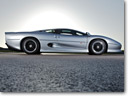
    Jaguar-XJ220-thumbIt has been 20 years since the first XJ220 rolled out from it’s own factory in Bloxham and even by today’s standards it still is a masterpiece. In 1992, the fastest one could go was 213 mph, in an XJ 220. That threshold is a challenge for today’s M5.

    Originally conceived as a concept car, designed by Keith Helfet, the XJ220 was showcased on the 1988 British Motor Show. It was the kind of concept that nobody believed that it would be built but an year later production was given a green light and the TWR company was appointed as a partner.

    The XJ engineers started off with some goals and then set on to build the car that can meet them. The ideas back then were visionary, daring and some even sounding impossible – it had to be light, it had to be RWD and it had to do 220 mph (hence the name XJ220). The obvious thing to do to reach such heights in velocity was to throw in a gigantic engine and let it do its job. However, fitting a V12 proved tricky (mechanically) and also because of the emissions regulation there was no way for this car to be street legal and that powerful if it were with 12 cylinders. The next best thing was turbocharging – two massive Garrett T3 turbines were bolted on the modest 3.5 L, V 6 engine and the end result was just mesmerizing: 550 PS and 475 lbs ft of torque surging trough a 5-speed gearbox and space devouring 345/35 Bridgestones. Other highlights included the AP racing twin-plate clutch and AP disc brakes with four-pot callipers. They were a bit of a handful for the ordinary everyday driver for one had to be fairly built to operate them but it all worked as charm nevertheless.

    Jaguar XJ220 (1993)
    Jaguar XJ220 (1992)

    Despite the positive reaction of various critics and motoring enthusiasts, the XJ was a commercial failure. Production ceased in 1994, by which time only 275 cars had been built. The price was a bit too steep (740 861 U.S. Dollars) and undoubtedly it was hard to live with.

    The point of this car however, was to prove how with the apt engineers of Jaguar, there are no boundaries. The silver car in attendance at the recent Jaguar Experience Day held at the Heritage Motor Centre, Gaydon is chassis 004, one of 10 pre-production vehicles. This example was used for extensive tyre and high speed testing at Fort Stockton, Texas, in 1991. Andy Wallace achieved a maximum speed of 213 mph in the car during the testing process.

    The XJ220 S was another daring project which was basically built from scrap (Le Mans spare parts really). It had single-piece carbon fibre front and rear clamshells, tweaked suspension and a claimed power of 700 PS. Inside the otherwise luxurious trim was sacrificed for the sake of Kevlar bucket seats and carbon fibre panels. It was a true sporting breed. And today it is a classic on top of that.

    Source: Jaguar

  • All-in-one Chrysler 300 on it’s way

    What Chrysler is going to try and do with the new 300 series is to blend style and luxury with affordability and refinement. Sales are expected to start during the first quarter of 2012 with a base price of $40,145.

    Two trimmings will be offered when showrooms open up to costumers: the Chrysler 300 and the Chrysler 300 C. Both of these cars can be equipped with either an AWD system or RWD. The more economical and less powerful 300 pumps out 292 horsepower from a 3.6 liter Pentastar V6 while the 300C makes use of a 5.7 HEMI V8 which delivers 363 hp. The latter, Chrysler say, goes easy on the petrol as it employes their Fuel Saver Technology. However, the Pentastar is the one to ask about fuel-efficiency – 23mpg combined (21 for the AWD version). A figure, according to the company, yet unsurpassed in the luxury class.

    The company is also proud of it’s state-of-the-art 8-speed automatic gearbox which is a first in a “domestic luxury sedan”. More yet shorter gear rations means smoother power delivery and a lively throttle response. The AWD segment is clever too as it makes use of all the wheels only when needed while normally the front axle is disengaged from the drivetrain. Transition from RWD to AWD is automatic and barely noticeable. All those factors, the transmission, the drive system, the Pentastar V6, work together to achieve a more powerful and a 17 percent more economic vehicle compared to the previous V6 300.

    Visually platinum-chrome touches ornament the fascias, door handles and mirror caps. The grille is also platinum-chrome with lining of the same material. Four polished face, pocket painted, 20 inch wheels (19 inch on the AWD models) bare the weight of the 300 for a completed look.

    Chrysler 300 Luxury Series (2012)
    Chrysler 300 Luxury Series (2012)

    Now that Chrysler is closely associated with Fiat, the 2012 model 300 has had the pleasure to bare  an essence otherwise reserved for Italian exotic vehicles. A more detailed description of the interior offers terms like Mochachino and Nappa which sounds very classy and expensive. Basically the wheel, the dashboard brow, the center console and the instrument panel all participate in a lavish leather feast which continues further back where the black/two toned seats are also wrapped in leather to go with the door and center console arm rests (You guessed it. They are all leather as well). Add to that a chrome lining to the wheel and Natural Pore Mocha wood panels  here and there and things get really executive.

    The number of gadgets inside is high. Just to name a few we have heated/ventilated seats, die-cast paddle shifters, touchscreen navigation, electrically adjustable steering column and seats with a memorizing function, LEDs everywhere  and an electrochromic rear view mirror.

    Interested? Well here is a quick price list on all four specifications:

    • Chrysler 300 Luxury Series (RWD) $40,145
    • Chrysler 300 Luxury Series (AWD) $42,495
    • Chrysler 300C Luxury Series (RWD) $42,895
    • Chrysler 300C Luxury Series (AWD) $45,245

    Source: Chrysler