Tag: Roadster

  • AC Cobra GT Roadster

    The amazing AC Cobra GT Roadster has just made its debut in London, delighting confirmed buyers and customers who were specially invited to the exclusive event. The iconic sports car has returned in spectacular fashion.

    The impressive event was held at the world-renowned Tottenham Hotspur Stadium, just a short distance away from the company’s original location. The all-new design was revealed to VIPs and customers, leaving them in awe.

    This highly exclusive car is available in both left and right-hand drive, and is powered by a thunderous 5.0-litre V8 engine that can deliver up to 663PS. The innovative extruded aluminum spaceframe chassis and carbon-composite bodywork offer a one-of-a-kind driving experience in this extremely limited-production vehicle.

    Customers were treated to a glimpse of the amazing bodywork and bespoke interior during the premiere of the new AC Cobra GT Roadster. They had the opportunity to admire the car’s stunning styling, get a feel for the interior design and meet the team behind the famous name to ensure the new sports car upholds its legacy.

    Speaking at the premiere, David Conza, Chief Executive Officer of AC Cars, said: “Our goal was to surpass the expectations of our esteemed clientele, who have grown accustomed to the finest in automotive luxury. The overwhelmingly positive feedback we received from the attendees confirms that we have well and truly exceeded those expectations. The AC Cobra GT Roadster is a testament to our unwavering commitment to excellence. We are delighted that customers could join us from around the world, and thank them for placing the upmost faith in us.”

    The brand new AC Cobra GT Roadster

    The AC Cobra GT Roadster is a brand-new sports car that’s been designed from scratch, using the most advanced technology and engineering techniques available today, while still staying true to the original AC Cobra’s spirit from the 1960s.

    It took nearly four years and a huge investment of millions of Euros to create this amazing new roadster. It’s been designed to be not just beautiful, but also practical and fun to drive. The company plans to produce only 250 of these GT Roadsters each year, and the first year’s production is already spoken for.

    The GT Roadster is fully street legal and can be ordered with either left or right-hand drive, and it has been built with the latest safety features in mind. Every detail of the car has been carefully considered, from the exterior design to the ergonomic layout of the interior.

    Compared to the original AC Cobra, the new GT Roadster is significantly larger, incorporating 50 years of design evolution. The cabin is incredibly spacious, even for drivers who are over six feet tall, thanks to the car’s modern ergonomics. The car’s drivetrain and control technologies have been updated to ensure it meets the standards of a true grand tourer.

    The new chassis has a wheelbase of 2570mm, which is 284mm longer than the AC Cobra Mk. VI, but the overall length of the car has only grown by 110mm, to a total length of 4225mm. The car’s track has been widened to provide better handling and agility, and the weight distribution and centre of gravity have been optimised to improve performance.

    The new AC Cobra boasts an incredibly lightweight and impressively rigid extruded aluminum spaceframe chassis, originally intended for an open-top car. The vehicle’s curb weight remains under 1450kg, even with a sleek carbon-composite body that weighs less than 50kg.

    Powering the AC Cobra is a formidable V8 engine that provides the speed and sound revered by fans worldwide. The new GT Roadster offers two engine options, including a naturally aspirated 5.0-liter V8 and a supercharged version of the same modular engine that can deliver up to 654bhp (663PS) and 575lb ft (780Nm) – or 454bhp (460PS) and 420lb ft (570Nm) in standard configuration. The supercharged GT Roadster can achieve 0-60mph in just 3.4sec. You can choose from two available gearboxes, a 6-speed manual or an advanced 10-speed automatic with steering-wheel mounted shift paddles.

    The AC Cobra GT Roadster’s cabin is as advanced and exclusive as the car itself, featuring bespoke details and unique hand-finished elements never before seen in the automotive world. The leatherwork and upholstery blend highly resilient fabrics with traditional materials, paying homage to the car’s heritage. AC Cars is committed to delivering exceptional vehicles, and the GT Roadster’s cabin underlines their devotion to that commitment.

  • Lamborghini Miura Roadster

    The Miura P400 Roadster that has inspired the very last V12 Aventador, was a one-off show car unveiled at the Carrozzeria Bertone stand at Brussels Motor Show in April 1968.  More than simply the coupé with the roof removed, the Roadster sports several differences to deliver the most aesthetic solution and ensure the necessary torsional rigidity of the chassis.

    It was painted in a spectacular, and very shiny, Lamè Sky Blue Acrilico paint, on Pelle Bianco interior paired with red carpet. With a low roofline, large side air intakes and a sharply-raked windscreen and all other glass removed, the Roadster was well-received but never entered production.

    After also being shown at the 1968 Geneva Motor Show the show car, after being test-driven in Sant’Agata Bolognese, returned to Bertone and was sold to the International Lead and Zinc Research Organization (ILZRO) who replaced every possible component with zinc or lead and repainted in olive green with green interior. It was used as a demonstration show car and renamed ZN 75. It travelled the world promoting the lead and zinc materials, and was shown to several car design centers.

    The rust protective zinc treatment, still now considered mandatory on every new car, can be directly related to the work of the ZN 75. After different owners all over the world, the ZN 75 was returned to its original Roadster configuration in 2008. Fully restored to its original Brussels motor show condition, it was shown at the Pebble Beach concours d’élegance in 2008 where finished second in the Lamborghini class.

  • Bugatti W16 Mistral

    Ever since the Veyron was introduced in 2005, the W16 engine has been the beating heart of every Bugatti. The roadgoing car that brings the W16 era to an end was always destined to be special: exclusive, elegant and powerful. It must be the very best of its kind. This is W16 Mistral: the ultimate roadster.

    Mate Rimac, Bugatti Rimac CEO, said: “For the final roadgoing appearance of Bugatti’s legendary W16 engine, we knew we had to create a roadster. Well over 40% of all Bugatti vehicles ever created have been open-top in design, establishing a long lineage of performance icons that – to this day – are revered the world over. In the Chiron* era there had, to-date, been no roadster, so the introduction of W16 Mistral continues this legacy, driven by enormous demand from our clients for an all-new way to experience the mighty performance of our iconic engine. The W16 Mistral opens the next chapter in the Bugatti roadster story, inspired by over a century of open top legends.”

    For a car as evocative and important as this, great consideration went into the badge it should wear. Far more than simply a development of the Chiron, the roadster needed a name associated with freedom, elegance and speed. Inspiration came from the mistral, a powerful wind that blows from the Rhône River valley, through the chic towns of the Côte d’Azur in southern France and into the Mediterranean. And with the engine so central to this roadster’s character, it stands side-by-side with this mighty wind: W16 Mistral.

    Built around the definitive 1,600 PS incarnation of the W16 engine, first used in the Chiron Super Sport 300+*, the W16 Mistral offers performance unlike any open top car that has gone before. In its design and engineering it is completely bespoke; the existing monocoque is not simply cut off above the A-pillars to make way for the new open-top design but has been reengineered and reshaped to create a more rounded silhouette without compromising performance.

    Achim Anscheidt, Bugatti Design Director, said: “We know the W16 Mistral will always have significance in the story of Bugatti, marking the last time that perhaps the greatest ever automotive powertrain is used in a roadgoing production car. We, as a design team, felt enormous pressure to deliver styling that immediately conveyed this landmark moment, drawing inspiration from some of the most beautiful roadsters in Bugatti history.”

    Their muse would be the 1934 Bugatti Type 57 Roadster Grand Raid, a sporting roadster that represents the pinnacle of elegant design. Marked out by its dual aerodynamic headrests, flowing backwards into the bodywork, and a cut down V-shaped windscreen, this particular Grand Raid – on display at the Louwman Museum in Den Haag – is effortlessly sophisticated with an understated sportiness. Finished in a duo-tone black and yellow livery, it would provide the perfect inspiration for this watershed moment in the Bugatti story.

    The W16 Mistral debuts in colors inspired by the Bugatti Type 57 Roadster Grand Raid; a warm black with hints of truffle brown and subtle yellow accents throughout. Not only is it an homage to the iconic coachbuilt body, but also to Ettore Bugatti, who chose the black and yellow combination for many of his personal cars, including his Type 41 Royale. To enthusiasts of the brand, it is a timeless visual pairing.

    The W16 Mistral captures the essence of the Grand Raid’s V-shaped windscreen and evolves it into a modern-day work of art. A curving windscreen that seemingly wraps around the A-pillars, blending seamlessly into the side windows and creating a ‘visor’ effect that hints at the motorsport levels of performance W16 Mistral offers. The windscreen itself is a marvel of engineering, curved just enough to create the rounded visor design, without distorting the driver’s vision.

    The top line of the windscreen and side windows flows purposefully around the side air intakes. This character line then flows back underneath the side glass to shoot through all the way to the front horseshoe grill creating a new three-dimensional character for the famous Bugatti C-line introduced on Chiron. To keep the body side section slim, but also allow for optimum airflow to the W16, the oil cooler intakes on the side were deliberately separated from the engine air intakes, which now sit on the roof, just behind the occupants. The two-new roof-mounted engine air scoops are a nod to the Type 57 Roadster Grand Raid, as well as the first open top Bugatti of the modern era: the Veyron 16.4 Grand Sport. Tighter, more powerful and appearing to leap forwards, W16 Mistral exhibits an entirely different character.

    Anscheidt continues: “To reflect the W16 Mistral’s new character, we also totally reinvented its frontal appearance, in line with the vertical layout of our unique or few-off models like Divo* and La Voiture Noire*. It’s immediately imbued with a sense of exclusivity; the vertically stacked headlights are completely bespoke and the famous horseshoe grille is reimagined to be much more three-dimensional; both deeper and wider. At the rear, we challenged ourselves to create a striking but also more elegant iteration of Bolide’s* X-theme taillight motif, which forever left its mark on the world of automotive design.”

    To design a car like the W16 Mistral requires careful practice of Bugatti’s ‘Form Follows Performance’ design mantra, with each component penned not just to set new standards for beauty, but to also play a role in achieving completely new levels of performance.

    Frank Heyl, Bugatti Deputy Design Director, said: “The headlights themselves are intricately shaped, incorporating a four-light signature that subtly nods to the W16 Mistral’s four-wheel-drive and four turbochargers. But their three-dimensional surface also functions as an aerodynamic aid that funnels air through the light and out through the wheel arch to improve aerodynamic drag. The wider horseshoe grille allows the high temperature engine radiator to be fully fed purely from one intake, leaving the two side intakes to focus only on providing air to the intercoolers.

    “The X-taillight, meanwhile, serves the function of venting the side oil coolers through ducts connecting the triangular negative space in between the X beams to the side radiators. Therefore, a pressure drop is created between the side intakes and the outlets at the back of the W16 Mistral which helps to manage the mid-temperature cooling circuit of the mighty W16 most effectively.”

    But the functional design highlights don’t end there. The new ram induction air scoops behind the headrests were developed from the very beginning with stringent rollover tests in mind, so each is made from a bespoke carbon fiber structure that can support the whole weight of the car in case of a roll over. This new intake layout also enriches the driver’s W16 experience, emphasizing the orchestra between the low down, mighty, rumbling 8-liter displacement intake noise at throttle on and the blow off valve whistle from the four turbo chargers at throttle lift. It is an unmatched aural sensation in the automotive world.

    To develop incomparable levels of elegance and excitement, the W16 Mistral features the very latest engineering innovations. Bugatti’s advanced composite materials are paired with cutting-edge titanium and aluminum 3D-printing to ensure striking design, ultimate performance and robust reliability. A detailed analysis of the W16 Mistral’s dynamic stiffness allowed engineers to develop lightweight solutions that would ensure optimum handling and performance under the most extreme conditions.

    The W16 Mistral’s interior takes its lead from Chiron, carefully honed to deliver an experience that’s both elegant and luxurious, but also functional enough to ensure all information is easily visible at up to 420 km/h.  The dedication to material quality remains a hallmark of Bugatti design; advanced, lightweight titanium, aluminum components milled from a solid block and soft, blemish-free leathers. But in this swansong to the W16, there are also brand new design flourishes.

    There is an intricate woven leather used on newly designed door panels, meticulously tested and produced to Bugatti quality standards with a vision of regular use over a hundred years into the future. And in a nod to the W16 Mistral’s illustrious forebears, the gear shifter – machined from a solid block of aluminum – features a touch of wood and an amber insert with Rembrandt Bugatti’s famous ‘dancing elephant’ sculpture locked within. Iterations of this sculpture adorned the bonnet of the legendary Type 41 Royale; the most luxurious roadster ever created.

    Underneath the gargantuan side opening hood of the Royale was an ambitious 12.7-liter straight-eight engine, the likes of which the world had never seen before. And the W16 Mistral’s engine is equally ambitious – the only W16 powertrain in automotive use today.

    When Bugatti’s last roadster, the Veyron 16.4 Grand Sport Vitesse set a world speed record of 254.04 mph (408.84 km/h) in 2013, its 8.0-liter quad-turbo W16 had 1,200 PS. The W16 Mistral has 1,600 PS, making use of the same power unit that propelled the Chiron Super Sport 300+ to a world-record-breaking speed of 304.773 mph in 2019. There can only be one goal in mind: to become the fastest roadster in the world once more.

    Mate Rimac, Bugatti Rimac CEO, said: “The union of a roadster format and our W16 powertrain is absolute perfection. With the roof removed, and a pair of large air intakes directly behind your head feeding around 70,000 liters of air through the engine every minute at full bore, driving the W16 Mistral connects you to the intricate workings of this revolutionary powertrain like no other Bugatti to date.

    “What we also continue with W16 Mistral is a legacy of Bugatti roadsters, each of them incomparable in design, performance and rarity, which stretches right back to the genesis of Bugatti. The Type 40, Type 41 Royale, Type 55 Roadster, Type 57 Roadster Grand Raid that inspired this car, or even the incredible elegance of the Type 57SC Corsica Roadster – Bugatti has always been associated with the purity of open top driving. So even though the legacy of the roadgoing W16 ends with the W16 Mistral, we continue the legacy of the roadster, first established by Ettore Bugatti more than a century ago.”

    Only 99 examples of the W16 Mistral will be built, priced at 5 million euros net, with deliveries due to begin in 2024. The entire production run of W16 Mistral is already sold out.

  • Aston Martin V12 Vantage Roadster

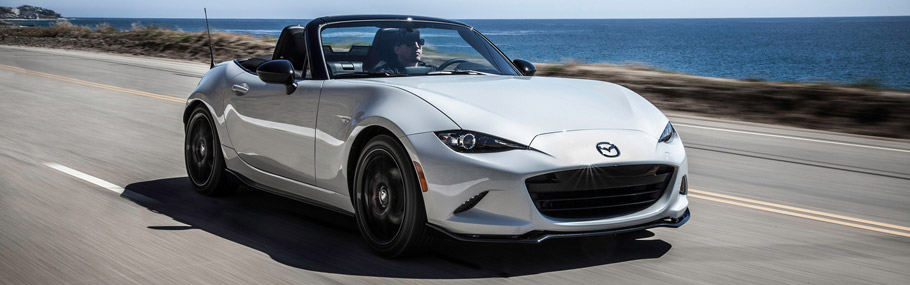
    Aston Martin is proud to introduce the new V12 Vantage Roadster – a uniquely exciting and ultra-exclusive limited production model which combines the thrilling performance of the most powerful Aston Martin Vantage ever made with the freedom and sensory stimulation of roof-down driving.

    With production strictly limited to just 249 customer examples globally, with all examples sold ahead of release, the V12 Vantage Roadster boasts a compelling combination of dramatic widebody design, ground-hugging wide-track suspension and – for the first time in a Vantage Roadster – the mighty 5.2-litre Twin-Turbo V12 engine. With searing straight-line speed and the unfiltered howl of Aston Martin’s sonorous 700PS 12-cylinder engine, the V12 Vantage Roadster elevates the open-top driving experience to a scintillating new level.

    Roberto Fedeli, Aston Martin Chief Technical Officer, said: “We have worked extremely hard to ensure the V12 Vantage Roadster possesses the same potency and dynamism that characterises the V12 Vantage, while surpassing it in terms of raw sensory excitement that you only achieve with roof down driving. With more power and torque than any Vantage Roadster before it, a wide-track chassis with precisely tuned suspension calibration, and up to ten times the downforce of the series production Vantage Roadster, this is a breathtaking machine created for our most enthusiastic customers”.

    Key to this exhilarating driving experience is the powerhouse of the engine. Developing 700PS at 6500 rpm and 753Nm of torque at 5,500 rpm, the quad-cam 60-deg 5.2-litre V12 is a true force of nature. With a power-to-weight ratio of 372PS-per-ton and an endlessly impressive delivery which combines effortless in-gear response with epic acceleration, every squeeze of the V12 Vantage Roadster’s throttle leads to an unforgettable adrenaline rush.

    Accelerating from rest to 60mph in just 3.5sec and with a top speed of 200mph the V12 Vantage Roadster occupies the very highest echelon of open-top sportscar performance. With a ZF 8-speed automatic transmission and mechanical Limited-Slip Differential (LSD) mounted at the rear, the car possesses the purity and balance of a front-mid-engined rear-wheel drive layout. An optimised transmission calibration minimises shift speeds and maximises driver interaction, while adaptive software in the transmission’s control system monitors operating conditions and driver demands to enhance the driver’s feeling of response and control.

    Sharing the same suspension hardware as the V12 Vantage, but featuring a bespoke tune for its adaptive dampers, the V12 Vantage Roadster’s dynamics have been honed to the keenest possible edge. The steering calibration mirrors that found in the V12 Vantage, to offer maximum steering feel and quick response, improvements which bring the car alive through corners and can be felt with every steering input.

    Like the V12 Vantage, the V12 Vantage Roadster features powerful Carbon Ceramic Brakes (CCB) as standard. Measuring 410mm x 38mm the front discs are gripped by 6-piston calipers, while the 360mm x 32mm rear discs are paired with 4-piston calipers. With much increased stopping power and tremendous resistance to brake fade at high temperatures, the CCB technology also makes a considerable 23kg of unsprung weight saving compared to steel brakes, benefitting steering response and ride quality.

    In order to further reduce overall mass the V12 Vantage Roadster’s front bumper, clamshell bonnet, front fenders and side sills are made from carbon fibre, with the rear bumper and deck lid made from weight-saving composite material. Additional savings have been made with the adoption of a lightweight battery and a special centre-mounted twin-exit exhaust system fabricated from lightweight 1mm stainless steel. Tuned to ensure the V12 Vantage Roadster has a rousing voice to match its looks, this new system weighs 7.2kg less than the Vantage Roadster’s exhaust.

    It’s an indication of the V12 Vantage Roadster’s monstrous performance that its dramatic form is driven by function. For example, the formidable physique of the widebody design is necessary to accommodate the widetrack suspension, which is 40mm wider than Vantage. The new front bumper design, complete with full width front splitter generates additional downforce and aerodynamic balance, while increased cooling is achieved by the reshaped front grille, which is 25% larger, and the ‘horse shoe’ engine vent in the bonnet.

    Aerodynamic performance also informs the new sculpted single-piece sills and rear bumper, which comes complete with integrated diffuser – the effectiveness of which has been improved by the routing of the centre mounted, twin tailpipe, exhaust system. In contrast to the V12 Vantage, the V12 Vantage Roadster comes without the dramatic rear wing as standard, though it can be specified as an option. Those who choose the more understated look can do so in the knowledge that aerodynamic balance is maintained thanks to detailed management of underbody airflow.

    Final visual touches come in the form of impressive 21in alloy wheels, which are offered in two finishes, satin black or satin black diamond turned. An optional lightweight forged wheel option is also available in both satin black and satin black diamond turned, which saves a further 8kg of unsprung mass. Michelin Pilot 4S high performance tyres – 275/35 R21 front and 315/30 R21 at the rear – are standard fitment on all rims.

    As flagship of the Vantage range, the V12 Roadster is fitted with Sports Plus Seats trimmed in full semi-aniline leather and featuring ‘Wings’ quilt and perforation pattern as standard. A carbon fibre performance seat with exposed twill carbon fibre shell and manual 6-way adjustment can be had as an option for those looking for the ultimate in dynamic design and maximum support for high performance driving, also saving 7.3kg without skimping on occupant comfort.

    V12 Vantage Roadster customers can further boost the exclusivity of their car by engaging the services of the marque’s bespoke personalisation service, Q by Aston Martin, for everything from striking exterior graphics and liveries to woven leather. With extensive use of exposed carbon fibre in its design, the V12 Vantage Roadster also lends itself perfectly to Q by Aston Martin: Commission’s range of tinted lacquers, which change appearance under different lighting conditions to make a spectacular feature of the hand-laid carbon fibre panels.

    Marek Reichman, Aston Martin Chief Creative Officer, adds: “From a design perspective, V12 Vantage Roadster is a combination of living sculpture and physiology, such as the functions of an elite runner or thoroughbred racehorse. On one hand, much like the way their systems are developed to handle the stresses of peak performance and trained to work together to increase efficiency and power using oxygen, V12 Vantage Roadster was designed to maximize the benefits of airflow into, throughout and around the car. And on the other, for our Drivers, we created this explicit open-top sports car for those craving excitement and drama. The platform presented us with a design opportunity to make a contemporary visual statement of intent. The result is a living, breathing, driving sculpture with a level of control that sits at the fingertips”.

    Production of the V12 Vantage Roadster is due to commence in Q3 of 2022, with first deliveries scheduled to begin during Q4 2022.

  • Hennessey Venom F5 Roadster

    Hennessey Special Vehicles, the Texas-based hypercar manufacturer, has released details of its Venom F5 Roadster ahead of the new car’s global debut at The Quail, A Motorsports Gathering in Monterey, California.

    The Venom F5 Roadster is based on the Hennessey Venom F5 Coupe – the two are nearly identical mechanically – yet distinguishing the Venom F5 Roadster from its fixed-roof sibling are several attributes that set the open-air model apart – physically, cosmetically, and emotionally.

    Mid-mounted in the carbon-fiber monocoque chassis is Hennessey’s celebrated twin-turbocharged, 6.6-liter, ‘Fury’ V8 engine rated at an astonishing 1,817 bhp. Power is sent to the rear wheels through a robust automated single-clutch gearbox. With a dry weight of under 3,100 pounds, the Venom F5 Roadster promises phenomenal performance… and an engineered top speed exceeding 300 mph.

    Hennessey expects the Venom F5 Roadster to surpass the company’s own ‘world’s fastest convertible’ record – 265.6 mph – currently held by the Hennessey Venom GT Spyder.

    John Hennessey, company founder, and CEO: “We created the Venom F5 to be the ultimate expression of a hypercar. The Roadster version takes the Coupe’s speed, exhilaration, and awe, plus a sprinkling of respect-inducing fear, to a new, truly visceral level that brings owners closer to the Venom F5’s extreme performance. Our 1,817 bhp ‘Fury’ engine screams behind the exposed cockpit, with its roar unobstructed by a roof – it is an unmatched automotive experience.”

    Most conspicuous is the hypercar’s new roofline. In contrast to the F5 Coupe, the F5 Roadster’s roof has been re-engineered with a removable panel crafted from rigid carbon fiber composites. The single-piece roof is fully insulated against the elements and lined with soft Alcantara upholstery. The weatherproof panel is secured with four quick-release bolts and a pair of high-strength latches to withstand the hypercar’s staggering acceleration capabilities and aerodynamic forces at extreme speed. The lightweight roof panel weighs a mere 18 lbs (8 kg), making removal and installation easy for one person.

    Owners may choose to store the panel in a bespoke Merino wool travel bag or as a standalone work-of-art on a custom-made, sculptural pedestal – devised by Hennessey’s in-house design team to enhance the ownership experience. The roof pedestal, crafted in carbon fiber like the roof panel, mirrors design themes from the Venom F5 Roadster. Viewed from above, its ‘blade legs’ trace the shape of the car’s rear decklid, while the side profile uses the hypercar’s bodyside air intake form for inspiration. In addition, the sharply angled, streamlined stand displays the ‘Venom F5 Roadster’ script on the front face of the base in the same eight-microns thin aluminum as the car’s ‘H’ nose badge.

    The Venom F5 Roadster features a new tempered glass engine viewing window. This panel, in the middle of the rear engine cover, spotlights the massive ‘Fury’ V8 engine in all its glory. Its engineering was no simple task – developed and certified for use in jet aircraft. The sizeable glass panel can withstand aerodynamic forces exceeding 300 mph and temperatures beyond 1,000 degrees Fahrenheit (540 degrees Celsius). The detail is extraordinary – the engine viewing window is encapsulated within a removable carbon fiber engine cover that features intricately-milled heat extraction holes that match those in the rear bumper. Additional heat extraction is achieved by dual aluminum air vents, four on each side of the glass panel, which match the vents behind each front wheel.

    The Roadster is further distinguished from its coupe sibling by its unique wheels. Forged from aluminum alloy and then milled to perfection, the lightweight wheels feature seven pairs of spokes, each resembling an elongated Hennessey ‘H’. Milled into the outer face of each wheel rim is the ‘Hennessey’ script, mirrored by the ‘Roadster’ script on the opposite side. Owners may opt to upgrade the Hyper Silver wheels to highly polished aluminum – this exclusive finish requires a painstaking process of hand polishing that takes weeks to complete. The wheels are secured with five titanium nuts, an alloy revered for its strength, heat tolerance, corrosion resistance, and extremely low mass.

    Hennessey’s Venom F5 Coupe was engineered from the outset with an open-top version in mind, so only minor adjustments were required to deliver coupe-rivaling chassis rigidity, strength, and stiffness – this ensures that drivers may access the same crisp handling characteristics as the Venom F5 Coupe with or without the roof in place.

    As with the Venom F5 Coupe, discerning Roadster buyers may specify any exterior and interior color combination or leave areas of the Venom F5’s carbon fiber chassis and body panels exposed. Opting for either a gloss or satin finish allows the stunning woven composite to be appreciated fully (pre-exposed areas of carbon fiber on the Venom F5 Roadster are standard, as they were on the Coupe). The same minimalist yet high specification of the coupe model is retained within the passenger cabin.

    “It’s exciting to see the continued innovation from Hennessey from the test track to the road,” said Steve Reindl, President of Shell Lubricants Americas. “We share a passion for performance, and our co-engineering alliance provides us with an extreme testbed for Pennzoil in some of the fastest road cars.”

    The Venom F5 Roadster will be manufactured in Texas in an exclusively low volume of just 30 units (this approach of guaranteeing a unique ownership experience saw the 24-unit Venom F5 Coupe production run sell out shortly after its appearance at Monterey Car Week in 2021). Roadster production begins in late 2022, with validation of the model’s high-speed capabilities set to occur as the production rate levels out.

    Hennessey Special Vehicles has priced the new Venom F5 Roadster at $3 million, with each of the 30 personalized examples individually commissioned to its owner.

    Hennessey Venom F5 Roadster – Technical Specifications

    Name Hennessey Venom F5 Roadster
    Construction Bespoke carbon-fiber monocoque
    Carbon-fiber body panels
    Suspension Double-wishbone independent
    Fully adjustable coilover dampers
    Engine Hennessey ‘Fury’ 6.6L twin-turbo V8
    Transmission 7-speed single-clutch automated gearbox
    Rear-wheel drive
    Power 1,817 bhp @ 8,000 rpm
    1,193 lb-ft @ 5,000 rpm
    Top Speed 300+ mph*
    Power-to-Weight Ratio 0.59 hp/lb
    Weight 1.29 hp/kg3,098 lbs
    1,405 kg
    Dimensions 183.7 in / 77.6 in / 44.5 in
    4,666 mm / 1,971 mm / 1,131 mm
    Production RunWarranty 30 units4 Years
    (* Top speed limited with roof panel removed)
  • Bugatti Type 57 Roadster Grand Raid

    Exquisite design and superlative engineering underpin everything Bugatti has created in its long, illustrious history. But even among enduring greatness there are some models that stand out as extra special; the Bugatti Type 57 Roadster Grand Raid Usine is one such car. As rare and mysterious as it is beautiful, this is the only example in existence.

    In front of an audience of the global automotive press and car enthusiasts, the Bugatti Type 57 Roadster Grand Raid was unveiled at the Salon de l’Automobile in Paris in October 1934. One of a number of body types used for the legendary Bugatti Type 57, the ‘Grand Raid’ was specifically designed for competition – the world ‘raid’ being used to describe a long and arduous rally in French.

    There were only ten ‘Grand Raid’ chassis ever built, but perhaps the most intriguing of them all is the Type 57 Roadster Grand Raid Usine and its iconic coachbuilt body, which was unveiled at the Salon de l’Automobile in Paris. This one-of-a-kind example featured an aluminum body. The only model known to have been built is chassis number 57222 which is finished in black and yellow – the favorite colors of Bugatti’s founder, Ettore Bugatti.


  • Mercedes AMG GTR Roadster „Hypaero“

    2020 Wheelsandmore Mercedes AMG GTR Roadster Hypaero - Side

    The Mercedes tuner also installs the tried and tested M178 DE40 AL bi-turbo engine in the AMG GTR Roadster, which provides turbocharged 585 hp from a displacement of 4 liters and speeds up to 317 kmh. With these performance data, certainly only a few people will think about a necessary trip to the tuner. For those who can´t get enough of emotional driving pleasure Wheelsandmore has several performance enhancements in the program joining the speed and power up to 335 kmh. Level 1: A classic optimization of the maps combined with a F1 air filter kit gains an increase in performance up to approx. 650hp and 780nm torque at a price of 2,521 euros Stage 2: The corresponding maps are adapted to the new sports catalytic converters, which leads to an engine output of approx. 670hp and 830nm, price with assembly is 7,479 EURO Stage 3: The components from stage 2 are joined by finely balanced turbochargers with a larger compressor unit – the result is 750hp and 860nm of torque at a total price of 16,723 EURO The focus of all increases in performance is on drive-ability and not the maximum possible increase in performance. Of course, well over 800hp are possible in the AMG GTR, but effort, benefits and suitability for everyday use are then out of proportion, says head of technology at Wheelsandmore Mr. Torsten Pick. Anyone who has ever heard an AMG GTR live also knows why there is no valve exhaust system from Wheelsandmore for the supercar this time…

    The optical recognition feature of the “Hypaero” are the matte black F.I.W.E. forged wheels, which Wheelsandmore is still building from 3 individual parts by hand and taylors according to customer requirements in the appropriate color or combination. For the AMG GTR the tuner builds the concave special wheel with TUV approval in the maximum possible dimensions 10.5×20 at the front and 12.5×21 inches at the rear. Light tires from Michelin span in sizes 275/30/20 and 325/25/21 on the exclusive rims. The prices for a complete wheel set starts with original TPMS sensors at 11,513 EURO.

    If a manufacturer is able to develop a better chassis than the manufacturer did, then it is chassis leader KW. Together with the engineers from Fichtenberg, a Variant 4 coilover kit with hydraulic lift-up function was developed, which improves the suitability for the racetrack on the one hand through extensive adjustment options and on the other hand offers full suitability for everyday use thanks to the lifting option on the front axle. So much technology and innovation unfortunately has its proud price, to be had from 7,789 EURO without assembly. Installation with the Roadster takes not less than 3 whole working days and costs additionally 1,672 EURO with wheel alignment.

  • Mazda MX-5 With One More Prestigious Award

    2016 Mazda MX-5Mazda Motor Corporation’s latest Mazda Roadster, better known as MX-5 outside Japan has been rated the 2015-2016 Car of the Year Japan. Also one of our favorite vehicles, the all-new Roadster is the 6th model in Mazda’s latest generation of sporty cars that incorporate the SKYACTIV TECHNOLOGY and KODO – Soul of Motion design. As you might know, SKYACTIV is the next-gen technology and includes gasoline and diesel engines, transmissions, body and chassis components. All of them are developed under Mazda’s Sustainable Zoom-Zoom vision. Apparently, this lightweight and flexible two-seater offers front engine rear-wheel drive bad boy is especially created to deliver tons of adrenaline and positive emotions.

    With the latest model, Mazda aimed for even more refined and more pleasurable drive and in its ever-burning ambition to deliver better and better vehicles managed to lower the overall weight with 100 kilograms, made it with a bit wider interior, and easy to open and close and also expanded the luggage space a bit. And all this with the exceptional Mazda quality.

    SEE ALSO: BBR Releases Tuning Program for the Latest Mazda MX-5

    In terms of participating in the Car of the Year Japan event, only passenger vehicles with expected annual sales of over 500 units are eligible for this year’s edition.

    We have told you a lot about the latest Roadster made by Mazda. What do you think about this beauty?

    Source: Mazda

  • Mitsuoka Motor Company is Ready to Launch its Roadster Model in UK

    In June 2015 Mitsuoka Motor’s Roadster will make its European debut under the distribution of T W White & Sons and will be displayed on many of their showrooms across Surrey, South London and Kent.
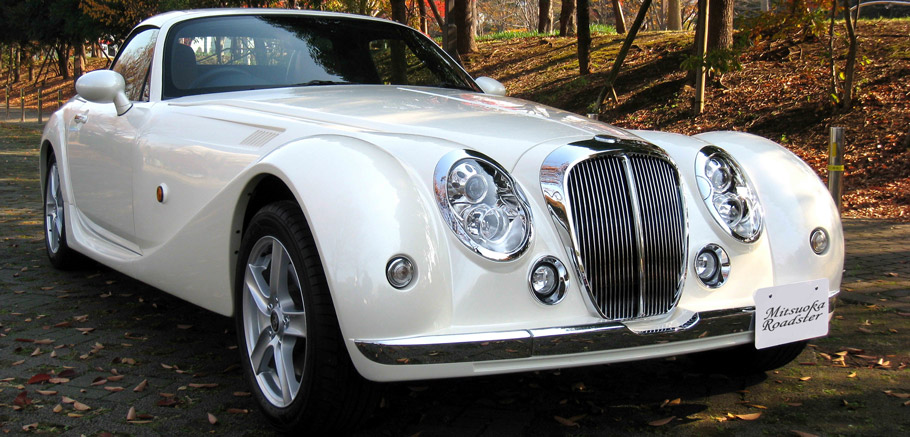
    Created to challenge the science of engineering and style, the Mitsuoka Roadster makes a revolution with its “modern classic”  sport vehicle concept. it comes with a complicated sporty design  and elegant lines, that combine the well-known vintage design with advanced levels of modern technology and comfort.

    The special 2.0-Liter Coupe comes with two options of transmission: 6-speed manual or a six speed automatic Powershift transmission. In fact, the automatic system can be used with a special auto mode or with only using the paddle shift controls.

    The Roadster comes with rear wheel drive system and incredible power to weight ratio,  that further combines the latest technology trends and safety features to demonstrate elegance and performance. In addition, the vehicle comes and with the fastest power-retractable hard top. It takes only 12 seconds to open it up.

    And as a brand with self-respect, Mitsuoka brings and incredible interior features: heated leather seats, climate control, safety and security features and anti-lock braking system. Additional technology gadgets are the Dynamic Stability Control, Traction Control System and Supplementary Resistant System.

    The roadster comes with two exterior color options: Metallic or Pearlescent.

    Source: Mitsuoka 

  • Sporty Audi TT Roadster and Audi TTS Roadster

    2014-Audi-TT-and-TTS-Roadster-t2014-Audi-TT-and-TTS-Roadster-651

    Right on schedule for the Paris Motor Show, Audi has finished its work on the all new TT and TDS models. Both variants look very sporty and compact, though the changes to the power train options and design are almost non-existent, their design is noticeable sportier than the outgoing model, especially on S line models. All TT Roadsters now get new standard symmetrical dual-exhaust tips that differentiate them from the less sporty models.

    The front end looks more aggressive, thanks to an enlarged grille, sharp headlights and unique design. Of course, all of these features are identical to the TT Coupe. The obvious change between the MK3 Coupe, which has just started being assembled a month ago, and its new rack top brother, they lack only roof. Audi has engineered a new convertible top that weighs three kilograms (8.6 lbs) lighter than before, using more magnesium, aluminum and plastic.Unlike many modern convertibles that require you to be stationary, the TT Roadster can open and close the top as little as 10 seconds at speeds about 50 km/h (31 mph).

    Just like on older models, the passenger compartment has lost its relatively pointless rear seats. The upside is like that, because the top folds over the space they would normally take up. Cargo space is 250 liters.  However, Audi has recently introduced A3 Cabriolet mode, based on the same platform as the TT and offering full seating for four people.

    The benefits of using MQB architecture are immediately obvious when you look at the weight. The TT 2.0 TFSI roadster now tips the scales at 1320 kg (2910 lbs), compared to the 1358 kg (2993 lbs)  of the older model.

    2014-Audi-TT-and-TTS-Roadster-651-(2)

    With outstanding, Impressive performance and efficiency, the new TT Roadster is the smallest, lightest convertible Audi makes. With no surpise, this has a huge impact on both performance and fuel consumption. Engine choices have remained identical to the TT Coupe. Regular TT Roadsters are offered with either a 2 liter TDI delivering 184 PS, 280.3 lb-ft (379 Nm) or 2.0 TFSI rated at 230 PS. The new diesel option belongs to the new ultra family of low fuel consumption of just 4.3 liters/100 km  (54.7 US mpg) which reaches CO2 emissions of 114 gr per km.

    The downside is that you can get it with a manual and front-wheel drive right now. The TFSI is basically the same engine you get on the Gulf “GB I”, but with the difference, Audi allows you to have it with optional Quattro all-wheel drive. There are no performance numbers for those engines yet, but the flagship TDS Roadster packing 310 PS need only 4.9 second to reach from 0 to 100 km/h (0 – 62 mph).

    Prices for the TT Roadster will start at 37,900 euros for a 2.0 TSI with forward and manual, only a few hundred euros more if you want a diesel model. However full details wont be available until the start of 2015.

    Source: Audi

  • Dubai Roadster Is The First Emirati-Built Supercar

    dubairoadster1-THUMBDubai Roadster is the first first Emirati-built supercar and in fact it is in its early stages of production. However, this fact does not stop the potential buyers that are already making orders. The majority of the future buyers come from Emirati. The vehicle will be available for sale in the beginning of next year at the Dubai Motor Show. The production plan so far is twenty-five examples and it literally begins from scratch.Some of the characteristics revealed so far about the Dubai Roadster are that it will have a tubular chassis, which will be combined with fibreglass and carbon-fibre panels. In addition, it will be driven by a 400 horsepower (294 kW) engine, and will effortlessly sprint from 0 to 100 kmh in 3.5 seconds.Furthermore, the supercar will undergo full crash testing. The team behind the creation of this car hopes that it will qualify for Euro 5 certification. This means that it will be legal to drive in the Emirates, or in other words – it will be a road car too.In the process of creating the car, the team decided to change the planned material for the chassis from aluminium to titanium. The latter is more expensive material but definitely stronger and in addition – lighter and more durable.By far, the engineers have completed initial welds on the vehicle, and have already sent them for testing in the US. These tests will guarantee that the welds will hold up under high speeds and pressures. After the tests are complete, they will ensure that the Roadster have a safety certification. The plan for the next two months is to make a fully welded chassis in Dubai.

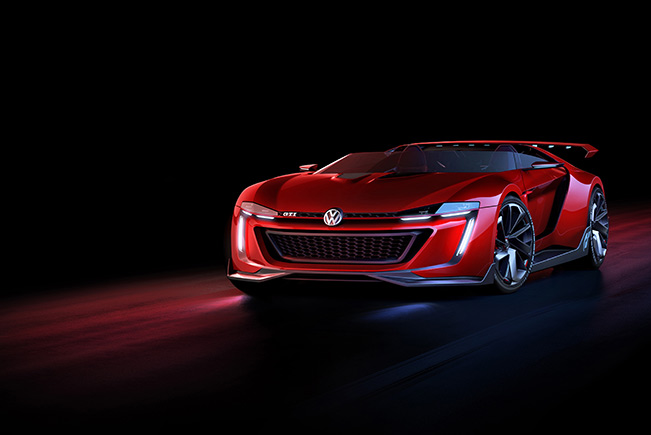
  • Volkswagen GTI Roadster Concept at 2014 Worthersee

    Worthersee GTI meeting in Austria will be the place where VW reveals the GTI Roadster concept.

    The concept was first presented virtually in the Sony PlayStation 3 game Gran Tourismo 6. It is a product of the cooperation of three VW designers who won the in-house competition designing a vehicle to celebrate the fifteenth anniversary of the GT-game.

    The virtual car was first shown on 26 May and a few days later VW decided to present it at the annual GTI-fans gathering (18-31 May).

    The design is more extreme than the normal GTI’s. The Roadster version has 2494 mm wheelbase (137 mm shorter than the regular GTI), 1090 mm height and 1894 mm width. The overall length is 4158 mm. What a jaw-dropping proportions

    GTI Roadster is powered by 3.0-litre V6 bi-turbo engine which produces more than 500 h.p. and 560 Nm of torque @ 4000-6000 rpm. Thank to the twin-turbo technology some 500 Nm are available at just 2000 rpm. This engine power is transferred to the wheels via 7-speed DSG gearbox and 4MOTION all-wheel drive system. This 1420 kilos of car runs from zero to a hundred km/h for just 3.6 seconds and on full throttle it can do more than 300 km/h.

    For a better handling, more stability and good vision it has 20×8,5j wheels with 235/34 tyres at the front and 20×9,5J with 275/30 at the back. Behind these rims are hidden ceramic brakes for proper decelerating force.

    For all the Gran Tourismo fans the concept is colored in Gran Tourismo Red. The interior includes black and anthracite sections with the contrasted GTI red stitching.

    We hope that VW’s plans will let us see the production version on the streets, not only in the virtual world of GT6.

    Source: Volkswagen