Tag: Prototype

  • Lamborghini LMDh prototype car will fit a V8 twin-turbo hybrid engine

    Lamborghini-LMDh-prototype-car

    Lamborghini Squadra Corse has unveiled the first technical specifications of its LMDh project for its upcoming venture into the Hypercar class of the FIA World Endurance Championship and the GTP class of the IMSA WeatherTech SportsCar Championship.

    In accordance with the LMDh regulations as issued by the Automobile Club de l’Ouest (ACO), the International Motor Sports Association (IMSA) and the Fédération Internationale de l’Automobile (FIA), the car will feature a hybrid power unit consisting of an internal combustion engine and an Energy Recovery System with a combined output of max 500 kw (681 hp). Alongside the single source ERS kit, Lamborghini has elected to use an 8-cylinder, 90-degree V-angle twin-turbo internal combustion engine developed by company’s motorsport department, Squadra Corse.

    With Automobili Lamborghini embarking on a future of hybridisation in its road car production, the LMDh represents a specific energy/performance project based on the experiences of the upcoming generations of its sports cars, fully aligning with the Cor Tauri company strategy. Squadra Corse, therefore, by making the step into a motorsport landscape driven by hybrid propulsion and is the perfect fit with Lamborghini’s transition to hybrid technologies.

    Major ERS components included in the LMDh homologated standard Kit cover several areas, with the electric motor (MGU) developed by Bosch Motorsport. Power Management and energy storage is supplied by Williams Advanced Engineering while the seven-speed P1359 hybrid gearbox is developed by Xtrac.

    The car, which will make its competitive debut in 2024 in both the IMSA Endurance Cup and the FIA World Endurance Championship, can produce a top speed of 340 km/h and weighs 1030kg without fuel and driver as per the regulations. As for the car’s dimensions, it will have a maximum width of 2,000mm, and a length of 5,100mm. The wheelbase will be 3,148mm with an engine weight of 180kg minimum.

    The base car (spine) is engineered together with Ligier Automotive and carbon fiber elements are produced in Italy by HP Composites, Squadra Corse long-term partner in GT3 and Super Trofeo platforms. The decision to team up with Ligier Automotive enables Lamborghini Squadra Corse to enter the top class of endurance racing with an established chassis provider. Additionally, the competent and flexible structure of Ligier Automotive (with specific touch points between Squadra Corse) made the partnership a logical choice for the LMDh project.

  • Acura ARX-06 Racecar

    Acura Motorsports today released the first official images and details for the all-new, electrified Acura ARX-06 prototype sports car, which will make its competition debut next January at the Rolex 24 at Daytona.

    The latest in a line of successful Acura endurance racing prototypes, the ARX-06 features Acura-specific bodywork and aerodynamics based around an all-new ORECA LMDh chassis which utilizes an electrified hybrid power unit featuring an equally new, bespoke twin-turbocharged 2.4 liter V6 internal combustion engine designed, developed and manufactured by Honda Performance Development [HPD] the racing arm for Acura Motorsports in North America.

    The public unveiling will take place Friday, August 19, at The Quail, a Motorsports Gathering, in Carmel, California.

    “Precision Crafted Performance is at the heart of everything Acura does,” said Jon Ikeda, vice president and Acura brand officer.  “If you’re a performance brand, you have to go racing. It’s that simple.  Both the existing ARX-05 prototype and our production-based NSX GT3 have proven to be race- and championship-winning designs on tracks all across North America.  Now, with the introduction of the new, electrified Acura ARX-06, we look forward to facing off against other premium automotive brands from around the world – and continuing our winning ways.”

    “HPD has 30 years of race-winning and championship-winning history,” said David Salters, HPD President and Technical Director.  “Not only in endurance sports car racing, but in developing championship-winning Honda Civic-based racing cars, the powertrain for the Baja Ridgeline race truck, Formula Regional Americas and Formula 4 powertrains with the Type R engine, and of course the Indy 500 and the IndyCar Series.

    “We are HPD.  We race, we develop our engineers and technology through racing.  We have an amazing and unique racing legacy, both past and present. It’s what we do as Acura’s – and Honda’s – North American racing organization. We are looking forward to the challenge of racing Porsche, BMW and GM in IMSA’s pinnacle GTP championship.  We are very cognizant this is a big step for us.  We have a lot to learn, but that is why race.”

    “The new Acura ARX-06 has elements of our Indy-winning technology, Honda Formula One technology and Rolex 24-winning technology in it.  This was achieved using HPD’s world-class simulation, design, development and manufacturing technologies; that our own engineers have developed, tested and validated.  We are very proud of that.  Now the challenge and hard work really starts, including grueling 24 hour simulations, and learning how to maximize all aspects of performance.”

    Powertrain

    The Acura AR24e power unit was developed by Honda Performance Development to bring electrification to the Precision Crafted Performance of Acura’s endurance sports car racing program.  The complete hybrid power unit is based around the Acura AR24e internal combustion engine (ICE), an all-new bespoke 2.4-lliter, twin-turbocharged direct injection racing V6 that was designed, developed and manufactured by HPD.

    At 2.4 liters, this is the smallest displacement ICE conceived by HPD for endurance racing, yet still meets the performance target of 500 kW as measured at the rear axle by torque meters.  It features a 90-degree V-angle to reduce its center of gravity and polar moment of inertia. In addition, the combustion chamber has been designed to run on sustainable low-carbon fuel.

    The hybrid power plant includes an IMSA-specified electric Bosch Motor Generator Unit (MGU) and Williams Advanced Engineering battery pack.  The MGU is contained in a common transmission casing and gearbox internals provided by Xtrac.  The battery, within the chassis survival cell, is built by Williams Advanced Engineering. The HPD Electrical Group completed both hardware and software development to best match the spec MGU and battery pack to the Acura ICE.

    “We’ve taken the challenge presented by this new rule package from IMSA, and developed what we believe is a very competitive solution,” said Pierre Descamps, who led HPD’s powertrain design team for the ARX-06.  “We’ve gone in a new direction for HPD in the design of the ICE.  It is still a V6, which of course for Honda is well-known, but we have incorporated several new elements which we believe will make best use of the electric MGU and battery pack. Our new engine will rev to the maximum 10,000 rpm set by the rules, so it also makes a wonderful sound!”

    Chassis

    Both IMSA in North America and FIA World Endurance Championship rules require manufacturers to use one of four approved prototype chassis, fitted with IMSA-homologated, manufacturer-designed and branded bodywork and engines.

    In the case of the ARX-06, HPD and Acura have elected to continue their successful relationship with ORECA [ORganisation Exploitation Compétition Automobiles].  Since moving into chassis design and construction in 2007, ORECA has produced a series of winning sports prototypes, including the Acura ARX-05.

    “We’re extremely pleased with our relationship with ORECA,” said Mark Crawford, HPD Large Project Leader for the ARX-06.  They’ve been great partners throughout both our ARX-05 DPi program and now with the ARX-06.  The GTP [Grand Touring Prototype] project has brought with it a new set of challenges and, while you certainly can see the Acura ‘family resemblance’ to our previous collaboration, the ARX-06 is an entirely new design.”

    HPD’s Vehicle Performance Group worked closely with the ORECA design team and engineers to simulate chassis layout geometries and lap time optimization studies.  They also “coded” the new car into HPD’s static and dynamic Driver in the Loop simulators to begin development of the car’s vehicle dynamics and vehicle dynamic control systems.

    Critical to the projects was a clean sheet hybrid powertrain control system, brake-by-wire and vehicle dynamics control system – all written in-house at HPD.  This control system architecture was implemented on a Formula 1-spec ECU hardware platform.  HPD also utilizes its custom, in-house developed ultra-high speed data logging system.

    Salters praised the ORECA-HPD relationship during the development process.  “I would like to note the stand-out collaboration between the ORECA and HPD engineering groups. Working with the extremely talented ORECA engineers on chassis and aero design and powertrain installation has been a real pleasure. Both groups have put their heart and soul into this intense project and sophisticated race car,” he said.

    Bodywork and Aerodynamics

    Exterior styling of the Acura ARX-06 was led by the Acura Design Studio in Los Angeles, California, in conjunction with HPD and chassis-supplier ORECA, one of the chassis suppliers approved for prototype competition in both the IMSA WeatherTech SportsCar Championship and the World Endurance Championship.

    HPD’s aerodynamics engineers and in-house CFD aero engineers worked with the Acura styling studio and chassis builder ORECA to help develop the styling and maximize the aerodynamic performance envelope of the ARX-06, while keeping it within the homologation boxes as specified by IMSA and the FIA.

    “The process we used in creating the exterior design for the Acura ARX-06 is exactly the same as how we create a new Acura passenger vehicle,” said Dave Marek, Acura Executive Creative Director.

    “As part of our Precision Crafted Performance Brand Promise, we treated it as an integral part of our lineup.  The same world-class stylists that lead Acura production car design created initial sketches, then pared those down to several potential designs. Next, we created a scale model, did aero and wind tunnel model testing, and brought HPD and our partner teams in for their feedback,” Marek recounted. “The design continued to be refined throughout the testing and evaluation process, until we came up with a final treatment that met our performance goals while maintaining all-important Acura styling cues. It’s been an exciting process.”

    Driver and team input was also sought throughout the design process. One effective change was a revision to the placement of the rearview mirrors – a seemingly minor adjustment that in fact has a large effect on vehicle aerodynamics. Using VR headsets, the drivers were able to sit in the car virtually and recommend a much lower placement for the side mirrors, improving both the aero efficiency of the ARX-06 and visibility for the drivers.

    Partner Teams

    Acura will continue its partnerships with the proven, race- and championship-winning Wayne Taylor Racing and Meyer Shank Racing organizations to campaign a pair of hybrid-powered Acura ARX-06 entries in the featured GTP category of the 2023 IMSA WeatherTech SportsCar Championship, North America’s premier endurance sports car racing championship.

    In addition to sweeping all three major IMSA prototype titles in both 2019 and 2020 – for Manufacturers’, Drivers’ and Teams – Acura has won the Rolex 24 at Daytona in both 2021 and ’22, including a 1-2 finish for the manufacturer at this year’s twice-around-the-clock endurance classic.  Additional podiums at Sebring, Watkins Glen and the Petit Le Mans in 2021 resulted in a sweep of IMSA Michelin Endurance Cup titles for Acura and partner Wayne Taylor Racing.

    This season, Wayne Taylor Racing has recorded four wins and a second to rank lead the IMSA Drivers’ and Teams’ championships heading into the final race of the season at Road Atlanta in October.  Meanwhile, Meyer Shank Racing started off 2022 with a second consecutive Acura victory in the Rolex 24 at Daytona and five second-place finishes in eight races to rank second in both the drivers’ and teams’ standings.

    These results have unofficially clinched the 2022 IMSA Manufacturers’ Championship for Acura; while the Drivers’ and Teams’ titles will go to either Meyer Shank Racing or Wayne Taylor Racing.

    Acura ARX-06 Development Timeline 

    “We started with the rule book, a challenging spirit and an open mind,” said Salters. “Then our engineers got to work, utilizing all of the vehicle performance, powertrain simulation and development tools we have at HPD to address the critical areas for performance, including weight, power, packaging, center of gravity, etc.”  Here is a timeline of the development process for the Acura ARX-06:

    • The HPD Vehicle Performance Group used simulation tools to determine the overall vehicle envelope and key requirements that would need to be met to maximize performance.  Efficiency, power, weight distribution, aero balance, center of gravity, tire energy, hybrid management and chassis stiffness were some of the parameters included in determining the core architecture guidelines.
    • This process determined the key architecture for the Internal Combustion Engine [ICE], displacement, fuel injection and turbocharging strategy, and the intercooler layout.
    • The Design Group then schemed different concepts and weight aspects over a three-week evaluation period.
    • The Acura ARX-06 concept was then finalized in a single meeting of HPD technical leaders, who then signed off on the project.
    • Prototype parts were designed and produced for testing in HPD’s in-house single cylinder research engine. These parts were manufactured within 4 weeks.
    • The HPD Development Group tested these concepts, analyzing performance, efficiency, combustion characteristics, heat rejection etc.  Results were analyzed and compared to the initial simulations – the simulation results were spot-on and validated.
    • Simulation work also was carried out for a novel intercooler packaging and anti-tune induction concept to reach the performance targets while allowing the downsized engine to meet the 500Kw rules target without damaging combustion “events”.
    • Next, parts were designed and built for the V6 internal combustion engine, including machined from billet sump, block, front cover and ancillary parts made using in-house agile manufacturing techniques.  Five months after the initial simulation and concept study, the Acura V6 ICE ran on the dyno and met all performance targets.
    • The complete control system – written jointly by HPD’s Electrical Control Systems group, Vehicle Performance and Performance Application groups – was prototyped in HPD’s Hardware-In-the-Loop and Driver-In-the-Loop simulator systems.
    • The control system was then taken to the state-of-the art transient dyno facility at HPD where engineers tested the complete hybrid powertrain – ICE-Hybrid MGU-Gearbox. This system simulates key aspects of the cars during track running and the durability cycle, including running complete “laps” of a circuit, including 12- and 24-hour endurance runs with shifting, acceleration and braking all reproduced on the dyno.
    • The Aerodynamic Group at HPD made use of its in-house CFD capability during the design phase to optimize aerodynamic and cooling performance.  The group worked closely with ORECA on the overall aerodynamic concept of the ARX-06.  This has been recently validated in a full-scale wind tunnel test.  HPD aerodynamists, using advanced simulation techniques, are working with IMSA to ensure the safety of the racing car, and that it satisfies stringent flip-over criteria for high speed prototype sportscars.

    Acura ARX-06 Details

    • Will compete in the 2023 IMSA WeatherTech SportsCar Championship
    • Carbon fiber monocoque chassis manufactured by ORECA
    • Acura-specific bodywork, aerodynamics and cooling systems
    • Double wishbone, pushrod suspension front and rear, Penske dampers
    • FIA-specified roll cage structure, carbon fiber driver’s seat shell, six-point safety harness, fresh air intake system, on-board fire suppression system
    • Bespoke Acura 2.4-liter, twin-turbocharged, direct injected V6 internal combustion engine designed, developed and manufactured by HPD, mated to IMSA-specified electric Bosch Motor Generator Unit (MGU) and Williams Advanced Engineering battery pack
    • IMSA-specified XTrac six-speed, sequential, paddle-operated transmission, rear-wheel drive
    • Chassis dimensions:  5100mm length x 2000mm width x 1060mm height (above reference plane); 3148mm wheelbase
  • 2023 Acura Integra Prototype

    2023 Acura Integra PrototypeAcura today gave the world its first look at the highly-anticipated new Integra, signaling the return of the celebrated nameplate to the Acura lineup. Finished in striking Indy Yellow Pearl paint borrowed from NSX, the Integra Prototype is a strong indication of the exterior design of the all-new 2023 Acura Integra, which will be priced around $30,000 when it arrives at Acura dealers next year.

    https://www.youtube.com/watch?v=IcoZuOl-9ng

    Inspired by past Integras, including the original that helped launch the Acura brand in 1986, the 2023 Integra will become the new gateway performance model in the Acura lineup, a premium sport compact with an evocative five-door design and fun-to-drive spirit. The first-ever factory-turbocharged Integra will excite a new generation of enthusiast drivers with an available six-speed manual transmission, limited slip differential and high-output 1.5-liter engine, with VTEC® of course.

    “The Integra is one of the most iconic models in Acura’s history,” said Jon Ikeda, Vice President and Acura Brand Officer. “This new Integra, will continue to deliver on the original’s unique aspirational yet attainable market position, with emotional performance and style, combined with the versatility and utility sought after by today’s buyers.”

    Designed in Japan, the new Integra’s bold exterior styling features a dramatically sloping roofline and liftback tailgate, giving it a distinct coupe-like road presence. A modern interpretation of the Integra line, the fifth-generation model displays trademark cues such as the embossed Integra name under the driver’s side headlight and passenger’s side taillight.

    First seen on the Type S Concept, Acura’s new frameless Diamond Pentagon grille gives the Integra front a purposeful and sporty character. Acura’s unique lighting signature is updated with the “Chicane” LED daytime running lights now positioned above the Integra’s JewelEye® LED headlights, yielding an even more dramatic appearance.

    Muscular rear wheel arches and aggressive rear fascia with dual-exhaust finishers emphasize Integra’s wide track. Inspired by previous Integra models, the distinctive rear styling features wide, single-piece taillights with matching “Chicane” light signature. Behind the Integra Prototype’s matte-finish 19-inch split-five spoke wheels are oversized Brembo™ high-performance brakes with color-keyed Indy Yellow calipers, providing incredible stopping power and an aggressive look.

    The Integra Prototype’s striking Indy Yellow Pearl paint pays homage to Phoenix Yellow, offered on the iconic 2000-2001 Integra Type R. High-gloss Berlina Black accents have been applied to the Integra’s roof, decklid spoiler, mirror caps, rear diffuser and front grille. A lower-sill graphic boldly displays the Integra name across the side of the vehicle.

    The launch of the 2023 Acura Integra will mark the first time for Integra to be built in America, when it begins mass production next year at the Marysville Auto Plant in Ohio.  Set to be built on the same production line with the Acura TLX, Integra will join all new Acura models sold in the U.S. in being built in Ohio.

    More details on the 2023 Acura Integra will be released closer to its market introduction in the first half of next year.

  • Renault 5 Prototype

    2021 Renault 5 Prototype1

    Renault will continue its leadership in the transition to cleaner and more sustainble energy through electrified and hydrogen solutions, offering the greenest mix of vehicles in Europe by 2025. As for technology, Renault will take advantage of the “Software République”, an open ecosystem dedicated to software, data, cybersecurity and microelectronics. This will fuel the Renault line-up with enhanced connected services. Value will come through a wider variety of vehicles in the C-segment, the development of cutting-edge technologies and new lifecycle business opportunities.

    Innovation has been at the heart of the Renault brand for 120 years and the brand has the assets to support its ambition to be the ‘Nouvelle Vague’. It is the leader in the European EV market with more than 10 years of in-depth experience in electric mobility, services and more than 300,000 vehicles sold.

    In this time, Renault also invented E-TECH, a hybrid technology including more than 150 patents and drawing on the brand’s electrical and F1 experience. Then there is  the Software Factory, which is home to more than 1,000 engineers specialising in software, data and cloud services, soon to be joined by many others. Meanwhile, the recently-repurposed Flins Re-Factory is Europe’s first
    mobility-specific circular economy plant which further embodies Renault’s modernity. But all this is just the beginning.

    “At Renault, we embrace the waves of disruption and create our own ‘Nouvelle Vague’. It’s about bringing modernity to the automotive industry. We’ll move to an energy brand, strengthening our EV leadership with the Electro Pole project and investing in Hydrogen, aiming at achieving the greenest mix in Europe by 2025. We’ll also be a tech brand, through in-house innovation and through the Software République, an open ecosystem dedicated to develop a European expertise in key fields such as data or cybersecurity. This will give us a competitive edge as a service brand, with high-tech connected services, onboard and offboard. And this vision of modernity, we anchor it in France. Because as a brand, we know our soul and our strength lie in our origins. The new R5 is the Nouvelle Vague: it’s strongly connected to its history, and yet it’s the future, making electric cars popular.”
    Luca de Meo, CEO Groupe Renault

    Three fields of competitiveness

    Renault will evolve into:

    – A Tech brand, with an ecosystem approach aimed at creating world-leading, next-generation mobility OEMs and suppliers. This ecosystem called “Software République” will allow Renault, other founding members and future partners to develop joint expertise, build European know-how and ensure control and protection in key technologies from big data to electronics. It will also allow Renault to equip its vehicles with leading artificial intelligence and cyber-security systems.

    – A Service brand, offering the best connectivity and high-tech services embedded natively in vehicles. In 2022, Renault will be introducing My Link, a new infotainment system with Google built-in. Renault will be the first carmaker to bring Google services to mass-market car.

    Becoming more intelligent everyday, Renault vehicles will gain value over time. Renault will try to break the consumerist cycle and generate value up until a vehicle’s end-of-life, all thanks to its Re-Factory in Flins (France). The plant will recondition more than a 100,000 used cars per year, repurpose Diesel LCV and convert them into biogas and pure EV. Renault also has a clear advantage within second life and end of life of batteries. The control of these parts of the value chain has the potential to generate new business cases and value.

    – A Clean Energy brand, becoming a leader of the energy transition. Challenging leaders in the hybrid market thanks to its revolutionary E-TECH technology, Renault will ensure its leadership on the electric market with new families of products based on our two dedicated electric platforms CMF-EV and CMF-B EV. The brand will also offer market-ready, end-to-end hydrogen solutions for LCVs. The target is to deliver the greenest mix in European market.

    A repositioned line-up will help the brand win back its place amongst C-segment leaders whilst maintaining its B-segment leadership. A total of 14 models will be launched by 2025 (seven electric and seven C and D segment vehicles) with the ambition to have upper segments accounting for 45 per cent of sales by the same year.

    Renault 5 Prototype: The rebirth of a cult car, more modern than ever
    The soul of the Renault brand is firmly in its roots, and Gilles Vidal’s design team were inspired by the iconic cult model from Renault’s past, the R5. The Renault 5 prototype looks to reconnect with this past and draw inspiration to find the spirit of those glorious times without merely replicating it. Instead, it demonstrates how Renault will democratise the electric car in Europe with a modern approach influenced by one of the most popular and essential cars of its era.

    The Renault 5 Prototype is a charming, compact, city car which takes one of Renault’s timeless successes and develops it to be fit for the future with a modern, 100 per cent electric twist. It has retained the fun and mischievous character, with the pop of yellow highlights. The Renault 5 prototype takes strong features from the original design. The modern approach is evident in the chosen finishes and materials, which are inspired by various electronics, furniture and sports.

     “The design of the Renault 5 Prototype is based on the R5, a cult model of our heritage. This prototype simply embodies modernity, a vehicle relevant to its time: urban, electric, attractive.”
    Gilles Vidal, Renault Design Director

    The R5 is immediately recognisable, but thanks to a modern treatment of lines and flush surfaces with futuristic detailing, the result is in keeping with current times. Additonally, the styling elements taken from the original design hide some of the more modern features, for example: the bonnet air intake hides the charging hatch, the rear lights include aero flaps and the fog lamps in the bumper are daytime running lights. There is even a nod to the original ‘5’ on the side vent, the wheels and rear logo.

    The front end and the textile roof are influenced by the world of furniture and are full of ‘French charm’, with a hint of mischief and character that pulls on the heartstrings. The front and rear logos light up, bringing the car ‘to life’. The French flag situated in the rear-view mirrors underline the “invented in France” ethos of the vehicle, and the name displayed on the small transparent screen on the dashboard provides that final flourish.

    About Renault
    Renault, a historic mobility brand and leader of electric vehicles in Europe, has always developed innovative vehicles. With the ‘Renaulution’ strategic plan, Renault has embarked on an ambitious, value-generating transformation moving towards a more competitive, balanced and electrified range. Its ambition is to embody modernity and innovation in technology, energy and mobility services in the automotive industry and beyond.

  • Arrinera Hussarya GT Prototype in Poland: what to mention? [w/video]

    Arrinera Hussarya GT prototypeThe well-known blue Arrinera Hussarya GT prototype, the very same Polish car that tackled down the hillclimb at the 201 6 Goodwood Festival of Speed, has visited Poland during a road tour that consists a trip in several Polish cities. As you might know, this is a GT4 racecar with turbular frame, carbon-fiber-dominated body, a mighty V8 power unit and sequential Hewland transmission.

    While in beautiful Poland, the Hussarya GT visited the cobblestone-paved terraces that overlook the Odra river, Philharmonic in Szczecin that recieved the Mies van der Rohe prixe back in 2015 for most beautiful building in Europe, and last, but certainly not least, the vehicle was transported to a secret location deep in the Szczecin’s harbor and later to the recently rebuilt bank of the river that was especially reshaped for the Tall Ships Races.

    SEE ALSO: Carbon Motors magically transforms the interior of the iconic Range Rover

    And at last, in Warshaw, the Arrinera and the team remembered some incredible historical events that took place back in 1918 and back through WWII. The whole photoshoot ended as the vehicle was driven all around the square and around the National Opera House, known as one of the biggest in whole Europe.

    Arrinera Hussarya GT prototype

    And the most interesting part? The tests and experiments still continue, so it is expected that the team will be back with full force and much more to show! And here is a brief video of the vehicle rushing through Polish streets. Enoy!

    https://www.youtube.com/watch?v=HKGXvKNFhIY

    Source: Arrinera Racing

  • 2015 Honda BR-V Prototype With a World Premiere at 2015 GAIKINDO Event

    Honda BR-V Prototype has officially made a debut at the 2015 GAIKINDO Indonesia International Auto Show. This generation of crossover vehicles features an interesting combination of an SUV appearance and MPV utility. The vehicle is geared with an 1.5-liter i-VTEC engine, paired either with a 6-speed manual transmission or with a continuously variable transmission. And the best news is that the BR-V is planned to be in market in early 2016. So, the wait is almost over. At the World Premiere of the vehicle, personally unveiled byNoriaki Abe, Chief Operating Officer for Regional Operation (Asia and Oceania) of Honda Motor Co., Ltd. at Honda Booth, there were numerous guests, some of which are Kusnade Budiman, President Comissioner of PT Honda Prospect Motor (HPM),  and Tomoki Uchida, President Director of PT Honda Prospect Motor. So, what else does the vehicle offer? Here is a list of promised goodies:

    Exterior

    • High ground clearance
    • Big roof rails for all grades
    • LED connected tail light design in C-character
    • New 16 inch aluminum wheels

    Drivetrain system

    • 4-Cylinder 1.5-litre i-VTEC engine
    • 120 horsepower @ 6,600 rpm and maximum torque of 145 Nm @ 4,600 rpm.
    • New 6-speed Manual Transmission
    • Continuously Variable Transmission (CVT) under Honda’s “Earth Dreams Technology”

    Safety Features

    • Dual and Front SRS airbag
    • Anti-lock Braking System (ABS) and Electronic Brake Distribution (EBD)
    • Vehicle Stability Assist (VSA)
    • Hill Start Assist (HSA)
    • Front 3-Point Load Limiters with Pretensioner ELR Seat Belt and ISOFIX

    Source: Honda 

  • Honda BR-V Prototype Is Coming Our Way!

    Honda BR-V PrototypeHonda BR-V Prototype is shown here via official sketches by Honda Prospect Motor. The vehicle will make its debut at the Gaikindo Indonesian International Auto Show 2015, held in Tangerang, Indonesia, 20-30 August. It sounds like a motorsport heaven. Ten days with the latest releases and innovations in the automobile world. But let’s focus on the Honda BR-V Prototype.

    This is a latest generation crossover vehicle, that will serve for many customer needs. Created especially for the Asian market, the BR-V is a product of Honda R&D Asica Pacific Co. Ltd and P.T. Honda R&D Indonesia. And the vehicle (as any other Honda unit) looks good, confident and ready to dominate the road.

    The beasty side of Honda BR-V Prototype

    What we can see from the sketches, the Honda BR-V Prototype will come with some really aggressive design, both looking confident and defiant. And massive. Really massive. The rear continues this aggressive concept with interesting lines and schemes, while the sides demonstrate these really nice and elegant lines. And the wheel design is the one thing, that completes the overall aggressive, yet stylish affair. Beware, there is a beautiful beast coming our way!

    SEE ALSO: 2016 Honda Fit And the Success Story. Will it Continue?

    The engine of the BR-V will be a special 1.5-Liter gasoline unit, that will ensure, that the aggressiveness will not only end up with the looks, but will also continue with the performance. Honda team really went for some sporty feel, but at the same time paid some attention to the fuel economy, which in this case is expected to be more than wonderful. But we will see about that. Furthermore, the Honda BR-V Prototype will be available with two transmissions. The only thing, that will stay unchanged is the safety system. Sadly, Honda team decided to gear the BR-V with the standard safety equipment. Yes, the one, that every Honda vehicle gets.

    Honda BR-V Prototype

    However, the Honda BR-B Prototype will offer some wonderful performance, comes with beautiful looks and with improved fuel efficiency. So, for further information stay with us!

    Source: Honda

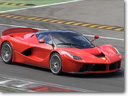
  • Ferrari LaFerrari XX Prototype at the Monza Race Track

    Here is an awesome video published by NM2255 on Youtube featuring the highly-anticipated Ferrari LaFerrari XX. The hyper-car has been filmed during a test drive on the famous Monza circuit. The model will be limited to just 30 units with pricing starting from somewhere around €2,000,000.

    The LaFerrari XX sounds just brilliant and goes extremely fast around the race track. Still, after a few laps, typically for a Ferrari something went wrong and that caused one of the rear tires to go in other direction.

    Still, there is no information for the XX model, but it will come with improved aerodynamics, upgraded electronics, a sportier suspension and racing tires. The car will be track-only toy and a very expensive one.

    As a reminder, the “normal” 2013 Ferrari LaFerrari is powered by a 6.3 liter V12 with 800HP (588 kW) at 9,250RPM an 700Nm (519 lb-ft) at 6,750RPM. With the help of HY-KERS, the overall power is whopping 963HP and over 900Nm of torque. 0-100 km/h in under 3 seconds, 0-200 km/h in 7 seconds and 0-300 in breath-taking 15 seconds. A lap around Fiorano race circuit takes just 1 minute and 20 seconds – 5 seconds faster than the Enzo and over 3 seconds faster than the F12berlinetta. The XX model is expected to be a lot faster.

    Recently, a tuning company called JMB boosted LaFerrari to 1050HP thanks to an ECU re-map, so we expect the new XX to be at least that powerful.

    Enjoy the impressive sound!

    httpv://www.youtube.com/watch?v=6EIrO2bP6Q8

    Source: NM2255 Car HD Videos

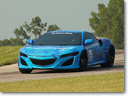
  • Acura NSX Prototype at Mid-Ohio Raceway

    Acura has published the first picture of a NSX prototype undergoing testing. The sports car debuted at the North American International Auto Show earlier this year. While the picture isn’t of the highest quality, it suggests the production model will have new headlights, larger mirrors and restyled air intakes.

    The pre-production prototype will be shown at the Mid-Ohio Indy 200 on August 4th. Acura is seeking to get maximum publicity out of the event, so the car will lap the circuit live on NBC.

    The NSX will be produced at Acura‘s Performance Manufacturing Center in Ohio. It will be powered by a mid-mounted V6 engine and a Sport Hybrid Super Handling All Wheel Drive (SH-AWD) system that has 2 electric motors that power the front wheels as well as another motor that is integrated into the dual-clutch transmission.

    Source: Acura

  • Saleen 351 Mustang Prototype – 710HP and 887Nm

    Saleen has unveiled the 351 Mustang Prototype based on Ford Mustang Convertible. The one-off vehicle was presented at last weekend’s Fabulous Fords at Knott’s Berry Farm in California.

    The exterior boasts a specially-made Orange County Orange paint. Under the bonnet, there is a “small-block” 5.7 liter V8 with 710HP (522 kW) and 887Nm (655 lb-ft) of torque. The power is put on the road through a 6-speed gearbox with 3.73:1 final drive ratio and a performance clutch system.

    It rolls 20” alloy wheels with high-performance tires. There is also an upgraded brake system including 15” brake discs.

    Other highlights include a butterfly hood scoop, along with carbon fiber front and rear splitters and rear diffuser.

    Source: Mustangsdaily

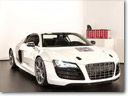
  • Audi F12 Prototype or a R8 with 204HP

    Audi has announced a strange car – F12 Prototype, which is actually a R8 but with an electric motor. The sports electric car comes a 38 kWh battery and three motors with a combined power of 204HP (150 kW) and 550Nm (406 lb-ft) of torque.

    When the car goes at low speeds, only the front axle is powered by a single electric motor and on high speeds or fast acceleration – the two rear motors are activated for full power and control.

    “Our team united engineering art, creativity and a portion of lateral thinking,” said Dr. Christian Allmann, one of the project managers.

    “Young, independent free-thinkers worked together with the experts from the Technical Development departments at Audi and Bosch. We enjoyed a constant sharing of our respective knowledge and different work cultures.” “The project was very dynamic with respect to personnel and technologies, resulting in a very flexible collaboration with open interfaces,” added Martin Schüssler, Allmann’s colleague.

    The F12 driver controls basic drive functions – Park, Reverse, Neutral and Drive – by operating buttons on the center tunnel. All other operations are controlled via a tablet computer that can be removed from the center console. A user-programmable instrument cluster presents all key information in high resolution.

    The car is actually planned for production, but nothing is sure for now.

    Source: Audi

  • BMW Z3 V12 Prototype – 326 HP and 490 Nm

    BMW Z3 Roadster is one of the most appreciated vehicles in the 90’s. So, to make it even more exclusive, BMW M division has fitted an enormous 5.4 liter V12 from 750i/850i in a one-off BMW Z3 prototype. Just imagine a small roadster with rear-wheel drive and V12 engine under the hood. It will be sensational.

    This is just one of the many specially created vehicles by the M division. The list includes M8, based on BMW E31 850CSi, M5 Convertible based on BMW E34 M5 saloon, 7-Series with six-teen cylinder engine (V16) based on E32 and M3 Pickup based on BMW E92 M3.

    The Z3 V12 has a 5.4 liter M73B54 engine delivering 326HP (243 kW) at 5000RPM and 490Nm (361 lb-ft) of torque at 3900RPM. Suggested 0-100 km/h time is under 5 seconds and a top speed of around 300 km/h (186 mph).

    Check out the pictures below.

    BMW Z3 V12 Prototype
    BMW Z3 V12 Prototype
    BMW Z3 V12 Prototype

    Source: worldcarfans