Tag: plug in

  • 2015 Toyota Prius Plug-In Hybrid

    2015-Toyota-Prius-Plugin-t2015-Toyota-Prius-Plugin-651

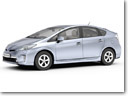
    The 2015 Toyota Prius Plug-in Hybrid continue into the new year with some updates and changes. The Toyota Prius shape is well established after 12 years and its instantly recognizable. The five-door hatchback has a vertical tale and a smooth front with minimum. Its size allows four to five people to fit in along with their luggage.

    The cabin looks incredible. The two-level dashboard layout  now looks dated-through the interior design appearing futuristic, compared to its launch in 2009. With interior surfaces clad entirely in hard plastics, of various textures and patterns. The first thing to catch you eye is a console that sweeps down from the top dashboard. There are additional features that include:

    • Heated seats
    • Bluetooth Connectivity
    • SiriusXM Radio
    • Digital Audio Output
    • Steering wheel controls and automatic climate control
    • Tilt and telescopic steering wheel
    • Navigation system and Cruise control

    Toyota made sure they made this car as safe as possible with curtain head airbags, side airbags, brake assist, traction, anti-lock brakes and stability control passenger airbags etc. While its striking visually, in practice the storage space under it is largely invisible and hard to reach. Four adults will fit comfortably, with some efforts put in, five adults can also fit in and the EPA defines the Prius as a mid-size car based on interior volume. The 2015 Toyota Prius power train remains unchanged, with total output of 134 hp(99 kW) from the 1.8-liter four cylinder engine and a pair of electric motor generators. They provide electric torque to supplement torque from the engine, recharge the battery during regenerative braking or engine overrun and can power the car solely on electricity at speeds up to 30 mph (48 km/h).

    Toyota has more experienced building hybrids than any other maker, and its blending of regenerative braking with the conventional friction brakes is outstanding. But if you need more than leisurely performance, 0-60 mph (0-100 km/h) is just under 10 sec you will quickly hear the engine revering up to high speeds.

    Source: Toyota

  • Volkswagen CrossBlue Coupe Concept Debuts in US

    Volkswagen-CrossBlue-Coupe-concept-thumbVolkswagen-CrossBlue-Coupe-concept-medium

    Remember Volkswagen’s hunky CrossBlue SUV concept that looked thoroughly American? Well, it will now decorate the German stand at the 2013 Los Angeles Auto Show, but because this one is a “coupé” it is technically a “U.S. Debut”. Welcome to the Volkswagen CrossBlue Coupé concept – a sleeker, less roomy version of the original. Could this five-seater bring something fresh and exciting to the table?

    Here are the basics: 192.5 inches long and 79.3 inches wide and 66.1 inches high, the Coupé features sporty design motives: 22-inch wheels with five V-shaped double spokes, a massive hood, short A-pillars, a long and sloping roof-line, and a swept-back C-pillar. There’s also a fascination with horizontal lines (Volkswagen DNA they say):

    “The designers have combined a dominant line—one that starts in the upper area of the rear lights and runs at the height of the door handles—with a second line that begins beneath the rear lights and ends in the front fender.”

    Let’s get to the real straight talk though. Because of the MQB platform on which the Coupé is based, pretty much any four- and six-cylinder Volkswagen engine will fit inside. This current concept, however, is a plug-in hybrid with two electric motors and a turbocharged direct-injection (TSI) 295 hp V6 petrol engine. The bottom line is 415 hp of combined power. By default, one also gets Volkswagen’s MQB front suspension and four-link rear suspension; electro-mechanical steering, and a six-speed DSG dual-clutch automatic transmission. Electrically speaking, there’s a 54 hp motor at the front and a 114 hp one at the back, while the li-ion battery pack that powers them can be found in the center tunnel.

    Despite its still prominent size, the CrossBlue Coupé manages a 0 to 60 time of just below six seconds and a top speed of 147 mph. Yet, because of all the clever bits underneath, it has a manufacturer estimated combined fuel consumption of 70 MPGe and a “theoretical” range of 570 miles in hybrid mode. The default mode of driving is quoted as “Eco”. It is supposed to cleverly manage the power output from all sources in a bid to achieve an ideal balance of power and efficiency. Want to give it the full beans? Go for the “Sport” button which utilizes everything this SUV holds. Other modes include an all-electric one (the rear electric motor only) that holds for about 13 miles with speed of no more than 75 mph. If you run out of juice, you can switch on the “Charging” mode which sees the V6 TSI engine giving propulsion and charging the battery. Offroad mode is where it get’s complicated. Obviously, it’s an AWD mode but the back wheels are powered by the rear-electric motor, which in turn is being fed with energy from the front motor, which in turn acts as a generator powered by the engine, which in turn also provides power to the front wheels.

    Inside, Volkswagen are especially proud of their (horizontal) dasboard that “extends into the side door trims”. For materials, do not expect anything less than soft Nappa leather in outlandish-sounding colors like Authracite Pearl and Asphalto. There are also chrome surfaces, wood accents and Graphite colored Alcantra for the roof pillars and headliner.

    Don’t be fooled by all that trendy glamor as this is not your average H&M store. There are also enough gadgets inside to make even the most hardcore techie tingle with excitement. Take the “programmable” instrument cluster for example. Whilst driving in Eco mode the left side of the gauge shows the “Powermeter” and battery status. On the right you get your current speed and fuel level. The center panel can be used to display widgets such as gear selection, driving range, date and time, the weather and navigation data. In “Sport” mode, the left-hand instrument displays torque and battery status within a circling tachometer. The backseat audience also has access to the infotainment/multimedia system through two iPad minis mounted on the back of the two front-seat headrests.

    The 10.1-inch touchscreen navigation also tends to adapt in accordance with the current driving mode. In Sport mode all the surrounding buildings represented on the screen are “suppressed” so that the image becomes less busy and thus the focus being on the actual road. Switch to “Eco” mode and the buildings will rise on the horizon Inception-style. (not our simile, VW’s).

    There we are then. Expect more excitement starting on the 22th of November within the LA Auto Show, within the Los Angeles Convention center, within Los Angeles.

    Source: Volkswagen

  • 2013 Volkswagen Golf VII Plug-in Hybrid – 1.5 liters per 100 km

    Volkswagen has announced the new Golf Plug-in Hybrid, which is based on the 7th generation of the hatchback. It is expected to hit the market in the beginning of the next year.

    The Golf VII Plug-in Hybrid is powered by a 1.4 liter TFSI with 150HP (110 kW) and a 102HP (75 kW) electric motor coupled to a dual-clutch S-tronic 6-speed gearbox. The powertrain is the same as in Audi A3 e-Tron Plug-in Hybrid. The total power is 204HP (150 kW) and 350Nm (258 lb-ft) of torque.

    0-100 km/h in 7.6 seconds and a staggering fuel consumption of 188 mpg UK (156.5 mpg US) – 1.5 liters / 100 km with CO2 emissions of 35 g/km. What is more, the Plug-in Hybrid Golf is capable of travelling up to 50 km (31 miles) in electric mode with speeds up to 130 km/h (81 mph).

  • 2013 Ford Fusion Hybrid is the Most Fuel-Efficient Sedan in the U.S.

    2013 Ford Fusion Hybrid ThumbThe new 2013 Ford Fusion Hybrid is expected to be America’s most fuel-efficient non-rechargeable sedan. This success can be traced back to Ford’s electrified vehicle team and the nearly 500 patents Ford now holds for its hybrid technology. Innovations can be found throughout Ford’s transformed lineup, one-third of which will feature a model with 40 mpg or further by giving fuel-efficiency-minded customers the power of choice. Key components such as Ford’s innovative powersplit architecture system are included on vehicles like the new Ford Fusion Hybrid and Fusion Energi plug-in hybrid.

    In details the all-new 2013 Ford Fusion Hybrid is expected to deliver 47 mpg city and 44 mpg highway. At the same time, these expectations for the new 2013 Ford Fusion Energi, which arrives this fall in the U.S. dealerships, are more than 100 MPGe. In addition, one patent covers the display system for the Fusion Energi plug-in hybrid that shows how efficiently the power of the car is being used. Fusion Energi is projected to achieve a better miles per gallon. In other words the levels of innovation are set very high for the new upcoming models.

    2013 Ford Fusion Hybrid
    2013 Ford Fusion Hybrid

    Source: Ford

  • 2013 Ford Fusion on NAIAS

    The NAIAS in Detroit is now a fact of life. Ford are also aware of this and are there to delight us with a next-generation Ford Fusion (that would be the Mondeo for Europeans later this year). Keeping pace with Ford’s innovative spirit, the Fusion boasts an array of efficient gasoline and hybrid drivetrains, an audacious design and cleverness.

    It is no secret that currently Ford is grappling with other car makers for the lead position in global markets when it comes to economic vehicles and the Fusion is the latest example of that. Engine lineup consists of two EcoBoost™ four-cylinder power plants: a 1.6 with a best-in-class, non-hybrid economy returning 26 mpg urban and 37 mpg on the highway. For those that desire a bit more grunt there’s the EcoBoost l4 2.0 mated to a CVT automatic transmission that can send power trough 19 inch alloys and a dynamic all-wheel-drive which can shift torque distribution towards the back end.

    The Hybrid division lures economy minded customers with the Fusion Hybrid – a 2.0 liter Atkinson-cycle engine which is not as big as the previous 2.5 one, but performance hasn’t been lost say Ford. In fact, instead of nickel-metal hydride batteries, lithium-ion ones are now used which in turn saves weight and produces more power. The end result is a speed up to 62 mph on electricity alone. The Fusion Energi Plug-in Hybrid however, is the ultimate in efficiency terms with a stunning figure of up to 100 mpg – more efficient than the Volt or Prius. Just like the other big players, Ford is now making use of a stop/start system in its vehicles which really does miracles to fuel-efficiency.

    Ford Fusion (2013)
    Ford Fusion (2013)

    On the outside, the Fusion is not unrecognizable but some visual tweaks do leave an impression: sleeker and smother lines eliminate the “three box design” feel that is commonly present in other mid-sized saloons. The front grille has shrunken and so have the headlights. The wheelbase is longer and the overall height has increased while width is down by 35 mm.

    Technological innovation manifests itself within the new multi-link rear suspension, the aerodynamic guards underneath the car which keep the noise down as well. There is also a multitude of handy gizmos that assist newbie drivers and such in every possible aspect – Being vigilant about road lanes will be a thing of the past because of the Fusion’s lane-keeping system which monitors the road ahead and alerts if the car is drifting too close to the lanes and it will even dare to adjust the steering wheel by itself if the driver fails to response. That same system also monitors the traffic ahead and keeps the car at distance from the others. Active park assist quite literally takes parking in its own hands by identifying a suitable parallel parking space, taking measures and doing the steering for you. The BLIS system uses sensors on the rear fenders that can scan otherwise blind spots to drivers and thus prevent a lane-changing disaster.

    Inside the cabin distraction is brought down to a minimum with systems like SYNC and MyTouch that allow interaction with the multimedia and control system from a distance (e.x. voice activation). The dashboard has retracted nearer to the windscreen and the seats are thinner so that it is even more roomier than the predecessors.

    Source: Ford

  • Toyota Prius Plug-in Hybrid Electric Vehicle (PHEV) at the IAA Frankfurt

    Toyota will exhibit the production version of the Prius Plug-in Hybrid Electric Vehicle (PHEV) at this year’s IAA Frankfurt on 15th September.

    The new Prius Plug-in Hybrid comes with more compact lithium-ion battery. It offers extended range and enables the Prius PHEV to achieve 128.4mpg and CO2 emissions of just 49g/km.

    The idea is simple – extended EV driving range for shorter destinations in town and efficient hybrid petrol engine for longer travelling. Still, the result of the new vehicle is just amazing, practically it is twice efficient than the normal Prius.

    The Prius Plug-in Hybrid represents the latest development of Toyota’s Hybrid Synergy Drive (HSD) system. This trusted and reliable full hybrid technology has a track record earned through worldwide sales of over two million cars and billions of miles of driving.

    In 2012 it will join an expanded Toyota hybrid range consisting of the Prius, the British-built Auris hybrid, the new, seven-seat Prius+ and the new Yaris hybrid, demonstrating Toyota’s commitment to introduce Hybrid Synergy Drive technology to the wider market.

    Toyota Prius Plug-in Hybrid Electric Vehicle - PHEV
    Toyota Prius Plug-in Hybrid Electric Vehicle – PHEV

    Source: Toyota

  • Volvo V60 Plug-in Hybrid

    Volvo will make first tests of the new V60 Plug-in Hybrid in Berlin. The vehicle combines advanced technology with luxury design. The first official road test drive with the unique Volvo V60 Plug-in Hybrid will take place at the 11th Michelin Challenge Bibendum in Berlin – 18-22 May 2011.

    The Volvo V60 Plug-in Hybrid, the Volvo C30 Electric and the Volvo V50 DRIVe featured in Berlin are three examples of Volvo Car Corporation’s uncompromising attitude to green motoring.

    “In order to get true car enthusiasts to think green, you have to offer them the opportunity to drive with low carbon dioxide emissions without taking away the adrenaline rush that promotes genuine driving pleasure,” commented Peter Mertens, Senior Vice President Research and Development at Volvo Car Corporation.

    “Since the Michelin Challenge Bibendum drives include acceleration and handling tests as well as energy efficient driving, we expect that our cars will do very well. All of them are just as well equipped, comfortable, sporty and safe as all Volvo models.”, he added.

    V60 Plug-in Hybrid is powered by a five-cylinder 2.4-litre turbodiesel with 215PS and 400Nm. In addition, there is a 70PS electric motor, which receives power from a 12 kWh lithium-ion battery pack.
    Volvo V60 Plug-in Hybrid

    • In Pure mode the car runs only on its electric motor as much as possible. The driving range is up to 32 miles.
    • In the default Hybrid mode the diesel engine and electric motor interact to provide the optimal balance between driving pleasure and low environmental impact. Emissions of CO2 (NEDC) are 49 g/km, corresponding to diesel fuel consumption of 150 mpg. The car’s total range is up to 746 miles.
    • In Power mode the technology is optimised to give the car the best possible performance. The diesel engine and electric motor have a combined power output 215 + 70 horsepower and maximum torque of 440 + 200 Nm.

    Source: Volvo

  • Audi A5 e-Tron Quattro Plug-in Hybrid

    Audi А5 e-Tron Quattro Plug-in Hybrid Prototype has not only an incredibly long name, but it also features some very good qualities.The car is powered by a 2.0 liter TFSI engine developing 211PS (155 kW) and two electric motors, one on the front axle, which adds 45PS (33 kW) and one on the rear axle adding another 81PS (60 kW). The second electric motor delivers power only when acceleration requires it to or when sensors detect a loss of rear traction such as in a hard curve. There is also a 9.4 kWh lithium-ion battery pack.А5 e-Tron Quattro Plug-in Hybrid can go only on electricity up to 40 km (25 miles) with speeds up to 100 km/h (62 mph). The fuel consumption is staggering – 2.7 liters per 100 km and the acceleration is 5.9 seconds to 100 km/h. The top speed is 228 km/h (142 mph). Not bad for a hybrid car!Audi А5 e-Tron Quattro Plug-in Hybrid Prototype has a curb weight of 1 600kg, which is the same as standard 2.0 TFSI A5 Quattro. The engineers used a lot of carbon fiber and aluminum parts to achieve this result.Looks like, we all gonna drive plug-in hybrids in the near future, which will be faster and more agile than our current vehicles.Audi A5 e-Tron Quattro Plug-in Hybrid

    Source: MotorAuthority

  • Fisker Karma Plug-in Hybrid

    Fisker has announced that Karma Plug-in Hybrid is in production. Actually, the customers in the US and Europe will be able to buy their vehicles in the next month. The price is $88 000, which is $21 000 cheaper than Tesla Roadster.

    The company will produce more than 7000 units, because they want to keep the quality at perfect level. Fisker was founded by auto designer Henrik Fisker, who worked for BMW. He is well-know with his famous creations – Aston Martin DB9, V8 Vantage and BMW Z8.

    Fisker Karma is powered by 408PS (300 kW) hybrid system, which delivers supreme performance at nearly no cost. The car accelerates from 0 to 100 km/h in 5.9 seconds and the fuel consumption will be just 2.4 liters per 100 km (100 mpg) and emission of just 83 g/km of CO2.

    Source: Fisker

  • 2011 Volvo V60 Plug-in Hybrid

    A lot of manufacturers offer hybrid cars and Volvo plans to introduce V60 Plug-in Hybrid to the Geneva Auto Show. The car is scheduled to hit the market in 2012, hopefully, before the end of the world.

    The astonishing thing about V60 Hybrid is that the car is powered by diesel-electric system, instead of petrol-electric and the numbers are staggering – 1.9 liters per 100 km (more…)

  • Toyota Prius PLUS with Performance Package at the SEMA

    Another interesting Toyota vehicle will be presented at the 2010 SEMA Show. It is a new Prius PLUS Performance Package, which boasts a number of accessories from Toyota. Prius Plus Performance Package will be in limited production beginning in April 2011.

    The Plus Performance package consists of an aerodynamic body kit, a sport suspension, and 17″ alloys fitted with 215/45R17 tires.

    Price list is not announced, yet. (more…)

  • Toyota and EDF Energy will test Plug-in Hybrid Vehicle Leasing Programme

    Toyota and EDF Energy today launch a three-year leasing programme, which brings extra-low emissions plug-in hybrid vehicle technology to the streets of London.

    Toyota Prius Plug-in will join the vehicle fleets of five businesses and public organisations, where they will demonstrate the fuel efficiency, low emissions, cost savings and everyday practicality their rechargeable hybrid power system can deliver. (more…)