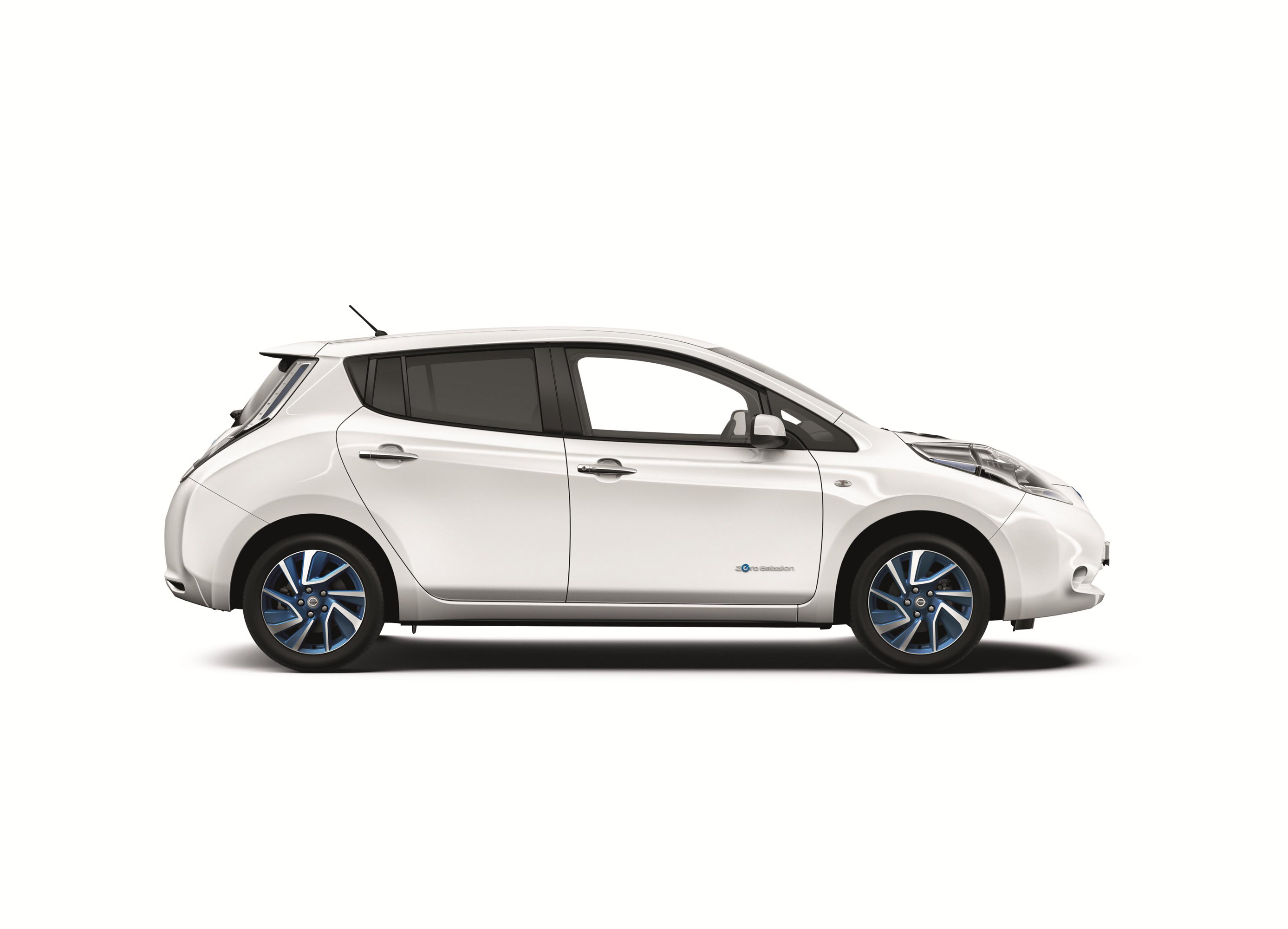
Tag: Nissan LEAF

  • Is This The Next Generation Nissan Leaf?

    Nissan Leaf Teaser‘Together we ride to Tokyo’ is what Nissan has to say about this image. The Japanese company also revealed that this is the ‘future vision of car intelligence and electrification’ and that the car from the teaser image will be previewed at the 2015 Tokyo Motor Show. Since we know these facts, it is perfectly logical to ask whether this could be the next Nissan Leaf.

    And since we have made a highlighted version of the image, which is shown below, it surely speaks in favor of our theory, doesn’t it? However, Nissan might have different plans for the future and might want to introduce a brand new model line which will be based on this concept. In other words, we should be expecting everything.

    SEE ALSO: Nissan LEAF Range Expands to Fight Global Climate Change 

    New generation Leaf or not, this vehicle will definitely be 100% electric, have a shape of a compact crossover and feature exclusive exterior styling and highly technological interior. Furthermore, if we recall facts well, back in September Nissan released a report stating that a new version of the Leaf (which is intended only for Tokyo) will use brand new batteries.

    The new battery pack will offer a driving range of up to 400 km (250 miles). Compare this to the current Leaf and you’ll get how big the step forward is. Precisely, the current generation Leaf can go on a single battery charge up to 250 km (150 miles). At last, we should also say that the new battery technology will also be used in vehicles like an electrified crossover and luxurious sedan.

    Nissan Leaf Highlight

    Source: Nissan  

  • Nissan LEAF Continues the Fight With the Climage Changes

    Nissan LEAF electric vehicleNissan LEAF electric vehicle happens to be one of the most successful in brand’s recent years. Something more, Nissan Motor Ltd. today celebrates the incredible amount of sold units in the UK: more than 10,000. Originally launched in 2011, Nissan LEAF electric vehicle showed that electricity and quality can go hand-to-hand, without any serious problems. Oh, well.. the vehicle itself looks amazingly ugly with its strangely placed headlights and the stupidly smiling low grille, that together form a retarded and un-sexy face, but we are here for the functionality, right? And the environmentally friendly ideas, incorporated in vehicles..right?

    SEE ALSO: Nissan LEAF Range Expands to Fight Global Climate Change

    Nissan LEAF continues the fight

    However, since the last year, the number of LEAF sales is increased greatly. Do you remember, when the Nissan team said they will fight the global climate change? It seems, that they not only took it seriously, but they have some incredible success. Only for the first half of 2015, Nissan sold about 2, 964 LEAF electric vehicle units only in the UK. This means three things: People get more and more aware of what is happening to the Earth’s climate; people try to do something about it and lastly, people will do something about it, even if it means to buy an ugly vehicle. This makes me a proud. Nissan LEAF electric vehicle

    I am proud that the Nissan LEAF has played such a major role in changing perceptions of EV ownership and I am even prouder that the UK is now the number one market for LEAF sales in Europe.

    And to expand even further the LEAF lineup, Nissan recently released Acenta+ model, which offers even wider list of goodies for its owners. There are numerous standard and additional features, as long with new trims. And as you know, Nissan is one of the most trustworthy vehicle manufacturer with more than 17,600 staff operations and about 675,000 units sold across UK, Spain and Russia. These numbers include compact vehicles, crossovers, SUVs, and of course electric vehicles like the LEAF, which is world’s most popular electric vehicle.

    Source: Nissan

  • Nissan LEAF Range Expands to Fight Global Climate Change

    Nissan Leaf Range - Acenta+ Trim Front ViewNissan LEAF range has expanded to four trim grades due to the addition of the new Acenta+ trim level. It will accompany the Tekna, Acenta and Visia models, adding some special standard features. As a matter of fact, this introduction is not something unexpected since the electric LEAF has achieved such great success. Maybe many of us are skeptic about EVs, but after all the automotive industry envision expansion in the electric segment next to the downsizing of he engines. And this is all for the sake of ecology.

    Acenta+ grade has been currently released on the marked and can be ordered from today. In terms of additional features it adds, it is positioned in the Nissan LEAF range between the Acenta and best Tekna model.

    Faster Charging & Better Driving Range

    To go into details, the LEAF Acenta+ is differentiated by a 6.6kW on-board charger which now comes as standard as well as Mode-3 32amp (EVSE) cable. These features were previously only optionally available and now they will help owners charge their EV to the maximum in just four hours.

     SEE ALSO: Nissan Invents LEAF EV that Glows in the Dark [VIDEO]

    What is more, the little LEAF is capable of covering the impressive 124 miles with a single charge. Another benefit is that this won’t cost you very much and that you will contribute eco-friendly driving with zero-emissions.

    Visually Improved

    Nissan Leaf Range - Acenta+ Trim

    Furthermore, Acenta+ benefits from some small, but striking visual enhancement like the new 17-inch Autech alloys. They feature distinctive blue highlights on the offset spokes, thus making the Nissan LEAF range even better looking. This new model not only delivers exceptional economy, but also exemplifies Nissan’s progressive technology that preserves the eco system.

    Nissan is the undisputed leader in the EV market.

    As a matter of fact, we should all stand behind the production of more vehicles like those offered in Nissan LEAF range or in Tesla’s line-up. Changes in the climate are happening worldwide and with fast pace, and we should think on this fact very thoroughly. Because the change depends on every one of us and when it comes to cars what we can do is buying more hybrids and electric cars, instead of polluting performance “beasts”.

    LEAF range is courageously making steps towards this and the proof is that since introduction there have been more than 175,000 LEAFs sold around the world. Nissan has also recently entered a second pure EV, the e-NV200, which comes in service to the commercial vehicle sector, and thus additionally expanding Japanese company’s market lead.

    Source: Nissan

  • Nissan Invents LEAF EV that Glows in the Dark [VIDEO]

    Nissan has just released a very interesting video showing the first car to have to glow-in-the-dark paint scheme. By doing this, the company writes history, being the first manufacturer to partner with similarly innovative inventor, Hamish Scott, to create paint that uses UV energy absorbed during daylight to glow at night. And of course the model to apply this new “color”-approach is the all-electric LEAF.

    Hamish Scott is creator of STARPATH. This is a spray-applied coating that absorbs UV energy during the day. When the night falls, the absorbed energy glows for between eight and 10 hours.

    The Japanese company not only offers glowing car paint, but also glow-in-the-dark car wraps, both made up of entirely organic materials. Precisely, the Scott used very rare natural earth product called Strontium Aluminate. It is solid, odorless and chemically and biologically inert.

    Another very interesting fact about this paint is that if it is made commercially available, it would last for 25 years. Nissan LEAF owners have reported significant savings and are using the saved money for example for solar panels for their homes. This in turn decreases the household carbon footprint and means owners are also effectively charging their vehicle for free.

    According to a recent research, 89% of LEAF owners charge their cars at home overnight. And here is the deal: solar panels do not store energy or provide it outside of daylight, but any leftover power which is generated during the day is fed back into the national grid. Homeowners then can get a Government payment for it, which simply means that the overnight charge is already paid for.

    One of these lucky LEAF owners is Ian Finch. He has combined the savings offered by running an all-electric vehicle with solar panels to power his home. Here is a fascinating interview with him on LEAF charging using solar energy:

    httpv://youtu.be/xM9XRn1amqQ

    httpv://youtu.be/nKj2sEpg1xg

    Source: Nissan 

  • Nissan LEAF Owners to Charge Vehicle for Free in Chicago

    2015-Nissan-LEAF_651

    You may think that electric cars are too expensive while offering a limited driving range but they do come with numerous benefits – quiet operation, excellent acceleration, no harmful emissions and in some places even tax benefits. Now there’s one more reason to buy an electric vehicle, at least when it comes to Nissan – owners of Nissan LEAF cars will be allowed to charge their vehicles for free in Chicago, IL.

    The news comes from Nissan itself. Here’s the deal – by purchasing or leasing a new Nissan LEAF car you get the right to charge the vehicle for free for two years at public locations in Chicago. You must also get the car from a Chicago Nissan dealer. The promotion, called “No Charge to Charge” includes complimentary access to fast chargers that can charge a LEAF battery pack from zero to 80 percent in about 30 minutes.

    “Nissan LEAF is an attractive option for Chicago car buyers for a number of reasons, such as the available Illinois Alternative Fuels Rebate of up to USD 4,000 and significantly lower operating costs than a gas-powered car,” said Brendan Jones, director, Nissan Electric Vehicle Sales and Infrastructure Strategy. “Adding free public fast charging in Chicagoland gives Nissan LEAF an even greater competitive edge over other vehicles, regardless of their fuel source.”

    This is not everything – apart from being able to charge their Nissan LEAF at retail stores, tollway oases and other convenient Chicago locations, owners of LEAF cars will also have the benefit of enjoying free one-hour charging sessions at more than 140 level 2 (240V) charging stations.

    The Nissan “No Charge to Charge” promotion is also offered in other US cities including San Francisco, Los Angeles, Sacramento, San Diego, Seattle, Portland, Oregon, Nashville, Phoenix, Dallas-Ft. Worth, Houston and Washington, D.C. In the next year, Nissan plans to offer the “No Charge to Charge” program at LEAF dealers in at least 13 additional U.S. markets.

    “No Charge to Charge” is now available at Nissan LEAF dealers in the Chicago market. LEAF owners who purchased or leased their vehicle on or after November 1, 2014, in the Chicago market will receive entry into the “No Charge to Charge” program retroactively.

    Source: Nissan

  • Nissan ships first all-electric taxis to Barcelona and Madrid

    Nissan-electric-taxi_thumbNissan-electric-taxi_651

    The Japanese auto maker Nissan has delivered the first all-electric taxis to the Spanish cities of Madrid and Barcelona. The introduction of the new Nissan electric vehicles means that these two cities will enjoy emission-free and quiet transportation from now on.

    The vehicles delivered to Barcelona are e-NV200 units and they are the first step in the execution of an agreement between Nissan, the city of Barcelona and the Barcelona metropolitan area. An interesting fact is that the Nissan e-NV200 van is built in Barcelona as well. The delivery of the first electric taxis to Barcelona has taken place at the Expo-electric Formula-e event, which is one of the most important meetings on sustainable mobility in Europe.

    Jean-Pierre Diernaz, Director of Electric Vehicles for Nissan Europe, welcomed the news, commenting: “Declining air quality levels are a top concern across Europe and it’s great to see Madrid and Barcelona taking such positive steps in improving air quality through the incorporation of Nissan’s all-electric cars into their taxi fleets. These taxi bring a huge benefit not only for residents but also for the drivers – thanks to the ultra-low running costs only an electric car can offer. This scheme demonstrates that sustainable transportation is easy and affordable for everyone.”

    Madrid has received its first Nissan LEAF taxi, which is the best selling electric vehicle in the world with more than 142 000 units sold globally. The official delivery has taken place at Puerta del Sol in Madrid, where “Zero KM” – the measuring starting point of all Spanish roads – is located. Antonio Berzal Prieto, the first 100% electric taxi driver in Madrid to choose electric technology for his business, declared “When I heard that the Nissan LEAF had been approved as a taxi for the city, I quickly looked into all the options it offered me. In addition to the environmental benefits, the costs of ownership are highly competitive and the car’s performance is excellent.”

    Source: Nissan

  • Nissan Leaf – The World’s Cleanest Self-Washing Car

    2015-Nissan-LEAF-t2015-Nissan-LEAF-651

    The 2015 new zero emission hatchback Nissan Leaf was crowned as a cleanest car in the world. Nissan introduced an innovative paint technology that repels mud, water, oil and everyday dirt.

    Nissan Leaf’s exterior was treated with a specially engineered superhydrophobic and oleophobic paint, that repels every dirt by creating a protective layer of air between paint and environment. Rain, mud and oil beads are wiped out from the car, leaving the electric machine clean.

    The special paint is called Ultra-Ever Dry and it was developed by Ultra Tech International. It’s creators say that Nissan is one of the first automakers to embrace the idea, when the project was just an experiment.

    “No matter what the road throws at this LEAF, its Ultra-Ever Dry® exterior coating will throw right back,”  commented the Ultra Tech International Inc. Chef Executive Officer Mark Shaw. He presented the benefits of the superhydrophobic technology and how it creates an “umbrella of air”.

    “The 100 percent electric LEAF provides the perfect canvas for this new, advanced paint technology,” commented  Pierre Loing, vice president, Product Planning, Nissan North America, Inc.

    “This is one LEAF that never has to stop at gas stations – not even for a car wash,” he added.

    The full electric Nissan Leaf is available for 2015 in three trim levels: LEAF S, SV and SL, along with options packages including advanced systems such as Around View Monitor and seven-speaker Bose energy-efficient audio and Hands-Free Text Messaging Assistant.

    Furthermore the Leaf  can be charged up to 80 percent of its full capacity in just 30 minutes when plugged into a quick charge port and using a fast charger.  Charging at home through a standard 240V socket is calculated roughly to take less than five hours with the 6.6 kW onboard charger.

    Source : Nissan

  • 2014 Nissan Leaf – US Price

    Nissan US has announced the pricing of 2014 LEAF starting from $28,980 for the S model. The 100% electric vehicle continues to offer outstanding value, with prices comparable to similar gasoline-powered cars after applicable tax credits.

    2014 Nissan LEAF is available in three trim levels: S, SV and SL, along with option packages offering advanced systems such as Around View Monitor and 7-speaker Bose premium audio.

    Enhancements for MY2014 include the addition of the RearView Monitor as standard equipment on all models (previously part of the Charge Package) and one new exterior color – Gun Metallic (seven total available colors).

    The new driving range is rated at 84 miles and MPGe ratings are 126 in city, 101 on the highway and 114 on combined cycle.

    MSRP for the 2014 Nissan LEAF are:

    LEAF S

    $28,980 USD

    LEAF SV

    $32,000 USD

    LEAF SL

    $35,020 USD

    Destination and Handling $850 USD

    Source: Nissan

  • Nissan Partners With Apple For The iTunes Radio

    2014-Nissan-Rogue-THUMB2014-Nissan-Rogue-651Nissan is going to be the exclusive automotive partner for the launch of Apple’s iTunes Radio. The latter will benefit from new creative formats, including audio and video, across Apple TV, iPhone, iPad, iPod touch, Mac and PC.

    2014 Nissan Rogue , 2014 Nissan Versa Note and Nissan LEAF electric vehicle will be among the first to be equipped with the one-of-a-kind iTunes Radio, which in addition will be integrated in the vehicles.

    Furthermore, there is also a campaign theme going on for the new 2014 Rogue which is named “Make the Ordinary Extraordinary”. The marketing campaign aims to drive reservations for the vehicle, which will goes on sale at Nissan dealerships in the United States in November with a starting price of $22 490 USD.

    2014 Nissan Rogue is powered by a 2.5-liter 4-cylinder engine which generates 170 horsepower (125 kW) and 237 Nm (175 lb-ft) of torque. The power is transmitted on the road via standard Xtronic CVT® (Continuously Variable Transmission).

    Other exclusive technology features included here are Vehicle Dynamic Control (VDC), 4-wheel disc brakes with Anti-lock Braking System (ABS) and a choice of an intuitive All-Wheel Drive system or front-wheel drive.

    Source: Nissan

  • Nissan Leaf starts patrolling Portuguese streets

    Nissan-Leaf-Blue-Light-THUMBNissan Leaf Blue Light will be used by the police in Portugal. Not only one example of the Leaf will support the local patrolmen but a whole fleet of eight units.

    In fact this Nissan model is famous with its multi-awards for being one of the best zero-emission cars currently on the market. The car will be also utilized in a Safe School Program, and thanks to the flashing blue lights, sirens and clear ‘Polícia’ markings, the students will be called upon to perform thier police duties.

    Of course, no other car but Nissan Leaf has been chosen to reduce the ecological footprint in Portugal. The great example given by the local officers is expected to be followed by other people in the country.

    Nissan Leaf Blue Light
    Nissan Leaf Blue Light

    This makes Portugal an EV pioneer in Europe. And did you know that it was one of the first countries to install a network of EV chargers in its big cities and was the first to sell Nissan Leaf to the European public.

    Nissan Leaf is the world’s most selling electric vehicle. Its AC motor generates 80 kW (108 hp) of power and 280 Nm (380 lb-ft) of torque. This means that it has a maximum speed of 145 km/h.

    The electric motor is powered by a Nissan-developed laminated lithium-ion battery with an output of more than 90 kW (122 hp). And one of the most convenient facts is that the recharging time is only eight hours, of course we are speaking here for 100% recharging. However, it takes only 30 minutes to “refill” the battery’s power from 0 to 80% thanks to the quick charger in optimal conditions.

    European production of Nissan Leaf will start in early 2013.

    Source: Nissan

  • 2012 Nissan Leaf powered by “LEAF to Home” Power Supply System With “EV Power Station”

    2012-nissan-leaf-THUMBNissan Motor Corporation and Nichicon are going to launch “LEAF to Home” Power Supply System with “EV Power Station”. The “LEAF to Home” power supply system can supply electricity from batteries onboard in 2012 Nissan LEAF electric vehicles (EV) to homes when used with the “EV Power Station” unit. The latter is developed by Nichicon Corporation.

    In fact, “LEAF to Home” is an industry first backup power supply system. What it can do basically is that it can transmit the electricity stored in the large-capacity batteries of Nissan LEAFs to a residential home.

    2012-nissan-leaf
    2012 Nissan Leaf EV

    Other good news is that Nissan will showcase this system in Japanese dealerships in the days to come. The aim is to promote efficient electricity management and the features built onto electric vehicles.

    Behind the technology which moves the electricity from the vehicle to home through the EV Power Station Unit, stays the Nichicon. Its innovative technology enables electricity stored in high-capacity lithium-ion batteries onboard a Nissan LEAF to be sent to an ordinary home. This happens through the connection between the car and the home’s electricity distribution panel with a connector linked to the LEAF’s quick charging port.

    The EV Power Station system is not big in size. In fact it is as big as an external air-conditioning unit. It can be therefore mounted outdoors. Furthermore, the system can run on various operating modes and has a timer function which can be controlled with a liquid crystal display (LCD) touch panel. More importantly, the electricity is stored or supplied automatically in accordance with a household’s electricity capacity and consumption.

    The full charging time for the LEAF EV is as little as four hours. The great news here is that this is half the time, when the vehicle is charged via normal charger. This consequently means that it also can lower customers’ electricity bills.

    2012 Nissan Leaf powered by "LEAF to Home" Power Supply System
    2012 Nissan Leaf powered by "LEAF to Home" Power Supply System

    The EV Power Station : Specifications

    When charging Nissan LEAFs
    Input voltage: Single-phase, AC 200V (±15%), 50 Hz/60 Hz (±5%)
    Input current range: AC 0-36A
    Output voltage range: DC 50-500V (CHAdeMO Protocol)
    Peak power output: 6kW
    Conversion efficiency: 90% or more (at rated output)
    Power factor: 99% or more (at rated output)
    When supplying power to households
    Input voltage range: DC 150V-450V
    Input current range: DC 0-30A (Limited by cable specifications)
    Output voltage: Single-phase three-wire system (AC 100V x two-phase)
    AC100V (±6%), 50Hz / 60Hz
    AC 200V (±6%), 50Hz / 60Hz (Max.±2%)
    Output current range: AC 0 – 30A
    Peak power output: 6kW (Single-phased, AC 100V·3kW x two-phase)
    Conversion efficiency: 90% or more (at rated output)
    External dimensions: 650 mm (W) x 350 mm (D) x 781 mm (H) (excluding projecting parts)
    Mass: Approx. 60 kg

    Source: Nissan

  • Some facts about Electric Vehicles

    Behind the history of the electric vehicle are more than hundred years. Yes, I was surprised to find out this too. In particular, their history began in the middle years of the 19th century. However, at this time it was really costly to afford such automobile. Moreover, compared to internal combustion vehicles, the electric ones had much lower speed. Gradually this led to their extinction worldwide. Nowadays what we experience is quite the opposite. As we can see ourselves on the market are gradually being launched vehicles, which are powered by alternative fuel or are electric ones. This of course has to do with environmental issues.

    The hydrocarbon fueled vehicles seem to cause great damage to the environment, because of the gases they emit. Or in other words, the automotive industry is now trying to take some precautions for the evil done, develop and promote environmental friendly vehicles and raise the global awareness in this particular area. We all want to live in less contaminated and better world, don’t we?
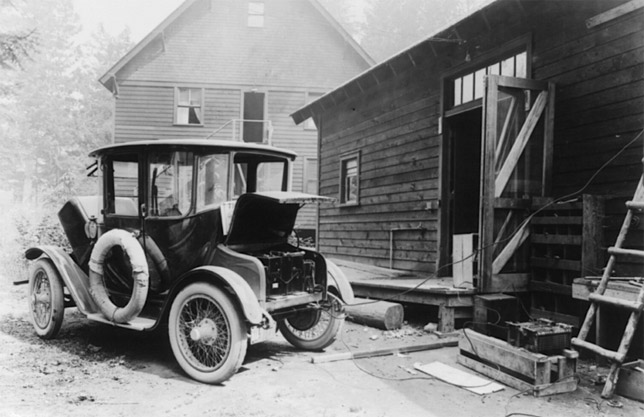
    Electric car from early 20th century charging

    In fact, for the first time in history, electric cars became popular after the mid-nineteenth century. Then the electricity was actually a strongly preferred method for automobile propulsion. Back in 1987 the electric cars found their first commercial use in the United States. For instance, the taxies in New York City were electric. They were manufactured by the Philadelphian Electric Carriage and Wagon Company. During the twentieth century the main manufacturers of electric vehicles in the U.S. were Anthony Electric, Baker, Columbia, Anderson, Edison, Riker, Milburn and many more.

    Although that at this time the electric cars produced relatively slow speed, they had some advantages over their rivals. What I have in mind here is that they produced less noise, vibration and smell, which were a characteristic of gasoline powered vehicles. In addition, they did not require gear changes. And hence the electric car became famous among people living in the city, who could use their optimum potential. Furthermore, the electric powered vehicles didn’t require manual start as oppose to gasoline ones and were easier to drive, which lead their popularity growth among women.

    And even back in the beginning of the twentieth century the electric car was considered the cleaner, quieter and of course the more fuel-efficient car, in comparison to the gasoline vehicle. However, by the 1930s the latter one became the “bigger star” and more importantly – what made it more popular was its lower price. They also developed far greater speed to their equivalent electrics. And adding to all this – the invention of the electric starter by Charles Kattering (in 1912) – gasoline cars became easier to operate. Then came the use of the muffler, which reduced significantly the noise they produced.

    The total eradication of the electric automobile from the world was also possible due to the mass production of the gasoline Henry Ford vehicles, which even were at an extraordinary price – more than six time cheaper than the electric ones. After this expansion, no one really remembered the electric cars …

    Until the late 1970’s and early 1980’s when the world experienced the first big energy crises. This led to the renewed attention on alternative fuel and electric vehicles. As a result, in the beginning of the 1990’s, the California Air Resources Board (CARB) set the requirements for the development of more fuel-efficient and lower-emissions vehicles.

    The highest aim here was the production of zero-emissions vehicles. The electric ones were what they were looking for. Then the automotive world came to see some great electric models, such as Chrysler TEVan, Ford Ranger EV pickup truck, Honda EV Plus hatchback, or Toyota RAV4 EV.

    However, the market wasn’t fully prepared to embrace this new ecologically orientated step, so the models were taken off production in the end. Another recession followed in the 2000’s, which lead to the increased need for smaller cars, hybrid cars and of course electric ones. One of the most famous nowadays electric cars manufacturer Tesla Motors, in 2004 began the development of the Tesla Roadster, which was firstly launched on the market four years later. Nowadays we have many examples of electric cars, developed and produced by famous carmakers. Such are: Mitsubishi i MiEV, Nissan Leaf, Mercedes-Benz Vito E-Cell, Smart ED and many more.
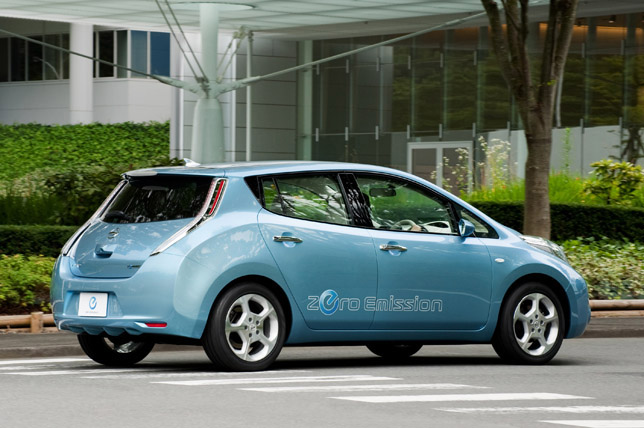
    Nissan LEAF

    To sum up, when the electric vehicles were invented, they seemed to be the best choice of and for the future. Moreover, the electric car produces no pollution to the environment and can be the greatest choice for the city dwellers, who are concerned about the world around them and want to make a positive change.

    People won’t loose from comfort, road handling, safety, performance or durability, because the electric vehicles are similar to the gasoline powered ones. Another big advantage is also their low cost to operate and more importantly they have the potential to be more reliable because they include fewer parts and mature technology.