Tag: McLaren

  • McLaren Artura Spider

    McLaren has unveiled the Artura Spider, its first-ever convertible with a high-performance hybrid powertrain. This exciting new model joins the Artura coupe, offering the same exhilarating performance with the added exhilaration of open-air driving.

    Enhanced Power and Performance:

    Both the Spider and the coupe benefit from significant upgrades to power, performance, and driver engagement. The hybrid powertrain has been recalibrated, delivering a combined 700 horsepower, a 20-horsepower increase from the previous version. This translates to thrilling acceleration, with the Spider hitting 0-62 mph in just 3.0 seconds.

    Lightweight Champion:

    Despite the addition of the retractable hardtop, the Artura Spider remains incredibly lightweight. At just 1,457 kg (dry weight), it’s the lightest car in its class by a significant margin. This exceptional weight-to-power ratio translates to razor-sharp handling and exhilarating performance.

    Open-Air Bliss:

    The electrically operated retractable hardtop opens and closes in just 11 seconds, transforming the Artura from a sleek coupe to a thrilling open-air roadster. Whether cruising down the highway or attacking a winding road, the Spider offers an unforgettable driving experience.

    Refined Driving Dynamics:

    The Artura Spider benefits from a series of enhancements designed to deliver exceptional handling and driver engagement. New engine mounts and revised dampers improve stability and responsiveness, while the latest Pirelli Cyber Tyre technology provides real-time tire pressure data for optimal performance.

    Choice and Customization:

    The Artura Spider is available in a wide range of exterior and interior options, allowing you to personalize your car to your individual style. From a vibrant palette of exterior paint colors to luxurious interior materials, you can create an Artura Spider that reflects your personality.

    The Artura Spider and the new Artura coupe are now available to order, with deliveries starting in mid-2024 depending on your region.

    McLaren Artura Spider technical specification

    Engine configuration M630 V6 engine, 2,993cc twin-turbocharged, hybrid drivetrain with axial flux electric motor
    Drivetrain layout Longitudinal mid-engined, RWD
    Power PS (bhp/kW) @ rpm 700 (690/515)*: 605PS (596/445) @7,500rpm from petrol engine, 95PS (94/70) from electric motor1
    Torque Nm (lb ft) @ rpm 720 (531): 585 (431) @2,250-7,000rpm from petrol engine, 225 (166) from electric motor1
    Transmission 8-Speed SSG (reverse using E-motor) with Electronic Differential (E-Diff).Electric, Comfort, Sport and Track modes
    Steering Electro-hydraulic; power-assisted
    Chassis MCLA carbon fibre monocoque with aluminium front and rear frames and chassis structures
    Suspension Independent adaptive dampers, front: dual aluminium wishbones, rear: upper wishbone and lower multi-link setup.Proactive Damping Control (PDC). Comfort, Sport and Track modes
    Brakes Carbon Ceramic Discs (390mm front; 380mm rear) with forged aluminium brake calipers (6-piston front monobloc; 4-piston rear)
    Wheels (inches) Front: 19 x 9J; Rear: 20 x 11J
    Tyres Pirelli P-ZERO™, Pirelli P-ZERO™ Corsa and  Pirelli P-ZERO™ Winter tyres with Pirelli CyberTyre® technologyFront: 235/35/ZR19 91YRear: 295/35/ZR20 105Y
    Length, mm (inches) 4,539 (179)
    Wheelbase, mm (inches) 2,640 (104)
    Height, mm (inches) 1,193 (47)
    Width, with mirrors, mm (inches) 2,080 (82)
    Width, mirrors folded, mm (inches) 1,976 (78)
    Width, without mirrors, mm (inches) 1,913 (75)
    Track (to contact patch centre), mm (inches) Front: 1650 (65); Rear: 1613 (64)
    Lightest dry weight, kg (lbs) 1,457 (3,212)
    DIN Kerb weight [fluids + 90% fuel], kg(lbs) 1,560 (3,439)
    Fuel tank capacity, litres (UK/USA gallons) 65 (14.3/17.2)
    Usable battery capacity (kW/h) 7.4
    Battery charge time 2.5 hours (via EVSE cable) to 80%
    Luggage capacity, litres (Wet/DIN) 160/124

    Performance data

    0-97km/h (0-60mph) 3.0 seconds
    0-100km/h (0-62mph) 3.0 seconds
    0-200km/h (0-124mph) 8.4 seconds
    0-300km/h (0-186mph) 21.6 seconds
    0-400m / ¼ mile 10.8 seconds
    Maximum speed (km/h/mph) 330/205 – electronically limited
    Electric-only range (km/miles) 33/21
    200-0km/h (124mph-0) braking, metres (ft) 124 (407)
    100-0km/h (62mph-0) braking, metres (ft) 31 (102)

    Efficiency

    CO2 emissions, g/km WLTP EU (combined) 108
    Fuel consumption, WTLP EU I/100km/UK MPG
    Weighted combined 4.8/58.9
    Fuel Economy, US
    Electricity (MPGe) 45
    Gasoline only MPG 19
    All-electric range (miles) 11
    Total range (miles) 340

    Warranty

    Vehicle (years/miles) 5/unlimited
    Battery (years/miles) 6/45,000
    Roadside assistance (years/miles) 5/unlimited
    Corrosion (years/miles) 10/unlimited
    Service plan 3 years
  • McLaren GTS

    McLaren today reveals the new GTS, which joins the McLaren line-up as a replacement for the GT. The super-lightweight GTS is engineered to delight drivers who demand the dynamic excellence and driving excitement of a McLaren and the ride comfort, refinement and luggage space suited to routine drives and extended journeys.

    “The new McLaren GTS offers an unmatched blend of McLaren driving dynamics and performance, with refinement and practicality. When you want a true supercar driving experience, the GTS delivers that; when you want to relax on a longer journey or with luggage for a weekend away, the GTS is an ideal companion. This is a car that is true to McLaren’s racing DNA but with multiple layers of ability.”
    Michael Leiters, CEO, McLaren Automotive

    Retaining the core McLaren attractions of beautiful yet functional design, class-leading power-to-weight ratio – enabled by lightweight carbon fibre construction centered on a unique monocoque chassis – and unmatched driving dynamics, the new GTS is also visually even more powerful and offers increased choice of exterior and interior specification.

    The elegant exterior lines of the GT remain the basis of the car’s aerodynamic package and profile, but new visual enhancements mean that the GTS is even more assertive. At the front of the GTS, the ‘hammerhead’ signature styling has been updated with a new lower front bumper section. This area of the car features newly sculpted air intakes that are more pronounced, with wider intakes to channel more air into the car’s radiator system. The front intake air blades can be optioned in gloss visual carbon fibre, reflecting McLaren’s racing DNA and giving the GTS a more aggressive look. On the rear fenders, new, taller air scoops – also available in gloss visual carbon fibre – are sited on the car’s shoulders. Like the redesigned front end, the enhancements on the rear fenders are functional, enabling greater airflow into the 4.0-liter twin-turbocharged V8 engine.

    The muscular visuals and surfacing of the GTS include a large rear diffuser and dual exhausts – the latter also part of a package that delivers a raw supercar soundtrack on demand with the optional Sports Exhaust system.

    As standard, the GTS comes with a gloss black finish on the exhaust finisher, mirror caps and window surrounds, for a stealthy appearance by default. New GTS badging, including new side badges, can be tinted with a black finish by selecting the Stealth Badge Pack option. Visual carbon fibre options include an underbody carbon pack, which encompasses the front splitter, side skirts and rear bumper lower and diffuser. Exterior details such as the front air intake blades, the rear fender air intakes and mirror caps can also be finished in carbon fibre.

    The GTS is underpinned by the carbon fibre MonoCell II-T monocoque chassis, which boasts strong, ultra-lightweight construction and the rigidity demanded by a mid-engine McLaren supercar. The standard composite roof is made from recycled carbon fibre, one of many weight saving solutions within the construction of the GTS that contributes towards optimal vehicle performance and dynamics. These choices are instrumental in enabling the GTS to deliver a thrilling lightweight supercar driving experience, without deterioration in ride quality, or unnecessary noise, harshness and vibration.

    At just 3,351lbs (DIN) the GTS is the lightest car in its class and has a segment best power-to-weight ratio of 412bhp-per-ton. The power of the V8 M840TE 4.0-liter twin-turbocharged engine has been elevated to 626bhp at 7,500rpm, the additional 14bhp coming from increased crankshaft torque enabled by more aggressive combustion phasing and revised ignition timing. A launch-control function is standard; when enabled, the GTS hits 0-60mph in only 3.1 seconds and 0-124mph in just 8.9 seconds. The maximum speed of the GTS is 203mph.

    The GTS has a seven-speed SSG transmission that provides smooth, seamless and rapid shifts in default-from-start-up Comfort mode, ensuring relaxing yet brisk acceleration. Beyond this, a driver can enhance their supercar experience with two further driving modes – Sport and Track – via the Active Dynamics Panel. Sport introduces heightened drama and urgency, with momentary ignition-spark-cut technology delivering faster and more aggressive gearshifts. Track mode takes this to a higher level still, maximizing the performance of the gearbox with minimal loss of torque between shifts. Manual control of gearshifts is possible using the steering-wheel-mounted paddle shifters in any of the drive modes.

    The tuning of the electro-hydraulic steering system, the standard-fit suspension featuring adaptive damping with proactive damping control, and the powerful carbon ceramic braking system are all unique to the GTS. These elements optimize the mid-mounted position of the V8 engine and the car’s lightweight construction for an authentic supercar driving experience, with balance and agility prioritized, but not at the expensive of comfort and ride quality when this is beneficial.

    The steering of the GTS delivers a level of feedback and feeling unmatched by rivals. Ultra-precise and accurate, the system automatically increases its level of assistance at low speeds, for ease-of-use during low-speed maneuvers such as parallel or bay parking.

    The McLaren GTS is equipped with 390mm brake discs at the front and 380mm discs at the rear, all carbon ceramic. With lightweight six-piston aluminum calipers (four-piston at the rear), the braking system delivers immense feel and performance, capable of bringing the car to a halt from 62mph in just 105 feet.

    The continuously variable, twin-valve hydraulic dampers from McLaren Automotive’s Official Intelligent Suspension Supplier, Monroe, are a fundamental part of the lightweight, aluminum double-wishbone suspension. Featuring McLaren’s adaptive damper technology, Proactive Damper Control, suspension characteristics alter between the three Active Dynamics modes – Comfort, Sport and Track. This ranges from maximum compliance in Comfort, ideal for more relaxed driving, to much more robust damper control in Track mode, for dynamic drives.

    The GTS is also well within its comfort zone in urban environments. Visibility to the front is excellent, while the large glass tailgate, glazed C-pillars and large rear quarter windows ensure first-class rearward vision. Underbody ground clearance of 4.3in can be increased to 5.1in using the vehicle lift function. Enhanced over the GT’s system, the GTS vehicle lift can now raise or lower the nose in only four seconds – more than twice as fast as before.

    A carbon fibre rear upper structure within the monocoque chassis’ design allows for the creation of a large and versatile luggage space behind the passenger cell. Capacity of 14.8 cubic feet, the cargo area is accessed via a front-hinged, full-length glass tailgate that is electrically operated and incorporates a soft close function. The luggage space is complemented by a 5.3 cubic feet storage within the nose of the car. The total cargo space of 20.1 cubic feet makes the McLaren GTS the most practical new supercar on sale today.

    Aligned with the inherent practicality of the GTS is an interior designed to blend the car’s level of performance with a refined and luxurious space. It is a comfortable cabin for long distance journeys, while it also provides a platform from which the driver can take full advantage of the car’s outstanding dynamic capabilities.

    The refined, high-quality cabin uses a mixture of materials selected to deliver an ambience of performance and luxury. Machine polished and knurled aluminum switches and controls are placed around the interior, including for the steering wheel-mounted gearshift paddles, alongside gloss black surrounds for the infotainment screen, gear-selector on the center console, air vent housings and window switches. Optional visual carbon fibre packs include a satin carbon finish steering wheel clasp and extended gearshift paddles, and interior surrounds, along with sill finishers with McLaren branding.

    As standard, the Comfort seats of the GTS are upholstered with Nappa leather trim alongside a leather trimmed steering wheel. New Performance and TechLux interior schemes introduce a refreshed design. Performance trim is sporty, sharp and technical with seats upholstered in Softgrain Aniline leather and Alcantara© in Jet Black or Barolo, with contrasting piping. Performance also includes Power Adjust Heated Memory Comfort Seats. The new TechLux interior scheme epitomizes classical elegance, albeit with a modern McLaren twist. A choice of Softgrain Aniline Leather interiors feature sophisticated color highlights with a unique and newly introduced double piped pattern on the seats.

    The 10.25-inch digital instrument display, with its crisp and sharp graphics, provides a clear view of vital driver information such as speed, gear selection and engine revs, and integrates with the standard navigation system to provide turn-by-turn directions. The GTS also features a 7-inch central touchscreen infotainment system, portrait in orientation. Sharp and responsive thanks to its powerful 10-core processor, it’s easy to use, with its smartphone-style menu and input method. Satellite navigation with HERE® navigation mapping and real-time traffic information, Bluetooth telephone connectivity and media streaming, plus DAB digital radio reception is standard. A Bowers & Wilkins premium audio system comprising 12-speakers, along with carbon fibre sub-bass woofers and Kevlar mid-range drive units is optionally available.

    Interior illumination by way of hidden-until-lit six-color ambient lighting is offered, while the natural light afforded by a glass panoramic roof is available with an electrochromic glazed panel, which replaces the standard carbon fibre composite gloss black roof. The panel allows a driver to select one of five light transmission levels at the touch of a button. In its darkest setting, the electrochromic roof provides a 0.6% light transmission level.

    Alongside an extended and refreshed palette of exterior paints including new options such as Mantis Green, Tanzanite Blue and Ice White, there is a new color exclusive to the GTS from launch: Lava Grey. This metallic finish incorporates a shimmering red fleck that catches the light to create a distinctive effect that marks it out from other shades of grey.

    Further additions include a new 10-spoke Turbine lightweight forged alloy wheel, available in Silver, Gloss Black, Gloss Black with Diamond Cut effect, and Orum. The standard wheel for the GTS is a 10-twin-spoke forged alloy wheel, also offered in Silver, Gloss Black or Gloss Black Diamond Cut, alongside an exclusive Tungsten option. Both wheel designs can be combined with new optional titanium locking wheel bolts, which are 35 percent lighter than the standard bolts, reducing unsprung mass. McLaren’s technical partner Pirelli supplies P ZERO™ tires developed specially for the GTS, offering high-performance and levels of grip, alongside refinement in equal measure.

    The McLaren GTS comes with a standard three-year vehicle warranty with unlimited mileage, as well as a three-year paint warranty and a ten-year anti-perforation warranty. The GTS is eligible for the McLaren Extended Warranty, which can be purchased in 12- or 24-month periods up to a total warranty of 12 years. Three years of vehicle servicing is included with the McLaren Service Plan.

    An accomplished and functional approach to a lightweight McLaren supercar, the new GTS takes its place in a McLaren line-up that will continue evolving in 2024 and beyond.

    Technical specification: McLaren GTS

    Engine configuration M840TE engine, 4.0-liter twin-turbo V8, 3,994cc
    Drivetrain layout Longitudinal mid-engined, RWD
    Power bhp @ rpm 626 @ 7,500rpm
    Torque lb ft @ rpm 465 @ 5,500-6,500rpm
    Transmission 7 Speed+reverse SSG. Comfort, Sport and Track modes
    Steering Electro-hydraulic; power-assisted
    Chassis Carbon fibre MonoCell II-T monocoque, with carbon fibre rear upper structure and aluminum crash structures front and rear  
    Suspension Double aluminum wishbone; independent adaptive dampers with Proactive Damping Control.

    Comfort, Sport and Track modes

    Brakes Carbon ceramic discs: 390mm (f) 380mm (r); forged aluminum calipers: 6-piston front/4piston rear  
    Wheels (inches) Front: 8J x 20; Rear: 10.5J x 21
    Tires Pirelli P ZERO™ Front: 225/35/R20; Rear: 295/30/R21
    Length, inches 184.4
    Wheelbase, inches 105.3
    Height, inches / with lift 47.8 / 48.6
    Width, with mirrors, inches 82.5
    Width, mirrors folded, inches 80.5
    Track (to contact patch center), inches Front: 65.5; Rear: 63.7
    Lightest dry weight, lbs 3,232
    DIN Kerb weight [fluids + 90% fuel], lbs 3,351
    US Curb weight [fluids + 100% fuel], lbs 3,362
    Weight distribution (% Front/Rear) 42.5/57.5
    Fuel tank capacity, USA gallons 19
    Luggage capacity, cubic feet 20.1 (Front: 5.3; Rear: 14.8)

    Performance data 

    0-60mph 3.1 seconds
    0-62mph 3.2 seconds
    0-124mph 8.9 seconds
    Maximum speed 203mph
    124mph–0 braking, ft 417
    62mph–0 braking, ft 105

    Efficiency 

    Fuel consumption, Federal/United States mpg
    City 15
    Highway 22
    Combined 18
  • McLaren 750S

    McLaren has introduced the new 750S, a supercar that raises the bar for performance and driver enjoyment.

    The 750S is the lightest and most powerful McLaren available, featuring a V8 engine, rear-wheel drive, and comes in both coupe and convertible form. With around 30% of its components new or changed, the car offers weight-saving, powertrain performance, aerodynamics and dynamic excellence. This combination of advancements elevates the driving experience to new heights, with an emotional connection to the car.

    With all carbon fibre and lightweight options selected, the 750S coupe weighs 1,277kg in dry lightest form, making it 193kg lighter than its closest competitor. This gives the 750S a remarkable power-to-weight advantage of 22PS, delivering a segment-leading power-to-weight ratio of 587PS-per-tonne.

    The 750S Spider has the same focus on weight reduction and features a Retractable Hard Top, a rollover protection system, and a bespoke rear upper structure made from carbon fibre. Despite these additions, no additional reinforcement is needed because of the strength of the carbon fibre monocoque. The Spider is equally impressive in terms of power-to-weight ratio, leading the segment at 566PS-per-tonne, at its lightest dry weight of 1,326kg.

    The driver can immediately feel the high level of exhilaration, agility, precision, feedback, and feel that the 750S provides, even at lower speeds. Its low weight plays a crucial role in its dynamic performance, weighing only 1,389kg (DIN), which is 30kg lighter than a 720S. McLaren’s dedication to lightweight engineering is evident in features such as the carbon fibre-shelled racing seats, which are 17.5kg lighter than the base seats in a 720S. The new 10-spoke ultra-lightweight forged wheels are the lightest ever fitted as standard on a series-production McLaren, saving 13.8kg. The new driver instrument display is 1.8kg lighter, and even the windscreen glass is lighter by 1.6kg, contributing to weight reduction.

    The 750S boasts a 4.0-liter, twin-turbocharged V8 engine that delivers a whopping 750PS power and 800Nm torque. It can go from 0 to 100km/h in just 2.8 seconds, and 0 to 200km/h in 7.2 seconds (Spider in 7.3 seconds), which is faster than its closest rival. The car’s transmission gearing and kickdown control strategy are optimized to enhance in-gear acceleration. The new PCC III form of McLaren’s Proactive Chassis Control linked-hydraulic suspension further improves the already impressive suspension performance and is an integral part of the car’s exceptional dynamic capabilities.

    The suspension of the 750S is different from the 720S, with softer springs at the front and stiffer ones at the back. The bespoke valve stack has been adjusted and accumulators in the struts are used for the first time in the 750S. These changes improve ride comfort, roll control, steering feedback, and cornering balance. The new spring and damper design reduces the car’s weight by 2kg. PCC III delivers even greater dynamic breadth than its predecessor, the 720S, while maintaining comfort and significantly improving circuit performance.

    The 750S offers greater agility than the car it replaces, thanks to a 6mm wider front track, new suspension geometry, and a faster steering ratio. The electro-hydraulic steering system provides precise feedback and features a new power-assistance pump.

    The interior of the 750S is designed to be even more driver-focused, with innovative technology and high-quality materials. The new displays, located on the steering column, provide information and instruments. The controls for selecting Powertrain and Handling modes are on either side, enabling the driver to switch between Comfort, Sport, and Track Active Dynamic settings without taking their hands off the wheel.

    The McLaren Control Launcher (MCL) is a new technology that allows drivers to customize their driving experience by saving their preferred settings for aero, handling, powertrain, and transmission. The MCL button can be pressed to instantly recall these settings. The 750S also features Apple CarPlay® and a new Central Information Screen with richer graphics. The Rear View and Surround View camera system is upgraded for higher definition, and a vehicle-lift system raises the front of the car in just four seconds. The 750S also has bespoke engine mount tuning and a new central-exit exhaust layout, which gives a distinct tone at high engine speeds, creating a more emotional connection between driver and car.

    750S customers can choose to upgrade to a track brake system featuring ceramic discs and monobloc calipers from the McLaren Senna, along with Formula 1-inspired caliper cooling technology. Super-Lightweight Carbon Fibre Racing Seats, track-focused Pirelli P ZERO™ Trofeo R tyres, and lightweight titanium wheel bolts are also available options. The car’s design features refinements such as a new lower nose section, narrower intakes, and a lengthened rear deck that channels air towards a raised and lengthened carbon fibre active rear wing. The car’s carbon fibre monocoque construction provides excellent visibility, and the interior can be customized with Nappa leather or a combination of Alcantara and Nappa leather, along with new TechLux and Performance interior themes. Additionally, a new audio system has been developed by Bowers & Wilkins, and the car comes with a three-year vehicle warranty and a three-year scheduled maintenance/service plan.

    MINIMISING WEIGHT FOR MAXIMUM BENEFIT

    The new 750S supercar from McLaren is lighter than its predecessor, with a weight of just 1,389kg (DIN). It can be made even lighter with additional carbon fibre and lightweight options, making it weigh just 1,277kg in its dry lightest form. This makes it 193kg lighter than its closest rival and gives it a leading power-to-weight ratio of 587PS-per-tonne. The racing seats are 17.5kg lighter than before and the 10-spoke wheels bring a significant 13.8kg weight reduction. The 750S Spider is also lighter than its rivals due to the stiffness and rigidity advantages of carbon fibre, and weighs just 1,438kg (DIN). Super-Lightweight Carbon Fibre Racing Seats are also available as an option, using an innovative double-skin shell technology that reduces weight by 33%.

    FOCUSED ON DRIVING EXHILARATION

    The goal of the 750S development programme was to make the car more engaging for drivers and to increase its performance. This was achieved by improving agility, feedback and connection, resulting in a more fun driving experience.

    The suspension system of the 750S has been improved with new geometry and a lighter coil spring and damper design. The car features the latest generation of McLaren’s Proactive Chassis Control linked-hydraulic suspension, which offers precise body control and a compliant ride. The suspension also has driver-selectable modes that can alter the character of the vehicle.

    The front track is 6mm wider than on the 720S, and the car has a hydraulic roll circuit in place of conventional mechanical anti-roll bars. The tuning of the compression and rebound of the dampers has been improved, and a new way of tuning dampers was used to perfect the 750S. The result is a car with improved dynamic performance and a more repeatable response, regardless of the temperature or environment.

    The development team focused on improving low-speed performance by engineering passive hydraulic valves and electronic valves in the semi-active dampers. The new dampers work with corresponding spring rates on each axle to improve the steering response and ensure both axles respond in harmony. Bump steer was also mitigated to achieve faster transient steering response and greater agility. The electro-hydraulically assisted steering has been honed with a faster steering ratio and greater steering linearity. The driver can choose between three handling modes – Comfort, Sport, or Track – to experience different driving characteristics. The new hardware and software improve the dynamic abilities of the 750S while offering better comfort and usability than the McLaren 720S.

    McLaren Variable Drift Control (VDC) allows drivers to adjust traction control intervention independently of the Electronic Stability Control (ESC) setting, enabling a smooth transition from electronic intervention to none at all for those who wish to fully explore the dynamic capabilities of the 750S. The larger surface area of the active rear wing improves braking performance, deploying in under half a second to increase downforce, improving high-speed stability and reducing braking distances. Carbon ceramic discs are paired with a new brake booster for better modulation and pedal feel.

    For track-focused 750S customers, a new track brake upgrade with 390mm carbon ceramic discs and monobloc calipers is available. The discs take seven months to create and are 60% stronger with four times the thermal conductivity of conventional carbon ceramic components, resulting in increased braking performance without increasing disc size or weight, reducing brake fade and wear rates. The track brake upgrade, which includes monobloc front calipers from the McLaren Senna, a new brake booster and vacuum pump, and integrated caliper cooling inspired by Formula 1, delivers precise pedal feel and incredible stopping performance even under the most demanding circuit conditions.

    The active rear wing on the 750S has a 20% greater surface area than the 720S, optimizing aerodynamic efficiency while being lighter by 1.6kg due to its carbon fiber construction. A cut-out in the centre section maintains rear visibility and protects the wing from high exhaust temperatures when the vehicle is stationary after extended circuit running.

    McLaren’s Composites Technology Centre in Yorkshire, UK, uses new production methodologies specific to the 750S to build the hydraulically actuated wing. The wing has three primary operational positions, each designed for specific configurations and speeds unique to the coupe and Spider models.

    When the Aero button is pressed in the cabin, the Driver Downforce mode partially deploys the active wing, increasing downforce levels during high-speed cornering. DRS automatically activates drag reduction functionality when accelerating in a straight line, up to the maximum vehicle speed. High Speed Braking mode fully deploys the active wing in less than half-a-second, delivering significantly increased rear downforce that improves high-speed braking stability and reduces braking distances.

    The 750S comes standard with Pirelli P ZERO™ tyres, engineered specifically for the model by McLaren and its tyre partner, Pirelli. Higher-performance Pirelli P ZERO™ Corsa and racetrack-focused Pirelli P ZERO™ Trofeo R tyres are available options, as are the Pirelli P ZERO™ Winter tyres from McLaren retailers.

    Buyers can choose from a selection of 10-spoke Ultra-Lightweight ‘Turbine’ wheels, 10-Spoke Super-Lightweight Forged Alloy ‘Strike’ wheels, and 5-Twin Spoke Ultra-Lightweight Forged Alloy ‘Vortex’ wheels, with different finishes depending on the wheel design: Silver, Dark Stealth, Gloss Black Diamond Cut, Gloss Black, and new gold Orum. The ‘Strike’ wheel can also be specified in a Dark Stealth finish with a McLaren Orange rim.

    METICULOUSLY CRAFTED; DRIVER FOCUSED

    The McLaren 750S prioritizes the driver’s experience, blending advanced technologies and high-quality materials. Despite being hidden from view, the car’s most innovative element is the carbon fibre monocoque, which is connected to Formula 1. The monocoque, which provides immense structural rigidity and lightweight construction, enables the dihedral doors of the 750S coupe to hinge upwards and incorporate a section of the roof. The carbon fibre also allows for the design of slim A-pillars and glazed C-pillars, improving forward and over-the-shoulder visibility. Customers can choose to display parts of the carbon fibre structure in the cabin, and can even opt for a double-glazed panel to showcase the V8 engine. The Spider’s Retractable Hard Top is also constructed using carbon fibre and can be opened or closed in just 11 seconds at speeds up to 50km/h (31mph) using eight electric motors.

    The 750S introduces a new suite of driver controls that is highly advanced and provides several advantages. The driver-focused instrument display is located in a binnacle that is mounted on the steering column and moves with it. The binnacle also has the controls for the Active Dynamics functions on either side, allowing the driver to select Powertrain and Handling modes without having to take their hands off the wheel.

    The new steering column, which is electrically powered as standard, and the beam structure that supports the driver display are both stiffer, leading to improved Noise, Vibration, Harshness (NVH) properties. The buttons for Launch and Aero settings are now situated next to the central touchscreen, where the Active Dynamics switches used to be in the 720S, making them easier to use. Additionally, the 750S features a new driver technology called the McLaren Control Launcher (MCL), which allows drivers to save their preferred configuration of aero, handling, powertrain, and transmission settings with a button featuring the McLaren Speedmark logo.

    As with all McLaren vehicles, the steering wheel of the 750S is intentionally free of buttons or switches, enabling the driver to concentrate on the feel and feedback from the chassis and road. Information and infotainment details are accessed through the new driver display and the touch-sensitive Central Infotainment Screen (CIS), which has richer graphics and greater touch sensitivity. The Rear-View camera and Surround View system have been upgraded for improved definition and clarity, and the in-car microphone has been improved for greater voice command accuracy and clearer hands-free calling.

    To make driving more convenient, the 750S has features like Apple CarPlay® which enables smartphone mirroring and use of specific apps on the Central Infotainment Screen. An optional upgraded audio system is available, which has been developed in collaboration with McLaren’s audio partner, Bowers & Wilkins. Since 2015, Bowers & Wilkins high-performance audio systems have been incorporated in every McLaren, providing exceptional sound quality and pushing the limits of speaker capability. The new audio system of the 750S includes a more powerful amplifier and the company’s exclusive Continuum® cone speakers, aimed at revealing the original recording as faithfully as possible. Moreover, the car’s lift system has been revamped, and it now lifts the front of the 750S in just four seconds (ten seconds for the 720S), with improved radio reception thanks to a new antenna. The 750S Spider has two switches located between the driver and passenger seats, which allow independent control of the Retractable Hard Top (RHT) and rear window glass.

    THE PUREST EMOTIONAL CONNECTION

    The McLaren 750S earns its name by generating up to 750PS from its 4.0-litre V8 engine, surpassing the petrol-engine outputs of the legendary McLaren P1™. These impressive numbers reflect the incredible rate of progress and the astonishing levels of performance that the McLaren 750S offers its drivers. The engineering developments enhance the 720S’s daily usability, while the power and performance of the 750S remain undiminished. The car’s acceleration is exceptional, with 0-100km/h (62mph) achieved in 2.8 seconds, 0-200km/h (124mph) in 7.2 seconds, and 0-300km/h (186mph) in less than 20 seconds. However, it is not just the impressive figures that astound and excite; the visceral sensation of performance and speed is truly extraordinary. The V8 engine, mid-mounted for ideal weight distribution, handling balance and purity of response, is optimized for very high performance, with several features that reduce powertrain mass and enhance precision. The McLaren M840T engine has twin-scroll turbochargers that increase boost pressure and an additional high-flow fuel pump that tops up pressure only when necessary for optimal efficiency.

    To reduce inertia mass and optimize the powertrain, the McLaren 750S uses lightweight pistons like those in a 765LT, and a bespoke engine management system that controls the increased power and torque. The electronics also allow the powertrain to run on high-octane 99 RON fuel. The transmission features a shorter final drive ratio for quicker acceleration, and a 7-speed sequential shift unit engineered for high-performance applications.

    On the track, the new ‘limit downshift’ function allows for greater driver freedom when selecting gear changes while delivering an intense audible experience by allowing the engine revs to momentarily bounce on the rev-limiter before engaging the next gear. The engine mounts are also tuned to optimize the V8’s low-frequency sounds and intensify the connection felt by the driver.

    The central-exit exhaust system, made of stainless steel, is 2.2kg lighter than the one in a 720S and contributes to weight reduction while delivering a new and clear exhaust tone. The exhaust sound is achieved by reducing certain order sounds and allowing others to dominate, with a greater crescendo at high engine speeds. The transmission and exhaust improvements intensify the already heightened physical and emotional connection between driver and car.

    AERODYNAMICALLY INNOVATIVE; ORGANICALLY BEAUTIFUL

    McLaren puts the driver at the center of its design philosophy, and the 750S interior reflects that. The car features a canopy-like cabin with near 360-degree visibility, allowing the driver to experience the vehicle at the forefront. The windscreen is deep and broad, and the A-pillars are narrow to provide excellent sightlines over the raised front wings, helping the driver place the car precisely on the road. The car’s coupe version has transparent, glazed C-pillars made possible by the carbon fibre Monocage II, and an expansive rear screen that offers unrivaled over-the-shoulder visibility. The 750S Spider has bespoke carbon fibre architecture above the engine bay to accommodate the carbon fibre rollover protection system (ROPS) and Retractable Hard Top (RHT), providing excellent visibility on the road and track.

    The car’s organic shape includes many concepts that maximize downforce, minimize drag, enhance powertrain cooling, and optimize aerodynamic balance. ‘Eye sockets’ in the nose of the car perform a double function, integrating digital LED lighting with a unique intake path for the low-temperature radiators while minimizing drag. The car’s aero ducts slice into the bodywork, functionally highlighting how cooling airflow is driven into key areas. The 750S has particularly slim LED headlights, deeply hooded following revisions to the surrounding bodywork.

    The 750S has a new front splitter and bumper that helps manage airflow, with eye-socket intakes that channel the air over and around the car or down to the underfloor. The double-skinned doors and outer surface of each door blade help control the airflow and extract air from the front wheel arches to improve aerodynamic efficiency. Enlarged sill intakes and other changes to the rear of the car provide additional cooling performance to support an increase in power.

    The 750S Spider has a longer front wing, shorter door, and a revised gas strut position and door hinge system to accommodate the removal of the fixed roof. The active rear wing is positioned 60mm higher for better powertrain cooling, and the venting from the rear wheel arches reduces air pressure within the wheel arches. The rear bumper has less volume and guides the expelled air upwards.

    The 750S comes with Alcantara interior trim as standard, but customers have the option to choose from two other interior themes to personalize the vehicle’s character. The Performance interior mixes Alcantara with fine Nappa leather, while the TechLux option uses Nappa leather throughout. Both selections come in black colors, but customers can add a contrast stitch if desired.

    For those who want more color in their interior, there are various options available, including vivid reds, oranges, rich tans, dark blue inks, porcelains, and teals. The car’s interior is also complemented by a new dark metal finish and customizable ambient lighting that highlights design details at night.

    In addition to the standard exterior paint finishes, there are Elite colors available, and customers can also collaborate with McLaren Special Operations (MSO) to create a bespoke paint of their own.

    GUARANTEED PEACE OF MIND

    The McLaren 750S comes with a warranty that lasts for three years from the date of purchase and doesn’t have a mileage limitation. The warranty covers visible cosmetic corrosion for five years, paint surface for three years, and perforation corrosion of the car’s body for 10 years. The 750S also includes a standard three-year maintenance plan with service intervals every 15,000 km/10,000 miles or one year, whichever comes first. In addition, the car is eligible for the McLaren Extended Warranty, which can be purchased in 12- or 24-month periods until the car is 15 years old from the first date of purchase.

    Technical Specification

    Engine configuration M840T engine, 4.0-litre twin-turbo V8, 3,994cc
    Drivetrain layout Longitudinal mid-engined, RWD
    Power PS (bhp/kW) @ rpm 750 (740/552) @ 7,500rpm
    Torque Nm (lb ft) @ rpm 800 (590) @ 5,500rpm
    Transmission 7 Speed SSG. Comfort, Sport and Track modes
    Steering Electro-hydraulic; power-assisted
    Chassis – coupe Carbon fibre Monocage II monocoque with aluminium front and rear crash structures
    Chassis – Spider Carbon fibre Monocage II-S monocoque with aluminium front and rear crash structures
    Suspension Independent adaptive dampers, dual aluminium wishbones, hydraulically linked PCC III system. Comfort, Sport and Track modes
    Brakes Carbon Ceramic Discs (390mm front; 380mm rear) with aluminium brake calipers (6-piston front; 4-piston rear)
    Wheels (inches) Front: 19 x 9J; Rear: 20 x 11J
    Tyres Pirelli P-ZERO™ standard. Front: 245/35/R19 93Y (XL); Rear: 305/30/R20 103Y (XL) Pirelli P-ZERO™ Corsa and P-ZERO™ Trofeo R available as options.
    Length, mm (inches) 4,569 (180)
    Wheelbase, mm (inches) 2,670 (105)
    Height, mm (inches) 1,196 (47)
    Width, with mirrors, mm (inches) 2,161 (85)
    Width, mirrors folded, mm (inches) 2,059 (81)
    Width, without mirrors, mm (inches) 1,930 (76)
    Track (to contact patch centre), mm (inches) Front: 1,680 (66); Rear: 1,629 (64)
    Lightest dry weight, kg (lbs) – coupe 1,277 (2,815)
    Lightest dry weight, kg (lbs) – Spider 1,326 (2,923)
    DIN weight [fluids + 90% fuel], kg (lbs) – coupe 1,389 (3,062)
    DIN weight [fluids + 90% fuel], kg (lbs) – Spider 1,438 (3,170)
    Fuel tank capacity, litres (UK/USA gallons) 72 (15.8/19)
    Luggage capacity, litres – coupe Front: 150 Rear: 210
    Luggage capacity, litres – Spider Front: 150 Rear: 58

    Performance data

    0-97km/h (0-60mph) – coupe and Spider 2.7 seconds
    0-100km/h (0-62mph) – coupe and Spider 2.8 seconds
    0-200km/h (0-124mph) – coupe 7.2 seconds
    0-200km/h (0-124mph) – Spider 7.3 seconds
    0-300km/h (0-186mph) – coupe 19.8 seconds
    0-300km/h (0-186mph) – Spider 20.4 seconds
    0-400m / ¼ mile – coupe 10.1 seconds
    0-400m / ¼ mile – Spider 10.3 seconds
    Maximum speed – coupe and Spider 332 km/h (206 mph)
    200-0km/h (124mph-0) braking, metres (ft) – coupe and Spider 113 (371)
    100-0km/h (62mph-0) braking, metres (ft) – coupe and Spider 30.0 (98.0)

    Efficiency

    CO2 emissions, g/km WLTP EU (combined) – coupe and Spider 276
    Fuel consumption, WTLP EU I/100km (UK MPG)
    Combined – coupe and Spider 12.2 (23.2)
    Fuel consumption, Federal/United States mpg
    City – coupe and Spider TBC
    Highway – coupe and Spider TBC
    Combined – coupe and Spider TBC
  • NOVITEC McLaren Elva Hyper-Roadster

    For decades, NOVITEC has been refining the world’s most exclusive automobiles. With the select customization range for the McLaren Elva, which is built in a limited edition of just 149 vehicles, NOVITEC now once again demonstrates its top position in the realm of high-end automotive refinement.

    The British hyper-roadster without windshield and roof is powered by a four-liter, eight-cylinder, twin-turbo engine, which with NOVITEC engine tuning produces an output increased to 919 horsepower and delivers an uprated peak torque of 888 Nm. This results in phenomenal acceleration figures and a top speed of more than 330 km/h.

    NOVITEC also developed a precision-tuned, tailor-made handling package for the two-seater that features hi-tech 20-inch and 21-inch forged wheels and sport springs, which give the mid-engined sports car more thrilling looks and make the handling even more agile.

    The mission of the McLaren Elva, which is highly unusual not only on account of doing without a windshield and roof, is to deliver high performance. The 4.0-liter, twin-turbo V8 engine sits right behind the seats and in standard specification produces an output of 599 kW / 815 hp and a peak torque of 800 Nm.

    This engine thus offers an outstanding starting point for three equally efficient and practical performance kits that NOVITEC offers for this open-top super sports car. All variants involve the installation of a plug-and-play NOVITEC N-TRONIC module that upgrades the electronic engine control system. This auxiliary control unit supplies special maps for injection and ignition and also intervenes in the electronic boost pressure control.

    Matching this, the German tuning specialist developed a high-performance exhaust system specifically tailored to this engine. It reduces exhaust back pressure and is fully thermally insulated. The insulating effect can be further optimized with 999 fine gold plating. This reduces the temperatures in the engine bay, which has a positive effect on the maximum power delivery and benefits the durability.

    This combination coaxes an added 76 kW / 104 hp of peak power from the engine and boosts peak torque by 88 Nm. As a result, the McLaren Elva tuned by NOVITEC produces a tremendous output of 676 kW / 919 hp at 7,100 rpm. The peak torque of 888 Nm is on tap at 6,300 rpm.

    The union of NOVITEC high-performance tuning and McLaren lightweight construction makes the driving experience in the Elva even more spectacular. From rest, the tuned roadster shoots to 100 km/h in a mere 2.7 seconds. Less than four seconds later, the NOVITEC-tuned Elva is already traveling at 200 km/h. The top speed is over 330 km/h.

    In addition to the improved driving performance, the NOVITEC upgrade also fascinates with the engine’s even more instantaneous throttle response and breathtaking acceleration over the entire rev range.

    While the bodywork of the McLaren roadster with its active aerodynamics remains untouched, NOVITEC together with Vossen, the renowned American manufacturer of high-end alloy wheels, developed a tailor-made tire/wheel combination with diameters of 20 and 21 inches.

    The NOVITEC MC3 wheels are produced using state-of-the-art forging and machining technology and make optimal use of the available space under the wheel arches. They feature seven twin-spokes extending all the way to the outer edge and a hub cap in centerlock look. As a result, they perfectly round off the extremely sporty appearance of the vehicle. The exclusive rims come in 72 different color variants and also offer a choice of brushed or polished surface finish.

    The front axle runs on wheels of size 9Jx20 with high-performance tires of size 255/30 ZR 20. On the rear axle, size 325/25 ZR 21 tires mounted on 12Jx21 rims with concave wheel center ensure outstanding grip.

    The NOVITEC sport springs lower the ride height of the open-top mid-engined racer by about 20 millimeters. The dropped center of gravity makes the handling even more dynamic.

    NOVITEC can also tailor the interior of the McLaren Elva to the owner’s wishes in every detail. For this purpose, the company uses the finest leather and Alcantara in a virtually endless variety of colors.

  • Prior Design McLaren 720S PD720R Aerodynamic Kit

    Combining perfect lines and accentuation, the PD720R Aero-Kit turns McLaren 720S into an excellent masterpiece!

    The complete PD720R Aerodynamic Kit for McLaren 720S includes:

    • PD720R Front Add-On Lip Spoiler for McLaren 720S
    • PD720R Front Fenders for McLaren 720S
    • PD720R Side Skirts Add-On Lip Spoiler for McLaren 720S
    • PD720R Rear Diffusor for McLaren 720S
    • PD720R Rear Wing for McLaren 720S
    • PD720R Bonnet for McLaren 720S
  • McLaren Solus GT

    McLaren Automotive today reveals the McLaren Solus GT, the stunning realization of a concept car from the screens of virtual racing into an extreme expression of track driving engagement that will exhilarate in the real world.

    A special commission for just 25 customers – with all cars already sold – the single-seat, closed-cockpit track car was unveiled during Monterey Car Week in California by Michael Leiters, McLaren Automotive Chief Executive Officer.

    Engineered to reality by drawing on the full range of McLaren’s experience and expertise across the highest levels of motorsport and supercar and hypercar development, the Solus GT brings to life the futuristic McLaren concept that featured in the Gran Turismo SPORT video game.

    At less than 2,205lbs in weight and with aerodynamic performance including downforce in excess of 2,645lbs, the Solus GT – which is powered by a naturally aspirated 5.2-liter V10 engine – is capable of the fastest lap times of any McLaren outside of single-seater racing and delivers a driving experience close to the engagement and sensation of driving a Formula 1 car.

    “The McLaren Solus GT is the realization of a radical McLaren concept vehicle originally created for the world of virtual racing. Engineered free of any restrictions from road or race regulations, but with the full spectrum of McLaren’s expertise to bring it to reality, it epitomizes our pioneering spirit.”
    Michael Leiters, Chief Executive Officer, McLaren Automotive

    The striking exterior design, which is remarkably faithful to its virtual inspiration, is based on proven aerodynamic principles and McLaren’s ‘everything for a reason’ design ethos, honed by additional CFD (Computational Fluid Dynamics) and wind-tunnel aerodynamic research.

    The list of distinctive external features is lengthy, with the sliding canopy above the single, central seat being one of the most striking. The wheels are shrouded in aerodynamic pods and located by suspension arms. A large front splitter feeds air into ground-effect tunnels before it exits the car via a full diffuser. A motorsport-inspired intake above the cockpit integrated into the design of the roll hoop cover feeds cold air into the engine, while also providing an engaging induction sound. Race car design also inspired the sidepods which house the Solus GT’s radiators.

    A twin-element, fixed rear wing is key to a downforce figure that exceeds the overall weight of the car. The downforce to drag ratio is also optimized, aiding straight-line performance as well as enhancing cornering abilities.

    The Solus GT experience begins even before the engine is started, with the driver opening the distinctive cockpit canopy that slides forward through a shallow arc to allow access. This is nothing like a conventional car door, or even the signature dihedral doors of other McLaren cars, rather more like stepping into a jet fighter plane.

    The means of getting into the car adds to the sense of occasion provided by the single seat that dominates an interior focused solely on the driver and performance. The seat position is fixed – the 25 Solus GT owners experience their own motorsport-style ‘seat fitting’ – with the pedal box adjustable as in a race car, although with the convenience of a remote system operated from the seating position.

    The steering wheel – the design of which is unique among McLaren production cars – takes its inspiration from Formula 1, with dash display and essential controls integrated to suit the tight confines of a single-seater track car. Beyond the steering wheel is a view through the glass ‘bubble’, with integrated halo-style cockpit protection – mounted to which is a rear-view display fed by a wide-angle camera placed within the roll hoop. The perfectly symmetrical 180-degree line of sight provided by the central driving position is further aided by the dramatically styled wheel pods in helping the driver to position the car on a track.

    To further enhance the exhilaration for Solus GT customers, McLaren is offering a full ‘racing driver experience’. This includes a driving seat molded to the driver’s individual body shape; an FIA-homologated race suit, helmet and HANS device bespoke to each owner, and radio-enabled ear inserts. A full driver-development coaching program will also be available to help customers fully exploit the potential of their new track hypercar.

    The Solus GT is powered by a unique 5.2-liter V10, constructed using low-volume, machined components, that revs to more than 10,000rpm and delivers extreme performance and thrilling driver engagement. The engine’s responsiveness is enhanced by the use of barrel-driven throttles for each cylinder – a system only suitable for track application – and is entirely gear-driven, with no chains or belts for camshaft or ancillary systems.

    In addition to having power and torque outputs in excess respectively of 829bhp and 479lb ft, the engine was also chosen for its structural qualities; for the first time in a McLaren production car, the engine is an integral part of the chassis. Conventional practice in race car construction, this design approach optimizes weight reduction by negating the need for additional chassis structures or subframes behind the carbon fibre monocoque.

    The race-derived seven-speed sequential gearbox, which features a bespoke casting and casing – the latter manufactured from aluminum with magnesium panels – is mounted to the back of the engine with the rear suspension fixed to the gearbox casing. Internally, straight-cut gears engaged via a multi-plate carbon fibre clutch are ideally suited to the aggressive shifts demanded in a track application. The system is fully automated and software controlled, removing the need for the driver to operate the clutch, aiding pit-lane pull-away.

    In common with every McLaren since 1981, the Solus GT is based around a carbon-fibre monocoque, in this case one created using specialist low-volume production methods including a carbon ‘pre-preg’ process for higher structural strength and a high uniformity of finish to the material. The front and rear chassis structures are also made from carbon fibre, with the engine and gearbox forming the rest of the chassis.

    Carbon fibre is not the only high-value material in the Solus GT. Further embracing technologies used in the top tiers of motorsport, 3D-printed titanium components have been used for the halo cockpit protection structure and roll hoop. This is the first time the approach has been adopted for structural elements in a McLaren production car, allowing a tailored design as well reducing weight.

    The suspension system incorporates double wishbones with inboard torsion bar damping, operated via pushrods at the front and pullrods at the rear. Both axles are linked by anti-roll bars, with tuning options available to the driver. Fabricated from steel for enhanced durability, the front suspension links are encased in aerodynamic carbon fibre shrouds similar to the approach in Formula 1.

    Housed within the distinctive wheel pods are 18-inch forged aluminum wheels with center locking nuts, shod with Le Mans Prototype-specification tires available in both slick and wet compounds. Braking is provided by 6-piston monobloc machined aluminum calipers and carbon brake discs and pads. Bias between the front and rear brakes can be adjusted in the cockpit by the driver.

    Traditional performance metrics are not as relevant for a track car, but with a target time of 2.5 seconds for 0-62mph acceleration and a maximum speed of more than 200mph – in combination with the car’s light weight and strong aerodynamic abilities – the McLaren Solus GT has the performance credentials needed for an extreme track machine.

    In incorporating every element that has made McLaren a world-beating automotive force, the Solus GT is also a showcase for the craftmanship available to McLaren customers from McLaren Special Operations (MSO). With a project such as this, the MSO service goes beyond the car itself to a level of luxury customer engagement and accessibility unique to McLaren. A bespoking process ensures every Solus GT is unique and regular updates on the development program, including access to prototype drive sessions that can influence the driving characteristics of the car ahead of production, are offered.

    Solus GT track events are planned, and all cars will be delivered with a flight case to allow owners to support their own track activities. This includes a comprehensive set of tools, vehicle jacks, stands, radio sets and a coolant pre-heater.

    The McLaren Solus GT is currently at the track-testing stage of its development process. The first of 25 customer cars – all of which are sold – will be delivered in 2023.

    The McLaren Solus GT in detail

    A concept for the virtual world becomes reality

    • Originally a virtual concept driven by millions in the Gran Turismo SPORT video game; now a reality as the astonishing McLaren Solus GT
    • Striking single, center-seat cockpit and strong focus on aerodynamic principles throughout
    • Showcases McLaren signature design features, including ‘hammerhead’ front, teardrop-shaped cabin and ‘shrink-wrapped’ bodywork

    The roots of the McLaren Solus GT are in a stunning concept that featured in the  Gran Turismo SPORT video game.

    From the original design sketches through to the virtual gaming triumph and now the astonishing machine that an exclusive few customers will enjoy on track, this is a car that epitomizes the ‘everything for a reason’ design philosophy and relentless pursuit of engineering excellence within every McLaren. From the outset, the concept was based on proven aerodynamic principles, with a sports-prototype racecar package as its foundation.

    The bodywork is very much a technical sculpture, shrink-wrapped over the high-performance engineering package and the two full-length ground effect tunnels. These contain distinctive air intakes at the front and a NACA duct – a low-drag air inlet – which also acts as a step, accelerating the airflow into the radiators.

    From the front, the distinctive McLaren ‘hammerhead’ nose helps to separate airflow from the underbody ground effects and the full-length diffuser. The visibility from the wraparound canopy screen of the teardrop cockpit is outstanding, with an uncluttered, 180-degree view of a track. The wheel pods in each corner are not only a dominating design feature, they also allow overall weight-reduction and individually ‘work’ the airflow with a distinctive tear-drop shape that ends in a dramatic blade-like rear edge to calm the turbulent air in the wake of each tire and mitigate pressure build-up within the wheel well.

    The rear of the car features a full clam that provides easy access to the engine bay, with super-low trailing bodywork edges that employ the same principles as the Speedtail in order to minimize base pressure across the back of the car, reducing drag.

    Engineering a virtual design into extreme reality

    • Naturally-aspirated V10 engine chosen to optimize performance, driver engagement and packaging
    • Aerodynamic performance integrated into bodywork surfaces to preserve overall shape using CFD and wind-tunnel research
    • Heavily optimized structural work includes monocoque geometry

    The original engineering brief for the McLaren Solus GT was to turn a prestigious virtual gaming concept into an extremely powerful and highly exclusive McLaren hypercar. This was to be a track-only car, with motorsport engineering expertise and a V10 powertrain coming together to deliver the supreme driver engagement demanded for a no-compromises experience.

    The racing-derived engine was chosen for reasons of packaging as well as performance; a pared-down track car with minimal weight and shrink-wrapped bodywork meant having the engine as part of the chassis was a natural choice. This construction technique is rarely seen in production cars for NVH (Noise, Vibration, Harshness) reasons, but in a focused track car it gives many benefits, not least added feedback and exhilarating engagement for the driver.

    Once the program parameters were set, the engineering team faced the challenge of integrating real-world aerodynamic performance into the original design surfaces. This was resolved with extensive CFD and wind-tunnel work to prove the aerodynamic, cooling and efficiency properties of the concept.

    Racing-inspired chassis design and construction

    • Bespoke monocoque structure employs Formula 1 chassis technologies, with front and rear carbon structures
    • Low-volume, carbon ‘pre-preg’ process provides strength, rigidity and quality of finish
    • Engine and gearbox are stressed chassis members; carbon crash structure is incorporated into gearbox
    • 3D printing techniques used for structural components – titanium halo protection and rollover bar

    Like every McLaren built in the last 40 years, the Solus GT features a carbon-fibre monocoque at its heart. However, the single-seat cockpit and production-based engineering processes demanded a bespoke approach embracing the differing disciplines of competition and road car construction and the resulting design takes greater inspiration from motorsport than other McLaren Automotive products, with the monocoque using Formula 1 and sportscar racing chassis technologies. The front and rear impact structures are made from carbon fibre – traditionally McLaren Automotive chassis structures feature aluminum structures fixed to the passenger cell – and with the engine and gearbox both stressed chassis members, there is no requirement for a rear subframe.

    The construction of the chassis employs specialist low-volume production methods including a carbon ‘pre-preg’ process whereby the carbon fibre is pre-impregnated with a resin system that simplifies the curing process. The material is ready to lay into the mold before heat and pressure treatment is applied, allowing the higher structural strength demanded by a track-only car. The process also allows a high uniformity of finish to the material that enhances visual appeal.

    The chassis of the Solus GT also features 3D-printed titanium components, including the halo cockpit protection structure and roll hoop. While previously used by McLaren Automotive– notably for the exhaust system of the Elva – this is the first use of the technology for structural components in a McLaren production car and demonstrates the absolute focus applied to finding the best solutions for the Solus GT.

    Refined and optimized bodywork and aerodynamics

    • Carbon fibre bodywork incorporates aerodynamic surfaces including front splitter, individual wheel pods, structural floor with ground-effect tunnels and fixed, twin-element, high-downforce rear wing
    • Huge downforce generated – at 2,645lbs, greater than the weight of the car – with drag penalty minimized for straight-line speed
    • Formula 1-inspired, carbon fibre suspension aero shrouds, air intakes and sidepod-mounted radiators

    Despite the freedom the development team enjoyed in exploring the boundaries of possibilities for the Solus GT as a track car, the exterior design of the virtual reality concept did impose restrictions on what could be done if the real car was to retain the ‘wow factor’ of the car that featured in Gran Turismo SPORT.

    As befits an ultra-lightweight track-only car, the bodywork of Solus GT is made from carbon fibre; the complex shapes and swooping lines achieved without the weight penalties that would come from the use of conventional metal panels. The form of these has been finely honed – ironically in virtual reality – to ensure stability and maximize aerodynamic efficiency for both straight line-speed and downforce.

    A large front splitter feeds air into ground-effect tunnels in the full structural floor, which has been designed to accept high aerodynamic loads. The air exits the car via a full diffuser. The front wheels are outboard of the main bodywork, with the suspension wishbones exposed to the airflow and shrouded in aerodynamically-shaped carbon fibre that directs air towards the sidepod-mounted radiators. The sidepod-siting of the high-temperature radiators is directly inspired by motorsport, providing a direct cooling solution for engine fluids and reducing frontal surface area.

    A motorsport-inspired air intake above the cockpit, which is integrated into the design of the roll hoop cover, takes in cold and flow-conditioned air above the car while also creating a pleasingly engaging engine induction sound.

    The twin-element, fixed rear wing is one of the more distinctive visual features of Solus GT. Designed to maximize downforce over the rear of the car, it works alongside the combination of high-downforce ground effect and low pitch sensitivity from the motorsport-derived suspension system, to negate the need for active front or rear wings and so help to keep weight down.

    Overall, the aerodynamic package downforce exceeds the total weight of the car, but the downforce to drag ratio is also optimized, aiding straight-line performance and enhancing cornering speeds.

    Unique, single central seat interior

    • Driver enters car via sliding canopy incorporating Formula 1-style halo cockpit protection device
    • Single-seat cockpit with fixed seat and adjustable pedals
    • Main driver controls and TFT instrument display mounted on carbon-fibre-structured steering wheel
    • Rear wide-angle camera located above roll-hoop, linked to driver view screen

    The Solus GT McLaren driving experience begins even before the V10 engine is started – simply stepping into the cockpit is an event in itself. Instead of signature McLaren dihedral doors, a sliding canopy – more akin to that of a fighter jet – is opened using a mechanical lever. The spring-loaded canopy moves through a shallow arc, lifting clear of the cockpit and sliding forwards to allow easy access to the driving seat.

    Recent technological safety innovations from the top tiers of motorsport are integrated in the design, with the canopy reinforced by a halo-style structure to protect the driver. An escape hatch is also built into the canopy to allow safe departure from the cockpit should the sliding mechanism be obstructed.

    The interior is purpose-built for extreme track performance; an owner can specify their car with an entirely bespoke environment, but it will remain focused on the driving experience. The molded seat is fitted with a 6-point harness and is fixed in position; instead, the pedal box is adjustable as in a race car, but with the convenience of being able to be operated from a sitting position.

    To ensure the single seat is a perfect fit for the customer, MSO has adopted a process taken from motorsport which is yet another example of the full range of McLaren expertise being available for the Solus GT. A phenolic resin-based system with advanced micro-bead technology is used to create a mold from which the seat is created, ensuring in turn that the driver remains comfortable in the car throughout the most intense track driving sessions.

    Almost all controls are concentrated on the steering wheel, which is constructed from carbon fibre. Inspired directly by motorsport, all essential functions are easily reached with both hands on the wheel. A full HVAC air system also keeps the driver fully alert throughout the driving experience.

    Above the driver’s head are switches for vehicle ignition and the fully plumbed-in emergency fire extinguisher. This area also houses the rear-view display, streamed in real-time from a camera located on the roll hoop behind the driver’s head. The wide-angle camera provides a comprehensive rear view of the track to allow traffic to pass on a slowing-down lap or aid pit-lane maneuvering.

    Powertrain with a proven motorsport pedigree

    • Motorsport-derived, naturally-aspirated 5.2 liter V10 engine that revs to over 10,000rpm
    • McLaren-specific engine, with crank, cylinder capacity, air intake and exhaust system all bespoke to Solus GT
    • Gear-driven camshaft and ancillary systems, with no chains or belts in the engine
    • Barrel throttles for individual cylinders sharpen throttle response

    The 5.2-liter V10 engine specified to power the McLaren Solus GT is incorporated into the vehicle chassis structure. The engine capacity is unique to the Solus GT, as are the air intake and exhaust system. The induction system directs air towards barrel throttles that are individual to each cylinder – a technology that is not suitable for road use but offers clear advantages in engine performance, including improved throttle response.

    The engine also incorporates low-volume machined components optimized for performance and is entirely gear-driven; there are no chains or belts for ancillary systems. Output is greater than 829bhp, with the full benefit of the ram effect provided by the high air intake and the engine revving past 10,000rpm. Maximum torque is in excess of 479lb ft.

    The resulting performance is a target acceleration time of 2.5 seconds from standstill to 62mph and a maximum speed in excess of 200mph, despite the Solus GT generating downforce that exceeds its weight.

    Competition gearbox

    • Seven-speed sequential gearbox
    • Incorporates bespoke casting and aluminum casing with magnesium panels; rear suspension locates to gearbox
    • Uses motorsport-derived straight-cut gears
    • Carbon fibre clutch with automated software control for combination of both aggressive shift strategy and user-friendly operation

    The Solus GT has a seven-speed sequential gearbox, with race-proven internals located within a bespoke casting and casing, designed as a mounting point for the rear suspension. The casing is made from aluminum, with magnesium panels optimizing weight.

    Originally designed for LMP sportscar applications, the gearbox internals include straight-cut gears, a technology not usually incorporated in production cars for reasons of NVH refinement but acknowledged as providing greater efficiency than helical-cut gears in a high-performance track car.

    The gearbox is engaged by a carbon fibre clutch, designed to complement aggressive gearshift strategy demanded in a track application. It is though also fully automated and controlled by software – removing the need for a pedal or lever-operated clutch control – to aid the driver when pulling away from the pit-lane.

    Track-focused suspension design

    • Formula 1-inspired suspension design incorporates double wishbones and front pushrod and rear pullrod activated torsion bars
    • Manually adjustable four-way dampers
    • Incorporates anti-roll bars, ride-height springs and a heave spring and damper system

    The McLaren Solus GT was designed from the outset as a track-only car and its suspension follows the principles of motorsport engineering, starting with the wheels located via double wishbones. With the front wheels mounted outboard of the main body, the front damping is inboard with pushrods operating torsion bars and corner dampers. At the rear, the bars are linked to pullrods, and the rear suspension is mounted to the gearbox casing.

    The wishbones and rods are fabricated from steel for enhanced durability, but the front suspension links are encased in carbon fibre shrouds for aerodynamic efficiency. The system also incorporates ride height springs and a heave spring and damper system. This is employed to provide stiffness at speed by limiting vertical movement, the effect of this is to create a more aerodynamically stable profile, making the car’s dynamic behavior at speed more predictable and therefore increasing driver confidence on high-speed tracks.

    Housed within the distinctive wheel pods are 18-inch forged aluminum wheels with center locking nuts, shod with Le Mans Prototype-specification tires available in both slick and wet compounds. Braking is provided by 6-piston monobloc machined aluminum calipers with carbon brake discs and pads. Bias between the front and rear brakes can be adjusted by the driver in the cockpit.

    Each axle is linked by anti-roll bars, which are connected via drop links. Both bars are adjustable.

    The complete – and bespoke – MSO customer journey

    • Complete customer journey includes involvement in product development
    • Fully bespoke product – each car is unique
    • Full racing driver experience available, including bespoke driver-wear and tailored seat

    Solus GT showcases the level of craftmanship available to McLaren customers through McLaren Special Operations.

    From the beginning of the development process, individual presentations were given to customers wishing to secure one of the 25 cars available. This has previously taken place only for purchasers of the McLaren Sabre, a car homologated for the US market only, whereas with Solus GT being a track-only product, the customer base is global.

    The 25 Solus GT depositors have also been involved throughout in the finer details of the car’s development from the virtual world to the real world, with new, MSO-developed software at the core of realizing the vision of each customer. This bespoke, individual approach reflects an intimate accessibility to McLaren that goes beyond even the usual levels of luxury experience and engagement.

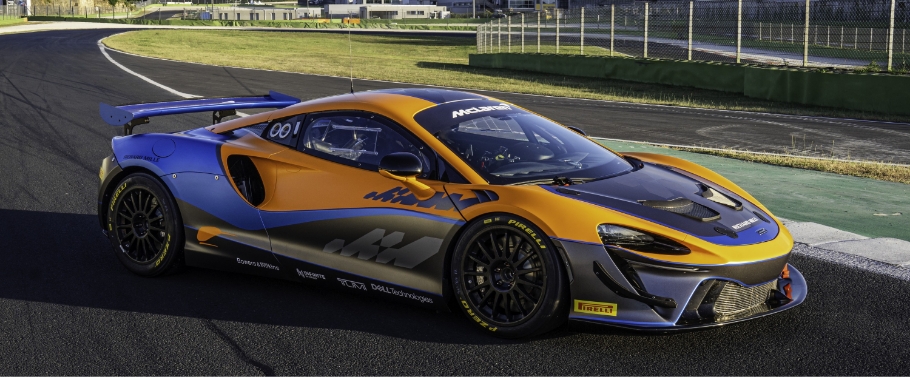
  • Pro-Am McLaren Trophy championship to feature bespoke Artura race car at GT World Challenge Europe events in 2023

    2023 McLaren Artura Trophy Racecar

    McLaren Automotive, the luxury supercar manufacturer, today announces the McLaren Trophy, a new racing championship designed to challenge and develop Pro-Am driver pairings within a sociable environment at some of Europe’s best racing circuits alongside Fanatec GT World Challenge Europe powered by AWS events when the series makes its debut in 2023.

    McLaren Automotive is firmly established as a front-running force in GT racing, with the 720S GT3 and 570S GT4 – the latter soon to be replaced by the new Artura GT4. The Artura will be central to this new one-make supercar championship for aspiring and established professional and amateur GT pairings.

    All-new Artura Trophy race car

    At the heart of the McLaren Trophy is the all-new Artura Trophy race car. It is based on the Artura GT4 but freed from Balance of Power (BoP) regulations. This provides the benefit of enhanced power and downforce levels to increase engagement and reduce lap times to a level closer to GT3 machinery.

    The Artura Trophy also shares much with the highly acclaimed McLaren Artura road car, including the McLaren Carbon Lightweight Architecture (MCLA) which makes it incredibly rigid and safe. Allied to the all-new 120-degree twin turbo V6 engine – freed from BoP regulations to its full 585PS in the Artura Trophy – it is sensationally fast in a straight line. With all BoP weight also removed and an enhanced aerodynamic package – which includes a high-downforce wing – it is supremely agile in both low and high-speed corners. An enhanced exhaust system means that it will sound just as spectacular as it looks.

    Unlike the road car, the Artura Trophy will run combustion-only power in order that owners will also be able to easily convert their cars to GT4-specification by adjusting the engine management software and changing the aerodynamic package. This means that they will also be able to compete in GT4 race events without needing to purchase a new race car.

    The similarity to the Artura GT4 also means that the Artura Trophy’s astonishing capabilities are accessible to amateur drivers. It is also designed for serviceability, with an adjustable Bosch engine management system, inboard radiators and a rear deck that can be lifted away without needing to remove the rear wing.

    “I’m really looking forward to seeing the new Artura Trophy car in action. From my experience in both motorsport and at McLaren I genuinely believe that this is a great race car and a massive step on from anything we’ve ever produced before for this type of championship. There’s nothing that exists currently to offer the same prospect to aspiring or professional and amateur GT drivers and already we’ve had huge interest in both the new car and the championship.”
    Ian Morgan, Director of Motorsport, McLaren Automotive

    Cars will be run by independent teams with the existing 570S Trophy cars also eligible for the series. Many of these cars are owned by competitors from the previous Pure McLaren GT Series and McLaren looks forward to welcoming them to this new championship, where the 570S Trophy cars will compete for class wins and championships in 2023. While this car is no longer in production, McLaren Customer Racing continues to support owners and teams with replacement parts and technical backup.

    Premium paddock experience

    While the on-track action is expected to be fiercely competitive, McLaren Trophy drivers will enjoy a relaxed and sociable paddock environment promoting their involvement within the McLaren family.

    Included within this is a McLaren Concierge service aimed at providing a seamless experience including hotel bookings and transfers, ensuring that the competitor’s focus is entirely on their on-track performance.

    Central to the paddock is the McLaren race centre, which takes inspiration from the McLaren Formula 1 team, where drivers can entertain friends, family, sponsors and team managers, host meetings or simply relax. Competitors will also benefit from the racing paddock environment experienced by the fortunate few who race for McLaren.

    Iconic circuits and high-profile events

    The new championship will join the Fanatec GT World Challenge Europe powered by AWS bill and will be branded McLaren Trophy, Europe, placing the competitors in front of GT teams, drivers and fans and making it an ideal destination for McLaren owners and supporters. Races will also be streamed live in professional broadcast quality.

    Race weekends will begin with two 60-minute practice sessions on the opening day to give the drivers the best opportunity to prepare for the two races ahead. Each race day will follow the same format, with a 15-minute pre-qualifying session, 15 minutes’ qualifying, followed by a 50-minute race with mandatory pit stops for driver changes. For Pro-Am pairings, the Am driver must qualify the car and start the races, putting them at the centre of the action.

    Both the Artura Trophy and 570S Trophy cars will benefit from high-performance tyres supplied by tyre partner Pirelli, using its extensive experience in both Formula 1 and GT racing.

    The inaugural McLaren Trophy season will feature five races at iconic Grand Prix circuits including Paul Ricard, Hockenheim and Barcelona, with a round on the bill of the famous Spa 24 Hour race.

    2023 McLaren Trophy, Europe calendar

    June 2-4 Paul Ricard France
    June 30 – July 2 Misano Italy
    July 27-30 Spa-Francorchamps Belgium
    September 1-3 Hockenheim Germany
    September 29 – October 1 Barcelona Spain


    “We are excited to announce the McLaren Trophy, featuring the new Artura Trophy race car; an elite motorsport championship with a premium paddock experience that is the epitome of the McLaren brand. As the world of Pro-Am GT racing continues to grow, we look forward to welcoming both old friends and the next generation of McLaren drivers to our paddock and many exciting seasons of racing with the spectacular new Artura Trophy race car.”
    Gareth Dunsmore, Chief Marketing Officer, McLaren Automotive

  • NOVITEC McLaren 765LT

    The McLaren 765LT Spider is one of the most spectacular drop-top sports cars on the market, not only due to its extraordinary long-tail design, but also on account of its performance. And thus it also represented the perfect challenge for the engineers and designers of NOVITEC to expand even further on the pre-existing talents with an extensive customization range.

  • All-new McLaren Artura GT4 to make global public debut this week at the Goodwood Festival of Speed

    2023 McLaren Artura GT4 - Side View

    McLaren Motorsport today reveals the new Artura GT4 race car, ahead of its global public debut at the Goodwood Festival of Speed, Sussex, England on June 23-26. Based on the all-new McLaren Artura luxury supercar, the Artura GT4 builds on the huge successes of the multi-championship-winning 570S GT4 and 720S GT3 competition cars.

    The new Artura GT4 shares much of its technology with the all-new McLaren Artura road car, which debuts the McLaren Carbon Lightweight Architecture featuring a carbon fibre monocoque at its core. This motorsport-inspired chassis design and construction is the ideal platform for a race car, as a rigid structure enables a wider setup envelope for the driver as well as providing a strong and extremely safe driving environment.

    The minimisation of weight is a key element of the Artura road car, and this philosophy continues in the race car – with a compact V6 engine and ancillaries including the exhaust system all weight-optimised, the new GT4 car is more than 100Kg lighter than the outgoing 570S GT4.

    The Artura road car has a hybrid powertrain with an all-new, compact twin-turbo 120-degree V6 petrol engine, allied to an Axial Flux E-Motor located in the transmission. The V6 engine alone generates more than enough output for the tightly-controlled GT4 racing requirements, where regulations do not permit hybrid powertrains. The lack of hybrid components delivers a weight-saving of 130kg on an already super-lightweight car, while the space within the carbon monocoque for the hybrid battery of the road car now houses the fuel cell and ancillary drive system, keeping weight central and low down.

    The new V6 engine features fast-responding twin turbochargers situated within the engine vee and the unit has been designed to offer improved throttle response and fuel economy compared to the older M838 V8 used in the 570S GT4, even without electrification. Considerably lighter and smaller than the older unit, the new V6 engine further improves power-to-weight, lowers the car’s centre of gravity and benefits weight distribution.

    The V6 engine is controlled by a Bosch Motorsport ECU to fine-tune Balance of Performance management, essential for competing in the GT4 category. The Artura GT4 also features a modular motorsport wiring harness for serviceability, reducing repair times and costs. This interfaces with a motorsport electrical system for enhanced versatility, with the benefit of more robust and variable control systems.

    Power is delivered through a seven-speed gearbox with an improved set of ratios optimised for performance and the transmission system has onboard diagnostic software. The unit is not the same as the Artura road car’s eight-speed seamless shift gearbox as this employs the E-motor for reversing; GT4 regulations demand that the car must have a reverse gear.

    The Artura road car carries the McLaren design principles of ‘everything for a reason’ and accordingly has high aerodynamic efficiency. The GT4 iteration extends this further with an aerodynamic package that offers greater downforce than the outgoing 570S GT4 particularly at the front end, which features a bespoke splitter, dive planes and bespoke bonnet duct. At the rear a high efficiency wing incorporates seven angle settings to cover a wide spectrum of circuit types.

    Track excellence is an important part of the GT4 equation, but the Artura GT4 is designed to race in a category governed by Balance of Performance technical regulations that are intended to equalise a wide range of supercars and GTs with differing chassis layouts, power outputs and weights. Much attention, therefore, has been paid to the accessibility and safety of the Artura GT4 to both drivers and race teams.

    Drivers of McLaren Automotive road and race cars have always enjoyed excellent visibility for both placing the car on track and in the intensity of wheel-to-wheel racing and the Artura GT4 further improves upon the 570S GT4 in this regard. Ingress and egress is also better, important for swift driver changes mid-race. Safety levels are on a par with the 720S GT3, including the fixed FIA 8862 spec driver’s seat with adjustable pedals for reach and the steering wheel is also inspired by the GT3 car with illuminated buttons for competition in all conditions at both day and night. The cockpit also features a new Bosch DDU instrument display, with enhanced graphics.

    Suspension and handling is enhanced over the 570S GT4 with the front wheel width increased for more grip and less tyre degradation with development carried out in conjunction with tyre partner Pirelli. At the rear a mechanical Limited Slip Differential offers increased grip and performance with the benefit of improved rear brake wear, performance and reduced fuel consumption over the 570S GT4’s Electronic Stability Program system. Damping has also been improved, as has brake cooling efficiency. Driver aids include motorsport-specific Anti-lock Braking and Traction Control systems with adjustment for different grip conditions.

    The Artura GT4 has also been built with bespoke motorsport-specific components to enhance performance, durability and serviceability for the extreme conditions of racing at the most demanding circuits. All of these components have been subjected to rigorous assessment to ensure that they have an increased lifing schedule.

    Serviceability improvements include a removeable bonnet for ease of access and a 110-litre fuel cell with two motorsport lift pumps and a main pump for increased reliability and performance. The rear wing is mounted to the chassis using a new ‘G-Pylon’ design that means the rear bodywork can be removed without having to dismantle the wing. In the interests of robustness in the heat of battle, the Low Temperature Radiators have been moved inboard while the high-level exhaust system is now solely mounted to the powertrain; sound volume is recorded at 105dB static.

    Purchasers of the Artura GT4 will also be able to order from a comprehensive list of options to support a range of competition and track environments. These include the fitting of a passenger seat and harness. Both seats can be specified in a variety of sizes.

    Additional driver aids available to purchase include a Tyre Pressure Monitoring System, V-Box telemetry and a Collision Avoidance System radar, and a data pack is available with laser ride height sensors, damper potentiometers and brake Infra-Red sensors. Endurance racing options include additional lights for night racing and a drinks system, while left-hand fuel fill and air jack lance are available for differing pit-lane demands.

    “The Artura GT4 is the second race car to be built from the ground-up by McLaren Automotive’s Motorsport division. Based on the revolutionary new McLaren Artura, it represents a significant step up from the outgoing 570S GT4, itself a hugely successful competition car which has achieved many race and championship wins with our customer racing teams. With lighter weight, extremely precise handling characteristics and enhanced durability – as well as the packaging and efficiency advantages and all-round serviceability for mechanics of the new V6 powertrain – the Artura GT4 will set new class standards, as we are already seeing from our extensive test and development programme.”
    Ian Morgan, Director of Motorsport, McLaren Automotive

    The Artura GT4 will make its global public debut at the Goodwood Festival of Speed on June 23-26, where visitors will be able to see it in action on the hill ahead of its competitive debut. At the wheel will be McLaren Factory Driver Rob Bell, winner of last year’s Timed Shootout Final in the McLaren 720S GT3X.

    McLaren Automotive’s motorsport division will continue an intensive test and development programme ahead of the 2023 season when the first customer cars will compete. Customers can register interest in the new Artura GT4 now, through McLaren Motorsport Retailers.

  • McLaren F1 road car sets a record $20.465 million at Gooding & Company’s Pebble Beach Auctions

    1995-McLaren-F1-Forest-910A unique “time capsule” McLaren F1 road car has set a new record with an auction price of $20.465 million at Gooding & Company’s Pebble Beach Auctions

    With less than 390 kilometers on the odometer, this neat example of an F1 was sold in an “as delivered” state and surpassed the previous record of $15.62 million set back in 2017.

    The vehicle with Chassis 029, which has rarely been showcased to the public, has spent most of its years hidden in a private Japanese collection. The model attracted tons of biddings. Carefully maintained and rarely driven, the car is in pristine condition and features only original parts, down to the date-coded Goodyear Eagle F1 tires.

    This is a 1995 model and is the 25th car built, and the only one finished in a single color scheme, named Creighton Brown. There are only 106 units produced and only 64 being completed to original road car specs.

    SEE ALSO: SsangYong will showcase new models and technologies at the British Motor Show

    We were incredibly proud to present this exceptional McLaren F1, and tonight, the market confirmed the sheer prowess of this unparalleled supercar from one of the most legendary names in motoring,” said Gooding & Company President and Founder, David Gooding,  This sale was a historic moment not only for Gooding & Company but for the McLaren legacy and the entire industry as a whole.


  • McLaren unveils new Artura hybrid hypercar at the British Motor Show this August

    2021 McLaren ArturaMcLaren Automotive will have a major presence at the British Motor Show, headlining with the all-new Artura – the brand’s first high-performance hybrid supercar. The show will be held at the Fanborrough Exhibition Centre.
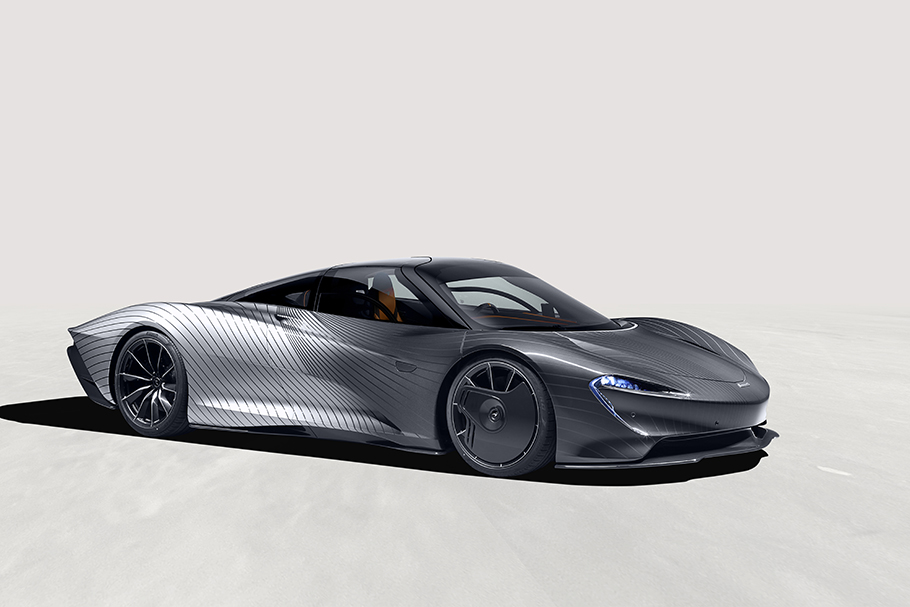
    Covered in Ember Orange, the Artura’s appearance will remain true to the brand’s tradition of innovation and will demonstrate advanced technological features, and new design approaches.

    Built at the McLaren Composites Technology Centre in the Sheffield region, the vehicle features an all-new 120-degrees twin-turbo 3.0-liter V6, assisted by a compact 94bhp axial-flux E-motor. The total output with this combination is 680hp and 720Nm, which ensures pretty quick runs measured at 0-100km/h in 3 seconds, 0-200km/h in 8.3 seconds and 0-300 in 21.5 seconds.

    Along with the new Artura, the audience at the show will have the chance to see a full range of McLaren series production cars, including a 720S in both Coupe and Spider form. Also on display will be a GT finished in Serpentine finish.

    SEE ALSO: McLaren is ready to open its 100th retail opening

    We are delighted to support the British Motor Show, located just a short drive from Woking, just as the new Artura heralds an exciting new chapter for McLaren. The Artura represents the full force of McLaren – not just our first ten years as a volume luxury supercar manufacturer, but six decades of innovation and success in high performance. It joins our acclaimed series-production range alongside the 720S – the benchmark supercar – and the GT, our most accessible high-performance car yet, Brett Soso, Managing Director – Europe, Middle East & Africa, McLaren Automotive


  • McLaren pays tribute to the first Speedtail attribute prototype, Albert

    2021-McLaren-Albert-910McLaren Special Operations unveils the “Albert” Speedtail, an exclusive commission by Mclaren Beverly Hills.

    This is one of the final vehicles in the 106-car Speedtail production run and it pays homage to the first Speedtail car from 2018. The vehicle was developed in order to validate the concept of the Speedtail’s central seat position, and to enhance the driving ergonomics and visibility.

    In terms of exterior, the design team decided to go with camouflage coverage and with a simple two-metre vinyl body wrap with design lines that represent the optimized airflow of the body. Also, some of the exclusive colors include a Magnum Silver, the color of the F1 road car that was first unveiled back in 1992 at the Monaco Grand Prix and Ueno Grey, the choice for the F1 GTR that won the 24 Hours of Le Mans back in 1995.

    New Albert is built by McLaren Production Centre and features numerous carbon-fibre components, complex and detailed paintwork, and, as expected advanced drivetrain system.

     The name Albert has a special resonance with MSO, as we are the custodians of the McLaren F1 and are based at the Albert Drive premises that McLaren Cars occupied in the 1990s. The Speedtail experience has been an exciting journey for our customers, from visualising their imaginations to realising these inspirations and sharing their delight when unveiling the finished product. ‘Albert’ brings this project to a conclusion and we are thrilled to finish on a high note.
    Ansar Ali, Managing Director, McLaren Special Operations

    SEE ALSO: AC Cobra Series 1 Electric will make its debut at The British Motor Show

    The Albert Speedtail will make its public debut at Sunset GT, hosted by O’Gara Beverly Hills, which takes place on Sunday 8th August 2021 in Sunset Plaza, Los Angeles, USA.