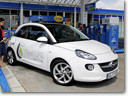
Opel has unveiled a more economical bi-fuel version of the Adam, which is now able to run on LPG. The new ADAM 1.4 LPG ecoFLEX is optimized for operation with LPG (Liquefied Petroleum Gas), but can also run on gasoline – the driver can have the remaining driving range readout shown on the digital instrument display at any time.
2013 Opel Adam LPG is powered by a four-cylinder 1.4 liter ecoFLEX petrol with 87HP (64 kW). It needs 6.9 liters / 100 km (34 mpg US) with CO2 emissions of only 112 g/km when running on LPG.
The LPG tank is under the floor in the rear which means cargo capacity has been preserved as well as the safety. It can hold 35 liters, which means that the Adam has a range of approximately 500 km (310 miles), while together with the gasoline tank it will do around 1,200 km (745 miles).
2013 Opel Adam LPG is priced from €16,150 (VAT included) in Germany.
With the ADAM 1.4 LPG ecoFLEX, Opel expands its LPG fleet to ten models: the Corsa (three and five-door), Astra (five-door and Sports Tourer), Meriva and Zafira Tourer as well as the new Insignia (four and five-door sedans, Sports Tourer) are already available as bi-fuel LPG versions.
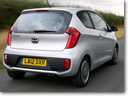
Kia is going to introduce an LPG version of the small Picanto hatchback at the 2013 Frankfurt Motor Show. The ultra-efficient small car will be able to run on either LPG or petrol.
2013 Kia Picanto LPG is powered by a 1.0 liter three-cylinder Kappa petrol engine with 67HP (49 kW) and 90Nm (66 lb-ft) of torque. The average fuel consumption is just 5.8 liters / 100 km with CO2 emissions of 100 g/km (on LPG). The models equipped with automatic start-stop (ISG) achieve 5.6 liters / 100 km.
The new Picanto LPG is fitted with two fuel tanks – the regular 35-litre gasoline tank in the regular position ahead of the rear axle and a 27-litre pressurised LPG tank located beneath the trunk floor in the space previously occupied by the spare wheel. Drivers can switch from gasoline to LPG (and vice-versa) simply by pressing a button on the dashboard.
Initially, the bi-fuel model will be available in Germany, Italy, Poland, Czech Republic, Greece, Portugal and the Netherlands – where it expected to account for up to 7% of Picanto sales. When it goes on sale later this year, the left-hand drive Picanto LPG will be the first, and only, LPG-powered car in the marketplace with a 7-Year, 150,000 km warranty.
Renault has presented the ultra-effective Dacia Duster LPG. The 4×2 version is powered by a 1.6 liter 16 valve petrol with 105HP (77 kW).
The Ambiance and Laureate versions come with identical prices with their petrol-engined brothers – €13,350 and €14,350, respectively. In other words, you get way more economical vehicle with the same power and extras.
The LPG Duster emits just 146g of CO2/km compared with 167g/km when using petrol. Its combined-cycle fuel consumption is 9.2 litres/100km with LPG and 7.2 litres/100km with petrol. However, at less than €1/litre, the pump price of LPG makes it a significantly more economical solution compared with petrol.
As is the case with all LPG vehicles, the driver is free to choose between the LPG and petrol modes, and the switch between the two fuels is very simple. Running on LPG, Duster has a range of almost 1,000km on a full tank.
LPG/petrol versions of Duster come with Dacia’s usual three-year or 100,000km warranty. In 2012, Dacia vehicles represented more than half of total LPG sales in France. The 34-litre LPG tank replaces the spare wheel beneath the boot (tyre inflation kit supplied).
Order books for the LPG version opened across the French Dacia network on January 29, 2013.
Opel are now diversifying their EcoFlex range with with two new, LPG adapted (Liquid Petrolium Gas) additions. The Astra 5-door hatchback and the Astra Sport Tourer will get the more grunty engine while the Meriva will keep it simple with a less powerful and less thirsty version of the former.
This is not Opel‘s LPG debut however. They have been building LPG adapted cars since 2009. Last year, Corsas have started rolling out of the factory with 1.2, LPG modified EcoFlexes that deliver a nimble 83 hp figure and return 110 g/km CO2 which is absolutely not bad for a non-diesel. Now the Astra and the Meriva represent a follow up: they will both get a 1.4 Turbo EcoFLEX designed to sip LPG or run on petrol depending on the driver’s choice. The Meriva engine is slightly underpowered, producing 120 horse powers, 175 Nm of torque while the Astra hatch/Sport Tourer have 140 hp and 200 Nm of torque at their disposal. Carbon dioxide emission figures are 124 g/km and 129 g/km/132 g/km respectively on the combined cycle. Running costs can drop by up to 15% if one prefers driving on LPG and because the engines are Euro 5 rated, road taxation wont be much of a problem. The Astra and the Meriva certainly wont be the last to come with LPG as there are plans to start production of LPG powered Insignia and Zafira models later this year.
EcoFlex Astra Sort Tourer (2013)
The systems are perfectly fitted to cause minimal discomfort to the passengers and driver – the LPG tank is separate and embedded where one would expect to see the spare-wheel (The wheel itself still comes as standard). And because of having a normal petrol tank, just like any other car, the Opels have a combined range of more then 1400 miles if both containers are full. Transition from Petrol to LPG and back is done seamlessly with an ON/OFF button on the center console.
Opel EcoFLEX engine (2013)
LPG integration is part of Opel‘s initiative to lead the “green” market by offering neat alternatives to pure petrol and diesel cars. The new EcoFLEX units will make a fine addition to an already broad portfolio of electric cars and CNG (Compressed Natural Gas) vehicles.
LPG, already familiar to Eastern Europe, is now gathering popularity in Western Europe as well. Over 80 % of the LPG Opels produced have went on the Italian market. The overall infrastructure which allows LPG cars to keep moving is widespread with 6,400 LPG filling stations in Germany alone. Other LPG friendly countries include France, the Netherlands, Belgium and even Britain.
Opel now offers five LPG (Liquefied Petroleum Gas) powered Corsa, Meriva, Astra station wagon and Zafira models with a wide performance range, expanding its line of environmentally friendly ecoFLEX models with alternative propulsion. (more…)
The Golf Plus now also runs on LPG. Thanks to the use of this alternative fuel, a reduction of more than 10% in CO2 emissions and fuel savings of €6.10 per 100 kilometres* in LPG mode could also be achieved, due in part to the reduced German fuel tax in place until 2018. All in all, a solid argument. (more…)
Good news for all owners of gasoline-powered Opel Insignia sedans or sports tourers: The new fahrmitgas.de autogas systems, developed in cooperation with Dutch world market leader Vialle, can cut fuel costs by half and simultaneously reduce CO2 emissions by some 12 percent. (more…)
GM Holden dealerships are now receiving their first deliveries of Holden EcoLine-badged vehicles. EcoLine is the GM Holden brand designed to highlight the company’s broad range of vehicles that use an alternative fuel or fuel saving technology. (more…)
Geneva – In 2009, Chevrolet will further expand its LPG product range throughout Europe. Switzerland, Belgium, Bulgaria, Czech Republic, Netherlands, Poland, Portugal, Slovakia and Spain will offer LPG-versions in addition to the regular gasoline and diesel range. (more…)




 Opel are now diversifying their EcoFlex range with with two new, LPG adapted (Liquid Petrolium Gas) additions. The Astra 5-door hatchback and the Astra Sport Tourer will get the more grunty engine while the Meriva will keep it simple with a less powerful and less thirsty version of the former.


 Opel now offers five LPG (Liquefied Petroleum Gas) powered Corsa, Meriva, Astra station wagon and Zafira models with a wide performance range, expanding its line of environmentally friendly ecoFLEX models with alternative propulsion.
 The Golf Plus now also runs on LPG. Thanks to the use of this alternative fuel, a reduction of more than 10% in CO2 emissions and fuel savings of €6.10 per 100 kilometres* in LPG mode could also be achieved, due in part to the reduced German fuel tax in place until 2018. All in all, a solid argument.
 Good news for all owners of gasoline-powered Opel Insignia sedans or sports tourers: The new fahrmitgas.de autogas systems, developed in cooperation with Dutch world market leader Vialle, can cut fuel costs by half and simultaneously reduce CO2 emissions by some 12 percent.
 GM Holden dealerships are now receiving their first deliveries of Holden EcoLine-badged vehicles. EcoLine is the GM Holden brand designed to highlight the company’s broad range of vehicles that use an alternative fuel or fuel saving technology.
 Geneva – In 2009, Chevrolet will further expand its LPG product range throughout Europe. Switzerland, Belgium, Bulgaria, Czech Republic, Netherlands, Poland, Portugal, Slovakia and Spain will offer LPG-versions in addition to the regular gasoline and diesel range.