Responding to customer interest, Peugeot have came up with this – The 4008 4×4 SUV. A world debut is set for the 2012 Geneva Motor Show and then in April, it will be launched outside of Europe as a C segment all-terrain vehicle to meed the needs of many who are looking for just that (for the last four years, C and D segment SUV demand has doubled in Russia and tripled in Europe).
The 4008 has been designed by Peugeot in collaboration with Mitsubishi and looking at that distinctive front face and specifically the headlights, one can tell. Other eye-catching features include the LED daytime running lights that sit just under the hood and the three red claw sculptured lamps. The platform of the 4008 is partly a derivative of the 4007 one but the former stands 30 cm shorter in length because of compromised overhangs. Otherwise the wheelbase is exactly the same length, preserving the 4008 accommodating and practical – 4.34 m long, 1.80 m wide with a height of 1.63 m Off-roadishness is emphasized by the body sill protectors and the flaring wheel arch protective trimmings. There’s a stylish slash on the sides that goes across both doors and reaches out for the rear wing. It would not be of much use in a marsh pit but it does look stunning as a styling feature.
Peugeot 4008 (2012)
Whiled chromed body parts here and there account for that extra touch of luxury, inside things get even more premium – a fine choice of materials can be seen at the soft texture fascia, the instrument panel visor and the lacquered black decoration of the centre console. There’s a panoramic roof providing adequate sunlight for the occupants and an overall roomy feel. The steering wheel is padded with leather and is festooned with multimedia controls for the sake of accessibility. That said, there is an instrument panel, back-lit day and night. The knobs are round and chunky so that they can be operated even with a glove on. A 7-inch touchscreen satellite navigation is available as an option which has 30gigabytes of memory and can be used as an overall infotainment system rendering graphs of average speed, fuel consumption and vehicle condition.
Peugeot 4008 (2012)
Engine choice is relatively wide with two petrol and two diesels in stock
Petrol:
– 1.6 l 86 kW (115 hp) 152 Nm, 5-speed manual;
– 2.0 l 113 kW (150 hp) 198 Nm, 5-speed manual or CVT.
HDi Diesel:
– 1.6 l HDi PEF 84 kW (115 hp) 270/280 Nm with Overboost, 6-speed manual;
The two HDi drive trains, as well as the 1.6 petrol will be available with Stop & Start systems in the name of frugality. With the manual gearbox we also get a shift indicator so that we know when is the best time to change gear. In return, the 4008 1.6 HDi for example spews out only 119 g/km of CO2 in 4×2 mode and ten more grams in 4×4. Fuel economy figures start from 4.6 l/100 km on the Euro cycle.
Power goes trough a clever yet simple 4×4 system that has 3 modes – 2WD, 4WD and Lock. When in 2WD, the drivetrain sets in motion the front wheels, while in 4WD a computer decides where you need most toque and runs all four wheels. Lock sends power to all four wheels with the back wheels being significantly prioritized, to get out of muddy situations.
To sum up, it’s good looking, its practical, it’s functional and efficient – quite a rival for the rest of the C segment competitors. Check out the gallery. It is a real treat.
Design House Lumma will take part in the 82nd Geneva Motor Show by showcasing a CLR 600 GT. You would be forgiven to think that such a name can only come after crossbreeding a Mercedes with a Ford but the thing is, that underneath the branding and aerodynamic fitments we have a BMW 650i
The Lumma people seem to be attracted to cabriolets as the 650i is the sixth open-top to come out from their works. The company has left its mark on the body with a subtle aerodynamic kit that consists of a front spiler with LED daytime running lights on it, some side skirts and a diffuser at the back. These additions are said to “give the BMW Cabriolet a sporty appearance…” but giving a sporty appearance to a BMW 6-series is like importing ice cubes to Antarctica. From underneath, four, stainless steel pipes (90 mm in diameter each) give away the custom flow muffler. But even if you do not catch a glimpse of the posterior, you will most certainly hear it roar. Four are also the Black Lumma GTB Monoblock alloy rims wrapped with Vredestein Ultra-High-Performance 255/35-20 tires at the front and 285/30-20 ones at the back. The dark finished racing spokes present, reveal contrasting yellow brake calipers for that extra daring feel.
Lumma BMW 650i (CLR 600 GT)
Speaking of daring, we cannot omit mentioning the Lumma tweaks on the BMW‘s power plant. The TwinPower V8 which usually produces 408 bhp has underwent some engine electronics overriding and now we have a 490 restless horses ready to go out. Torque has also been revamped and now it peaks at 720 Nm. This performance upgrade will benefit acceleration but in terms of top speed the limiter stays at 160 mph (5 mph more than standard).
Inside there is enough leather and Alcantra to shock even a fashion designer. The pedals flash from down under with their aluminum shine while the floor and trunk mats are from velour. A “Lumma” inscription on the glove box lets you know that there are people out there who think for you and your dream to be an exclusive individual in an exceptional car.
If you want something really exclusive, Prindiville Design might have the solution – the Limited EditionLand Rover Defender. There are only 25 units available worldwide and all have been assembled by hand. Performance has been tweaked by Defender specialists, Alive Tuning.
Prindiville began with a standard Defender 90 Hard Top and, being proficient coachbuilders, completely overhauled the exterior and interior. Enhancements to the suspension, braking system, cooling, and engine on the other hand, have been made by the Lincolnshire-based Alive Tuning company.
Customers decide upon choosing a body color that will best match the Prindiville designed exterior complete with a titanium high performance sports exhaust, chrome side protection runners, LED front and rear headlamps and a ribbed undershield. Also provided are the front and rear parking sensors and cameras. Four 18-inch five-spoke alloy wheels harbor Prindiville six-pot callipers and sport discs. For the ultimate road stance and balance some performance springs have been thrown in as well.
Prindiville Defender Limited Edition (2012)
Inside the Cobra sport seats are wrapped in Italy’s finest hide which can also be found on the steering wheel. The Alcantra driver and passenger carpets, the unique center console storage unit are all coordinated with the overall color of choice. Every single Prindiville Defender has a unique number (naturally up to 25) aluminum plate on the dashboard, commemorating the series in the coachbuilder’s prestigious collection.
Soundproofing the cabin is not only beneficial in reducing engine noise but it also creates an adequate environment to indulge ourselves in the Prindiville provided multimedia systems – a five-inch built-in LCD television interface providing access to wireless Internet, a DVD player, satellite navigation, 360-degree external vision, surround sound from four loudspeakers.
The Limited Edition offers a choice of four different power upgrades, which gradually increase the output of the 2.4-litre TDi powerplant from 122 to 190 bhp. Add to that a dual-range six speed transmission, which can be further upgraded to an automatic or tiptronic gearbox you get an off-roader like no other. Street performance on the other hand is further enhanced with the addition of a high flow intercooler, silicone hoses and a turbocharger. You’ll be going from 0 to 60 mph in just 10 seconds with that package. Yikes!
The Kia Track’ster concept is out of the box. Attenders at the Chicago Auto Show yesterday had the privilege to witness the rather dramatic revealing. And now when the Track’ster is open to the public, we do are not sure from where to start.
Although it is based on the current Soul, in essence it is an entirely different car. The Track’ster is simply exciting to look at thanks to those air-gulping, carbon grille installations across the front and the massive auxiliary LED lights that complement them. The headlights themselves are impressive enough with that flowing figure that seems to be reaching for the fenders. And can you not notice the color of the whole thing? It’s white and orange as if it’s a pair of trainers – The roof and lower front, side and back valances are in, what Kia calls, an ‘inferno’ shade. That burning hue can be noticed as a motive also on the mirrors and at the front air-scooping slit and inside. To do the honor of the overall sculptured body lines of the Track’ster, Kia have fitted four HRE-K1 monoblock billet performance wheels. Ideal tires would be 245/40-19-inch for the front wheels and a stunningly wide and low pair of 285/35-19′s at the back.
More features that set the Track’ster apart from the Soul include the dimensions – 101.2-inches of wheelbase length make the concept almost an inch longer than its production parent. And most certainly, the 14-inchBrembo vented and cross-drilled brake discs at the front and 13.6-inch ones at the back, gripped by six and four-piston calipers respectively, do not come as standard on a Soul but they are present in Track’ster. Such suspension attention on a concept car seems redundant but when we realize that the Track’ster hides a 2.0-liter, straight four turbocharged power plant that develops 250 hp things start to make sense. What also makes sense is the power being channeled trough an electronically controlled four-wheel-drive system in order to prevent any torquesteer, understeer or oversteer tendencies. The transmission is a six-speed, short-ratio manual controlled by a stubby gear stick found on the center console (naturally).
Speaking of the center console, the inside of the car is certainly a place where we or any other car enthusiast might like to spend a great deal of time. The two bucket seats at the front are dressed in gray and orange (inferno) leather. The dashboard, door panels and center console have the same motives with added white patterns. There are standalone gauges on top of the dashboard that indicate things like oil pressure, temperature and battery voltage. Just bellow is a touch-screen interface which deals with the navigation, ventilation and entertainment system. The start button on the other hand, might just be the most exciting feature of all (for a 10 year old).
A part of the Track’ster‘s “street” appeal is lost when we look at the back where, on a normal Soul, one would find rear seats. The Track’ster however stands by its name and occupies the rear space with a section for tools, a sport’s gear compartment, a place for a spare tire and other track-friendly items. It all sounds like a car enthusiast’s dream really. Except one problem – Kia are not thinking of actually making it. It is said that the Track’ster is more of a test for the company’s engineers and their creativity and ability to make perfect, road going, performance superminis. Point taken.
The Super Bowl is as much about the commercials as it is for the football itself. So for the fifth consecutive year, Audi will air a :60 spot during the first quarter of the Super Bowl with focus landing on LED technology. The San Francisco-based Venables Bell & Partners studio is in charge with the creative ad. The only other known fact is that the 2013 Audi S7 sedan will also be somehow featured. The rest can be seen on Sunday, Feb. 5, 2012 when the big game starts.
LED usage in headlights first started appearing on Audi’s 10 years ago and the effect on the market since then has been tremendous – virtually every other car maker now offers LED with their latest products. Today, Audi LED lights are efficient and elegant. Traditional lights take 0.2 seconds to engage while LEDs are immediately activated making driving safer, faster. In addition to safety, LED lights save resources by using 50-percent less power required from the alternator – which in turn reduces the load put on the vehicle’s engine – and can last the lifetime of a vehicle.
Audi S7 (2013)
The new Audi S7 is also efficient and elegant with the sleek profile of a coupe and the four doors of a sedan. Standard technology includes Audi connect™ which enables you to browse Google Maps™ and Google Search™ and provides for you a Wi-Fi® hotspot. Hope that connection is fast enough to keep up with the S7 for under the hood lays a 4.0 TFSI 420 hp/406 lb-ft of torque masterpiece which will take you anywhere you want in a matter of seconds.
Past Super Bowl spots on Audi have included the A8, the “green car of 2009” A3 TDI and the legendary R8 and they have all been pretty good. Can’t wait to see what Venables Bell & Partners have come up with this time.
With a total of 730,000 units sold, Renaultis betting on their affordable and hugely popular Megane when it comes to sales. So keeping up on the quality, refinement and reliability is crucial for the annual revenue. The MY 2012 Megane receives minor changes on the outside and inside and it also debuts three new start/stop engines which return stunning fuel economy figures.
The exterior changes are pretty standard with the LED daytime running lights, a black glossy bumper with chrome lining and a complete revision on wheel selection. Inside new trim levels are available including a two-toned leather pack available for customers in the UK.
Newly F1-engineer-developed engines are now being employed in the fresh lineup of MY 2012 Meganes. We have two downsized diesels – a 1.5 dCi with 260 Nm of torque, 110 hp and a whopping figure of 80.7 mpg (combined). Carbon dioxide emissions are down to 90g/km. Then there’s the 1.6 dCi with 130 hp, 320 Nm of torque and a combined fuel range of 70 mpg. That fuel efficiency is courtesy to the Stop & Start and brake energy recuperation systems that come with the diesels.
Renault Megane Sport Tourer (2012)
Th engine that takes the spotlight however, is the TCe 115 – this is the first petrol engine in a Renault that incorporates direct injection and a turbocharger at the same time. The engine block is 400 cubic centimetres smaller than the previous 1.6 16-valved one but overall power is up by 5 hp making a total of 115 hp. In fact, it is said to be the most powerful 1.2 engine in the world. And as it turns out it may be the most economical as well for it too makes use of the Start & Stop system usually reserved for diesels. Therefore we have 53.3 mpg on the combined cycle and 119 g/km of carbon dioxide emissions.
Worry not because, cleverness goes beyond the engine bay as the Megane has some neat driver aids like the Hill Start Assist function which holds down the brakes for a while on attempting to start off on a steep hill. The decision to let in air from outside or cycle the one inside is left to a computer which measures the air quality of the surrounding air. The Renault Visio System on the other hand is basically a camera attached to the rear-view mirror, scanning the road ahead and alarming for things like lane changing etc. It also analyses the visibility conditions outside and decides alone when to put on high-beams or low-beams.
The R.S. Line also gets an update with new a new leathery interior sewn by red stitching, a sportier steering wheel, branded door sill guards and a distinctive dashboard trim strip – the genetic code of the Renaultsport dynasty. On the outside, the R.S. gets specially designed, curvy LED lights which further assert the MY 2012 Megane’s aggressive stance.
2012 Renault Megane Renaultsport 265
And now there’s an anniversary model called the Renaultsport 265 and as the name suggests it develops 265 hp (15 more than the previous one). Further down the road, for a more complete sporty feel, the engineers at Renault have fiddled with the exhaust system with the result being a more satisfying tone. Distinctive features of the 265 include an F1 styled front blade garnished with rows of LED’s, and fresh 18 inch wheels as well as the 19 inch ones now incorporate R.S branding at their centres. Customers can op for redlining on the diffuser, front blade and the side sills while inside a two tone leather upholstery can be added consisting of light grey and charcoal.
Hyundai Motor America has introduced the new 2012 Azera, which is the fifth vehicle to adopt the company’s signature Fluidic Sculpture design language. The 2012 Azera represents a modern approach to the traditional large sedan segment by using an advanced powertrain, emotional design and luxury features offered with Hyundai’s strong value proposition. This approach has been successful for the other Fluidic Sculpture vehicles.
Azera is the model sitting between Sonata and Genesis. It comes with exclusive exterior design featuring xenon headlights, LED taillights and big 18” alloy wheels. The elegant look continues in the interior, too. Hyundai has created an upscale ambiance, thanks to a flow-through center fascia and instrument panel. These flowing surfaces complement the exterior design and wrap around the driver and passengers. The cabin comes with heated leather seats and SAT NAV, but you can also order premium 12-speaker Infinity audio system, ventilated front seats and a panoramic sunroof. Among the standard equipment, you’ll find dual automatic climate control, second row air vents and cooled glove box.
2012 Hyundai Azera Interior
2012 Azera is powered by Lambda II 3.3-liter GDI V6 with 297PS (218 kW) and 345Nm (255 lb-ft) of torque. It is mated to a 6-speed automatic with SHIFTRONIC manual control. The fuel consumption is satisfying – 20 mpg in the city and 29 mpg on the highway.
The vehicle sits on 245/45 R18 tires on 18” Hyper silver alloy wheels – standard. There is an optional 19” Hyper silver alloy wheel fitted with 245/40 R19 tire.
Azera has a Vehicle Stability Management (VSM) system, which optimally manages ESC (Electronic Stability Control) and the Motor-Driven electric Power Steering (MDPS).
The colour range includes Black Onyx Pearl, Porcelain White Pearl, Silver Frost Metallic, Smoke Gray Metallic, Hyper Silver Metallic, Venetian Red Pearl, Bronze Mist Metallic and Midnight Blue Pearl. Interior color choices are Camel, Graphite Black and Chestnut Brown.
2012 Hyundai Azera
2012 Hyundai Azera:
All-new second generation Azera with Fluidic Sculpture design
Powered by a new Lambda II 3.3-liter Gasoline Direct Injection (GDI) engine and in-house six-speed automatic transmission
Horsepower: 293 at 6400 RPM
Best-in-class combined 23 mpg
Better combined fuel efficiency than Nissan Maxima, Ford Taurus, Lexus ES350 and Buick LaCrosse V6
Best-in-class specific output
Nine standard airbags – includes knee airbag
Impact-reducing front seat system
Standard VSM, ESC, TCS, ABS with Brake Assist and EBD
Best-in-class head and leg room for front-seat passengers
Standard 18-inch alloy wheels and optional 19-inch alloy wheels
HID Xenon headlights with LED accents
Segment-exclusive standard navigation system with rearview camera
Standard leather interior with heated front and rear seats
Bluetooth® hands-free phone system with voice recognition
Small and ugly? No, it’s not SMART, at least not this time. The answer is an all-new Kia Ray compact vehicle. Fortunately, the vehicle will be sold exclusively in the Korean home market.
2012 Kia Ray City Car is aimed to provide its customers economical travelling and spacious interior. Of course, the exterior paid the huge price. It looks exactly like a lunch box. There are no words about powertrain options, which will be announced closer to the yet-to-be confirmed launch date, but you haven’t expect a lot.
Kia Ray has sliding rear passenger side door, which has to enable easier entry and exit in tight parking spaces, but it looks really bad, because the symmetry is broken.
From the rear, Ray presents a wide and stable stance, highlighted by prominent LED rear combination lamps and vertically positioned bumper reflectors. So, you’d rather look this thing from behind.
In conclusion, Kia Ray is a very bad copy of Scion xB and we are kind of happy, that it will never reach the European or US market.
Kia Ray
Source: Kia
Kia Ray is a very bad copy of Scion xB and we are kind of happy, that it will never reach the European or US market.
Audi wants to boost their positions in motorsport in China, that’s why they will bring Audi R18 TDI at the 6-Hour Race in Zuhai.
In 1985 and 1986, the legendary Audi quattro won the Hong Kong-Beijing Rally two consecutive times. Audi competed with the A4 DTM at Shanghai twice. And on the debut of the sports prototypes at Zhuhai last year the spectators were thrilled by the Audi R15 TDI.
Audi R18 TDI is a true masterpiece with a number of genius engineering solutions for the ultra-lightweight design.
The big V10 is replaced with a 3.7 litres V6 TDI with sensational 540PS (397 kW). It is connected to a new 6-speed gearbox made of carbon-fiber composite material.
Weight is saved even from the headlights, which feature LED technology. Because the gearshift is no longer activated pneumatically but rather electrically, the R18 TDI requires no more pneumatic system. Optimized airflow through the cockpit should make air-conditioning redundant.
Audi fans around the world will be able to watch the ILMC finale live on the internet on Audi.tv. The broadcast from Zhuhai will start at 11 a.m. local time (4 a.m. CET) on November 13. Eurosport will broadcast the final stages of the race live from 8:30 to 10:00 a.m. (CET).
Diesel-electric hybrid and distinctive ‘high-end’ appeal combine to offer an original view of the world of all-wheel drive vehicles with enhanced driving pleasure: introducing the new Peugeot 508 RXH.
RXH demonstrates the modern, enhanced ‘top-of-the-range’ vision for Peugeot, and has its world premiere at the Frankfurt Motor Show. The style of the 508 RXH and its innovative HYbrid4 drive unit provide features that allow it to combine new levels of driving freedom and pleasure in a form not seen before in its segment:
200 bhp
ZEV – 100% electric mode
Four-wheel drive
CO2 emissions of 109 g/km
After the successful launch of the 508 Saloon and SW in spring 2011, where they were highly acclaimed for their styling elegance, on-the-road presence, high levels of build quality and attention to detail, the 508 RXH further elevates the profile of the entire Peugeot brand reinforcing its technological and environmental leadership.
The 508 RXH has a road presence and specific design that immediately places it in the environment of ‘top-level’ all road vehicles. Unique, refined, higher and wider, it is also distinguished by a singular visual identity, characterised by its distinctive LED daytime running lights that give an impression of having three vertical ‘lion claws’ on each side of its ‘floating’ grille, the combined style of which is all the more striking.
To reinforce its exclusive character, the interior of the 508 RXH benefits from special features with distinctive colours and the use of luxurious materials.
Its unique level of finish and equipment is coherent with the ‘top-of-the-range’ and technological positioning of the vehicle. Richly equipped as standard with electric front seats, head up display, 18″ wheels, panoramic glass roof, dark-tinted acoustic laminated side windows, half leather trim, head up display, latest generation audio and satellite navigation RXH welcomes its occupants with care, refinement and a high level of comfort features.
Equipped with the 2.0 l HDi FAP HYbrid4 powertrain, a world first when featured in the 3008 HYbrid4, the diesel-electric hybrid in the 508 RXH extends driving freedom and pleasure to traverse all roads. With a maximum power of 147 kW (200 bhp), four-wheel drive and a maximum torque of 450 Nm, the 508 RXH has been designed to adapt to all uses, in a wide spectrum of conditions. Furthermore, it opens up new perspectives in the segment, offering a ZEV (100% electric) mode, ideal for driving in town and capable of delivering, in the Combined Drive Cycle, 67.2 mpg with CO2 emissions of 109 g/km.
Following the launch of the 3008 HYbrid4 in the autumn, the Peugeot Marque continues its innovative strategy, combining enhanced driving sensations and advanced environmental developments by extending HYbrid4 technology to other models.
The 508 RXH will be unveiled as a world premiere at the Frankfurt International Motor Show in September 2011, and goes on sale in spring 2012.
2012 Peugeot 508 RHX
Peugeot 508 RXH
The 508 RXH represents the new, up market positioned Peugeot.It sees the launch of an identity that combines the traditional designation of Peugeot models, incorporating the central zero, and three letters that characterise the Marques specialist vehicles. This new model both heads up and extends the 508 range, with an original design silhouette, justifying its exclusive designation – RXH.
A distinctive appeal
The 508 RXH styling has its own distinctive character within the 508 range. Its elegance and style place it immediately in an exclusive world that combines premium-positioning, technology with the ability to experience adventure and promises of a new and unparalleled driving experience.
With a 40 mm wider track and its height increased by 50 mm, this new Peugeot has an individual stance, without sacrificing the characteristics of the 508 range – poise, elegance and status. The use of new, 18” forged wheel rims allowed designers to create a very fine wheel design with an internal diameter increased by 10 mm in comparison with conventional wheel rims. The result is a dynamic and elegantly enhanced body style.
Its adventurous side profile is illustrated through the bodywork extensions in satin stealth grey that envelope the lower body of the car. From the bottom of the front bumper, the line extends over the wheel arches, along the sill panels to meet the rear bumper. The choice of the satin trim finishers contribute to position this estate car within a refined world, as do the satin chrome inserts, with ‘HYbrid4’ badging, that adorns the sill panel, and front and rear protective trims. Fully integrated, they reflect the integrity applied to the cohesive design of the 508 RXH.
This individual personality is more striking at the front end, which has become even more expressive while maintaining the strength of the brand’s new style aesthetics. Accompanying a wider and taller body silhouette, the grille is extended on its lower edge. More strikingly, the new grille accentuates the illusion that it is ‘floating’ within the aperture. To achieve this, designers have taken influence from aviation reference points, notably taking inspiration from aircraft jet engine cowls. The air therefore seems to be well-channelled around the grille, which stands out distinctly from the bonnet line.
Its distinctive style lines give the 508 RXH a very individual visual identity. It is the first Peugeot to use the iconic theme of the ‘claw’ on the front. Its LED daytime running lights illuminate to form three ‘lion claws’, instantly recognisable by day and by night to reinforce the characteristic ‘feline’ appearance of the head lamps. This unique and dynamic signature is complemented with the illumination of seven orange LEDs, from within the LED tube that is an original directional indicator function.
Like the 508 SW, the lines flow together in a harmonious and dynamic manner, falling back to a rear that is well seated on its haunches. The extensive panoramic glass roof has the benefit of being a continuation of the windscreen, with the profiled aluminium roof bars merging with the bodywork to enhance the exclusivity of the car. In this spirit, there are flush surfaces, highlighted by its high build quality finish. At the rear, the lights portray an elegant red band that glows brightly when the lights are on.
Refined interior styling and technology
The styling of the dashboard is centred heavily around the qualities evoked by the exterior design of the vehicle, with continued illustrations of high quality, purity, elegance, etc. Its design supports a multiplex centre console with switchgear that is equipped with technology designed to provide easy control to a host of features.
This purity and simplicity of design and integration is best demonstrated on the HYbrid4 drive mode selection knob and the gear selector lever. It has the design that combines the traditional gear selector lever and a computer mouse called the ‘manettino’ – it fits perfectly into this pure and technological environment.
White backlighting is available throughout the 508 RXH interior (on the instrument panel, displays and the various lighting zones within the car), showing great care in detail and finish. It is this and the attention to detail that illustrates the hallmarks of the latest Peugeot range.
The car’s internal trim and decor have been created in harmony, evoking elegance without ostentation. The use of natural materials and colours, sometimes exclusively, enhance the distinctive character of the 508 RXH. Brushed aluminium and shaded lacquers are used on the dashboard for the first time in this way. A spectacular treatment in keeping with the electricity supplied by HYbrid4 technology, this decor is specified in tinted shades of copper. This theme, again unprecedented, is subtly continued throughout the interior with matching trim stitching in this copper shade. The exterior is also themed with a copper colour theme through the colouring of the lock tumblers in Calern Brown, a shade exclusive to the 508 RXH.
The choice of light-coloured alcantara leather and an innovative laser-printed fabric creates a two-tone upholstery that reinforces the refined image of the car. Depending on preference, the customer may opt for full leather or half-leather upholstery.
A generously-proportioned, high-quality boot
In keeping with the vehicle’s interior, the boot of the 508 RXH has been fitted out with care, using materials that continue to reflect a high level of quality with the materials specified. The aluminium rails and four solid chrome hooks elegantly decorate the functional boot floor, while a loading sill guard in the same material offers protection for the rugged ‘adventurer’ potential of this new Peugeot.
The 508 RXH boot has a capacity of 423 litres beneath the parcel shelf (or 400 dm3 in accordance with the VDA 210 standard). Its rectangular shape, with motorised tailgate and the storage compartments located under the flat floor (11 litres) make it easy to use. It is also possible to compartmentalise the boot using partition bars available as accessories, which attach to the aluminium rails inside the boot.
Finally, the loading volume can be increased easily by folding the 1/3 – 2/3 split rear bench seat in a single movement.
Enhancement through technological equipment
The 508 RXH is offered in a single trim finish, generously-equipped, in accordance with its distinctive high-end positioning. All of the high-tech equipment available either as standard or as an option accentuates its exclusive character: ‘Open and Go’ Stop Start, Colour Head Up Display (that includes the display of the navigation system information), main beam head lamps assistance, automatic electric parking brake, new telematics, JBL hi-fi stereo, Peugeot Connect SOS and Assistance, Xenon lights, etc.
A high level of comfort
Quality of comfort aboard the 508 RXH has been the focus of particular care to ensure that each passenger can benefit from individual treatment. In addition to the generous space given to each seat, notably in the rear with excellent leg room and the panoramic glass roof, dedicated equipment allows everyone to have a high-level of comfort: with quad-zone air conditioning, driver’s seat electric lumbar massage, electrically-adjustable driver and passenger seats with adjustable cushion edge and laminated acoustic rear side windows for road noise reduction, etc.
Benchmark for road handling
The suspension and wheel design also contribute to onboard comfort: with a Pseudo-McPherson type front axle and specific HYbrid4 technology, modular multi-arm rear axle. While cleverly incorporating the hybrid architecture and taking into account a new weight distribution, the Peugeot engineers have retained the recognised dynamic characteristics of the 508 range with an excellent synthesis of suspension comfort, light steering and good handling. The 508 RXH is one of the latest generation of vehicles that expresses driving pleasure, due to its Peugeot chassis ‘genetics’ and full diesel hybrid technology.
HYbrid4 technology: A logical combination
Offering the 508 RXH with a HYbrid4 technology powertrain that combines diesel and electric motors, is a logical choice primarily because it provides a level of functionality that is perfectly matched to the various customer expectations in this segment:
High performance combined with first-rate handling;
Freedom to travel on all roads with confidence, with all-wheel drive;
Ease of use with four unique drive modes available (Zero Emission Vehicle, 4WD, Sport, Auto) and battery charging which is carried out automatically;
Quiet operation, with the ability to drive in the all-electric (ZEV) mode.
The next generation enhances driving emotion
HYbrid4 technology also opens up new perspectives in the segment with a breakthrough in improved fuel consumption – 67.2 mpg and CO2 emissions of less than 109 g/km in the Combined Drive Cycle with a completely silent electric mode with zero emissions; ideal for driving around town efficiently.
In terms of performance, 508 RXH benefits from the efficiency and power of its internal combustion engine combined with the electric motor during acceleration phases for an immediate increase in power (the ‘boost’ function maximises performance and available power in the Sport mode). The maximum combined power can reach 147 kW (200bhp) by combining the 120 kW (163 bhp) from the 2.0 l HDi FAP diesel engine and the ‘on-demand’ peak power of the 27 kW (37 bhp) electric motor. Up to 300 Nm of torque is delivered to the front wheels by the HDi diesel unit and up to 200 Nm to the rear wheels with the electric motor. The maximum combined value however is 450 Nm at lower road speeds, which guarantees excellent traction in most driving conditions including low-grip surfaces like snow and dirt roads, providing customers of this all-wheel drive estate car to comfortably go much further than ever before.
Luxgen has exhibited several vehicles at the Auto Shanghai 2011: LUXGEN7 SUV, LUXGEN7 CEO and LUXGEN7 MPV EV+. However, the „rear deal” is the intelligent electric concept – Neora.
“Neora perfectly represents LUXGEN’s brand spirit of Think Ahead, and the new form of appearance will be the design cues for LUXGEN’s upcoming models in the future. Its streamline flow, and the innovation of lightweight, as well as fuel economy, represent the novelty of LUXGEN’s energy saving future technologies. ” commented Mr. James Shyr, Executive Vice President of HAITEC from Yulon Group.
Luxgen Neora is a FWD intelligent electric vehicle with 245PS (180kW) electric motor, which receives power from the 48 kWh lithium-ion battery pack. The range is up to 400km, when it is fully charged and the performance is awesome – 0 to 100 km/h in 6.5 seconds and top speed of 250 km/h. The curb weight of Neora is 1 600kg. It also features PDLC electric glass sunroof, infotainment system with an LED screen, ergonomic seating and head-up display.
The exterior is staggering, mainly because of the headlights, which create the hi-tech visual effect and the minimum intake area decreasing the drag coefficient and achieving both aesthetics and energy-efficiency.
“Genius” is the beginning of all the initiatives of LUXGEN, and “Luxury” enjoyment is the means to fulfill all the needs. “Genius” means to Think Ahead before our customers, and to think for our customers; the intelligent technology of LUXGEN provides a brand new inspiration to everyone. “Luxury” means to Think Ahead on the numerous details, and to care on the humane demands with respect. And a better prospect that LUXGEN is committed to, is becoming a greater reality in the near future.
This is Dacia Sandero Stepway Concept, which is meant to show the world the feminine side of the budget model. Further details of the model have not been released yet, but it’s clear at this point that it’s just a design exercise.
The concept features staggering blue LED daytime running lights integrated in the Xenon headlights, different body graphics and a new body kit consisting of front bumper, rear bumper, side skirts and rear diffuser. (more…)
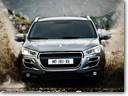 Responding to customer interest, Peugeot have came up with this – The 4008 4×4 SUV. A world debut is set for the 2012 Geneva Motor Show and then in April, it will be launched outside of Europe as a C segment all-terrain vehicle to meed the needs of many who are looking for just that (for the last four years, C and D segment SUV demand has doubled in Russia and tripled in Europe).


 Design House Lumma will take part in the 82nd Geneva Motor Show by showcasing a CLR 600 GT. You would be forgiven to think that such a name can only come after crossbreeding a Mercedes with a Ford but the thing is, that underneath the branding and aerodynamic fitments we have a BMW 650i


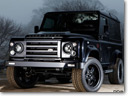 If you want something really exclusive, Prindiville Design might have the solution – the Limited Edition Land Rover Defender. There are only 25 units available worldwide and all have been assembled by hand. Performance has been tweaked by Defender specialists, Alive Tuning.

 The Kia Track’ster concept is out of the box. Attenders at the Chicago Auto Show yesterday had the privilege to witness the rather dramatic revealing. And now when the Track’ster is open to the public, we do are not sure from where to start.


 The Super Bowl is as much about the commercials as it is for the football itself. So for the fifth consecutive year, Audi will air a :60 spot during the first quarter of the Super Bowl with focus landing on LED technology. The San Francisco-based Venables Bell & Partners studio is in charge with the creative ad. The only other known fact is that the 2013 Audi S7 sedan will also be somehow featured. The rest can be seen on Sunday, Feb. 5, 2012 when the big game starts.

 With a total of 730,000 units sold,


 Hyundai Motor America has introduced the new 2012 Azera, which is the fifth vehicle to adopt the company’s signature Fluidic Sculpture design language. The 2012 Azera represents a modern approach to the traditional large sedan segment by using an advanced powertrain, emotional design and luxury features offered with Hyundai’s strong value proposition. This approach has been successful for the other Fluidic Sculpture vehicles.


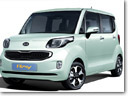 Small and ugly? No, it’s not SMART, at least not this time. The answer is an all-new Kia Ray compact vehicle. Fortunately, the vehicle will be sold exclusively in the Korean home market.


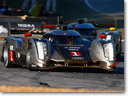 Audi wants to boost their positions in motorsport in China, that’s why they will bring Audi R18 TDI at the 6-Hour Race in Zuhai.

 Diesel-electric hybrid and distinctive ‘high-end’ appeal combine to offer an original view of the world of all-wheel drive vehicles with enhanced driving pleasure: introducing the new Peugeot 508 RXH.


 Luxgen has exhibited several vehicles at the Auto Shanghai 2011: LUXGEN7 SUV, LUXGEN7 CEO and LUXGEN7 MPV EV+. However, the „rear deal” is the intelligent electric concept – Neora.


 This is Dacia Sandero Stepway Concept, which is meant to show the world the feminine side of the budget model. Further details of the model have not been released yet, but it’s clear at this point that it’s just a design exercise.