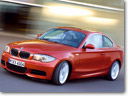
It is the epitome of sporty flair in its segment and for years it has maintained the leading position as the mostly widely sold premium vehicle in the world. Now the BMW 3 Series sets out to extend its lead even further. Specific design modifications, a further refined interior design, the new generation of the optional operating concept BMW iDrive, new services provided by BMW ConnectedDrive, a revised range of engines and innovations in the areas of drive technology, safety and comfort make both the new BMW 3 Series Saloon and the new BMW 3 Series Touring more attractive than ever before.
1. Description in brief.
• The new BMW 3 Series Saloon and the new BMW 3 Series Touring extend their lead further in terms of driving dynamics, premium quality and innovative technology.
• The new BMW 3 Series Saloon and the new BMW 3 Series Touring combine elegance with a driving experience which is unique within the competitive field.
• The extended range of engines and the application of BMW EfficientDynamics measures make the BMW 3 Series the benchmark for sheer driving pleasure in combination with exemplary fuel consumption and exhaust emission levels.
• A new vehicle front, a side view with greater emphasis of the dynamically elongated line, the rear section has a broader effect due to more detailed lines. New headlamps, rear lights with new contours characteristic of the brand, innovative lighting technology and 3D effects.
• Refinement of the interior trim with selected operating elements in a new design and newly harmonised choice of colours and materials. The characteristic combination of convex and concave surfaces characteristic of the exterior is continued in the interior. Ergonomically optimised positioning of the window lift operating panel on the driver side, new and enlarged storage facilities.
• New generation of the operating system BMW iDrive in conjunction with optional navigation systems: ergonomically optimised iDrive Controller for function selection and control by means of turning, pressing and tilting movements, blind operation of buttons on the Controller for fast and intuitive menu selection. Freely programmable functional bookmarks for even easier operation. Navigation system Professional with extended functions for destination entry, trip planning and map display. For the first time, routes freely planned on the internet can be fed into the navigation system using BMW ConnectedDrive. BMW ConnectedDrive world premiere: unlimited internet use inside the vehicle as an optional extra.
• Newly developed in-line 6-cylinder diesel engine in the BMW 330d: aluminium crankcase, common rail direct injection of the third generation with piezo injectors and maximum injection pressure of 1,800 bar, turbocharger with variable turbine geometry, output: 180 kW/245 bhp, maximum torque: 520 Nm, diesel particulate filter and oxidation catalytic converter as standard, exhaust gas norm EU 5, optional BMW BluePerformance technology with NOX storage catalytic converter for the reduction of nitrogen oxide emissions as a requirement for adherence to the threshold levels of the planned exhaust gas norm EU 6.
• Variety of engines which is unique within the vehicle segment: five petrol and five diesel engines, with output ranging from 105 kW/143 bhp in the BMW 318i and BMW 318d to 225 kW/306 bhp in the BMW 335i. All engine types with BMW EfficientDynamics measures: modelspecific use of Brake Energy Regeneration, Auto Start/Stop Function, Shift Point Display, needs-related control of auxiliary units and active aerodynamics with Automatic Air Intake Flaps. All engine types with unsurpassed fuel consumption and exhaust emission levels as compared to the relevant competitors. BMW 318d, BMW 320d, BMW 330d and BMW 330xd are within the threshold levels of the future exhaust gas norm EU 5.
• 6-speed automatic transmission with optimised shift dynamics and minimised converter slip now optionally available for the BMW 318d too.
• Optimised all-wheel drive BMW xDrive enhances driving stability, driving dynamics and traction. New additional DSC function with controlled brake intervention including torque compensation increases driving stability on bends. BMW xDrive now optionally available for five engine types of the BMW 3 Series Saloon and the BMW 3 Series Touring, also for the BMW 320xd – the first ever combination of BMW xDrive with a 4-cylinder engine in the BMW 3 Series.
• For the first time, 7-speed sports automatic transmission with double clutch for the models BMW 335i Coupe and BMW 335i Convertible. The world’s first 7-speed double clutch transmission designed for high performance engines, shifting without interruption of traction for unequalled dynamic acceleration, optionally automated or manual, unique combination of the comfort of an automatic transmission with maximum dynamic performance, further optimised acceleration and fuel consumption figures.
• Comprehensive safety concept with extremely solid body structure, defined impact paths, selective use of high-strength steels and special deformation elements. Six airbags, 3-point automatic belts and headrests for all seats as well as crash-active headrests for the front seats so as to reduce the risk of head injury in the event of a rear-on collision as standard.
• Engine types:
BMW 335i: in-line 6-cylinder petrol engine with Twin Turbo and direct injection (High Precision Injection), capacity: 2,979 cc, output: 225 kW/306 bhp at 5,800 rpm, max. torque: 400 Nm at 1,300–5,000 rpm, acceleration [0–100 km/h]: 5.6 seconds (Touring: 5.7 seconds), maximum speed: 250 km/h, average fuel consumption according to EU: 9.1 litres/100 kilometres (9.3 litres), CO2 emissions according to EU: 218 g/km (222 g/km).
BMW 330i: in-line 6-cylinder-petrol engine with direct injection, capacity: 2,996 cc, output: 200 kW/272 bhp at 6,700 rpm, max. torque: 320 Nm at 2,750–3,000 rpm, acceleration [0–100 km/h]: 6.1 seconds (Touring: 6.2 seconds), maximum speed: 250 km/h, average fuel consumption according to EU: 7.2 litres/100 kilometres (7.3 litres), CO2 emissions according to EU: 173 g/km (175 g/km).
BMW 325i: in-line 6-cylinder-petrol engine with direct injection, capacity: 2,996 cc, output: 160 kW/218 bhp at 6,100 rpm, max. torque: 270 Nm at 2,400–4,200 rpm, acceleration [0–100 km/h]: 6.7 seconds (Touring: 6.9 seconds), maximum speed: 250 km/h (248 km/h), average fuel consumption according to EU: 7.1 litres/100 kilometres (7.2 litres), CO2 emissions according to EU: 170 g/km (173 g/km).
BMW 320i: in-line 4-cylinder petrol engine with direct injection, capacity: 1,995 cc, output: 125 kW/170 bhp at 6,700 rpm, max. torque: 210 Nm at 4,250 rpm, acceleration [0–100 km/h]: 8.2 seconds (Touring: 8.4 seconds), maximum speed: 228 km/h (226 km/h), average fuel consumption according to EU: 6.1 litres/100 kilometres (6,2 litres), CO2 emissions according to EU: 146 g/km (148 g/km).
BMW 318i: in-line 4-cylinder-petrol engine with direct injection, Capacity: 1,995 cc, output: 105 kW/143 bhp at 6,000 rpm, max. torque: 190 Nm at 4,250 rpm, acceleration [0–100 km/h]: 9.1 seconds (Touring: 9.5 seconds), maximum speed: 210 km/h (210 km/h), average fuel consumption according to EU: 5.9 litres/100 kilometres (6.0 litres), CO2 emissions according to EU: 142 g/km (144 g/km).
BMW 335d: in-line 6-cylinder-diesel engine with all-aluminium crankcase, common rail direct injection of the third generation and Variable Twin Turbo, capacity: 2,993 cc, output: 210 kW/286 bhp at 4,400 rpm, max. torque: 580 Nm at 1,750–2,250 rpm, acceleration [0–100 km/h]: 6.0 seconds (Touring: 6.1 seconds), maximum speed: 250 km/h, average fuel consumption according to EU: 6.7 litres/100 kilometres (6.8 litres), CO2 emissions according to EU: 177 g/km (178 g/km).
BMW 330d: in-line 6-cylinder-diesel engine with all-aluminium crankcase, common rail direct injection of the third generation and turbocharger with variable turbine geometry capacity: 2,993 cc, output: 180 kW/245 bhp at 4,000 rpm, max. torque: 520 Nm at 1,750–3,000 rpm, acceleration [0–100 km/h]: 6.1 seconds (Touring: 6.2 seconds), maximum speed: 250 km/h, average fuel consumption according to EU: 5.7 litres/100 kilometres (5.9 litres), CO2 emissions according to EU: 152 g/km (155 g/km).
BMW 325d: in-line 6-cylinder-diesel engine with all-aluminium crankcase, common rail direct injection of the third generation and turbocharger with variable turbine geometry capacity: 2,993 cc, output: 145 kW/197 bhp at 4,000 rpm, max. torque: 400 Nm at 1,300–3,250 rpm, acceleration [0–100 km/h]: 7.4 seconds (Touring: 7.6 seconds), maximum speed: 235 km/h (233 km/h), average fuel consumption according to EU: 5.7 litres/100 kilometres (5.9 litres), CO2 emissions according to EU: 153 g/km (155 g/km).
BMW 320d: 4-cylinder diesel engine with all-aluminium crankcase, common rail direct injection of the third generation and turbocharger with variable turbine geometry capacity: 1,995 cc, output: 130 kW/177 bhp at 4,000 rpm, max. torque: 350 Nm at 1,750–3,000 rpm, acceleration [0–100 km/h]: 7.9 seconds (Touring: 8.1 seconds), maximum speed: 230 km/h (228 km/h), average fuel consumption according to EU: 4.8 litres/100 kilometres (4.9 litres), CO2 emissions according to EU: 128 g/km (130 g/km).
BMW 318d: 4-cylinder diesel engine with all-aluminium crankcase, common rail direct injection of the third generation and turbocharger with variable turbine geometry capacity: 1,995 cc, output: 105 kW/143 bhp at 4,000 rpm, max. torque: 300 Nm at 1,750–2,500 rpm, acceleration [0–100 km/h]: 9.3 seconds (Touring: 9.6 seconds), maximum speed: 210 km/h (210 km/h), average fuel consumption according to EU: 4.7 litres/100 kilometres (4.8 litres), CO2 emissions according to EU: 123 g/km (125 g/km).
2. The first in its class further extends its lead: The new BMW 3 Series.
It is the epitome of sporty flair in its segment and for years it has maintained the leading position as the mostly widely sold premium vehicle in the world. Now the BMW 3 Series sets out to extend its lead even further. Specific design modifications, a further refined interior design, the new generation of the optional operating concept BMW iDrive, new services provided by BMW ConnectedDrive, a revised range of engines and innovations in the areas of drive technology, safety and comfort make both the new BMW 3 Series Saloon and the new BMW 3 Series Touring more attractive than ever before. With rear-wheel drive, harmonious axle load distribution, outstanding steering precision and highly sophisticated chassis technology, the BMW 3 Series sets unsurpassed standards for driving dynamics in its segment. More than ever before, this unique driving pleasure can now be combined with an awareness of economy and minimised pollutant emissions. Thanks to BMW EfficientDynamics the new BMW 3 Series achieves significantly lower fuel consumption and exhaust emission levels with each of the ten engine variations available than those of the relevant competitors in the premium segment. The new features in the powertrain field include the further optimised electronically controlled all-wheel drive system BMW xDrive. This intelligent all-wheel drive system which variably distributes the drive force between front and rear wheels to enhance driving dynamics as well as ride stability and traction can now be combined with five engine types. The new BMW 320d xDrive is available as a Saloon and Touring model. Another new feature for both body versions: the BMW 318d – by far the most efficient vehicle of its category with an average fuel consumption of just 4.7 litres per 100 kilometres – is now also available with a 6-speed automatic transmission. Parallel to the market launch of the new BMW 3 Series Saloon and the new BMW 3 Series Touring, a new 7-speed sports automatic transmission with double clutch will be presented for the Coupe and the Convertible of the series. This allows further improved acceleration figures in the models BMW 335i Coupe and BMW 335i Convertible, and combines this added dynamic performance – as compared to the standard 6-speed manual transmission – with the comfort features of an automatic transmission. The 7-speed sports automatic transmission with double clutch shifts without interrupting traction.
New design accentuations for a sporty, elegant appearance.
With striking design accentuations to the front section, the side perspective and the rear, the dynamic character of the new BMW 3 Series Saloon has been given additional emphasis, while the new BMW 3 Series Touring enhances its sporty, elegant profile with new visual features which are recognisable from all perspectives.
Front section with bold shapes and an emphasis of width.
The front view of the Saloon and Touring models of the new BMW 3 Series is characterised by a clear emphasis of vehicle width. The characteristic brand look of the double circular headlights is underscored by means of chrome tubes, and their corona rings can now also be used in the BMW 3 Series Saloon and the Touring model with optional bi-xenon headlamps as daytime running lights. The light sources of the direction indicators have a ribbed structure and LED direction indicator lights are installed in conjunction with the optional bi-xenon headlamps.
Side view with elegantly elongated lines.
Powerfully taut surfaces and striking character lines dominate the side view of the new BMW 3 Series. The contour edges of the side skirts have been set higher and modelled in a more distinctive fashion. Another new feature is the exterior mirrors with two distinctive character lines, echoing the interplay between the convex and concave shaping of the surfaces. The mirrors also offer an enlarged field of vision.
The rear: sporty and tight with a new lighting design.
Greater emphasis of the vehicle’s power and sporty character likewise characterises the rear view of the new BMW 3 Series. To achieve this effect, the rear bumpers, rear lights and luggage compartment handle have been completely redesigned. The dual section rear lights are now structured according to the characteristic BMW L shape. The two LED rear light clusters and the direction indicators in LED technology are designed to create a striking, high-quality appearance. The widened track of the new BMW 3 Series especially contributes to its powerful appearance. Depending on the model, the track of the rear axle has been widened by up to 24 millimetres by means of a new wheel carrier and other modified details.
High-quality materials and optimised ergonomics in the interior.
The modern, high-quality interior of the BMW 3 Series has been further enhanced by means of specific modifications in the selection of materials and surface design. Here the modern design concept is also applied, with its convex-concave surfaces, sporty elegance and technology-oriented aesthetic style.
Premiere for the new generation of the operating concept BMW iDrive.
The operating system BMW iDrive is optionally available in the new BMW 3 Series for the activation and control of entertainment, information, navigation and telecommunications functions, whether standard or optional. The new generation of iDrive is available in conjunction with the optional navigation system Professional. What is more, the new iDrive supports multi-mode operation by voice entry. With the new iDrive generation, BMW extends its lead over comparable systems made by other manufacturers in terms of display quality and intuitive operation. Using the four direct selection buttons grouped around the Controller, it is especially easy to switch spontaneously between CD, radio, telephone and navigation functions. The functional bookmarks are supplemented with three control buttons.
Control Display with high-resolution graphics and variable layout.
The new iDrive in the BMW 3 Series is presented with a 8.8 inch Control Display whose dimensions surpass all graphic displays available to date in the automobile field. With its high image resolution it offers significant improvement in the display of detailed graphics. The structure of the user menu also makes it easier to locate desired functions. All functions controllable by iDrive are listed in the starter menu.
Hard drive for audio files and navigation system.
The features of the navigation system Professional include a hard drive integrated in the vehicle. The storage medium with a capacity of 80 GB provides outstandingly fast access to digital maps for navigation purposes and can also be used for an extensive collection of music files. The system enables music files to be transferred to the hard drive from a CD, MP3 player or USB stick.
World premiere for unlimited internet use inside the vehicle.
BMW ConnectedDrive makes BMW the first automobile manufacturer in the world to enable unlimited use of the internet inside the vehicle when stationary. Internet access is available for the new BMW 3 Series as a special equipment option at attractive flat-rate conditions. The transfer of data is based on EDGE technology (Enhanced Data Rates for GSM Evolution), which unlike UMTS offers full geographical coverage and is three to four times faster than the mobile phone standard GPRS. The basis for internet use in the vehicle is provided by the further developed functions of iDrive. By pushing the Controller in different directions, the mouse can be moved across the web page shown in the Control Display.
BMW ConnectedDrive with extended range.
As a dynamic concept, BMW ConnectedDrive offers the products BMW Assist, BMW Online, BMW TeleServices and BMW Tracking, depending on the country in question. At the same time BMW ConnectedDrive is designed for the ongoing further development of services to increase mobility and information convenience. The Enhanced Emergency Call with automatic positioning and remote control functions are examples of safety-related options which are already available, extending the lead of BMW ConnectedDrive over the competition.
The new BMW 3 Series: the engine of success for BMW EfficientDynamics.
With its further optimised engine range, the new BMW 3 Series further extends its leading position in the segment in terms of driving dynamics and economy. With all engine types, both the Saloon and the Touring model boast superior fuel consumption and exhaust emission levels than those of their competitors of comparable output. Depending on the model-specific constellation, the new BMW 3 Series features the latest measures for increased efficiency. All petrol and diesel engines available for the new BMW 3 Series represent the state of the art in engine development. What is more, an extremely wide spectrum of efficiency-promoting measures has been applied within the engine environment so as to further reduce fuel consumption and exhaust emissions. This includes Brake Energy Regeneration, Auto Start/Stop Function, Shift Point Display, the needs-oriented control of auxiliary units, electro-mechanical power steering, tyres with reduced rolling resistance and Automatic Air Intake Flaps. With the comprehensive application of these technologies in what is the most successful BMW model series in terms of sales figures, the development strategy BMW EfficientDynamics achieves an especially broad impact.
New 6-cylinder diesel engine in the BMW 330d.
In accordance with BMW EfficientDynamics, every new BMW offers increased driving dynamics in combination with reduced fuel consumption and exhaust emission levels as compared to its respective predecessor model. An especially striking example of this is the BMW 330d. Its 3.0 litre allaluminium engine has common rail injection of the third generation, whose piezo injectors operate at a pressure or up to 1,800 bar, and a turbocharger with variable turbine geometry. The new diesel engine achieves its maximum output of 180 kW/245 bhp at an engine speed of 4,000 rpm, while its maximum torque of 520 Nm is available from 1,750 to 3,000 rpm. The new BMW 330d accelerates in 6.1 seconds from zero to 100 km/h, its maximum speed is electronically cut off at 250 km/h. The average fuel consumption of the new BMW 330d according to the EU test cycle is 5.7 litres per 100 kilometres, its CO2 level is 152 grams per kilometre.
BMW BluePerformance technology: prepared for the exhaust gas norm EU 6.
The new BMW 330d is fitted as standard with a diesel particulate filter and an oxidation catalytic converter. Thanks to the innovations applied to the new 6-cylinder engine, it significantly undercuts the thresholds set for the exhaust gas norm EU 5. In the oxidation catalytic converter, hydrocarbons and carbon monoxide are converted to water and carbon dioxide. For further reduction of nitrogen oxides in exhaust emissions, a NOX-storage catalytic converter can be integrated in the exhaust gas treatment system of the new 6-cylinder diesel engine, in addition to the oxidation catalytic converter. In the optional configuration with BMW BluePerformance technology, the new BMW 330d even meets the requirements for classification according to the future exhaust gas norm EU 6. Like the new BMW 6-cylinder diesel engines, the engines of the models BMW 320d and BMW 318d also meet the requirements of the exhaust gas norm EU 5 as standard. Their 4-cylinder diesel engines have been modified in a number of details, and the further reduction of exhaust emission levels has been implemented so as to have no impact on fuel consumption and the acoustic properties of the engines.
Engine selection: the greatest variety and highest level of efficiency in the segment.
The ideal combination of driving fun and efficiency also characterises the other engines available for the new BMW 3 Series. Spontaneously responding, high-torque 6-cylinder and 4-cylinder diesel engines, powerful and highrevving 4-cylinder petrol engines and the 6-cylinder in-line petrol engine wellknown for its unique refinement and dynamic power delivery form a portfolio which is unequalled in the segment of the BMW 3 Series. With five petrol engines and five diesel engines, the new BMW 3 Series offers the most extensive range in its segment. When it comes to both petrol and diesel power units, customers have the choice of four 4-cylinder and three 6-cylinder engines. The output range extends from 105 kW/143 bhp in the 4-cylinder models BMW 318i and BMW 318d to a 225 kW/306 bhp in-line 6-cylinder engine in the BMW 335i. All engines are available for both the BMW 3 Series Saloon and the Touring model, and all are combined with the latest BMW EfficientDynamics measures in the environment of the engine, as suits the specific model configuration. Each of the ten engine types thus has a more favourable relationship between driving dynamics and economy as compared to competitor vehicles of similar output. As one of a number of features which are unique within the competitive field, all petrol engines are fitted with High Precision Injection and all diesel engines combine an all-aluminium crankcase, turbo charging and common rail direct injection of the third generation. The BMW 335i is especially dynamic, accelerating in just 5.6 seconds from zero to 100 km/h. The outright leader in terms of efficiency in the entire vehicle segment is the BMW 318d with an average fuel consumption in the EU test cycle of 4.7 litres per 100 kilometres and a CO2 emission level of 123 grams per kilometre.
Optimised all-wheel drive system BMW xDrive – now for the BMW 320d xDrive too.
The new BMW 3 Series also presents a further expanded selection of engine types for combination with the intelligent all-wheel drive system BMW xDrive. For the first time it is possible to fit 4-cylinder models of this series with xDrive. The new BMW 320d xDrive combines outstanding efficiency with superior properties in terms of driving dynamics and traction. Both for the Saloon and the Touring of the new BMW 3 Series it is now possible to combine three petrol engines and two diesel engines with the intelligent all-wheel drive system BMW xDrive. The models in question now bear the designations BMW 335i xDrive, BMW 330i xDrive, BMW 325i xDrive, BMW 330d xDrive and BMW 320d xDrive. The electronically controlled permanent all-wheel drive system BMW xDrive offers an incomparable level of comfort, traction and agility over all surfaces due to its flexible distribution of drive torque between the front and rear axles. In order to ensure especially precise control, the computer unit of the drive stability regulation system Dynamic Stability Control (DSC) and that of xDrive are networked with each other in the Integrated Chassis Management (ICM). With these capabilities, xDrive supports driving dynamics because it identifies any tendency to oversteer or understeer early on and counteracts effectively.
Superior chassis technology, Active Steering as an option.
The new BMW 3 Series has the most sophisticated chassis technology in its segment. At the rear axle there is a five-link construction which is adapted to the needs of the especially high-power and high-torque engines. The front axle of the BMW 3 Series also reflects a unique standard of engineering. The dual-arm tension strut axle with stabiliser is largely made of aluminium. The standard equipment also includes an electro-mechanical steering system with integrated Servotronic function for speed-related steering support. Active Steering is also optionally available: here, steering transmission is adapted to road speed.
Optimised occupant protection with crash-active headrests.
The safety concept of the new BMW 3 Series is based on a solid body structure, the selective application of high-strength steel types and special deformation elements which divert and absorb impact energy. In addition there are six airbags, 3-point automatic belts and headrests on all seats to offer occupants optimum protection. What is more, ISOFIX children’s seat mounts on the rear seats are a standard feature. The front seats of the new BMW 3 Series are fitted as standard with crash-active headrests which significantly reduce the risk of injury to the cervical spine in the event of an impact. Controlled by the vehicle’s safety electronics system, this feature ensures that in the event of a rear-on collision the front section of the headrest is moved forward by up to 60 millimetres and upwards by as much as 40 millimetres. This reduces the distance between headrest and head, thus increasing the stabilising and securing function of the headrest. A contribution to active safety is made by the new generation of adaptive headlight, optionally available in conjunction with bi-xenon headlamps. It guarantees illumination of the road surface when taking a corner. Here the swivel direction of the headlamps is derived from the steering angle, the yaw rate and the road speed of the vehicle. At low speeds the turning light is activated. This function is performed by one of the two inside headlamps, depending on the direction. Before each turning manoeuvre, the light cone is turned specifically in the appropriate direction to illuminate the road ahead.
Best heating and climate comfort in the segment.
In the area of comfort fittings, too, the new BMW 3 Series has a range of optimised features to offer. The further developed heating and air conditioning technology ensures that the interior maintains the desired temperature throughout the year. The new BMW 3 Series has the most high-performance heating and cooling system in its category. Within one minute the entire interior air volume can be completely exchanged three times. In spite of the outstandingly high air through-flow rate, excellent acoustics are ensured by means of a flow optimisation function in the unit and its feed lines and by means of an air outlet positioned at the centre of the instrument panel. A 2-zone air conditioning system is optionally available with individual temperature controls for the driver and front passenger.
3. The design: Unmistakably on top form.
• New accentuation of dynamic lines.
• New headlamps and rear lights.
• Interior with improved ergonomics and elegant chrome look.
In its appearance, the new BMW 3 Series is more dynamic than ever before – muscular all round and with athletically taut surfaces. Flat and bursting with performance potential, the BMW 3 Series squats on the asphalt with its widened track. The modifications to the front, side and rear are like a single brushstroke. Its distinctive, arrow-like character lines running together on the engine compartment lid and the strikingly modelled front apron give the BMW 3 Series an exciting sense of power and an especially strong 3-dimensional effect.
More striking sense of breadth and presence from the front.
With its distinctive lines at the front and rear emphasising its span width, the BMW 3 Series now has an even sportier look. At the front apron, the new width orientation is reflected in the outer air inlets which trace an upward sweep towards the outside, visually highlighting the wide track. The more powerfully three-dimensionally modelled, dynamic upward sweep running from below and above the central air inlet into the sides contributes to the enhanced three-dimensional effect of the BMW 3 Series. The central inlet has been further enlarged. The widened track of the new BMW 3 Series especially contributes to its powerful appearance. Depending on the model, the track of the rear axle has been widened by up to 24 millimetres by means of a new wheel carrier and other modified details. Two additional character lines on the engine compartment lid point like arrows, surrounding the BMW emblem and reinforcing the muscular effect of the convex-concave surfaces. Compared to the predecessor model, the double kidney is now deeper: it appears as a self-contained element with the upper chrome bands giving way to a complete chrome surround which turns fascinatingly within itself. The dual section kidney grille has also been given new contour edges.
Technical-looking headlamp design symbolising the product personality.
The side direction indicators show a new graphic, chrome-coloured rib structure. In its oblique orientation it further enhances vehicle’s impression of width. The characteristic brand look of the dual circular headlights now also comes into its own in the BMW 3 Series Saloon and the Touring due to the use of the corona rings as daytime running lights – in conjunction with bi-xenon headlamps. With halogen headlamps the corona rings act as parking lights.
Side silhouette markedly flat.
In the BMW 3 Series the longitudinally emphasised design of the sides is dominated by powerfully spread areas and three character lines. These have the effect of visually stretching the vehicle. The first character line runs back from the front wheels via the side skirt to the rear, where it tapers off just before the rear wheel arches in the surrounding spaces. It is now more strikingly modelled and placed at a higher level. Both in the rear and the front apron the side skirt line has been extended, giving the vehicle a more elongated look. The second character line is the bead typical of every BMW which runs from the upper area of the front wheel arches in a very three-dimensional interpretation almost as far as the rear lights. The third character line runs as a fine, fascinatingly precise shoulder line almost as far as the rear. The innovative side mirrors are new, with their two distinctive character lines in which the dynamic interplay of the convex and concave surfaces once again appears.
New interpretation of the L-shaped rear light clusters.
The dual section rear light clusters in both the Saloon and the Touring model are entirely new but display the characteristic BMW L shape: they are now more horizontal in orientation. With the exception of a small rectangular area reserved for the reverse lights they are monochrome and appear as a single entity. As with the front headlamps they are horizontally subdivided. The rows of tail lights and the direction indicators, both with LED technology, create an attractive three-dimensional effect. The rear lights form a harmonious whole with the new lines at the rear which highlight the width of the vehicle and its solid stance. At the side skirts there are two lines tracing a double band which stretch to the sides of the vehicle. This not only emphasises the effect of width but also harmoniously connects the rear to the sides, making the BMW 3 Series tighter, lighter and sportier from the rear perspective.
Interior: refinement in materials, surfaces and colours.
The modern, high-quality interior of the BMW 3 Series has been further enhanced with specific modifications to material selection and surface design. Crucial operating elements such as the iDrive Controller, air conditioning and audio controls have been further refined in their visual and haptic properties. Fresh, modern colours round off the high-quality ambience. All in all, the modern design concept is echoed in the interior with its generous impression, convex-concave surfaces, sporty elegance and technologyoriented aesthetic style. The leitmotif of the twisting band likewise dominates the interior, here creating a sense of lightness and spirited dynamism.
Elegant points of brilliance.
Discreet refinements are to seen in a number of control elements well as in the cockpit instruments of the new BMW 3 Series. The premium character of the series is underscored in certain details by means of high-quality materials and a harmonious design. Matted chrome shimmers on the start/stop button, the rotary knobs for the air conditioning and the light control panel. The BMW lettering on the newly designed entry sills is in chrome gloss with high-quality steel inserts. The needles of the tachometer and speedometer convey maximum precision with their elegant, filigree design, projecting slightly beyond the centre. The high-quality design of the chrome-surround instruments is underscored by means of a finer chronoscale. The ergonomically optimised iDrive Controller matches the chrome details with a matted precious metal surface. The control unit is now smaller and is supplemented with a number of function buttons. These are grouped around the iDrive Controller, affording swift and direct access to the most important menu items of the iDrive system. In addition to this, the central console offers a larger storage compartment. Alongside an AUX-IN socket and a power socket there is a special recess in which a customary MP3 player can be conveniently stored without slipping. The design of the armrests in the door panels has also been ergonomically optimised. The operating panel for the window lifts and mirror adjustment has been moved back two centimetres on the driver’s side so as to enable even more comfortable access.
Contemporary range of individualisation options.
With high-quality materials and expressive colours, the driver can express his individual personality in many ways when selecting an interior. In terms of individual upholstery design there are a total of eleven colours available for the seat covers in Dakota leather including the three new colours Oyster, Saddle Brown and Red Brown. The new range includes gloss-finish decor strips in Diamond Black and Space Grey as well as the finishes fine-grain brushed aluminium and walnut with horizontal grain. Twelve paint finishes are available for the exterior. The program now also includes metallic finishes in the colours Space Grey, Bluewater and Tasman. In addition there are nine optionally available light alloy rims, six of which have a new sporty spoke design.
4. BMW EfficientDynamics in the new BMW 3 Series: Prepared for the EU 6 exhaust gas norm with BluePerformance.
• New in-line 6-cylinder diesel engine in the BMW 330d.
• Exhaust emissions reduction in accordance with EU 5, also EU 6 as an optional extra.
• A wide range of BMW EfficientDynamics measures in the BMW 3 Series achieve maximum breadth of effect in CO2 reduction.
The engine versions of the new BMW 3 Series have the lowest fuel consumption and exhaust emission levels as compared to their respective competitors. Frequently this leading position in the area of efficiency goes hand in hand with a significantly higher level of driving dynamics, too. The latest example of this is the newly developed in-line 6-cylinder diesel engine. The power unit of the new BMW 330d has an output of 80 kW/245 bhp, 10 kW more than its predecessor engine, not only with a seven per cent reduction in fuel consumption at the same time but also offering the option of BMW BluePerformance technology – with no impact on output and fuel consumption – to meet the requirements for the exhaust gas norm EU 6 which will does come into force until 2014. As usual with BMW, Brake Energy Regeneration, Shift Point Display, active aerodynamics and needs-related control of the auxiliary units are also part of the standard equipment of the new BMW 330d. In the BMW 3 Series – the most successful BMW model series in terms of numbers of vehicles sold – a particularly large number of customers benefit from these and other current BMW EfficientDynamics measures. In this way, the extensive introduction of efficiency-enhancing technology in the BMW 3 Series reaches the widest number of customers.
The new BMW 330d: increased output, reduced fuel consumption, lower levels of exhaust emissions.
With the new BMW 330d the benchmark in this segment has been raised even higher. Its 3.0 litre all-aluminium engine has common rail injection of the third generation whose piezo injectors operate at a pressure of up to 1,800 bar, and a turbocharger with variable turbine geometry. It is fitted as standard with a diesel particulate filter and an oxidation catalytic converter. The new diesel power unit reaches its maximum output of 180 kW/245 bhp at an engine speed of 4,000 rpm, its maximum torque of 520 Nm is available from 1,750 to 3,000 rpm. The new BMW 330d accelerates in 6.1 seconds from zero to 100 km/h, its maximum speed is electronically limited to 250 km/h. In the EU test cycle, the new BMW 330d has an average fuel consumption of 5.7 litres per 100 kilometres. Its CO2 level is 152 grams per kilometre. The optimised output and fuel consumption levels are the result of a fundamental reworking of the 6-cylinder engine. In its overall design, in many of its individual components and in the arrangement of its auxiliary units the engine of the new BMW 330d is fundamentally different from its predecessor. The capacity of 2,993 cc has been maintained, however. The newly developed crankcase is made of a high-strength aluminium-silicon alloy. Newly sized crankshaft bearings and big end bearings reduce frictional losses while at the same time increasing both output and torque. The crankshaft has been given even greater rigidity in the interests of higher output. The combustion chambers have been redesigned and the height of the cylinder head reduced. The vertical arrangement of the valves together with a newly regulated air intake ensures especially clean combustion with a low level of untreated emissions. For the first time in a 6-cylinder-diesel engine, ceramic spark plugs are used which improve starting properties as well as fuel consumption and exhaust emission levels during the warm-up phase.
Reduced weight, preparation for enhanced pedestrian protection.
With a weight of 185 kilograms, the new 6-cylinder diesel weighs five kilograms less than its predecessor. This weight optimisation not only contributes to the efficiency of the vehicles powered by this engine but also increases their agility. With its compact design, low height, a new cylinder head cover, an intake silencer which can be deformed in height and the shift of the chain drive to the back of the engine, the new diesel also contributes to the fulfilment of future requirements in relation to pedestrian protection. With a similar geometry to that of the 4-cylinder diesel, the auxiliary units of the generator, power steering pump and air conditioning compressor are placed at the left-hand side of the engine. Since all auxiliary units are driven by a single belt, no second belt level is required. This also further enhances the efficiency of the engine since it avoids frictional losses.
Common rail direct injection with new piezo injectors and higher pressure.
The injection system was specially developed for the new 6-cylinder and ensures precisely measured and controlled fuel supply. It is based on common rail direct injection of the third generation, already well established in BMW’s 6-cylinder and 4-cylinder engines, with further developed and centrally located piezo injectors and now operating at a maximum pressure of 1,800 bar. The high-pressure pump, the feed and injection lines of the rail pressure sensor and the pressure regulation valve have also been renewed as compared to the previous version of the system. The new engine management system is characterised by increased computing power and larger memory capacity. Among other things, this enables it to tackle the complex control tasks required to fulfil the EU 6 exhaust gas norm. The engine management system draws its data from a large number of sensors such as those in the engine block, the cylinder head, the cooling system and the injection system, the oil circulation system, the exhaust manifold, the air intake system, the exhaust gas recycling system and the area of the exhaust system.
Turbocharger with optimised control function.
Another further developed feature as compared to the predecessor engine also enhances the effectiveness of the exhaust gas turbocharger in the new 6-cylinder diesel. The turbine geometry adjustment function can now be controlled with even greater precision in relation to load and output requirements. This ensures a spontaneous response at low engine speeds as well as a high level of power density under full throttle. Modified compressor and turbine wheels give the turbocharging process enhanced thermodynamic properties. The newly conceived exhaust gas recycling system includes a duct integrated in the cylinder head, a newly arranged feed line to the air intake system and an especially effective cooling system. The performance-optimised high-quality steel radiator is positioned at the front of the engine and fitted with a bypass shutter which limits pollutant emissions during the warm-up phase. The quantity and temperature of exhaust gas admixture can be determined precisely according to the engine operating point and engine temperature. This means that hydrocarbon, carbon monoxide and nitrogen oxide emissions are reduced inside the engine, while a high level of smooth running and refinement is guaranteed at all times. Additional temperature reduction is brought about by ducts in the cylinder head. The cooling effect thereby created additionally reinforces the reduction of the combustion temperature in the combustion chambers which in turn reduces the proportion of nitrogen oxide.
Diesel particulate filter and catalytic converter in a shared casing.
As standard, the new BMW 330d is fitted with a diesel particulate filter and an oxidation catalytic converter. The exhaust gas purification units are housed in a shared casing which is located immediately behind the engine. The diesel particulate filter systems used by BMW achieve a filter rate of over 99 per cent, as confirmed by the Federal Environment Agency. This means that the concentration of particles in the exhaust emission of BMW diesel vehicles is at a similar level to that of ambient air. Thanks to the innovations of the 6-cylinder engine, this engine significantly undercuts the threshold levels set for the exhaust gas norm EU 5. As well as reducing diesel particles, the exhaust gas purification system also cuts down hydrocarbons and carbon monoxide highly effectively. The diesel particulate filter operates maintenance-free and without the use of additives. Regeneration phases are required at regular intervals and are triggered by means of postinjection activated by the engine management system. With its highly sophisticated control technology, the exhaust gas purification system automatically ensures its own optimum operating state. As long ago as 2004, BMW was the first manufacturer worldwide to offer maintenance-free diesel particulate filters, as well as taking on a leading role in the standard fitting of all diesel models with a filter system.
Pioneering: BMW BluePerformance diesel engine with EU 6 technology.
In the oxidation catalytic converter, hydrocarbons and carbon monoxide are converted to water and carbon dioxide. For further reduction of nitrogen oxides in the exhaust gas, an NOX storage catalytic converter can also be integrated in the exhaust gas treatment system of the new 6-cylinder diesel engine – in addition to the oxidation catalytic converter. In the optional configuration with BMW BluePerformance technology, the new BMW 330d even meets the conditions for a rating in accordance with the future exhaust gas norm EU 6. The coating of the NOX storage catalytic converters consists of platinum, palladium and rhodium. The catalysis produced by these precious metals causes the nitrogen monoxide and nitrogen dioxide to bond with the barium carbonate elements installed in the catalytic converter, enabling these substances to be stored in the form of barium nitrate. By running the engine on a higher proportion of fuel for short periods of time – activated by post-injection – these nitrates can be completely combusted. The sulphur oxides caused by the combustion of diesel fuel are eliminated in the same way.
Optimised exhaust gas purification in the 4-cylinder-diesel engines too.
Like the new BMW 6-cylinder diesel, the engines of the BMW 320d and BMW 318d also fulfil the requirements of the exhaust gas norm EU 5 as standard. Their 4-cylinder diesel engines have been modified in a series of details, with the reduction of exhaust emission levels being realised without any influence on the output, fuel consumption and acoustic properties of the power units. By optimising the combustion and exhaust gas recycling processes, even the untreated emissions generated by combustion are significantly reduced. A high-pressure cooling unit ensures effective temperature reduction and an electrically controlled valve precisely measures the exhaust gas recycling process. The control data is acquired by means of a temperature and exhaust gas pressure sensor. In addition, the effectiveness of exhaust gas after-treatment has been further enhanced. New precious metal coatings for the diesel particulate filter and the oxidation catalytic converter enable even more intensive conversion or storage of hydrocarbons, carbon monoxide, nitrogen oxides and diesel particles.
BMW EfficientDynamics: as standard in every BMW 3 Series.
In the new BMW 3 Series the latest efficiency-enhancing measures are applied in configurations which are specific to each model. Without exception, the petrol engines are fitted with direct injection of the second generation. The system – known as High Precision Injection – consists of two piezo injectors which precisely measure fuel injection, being placed centrally between the valves and immediately adjacent to the spark plugs. This means that a measurable reduction of fuel consumption is guaranteed even in everyday traffic. The 4-cylinder petrol engines of the models BMW 320i and BMW 318i and the in-line 6-cylinder with Twin Turbo Technology in the BMW 335i have an aluminium crankcase. In the 6-cylinder naturally aspirated engines of the BMW 330i and the BMW 325i there is also a magnesium-aluminium compound crankcase. This construction is an additional 24 per cent lighter than a comparable aluminium casing. The weight-optimised aluminium construction is also characteristic of the diesel engines in the BMW 3 Series. What is more, both the 6-cylinder and the 4-cylinder diesel engines have common rail direct injection of the third generation to supply fuel. Turbochargers with variable intake geometry and Variable Twin Turbo Technology in the BMW 335d ensure a sporty driving performance with an outstandingly high level of efficiency.
Standard for all models of the BMW 3 Series: Brake Energy Regeneration.
As a supplement to the engine-based optimisation measures, the efficiencyenhancing measures in the engine support components form part of the standard equipment of each individual model as relevant. For example, all variations of the BMW 3 Series are fitted with Brake Energy Regeneration using intelligent generator regulation. Here the generation of electrical current for the vehicle power supply is focused on coasting and braking phases. In this way, the generator is relieved during acceleration phases so as to provide more drive power.
Auto Start/Stop Function and Shift Point Display.
In the manual transmission version of the BMW 3 Series with 4-cylinder engine, Auto Start/Stop Function enhances efficiency in urban traffic particularly. When the driver puts the gear lever into neutral and removes his foot from the clutch, the engine management system automatically shuts down the engine. When stopping at a set of traffic lights, for example, fuel consumption drops to zero. To restart the engine, it is sufficient to activate the clutch pedal – the engine is instantly reactivated without any further intervention on the part of the driver. During travel, too, the engine management system provides support in using fuel as efficiently as possibly. By means of Shift Point Display, an arrow symbol which lights up in the instrument panel and indicates the optimum gear, the driver is shown the ideal moment to change gear from the point of view of fuel economy.
Reducing fuel consumption by controlling the auxiliary units.
Additional model-specific measures to save fuel are put into effect without the driver’s influence. These include active control of the air intake flaps in the radiator grille. When the engine has lower cooling requirements, the flaps are closed: this results in a measurable improvement in aerodynamics and therefore a further reduction in fuel consumption. What is more, numerous auxiliary units are operated on a needs only basis so as to save energy. For example, the electro-mechanical power steering system EPS with integrated Servotronic function is only supplied with energy when steering power support is actually required or desired. The electrical coolant pump is likewise only powered when it is actually needed, depending on engine speed and temperature. With a power consumption of 200 watts it only uses about a tenth of the energy required by conventional pumps. Efficiency is further enhanced by means of the air conditioning belt drive which is fitted with a coupling device. When the air conditioning is switched off, the compressor is automatically decoupled. In this way the drag torque of the compressor is reduced to a minimum, thereby further increasing the efficiency of the engine. What is more, all versions of the new BMW 3 Series are fitted as standard with Runflat tyres which have reduced rolling resistance. Including the models BMW 320d Coupe and BMW 320d Convertible, six models of the BMW 3 Series have a maximum CO2 output level of 140 g/km. Their unique character derives from the fact that this exemplary fuel economy and reduction of exhaust emissions is combined with superior driving dynamics.
5. The engine: A wide range of engines with top figures for performance and efficiency.
• Five petrol engines and five diesel engines to choose from.
• Superior dynamic performance and the highest level of efficiency in the segment.
• 6-speed automatic transmission now also available for the BMW 318d.
With five petrol engines and five diesel engines, the new BMW 3 Series Saloon and the new BMW 3 Series Touring offer the most extensive range of engines in the segment. Both with the petrol and diesel versions, customers can choose between two 4-cylinder and three 6-cylinder engines. The output spectrum ranges from 105 kW/143 bhp in the 4-cylinder-models BMW 318i and BMW 318d to 225 kW/306 bhp in the in-line 6-cylindere engine of the BMW 335i. All engines are available for both the BMW 3 Series Saloon and the Touring model and are combined with the latest BMW EfficientDynamics measures in a model-specific configuration in each case.
All petrol engines with High Precision Injection.
The range of petrol engines for the new BMW 3 Series includes three in-line 6-cylinder power units with a capacity of 3.0 litres and two 2-litre 4-cylinder engines. The most important feature these five engines have in common is petrol direct injection of the second generation. In contrast to direct injection of the first generation, High Precision Injection provides clearly measurable fuel consumption benefits in everyday driving, too. This is achieved by means of new injectors which are located between the valves and inject the fuel immediately adjacent to the spark plug. This positioning – which was realised by BMW engine developers in spite of limited space – is the requirement for the new jet-guided combustion process. This results in an especially precise injection process without the fuel loss associated with wall sprinkling which is typical of conventional processes. The piezo injectors carry the fuel at a pressure of up to 200 bar into the cylinders, guaranteeing an especially fine carburetion process. The injection quantities are precisely adapted to power requirements, including optimised pre-injection and post-injection. With this innovation, the engineers have not only successfully increased the efficiency of the engine, they have also improved its response.
The top model: BMW 335i with 6-cylinder and Twin Turbo.
In the top model of the BMW 3 Series, the BMW 335i, High Precision Injection is combined with an aluminium crankcase and Twin Turbo charging. The combination of two turbochargers, each supplying three cylinders with compressed air, results in a level of spontaneity which is exemplary among turbo engines. The key advantages of these comparatively small turbines is the low level of drag torque when accelerating. The turbo lag typical of conventional engines of this kind is thus eliminated entirely. The output curve of this turbo engine is the same as the power delivery of a naturally aspirated engine of significantly higher capacity, though avoiding the drawback of increased weight. This engine – already three times winner of the international “Engine of the Year” award, including once again in 2008 – generates an output of 225 kW/306 bhp at an engine speed of 5,800 rpm from a capacity of 2,979 cubic centimetres. The maximum torque of 400 Nm is available between 1,300 and 5,000 rpm. Thanks to this power delivery, both the BMW 335i Saloon and the BMW 335i Touring move into the sports car domain of 5.6 and 5.7 seconds respectively for the acceleration from zero to 100 km/h. The maximum speed of both models is electronically cut off at 250 km/h. The engine’s fuel consumption level of 9.1 litres per 100 kilometres in the EU test cycle (BMW 335i Touring: 9.3 litres) – moderate for this performance class – also makes the engine an especially fascinating example of efficient dynamics.
Even more economical: petrol direct injection in lean operation mode.
Another special feature of High Precision Injection is the fact that it enables the highly economical lean operation mode, with a reduced proportion of fuel in the fuel-air mixture across a broad engine speed range. This possibility is made use of in the 6-cylinder petrol engines of the BMW 330i and the BMW 325i as well as the two 4-cylinder versions, the BMW 320i and the BMW 318i. The lean injection mode, also known as stratified injection, makes it possible to achieve a high engine output with small quantities of fuel. In lean operation mode, differently composed layers of the fuel-air mixture form in the combustion chamber. Only directly in the area of the spark plug is there a layer which is sufficiently rich and therefore ignitable. As soon as it is ignited, the lean layers located further away from the spark plug are also combusted. This new technology reduces fuel consumption in the EU test cycle by around ten per cent as compared to the already very efficient predecessor engine with fully variable valve drive. In addition to High Precision Injection in lean operation mode, the 6-cylinder engines of the models BMW 330i and BMW 325i are also fitted with a magnesium-aluminium compound crankcase. This construction, which was introduced in the BMW 3 Series for the first time worldwide in 2005, provides a weight reduction of around 24 per cent as compared to conventional aluminium crankcases. In the BMW 330i, the 2,996 cubic centimetre 6-cylinder petrol engine delivers a sporty 200 kW/272 bhp at 6,700 rpm, in the BMW 325i the figures are 160 kW/218 bhp at 6,100 rpm. The maximum torque is 320 Nm between 2,750 and 3,000 rpm in the BMW 330i and 270 Nm between 2,400 and 4,200 rpm in the BMW 325i. For the sprint from zero to 100 km/h, the BMW 330i Saloon requires no more than 6.1 seconds (Touring: 6.2 seconds). The electronically limited maximum speed is 250 km/h for both body types. In the EU test cycle the average fuel consumption is 7.2 litres per 100 kilometres for the Saloon and 7.3 litres for the Touring model. The BMW 325i accelerates from zero to 100 km/h in 6.7 seconds (Touring: 6.9 seconds), the maximum speed is 250 and 248 km/h respectively. The average fuel consumption according to the EU norm is 7.1 litres (BMW 325i Saloon) and 7.2 litres (BMW 325i Touring) per 100 kilometres.
Light, powerful, efficient: 4-cylinder engines with High Precision Injection.
In the 4-cylinder petrol engines for the new BMW 3 Series, too, the engine developers have opted for High Precision Injection. The light alloy engine with a capacity of 1,995 cubic centimetres lines up for the start with two levels of output. Both engines have the second generation of petrol direct injection in so-called lean operation mode. In this way, both the BMW 320i and the BMW 318i benefit from this innovative technology consisting of piezo injectors centrally placed in the cylinder head which precisely dose the fuel and feed it into the combustion chambers in layers of differing concentration. The crankcase of these two engine types is made of aluminium. The main difference in design is the use of a controlled intake tube in the more powerful version. In the BMW 320i there is a 4-cylinder engine with an output of 125 kW/170 bhp at an engine speed of 6,700 rpm, with maximum torque available at 4,250 rpm. This enables an acceleration rate from zero to 100 km/h in 8.2 seconds (BMW 320i Saloon) and 8.4 seconds (BMW 320i Touring). The maximum speed is 228 km/h (Touring: 226 km/h). In the EU test cycle the BMW 320i has an average fuel consumption of 6.1 litres per 100 kilometres (Touring: 6.2 litres). With an output of 105 kW/143 bhp at 6,000 rpm and a maximum torque of 190 Nm at 4,250 rpm, the second 4-cylinder engine also offers an excellent basis for sporty driving performance. The BMW 318i Saloon and BMW 318i Touring both achieve 210 km/h as their maximum speed, for the acceleration from zero to 100 km/h they require just 9.1 seconds (Saloon) and 9.5 seconds (Touring). In the EU test cycle the average fuel consumption figures are 5.9 litres per 100 kilometres for the Saloon and 6.0 litres for the Touring model.
State-of-the-art diesel technology for the BMW 3 Series.
The three 6-cylinder and the two 4-cylinder engines share an all-aluminium crankcase, turbocharging and common rail direct injection of the third generation. All diesel engines of the new BMW 3 Series are fitted as standard with a particulate filter of the latest generation and an oxidation catalytic converter which are integrated in a joint casing. The exhaust gas purification unit is located directly at the engine. It reaches its operating temperature immediately after the engine starts, thus taking full effect very early on. The particulate filter is maintenance-free and regenerates automatically by means of diesel particle combustion. The filter function operates across the entire engine speed and load range without influencing engine output or fuel consumption. The models BMW 330d, BMW 330xd, BMW 320d and BMW 318d already meet the requirements for the exhaust gas norm EU 5, which does not come into force until 2009.
Already fit for the exhaust gas norm EU 6: the new in-line 6-cylinder-diesel in the BMW 330d.
BMW takes a step towards an even further reduction in exhaust gas emissions with the latest version of the 6-cylinder diesel engine. The completely newly developed power unit can be additionally fitted with BMW BluePerformance technology. What is more, the engine’s exhaust system – which is fitted as standard with a diesel particulate filter and an oxidation catalytic converter can be optionally supplemented with an NOX storage catalytic converter to reduce nitrogen oxide emissions. This makes it the first BMW engine to fulfil the exhaust emission regulations of the planned exhaust gas norm EU 6, which does not come into force until 2014. Due to the NOX storage catalytic converter, the emission of nitrogen oxides is effectively reduced without any impact on the output and fuel consumption level of the engine. In its construction, in a large number of its components and in the arrangement of the auxiliary units, the engine in the new BMW 330d is significantly different from the predecessor engine, with 10 kW increase in output and a fuel consumption level reduced by about 7 per cent. The common rail direct injection of the third generation now operates at a maximum pressure of 1,800 bar. The turbocharger with variable turbine geometry has also been optimised, as has the exhaust gas recycling system. What is more, the weight of the engine has been reduced by an additional five kilograms. From a capacity of 3.0 litres, the engine of the new BMW 330d delivers an output of 180 kW/245 bhp at an engine speed of 4,000 rpm, its maximum torque of 520 Nm is available from 1,750 to 3,000 rpm. In the Saloon version, the new BMW 330d accelerates in 6.1 seconds from zero to 100 km/h (Touring: 6.2 seconds), its maximum speed is electronically cut off at 250 km/h. In the EU test cycle the Saloon version of the new BMW 330d achieves an average fuel consumption of 5.7 litres per 100 kilometres (Touring: 5.9 litres). The CO2 levels are 152 grams and 155 grams per kilometre respectively.
BMW 335d: maximum diesel power due to Variable Twin Turbo.
The top diesel engine among the diesel power units available for the new BMW 3 Series moves into an even higher power range. The 3.0 litre in-line 6-cylinder with common rail direct injection of the third generation and Variable Twin Turbo in the BMW 335d delivers 210 kW/286 bhp at an engine speed of 4,400 rpm and provides its maximum torque of 580 Nm between 1,750 and 2,250 rpm. The output and pulling power of the most powerful 6-cylinder BMW diesel reach the levels of 8-cylinder power units, while its weight is significantly less. This impressive power delivery is especially due to the use of two turbochargers of differing sizes. With Variable Twin Turbo, a small turbocharger is initially activated at low engine speeds. Due to its low moment of inertia, it develops its power-enhancing effect spontaneously and without any delay – even responding to the slightest movement of the accelerator pedal. As the engine speed increases, the second and larger turbocharger comes into play, allowing the engine to reach its highest output levels. The BMW 335d spurts in 6.0 seconds from zero to 100 km/h (Touring: 6.1 seconds). The maximum speed is electronically cut off at 250 km/h. The average fuel consumption of the new BMW 335d determined according to the EU test cycle is 6.7 litres per 100 kilometres (Touring: 6.8 litres).
Spontaneous power, a high degree of efficiency: 3-litre diesel in the BMW 325d.
The third generation of common rail injection, an all-aluminium crankcase and turbocharging are likewise characteristic of the third in-line 6-cylinder diesel engine for the new BMW 3 Series. In the BMW 325d this version of the 3-litre power unit provides a maximum output of 145 kW/197 bhp at an engine speed of 4,000 rpm. The engine of the new BMW 325d provides its maximum torque of 400 Nm early on – at an engine speed of just 1,300 rpm – and maintains this over a broad range, up to 3,250 rpm. Thanks to this excellent pulling power, sporty performance figures are guaranteed even in the entry-level version of the 6-cylinder. The Saloon accelerates from zero to 100 km/h in 7.4 seconds, the Touring in 7.6 seconds. The maximum speeds of the new BMW 325d models are 235 km/h and 233 km/h respectively. Its average fuel consumption according to the EU norm of 5.7 litres (Touring: 5.9 litres) per 100 kilometres shows the efficiency of this engine.
Light, compact, high-torque and efficient: 4-cylinder diesel in the BMW 3 Series.
The power units of the BMW 320d and the BMW 318d are lighter, more efficient and more powerful than comparable 4-cylinder diesel engines in the competitive environment. In addition to the capacity of 2.0 litres, the aluminium crankcase, turbocharging with variable turbine geometry and common rail direct injection of the third generation are among the features shared by the two 4-cylinder diesel engines. One difference between the two lies in the fuel supply. In the BMW 318d, magnet valves with a maximum injection pressure of 1,600 bar perform this function, while in the more powerful engine of the BMW 320d the diesel fuel is fed in by four piezo injectors at a pressure of up to 1,800 bar. With an output of 130 kW/177 bhp at an engine speed of 4,000 rpm and a maximum torque of 350 Nm between 1,750 and 3,000 rpm the engine of the new BMW 320d is not only among the most efficient but also the sportiest representatives of the class of 4-cylinder diesel engines. The Saloon accelerates in just 7.9 seconds, the Touring in 8.1 seconds from standing to 100 km/h, the top speeds are 230 and 228 km/h respectively. Especially in combination with these performance figures, the average fuel consumption according to the EU test cycle of just 4.8 litres per 100 kilometres (BMW 320d Touring: 4.9 litres) is an outstanding figure. The CO2 emission level of the BMW 320d amounts to 128 grams per kilometre (Touring: 130 g/km). Maximum efficiency in the segment of the BMW 3 Series is embodied by the new BMW 318d. Its 4-cylinder diesel engine delivers 105 kW/143 bhp at an engine speed of 4,000 rpm and generates a maximum torque of 300 Nm between 1,750 and 2,500 rpm. This allows the new BMW 318d to pass the 100 km/h mark after just 9.3 seconds (Touring: 9.6 seconds). The maximum speed of both the Saloon and the Touring model is 210 km/h. The BMW 318d is the most economical representative of its class with an average fuel consumption according to the EU test cycle of 4.7 litres per 100 kilometres (Touring: 4.8 litres). Another outstanding figure is its CO2 emission level of just 123 grams per kilometre (Touring: 125 g/km).
The most efficient vehicle in the segment – now also with 6-speed-automatic transmission.
All versions of the new BMW 3 Series are fitted as standard with 6-speed manual transmission. In the BMW 335d, the drive power is transferred to the rear wheels by means of a 6-speed automatic transmission as standard. A 6-speed automatic transmission is optionally available for all other versions of the BMW 3 Series. For the first time it is also available for the new BMW 318d. The 6-speed-automatic transmission not only enhances driving comfort, it also fulfils the desire for a dynamic conversion of engine power into driving pleasure. Its sporty characteristics are especially due to a direct link with the engine. This results from modern torque converter technology with an integrated torsion damper which avoids unnecessary slip and therefore power loss. The converter clutch is closed immediately after the vehicle sets off. In this way, the impression created is the same as that of power transmission in a manual transmission vehicle. With short response and shift times, every movement of the accelerator pedal is spontaneously implemented. Even shifting down by more than one level does not require any additional time, due to direct determination of the appropriate gearshift lane. With its precise control and the low level of converter slip, the 6-speed automatic transmission also enhances the fuel economy of all models of the new BMW 3 Series.
6. The new generation of the operating concept BMW iDrive: Simply fascinating.
• Newly designed Controller, 8.8 inch Control Display.
• Optimised menu structure, high-resolution graphic display, extended range of functions.
• Additional comfort with direct selection buttons at the Controller and freely programmable functional bookmarks.
The pioneering operating system BMW iDrive is optionally available in the new BMW 3 Series for the activation and control of all standard and optional entertainment, information, navigation and telecommunications functions. The new generation of iDrive featured in conjunction with the optional navigation system Professional. In addition to a newly designed Controller in the central console there is an 8.8 inch Control Display with optimised high-resolution graphic display and freely programmable functional bookmarks below the DVD insert as well as additional direct selection buttons grouped around the Controller. In the new BMW iDrive, the operating element, i.e. the Controller in the central console, and the display element – the central Control Display – remain consistently separated. This ensures optimum ergonomic positioning of the controls and presentation of information with limited distraction of view from the road. The extremely large 8.8 inch display integrated in the instrument panel sets the benchmark in the competitive field with its clearly structured display and easily comprehensible, visually attractive graphics. It is at the same height as the instrument panel and is at optimum viewing distance for both the driver and the front passenger.
Inviting functionality and excellent long-term benefits: Controller with direct selection buttons.
The new iDrive Controller is now more effective to operate. The benefits of the controls, the menu structure and the graphics of the Control Display are revealed both on first contact and in the course of long-term use of the system. An image of the Controller shown in the Control Display facilitates orientation in selecting the next operating step. The operating steps activated by turning or pressing the Controller are very similar to mouse-clicks or wheel movements performed at a computer: turning the knob takes the user through a list of selectable menu items, while pressing it confirms the desired selection.
Simple navigation through the menu levels.
By pushing the Controller to the left and right it is simple to navigate through the various menu levels. The customer is provided with maximum orientation due to the clear graphic arrangement in the form of stacked panels and the display of Controller movements currently permitted. In this way the operating options provided by the Controller and the graphic display supplement each other perfectly. All menus are structured according to a uniform scheme which significantly shortens the familiarisation period. At the same time, the functions are arranged in such a way that in the course of long-term use the most important functions are reached most quickly. Another new feature of the Controller is the four direct selection buttons for the most frequently used menu items. These buttons can be used for to switch spontaneously between CD, radio, telephone and navigation functions. The direct selection buttons are supplemented by three control buttons which serve to initiate start menus, return to the last active menu and show additional options in the current context.
Well-established but now with an even higher degree of individualisation: the functional bookmarks.
With its versatility, BMW iDrive supports the personal operating preferences of the driver, thereby offering yet another bonus in terms of comfort and individuality. The functional bookmarks located in the area of the audio system in the central console also serve this function. In addition to radio stations, telephone numbers and navigation destinations, these eight buttons can now also be used for speed selection of other iDrive menu items, too. This means that with a simple press of a button, the driver is able not just to select his favourite radio station or home address but also have the navigation map displayed to his favourite scale, obtain an overview of traffic bulletins or regulate the loudspeaker balance of the audio system.
Large-format display with variable layout, preview maps and full-screen display.
The new iDrive in the BMW 3 Series offers an 8.8 inch Control Display. With this high resolution it provides significantly enhanced display of graphic details. The structure of the operating menu also makes it easier to find the desired function. The flat menu trees and the user system derived from computer technology simplify rapid access to the desired functions.
Maps and symbols can also be display three-dimensionally. The use of the navigation system Professional is also simpler and more attractive now thanks to the optimised technical functions of BMW iDrive. The full-screen map display function offers an incomparably detailed overview of the region currently being visited. As an addition to the perspective display already provided, it is now also possible to have an altitude map displayed. Selected places of interest along the route are highlighted in the form of photographically realistic graphics. The special map view under the menu item “Highlight traffic situation” provides an up-to-date convenience – not just in urban traffic. In this view, current tailback information is marked in red on the display. On the motorway, this system ensures the driver always has a helpful overview when it comes to route changes due to traffic jams.
Operation by voice and Controller can be conveniently combined.
Another innovation of the iDrive system is that of multi-mode operation by voice and Controller. The customer can switch easily between each mode while performing a single task, and if necessary the voice control function can remain active during Controller entry, to be used at the same time. It is activated by pressing the relevant button on the multifunction steering wheel.
Hard drive for audio files and navigation system.
The features of the navigation system Professional also includes a hard drive integrated in the vehicle. This data medium has a capacity of 80 GB and enables exceptionally rapid access to digital navigation maps – thereby setting a new benchmark. The hard drive can also be used for an extensive collection of music files. The system enables music files to be transferred to the hard drive from a CD, MP3 player or USB stick. The iDrive system can be used to access a personal music collection, a CD, another external player or the radio. The memory capacity available for music files is equivalent to about 100 audio CDs. In the vehicle database the individual music files are stored along with title and details of the artist.
7. BMW ConnectedDrive: A network for increased safety and comfort.
• Intelligent networking of driver, vehicle and environment.
• Extended range of practical services in the new BMW 3 Series Saloon and in the new BMW 3 Series Touring. • World premiere: use BMW ConnectedDrive to surf freely on the internet. BMW was the first manufacturer in Europe to introduce a navigation system in 1994, making data outside the vehicle accessible to the driver.
This was one of the foundation stones for the development of BMW ConnectedDrive. While in the past the interaction between the three areas of driver, vehicle and environment depended entirely on the adaptability of the individual, BMW ConnectedDrive shifts the burden clearly away from the driver by opening up innovative technical possibilities in the field of telematics. BMW ConnectedDrive links the car to the outside world and the situation on the road so as to provide the driver with as much as information as required and desired, as individually and as ergonomically as possible. A fundamental principle of the BMW ConnectedDrive concept is “Warn rather than intervene”: the driver always retains the responsibility for his vehicle. BMW ConnectedDrive connects the strengths of the driver with those of the technology. In concrete terms, this means that BMW ConnectedDrive offers the driver as much information and assistance as desired, according to the individual situation.
What BMW ConnectedDrive has to offer: BMW Assist, BMW Online, BMW TeleServices and BMW Tracking.
BMW ConnectedDrive is a dynamic concept – in every way. The constant further development of services offers an increasingly high level of convenience in terms of mobility and information. Depending on the country concerned, BMW ConnectedDrive currently consists of the products BMW Assist, BMW Online, BMW TeleServices and BMW Tracking.
BMW Assist: get to your destination faster, more reliably and more conveniently.
(Description refers to the offer available in Germany. The portfolio of services may differ in other countries in which BMW Assist is available). The services available to the driver are emergency call with automatic position finding, extended traffic information, a comprehensive information service and the interactive communication channel “My Info” incl. “Send to Car” functions – services which support the driver during travel, at his current location or at his destination. The BMW ConnectedDrive remote function enable the doors to be locked and unlocked worldwide by telephone as well as vehicle positioning finding to the nearest metre.
If the worst comes to the worst: emergency call with automatic position finding.
The Enhanced Emergency Call offered by BMW ConnectedDrive provides the facility for rescue teams to receive detailed information on the type of collision and potential risk of injury even before they arrive at the site of the accident, enabling them to preparing the appropriate medical care for those involved in the accident well in advance. As of March 2008, data transmitted to the BMW Call Centre includes not only the exact position of the vehicle and the mobile phone number, vehicle type and vehicle colour but also the data collected by the vehicle sensors. The activation or non-activation of restraint systems fitted in the vehicle is registered as well as the occupation and belt status of the front seats. In addition, head-on, rear-on, side-on and even multiple collisions can be identified and differentiated. A vehicle roll-over can also be recorded and reported. In addition to automatic activation, the driver or front passenger can also activate the emergency call manually, with an immediate connection provided to the BMW Call Centre. The BMW emergency call has been able initiate rapid assistance in over 25,000 cases to date.
Avoid tailbacks: quite simply with Traffic Info plus.
Another service provided by BMW Assist is Traffic Info plus (V-Info+). V-Info+ gives the driver more up-to-date, more detailed and more comprehensive information on the current situation on long-distance roads than that provided by conventional radio traffic bulletins. The service forwards the relevant traffic bulletins and information such as automatically calculated tailback lengths and delay times to the navigation system, which in turn offers recommended detours.
Just in case: the telephone information service.
The telephone information service includes more than 35 million entries from the yellow pages and telephone directory. The BMW Assist information service also includes additional information such as restaurant ratings, emergency pharmacies, cinema listings, current flight information and the possibility of making hotel reservations. When the driver selects the menu item “Information service”, he is put through to the BMW Call Centre. At the same time, the vehicle automatically determines its own current position. In this way, the Call Centre staff member can identify information relevant to the position of the vehicle. The special feature of this service is that the addresses located by the Call Centre can be relayed directly into the vehicle. All data transferred is easily fed into the navigation system by the driver at the press of a button, and transferred telephone numbers can also be called at the press of a button.
PC interface: “My Info” and “Send to Car” functions.
The BMW Assist service “My Info” offers the possibility of transferring entire sets of address data and messages from the PC directly to the vehicle via a personal BMW Assist Portal on the internet. This can be taken care of either by the driver himself or an authorised person. “My Info” is supplemented by the “Send to Car” functions”. Addresses can be searched in Google Maps on the internet and then sent directly to the vehicle. After making a hotel reservation using the Hotel Reservation Service (HRS) on the internet, the address of the hotel in question can likewise be transferred directly to the vehicle.
Remote functions provide convenience and safety.
If the vehicle key has been left in the locked luggage compartment or the children have locked the car from the inside, the only solution would normally have been to call the roadside rescue service. BMW Service itself answers such calls up to 7,000 times a year in Germany alone. From now on a technology developed by the BMW Group provides rapid and convenient assistance. In future it will be possible for BMW ConnectedDrive customers worldwide to have their own vehicle unlocked or locked by a staff member at the BMW Call Centre – after the appropriate identification has been secured first, of course. Like the vehicle position finder which locates the vehicle to the nearest metre, the remote control unlock and lock service is one of the new BMW remote functions.
Beyond borders: BMW Assist services available abroad too.
BMW drivers from Germany have access to BMW Assist services such as local travel information, emergency call and roadside assistance in German in Austria, Italy, France and Switzerland, too. This of course also applies to BMW drivers from Italy who are travelling in Germany, for example. This crossborder service will be extended to include other countries in Europe in the years to come. BMW Online already offers drivers the convenience of services in their own language in nine European countries.
BMW Online: up-to-date wherever you go.
(This description refers to services offered in Germany. The service portfolio differs in other countries in which BMW Online is offered.) BMW Online provides the driver with access to an internet-based portal which gives him access to exclusive and individually tailored mobility information, services and office functions directly in the vehicle. BMW Online includes news (top news from all over the world, business, stock exchange and sports), weather, including ski areas, snow depths, frost forecasts and open-top weather according to season; travel information: parking info, Map on Mobile, travel, restaurant and hotel guides; telephone directory information: e.g. Google Local Search and Office (receive and send e-mails and address book).
Rapid orientation: on the mobile phone too.
With the service “Map On Mobile”, BMW Online networks the vehicle with a mobile phone, too: this enables the current location of the vehicle to be relayed to the mobile phone just before getting out of the vehicle. A section of a road map can then be accessed by mobile phone on the BMW Portal to facilitate orientation. The current position of the vehicle and the destination are marked on the map so that the driver can reach his destination quickly on foot from the parking location of the vehicle.
BMW routes: discover the fascination.
Whether mountain pass, coastal tour or lake circuit – as of September 2008 BMW ConnectedDrive customers will be able to transfer the best routes directly to their vehicle at the press of a button via BMW Online. The navigation system then provides guidance along the selected route to the destination. Useful and interesting information relating to the route and recommended interim destinations are provided in words and pictures, always up-to-date. Alternatively, the customer can use the new Internet Route Planner to create his own personal route, save it and access it later in the vehicle. For the market launch, the Internet Route Planner will be extended to create an interactive route portal. Customers can then publish their own routes, be inspired by the favourite routes of other BMW drivers and rate these or comment on them.
Information tailored to use in the automobile.
In order to provide an optimum combination of information, safety and convenience, all online services are tailored to use in the automobile. For example, BMW Online offers news, business, yellow pages information or the current weather at starting point and destination – all shortened to key words and headlines as appropriate for automobile use. More detailed information can be obtained if required. Every BMW Online customer can also create individual internet bookmarks with the BMW Online Portal so as to be able to access preferred services and information quickly inside the vehicle. The use of the services BMW Online and BMW Assist, including calls to the Call Centre, is free of charge for up to three years depending on the navigation system collected. After the period of free use, a one-off fee – similar to a flat rate – is charged of 250 euros per year.
BMW TeleServices: intelligent networking between vehicle and BMW Service.
BMW TeleServices currently consists of three different elements: the Automatic BMW Teleservice Call, the Manual BMW Teleservice Call and the BMW Teleservice Diagnosis incl. Assistance. For customers with BMW Assist, the relevant service is processed through a telephone unit which is separately integrated in the vehicle so no additional costs are incurred. Automatic BMW Teleservice Call: the BMW vehicle automatically detects when a particular service is due and reports this automatically to the BMW Service Partner. This service is already available in Germany, Austria, France, Belgium, Luxembourg, Italy, the USA and the United Arab Emirates. The Automatic BMW Teleservice Call means that service appointments can be arranged quickly and conveniently without additional effort: using the on-board maintenance system Condition Based Service (CBS), the vehicle automatically determines the type and timing of a particular service. As soon as its sensors detect a service requirement in the operating fluids or wear-and-tear components such as engine oil or brake liners, the vehicle automatically triggers an Automatic BMW Teleservice Call. The data relevant to the service is relayed to the BMW Service Partner in question.
Manual BMW Teleservice Call: exact data for individually tailored offers.
This service is currently available in France and the USA. In addition to the automatic preparation of service appointments, the Manual BMW Teleservice Call also provides the technical facility for the customer to actively contact his BMW Service Partner directly from the vehicle. In this way, an individual service appointment can be arranged – for a change of tyres, for example. In the exceptional case of breakdown, too, BMW TeleServices offer the ideal conditions for keeping any inconvenience to an absolute minimum.
BMW Tracking: to make sure a theft does not become a loss.
The service “BMW Tracking”, currently only offered in Italy, enables stolen vehicles to be traced and recovered. A tracking module hidden in the vehicle is activated after a theft and transmits its current location at regular intervals. Firstly, the stolen BMW can be quickly located, secondly Italian insurance companies offer a high premium reduction if a BMW Tracking Module is installed. A similar function entitled “Stolen Vehicle Recovery” is integrated as a separate service in BMW Assist in the USA and Canada.
World premiere for unlimited use of the internet inside the vehicle.
With ConnectedDrive, BMW is the first automobile manufacturer in the world to allow unlimited use of the internet in a stationary vehicle. Internet access in the new BMW 3 Series is available as an optional extra at attractive flat rate terms. The transfer of data is based on EDGE technology (Enhanced Data Rates for GSM Evolution), which unlike UMTS provides full geographical coverage and is three or four times faster than the mobile phone standard GPRS. The further developed iDrive provides the basis for internet use inside the vehicle. Here, the Controller is similar in function to a conventional computer mouse. Web pages can be displayed in high resolution. An additional function allows sections of the screen to be enlarged so as to highlight details. For safety reasons, web pages can only be displayed when the vehicle is stationary.
8. The intelligent all-wheel drive system BMW xDrive: Variable, dynamic, supreme – now also in the BMW 320d xDrive.
• BMW as the world’s most successful provider of all-wheel drive vehicles in the premium segment.
• Intelligent all-wheel drive system BMW xDrive even more precise due to controlled brake intervention with torque compensation.
• BMW xDrive now available for five engine types – new: BMW 320d xDrive. BMW has established itself worldwide as the market leader for all-wheel drive vehicles in the premium segment.
No other all-wheel drive system enhances driving dynamics, traction and stability like BMW xDrive. The outstanding quality of the electronically controlled and variable power distribution between front and rear wheels is impressively brought to bear in the vehicles fitted with BMW xDrive both on difficult terrain and on surfaced roads. The first BMW all-wheel model went on the market in 1985: a BMW 325iX. Since then BMW xDrive has continuously increased in importance in the model range of the BMW 3 Series. The all-wheel drive system is available for the Saloon and Touring models as well as the BMW 3 Series Coupe. For the first time, the new BMW 3 Series now also offers the option of a 4-cylinder model fitted with the intelligent all-wheel drive system. The new BMW 320d xDrive combines outstanding efficiency with superior driving dynamics and traction qualities. For the Saloon, Touring and Coupe models of the BMW 3 Series there are three petrol engines and two diesel engines available in combination with BMW xDrive. The models in question now bear the designations BMW 335i xDrive, BMW 330i xDrive, BMW 325i xDrive, BMW 330d xDrive and BMW 320d xDrive.
BMW xDrive: variable, precise power distribution and fast response in every situation on the road.
The electronically controlled, permanent all-wheel drive system BMW xDrive offers an incomparable degree of comfort, traction and agility over all road surfaces with its situation-based distribution of drive torque between the front and rear axles. BMW xDrive acquires its status as an intelligent all-wheel drive system from the fact that it always directs drive power to the axle whose wheels have the best contact with the road surface, by means of a transfer gearbox with an electronically controlled multi-plate clutch which operates precisely according to the prevailing situation. The system responds with outstanding accuracy and speed to any change in the driving situation. In normal driving situations, BMW xDrive distributes drive torque to the front and rear axle at a ratio of 40:60. Here, sensors constantly measure slip at the wheels of the front and rear axle. Within a fraction of a second, the system is able to vary the ratio of power distribution. Unlike conventional all-wheel drive systems, BMW xDrive also responds in anticipation, not waiting until a wheel actually starts to spin. The vehicle is thus stabilised before the driver registers any need for action. For even more precise control, the computer units of the driving stability regulation system Dynamic Stability Control (DSC) and the xDrive are networked with one another in the Integrated Chassis Management (ICM). This high-performance electronic control system enables the drive and chassis functions to harmonise within a fraction of a second so that maximum stability and performance are available in every situation on the road. Even in the event of sudden changes in conditions – such as changes in the road surface, spontaneous steering manoeuvres, abrupt acceleration or braking – the ICM responds precisely by activating the DSC and xDrive actuators, optionally also those of the Active Steering. The type and extent of such interventions is always such that not only driving stability but also dynamic performance are maintained at the highest possible level.
Optimised supremacy due to measured brake intervention with torque compensation – an evolution of DSC.
With these capabilities, xDrive enhances driving dynamics because it detects any tendency to oversteer or understeer early on and counteracts effectively. The close interaction between DSC and xDrive via ICM also enables carefully measured brake intervention with torque compensation: this effectively anticipates any tendency to understeer on slippery surfaces or when taking a corner at speed. As soon as the front wheels push excessively towards the outside, the inside rear wheel is selectively braked via the DSC control function. The loss of propulsion thus brought about is compensated for by an increase in drive power so that corners can be taken more precisely even on slippery surfaces.
9. The history: From pioneer to role model for dynamic performance in the medium category.
• 1975: premiere for a new vehicle category.
• Ongoing progress: the BMW 3 Series as a bearer of innovation.
• Setting the benchmark in the segment over five model generations.
To be exact, the history of the BMW 3 Series began in March 1966 – with the presentation of the BMW 1600-2 at the Geneva Salon. This was the starting signal for what was then the smallest BMW model series: a 2-door Saloon with a sports-style design and an engine with a slightly coupe-like character as well as the classic engineering features of the engine at the front and rearwheel drive. The BMW 3 Series has always remained faithful to this fundamental principle and acquired its new designation at its premiere in 1975 as a new vehicle category within the BMW model architecture. Over five model generations, the BMW 3 Series has always remained faithful to its character as an agile, smart automobile with an engine of excellent quality – and indeed went on to become the original role model for this type of vehicle. But it has also repeatedly been a pioneer of technological progress and has set the benchmark in its segment.
The first generation: the 3 Series BMW instantly becomes an original. While the first generation of the BMW 3 Series (1975 to 1983) had a single body shape and initially four – later five – engine types with up to 143 bhp in the BMW 323i, the number of versions and engine types was to multiply significantly over the next 30 years. The second generation: variety of versions.
The second generation (1982 to 1994) brought with it a second body version with the first four-door model, a third body version with the Convertible and a fourth with the Touring (at the time deliberately spelt in lowercase letters), as well as the first all-wheel drive version. In addition to powerful 4-cylinder and 6-cylinder petrol engines with up to 171 bhp, an 86 bhp diesel engine was also offered for the first time. As a high-performance version, BMW Motorsport GmbH contributed the M3 – initially with 200 bhp, later 238 bhp.
The third generation: the advance in design.
The third generation (1990 to 2000) started out with a completely new styling, the body also increasing notably in size to allow for a more comfortable and safer passenger cell. In the engine area the use of 4-valve technology brought about a significant increase in output: the range now went from 100 bhp in the BMW 316i to 193 bhp in the BMW 328i Coupe. As a fifth body version alongside the Saloon, Coupe, Touring and Convertible the BMW 3 Series compact was now introduced which for the first time offered an 87 bhp engine running on CNG gas in addition to petrol and diesel versions.
The fourth generation: a firework display of innovations.
In May 1998 the fourth BMW 3 Series was launched – initially as a 4-door Saloon once again, with increased comfort, safety and performance. And it did so with a bang: the BMW 320d was the first BMW with a direct injection engine, overshadowing everything else in its category with an output of 100 kW/136 bhp, a top speed of 207 km/h and a fuel consumption of 5.7 litres. The other engine versions were equally groundbreaking: the basic model was the BMW 318i with 118 bhp, followed by the BMW 320i with 150 bhp and six cylinders, the BMW 323i with 170 bhp and finally the BMW 328 with 193 bhp. And these engines had many new features to offer: inside the 1.8-litre 4-cylinder engine there were two balancing shafts which improved the noise level inside the car by up to 10 dBA as compared to the predecessor model. The technologically most prominent measure in the 6-cylinder engines was the introduction of Double Vanos to provide a fuller torque curve and further reduce the level of pollutants in the exhaust gas. With the combination of rear-wheel drive, an ideal weight distribution of 50:50, the electronic regulation systems ABS, ASC+T and the dynamic stability control system DSC III, the chassis of the BMW 3 Series moved the benchmark up to a new level. A highlight in this package was the ITS head airbag, a tube-like structure hidden in the door frame next to the driver and front passenger ensuring significantly improved head protection over previous systems. But it was not only these spectacular new features which allowed the 3 Series to advance into regions otherwise reserved for the luxury performance segment. BMW also introduced the new Car Memory and Key Memory as standard features, as well as offering the multifunction steering wheel, rain sensor and Steptronic as optional extras. From autumn 1998 there followed integrated children’s seats, RDC, xenon light, on-board monitor with navigation system, TV and extended on-board computer. In addition to the Saloon, the highlights in the model range of the fourth generation were the new versions of the Coupe, Touring, Convertible and compact, with the BMW 330d as a special highlight. With a rated torque of 390 Nm from 1,750 rpm, the 6-cylinder diesel was a sheer power package with extreme running smoothness. The enormous pulling power was also reflected in the vehicle’s impressive elasticity. The car’s average fuel consumption of 7.0 litres diesel to 100 kilometres with a rated output of 135 kW/184 bhp and a maxi-mum speed of 225 km/h gave a whole new dimension to the idea of efficiency. The technological concept of the DI 6-cylinder engine was largely that of the 4-cylinder, with 4-valve technology, VNT turbocharger and charge-air cooling, though there was one crucial difference: instead of a distributor injection pump, a common rail system performed the function of supplying fuel to the cylinders. One of the last new models of this fourth generation of the BMW 3 Series was by no means a latecomer but a pioneer. In the BMW 330Cd, BMW offered a diesel engine in a Coupe for the first time. The 204 bhp power package – by that time the DI 6-cylinder had been given a power boost – drove just as one would expect of a BMW Coupe but was still a diesel with all the associated benefits: 410 Nm of torque at 1,500 rpm and an average fuel consumption of 6.6 litres.
The fifth generation: BMW EfficientDynamics and much more besides.
The fifth generation of the BMW 3 Series celebrated its world premiere at the Geneva International Automobile Salon in 2005. As usual, the Saloon model was launched first. Its striking appearance with short body overhangs, dynamic lines and a progressive shaping style instantly gave it a distinctive character. A stir was caused by the new in-line 6-cylinder, the first engine in the world to be fitted with a magnesium-aluminium compound crankcase. In addition, the variable valve control system Valvetronic was applied to the 6-cylinder engine for the first time. In combination with the variable camshaft control Double Vanos, this led to an even more spontaneous and more efficient fuel supply. The new BMW 330i delivered 190 kW/258 bhp from a capacity of 3.0 litres and generated a maximum torque of 300 Nm. 6.3 seconds were sufficient for the spurt to 100 km/h, while its average fuel consumption was 8.7 litres per 100 kilometres. The two 4-cylinder engines each had a capacity of 2.0 litres: the diesel engine in the BMW 320d delivered 120 kW/163 bhp, the petrol engine in the BMW 320i managed 110 kW/150 bhp. The engineers had completely redeveloped the chassis of the BMW 3 Series. Its double joint spring strut front suspension was made entirely of aluminium, the five-link rear axle was a lightweight steel construction. The driving stability regulation function DSC was fitted as standard with the addition of functions such as brake readiness and hill start assist. The BMW 3 Series was also the first vehicle in its segment to be fitted with Active Steering. Another new feature: Active Cruise Control with radar distance sensor which automatically maintained a specified distance to the vehicle in front, if necessary applying the brakes to do so. The groundbreaking operating concept BMW iDrive was also introduced to the BMW 3 Series. In September 2006 the new BMW 3 Series Coupe surprised the world with yet another sensation: for the first time since the 1970s there was once again a petrol engine under the bonnet with turbo technology. The 225 kW/306 bhp 3-litre engine saw its world premiere as the first in-line 6-cylinder with Twin Turbo charging, petrol direct injection (High Precision Injection) and an all-aluminium crankcase in the BMW 335i Coupe. Powered by the high-performance engine with the world’s first large-scale serial production jet-guided petrol-direct injection system, the top model achieved a fascinating acceleration rate of just 5.5 seconds from zero to 100 km/h. With its average fuel consumption of 9.5 litres per 100 kilometres in line with the EU norm it also set standards within the competitive environment. For the first time, the BMW 3 Series Coupe was also offered with the intelligent all-wheel drive system xDrive. As an alternative to standard drive the all-wheel drive system provided further improvement in traction and drive stability over slippery surfaces. The positive effects of xDrive in terms of driving dynamics were also immediately appreciated in the BMW 3 Series Coupe. Since March 2007 the first BMW Convertible with retractable hard top has unleashed a new open-top euphoria. And the models powered by diesel engines are growing in popularity, too. All in all, the Convertible offers a degree of comfort, solidity and value which is unique in the segment. The triple-section roof in lightweight steel panel construction spreads itself fully automatically and within just 23 seconds across the passenger compartment. It is stored at the rear of the open-top two-door model slightly more quickly – in exactly 22 seconds. At the same time as the launch of the new BMW 3 Series Convertible, a whole new generation of 6-cylinder engines was presented, along with the first BMW 4-cylinder engine with petrol direct injection. The new engines with High Precision Injection in lean operation mode are now available in all versions of the BMW 3 Series. As compared to predecessor engines, they provide significantly improved driving performance figures in combination with a noticeable reduction in fuel consumption and exhaust emission levels – in line with the development strategy BMW EfficientDynamics. Once again, as so often in the course of the 30-year history of the BMW 3 Series, it has done justice to its reputation as the true original of its category and a pioneer of technology.
10. The new sports automatic transmission with double clutch in the BMW 3 Series Coupe and the BMW 3 Series Convertible: Constant pulling power for maximum dynamic performance.
• New 7-speed sports automatic transmission with double clutch, shifts without any interruption of traction.
• Increase in sprint capacity, reduced fuel consumption and exhaust emissions.
• Premiere in the BMW 335i Coupe and BMW 335i Convertible.
BMW presents a enthralling alternative to the 6-speed manual transmission which fascinates drivers with sporty ambitions while at the same time providing all the convenience of an automatic transmission. The new 7-speed sports automatic transmission with double clutch (DKG) now available in the BMW 3 Series enables even more dynamic acceleration and contributes to the reduction of fuel consumption and exhaust emission levels: with these properties it represents the sportiest embodiment of the development strategy BMW EfficientDynamics. The new sports automatic transmission gives the driver the choice between automated shifting and manual gear selection. In both cases, the 7-speed double clutch transmission shifts without interruption of traction, thus enhancing both sporty drive response and shift comfort. The result is a unique combination of further increased dynamic performance when shifting manually with the comfort provided by automatic transmission – and at fuel consumption and exhaust emission levels which are even lower than those of manual transmission vehicles. A newly designed shift lever is provided in the central console to operate the system. It is clearly differentiated from a conventional automatic transmission selector lever in its shape and its integrated display for the selected shift program; what is more it does not relay commands for the shift program selection or gear change by means of a mechanical connection but electronically. Alternatively, the driver can carry out manual gearshifts using so-called shift paddles which are attached to the steering wheel. The power transmission system developed for the BMW 3 Series is designed for especially powerful and high-revving engines in vehicles with rear-wheel drive. Consequently its debut is in the models BMW 335i Coupe and BMW 335i Convertible, where it is featured in combination with the 225 kW/306 bhp in-line 6-cylinder engine with Twin Turbo and High Precision Injection.
Sports automatic transmission with double clutch in the BMW 3 Series: faster but more economical, too.
The gradation of the 7-speed transmission ensures a constant increase in speed which is continued at an optimum follow-up engine speed after each shift. No time is lost while changing gear because there is no interruption of traction. The sports automatic transmission completes entire gearshifts within a period of time which in manual transmission vehicles would at most be sufficient to open the clutch. The result: outstanding acceleration rates. The BMW 335i Coupe with sports automatic transmission completes the sprint from zero to 100 km/h in just 5.4 seconds – 0.1 seconds faster than the model fitted as standard with 6-speed manual transmission (5.5 seconds) and 0.3 seconds faster than the BMW 335i Coupe with the previously available 6-speed automatic transmission. The benefits of shifting without interruption of traction and the small steps in engine speed are not only reflected in driving dynamics but also in ride comfort and efficiency. Excellent acceleration goes hand in hand with outstanding shift comfort in urban traffic. The swift, jerk-free change of gears makes for exceptionally harmonious acceleration manoeuvres. The unavoidable load change reactions associated with conventional transmission systems are completely eliminated: even when driving with maximum dynamic performance, a level of ride comfort is achieved which was not previously feasible. Due to the swift and precise selection of the ideal gear, the efficiency of the vehicle is further optimised. The BMW 335i Coupe with sports automatic transmission achieves an average fuel consumption in the EU test cycle of 8.8 litres per 100 kilometres. The average fuel consumption of the BMW 335i Convertible with sports automatic transmission is 9.1 litres per 100 kilometres. This is equivalent to a reduction in fuel consumption of up to five per cent as compared to the equivalent models with 6-speed manual transmission and with 6-speed automatic transmission.
Three operating modes, new gear lever, manual gearshift using paddles at the steering wheel.
The newly design shift lever for the sports automatic transmission with double clutch serves both to change between shift modes and to relay shift commands for manual gear selection. Its shift layout is the same as that of a regular automatic transmission, though the lever always returns to its original position after activation. The sports automatic transmission with double clutch is not operated mechanically but by means of electrical signals. The current shift program or gear position is shown in the display panel of the shift lever and in the instrument panel. The new sports automatic transmission with double clutch ensures faster and more comfortable gear changes in three operating modes. Automated gearshifts are made both in the comfort-oriented D mode and in the sportyoriented S mode. The S mode is activated by shifting the lever to the left. An additional shift of the selector lever to the front (–) or rear (+) activates the manual shift mode. The driver can opt for manual gearshift at any time, both in the D mode and the S mode. The driver simply makes the first shift using the paddles at the steering wheel. The instrument panel then shows an M symbol in conjunction with the relevant gear, instead of the S symbol.
Maximum dynamic performance: sports button and Launch Control.
When accelerating in automated shift mode, the gear shifts S mode are undertaken significantly later in S mode than in D mode so as to exploit engine torque more fully. In addition, the shift characteristics of the sports automatic transmission with double clutch can be influenced by using the sports button in the central console. By pressing this button, both the accelerator pedal and the gear shift response are given a sportier profile. This creates a perceptibly power-oriented acceleration response with faster gearshifts, both in the D and the S mode of the sports automatic transmission. Gearshifts are effected by means of faster closing of the clutch with sporty feedback to the driver. The combination of S mode and activated sports button thus results in gearshifts at much higher engine speeds and a highly sporty shift response. The double clutch transmission is also in contact with the engine management system when it comes to downshifts. Clutch engagement is very gentle so as to prevent any unwanted braking of the rear wheels. If the transmission electronic system detects a very large jump in engine speed at a change of gear – for example in the case of an extremely sporty driving style and sudden application of the brakes – torque relay to the next gear is delayed until the engine speed regulator has increased engine speed accordingly. This intermediate throttle application further enhances drive stability as well as intensifying the driving experience. In manual mode the sports automatic transmission with double clutch also provides a Launch Control which enables a standing start with maximum acceleration, adapted to the prevailing conditions in terms of tyre state, road surface and load. The requirement for the use of Launch Control is activation of Dynamic Traction Control (DTC), which raises the threshold response of the Dynamic Stability Control (DSC) function, and of the sports button. Before setting off, the driver must select first gear in manual mode. After releasing the brake pedal and with maximum pressure on the accelerator pedal (kick-down) the vehicle then accelerates in optimum fashion at full throttle with rear wheel slip regulated by DSC – up to maximum speed if desired. Here the double clutch transmission automatically sets the shift points without intervention by the driver so that the optimum follow-up engine speed is always available when shifting up. Once the acceleration manoeuvre is complete, the driver takes control of the gears once more.
Functional principle adapted from motor racing.
The principle of the double clutch transmission has its roots in motor racing. It has become well established on the race track, where even a tenth of a second can decide victory or defeat, as with sequential shifting familiar from Formula 1. Shifting up at full throttle without interruption of traction even makes a professional driver a few valuable fractions of a second faster. For serial production vehicles, the appropriate shift comfort was only possible in combination with engines offering a significantly lower level of output and torque. For the first time it is now possible to make the benefits of the double clutch transmission available at high levels of output and in combination with rear-wheel drive and engines with increased engine speeds. The sports automatic transmission with double clutch is designed for engine speeds of up to 9,000 rpm and torque levels of up to 600 Nm and is therefore ideally suited to the character of the high-revving in-line 6-cylinder engines of BMW. The sports automatic transmission with double clutch combines two partial gearboxes in one casing, whose compact dimensions are the same as those of a conventional manual transmission. The technical core of the system is provided by two oil-cooled wet clutches. One of the two clutches is for the even transmission stages (2, 4, 6), the other is for the uneven transmission stages (1, 3, 5, 7) and the reverse gear. While the vehicle is moving, one of the two clutches is closed and the other open. During an acceleration manoeuvre – also when shifting down – they thus operate in alternation. At every gearshift, the opening of the first clutch happens simultaneously with the closing of the second. The transmission control system identifies the next gear with a transmission ratio which is ideally suited to the relevant engine speed and road speed, selecting it in advance and holding it in readiness. For example, if the vehicle is accelerating in third gear the power transmission is effected through the relevant clutch and partial gearbox with the uneven gears. In the partial gearbox responsible for the even transmission stages, the gear required to continue the acceleration process – in this case the fourth gear – is already engaged. It is then sufficient for the clutch responsible for the fourth gear to close while the clutch for the third gear simultaneously opens: within milliseconds the engine power is transferred to the wheels at the new gear transmission ratio. This enables a jerk-free, comfortable gearshift which is also incomparably fast and without any interruption of traction whatsoever.
The electronic control system detects the driver’s wishes.
When selecting the next gear ahead of time, the electronic control system always takes account of the current situation on the road. Based on the accelerator pedal position, the engine speed, road speed and shift program selected, the system identifies the level of intensity of an acceleration manoeuvre as desired by the driver or any intended reduction of speed, for example. The transmission control always provides for as harmonious a continuation of the manoeuvre initiated by the driver as possible. Even in the event of an extremely abrupt change of driving style, any required change of gear is effected with high speed and precision. If for example an initiated acceleration manoeuvre has to be interrupted unexpectedly, the sports automatic transmission with double clutch instantly provides a transmission ratio which is appropriate to the new situation.
Safety and comfort functions supplement sporty character.
The sports automatic transmission with double clutch not only supports the driver in terms of a sporty driving style, it also offers a wide range of safety and comfort functions. The automatic engine speed increase causes a regulation of engine drag torque appropriate to the situation at hand when shifting down at critical moments, thereby preventing the rear of the vehicle from swerving. For especially slow vehicle movements – for example parking manoeuvres or in stop-and-go traffic – the new sports automatic transmission with double clutch also has a crawl function as familiar from conventional automatic transmissions. Setting off gently without activating the accelerator is thus possible at a maximum level of comfort and regardless of the operating state of the transmission. What is more, hill detection ensures that shift timing is oriented towards the route profile. On uphill and downhill slopes, gearshifts are set differently to when driving on the level roads. In combination with top-of-the-range engine of the BMW 3 Series, the sports automatic transmission with double clutch offers an experience of driving dynamics which was previously only provided by high-performance sports cars.
11. Technical specifications
BMW 3 Series Saloon.
BMW 318i, 320i.


 Second generation of BMW’s innovative control concept even more intuitive and easier to use after intense development and testing. Already featured throughout the BMW model range from the 1 to the 7 Series.