We love independent works of 3D artists and visionaries. That’s why when we found that brilliant BMW XS design concept – which is based on a BMW platform apparently – we felt the need to share it with you.
It has been rendered by self-taught graphic designer George Manolache who finds cars to be his ultimate source of inspiration. What’s been presented here is his vision of how hydrogen power SUVs should look like. It’s frankly stunning (as far as SUVs go). At the back end we believe we see some Evoqueishness, while at the front there lays a modern interpretation of a 1952 BMW 501’s nose. Stepping inside one finds an interior that’s rather… digital yet bio-mechanic.
BMW XS Concept
Those ambient red lights inside are wonderfully impractical but vital nevertheless as if you were to ask us, they act as the blood vessels of the XS. Best part of all – Mr Manolache has cobbled this video together during his spare time.
httpv://vimeo.com/43521113
For those of you who are more familiar with the craft of 3D and graphic designing there’s a bonus type, behind-the-scenes so to speak video. Enjoy:
This weeks “fresh and clean” topic will put more attention on hydrogen vehicles as many of us might not be completely aware about them. I’m going to discuss how they work and are they beneficial for the environment, and in addition – I will resume some of their disadvantages.
Nowadays many people become more conscious how vitally important is to lead a healthy lifestyle and thus to save the environment around us. Hence, it is more and more often to encounter people who are interested in using alternative fuels and contributing to saving our planet’s ecosystem.
In fact there is already a boom in the automotive market in the production of electric and hybrid vehicles. And this can consequently lead to the thought that the world is in need of paying more attention to what really matters – keeping alive and clean the home we call “Mother Earth”.
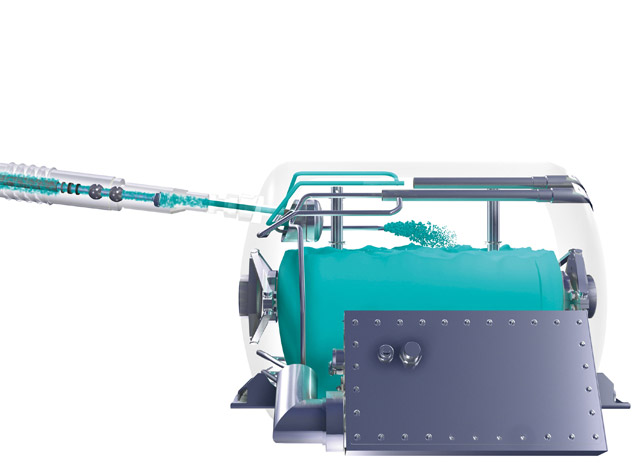
BMW Hydrogen 7's Tank
But let’s go straight to the point and find out how hydrogen cars can contribute in our environmental efforts.
First of all, I must tell you more about what really a hydrogen vehicle is. As you already know probably, it uses hydrogen for power. What you might not know however is how this hydrogen transforms into power.
The vehicle can be powered by hydrogen in two different ways. The first one is through a modified internal combustion engine, which has to be designed especially for this purpose, so that it can transform the chemical energy coming from the hydrogen in electricity.
The second one is through a hydrogen fuel cell which works like batteries. The principle, which lies behind the creation of the power, is that the hydrogen and oxygen are combined with a cell in order to generate the needed electricity and water, they in turn run the electric motor.
Both methods effectively produce energy from the compound. Nevertheless, the latter method seems to be more beneficial in terms of eco-friendliness.
What is also important to mention is the way hydrogen is being obtained. In fact, it isn’t a natural energy source (like fossil fuels for instance). Its main characteristic is that it is an energy carrier.
Hydrogen is made mainly after chemical reactions in which methane or fossil fuels take part, or it can be created from energy sources such as solar energy source or wind ones. In other words – this compound is to be found almost everywhere and this is the reason which makes it so attractive to the different companies.
For that reason lately many automotive companies put a lot of effort and attention on the ways this can happen. They are developing technologies which can be successfully utilized to exploit the potential of hydrogen energy for vehicles.
In addition to this another important advantage of the hydrogen is that it is prepared without utilizing fossil fuel inputs. But what does this mean? Well, basically the vehicle’s propulsion won’t contribute to carbon dioxide emissions.
On the other hand, hydrogen might have some drawbacks that have to be reviewed. First of all, the storage of hydrogen is a challenge, because it is a low density gas. Secondly, it appears that the additional leakages of hydrogen might harm the stratosphere. Third – a large amount of investments should take place in order to make an infrastructure in alignment with such cars.
Furthermore, if the gas is used in fuel cells, those vehicles require a special catalyst. The latter requires in turn a metal component, which very often is made of platinum. And as we all know: this metal is very rare and extremely expensive.
Honda FCX Clarity
And to go back to the initial question: are hydrogen cars the alternative vehicle of the future? It is indeed very tough to answer such question, as you consider the advantages and drawbacks of these types of cars have. Nonetheless, many companies are investing in the research of the feasibility of building hydrogen cars.
In summary, vehicles which offer alternative ways of propulsion and emit less harmful gases are significantly needed nowadays. Hydrogen cars are one of the option, which although is a bit more expensive, can also contribute for the reduction of greenhouse gases and reliance on oil. The vision which stays behind the development of such vehicles is to deliver cleaner and greener ways for everyone to travel without producing harmful emissions.
Yesterday we discussed two of the most popular alternative fuels – biodiesel and alcohol fuel. As we already became familiar, both are efficient not only in ecological terms, but also in economical ones. Given that the concerns around the global warming are escalating, I presume that in the future, there will be a great necessity for vehicles which emit less CO2 or are with zero emissions. Hence, this leads to the though that even more alternative ways for propulsion are going to arise in the near future. As we all can see, even now on the market, there is a big expansion of electric vehicles and hybrid ones. In addition, the brands are competing in the development of vehicles which are both fuel efficient and ecologically preserving.
First, let’s review one popular alternative fuel: propane. It is a compressed natural gas which almost everybody has used in their homes. However, it is popular as an alternative fuel too. It is a by-product of natural gas processing and petroleum refining. The process is called cracking. What is commonly used as vehicle fuel is actually a mixture of propane and butane, or more familiar as liquefied petroleum gas (LPG or LP gas). It is not necessary to state the environmental benefits of its use and the fuel efficiency it delivers for they are already very well known. Take a look at some models, which are using this type of fuel:
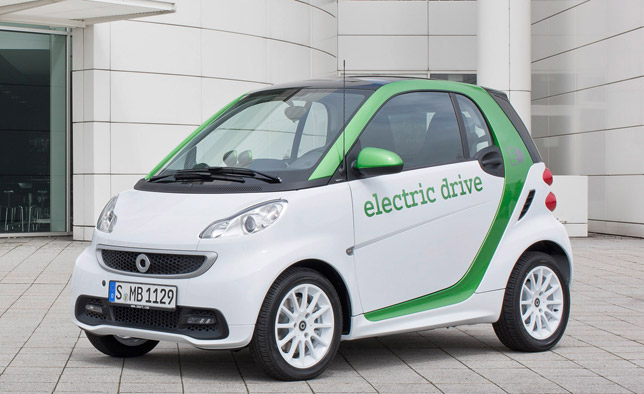
Extremely utilized way of alternative vehicle propulsion is through the means of electricity. The good news is that although the EVs were very popular more than hundred years ago, their development now flourishes. Moreover, it seems that the automotive world is in a stage of competition. The different brands are investing nowadays more than ever in the development of technologies, using electricity as alternative fuel. The EVs use electricity which is stored in battery in the car and don’t emit CO2. Although, they aren’t as fast as their gasoline powered rivals, they are considered perfect for city driving. Some of the electric vehicles, already on the market:
2012 Smart ForTwo Electric Drive
Did you know that ammonia can be used as fuel? In fact, ammonia has been proposed as a practical alternative to fossil fuel for internal combustion engines back in the beginning of the last century. In addition, it can be successfully used in already existing vehicles, which engines need only slight modification. Ammonia is beneficial in terms of zero emissions and economical efficiency.
Liquid nitrogen is another type of emissionless alternative fuel. Liquid nitrogen vehicles are comparable in many ways to the electric vehicles. However, they use liquid nitrogen to store the energy instead of batteries as it is in the case of EVs. They have several advantages that should be mentioned. First of all, they can be powered through the electrical grid (which contributes to their eco-friendliness). Secondly, there wouldn’t be any transportation of the fuel, since the power is delivered from the electrical grid. This is also economically viable. Next, the maintenance is also at low costs. At last but not least, the liquid nitrogen vehicles don’t have the degradation problems of the battery systems.
To sum up there are many different types of alternative fuels and nowadays even more are developed and considered for commercial use. Of course the main reason for this expansion of research is the negative environmental impact which the gasoline powered vehicles are causing, due to their high levels of CO2 emissions in the atmosphere. Undoubtedly, in the near future the commercial use of electric cars or hybrid ones won’t be considered as extravagancy but as a high level of environmental awareness.
Vehicles with Zero Emissions – the future of the automotive world
This week’s fresh “eco” air is a small review of some of the alternative fuels available for use. A simple fact is that humanity sooner or later will experience the necessity of their utilization. Hence, the aim of the article is not only to raise the ecological awareness, but also to lift up the veil of ignorance around the alternative vehicle fuels that can be successfully utilized. (more…)
Mazda Kiyora will be exhibited at 41st Tokyo Motor Show in Japan. The car is capable of doing 76 miles per gallon (3.1l/100km). Kiyora is powered by direct-injection Mazda SKY-G 1.3 engine combined with six-speed Mazda SKY-Drive automatic transmission.
Mazda Premacy Hydrogen RE Hybrid is the other car, which will make it’s first debut at Tokyo Motor Show. The vehicle will be powered by hydrogen rotary engine connected to a generator that powers an electric motor. The range is around 200 kilometres. (more…)
Specialists from BMW, HOERBIGER, the Graz University of Technology, and HyCentA develop a hydrogen combustion process which achieves remarkable efficiency for internal combustion engines for passenger cars. (more…)
Honda has today given the first glimpse of the American specification, production version of the all-new 2010 Insight hybrid will make its world debut in January 2009 at the Detroit Motor Show.
This first image of the US version of Honda’s latest production hybrid shows how the Insight Concept, first shown at Paris in October 2008, will be transferred into an aerodynamically inspired, athletic looking road car. The new five-passenger, five-door Insight is powered by a lighter, more compact version of Honda’s IMA hybrid system and will go on sale in the spring.(more…)
 We love independent works of 3D artists and visionaries. That’s why when we found that brilliant BMW XS design concept – which is based on a BMW platform apparently – we felt the need to share it with you.


 This weeks “fresh and clean” topic will put more attention on hydrogen vehicles as many of us might not be completely aware about them. I’m going to discuss how they work and are they beneficial for the environment, and in addition – I will resume some of their disadvantages.





 Yesterday we discussed two of the most popular alternative fuels –



 This week’s fresh “eco” air is a small review of some of the alternative fuels available for use. A simple fact is that humanity sooner or later will experience the necessity of their utilization. Hence, the aim of the article is not only to raise the ecological awareness, but also to lift up the veil of ignorance around the alternative vehicle fuels that can be successfully utilized.
 Mazda Kiyora will be exhibited at 41st Tokyo Motor Show in Japan. The car is capable of doing 76 miles per gallon (3.1l/100km). Kiyora is powered by direct-injection Mazda SKY-G 1.3 engine combined with six-speed Mazda SKY-Drive automatic transmission.
 Specialists from BMW, HOERBIGER, the Graz University of Technology, and HyCentA develop a hydrogen combustion process which achieves remarkable efficiency for internal combustion engines for passenger cars.