Tag: GT2

  • Maserati GT2 Racecar

    Maserati is back. The Autodromo Varano de’ Melegari was the setting for the track debut of the high-performance GT2, the car that epitomizes the House of the Trident’s return to racing. The shakedown at the Parma circuit is the precursor to a series of events marking the run-up to the official unveiling of the car at the end of June in Belgium, at the 24 Hours of Spa.

    Maserati is ready to reawaken the memories that saw it feature in the exciting GT championships, with a hungry new car designed to evoke the exploits of its forerunner, the glorious and victorious MC12.
    The Trident’s history in motorsport is a story of successes spanning almost a century, of a unique and distinctive DNA, and of a passion being rekindled by the brand’s link with the potent legacy from the past and its drive towards the future, in which racing is an essential component.

    Maserati GT2 is speed, elegance, style, and innovation incarnate. A car designed to be a masterpiece of performance: extraordinary and breathtaking between the kerbs, created to celebrate Maserati’s return to the circuits. A new chapter begun in late 2022 with the announcement of its participation in the 2023 ABB FIA Formula E World Championship, complemented by its inclusion in the GT2 European Series, as part of the strategy developed to bring the Trident back on track.

    Conceived and designed by Maserati engineering in tandem with the Centro Stile Maserati, to ensure the aesthetic quality standards typical of the brand, the Maserati GT2 inherits the extraordinary 463kW/630CV Nettuno V6 engine from the Maserati MC20, taking it to a higher level.

    The most appealing technical specifications include the all-new patented MTC (Maserati Twin Combustion) technology based on F1 engines, the ultra-light carbon fiber central monocoque – an excellent solution to have a good weight-power ratio – and the lightweight full composite bodywork, where the aerodynamic features are exploited to the limit to improve the vertical load but at the same time ensuring the best efficiency in terms of drag. Much attention has been given to the development of the correct balance of the aerodynamic load, whereas the bottom has been developed specifically to work best in synergy with the front splitter and rear wing (adjustable); it has quick-release removable bodywork for optimized component replacement; the chassis features high torsional and bending stiffness.

    The power steering is full-electric. All suspension components of the car are specific racing components – there will be adjustable shock absorbers and adjustable anti roll bars in both the front and rear. Likewise, the electronics. The 6-speed sequential racing gearbox and steering wheel paddle shift with electrical rotary gearshift actuator evoke adrenaline-fueled emotions.

    The carbon fiber dashboard and the 10” display integrated into the dashboard result in a futuristic, intuitive cabin, complemented in the bodywork by the Maserati Corse-specific painting and livery option (Blu Infinito).

    A gem of mechanics and engineering, the spearhead of innovative technical solutions, with futuristic, minimalist, and sculptural interiors referring to the extreme lines of the body, the Maserati GT2 is dedicated to the racing teams and gentleman drivers due to take part in the GT2 Championships.

    The Trident single-seater with covered wheels is the result of a winning synergy between Maserati men and women and the avant-garde design and style that has always distinguished the creations of the Italian brand, complemented by its unmistakable flair of luxury, even when the road becomes a track. The fierce GT2 is therefore getting ready to explore new horizons, to consolidate and define Maserati’s racing future in the world of motorsport.

    Andrea Bertolini, Maserati test driver, commented: “The first few days are always quite unique, even more so for me when I was fortunate enough to bring Maserati to success at the GT1 World Championships, where I won four titles. We are now about to get back on track with yet another wonderful car. We’ve done lots of trial runs and early feedback is positive. Getting back behind the wheel of a GT was really exciting, and I could see everyone involved was very enthusiastic and motivated. We’ve focused on developing a product that not only stands up to its competitors but is also an ideal car for our gentleman drivers in terms of handling, comfort, and performance. We want them to experience a unique feeling in this car. In the last few months, we’ve been working intensively in the simulator, courtesy of the commitment of a fantastic team. I’d like to thank them, and the most positive aspect is that to follow these first few days, we’re making it all a reality is to the very greatest extent. We have an intense series of test days ahead of us, to get us ready to get back on track.”
  • Mercedes-Benz AMG GT2

    Mercedes-AMG continues to expand its Customer Racing programme: in the 2023 season, a GT2 model will complement the fleet of the successful GT3 and GT4 cars from Affalterbach. The new Mercedes-AMG GT2 is the most powerful homologated race car in the meanwhile twelve-year history of the customer sport programme. The GT2 offers the usual extremely high safety level of AMG race cars and comes with many new racing technologies. As a result, the GT2 version stands out as an attractive overall package for ambitious amateur drivers in particular. With the presentation of the new model, Mercedes-AMG underlines its ambition to take a leading role in international GT2 competition as well.

    With the Mercedes-AMG GT2, the performance and sports car brand from Affalterbach starts a new chapter in customer sport. The race car bridges the gap between the Mercedes-AMG GT3 and the Mercedes-AMG GT4. While the GT3 is increasingly being raced by professional drivers and the GT4 primarily marks the entry into the world of GT racing, GT2 particularly aims at the group of gentlemen drivers. For them, with the GT2 regulations introduced in 2020, Stéphane Ratel Organisation (SRO) has created an attractive platform with more and more international race events.

    An outstanding feature of the new Mercedes-AMG GT2 is its maximum performance level: at 520 kW (707 hp), the new member of the Customer Racing family ranks above GT3 level, both in terms of horsepower and in top speed. The source of this power is the AMG 4.0 litre V8 biturbo engine with a flat crankshaft. The power is transmitted by means of a sequential six-speed racing gearbox with modified gear ratios. Like in all GT models, the gearbox is mounted on the rear axle in transaxle configuration and is connected to the engine by a carbon torque tube, torsion and torque rigid. The suspension includes comprehensively configurable motorsport shock absorbers and adjustable anti-roll bars.

    The exterior of the Mercedes-AMG GT2 speaks the same expressive design language as the other Customer Racing cars from Affalterbach: from the wide front section with the large air intake openings all the way to the muscular rear end, every detail is aimed at performance. The carbon bonnet includes a large air outlet and so‑called louvers that also influence the aerodynamic performance have been integrated into the carbon wings at the front axle.

    A further aerodynamic highlight of the Mercedes-AMG GT2 is a fully newly developed rear wing, held in place by a characteristic swan neck mount. The large single-level wing is multi-adjustable and significantly contributes to precise handling. As usual for the AMG Customer Racing cars, the GT2 version also stands out for reliable handling. As a result, less-experienced drivers can also quickly build up confidence. An important new development for competition use is the wheel mounting: the Mercedes-AMG GT2 has an innovative central wheel mount system. This allows for even faster and more reliable changes of the forged 18” AMG light alloy wheels.

    Functional racing ergonomics prevail in the cockpit of the Mercedes-AMG GT2. The DDU (Digital Display Unit) of the latest generation is an innovation in the driver’s central field of view. The fully programmable dashboard system has a high-resolution graphic display. This makes it intuitive to operate and very user-friendly. Another exclusive novelty is the new multi-function steering wheel, which Mercedes-AMG developed together with the sim racing experts at Cube Controls. It offers a new level of ergonomics, functionality and control.

    To ensure optimum occupants protection, the Mercedes-AMG GT2 uses the pioneering safety concept that has also been incorporated into the GT3 and GT4. This includes, among others, racing-specific driver aid systems such as the multi-adjustable traction control or racing ABS of the latest generation. The interior of the vehicle is protected by a steel roll-cage bolted onto the aluminium space frame. The carbon driver safety cell includes a six-point safety belt and customisable ergonomic seat foaming. Safety nets, an extrication hatch in the roof, a carbon safety fuel tank and a powerful motorsport fire extinguishing system round out the comprehensive safety features of the Mercedes-AMG GT2.

    Customer teams will receive the Mercedes-AMG GT2 fully matured. The new car will undergo comprehensive testing in the upcoming weeks, among others at circuits of the next GT2 European Series season. Next to various test races, an endurance test run in racing conditions is planned as well. Teams running the Mercedes-AMG GT2 get to enjoy the full support of Mercedes-AMG’s worldwide Customer Racing programme. Like for the GT3 and GT4 models, technical support is guaranteed from the motorsport experts at HWA AG. As a development and production partner of Mercedes-AMG, HWA AG carries out all maintenance and overhauls. Sales of the Mercedes-AMG GT2 will start in the course of the 2023 motorsport season.

    “The Mercedes-AMG GT2 is yet another milestone in our Customer Racing programme. Thus, we emphasise once more our commitment to GT racing and further expand our involvement by entering a new segment in GT racing. The GT3 segment having become more and more professional and GT4 having become established as an entry-level category, we open up new opportunities with the Mercedes-AMG GT2. As a result, we address an extended range of customers and therefore offer the high quality and the comprehensive support of our Customer Racing programme to interested parties in the GT2 segment as well. The race series for this category of vehicles have seen significant increase of reach and relevance in the past two years. In this dynamically growing market, we come up with the Mercedes-AMG GT2 as a highly attractive package and once again prove the performance potential of our brand.”
    Christoph Sagemüller, Head of Mercedes-AMG Motorsport

    “The Mercedes-AMG GT2 incorporates our entire experience we have acquired over the past years in our successful Customer Racing activities. Next to proven GT3 and GT4 features, however, we have also integrated entirely new racing technologies, specially developed for the GT2. The result is the most powerful homologated race car we have built to date. The Mercedes-AMG GT2 is entering a new range of speed. Moreover, we have achieved that gentlemen drivers who don’t race every weekend can control this enormous power in a commanding and safe way all the time. I am really happy that we can now offer a top-notch product along with our maximum support activities for the customer teams in this burgeoning segment as well.” Stefan Wendl, Head of Mercedes-AMG Customer Racing

    Technical data

    Engine AMG 4.0-litre V8 biturbo engine with flat crankshaft
    Displacement 3,982 cm3
    Output up to 520 kW (707 hp)*
    Max. torque up to 800 Nm
    Drive transaxle configuration: engine at the front, gearbox on the rear axle, connected by Torque Tube
    Transmission sequential AMG 6-speed racing transmission with mechanical (adjustable) self-locking differential and magnesium casing as well as shift paddles on the steering wheel; pneumatically operated
    Bodywork aluminium space frame; roll-cage of high-tensile steel
    Safety carbon driver safety cell to latest FIA standard, customisable seat foaming and integrated headrest as well as extrication hatch in the roof; powerful motorsport fire extinguishing system
    Chassis aluminium double wishbones front and rear; adjustable rebound and pressure motorsport shock absorbers, adjustable anti-roll bars
    Aerodynamics multi-adjustable rear wing
    Electronics motorsport electronics with torque control; optimised driver aid systems: AMG TRACTION CONTROL, multi-adjustable racing ABS of the latest generation, service-friendly durable motorsport electrics
    Steering electro-mechanical power steering
    Brakes racing brake system with adjustable ABS, brake balance adjustment via beam, self-ventilating composite brake discs with special cooling air guidance; 6-piston brake callipers front, 4-piston brake callipers rear; brake disc diameter 395 mm front / 355 mm rear
    Wheels forged AMG light alloy wheels with central mount,
    front: 12×18“, rear: 13×18“
    Tyres Front: 325/660-18 slick / rear: 325/705-18 slick
    Weight < 1,400 kg incl. air conditioning
    Fuel tank capacity 120 l (motorsport safety fuel tank)


  • Maserati MC20 GT2

    Another big step in the Maserati motorsport strategy: the MC20 – designed ever since its early stages of development to bring the Trident back on track in closed-wheel competitions – will feature in the Fanatec GT2 European Series Championship, making its debut in 2023.

    Maserati will be offering its customers and teams the MC20 GT2.

    MC20 GT2 is based on the road version, from which it inherits its best-in-class specifications. These include the innovative Nettuno engine with new Maserati Twin Combustion (MTC) technology, double-wishbone suspension with semi-virtual steering axis and carbon fibre monocoque.

  • Madness Motorsport Audi RS6 vs Porsche GT2 997 and Nissan GT-R

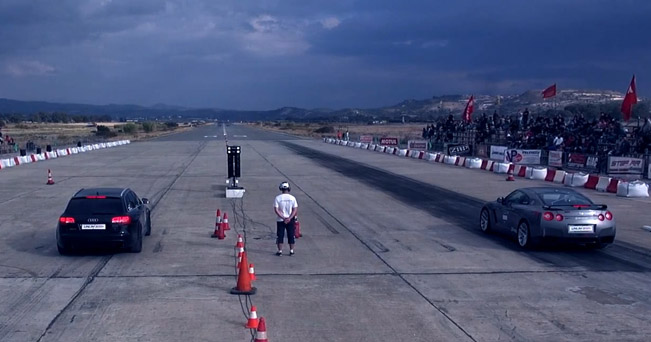
    One of the most famous performance tuners in Bulgaria – Madness Motorsport has taken their specially prepared Audi RS6 Stage 1 with 650HP at a drag race in Greece.

    In the first start, the RS6 Madness Motorsport stopped the clock on 28.630 seconds with a terminal speed of 283.91 km/h at 1 mile mark and 11.312 seconds with 195 km/h at ¼ mile.

    The second start was versus an extremely powerful Nissan GT-R Mk.1 DT 1200 R with 1200HP, which did 22.484 seconds with 371.90 km/h at 1 mile and 9.360 seconds with 266.27 km/h at ¼ mile. The Audi didn’t stand a chance and it even made worse start – 30.380 seconds with 273.76 km/h at 1 mile.

    The third start was versus a Porsche 911 GT2 (997) AWD 9FF with 1150HP. It did 25.674 seconds with 335 km/h at 1 mile and 10.978 seconds with 237.93 km/h at ¼ mile. The RS6 Madness Motorsport stopped the clock at 29.182 seconds with 289.38 km/h at 1 mile.

    After the race, the Audi RS6 prepared by Madness Motorsport has received Stage 3 – 820HP and 1,000Nm, but there are no official results for acceleration and top speed.

    Stay tuned!

    httpv://www.youtube.com/watch?v=WGUFRb8Uxrk

    Source: Dragtimesinfo

  • OK-Chiptuning Porsche 911 GT2

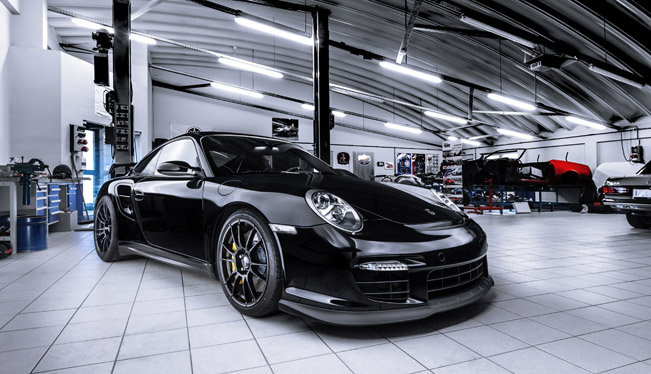
    OK-Tuning has presented their performance package for the mighty Porsche 911 (997) GT2. The sports car comes with a lot of performance upgrades as well as engine boost.

    Some of the performance parts are new carbon-ceramic brake system, a roll cage and an Akrapovic racing exhaust system including manifolds and sport catalysts. Last, but not least OK-Tuning fitted the tuned GT2 with modified GT2 RS intercoolers.

    The interior boasts carbon and Alcantara trim, racing bucket seats and fire extinguisher.

    The twin-turbo 3.6 liter twin-turbo flat-six is boosted to 680HP (500 kW) and 880Nm (652 lb-ft) of torque. This is an increase of 150HP and 200Nm over the standard model. 0-100 km/h in 3.3 seconds, 100-200 km/h takes 5.1 seconds and 100-300 km/h in 18 seconds.

    Other highlights include OZ Ultraleggera HLT wheels fitted with Dunlop SP Sport Maxx tires and new LED taillights.

    Pricing for OK Remapping starts from €3,500.

    Source: OK-Chiptuning

  • Porsche GT2 9ff vs Nissan GT-R AMS Alpha 12+

    Dragtimesinfo has published an interesting battle between Porsche 911 GT2 Mk.1 9ff GT1100 with 1100HP , Nissan GT-R Mk.2 AMS Alpha 12+ with 1500HP and Nissan GT-R Mk.1 Altechno A2 with 1000HP.

    In the first start, the 9ff set personal speed record of the day of 338 km/h. However, because of the massive wheel spin the Porsche crossed the 1 mile mark in 26.957 seconds, while the GT-R Alpha 12+ needed just 24.013 seconds.

    In the second start, the 9ff lost again, but this time versus the GT-R Altechno A2, which finished in 25.195 seconds with a terminal speed of 323 km/h.

    In the last race, the Porsche won versus the GT-R Alpha 12+, because the Nissan had problems. However, the 9ff managed to set personal absolute record on ¼ mile – 10.977 seconds with 227 km/h and personal et record of the day on 1 mile – 25.781 seconds with 336 km/h.

    httpv://www.youtube.com/watch?v=cdcU03lrAPQ

    Source: Dragtimesinfo

  • Mcchip-DKR Porsche 993 GT2 Turbo Widebody MC600

    Mcchip-DKR has presented the highly tuned Porsche 993 GT2 Turbo 3.6 Widebody MC600. Behind this long name there is a hell of a car. Of course, the last number means the amount of power under the rear hood.

    The 3.6 liter bi-turbo flat-six engine has a new engine block and rebuilt K26 turbochargers developed by PUTZ Motorsport. The result is 612HP (450 kW) and 847Nm (625 lb-ft) of torque. The power is put on the road through the rear wheels with the help of a Drexler LSD (limited-slip differential). CARGRAPHIC provided the full exhaust system including sport catalysts.

    The widened Porsche rolls enormous 10J x 18” front wheels and 13J x 18” rear ones fitted with high-performance tires. The suspension comes from KW – Competition Variant 3.

    The interior boasts Recaro bucket seats, safety roll-cage and some panels from carbon fiber. There are also a fire extinguisher, a STACK display with video system and data recording capabilities, along with a shift-throw reduction to the shifter.

    The complete conversion costs whopping €200,000.


    Source: mcchip-dkr

  • BMW M3 GT2 Art Car at Norwegian cliff [HD video]

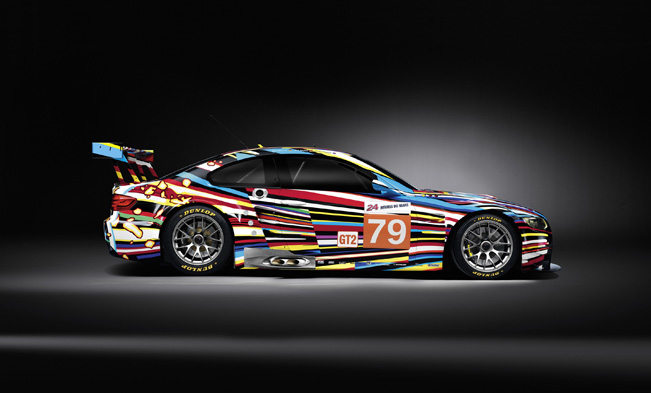
    BMW actually brought a real M3 GT2 art car on the cliffs of Preikestolen in Norway. The car was airlifted after two days waiting for weather that would allow them to put the specially painted car by Jeff Koons.

    There is no real reason for this strange photoshoot, but the photographer gathered all the visitors on the cliff around the car and done the pictures.

    BMW M3 GT2 is a high-performance sports car created specially for racing at events like 24 Le Mans. It is powered by naturally aspirated 4.0-liter V8 with maximum output of 500bhp. The chassis is upgraded as well as the brakes and last, but not least, the whole car is much lighter. The performance is stunning – 0 to 160 kph in 3.4 seconds. For the 24 Le Mans race, the car is going to be labeled with the logos of Castrol, Crowne Plaza, Dunlop, Randstad, Sympatex, LuK, H&R, BBS and NGK for the race on the “Circuit de la Sarthe”.

    httpv://www.youtube.com/watch?v=QX7GRfshLw0

    Source: FASTLAPracing via Youtube

  • TECHART GTStreet RS

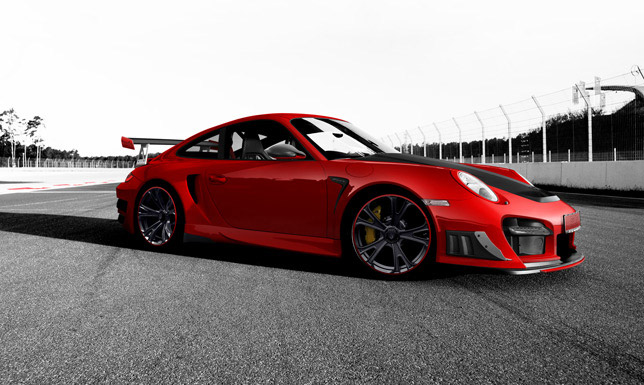
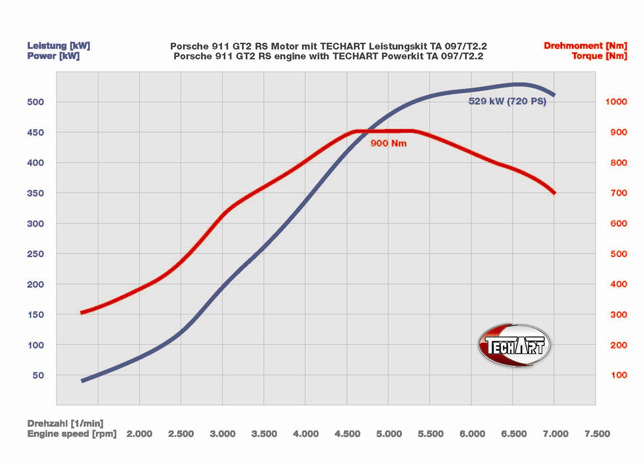
    TECHART presents the GTStreet RS based on the Porsche 911 GT2 RS at the IAA. It is the most powerful car which has ever left the workshop in Leonberg. The super sports car fascinates with an impressive performance of 530 kW (720 PS) and 900 Nm torque in combination with an unmistakable characteristic body kit.
    High End Performance

    TECHART power kits are uncompromisingly sporty as well as suitable for daily on road use. These features as well as the years of experience of the TECHART engineers were given to the development of the power kit TA 097/T2.2 for the Porsche 911 GT2 RS. The overall performance of the sports car increases to 530 kW (720 hp), the maximum torque to 900 Nm. The measured data is impressive: the GTStreet RS accelerates from zero to hundred in 3.3 seconds. After 9.5 seconds the needle passes the 200 km/h mark. With a maximum speed of up to 352 km/h the top athlete confirms his new strength in an extraordinary way.

    Unique design

    The TECHART GTStreet RS impresses with performance – and its look. Its capability is reflected in the extraordinary exterior design of the sports car. The significantly lowered front apron with a fixed carbon splitter and an adjustable splitter of hard-wearing polyurethane-RIM ensures additional downforce and due to additional air-ducts an improved airflow to the brakes and intercooler. Eye-catcher at the rear: the rear spoiler made entirely of carbon-fibre – handling in extreme conditions is significantly smoother as a result. A rear apron with an integrated diffuser in carbon-fibre, air outlets as well as carbon-fibre air wings close the GTStreet RS program.

    TECHART Porsche 911 GT2 RS
    TECHART Porsche 911 GT2 RS

    Performance and suitability for daily us fully compatible

    Furthermore available is the TECHART Noselift System for the Porsche 911 GT2 RS. The hydraulic system features a trouble-free backfitting, a rapid height adjustment of approximately 10 mm/s with particularly silent operation as well as fully integrated operation via a button with a status indicator at the roof console. Besides the perfect integration in the GT2 RS, EMC-safe electronic control units, vehicle-specific CAN bus integrated wiring harnesses as well as high-performance test procedures are part of the premium development process.

    Furthermore TECHART offers the 20-inch Formula Race lightweight forged centerlock wheel in sizes of 8,5J x 20 ET 40 and 8,5J x 20 ET 52 for the front axle and 12J x 20 ET 50 for the rear axle for the Porsche 911 GT2 RS. The rigidity and weight ratio was optimized for the TECHART Formula Race and – based on the lighter twin spokes and the connection through the centerlock – provides a weight advantages of 10% if compared to the TECHART Formula III forged wheel and impressive 25% if compared to a light alloy wheel. The result: a reduction of the rotating and unsprung mass, which results in an even more agile driving behaviour and increased driving dynamics.

    Porsche 911 GT2 RS engine with TECHART powerkit TA 097/T2.2
    Porsche 911 GT2 RS engine with TECHART powerkit TA 097/T2.2

    Craftsmanship down to the last detail

    Passion and love of detail – the exclusive TECHART character is also reflected in the interior of the sports car. TECHART’s complete leather furnishings ensure in combination with a delicately fashioned and custom-coloured decorative stitching a unique feeling. Individual decorative components made of carbon-fibre or aluminium pedals and illuminated door entry guards underline the uniquely athletic appearance of the interior. All in all, TECHART offers a virtually unlimited degree of freedom when it comes to customising the interior – with the TECHART-typical precision.

    Source: TECHART

  • Porsche TECHART GTStreet RS – 700HP and 860Nm

    TECHART GTStreet RS is based on the Porsche 911 GT2, which is the ultimate road legal track car. An original Porsche 911 GT2 has 530 hp and 680Nm of torque and is capable of doing 204 mph (over 325km/h). However, the tuned version is one of the most powerful sports cars in the world.

    TechArt Porsche GTStreet RS develops 700hp and 860Nm of torque. (more…)

  • Porsche R911S and R911S GT2 Carbon

    Porsche 2011 GT2 RS is the fastest street legal car in the company’s history. Switzer performance, announced their new Switzer GT2 R911S , which develops a bit over 900 HP.

    The Switzer GT2 R911S is based on P800 GT2 package, which is available for GT2 RS. By using race fuel, the power is increased to 911 HP. The power is roughly 50% more than the original Porsche’s GT2 RS. Switzer version is equipped with a pair of monster intercoolers to keep the engine cool after each power lap. (more…)

  • Porsche 911 GT2

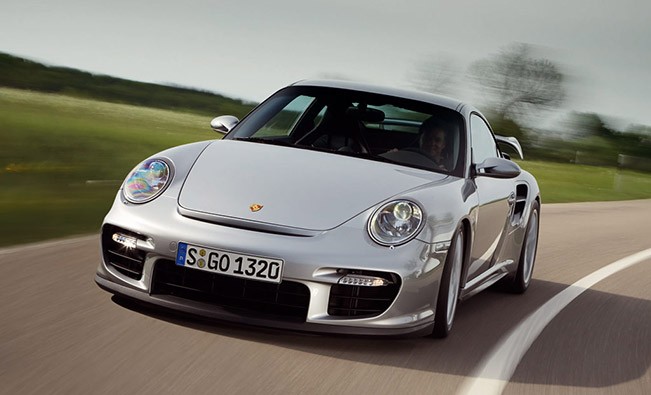
    Porsche 911 GT2Presenting the new 911 GT2 at the Frankfurt Motor Show, Dr. Ing. h.c. F. Porsche AG, Stuttgart, is proudly launching the most powerful 911 so far homologated for road use. Through its striking design with large air intakes at the front and the rear wing so characteristic of this very special model, the new 911 GT2 expresses the power and performance potential of the fastest-ever 911 right from the start even at a standstill.

    Available exclusively with rear-wheel drive and a manual six-speed gearbox, this high-performance athlete accelerates to 100 km/h in just 3.7 seconds and reaches a top speed of 329 km/h (204 mph) on average fuel consumption of just 12.5 litres/100 km (equal to 22.6 mpg imp) in the New European Driving Cycle (NEDC), thus offering a level of fuel economy regarded as quite impossible in this performance class just a few years ago.

    The power unit of the new 911 GT2 is based on the six-cylinder boxer engine of the 911 Turbo, with air supply by two exhaust gas turbochargers featuring variable turbine geometry (VTG). The 3.6-litre boxer engine achieves its maximum output of 530 bhp (390 kW) at 6500 rpm, with maximum torque of 680 Newton-metres maintained consistently between 2,200 and 4,500 rpm. With its unladen weight of 1,440 kg or 3,175 lb, finally, the 911 GT2 offers a power-to-weight ratio of just 2.72 kg/6.00 lb per horsepower.

    The increase in engine power by 50 bhp over the ”regular“ power unit is provided in the new 911 GT2 by two turbochargers with a larger compressor wheel and a flow-optimised turbine housing raising turbocharger pressure to an even higher level. And for the first time Porsche’s engineers have combined the turbocharged engine with an expansion-type intake manifold – a genuine revolution on turbocharged power units.

    The expansion intake manifold uses the principle of oscillating air in the intake manifold during the cooler expansion phase, keeping the temperature of the fuel/air mixture lower than in the 911 Turbo. This, in turn, means a significant increase in all-round efficiency, with fuel consumption down by up to 15 per cent under full load despite the increase in engine output.

    The 911 GT2 offers new achievements also in terms of emission management and control: This is the first Porsche homologated for the road to feature a rear silencer and tailpipes made of titanium as standard equipment. This expensive material reduces weight by approximately 50 per cent versus a comparable component made of stainless steel to just 9 kg.

    The new 911 GT2 comes as standard with PCCB brakes featuring brake discs made of a composite carbon fibre/ceramic compound ensuring maximum stopping power maintained with an extremely high level of consistency. A further advantage is that PCCB brakes reduce the weight of the unsprung masses versus comparable grey cast-iron discs by approximately 20 kg or 44 lb.

    Yet another feature fitted as standard is the electronically controlled PASM Porsche Active Suspension Management. (PASM). The GT2 comes on 19-inch light-alloy wheels running at the front on 235/35 ZR 19, at the rear on 325/30 ZR 19 sports tyres.

    The new 911 GT2 will be at the dealership in November 2007. The base price of the car in Germany is Euro 159,100.-, the market price including 19 per cent value-added tax Euro 189,496.-.