Tag: GINA

  • Concept Cars at the Concorso d’Eleganza Villa d’Este

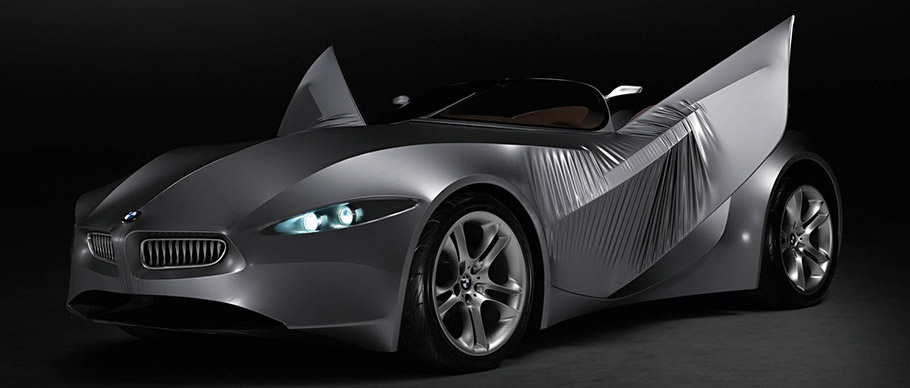
    BMW Gina (2008) - Fornt Angle View

    This year the Concorso d’Eleganza Villa d’Este once again invites contemporary concept cars and prototypes to compete alongside the historic models traditionally on display. To qualify for entry, concepts have to be driveable and no older than three years. As announced at the Concorso d’Eleganza Villa d’Este’s second press conference in Milan, eight such vehicles will attend the event at the end of April in a bid to be crowned the most beautiful contemporary concept car. The winner will be chosen not by the jury but by the public. In this, the Concorso perpetuates a tradition going back 80 years: as long ago as 1929 the public was already ranking the showcased models according to their looks. For ten years now, this beauty contest of worldwide acclaim has been held under the patronage of the BMW Group. Three world premieres and a further five sensational concept cars form the worthy framework for this anniversary Concorso.

    GINA Light as guest of honour
    BMW will be dispatching the sensational GINA Light study to Lake Como – hors concours – as a birthday guest. Ordinarily the GINA Light can only be viewed by visitors to the BMW Museum at the end of the special “BMW Concept Cars” exhibition. At the Concorso the design study will make its debut outdoor appearance and provide a first opportunity to view a number of concrete manifestations of the multifaceted GINA philosophy. With the GINA Light, the limits of contemporary materials and production processes are pushed far into the future. For all the innovations embodied in this vehicle, the focus is on the adaptability of forms and functions that are geared to the individual and situational needs of the driver as well as the relevant driving conditions.

    That is the reason why both the exterior and the interior feature numerous components that are strikingly different from conventional solutions not just visually but also in terms of their basic conceptual attributes. For example, the GINA Light visionary model has a practically seamless outer skin made of an elastic textile material that is stretched over a moveable frame. Functions are only activated as and when required. Thanks to this utterly novel interpretation of familiar functionality and structure, the driver enjoys a very different experience behind the wheel of the car. The reduction to the essentials and adaptation to the needs of the driver enhance the emotional impact of the vehicle, fulfilling a key goal of the GINA philosophy.

    World premieres: Stile Bertone, Morgan and Zagato
    In recent years, world premieres have regularly been a key component of the Concorso d’Eleganza. Now the 80th anniversary occasion is about to set a record: for the first time three concepts will be unveiled before the eyes of the world at Lake Como.
    Automobiles by Stile Bertone have always been very special, and that has naturally stoked the Concorso’s happy anticipation of the world premiere from the Italian styling house. Powered by a V8 engine, the car’s outer skin observes the laws of aerodynamics while the choice of carbon fibre sets benchmarks in lightweight construction. Morgan will also be presenting a two-seater at the Concorso. This study, built on the Morgan Aeromax platform, marks the centenary of the tradition-steeped British marque. Celebrating the 90th anniversary of a family tradition, meanwhile, is Andrea Zagato – likewise calling for a Concorso d’Eleganza Villa d’Este premiere hailing from his exclusive design studio.
    No less spectacular than these world premieres are the five exceptional design studies heading for Lake Como following their official unveiling before the public:

    Infiniti Essence
    With its Essence model, presented as a concept at the 79th Geneva Motor Show, Infiniti celebrates its first 20 years as a manufacturer of premium automobiles while at the same time offering an exciting glimpse of what customers can expect from this luxury brand in the future.

    A 600 hp coupé with a petrol/electric hybrid engine and rear-wheel drive, the Essence fuses superior design, technology and performance. An eloquent embodiment of the core attributes of the Infiniti marque, it spans an arc from the past to the automotive future.

    Test bed and design study in one, the Essence points to the future of the Infiniti brand in terms of technology and style. Moreover, this concept for the first time showcases Infiniti’s guiding principle of “Inspired Performance” as applied to the exclusive segment of luxury super-coupés.

    mindset
    Not a city car, not an SUV, not a sports car. mindset is as unique as it is self-explanatory: a lightweight, powerful and efficient commuter for everyday use. Its “high heels” – meaning its large, slim wheels – raise the aerodynamic coupé body to the same level as other traffic. One, two or more passengers, bags and baggage, animals or kids in tow – entry and exit are easy, the interior provides a good view of the road, and progress is pacy and pleasant. A composed appearance exuding power but without aggression: for mindset that is the visual manifestation of a contemporary hybrid vehicle.

    Mindset Concept - Front Angle

    The specifications state that, as a two-seater high-powered electric car, the mindset can accelerate to 100 km/h in 7 seconds, its lithium-ion battery giving it a range of 180 kilometres. Top speed is governed at 140 km/h. A supplementary petrol engine is to be offered as a range extender. This generates electric power and boosts the range to 800 kilometres. Moreover, a second battery can be used or additional power generated by solar panels. Running purely on electric power, the mindset is emission-free. When using the range extender, CO2 emissions are just 79g/km.

    Rinspeed iChange
    With the iChange, the pioneering, out-of-the-box Swiss thinkers at Rinspeed present the first car in the world with a body that adapts to passenger space requirements. In a matter of seconds a streamlined sports car with room for just the driver can be transformed into a comfortable three-seater: at the touch of a button the rear end of the teardrop-shaped car pops up as if by magic.

    The underlying concept of the iChange is that a vehicle’s energy requirements are largely dictated by weight, type of engine and aerodynamics. The upshot is an extremely lightweight car tipping the scales at just 1,050 kilograms. For the drive system, the Swiss company opted for an electric motor drawing its power from lithium-ion batteries that are available in two different battery packs for short- and long-distance journeys.

    The fact that aerodynamics also plays a key role in energy consumption prompted the idea of the rising rear. While other cars have to carry their inflated bodies around in order to accommodate up to seven people if necessary, even if the driver is the sole occupant most of the time, the iChange boasts an adaptable body. The unaccompanied driver gets around wrapped snugly in a teardrop-shaped body and on less power, thanks to this streamlined shape. If passengers wish to come on board, the pop-up rear provides room for two companions. The resulting weight increase and less than optimal aerodynamics push up energy consumption – but only while the passengers are on board.

    Aston Martin One-77
    The Aston Martin One-77 first broke cover at the 2009 Geneva Motor Show as a non-driveable concept. The driveable prototype of this super-sports car will be unveiled at the Concorso for the first time. It unites future-oriented technology with traditional craftsmanship and combines beauty with power. For Aston Martin, the One-77 is the quintessence of the brand’s engineering and design experience and is seen as the ultimate sports car from the Aston Martin fold.

    Underpinning the body is an extremely lightweight and rigid carbon-fibre chassis. The engine is based on the 12-cylinder unit with six litres’ displacement. The stated objective is to extract 700 hp from a displacement of 7.3 litres. The body allows for full power delivery: all wheels have double wishbones, and horizontally mounted shock absorbers permit a flatter profile. In a first for road cars, the dampers are adjusted by means of control valves. At delivery the suspension of the One-77 can be adjusted to the owner’s individual requirements, with a choice of comfortable GT or race car fit for the Nürburgring-Nordschleife. The car will weigh in at around 1,500 kilograms and cover the 0 to 100 km/h sprint in approx. 3.5 seconds, continuing on to a top speed of around 320 km/h.

    Fisker Karma S
    Fisker Automotive, Inc. took the wraps off its first production car, the Fisker Karma, at the North American International Auto Show 2009 in Detroit. The four-door four-seater Karma S combines the traditional, timeless styling of car designer and Fisker Automotive CEO, Henrik Fisker, with the plug-in hybrid drive concept Q-DRIVE® by Quantum Technologies to create the world’s first plug-in hybrid luxury car.

    On a full charge from any standard 110-, 220- or 240-volt outlet, the Fisker Karma S manages up to 50 zero-emission miles. In Sport Mode the range extends to an estimated 300 miles thanks to the economical Ecotec® petrol engine driving a generator which in turn supplies the two electric motors on the rear differential. The Karma S is good for an annual average of more than 100 miles per gallon and a top speed of 125 mph. Zero to 60 mph acceleration is accomplished in 5.8 seconds.

    The Concorso d’Eleganza Villa d’Este 2009
    On the weekend of 24 – 26 April 2009 the glorious grounds of the Grand Hotel Villa d’Este and Villa Erba in Cernobbio on Lake Como will once more turn into a unique platform for the most beautiful automobiles from the past and the boldest concept cars of the present. First held in 1929 at the same location, today the Concorso d’Eleganza Villa d’Este ranks as the world’s most tradition-rich event of its kind.

    After Saturday’s opening event for invited guests, on Sunday the Concorso once again offers all auto fans the opportunity to see these dreams on wheels close up in the adjacent parkland of Villa Erba. In addition to the cars presented on Saturday, special exhibitions will showcase many more high-profile classics. Admission to Villa Erba in Cernobbio on Lake Como is 12.50 euros (concessions 8 euros).

    The main sponsor of this year’s Concorso d’Eleganza is Girard-Perregaux.

  • BMW Gina

    BMW Gina - Front Angle

    Successful design arouses desire. In order to achieve this, it is more crucial than ever before that car manufacturers create the conditions that allow customers to establish a close relationship with their cars. Therefore, designers seek ways to promote and intensify people’s identification with their car that reach beyond pure aesthetics. In the premium segment in particular, customers demand cars that stir emotions and allow them to express their individuality.

    BMW Group Design has set another deepened objective for designing new cars that moves today’s consumers and their demand for enhanced utility and more versatility to the top of their agenda. An innovative concept introduced by BMW Group Design prepares the ground for this new approach: the GINA (Geometry and Functions In “N” Adaptions) principle grants more freedom for car design. It allows the creation of products with a design and functional range that express individuality and meet the wide variety of requirements of those who are using them.

    In the 21st century, customers approach their purchasing decision with a high degree of assertiveness, clearly defined requirements and subjective concept-tions – particularly when it comes to selecting their means of transport.

    In recent years, the interests and priorities that motivated them have changed and, more importantly, they have become considerably more diversified. This development will continue in the future. Today, the BMW Group is already responding to the highly diversified range of customer requirements and heightened expectations by providing services such as a substantially more varied product range, ever increasing possibilities for personalization and requirement-oriented production among others.

    Future customer requirements as a benchmark.

    By introducing the GINA philosophy, BMW Group Design presents ways of meeting these challenges in the future. The philosophy expresses the readiness and ability of BMW Group Design to consider individual customer requirements as an integral part of car development. Christopher E. Bangle, Head of BMW Group Design, speaks with conviction when he says: “Personal customer requirements will broaden the context of our products and change the core values that define our industry along the way.” For more than ten years now, these issues have inspired Bangle’s ideas. Time and time again, these ideas have been motivating the BMW Group Design team to break new ground and to find pioneering solutions. These results have spawned new customer expectations which in turn inspires designers to develop further innovations.

    GINA: Geometry and Functions In “N” Adaptions.

    The GINA philosophy offers designers as well as development and production specialists an opportunity to challenge existing principles and conventional processes. Solutions that will benefit the car of the future are examined without predefined rules and from as many perspectives as possible. This also involves questioning what is believed to be set in stone. Does a car roof really have to rest on pillars and be bordered by windows? Do all functions have to be visible at all times, even when they are not needed? How many personalization options does my car offer? Are there any possible alternatives to the rigid body shell made of steel or plastic?

    Questions like these lead to groundbreaking, cross-segmental solutions – and visions of the future of individual mobility. An essential principle of the GINA philosophy is to deliberately integrate the potential of new materials and pioneering, innovative constructions into the creative design process, and
    the idea of challenging existing manufacturing methods and material concepts. BMW Group DesignworksUSA, a subsidiary of the BMW Group that operates globally and caters to companies across the industry, has greatly inspired the design team at BMW Group Design. The design agency’s extensive experience with projects for a number of industrial partners outside of automotive engineering, predominantly in the field of material development and production.

    It is in the nature of such visions that they do not necessarily claim to be suitable for series production. Rather, they are intended to steer creativity and research into new directions. This approach helps to tap into formerly inconceivable, innovative potential that reaches far beyond the appearance of future cars and takes into account not only materials and structures but also functions and manufacturing processes. The potential requirements of tomorrow’s customers serve as a benchmark. In addition to aesthetics, the GINA philosophy also deals with ergonomics, the functional range and all other factors that rule customers’ emotional relationship with their car.

    With the development of the GINA Light Visionary Model, the BMW Group presents examples of visionary solutions. For the first time, exemplary adaptations of various approaches described by the GINA philosophy are brought to life to illustrate the potential impact of this concept on the future of automotive engineering. The limits of current material properties and manufacturing processes are projected far into the future. All innovations that these cars present focus on the variable adaptation of form and function based on individual and situation-related driver requirements as well as the demands of the driving situation itself. Therefore, both the exterior and the interior are equipped with a variety of components that differ significantly from conventional solutions, not only by the way they look but also in terms of their basic properties.

    For example, the GINA Light Visionary Model presents features such as a virtually seamless outer skin made of a textile fabric that stretches across a moveable substructure. Functions are only offered if and when they are actually required. The drastic re-interpretation of familiar functionality and structure means that drivers have a completely new experience when they handle their car. Reducing the car to its essentials and adapting it to the driver’s requirements enhances the car’s emotional impact and achieves a crucial objective of the GINA philosophy.

    Visions spawn innovative concepts.

    The strategy of challenging what is established, exploring new possibilities and focusing on customer demands and requirements has inspired the BMW Group to implement a wide variety of innovative concepts. It has also affected the design of production cars in ways that are completely new and unprecedented by any other car manufacturer. A wide range of innovations that have been acclaimed for their virtually revolutionary character is actually based on the GINA philosophy. On the way from vision to production model, visionary ideas have been turned into new concepts.

    Both the sculptural design presented by the BMW X Coupé concept car, for example, and the interplay of convex-concave surfaces that has affected the design of all production vehicles, are derived from visions with an innovative power. This power is generated by the unrestricted freedom that characterizes the quest for wider design possibilities. In the example mentioned above, the natural material properties of the outer skin have been deliberately incorporated into the design process. The design process has integrated the twisted surfaces and has used the specific sculptural aesthetics of the convex-concave elements that are created by the material’s reaction. The design of the BMW Z4, which has been modeled on the BMW X Coupé concept car, is a striking example.

    These visions could only be implemented because of the development of completely new manufacturing technologies. As before, the objectives defined by the GINA philosophy have been achieved thanks to the special expertise of production engineers and their ability to move beyond traditional methods. Their effort has allowed the creation of a form language that has not only significantly enhanced aesthetic standards and the significance of design as an expression of product substance, but also the manufacturing processes themselves.

    Versatility in function and form stirs emotions.

    Some of the pioneering visions that are based on the GINA philosophy have also been implemented in the interior design of concept cars such as the BMW CS1 concept car of 2002. This car’s interior is equipped with control and functional elements that become visible only if and when the driver wishes to avail of them. Thanks to a flexible, Neoprene-covered instrument panel, the driver’s attention can focus on the required functions. This situation-oriented variability of form and function invites the driver to engage in a dialogue with his car. Using these functions, the driver experiences an emotional reaction. This is caused by the fact that he can adapt the car’s appearance to suit his personal wishes. In this application, the intelligent deployment of flexible material dispenses with the need for complex mechanical features. At the same time, the versatile appearance has a natural aesthetic appeal.

    The control concept iDrive, first demonstrated by the BMW Z9 and refined in the BMW CS1 concept car has long since become established as part of BMW production models. It is a perfect enhancement to the spirit of the GINA philosophy, as it is guided by the principle of displaying only those functions to the driver that are relevant to the individual driving situation. The cockpit adjusts to the driver’s needs. As he handles the car by interacting with it, the driver forms a strong emotional bond.

    Integration of meaningful functions that are relevant to the customer.
    It is one of the GINA principles to challenge existing solutions in order to broaden the context, thus extending the scope of possibilities for customers. In the engine compartment of the BMW CS1 concept car, the engine cover has been replaced by flexible stretch material. A graphical display panel provides information on the particular arrangement of the service functions, integrated zip fasteners facilitate easy, hands-on access to the filler caps of the cooling water and wiper water tanks. A number of functions – cover, orientation and access to service points – are integrated into one component in a logical and attractive manner. This deliberately minimalist approach to the deployment of components is an active contribution to the protection of resources.

    Rapid Manufacturing for more versatility.

    As a result of our interdisciplinary cooperation, we have developed a method that allows manufacturers to decorate outer skin components that have been preformed by conventional methods with individually configured high-precision contour lines prior to their reintegration into the manufacturing process. The GINA design philosophy has been applied to Rapid Manufactu-ring to create an unparalleled method of manufacturing single components fast, cost-efficiently and with a focus on individual requirements.

    This combination of processes was first used during the production of hoods for the BMW Z4 M Roadster and the BMW Z4 M Coupé. These models received their distinctive contour lines at a separate production stage which differed significantly from conventional sheet metal processing. The lines were embossed into the hood with pin-point precision by a robot-guided steel pin. This approach allows for entirely new ways of individualized production.

    With Rapid Manufacturing, customer preferences can be implemented when car body elements and other components are designed to the specifications of designers.

    New materials and manufacturing processes create a natural aesthetic appeal.

    The cockpit surface of the BMW Concept Coupé Mille Miglia 2006, which has been influenced by the technology of industrial origami, is another example of vision-based, revolutionary design. It has produced solutions that reflect several guiding principles of the GINA Philosophy. The number of components is significantly reduced compared to conventional cockpits while completely new methods of combining different materials have provided valuable stimulation
    for the conception of innovative production technologies. The manufacturing process has deliberately relied on the expertise and technical skills of highly-qualified specialists, whose competence is a prerequisite for the practical implementation of design visions.

    The exterior design of concept cars also reflects innovative concepts resulting from the practical implementation of visionary ideas. Both the sculptural design presented by the BMW X Coupé concept car, for example, and the interplay of convex-concave surfaces that has affected the design of all produc-tion vehicles (introduced for the first time in the Z4), are derived from visions with an innovative power. This power is generated by the unrestricted freedom that characterizes the quest for wider design possibilities. The design deliberately uses the interplay of splines as character lines and the natural flow of stretched convex-concave surfaces.

    The designer’s metal processing ideas for the interior of the BMW Mille Miglia Concept Coupé were inspired by the traditional Japanese art of paper folding. An inherently stable, three-dimensional structure was created from two-dimensional V2A sheets of metal by means of a special laser cutting and folding processes.
    This technique produced joints which were strategically employed for integrating ventilation functions into the cockpit without the need for additional elements. The result was an innovative solution with a natural aesthetic appeal that was produced with a minimum amount of tools.

    The GINA principle: Priority for sustainable solutions.

    The GINA philosophy objective also includes the quest for sustainability on different levels. The search for new materials and production technologies favors solutions that work with less raw material and energy. A minimalist approach to the use of components and production stages yields ecological and economic benefits. As part of our endeavor to create social sustainability, we are looking for production methods that rely on the expertise of highly qualified specialists instead of expensive manufacturing tools.

    With its goal-oriented research into new materials, the assessment of production processes without tools such as Rapid Manufacturing and the incentive to incessantly challenge existing solutions, the BMW Group is already equipped with a variety of tools that bring the implementation of the GINA philosophy to life for the customer. Research objects such as the GINA Light Visionary Model demonstrate that the principles of the GINA philosophy grant designers maximum freedom for approaching their subject with visionary thinking. This approach is used for finding solutions that offer customers new possibilities of adapting forms and functions to suit a variety of personal requirements and the driving situation in hand.

    They pave the way for innovative ideas that can be implemented in concept cars in order to stimulate series production.

    This way, visions can create products that allow drivers to interact with their vehicle in ways that reach far beyond the conventional individualization potential established thus far. The GINA philosophy allows BMW Group Design to support and steadily enhance this interaction and help drivers build a strong emotional relationship with their car. With its sensible and careful use of resources for products and their development, the GINA principle contributes to the sustainability of future car generations. After all, the social significance of the GINA philosophy is a product of its heightened application of social aspects both to the development processes and to the conscious reflection of customer requirements.