 The highly original Fiat Automobiles stand at the Paris Motor Show is made up of modular elements with moving shapes and images. The exhibition area is like an enormous high-tech garden with a fluid floor interspersed with lighted inserts that sprout gigantic stems carrying huge mirrored disks. (more…)
Tag: Fiat
-
Fiat at the 2008 International Paris Motor Show
-
Fiat Professional at the Hanover International Motor Show 2008
 The 62nd edition of the Hanover International Motor Show will be held from 25th September to 2nd October 2008; the Hanover event is the most important European motor show for trucks and commercial vehicles. The event will gather together in the German city professionals and major vehicle manufacturers of the sector. The vehicle manufacturers participating will include Fiat Group Automobiles with the Fiat Professional brand that has always played a significant role in the sales of light commercial vehicles on the German market, since it is the largest importing brand. (more…)
-
Qubo, Fiat’s new “free space”
 Qubo is the name of the new vehicle being sold by the FIAT sales network. An original name that plays on the idea of “cube”, which may not always be complimentary in all contexts, but in any case clearly evokes the strong points of this model: reliability and sturdiness, as well as unique and versatile functions. (more…)
-
Portofino show van A Fiat Fiorino conversion for recreational vehicle shows
 The Caravan Salon due to be held in Dusseldorf from 29 August to 7 September has been a leading date in the recreational vehicle show calendar for many years. Fiat Professional plans to mark the event by introducing the original ‘Portofino’ show van based on the innovative Fiorino, the smallest model in the range. (more…)
-
Two hundred exclusive Fiat 500 for the Ferrari sales network
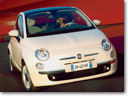 Fiat 500 and Ferrari: two universal motoring icons which represent “Made in Italy”, one cute and the other exclusive. This is why the Maranello House has chosen the Fiat model as its “courtesy car” for its customers, who appreciate Italian style and like unique products. In actual fact, two hundred Fiat 500 have been manufactured exclusively for the Ferrari sales network and will be driving on all of Europe’s roads. (more…)
-
Fiorino Qubo, the new ‘free space’ vehicle from Fiat
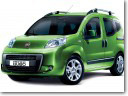 Fiorino Qubo is the name of the new car marketed by the Fiat dealer network. This original name clearly conveys the model’s attributes: it is reliable and robust, as well as being uniquely practical and versatile. And the original choice of the letter Q evokes the distinctive personality of the car as much as the rounded profile of the exterior shape. (more…)
-
Fiat Grande Punto MY 2008 closer to the world of youth
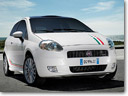 On 14 and 15 June, a Fiat dealer network open door event will be held in Italy devoted to the Grande Punto Model Year 2008. The model has consistently played a leading role in all international markets (sales of over 850,000 since the launch, of which half outside Italy) and has now been revamped to offer customers significant new exterior features, a new range designed to appeal even more to the young, higher value due to the addition of major features as standard such as the sophisticated latest-generation ESP system with built in Hill Holder and, last but not least, new product packages based on the innovative Blue&MeTM entertainment and communications system. (more…)
-
Fuel economy key driver in purchasing behaviour says Motorpoint
 Almost two thirds of UK motorists say fuel economy is the number one priority when buying a new car according to a new survey by Motorpoint.
The poll by the UK’s leading car supermarket group found 64% of people regarded fuel economy as the key consideration when changing their vehicle – a clear indication that the escalating cost of petrol is having a direct effect of people’s buying behaviour. (more…) -
HAMANN sportivo – The lively tuning programme for the Fiat 500
 Normally HAMANN-Motorsport is renowned as a tuning company for BMW and for refining sinfully expensive luxury cars. But sometimes the Laupheim-based technicians move off the beaten tracks and devote themselves to something completely unexpected – in this case the Fiat 500. (more…)
-
Fiat 500

 Enter the new 500, the manifesto of the ‘new Fiat’, a model that represents to all intents and purposes the materialisation of a new approach, of new brand strategies, and a different approach to the car. Exactly 50 years after the launch of the first edition of the model, which was to become an icon of Italian motoring and of an entire period of history, Fiat is accelerating into the future.
Anyone could re-edit the 500, because its shape is part of our collective memory. Some industrial objects that were the fruit of Italian creativeness in the period after the war, like the 500 or the Vespa, cannot be judged purely in aesthetic terms, nor do they represent just a good engineering exercise in which form serves a function. On the contrary, they are powerful catalysts, revolutionary in their design and in the concept that defines common reference points and benchmarks. When this happens, the result is a masterpiece that is an essential part of industrial history. The 2008 Fiat 500 is one of them.


This is a story that has taken place twice. The first is the story of a very large number of owners, fans and enthusiasts who promoted the car’s image as a good, reliable and economical vehicle, which became an expression of a part of their lives, the best part, evoking a carefree spirit and a lack of worries. The 500 is linked to these memories, to strong friendships and first loves, it evokes images of a positive past which many would like to revive.
Dante Giacosa’s 500 was launched on July 4, 1957, as a cycle of rebirth was closing after the devastation of war, and a period of radical renewal of the company’s product range was also coming to an end, opening the way for a cycle of successes in the coming decade, a period that we can consider one of the brightest in the brand’s one hundred year history. The parallel with the new 500 is clear; it concludes the cycle of extraordinary rebirth of recent years, but thanks to its stylistic and technological features, it also represents the spark of a lasting process of expansion. And this is where history starts again.
It would be belittling to ‘limit’ the phenomenon of the new 500 to a simple, nostalgic reinterpretation. Fiat’s goal has not been to design a car that ‘looks like’ a 500, but one that ‘could be’ the 500 again. The new 500 opens the way for an innovative process in a number of environments that are very significant for today’s customers, clearly outlining where its ambitions lie in relation to the future positioning of the Fiat brand. The Fiat 500 respects the original concept in its shape and function, as you expect in these cases, so that it can evoke all the emotions and memories that make all ‘icons’ eternal, raising them beyond the limiting dimension of their category.
But first and foremost it is important to underline the innovations that the new model is able to bring to this class of product for the first time.
First of all, the widespread involvement in the development of the model and of the marketing plan, with the participation of over 3,000,000 enthusiasts who have submitted their ideas to the project, through the www.500wantsyou.com website. This initiative is a new cultural approach to relations between manufacturer and client, making Fiat one of the most open organisations, close to the expectations of the public. ‘The 500, the car of the people, by the people’: this slogan sums up the philosophy behind the development of a project which, in the best Fiat tradition, ‘democratises’ access to contents and technologies that have never been offered in this segment before.
It is the first time that a car has been launched with the full range of engines (69 bhp 1.2. 75 bhp 1.3 Multijet with DPF and 100 bhp 1.4 16v) ready to meet the emissions limits set by Euro 5 standards, more than two years before the legislative deadline, a tangible sign of Fiat’s determination to reaffirm its leadership where the environment is concerned.
It is also the first time that a compact car (3.55 metres) has been built to achieve a 5-star rating in the EuroNCAP impact tests, and it is ready for the 6-star test if and when the new rating is introduced.
Safety at all costs, with no impact on prices, a bold decision, which confirms Fiat’s intention of extending its strategy of leadership to vehicle protection, totally consistent with decisions taken in recent years as regards the Panda and the Croma, right through to the Grande Punto and the Bravo.
It is a safe product, not only for its structural sturdiness, but also because of the choices made in the construction of the range of outfits and services: 7 airbags as standard equipment (it is the only compact to offer a kneebag), and an advanced ESP available with all engines (standard on the 100 bhp 1.4 16v), are absolute novelties in this segment.
It is the first ‘small’ car to offer so much in the way of content: 4 specification levels, 3 engines at the launch, 12 colours, including 6 vintage colours that will bring the 1950s and 1960s to mind, plus tri-coat white produced by a process that is usually only adopted on luxury cars, 15 types of upholstery including luxurious Cordura and Frau Leather, 9 types of wheel rims, and 19 types of stickers, making a total of more than 500,000 variants (549,936 to be precise); the most interesting include the electric fragrance diffuser, with a choice of 3 different fragrances, and coloured key cases, an approach similar to that in the mobile phone market that lets you match the colour of the key to that of the bodywork, or to select another pattern of your own choosing. There has never been such a lavish array of accessories on such an accessible car.
The 500 is an inclusive not an exclusive concept and Fiat felt that this was the best way to meet the tastes of all its potential customers, without distinction, from the most minimalist to the most eccentric. The idea of creating a product that could adapt to the needs of the individual was also expressed in the decision to surpass all the competition in the process of incorporating electronic technologies into the passenger compartment (Plug In). A second generation Blue&Me is available, and an iPod can be easily incorporated thanks to the socket and the battery charger. A new portable navigator was developed specially for the 500 with Magneti Marelli, which is fitted directly on the dashboard and connects to other vehicle functions.
The concept of customisation is not limited to the product, but extends to the world of services and forms of payment. For example, with the ‘500 Cents’ and ‘50to500’ formulas from Fiat Group Automobiles Financial Services, the customer will be able to purchase any version of the 500 including customisation, for ¤ 5 a day, and with no down payment, or to pay 50% of the sum immediately and the remainder after 2 years.
And every time that a customer takes out one of the above loans he will benefit from a 5 year/500,000 km manufacturer’s warranty and other services that Fiat is offering for the first time, and which envisage complete 24-hour roadside service. And when it is time for periodical maintenance, the car will be picked up from the customer’s home, and his mobility will be guaranteed by the reimbursement of any taxi fares.
Plenty of offers and possibilities, because the 500 must be the car for everyone: it is the car of the people, made by the people, for the people. The 500 is the ‘New Fiat’ and the ‘New Fiat’ belongs to everyone.
For the company, the birth of the 500 represents the start of a new chapter, a declaration of the role that Fiat aims to interpret in the future on the market and in society. The stimulus to a new model of conscious consumption. A model for the exploitation of experience in the automotive field that focuses on quality and emotions, on uniqueness rather than on mass-production, where simplification does not mean doing without. The 500 is the tangible synthesis of these aspirations.
-
Fiat Linea
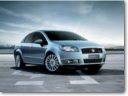 The Fiat Linea, which was present in Istanbul last October, now makes its market debut. This three-box Segment C saloon gives a new interpretation of styling, practicality and enjoyable driving, all for an extremely competitive price/contents ratio.
The car was developed by Tofas A.S., the 50-50 joint venture between Fiat Auto and Koç Holding which is listed on the Istanbul Stock Exchange. It will be manufactured in the plant in Bursa, Turkey (fully operative, output will reach 60,000 units per year) and will be marketed in a number of European and non-European countries: Spain, Germany, Morocco and Finland. At a later date, the Fiat Linea will also be manufactured in Brazil, India, China and Russia.
The new model clearly has an international vocation; it was designed by the Fiat Style Centre, and its exterior styling is elegant, dynamic and typically ‘Italian’. The aim was to appeal to the public with uncluttered, smooth lines which confirm the new Fiat family feeeling (from the Grande Punto to the new Bravo), while they offer a new reading of the stylistic elements of the great Italian motoring tradition in the saloon segment. This extraordinary stylistic heritage has now produced the Fiat Linea, a 4-door saloon that is sleek and elegant, but with generous dimensions that put it at the top of its class: it is 4.56 metres long, 1.73 metres wide, 1.5 metres tall and has a wheelbase of 2.6 metres, as well as a 500 litre luggage compartment.

Fiat Linea 


The same attention went into the styling of the interior, where the lines are harmonious and balance well with the exterior, creating a friendly, light-filled environment that provides an amazing amount of room and superior comfort, where ergonomics and space for the driver and passengers are concerned. And it is in terms of the quality, comfort, practicality and enjoyment of the interior that the Fiat Linea aims to make the difference, backed up by the refinement of the materials and by the colour combinations, as well as the attention paid to every detail and to the assembly.
Designed for an elegant, refined clientele with plenty of personality, the new model is agile and enjoyable to drive in all situations. It has a sparkle that is due primarily to its engines, which combine excellent performance, low consumption and absolute respect for the environment (they are all Euro 4). At the launch the model will be offered with a choice between a petrol engine (1.4 8v, 77 bhp) and a turbodiesel (1.3 Multijet 16v, 90 bhp with a variable geometry turbo), both combined with five-speed mechanical transmissions; the 120 bhp 1.4 16v Turbo from the new T-Jet family will be available at a later date.
The Fiat Linea range is very comprehensive to cater for a clientele that considers cars of this class as a real investment, because it represents the family’s main car, and it will adapt to the various markets where it is sold. In most of these, at its launch, the range will offer two engines (90 bhp 1.3 Multijet and 77 bhp 1.4 16v), three specifications (Active, Dynamic and Emotion), and 11 body colours. The range also proposes equipment worthy of a higher segment, such as certain sophisticated climate and infotainment devices that improve the comfort and quality of the time spent on board: from automatic climate control, the Blue&Me® system with USB port, a radio with CD-player (including MP3 files) and Cruise Control, down to rain, dusk and parking sensors. In other words, there are endless possible combinations, all offering excellent value for money and the best price-content ratio.
Finally, the Fiat Linea is equipped with a reliable suspension layout which guarantees very easy, precise steering, excellent roadholding and the best possible comfort for passengers: an independent MacPherson system at the front, and semi-independent wheels connected by a torsion axle at the rear.
But the Fiat Linea is not only styling, plenty of personality, modern reliable engineering, a wealth of equipment and outstanding comfort. It is also a very safe car. Rather than the individual devices, it is the combination of the many solutions adopted that make it one of the safest cars in its segment. Stable, effective braking, good acceleration guaranteed by the engines and predictable handling, get the Fiat Linea out of even the most critical situations. The new model is also very well equipped where passive safety is concerned, a fact borne out by the presence of 6 airbags (Multistage at the front, curtain-bags and sidebags) which are standard depending on the version and the market. What is more, it also adopts a number of innovative technical elements that ensure the driver always has total control of the car (active safety). These include latest generation ABS, complete with EBD (Electronic Brake Distribution) and, optionally, the sophisticated ESP (Electronic Stability Program).
These briefly are the winning features of the Fiat Linea which aims to play a leading role in this category, where all the world’s major carmakers compete. Segment C accounts for 20% of the Western European car market, in other words the core of the market, with about 3,000,000 registrations per year. However, the majority of the cars in segment C are two-box hatchbacks, while 3-box models (saloons) only account for 5% of that market, with 150,000 registrations per year (this is expected to reach 160,000 units by 2013).
The share in other non-European countries is more significant. In Turkey, for example, segment C represents 52% of the whole market, and saloons account for 75% of this, with 170,000 registrations per year (approximately 50% of these are premium cars, and the sales mix is 50% petrol and 50% diesel models).
The Fiat Linea is destined to become a strategic car for the Fiat range in China: the entire Chinese market totalled 4,000,000 vehicles in 2006, and is expected to reach 7,500,000 units by 2013.
And finally, in Brazil, the market absorbed 1,835,000 cars in 2006, and is expected to reach 2,250,000 units by 2013 (because the Brazilian market is structured differently, the Fiat Linea is in category D, and its goal is to achieve a 13% share of the segment). A special version will be marketed in Brazil, powered by the new 130 bhp 1.9 Flexfuel engine (running on gasohol, which already contains about 22% ethanol, and pure bio-ethanol). Bio-ethanol and gasohol are poured into the same tank, a feature that makes it easier for motorists to fill up. The engine software recognises the composition of the mix and automatically adapts the injection and ignition parameters. Flexfuel engines are able to function in the same way and with the same performance with both conventional fuels and with alcohol-based fuels. In environmental terms, the advantage of ethanol lies in the fact that it is a renewable source of energy and helps to limit emissions of greenhouse gases, because it captures carbon dioxide in the production process.
-
Fiat Panda Aria
 The Concept car Panda Aria represents the most advanced frontier achievable, in terms of emissions and consumption, associating in synergy existing sustainable technologies or those in future production. In a nutshell, we’re dealing with a “demonstration” which synthesizes Fiat‘s commitment to the environment.
The Concept car, combines an innovative powertrain architecture – represented by the new SGE 900 cc Turbo twin-cylinder engine, equipped with the Multiair® system for dual petrol/methane-hydrogen fuel management, MTA gearbox and Stop&Start device – with the adoption of eco-compatibile materials (recycled, recyclable or from natural sources) both for the interiors and exteriors.
The interior is upholstered with natural fibres (cotton and linen), woven coconut fibre and biodegradable elements, whilst the exterior panelling is made of semi-transparent eco-resin and the structure is treated in opaque “totouch” paint.
Even better, the energy absorbed by the auxiliary units is minimised on the vehicle and the engine (for example, the low consumption climate control unit) by a reduction in the vehicle’s weight (by a downsizing of the engine, and the use of new generation high tensile steel, methane storage cylinders made of high-performance steel and carbon fibres) and the adoption of experimental Pirelli ‘ultra-green’ tyres with new compounds and new AOF (Aromatic Oil Free) textile weaves guaranteeing limited drag but without detracting from dynamic safety performance (stopping distances and good handling on wet and dry roads).

Fiat Panda Aria 


Lastly, the Panda Aria is fitted with a data transmission, based on the use of Blue&Me technology, ready for the implementation of new info-mobility services. Furthermore it is equipped with a unique application that, via the USB port of the Blue&Me system, allows to record on a key the consumption and emmissions of every journey. Subsequently, this can be looked at on a computer to receive advice on how to drive more “ecologically”.
In detail, Panda Aria is fitted with the new 900 cc turbo 80 CV engine, belonging to the family of SGE twin-cylinder engines (Small Gasoline Engine), in this version it is equipped with the Multiair® system for dual petrol/methane fuel management. The sophisticated fuel management system is already primed for the use of a methane (70%) and hydrogen (30%) mixture. The engine is matched to a Stop&Start device and the innovative MTA (Manual Transmission Automated) gearshift.
In particular, the innovative 900 turbo engine, developed by Fiat Powertrain Technologies, is fruit of a philosophy focused on the reduction of costs (and consequently CO2 emissions), and the respecting of future Euro 5 and Euro 6 emission limits yet with comparable performance to higher horse-power engines.
The concept underlining this new engine, is the downsizing of a traditional engine with 4 cylinders to a twin-cylinder one, which has been fitted with the innovative electronic valve control Multiair® system. In addition to the reduction in consumption costs, the twin-cylinder engine allows a 20% reduction of the weight and a 25% reduction in the engine compartment, in comparison to a 4 cylinder with similar power. Furthermore, the SGE family of motors adopts a system of balancing the engine spindle , which guarantees reduced vibrations and noises in comparison to petrol engines with three cylinders.
The innovative Multiair® system allows to control the air in the motor with electronic ignition (petrol engines) without having to use the traditional throttle-valve, therefore with higher flexibility in comparison to mechanical distribution systems.
The implemented electro-hydraulic technology is based on the inter positioning, between the cams and the suction-valve engine of a volume of oil (high pressure chamber) which can be varied across the use of a valve which is controlled in turn by an apposite electronic junction box.
In this manner, the valve opening can be varied in different modes according to the the engine’s need for air and the vehicle use. Different strategies (Early Valve Shut-Off – EIVC – Deferred Valve Opening – LIVO or Multi-Lift) can be used for optimising the efficiency of the combustion with remarkable benefits in terms of power, torque, consumption and emissions. Another advantage of this system is that the air pressure around the valves is always constant. This characteristic, combined with a raised dynamic system of implementation (from partial load to full load in one engine cycle) allows raising the engine’s torque response without any delay, either when the engine is overloaded or not, heightening the so-called Fun-to-Drive.
In the Panda Aria the new 900 turbo engine is combined to the dual petrol/methane fuel management methane (70%) hydrogen (30%); this solution brings a further contribution to the reduction of polluting emissions, assuring a more efficient and complete combustion. Furthermore, it allows the incrementation of the thermodynamic performance of the engine, allowing it to reach, in particular conditions, combustion stability values superior even to those obtainable by only using methane. Therefore, the vehicles running on methane-hydrogen mixtures are a gradual evolution of an already existing system and open to further refining and applications. The methane-hydrogen mixtures, in fact, represent a bridge, which would allow in the short term development of infrastructures for the future supply of hydrogen.
Panda Aria is fitted with the “Stop&Start” system, a device which operates the temporary shut-off of the engine and it’s subsequent ignition, when the vehicle is stationary. In these situations, typical of urban traffic and during waits at the traffic-lights, the system automatically shuts-off the engine allowing a marked saving of fuel. Afterwards, as soon as the car is put in gear or the brake is released, the system sees to promptly igniting the engine, assuring the user an immediate response to their commands.
Furthermore, the “Stop & Start” system, is mated to the MTA gearshift which allows optimal use of the gears, and is characterized by a high mechanical efficiency. In detail, the automatic transmission lays the foundation for an “intelligent” management of the on/off state of the engine. More so, via the use of the clutch, the system allows the uncoupling of the three-phase motor from the transmission whenever traction is not required and the engine can be turned off.
The combining of the “Stop & Start” system and the MTA gearshift allows the concept car Panda Aria to reduce consumption by over 10% in urban journeys.
Lastly, the combination of these solutions, which have been developed by the Fiat Group(Fiat Group Automobiles, Fiat Powertrain Technologies and Centro Ricerche Fiat), are already in existence or will soon be available on regular and future production models, guaranteeing a drastic reduction in CO2 emissions. The Panda Aria emissions have been cut to a record low of 69 g/km.


