Tag: electric vehicles

  • Long term use of Electric Vehicles?

    EV vs Combustion cars

    Or why it might be a strikingly bad idea

    In ten years one million electric cars are expected to be rolling on the roads of America. There is a lot of money going on here, and billions have been invested in subsidizing the production of the EVs and all of the components they use. And we are all familiar with the benefits electric cars offer, but what we aren’t exposed to is the disadvantages of owing an electric car.To be more specific, what the long term problems might be.

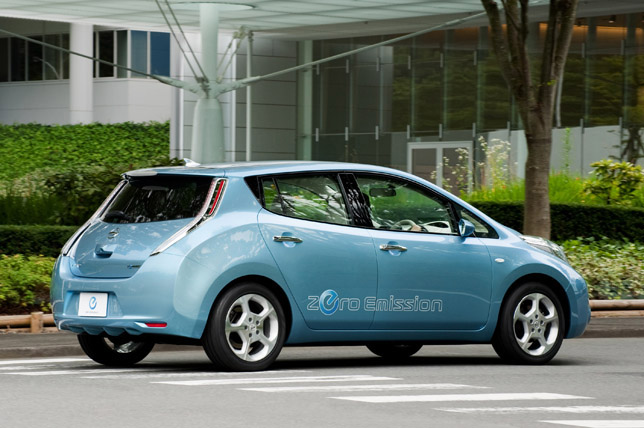
    First, the cost is one major crux. Let’s have an example to make things clearer and easier to grasp. Nissan Leaf, being the first battery electric vehicle that was mass-produced, costs two times more than a Nissan Versa, and both are being positioned in the same car range. If we exclude the eco-benefits of the first one, it seems that the Leaf doesn’t make any sense.

    For one, Leaf has only one fourth of the power of the Versa. But, you may now say there are still benefits, when taking into consideration that the electric energy is cheaper than the gasoline. Then you could compromise on power (but could you really). Here’s the big catch. Sometimes electric cars need to be charged in large amounts in order to function properly. In addition, the long term benefit in investment like this is rather suspicious. If we have to make the appropriate calculations, it ends up that to get one’s money back with an interest, it should take more than nine years of driving the Leaf everyday. These estimations are based on the fact that the EV is capable of traveling up to 60 miles on a single charge and to recover the purchase cost one should drive at least around 165,000 miles.

    SEE ALSO: Autonomous cars – when will they take over? [w/video] 

    And how about the time? I mean the time it takes to travel with an electric car… Just imagine how busy people living in busy cities have to deal with deadlines, meetings, etc., within the traveling speed of an EV. Just hilarious! And it gets even funnier if you imagine that it runs out of energy during such nervous and erroneous time.

    Have this mental picture: you are running late for an important meeting, driving your super fast EV, and eventually it seems to be out of charge. It is hot outside, but to extract an extra mile out of it you have to turn off the AC, the headlights and all technical stuff inside that require more energy. You end up sweating and perspiring, and late for your important meeting, thanking that you have left the EV behind (and completely dead) and got a cab, which was ironically driven by a combustion engine.
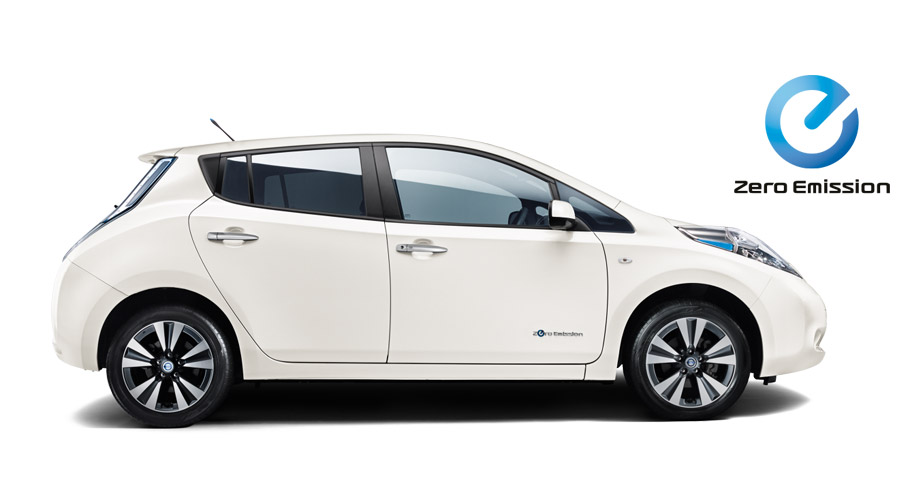
    Nissan Leaf EV side view

    Regarding the time, there’s another disadvantage. If you are driving a gasoline car, then when you run out of fuel, you just go to the gas station and refuel it (and go for additional 300 miles). Well, this isn’t the case with the EVs. One of the biggest drawbacks here is that the recharging time varies from one hour for a fast recharge (but who could count on that) up to 20 hours for a full one (on a house current). And you would still go for 60 miles. It is extremely convenient, isn’t it? To make things look a little bit better, companies have developed charging stations for an extra cost (of course), which reduce the charging times to 4 or 8 hours. But here’s the catch. If use them too often, then you might end up buying new batteries for your EV, because it seems that the chargers (which you have bought for an additional amount of money) shorten their life. But if you have chosen to drive an electric car in a long term plan, you will still end up changing the batteries. In this case you should prepare around $5,000… or more.

    Looking beyond the benefit of no-gas-fuelling and zero-CO2 emissions, the electric cars seem to NOT be the best choice for transportation means in a long term plan. But you could still wishfully want to save the environment. To keep you thinking, the CO2 emissions produced by the U.S. electric power sector are about 37% of the total U.S. energy-related CO2 emissions, while 31% are associated with combustion of fossil fuels used by gasoline and diesel cars.

  • Electric Vehicles By Chevy Await Their Owners!

    electric cars electric vehicles

    Electric vehicles by Chevrolet will be offered for mass production. Now, the brand decided to focus on the electric energy, other technology solutions. The big idea is to make customers happy and comfortable, while driving. Furthermore, Chevy has done some serious researches and studies in the field of electric vehicles and now the brand proudly demonstrates 2016 Volt, Malibu Hybrid, FNR Concept and Bolt EV. There are only a few things, better than a big motorsport brand, that tries to be environmentally friendly and at the same time stay true to fans and customers. So, here are the models themselves.

    Electric vehicles by Chevrolet

    SEE ALSO: 2016 Chevrolet Cruze Revealed in Details!

    2016 Volt

    The Volt was first introduced in North America, at the International Auto Show. It provides 50 miles of EV range and ensures more than 400 miles with one charge. Thanks to the charging system, Voltec, the Volt can even go to a 1,000 miles ride, before it stops for a refill

    Bolt EV

    Based and influenced by the Volt, the Bolt EV is named “Gamechanger”. Why? Because it offers incredible energy economy for a really tasty price.

    electric cars
    electric vehicles

    2016 Malibu Hybrid

    The Hybrid is one of the few electric vehicles, that has also taken some of the features of the Volt model. The Malibu offers fuel economy rating of 47 mpg and pleasurable drive. The vehicle will go on sale in the spring of 2016

    Chevrolet–FNR Concept

    When you think about it, there aren’t so many Concept electric vehicles. One of the few, however, the Chevrolet-FNR Concept was introduced at the 2015 Shanghai Motor Show and along with the incredible positive feedback it also receive the Best Leading Technology Award. How cool is that?

    As you might know, the Chevy FNR is a self-driving EV, especially created to meet the needs of the future. It can even receive signals, when it was driven and use that DATA, when it will drive by itself. Furthermore, the vehicle can also suggests different routes. Well, the future for electric vehicles is here!

     Source: Chevrolet

  • Combined Charging System Connector defines the future

    Combined-Charging-System-connector-THUMBEight automakers from Europe and United States are going to display one-of-a-kind fast-charging technology. It is unique because it will enable recharging of most electrified vehicles for just 15 to 20 minutes.

    The brands which are taking part in this project are: Audi, BMW, Chrysler, Daimler, Ford, General Motors, Porsche and Volkswagen. They have agreed to work in collaboration in order to provide a harmonized single-port fast charging approach.

    The name of this project is DC-fast charging with a Combined Charging System. It will be utilized for vehicles in the U.S. and Europe.

    More importantly, the first live charging demonstrations will take place during the Electric Vehicle Symposium 26 (EVS26) (6th-9th of May).

    What the combined charging system does is to integrate one-phase AC-charging, fast three-phase AC-charging, DC-charging at home and ultra-fast DC-charging at public stations into one vehicle inlet. The purpose of this is that any driver will be able to recharge its vehicle almost anywhere, regardless of power source.

    Another benefit of this project concerns a more affordable adoption of a standardized infrastructure.

    Combined Charging System Connector
    Combined Charging System Connector

    Furthermore, the European association of vehicle manufacturers has chosen the Combined Charging System as its AC/DC-charging interface to become integral part in the all new vehicles in Europe, with a starting date in 2017.

    It is also important to mention that this charging system was designed having in mind existing charging strategies, the ergonomics of the connector and preferences of U.S. and European customers.

    Moreover, an additional advantage of the Combined Charging System will create a uniform standard with identical electrical systems, charge controllers, package dimensions and safety mechanisms.

    Next, the system will be also responsible for maximizing the capability for integration with future smart grid developments through common broadband communication methods. This will happen of course, regardless the global location of the charging system.

    Last, but not least, this approach will also minimize the development and infrastructure complexity, and enhance the charging reliability, reduce the total cost-of-ownership for end customers and offer low maintenance costs.

    Commercially available combined charging stations are projected to be on disposal later this year and vehicles using the technology will be available starting 2013.

    Source: Mercedes-Benz

  • Some facts about Electric Vehicles

    Behind the history of the electric vehicle are more than hundred years. Yes, I was surprised to find out this too. In particular, their history began in the middle years of the 19th century. However, at this time it was really costly to afford such automobile. Moreover, compared to internal combustion vehicles, the electric ones had much lower speed. Gradually this led to their extinction worldwide. Nowadays what we experience is quite the opposite. As we can see ourselves on the market are gradually being launched vehicles, which are powered by alternative fuel or are electric ones. This of course has to do with environmental issues.

    The hydrocarbon fueled vehicles seem to cause great damage to the environment, because of the gases they emit. Or in other words, the automotive industry is now trying to take some precautions for the evil done, develop and promote environmental friendly vehicles and raise the global awareness in this particular area. We all want to live in less contaminated and better world, don’t we?

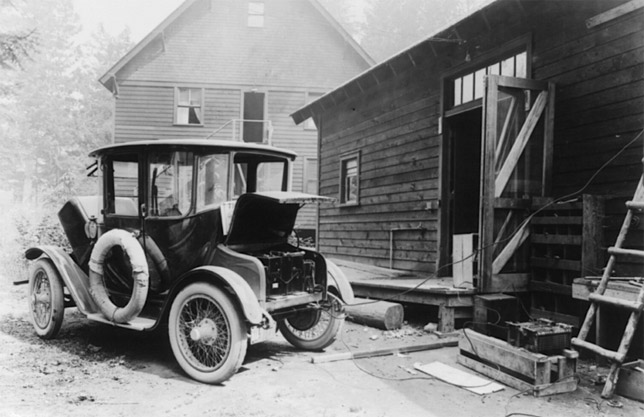
    Electric car from early 20th century charging

    In fact, for the first time in history, electric cars became popular after the mid-nineteenth century. Then the electricity was actually a strongly preferred method for automobile propulsion. Back in 1987 the electric cars found their first commercial use in the United States. For instance, the taxies in New York City were electric. They were manufactured by the Philadelphian Electric Carriage and Wagon Company. During the twentieth century the main manufacturers of electric vehicles in the U.S. were Anthony Electric, Baker, Columbia, Anderson, Edison, Riker, Milburn and many more.

    Although that at this time the electric cars produced relatively slow speed, they had some advantages over their rivals. What I have in mind here is that they produced less noise, vibration and smell, which were a characteristic of gasoline powered vehicles. In addition, they did not require gear changes. And hence the electric car became famous among people living in the city, who could use their optimum potential. Furthermore, the electric powered vehicles didn’t require manual start as oppose to gasoline ones and were easier to drive, which lead their popularity growth among women.

    And even back in the beginning of the twentieth century the electric car was considered the cleaner, quieter and of course the more fuel-efficient car, in comparison to the gasoline vehicle. However, by the 1930s the latter one became the “bigger star” and more importantly – what made it more popular was its lower price. They also developed far greater speed to their equivalent electrics. And adding to all this – the invention of the electric starter by Charles Kattering (in 1912) – gasoline cars became easier to operate. Then came the use of the muffler, which reduced significantly the noise they produced.

    The total eradication of the electric automobile from the world was also possible due to the mass production of the gasoline Henry Ford vehicles, which even were at an extraordinary price – more than six time cheaper than the electric ones. After this expansion, no one really remembered the electric cars …

    Until the late 1970’s and early 1980’s when the world experienced the first big energy crises. This led to the renewed attention on alternative fuel and electric vehicles. As a result, in the beginning of the 1990’s, the California Air Resources Board (CARB) set the requirements for the development of more fuel-efficient and lower-emissions vehicles.

    The highest aim here was the production of zero-emissions vehicles. The electric ones were what they were looking for. Then the automotive world came to see some great electric models, such as Chrysler TEVan, Ford Ranger EV pickup truck, Honda EV Plus hatchback, or Toyota RAV4 EV.

    However, the market wasn’t fully prepared to embrace this new ecologically orientated step, so the models were taken off production in the end. Another recession followed in the 2000’s, which lead to the increased need for smaller cars, hybrid cars and of course electric ones. One of the most famous nowadays electric cars manufacturer Tesla Motors, in 2004 began the development of the Tesla Roadster, which was firstly launched on the market four years later. Nowadays we have many examples of electric cars, developed and produced by famous carmakers. Such are: Mitsubishi i MiEV, Nissan Leaf, Mercedes-Benz Vito E-Cell, Smart ED and many more.

    Nissan LEAF

    To sum up, when the electric vehicles were invented, they seemed to be the best choice of and for the future. Moreover, the electric car produces no pollution to the environment and can be the greatest choice for the city dwellers, who are concerned about the world around them and want to make a positive change.

    People won’t loose from comfort, road handling, safety, performance or durability, because the electric vehicles are similar to the gasoline powered ones. Another big advantage is also their low cost to operate and more importantly they have the potential to be more reliable because they include fewer parts and mature technology.