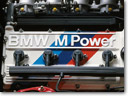
Tag: E30

  • Dongfeng Nissan Launches the All-Electric Venucia e30

    Venucia is absolutely new brand – a product of the Dongfeng Nissan Passenger Vehicle Company (DFL–PV). It is part of Nissan’s global platform and will be specifically built for the Chinese market. Now the brand is introducing its fifth vehicle, the e30, which in holds credentials for affordability and pure electric-vehicle-experience. The car was unveiled just a few days ago. The model was locally developed through Nissan’s careful studies about market situations and consumer needs in China.

    To go further into details, the Venucia e30 achieves an optimal balance between driving range, affordability and convenient charging. For instance, the running costs for e30 are only about one-seventh of gasoline models of the same grade. This result is due to e30’s energy consumption at only 0.146kWh/km.

    Furthermore, both normal-charge and quick-charge options are also available. Thanks to them the e30 can run about 60km on a quick-charge of only five minutes. The quality and safety of e30 have been validated by the five million kilometer failure-free pilot program, accumulated by more than 300 cars on the roads of Guangzhou, Xiangyang and Dalian.

    Brand’s name – Venucia, is very special and is derived from the ancient Roman goddess Venus. Her functions encompassed love, beauty, fertility and prosperity. The five stars of the brand logo represent company’s five promises: respect to customers, creation of value, always doing the best, achieving world-class quality and constantly seeking the dream.
    Venucia e30 is expected to be available nationwide in 2015 at a starting price of RMB 267,800.

    Venucia e30 3.6kW Standard 6.6kW Standard 6.6kW Deluxe
    Powertrain
    Battery Type Manganese-type Lithium-ion
    Battery Capacity (kwh) 24
    Electric Motor Permanent Magnet Synchronous Motor
    –Peak Power (kW/rpm) 80/(3008-10000)
    –Max. Torque (Nm/rpm) 254/(0-3008)
    Electricity Consumption per 100km (kwh) 14.6
    Suspension Front MacPherson struts
    Suspension Rear Torsion beam
    Transmission Single-speed reduction gear
    Drivetrain Front motor, front-wheel drive
    Brakes (front/rear) Vented disc/vented disc
    Braking Energy Recovery System S
    Top Speed (km/h) 144
    0-50km/h Time (seconds) 4.4
    Driving Range (km) about 175, city and highway combined
    3.6kW Charger S N N
    6.6kW Charger N S S
    Battery Heater O O O
    Slow and Fast Charging Ports S S S
    Charging Time under 220V (in slow mode) 8 hours 4 hours
    Steering Speed-sensing EPS
    Charging Timer S
    VSP (Vechicle Sound For Pedestrians) S
    Dimensions
    Overall Length (mm) 4467
    Overall Width (mm) 1771
    Overall Height (mm) 1549
    Wheelbase (mm) 2700
    Track (front/rear, mm) 1540/1535
    Curb Weight (kg) 1494
    Ground Clearance (mm) 131
    Turning Radius (m) 5.2
    Seating Capacity 5
    Cargo Volume (L) 370 (VDA)
    Exterior
    Tires 205/55R16
    Alloy Wheels N N S
    “Follow-me-home” Headlights S S S
    Front Fog Lamps S S S
    Timed Rear Window Defroster S S S
    LED Tail Lamps and Brake Light S S S
    Power and Heated Exterior Mirrors S S S
    Power Folding Exterior Mirrors N N S
    Interior
    Eco Mode S S S
    Trip Computer, Thermometer S S S
    Intelligent Key S S S
    One-touch Start S S S
    Power Windows S S S
    Power Door Locks S S S
    Steering Wheel Multi Controls N N S
    Leather Seats N N S
    Heated Seats and Steering Wheel S S S
    Number of Speakers 4 4 6
    Radio/CD Player/MP3 S S S
    5-inch LCD, Blue-tooth Connectivity, iPod Port N N S
    Auto Air Conditioner with Pollen Filter S S S
    Safety
    Dual Front Airbags S S S
    Dual Front Side Airbags S S S
    Side Curtain Airbags S S S
    Zone Body Structure S S S
    Front Row Seatbelt Pretensioners and Reminders S S S
    ABS, EBD, VDC, HAS S S S
    Parking Camera N N S

    * S=Standard, O=Optional, N=Not available

    Source: Nissan 

  • 2014 BMW F80 M3 Sedan vs E30 M3 DTM – Hockenheim [video]

    Sport Autohas published a nice video with an epic battle between the latest 2014 BMW F80 M3 Sedan and the classic E30 M3 DTM. There is a huge 22-year gap between the production dates of the two models, but the old racing car is faster than F80 M3. 2014 BMW F80 M3 Sedan closed a lap around Hockenheim in 1 minute and 13.1 seconds, while the E30 M3 DTM needed just 1 minute and 9 seconds.

    2014 BMW M3 Sedan is powered by a 3.0 liter TwinPower Turbo Inline six-cylinder – 431HP (317 kW) at 5,500RPM and 550Nm (406 lb-ft) at 1,850RPM. The engine is mated to a 6-speed manual gearbox as standard. 0-100 km/h in 4.3 seconds and a top speed of 250 km/h (155 mph) or an optional 280 km/h (174 mph). The acceleration is even better, when fitted with the optional 7-speed M DCT – 4.1 seconds to 100 km/h. The new M3 is able to cover 100 km with just 8.8 liters of fuel in the combined cycle with the manual transmission and 8.3 liter with the DCT.

    BMW E30 M3 DTM was driven by the former race pilot Johnny Cecotto, while the M3 F80 was driven by Sport Auto’s journalist – Christian Gebhardt. Alberto “Johnny” Cecotto is one of the few drivers who managed to compete in motorcycling, Formula 1, DTM, Formula Two, BTCC and Le Mans. The multi-talented pilot is currently supporting the racing career of his son – Johny Cecotto Jr.

    Enjoy!

    httpv://www.youtube.com/watch?v=3pApuVB_UHg

    Source: Sportauto

  • Rimac e-M3 World Record [video]

    Rimac-e-M3Rimac Automobili has finally finished their project – an electrically driven BMW E30. The project name is “Rimac e-M3” and it has broken several world records. Currently this is the fastest electric car in class 3 (above 1000 kg).

    “I owned an old BMW E30 (MY 1984) which I used for drift and circuit races. At one of these races, the gas engine blew up. Then I decided to try building an EV. After one year or so the car was able to drive but I was not satisfied with the result. It was heavy, not very powerful and the range was very limited. I started to gather a team of experts to develop our own components since I believed that the electric propulsion can give much more compared to what was available on the market. At that time, I already had a very clear vision of my ultimate goal. Today, hard work is making my dream come true.”, said the founder of the company – Mate Rimac.

    Rimac e-M3

    “We had to wait over a year for FIA‘s official approval to publish the records. But while we were waiting the spirit of inventiveness took us even further, so we made something even faster. Our pre-production car, the Concept_One, can beat the e-M3; by far.”, added Mr. Rimac.

    The power of the green E30 is 600HP and 900Nm of torque. 0-100 km/h in 3.3 seconds and a top speed of 280 km/h.

    Enjoy the video!

    httpv://www.youtube.com/watch?v=4AHStDMhDvE

    Records:

    – 1/8 mile: 7,549
    – 1/4 mile: 11,808
    – 1/2 km: 13,714*
    – 1 km: 23,260*
    – 1 mile: 35,347*

    *Records subject to official FIA approval (pending)

    Source: Rimac

  • The evolution of BMW M3 series

    The ultimate driving machine. This is how they call BMW M3 series. And it is for a reason. The MOTORSPORT division of BMW did their best to deliver the best possible experience from a BMW .

    How it all began

    In 1986 the first M3(1986-1992) was introduced. It was on the basis of E30 and had a 2,3 4 cylinder engine with 195 hp. The reason why the first M3 was actually produced was to homologate the car for the tourist car championship where it would compete with the Mercedes 190 EVO. Two more engines were used for the first M3. A 2 litre, 4 cylinder engine and also a 2,5 delivering the massive 250 hp, still naturally aspirated. The 2,0 version could be easily recognized, it lacked the curves of the wide arches. It seems like the M3 version does not have much in common with the regular e30. Besides the hood, roof panel, and sunroof it did not have much in common. These 4 cylinder engines were only reserved for the M3, and so was the firm suspension.

    The 6 cylinders(E36)

    Although nowadays 6 cylinders in a row is almost dead as conception, when the E36 M3 showed on the market, things seemed a little different. 1992 – the new M3 was introduced. With a 3 litre engine, 6 cylinders and output of 286hp. At first all M3s were based on coupe, but later the sedan and convertible models could also carry the M3 badge. Later in the production a more powerful engine was to be used  – a 3,2 with 321hp . What is interesting, models sold in North America had 240 hp, regardless 3,0 or 3,2. Also, the 6 speed gearbox was never available in North America.

    A special version – the M3 CSL is definitely worth mentioning. This model was sold with a trunk full of goodies to improve the performance of the car. Why they were not put directly into the car? Very simple, buying this version, the customer would sign a legal paper that they were aware installation of the latter would void the warranty of the car.

    The production of E36 M3 seized in December 1999 with the convertibles being produced last.

    The E46 M3

    The next M3 came in October 2000. The engine is a 3,2 liter with code S54 – 343 hp available.  What is new is the SMG II drivelogic transmission. It is basically the standard 6 speed manual but with electrohydraulically actuated clutch pedal. The E46 also had a CSL version, which is a real sports car that one could drive home.  This version is cut off in terms of all unnecessary gadgets you do not need for the track, it does not even come with AC, stereo or navigation system.

    What’s on the market now?

    Well, it is the E90/92/93. First introduced in 2007 it did have a thing or two to show. The new M3 was a totally different car compared to its predecessors. First of all it has two more cylinders. Despite the return of the turbo mania, the new M3 is naturally aspirated. To be more precise it is a 4,0 litre v8 engine with  420 hp available at 8300 rpm. The latest M3 comes with a 6 speed manual or the optional M-DKG transmission which reduces the 0-100 time with 2 tenths of a second. The E92 M3 also has a light weight carbon-fiber roof to reduce the weight and lower the centre of gravity. At first the new M3 was supposed to be called… M4, but BMW realized this might not be well perceived by the customers and people who liked the traditions created more than 20 years ago. Many people say that market researchers and accountants are more and more involved in the build of cars. It seems like this has had some impact on the ultimate driving machine. The convertible suffers from the heavy mechanics that take care of the roof and the result is 1880 kg curb weight – not a good prerequisite for agility and speed.

    A special model is also available(A special M3, ironic right). It is called the GTS. The 4,0 litre engine has been further developed to become 4,4 and to provide 450hp. What is more, it weighs about 150 kg less than the regular M3 making it a true beast on the road… or track. The production of GTS started in May 2010. Today all 250 GTS M3s have been sold.

    To be continued…