Prior Design has announced their latest project based on Mercedes-Benz E-Class Coupe (before the facelift).
The tuning company offers a widebody kit, which is suitable for all C207 models. It includes a new front and rear bumpers (including diffuser), a pair of big side skirts and a front hood add-on. All parts are made from Dura-Flex fiber reinforced plastic. There are also rear widenings, a rear trunk spoiler and all necessary mounting parts.
As an option, Prior Design offers LED DRLs and a sports exhaust system.
Mercedes-Benz has revealed the E-Class Long-Wheelbase at 2013 Auto Shanghai. The luxurious saloon will be sold exclusively in China. It boasts an overall length of 5019 mm and its wheelbase has been extended by 140 mm to 3014 mm. In other words, this means 14 cm of additional legroom for the rear passengers.The long version of the E-Class is being launched in China as the E 260 L, E 300 L and E 400 L. There is a choice of two variants: the luxurious Sedan and the Sport Sedan. The latter features a powerful AMG front and rear apron, new AMG side skirts and AMG wheels. Typical of the AMG brand is the lavish scope of equipment and appointments. Starting with the E 260 L, features include LED headlamps, an electric sunroof, two-zone automatic climate control, PARKTRONIC and COMAND DVD.New items of equipment are additionally available for other models:
The 360° camera comprises a close-range system of several cameras to assist in parking and manoeuvring. In addition to the functions of the backup camera, it also enables monitoring of the areas to the side of the vehicle and directly in front of the vehicle, thus helping to avoid inadvertent collisions during manoeuvring.
All the headlamp functions of the Intelligent Light System (ILS) feature energy-efficient LED technology. These functions adapt the light distribution to the given driving situation, thereby making an important contribution to safe driving.
The ECO start/stop system reduces fuel consumption and emissions by shutting down the engine automatically when the vehicle is stationary.
Mercedes-Benz has published the price list for the all-new 2013 E-Class. Both – Saloon and Estate version are available with a wide range of engines, equipment and limitless individual options.
The engine range includes four four-cylinder diesels – E 200 CDI, E 220 CDI, E250 CDI and E 300 BlueTEC Hybrid, which is currently the most economical luxury-class saloon, which in addition to the four-cylinder diesel engine also has a 20 kW (27HP) electric motor. The six-cylinder diesels are E 300 BlueTEC and E 350 BlueTEC, which are revised and fitted with environmentally friendly and efficient BlueTEC technology.
The petrol choice is between – E 200, E 250, E 300, E 400, E 500 and the high-performance E 63 AMG. All are engines are fitted with the ECO start/stop system and combine high performance with exemplary economy. The power output levels range from 184HP (135 kW) to 585HP (430 kW) for the petrol engines, and from 136HP (199 kW) to 252HP (185 kW) for the diesels.
The price starts at €40,430 (including VAT) for 2013 Mercedes-Benz E 200 CDI and goes up to €121,023 for E 63 AMG 4Matic S Estate.
As standard, both the Saloon and Estate models are fitted with COLLISION PREVENTION ASSIST, a radar-based collision warning system with adaptive brake assist systems. It helps to significantly reduce the risk of a rear-end collision. Also forming part of the standard equipment is an enhanced ATTENTION ASSIST, which is now able to warn of inattentiveness and drowsiness across a wider speed range.
In addition, also optionally available are a number of assistance systems which are either new or now feature significantly extended functions. These include:
DISTRONIC PLUS with Steering Assist can help to take the burden off the driver when it comes to keeping the vehicle in its lane and also track traffic in tailbacks semi-automatically
for the first time, the Brake Assist system BAS PLUS with Junction Assist is able to detect crossing traffic and pedestrians too, and boost the braking power applied by the driver accordingly
the PRE-SAFE® Brake can detect pedestrians and initiate autonomous braking to avoid a collision at speeds up to 50 km/h
Adaptive Highbeam Assist Plus allows the main-beam headlamps to be kept on permanently without dazzling traffic by masking out other vehicles in the beams’ cone of light
As ever, there are attractive design packages to visually enhance both the interior and exterior. Furthermore, the new E-Class offers a variety of individualisation options. Irrespective of the chosen equipment line, all appointment options remain available. As such each vehicle can be individually tailored to ensure that it is unlike any other. For example, a Saloon or Estate can be totally classic on the outside, but display a highly modern character on the inside.
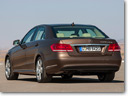
Few days ago Mercedes-Benz revealed its refreshed versions of the new 2014 Mercedes-Benz E-Class Coupe and Cabriolet models. The good news around it continues with the video that just come up. It shows the new E-Class models with its new and exciting features.
The completely revised models include a powerful and efficient BlueDIRECT four-cylinder engines with pioneering injection technology and trend-setting assistance systems. As a matter of fact, they are called “Intelligent drive”.
The main new design element of the facelifted versions is the revised front with new headlamps comprising a single headlamp lens over all functional elements. In addition, to the fresh outlook of the car contribute also the new front bumpers with a more pronounced V-shape and large air intakes.
The interiors of course have been also enhanced. They offer higher comfort and convenience. Here one can see that the stylish materials predominate in the cabin and in addition the two-part trim stretches across the entire dashboard.
It is also important to mention a new feature in the cabriolet model, where an acoustic soft top is included. It has a high-grade insulation and ensures that even at high speeds, only very little wind noise is heard in the interior.
Furthermore, the new E-Clas Coupe and Cabrio can be equipped with wide choice of powerful petrol and diesel engines, which are highly efficient and equipped with the ECO start/stop system.
Mercedes-Benz has just announced the price of the 2013 Mercedes-Benz E400 Hybrid, which will begin at $56 705. The price includes a $905 destination charge. The Hybrid car is currently on sale.
It will delight its customers, because no changes have been made to the exterior appearance of the regular E-Class, and at the same time it includes an entire compact, intelligent and modular hybrid concept.
In addition, no compromises were made in terms of space, safety and comfort. In fact, significant increase in comfort has been achieved thank to the start/stop operation which allows a noiseless start.
What is more important here is that the combined consumption of this hybrid is estimated of 27 mpg. In addition, part of the intelligent downsizing strategy of Mercedes-Benz that was implemented here is the increase in the engine output of the E 400 HYBRID by some 20 kW and 250 Nm thanks to the electric motor.
Furthermore, the customers will enjoy the impressive hybrid driving experience thanks to the start/stop function, regenerative braking, boost effect, purely electric motoring and “sailing” function.
The E400 Hybrid gets is power from the electric motor which is mated to a 3.5-liter V6 gasoline engine. The latter generates 302 horsepower (222 kW) and 273 pound-feet of torque.
The E400 Hybrid made its first world appearance at the 2012 Detroit Auto Show earlier this year as an US version of the European E300 BlueTEC HYBRID.
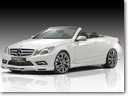
Piecha Design has announced their tuning program for Mercedes-Benz E-Class Coupe and Cabrio.
The aerodynamics package includes an add-on front lower spoiler, rear diffuser insert with quad tipped dual exhaust system and a three-piece rear spoiler. There is also a pair of side skirts with integrated LED lights.
A set of Piecha MP1 mono-block rims – 8.5J x 19” with 225/35 up front and 9.5J x 19” with 255/30 on the rear – complete the exclusive exterior. The stance is improved by lowering the suspension with 30 mm and hub spacers ranging in size from 24 to 40 mm per axle are also available.
The performance upgrade is a Power Converter CS-RC delivering more response in both acceleration and gear changes.
The last upgrade is a more responsive vario roof module, which allows the roof to be opened and closed up to 40 km/h.
Mercedes-Benz is continuing its hybrid philosophy with the all new 2012 Mercedes-Benz E 300 BlueTEC HYBRID model. In fact, this is the world’s most economical luxury-class vehicle with a fuel consumption of just 4.2 l of diesel/100 km, and CO2 emmissions of 109 g/km. At the same time, efficiency champions such as the SLK 250 CDI, S 250 CDI, ML 250 BlueTEC 4MATIC and SL 350 BlueEFFICIENCY are showing that luxury brand aims to tale a leading role in the continuous improvement of vehicles with internal combustion engines in all classes. What bindes all these environmentalfriendly vehciles is their impressive efficiency without compromises.
These premium automobiles from Mercedes-Benz, which are not only economical but also environmentaly compatible, has all the necessaryattributes of a true Mercedes: safety, comfort and serene driving enjoyment. Further to the highly efficient internal combustion engines, add the hybrid drive systems, which are currently rounding off the mix of intelligent, need-related solutions for environmentalfriendly vehicles. The new 2012 Mercedes-Benz E 300 BlueTEC HYBRID is setting new standards for luxury-class business cars. This diesel hybrid will be available in the European market as a Saloon and Estate in the end of the year. Later the E 400 HYBRID powered by an electric motor and a V6 petrol engine will be launched in the American, Japanese and Chinese market.
Furthermore the intelligent, modular hybrid concept has a major advantage: no modifications to the bodyshell are required. In addition to that the hybrid module can be used flexibly in other model series and there will be right-hand drive versions apart from the diesel and petrol models.
What has to be highlighted here is that the vehicle has all the necessary equipment and functions for a hybrid – starting from the ECO start/stop function right up to the purely electrically driveable hybrid. This means that this model is undoubdtedly on its way to the sustainable mobility of the future. Moreover, Mercedes-Benz is also aims to optimize its vehicles with the very latest internal combustion engines: by downsizing, charging, direct injection, low-friction technology and BlueTEC. In addition to that the vehicles themselves are undergoing targeted optimisation with respect to aerodynamics, lightweight construction and energy management (BlueEFFICIENCY).
The 2012 Mercedes-Benz E 300 BlueTEC HYBRID not only delivers best-in-class luxury, but also combines it with outstanding fuel economy of the 4‑cylinder diesel engine over long distances. The reasons are several, but in short – it benefits of an efficient hybrid in city and stop & go traffic. Hence, it delivers impressive efficiency with no compromises. And not forgetting that thank to the compact hybrid concept there are no restrictions in terms of spaciousness, comfort and safety.
What is more important here is the technology used in the E 300 BlueTEC HYBRID. Mercedes-Benz has combined the 2.2-litre four-cylinder diesel engine, which develops 150 kW (204 hp) with a powerful hybrid module. The latter has a 15 kW electric motor, positioned between the internal combustion engine and the 7-speed automatic transmission, and assists the diesel engine when the car is accelerating (boost effect). In alternator mode, it is used for the recuperation of braking energy, although it is also suitable for driving under electric power alone. In summary, it is based on the modular hybrid principle developed by Mercedes-Benz. And the figures a worth mentioning again: the fuel consumption of the E 300 BlueTEC HYBRID is 4.2 litres per 100 kilometres with CO2 emissions of 109 g/km.
Next, in combination with 7G-TRONIC, a wet start-up clutch and the lithium-ion battery, the intelligent modular hybrid system requires little installation space and weighs around 100 kg. Of course, the hybrid components have all the features of the extensive “7-stage safety concept”.
The brand also aims to deliver fuel efficiency and environmental “attitude” to some of its iconic models. Across all the model series Mercedes-Benz offers powerful yet economical petrol and diesel models. They feature turbocharging and direct injection for enhanced performance but lower fuel consumption and CO2 emissions. What is more here is that these vehicles are very suitable for markets with CO2-based vehicle taxation, or for company and fleet customers.
Characteristics of the efficiency champions in brief:
Mercedes-Benz SLK 250 CDI: torque at the level of a V8 muscle-car, the fuel consumption of a compact. The world’s most economical (4.9 l/100 km) and powerful (150 kW/500 Nm) diesel roadster.
Mercedes-Benz S 250 CDI: the “five litres per 100 km S-Class” with serene long-distance comfort.
Mercedes-Benz ML 250 BlueTEC 4MATIC: full-size SUV with full on and off-road performance, a consumption of around six litres per 100 km and CO2 emissions of 158 g /km.
Mercedes-Benz SL 350 BlueEFFICIENCY: consumes 29 percent less fuel than the preceding model, mainly thanks to a BlueDIRECT engine, intelligent lightweight construction (- 140 kg) and outstanding aerodynamics.
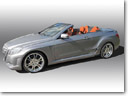
FAB Design has announced their tuning package for Mercedes-Benz E-Class Convertible.
The wide body kit includes new front and rear bumper, a pair of side skirts and extended fenders and quarter panels. The whole package gives superb stance of the beautiful drop-top. The front bumper also comes with LED daylight running lights and exposed carbon fiber sections. Last, but not least, the exterior received a carbon fiber extendable trunk lid spoiler.
FAB E-Class Convertible stands on forged three-piece 9J x 20” at the front and 10J x 20” at the rear alloy wheels fitted with ultra-low profile tires.
The stance is also improved by a tuned sports suspension.
The final touch are the two oval tailpipes, which are part of the sports exhaust system with sound control.
320 kW of power and a peak torque of 3,200 Nm (2,360 lb-ft) from four electric wheel hub motors point the way to the powerful, efficient and ecofriendly luxury sedan of the future. Based on the latest Mercedes E-Class, BRABUS ZERO EMISSION, a business division of BRABUS, has developed the fully operational BRABUS High Performance 4WD Full Electric concept car. The all-wheel-drive vehicle, which celebrates its world debut at the 2011 IAA, accelerates from 0 – 100 km/h (62 mph) in just 6.9 seconds and reaches a top speed of 220 km/h (137 mph) – and all without emitting as much as a single gram of CO2. A powerful 56-kWh lithium-ion battery pack provides an operating range of up to 350 kilometers (217 miles). There are plans for a small-series production run of this unique automobile.
For more than three decades BRABUS has ranked as one the top addresses worldwide for exclusive high-performance automobiles. Since 2008 the BRABUS ZERO EMISSION business division of BRABUS, recognized by the German Federal Motor Vehicle Department as an automobile manufacturer, deals with the development of vehicle concepts for alternative-drive cars.
For the electric drive of the BRABUS High Performance 4WD Full Electric the BRABUS vehicle and electrical engineers decided on four wheel hub motors from English manufacturer Protean ELECTRIC.
A low weight of just 31 kilograms (68 pounds), a compact diameter of only 42 centimeters (16.5 inches) and a thickness of merely 11.5 centimeters (4.5 in.) make these motors perfectly suited for this project. They are positioned in the BRABUS Monoblock Q wheels in size 8.5Jx19 front and back.
BRABUS Technologie Projekt HYBRID
With a peak power of 80 kW and a peak torque of 800 Nm (590 lb-ft) in Sport mode these motors are ideal for meeting the high-performance requirements that BRABUS is renowned for. In recuperation mode under braking each of the motors contributes up to 70 kW to the energy recovery system and therefore to recharging the batteries.
The concept car is equipped with an electro-hydraulic BRABUS brake system that was custom developed for this type of drive layout. The four vented bake discs are attached to the rear of the wheel hub motors, and gripped by two internal brake calipers each.
Controlling the four wheel hub motors presented a special challenge. They are coordinated by a high-tech electronic control unit and give the E-Class sedan an innovative all-wheel-drive system that defies any kind of weather and all road surface conditions. But that’s not all: the independent drive of each wheel provides the vehicle with torque vectoring capabilities, the active controlling of the yaw angle, for impressive driving dynamics and particularly safe handling.
The power output of the four electric motors adds up to a peak output of 320 kW and a whopping peak torque of 3,200 Nm (2360 lb-ft). In comparison: the 6.3-liter V12 Biturbo engine of the new 370-km/h plus (230-mph) BRABUS ROCKET 800, one of the most powerful gasoline car engines in the world, produces a peak torque of “just” 1,420 Nm (1,047 lb-ft).
Despite its enormous performance potential the wheel hub drive is particularly ecofriendly because of its carbon neutrality. Based on the NEDC (New European Driving Cycle), energy consumption of all four motors combined is a low 0.24 kWh/km (0.38 kWh/mile), giving the car an NEDC operating range of some 240 kilometers (150 miles). In Eco mode, which is more than sufficient for normal operations, a continuous output of 200 kW allows operating ranges of up to 350 kilometers (217 miles) without recharging.
This substantial operating range is the credit of the powerful 56-kWh lithium-ion battery pack. The individual cells, connected via state-of-the-art power electronics, were placed in various locations throughout the entire Mercedes E-Class body to achieve optimal weight distribution. The space gained under the hood by eliminating the conventional engine is utilized for the cells as is the now superfluous driveshaft tunnel and the areas that normally house the fuel tank and the spare wheel.
External charging of the battery pack is handled by two separate systems. For the garage at home there is a quick charger for ecofriendly eco electricity from German energy company RWE. After one-and-a-half hours of being plugged into the 380 V three-phase grid with a charging capacity of 50 kW the eco sedan again has an operating range of 350 km (217 miles). For charging on the road at any normal 220 V AC outlet or on a 380 V three-phase outlet the car is equipped with an integrated charger that recharges the batteries fully in five hours.
On the road the BRABUS High Performance 4WD Full Electric exhibits the dynamic performance one can rightfully expect from a BRABUS high-performance automobile and one that has been unheard of in an electrically powered sedan of this size until now.
The electrically powered sedan delivers excellent performance: the four-door car weighing 2,190 kilograms (4,828 pounds) accelerates from 0 to 100 km/h (62 mph) in just 6.9 seconds. The BRABUS High Performance 4WD Full Electric also delivers superior pulling power: the intermediate sprint from 60 to 120 km/h (37 to 74 mph) takes just 5.0 seconds. In comparison: a Mercedes E 500 4MATIC takes 5.2 seconds.
The wheel hub motors’ redline speed of 2,000 rpm effectively limits the car’s top speed to 220 km/h (137 mph).
The strong performance and low energy consumption also benefit from the aerodynamic efficiency of the BRABUS aerodynamic-enhancement components, which were fine-tuned in the wind tunnel. The BRABUS front fascia lends the E-Class sedan a more slipstreamed nose and reduces lift on the front axle, contributing to outstanding directional stability. The integrated LED daytime running lights are extremely economical but ensure that the BRABUS High Performance 4WD Full Electric is recognizable from afar.
BRABUS aluminum front sport fenders with integrated clear-coated carbon-fiber inserts create a distinctly sporty look. The BRABUS side skirts calm the airflow between the wheel wells and feature highly convenient, visually striking LED entrance lights.
Another custom development is the suspension of BRABUS High Performance 4WD Full Electric. A height-adjustable coilover suspension calibrated to the higher vehicle weight was developed in cooperation with technology partner BILSTEIN. It offers individual ride-height settings and a sporty yet comfortable ride.
The BRABUS Monoblock Q 19-inch wheels are mounted with high-performance tires from technology partners Continental, Pirelli or YOKOHAMA in size 245/35 ZR 19 front and back.
The interior of the concept car is supplemented by a special instrument cluster, which provides the driver with the most essential information about the battery, the electric motors and other driving parameters such as speed etc. A new center console housing the controls an electric vehicle requires was manufactured as well.
The ergonomically shaped BRABUS sport steering wheel and aluminum pedals and footrest add sporty highlights. Stainless-steel scuff plates with backlit BRABUS High Performance 4WD Full Electric logo and velour floor mats sporting the identical marks are further exclusive accessories.
BRABUS High Performance 4WD Full Electric
Technical Data
Body
Four-door sedan based on the Mercedes-Benz W 212 series E-Class.
Steel unibody with mounts for lithium-ion batteries in engine bay, trunk and driveshaft tunnel. BRABUS aerodynamic-enhancement kit with front fascia, air vents in the front fenders, side skirts, rear spoiler lip and rear diffuser.
Dimensions:
Length 4.868 mm (191.6 in)
Width 1.841 mm (72.4 in)
Height 1.464 mm (57.6 in)
Curb weight 2,190 kg (4,828 lbs.)
Electric Drive
Four electronically controlled Protean ELECTRIC wheel hub motors and 56 kWh lithium-ion battery pack. Charging by external or on-board charger.
Peak power in Sport mode 4 x 80 kW = 320 kW system power
Continuous power in Eco mode 4 x 50 kW = 200 kW system power
Maximum recuperation power 4 x 70 kW = 280 kW total recuperation power
Peak torque 4 x 800 Nm (590 lb-ft) = 3,200 Nm (2,360 lb-ft) system torque
Maximum rpm 2,000
CO2 emissions 0 g/km
Power supply Lithium-ion (LiCoMn) battery pack
Nominal voltage 355 V
Capacity 56 kWh
External charger RWE Combi Station, 380 V three-phase current
Charging capacity: 50 kW (limited)
Charging time: 1.5 hours (limited)
Internal charger Delta ES three-phase on-board charger, 220 V AC or 380 V three-phase current
Charging capacity 12.4 kW (limited)
Charging time: 5 hours
Suspension
Independent front and rear suspension with height-adjustable BRABUS coilover sport suspension.
Front axle:
Three-link suspension, anti-dive geometry. Height-adjustable BRABUS struts with gas-pressure shocks with 10-way adjustable bound and rebound, and coil springs.
Rear axle:
Multi-link suspension, anti-dive and anti-squat geometry. Height-adjustable BRABUS struts with gas-pressure shocks with 10-way adjustable bound and rebound, and coil springs.
Wheels:
BRABUS Monoblock Q 8.5J x 19 H2 alloy wheels with Continental, Pirelli or YOKOHAMA high-performance brake system.
Front: 8.5J x 19 H2 with 245/35 ZR 19
Rear: 8.5J x 19 H2 with 245/35 ZR 19
Brake System
Dual-circuit brake system with BRABUS high-performance brake system assisted by the wheel hub motors in each wheel.
Performance
0 – 100 km/h (62 mph): 6.9 sec.
60 – 120 km/h (37 – 74 mph): 5.0 sec.
Top speed Eco mode: 190 km/h (118 mph)
Top speed Sport mode: 220 km/h (137 mph)
Energy Consumption and Operating Range
Energy consumption based on NEDC incl. recuperation: 0.24 kWh/km (0.38 kWh/mile)
Operating range based on NEDC: 240 km (150 miles)
Operating range at a constant 100 km/h (62 mph): 350 km (217 miles)
We have all heard the idiom “This … has the aerodynamics of a brick” at one time or another and it is not by accident that the expression has become universally popular among automotive enthusiasts. It turns out, in fact, that when it comes to aerodynamics (which in a car determines a number of characteristics, including but not limited to top speed, fuel consumption, and noise inside) you pretty much cannot do any worse. How do we know? Well, some really smart people invented the ‘drag coefficient’, which is a useful number to measure the frontal area resistance of a solid object in air or liquid. When this solid object is a brick, the number equals 2.
Back to cars, ever since people recognized that cars and carriages are not the same thing, car manufacturers started to pay more attention to aerodynamics as part of their efforts to make their cars go faster, be more stable, and look better (although the latter turned out to be way more than a function of wind resistance). All in all, in the last half a century aerodynamics has had a crucial role in shaping our concept about the attributes of a car’s exterior.
So what are the 5 cars of today, which are most brick-un-like in terms of their Cd (the accepted designation of drag coefficient)?
5. Opel Insignia
So it is not only beautiful but also efficient in the way it slips through the air. The 2009 European ‘Car of the Year’ award winner has been a total hit so far with its sales in Europe and is well-received on the US market, as well, where it appears with a Buick badge. Of course, the Insignia has its faults – the scarce rear passenger leg room is something the vast majority of automotive journalists who have tested the car agree on. Another thing they agree on, however, is its successful design, which is not only pleasing to the eye but also responsible for a Cd of only 0.27.
4. BMW E90 3 Series
In our minds, BMW’s have never won people over through their aerodynamic design – something which has been the reserved territory of brands, such as Citroen for example. Still, despite the fact that the little bimmer is quite different to look at when compared to the renaissance-like shapes of the Insignia, it has the same Cd value of 0.27 as the Opel. That is, only if it bears a 318i/320i badge – the reason is that larger wheels and fatter tires, as well as a few other exterior tweaks, increase the Cd number slightly in the name of better stability and driving security.
1-3. Japanese Wedges versus the Three-Pointed Star: A Three-Way Tie!
There are three cars, which occupy the top of this ranking: the Mercedes-Benz E-Class, the Toyota Prius, and the Honda Insight. They all share a drag coefficient of just 0.25 and two of them – the Prius and the Insight – also share a largely similar design concept. In fact, to use the word ‘share’ would not be entirely correct because the Insight came in 2008 in response to the Prius’ considerable market success and stole its silhouette in an attempt to steal its sales. Nowadays, however, we are all quite used to automotive anonymity and other such examples abound, so it is hardly scandalous. While the two cars have the same Cd value, the Honda needs it a bit more to compensate for the smaller gasoline engine it packs (1.5 vs. 1.8 liters).
Unlike the above two cars, whose hybrid nature and green marketing obligations force them to be as aerodynamic as possible, the E-Class Mercedes is built around the idea of comfort and luxury. It is the most prestigious and expensive car in this ranking and has the most conventional visual profile of the lot. Therefore, we consider it a small miracle that it manages to equal the achievement of the Japanese ‘eco-wedges’. Hat tip to Mercedes, therefore, as they have found a way to win in one more category without giving up any of their traditional qualities!
Brabus has introduced some very interesting upgrades for the Mercedes E-Class with AMG Body Styling and S-Class with AMG Body Styling.
The upgrades for the E 63 AMG include – a front spoiler lip, a diffuser and rear spoiler. There are also a centrally located reflector, and stylishly blends with the rear bumper. It has cutouts on either side for the tailpipes of the production exhaust or of the BRABUS quad sport exhaust system.
The upgrades for the S 63 AMG include – a new front spoiler, modified rear spoiler and diffuser.
The tuning company also offers BRABUS Aerodynamic-Enhancement Kit and Flap Control Exhaust for both – the E 63 AMG and the S 63 AMG.
In addition, Brabus also offers custom-tailored BRABUS Monoblock wheels with diameters of up to 20”.
BRABUS front sport fenders, available for all E- and S-Class models, are yet another visual delicacy.
There are, of course, a number of engine tuning components for the mighty 6.2 liter V8 and the twin-turbo 5.5 liter V8.
The interior also offers a wide open playing field for refinement. The BRABUS upholstery shop uses supple leather and Alcantara to adapt the interior to the customer’s personal preferences down to the last detail. Other instruments of cockpit refinement are carbon-fiber and exotic wood trim elements available in any desired color and in a number of different designs.
The latest E-Class Coupe (C207) from Mercedes Benz is simply beautiful car. However, Prior Design has made it even more exclusive.
The tuning company has installed specially developed aerodynamics package, which fit to all E-Klasse Coupe C207 models. It includes a new mofied front bumper, a pair of side skirts, a revised rear bumper with carbon fiber diffuser, which houses 4 tail pipes. There are also a rear trunk spoiler also made from carbon fiber and a roof spoiler.
All parts have TÜV certificate included. The mounting materials are also included in the package.
The price list for the parts is not announced, yet. Also nothing is mentioned about performance packages, but probably there will be some ECU re-maps, especially for the mighty diesels.
Package includes:
– Prior-Design front bumper (fits all E-Klasse Coupe c207 models)
– Prior-Design side skirts (2X) (fits all E-Klasse Coupe c207)
– Prior-Design rear bumper (fits all E-Klasse Coupe c207)
– Prior-Design rear trunk spoiler (fits all E-Klasse Coupe c207)
– Prior-Design roof spoiler (fits all E-Klasse Coupe c207)


 Mercedes-Benz has revealed the E-Class Long-Wheelbase at 2013 Auto Shanghai. The luxurious saloon will be sold exclusively in China. It boasts an overall length of 5019 mm and its wheelbase has been extended by 140 mm to 3014 mm. In other words, this means 14 cm of additional legroom for the rear passengers.The long version of the E-Class is being launched in China as the E 260 L, E 300 L and E 400 L. There is a choice of two variants: the luxurious Sedan and the Sport Sedan. The latter features a powerful AMG front and rear apron, new AMG side skirts and AMG wheels. Typical of the AMG brand is the lavish scope of equipment and appointments. Starting with the E 260 L, features include LED headlamps, an electric sunroof, two-zone automatic climate control, PARKTRONIC and COMAND DVD.New items of equipment are additionally available for other models:




 Few days ago





 Piecha Design has announced their tuning program for Mercedes-Benz E-Class Coupe and Cabrio.


 FAB Design has announced their tuning package for Mercedes-Benz E-Class Convertible.


 320 kW of power and a peak torque of 3,200 Nm (2,360 lb-ft) from four electric wheel hub motors point the way to the powerful, efficient and ecofriendly luxury sedan of the future. Based on the latest Mercedes E-Class, BRABUS ZERO EMISSION, a business division of BRABUS, has developed the fully operational BRABUS High Performance 4WD Full Electric concept car. The all-wheel-drive vehicle, which celebrates its world debut at the 2011 IAA, accelerates from 0 – 100 km/h (62 mph) in just 6.9 seconds and reaches a top speed of 220 km/h (137 mph) – and all without emitting as much as a single gram of CO2. A powerful 56-kWh lithium-ion battery pack provides an operating range of up to 350 kilometers (217 miles). There are plans for a small-series production run of this unique automobile.


 Brabus has introduced some very interesting upgrades for the Mercedes E-Class with AMG Body Styling and S-Class with AMG Body Styling.


 The latest E-Class Coupe (C207) from Mercedes Benz is simply beautiful car. However, Prior Design has made it even more exclusive.


