At the Paris Motor Show 2008 smart is presenting the latest generation smart fortwo with electric drive to an international audience for the first time. In future, the advantages of the smart fortwo electric drive, which produces no local emissions, will be demonstrated in everyday service in the project “e-mobility Berlin” which Daimler AG presented together with the energy provider RWE at the beginning of September 2008. This project underlines the pioneering role of the young car brand in developing environmentally friendly and sustainable concepts for the individual mobility of the future. The current models already boast low fuel consumption and minimum carbon dioxide emissions. The smart model range includes the CO2 world champion, the smart fortwo cdi, with CO2 emissions of just 88 g/km – the lowest figure of any production car worldwide. Moreover, since October 2008 the two petrol smart fortwo models with 52 kW/71 bhp and 45 kW/61 bhp engines have been equipped with an intelligent and user-friendly start/stop system which further reduces their fuel consumption.
The two-seater car is celebrating its tenth anniversary this year and its unique concept has now become firmly established. Thanks to new ideas and a design that combines functionality with joie de vivre, the smart fortwo has become a cult car. Since the launch of the first model in 1998, more than a million models of the two-seater car have been produced. Today it is on sale in 37 countries around the world – including the USA since January 2008. From mid 2009 the smart fortwo will also be available in China. The smart fortwo therefore already has an impressive track record on its way to a green future.
Since 1998 economical cars from smart have offered innovative solutions to the great challenge of our time: how can individual mobility be made environ-mentally sound and sustainable in future? The latest generation smart fortwo electric drive provides a new possible answer to this question as electric drive is quiet, highly efficient and produces no local emissions.
100 electric smarts in everyday service in London since 2007
At the end of 2007 smart leased 100 electric smarts of the old seriesto be used in a pilot project in Londonin order to gain real-world experience with electric drive. Customers gave very encouraging feedback on the zero emission cars that were still equipped with conventional batteries. And the authorities in the English capital reward this commitment to electricity by exempting drivers of electric smarts from the expensive Londoncongestion charge.
“e-mobility Berlin” – smart fortwo ed to be equipped with a lithium-ion battery in future
smart is consistently working on the further development of electrically driven vehicles. With the support of the German government and the state of Berlin, at the beginning of September 2008 Daimler AG and the energy provider RWE presented the project “e-mobility Berlin”. This is the largest initiative in this field to date, and the two companies aim to jointly create the conditions for zero emission motoring with battery electric drives. RWE is providing 500 electricity charging stations and Daimler is contributing 100 electric cars. The aim is to create an intelligent overall system.
Dr. Dieter Zetsche, President and CEO of Daimler AG says “As the capital and Germany’s largest city, Berlinis the right place for this project. The future will see an ever-increasing proportion of traffic on the roads in urban centres around the world. Zero-emission electric cars could shape the image of environmentally aware cities because zero local emission motoring is no longer science fiction – and also when seen as a whole emissions will be further reduced as the proportion of “green” electricity increases. The future of mobility is green. We invented the car – and we will do it again!”
Daimler AG, the parent company of the cult smart brand, has been working hard to develop solutions for the important challenges presented by battery electric driven cars for years. These are the range and charging times, but also the charging station infrastructure, the additional energy requirement and, of course, the costs.
smart is presenting important solutions in Berlin. The latest smart fortwo ed series will be equipped with state-of-the-art lithium-ion batteries. Lithium-ion technology has decisive advantages over other types of batteries, including extremely compact dimensions, much higher performance, shorter charging times, a long life and high reliability.
Moreover, an “on-board unit” is being developed for the project “e-mobility Berlin” which communicates with the charging station. Among other things, this will contribute to ensuring that the battery is automatically charged with low-priced electricity when the network is not used to full capacity, forexample at off-peak times. Or when more electricity is available from alternative energy sources than is needed at this point in time. This benefits the environment and offers customers real savings.
The development and tuning of the components needed are already well underway. At the beginning of next year the system will initially undergo internal testing and optimisation. Small series production of the electric two-seater will start at the end of 2009 and smart will then deliver the first vehicles to selected customers.
Success story – ten years of the smart fortwo
As early as the early 1970s developers at Mercedes-Benz started working on the “car of the future” and considering new revolutionary approaches that eventually led to the concept of an ultra-compact car two and a half metres long. Several years passed until the pioneering safety concept was developed that allowed the high level of safety typical of Mercedes to be realised in an extremely short car.
In 1989 Nicolas G. Hayek, the inventor of the Swatch watch, announced plans to launch a small city car on the market. To realise this idea Nicolas Hayek turned to Mercedes-Benz as an experienced partner. Together, both partners founded Micro Compact Car AG with headquarters in Biel, Switzerland. Finally, in 1997 the smart city coupé celebrated its world premiere at the Frankfurt International Motor Show. Production and sales started in 1998. In the same year, smart became a wholly-owned subsidiary of Daimler-Benz AG (now Daimler AG).
Ten years ago a car started to change our focus and our way of thinking and feeling: the smart. The name is a reference to the car’s intelligence and attractiveness and the smart city coupé, later renamed smart fortwo, lived up to its name. It was new and excitingly different to conventional cars. This is because it was available solely as a two-seater – an extremely compact car barely longer than two and a half metres that could also fit in a parking space perpendicular to the flow of traffic if necessary. In addition, the smart was characterised by a new, sophisticated design language and showed that even a small car can be attractive, safe and grown-up.
Even then the two-seater smart provided a unique answer to many questions concerning individual urban mobility. For not only does it take up very little road and parking space, it also boasts impressively low fuel consumption and minimum carbon dioxide emissions. Nevertheless, it transports two people and their luggage to their destination very comfortably and with maximum safety.
smart – a passionately discussed idea
When sales of one of the world’s most unusual production cars started in October 1998, the newcomer that was at variance with many prevalent ideas of how a car should be, immediately became a subject of passionate, and often controversial, discussion. Now, ten years later, the smart idea has long since taken hold. The intelligent two-seater has become a cult car. The weekly journal” Die Zeit” called the vehicle concept an “urban icon”. The smart consistently implements technical innovations for the mobility of the future and also uses constructional details as design features.
smart stands for innovation, functionality and joie de vivre
As one of the youngest car makes, smart stands for innovation, functionality and joie de vivre. smart especially appeals to customers who seek new, intelligent and trend-setting solutions in the automotive sector. smart fortwo drivers can be categorized in terms of their attitude rather than their age, profession or gender. They are open-minded individuals who question the status quo and live life consciously. They opt for a smart fortwo because it is something special and because it sets them apart from the masses. And also because it is quite simply fun to drive.
Further models and series
In the following years the smart brand launched the sports cars smart roadster and smart roadster-coupé (2003) and the four-seater smart forfour (2004) on the market.
The innovative car brand has demonstrated its creative energy time and again with special vehicle models. These include the smart crossblade in 2002 that had neither doors, a roof nor a windscreen, and the smart crosstown show car in 2005 which was equipped with forward-looking hybrid drive.
Concentration on the smart fortwo
Following the decision to stop production of the smart roadster at the end of 2005 and of the smart forfour mid 2006, everything concentrated on the smart fortwo. Ten years after the first pilot production vehicles rolled off the production line, in 2007 the new smart fortwo was launched on the market. This model builds on the strengths of the visionary classic and further develops its virtues. Since 2007 smart has been fully integrated in the organisation of the Daimler business division Mercedes-Benz Cars, which also comprises the Mercedes-Benz, Maybach and AMG brands in addition to smart.
Already a classic
It is undisputed that the smart fortwo’s unique character already makes it an automotive classic, despite its young years. As early as 2002 a smart fortwo was the only vehicle to be included in the permanent collection of the world-famous Museumof Modern Artin New Yorkwhilst still in series production as a “contemporary design classic of the last decade of the last century”.
More than one million vehicles produced – the international cult car has become firmly established
After ten years on the market the smart fortwo can be proud of its achievements. Since the first model was launched in 1998, more than a million two-seater smarts have been produced. Whereas the smart fortwo was initially only offered for sale in Germanyand eight further European countries, today it is available in 37 countries worldwide – since January 2008 also in the USA. From mid 2009 the smart fortwo will also go on sale in Chinaas the car is practically tailor-made for the growing number of lifestyle-oriented small car customers in a country with numerous megacities . In China, too, fashion-conscious young people want an agile, trendy vehicle for their flexible urban lifestyles in order to set themselves apart from others.
The second generation continues the success story
The second generation of the smart fortwo has been on the market since the spring of 2007. It clearly continues the tradition of its predecessor and the fascinating smart story. The car continues to focus on the core brand values of innovation, functionality and joie de vivre – a kind of declaration of automotive independence for many smart drivers . Anders Sundt Jensen, responsible for the smart brand says “The new fortwo is even more comfortable, agile, safe and environmentally friendly than its successful predecessor was. The new fortwo does not only appeal to smart fans as a lifestyle-oriented vehicle, but also on account of its unparalleled economy.”
A trend-setting appearance with new ideas
The smart fortwo embodies a completely new, intelligent concept for automotive individuality and this is also reflected in its appearance with a fresh, young, modern yet sophisticated design language. Unusual ideas gave the two-seater its trend-setting appearance and enabled it to establish its own class. In the past ten years the smart has become an automotive icon and it combines extremely varied demands on function, aesthetics and safety technology to create something completely new. The result is a bold design that confidently makes structural elements such as the tridion safety cell a significant part of the car’s styling. There could hardly be a more eloquent expression of that most basic principle of design, that form must follow function. A further feature is the mix of materials consistently realised in a production vehicle for the first time with a hard core (tridion) and a flexible and functional shell with thermoplastic bodypanels. In this way smart sets new trends and its shape alone gives it a likeable appearance whilst still being taken seriously.
Safety – a hard shell for the passengers
The smart fortwo is seen as a real trendsetter in terms of safety equipment in small cars. The tridion safety cell protects its occupants like the hard shell around a nut. In this way the smart fortwo meets the extremely strict standards of Mercedes-Benz Cars. Furthermore, it complies with the requirements of Euro-NCAP and US crash regulations.
The basic equipment of the smart fortwo includes full-size airbags for driver and passenger, belt tensioners and belt-force limiters. Head/thorax side airbags are available as an option. esp® also comes as standard; in many other small cars this is not even available for an additional charge. The esp® includes hill-start assist and the anti-lock braking system abs. A hydraulic brake assist function is also included in the standard spec.
The diesel version of the smart is the current CO2 champion
State-of-the-art compact three-cylinder petrol engines with a capacity of 999 cc are installed at the rear of the smart fortwo. In Western Europecustomers can currently choose from two naturally aspirated engine versions with mhd (micro hybrid drive technology) delivering 45 or 52 kW (61/71 bhp) respectively, and a supercharged turbo engine rated at 62 kW (84 bhp). A 72 kW (98 bhp) three-cylinder turbo engine is also at the heart of the smart fortwo BRABUS.
In addition, a diesel variant is available – the smart fortwo cdi – which is the world champion in low CO2 emissions. The 33 kW/45 bhp two-seater car consumes just 3.3 litres of fuel (NEDC) per 100 kilometres on average, which means that it can travel approximately 1000 kilometres without refuelling. This has been confirmed by the Italian car magazine ” Quattroruote” which conducted a fuel consumption test over 1000 km between Romeand Salzburg. At just 88 grams per kilometre the smart fortwo cdi has the lowest CO2 emissions of a production car worldwide!
To further reduce the CO2 emissions of the petrol-driven models, both the 45 kW/61 bhp and the 52 kW/71 bhp smart fortwo variant come with mhd (micro hybrid drive) as standard in Europe. This intelligent and user-friendly start/stop system automatically shuts down the engine as soon as the car’s speed falls below 8 km/h and the brake pedal is pressed. The engine starts again as soon as the driver releases the brake pedal. This further reduces the standard consumption and the average CO2 emissions.
Award-winning climate friendliness and economy
Protection of the environment is an integral part of all the fields of activity of the smart brand. This does not only apply to the vehicle’s operational period, but also to its development, production and later recycling. The internationally renowned “Öko-Trend” environmental institute has acknowledged the smart fortwo’s top position in matters relating to environmental friendliness and awarded it the coveted environmental certificate for cars. Moreover, the smart fortwo has been awarded the “ÖkoGlobe” by one of Germany’s largest insurance companies.
What’s more, several renowned trade journals have certified the innovative two-seater’s unparalleled economy and environmental friendliness. They came to the unanimous conclusion independently of one another: no other car is as cheap to run!
 Most surely you don’t get the chance to test drive a C63 AMG Coupe every day. And more importantly, if such vehicle comes from the factory VATH, you must definitely go with what the moment offers. Here is the attempt to reproduce at least some impressions: having in mind a Porsche, Lamborghini and Ferrari as a stereotype of fast sports cars, lets see what impressions has Vath V63 Supercharged left.


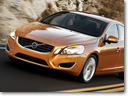 Volvo launches automatic DRIVe diesels with the same fuel consumption as manual versions


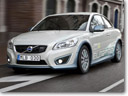 Volvo announced another vehicle from their ECO-range – C30 DRIVe Electric, which will be delivered to testers later this year.
 Volvo Car UK has revealed 119g/km DRIVe versions of its S80 executive saloon and V70 premium estate, the fourth and fifth body style it’s launched delivering CO2 emissions below 120 g/km.
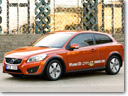 The new Volvo C30 DRIVe was recently introduced at the Frankfurt Motor Show.
 Having good environmental properties doesn’t mean a car has to be boring. Quite the contrary: with R-Design, the Volvo C30, S40 and V50 DRIVe can be styled just as expressively and exclusively as the other model variants.
 Volvo is the official Automotive Sponsor of this year’s Grand Designs Live at London’s ExCeL taking place from 25th April – 4th May. Grand Designs Live is the UK’s number one consumer show for design and innovation, and showcases the very best in cutting-edge contemporary design, inspiring ideas and green living, making it the perfect place to demonstrate both the low CO2-emitting DRIVe range and the innovative City Safety technology.


 At the Geneva motor show, Volvo Cars is presenting no less than seven fuel-efficient DRIVe models. All with best-in-class CO2 emission levels. The extremely low figures for the C30, S40 and V50 have been achieved thanks to an advanced Start/Stop system.


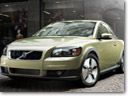
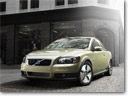 At Paris Motor Show in early October, Volvo Cars is presenting economical new diesel variants of the C30, S40 and V50 models with fuel consumption of just 4.4 litres/100 km (C30) or 4.5 litres/100 km (S40 and V50). The corresponding CO2 figures of 115 and 118 g/km mean that the C30 and V50 have best-in-class CO2 emissions in their segments. All three models – the C30, S40 and V50 – are equipped with a special set of efficiency-enhancing features and marked with the DRIVe emblem to signal their uprated environmental properties.