 At the Detroit Motor Show, Ford has revealed a tricked-out 2011 5.0-liter Mustang GT customized by DUB Magazine. The restyled pony car is created specially for the Grammy Award-winning hip-hop artist Nelly as part of his upcoming album’s artwork. (more…)
Tag: Detroit Motor Show
-
2011 DUB Edition Mustang GT 5.0 for the hip-hop artist Nelly
-
Audi Flicks Switch On Second Electric Show Car In Detroit
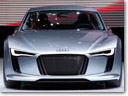 Audi is showing an uncompromising purist compact sports car with all-electric drive at the first major auto show of 2010. The Detroit showcar Audi e-tron is the name of this 3.93 metre long and 1.78 metre wide but just 1.22 metre tall two-seater; just a few months after the debut of the Audi e-tron at the 2009 Frankfurt Motor Show, this is now the second electric concept vehicle from the brand with the four rings.
Coupled with the Detroit showcar Audi e-tron’s low gross weight of around only 1,350 kilograms, high-torque power units driving the rear wheels guarantee commensurate road performance. Two electric motors with a combined output of 204PS and 2,650 Nm (1954.54 lb-ft) accelerate the coupe with ASF-design aluminium body from 0 to 62mph in just 5.9 seconds. The Audi e-tron accomplishes the sprint from 37mph to 75mph (60 to 120 km/h) in a mere 5.1 seconds. (more…)
-
MINI Beachcomber Concept

MINI crosses borders, enters new dimensions of driving pleasure, and wins over additional target groups.
Once again, MINI achieves all this by consistently expanding the model range and through the unconventional creativity of MINI design. Just a few months prior to the launch of the brand’s fourth model announced for autumn 2010, MINI is now demonstrating its potential for further enhancement of driving pleasure and diversity through another spectacular concept car: the concept of a brand-new type of vehicle proudly presented by MINI at the North American International Auto Show (16–24 January 2010) in Detroit.
The MINI Beachcomber Concept is a four-seater concept car designed consistently for maximum driving pleasure, taking up the enhanced options of the new MINI and combining these potentials with the vision of a radically open body concept.
ALL4 all-wheel drive and the variable interior give the MINI Beachcomber Concept abilities absolutely ideal for a spontaneous and active experience of freedom and leisure time. The potential offered by the car’s modern drivetrain technology and space concept is used here to the greatest possible extent to ensure a highly emotional driving experience. Hence, the MINI Beachcomber Concept consistently does without doors, a conventional roof and all other body elements which might possibly limit the intensity of the occupants’ encounter with their surrounding world. This makes the driver and up to three passengers one harmonious entity communicating directly with their surroundings – whether cruising through town, enjoying rough tracks in the mountains, or breezing along the beach.
The MINI Beachcomber Concept combines all-wheel drive with cutting-edge suspension technology, numerous body elements serving to make the car extra-strong and robust, as well as an elevated seating position. Generous spring travel and extra-large light-alloy wheels raise the entire car to a higher level. Access to the front and rear seats is nevertheless exceptionally convenient and easy thanks to the omission of doors and the entry cutouts extending all the way down to the seat bottoms, allowing the driver and passengers to get in and out in one smooth and flowing process. A pleasant and interesting side effect is that the distance the occupants feel from their surroundings is reduced to a minimum.
The driver and passengers will also enjoy the driving pleasure created by this concept in everyday traffic under regular motoring conditions – simply because the MINI Beachcomber Concept retains its unmistakable character even when adverse weather conditions require use of the soft roof or the lightweight door and roof elements fitting on easily and conveniently within a few instants.


MINI entering new terrain – with a fourth model and a complete range of innovative ideas for the ongoing future.
The MINI Beachcomber Concept symbolises the elementary values of the brand in new, radical style – and at the same time the new model continues the current development of the MINI range in a particularly attractive manner.Within just ten years after the re-launch of the brand, the fourth version of the MINI is now set to enter the market. As a unique crossover in the typical style of the brand, the new model offers a fascinating re-interpretation of that typical MINI design, with the functional convenience of four doors, four full-size seats, a variable interior, and a unique standard of driving pleasure now to be enjoyed for the first time also beyond the beaten track thanks to newly developed all-wheel drive.
The new production model now available from MINI goes far beyond the realms of urban mobility, inspiring the MINI designers to enhance that un-mistakable MINI feeling by adding further facets never seen before. Creating the MINI Beachcomber Concept, therefore, they are taking up the technical and concept qualities of the production model announced for autumn 2010, offering the ultimate expression of freedom in a car on this basis. The result is a new, incomparably open concept for a driving experience for all your senses, plus a degree of versatility greater than ever experienced before in discovering and enjoying new terrain.
The potential use and versatility of the MINI Beachcomber Concept is defined exclusively by the activities and preferences of its user. Clearly, the most authentic and natural surroundings for a car of this type are beaches where the MINI Beachcomber Concept, through its enhanced traction and radically open body, offers that unlimited freedom of movement it expresses from the start through its name alone.
The MINI Beachcomber Concept therefore allows the driver and passengers to actively live out their personal style, just like a kitesurfer, wakeboarder or triathlete is magically attracted to the hot spots of beach life the world over. Through its robust and versatile character, the MINI Beachcomber Concept furthermore follows in the footsteps of the Mini Moke, which, back in the 1960s, quickly became the epitome of adventurous motoring in your leisure time and in sports activities in sunny coastal regions.
Unique, typical of MINI, and with a great role model from way back when.
The MINI Beachcomber Concept is the vision of a car leaving behind all conventional standards and creating innovative momentum for individual mobility of the future. The combination of traction optimised by all-wheel drive for excursions beyond the beaten track, on the one hand, and an extreme focus on motoring in the open air, on the other, is quite unprecedented in the world of the automobile.Now, therefore, the MINI Beachcomber Concept makes such a driving experience a truly attractive option, offering a harmonious blend of features only a MINI can provide in such authentic style. And since individual character, a clear focus on maximum driving pleasure, and the courage to create new concepts have always set the foundation for new models in the MINI range, this open-air all-wheel-drive concept clearly stands out from the beginning as a typical MINI.
The authentic style and character of the MINI Beachcomber Concept also results from the fact that the brand once already offered an extreme thrill of driving pleasure in the open air by conscious reduction to the very minimum: Way back in 1964, just five years after the market launch of the classic Mini, the creator of the first model, the world-famous engineer Alec Issigonis, already developed an all-open version of this revolutionary compact car.
The body of the Mini Moke, as it was called, was made up of hardly more than a floorpan, wide sills at the side, the engine compartment lid and the windscreen. A folding roof served – more or less – to protect the driver and passengers from precipitation.
With its robust structure and the drivetrain technology carried over from the Mini, this four-seater fun car became a great success particularly in the sunny regions of the USA and Australia. Production of the Mini Moke in Great Britain continued until 1968 with a production volume of some 14,500 units, following which production was continued in Australia and Portugal.
The MINI Beachcomber Concept now projects the principle of the Mini Moke into the 21st century. The rustic appearance of the car and its consistent concept of consciously reducing the body components and interior to a minimum clearly follow the tradition of the radically open Mini Moke back in the 1960s. This is indeed further accentuated by design language strongly inspired by the Mini Moke and enhanced by various striking details such as the characteristic radiator grille.
It goes without saying that the new model meets all modern demands in terms of space and comfort, efficiency and safety, while nevertheless retaining its clear focus on driving pleasure in direct contact with the surroundings.
Even ALL4 all-wheel drive goes back to a role model from the past, to be precise a prototype Mini Moke fitted by Alec Issigonis with two engines in 1963. On this test car appropriately referred to as the “Twini”, the front and rear wheels were driven in each case by a four-cylinder from the Mini range of engines.
Versatile, modern, and safe at all times.
Modern and up-to-date from A–Z, the MINI Beachcomber Concept offers a wide range of innovations for consistent driving pleasure in the 21st century. The outstanding know-how in automotive development of a premium car maker in the areas of design, drivetrain, safety and production technology brings together the undiluted character of the concept car with a wide range of solutions most convincing in practice.Measuring approximately four metres in length and with its highly versatile interior, the MINI Beachcomber Concept offers all the variability and spaciousness required for active leisure time. Consistently reduced to a minimum, the body of the car ensures an intense feeling of the sun shining in and the wind rushing by, while full maintenance of all MINI safety standards guarantees maximum occupant safety at all times.
The MINI Beachcomber Concept comes with a strong and stable body structure incorporating clearly defined load paths and deformation units serving to convey and consistently absorb impact energy in the event of a collision. Rollover safety also meets the highest demands made of an open car, the stable frame on the passenger cell able to withstand even extreme situations formed by substantially reinforced A-pillars and an equally strong D-pillar bar complete with an integrated lateral support element at the rear of the car. This additional safety component is indeed finished in body colour and, through its geometry alone, conveys a supreme standard of strength and stability. It is made of high-strength steel for maximum stiffness on optimum weight, again in the interest of supreme safety.
This concept of intelligent lightweight technology serves to consistently lower the car’s centre of gravity in the interest of superior agility at all times. Indeed, this agility is further enhanced by another special feature also standing out through its special look, with the lateral support element boasting recesses shaped to form the “MINI” model designation. Again, this special feature clearly visible from outside particularly when looking at the car from above further emphasises the spirit of pure adventure in the open air.
Extreme variability for all kinds of activities, weather and road conditions.
Single seats at the rear adjusting fore-and-aft as required and with backrests folding down completely offer the passengers a supreme standard of grand touring comfort tailored to their individual requirements and allow appropriate adjustment of transport capacities for all needs. In practice, this means that the driver and passengers are able to conveniently stow even bulky sports equipment such as mountain bikes or wakeboards securely held in position by special fastening systems.When open, the MINI Beachcomber Concept is also able to carry extra-long objects such as surfboards without the slightest problem. Fastened firmly to the lateral support, surfboards fit conveniently into the car, sticking out at the top on the way to the beach.
The driver and passengers enjoy convenient access to the luggage compartment though the rear panel split vertically down the middle into two sections. Whenever necessary, the right-hand side may remain fully open for bulky objects extending out of the car at the rear. The left rear element, in turn, is a window-less door hinged at the side and extending up to the seat backrests. The additional storage case fitted on to the door is reminiscent in its round shape of a fully enclosed spare wheel holder of the type otherwise seen on a conventional offroader. But since the MINI Beachcomber Concept comes with runflat tyres and therefore does not require a spare wheel, the lockable case may be used to take along additional luggage, keeping beach mats, towels, surf shoes or similar odds and ends within easy reach at all times.
Flexible protection from wind and weather: soft roof or hardtop inserts.
The MINI Beachcomber Concept is built for the sunny side of life and is simply perfect for spontaneous action. Through its optimum flexibility, the car is able to meet all kinds of different requirements, naturally coping with any sudden change in exterior conditions.This alone gives the MINI Beachcomber Concept all the qualities required for everyday motoring, with several options to cater for new demands and weather conditions.
The soft roof coming off the body completely and folding up into a compact unit offers particularly convenient and, at the same time, effective protection from rain and weather. Whenever required, the roof may be drawn over the car within a few instants like a tonneau cover on a boat, fastening conveniently on the windscreen frame, the rear panel and the side openings.
Made of an extremely light and, at the same time, very robust special fibre, the roof comes with transparent plastic inserts at the sides and at the rear serving as windows.
In its functional qualities, the roof follows the same standard as the most sophisticated and demanding outdoor wear combining maximum protection from wind and rain with minimum weight.The lashing points holding the roof in position are equally strong, stable and user-friendly, with the four entry points and the rear door opening and closing easily when the roof is in place, naturally keeping out draughts and water from outside.
As a further option for reliable protection even in bad weather, the MINI Beachcomber Concept is available with accurately fitting plastic inserts on the roof, at the sides and at the rear. Made of an extra-light plastic material, these robust inserts carry over the principle of the removable hardtop to the doors and the luggage compartment lid of the car. And againin the interest of clear design and superior convenience, the inserts come flush with the body of the MINI Beachcomber Concept.
The door elements maintain their defined position through their firm connection to the opening points and the A- and D-pillars. They are likewise transparent at the top to provide good visibility to the outside, with the rear element held firmly in position through its contact to the left door element, the rear body panel at the right, and the loading sill.
The hardtop as such is connected to the windscreen frame at the front and rests in special mounts on the rollover crossbar. Precisely arranged connections joining the hardtop with the side and rear elements keep the entire structure extremely strong and stable, the appropriate connection being unfastened in each case when opening a door.
Typical MINI design, re-interpreted and concentrating on the essential.
Thanks to its clear design language, the body of the MINI Beachcomber Concept concentrating on the essential leaves no doubts that this is a genuine MINI. Unmistakable design elements reminiscent of the brand stand out clearly at first sight. And like on the MINI Crossover Concept presented for the first time at the Paris Motor Show in autumn 2008, the new model clearly reflects the ongoing process of MINI design and the introduction of MINI design language in a new type of vehicle. Indeed, both the smooth and firm design of the body and proportions typical of MINI show once again that this is clearly a member of the range.Short overhangs front and rear as well as the wide wheel stance likewise bear the overall look of the brand on the MINI Beachcomber Concept. Here again, therefore, the new model comes with characteristic MINI design features at the front, side and rear re-interpreted on the new model. The extra-wide body frame even encompassing the wheel arches and extending down to the road emphasises the robust flair and character of this all-wheel-drive concept study. And thanks to greater ground clearance, the advantage of short overhangs front and rear comes out even more on rough terrain, allowing a particularly large ramp angle for even the toughest requirements.
Extending to the front in a dynamic sweep, the entire front section of the car is angled towards the road. The engine compartment lid is powerfully chiselled, the powerdome with its integrated air insert symbolising the outstanding muscle and performance of the turbocharged engine within the car.
The hexagon radiator grille again so typical of MINI comes with contour lines carried over directly from the front look of the Mini Moke. With its vertical position, three robust crossbars and additional integrated headlights, the radiator grille gives the MINI Beachcomber Concept particularly powerful and convincing presence.
The large, three-dimensional headlight units integrated in the engine compartment lid as a new interpretation of a characteristic design feature also boast a striking look.
Accentuated by the classy chrome frame, the headlights follow the contours of the engine compartment lid and wheel arches, again confirming the increase in stature and spaciousness over the MINI models available so far. A large air intake at the bottom and foglamps moved far to the outside, finally, round off the front view of the car again in that unique style so typical of MINI.
Side view: new combination of robust strength and lightweight look.
Extending far into the side of the car, the headlights additionally emphasise the short front overhang. The powerfully designed wheel arches on the MINI Beachcomber Concept boast large 17-inch light-alloy wheels and offroad tyres with a rough tread.The surrounds on the side direction indicators again so typical of MINI come for the first time in a diagonal shape in the extended A-pillar, creating a wide band in distinctive colour precisely at the same point as on the classic Mini and now forming an optical connection between the windscreen frame and the front wheels. This graphic element again underlines the solidity of the MINI Beachcomber Concept with its A-pillars appearing to rest powerfully on the front axle. At the rear the rollbar forms an equally direct line extending towards the rear axle of the car.
Massive side-sills along the front and rear entry points interact with the dark body frame to add a further touch of robustness, while the free view offered into the interior emphasises the lightness and agility of this concept car. Stylised push button elements around the entry point, like on the MINI Moke, indicate the option to fit a simple and straightforward cover for bad weather. The actual fastening and adjustment points for the soft roof, on the other hand, are not even visible from outside.
The graphic look of the rear end is formed in particular by the asymmetric design of the luggage compartment, the door element on the left and the storage case fitted on the outside symbolising the superior versatility of the car while the open section on the left emphasises the lightness and spontaneous functionality of the entire concept.
Over and above these specific features, the MINI Beachcomber Concept naturally comes with other design elements at the rear typical of the brand as such. The rear light clusters fitting like islands into the side panels, for example, stand upright and are surrounded by a wide band of chrome. Further down, the rear end is dominated by horizontal lines interacting with the muscular wheel arches to emphasise the sheer width of the car and its powerful stance on the road.
With the roof closed this convincing look of power and muscle is further accentuated by the growing width of the car in steps from top to bottom. The numberplate surround takes up the design and contours of the front air intake, while the rear air dam rounded off at the bottom again in typical MINI style comes with a robust underfloor protection element.
The interior: sophisticated, versatile, robust, and full of character.
The interior design of the MINI Beachcomber Concept likewise focuses on maximum driving pleasure in the great outdoors. Extra features added to the car as well as appropriate and conscious reduction to the minimum versus the existing models in the MINI range serve also within the interior to focus on the essential. The Center Speedo comes in that typical MINI design, comprising the usual display for navigation and audio functions.With the MINI Beachcomber Concept being intended primarily for driving in the open air, the number of air vents has been reduced in the interest of additional loudspeakers on the HiFi system as well as special instruments for offroad motoring. These additional instruments are indeed spherical in shape, reminiscent of the displays in the cockpit of an aircraft.
A liquid-sprung compass fitted to the left of the steering wheel consistently tells the driver whether he is going the right way and moving in the right direction. A further special instrument to the right of the steering wheel, finally, presents an artificial horizon showing the angle of the car around its longitudinal and transverse axis.
Strongly contoured seats and an additional handle on the front passenger’s side optimise driving pleasure on rough terrain. Open-pore footmats allowing a good view of the floorpan characterise the robust ambience of the car as well as the stitching seams on the seats matched specifically to this concept car.
The range of colour and trim within the MINI Beachcomber Concept again reveals the car’s close link to nature, the surfaces and seat upholstery, in their design, following the elements of earth, air, water, and fire. All plastic surfaces on the instrument panel come in a newly developed grain look resembling the structure of dry earth.
The trim surfaces in the cockpit are finished in magnetic paint also used for the first time to create a special touch of flowing liquidity. And last but not least, the individually designed seats again oriented in their colours to the four elements serve as a symbol highlighting the versatility of the MINI Beachcomber Concept.
Center Rail with new features: everything the sportsman needs at your disposal at all times.
The Center Rail already presented in the MINI Crossover Concept plays a particularly important role in the new model. Extending from the instrument panel all the way to the luggage compartment, this fastening rail connects the front seats with the rear, emphasising the common driving experience enjoyed by the occupants on all seats.A special fastening system developed for MINI enables the driver and passengers to place individual elements and components on the Center Rail, such as external music players and other devices, armrests for the front and rear seats, storage boxes, shelves and holders of all kinds.
The MINI Center Rail comes complete with an integrated cable duct allowing the user to connect a mobile phone or MP3 player in any position to the car’s entertainment system by means of a holder fastened to the rail. A further option is to connect additional sources of light, a cooling box, a laptop or a GPS tracker safely and securely to the Center Rail, each with their own power supply.
The range of holders has been further extended especially for the MINI Beachcomber Concept, now including a stopwatch specially made for the new model, a bottle holder, a compact meal box as well as a case for cycling and swimming glasses, clearly reflecting the sporting character of this concept car and simply ideal for the triathlete.
The MINI Beachcomber Concept: variable and always open for maximum driving pleasure.
The MINI Beachcomber Concept offers driving pleasure in its purest form, concentrating on the essential elements required for genuine joy of individual mobility.Introducing this concept, MINI once again proves the ability of the brand to convey values such as driving pleasure, lifestyle and premium quality, that is the values so typical of MINI, to a completely new type of vehicle.
From the start, the MINI Beachcomber Concept offers an outlook at an incomparable driving experience in new, unprecedented style reflecting the needs and wishes of a modern, lifestyle-oriented target group and the authentic character of the brand.
Following the MINI Crossover Concept opening up fascinating new options through the further extension of the brand family, the potential of the MINI’s modern drivetrain technology and its flexible space concept is now being used consistently to offer additional driving opportunities in a new dimension. Indeed, the MINI Beachcomber Concept offers a particularly emotional driving experience, demonstrating these qualities once again in that unique style so typical of the brand. Clear proof, therefore, that unconventional creativity still serves today to open up the door to brand-new vehicle concepts pointing into a future bound to offer even more fascinating renditions of that unique feeling so characteristic of MINI.
-
BMW introduces the ultimate Z4
 BMW has announced today that the Z4 sDrive35i is to be offered with an extra ‘s’. This range-topper sharpens the roadster’s sporting pedigree by offering an even higher level of performance and adds to its sleek, sporty looks with some extra styling touches.
Premiering at the Detroit Motor Show in January and on sale in the UK in March 2010, the new BMW Z4 sDrive35is gains an extra 34hp over the standard car, taking output to 340hp. The 3.0-litre six-cylinder engine with its twin turbocharger technology and High Precision Direct Injection increases maximum torque to 450Nm with an extra 50Nm of torque available in the upper gears for extra power when overtaking. This is achieved by an extra short-time boost in turbo pressure. (more…)
-
Camaro 2010 by GeigerCars.de – the legend is alive
 The triple is complete: after the Ford Mustang and the Dodge Challenger, Chevrolet completes the revival of the Pony Cars with the new Camaro. From 1966 to 2002 Chevrolet produced four Camaro generations. Well preserved exemplars of the first model range are treasured collectibles nowadays. (more…)
-
Land Rover Confirms Grant Offer to Build New Model
 The UK Government has confirmed a grant offer of up to £27 million is to be made available to Land Rover for the production of an all-new car. The company is due to make a final decision on the the go-ahead of the project at its award-winning plant in Halewood, on Merseyside, later this year. (more…)
-
Kia Sells Its Soul
 Soul. It’s something that even dictionaries find hard to describe, but anyone who’s ‘got soul’ knows what it means. Likewise, the new Kia Soul – the latest small car from one of the world’s most energetic and vibrant car companies – is hard to categorise, for it fits into none of the motor industry’s neat pigeon holes. But one look at it and anyone who’s ‘got soul’ will understand. Soul has got soul and it hits Kia showrooms from March 1. (more…)
-
New Generation Toyota Prius Unveiled
 A new chapter in the history of Prius opens at the Detroit motor show with the official unveiling of the all-new, third-generation of Toyota’s world-leading hybrid power car.
With a heritage of more than one million sales worldwide since the original model was launched in 1997, new Prius takes the benefits of hybrid to a new level, promising even better fuel economy and performance and reduced full lifecycle emissions, from manufacturing through to ultimate disposal. These qualities are combined with sharper styling, improved interior space and comfort and a more rewarding driving experience. (more…)
-
Honda Insight Hybrid to Make World Debut at the Detroit Motor Show
 Honda has today given the first glimpse of the American specification, production version of the all-new 2010 Insight hybrid will make its world debut in January 2009 at the Detroit Motor Show.
This first image of the US version of Honda’s latest production hybrid shows how the Insight Concept, first shown at Paris in October 2008, will be transferred into an aerodynamically inspired, athletic looking road car. The new five-passenger, five-door Insight is powered by a lighter, more compact version of Honda’s IMA hybrid system and will go on sale in the spring. (more…)
-
First full-LED headlamp for the Audi R8
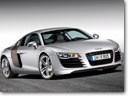 Ingolstadt – Effective immediately, the range of equipment available for the Audi R8 sports car now also includes the first full-LED headlamp. In addition to the daytime running light which now features 24 LEDs per headlamp, light-emitting diodes are also used for the turn signals, the low-beam and the high-beam headlights. The €3,590 option rounds out the list of equipment available for the high-tech, mid-engine sports car. (more…)
-
VW Passat 3.6 L
The Volkswagen Passat, the mid-sized car that forever changed the attitude of owning a “grown up” family sedan and wagon, is ready to take this popular segment to greater heights and was unveiled at one of metro Detroit‘s premier automotive events during a press conference on August 2, 2005 at Meadow Brook Mansion.
For the first time ever, Volkswagen has chosen the burgeoning Meadow Brook Concours d’ Elegance, which has emerged as one of the most renowned automotive events in the world, to take the wraps off its most powerful Passat ever, the 280-horsepower 2006 VW Passat 3.6L—an all-new car that arrives at U.S. dealerships in two months. For car enthusiasts and admirers of renowned engine designs, the 3.6L marks the return of VW’s groundbreaking narrow-angle six cylinder powerplant – with a significant growth in displacement, brawn and refinement – to the Passat model line up (this historic engine is known as the VR6).
This new Passat will be among the most powerful front-drive, family midsize cars ever offered, with the refinement, safety and speed of a true Autobahn bred sedan. The V6 offers a nearly class-leading power-to-weight ratio that allows this family hauler to propel from 0-60 mph in just 6.6 seconds.
Prior to the launch of this new top-of-the-line V6, Volkswagen will bring the 2006 VW Passat 3.6L model to the U.S. market beginning this month. This all-new sedan will represent the most, sophisticated and affordable German-built family midsize car on the market today, with the starting price at less than $23,000.
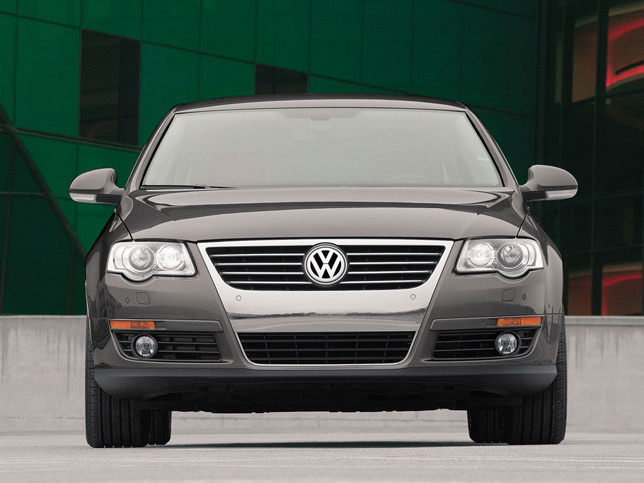
Significantly, the new Passat’s base engine is upgraded to a sophisticated new four-cylinder engine called the 2.0T. This two-liter is efficient and sporty and uses a turbocharger and an intercooler for cool, higher-density intake air. The 2.0T’s high-end breathing is further enhanced by its four-valves per cylinder. The engine’s overall efficiency begins with an advanced direct-injection fuel delivery system that culminates in 200 hp at 5,100 revolutions per minute, and 207 lbs.-ft. of torque all the way from 1,800 rpm to 5,000 rpm—an extraordinary torque curve that provides plenty of pulling power from the low end through the top.


Soon after the launch of this new 2.0T engine, Volkswagen’s renowned narrow-angle six-cylinder technology will make its return to the Passat line up. With the Passat’s return to a transverse engine mount, Volkswagen will re-introduce a very refined and powerful version of its famous narrow-angle V6 (widely called the VR6; this version’s cylinder bank’s create a “V” angle of just 10.6 ?). This newly advanced V6 engine has higher-displacement, four-valves-per-cylinder, and variable valve timing, and promises 280 hp at 6,200 rpm and 265 ft.-lbs, at just 2,750. Mated to this ultimate V6, as standard equipment, will be Volkswagen’s refined six-speed automotive transmission with Tiptronic™ and sport mode selection (no plans for a manual).
Later in the model year, Volkswagen will once again offer the Passat in a wagon version as well. Both the sedan and its variant will offer a 4Motion® (all-wheel-drive) version later in the 2006 model year. Models will therefore include in both body styles: a Passat “Value Edition” 2.0T; a Passat 2.0T; a Passat 3.6L and soon a 3.6L 4Motion.
The launch of the new Passat in the U.S. is no small event. When it arrived on North America’s shores back in 1997, the contemporary Volkswagen Passat sedan and wagon essentially started the transformation of the common family sized car market. The Passat proved that the inevitable midsize car could actually invigorate drivers and passengers alike. It not only offered great utility, value, safety and room but also dynamic European styling, innovative technology and a “real” German-bred driving experience.
Today, this same model is setting a new target for all those manufacturers who have played catch up to meet the new expectations of so many family car buyers. As expected in a modern Volkswagen, the all-new 2006 Passat has been stridently refined and moved closer than ever to perfection in its attention to detail, advanced technology, Teutonic driving qualities and uncompromising safety design and features.
Actually, this new 2006 Passat is the sixth all-new generation of Volkswagen’s midsize car line that can trace its roots back to the Dasher and Quantum of the 1970s and 80s. The outgoing generation that began with the 1998 model in the U.S. was the most successful of any Volkswagen midsize with sales in the U.S. averaging more than 75,000 a year (from 1998-2004).
While the dictum of form always follows function is an enduring foundation of Volkswagen design, the exterior and interior styling of the departing but contemporary Passat dazzled this sleepy market with its simple sporty European styling and a refined German driving experience. It was hailed universally as one of the most acclaimed and trendsetting in recent automotive history; and, if imitation is the best form of flattery, then the Passat ranks at the highest end of the admiration spectrum as well.
Fortunately, just as more and more automakers play follow-the-leader and begin perfecting their cloning, Volkswagen’s designers have breathed new passion and power into the look, ambience and spatial presence of an all-new 2006 Passat.
Overall, the sixth Passat is by far the most skillfully refined, secure and technically advanced of any iteration before it. Befitting this progressive target for the newest B class, Volkswagen’s designers harmoniously sculpted a car that is characterized with an almost avant-garde potency and class—one that is clearly muscular, but in a purposeful, sinewy way that commands respect but in no way demands it.
The new Passat goes proudly into the busy world of modern family life with a new medallion-shaped grille accented by brilliantly clear, clean, high-tech headlight housings that exude the precision engineering and advanced production of this new leader of the family class. Its eyes, the front lights, willingly challenge the road ahead, staring it down with the focus of a highly prepared athlete anxious for competition.
This confident stance is also seen in the new Passat’s silhouette – paralleling in a contemporary way its trendsetting predecessor – arching with functionality, beauty and a timeless tension that creates a visual balance when admiring eyes travel pleasantly from front to rear. At the car’s back, one can see a classic and dynamic Volkswagen design leap that harmoniously mixes sharply tailored rear lighting with an enduring sporty and functional overall design.
The new Passat’s pure exterior dimensions have broadened slightly to accommodate, partly, a more functional and ergonomic interior. The wheelbase lengthens slightly to a new 106.7 inches versus the previous 106.4. Overall length is more dramatic: now 188.2 inches versus 185.2 before. The body is wider as well (71.7 inches as opposed to 68.7). Stability in general should further be enhanced with a wider track Passat layout, both at the front and rear, which measures 61.1 inches (previously 59.6).
A clear indication of the new Passat’s quality foundation is its static torsion stiffness that is measured at a 57 percent higher level than its predecessor’s already solid static rigidity. Dynamically, the new Passat also improves on the Passat’s traditionally stiff driving tolerances that allow for a refined chassis and subsequent ability for engineers to dial in optimum suspension settings and improvements.
The Passat’s fundamentals are the tireless collaboration of designers, the R&D teams, engineers and production experts who have allowed for extremely innovative production methods, new techniques, and materials. This production process is a complex array of advances but the most dramatic contributor is achieved through the use of more high-strength, yet lighter materials throughout and an advanced, highly automated, laser-welding system that requires a battalion of new-generation robotics and elaborate laser-measuring check points. This results in a dramatic increase in laser welded seams, and also helps establish a significant breakthrough in weight barriers that allow for improvements in size, the aforementioned rigid integrity of the overall chassis, and the car’s new class-leading amenities.
Inside, a simple glance reveals another evolution in Volkswagen’s renowned interior design and simple but unrelenting attention to detail. Residing in a new Passat is again a unique and progressive automotive experience: whether at the wheel or residing in the front or rear, the occupants find a fresh, stylish, modern design that remains strikingly simple with use of top quality materials, attention to comfort, driving and details throughout all models, from the standard trim level that symbolizes Volkswagen’s commitment to value for the money, to the top-levels such as those found in numerous equipment options and stand-alone packages.
More exterior room for the new Passat certainly translates into more width and legroom, especially in the rear seating area, where it grows from 35.3 inches to 37.7”. New rear vents for the standard air conditioning and heater also provide more comfort at the car’s stern, and the trunk, which provides a 60/40 split folding seat if needed and pass through for much longer items, is 14.2 cubic feet of space that because of thoughtful overall design offers incredible utility with plenty of neatly unobstructed space. Overall, the new Passat provides 96.3 cubic feet of passenger volume (versus 95 cu.ft. in today’s version).
As one expects of Volkswagens, the new Passat embodies the German engineering mandate of building ever higher and higher levels of advanced occupant protection with each new generation of car. The previous Passat was proven to be among the safest vehicles on the roads of America, regardless of vehicle class or weight. In the most important “real world” study of its type, the highly regarded Insurance Institute for Highway Safety studied data from serious accidents and measured those with the lowest death rates (see IIHS “Status Report, March,” 2005). Among all passenger vehicles, the Passat attained the third lowest death rate. The only “car” ranked higher was the Mercedes E. The only truck, the Toyota 4Runner.The new 2006 Passat is now the newest example of this important Volkswagen reputation for safety, and brings true Autobahn-bred safety development and features to this family car segment by employing the most comprehensive standard list of advanced passive and active safety technology in its class. Safety is the tantamount function of all that is formed in the creation of a new Volkswagen, which is why the German automaker’s overriding philosophy is to bring the most sophisticated safety technology to the widest range of models when feasible.
Major standard safety items for the newest Volkswagen–many of which have been updated with the latest in technology but have been standard on Passats for several years—include eight total airbags, including front side thorax airbags, and Side Curtain Protection™ (head) in the front and rear.
A few of the most significant passive safety features now offer standard crash-active front headrests and crash-optimized foot pedals that descend upon serious impact. Daytime Running Lights (DRL), three-point safety belts, and adjustable headrests for all five occupants are also important holdover items to help in protection. And where details and precision positioning count the most, Volkswagen has made sure all outboard occupants are able to easily position their safety belts with shoulder height adjustments. Front belts use pre-tensioners with load limiters, and all safety belts use emergency locking retractors. Rear side thorax airbags are optional for the first time ever in a Passat, and if chosen, will supplement the standard head curtain protection system.
As expected in a Passat, active safety is also tantamount to the development of Volkswagens and the 2006 Passat is no exception and is arguably among the leaders in its segments in offering a list of performance items that can help avoid accidents in the first place, including the stability and surefootedness of a precise-handling front-drive sedan, with standard four-wheel disc ABS brakes that are coupled with a sophisticated Engine Braking Assist system. Another major technical advancement in the new Passat is a standard electro-mechanical power steering system that can help assist with straight-ahead driving adjustments when necessary—an example of this could be freeway driving through strong crosswinds. All Passats come standard with an Electronic Stabilization Program—an active safety item that is being recognized through independent research to be an increasing vital safety features—Anti-Slip Regulation (ASR) and Electronic Differential Locking (EDL). Of course later in the year 2006, all wheel drive comes with 4Motion.
The new Passat employs an advanced version of the tried-and-true independent McPherson strut architecture. The car’s strut-type axle creates a very desirable direct steering ratio; a high level of transversal axle rigidity and a low tendency to allow body roll on tight turns. The Passat’s precise handling is only one attribute of this front suspension; this design also helps enhance its ride through the optimization of the springs, the separate mounting of springs and dampers, improved mounting points for the lower wishbones, and the use of twin-sleeve shock absorbers. This, of course, offers less noise during varied driving conditions and surfaces.
At the rear, the new Passat is now equipped with an advanced multi-link independent rear suspension. This feature promises to help the Passat set a new standard in its market segment by providing an ideal balance of sporty driving dynamics and ride sophistication. This fully independent four-link suspension, with coil springs, telescopic shocks and stabilizer bar, also allowed the designers and engineers to create more utilitarian space and practicality including great width in the luggage compartment.
Handling performance is honed to perfection by a new electro-mechanical power rack-and-pinion steering system that offers an extremely good “center feel” and contributes significantly to the new car’s confident-feeling stability. Unlike some similar systems found on luxury cars, the new Passat’s function varies the steering assist based on the speed of the car and other driving factors. This gives the Passat driver a desirable connected-to-the-road feel but also provides the added capability of active-return steering and straight-ahead driving correction assistance.
As expected, Volkswagen is backing the new Passat with a comprehensive warranty that includes a bumper-to-bumper New Vehicle Limited Warranty for four years or 50,000 miles, whichever comes first, with wear-and-tear items and adjustments covered during the initial 12 months or 12,000 miles. Additional coverage is provided by 24-hour roadside assistance for four years with unlimited mileage, a five year/60,000-mile Powertrain Limited Warranty and a Limited Warranty against Corrosion Perforation for 12 years with unlimited mileage.


