Tag: Dakar

  • Porsche 911 Dakar

    Porsche is celebrating a very special world premiere at the Los Angeles Auto Show – the new Porsche 911 Dakar, which feels equally at home on loose surfaces as it does on country roads. The exclusive model limited to 2,500 units globally demonstrates that the concept of the Porsche 911 knows almost no boundaries. It harks back to the first overall Porsche victory at the 1984 Paris-Dakar Rally – which also represents the first use of the all-wheel drive system in a Porsche 911. To commemorate this achievement, the new 911 Dakar will be offered with an optional Rallye Design Package inspired by the iconic winning car of 1984.

    Standing tall, sliding sideways

    The first thing that immediately stands out on the Porsche 911 Dakar is its ride height: It is 50 millimeters higher than on a 911 Carrera model equipped with Sport Suspension. In addition to this, the standard lift system can raise the front and rear of the car by an additional 30 mm – achieving a level of ride height and ramp-over angles similar to conventional SUVs. The lift system is not only designed to help clear obstacles at low speeds, but is also an integral component of the newly calibrated suspension. The “High Level” setting is usable at up to approximately 105 mph for spirited off-road driving. Above this speed, the car returns to its normal ride height.

    Specially developed Pirelli Scorpion All Terrain Plus tires, measuring 245/45 ZR 19 in front and 295/40 ZR 20 at the rear complement the especially sporty off-road appearance of the new model. The off-road focused tread pattern has a depth of nine millimeters, the reinforced sidewalls and tread have dual carcasses, making them suitable for off-road excursions and more resistant to sidewall damage. Summer performance tires and snow tires from the Pirelli P Zero tire family are optionally available, and also feature dual carcass layers, but the new all-terrain tires are standard equipment.

    Powerful engine for all surfaces

    The 3.0-liter twin-turbo Boxer engine makes 473 hp and 420 lb.-ft. of torque and delivers commanding performance accompanied by the unmistakable Boxer engine sound. The new 911 Dakar accelerates from 0 to 60 mph in 3.2 seconds, the top track speed is limited to 150 mph due to the cross section height of the tires for this model.

    The engine is paired with an eight-speed-PDK and Porsche Traction Management (PTM) all-wheel drive. Rear-axle steering, engine mounts adopted from the 911 GT3 and the body roll reducing Porsche Dynamic Chassis Control (PDCC) system are also standard equipment. The interplay of all these components enables the 911 Dakar to tackle sand and loose gravel especially well. Two new drive modes – Rallye Mode and Off-Road Mode – offer the excellent off-road performance that can be activated using the mode switch on the steering wheel. Rallye Mode is programmed for loose, uneven surfaces and biases power to the rear axle. In Off-Road Mode, which is focused on maximizing traction on sand and in rough terrain, the “High Level” ride height is automatically engaged. A new Rallye Launch Control mode was developed specially for this model and is available in both model-specific drive modes. It enables impressive acceleration on loose surfaces and allows wheel spin of up to 20 percent.

    Optional roof basket and tent

    The 911 Dakar also features a fixed rear spoiler, and a hood made of CFRP, of which the latter is taken from the 911 GT3, with large openings designed to extract air. Red front and rear tow hooks made of forged aluminum, flared fender arches and rocker panels contribute to the off-road appearance as do stainless steel body elements on the front and rear fascia and side skirts. The side air intakes in the newly designed front fascia also have stainless steel mesh grilles to rocks and other damaging objects from entering.

    The roof of the 911 Dakar is equipped with a 12-volt-socket for the headlights of the optional roof basket. It can hold up to 92 lbs. of equipment such as spare gas and water canisters, folding shovels and recovery boards. A roof tent is available for the 911 Dakar as well.

    The interior of the 911 Dakar underscores the performance-oriented nature of the car with standard Full Bucket Seats and deleted rear seats. Lightweight glass also helps save mass so that the 911 Dakar has a curb weight of 3,552 lbs. – just 16 lbs. more than a 911 Carrera 4 GTS with PDK.

    Another Dakar-specific detail is the standard Race-Tex upholstery with decorative stitching in Shade Green, which is exclusive to the 911 Dakar as an exterior paint color.

    Rallye Design Package harks back to Dakar winner of 1984

    The optional Rallye Design Package starts with a two-tone paint consisting of White and Gentian Blue Metallic. This also represents the first time that Porsche is combining a two-tone paint color with decorative livery. Customers can opt for a start number on the side of the car between “0” and “999.” Customers of the 911 Dakar can order an exclusive Porsche Design Chronograph 1 ‒ 911 Dakar or the Chronograph 1 ‒ 911 Dakar Rallye Design Edition. For the first time, the housing is made of particularly light and scratch resistant titanium carbide.

    The Porsche 911 Dakar is expected to begin arriving in U.S. dealers in Spring 2023, with a starting MSRP of $222,000 excluding $1,450 for delivery, processing and handling.

  • Prodrive Hunter – the world’s first all-terrain hypercar

    2023 Prodrive Hunter

    Prodrive has revealed the Hunter, a 600 bhp, four-wheel drive all-terrain adventure vehicle with an unrivalled ability and performance across any landscape.

    Born out of the Bahrain Raid Xtreme competition car driven by nine-time World Champion, Sebastien Loeb, to compete on the toughest motorsport race in the world the Dakar, it thrives in desert sand, dunes and rough mountain tracks. Indeed, this Hunter is even more extreme than that driven by Loeb, with a 50% increase in power from the 3.5 litre V6 twin turbo engine and more suspension travel to absorb the harshest of terrain.

    But while the car is even faster and more capable than the race car, it is also more refined.  Ian Callum, who styled the exterior of the original competition car, has returned to the project to create a new interior more in keeping with every day use than racing. A digital display gives the driver all the important information they need, while the centre console houses the more traditional controls found on a road car.

    The Hunter is the product of over 40 years of successful off-road competition at Prodrive whose chairman, David Richards, said: “There are numerous hypercars on the market, however they all need good roads or even race tracks to show their performance. We identified that in certain parts of the world, particularly the Middle East, there are vast expanses still to be explored that go way beyond the access provided by asphalt roads. Therefore why not create a vehicle that gives the opportunity to explore these regions with performance way beyond that offered by any off-road vehicle before.”

    The Hunter retains the Dakar competition car’s engine, drivetrain and suspension, but to improve driveability, the manual sequential gear box has been replaced by a six-speed paddle shift, giving a smooth gear change in just milliseconds.

    As the hypercar does not have to comply with strict competition regulations power has been increased by more than 50%. The 3.5 litre twin turbo V6 has been refined and retuned on Prodrive’s advanced transient dyno in Banbury, UK to produce over 600 bhp and 700 Nm of torque while making its power delivery smoother and easier to drive.

    Prodrive estimates that this would give it a 0-100 kph time in less than four seconds and a top speed of nearly 300 kph, however the vehicle is fitted with bespoke 35” off-road tyres designed to optimise grip over rough terrain and sand rather than on tarmac.

    Richards said: “We took the deliberate decision to keep the Hunter Hypercar as close to the original as possible. It’s about giving owners the opportunity to experience what it is like to drive Loeb’s Dakar car across the desert, but with all the comforts of a road car and the ability to drive it from your home, through a city, to any destination of your choice.”

    The whole car is built around a high tensile steel space frame chassis, giving both a rigid platform to optimise the suspension geometry and performance and an FIA standard safety cage to protect the occupants.

    The all-round double wishbone suspension with twin adjustable dampers on each corner has 400mm of travel – an increase from 350mm on the competition car – to give a smoother ride and even greater ability to cross the roughest terrain at speeds unimaginable in any other vehicle. Six pot racing brake calipers and vented discs all round give it plenty of stopping power both on and off-road.

    The whole vehicle has been designed to minimise overall weight and optimise the weight distribution and centre of gravity. All the bodywork is made from lightweight carbon composite, which includes recycled materials produced by Prodrive Composites.

    Richards said: “The first development vehicle is currently touring the Middle East where  customers are being offered the opportunity of driving the Hunter and confirming their personal specification for production vehicles to be delivered later this year.”

    SPECIFICATION

    ENGINE

    • Front-mid 3.5 litre V6 twin turbo
    • Single plenum/throttle
    • Dry sump
    • Power over 600 bhp
    • Torque 700 Nm

    TRANSMISSION

    • 4 wheel drive
    • Six-speed paddle shift gearbox
    • Front, centre and rear differentials

    CHASSIS

    • High strength steel tubular structure
    • Carbon fibre composite bodywork including recycled materials

    SUSPENSION

    • Double wishbone
    • Two adjustable dampers per wheel

    INTERIOR

    • Carbon fibre seats
    • Six-point safety harness
    • Dual fire extinguisher system
    • Lightweight lithium-ion battery

    FUEL SYSTEM

    • 480 litre in safety cell

    BRAKES

    • Six pot calipers front & rear
    • Vented discs

    WHEEL & TYRES

    • 8.5J x 172 forged aluminium rims
    • 35/12.5-17 off road tyres

    PRICE

    • £1.25m plus local taxes
  • Jeep Teases Two Concepts Prepared For Moab Easter Jeep Safari

    2014-Moab-Easter-Jeep-Safari-Vehicle-THUMBThe latest news from Jeep includes two new teaser images of brand’s six future concept vehicles. In fact, to make them a reality, Jeep and Mopar have once again joined forces. Both models are specifically designed to participate in this year’s Easter Jeep Safari, taking place in Moab, Utah, between 12th and 20th of April.

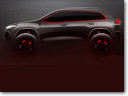
    The teased models are the Jeep Wrangler MOJO, which is presented in a colorful and playful orange exterior color, and the Jeep Cherokee Dakar that adds an ultimate style via red accents as well as sports-feel. It is also visible that the latter also has increased ride height and is equipped with off-road tyres.

    Easter Jeep Safari comprises of trail rides, day long trips, and those who depart from Moab Utah will compete throughout a 9 day long event. The event is hosted by the Red Rock 4-Wheelers Inc., which is one of the local four wheel drive clubs of Moab.

    Unfortunately, there is no additional information released up to date about these two, but Jeep promises to release more details as well as images next week. Stay tuned!

    Source: Jeep

  • Ford Ranger at the 2014 Dakar Rally

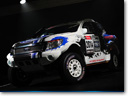
    Ford will participate in the 2014 Dakar, taking place from 5th to 18th January 2014 in South America. For the tough rally two Ford Rangers are built and prepared by Neil Woolridge Motorsport.

    The two T6 Ranger 4×4 Double Cab vehicles are powered by a 5.0 liter V8 engines with 349HP (260 kW) at 4,500RPM and 560Nm (413 lb-ft) of torque at 4,100RPM. The engine is mated to a Sadev 6-speed sequential gearbox linked to a permanent four-wheel drive setup. The fuel consumption is between 28 liters / 100 km and 90 liters / 100 km, when driving in sandy racing conditions.

    These custom Rangers benefit from an independent front/rear suspension, front/rear antiroll bar and ride on 16” Evocorse wheels shod in 245/85 Michelin tires.

    The stopping power is provided by Brembo and feature front air-cooled and rear water-cooled brakes.

    The crub weight of 2014 Ford Ranger for Dakar is 1,975 kg (4,354 lb-ft).

    The first crew features Lucio Alvarez and Ronnie Graue, while in the second car will be driven by Chris Visser and Japie Badenhorst.

    The 2014 Dakar Rally Route is sure to be as trying as ever. The event will start in Rosario, Argentina on January 5 and finish in Valparaiso, Chile on January 18 after thirteen stages of competition, which will comprise a total distance of over 8,500 kilometres.

    Ford Ranger Technical Specs:

    Base Vehicle
    Regulations
    Engine
    Engine Management
    Power
    Torque
    Rev limit:
    Fuel consumption (L/100 km):
    Body
    Suspension

    Brakes

    Fuel Cell
    Gearbox
    Cabin
    Differential
    Steering
    Internal Electronics
    Driveline
    Drive wheels:
    Top speed:
    Mass:

    T6 Ford Ranger 4×4 Double Cab
    FIA / ASO T1
    Ford Aluminum 5.0L-4V V8 with Twin Independent Variable Cam Timing
    Magneti Marelli
    260kW@ 4500r/min
    560nm@ 4100r/min
    5500rpm
    90L / 100km in sandy racing conditions and 28L / 100km on normal road driving
    Full Composite
    Independent Front and Rear
    Twin BOS Dampers/Wheel
    Antiroll Bar Front and Rear
    Brembo Water Cooled Rear
    Brembo Air Cooled Front
    500L
    Sadev 6 Speed Sequential, permanente 4 wheel drive
    Air conditioned
    LSD Unit Front and Rear
    Sadev
    GEMS
    GKN
    16 inch Evocorse rims fitted with 245/85 – 16 Michelin tyres
    170km/h
    1975kg

    Source: Ford

  • Danger of the Desert

    As the unpredictable and often dangerous weather of the Dakar Rally once again reared its ugly head, it didn’t halt the fantastic progress of Team KTM’s bikes.

    The hazardous weather conditions struck stage eleven of Dakar 2013, causing the stage to end early for both the trucks and cars. This news dealt a bitter blow to Toyota duo Giniel De Villiers and Dirk Von Zitzewitz, as they had developed an impressive lead before the stage met an abrupt end.

    When asked about the subject, a frustrates De Villiers said;

    “The decision to take the times at CP1 does not go in our favour but that’s how it is so we’ll have to try again. Everything is feeling really good with the car, I’m happy with how I’m driving and Dirk is find us the right way to go. Today we had the chance to cut about 15 minutes off the gap between us and race leader Stephane (Peterhansel) and that would have increased the pressure on him.”

    The decision to halt the stage also had a negative effect on the overall leaderboard, with Team Kamaz also being affected.

    The trio of Eduard Nikolaev, Ayrat Mardeev and Andrey Karginov were making waves throughout and were setting a good time, that was until the stage was annulled.

    Nikolaev vented his frustration by saying;

    “I’m sad that another stage at this Dakar has been cancelled because I come to race. Also at this Dakar the stages are very short so to lose another stage makes the distance we race even smaller. It seems that every year the race gets shorter and shorter and that is not something we are pleased about.”

    The bike race didn’t suffer the same problems however, as Team KTM took advantage of stage eleven going ahead as planned, with the route between La Rioja and Fiambala giving debutant Kurt Caselli his second stage victory.

    “Today is another stage win for the team and that’s always good. Things are looking better for the team then they were in the first week of the race. The start of the race was a little dodgy for us but things are starting to smooth out and we’re all feeling better.”

    The victory wasn’t just a boost for Caselli, but it allowed team-mate and overall leader Cyril Depres the chance to increase his lead and the gap at the top of the leaderboard.

    Caselli’s victory made Depres extremely happy, who said;

    “The stage was going okay for me but then for the final 60km I got a boost because my new team-mate Kurt Caselli picked up the pace. He was pushing like he does in his Baja races and thanks to him I was able to try and catch his rhythm. It was really helpful for me to ride with him because he really picked things up. The rhythm we had was not really the right way to ride when you are leading a race but it felt good so I went for it.”