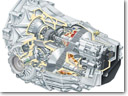
 Today we have a new type of transmission to consider and it is called a continuously variable transmission (CVT). A CVT is a type of automatic transmission but it operates very differently than older automatics. CVTs provide more useable power, better fuel economy and smoother driving than traditional automatic transmissions. CVTs have been around for years in motorized applications such as snowmobiles and off-road recreational vehicles, but just started to be used in regular automobiles a decade or so ago.Conventional automatic transmissions use sets of gears inside that provide different ratios or speeds. Control units sense speeds and shift a transmission’s gears automatically to provide the most appropriate ratio for a given driving situation: lowest gears for low speeds, middle gears for acceleration and passing, and higher gears for efficient cruising. This is visually indicated in most vehicles with a selector display (P-R-N-D-L).A CVT replaces the complex gears sets common in standard transmissions with two variable-diameter pulleys, each shaped like a pair of opposing cones, with a metal belt running between them. One pulley is connected to the engine, the other to the drive wheels. The way it works is that during operation the pulleys move in and out such that a drive belt between moves higher on one pulley, lower on the other. You can picture this roughly as the way a 10-speed bike works, by routing the chain over smaller or larger gears to change the gear ratios.The controls for a CVT-based car are the same as an automatic-based car: Two pedals (gas and brake) and a P-R-N-D-L-style shift pattern. When driving a car with a CVT, you won’t hear or feel the transmission shift, though. It simply raises and lowers the engine speed as needed, calling up higher engine speeds (or RPMs) for better acceleration and lower RPMs for better fuel economy while cruising. Many people find that driving a CVT-based automobile is a little disconcerting because of the sound it makes. When you push hard on the accelerator, the engine races a bit as it would with a slipping clutch or a failing automatic transmission. This is normal, the CVT is simply adjusting itself to provide optimal power for acceleration.Engines do not develop constant power at all speeds; they have specific speeds where either torque, horsepower or fuel efficiency are at their optimum levels. Because a CVT can theoretically adjust to any gear ratio, engineers can program it to give maximum performance during all these situations. For example, when power is needed, or maximum fuel-economy is desired, a CVT can adjust to those conditions more accurately than a standard automatic transmission.The CVT’s biggest problem has been user acceptance. Because the CVT allows the engine to rotate at any speed, the noises coming from under the hood can sound odd to ears accustomed to conventional automatic transmissions. The gradual changes in engine note sound like something is “slipping”– signs of trouble with a conventional transmission, but perfectly normal for a CVT. Automakers have gone to great lengths to make the CVT feel more like a conventional transmission.Because early automotive CVTs were limited as to how much horsepower they could handle, there has been some concern about the long-term reliability of the CVT. This has not proven to be a problem, though. Advanced technology has made the CVT quite robust and reliable. Nissan has more than a million CVTs in service around the world and says their long-term reliability is comparable to conventional transmissions.The future of the CVT remains to be seen. In spite of the obvious efficiencies of CVTs, customers can be fickle and may prefer and older technology. We will likely see how CVT transmissions fare over the next few years or so.
Tag: CVT
-
All About Continuously Variable Transmissions
-
CVTs – The Perfect Transmission?
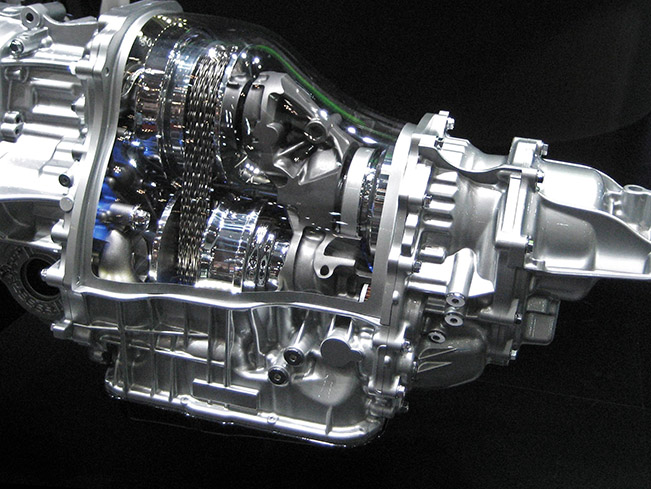
A continuously variable transmission (CVT) is a type of automatic transmission but operates very differently than older fluid-based automatics. CVTs are mechanically-based transmissions and provide more useable power, better fuel economy and smoother driving than traditional automatics. It should be noted that CVTs have been around for years in other motorized applications. Vehicles such as snowmobiles and some off-road recreational vehicles have utilized CVTs for decades. Only just recently has the technology seen mainstream automotive use.How they work
Conventional automatic transmissions have sets of gears inside their housings that provide different gear ratios or speeds. Control units sense a vehicle’s speed and other parameters and use that information to shift the transmission’s gears. The user just puts the transmission in the appropriate mode with the gear selector switch (P-R-N-D-L). A CVT uses a similar selector switch but replaces the complex gears sets common in automatic transmissions with two simple variable-diameter pulleys, each shaped like a pair of opposing cones, with a metal belt running between them. The way it works is that during operation the pulleys move in and out such that a drive belt between moves higher on one pulley, lower on the other and this provides a numerical gear reduction. You can picture this roughly as the way a 10-speed bike works, by routing the chain over smaller or larger gears to change the gear ratios. The gearing effect with a CVT is essentially “continuous”, hence the nomenclature.
What they are like to drive
The controls for a CVT-based car are the same as an automatic-based car: Two pedals (gas and brake) and a P-R-N-D-L-style shift pattern. When driving a car with a CVT, you won’t hear or feel the transmission shift, though. It simply raises and lowers the engine speed as needed, calling up higher engine speeds (or RPMs) for better acceleration and lower RPMs for better fuel economy while cruising. Some people find that driving a CVT-based automobile is a little disconcerting because they sound different when being driven.
Advantages of CVTs
Internal combustion engines do not develop constant power at all speeds; they have specific speeds where either torque, horsepower, or fuel efficiency are at their optimum levels. Because a CVT can theoretically adjust to any gear ratio, engineers can program them to give maximum performance in all these situations.
Disadvantages of CVTs
The CVT’s biggest problem has been user acceptance. Because the CVT allows the engine to rotate at any speed, the noises coming from under the hood can sound odd to ears accustomed to conventional automatic transmissions. Automakers have gone to great lengths to make the CVT feel more like a conventional transmission. For example, many CVTs are now programmed to simulate the “kick-down” feel of a regular automatic when the pedal is floored.
Reliability of CVTs
Because early automotive CVTs were limited as to how much horsepower they could handle, there has been some concern about the long-term reliability of the CVT. This has not proven to be a problem, though. Advanced technology has made the CVT quite robust and reliable. Nissan has more than a million CVTs in service around the world and says their long-term reliability is comparable to conventional transmissions.
The future of the CVT remains to be seen. In spite of the obvious efficiencies of CVTs, customers can be fickle and may prefer and older technology. Give it a few more years and we should know how user acceptance plays a role in the adoption in CVT technology.
Source: Team Nissan North
-
Subaru Legacy and Outback – Facelifted and Updated
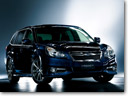 Subaru are letting loose the latest Legacy and Outback models: For Japan, that means not mere MY releases but proper revisions – minor facelifting, chassis and body changes and new engines. The company likes to sum up their actions by using “concepts” which can be articulated in simple phrases. This one is called an “All Performance Enhancement” – the focus falls on fuel efficiency, driveablity and safety.
One of the two new engines (both of them are flat) is an improved version of the familiar, naturally aspirated 2.5-liter one. The Legacies and Outbacks designated with 2.5i usually develop 168 hp and 229 Nm of torque. Now, low to mid speed torque comes even easier. That on the other hand, called for a better CVT so a new Lineatronic transmission was also introduced. It improves fuel-efficiency and tackles the incoming torque more smoothly. Further improvement on the frugality is courtesy to the Impreza derived auto start/stop system.
The Legacy gets a new bumper and revised headlights plus grille thus making it look more wide and sharp. The Outback receives also gets similar optics in its own way. A way that is supposed to convey the image of a flagship SUV. Both of the cars get a 3.5-inch color LCD display at the center of the speedometer. There, the driver can monitor the fuel consumption and the operational situation of the “EyeSight” feature (the camera at the front that monitors the road for obstacles and eventual collisions). Convenient and safe stuff.
What one probably won’t notice is the enhanced rigidity of the Legacy’s body and chassis. By adding a support sub frame at the back and tweaking the spring settings on both ends, one gets a comfortable ride with superior on-the-road stability.

Subaru Outback 2.5 EyeSight (2013) 


The other engine goes on the Legacy (wagon or sedan) and the designation will be 2.0GT DIT – Direct Injection Turbo that is. With 2.0-liters of displacement, DOHC and 16 valves, this is a new breed of engines that will hopefully sperad out. By injecting fuel directly into the cylinders, Subaru have made it possible to up the efficiency by 20%. The bore/stroke inside the pots is equally proportioned – 86mm x 86mm. That’s what’s known as a square engine which is ideal for direct fuel injecting. The twin scroll type turbocharger is said to be lively on low speeds and to have helped in extracting 300 hp and 400 Nm of torque.
Add to that the same Lineartronic transmission mentioned above and you get yourself a perfectly decent family car that’s capable of putting a smile on your face trough lively response. What makes it so suitable for a family car – it’s stability, safety and refinement – 18-inch aluminum wheels as standard, minimized vehicle sway and an enlarged stabilizer diameter which in turn offers great stability when changing lanes and cornering.

Subaru Legacy Touring wagon (2013) 
Subaru Legacy B4 


Source: Subaru
-
2013 Acura ILX Base Price: $25,900
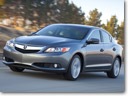 The 2013 Acura ILX will hit the showrooms in May 22 with a manufacturer’s suggested retail price starting at $25,900. It sounds like a bargain and with three engine setups and two optional packages available there seems to be a great deal of flexibility as well
This 5-passenger, “windswept” saloon will offer a number of new and classy features such as Keyless Access System with smart entry and a start button. The Pandora internet radio is also an option and so is the SMS text message function. As standard equipment, the ILX comes with a power “moonroof”, aluminum wheels and Bluetooh HandsFreeLink.
The base model, the one that costs $25,900 gets 150 hp of power from a 2.0-liter inline 4-cylinder engine. Add to that a Sequential SportShift 5-speed automatic and you have e perfectly decent saloon. Those who think otherwise can then go for the 2.4-liter version ($29,200 with the Premium Package) – 201 hp and a close-ratio, six-speed manual transmission.
For the first time on an ILX, there’s a petrol hybrid alternative as well. Starting at $28,900, the Acura ILX Hybrid uses a 1.5 liter engine and an Integrated Motor Assist electric unit. The power goest trough a Continously Variable Transmission (CVT). As expected, this is the most economical of the bunch with an EPE estimated city/highway/combined fuel economy of 39/38/38 mpg. (strangely constant no matter the environment).
Regardless of trim or setup, the Acura ILX gets front, side and side-curtain airbags, 4-channel anti-lock brakes and Vehicle Stability Assist™ (VSA®). It’s worth noting that the car’s body features the company’s Advanced Compatibility Engineering™ (ACE™) structure so it should do well on carsh tests.
The Premium Package is the mid-range stuff ($3,300, not available on the Hybrid) – leather seating surfaces, heated front seats, a power driver’s seat, an upgraded 360 watt stereo system with XM® radio, HID headlights, foglights, 17-inch aluminium wheels, a multi-view rearview camera and an Active Sound Cancellation for a reduced cabin noise.
The Technology Package is an extension of the Premium one which adds an ELS Surround audio system, AccuraLink Satellite Communication System, a sat nav and all kinds of technology bits that sound too complicated for a mortal to understand them.
The company’s state-of-the-art plant at Greensburg, Indiana will have the noble task to assemble the 2013 Acura ILX. It’s an award winning establishment, being one of three plants in the world honored with a J.D Power and Associates’ 2011 Platinum Award for outstanding product quality. Well done!

Acura ILX (2013) Here’s a quick list of all the setups and prices:
TRIM MSRP* EPA** ILX $25,900 24/35/28 ILX with Premium Package $29,200 24/35/28 ILX with Technology Package $31,400 24/35/28 ILX 2.4 L with Premium Package $29,200 22/31/25 ILX Hybrid $28,900 39/38/38 ILX Hybrid with Technology Package $34,400 39/38/38 Source: Acura
-
Subaru XV Crosstrek at New York
 Fuji Heavy Industries, or Subaru if you like, plan to introduce the XV, first seen at the 64th Frankfurt Motor Show back in September 2011, to the US market. It will be known as the XV Crosstrek and will have a specification made fit for the States.
Being a “compact SUV”, the Subaru XV Crosstrek is actually an elevated Impreza that will be the replacement of the current Subaru Outback. Supposedly, it has good ground clearance (8.7 inches of it), a comfy ride and a dynamic feel. For power, it used a 2.0 liter flat Boxer petrol engine that sends torque to all fours. And thanks to a Linetronic CVT transmission, Subaru claim that the XV can return 33 mpg on the highway.
In America, there will be two trim levels – Premium and Limited with the latter bringing advanced interactivity thanks to a 6.1-inch touch screen, multi-function navigation system.
The US debut will be made at the 2012 New York International Auto Show which is set to kick off on the sixth of April. Subaru’s press conference will be the day before at 9:55 am.

Subaru XV Crosstrek 

Source: Subaru
-
Subaru XV Price – from £21,295
 The Subaru XV is getting even more close to assuming the position of one of the most value-for-money crossovers in the world. The office in the UK has released a list of specifications, trimmings and prices with the lowest one starting at £21,295 for the 1.6i S model (the base one).
The XV boasts a considerable amount of occupant safety (especially for children) while remaining stylish and practical without an effort. Two very important highlights give it away that it is a Subaru: A Boxer engine and a Symmetrical AWD. In other words we have a great centre of gravity and a brain that ensures the best possible grip under a variety of conditions.
Power comes from three Euro 5 power plants – 1.6 and 2.0-litre petrol, and 2.0-litre diesel. The 1.6-litre and 2.0-litre petrol engines develop 114ps and 150ps respectively, while the 2.0-litre diesel produces 147ps and 350Nm. All those figures can go after that trough a six-speed manual or a CVT automatic gearbox, depending on customer choice
Null to sixty is done in 9.3 seconds with the 2.0 diesel. It gets even more impressive when we know that it offers a class-leading fuel economy of 50.4mpg on the combined cycle and emits 146g/km of CO2. The petrol units also go easy on the precious liquid as they benefit from Subaru’s Auto Start Stop System for non-diesels. Seamless cut out/kick off guaranteed.

Subaru XV (2012) The features which are included in the entry model, the S, are just mind boggling – ABS, traction control, Subaru Vehicle Dynamics Control (SVDC), front, side, curtain and knee airbags, 17-inch alloy wheels, daytime LED running lights and automatic air conditioning as standard. To step it up a notch, the SE adds cruise control, rear-view camera, Bluetooth functionality and USB/iPod connectivity to all the standard equipment while the SE Lux leather seats and satellite navigation, a start button, sunroof and keyless entry.
Source: Subaru
-
2013 Honda Accord Coupe Concept – NAIAS
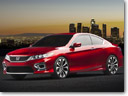 Honda has revealed the Accord Coupe Concept today at the North American International Auto Show. The new ninth-generation 2013 model is set to go on-sale this fall. It boasts cutting edge technologies combined with bold design and nice powerful engines.
“Marking the 30th anniversary of U.S. production, this new ninth-generation Accord will raise the bar again through a tour de force of new Honda powertrain and safety technologies, geared to ensure that Honda and the Accord continue to lead in fuel economy, safety and fun-to-drive performance,” commented John Mendel, executive vice president of sales for American Honda.
The engine range includes a new 2.4 liter Earth Dreams with 184PS (135 kW) and 240Nm (177 lb-ft). It is coupled with a 6-speed manual or a new Continuously Variable Transmission (CVT). There is also a hybrid model with a 163PS (120 kW) electric motor and a 2.0-liter four-cylinder Atkinson-cycle engine. Last, but not least, Accord can be power by a mighty 3.5-liter V6 with 314PS (231 kW) and 359Nm (265 lb-ft). It can be connected to a 6-speed manual or a new 6-speed automatic.
The new Accord will be available with Honda’s first application of Lane Departure Warning (LDW) and Forward Collision Warning (FCW) technology. Both systems use a camera mounted behind the windshield to alert drivers if the car is moving out of its lane or to warn drivers of a potential collision in front of them.
The standard equipment is amazing, but the most interesting features are the Bluetooth 3 HandsFreeLink phone interface, a full-color intelligent Multi-Information Display (i-MID) and an SMS text messaging function. Another standard feature and first for the Accord is the introduction of a Pandora Internet Radio interface4, compatible with the Apple iPhone, which works with the vehicle’s audio controls and i-MID.

2013 Honda Accord Coupe Concept 


Source: Honda
-
Nissan Cube Fresh in 2012 – Prices Announced
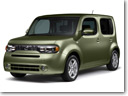 Nissan USA have now put a price tag on the funky 2012 Nissan Cube. Although it has been refined trough three generations, the Cube has preserved its lunacy with the vertically hinged hatch and asymmetrical, oddly pillared rear view window. And now there is a special 1.8 S Indigo edition on the market with added as standard the Nissan Satellite Navigation, a unique Black/Indigo cloth material for the seats, Nissan Intelligent Key® with Push Button Ignition, 15 inch split, six-spoke alloy wheels, a rear view camera and Rockford Fosgate sub woofer and amplifier and many more. New body colors are also available – Pearl White, Brilliant Silver, Gun Metallic, Cayenne Red and Bali Blue
Being based on Nissan’s B platform (Clio and Twingo among many others), the Cube gets its power from a 1.8-liter DOHC 4-cylinder engine which sends 122 hp trough an automatic Xtronic CVT gearbox. While the SL comes strictly with CVT, the S models have a 6-speed manual with CVT as an option. With the CVT the Cube is said to return 31mpg on a highway.

Nissan Cube (2011) 


The interior is as roomy as possible with seating for five – two at the front and three fully-adjustable seats at the back. Asymmetry continues inside with the Fine Vision gauges and the “Water Drop” motives.
Here is a quick price list on all trimmings and their possible transmission combinations:
Model/Transmission
cube 1.8 M/T $14,980 USD cube 1.8 S M/T $16,420 USD cube 1.8 S CVT $17,420 USD cube 1.8 SL CVT $18,520 USD Source: Nissan
-
2012 Toyota Yaris – 5 Star Euro NCAP rating
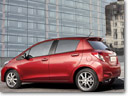 2012 Toyota Yaris has earned top five-star rating for all-round safety performance by passing through Euro NCAP independent crash testing. The small city car meets all high standards for the 2011 test programme and its were good enough to comply with the higher five-star threshold that will be introduced in 2012.
2012 Yaris comes with seven airbags as standard, including a driver’s knee airbag. The driver and front passenger side airbags have a new two-chamber design that improves protection with larger cushions – eight litres for the thorax/abdomen area and 4.5 litres for the pelvis.
There are also numerous features designed to reduce the risk of injuries to pedestrians. The front bumper contains energy absorbing materials that reduce the impact energy directed at a pedestrian’s legs, and a pantograph bonnet structure also absorbs energy to protect the head and body in a collision. There is a crushable cowl louvre at the rear edge of the bonnet, and the front wings have an impact absorbing brackets.
The small car also benefits from a comprehensive package of active safety systems, including ABS, Electronic Brakeforce Distribution, Corner Stability Control, Brake Assist, Traction Control and Vehicle Stability Control.
2012 Toyota Yaris is available with 1.0 and 1.33-litre petrol units and a 1.4-litre D-4D turbodiesel. It also can be opted with Multidrive S, Toyota’s latest continuously variable transmission (CVT), features a manual override, sequential seven-step mode that the driver can operate using either the gearshift lever or paddle shifts on the steering wheel.
The pricing starts at just £11 170.

2012 Toyota Yaris Price 


Source: Toyota
-
2011 Jeep Compass UK
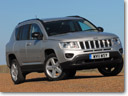 2011 Jeep Compass will hit the UK market on 15 April. It is priced at £16 995 for the entry version, but the price can go up to £23 995 for the top-of-range model.
Compass will be offered in either two or four-wheel drive version. This is the first SUV from the company, which will be available in two-wheel drive and it is specially aimed to the hatchback owners who want to trade up. These buyers don’t need four-wheel drive, but want the styling, image and practicality of a Sports Utility Vehicle (SUV). However, the 4×4 version will please the off-roaders with its improved quality of the interior and exterior inspired by Grand Cherokee.
There will be four trim levels, with 4×4 Limited and 70th Anniversary versions on sale this month. The entry-level Sport and Sport+ versions will join the range in August.
The engine range includes two petrol and one diesel. These have four power outputs and offer significantly improved performance and economy over the engines they replace.
The Limited and 70th Anniversary models will feature a chrome exhaust tailpipe and sit on new 18” alloys. The Sport and Sport+ come with smaller 17 inchers as standard.
2011 Compass comes with cruise control along with backlit switches for the door handles and locks, power mirrors and windows as standard. The safety is granted by active front headrests, and next-generation multi-stage front airbags with side curtain front and rear airbags as standard.
The automatic climate control is also standard, except the Sport which features manual air-conditioning. Front seat passengers sit in sumptuously padded bucket seats, covered in leather with accent stitching in the Limited and 70th Anniversary models, premium cloth in other versions. A six-way power adjustable driver’s seat and heated front seats are standard in the Limited and 70th Anniversary.
Sport and Sport+ models include a Media Centre CD player and MP3 compatibility, while the Limited and 70th Anniversary add a six CD system. All models have four speakers and an audio jack for connecting MP3 players. Owners of Sport+ models and above have a USB socket and can connect their mobile phones and use them handsfree with Uconnect Bluetooth.
The SAT NAV is available as an option on Limited and 70th Anniversary versions. It includes a 30GB HDD and a 6.5” touch screen.
The new 2.2-litre CRD turbo diesel engine has either 134BHP or 161BHP and 320Nm available from just 1400RPM.
The petrol engines are either 2.0 or 2.4-litres. Both feature dual Variable Valve Timing on the twin overhead camshafts. They deliver more power and offer better fuel economy and smoother, quieter operation.
The gearboxes are 5-speed manual for 2.0 litre petrol, 6-speed manual for the 2.2 diesel and the 2.4 litre petrol is available with the CVT2 Continuously Variable Transmission.
Jeep vehicles were first produced in 1941 and they become legendary with their capability.
2011 Jeep Compass is not an exception!


Source: Jeep
-
SUBARU HYBRID TOURER CONCEPT realistic images
 Just two weeks ahead of the 41st Tokyo Motor Show 2009, Subaru draws our attention once again with more realistic images of its new and exclusive SUBARU HYBRID TOURER CONCEPT. The new renderings reveals Subaru’s masterpiece interior to the full. (more…)
-
2010 Nissan Altima gets new look and features
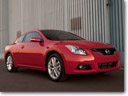 The new Nissan Altima will be available at the market in October 5th with updated exterior, refined interior and will include some advanced technologies. There will be three different models – Altima Sedan, Altima Coupe and Altima Hybrid. (more…)


