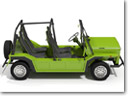
Tag: classic

  • Porsche 911 Sport Classic: back to the future

    2023 Porsche 911 Sport Classic - Front Angle View

    2023 Porsche 911 Sport Classic is the second of four collector’s items that Porsche has presented from its Heritage Design strategy. A total of 1,250 examples of the limited-edition model by Porsche Exclusive Manufaktur will revive the style of the 1960s and early 1970s. Like its immediate predecessor, the 997-based 911 Sport Classic presented in 2009, the appearance of this model is inspired by the original 911 (1964 – 1973) and in particular the 1972 911 Carrera RS 2.7. The 911 Sport Classic can be ordered now, with prices starting from 272,714 euros.  Delivery will be available from European Porsche Centres from July 2022 onwards and additional markets will follow.

    “The Heritage Design models represent the more emotionally driven concepts of the Porsche product strategy,” says Alexander Fabig, Head of Customisation and Classic. “This unique approach sees the Style Porsche design department working with Porsche Exclusive Manufaktur to reinterpret iconic 911 models and equipment from the 1950s through to the 1980s and to revive design features from those decades.” Porsche is launching four limited-edition models over an extended period. The first of these was presented in 2020: the 911 Targa 4S Heritage Design Edition with design elements from the 1950s and 1960s.

    Porsche Design has also created a high-quality chronograph exclusively available to drivers who purchase the collector’s edition vehicle. The watch seamlessly picks up on numerous details from the new 911 Sport Classic design. As part of the Heritage Design Classic package, selected interior elements of the new 911 Sport Classic will also be available for most current 911 models.

    Reinterpreting historical design elements

    The wide body – otherwise reserved for the 911 Turbo models – a fixed rear spoiler in the style of the legendary ‘ducktail’ Carrera RS 2.7 and the double-bubble roof underscore the distinctiveness of the new 911 Sport Classic.

    As with the first 997-generation 911 Sport Classic launched in 2009, the designers were inspired by the Fashion Grey paintwork of the early Porsche 356 when choosing the exclusive paint finish for the new limited-edition model. “The new 911 Sport Classic is the first vehicle to feature Sport Grey Metallic paintwork,” says Michael Mauer, Vice President Style Porsche. “Grey is never boring, quite often a statement and always cool.” As an alternative to the exclusive Sport Grey Metallic finish, the new 911 Sport Classic is also available in solid Black, Agate Grey Metallic or Gentian Blue Metallic. Twin stripes painted on the bonnet, roof and rear spoiler in light Sports Grey emphasise the car’s sporty design.

    In the interior, the iconic Pepita houndstooth pattern can be found on the door panels and seat centres, while two-tone, semi-aniline leather upholstery in Black/Classic Cognac provides an elegant contrast with the exterior colour.

    550 PS for the most powerful manual 911 available today

    The powertrain concept is equally unique: the 3.7-litre, twin-turbo flat-six engine transmits its 405 kW (550 PS) to the road via the rear wheels only. In combination with the seven-speed manual gearbox, the new 911 Sport Classic is the most powerful manual 911 available today.

    The gearbox has an auto-blip function that compensates for engine-speed differences between the gears with a brief burst of revs when shifting down. The standard sports exhaust system is specially tailored to the model for an even more emotive sound experience.

    The suspension, based on that of the 911 Turbo and 911 GTS models, meets high performance requirements: thanks to the standard Porsche Active Suspension Management (PASM), its shock absorbers respond to dynamic changes at lightning speed. PASM is combined as standard with the sports suspension, which features a 10-millimetre-lower ride height.

    Source: Porsche


  • The Porsche 911 Classic Club Coupe

    2022 Porsche 911 Classic Club Coupe - Front Angle

    Introducing the Porsche 911 Classic Club Coupe, a one-of-one restoration project completed by Porsche Classic in collaboration with the Porsche Club of America (PCA). That this is a unique car will not surprise anyone who sees it, but a “No. 001/001” badge on the dashboard underscores its scarcity. A ducktail spoiler reminiscent of the 1972 911 Carrera RS 2.7, a double-bubble roof, 18-inch forged aluminum Fuchs wheels and unique paint combine to create a striking resemblance to the Type 997 911 Sport Classic. Those looks are only part of the story.

    “We wanted to take a different route – to base this unique project on a car less obvious – a modern classic – that would appeal to a slightly different group of enthusiasts,” said Tom Gorsuch, President of the Porsche Club of America (PCA). “The fact that the finished Porsche 911 Classic Club Coupe looks so cohesive, with the changes appearing so natural, is what’s really incredible about this challenging project.”

    Based on a 1998 911 Carrera, the chassis, brakes and engine in this sports car are both taken from the 996.2 911 GT3, the first such model homologated for sale in the U.S. Accordingly, the naturally aspirated 3.6-liter flat-six generates 381 horsepower. The donor car, which PCA Executive Director Vu Nguyen found in a state of neglect in Colombia, Virginia, traveled to the Porsche Classic workshop near the main plant in Stuttgart-Zuffenhausen where it was originally built. There, it went through a complete restoration including total disassembly, and strengthening of the body-in-white using both original and newly developed parts.

    “The Type 996 is unjustly overshadowed by the other 911 ranges. That’s why we were happy to choose it as the basis for demonstrating all the things we can do with Porsche Classic and the recently expanded Sonderwunsch program of Porsche AG,” says Alexander Fabig, Head of Individualization and Classic. “In 2009, the 911 Sport Classic, a limited series of 250, had already generated worldwide interest. However, this special model was not sold in the U.S. With this one-off, we’ve now managed to bring a similarly exciting vehicle concept to the U.S. as well.”

    Exterior

    Styling and design plans were finalized in parallel with the restoration process to keep the project on schedule. Input from the PCA and Porsche Classic in both Germany and the United States gave direction to the final car.

    Experts from Porsche Individualization, Porsche Classic, and Style Porsche drew up proposals and regularly discussed them with the PCA over the course of the project, which took a total of two and a half years to complete.

    The result was given a sneak preview at The Amelia in March. Sport Grey Metallic paint including stripes in light Sport Grey Metallic with Club Blue outlines run the length of the hood, roof and spoiler to reference the Type 997 911 Sport Classic. Accents in light Sport Grey along the sides of the car also feature “Classic Club Coupe” script with an accent line in Club Blue.

    The double-dome roof is also a detail with a motorsport connection. Tall racing drivers used to bulge the roofs to make enough headroom for wearing a helmet – the modern roof design alludes to this. The Style Porsche design concept 911 Panamericana from 1989, the Carrera GT and the 911 Sport Classic also had a roof shaped like this. Today, the double-dome roof is a classic design feature of many limited series from Porsche Exclusive Manufaktur and the 911 GT models. The fixed rear spoiler made of glass-fiber-reinforced plastic takes the shape of the legendary “ducktail” of the 911 RS 2.7 from 1972. The third brake light is built into it. The model designation “Classic Club Coupe” appears in the middle between the tail lights.

    In tandem with the roof design and spoiler – both hand-built for the project – the paint scheme creates a unique appearance rooted in Porsche heritage. In particular, the roof is a reference to the past when race drivers would dome the roof of their car to accommodate additional headroom for helmets.

    Interior

    It might seem difficult to find a more extensive example of what is possible through the Sonderwunsch program until viewing the Classic Club Coupe interior.

    Custom door sill plates call out the model name, while the interior, primarily upholstered in black leather with Slate Grey accents and a perforated Alcantara headliner. Most notably, the seat centers and door panels feature woven black and grey leather in a twill Pepita pattern. Club Blue stitching decorates much of the interior including the steering wheel and “911 Classic Club Coupe” embroidery on the headrests. That logo is also visible in the tachometer, flanked by two grey stripes and lines in Club Blue. Finally, the Classic Club Coupe is equipped with Porsche Classic Communication Management Plus, which offers modern infotainment conveniences including Apple CarPlay and Google® Android Auto as well as preparation for Sirius XM. By special request, the start screen on this model shows “Classic Club Coupe.”

    Bringing such an extensive project to life also required support from many parts of the company. The most intensive adaptation work took place on the special features of the 911 Classic Club Coupe: the double-bubble roof and the fixed rear spoiler. This meant the part of the body between the rear window and ducktail had to be handmade. The biggest challenge in the interior, on the other hand, was to match new materials with the geometry of the Type 996 interior.

    The technical modifications to the 911 Classic Club Coupe were evaluated by a team of experts from Porsche Individualization and Classic, Porsche Cars North America and the Porsche Development Center in Weissach to make sure the vehicle remained in compliance with applicable U.S. regulations.

    Vehicle dynamics validation testing also factored into the process. Standing in for the valuable one-off, a test vehicle went through extensive trial runs at test sites including Weissach in Germany, Nardò in Italy and Idiada in Spain. These included endurance runs at top speed and wind tunnel testing. However, once the verification program was completed, the test vehicle was dismantled – ensuring the final product is truly a one-off. The overall vehicle was approved after a road test by the Porsche Development Centre in Weissach.

  • So, why classic cars are so awesome and why everyone is in love with them?

    How classic cars are breaking the mould

    The traditional stereotype of classic cars owners is that they tend to be staid, sensible chaps around retirement age in flat caps and anoraks.

    Like all stereotypes, that is a somewhat reductive view that doesn’t reflect the true diversity of the half a million (and counting) classic car owners in the UK. Indeed, it’s becoming even more inaccurate, as the demographics of classic car ownership are currently in a state of flux, with younger owners and increasing numbers of women looking to old cars as an alternative to the identikit nature of modern vehicles.

    It’s all about love

    “What’s happening is that people can lease cars so cheaply now that people are now buying classic cars to keep ad infinitum,” Paul Michaels, chairman and owner of Hexagon Classics explained.

    “A lot of people buy a classic car because they want them to become a member of the family. Modern cars don’t, because modern cars don’t have a personality. They’re all electronic and lacking in any kind of feeling.”

    In a mass-market consumer society, where the proliferation of chain stores make high streets almost homogeneous, many consumers are looking for something different, something that they think says something about them as individuals, with their own sense of individuality and taste.

    “You take an old car anywhere these days and you get noticed. If you’re at a roundabout, people let you out: if you’re in a modern car, they don’t want to know,” Michaels explained.

    “And without a doubt there are more women buying classic cars. In the last couple of weeks we’ve sold a couple of Porsches to women buyers. One was a well-known actress who said that she’s just fed up with modern cars. She wanted something that, when she turns up in it, people look and think, ‘Ooh look: she’s got taste’.”

    Out with the new, in with the old

    Younger buyers are also changing the classic car market, this new generation choosing different models to the conventional favourites from the 1950s and 60s, instead being influenced by the cars that they lusted after in their formative years.

    “There are always trends, but what tends to happen is that people go for the cars they wanted when they were young – what was on the posters on their walls in their teenage years,” added Michaels.

    Matthieu Lamoure, managing director of the Artcurial Motorcars auction house has a similar theory: “The market is a question of generation. You want to own the car that was a dream for you when you were a child.”

    So the values of 80s and 90s cars – especially those with a motorsport heritage, such as the Lancia Delta Integrale, Subaru Impreza Turbo, Ford RS models and Honda Integra Type-R – are rising as the teens of the era start to earn enough money to invest in a classic.

    SEE ALSO: Hamman’s monster is still receiving applause. Here’s why!

    “The average age of the customer base is falling year by year, which is a lot to do with the kinds of people who are getting richer – younger people making money in IT, for example. So it’s inevitable that you get younger people with money. So customers are much more in their late 30s and early 40s, whereas 10 years ago they would have been late 50s and early 60s. We recently sold a car to a guy in his late 30s and it was a £250,000 car,” explained Michaels.

    It’s not just cars with six-figure sticker prices that are proving attractive to a new generation of car buyers, however.

    Get the classic look

    Michaels said: “At the lower end of the market, if you go for a Morris Minor Convertible – which, for a beautiful one you can pay £7,000 or £8,000 – you can turn up anywhere and people will be looking at you.”

    But ultimately, however the demographics of buyers change, one of the enduring attractions of ownership of a classic car is that it is an appreciating asset that you can enjoy using – but you have to do your sums first, as Michaels makes clear.

    “If you spend £20,000 on a classic car – it doesn’t matter what it is – it will probably cost you around £1,500 a year to run it, including taxing and insuring it. But it will probably increase in value by about £1,000 a year, so you’re always in negative position.

    “But if you buy a car for £100,000, it will cost you very little more to run, but the chances are that the car will appreciate by about £10,000 a year, so you’re immediately in positive territory.”

    Plus, it might not need an MOT, and owning a classic could mean you’re eligible for classic car insurance instead of a standard policy. The way the value of the car is determined is different, so you might get better value.

    Modern cars are only going to become less characterful to drive over the next decade, as self-driving features start to take hold, making classic cars an even more attractive proposition to those drivers who are looking for something different.

    It looks like that staid stereotype may become a thing of the past sooner than we think after all!

    “There is a unique feeling that you get when you own a classic car let alone restoring one back to its original beauty. Aside from that, classic cars are timeless art pieces especially the luxury ones that’s why more and more people are drawn towards them.” ~ Corey of Corey Buys Classic Cars

  • The Well-Known 1976 Jaguar XJ12-C Was Sold To its New Owner!

    1976 Jaguar XJ12-C The original Jaguar XJ12-C Broadspeed which was the star in cult 70’s TV seriest, the New Avengers was sold at auction today. This iconic machine that was driven by secret agent John Steed (played by Patrick Macnee) began its life as a pre-production prototype vehicle. Later bought by a private collector at the H&H Classics’ auction at the Imprerial War Museum in Duxford, Cambridge, the XJ12-C completed its job before being sent to Broadspeed Engineering LTD to be geared with some upgrades as wider bumpers and wheelarches, along with bigger wheels and tires.

    SEE ALSO: See the Ecstatic Restoration Process of 1968 Jaguar 420 by Carbon Motors [VIDEO]

    This iconic machine comes with a 5.3-liter V12 engine that powered the beauty throughout all the 26 episode of the series. In fact, after the series finale back in 1977, the vehicle was sold and passed through numerous keepers, but eventually was put up for an auction at the NEC Classic Car show in the early 1990’s. And this was the time when the iconic Jaguar disappeared from public eye and remained hidden for the next two decades.

    1976 Jaguar XJ12-C

    And good news is that Jaguar Heritage boasts an extended catalogue of over 30,000 original spare parts that could be used by models that are already 10 years out of production. Another good news is that the Heritage workshop at Browns Lane, Coventry, carries out warrantied service and restorations to the classic models.

    1976 Jaguar XJ12-C

    Source: Jaguar

  • Porsche Classic Will Recreate Dashboard of Classic 911 Models

    Porsche Classic starts the reproduction of the beautiful dashboards for vintage 911 vehicles from 1969 to 1975. The complex manufacturing process comes with a blend of high quality design standards and a spirit and romance of a vintage vehicle. The detailed texture, the feel and colors of the new old interior are crafted with the idea to be as close to the original as possible. In fact, it can be ordered directly from any Porsche dealer in the United States.

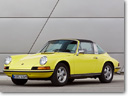
    As you know, the classic vehicle’s interior and hardware are incredibly vulnerable to sun radiation and temperature, that can destroy or damage the beautiful interior. But don’t worry. Today’s developed technical tweaks and materials will last longer and the Porsche team ensures and promises incredible quality and feel, mixed with incredible endurance features.

    As with the original models, the dashboard comes with loudspeaker cover, that can be installed by the original assembly procedure: by removing the windshield. This is why Porsche engineers recommend doing it with only authorized Porsche engineers.

    Furthermore, to bring the optimal restoration of the classic vehicle, the company is creating a special and complex international network, that will connect about 100 authorized Porsche dealers. Porsche customers will be granted wit wide variety of Porsche Classic products and services.

    Porsche team surely knows how to make its customers happy. What do you think?

    Source: Porsche

  • Classic MINI and Porsche 911 for 50th Anniversary

    BMW has released a photo gallery showing a nice duo of a classic MINI and Porsche 911 celebrating its 50th anniversary.

    It may be the fundamental differences between the two cars (e.g. the Mini has its engine in the front, the 911 at the rear) that dominate at first glance. But there are also a number of factors – over and above their shared cult status – that lend particular empathy to MINI’s birthday greetings.

    Both models made their name with an eye-catching turn of speed. At the end of the austere 1950s Mini was the ground-breaking new kid on the block, generating sales figures that mimicked the upward curve of its acceleration. The 911, as the successor to the Porsche 356, was born with speed in its blood.

    Only a handful of cars can claim to have endured over such lengthy time spans, retaining their unmistakable identities despite all the nips, tucks and updates along the way.

    It’s tempting to wonder how different history would have been without the creators of these two successful cars. Neither Sir Alec Issigonis nor Ferdinand Alexander Porsche had any inkling that their designs would come to be considered immortal icons of modern times. Indeed, you would have needed a very clear crystal ball to see that Porsche had just dreamt up the most successful sports car of all time and Issigonis the “world’s only cool small car”.

    Source: BMW

  • New Classic MOKE Motor Vehicle

    The bew “Classic MOKE” is created in a Joint Venture with Chery Motors and their subsidiary Sicar Automotive Engineering Company. The vehicle will be available in countries like Australia, Thailand, and throughout the Caribbean.  It is planned to be produced as a low volume car with 1000 units per year. Production capacity will grow to an anticipated 1000 units per month after year three with markets throughout South America coming into line.

    The original Moke was designed and released in 1960 -1963 as a military vehicle that was light, compact and strong. In 1964 it was first released for public sale in Britain under the names Austin Moke and Morris Moke. In 1966 the first Mokes were produced in Australia under the name BMC MINI MOKE.

    The MOKE is often called a ‘Mini Moke’ as it was designed by Sir Alec Issigonis, the same designer as the famous Mini.

    In 1977 the Californian Moke was released in Australia with additional features such as Roo bars, Spoked wheels and improved seating. In 1983 the company moved to Portugal before completely stopping production in 1992.

    In 2012 Chery Motors and Sicar Automotive started re-engineering the Moke with new features such as 9” front disc brakes, 3-point seat belts for front and rear seats, modern car suspension technology as well as a fuel injected engine and rust proof body.

    Nothing is mentioned about the price, but it is expected to be extremely low and affordable.

    There are also plans for an Electric eMoke to be released in the near future.