Tag: Car

  • Citroen UK announces retail launch offers for new c4 and e-c4 – 100% electric

    Copyright William CROZES @ Continental Productions

    Citroën UK is promoting the launch of New C4 and ë-C4 – 100% ëlectric with a suite of compelling retail customer offers. New C4 and ë-C4 are available to order now via the online Citroën Store, and at all Citroën Retailers (where local restrictions allow*^). First customer deliveries are scheduled for early 2021.

    With a bold new look and a unique identity, New C4 and ë-C4 are ready to shake up the compact hatchback segment. Both New C4 and ë-C4 exceed C- Hatch customer expectations with the same energetic and assertive design, whether opting for the new 100% battery electric powertrain or the combustion powered petrol or Diesel versions.

    In addition to the strong residual values enjoyed across the entire New C4 range, Citroën UK is offering retail PCP finance customers^^ the opportunity to upgrade to the next trim level – free of charge. Available on selected models**, retail customers are able to enjoy a wealth of additional specification at no additional cost.

    This means a customer opting for a New C4 ‘Sense Plus’, would receive a free upgrade to ‘Shine’ trim, worth up to £1,000 – with the addition of dark tinted rear windows, Active Safety Brake, Adaptive Cruise Control, Active Blind Spot Detection, Keyless Entry & Start, and front and rear parking sensors. New ë-C4 customers taking advantage of this offer also benefit from a heated steering wheel.

    In turn, retail customers who opt for the well-appointed ‘Shine’ trim level will be automatically upgraded to the range-topping ‘Shine Plus’ trim. ‘Shine Plus’ models enjoy a wealth of additional specification including Citroën’s premium HiFi system featuring uprated speakers and the addition of a subwoofer, black ‘Siena’ leather and textile upholstery, driver’s seat electric adjustment, heated front seats, four USB sockets and a wireless smartphone charging pad. An impressive upgrade leaving customers wanting for nothing in terms of specification – worth an impressive £1,200.

    In addition to the already compelling free trim level upgrade offer, retail ë-C4 customers will also receive a Pod Point Solo Smart Charger – also free of charge. Retailing at £509 (after the application of an existing £350 Government Grant) customers will be able to enjoy this incredibly useful home-charging solution free of charge. Plugged in at home to the Pod Point Solo Smart Charger 7kW, ë-C4 can charge fully in 7.5 hours. New ë-C4 offers a WLTP-approved range of up to 217 miles on a single charge.

    Citroën Store, which launched earlier this year in partnership with PSA Finance, offers retail customers the opportunity to complete the entire purchase of their New Citroën C4 or ë-C4, exclusively and simply, from the comfort of their own home. Customers are able to browse the website, use the car configurator, visit the Virtual Showroom, personalise their finance options, value their part exchange, select their preferred Retailer, place an order online and arranging either ‘click and collect’ or home delivery for early 2021 – when first deliveries are anticipated..

    Making the purchase experience totally seamless from launch, Citroën UK has created a pre-recorded ‘Preview Show’ with New C4 and ë-C4 in the brand’s Virtual Showroom, with the aim of answering key questions potential customers may have about the new models. Hosted by experienced motoring journalist and racing driver Rebecca Jackson, the 15-minute video details the key points on each vehicle and provides an essential overview of the two models, concluding with a Q&A session.

  • DS Automobiles to expand Onto’s electric car offering

    DS31

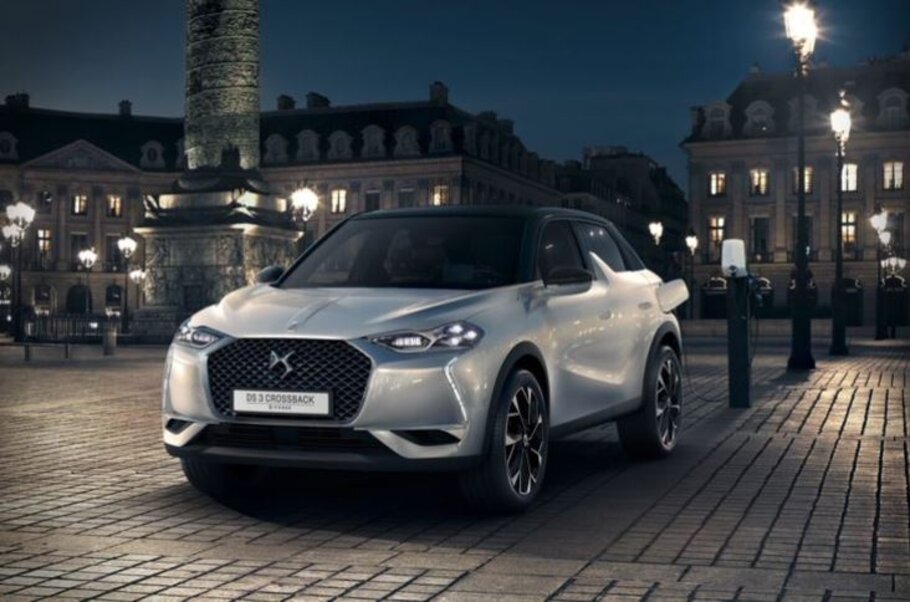
    DS AUTOMOBILES, PSA Groupe’s premium brand, is supplying 300 all-electric DS 3 CROSSBACK E-TENSE models to electric vehicle subscription service provider Onto, with the cars available to book now.

    Onto has placed an order for both DS 3 CROSSBACK E-TENSE Performance Line and Ultra Prestige models, with prices starting from £499 a month for the Performance Line version. Onto users get up to 1,000 miles a month, with insurance, vehicle excise duty, roadside recovery and charging fees all included in the package.

    Martin Gurney, Fleet Director for Groupe PSA said: “We’re very excited to supply 300 DS 3 CROSSBACK E-TENSE to Onto. The demand for electric vehicles continues to accelerate and customers are enjoying driving our E-TENSE technology whilst experiencing the attention to detail and craftsmanship of the car’s interior. Having only being available to Onto customers for a short period, we’re pleased to report that early demand is really strong.”

    The DS 3 CROSSBACK E-TENSE is the first all-electric model from DS AUTOMOBILES and is powered by a 100kW (136hp) electric motor with 260Nm of torque, linked to a 50kWh lithium-ion battery to deliver a WLTP driving range of  up to 206 miles. Charging to 80% takes just 30 minutes via a 100kW rapid charger.

    Onto aims to accelerate the adoption of electric vehicles and provides customers with a fully flexible alternative to vehicle ownership for a monthly payment with no deposit. The single monthly rental covers all the costs of motoring – Insurance, roadside recovery, wear and tear, servicing and repairs, charging and vehicle excise duty are all included.

    Rob Jolly, CEO of Onto, said: “The DS 3 CROSSBACK E-TENSE offers our subscribers advanced technology with a sophisticated and elegant design, while also providing excellent range and charging capabilities. We are already seeing our customers appreciate the many charms of the DS Brand.”

  • Peugeot reveals new 308 pricing with animation charting 50-year evolution of its family model

    2021 PEUGEOT 3081

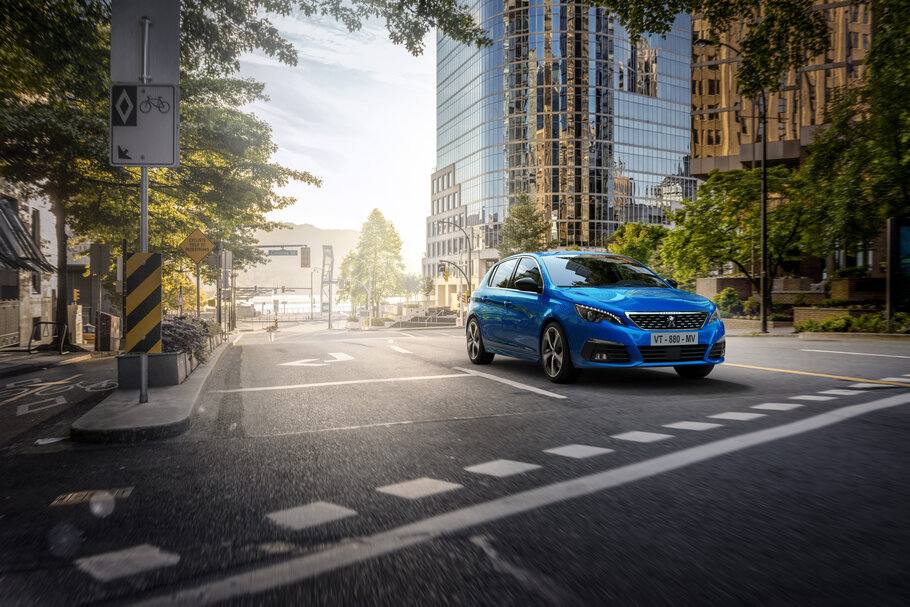
    PEUGEOT has announced pricing and full specification for the new 308, with deliveries due to commence shortly. Entry-level Active Premium models will start from £21,310, with the new 308 featuring an ever more assertive personality as well as a rejuvenated driving experience at the wheel of PEUGEOT’s Digital i-Cockpit®.

    To celebrate the launch of the new 308, PEUGEOT has also created a unique animation showing the evolution of its family car over the last five decades, beginning with the PEUGEOT 304, which launched in 1969. The animation, which includes the Pininfarina-designed 305, the stylish 306 and spacious 307, shows how the shape of PEUGEOT’s family model has evolved through the years.

    The new 308 is available in both hatchback and SW estate versions. For 2020, enhanced exterior styling features include a new Vertigo Blue colour option and new optional 16-inch Zircon diamond cut alloy wheels. The new 308 continues to offer a Black Pack option, which is available on GT Premium trim models. With the Black Pack, most of the chrome exterior trim is replaced by a gloss black finish, including front grille, front fog light surround and side window covers. The Black Pack also includes 18-inch diamond cut alloys in Sapphire Black.

    Inside, new 308 features PEUGEOT’s Digital i-Cockpit® technology, with a 10-inch head-up digital instrument panel featured as standard. Also included as standard across the range is a 9.7-inch capacitive high-definition colour touchscreen with Mirror Screen®, Apple CarPlay™ and Android Auto connectivity. The Allure trim sees the introduction of 3D navigation, featuring voice recognition and TomTom® Traffic alerts.

    To further enhance the driving experience, the GT, GT Premium and GTi versions are fitted with the Driver Sport Pack as standard, including a Sport button which increases the responsiveness of the power steering and throttle for a more instinctive driving experience. Automatic versions also have a sportier gearshift pattern.

  • Cor.Speed Sports Wheels Europe Volkswagen on big feet: Cor.Speed DeVille at the Arteon

    Volkswagen new1

    Although Volkswagen, after its original name, builds cars for the people, i.e. rather simple and above all affordable cars, this is not always the case these days. After the attempt to place a luxury sedan on the market with the Phaeton more or less failed and has now been terminated, apart from the Touareg, the most luxurious model in the Wolfsburg-based range is currently the Arteon.

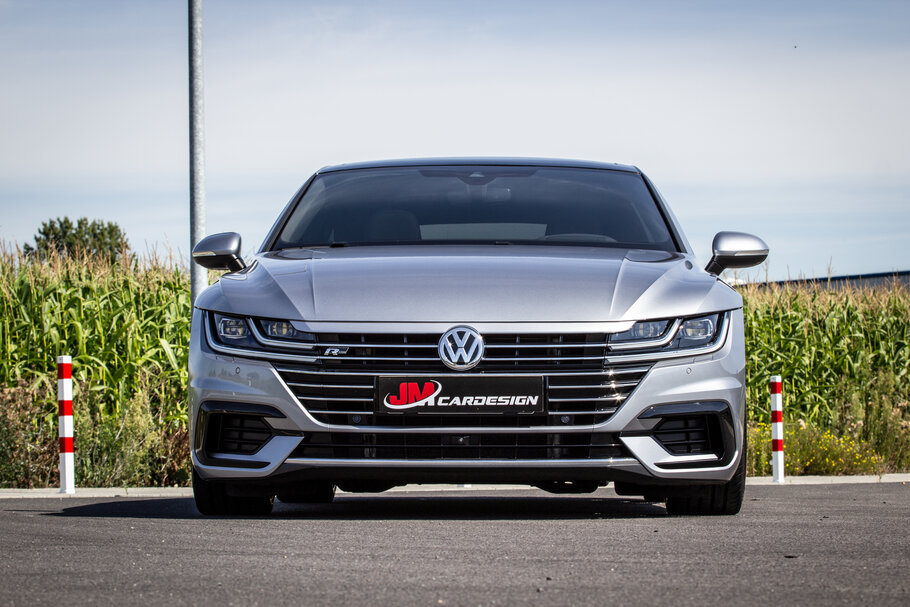
    A copy of the four-door coupé has now been equipped with a set of high-quality wheels from Cor.Speed ​​Sports Wheels. The specialists from JM Car Design from Bergheim near Cologne, who act as the Cor.Speed ​​dealer base, were responsible for the conversion. The choice fell on the powerfully drawn DeVille rims in the dimensions 9×21 inches, which are covered with 225/30 tires. With their gunmetal matt finish, they perfectly match the silver-gray paintwork of the VW. The wheel could be mounted without any adjustments to the body – despite the additional KW Variant 3 coilover kit that was installed, which lowered it by 45 millimeters at the front and 40 millimeters at the rear, thus ensuring an even more harmonious appearance.

  • Automobili pininfarina and deutsche telekom create the world’s first globally- connected hypercar

    Battista Anniversario1

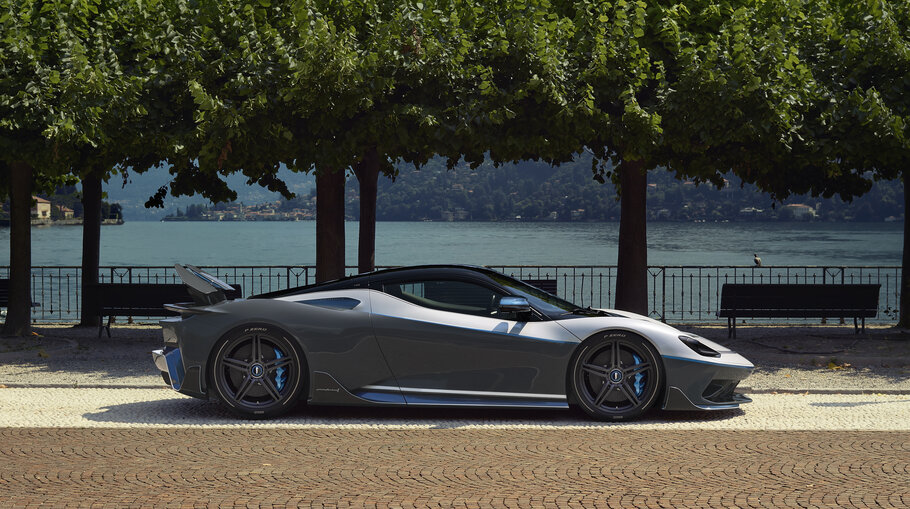
    A new partnership between luxury carmaker Automobili Pininfarina and integrated communications leader Deutsche Telekom will give owners of the new Battista pure-electric hypercar the chance to easily access online services in more than 50 countries worldwide – a first in the world of hypercars.

    Every Battista will receive an embedded SIM and roaming technology for optimised connectivity worldwide. Using these components, Deutsche Telekom’s roaming partner network and roaming traffic steering logic enables the vehicle to search for the strongest network, ensuring owners don’t find themselves in communication blackspots even as they cross international borders.

    This unrivalled connectivity also delivers heightened convenience for owners through Over-The-Air (OTA) updates, which ensure the vehicle will always be equipped with the most up-to-date software. The system is able to remotely update 26 individual electronic control modules in the Battista across functions covering the pure-electric powertrain, advanced safety and driving dynamics systems, vehicle control, infotainment as well as digital services. These software updates can be delivered via WIFI when parked within range in the garage, or using the embedded SIM on the road. In this way, the Battista is future-proof and owners will continue to benefit from the latest software advances as the years pass.

    Automobili Pininfarina Chief Product and Engineering Officer Paolo Dellacha said: “All of these elements of connectivity contribute to our seamless Life on Board Concept. Everything from the driver-orientated user-experience to the convenience features such as the global roaming and OTA updates have been developed and engineered to bring heightened convenience to our luxury hyper GT.”

    The effortless digital concierge experience includes Smart Diagnostics technology, which monitors the vehicle to spot potential issues before they arise to ensure the pinnacle of electrified performance and safety at all time. If the system detects an issue that cannot be dealt with remotely by a software update, Automobili Pininfarina will dispatch one of its team of highly-skilled engineers to resolve the issue wherever the vehicle is in the world.

    A specially developed smartphone app keeps owners connected to their Battista at all times, enabling customers to remotely lock and unlock the vehicle, view vehicle telemetry, check the state of charge and monitor the location of Battista. On the move, drivers can seamlessly link their smartphone which will mirror key apps and functions within the vehicle for enhanced music streaming and real-time navigation capabilities.

    This wider connected and digital ecosystem is enhanced by the Battista’s advanced infotainment system. The two logically-arranged and intuitive touchscreens and an additional slim display located in the centre, deliver all the key telemetry, dynamic functions and information as well as featuring selected media and navigation elements and controls. All have been designed and positioned in a way to ensure minimum driver distraction while providing all the required information while on the move.

  • Nissan all-new Qashqai breaks cover

    2021 Nissan All-New Qashqai1

    The final preparations are well under way for the introduction of the third generation of the compact crossover that changed the face of the European car market and spawned many imitators – the Nissan Qashqai.

    Prototypes of the all-new model are racking up the testing kilometres on European roads in anticipation of it again resetting what customers can expect from a compact crossover when it goes on sale in 2021.

    The all-new Qashqai will build on its position as the pioneer of and benchmark in the medium-crossover segment in Europe since 2007. Underpinning the new Qashqai is the new Alliance CMF-C platform, a showcase of advanced engineering, innovation and advanced technology.

    The current Qashqai, which went on-sale in Europe in 2014, has sold over one million units since its introduction.

    “The new Qashqai is going to change what customers can expect from a family car. Comfort, refinement and technology will be from higher categories of car, while the driving experience will satisfy drivers and passengers alike. With Nissan’s bold e-POWER technology, we feel that customers will fall in love with the feeling of an electric powertrain, without the range concerns,” said Gianluca de Ficchy, Chairman, Nissan Africa, Middle East, India, Europe and Oceania (AMIEO) Region.

    For this new iteration, Nissan has retained the guiding principles that have driven the concept, design and development of the two previous generations of Qashqai: elegant design, enhanced packaging and efficient powertrain, combined with elevated quality and a driving experience from a higher segment. The new Qashqai will again raise the bar in the crossover segment and customers will savour those attributes.

    Like its predecessors, the styling of the new Qashqai was led by the team at Nissan Design Europe, based in central London (UK), while its engineering was led by Nissan Technical Centre Europe, situated in Cranfield, Bedfordshire (UK).

    CMF-C platform

    The new Qashqai is the first new model in Europe to use the CMF-C platform, which represents a state-of-the-art automotive structure and technology architecture.

    Central to the engineering concept was to retain the current Qashqai’s proportions, which are “just right” and key in its success, meaning it comfortably navigates urban roads and fits comfortably in parking spaces, while also giving excellent interior space.

    In terms of construction, the body in white makes use of more lightweight material, as well as advanced stamping and welding techniques to increase strength but to also reduce weight. For the first time, the rear hatchback door on the Qashqai is now made of a composite material, which saves 2.6kg.

    The use of Nissan’s Ultra High Strength Steel application (UHSS) has increased by 50% in the structure of the new Qashqai. The UHSS material ensures the highest possible tensile strength in the body structure where it is needed, as part of the crash structure, for example – but without a significant weight penalty. Traditionally, higher tensile strength materials pose problems in welding or joining to other parts of the structure. With the Qashqai’s body in white, structural bonding has been used to form a high strength reinforcement and bond where the A-, B- and C-pillars join the roof and floor pan.

    The front and rear doors, front fenders and hood, are all now made of aluminium, which offers a weight-saving, when taken all together, of 21kg over the out-going Qashqai’s body in white.

    The base structure – the “back bone” – of the CMF-C platform has been updated to a more homogenous shape, in order to better transmit an impact through the structure. This will have the effect of the structure absorbing the energy more effectively in the crumple zones, reducing the potential load transmitted to the occupants in the event of an accident.

    The net advantage for customers, thanks to the advanced manufacturing techniques, is that the overall body in white is lighter by 60kg and 41% stiffer than the out-going model. This translates to refinement, ride comfort and driving response from a higher segment, plus exceptional security in the event of an accident – as well as having benefits to the car’s overall efficiency.

    New suspension and steering design

    The new Qashqai will continue to offer a rewarding driving experience – building on its reputation as a refined and cossetting drive, but nevertheless, enjoyable when the road turns twisty.

    The new CMF-C platform boasts torsional rigidity of vehicles from a higher segment, allowing the suspension to remain precisely located, ensuring positive and confidence-inspiring responses to steering inputs and a more solid feel when driving on rough roads.

    Thanks to the CMF-C platform, the new Qashqai has an updated Macpherson strut set-up at the front and at the rear. For two-wheel drive Qashqai specified up to and including 19” wheels, rear suspension is a torsion beam configuration. For 20” wheels and all-wheel drive versions, it will be equipped with an advanced multi-link set-up.

    The torsion beam installation offers improved bump absorption and road-noise suppression, resulting in a composed and quiet drive on all road surfaces. Key to its wide-ranging abilities is the change in spring and damper to a vertical alignment. This allows the spring and damper to work in their optimal stroke range, maximising their effectiveness for more controlled response to bumps and shocks in the road and to minimise rebound for a settled, composed ride, while maintaining excellent anti-roll performance through changes of direction.

    The advanced multi-link rear suspension configuration offers a best-in-segment balance between ride comfort and dynamic response. It is now mounted to the sub-frame by bushes, which reduce road noise and vibrations transmitted from the road.

    The power-steering set-up has been upgraded, offering improved response, better feeling around the central part of the steering range and reduced friction.

    David Moss, Region Senior Vice President Research and Development, Africa, Middle East, India, Europe and Oceania (AMIEO): “Our engineering team has benchmarked a cross-section of C-segment hatchbacks, as well as direct competitor vehicles, and through thousands of kilometres of testing on roads and test facilities throughout Europe, have achieved a ride and handling balance which places driving pleasure at the heart of the experience.”

    Innovation for efficiency

    The new Qashqai stands within the wider Nissan electrification strategy and will offer customers two powertrain solutions – a flexible and efficient 1.3-litre petrol engine with mild hybrid technology, while Nissan’s innovative e-POWER electric motor driven system will bring the exciting instant and linear acceleration EV feeling to the Qashqai, without the range concerns.

    With the more torsionally rigid body-in-white structure, the drive for optimal efficiency in the new Qashqai has been at the heart of the entire development process. And that drive for efficiency extends to the use of the flexible 1.3-litre petrol engine which will be available in two power outputs, both combining responsive characteristics with frugality and low emissions. [Full technical details and specifications of this powertrain will follow closer to its market introduction.]

    Two additional examples of the lengths Nissan’s engineers have gone to in order to optimise the new Qashqai’s efficiency are the flat floor, which ensures the smoothest possible airflow underneath the car – and also the active grille shutter, which remains closed to ensure the air passes around the front of the car as cleanly as possible. It only opens when the cooling needs of the engine require it, allowing extra air to enter the radiators in order to cool it.

    The front styling of the car also generates an air curtain that directs the air flow around to reduce the drag generated by the front wheels.

    The 1.3-litre petrol engine has been extensively updated to include a mild hybrid system. The 12v system incorporates a separate lithium battery installation mounted under the floor and belt driven generator to harvest braking energy. This allows the engine’s systems to run on harvested energy, extending the duration of the stop/start function which reduces the engine’s overall CO2 emissions. Additionally, it allows coasting and also offers torque support under acceleration.

    e-POWER

    The new Qashqai will represent the best of Nissan’s innovative spirit – which we call Nissan Intelligent Mobility. It will bring the first deployment of Nissan’s innovative e‑POWER drive system to Europe. A unique Nissan innovation, the e-POWER system offers full electric motor drive, meaning that the wheels are completely driven by the electric motor. e-POWER is comprised of a high-output battery and the powertrain which is integrated with petrol engine, power generator, inverter and a motor. In conventional hybrid systems, the wheels are driven by an electric motor and a petrol engine. However, in the e-POWER system, the petrol engine is not connected to the wheels; it simply charges the battery. And unlike a full EV, the power source is the engine, rather than just the battery. [Full technical details and specifications of the e-POWER installation will follow closer to its market introduction.]

    The key difference compared with other conventional hybrids is that the electric motor is the size of one typically found in a pure EV, giving the instant acceleration response which is so popular among EV customers. The engine-driven generator maintains the battery charge, but can also provide electricity directly to the motor for additional power. The engine operates at an optimal RPM range promoting maximum fuel efficiency while being carefully tuned to minimise noise and provide a natural, connected feel during hard acceleration.

    For customers, e-POWER brings that distinctive instant and linear acceleration feeling, delivering a fun-to-drive experience but without the range anxiety. This is the perfect transition into EV driving especially for high mileage drivers who will love the combination of convenience and refinement, as well as the car’s eco-efficiency.

    “The advanced and efficient powertrain options represent Nissan’s innovative spirit – none more so than the e-POWER system. It brings all the driving benefits of an EV powertrain without compromise. When we talk about Nissan Intelligent Mobility, e‑POWER is a perfect example,” said David Moss.

    Upgraded ProPILOT driver assistance

    The new Qashqai will be equipped with the next generation of ProPILOT driver assistance, bringing greater driver support in a wider array of circumstances. Called ProPILOT with Navi-link, the system has been designed to reduce fatigue and stress while driving, while being very intuitive to use.

    ProPILOT with Navi-link is able to accelerate and brake the vehicle within a single-lane on a highway. The system can accelerate the vehicle to cruise at a set speed, and can brake the vehicle down to 0 km/h in heavy stop-start traffic. The system is able to resume automatically if the vehicle has been stationary for less than three seconds and the traffic in front of the car moves away.

    The steering system and the camera are constantly updating the vehicle’s position, helping the car to stay centred within the lane while maintaining a pre-determined speed but with the capability to adapt and maintain a safe distance to the car in front.

    On the all-new Nissan Qashqai, the updated system is now able to adapt the car’s speed according to additional external circumstances: when the car crosses to a lower speed limit zone on the highway, the system is able to read road signs and take into account navigation system speed limit data to slow the Qashqai to the appropriate speed, meaning the driver doesn’t need to adjust the cruise control speed manually.

    The system can also use data from the navigation system to adjust the speed for approaching curves or exit ramps that have a tighter radius.

    Furthermore, ProPILOT with Navi-link can now communicate with the Qashqai’s blind-spot radars to help intervene with a steering input correction to help prevent a lane-change manoeuvre if there is a vehicle in the blind-spot zone.

    Other upgrades include a “flank protection” warning for urban situations, which alerts the driver of the risk of contact with an object on the side of the vehicle, typically when turning into a supermarket parking space. And the new Qashqai can also intervene to prevent a collision upon reversing from the space thanks to an upgrade on the existing Moving Object Detection alert, applying the brakes to stop the car if a moving obstacle is detected nearby.

    ProPILOT with Navi-link will be available from the mid-level N-Connecta grade to enable the majority of Qashqai drivers to enjoy this unique advanced technology, epitomising Nissan’s brand promise of “innovation for excitement”.

    “ProPILOT is one of our most well appreciated innovations on the current Qashqai. Customers love how it seamlessly supports the driver in maintaining a smooth, precise and secure drive, particularly in busy traffic conditions, at night or in bad weather. We are excited to elevate that feeling of convenience and confidence thanks to the great additional functions of ProPILOT with Navi-link on the forthcoming Qashqai”, said Marco Fioravanti, Vice President, Product Planning, Nissan Europe.

    Intelligent LED headlights

    The current Qashqai has been equipped with LED lights on upper grades since its launch in 2014, and those on the top-grade Tekna version swivel to follow the road in response to steering wheel inputs, with exceptional clarity thanks to the powerful projectors that provide a strong, even beam.

    For the new Qashqai, Nissan’s engineers have developed an advanced headlight system that adapts the shape of the beam according to the road conditions and other road-users. The beam is divided into 12 individual elements that selectively deactivate upon detection of an oncoming vehicle. Thanks to this innovation, it can project a brighter beam further and wider, but the shape effectively changes so oncoming road-users will not be dazzled.

    “The starting point for the design and development of the all-new Qashqai was a deep analysis of the relationships we’ve had with all of our Qashqai customers over the last 13 years. It has enabled us to understand their needs and, in particular, what they value in the crossover that they use and rely on daily,” said Marco Fioravanti.

    Qashqai: A crossover pioneer

    In 2007, when the Qashqai was introduced there was nothing else like it on the road.

    Its seating position was a little higher, allowing a better view down the road, but its overall footprint was the same as its C-segment hatchback peers. Its petrol and diesel engine options were frugal and efficient, but there was an all-wheel drive version for those customers who needed the extra traction in challenging conditions. In summary, it offered an excellent balance between the compact dimensions of a hatchback, with the sense of robustness and elevated view afforded by a traditional four-wheel drive, without the size, weight or efficiency penalty. In doing so, it delivered the best of both worlds by breaking down the barriers to SUV ownership.

    Forecasting sales of a new vehicle which wasn’t a direct replacement of an existing model and for which there were no direct competitors was a challenge. Overall, the internal sales estimates were in the region of 100,000 units per year in Europe.

    The estimates fell short of the reality. Within months, an additional shift was added at Nissan’s factory in Sunderland, UK, to meet demand.

    Its sales continued to increase year on year – and its appeal was extended when the Qashqai+2 was released in 2008, adding a foldable third row of seats in a larger trunk thanks to its longer wheelbase.

    An extensive facelift took place in 2010 which upgraded the exterior, particularly from the frontal aspect, reflecting that a high proportion of Qashqai customers were coming from upper segments. By the time of its replacement in 2014 by the second generation Qashqai, 17 direct competitors had followed Nissan to market with their own crossovers.

    Despite the arrival of many European competitors, the first generation Qashqai sold in excess of 200,000 units per year on average throughout its life.

    The second generation Qashqai went on sale in Europe in 2014, with a more striking design and more efficient engines, more refinement and more convenient technology. The second generation Qashqai broke a UK record, being the fastest UK-produced vehicle to reach the landmark of 500,000 units produced.

    To date, over 3m units of Qashqai have been sold in Europe – and over 5m globally.

    There are now 26 direct competitors to the current Qashqai. Where Qashqai was the pioneer of this automotive formula, it is now a segment in its own right – a segment which continues to grow annually. When it arrives in 2021, the all-new Qashqai will elevate the bar again and set the standard in the segment with striking design, comfort, refinement, efficiency and convenient technology.

    “With the unmatched experience, expertise and customer relationships we’ve formed since the first Qashqai was introduced, Nissan is in a unique position to reinforce our status as Europe’s favourite crossover with the all-new Qashqai. It is set to elevate the driving and ownership experience for our customers through elegant and dynamic design, innovative and useful technology, while offering outstanding efficiency,” said Marco Fioravanti.

  • Polestar design contest winners announced

    2020 Polestar Design Contest1

    The winners of Polestar’s first annual Design Contest have been chosen. Their designs will soon embark on a global exhibition, being displayed virtually and in Polestar Spaces around the world.

    The Polestar Design Contest invited both professional and student designers to create a vision of future mobility with the theme of “purity”. They were asked to present a new Polestar that exhibits the purest of designs; a vision of Polestar’s evolution in the year 2040 that follows the Polestar design philosophy. Specifically, the vision did not need to be a car.

    Winner of the professional category is Konrad Cholewka from Poland with his “Polestar MMXL” design – an inclusive, autonomous pod with a flexible interior design, pure in its combination of two geometric shapes.

    The student category has been won by Siddhesh Bhogale from India with his “Polestar 40” design – an airship that looks ahead 20 years by combining Polestar design with a 21st century aviation approach.

    An honourable mention goes to Arthur Martins from Brazil for his “Spänning” electric yacht, the design of which shows the potential for an electric cruiser that offers a true alternative to conventional craft, just as Polestar cars do in the automotive world.

    “We received an overwhelming amount of enthusiastic attention from inspired designers all over the world,” says Juan-Pablo Bernal, Senior Design Manager for Polestar, curator of the @polestardesigncommunity Instagram account and the founder of the contest. “The designers produced very high-quality material, and we saw a very consistent expression of the Polestar design language.”

    Hundreds of entries were received, from a truly international mix of designers – including submissions from India, South Korea, Japan, Germany, the United States, Sweden, Brazil, Poland, and China. Designs included everything from hypercars and Arctic exploration vehicles, to personal mobility solutions and watercraft.

    Entrants first submitted sketches, which were assessed by Polestar’s design department. The 13 finalists were then invited to remote coaching and guidance from Juan Pablo Bernal and Maximilian Missoni, Polestar’s Head of Design, where they were given expert advice and insight into the world of automotive design.

    The final phase involved the shortlisted finalists creating fully realised digital models of their concepts which were then judged by the designer panel.

    “It was both inspirational and humbling to interact with so much emerging and experienced talent. The designs we saw evolve from creative sketches to 3D models show that the design world is a melting pot of exceptional individuals. We look forward to seeing these designers moving on to great things during their promising careers,” comments Maximilian Missoni.

    The winning designs will now be brought to life as 1:5 scale models and first shown in a virtual exhibition before beginning a global tour in Polestar’s launch markets. They will appear at Polestar Spaces in China, Europe and North America, according to local regulations.

  • Car and smartphone merge into one: Touareg now parks by remote control

    Volkswagen Touareg special model ONE Million

    Already familiar: the basis of the new system is Park Assist, which Volkswagen still offers for the Touareg. Park Assist permits semi-automatic parking in parking spaces; the car also drives semi-automatically out of parallel parking spaces (spaces that are parallel to the road) again. Here, the SUV takes over steering, while the driver presses the accelerator and brake pedals. Completely new: Volkswagen is now going a decisive step further, because the new Park Assist with remote control now works fully automatically for the first time – in other words, it also controls the engine and the brake. The new system offers two operating modes: in the first mode, the driver remains sitting in the vehicle and operates the system from there; in the second mode, the driver gets out of the Touareg and controls the parking manoeuvre using their smartphone. In both cases, the SUV independently drives into or out of the parking space in forward or reverse direction. What is more, it does this in all types of parking spaces.

    In the first mode – without activated remote control – the driver remains sitting in the Touareg as usual. When driving into a parking space for example: the driver activates the search for a parking space by tapping on the “P” field on the infotainment system screen. As soon as the Touareg detects one or more suitable parking spaces, it shows these on the infotainment system screen. The driver now selects one of the offered parking spaces. The display “Depress the brake and press and hold the button or select Park Assist with remote control” is now shown in the digital instruments (Digital Cockpit) of the Touareg. The driver now chooses the first option and continuously presses the “Drive” button (P AUTO) under the gear knob on the centre console – parking then starts. The technology used by the Touareg for this comprises twelve ultrasound sensors and the four cameras of the Area View 360-degree system. The cameras are located in the windscreen, exterior mirrors and boot lid. Volkswagen uses what is known as “sensor fusion” to ensure optimum object detection. The SUV can therefore even park automatically in garages. The Touareg stops instantaneously if the “Drive” button is released.

    In the second mode, the driver gets out of the vehicle before the actual parking manoeuvre. The driver then uses their smartphone and the VW Remote Park Assist Plus app as a remote control. This is how it works: here too, the driver activates the search for a parking space by tapping on the “P” field on the infotainment system screen. The driver again selects one of the offered parking spaces. When the display “Depress the brake and press and hold the button or select Park Assist with remote control” appears, they then choose the second option: Park Assist with remote control. The driver taps on the option, takes the vehicle key, gets out of the vehicle and then activates the parking manoeuvre via the app. To do this, the driver presses the “Drive” button on the smartphone – this button is virtually transferred from the car to the app – and parking now starts. Here also, the “Drive” button must be pressed continuously for safety reasons. The SUV now carries out the process of driving into a parking space fully automatically.

    If the driver would like to drive the parked Touareg out of a tight parking space, they no longer have to squeeze into the car to do this. To activate automatic driving out of the parking space, the driver simply starts the engine via the VW Remote Park Assist Plus app by pressing the START/ENGINE/STOP button on the smartphone. When the engine is started, available manoeuvres for driving out of the parking space are displayed on the mobile phone, such as “Forward left” or “Forward right”. The driver now simply selects the direction and activates the manoeuvre for driving out of the parking space by pressing the “Drive” button icon. In this case also, the driver must continuously press the digital button for safety reasons. The manoeuvre for driving out of a parking space is visually displayed in parallel on the smartphone. The luxury-class Touareg SUV is the first Volkswagen that is capable of assisted manoeuvring without a driver on board.

  • Renault pro+ unveils the all-new Renault Kangoo van

    FFK

    The latest generation of the light commercial builds on the success of its award-winning predecessor with a bold, completely new exterior, brand new interior and significant advances in infotainment and driver assistance systems.

    The All-New Kangoo promises to revolutionise its segment by complementing its practicality and versatility with an upmarket feel that is generated through a high level of standard equipment and new materials throughout.

    Once again, the range will offer business users a 100 per cent electric version. With its zero-tailpipe-emissions-in-use, the All-New Renault Kangoo Z.E. allows professionals to benefit from a highly usable, environmentally compatible van that meets the challenges of urban mobility.

    Instantly distinguishing the All-New Kangoo is a completely redesigned front end with an elegant chrome line between the grille and the front bumper. The sleeker front end flows into sculpted sides with a more pronounced profile.

    A brand-new interior adds to the car-like sophisticated feel of the All-New Kangoo. The centrepiece is a new horizontal dashboard that has a stylish appearance and numerous storage spaces, while new, completely redesigned seats enhance comfort and durability.

    Convenience and safety are heightened with the Renault EASY LINK multimedia system and new driving aids, which include the Permanent Rear View digital interior mirror. This new system provides excellent rear visibility where a bulkhead obscures natural rear-view vision. Other new features will include a host of new Advanced Driver Assistance Systems.

    The new generation model will be available in two lengths. It offers a highly useful volume of 3.3m3 to 3.9m3 in the standard van and from 4.2 m3 to 4.9 m3 in the longer version.

    The All-New Kangoo will be produced in Groupe Renault’s Maubeuge factory in France.

    The Renault Kangoo has helped Renault to be the European leader in vans since 1998 for 21 consecutive years, with over four million sold since 1997.

    The Renault Kangoo Z.E. has made a major contribution to the manufacturer’s standing as a pioneer and leader in electric LCVs in Europe for the last nine years. Since its introduction in 2011, the Renault Kangoo Z.E. has been the best-selling electric commercial vehicle in Europe with over 50,000 sold to date.

    Renault PRO+ vehicles account for nearly one in two electric LCVs sold in Europe and Renault is committed to electrify its entire range of vans by 2022.

    Further details of the All-New Renault Kangoo will be released in 2021.

  • Update for a TDI titan – the new generation Audi SQ5

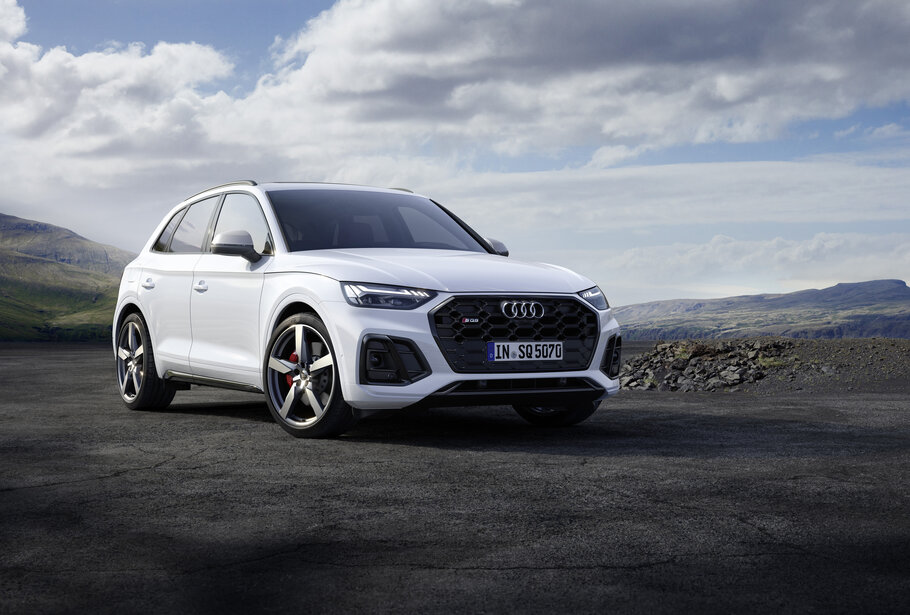
    Audi SQ51

    Its mighty V6 TDI engine, and the advanced electrically powered compressor which so compellingly quickens its responses, have already earned the SQ5 TDI the distinction of being the first Audi SUV to wear the evocative S badge. Now both key elements have raised their game yet again in the new generation model, which combines improvements to that already highly acclaimed powerhouse with extensive modifications inside and out. These include the introduction to the cabin of the latest Audi touch-screen MMI Touch control and the availability of new next generation digital OLED rear lighting as part of an exterior rework that brings the top tier SUV back up to speed with contemporary Audi design principles. On arrival in the UK in early 2021 the new generation model will be offered in two formats – SQ5 TDI and SQ5 TDI Vorsprung – the latter featuring a particularly comprehensive selection of indulgences and practical driver aids.

    “It’s the immediacy of the power delivery as much as the sheer force of the acceleration that makes such a lasting impression in the SQ5 TDI,” says Director of Audi UK Andrew Doyle. “Now that the formidable engine and independent electric compressor have been primed to perform even more readily and even more efficiently, and the successful SUV they power has been updated inside and out, the SQ5 TDI promises to be even more crushingly effective as a driver’s car and as an ownership proposition.”

    In its latest incarnation, the 3.0-litre V6 at the heart of the new generation SQ5 TDI delivers 341PS and 700 Nm (516.3 lb-ft) of torque, the latter across a wider engine speed range between 1,750 rpm and 3,250 rpm. Peak power is also produced earlier than before, helping to propel the mid-size performance SUV from rest to 62mph in 5.1 seconds and on to an electronically limited top speed of 155mph. An actuator in the exhaust system gives the V6 a particularly sonorous sound.

    3.0-litre TDI with extensive modifications
    Numerous detail enhancements have been made to the V6 3.0 TDI. Its original aluminium pistons have been replaced with stronger, lighter forged steel equivalents that not only reduce heat losses but also ensure combustion is faster and more efficient thanks to their newly introduced stepped recesses. The solenoid injectors used to inject the fuel operate with consistently high precision thanks to a new piezo sensor that monitors the closing of the needle. They can perform up to eight injections per work cycle, with injection quantities that are scalable with even greater precision. The maximum injection pressure is 2,500 bar.

    The direct air/air intercooler that was originally located in the bumper has been replaced by an indirect water/air cooler in the inside V of the engine. The shortened intake air paths this permits help to build up boost pressure quickly. The indirect intercooler is more effective and can even heat the intake air shortly after the engine is started in cold ambient conditions in order to reach the ideal combustion temperatures more quickly. This means that the exhaust gas cleaning system can respond more quickly to further optimise emission control.

    The turbocharger now features a smaller and lighter compressor wheel that spools up with exceptional speed – a key factor in the engine’s spontaneous and high torque build-up – while the exhaust manifold also benefits from improved insulation, enabling the exhaust gas to reach the optimum temperature more quickly after a cold start.

    MHEV and EPC: even greater efficiency and response
    As before, the SQ5 TDI is able to strike its remarkable compromise between performance that more than warrants the S badge and efficiency that is in step with modern day demands thanks to its 48-volt mild hybrid system (MHEV) and electrically powered compressor (EPC).

    The MHEV integrates a belt alternator starter (BAS), a lithium-ion battery that provides buffer storage and a 48/12-volt voltage converter. When the car decelerates, the MHEV system recovers up to 8 kW of power. It also enables the SUV to coast for up to 40 seconds with the engine switched off, after which time it is unintrusively restarted by the powerful BAS.. The MHEV system has the potential to reduce fuel consumption by up to 0.7 litres for every 62 miles driven.

    The EPC intervenes whenever the exhaust gas flow provides too little energy to drive the turbocharger. A compact electric motor, which also uses the compact 48-volt system, accelerates the compressor wheel of the EPC to 65,000 rpm in roughly 300 milliseconds. In the latest generation SQ5 TDI the EPC is now used more frequently and across a broader engine map, and it makes its presence felt particularly strongly during step-off acceleration and when pulling away from low engine speeds. Its interaction with the MHEV, the turbocharger, the engine itself and the tiptronic transmission has been further optimised in this latest application to make the abundant power and torque even more readily accessible.

    Two SCR catalytic converters interact: the exhaust gas aftertreatment
    For exhaust gas aftertreatment, Audi uses twin-dosing technology based on two SCR catalytic converters working together. The first of these is located directly behind the manifold in the exhaust gas system, where it also functions as a particulate filter. The second is located further away from the engine under the vehicle floor. Each of the converters covers different operating situations and exhaust gas temperature windows, and each is supplied with the AdBlue urea solution from a 24-litre tank. Thanks to twin-dosing technology, the SQ5 TDI substantially undercuts the limits of the new “Euro 6d ISC-FCM AP” emissions standard, which also stipulates a dramatic reduction in NOx emissions in the real driving test conducted on public roads in everyday traffic situations. In the official tests, the latest generation SQ5 TDI proved capable of returning up to 34.4 MPG with CO2 output from 216g/km.

    Shifting gear quickly and conveniently: the eight-speed tiptronic
    The significant modifications to the engine and ancillaries have been taken into account when configuring the new shift strategy for the eight-speed tiptronic transmission, which delivers fast and smooth shifts and incorporates a clutch that interrupts the power flow when the SQ5 TDI is in coasting mode with the engine switched off.

    As with all S models, output is channelled to the quattro permanent all-wheel drive system, which in normal driving conditions distributes it between the front and rear axles in a 40:60 ratio. In the event that grip is compromised, the majority of the available torque is directed to the axle with the better traction. Up to 70 percent can flow to the front wheels and a maximum of 85 percent to the rear. During fast cornering, the wheel-selective torque control makes minor brake interventions at the wheels on the inside of the bend to maintain the best possible trajectory.

    Sport differential: more torque, greater adjustability
    As a further aid to adjustability, the sport differential which is standard for the SQ5 TDI Vorsprung actively controls the distribution of torque between the rear wheels. It sends more torque to the wheel on the outside of the bend that has better grip, literally pressing the car into the curve and reducing understeer considerably. The outer rear wheel also receives more torque when the car is accelerating out of tight-radius corners to further improve driving dynamics. A high performance braking system, including six-piston S-embossed aluminium brake calipers on the front axle which grip discs with a diameter of 375 millimetres, provides consistently reassuring stpping power during more committed driving.

    Supreme precision: the suspension
    The suspension that supports quattro and the sport differential is no less sophisticated. The five-link front and rear set-up, which lowers the body by 30 millimetres versus the standard Q5, naturally has S-specific tuning and also features adaptive damper control with with exceptionally wide operating parameters that enable it to very effectively prioritise cruising comfort, challenging cornering and everything in between.

    Together with the sport differential (where fitted) and the engine, steering and tiptronic transmission, the controlled dampers are networked into the Audi drive select dynamic handling system, which is fitted as standard. The driver can choose from six profiles which influence the operating characteristics of these systems: auto, comfort, efficiency, dynamic, offroad, and individual. A seventh profile, allroad, is available to drivers of the SQ5 TDI Vorsprung, which features S-specific adaptive air suspension – this air suspension adjusts the ride height of the body through five levels depending on the driving situation.

    Audi SQ5 TDI

    New accents: the exterior design
    Sat low on its standard 20-inch wheels the remodelled Audi SQ5 TDI has a powerful stance, with striking details that give it an even more rugged appearance. Vertical fins provide structure to the large side air inlets on the front bumpers, and in the octagonal Singleframe grille that is specific to the S models, large octagonal honeycomb sections are linked by narrow bars. These have an aluminium finish, as do the fins on the air inlets. At the rear, a matte aluminium strip is integrated in the lower bumpers, below which are the diffuser insert and four chromium-plated oval tailpipe trims. SQ5 TDI Vorsprung models, with their larger 21-inch alloy wheels and additional black body detailing, are even more distinctive.

    The latest lighting technology: Matrix LED headlights and digital OLED rear lights
    Matrix LED headlights with automatic high beam and dynamic indicators are fitted as standard to both models, and the rear lights in SQ5 TDI Vorsprung versions also feature new digital OLED technology. The OLED rear lights are split into three tiles of six segments each, and at the point of order customers can select the light signatures these display from a choice of three, each with its own specific design for coming and leaving home. When the Audi drive select mode “dynamic” is activated, the lights also display a signature that is specific to this setting. The OLED rear light also has a proximity detection function that activates all the OLED segments if a road user approaches a stationary SQ5 from the rear to within a distance of less than two metres. The OLED lighting technology is also available as an option for SQ5 TDI models.

    Black, grey or red: the interior
    Inside, the SQ5 TDI can be finished in black, dark grey or red. Its electrically adjustable sport seats featuring embossed S logos offer a three-mode massage function and are upholstered in fine Nappa leather with a rhombus pattern in contrasting stitching which is carried through to the seat edges and steering wheel. Brushed aluminium inlays bisect the dashboard and doors in SQ5 TDI models, while the SQ5 TDI Vorsprung is trimmed in carbon which is also optionally available for its standard counterpart.

    At the rear, the standard “plus” version of the seat bench not only features a base that can be moved backwards and forwards to give priority to luggage or passengers, but also tilt adjustable seat backrests. Via the electrically operated tailgate the luggage compartment has a basic capacity of 520 litres, increasing to 1,520 litres with the rear seat backs folded down. Roof rails in either aluminium in standard models or black in Vorsprung versions also maximise versatility, as does the SQ5 TDI’s capacity to tow trailers weighing up to 2.4 metric tons (braked, on a 12 percent gradient).

    Operating system, infotainment and Audi connect
    The new 10.1-inch MMI touch display, a central element of the MIB 3 modular infotainment platform, serves as the nerve centre of the new generation SQ5 TDI models. As an alternative to fingertip entry via the touch screen, the state-of-the-art system can also accept commands made via the multifunction steering wheel and using the spoken word thanks to advanced natural language voice control. If several drivers use the car, they can store their personal settings in up to six individual profiles. The 12.3-inch Audi virtual cockpit is naturally also standard and provides three different graphic layouts: Dynamic, Sport and Classic. In SQ5 TDI Vorsprung models it is also supplemented by a head-up display projecting important information onto the windscreen in the driver’s field of vision.

    The internet-enabled Car-to-X services available as part of the standard Audi connect package can help drivers find parking spots on the roadside and warn of hazards such as slippery roads and fog on the route ahead. The Audi phone box is also on hand in both versions to connect smartphones with the vehicle’s aerial and charge them inductively. A digital connection between the car and the user’s smartphone can also be established using the myAudi app, which enables a number of features to be controlled remotely using the handset.

    Convenient and precise: the driver assist systems
    SQ5 TDI Vorsprung models feature a wealth of upgrades such as a Bang & Olufsen 3D Premium Sound System, a panoramic glass sunroof and electric steering wheel adjustment, as well as virtually the full complement of driver assistance features available across the Q5 range. Chief among these is the Tour Pack, which incorporates an adaptive cruise assist system that can assume responsibility for accelerating, decelerating and keeping in lane over long distances, and predictive efficiency assist to foster a predictive driving style with the goal of lowering fuel consumption, plus turn assist and collision avoidance assist functions.

    Audi offers post Brexit price protection peace of mind
    The announcement of the new SQ5 comes at a time when Audi UK is now offering added peace of mind to customers. Sections of the retail automotive industry in England had to close from November 5, however Audi’s showrooms remain virtually available to customers, while ‘click and collect’ and home delivery services are in operation. Service departments also remain open to customers to provide essential servicing, maintenance and MOT work. Retails in Scotland and Northern Ireland continue to be open, while those in Wales reopened this week following a national lockdown.

    In addition to this while there is continuing uncertainty over Brexit negotiations Audi has stepped up and now guarantees it will not pass on any potential post Brexit tariffs for all orders placed before 17:30 on December 2, 2020. The move is aimed at giving buyers confidence and offering certainty in uncertain times*.

  • Better by design – the new generation Audi SQ2

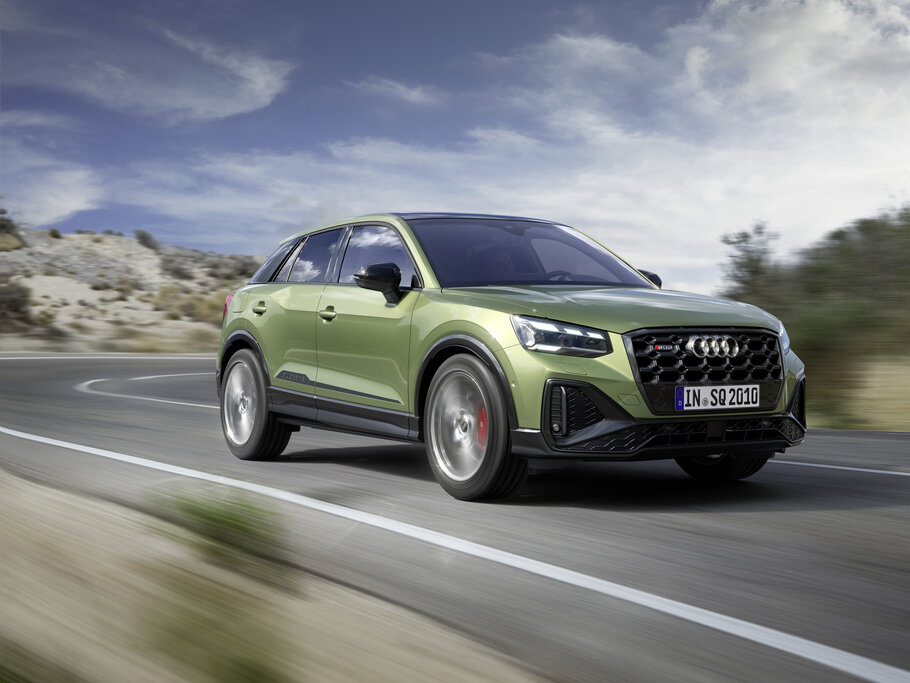
    Audi SQ21

    It is already adept at quickening the pulse, and now the 300PS Audi SQ2 is even more capable of catching the eye as it adopts the sharper new look and upgraded lighting technology already favouring the other members of the compact SUV range. Enhancement of the S model that first brought sub-five-second acceleration potential to the Audi Q family’s singularly stylish lead-in SUV two years ago has also taken place beneath the skin. The cabin now benefits from additional equipment, improved infotainment and web-based Audi connect functionality and an expanded portfolio of driver assistance systems. When they become available in the UK from November 19, 2020 the latest generation SQ2 and even more striking SQ2 Black Edition models will also be joined by a newly inroduced SQ2 Vorsprung with a particularly exhaustive equipment list. Deliveries of all variants will begin here early in 2021.

    “For the SQ2 we took the basic template set so successfully by high performance hatchbacks like our S3 Sportback and used it to create a version of our already capable compact SUV that has a great deal to offer fans of both formats,“ commented Director of Audi UK, Andrew Doyle. “The carefully considered design and technology updates it receives here as part of the improvement programme for the entire Q2 model line will only increase its appeal further still, as wlll the installation of the very appealing new Vorsprung model at the head of the range.“

    Impressive all-rounder in peak form: the 2.0 TFSI
    The 2.0-litre TFSI engine powering the new generation SQ2 draws its 300PS output from 1,984 cm3 of displacement, and makes peak torque of 400 Nm (295.0 lb-ft) available to the driver across a broad swathe of the rev range from 2,000 to 5,300 rpm. The turbocharged four-cylinder always responds keenly to throttle inputs, and its sound becomes fuller as speed increases thanks in part to the switchable flaps in the exhaust system. The key figures it delivers speak for themselves: 0 to 62mph in 4.9 seconds, a top speed of 155mph, the potential for up to 34.0 MPG and CO2 emissions from 188 g/km based on the official test cycle.

    A number of key enablers support the delivery of thrills with relative thrift in the SQ2. The Audi valvelift system (AVS) switches the stroke of the outlet valves between two levels to continually optimise the flow of exhaust gas to the turbocharger and therefore enhance response, particularly in the lower reaches of the rev range; sophisticated thermal management ensures highly effective coolant flow; and integration of the exhaust manifold integrated into the cylinder head helps the engine to warm up quickly, ensuring that exhaust gas aftertreatment can be activated as early as possible. Needless to say, thanks to these and other measures the Audi SQ2 complies with the limits of the new Euro 6 AP emission standard.

    Driving pleasure and driving safety: the seven-speed S tronic and quattro drive
    The 2.0 TFSI works in harmony with a seven-speed S tronic transmission in the top-tier Q2. Its lower gears feature closely spaced ratios while the seventh gear is long to maximise fuel economy. The super-fast dual-clutch transmission features D or even more performance-focused S modes, and also enables manual shifting via the lever or the steering wheel-mounted shift paddles. If the standard Audi drive select system is in “efficiency” mode, the clutch disengages when coasting, allowing the compact performance SUV to freewheel.

    Like every Audi model that has ever borne the evocative S badge the updated SQ2 is firmly affixed to the road by quattro all-wheel-drive, in this case based on an electro-hydraulic multi-plate clutch that distributes torque smoothly between the axles. In the event that the front wheels break traction, the clutch redirects output completely to the rear within a few milliseconds. It features here in latest generation form including many improvements to elements such as the bearings and oil supply which increase its efficiency. The entire clutch weighs just under one kilogram less than its equivalent in the previous model, due in part to the fact that the control unit is now integrated in the clutch housing.

    During faster driving on more challenging roads, the electronically controlled quattro system can direct a proportion of the torque to the rear axle in the interest of agility, and enables precise turn-in during load reversal. Its highly intelligent reactions are also supported by wheel-selective torque control, which makes minor brake interventions at the wheels on the inside of a corner to maintain the best line through to the exit.

    Dynamic character: suspension and steering
    The ideal operating conditions for quattro drive are provided by S sport suspension which lowers the body by 20 millimetres versus the Q2, and by standard progressive steering whose ratio becomes more direct as lock is applied. This makes the SQ2 even more agile when manoeuvring, in urban traffic and through the hairpins.

    Audi drive select allows the driver to influence how the updated SQ2 responds to inputs. The dynamic handling system features “auto,” comfort,” “dynamic,” “efficiency” and “individual” modes that can fine-tune the operating profile of the steering, the S tronic transmission, the engine and other systems. For driving a little further off the beaten track, the driver can also activate an off-road mode for the Electronic Stabilisation Control (ESC) at the touch of a button.

    Sizeable brakes with S-branded calipers and a diameter of 340 millimetres at the front axle and 310 millimetres at the rear guarantee reassuringly forceful stopping power. In the SQ2 they sit behind 18-inch alloy wheels with 235/45 tyres, and in the SQ2 Black Edition they are housed within 19-inch wheels with a contrasting grey diamond-cut finish and 235/40 section tyres

    Strong character with high definition lines: the exterior design
    With its crisp, precisely defined corners and edges the SQ2 is a car full of character. The frontal styling is now even more striking, particularly in the area below the upgraded headlights. Its octagonal Singleframe is slightly lower, making the front section appear wider, and its insert now also references the polygon motif that characterises the entire car. The design of the large implied air intakes surrounded by wide frames in selenite silver is also more expressive, and narrow slits between the radiator grille and the bonnet pay homage to the design of the iconic Audi Sport quattro.

    LED headlights are standard for SQ2 and SQ2 Black Edition models, while the SQ2 Vorsprung takes a step up to Matrix LED units. Each of their modules houses seven individual LEDs that deliver an intelligently controlled high beam light that always illuminates the road as brightly as possible without blinding other road users. Ten further light-emitting diodes installed behind rhomboid optical components generate the daytime running light, while seven LEDs generate the dynamic indicators that are incorporated in conjunction with Matrix LED. The SQ2 also features LED lights at the rear, which are also paired with dynamic rear indicators in Vorsprung versions. These top specification headlights and rear lights also offer dynamic light sequencing when the car is locked and unlocked.

    In profile, the revised SQ2 highlights its membership of the S series through its aluminium-look mirror housings, while its pronounced sill inserts, roof edge spoiler and platinum grey C-pillar blades add to its distinctive visual appeal. At the rear, the pentagonal polygon treatment is now carried through into the bumper, within which is a diffuser insert framing two sets of twin exhaust tailpipes. Raising the standard powered tailgate reveals a minimum of 355 litres of luggage capacity, which can be expanded to 1,000 litres if the rear seat backrests are folded.

    The latest generation SQ2 can be specified in a choice of seven colours, and its C-pillar is offered in two contrasting shades – the standard platinum grey or brilliant black – or alternatively in the chosen body colour. Upgrading to the SQ2 Black Edition adds gloss titanium black detailing for the the Singleframe surround, the strips on the air inlet grille and the rear diffuser, and a matt titanium black finish for the radiator grille, the underbody protection, the air inlet surrounds and the rear diffuser. The exhaust tailpipes are also trimmed in black chrome and the exterior mirror housings and C-pillar blades in solid Brilliant black.

    Dark tones, upscale materials: the interior
    As is the case with all Audi S models, the interior of the SQ2 features high quality materials presented in a dark colour scheme. Front sport seats upholstered in a black leather and Alcantara mix in the SQ2 and SQ2 Black Edition or in full Fine Nappa leather in the SQ2 Vorsprung provide ample support and also now feature electrically adjustable lumbar support. The headlining is also finished in black. In the latest models the door panels are crafted from a new, more tactile soft-touch material, and the air vents and S tronic selector lever have a new look.

    In terms of equipment, the already extensive core list for all versions expands for this latest generation to include a rear view camera to complement the rear parking sensors, which are now also joined by front sensors for enhanced perimeter monitoring. Protection of the SQ2, its occupants and other road users was already cutting edge in the class thanks to the inclusion as standard of Audi pre sense front, which uses radar to observe the area in front of the car in order to avoid accidents or reduce their severity.

    On-board infotainment technology is also significantly enhanced across the board, not only by the addition of the fully digital virtual cockpit with its 12.3-inch binnacle display but also by MMI navigation plus with its 8.3-inch monitor controllable via rotary pushbutton or natural language voice control. As before, the Audi smartphone interface also features as standard to enable key apps from a handset to be displayed and controlled by the MMI system.

    MMI navigation plus includes an LTE module for fast data transmission, and a three-year subscription to the web-based services of Audi connect, granting access to online traffic, weather and local fuel pricing information and Google Earth navigation mapping. It also now includes the new features Audi connect emergency call & service and Audi connect remote & control, which via the smartphone-based myAudi app allow the owner to lock the vehicle remotely or check the fuel fill level and range, for example.

    Exceptionally inclusive: the new SQ2 Vorsprung
    As elsewhere in the Audi range, Vorsprung specification offers the ultimate pre-defined equipment package for the SQ2. Taking the Black Edition model as its basis, but marked out externally by its exclusive alloy wheels and Matrix LED lighting, the top tier SQ2 is further enhanced by features such as front seat heating for the upgraded Fine Nappa leather sport seats, a panoramic sunroof, Bang & Olufsen audio and the Audi phone box enabling wireless charging and connection of smartphones to the vehicle’s aerial.

    Its driver assistance capability also increases considerably thanks to the inclusion of systems such as park assist for automatic ‘hands-free’steering into and out of parking spaces, Audi side assist blindspot monitoring, the cross traffic assist reversing aid and adaptive cruise assist, the latter making its SQ2 debut as part of the model update. Adaptive cruise assist enables the driver to let the system largely take over the tasks of accelerating, decelerating and steering within a lane with the help of its frontal camera and sophisticated sensors. In order to maintain automatic lateral guidance, the driver need only gently touch the steering wheel, which is part of the system, to prove that they are paying attention.

  • SF90 Spider: lifting the roof on Ferrari’s most powerful series-production supercar

    2021 SF90 Spider1

    The spider version of the SF90 Stradale, the SF90 Spider, was unveiled today during a dedicated digital event. This special online event provided Ferraristi from all over the world with an exclusive introduction to the car’s innovative features and in-depth information on its development.

    As the Prancing Horse’s first production plug-in hybrid spider, the SF90 Spider sets new performance and innovation benchmarks not only for the marque’s range, but for the entire sports car sector. The new convertible has the same extreme supercar specification and record-breaking performance as the SF90 Stradale yet also adds further driving pleasure and versatility to the mix, thanks to latest iteration of Ferrari’s signature retractable hard top architecture. This makes the SF90 Spider the ideal car for owners that demand the very pinnacle of Ferrari technology, but still want the thrill of open-top driving.

    The retractable hard top (RHT) was again adopted because it guarantees optimal noise insulation and protection from the elements when raised, does not deform at high speeds and provides exceptional occupant space and comfort. The RHT is so compact, simple and light it can be actioned in just 14 seconds and can be deployed when the car is on the move. The key to the success of the Ferrari RHT, which premiered on the 458 Spider in 2011, and which has been constantly evolved in the intervening years, is that it takes up just 100 litres of space rather than the 150-200 litres required by a traditional system. The use of aluminium in its construction also means that it is around 40 kg lighter than a conventional retractable hard top. An adjustable electric rear window guarantees superb occupant comfort even at high speeds when the RHT is lowered.

    As is the case with the SF90 Stradale, the SF90 Spider is also available with an additional specification option for owners that want to push its track car vocation to the extreme. The Assetto Fiorano pack includes a list of exclusive upgrades that set it apart from the standard car, not least Multimatic shock absorbers derived from the Ferrari’s GT racing experience and optimised for track use. Others include the adoption of high performance materials (such as carbon-fibre and titanium) that have shaved 21 kg off the car’s weight, a carbon-fibre rear spoiler and road-homologated Michelin Pilot Sport Cup 2 tyres designed to improve track performance in the dry, thanks to a softer compound and fewer grooves. Lastly, the Assetto Fiorano offers an optional two-tone livery that further underscores the car’s racing vocation.

    POWERTRAIN
    In a first for a Ferrari production spider, the SF90 Spider has plug-in hybrid architecture in which the internal combustion engine is integrated with two electric motors at the front, which comprise the RAC-e (Cornering Angle Regulator, Electric) system, and one at the rear derived from and named after a Prancing Horse Formula 1 innovation, the MGUK (Motor Generator Unit, Kinetic). The synergy between the internal combustion engine and the electric motors allow the car to unleash a maximum of 1,000 cv and put the SF90 Spider not only at the very top of the Ferrari range of road cars, but also its category, .

    The SF90 Spider’s powertrain architecture features the V8 turbo ICE, an 8-speed DCT with E-diff, the RAC-e electric front axle with two independent electric motors that also provide all-electric propulsion, the MGUK electric motor located at the rear between the engine and the gearbox, the high voltage battery and electric motor control system ((inverter).

    In addition to a massive 780 cv (and 195 cv/l specific power output), the V8 also unleashes 60 cv more than any other V8 turbo ever built by Ferrari. To deliver this extraordinary result, Ferrari’s engineers completely redesigned the intake and exhaust systems. To improve internal fluid dynamics, the ducts are now all horizontally lined up at engine head height, the turbo charger assembly has been lowered, and the exhaust line is higher. This rationalisation also produced both a lower centre of gravity and a reduction in overall weight thanks to the use of Inconel instead of steel for the exhaust manifold.

    The SF90 Spider sports the completely redesigned 8-speed, oil-bath, dual-clutch gearbox launched on the SF90 Stradale. An optimised layout, achieved through the adoption of a dry sump and a significantly more compact clutch assembly with a 20% smaller exterior diameter than the one in the 7-speed gearbox, has shaved 15 mm off the installed height in the car. This, in turn, lowers the centre of gravity of the running gear by the same amount. Despite the addition of an eighth gear and the need to transmit a maximum torque of 900 Nm (an increase of more than 20% on the current 7-speed), the gearbox’s overall weight is actually 10 kg lower than its predecessor. The clutch’s performance is 35% higher than the 7-speed, transmitting up to 1,200 Nm in dynamic torque during gear shifts. Thanks to new-generation actuation hydraulics, clutch fill times are now 30% faster and total gear shift times have been slashed to 200 ms, an improvement of 30% on the previous 7-speed DTC.

    Meticulous attention was lavished on sound quality when redesigning the exhaust system as the soundtrack is one of the pivotal factors in the exhilarating pleasure of driving a Ferrari. The introduction of a “hot tube system”, which transfers sound more directly to the cockpit, has produced fuller, richer harmonics across the entire frequency range, improving both in-car sound quality and intensity as rev rise compared to previous Ferrari V8s.

    The power flow of the SF90 Spider’s hybrid system can be divided into two main areas:

    1. Power delivery, based on driver input via the accelerator pedal, processed by the engine control system and the hybrid control system, and constantly monitored by the electronic control systems. The power delivery modes can be divided up as follows:
    • Electric mode, entrusted to front axle (FWD mode)
    • Hybrid mode, entrusted to the ICE and the MGUK (RWD configuration)
    • 4WD hybrid mode, with electric front axle available on-demand for traction requirements exiting corners and energy recovery in lift-off/ braking
    1. Energy recovery (battery charging), managed entirely by the hybrid system’s control logic using three strategies:
    • Regenerative braking, available on both axles both under standard braking and when ABS is active
    • Overbraking, active on both axles when accelerator pedal is lifted, managed independently on right and left front wheels
    • ICE recharge: battery-charging function achieved by load point shifting between the ICE and the rear MGUK electric motor.

    Under normal braking conditions, energy recovery using the electric motors is the priority: the hydraulic braking system intervenes to support the electric one in all sharp deceleration conditions. At high speeds and in high gears, the combined contribution of the electric motors in high grip conditions helps lower the ICE’s response times, thus significantly improving longitudinal acceleration and thus performance.

    Because of the pivotal role hybrid system power management plays in the SF90 Spider driving experience, the traditional Manettino is now flanked by an additional steering wheel-mounted selector, dubbed the eManettino, which manages the power flows from and to the high voltage battery and the wheels (traction). It offers the driver a choice of four modes:

    • eDrive: the internal combustion engine remains off and traction is entrusted entirely to the electric front axle. Starting with a fully charged battery (with a capacity of 9 kWh), the car can cover up to 25 km in this mode which is ideal for city-centre driving or any other situation in which the driver wishes to eliminate the sound of the Ferrari V8. The 135 km/h speed limit means the car can also be used on out-of-town roads;
    • Hybrid: this setting optimises the system’s overall efficiency. The control logic autonomously decides whether to keep the internal combustion engine running or turn it off. Power flow from the electric motors is limited to conserve battery power;
    • Performance: this mode keeps the ICE running because the priority is more on charging the battery than on efficiency. This guarantees that power is instantly and fully available when required. This mode is best suited to situations in which driving pleasure and fun behind the wheel are the main focus.
    • Qualify: this mode allows the system to achieve maximum power output by letting the electric motors work at their maximum potential (162kW). The control logic prioritises maximum performance over battery charging.

    VEHICLE DYNAMICS
    To make full use of the powertrain unit’s power, the engineers developed vehicle dynamics systems that guarantee improvement not just in terms of pure performance and lap times, but also simultaneously ensure that drivers of all kinds can fully enjoy the car’s potential and have fun behind the wheel. The new hybrid architecture required extensive integration work on the car’s many different control logics, including the high-voltage system controls (battery, RAC-e, MGUK, inverter), the powertrain, and vehicle dynamics controls (traction, braking, Torque Vectoring).

    Integrating these areas with the existing vehicle control logics led to the development of the new eSSC (electronic Side Slip Control) vehicle dynamics control system. Its principle new features are three innovative dynamic regulation and distribution strategies for engine torque to all four wheels:

    – Electronic Traction Control (eTC): optimally manages the availability of the torque – both ICE and electric – distributing it to the individual wheels to suit driving conditions and grip requirements

    – Torque Vectoring: available on the front axle to manage electric traction on outside and inside wheel in cornering to maximise traction exiting the corner and help ensure easy, confident, high-performance driving

    – Brake-by-wire control with ABS/EBD: splits braking torque between the hydraulic system and the electric motors (brake torque blending), allowing regenerative recovery under braking which boosts performance and brake feel.

    The hybrid architecture proved a challenge in terms of weight management: while the extra 270 kg of the hybrid system was amply compensated for by the extra power delivered (220 cv, with a weight/power ratio of the system alone of 1.23 kg/cv), extensive optimisation and weight reduction work was also required on the rest of the car to keep overall weight down to 1,670 kg and thus guarantee a weight/power ratio of 1.67 kg/cv. The RAC-e electric axle also further mitigates the feeling of weight as, by significantly improving stability and traction in cornering, it helps drivers to drive confidently on the limit and delivers an “equivalent weight reduction” of around 200 kg.

    The chassis was completely redesigned to deal with the extra stresses associated with the new power unit and the introduction of AWD. A number of leading-edge technologies and innovations have been introduced, not least an all-carbon-fibre bulkhead between the cabin and the engine. The SF90 Spider chassis also boasts 30% higher torsional rigidity than previous platforms without any increase in weight, a fact that has significantly influences the car’s dynamic prowess.

    AERODYNAMICS
    Just as the SF90 Stradale redefined the aerodynamic performance levels of the Ferrari range, the SF90 Spider is pushing the limits of the results delivered still further. The goals that drove the aerodynamic development of the car from the very earliest stages of the platform design were threefold: maintaining the SF90 Stradale’s performance levels with the RHT deployed, minimising aerodynamic turbulence and noise with the RHT retracted, and optimising flows in the engine bay.

    The synergic relationship between the aerodynamics department and Ferrari Design produced downforce and efficiency figures unmatched by any other car in the category. Once again, they were achieved in typical Ferrari fashion: by sculpting the car’s forms into an effortless embodiment of sportiness. The main features in the SF90 Spider’s aero design include the shut-off Gurney at the rear, an active control system that varies downforce over the rear axle, the front underbody with vortex generator strakes, and forged wheels with wing profiles (blown geometry). The results in terms of performance are impressive indeed: a massive 390 kg of downforce generated in cornering at 250 km/h with the special Assetto Fiorano specification.

    To ensure that SF90 Spider drivers enjoy the massive 1,000 cv available to them, efficiently and uncompromisingly without any negative impacts on aerodynamic drag and downforce coefficients, it was essential to focus on the effective management of hot air flows coming from the engine, gearbox, turbochargers, battery pack, electric motors, inverter, charging system, and, of course, brakes.

    The engine bay, for example, houses both the usual internal combustion engine that generates temperatures of nearly 900°C, and highly temperature-sensitive electronic components. The RHT compartment radically changes the management of the heat flows in the engine bay: it is essential therefore that the hot air channelled upwards is correctly evacuated, and that the route it takes does not interfere with the temperature-sensitive electronic components.

    Given that the RHT compartment would have impeded the functioning of the vents located immediately behind the roof in the SF90 Stradale, transverse louvres have been inserted in the SF90 Spider’s rear screen. These have been very precisely dimensioned to act as an efficient ‘chimney’ without interfering with the car’s aerodynamics at speed.

    The internal combustion engine and the gearbox are cooled by two radiators located ahead of the front wheels. The hot air flow coming off those radiators is channelled into the side areas of the underbody rather than along the car’s flanks. This means that the air flow along the flanks is cooler when it enters the air intakes ahead of the rear wheels, thereby boosting the efficiency of the intercooler radiators. The electric motors and the inverters are cooled by a separate circuit with its own radiator at the front of the car with a central intake on the front bumper.

    Lastly, the cooling circuit for the brakes was completely redesigned to meet the demands of the SF90 Spider’s additional performance. A new brake calliper was developed for the front and has an integrated aerodynamic appendage that more efficiently distributes the highly charged airflow from the special air intake directly under the headlights on the front bumpers, to the brake pads and disc. The rear brakes are cooled by the flow from two air intakes on the underbody near the rear wheels.

    The downforce generated by the SF90 Spider is largely determined by the patented aero device on the car’s tail: the shut-off Gurney. In order to guarantee the same performance as the coupé, the Ferrari team had to work on the volumes and surfaces of the roof to manage the direction of the aerodynamic flow towards the car’s tail. The shut-off Gurney is a suspended element comprising two sections: one fixed and one mobile with a wedge-shaped front area. The system is controlled by a sophisticated logic that controls parameters such as speed, acceleration, steering wheel angle and pressure on the brake pedal, hundreds of times a second in order to identify dynamic conditions requiring more downforce and then promptly activates the system, which can adopt either of two configurations:

    • Low Drag: the two sections are aligned and suspended above the engine cover, with the mobile wedge acting as an efficient fairing to the fixed element, allowing the air to flow both above and beneath the shut-off Gurney which has almost no effect on the flow
    • High Downforce: the mobile element lowers and closes the lower blown area, which in low drag conditions allowed air to pass through. The mobile and fixed elements now create an aerodynamic profile capable of deflecting the flows striking it and generating a significant amount of extra downforce.

    Rear downforce is balanced at the front of the car by a complex and optimised system of vortex generator strakes. The system has been honed to new extremes on the SF90 Spider: the front section of the chassis is 15 mm higher than the central section of the chassis at the point where the vortex generator strakes are located, thus increasing the amount of air channelled towards them and boosting their effect. In fact, the SF90 Spider’s underbody generates more downforce than any other ever made by Ferrari. The two diffusers ahead of the front wheels and the bonnet shape also contribute to generating downforce over the front axle.

    Specific aerodynamic research went into the geometry of the forged wheels that are made using a construction technology that allows greater freedom when it comes to aerodynamic solutions. The wheels incorporate radial elements on the outer channel, which are equally spaced between the spokes and designed to act as wing profiles. The geometry of these profiles mean that the wheel works like a rotor blade, very efficiently boosting air evacuation from the wheelarch, creating suction that also benefits the flow that passes through the front diffusers. Furthermore, the flow exiting the wheel rim is lined up with the longitudinal flow running along the sides, thereby reducing deviations caused by the air mass exiting at an angle to the direction of movement, thus reducing the car’s Cd.

    Specific to the SF90 Spider are two aerodynamic elements in the cockpit to guarantee an excellent level of protection from air flows with the roof down. There is a central trim section between the driver and passenger seats that channels the air flow away from the head and shoulders and into a double layer of trim on the upper part of the tunnel. Both of these solutions are essentially drag neutral and guarantee the same level of comfort as Ferrari’s other mid-rear-engined spiders.

    DESIGN

    EXTERIOR
    The crafting of the SF90 Spider’s exterior forms was inspired by same principle as influenced the development of the SF90 Stradale: to create a futuristic, innovative design that communicates both the car’s racing vocation and the series production supercar concept.

    When the RHT is deployed, the sides, front and tail of the SF90 Spider have the same distinctive styling as the SF90Stradale. This is no small achievement given that the architecture incorporates stowage for the RHT, which is moved by a complex lever system, but also that it was vital to maintain the same chassis rigidity levels. This was achieved by re-sculpting the car’s surfaces so that the tonneau cover seamlessly integrates with the B-pillars of the coupé, preserving the original styling theme. Even the buttresses behind the passengers’ head rests, which are a signature of all Ferrari spiders, integrate harmoniously as if they were emerging from a structure beneath the car’s skin.

    The result is that the proportions of the SF90 Stradale transfer easily to the SF90 Spider even when the RHT is stowed and without any formal concessions. This is even more surprising given that the engine is just as visible through the rear window despite the bulk of the roof. As the jewel in the car’s crown, the V8 is clearly visible both when the RHT is deployed and retracted. Seen from above, it is clear that the buttresses also line up with the seats, which improves rear visibility when the RHT is stowed, in addition to further underscoring the car’s two-seater configuration.

    The greenhouse area and roof feature stylistic solutions from the coupé that reduce drag and underscore its fiery temperament without impacting on on-board comfort. The cockpit has been shifted forwards, the roof is 20 mm lower, the A-posts are more slender and the windscreen is more raked.

    Aside from having the same silhouette as the SF90 Stradale, the SF90 Spider has a unique dynamic allure when its top is down: the absence of the roof seems to visually lower the car’s centre of gravity, an impression further strengthened by the difference in colour of the trim on the roll-hoops that give rise to the buttresses.

    The front of the car is dominated by a very pronounced profile which underscores its extremely aggressive character. The three air intakes in this area cool the electric motors (front) and the internal combustion engine (sides). The SF90 Spider also uses matrix LED headlight technology to improve visibility in all driving conditions thanks to active beam control.

    The rear of the car is dominated by high exhaust pipes, which are the result of optimisation of the exhaust line layout. Their competition car vibe has been cleverly exploited to underscore the SF90 Spider’s track-inspired personality. This effect is further enhanced by the low tail area. More elongated luminous rings create a more horizontal perception of the tail lights, which are a radical break from the iconic round shape normally used on Ferrari’s mid-rear-engined berlinettas.

    INTERIOR
    The look and feel of the cabin was driven in large part by the complete redesign of the HMI, which marked such a major leap forward on the SF90 Stradale. The instrumentation is now predominantly digital with all the screens going completely black when the car is not running, lending the cabin a very minimalist look. However, once the Engine Start button on the steering wheel is pushed, a “ceremony” of sorts begins that sees all the digital components in the driver cockpit gradually springing to life until the whole cockpit is aglow.

    The central instrument cluster comprises a single 16” HD screen, which is curved towards the driver to make it easier to read and emphasise the wraparound cockpit effect. In the default screen, everything is dominated by a large circular rev counter, framed by the battery charge indicator. The navigation screen is on one side of the rev counter with the audio controls on the other. The screen’s large dimensions mean that there is huge flexibility in terms of personalising the displays, which are also very easy to navigate using the steering wheel controls. It is, for example, possible to select a full-screen version of the navigation map.

    Thanks to the introduction of the head-up display, the main information can be projected onto the section of windscreen within the driver’s field of vision. This means less distraction in line with the “Eyes on the road, hands on the wheel” philosophy that has always driven the development of the HMI used on every Ferrari Formula 1 car and that has gradually been transferred to our road-going sports cars.

    The SF90 Spider’s steering wheel completes that transfer process from the competition world and also ushers in a new era by introducing a series of touch commands that allow the driver to control virtually every aspect of the car without ever taking their hands off the wheel. The traditional controls include the now iconic Manettino, steering-wheel mounted headlight control, windscreen wipers, indicators. Of the new touch controls, the pad on the right-hand spoke allows the driver to navigate the central cluster screens, while voice and cruise controls are on the left-hand spoke. In the bottom left section of the central area, there are four buttons the driver uses to select the power unit mode.

    The F1 bridge, a signature on the previous models, has now disappeared from the central tunnel and been replaced by a modern take on the gearshift gate, an iconic feature of Ferrari’s manual gearboxes. In the new gate, however, the gearshift grille is digital as befits an automatic transmission. At the bottom of the tunnel is the compartment for stowing the new ignition key, which is an exact replica of the Ferrari Prancing Horse badge found on the bonnet, adding an authentic finishing touch to the cabin’s styling. The key works in full keyless mode so that the driver can not only start the ignition but also open the doors without taking it out of their pocket.

    7-YEARS MAINTENANCE
    Ferrari’s unparalleled quality standards and increasing focus on client service underpin the extended seven-year maintenance programme offered with the SF90 Spider. Available across the entire range, the programme covers all regular maintenance for the first seven years of the car’s life.

    This scheduled maintenance programme for Ferraris is an exclusive service that allows clients the certainty that their car is being kept at peak performance and safety over the years. This very special service is also available to owners of pre-owned Ferraris.

    Regular maintenance (at intervals of either 20,000 km or once a year with no mileage restrictions), original spares and meticulous checks by staff trained directly at the Ferrari Training Centre in Maranello using the most modern diagnostic tools are just some of the advantages of the Genuine Maintenance Programme. The service is available on all markets worldwide and from all Dealerships on the Official Dealership Network.

    The Genuine Maintenance Programme further extends the wide range of after-sales services offered by Ferrari to meet the needs of clients wishing to preserve the performance and excellence that are the signatures of all cars built in Maranello.