 Citroen, the renowned French automaker has published the first details on its new-generation small family ride, Citroen C4. (more…)
Tag: C4
-
2011 Citroen C4 breaks cover
-
Citroën C4 WRC HYbrid4
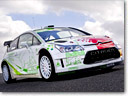 The day after the fourth round of this year’s WRC season in Portugal, which was won by the C4 WRC, Citroën Racing did some testing with the Citroën C4 WRC HYbrid4 concept car on an asphalt road close to Faro. (more…)
-
Citroen C3 Picasso – Thinking Outside The Box
 The funky, and already award-winning Citroën C3 Picasso, is the latest addition to the Company’s Picasso family. A vehicle for the individual thinker, the C3 Picasso offers users adaptable, class-leading space, effortless modularity, unrivalled visibility and exceptional driving pleasure in a bold design that is as cool as it is functional. The C3 Picasso, focused on the needs of everyday life, presents flexibility and capability in an individual, chic design. (more…)
-
Get Into Champion Gear With Citroen’s Special Edition C4 ‘By Loeb’
 Citroën’s popular C4 Coupe has been given the WRC treatment for a new limited, special edition. The Citroën C4 ‘by Loeb’, named after the world’s most successful rally driver ever – Sebastien Loeb – features sporty new interior and exterior designing, dynamic body colours and a well specified equipment list. Each limited edition will also be tagged with a unique serial number plaque mounted in the cabin. (more…)
-
The Ultimate Arsenal Fans’ Car – Gerald Scarfe-Designed Citroen C4 Unveiled For Teenage Cancer Trust Raffle
 Arsenal manager Arsène Wenger and players, Gael Clichy and Robin van Persie joined world famous cartoonist Gerald Scarfe last week to unveil a unique Citroën C4.
The ‘Ultimate Arsenal Fans’ Car’ was designed by Scarfe in consultation with the players and is being raffled in aid of Arsenal’s Charity of the Season, Teenage Cancer Trust.
Citroën, Arsenal Football Club’s official car supplier, donated the stylish new C4 to the Club for the unique project to help raise awareness and funds for the Teenage Cancer Trust.Tickets to win the car cost just £2 with all funds going to Teenage Cancer Trust.
The car will be displayed at the Emirates Stadium for the next three Arsenal home matches (14th March Arsenal FC vs. Blackburn, 4th April Arsenal FC vs. Manchester City and 26th April Arsenal FC vs. Middlesbrough).
Supporters are invited to give their input on what they would like to find inside the hatchback via http://www.arsenal.com/tctcitroenc4
For more information on the partnership or to donate visit: www.beagoonerbeagiver.org
-
Citroen’s New Look C1: A Fresh New Face For 2009
 Citroën’s super efficient C1 city-car complete with a smart new look for 2009 is now on sale, featuring a restyled front end, new body colours and trims, as well as even lower CO2 emissions and improved fuel economy.
The C1’s get-up-and-go spirit has been enhanced with a smaller bumper, available with sporty chrome touches, giving the car a more dynamic visage. Inside, a new interior trim is available whilst two new metallic body shades, Electra Blue and Mica Green, have been added. (more…)
-
Citroen C4
Citroën’s dynamic C4 range is now more alive with technology than ever before. An exciting new look gives the popular model even more appeal with new exterior and interior styling, updated equipment, body colours and wheel designs, as well as the introduction of two new low CO2, fuel efficient, petrol engines co-developed with BMW. HDi models will also be available with new low-rolling resistance Michelin tyres for improved fuel consumption and CO2 emissions.
Changes to the exterior focus on restyling the vehicle’s front end, bringing the C4 in line with the prestigious looks of the recently launched C5. Its new bonnet features a more rounded, curvier design, whilst the grille benefits from restyled integrated chevrons. The front bumper has also been revamped and the number plate repositioned for a stronger, sportier, more dynamic look.
The rear lights of the C4 Coupe are now finished in transparent crystal and a choice of three new alloy wheel styles – either 16-inch or 17-inch – as well as two new body colours – Bourrasque and Recif blue are now available. For added elegance, chrome inserts are featured on some models.
In the cabin, the C4 has been improved for enhanced comfort whilst, for greater clarity, the rev counter has been relocated to the innovative translucent central display unit. As with the award-winning C4 Picasso, a plush grain is now featured on the dashboard and doors for a more upmarket feel. New decors have been designed with an improved quality finish whilst the integrated scented air freshener makes the interior smell as good as it looks.
no images were found
The C4 also retains much of the innovative equipment that made it a standard-setter when it was launched. Drivers can benefit from convenient and reassuring technology such as directional headlamps, front and rear parking assist, lane departure warning system, hill start assist, laminated side windows, speed limiter and cruise control.
The new C4 arrives with all of the safety equipment that made the original C4 such a reassuring car to drive, including the unique to Citroën torso shaped driver’s airbag that can be incorporated because of the fixed-centre steering wheel. The original C4 achieved some of the highest EuroNCAP ratings in the segment for frontal impact, child protection as well as a 3-star pedestrian safety rating.
Citroën’s latest generation navigation system, NaviDrive, has also been introduced, which features a hi-resolution 7-inch colour screen with Europe-wide satellite navigation, real time traffic reports as well as an audio system with built-in 30GB hard drive. The system also offers a video auxiliary socket and a USB connection.
The C4 is now available with two new petrol engines which have been co-developed with the BMW group – the 1.6 16v VTi 120hp and the 1.6 16v THP 150hp. Both units offer the optimum blend of performance, driving pleasure and fuel economy, with significantly lower consumption and CO2 emissions.
C4 1.6 16V VTi 120hp (Variable valve lift and Timing Injection)
The VTi 120hp petrol engine, with a manual or automatic gearbox, replaces the 1.6i 16V 110hp unit, offering an economical and responsive driving experience, with fuel efficiency of 42.2mpg and CO2 emissions of 159g/km on the combined cycle (down 6% on the former unit).
The VTi unit is fitted with an aluminium block and cylinder head and features continuously variable valve timing. The intake valves also benefit from a system that allows their maximum travel to be adjusted gradually depending on the force applied to the accelerator pedal. These two features boost engine efficiency and increase responsiveness with some 90% of maximum torque available all the way through the rev range from under 2,000 through to 6,000rpm.
C4 1.6i 16V THP 150hp (Turbo High Pressure)
The new THP 150hp (Turbo High Pressure) engine provides the perfect blend of higher performance, driving pleasure and economy with significantly lower fuel consumption and CO2 emissions. With its six-speed manual gearbox, the THP 150hp’s fuel consumption is 40.9mpg on the combined cycle with CO2 emissions of 164g/km.
The THP 150hp features engine technology that is new to the C4 range with the introduction of direct sequential injection and a twin-scroll turbocharger as well as continuously variable inlet valve timing. This gives the engine excellent low-down pulling power with maximum torque of 177lb.ft almost all the way from just 1,400 through to 3,500rpm and continues strongly through the rev range.
Citroën’s HDi diesel engine line-up is widely recognised for its frugal, clean and dynamic qualities, and in keeping with the model’s upgrade, the C4’s diesel engine range has also been improved.
The 2.0HDi unit with six-speed manual gearbox and particulate filter fitted as standard, boasts fuel efficiency of 53.3mpg on the combined cycle and CO2 emissions of just 140g/km. The other diesel powered models – the 1.6HDi 92hp and 1.6HDi 16V 110hp DPFS EGS – are just as dynamic as before and now even greener thanks to a switch to low rolling resistance Michelin Energy Saver® tyres, available on 16-inch wheels, which reduce the fuel consumption and lower the CO2 emissions.
The original C4 was one of the most environmentally friendly cars in the small family segment with two models returning emissions of 120g/km. Now, with its reduced emissions, the C4 is even cleaner and even greener.
Trim
Engine
‘On the Road’ RRP
HATCHBACK MODELS
LX
1.4i 16V 90hp
£12,695.00
SX
1.4i 16V 90hp
£13,895.00
1.6i 16V 110hp BioFlex
£14,695.00
1.6 16V VTi 120hp
£14,695.00
1.6 16V VTi 120hp Auto
£15,695.00
1.6HDi 16V 92hp
£15,295.00
1.6HDi 16V 110hp
£16,195.00
1.6HDi 16V 110hp DPFS EGS
£16,695.00
VTR+
1.6 16V VTi 120hp
£15,495.00
1.6HDi 16V 110hp
£16,995.00
1.6HDi 16V 110hp DPFS EGS
£17,495.00
Exclusive
1.6 16V VTi 120hp
£16,495.00
2.0HDi 16V 140hp DPFS
£18,895.00
2.0HDi 16V 138hp DPFS Auto
£19,895.00
Trim
Engine
‘On the Road’ RRP
COUPE MODELS
VTR
1.4i 16V 90hp
£13,895.00
1.6i 16V 110hp BioFlex
£14,695.00
1.6 16V VTi 120hp
£14,695.00
1.6HDi 16V 92hp
£15,295.00
VTR+
1.6 16V VTi 120hp
£15,495.00
1.6HDi 16V 110hp
£16,995.00
1.6HDi 16V 110hp DPFS EGS
£17,495.00
VTS
1.6i 16V THP 150hp
£17,495.00
2.0HDi 16V 140hp DPFS
£18,895.00
Technical Specification
1.6 16V VTi 120hp
1.6 16V VTi 120hp Auto
1.6 16V THP 150hp
1.6HDi 16V 92hp
1.6 HDi 16V 110hp
1.6HDi 16V 110hp DPFS EGS
2.0HDi 16V 140hp DPFS
2.0HDi 16V 138hp DPFS Auto
Capacity (cc)
1598
1598
1598
1560
1560
1560
1997
1997
POWER
Max power DIN (hp/rpm)
120/6000
120/6000
150/5800
92/4000
110/4000
110/4000
143/4000
138/4000
Max torque DIN (lb.ft/rpm)
118/4250
118/4250
177/1400
159/1750
177/1750
177/1750
236/2000
320/2000
WEIGHTS (KG)
Kerb weight (Coupe/Hatchback)
1217/1220
1273/1273
1271/1276
1255/1257
1269/1270
1293
1379/1381
1410/1416
Max laden weight (Coupe/Hatchback)
1727/1731
1756/1761
1754/1763
1775/1777
1790
1790
1835/1849
1880
Max towing weight braked (Coupe/Hatchback)
1550
1520
1650
1637/1636
1641/1640
1540
1811
1750
Max tow hitch download
65
65
70
66
66
65
73
70
Max roof rack load
75
75
75
75
75
75
75
75
PERFORMANCE
Max speed (mph)
121
116
131
112
119
119
129
128
0-62mph (secs)
10.0
11.9
8.4
12.5
11.2
11.2
9.7
10.4
ECONOMY (MPG)
Urban
30.4
28.5
28.8
49.6
46.3
48.7
40.3
31.0
Extra urban
54.3
52.3
53.3
76.3
70.6
76.31/74.32
64.2
55.4
Combined
42.2
40.4
40.9
64.2
58.8
64.21/62.82
53.3
42.8
CO2 emissions (g/km)
159
165
164
117
128
1181/1202
140
175
- SX
- VTR+
-
New Citroen C4 makes public debut at Moscow Motor Show
 A symbol of its commitment in Russia, Citroen is unveiling the new C4 at the Moscow Motor Show in both hatchback and coupé versions. To present the new model, Managing Director Gilles Michel will be hosting a press conference on Press Day, at 4.45 pm on 26 August 2008, in Hall 14. (more…)
-
A Dynamic Upgrade For The C4
 The C4, launched in late 2004 as a hatchback and coupe, has been an immense success for Citroen, selling nearly 900,000 units sold worldwide.
Citroen has made a number of changes to the C4 to make it even more:
elegant, dynamic and efficient, economical and low on emissions, interactive and communicative. (more…) -
Citroen Berlingo Multispace
 Citroen is launching the Berlingo Multispace, an all-new version of the UK’s most popular value MPV. This fun new model boasts distinctive design, a spacious and versatile interior and offers exceptional value for money.
-
Citroen C5 for EMIS
 One of the first fleet orders for the new Citroen C5 saloon has just been delivered to Egton Medical Information Systems Ltd (EMIS). The company, one of Citroen’s longest-standing fleet customers, has ordered 15 new C5 1.6HDi and 2.0HDi VTR+ saloons as part of its 90 strong 2008 vehicle purchase programme. (more…)
-
Citroen C-Cactus

 Citroen is unveiling C-Cactus at the 2007 Frankfurt Motor Show. This ingenious concept is a new take on vehicle design, centered on essential values. The Marque’s ambitious aim is to market an ecological hatchback with cheerful, attractive styling, equipped with a hybrid HDi drivetrain and sold at the same price as an entry-level C4.
To square this complex equation, Citroen is exploring new forms of design. It has decided to abandon features that are not essential to comfort and to focus instead on technology, styling and equipment that are positive, ecological and valued by users.
Essential, intelligent and ecologically aware
C-Cactus is an ecological car. It includes a significant proportion of recycled or recyclable materials and, like the plant it is named after, it is low on consumption. Weighing just 1,306 kg and featuring a hybrid HDi drivetrain, C-Cactus consumes 3.4 l/100 km for CO2 emissions of 78 g/km. At the same time, C-Cactus is no more expensive than a mid-range family car. Its low production cost can be attributed to the use of new materials and to a rational design process using a smaller number of parts. The cabin is made up of just over 200 parts, i.e. almost half the number used by a conventional hatchback of identical size.


An attractive and modern vehicle
C-Cactus is an essential car, with sharp styling and attractive features. Its curves give it a fun look and strong appeal, while the angles and rounded lines of the bodywork underline its dynamic character. C-Cactus sets high standards of onboard comfort with a roomy interior that is worthy of a family car. It is 4.2 metres long and 1.8 metres wide with a wide range of equipment including air conditioning with automatic temperature control, a high-quality audio system, a panoramic glass sunroof, cruise control and a speed limiter.
The economic and ingenious solutions adopted for C-Cactus keep production costs down and make it possible to fit a diesel hybrid drivetrain, all for the price of an entry-level C4. To achieve this result, C-Cactus places the emphasis on equipment that is essential to passenger comfort. At the same time, it explores new design processes in order to show that economy and ecology need not be synonymous with a rough ride.
New avenues in design
C-Cactus is the result of an intelligent design process pursuing new objectives. By exploring new forms of expression and new technical solutions, Citroën’s engineers cut the number of parts required to build the car.
The dashboard has gone, and its usual functions are now grouped on the central console and the fixed hub of the steering wheel. The central console thus includes the active loudspeakers, gearbox controls and tactile screen giving access to the onboard computer, navigation system and air conditioning controls. The controls for the indicators, lights, wipers, horn and cruise control/speed limiter are on the fixed hub of the steering wheel, as are the tachometer and lights for the indicators, headlamps and warning signals.
Another example of simplification: the part used for the front bumper, which includes the headlamps and chevrons is the same as the part making up the lower part of the tailgate at the rear. This contributes to the assertive design of C-Cactus while bringing economies of scale in production.
This simplicity is also reflected in the design of the front end, which comprises just two parts: a fixed bonnet comprising the front wings, and a flap giving access to the vehicle maintenance functions (oil, windscreen washer, etc.).
Reflecting a similar approach, using the air conditioning makes it virtually unnecessary to open the windows. A simple sliding mechanism is therefore provided, since this is sufficient in normal use. Engineers were thus able to get rid of both the window frames and the opening mechanism.
At the same time, a number of monoblock units are used for C-Cactus to reduce the overall number of parts.
The door panels, for example, are made of two parts, compared with twelve in a conventional hatchback.
The seats also comprise two parts: a highly comfortable, moulded, coloured, integral-skin foam part for the seat, and a solid monoblock frame to hold the foam in place and fix the seat to the floor rails. The ergonomics are excellent and – here again – the number of components is limited.Advanced ecological features
To achieve real environmental impact, Citroen’s objective has always been to market technologies and vehicles that are affordable to the greatest number. The objective with C-Cactus is to go one step further, by bringing out a car whose hybrid HDi drivetrain makes it truly ecological car, but that can be sold at the same price as an entry-level family car.
With its diesel hybrid drivetrain combining a 70 bhp DIN HDi diesel engine with a particulate filter and an electric motor providing additional power of 30 bhp DIN, C Cactus consumes just 3.4l/100 km with CO2 emission levels of 78 g/km over a combined cycle. In urban use, ZEV (Zero Emission Vehicle) mode provides silent, all-electric operation. On journeys involving successive acceleration and deceleration, the hybrid system limits fuel consumption by using both types of energy.
Other points also help to make C-Cactus a car that respects the environment.
The solutions adopted for the design of C-Cactus also contribute to bringing down fuel consumption and CO2 emissions. Using fewer parts makes the vehicle 15% lighter than a C4 Hybride HDi for a total weight of 1,306 kg.
The tyre width has also been kept down (205/45 R21) on C-Cactus, which adds to environmental performance.Fewer parts also means smaller quantities of raw materials. In additon, a significant part of the materials used are recycled or recyclable. The windscreen and windows, for example, are made of recyclable glass. The tyres are also recyclable, as is the crude steel used for the door panels. This metal is unpainted and unvarnished but has been treated for corrosion.
The protective mats are made of recycled leather, taken from leather cut-offs that cannot be used by conventional tanneries. Many parts are made of cork, a natural material made from the bark of oak trees. The felt used for the door panels and fascia stowage compartments is made from wool. This material uses no chemical additives and is both recyclable and biodegradable.
The top speed of C-Cactus has deliberately been capped at 150 kph. This choice not only contributes to the car’s good environmental performance, it also reflects Citroën’s efforts to develop a green vehicle illustrating a new approach to the car, in which the motorist is in harmony with his/her surrounding environment.
Through this attractive concept with its appealing offbeat styling, Citroën has developed a new take on the economical and ecological car. A vehicle at ease with its original and ingenious design. At the same time, this is a car that brings the occupants all the features essential for their comfort.
Looking for simplicity: intelligent, fun exterior design
C-Cactus has a unique personality: appealing, modern and offbeat, with its simple shapes and mix of round, curving lines. The original styling also reflects ingenious design choices. Throughout the design process, the focus was very much on simplicity. This led to the development of ingenious solutions that contribute to the attractive offbeat design of C-Cactus.
At the front, the headlamps of C-Cactus give the vehicle an appealing air with their rounded and slightly angular forms. They are underlined by two cylindrical air intakes cut out of the bumper, above an air intake grille of modern design which, while contributing to the vehicle’s rounded forms, also adds a muscular energetic touch. The raised bonnet and two air intakes also contribute to the dynamic looks of C Cactus.
The vehicle’s rounded forms are reflected in its profile. The dynamic design lines are accentuated by the forward flowing roof line and the asymmetric doors made of crude steel that has been treated for corrosion.
The doors feature an original cut-out since the fixed windows remove a number of the constraints that usually apply to design. Shaped to provide easy access to the interior, they give C-Cactus a curving, sleekly muscled appearance. The use of crude steel treated for corrosion, but without paint or varnish, contributes to savings in production costs while giving a strong, contemporary look.The high waistline and 21-inch wheels also underline the strong character of C Cactus.
The wheels were the focus of particular attention. Large-diameter wheels and low-profile tyres have become key styling features in vehicles of strong, contemporary design.
Citroën worked with Michelin on the development of low-profile tyres with a large diameter and limited width. The low ground friction area limits fuel consumption and, at the same time, tyre production costs are kept under control since the manufacturing process requires only a small amount of rubber. For new and even more original styling, these specially designed tyres feature a green pattern on a white background printed inside a wide groove spanning the entire tread.
The same styling codes can be seen at the rear, where a combination of curves and taut lines illustrate the car’s dynamic and appealing personality. The chevrons identify this car as a Citroën. The name “Cactus” appears in relief on the bottom of the tailgate, in a young, smooth, modern printface.
The rear lights, which resemble the headlamps in shape, boast an innovative feature: cut-outs in the interior plastic that let the driver see through. This innovation considerably increases the driver’s field of vision and may be particularly useful in manoeuvres, for example.Fewer features for greater impact: a welcoming, attractive and cleverly designed interior
C-Cactus is also an original and ingenious car on the inside. The design cut-outs, choice of materials, patterns and colours give the cabin a minimalist, attractive and airy look.
The cabin materials reflect innovative choices. Their quality is immediately visible. Looking beyond their appearance, they are also economical and ecological. For example, cork is used for many decorative parts, as well as for the air vents and air conditioning panel. The floor features a pattern in recycled leather. The white lacquer finish of some parts and the visual effects created by the materials used contribute to the original design and perceived quality of the cabin.
Another key idea was to enhance the offbeat styling of C-Cactus by reducing the number of parts and the quantity of materials used for the decor.
Non-essential parts, such as the dashboard, are absent, while some of the parts that are usually hidden have been included in the decor. This is the case, for example, of the steering column, air conditioning ducts and the grid for fore-and-aft adjustment of the front seats. These features add a modern and original touch to the cabin. The refill for the scented air freshener is also visible. It contributes to the attractive appearance of the cabin, while enabling the driver to see how much is left.
The decor has not been put in. It has been created by removing material. This idea of decorating “in a vacuum” is reflected in the patterns present on the door panels and seat frames. The patterns cut-out in the door panels show the apple green felt inserted between panel and metal. The main role of this part is to soundproof the vehicle, but its colour and cut-outs make it an integral part of the décor.
The same flower, plant and butterfly patterns – symbolising the environment, purity and well-being – are also found on several other cabin features. They are cut out, for example, in the white lacquer seat frame. These cut-outs show the coloured foam used for the seat cushions and give it a decorative quality.Pertinent choices for an easy and enjoyable ride
C-Cactus boasts advanced equipment, optimised on-board space and modular design at an affordable price. Passengers have all the comfort essential to their well-being.
First, the ignition key of C-Cactus is a portable MP3 player with a touch screen. When it is plugged into the fixed hub of the steering wheel, it is recognised by the vehicle which can then be started.
The fixed-hub steering wheel includes a wide variety of functions. In addition to the usual controls, it also includes the speedometer, which is of an unusual design. The figures, placed in relief around the hub, rotate according to speed and are positioned with respect to a fixed point.A second touch screen on the central console includes a navigation system to guide the driver on the road. It also serves as an onboard computer. This equipment endows C-Cactus with high-tech advanced features while also keeping costs down, since functions are grouped together.
The central console features two powerful high-quality active loudspeakers that provide C-Cactus with an excellent sound system. Their ingenious layout limits both wiring and installation costs.
Generous interior space ensures passenger comfort. C-Cactus boasts the dimensions of a family car (4.2 metres long and 1.8 metres wide) with a generous and modular boot (between 500 and 1,100 litres).
The rear seat, placed on a rail, slides up against the front seats. The floor pan, which is integral with the rear bench, also slides forward to reveal a subfloor. This reveals a virtually flat surface area to load bulky objects.Another ingenious feature is a clip-on bag on the passenger side. This replaces the glovebox and can be used to carry objects outside the car.
For comfort and styling, C-Cactus features a panoramic glass sunroof that lets the light flood into the cabin.


