 The new Boxer Diesel Forester – itself only launched in April in petrol format – the boxer diesel catapults it to the top of the class for fuel economy and low emissions. It also offers drivers the longest range of any SUV at more than 1,000 km before refuelling.
No other competitor can match the new Forester 2.0D X’s Combined 44.8 mpg nor its ultra-low 167 g/km meaning an annual Road Fund Licence of £170.
In addition, only the VW Tiguan can match the Group 9E insurance rating for the Forester 2.0D X and XC models. The Honda CR-V, for example is Group 12, Nissan X-Trail from Group 13 and Toyota RAV4 is classed from Group11 upwards.
Meanwhile, the Boxer Diesel Forester’s 115.5 mph top speed and 10 second 0-60 mph time makes it one of the swiftest of SUVs while the extra engine torque over the petrol model allows a full 2,000 kg braked towing limit.
Apart from the much-applauded new engine, key improvements over the 2.0 litre petrol Forester include a new six-speed manual gearbox, uprated front suspension and firmer-feeling steering.
On sale this September, the new Boxer Diesel Forester range comprises three models with their own specific trim levels – the 2.0D X at £20,295, 2.0D XC at £22,495 and 2.0D XSn at £25,495 (all on-the-road).
Commenting on the new Boxer Diesel Forester, Lawrence Good, Managing Director, Subaru (UK) Limited said: “This is the car everyone has been waiting for and places us right in the SUV heartland where it leads in so many crucial areas.
“With the praise already heaped on the new Boxer Diesel as fitted to the Legacy and the favourable comments on the new Forester’s improved space, ride and handling, this should be the perfect combination for both loyal Subaru owners and conquest customers.”
SUV In Size But Subaru-Like To Drive
Even more the keen driver’s choice, the new Forester launched this April is Subaru’s third generation of crossover SUVs but now occupies a similar silhouette to the Toyota RAV4, Nissan X-Trail or Honda CR-V.
Based on the platform of the new Impreza, the Forester features a new multi-link rear suspension, fuel-saving electric power steering and Subaru Vehicle Dynamics Control.
Now closer in size to its less agile SUV competitors, the completely new Forester is 75 mm longer, 45 mm wider and gains 110 mm in height (all models except the 2.0D X which lacks roof rails).
Rear legroom grows by 95 mm, the driver’s eye-line is 30 mm higher, while the load space is now 450 litres with the rear seat up – 63 litres more than the previous model.
But while the ground clearance is now 10 mm greater at 215 mm, the engine itself sits 10 mm lower. This, coupled with the inherent low centre-of-gravity of the boxer engine, gives exceptionally agile handling.
Equipment And Design
The new Boxer Diesel Forester offers outstanding equipment with even the entry-level Forester 2.0D X featuring: symmetrical all-wheel drive; Subaru Vehicle Dynamics Control; self-levelling rear suspension; fuel-saving electric power steering; front, side and curtain airbags and 16 x 6.5 ins alloy wheels with 215/65 tyres.
Other features include four electric windows; 60/40-split rear seats with reclining back-rests; climate-control air-conditioning; radio/CD player; front fog lamps; vehicle information display; height and reach-adjustment steering wheel; leather-covered steering wheel, handbrake and gear-lever; heated front seats, mirrors and windscreen wipers plus cruise-control.
Expected to be the best-seller, the Forester 2.0D XC adds: roof-rails; larger, 17x 7.0 ins alloy wheels with 225/55 tyres; premium audio system featuring a six-stacker CD-player and seven speakers; roof spoiler; HID headlamps and a large, electrically-powered sun-roof.
Finally, the top-of-the range Forester 2.0D XSn adds: satellite navigation with single disc CD/radio; leather seats; electrically-powered driver’s seat and Smart-entry with push-button start.
Other premium touches shared by all Foresters include a gas strut-assisted bonnet, flowing fascia design, double-stitched seat cloth, metallic interior decoration and padded armrest cushions.
The instruments are also sporty thanks to their clear design and subtle lighting while the extensive vehicle information display includes a fuel consumption indicator highlighting the new Forester’s much improved efficiency.
Now, much more SUV-like in appearance, the new Forester boasts a clean, chiselled appearance with multi-grooved wheel-arches, hawk-eye headlamps and aggressive bumpers. Thought has even been given to the chunky exterior door handles which have deep recesses to allow winter glove-wearers an easier grip.
Boxer Diesel Secrets Explained
- Exceptionally compact, light and strong
- Low friction ‘Boxer’ balance cancels out vibration
- Flat four’s low centre-of-gravity boosts handling agility
- Punchy throttle response
- Common-rail fuel-injection for greater efficiency
- Solenoid injectors for compactness
- Variable-vane turbocharger mounted under engine for low centre-of-gravity
- Highly efficient, fast-warm catalytic converter also mounted under engine
Dedicated to the horizontally-opposed ‘boxer’ engine layout for over 40 years, Subaru engineers were determined to use this format for their first diesel engine.
The reasons were to create a light, compact, strong unit with reduced vibration, noise and internal friction compared to an in-line engine and for an ultra-low centre-of gravity.
This enhances handling agility and roadholding – especially when combined with Subaru’s renowned symmetrical all-wheel drive system.
The entire engine and transmission are not only mounted very low down but also within the wheelbase which further boosts chassis dynamics.
And with a minimum 45 kg weight increase over the 2.0 litre petrol engine, the boxer diesel actually lowers the centre-of-gravity.
Cancelled Out Vibration
The 2.0 litre Boxer Diesel has a class-leading light weight with the horizontally-opposed pistons effectively cancelling out the secondary harmonic vibration (vibration with twice the frequencies of the engine speed).
The crankshaft is short and highly rigid, minimising the vibrational noise of many diesel engines.
And the superior balance of the horizontally-opposed engine means internal rotational inertia and friction are drastically reduced compared with an in-line engine.
Reduced internal friction means throttle response is exceptionally lively and in keeping with Subaru’s sporty heritage.
Compared to Subaru’s 2.0 litre petrol engine fitted to the Impreza, Legacy and Forester, the 2.0 litre Boxer Diesel has a 11 mm longer stroke and 6 mm smaller bore for a capacity of 1,998 cc versus 1,994 cc.
Even More Compact
Thanks to a bore pitch shortened from 113 mm to 98.4 mm, the overall engine block length is only 353.5 mm compared to the petrol’s already compact 414.8 mm.
The block is of a rigid semi-closed deck design, while all five main bearings in the alloy cylinder block use metal composite supports for added strength and durability. It also enhances refinement, providing a similar thermal expansion to that of the crankshaft.
Extra water-cooling slits have been added between the cylinder bores and the high-strength pistons are squirted with oil to enhance cooling. The large big ends of the connecting rods feature an asymmetrical profile for assembly precision and reduced friction.
The high-strength crankshaft has a special surface treatment to withstand the diesel engine’s high combustion pressures while the uprated cylinder heads have roller rocker arms. In addition, the cam-drive is via a chain system that better handles the variations in torque of a diesel engine.
Advanced Fuel-Injection And Turbocharger
The new Boxer Diesel uses an advanced common-rail fuel-injection system with the fuel being pressurised at 180 MPa before being fed into the common rail. This maximises efficiency, both in terms of power, fuel consumption and emissions.
Special, short-length solenoid injectors ensure the engine’s width is no greater than that of the 2.0 litre ‘boxer’ petrol unit, despite the diesel’s longer piston stroke.
The variable nozzle turbocharger ensures the correct boost throughout the engine’s rev-range and its low centre-of gravity position under the engine and close to the catalytic converters increases environmental performance.
The Boxer Diesel meets Euro4 emission standards thanks to oxidation catalytic converters and a particulate filter.
A new feature for the Forester is a DPF (Diesel Particulate Filter). This reduces PM (Particulate Matter) – the cause of black smoke – to the minimum.
Class-Challenging Performance. Class-Leading Economy And Emissions
The new Boxer Diesel provides class-challenging performance thanks to its 147 PS at an ultra-low 3,600 rpm and a massive 258 lb ft torque at an accessible 1,800 rpm.
With a ‘square’ bore and stroke of 86 mm and 16.3:1 compression ratio, the world’s first Boxer Diesel provides effortless performance throughout a wide speed range, avoiding the breathless response of some diesels at high revs.
Top speed and the 0-60 mph times are among the best in the compact SUV class at 115.5 mph and 10 seconds while – even more importantly – in-gear flexibility leaves most competitors trailing thanks to strong mid-range torque and the carefully-chosen ratios of the new six-speed manual gearbox.
Fuel economy in the Forester 2.0D X is class-leading at 39.2/48.7 and 44.8 mpg while the Forester 2.0D XC and XSn are not far behind at 38.2/47.9 and 44.1 mpg. Their CO2 emission figures are equally impressive at 167 and 170 g/km respectively.
And to best exploit this new-found frugality, the Boxer Diesel Forester’s fuel tank is enlarged from 60 to 64 litres compared to the petrol models, giving it the longest range in its class before requiring refuelling at 1,000 km-plus.
(Note: The new Boxer Diesel Forester has 3 PS less than the Legacy/Outback because of reduced cooling air travelling through the bonnet air intake.)
New Six-Speed Manual Gearbox
The new Boxer Diesel Forester boasts a new six-speed manual gearbox with optimised ratios for quiet, refined high-speed cruising and flexible low-speed manoeuvres.
For example, 6th is slightly higher than 5th on the Legacy and Outback Boxer Diesels at 31.5 mph/1,000 rpm for the Forester 2.0D X while 1st is lower at 5.1 mph/1,000 rpm.
This new six-speed gearbox employs a cable change – a system becoming increasingly popular. Apart from giving a consistent feel, cables isolate transmission and engine vibration, enhancing refinement.
Symmetrical All-Wheel-Drive Uprated
As with previous models, the Forester enjoys Subaru’s acclaimed full-time all-wheel drive transmission.
In addition, all new Foresters benefit from Subaru Vehicle Dynamics Control as standard.
This advanced system uses sophisticated sensors to detect side-to-side and front-to- rear slip plus sudden steering movements. It controls oversteer/understeer and potential loss of control by braking individual wheels and cutting engine revs – all in milliseconds.
The Forester’s quick-thinking full-time AWD system splits power 50/50 front to rear. However, as soon as slip is detected, the centre differential with its viscous-coupling distributes torque to the axle with the most grip. This happens in milliseconds.
Passenger And Pedestrian Safety Boost
Both occupants and pedestrians are well protected by the new Forester thanks to a whole series of safety measures aimed at achieving the highest standards of both occupant and pedestrian safety.
Curtain and side airbags are now fitted to all models together with driver and passenger airbags. The front seatbelts have pre-tensioners, anti-whiplash front head restraints are standard and the front seats have energy-absorbing backs.
The brake pedal is energy-absorbing, being designed to snap away under severe impact, protecting the driver’s lower limbs. In the rear seat are two ISOFIX-compatible child seat mountings.
The passenger airbag is dual-stage which provides progressive protection matched to the severity of the impact and the standard anti-lock brakes (ABS) come with electronic brakeforce distribution (EBD). This juggles the braking force between front and rear wheels according to load shifts during deceleration. Unlike the previous model, the new Forester has front ventilated disc brakes and solid rear discs.
High tensile steel of varying thickness is used extensively throughout the body, providing good crushability where needed while protecting the passenger area.
Not only does the elimination of the previous Forester’s front subframe reduce body weight by 20 kg but the new structure better dissipates front impact forces.
Much careful thought has been given to enhance pedestrian protection. Because the Forester is higher than a car, more space has been made between the bonnet and catch, while the bonnet itself has been designed to spread impact load over its entire surface.
The rear of the bonnet compresses easily and the cowl ahead of the windscreen is designed to dissipate collision energy.
A new shock-absorbing plate has been installed ahead of the front bumper beam to reduce pedestrian leg injuries. This new design meets European pedestrian safety regulations while retaining the off-road approach angle expected of an SUV.
Outstanding Ride Plus Driver-Focussed Handling
A sophisticated all-wheel drive system coupled with low-friction, long travel four-wheel independent suspension and low-centre of gravity ‘boxer’ engines have all contributed to the Forester’s reputation for outstanding chassis dynamics – far removed from conventional SUVs.
Now for the new model, Subaru has devised a completely new platform with a 90 mm longer wheelbase, tracks widened by 35 mm front and 45 mm rear and a sophisticated multi-link, double wishbone rear suspension.
In addition, to further improve handling and roadholding, the position of the ‘boxer’ engine has been dropped by 10 mm, lowering the centre of gravity still further.
Other changes include a new fuel-saving electric power steering system with more rigid mounting and new design of MacPherson strut front suspension.
The result is a highly-absorbent ride with precise geometry control for accurate straight-line running over uneven road surfaces backed by extremely responsive steering and handling.
The rear multi-link, double wishbone suspension liberates more luggage space thanks to its compactness compared to the previous rear strut arrangement.
And because it is attached to a sub frame via bushes, with the mounting section moved to under the floor itself, road noise is reduced.
The rear springs and shock-absorbers are mounted behind the centre-line of the rear wheels, with the wheel stroke itself moving rearwards – all helping ride comfort. A rear anti-roll bar is standard.
Like all previous Foresters, the rear suspension features self-levelling which aids stability when laden and ensures a constant ground clearance – now a substantial 215 mm – 10 mm greater than before.
At the front, the previous sub frame has been eliminated, saving 20 kg in body weight yet a new box-section for the front cross-member provides the same level of rigidity.
The new MacPherson strut and anti-roll bar layout is based on that used by the highly-praised Legacy and new Impreza. It offers high lateral rigidity which improves steering response and cornering stability.
This is further enhanced by an especially rigid mounting for the steering rack and the positioning of the steering gearbox and electric motor below the rack for a more consistent feel. Furthermore, special suspension bushes and attachment points reduce road shock.
The steering gear ratio has been changed for a sportier feel while the rack diameter is increased from 23 to 26 mm. The result is a more linear feel to steering inputs.
And for the new Boxer Diesel Forester the front damping has been firmed up together with the steering to sharpen handling and compensate for the 45 kg increase in engine weight.
Wheel and tyre sizes have been optimised for the new Forester’s chassis and anticipated all-terrain use.
The Forester 2.0D X features 16 x 6.5 ins alloy wheels with 215/65 R 16 tyres while the Forester 2.0D XC and XSn have 17 x 7.0 ins alloy wheels with 225/55 R 17 tyres.
Generous Warranty
All Foresters marketed by Subaru (UK) Limited come with the reassurance of a three year or 60,000 mile warranty plus 12 year anti-corrosion cover and three year paintwork warranty.
This is in addition to three years’ membership of Subaru Assistance – a comprehensive home and roadside repair and recovery package throughout the UK and Europe administered by Mondial Assistance. Service intervals are 12,000 miles or one year – whichever arrives first.
Insurance ratings are also extremely competitive at Group 9E for the Forester 2.0D X and XC and Group 10E for the Forester 2.0D XSn.
The new Boxer Diesel Forester range is as follows:
|
On-The-Road |
| 2.0D X manual |
£20,295 |
| 2.0D XC manual |
£22,495 |
| 2.0D XSn manual |
£25,495 |
Performance And Economy:
|
Top Speed
mph
|
0-60
sec
|
Urban
mpg
|
Extra Urban
mpg
|
Combined
mpg
|
| 2.0D X (man) |
115.5
|
10.0
|
39.2
|
48.7
|
44.8
|
| 2.0D XC/XSn (man) |
115.5
|
10.0
|
38.2
|
47.9
|
44.1
|
| CO2 emissions g/km |
X 167
|
XC/XSn 170 |
|
|
|
| Further Information: |
Arthur Fairley |
0121 730 8014 (Direct Line) |
| or |
Trina Brindley |
0121 730 8161 (Direct Line) |
COMPLETELY NEW SUBARU FORESTER BOXER DIESEL SPECIFICATION
| ENGINE |
|
|
|
| Type |
Horizontally opposed four-cylinder, mounted fore and aft; aluminium alloy cylinder block and heads. Four valves per cylinder, dohc per bank |
|
|
|
2.0 Litre Boxer Diesel |
|
|
| Capacity (cc) |
1,998 |
|
|
| Bore x stroke mm |
86 x 86 |
|
|
| Compression ratio |
16.3:1 |
|
|
| Fuel system |
Common-rail direct-injection diesel fuel-injection with variable-nozzle turbocharger, intercooler, oxidization catalytic converters, particulate filter and closed-loop exhaust gas recirculation |
|
|
| Fuel tank capacity gal (litres) |
14 (64) |
|
|
| Max power PS (kW) (bhp) DIN |
147 (108) (144.8) |
| at rpm |
3,600 |
|
|
| Max torque lb ft (Nm) DIN |
258 (350) |
| at rpm |
1,800 |
|
|
| Transmission |
|
| Type |
MANUAL – 6-speed synchromesh |
|
Full-time AWD, centre differential with viscous coupling. Dual-mass flywheel. Vehicle Dynamics Control |
|
|
|
| Manual |
|
|
|
|
mph/1000 rpm |
|
|
2.0D X and XC/XSn |
| Ratios |
1st |
3.454 |
5.1 5.0 |
|
2nd |
1.750 |
10.0 9.9 |
|
3rd |
1.062 |
16.5 16.4 |
|
4th |
0.785 |
22.4 22.2 |
|
5th6th |
0.6340.557 |
27.7 27.4 31.5 31.2 |
|
Reverse |
3.636 |
|
|
Final drive |
4.444 |
|
|
|
| SUSPENSION |
|
|
|
| Front |
Independent MacPherson strut-type, coil springs, L-shaped transverse link strut, anti-roll bar |
|
|
| Rear |
Independent, multi-link, double wishbones, coil springs, anti-roll bar, self-levelling |
|
|
| STEERING |
|
|
|
| Type |
Rack and pinion, electric power assistance with motor and gearbox rigidly mounted below steering system |
|
|
| Turns lock to lock |
TBA |
|
|
| BRAKES |
Dual circuit diagonally split hydraulic system
with pressure limiting valve and vacuum servo. Front and rear disc brakes, front ventilated. Standard four-channel, four-sensor ABS plus EBD |
|
|
|
2.0D X |
2.0D XC/XSn |
|
|
|
| WHEELS |
16 x 6.5 ins alloy |
17 x 7.0 ins alloy |
|
|
|
|
| TYRES |
215/65 R16 |
225/55 R17 |
| ELECTRICAL |
|
|
|
|
|
| Battery |
12V 52 Ah |
|
|
|
|
| Alternator |
12V 75 A |
|
|
|
|
| DIMENSIONS/WEIGHT |
|
|
|
2.0D X |
2.0D XC/XSn |
|
| Overall length, in (mm) |
179.5 (4560) |
|
| width |
70.1 (1780) |
|
| height |
65.6 (1675) 66.9 (1700) |
|
|
|
|
| Loadspace, cu ft (litres) |
58.6 (1660) seat folded, to roof-line (2.0X) |
|
|
56.8 (1610) seat folded, to roof-line (2.0XC/XSn) |
|
|
15.9 (450) seat up, to window-line |
|
|
|
|
| Wheelbase (mm) |
103.0 (2615) |
|
|
|
|
| Track, front (mm) |
60.2 (1530) |
|
| rear |
60.2 (1530) |
|
|
|
|
Turning circle, ft (m)
(Kerb to kerb) |
34.5 (10.5) |
|
|
|
|
| Ground clearance ins (mm) |
8.5 (215) |
|
|
|
|
|
| *Kerb weight, lb (kg) |
3395 (1540) |
3417 (1550) |
|
|
|
|
| *excludes 75kg driver |
|
|
| |
|
|
| Towing weight lb (kg) |
|
|
| braked |
4409 (2000) |
4409 (2000) |
| unbraked |
1653 (750) |
1653 (750) |
| |
|
|
| Payload |
1124 (510) |
1102 (500) |
| |
|
| Department of Transport fuel consumption figures, mpg (litres/100 km) |
| |
|
| |
Forester 2.0D X |
Forester 2.0D XC/XCn |
| mpg (litres/100 km) |
|
|
| Urban |
39.2 (7.2) |
38.2 (7.4) |
| Extra Urban |
48.7 (5.8) |
47.9 (5.9) |
| Combined |
44.8 (6.3) |
44.1 (6.4) |
|
|
|
| CO2 emissions g/km |
167 |
170 |
|
|
|
| Insurance Group (ABI) |
9E |
9E/10E |
|
|
|
|
|
|
| PERFORMANCE |
|
|
| (Manufacturer’s figures) |
|
|
| Maximum speed, mph |
115.5 |
115.5 |
|
|
|
| Acceleration 0-60 mph |
10.0 sec |
10.0 sec |
WARRANTY
Three year/60,000 miles whichever is the sooner. Three years’ paintwork guarantee. Twelve year anti-corrosion warranty. Three year membership of Subaru Assistance, a comprehensive home and roadside repair and recovery package valid throughout the UK and Europe and administered by Mondial Assistance.
 PEUGEOT Boxer Electric will make its world debut at the Commercial Vehicle Show today, adding a zero-emission unit to the already appealing Boxer LCV range. This adds to PEUGEOT’s electrification plan, which will see all models in the lineup with electric engines by 2023. The vehicle on display at the NEC is L1H1 435 panel van.
 Our dear friends from speedART present a mighty and beautiful recreation of a Porsche Boxer 718. The heavily tweaked vehicle is named speedART SP18-R and has a lot to demonstrate. First of all, we are pleasantly surprised by the bodywork: we see neat and sporty speedART CS-rear spoiler, distinctive 21-inch SP9-SPORT wheels and overall super sporty, yet stylish appearance. What we like the most about the exterior styling is that the team has kept the signature and well-known Porsche looks present and has just enhanced the agile spirit of the well-known premium brand. Sweet.







 Because of the


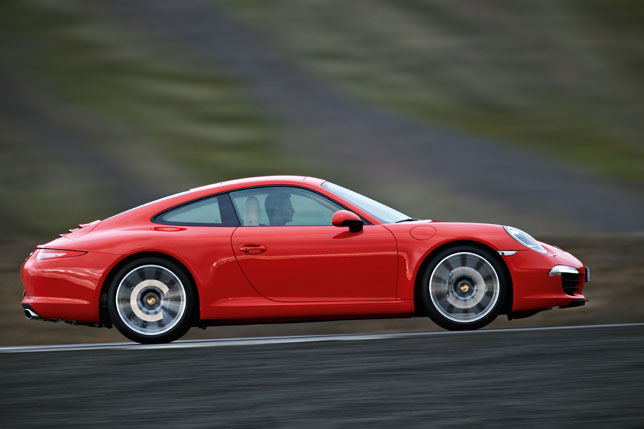
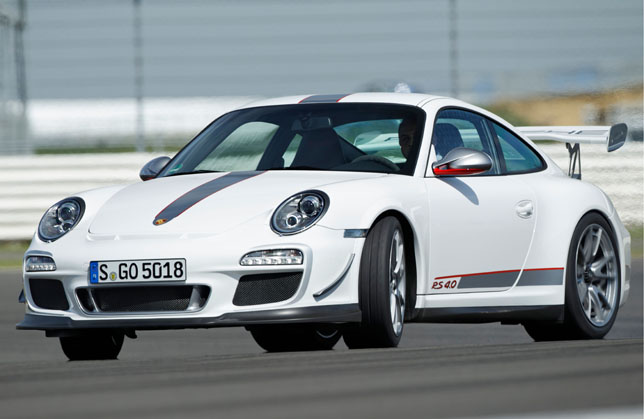
 It was a successful year for PORCSHE and it can prove it with the bunch of awards that it got!








 Although diesel is contradictory to sport, Subaru will release diesel powered engine for their hot hatch Impreza.
 Subaru Ireland announced today the introduction of the eagerly awaited Impreza Boxer diesel range.


