Tag: BMW Hydrogen 7

  • Are hydrogen cars the alternative vehicle of the future?

    This weeks “fresh and clean” topic will put more attention on hydrogen vehicles as many of us might not be completely aware about them. I’m going to discuss how they work and are they beneficial for the environment, and in addition – I will resume some of their disadvantages.

    Nowadays many people become more conscious how vitally important is to lead a healthy lifestyle and thus to save the environment around us. Hence, it is more and more often to encounter people who are interested in using alternative fuels and contributing to saving our planet’s ecosystem.

    In fact there is already a boom in the automotive market in the production of electric and hybrid vehicles. And this can consequently lead to the thought that the world is in need of paying more attention to what really matters – keeping alive and clean the home we call “Mother Earth”.
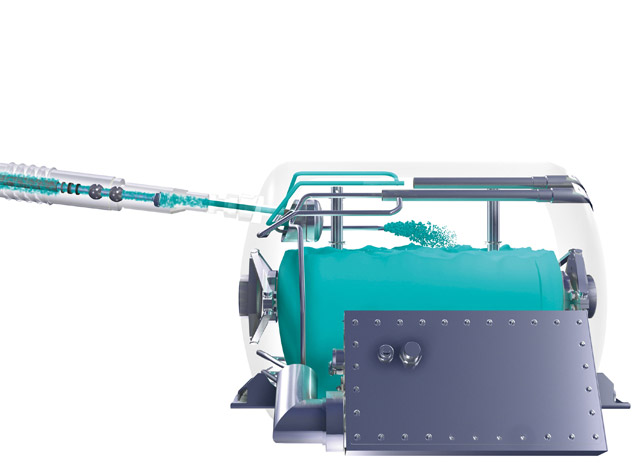
    BMW Hydrogen 7's Tank
    BMW Hydrogen 7's Tank

    But let’s go straight to the point and find out how hydrogen cars can contribute in our environmental efforts.

    First of all, I must tell you more about what really a hydrogen vehicle is. As you already know probably, it uses hydrogen for power. What you might not know however is how this hydrogen transforms into power.

    The vehicle can be powered by hydrogen in two different ways. The first one is through a modified internal combustion engine, which has to be designed especially for this purpose, so that it can transform the chemical energy coming from the hydrogen in electricity.

    The second one is through a hydrogen fuel cell which works like batteries. The principle, which lies behind the creation of the power, is that the hydrogen and oxygen are combined with a cell in order to generate the needed electricity and water, they in turn run the electric motor.

    Both methods effectively produce energy from the compound. Nevertheless, the latter method seems to be more beneficial in terms of eco-friendliness.

    What is also important to mention is the way hydrogen is being obtained. In fact, it isn’t a natural energy source (like fossil fuels for instance). Its main characteristic is that it is an energy carrier.

    Hydrogen is made mainly after chemical reactions in which methane or fossil fuels take part, or it can be created from energy sources such as solar energy source or wind ones. In other words – this compound is to be found almost everywhere and this is the reason which makes it so attractive to the different companies.

    For that reason lately many automotive companies put a lot of effort and attention on the ways this can happen. They are developing technologies which can be successfully utilized to exploit the potential of hydrogen energy for vehicles.

    In addition to this another important advantage of the hydrogen is that it is prepared without utilizing fossil fuel inputs. But what does this mean? Well, basically the vehicle’s propulsion won’t contribute to carbon dioxide emissions.

    On the other hand, hydrogen might have some drawbacks that have to be reviewed. First of all, the storage of hydrogen is a challenge, because it is a low density gas. Secondly, it appears that the additional leakages of hydrogen might harm the stratosphere. Third – a large amount of investments should take place in order to make an infrastructure in alignment with such cars.

    Furthermore, if the gas is used in fuel cells, those vehicles require a special catalyst. The latter requires in turn a metal component, which very often is made of platinum. And as we all know: this metal is very rare and extremely expensive.
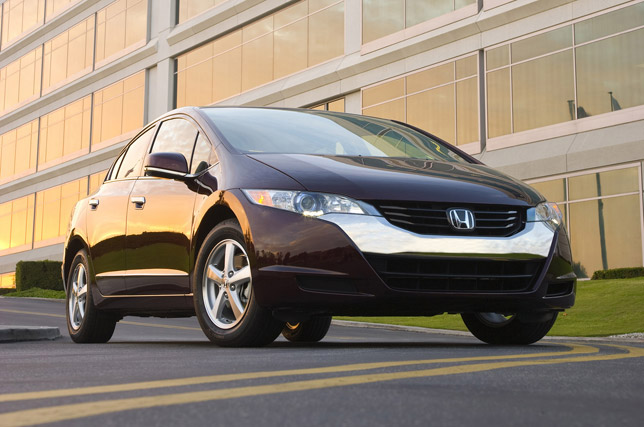
    Honda FCX Clarity
    Honda FCX Clarity

    And to go back to the initial question: are hydrogen cars the alternative vehicle of the future? It is indeed very tough to answer such question, as you consider the advantages and drawbacks of these types of cars have. Nonetheless, many companies are investing in the research of the feasibility of building hydrogen cars.

    For example, on the market you can see those models: BMW Hydrogen 7, Nissan Hydrogen Tour, Honda FCX Clarity, Mazda RX 8 Hydrogen RE.

    In summary, vehicles which offer alternative ways of propulsion and emit less harmful gases are significantly needed nowadays. Hydrogen cars are one of the option, which although is a bit more expensive, can also contribute for the reduction of greenhouse gases and reliance on oil. The vision which stays behind the development of such vehicles is to deliver cleaner and greener ways for everyone to travel without producing harmful emissions.

  • BMW Hydrogen 7 cars provide shuttle service for the COP 14 climate change conference in Poznan

    Using hydrogen as a fuel, mobility generating practically no CO2 emissions is now very much a reality – and one that delegates at the UN climate change conference COP 14 taking place in Poznan, Poland can experience for themselves. (more…)

  • BMW Hydrogen 7 Rolls Into Los Angeles To Complete The 2008 Hydrogen Road Tour

    BMW Hydrogen 7The BMW Hydrogen 7 – the first hydrogen-powered luxury sedan – pulled into Los Angeles this morning to finish a more than 4,000 mile cross-country journey featuring hydrogen-powered cars by the world’s leading automakers in the 2008 Hydrogen Road Tour. The purpose of the tour was to show that leading automakers and energy producers are doing their part to move away from fossil fuels to hydrogen, and showcase the cooperation among forward-thinking lawmakers, NGOs, the DOT, DOE and the industry. (more…)
  • BMW 1 Series

    New technology cuts emissions by up to 21 per cent and improves fuel consumption by up to 24 per cent Tax-busting 60.1mpg 118d is BMW‘s most economical production car. The new BMW 1 Series goes on sale in spring 2007 and features a model line up that includes the most fuel efficient production vehicle BMW has ever produced. The introduction of a three-door model and a revised five-door come as a raft of new fuel-saving innovations are rolled out across the range.

    Technologies such as Brake Energy Regeneration, Automatic Start-Stop function and Electric Power Steering are combined with lower rolling resistant tyres and a gearshift change indicator to encourage economical motoring. These innovations are in addition to the use of variable valve technologies and High-Precision Direct Injection engines on some 1 Series models that boost power output but cut fuel consumption and emissions.

    The BMW 118d, BMW’s most economical car, manages its record 60.1mpg figure courtesy of these features in conjunction with the use of further lightweight engineering. The car now has an aluminium crankcase to save weight. Aside from the BMW Hydrogen 7, the BMW 118d also posts the lowest ever CO2 emissions of any BMW recording 123g/km (putting it into the Band C category for Vehicle Excise Duty).

    BMW 1 Series
    BMW 1 Series

    Other engines in the new 1 Series range record economy improvements of up to 24 per cent compared to the previous model, while emissions have also been cut by up to 21 per cent. These improvements have not been to the detriment of driving pleasure. The new 1 Series is powered by a range of engines whose outputs have increased by up to 20hp with a consequential improvement in performance figures.

    New fuel saving technology
    Brake Energy Regeneration (iGR) makes its debut on the 1 Series. The system uses an Intelligent Alternator Control (IAC) and an Absorbent Glass Mat battery to recycle previously lost energy, in turn saving fuel. This is achieved as the IAC reduces drag on the engine by only engaging when required to charge the battery, whereas a traditional alternator is always pulling power from the engine. Additionally, the energy generated by the engine on over-run (under braking or descending a hill) was previously wasted. Now this lost energy is utilised by the IAC to charge the battery. iGR alone is responsible for a three per cent improvement in fuel economy.

    The new 1 Series comes with Automatic Start-Stop function to cut fuel consumption. Standard on all manual transmission models (except 130i), the system automatically switches the engine off when the vehicle is stationary and the driver puts the car into neutral. To restart the driver only need engage the clutch again before pulling away in the normal manner. Should he not want to use the Automatic Start-Stop function it can be manually switched off.

    The use of Electric Power Steering results in a 90 per cent energy saving compared to a conventional mechanical hydraulic steering system. Power assistance is now provided by an electric motor that works only when required, such as turning a corner. Other fuel saving enhancements have been made courtesy of various ancillary devices, such as the air-conditioning power supply being disconnected from the drivetrain when not in use. Even flaps behind the kidney grille improve economy, closing up for improved aerodynamic efficiency should the engine require less airflow. The feature also improves cold starting times.

    Low running costs
    The plethora of new technology showcased in the BMW 1 Series will have a significant impact on cost of ownership for customers. For the company car driver all but two engine variants now sit in the Band C category for Vehicle Excise Duty. This results in a saving of up to £505 for someone paying 40 per cent tax and up to £278 for those in the 22 per cent tax bracket. For all owners fuel consumption improvement means a 12,000 miles-a-year driver will save approximately £250 off the fuel bill.

    Traction and safety
    All BMW 1 Series models come with Dynamic Stability Control with Dynamic Traction Control for the best combination driving pleasure and safety. DSC allows drivers to make the most of the 1 Series’ 50:50 weight distribution and rear-wheel drive configuration for the best on-road performance. The BMW 130i comes with five additional functions with its DSC+ system for enhanced convenience and driver safety: Hill Start Assistant, Brake Pre-tensioning, Brake Drying, Brake Fade Compensation and Soft Stop.

    All BMW 1 Series have six airbags as standard, the Brake Force Display function on the rear lights to highlight sharp braking and Run-flat tyres with Tyre Puncture Warning System.

    A new style of BMW 1 Series
    To herald the introduction of the latest generation of engines, BMW’s designers have refreshed the interior and exterior styling of the five-door model. The 1 Series now features a larger kidney grille for improved airflow to the engine. The lower front spoiler has also been reprofiled to create a larger air intake, while the spoiler protrudes further for a more pronounced, sporting look. The headlamp cluster remains the same size but a darker cover gives a subtle, more distinguished front end.

    At the rear a restyled bumper gives the impression of a wider, lower car. The rear lamp cluster now features a new arrangement of lights, but retains its original shape.

    The new three-door 1 Series features the same styling cues but its side view is naturally different. The passenger doors are longer than those on the five-door model and are also frameless in the style of a coupé. Inside, customers will also be able to choose between either a four-seat or a five-seat configuration. In the four-seat arrangement rear passengers are separated by a central storage compartment and sit in more sculptured seats. As a no-cost option the five-seat layout offers the traditional bench seat standard on the five-door 1 Series. The introduction of higher quality materials and minor changes to the layout of the interior enhance customer comfort and practicality.

    Optional highlights
    The new 1 Series comes with MP3 and USB stick capability for the best in in-car entertainment. Customers with their favourite music loaded on an Apple iPod or a USB stick can now plug these into the car to continue their listening. Tracks are selected via steering wheel controls or the iDrive system.

    The optional Adaptive Headlights that turn to follow the intended course of the car have been improved on the 1 Series. Cornering light function is added to the package as standard. This means two additional lights turn at speeds of between 22 and 40mph to further illuminate the direction of travel on a twisting road.