The most recent wheel rim design “18 Concave” by the specialists from Oxigin Leichtmetallräder in Swabian Unterensingen perfectly suits the large models of BMW. The design is more than good enough and has a sort of explicit and specific style that contributes to the attractiveness of the BMW cars.
The white BMW 5 series runs on Oxigin 18 which is in finish black full polish with undercut. Nevertheless, there is an option to choose between this one and black, graphite polish, as well as in eight colour polish versions, five neon shades and a variety of foil refinements. For the latest generation of the BMW 5 series F10 and F11, the tyres that are used are in size 9×20 and 10.5×20 in combination with the tyres sized 245/35ZR20 and 285/30ZR20. Additionally, the concave outline of the Oxygin 18 Concave are most noticeable in the white station wagon. As depicted on the vehicle bellow, it is 45 mm at the front and as much as 67 mm at the rear axle.
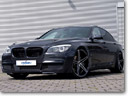
The wheels on the current BMW 7 are even bigger. For instance, the black F02 limousine runs on Oxigin 18 Concave which fits the vehicle perfectly. The combinations of the wheels and tyres are measured at 10×22 inch with 255/30R22 in the front and 11.5×22 inch with 295/25R22 in the rear. The front axle of this BMW uses 15 millimetres thick spacer discs as well.
Finally, the number of sizes is different and varies too. It goes from 7.5×17 to 11.5×22 inches. The starting price is that of 149 Euro incl. VAT.
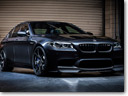
Not exactly breaking news, but a photo shoot of Vorsteiner’s BMW F10 M5. We don’t really need an excuse to relish in some eye-candy goodness, do we?
It’s an delicate thing this, mainly because Vorsteiner haven’t gone destroying it with a ridiculous body kit. In fact, this might just be the most reserved tuning effort of them all. All the while, it would seem that Vorsteiner went through an awful lot of fuss just so that they can leave their mark on the BMW M5. Consider this – the three main components that distinguish their BMW from all the rest are the carbon front splitter, rear diffuser, and lip spoiler on the trunk lid. Yet, they modeled them on a 3D printer (these days even bacon seems to be modeled by a 3D printer before it arrives on our plates); and, before actually bolting the pieces on the M5, Vorsteiner tested their aerodynamic properties in a wind tunnel.
Last but not least, they gave the M5 a set of 21-inch VS-190 Forged Monoblock Wheels leaving just about a hair of space between the tires and the wheel arches.
Generally improved or would you rather have it marooned?
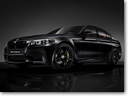
BMW has announced a new limited edition F10 M5, which is available exclusively in Japan. BMW M5 Nighthawk comes with some additional power and nice upgrades.
The exterior boasts a Frozen Black paint job as well as a dark chrome grille, adaptive LED headlights and matte black 20” alloy wheels fitted with performance tires.
The interior comes with two-tone upholstery – Merino leather seats, carbon fiber trim and an individually numbered badging.
The car is equipped with the Competition package including a sports exhaust system and sportier settings for the suspension, steering and ///M Dynamic Mode. There are also carbon-ceramic brakes and a lane departure warning system.
The 4.4 liter twin-turbocharged V8 is boosted to 575HP (423 kW) and 680Nm (501 lb-ft) of torque. It is connected to a 7-speed M DCT transmission – 0-100 km/h in 4.2 seconds and a top speed of 300 km/h (186 mph) – electronically limited.
The pricing starts from ¥18,200,000 (around $182,000).
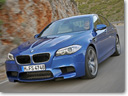
BMW M5 F10 Saloon managed to set Guiness World Record for longest sustained drift at the BMW Performance Center near Greenville, South Carolina on Saturday, May 11, 2013.
Behind the steering wheel was Johan Schwartz – Instructor at BMW Performance Center. The record-breaking attempt generated over $20,000 in charitable donations benefitting The BMW Charity Pro-Am.
The BMW M5 F10 covered 51.278 miles (82.5 km), which is a total of 322.5 laps around the 841-foot Performance Center skid pad.
The M-DCT transmission-equipped 2013 BMW M5 Sedan was an unmodified car from the BMW Performance Center school fleet which began the record attempt with a fresh set of Continental ContiSport ultra-high performance tires – sizes 255/30/20 front and 295/30/20 rear.
The M5 F10 is powered by a 4.4-liter V8 with 560PS (412 kW) at 5750RPM and 680Nm(502 lb-ft) at just 1500RPM. The engine has M TwinPower Turbo technology, twin-scroll turbochargers, high-precision direct fuel injection, VALVETRONIC variable valve control and a cross-bank exhaust manifold meaning an acceleration to 100 km/h in just 4.4 seconds, to 200 km/h in 13 seconds and top speed of 250 km/h (limited).
BMW M5 F10 is currently one of the fastest four-door cars in the world. It crosses the finish line at ¼ mile in 11.9 seconds with 122 mph (196 km/h) terminal speed.
F10 M5 is powered by a 4.4-liter twin-turbo V8 with 560PS (412 kW) and 680Nm (502 lb-ft). It is mated to a 7-speed M Double Clutch Transmission. 0 to 100 km/h in 4.4 seconds, 0 to 200 km/h in 12.1 seconds and top speed of 250 km/h (155 mph) electronically limited and 305 km/h (190 mph) with M Driver’s Package. The M5 F10 is 1990kg (4387 lbs).
On the other hand, the Tesla Model S is powered by a 416HP (310 kW) and 600Nm (443 lb-ft) of torque rear mounted electric motor. It is interesting that the electric motor has its full torque (600Nm) from the 1st RPM. The car weighs 2105 kg (4640 lbs).
Although the Tesla S is underpowered, it manages to win this race. Still, we do not believe that, because the M5 driver made terrible start.
Usually, we don’t report anything related to manufacturers, but this is very important and potentially dangerous. BMW AG is the world’s largest premium car manufacturer and one of the most expensive brands in the world. It is reccaling around 1.3 million cars for repair due to a possible problem with a battery cable cover in the trunk. Because of this, the car can catch fire, which is extremely dangerous and hard to cope with.
This can happen with all models from 5- and 6-Series BMWs built between 2003 and 2010. This includes all E60, E61, F10 and F11 from the 5-Series and E63 and E64 from the 6-Series.
BMW stated: “In some remote cases, the battery cable cover inside the boot of these vehicles may be incorrectly mounted, This can result in the electrical system malfunctioning, the vehicle failing to start and, in some cases, to charring or fire.”
Still, less than 1% of the problematic vehicles have exhibited the problem and there are no reports of fires. The repairing procedure is really easy and would take around 30 minutes to an hour. Of course, It would be free of charge to customers.
However, the recall affects more than 368 000 car in the US, 293 000 cars in Germany and another 109 000 cars in UK.
So, if you have such car, be hurry and check your local dealer to eliminate possible problem.
Vorsteiner is a company that spends a great deal of time focusing on designing wheels. And they are not looking bad at all. From time to time however, they tend to issue full-blown tuning programs complete with aerodynamic sets, wheels naturally and exhaust systems. Their latest one is called the V-MS Program and in order to eligible for it, you must posses a BMW 5 (F10) series that has the factory M Tech aero package.
The Vorsteiner provided aero bits are all from the company’s pre-peg carbon fiber line. That includes a specially designed front spoiler, a subtle trunk lid spoiler and a high-temperature resistant diffuser between the VorsteinerF10 Sports Exhaust pipes. They on the other hand, offer a tiny power boost (+12hp and 2lb/ft of torque according to their dyno test) and also, they can sing pretty well, Formula 1 style. Rounding up the look, are the four 20 and 21-inch custom made forged wheels on which the car sits. They have been specifically made for the F10 with their 5-spoke star design matte black feel. Another thing finished (or not-finished) in matte black is the bodywork itself. I have to admit that, combined with the visible carbon aerodynamic elements, all looks astonishingly well. The only problem I have with this car are the taillights. They look like those “Shutter Shade” glasses people wear to look like Kanye West. If you are going to go subtle, go subtle – tint them or leave them as they are.
Vilner BMW F10 is the latest project that has just been finished by the exceptional Bulgarian tuning company Vilner. The car already has got the perfect forms, design and technical characteristics. What makes it unique however, is the astonishing interior design, which is everything that one could possibly want. In details, the interior is in white and carries a well outspoken personality. This is achieved due to the high-quality materials used: white leather for the seats and for the internal par of the doors, the lower part of the panel; and black Alcantara for the attic and the inner part of the seats. The leading motive is the red line, which is featured in key parts of the coupe and makes a great accent on the gearshift and the steering wheel. More importantly, the latter is entirely recreated and now has new more ergonomically improved design. This exceptional work from the Vilner Tuning Company is once again a proof of the quality of work they are delivering. The result after this modification is an interior, which can be a proud rival to any new conceptual vehicle. What Vilner has done here is to bring even more energy, style and appeal to the already amazing BMW F10.
BMW has released full specs of the new F10 ActiveHybrid 5. The highly efficient executive saloon has which a combustion engine and electric motor providing perfect dynamics at decent price.
The powertrain includes a BMW TwinPower Turbo six-cylinder in-line engine, an electric drive system and an 8-speed automatic gearbox. The latest generation of BMW ActiveHybrid technology also adds precisely controlled – and therefore extremely effective – intelligent energy management to the mix.
The result is more than satisfying – 340PS (250 kW) and 450Nm (332 lb-ft); from 0 to 100 km/h in 5.9 seconds and a top speed of 250 km/h (155 mph) or 60 km/h (37 mph) only on electric power. The average fuel consumption is 6.4 to 7 liters per 100 km (40-44 mpg imp.) and CO2 emissions: 149 – 163 g/km.
The combustion engine is the famous twin-turbocharged 3.0 liter in-line six-cylinder petrol with 306PS (225 kW), while the electric motor develops 55PS (40 kW), which is supplied by a high-performance lithium-ion battery integrated into the luggage area.
The ActiveHybrid 5 comes with ECO PRO mode including coasting and intelligent energy management. Charging of the high-performance battery primarily takes place during coasting or braking, the electric motor performing the role of a generator feeding energy into the high-voltage battery.
The selection of interior colours, upholstery and interior trim elements reflects the range offered for the other BMW 5 Series Sedan variants. And added to the standard-fitted array of comfort-enhancing features is not only the Navigation system Professional, but also a 4-zone climate control system with stationary air conditioning. A wide range of driver assistance systems and BMW ConnectedDrive mobility services, as well as virtually all the other optional extras available for the conventionally powered BMW 5 Series Sedan, can also be specified for the BMW ActiveHybrid 5.
The BMW ActiveHybrid 5 will be produced at BMW Plant Dingolfing – the BMW Group’s largest production plant worldwide – alongside the other BMW 5 Series models, ensuring that it benefits from the same high standards of quality and production efficiency. The integration into the production process of BMW ActiveHybrid technology is underpinned by the intelligent combination of state-of-the-art automated process engineering and the skilled craftsmanship of specially trained employees.
2012 BMW F10 Active Hybrid 5
2012 BMW F10 ActiveHybrid 5:
Six-cylinder in-line petrol engine, BMW TwinPower Turbo technology with twin-scroll turbocharger, High Precision Direct Injection and VALVETRONIC;
Displacement: 2,979 cc, output: 225 kW/306 hp at 5,800 rpm,
Max. torque: 400 Nm (295 lb-ft) at 1,200 – 5,000 rpm.
Synchronous electric motor; output: 40 kW/55 hp,
Max. torque: 210 Nm (155 lb-ft);
Combined output: 250 kW/340 hp,
Max. combined torque: 450 Nm (332 lb-ft).
Acceleration [0 – 100 km/h (62 mph)]: 5.9 seconds,
Top speed: 250 km/h (155 mph),
Top speed purely on electric power: 60 km/h (37 mph).
Average fuel consumption*: 6.4 – 7.0 litres/100 kilometres (40 – 44 mpg imp), CO2 emissions*: 149 – 163 g/km, exhaust standard: EU5.
*As per the EU test cycle, figures may vary according to the tyre format specified
Do you remember BMW E39 525TDS Automatic? Yep, this old huge saloon, which was meant to go at long journeys with minimal fuel consumption. Fail! The car was so heavy and underpowered that it was a nightmare to drive. Still, there are thousands of them even now and they still work or kind of…
Now, you’ll be able to buy the brand new BMW F10 520d EfficientDynamics Saloon, which is also meant to be driven for a huge distance with minimal expenses. This time, BMW created a very nice drivable machine having decent dynamics and extremely low fuel consumption.
The sixth-generation of 5-Series sets a class-leading figures with its 520d EfficientDynamics model. The car comes with Auto Start-Stop, an 8-speed automatic ZF transmission and a double-wishbone front suspension. Furthermore, it returns whopping 62.8 mpg, which is below 4 litres diesel per 100 km and this is on combined cycle. The harmful emissions are also very low – only 120 g/km.
And if all this is not enough, check this – 184PS (135 kW) and 380Nm (282 lb-ft) of torque meaning 0 to 100 km/h in 8.2 seconds and a top speed somewhere around 232 km/h (144 mph). Not bad, not bad at all for big family saloon, which will carry you, your children and even the dog through more than a thousand kilometres with a single tank of fuel.
Hartge has introduced the new H35d, which is based on the latest 5-Series – the F10 model. The German tuner, which is also officially certified as a manufacturer like Alpina gave to the 5-Series F10, what it exactly needed – individuality, aggressiveness and better performance.
The mighty six-cylinder twin-turbocharged diesel engine is boosted to a nice 354PS (260 kW) and 700Nm (516 lb-ft) of torque, instead of factory’s 300PS (220 kW) and 600Nm (442 lb-ft). Also the max torque comes at just 1800RPM, so driving is a real pleasure. Despite its higher performance, the Hartge H35d still falls in the “green” area of the planned German ecological seal with a CO2 emission of 162 g/km, which means that it complieswith EURO 5 standard.
The car also received sports suspension, which lowers with 30mm and the brand’s Classic 2 wheel set – ten-spoke wheels in dimensions 8.5J x 21” ET34 up front and 9.5J x 21” ET55 at the rear fitted with 255/30 ZR 21 and 295/25 ZR21, respectively. The stance is unique – check out the first picture!
Hartge H35d also boasts stainless-steel rear silencer with dual round tail pipes with 80 mm diameter, bon casings for the exterior mirrors, matt-silver stripes, a set of emblems for the bonnet and boot lid, as well as a discrete Hartge insignia.
The interior comes with a threespoke sports leather steering wheel with a Hartge emblem in aluminium, a carbon steering-wheel cover, a two-piece set of aluminium pedals for the automatic transmission, stainless-steel sill covers front and rear and black velour foot and boot mats.
So, the performance is much better than the original version – 0 to 100 km/h in 5.2 seconds. The top speed is still limited to 250 km/h (155 mph). However, Hartge will soon be able to remove that “nasty” limiter.
2012 BMW 528i will come with a TwinPower turbocharged 2.0-liter four-cylinder engine. The car is scheduled to hit the US market this fall.
The new “28i” replaces the 3.0 liter version, but it is not less powerful. It features a high-pressure direct-injection, VALVETRONIC and a single twin-scroll turbocharger. 2012 528i delivers 240PS (177 kW) at 5000RPM and the torque at 1250RPM is just brutal – 351Nm (260 lb-ft).
The 2012 528i is priced at $47 575. This is $2 505 more than the previous 2011 F10.
2012 BMW Z4 has a price tag of $49 525, which is $2 075 more than the 2011 model.
However, the new models offer better engine with lower fuel consumption and nice power coming from low RPM. The difference in the price is not so much and you’ll enjoy the new 2.0 liter TwinPower turbocharged four-cylinder power unit.


 Not exactly breaking news, but a photo shoot of






 Usually, we don’t report anything related to manufacturers, but this is very important and potentially dangerous. BMW AG is the world’s largest premium car manufacturer and one of the most expensive brands in the world. It is reccaling around 1.3 million cars for repair due to a possible problem with a battery cable cover in the trunk. Because of this, the car can catch fire, which is extremely dangerous and hard to cope with.

 Vorsteiner is a company that spends a great deal of time focusing on designing wheels. And they are not looking bad at all. From time to time however, they tend to issue full-blown tuning programs complete with aerodynamic sets, wheels naturally and exhaust systems. Their latest one is called the V-MS Program and in order to eligible for it, you must posses a BMW 5 (F10) series that has the factory M Tech aero package.


 BMW has released full specs of the new F10 ActiveHybrid 5. The highly efficient executive saloon has which a combustion engine and electric motor providing perfect dynamics at decent price.


 Do you remember BMW E39 525TDS Automatic? Yep, this old huge saloon, which was meant to go at long journeys with minimal fuel consumption. Fail! The car was so heavy and underpowered that it was a nightmare to drive. Still, there are thousands of them even now and they still work or kind of…


 Hartge has introduced the new H35d, which is based on the latest 5-Series – the F10 model. The German tuner, which is also officially certified as a manufacturer like Alpina gave to the 5-Series F10, what it exactly needed – individuality, aggressiveness and better performance.


 2012 BMW 528i will come with a TwinPower turbocharged 2.0-liter four-cylinder engine. The car is scheduled to hit the US market this fall.


